
About this episode
Mike is joined by Amanda Reyes and Kendall R. Phillips to dissect the film’s blend of paranormal thrills and TV Gothic atmosphere. Plus, Stefanie Powers herself stops by to share memories of stepping into Rachel’s haunted shoes.
Transcript
Automatically generated, so expect the odd misheard name.
The Projection Booth podcast is sponsored by Scarecrow Video. Try out scarecrows Runt by mail service. Choose from over one hundred and fifty thousand films and get Blu rays, four k's and DVD's delivered directly to your door. Visit scarecrow dot com today. Oh gez, folks, it's showtime.
People say good mighty to see this movie. When they go out to a theater. They want cloth, sodas, hot popcorn, and no monsters in the projection Booth. Everyone pretend podcasting isn't boring. Cut it off.
A mysterious phone. Call, Nice Raven. Doll coffin. A terrible dream. It seems I was in a graveyard.
And then. I can't remember everything. A psychic investigator. Missus Stanton the Unknown is writing people since the beginning of time. The only cure is understanding.
Oh dog, I'm trying to understand. Can't you see that? I really am trying to. Understand a family secret. Someone was playing esp games with Paul the Knight of Us.
I don't play games with married men. Luke Stephanie Powers stars in Sweet Sweet Rachel. I know I'm just trying to do Lilian It won't work. Welcome to the projection booth. I'm your host.
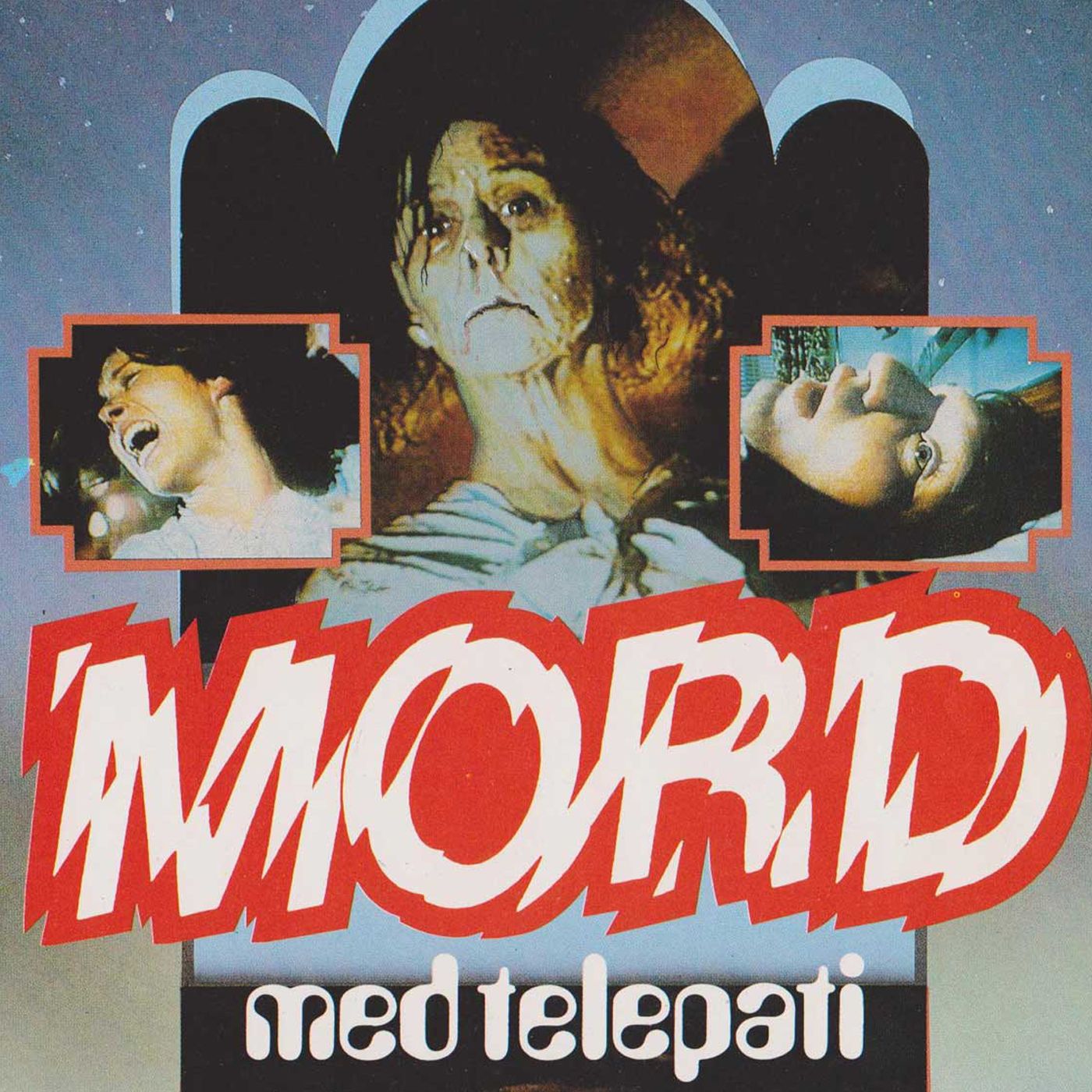
Mike White joined me once again as Ms. Amanda Reez, I Knife Raven Dull Coffin. Also training get is mister Kendall R. Phillips and I had computerized case histories on all these hauntings because that matters for some reason. We are kicking off Shoctober twenty twenty five with the made for TV movie Sweet Sweet Rachel, the pilot for what would become the TV series The Sixth Sense.
It starts Stephanie Powers as the gorgeous Rachel Stanton, whose husband dies under mysterious circumstances. It's a tale of psychic phenomenon and spooky things that we will be spoiling along the way. So if you don't want anything ruined, turn off the podcast and come back after you've seen the film. We will still be here. So, Amanda, when was the first time you saw Sweet Sweet Rachel?
And what did you think? So this one came to me a little later in life. I think I was alive when it aired, but I would have been like three months old or something, So if I saw it, I don't remember, but about twenty years ago or So when I first started to really get back into TV movies and I was trying to see all the great gothic early seventies ABC movie The Weeks and stuff, I found a bootleg of it and I put it on. I remember watching it and I actually had stomach poisoning. I had some kind of food poisoning thing and I put it on, and so of course it was super surreal.
There's a lot of TV movies have a really cinematic sense to them, but Sutton really has a really interesting eye. And this is a very dream like film, and I think it was It felt like a fever dream just right when I needed it too, and it was a pretty amazing experience. I really like Sweet Sweet Rachel. I'm not sure it's my favorite of these movies that aired in this era, but it's definitely one that I really enjoy, mostly because of the cast and because I think Sutton really does make really interesting films and he only made a handful of TV movies. And also I'm a huge, huge fan of Stephanie Powers and I will pretty much watch her in anything, And yeah, I like it a lot.
I think it's a real in watching it. For this I started to see it in a different way and hopefully we can talk a little bit. I don't have any answers, but I have a lot of thoughts about this idea of mixing science with the mystical and what that's trying to do, and I think it does a really good job of trying to maybe that there is an intersection between the two. And kenneall, how about yourself. I'm a little older than Amanda, but not that much.
Oh so I would beat about three when this aired, So if I probably was with a sniff or Brandy sitting enjoying this, But I feel like I probably saw this on those late night CBS movie That's where I first saw Colchak, which is what got me interested in Sweet Sweet Rachel, is because I was very interested in The night Stalker, and I wrote a book on Colchak, and then in doing that, I realized that Colchak really wasn't quite the first that Sweet Sweet Rachel had beat The night Stalker to air, and then the Sixth Sense had come out a little bit before Colchak the night Stalker. Like Amanda, the best way to watch this is slightly ill or high or something, but it does stand up as really wonderful Gothic tropes, and it really captures that sort of eighteenth nineteenth century Gothic Is she crazy?
Is she not? And I also agree that the mixing of science and spiritual is and grief in mourning, which I think in early nineteen seventies America probably really hit home in unique ways. So yeah, it did stand up for me as well. Yeah, it's funny. I was just talking about the whole Kobler Ross thing recently, and the whole idea of death and dying and how death and dying classes were a thing back in the seventies.
I remember my mom taking a class like that. So yeah, the seventies in the late sixties, such a weird void of spiritualism and then an attempt to get it back, especially with more like New Agy kind of stuff. I mean, we did talk a little bit about that in Well, there's actually a Colombo episode where there's a whole lot of New Age stuff. And then, of course, like you're saying, colchak, this whole early seventies spookiness that we have psychic phenomenon. Oddly enough, this reminds me of something from almost ten years later with the entity and that almost seems to me that last little gasp of real psychic versus science kind of stuff and really trying to prove the psychic powers through the science.
I mean, we talked about a film I think it was either this year or late last year called Red Lights, where it was all about debunking psychic stuff, and then there was this real psychic spoiler alert for that one. But yeah, I was completely unfamiliar with this film until you put on my radar, and I really did not watch The Sixth Sense at all. I remember we almost watched it because we were doing a whole podcast series about Night Gallery, and there's this weird thing how they took the two seasons, if I'm correct, they took the two seasons of Sixth Sense, slapped some Rod Serling intros on there, and made them into Night Gallery episodes for the last two seasons, which is just a weird thing that they would do with some of these TV shows where they were just trying to recycle them in bizarrow ways.
They also truncated, so like the episodes were originally an hour long, so you got these sort of like twenty five minute versions of them. And I think I feel like I've seen them years ago, and they're very confused, and it helps to see them in their full form because there's other things that they cut out a lot of meat in them. So that was unfortunate, and I think for years people thought The Sixth Sense was not a worthwhile show. But it's fairly interesting and of historical note because John Crawford's last on screen appearance was in Dear Joan, We're going to Scare You to Death, which is an episode of The Sixth Sense directed by John Newland. That's fabulous.
So it's like a really interesting show, but I think it had to sit by the wayside for a long time before people realized that what it was really for many years. What I find interesting we'll probably come back and talk about this later, but is the way the Sixth Sense disappears largely from cultural history and television history. And I do feel like col Chack the nightstalk or kind of becomes the epitome, even though it didn't run as long. It was only twenty episodes, but somehow that becomes the epitome of this horror series as opposed to the earlier anthology series. But the Sixth Sense was actually there earlier, but for whatever set of reasons.
It gets forgotten by a lot of folks, and you don't hear people talking about that as one of the pioneering early horror television series, but it is. It was there first, and it does a lot of the things similar to what Colchak and later Supernatural and Buffy and things like that would do well. You mentioned Sutton the director, and I didn't realize there was a TV show that he was involved with called Target from nineteen fifty eight, which was a half hour horror anthology show starring Adolf Menju speaking of Joan Crawford there. Yeah, I was completely unfamiliar with that one. Now I'm going to have to try to track that down.
I did track some episodes of The sixth Sense down. Wasn't really that impressed. I don't know if it was what it was about it, but I just was not really super into it. I even watched an episode was shit and are just thinking, Okay, if nothing else, this episode has Shatner, so you know this will really scratch that Shatner rich that I always have. It's like a rash.
It's interesting, though, to see the differences between the series and this movie and that both of them start with a quote on a wall, like with the introduction of the Psychic Investigator, and in the sixth sense it's a quote from the Old Testament. And then in Sweet Sweet Rachel, when we first get introduced to the Psychic Investigator, there's a placard that says, if I had my life to live over, I should devote myself to psychic research rather than psychoanalysis Sigmund Freud. I'm like, oh, that's really odd turn to go from Freud to the Old Testament. But I am not sure what to exactly make of that, but it's quite a stark difference for me. Well, the whole thing was totally revamped.
It was like Alex Dreyer, I guess wasn't sexy enough for TV. So when we the Gary Collins, who don't get me wrong, I love him, but and they got rid of the assistant and they really just changed. So I would never have known that it started as Sweet Sweet Rachel had I not read that somewhere. There's just nothing that connects the two at all. But I guess it's moving with the times, because you're right, it's just right before Colshak and where maybe Colshak obviously that's a great show, but I think one of the things that makes it rise out and maybe stand out from that era there were lots of anthology shows like ghost Story or Circle of feirits known as sometimes is this idea of that Gary Collins was very dry and when and I know Mike and I have talked about this before, but there were the Colchak movies and then they tried to rejigger the formula with the Neuralist tapes.
And I am a big fan of the Normalist tapes, but one of the things that it lacked was that kind of humor that Darren McGavin had, and the Normalist tapes is often considered but the end, like if you were to list your favorite kind of coldhack movies and put that on the list, somewhere people were going to put the Nororalist tapes third. Sometimes it was almost right on the cusp of doing something that Kolchak was doing, but it missed some of the charm that Kolchak had, and I think that's part of the reason why it also fell by the wayside. Yeah, I felt like both for the sixth Cents and a little bit for Sweetsweet Rachel, there was a kind of excessive earnestness. Let's that be. There was a level of melodrama that could have used a little Darren McGavin snide rough comment here and there.
But yeah, though the sixth sense and sweet Sweet Rachel. The first time we see the psycond Investigators, it's all to do with those cards with the stars and the squares, the same things we saw when we're introduced to the Venkman in Ghostbusters, and this whole thing of like with the wavy lines and those things. Clear your head, right, tell me what you think it is. Is it a star? It is a star?
Very good. That's great. That's five for five. You can't see these can No, you're not cheating. Me, are you?
No? I swear they're just coming to me. Though. You get the one guy who's watching a football game and then there's a woman in another room who's kind of narrating the football game. I'm like, okay, I've never seen that one before, but whatever floats your vote.
Well, so those labs were real. So I was really fascinated by because when I was rewatching the movie, I was thinking, oh, there's by using like these exteriors of Usalea and everything they're legitimizing. This idea of parapsychology is like a real study. But there was actually a parapsychology lab at UCLA which was established in nineteen sixty nine by an actress actually who became a psychologist and a parapsychologist named Filma Moas, and it ran for ten years without UCLA funding, but it was there on their property and they did all kinds of testing and some ghost hunting. Actually, one of her assistants claimed to have psychic phenomena abilities, and he and somebody else actually went and they would go to haunted quote unquote haunted houses and investigate them.
And they weren't the only I think Duke University in Princeton also had labs that were similar, and the government was getting involved. I think it was called Project star Game eight. Have you ever heard of remote viewing? It's a fascinating concept that the US government explored through a program called Stargate. This program was declassified by the CIA and aimed to develop psychic soldiers.
Why because they discovered Russia was investing millions in their own psychic program. Stargate was an attempt to see if the US could harness these abilities too. But here's the exciting part. Remote viewing isn't just for spies. It's a skill that all humans can learn with practice and focus.
Imagine tapping into your intuition and seeing beyond the physical realm. I'm not sure if you guys are familiar with this, but it was established around the same time to compete with Soviet research into psychic pen hona, and it was very tenttuous because they were spending money on this crazy idea. All this stuff that we see at the beginning of swietseet Regional is really fascinating to me because I didn't like there was like a real thing happening. I knew the occult was really popular in popular culture mediums and all that stuff was really hitting its stride, but I had no idea that there were actual like these labs and universities and much less the government starting a whole whatever department to investigate the stuff.
It was so fascinating. So in a way, that part is rooted in and I don't know how their testing is working, how they did it actually, but it's rooted in some form of reality, and that's such a I would love to go back to that idea that the unknown is worthy of academic research. To the degree that it was, I feel like that's something that's really missing in our modern times. The Duke Lab, which was one of the first of the university, goes back to nineteen thirty five, and even before that, in the nineteen twenties, Scientific American was offering I can't I think, I want to say, ten thousand dollars, which was a huge amount of money at the time for anyone who could prove the supernatural life after death or psychic powers in a way that couldn't be explained.
Twice they almost gave the money, and the person who stopped it was the one non academic on the committee, Harry Houdini, and led a one person crusade against spiritualism. But in fact I had one more historical note because I think it ties back to a great point Amanda was and Mike we're talking you were talking about earlier. If you go back to the kind of modern spiritualism, right, this is not the old folklore or religion, but this kind of the first wedding of folklore and science. In this idea, it really really probably could be dated back to eighteen forty eight in Hydesville, New York. Which is just down the road for me in Syracuse, just just.
Near Rochester, New York, where two sisters, the Fox Sisters, claimed that there was a mysterious rapping knocking noise that would answer their questions, and people came, The sheriff came, other folks came, and it became quite a big media sensation, was covered by papers that actually did a lecture tour where the girls went out and explained this mysterious mister split Foot as they called it, who would answer their questions. Died down and then what really brought it back was the Civil War. And so as the mass death and destructure of the Civil War hit families, especially throughout the North, desperate to have any sense that their loved ones were alive or if they passed they died, that. They were okay.
Suddenly there were spirit mediums everywhere, and a lot of those spirit mediums were tied into what I'll call pseudo scientific research. I'm not saying there's no scientific research, for at the time it was like copper wires and telegraphs could be used. A lot of the. Episodes of the sixth Sense used elements of that early period. So there's an episode of the Sixth Sense where they used spirit writing, which is a very popular form of spirit medium from that time.
The point I wanted to make was there is something about our interest in the unknown, and particularly the prospect of life after death or something beyond this world that really expands during times of cultural trauma and turmoil, and it's worth remembering. While Sweet Sweet Rachel is bleak. The first episode of the Sixth Sense is about a Vietnam a prisoner in Vietnam who's sending psychic messages back to his family. So nineteen seventy one seventy two America is not a very happy place. We've got a lot of death.
This is post tet offensive. The Vietnam War is clearly not going to be one. Even even Cronkite has said the war is unwinnable. So it's not entirely surprising that Americans would want to start thinking is there something more? Is there something bigger?
Yeah, there's this idea of trying to make sense of the irrational the best way that you can, and I think you're right. During times of war and hardships, everything feels really irrational, So why not turn to the irrational to try to find the answer. I remember when we were talking about Rosemary's Baby, the whole thing about is God Dead, the famous Time cover from nineteen sixty six, And you know that also that whole movie plays into this whole spiritual void. There's talks about, you know, the Pope coming over to America, and you know, of course we've got the witch is Covin and all these things right there in the heart of New York. I mean, nineteen seventy three, just a little bit after this.
I think it's the first appearance of Uri Geller on The Tonight Show. I'm glad we're all of very similar ages, because the nineteen seventies were really weird, friacking time when it came to the whole idea of like psychics and spiritualism and just having psychics on TV all of the time. It felt like certain shows, like I want to say even like real People and those types of shows would always have a little bit of a psychic spin to them as well. This kind of movie playing with psychic phenomenon and science just really hits that sweet spot of what we're going to see through. So much of the nineteen seventies.
Yeah, I'm thinking about do you guys know about Jane Roberts and Seth. Jane Roberts was this woman. She was really ill for many years and she supposedly was able to channel this medium or the spirit. I'm sorry, she was like the medium for it named Seth. Of all, I don't know why your spirit named Seth like a surfer to me, but okay, go for it.
And her husband recorded all of their conversations so Seth would come out through her and talk, and she wrote books. I have one of her books actually in their self help books. It's like Seth came out and told you how to live your life in like a fuller way. It was fascinating. And she died and her papers got donated to either Harvard or Yale.
And its goes back to this legitimization of these weird things like a culty unknown supernatural metaphysical things that were like being taken very seriously in like academia, I guess to some degree maybe parts of the science world. And yeah, you're right, this is such an interesting time for that, and TV movies reflected that in many different ways. But now that we're talking about Vietnam, and thinking about this idea of grief and the Rachel, I'm starting to see it in a bigger way in this movie than I think I had previously. Yeah, there's a lot of family stuff in this movie, a lot of strange things in this I mean, I remember writing in my notes yesterday when I was rewatching this, I was promised Pat Hengel and I didn't get Pat Hingle for the longest time in this movie, and then when he shows up, I'm just like, what the al is going on here, especially the introduction of him where he's drinking wine and eating fried chicken, and then his daughter comes to visit him, the daughter who they say at first that it's her voice on the phone, when I guess we should say that.
This begins with a murder slash suicide of Stephanie Powers's husband, who sees her outside of his window, but it looks like a graveyard and she's behind a gate and she's reaching for him through this gate, and he goes to run to her and jumps or crashes through this window. And when they start to investigate it, she goes, you know, she's gone to a psychiatrist. The psychiatrist says we need different help. They go to this lab, like you're saying, and they talk with doctor Lucas Daro played by Alex Dreyer, and they are asking more. I think, don't they hypnotize her to get more information out of her?
I think so, yeah, because she goes back. And then that's the part where Lucas Daro starts to see what she sees or what she's remembering. And then he goes to the window and almost falls through it too. And then the psychiatrist who can't who's not in touch with this other realm, I can't see what he's seeing, so he throws something through the window to break up the image, which I guess sure, and then he saves Lucas Daro, who's life is in peril eight times in this in many many different ways. He's so in touch with the other side that it's like he just leaves an open door for the culprits to come in and be like, hey, crush your car.
You know what I mean. Yeah, I was thinking I made it the whole DEVI was watching. Guy was thinking, it's not that these other people are powerful psychic, it's that Darrow is just like this spawn. You go let you like you think, oh, have a sandwich. I must have a sandwich, Like he was just everybody.
Gets well, yeah, even to show him in a flashback when he's first getting contactic psychocalas he's performing surgery and someone in another room is having a fit and just starts to see all this stuff in the middle of surgery, and it's like, dude, boake out of it. You know, somebody's here on the table open in front of you. You really need to pay more attention. But yeah, they eventually hypnotize her, get a little bit more out of her as far as who was trying to reach out to her, who was on the phone, because she picks up the phone afterwards after her husband has jumped to his death and sees all of these tarot cards that you read out at the beginning, Amanda, and she's like, well, I think the voice was my cousin, Nora.
So it starts this whole idea of was it her cousin? Meet her mother who's played by Louise Latham doing a fantastic job and that, and then eventually, like I was saying, we get to meet pat Hingele as her father, not Stephanie Powers's, but cousin Nora, who's played by Brenda Scott, and that intro of him and again reaching well not necessarily reaching through a gate, but they're divided by a gate, and it almost looks like either he or she are in prison. And the way that he keeps calling she keeps calling him daddy, really was creeping me out. Daddy's girl has her glasses. That's quick, baby, daddy, I'm here.
What do you want? I just want to look at you. She this plays can almost feel pol here. I can't stay you. Won't want to talk to your mother.
I want you to make her listen to Yeah, He's like, you wore your glasses. And she looks so different, like when she starts. When they first go to visit her on the boat. She's on this boat with all these kind of hippie bippy people and there's this woman with those weird symbols that have like little puffs on them so they don't actually make sound, and she's dancing and they go and visit her, and she's Brenda Scott's a very beautiful woman, just like Stephanie Powers. But when she gets those glasses on, she reverts into something else.
It's a it's a really interesting performance. And I like that scene so much with pat Hingele because one of the things that's also in this movie that stood out to me rewatching it for this is this idea of class issues, and it's so based in that, and pat Hingele's character really like, without saying it verbally, is like saying, look, how look at what class I come from, and look where we are now. And I love the look on the I don't know what he is. The guy who takes care of the house, The butler guy is watching him eat and he's very like blank faced, but you could tell he's completely disgusted by what pat Hinel's doing. And it's such a great It's one of my favorite scenes in the movie.
It's interesting as a kind of feminist text of the nineteen seventies. The women are treated horribly. Aunt Lilian dies, Norah is forced to kill people. Our poor sweet sweet Rachel is like almost killed on multiple occasions, and it's all because pat Hengel deserves more than he got. But I can't help but feel like it also fits in with some of that early feminist messaging because these are all women are being kept and manipulated by either by the pat Hindele, or in some ways by the psychiatrists as well.
Darro's unrelenting I must solve this case, I must come rescue you is a little unsettling, almost as unsettling as Pat Hingele's character kissing his daughter's hand and saying, be good for daddy. There's a certain creep level to this. I'm not sure it was necessarily meant this way, but I'm wondering if some of those women watching this in nineteen seventy one who'd maybe been to some consciousness raising groups weren't looking at this and going, oh, yeah, I see what's going on there. Television in general, with a woman's venue, it was the main demographic ast women aged eighteen to forty nine, and the TV movie really played up to it in a lot of ways. And when you watch TV genre films, a lot of it's coded into the text, these feminist messages, and there's thoughts that there's a wide variety and what the messages are can be very mixed.
But something like Night Terror with Valerie Harper, where she plays this kind of really hapless housewife who finds herself traveling across the desert by herself after her husband's so worried that she can't do something as simple as get on a road meet meet him somewhere, and she ends up running across this like hired killer and she sees him kill somebody, and then it's a chase film, and throughout the film she grows as a person and is able to take care of herself. Let's say, one Step out of the Killer. And at the very end of the film, she says, Now, there's two versions of the film, and I can't remember which version it has, but in one of the versions of the film, she says to her husband he says, oh, he doesn't know exactly what's happened to her, And he says, oh, it must have been so hard for you to go across the desert or whatever by your little self, and she said, she said, I'm not Glorious Steinem not yet.
And that's how the movie ends, and it's clearly calling to mind. But then there's movies like Don't Be Afraid of the Dark, where that woman is like just tortured throughout the whole film and it doesn't end well for her, and it's coded text about what it's like to be a woman being forced into a certain role in society and the strange position of missus Oliver does, like all of these TV movies do that. And Sweet to Meet Rachel is so interesting because I hadn't thought about Lucas Darrow as being this over figure, but this idea of male authoritarian figures ruling over and the father would be considered one as well, overseeing these two girls and manipulating them. It's a really interesting balance of when is it okay and when isn't it?
Because I think Darrow's more well meaning about it. But it's also unfortunate because in so many of these like Night Terror, Valie Harper saves herself and that's what makes the movie so empowering for me watching it as a kid, which I saw ten thousand times in the seventies, But in this movie, it's like a man has to save defh neew powers and in a way save Nora, and so yeah, it is very mixed messaging. But I do think women probably tapped into a lot of this stuff when they were watching these TV movies. I think the audience is much smarter than they got credit for. No, I totally agree, and I wonder if that might also be the reason for the Freud quote at the beginning, because obviously, when we think about Freud, it's all about family dynamics and repression and desire and control, and this film is full of that, whether it's a sort of pseudo edible complex or all these other things going on.
I'm wondering if that doesn't think that very smart view of Amanda's talking about to thing. Okay, this is not just a ghost story, Like, there's dynamics working here, and the film does a pretty interesting job of playing with those. Well, there's also tension too, because the feminist movement hated Freud because the woman always ended up being the problem, you know, and sot To like to introduce it in a film that's primarily about this woman when Jeopardy is like fascinating to me. And I didn't really know that Freud had had kind of interest in parapsychology until recently prepping for this, but it's such a fascinating element and one that I have to think more about. But yeah, I think that that quote clearly means something more, and I think you're ready.
I think the audience can see it in a couple of different ways and kind of figure out where they want to go from there. So it's a really interesting addition. The audience might have been a lot smarter than me, because it took me two viewings to really realize that there's you know, you're talking about class differences. I didn't realize that there was money behind a lot of this stuff and this whole idea of inheritance and who's going to end up with the money, and I'm just like, that completely blew by the first time, and I really didn't grasp that. I was just like, oh no, they're just trying to control her.
They really want to get her under their control again, kind of almost like a Rosemary's Baby type of thing where it's oh no, you know, Louise Latham, you know, takes her away and you know, she comes back and she's like, oh, I'm so much happier now, everything's so great, and I'm like, oh boy, oh boy. She must have really done a number on Stephanie Powers's head to make her so different and so accepting of the Louise Latham character. It just was really funny to see that and that whole change of her, and then when they get her alone in the house and it's the whole you know, mom dad daughter dynamic and then powers up in the almost up in the attic, but up in the upstairs where she is slowly starting to break.
Out of that. I was like, oh, okay, yeah, I really didn't think that they were gunning for any sort of money for the longest time. It's definitely power. I think, either way you look at it, it's a power dynamic that in coming at her in a bunch of different ways. And how do we control this woman and how do we manipulate her not only through orchestrating the death of her husband, but what happens afterwards, because she's clearly really grief stricken, so she's at this weak point.
That's interesting too, because there's another TV movie so I keep to I hate to keep referring them TV movies, and I think, but there's a movie called She Cried Murder with Linda d. George about a woman who's widow and she's getting back into the modeling world or whatever, and she witnesses the murder and she calls the police, and the police arrive and it's the killer is the cop. It's Telly Savalis, And he realizes that she's seen him and can identify me, She's like, I don't remember what I saw, but the whole time they're painting, or like her her friend or a relative who's helping her out. He's, oh, she's grieving and she's hysterical and all this stuff. But she, like value herper's character case stays one step ahead of Telly Savalos throughout the whole film.
To get back to I think I'm losing your point, but like this idea of that, there's just power. It's about how do we control these women who are at a point in their life when they have options, they don't have to just be a wife or mother or whatever, And how are we able to rein that in what is the tension that arises from that? And I think a lot of these TV movies are metaphors for that. So however you want to see it's power. Well, it so reminds me of death car on the freeway or is it death car in the highway and just this yeah, like stay off the roads, ladies, stay home, don't go out and get a job.
Yeah, they totally say, like one woman almost gets thrown off the road way. She gets thrown off the road and they're having this press conference and I think it's Peter Graves and he's he's like, she had traffic tickets and the woman the anchor or the news reporters, so you're blaming her for and they actually relate the whole movie. And that's where I think death Proof was inspired quin Tartino's deathproop cod inspiration from because they're using the cars like a form of rape in the movie and the way they hit the women and the power that they have, and then the people that are supposed to investigating the case are blaming the women for being quote unquote bad drivers. And yeah, it's fascinating these things.
And that was a how neat a movie. You never think how Nata would have these very political feminist films, but there you go. And so like the seventies was full of all of these and so they're really fascinating and this movie falls right in line with all of them. One of my favorite shows, Colombo, the writer of this, also wrote one of my favorite episodes, how to Dial and Murder, and that kind of fits in with this, with the whole idea of you know, spoilers for Columbo but being able to call somewhile I guess they show the murder right off the bat, right they being able to call and give some keywords in order for these ducks to attack somebody. Very similar with this whole psychic reading of those tarot cards, and you're just like, well, who's the one that read those?
And there's a lot of very powerful phone calls in here, and it's basically like reaching out and touching someone with these very bad intentions. And one thing I want to point out too, or talk about a little bit too, is the meeting of Stephanie Powers with her cousin. The just how wild that gets in the screaming match that they get into is just over the top. I kind of love it because it feels much more like real life. It is not this kind of sedate, well I was in love with your husband first kind of thing.
They just go at it like nobody's business, and you get to see that hatred of one character with another. You want to know who. Killed Paul, Well, I'll tell you it was her. She killed him. You killed him, Rachel, because she couldn't stand knowing that he loved me.
You couldn't stand it, and you killed him. I always did, she always did, I know you? Oh my man? She took. You killed him, Rachel, anybody in the world you killed him, You killed him him?
Because I think it's really good. But she gets right up to the border of because like when she when the ant dies and she's blaming Lucas Darrow for it, and she's reaching out like she's by the pole where they found the ant, and Lucas Darrow's on this balcony and she's pointing at him and she's just screaming, and she's right at the edge of total insanity. And there's so many actresses I can see in my head that I won't say that could have not done that. And she keeps you with her. But it's a real tough character because there is so much of her that we don't get to know her very well except to know her hysteria.
And that's so it's really tough, and she still keeps you on her side through the whole thing. I agree it's a great performance that could have definitely been clunky or painful to watch, but I also love that. I think the this is one of the things that the film does. And I think a lot of the sort of television work around horror in the nineteen. Seventies and late sixties is doing is recycling these earlier literary tropes, the mad woman in the attic, the hysterical alone widow or woman.
So this is the turn of the screw. It's the yellow wallpaper. And what I like about Powers' performance throughout this is you are constantly left to think, maybe she just nuts, or maybe it's her, maybe she's being driven, maybe she's just making this all up. So you're kind of left with that sort of unreliable narrator and trying to work your way through it. And then of course when you add Nora, it adds this additional layer of tension, and there's also that kind of hysteria and sexual tension and all that sort of work, which to me just goes right back to that Freud quote.
I was set up for this in the beginning. Well, you get that great spooky graveyard image through the window and the old gates that she's trying to come through, but then that the actual place of death is the rocks with the waves coming in. I mean, it's so Rebecca as far as how that goes. I mean, talk about another great classic Gothic type of horror film. I mean, we've seen people fall through their deaths off of big rocky cliffs and gothic horror and melodrama for years, and that they just happened to live right on this cliff face is fantastic.
Yeah. I thought maybe it was just Louise Latham was triggering it in me. But there are two figures I think loom behind this production. Maybe they're haunting it. One is Hitchcock, and I think all of that is she crazy?
Is she not all that up and down the stairs, all that use of architecture to tell story, that's so Hitchcock. It's Hitchcock. And I think for audience of the time, Hitchcock was still alive making films and with very much resonant popular culture, I think they would have picked that up. The other that I feel like should at least be mentioned is Dan Curtis and I especially that opening was so dark shadow. I was wondering if Barnabas Collins is going to hop out from behind the rocks and say boo, I got you.
So I felt like there was definitely some pinging on some of that other popular culture horror stuff that was going on at the time. Well, in nineteen sixty nine there was an unsold pilot called Darkness set Blazed On, which you might be familiar with, which is a Dan Curtis production. They use the sets from Dark Shadows. It's shot on video directed by Leela Swift, and it stars of Marge du Say as this woman who inherits like a Gothic house and she sees the ghost in the house and that she hires this parapsychologist and his partner who's not blind. But it's very similar to this, So yeah, I definitely think Dan Curtis had an influence on him, almost directly.
When you look at the two. They're very different films, but there also have similar premises. And Mars you Say's character is not quite as she's has more agency I think, but you can see like the roots of it in Darkness. They blazed On and it's fascinating. And Dan Curtiss is a Syracuse University alum.
I'm obligated legally by my contract to point that out whenever there's an ASSU alum somewhere, So Syracuse University, Dan Curtis go go Orange. Well, and yeah, and also very heavily involved with the early Culchak stuff as well. And then I believe that one of you two is involved with this new box set that's coming out, Late Night Mysteries from Dan Curtis. Yeah. I did two commentaries for it.
I did. Those are like kind of Nowarri. They're not more so in this because they're releasing several Dan Curtis. That's Kina Lber, and they're all specific to like the classic literature that he adapted, although like Late Night shot and video like crazy stuff, and he didn't anthology film called Dead at Night which is a sort of semi sequel to Trilogy of Terror, and they're putting Darkness of Blazed on on there as an extra. It's really good.
But the Late Night Mysteries is is Noworri, I don't know how to crime. And they were for ABC Vibral Mysteries, so they're all shot in video, very stagey looking. I love then. Yeah, so I love Dan Curtis. I have a rat named Dan Curtis, so just you know, one of my rats I named after him.
All right, let's go ahead and take a break, and we're going to play an interview with Sweet Rachel herself. Sweet Sweet Rachel actually that is MS. Stephanie Powers, and we'll be back with that right after these brief messages, looking for something superior to streaming, a place with more than five times the selection available on all the streaming services combined. Select from an unparalleled collection of over one hundred and fifty thousand films and get Blu rays, four k's and DVDs delivered directly to your door. Get in on it now at scarecrow dot com, and rediscover the wonders of physical media.
Did I read RTE that you're just coming back from Africa? Yes? Another trip out to the preserve. Yes, and to the foundation because I was away for five months. Because we have opened our new laboratory, which is up I have to qualify that by saying that our mission statement is wildlife conservation through education and alternatives to habitat destruction.
Though our focus has been on the education part of it for all these years. We've served over a million students of all ages as well as adult groups. Since we opened our doors in nineteen eighty two. The education aspect of our enterprise has gone great guns. Last year we served fourteen thousand students.
There was a little bit more than we could handle at the main education center. We have a pretty constant population in our outreach program, which services seven communities that are rather impoverished and are outside of our immediate area. That's been a pretty constant number, but the entrance to the education center, the main education set, has been escalating. The demand is so great. It's getting just a little bit more than we can handle because it's a small facility and it's a versionable facility, but it is to the point we started to try and focus more on the science aspect because what we are doing with our agroecology project is to invite partnerships between universities, and we just completed our very first partnership with Jobo Konyata Universities Science and Technology School in their microbiology department.
So that was eight. Weeks that we had these students and the lab technician to help us set everything up and work out some of the bugs and get our programs started. It is to be able. To provide the science behind the soil regeneration that we are doing through a particular method of recreating biodiversity through a combination of methods of creating a compost, but viable compost that is not just a bunch of stuff that you dick out of the kitchen and put into a that's degraded and potential soil fertilizers. But it is not the kind of compost that we need in order to transplant and encourage the return of biodiversity in land that has been over chemicalized and that has had a great many poor farming technique.
So all of that combined to be teaching and to actually overthrow the old guard's philosophies of how you look at farming in today and in the future, and how you are going to through your farming methods sequester and moisture, which you're not going to do if you simply keep doing the same thing that had caused us to get in this place in the first place. You said that this has been going since eighty two, but how long have you been going to Africa? Since nineteen seventy three? I knew it was a little bit longer before you and mister Holten had started the preserve. He created, bought the lad and had this vision of what he wanted to do in nineteen fifty nine, long before anybody had the word conservation in their vocabulary, let alone the idea of extinction.
That now, when you see all the evidence presented to you, that we have reduced habitat and continue to reduce habitat at such an alarming rate that we're no longer providing the planet with enough sufficient greenery to cover the escape of carbon through the soils that are uncovered. So the only way you're going to produce oxygen is through the carbon oxygen equation, and the less greenery that you have, the least possibility there is to be producing oxygen. So what are we doing. That's science that a grammar school kid learns, and we're so smart. And then of course there are all these young people who've just graduated university who pay no attention to history and know nothing about it and don't think they have to yet there's nothing there that's really.
Interesting to them. I'm sorry, but that is just plain stupid. And so they will learn how important history is when they can't get a job because they didn't calculate properly because they didn't have any historic understanding. If they didn't pay any attention to history, is if it didn't matter to them. I've heard does that generation say.
I should love this because like that, I guess you know, the history of the world happened before you existed, So I guess that's not important. So anyway, there we go. I was hoping to ask you a little bit about around that same period of time that you first went to Africa, but nineteen seventy one. It's only been fifty four years. But I was wondering if you could tell me what you remember of the movie that you did called Sweet Rachel.
We filmed in this extraordinary house that I had seen for years and years, which was situated in the palisades. You could see it from the Pacific Coast Highway. It was situated just north of Sunset Boulevard up and the hills. There's a kind of palisade. There's a specific Coast highway, and then there's the land goes straight up in a kind of palisade on top of which houses are built very near to the edge.
And from time to time the palisade collapses and we've had a tremendous oboac. So everybody knows that palisade area. Who ever lived at the beach because you drive by it all the time, and so I had many on many occasions i'd lived at the beach, and this house became terribly important because I didn't know anything about the history of it, and nobody else seemed to know the history, and because history is important. And then one day I received an offer to do a movie for television, and a little did I know we were to be filming in that house. So I learned all about who built the house.
It was built in the beginning of the nineteen twenties by someone who was in the fur trade, and they built this fancible, fanciful kind of Palladi in the house, Palladi period house that I think it may still be there, but it was pretty was falling off the edge. Part of the property was falling off the edge of the policy, and we were filling therewith ropes in certain areas, saying don't you can't walk over in this area because it was precariously fragile. We filmed the inside it and outside it, and that's the main thing I remember, and it was fascinating, and I was fascinated with the structure and the architecture and the history behind it and what happened to the people that built it, because it was a very interesting period of time.
It was a very prosperous period of time for some people before the nineteen twenty nine stock market crash. There were no taxes, there was very little regulation. It was after Prohibition and after the First World Wars. People were giddy with possibilities, and it was in that climate that house was built. I believed that it was the crash that for theman that built it out of business.
That was the beginning of its decline. And then of course there was another World War and so much history had passed, and off Ergil the time that the Palisades started to collapse, which began, I think, if I'm not mistaken, it started to really fall apart in the nineteen sixties and big collapses of houses coming down off the cliff and onto the Pacific Coast Highway was in the sixties. When you approach a role, whether it be rachel or any other type of role, what goes into that preparation? How do you prepare to be another person? It's all the things I like about acting, because the thing I most was interested in as an actor was not being myself.
That was least interesting to me. The idea of being able to slip into somebody else's skin to the degree that you could, that you were allowed to or assisted to do so by the director and the script. That was what interested me more than anything else. So I tried to find in everything that I've ever done, the unusual, or at least the unusual for me, because in many cases there's a One of the things that's a disadvantage about coming leading ladies or leading men consistently in stories is that you don't get a chance to play characters or to characterize some of the roles were playing, because you will get a note from the producers or the powers that be saying make her a little more sexy, or make her a little bored this, or a little glamorous or this.
So they want you to be what they expect and not what they don't expect. And there have been a number of. My favorite projects which fell on very hard times because the expectation was that I was going to look like whatever their perception of what I should look like, and I didn't, or the part of the character that I played was as in Baryl Markham, she was English from a kind of upper class education system, and she grew up in colonial East Africa, so she was a very different person to me. They didn't CBS didn't know what to do with it because it did not look like their perception imbent. They did not.
Publicize interestingly enough. It's a shane because it was one of my favorite pieces of work, and it's a great story, and most people don't because they don't know history. They didn't realize that Beryl Markham was the first person, not just woman, to fly the Atlantic solo going west against the headwind. Lindbergh flew east with a tailwind, so he had to carry a lot less fuel, he wasn't as heavy, and he had more dexterity. Then the wind was pushing him.
She had a much more difficult time and some of her instruments pros and she lost altitude and it was a combination of events. But she was going against a big headwind and she wound up making it in Nova Scotia, but to cars landed. She knows, dough into a field with a farmer, but she made it, And that should have been of interest to people if it had been publicized in the right way, that it would inspire some interest. And so I was very disappointed that they did not see the potential of how they might think out of the box to publicize it, because that's what it's all about. You have to get the message out.
I wanted to ask you about some of the folks that you worked with in Sweet, Sweet Rachel. I love Luise Latham and she just some of the makeup effects that are on her, where she looks like a ghoul. It's so great. But she seemed so intense in that role, and I was curious what you remember about her. We reasonate them my goodness, had a tremendous backgrow a body of work that was admirable and awesome from the theater to television and films.
She's the consonate professional and a lovely woman. You have to be careful when you work with people you admire because you get fascinated by their work. You're working opposite them, and then you get fascinated by their work and you're just watching them. And I did have a good seat. Well, I had the perfect see that I was front b a center so I could see her watch her work.
And that's always been one of the great joys of being able. To work with that wonderful performers. It's like a tennis match. A good player makes you better, and especially if they hit the ball back to you, You hit it to them and they hit it back to you. It's a kind of it's a silent rapport, but it's crucial to have, and it's not just all about you.
It's a great deal more important about the rapport that you have with your other actors and with the characters that you're playing. Do you find that the adage that most of acting is reacting? Is that very true for you? Oh? Absolutely, if you get a chance to be seen reacting, there is that because don't forget that ultimately is on screen is in the hands of the director and the editor and a lot of other people who have opinions.
So many of them are insecure in that they need to have something happening on the screen in all times, and they don't get the idea that reacting is sometimes more interesting to not just the character, but the progress of the story. One other actor that I admired so much that was in Sweet Rachel was Pat Hingle, and I was curious how that was working with him. Oh, I've worked with Pat. I worked with for it and since, and it was I loved Pat. He was I'm sure that everybody who ever worked with him had the same feeling.
I wanted to switch topics a little bit. I'm Actually, I've been working for years and years on a book about Elliott Gould, and I was curious how it was working with him, especially an Escape to Athena. Oh. We had a ball. That was one of the worst movies any of us have ever made, but we enjoyed each other so much.
And Roger Moore playing the German Nazi was almost too much. It was hard to get through a scene. And Elliott. It's our little musical number that we did. Elliott is such a natural performer.
If we had song and dance men again, he was it. And it was so much fun to work with him. So we talked to each other quite a bit. He's not on the board anymore, but he served for too many years on the board of our union, and I had three years with him on the board, so we beside each other quite a long. He's a love lazy.
This is the forty fifth anniversary of Heart to Heart and if there's anything that you'll be doing around that, I'll. Be having dinner with Ravel Wagner tonight. That's a tree. He lives in Haspen and he comes here every once in a while, so it's always a treat to be able to be here at the same time he is there's still a great rator. We still joke and.
Laugh and have the same enjoyment of silly jokes. It was for many reasons on many levels. As you can well understand, it was an exceptional time in both of our lives and for the things that happened to our partners in life, and also the fact that we were working on something that in the very beginning we had no idea that it. Was going to be well received. We were working in the dark for the first six months and it was very frustrating and very nervous making that anybody was going to like it.
And then went on the air and it started to build very slowly. It wasn't an overnight success, but when it caught on, it started to really get a following. But once again, we were working in fourteen hours a day and we were in every shot, so we had no feedback. We had no feeling of yes, they would bring us the ratings, but we didn't know that people. Who actually wiped us until I think it was after our first Christmas.
It was after our first Christmas, I think itsked. We came back from Christmas, our separate Christmas vacations and all of a sudden we realized, oh my god, we're a success or we're a hit, and we never looked back. You guys were like a modern day Nick and Nora Charles. For me, that was the point. Yes, that was the hope.
And that's what Todd Towmenko was able to create. He was able to create we ate that forum for us because he took what was originally an idea called double Switch that had been written by Sidney Sheldon, and he polished it and rewrote it sufficiently to make it into much more the rapport of Nick and Nora, a much more sophisticated rapport than what was originally what was originally thought of. And he brought the dog. He added the dog a freeway and Max, who wasn't there in the beginning, And my guy, can you imagine us doing this without Max and the dog? Lionel Standard was just such a treat, especially that voice, that amazing voice of his.
He was quite a character, and talk about history. It was extraordinary to read and understand his history and his battle for freedom of thoughts of speech, and what he endured and what he survived. Did you read his statement? It's available on the in the National Archives it is public, public accessible, and that it's well worth being able to read. And then did I also read right that you're about to go on a TCM cruise.
Yes, I'm really looking forward to that, and I'm going to be there with my friend Brenda Viccaro and my other friend Nancy Kuan, who did a little movie with Bill Holden called The World of Seasy One, and we've all known Etalier for years and years. We will definitely have a gibble and it's it sounds they're going to keep us very busy. We have a huge schedule, but it's done as if it's truly special. And I was told by a couple of friends who'd done it that the feeling is wonder for on the ship everybody is a movie fan and a movie buff that they are. You're with like minded people.
That's lovely. Can I just. Add that William Holden Wildlife Foundation. More information is available for the William Holden Wildlife Foundation on our website, which is w HWF dot org. And I hope your listeners will take a chance and have a look and see if there's anything that interested.
January, we're going to have a fundraising performance for the William Holden Wildlife Foundation. Robert Wagner and I did almost five hundred performances of Love Letters. It's not something hebi pls can do anymore or wishes to do anymore. And so I'm going to do a one time only performance with my dear friend with whim. I co starred in McClintock who still uard his father John Wayne and Marino how are the most Wonderful woman.
And it was called McClintock Andy, And He's going to be played by Patrick Wayne and I'm going to play with listen and we'll be doing it at the Imports Heal Theater in January. I think it's the eleventh be a madinate performance on the eleventh of January, So I hope you'll come and see MS. Powers. Thank you so much for your time. I really appreciate this.
Thank you so much. You're a wonderful interview. Moved down the darkest corridor of the inner mind. ESPs are fact across the comprehensions of reality. I am six.
Beyond the shroud of your subconscious back farther back and into. The sixth. All right, we are back, and we were talking about sweet, sweet Rachel, and we probably should talk about you mentioned doctor Simon Tyler assistant and I, yeah, it's kind of a shame that there isn't a character like him in the sixth sense. I think they changed him to a sighted woman. But to have this blind assistant who can see all of these psychic phenomenon as well, it almost reminds me a little bit of pal Mo a deeb where he loses his sight but he can see because he's so tuned in with the spice.
But with this, he's so tuned in with psychic phenomenon he doesn't seem to have too much of a problem getting around. And to have a quote unquote blind seer as I was a really fascinating trope for me. Yeah, and it's Chris Robinson too, who is I guess you've been in Stanley and he done some other stuff, but he would become more famous to me for playing doctor Rick Weber on General Hospital. He just passed away. I'm in fact, a bunch of people have worked on this at a bunch, But if you just passed away within the last couple of years, so some of these people lived a real good long life.
But he's terrific, and I don't think the first time I saw this actually realized it was sho me. He looks quite different than he did when by the time I got to General Hospital. All of the people that we've mentioned are pretty much named people. I can't say I'm familiar that familiar with Alex Dryer. But then when I looked him up, I was like, oh, yeah, I've seen this guy one hundred times.
I just wasn't aware of what his name was. I was kind of hoping, going back to Dan Curtis, I was kind of hoping for Simon Oakland type character early this. Yeah, one of the people with the UCLA executive that they may go over and see what's going on at the lab, and he hates everything, just. Be really angry all the time. Vincenzo call Jack.
I agree. I do want to add watching this, I do feel like should be pointed out, so I should say I'm a university professor and also a director of research center. I cannot break into people's homes. The reason I want to I know this is quite shocking to you. Yeah, these are not authority.
We don't have the power to or to frame people for murder. List this is literally not not something we can do. So I did. I love Darrow's like, just I'm a scientist, I'm with the university. Oh, break on in, dude, do whatever you want.
No big, break your. Car twice, almost kill your assistant. It's fine, I should point out, since a lot of people are skeptical of higher education these days, this is not something we routinely do. Oh sure, you just ruined people's minds with your liberal ideas. I love the bit of business when Louise let Them dies and he does that whole thing where he says I killed her and he pulls out that vile of poison and it's like, WHOA, what a twist.
I did not see this coming. And then that he's using that as a ruse so that they'll dig up the body, exhume the body and say no, it is actually arsenic poison. It's not the type of poison you have. And he's just like, wow, good thing I chose this. It's pretty rare.
But that would have gone to jail otherwise it would have been bad luck. But also we got Jonathan Hillerman too, and a very small role coming in as ethologist. Yeah, and it's just oh every time he shows up, I get so excited. I love him, love him. But yeah, it's it's it's got its share of twists in it, and that's a really fun one because that was the best way for him, he thought, anyway to get them to resume the body without having to explain that he realized that there was poison because his psychic assistant got a message that she'd been poisoned, and so it was like a really fun way to like get that body out of its grave.
On the shots of her from beyond the grave, Wow, I was not expecting that, especially when she's on the highway and just has that like ghoulish makeup on, and I'm like, man, she already no offense, but she already looks a little creepy in real life, just because of the way that she can really just be that you know, overbearing Marnee mother. And then for her to show up in this with that fright makeup on, I was like, oh my gosh, she I would crash my car if I was that guy too. That might be a little Night of the Living Dad joining in with the Rosemary's Baby, and which I do think I just did just to make one other point. I think Man, it's kind of made this point already, But horror was in television from its inception right coming out radio and into the anthology series.
But there's such an interest in horror post Rosemary's Baby, and I think also a post Night a Living Dead book came out in sixty eight that you're seeing the networks just everybody's scrambling for what do we have? What are some options? And ABC was the one that was, Wow, will it a swing for the fences on these things? Yeah, they didn't actually start. You're talking about like the ABC movie The week coming in and making this like a bigger, a bigger thing because their early days in horror, like obviously they started nineteen sixty nine and by seventy one it was Bonzo, but like one of their first horror movies was Daughter of the Mind.
And Daughter of the Mind is a really great creepy ghost story, but it's like half ghost story, half espionage, and I think they weren't sure if the audience was going to be there, so they dipped their toes in it and then they were like, oh, that the ABC And this was an actually an ABC movie the Weekend. It aired on Saturday, and that was a one year spin off that's where Duel originally aired as well, and this was the second movie to air in that in this series. But because of the kind of the nature of the factory of filmmaking that they had to do to make all of those TV movies, genre had to come in because it already had the established tropes, and like they had to have these scripts with the ideas already pre planned.
It was like the idea of and of course I've totally forgotten his name, and I feel really stupid because he's famous. But the guy created, Perry Mason, had that wheel. He would spin the wheel and he would get like the three plot points that he would need and he would write a book. Right, And so ABC Movie that Week had to do that to produce as many movies as they did. But it turned out audiences loved it.
And it also turned out that they had filmmakers like Dan Curtis and John Lamela Moxie and John Newlan and Sutton Rowley who knew how to make these movies very economically but make them look really beautiful and interesting and understand the subst that was happened. And yeah, ABC really opened the door for horror in a feature film on television format like in the like that was unimaginable, I think even before when the team movie first rose in the mid sixties. So yeah, they did the Lord's work really. Parallel to right now. I often think about some of that moment of the movie the Week that early ABC is what I would call like high concept, low budget, right, so there's a really cool idea Gargoyles or Nightstalker or Sweet Sweet Rachel.
We don't just have a huge budget for it, but we're gonna make it work and lead. And I feel like that's where popular cinema is right now in terms of horror film. So like Weapons just came out and they get thirty million dollars is not. A tiny budget. It's overperforming.
Same thing with Sinners or the earlier film from the director of Weapons was Barbarian, which is a much lower but they're high concept. They're interesting films, even if they're not full of super special effects, et cetera, et cetera. And I feel like in some ways that Movie of the Week was a great early example of that we can make something work and be a little bit different and interesting even within the confines of this kind of as you say, relatively limited budget and limited genre parameters. Well, yeah, you can look at anything James want has done and you can see it rooted. And actually he was a really big fan of a nineteen ninety one TV movie called The Haunted with Sally Kellerman, which is about the Smirrel family and the Warrens are in that, and I don't know if that's where he got introduced to the Warrens, but that movie had a really big effect on him and Lee one l And so yeah, the TV movie people, I don't know if I'm allowed to curse on here, but people like to poo poo on it or a shit on it.
But it really was a very important moment in television and all this stuff we see today. There's less with streaming and stuff. People have more creative license to do things. But the TV movie was getting it done on a lot less. Like I think you hand filmmakers a quarter of a million to five hundred thousand dollars now, and I guess you would have to inflate that for whatever, and they wouldn't know how to make something like this.
They just wouldn't. And so the talent was there, and the beauty of those kinds of films are there. It's just it makes me feel so bad that people don't recognize it and don't appreciate it. And it's great that you're doing this movie on here, because you do so many different kinds of movies, but TV movies don't always get their spotlight. So it's really nice to see that.
Great pull on the Warrens. I forgot all about them and just how huge again they were in the nineteen seventies and it's still with us today through the films, and you know, through things like god, I mean, how many horror movies and how many weirdo knockoff horror movies have the word Amityville in them, And then you know, like I think there was like Amityville Shark just recently. I mean, just bizarro stuff that they have. But yeah, going through the list of the TV movie of the Week from ABC, just seeing so many titles that I'm so familiar with her that I've managed to track down over the years. I mean, things like how Awful about Alan or Doctor Cook's Garden or seven in Darkness.
I guess there's a lot of blind people on these things. But the last child, I believe I watched when I was talking about Children of Men or you know, just so many films that I've heard of or have managed to see. And of course, you know Duel being the big, big boss of it all. But you know, Failing of Raymond, Brian's Song. I mean, some of these things just became huge.
I mean, I can't say Failing of Raymond became a hit. That was one I had to really track down. But Brian's Song, I mean that was in every video store I ever worked at. Oh yeah, it was a huge, huge child. The Nightstalker.
Actually I pulled up the top fifteen movies of this season, and The Nightstock and Brian Song were one and two. There's a woman in prison movie number three called Women in Chains. You talked about The Last Child, which came in a number eight for the season, and it actually heard three days after this. There's a movie called five Just for Women with Stephanie Powers. It's a proto sasher that came in a number fifteen, I mean the top fifty.
She Waits with Patty Duke, which is a great ghost story with a lot of really interesting subtexts. And that's Half the Taste of Evil with Barbara Stanwick is in the top fifteen. So these genre films were huge. And Bryan Song, of course, that just was in the zeitgeist. That just exploded into this craziness.
And there were other types of films too, like Get You Gets Married and Suddenly Single and things like that Mister Missus Bojo Jones, which is based off a novel and stuff. But yeah, and when you think about the audiences, like when you just look at The Nightstalker, for instance, I can tell you that almost half of America watched it on the night it originally aired. Forty eight percent of people watching television that night tuned in to watch Darren McGavin hunt down a vampire. And so it was like there, it's so impressive. And although we talk about superhero movies and stuff being these big things, I'm not sure that as many people that go to superhero movies every time one comes out would even come close to the number of people that sat down and watched The night Stalker or Road to Get Married.
There were something like fifty million people or something too. For that j Are getting shot like TV's had such a really interesting influence. But the TV movie for some reason has followed by the wayside and I think it's because even when they originally were getting produced, they were called B movies and many movies, nobody wanted to call them films, and they've always really struggled despite the fact that audience has really embraced them. My background is more in film, so I most of my work is in terms of the horror film that's in the silver screen. But one of the reasons I wanted to write the book on Cold Shack was because I recognized this was a really important cultural moment in that period, that sort of second Golden Age of horror in the sixties and seventies, and yet because it's a TV movie, it's often it's talked about.
People know it, but it doesn't get the respect, especially in academic circles, as being a really important as important as Last House on the Left or the Exor System in terms of audience impact in terms of shaping the culture. And I felt like that needed to be captured. I think the other thing I guess I was thinking still thinking about, like why Coldhack became well known and the Sixth Sense TV series, even though it was first faded. I think a big part of it was CBS had purchased that package of old TV shows and we're rerunning them on late nights in the late seventies, early eighties, and I think a lot of the people who now talk about Culcheck the Nightstalk are being influential. I bet because of age.
I bet they watched it late night CBS. So if the sixth sense had been picked up in that package, maybe people would have been talking about that. So part of the point is not only these TV movies important, but part of the way they get lost is we don't see them like. They're not as available. They're not on every streaming service or on DVDs.
So the great work Amanda is doing bring these things back. More power to you, fight the good fight. Thank you. I'm actually making a list of my social media where every day I pick a TV movie that's not on DVD or Blu ray and I spotlight it. And that's three hundred and sixty five movies I'm going to do this year, and there's five thousand of them.
And I'd say it's really easy to pick three hundred and sixty five out of there because only five or ten percent I think ever really got a legitimate home video release past. Some of there's I think there's more on VHS, but past that, it's really hard, and we're starting to see it more and more, which is like these Dan Curtis releases are amazing. But yeah, it's like this lost piece of cinema, and I think they're starting to come into their own, partially because everything is so available except these movies. So cinophiles are becoming really interested in trying to find these films, just to find them because they're so rare, and sometimes they really fall in love with them. And I'm here for it.
To see a cleaned up version of Sweet Sweet Rachel would be such a gift, you know, because I was looking all over and I'm like, I can't find I know it was released on VHS in other countries, and that was interesting to see how it was marketed for the other countries. That horror makeup of Louise Aathan I was talking about, that's like front and center on a lot of these, so it makes it look like it's a zombie film rather than something else like a children Shouldn't Play with Dead Things type of movie, or even Dead of Night. And then yeah, thank god for Mad Cinema being able to put stuff out. And then YouTube being a refuge as well for a lot of these films. But yeah, to see this, you know, I'm excited to see those Dan Curtis movies just to see really nice prints of them, because a lot of these I've never seen in any sort of decent way.
Yeah, I'm just dying for all these movies to come out. You can tell this week, Sweet Rachel had a lot of care put into it. Just the cinematography from what we can see from pixelated uploads is really stunning. So we've got a very beautiful cinematic player too. And a lot of these movies did.
And the movie that aired the first ABC movie the Weekend, called The Deadly Dream, just came out on Blu Ray, and it was a revelation to me to see it that way. It was just stunning, and it brought out all of that subtext that we're talking about. It's also like another dream like kind of movie with Lloyd Bridge's not really he's not really sure if he's in a dream or not in a dream. There's two stories happening, and one is we think it's his real life, and the other one is this stream that's interfering with something and and but when you see it cleaned up, You're like, oh, I see all the layers here that they were trying to get across, and it looks beautiful. Nothing looks like that seventies TV movie look like just everything was stunning and oh my god, it was so good.
So I would love to see that happen with this in every one of these films. All right, we're going to take a break and play a preview for next week's show right after these brief messages. The kid can't she don't be. Expectation, not my depsto. I mean a.
Ship, She shes, and co confer office Apricam. Your favorite wors co exibly. Sure, ye, it's called trick. It's a ject the proccuba coniper caniper the city. So she brought up.
That's right. We'll be back next week. What they look at in my skin? Until then, I want to thank my co hosts Amanda and Kendall for joining me. Kendall, what's the latest.
With you, sir? I've got two quick shameless plugs, sorry, Mike. The first is about twenty years ago, I had a chance to write a book. It was cultural history of the horror film and it's called Projected Fears horror films and American cultures, and so the wonderful folks at Bloomsbury are bringing it out as a second edition. So this November, I just did a couple of weeks after this episode airs Projected Fears.
The second edition will be out with new movies, new chapters. So it's basically the history of the American horror film from Dracula to get Out, and so folks chance check that out. The other I'm excited and slightly terrified to tell you My debut novel is a novel called no One Can Save Us has recently published by Nightmare Press. It's a blend of horror, science fiction, and superheroes, so think Watchmen meets Lovecraft. So hopefully people can track it down.
And let me know what they think, and Amanda, how about yourself. People can just look for me online on Blue Sky and on Facebook under Made for TV Mayhem and also Instagram if they want to see what I'm doing. But I restarted my podcast too. My podcast is very sporadic. It's called The Made for TV Mayhem Show and I just recently covered We covered it last year.
I finally edited it and put it online but I covered two TV movies that I think really deserved a wider audience, and that's The Forgotten Man from nineteen seventy one, also from this year with Dennis Weaver, and Welcome Home Johnny Bristol, which I think came out the following year with Martin Landown. They're both dealing with coming home from the war. Welcome Johnny Bristol deals with fantasy, but the first one's just a straight drama about this guy's life is totally He's like a prison war a guy, and he comes back and everything's different, like his wife's remarried. They thought he was dead, and so his whole life has been ripped out from him, and it's just it becomes a thriller at the end. It's really interesting, but Dennis Weaver's great in it.
And then Welcome Home Johnny Bristol is about this guy who comes home from a war and he wants to go back to his home, which is a place called your Charles Vermont. But nobody can see Charles Vermont on any map, and when he goes to find it, it's not there anymore. In the stories, whereas Charles Vermont would happen to it and so it's really interesting. It's dealing with the trauma of the war, would actually know the trauma from previous and it's a really fascinating film. Yeah, it was really interesting.
But it feeds into this Vietnam thing in this idea that this movie is actually loosely dealing with Vietnam through the idea of grief and using the irrational to make sense of things. So it's tied in in a very tangentally way. Wow. Be sure to check out that episode and track down those movies. They sound great.
Thank you so much folks for being on the show. Thanks to everybody for listening. Want to support physical media and get great movies in the mail, head over to scarecrow dot com and try. Scarecrow Video is incredible rint by mail service, the largest publicly accessible collection in the world. You'll find films there entirely unavailable elsewhere.
Get what you want, when you want it without the scrolling. If you want to hear more of me shooting off my mouth, check out some of the other shows that I work on. They are all available at Weirdingwaymedia dot com. Thanks especially to our Patreon community. If you want to join the community, visit patreon dot com slash Projection booth.
Every donation we get helps the Projection Booth take over the world. Now what. To do. And still giving home. Down to sad you go bring school there, sleep shout gone, will stops.
With a wall and come sleep shout Uncle, always be home for me. I just jong. I couldn't run. Off grown. For no owner.
Trans standing to saidle down. Yes, yes, we gotta sign hussle what your mother? So we got the words starting little wall. Shot blow. My sleep.
Show the woods, where's little walls? Squeeze not going mind not words, very. Word sweep. Show, sleep show
More from The Projection Booth



Similar episodes across the network
Matched by shared keywords.
-
M. Night Shymalan Trilogy (The Sixth Sense, Unbreakable, Signs)
4 shared keywords: paranormal, supernatural, the sixth sense, thriller
-
Haunted States: Nebraska
3 shared keywords: haunted, paranormal, supernatural
-
Campfire Stories with co-host Emma: Manifestations, Ghosts, General Spookiness
2 shared keywords: paranormal, supernatural