
Season 4 · Episode 15
Writing 80s Icons: Dallas, Fame, and One Day at a Time | Linda Elstad
About this episode
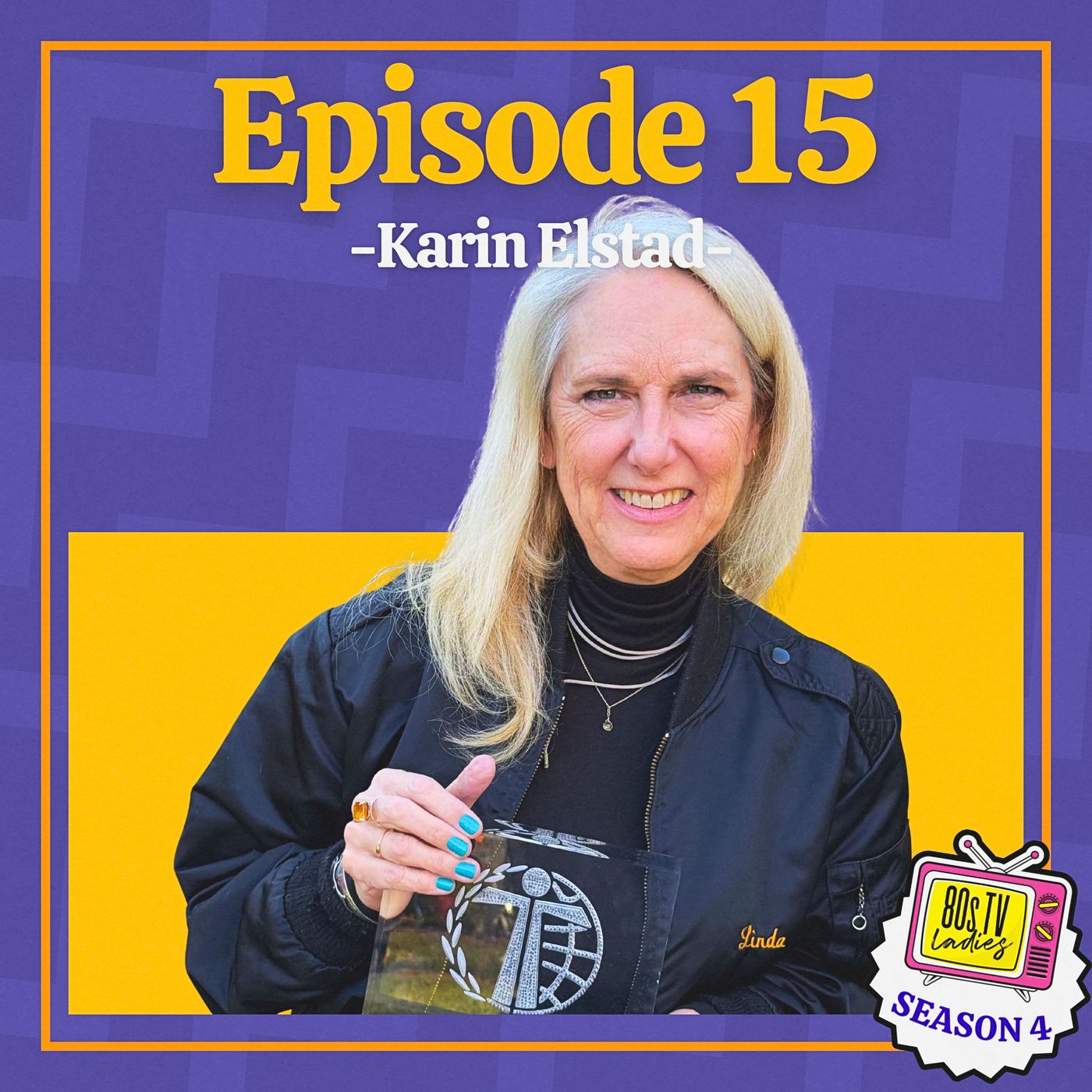
Susan and Sharon welcome Karin Elstad — a modern TV powerhouse and Vice President at HBO — to celebrate the incredible life and legacy of her mother, the legendary television writer Linda Elstad. From the high stakes of Dallas, to family comedy One Day at a Time, to the hallowed halls of Fame, Linda was a prolific voice who helped shape the landscape of 80s television.
THE CONVERSATION
- A PROLIFIC LEGACY: Linda’s impressive career spanning over 20 television shows, including her work on iconic hits like Dallas, Fame, and The Facts of Life.
- ONE DAY AT A TIME: Diving into Linda’s time as a staff writer from 1983 to 1984 on the beloved series that defined a generation.
- AWARD-WINNING WRITING: Remembering Linda’s 1982 Humanitas Prize win for the television movie Divorce Wars: A Love Story, starring Tom Selleck and Jane Curtin, and her nomination for her work on Fame.
- SERVING THE GUILD: Linda’s impactful leadership serving on the Writer’s Guild Board of Directors from 1986 to 1990. And a ground-breaking cultural exchange between Award-winning United States and USSR screenwriters.
- MOTHERS AND DAUGHTERS: Karin shares personal stories of growing up in the heart of the television industry and how her mother’s trailblazing career influenced her own journey to becoming a top executive at HBO.
- THE SCINTILLATING LADIES OF THE 80s: A look back at the shows that featured the complex mother-daughter dynamics we love, from The Golden Girls and Mama’s Family to Scarecrow and Mrs. King, Roseanne, and Kate & Allie.
- GREEN ENVELOPE DAYS: How much is the green envelope residual check Linda’s daughter receives for her mom’s 1980s television shows being rerun and streamed? Can you guess before the check is opened on-air?
- Watch episodes of Fame on Peacock and Dallas at YouTube or Amazon Prime.
- Catch One Day at a Time streaming on Tubi.
- Find Divorce Wars: A Love Story and other classic TV movies on DVD via Amazon or eBay.
PROMO DEALS
- Get 21% OFF on awesome sheets and pajamas at COZY EARTH.
Be sure to use the promo code: 80STVLADIES.
Happy Shopping!
MARCH 8TL DEALS BLOCK:
80s TV Ladies deals and discounts:
Cozy Earth (21% Off)
🔗 Get them at: https://MyDeals.Page/19wy
🎁 Code: 80STVLADIES
📻 CONNECT WITH 80s TV LADIES- Official Website: 80sTVLadies.com
- Email Us: 80sTVLadies@gmail.com
- Support the Show: Get ad-free episodes and bonus content | Support on Patreon
🎭 SUSAN'S NEW VENTUREArts A La Carte – A non-profit dedicated to helping develop new works in theater.- Website: ArtsALaCarte.org
- Instagram: @ArtsALaCarteLA
Visit 80sTVLadies.com for more info.
Listen to 80s TV Ladies at YouTube. Subscribe and help us grow.
Don’t miss out. Sign up for the 80s TV Ladies mailing list!
Help us make more episodes and get ad-free episodes, video interviews, and exclusive content on PATREON.
Transcript
Automatically generated, so expect the odd misheard name.
Weirdy way media. Lends pretty into the city. God pull the money the world. Welcome to Eighties TV Ladies, where we look back in order to leap forward, and where we like to say, get ice out of la Hey. Make sure you're registered to vote and you can check your voter registration at vote dot org.
Here are your scintillating hosts, Susan Lambert HadAM and Sharon Johnson. Hello, I'm scintillating Susan. Hello, and I'm scintillating Sharon. We talk a lot about mothers and daughters on the show One. We all have mothers, and many of the great eighties TV Ladies shows feature mother and daughters.
From the Golden Girls, Mama's Family, Scarecrown, Missus King to Roseanne and Kate Nally. The list goes on, and today our special guest is a friend of myself and Melissa from our US film school days, who is the daughter of a fabulous eighties TV lady, Linda Elstatt, who wrote for a ton of eighties television, including One Day at a Time. She graduated from Hollywood High School and UCLA. She became a television writer in the late seventies, working well into the nineties, Linda worked on over twenty television shows, iconic eighty shows like Fame, Dallas in the Facts of Life. She was a staff writer on One Day at a Time from nineteen eighty three to nineteen eighty four, and she served on the Writers Guild Board of Directors from nineteen eighty six to nineteen ninety.
Linda was also a nominee for the Humanitus Prize for her Fame episode and won the nineteen eighty two Humanitis Prize for her television movie Divorce Wars, a love story starring Tom Selleck and Jane Curtain. So we asked her daughter, our friend Karen, to come on and talk with us about her mom, Linda and what it was like to grow up the daughter of an eighties TV lady. Karen herself is a modern TV lady and a vice president at HBO. So welcome to eighties TV Lady Smith, Karen Elstead, How are you so much? I'm great, Thank you for having me.
I'm honored. We're really delighted that you're able to join us today. So let's start with what you're doing now. You've been at HBO since the nineties and obviously have been through a lot of changes, and we'd love to hear about what that experience has been like for you. I love my career there.
It's an accidental career. I like to say what I do is basically so, I'm in business affairs. It's not a creative position. It's problem solving all day long. And I run two departments are clip licensing for the HBO and Max Originals.
So anything that needs to be licensed, that's, you know, our property, it comes to me and my team. And I also handle the credits. So I had a friend who gave me the nickname the credit Bitch because I'm the person who gets to say no. But I you know, I started and I was hired. I had a new baby, we needed health insurance, and my friend was working there.
I had also just lost my mother. Coincidentally, this is kind of a full circle. So sitting in a night gown, really depressed new baby, and my friend says, get out of your chair. I have a temp job for you at HBO as an assistant to this person and he's still around, a great guy, documentary producer and creative executive. And you can work one week a month.
It won't be hard. I was like who's going to watch my baby? That was my mom was the only babysitter she ever had. She was only five months old, and so she said, well we'll figure that out. I have a nanny for you too, by the way.
So I started working and I really loved it. I was just an assistant in production. I took a you know, I took the job full time and thought, well, how am I going to do this, you know, being a new mom. But it's you know, the product was great, the people were great. I said, I'll give you a year.
So it's been about twenty eight. So that was not a cuarn. But now I have a fund, I run a team, and we not just we don't just handle credits, but we handle sort of we cover all the talent obligations, whether it's screen creative services, is photo approvals, merchandising for on all the deals at HBO handles and make sure all those are being met, including tax incentives and you know, guild requirements, et cetera. So it's fun and each show's different, and you know, we're just solving problems and it's a little bit like production was, which I loved. You know, when you finish something unlike writing, where oh you could always rewrite.
Yes, and that was you know, yes, projects that are never finished just abandoned exactly. Yes. So it's been a good run. In terms of the numbers of shows produced. And when you started versus now is I would imagine it's significantly different.
There's a lot more production. Ow my gosh. Yeah. Well I started in and it was called HBO Pictures. So we made about I want to say we made about seven HBO movies a year, but then think about it, and I always think about this.
We used facts and phone and everything moves slower. You just couldn't do as much. Right. HBO was just starting its original series, right, Sex and the City, the Sopranos were just getting produced, and so I worked with the film's department for a while. We started doing more independence as well as you know, the regular big budget and eventually we merged both the series, the mini series and the film's division.
So that's now I work on everything. We don't do as films as much anymore, but we're just gangbusters with series and limited series. So you're now a nineties to modern TV lady. What has been the biggest change you've seen from the perspective of HBO. You know what, I feel really proud because our company under HBO, there's a group of us that have been there a long long time.
I'm kind of a baby in that group, but between twenty five and forty years, right, So there's such a trust, there's easy way to communicate, and there's a professionalism. Even with the people who've come along after, there's really like an ethic and a professionalism. We were talking about the staple throwers, those kind of that behavior really isn't doesn't exist. So there's just a lot of respect. Just a man.
I work with some of the smartest people, funniest and I think this was always true. There's sort of a I want to say, non progressive people care about their community, care about causes. Our documentaries focus on things that are just like so important. So there's a reason that we pick a subject. It isn't just how many dollars can we make here, it's there's there's something to say.
No, there's still that it's not television at HBO. I'm feeling so yeah, yeh, I think so. I don't know that's good to hear. Yeah, all right, can we take us back? I want to go back, please talk about how your mom became a writer in the seventies and eighties.
I mean, I was just thinking, like I felt like I was cramming for a final on my mother this last week, because I fo a lot of her materials and I haven't been able to talk to her in person a long time. She passed in ninety seven. But so her father was a writer. They lived kind of feast or famine. He made a lot of money in the thirties in the forties during the depression, and he came out to be a writer.
So that was normal to her, sort of a creative life. I thought that she started mostly pursuing it when my dad left in nineteen seventy eight, but looking back through a lot of her works, she had yearned to write. I think she always wanted to be a writer. She tried to get children's books sold. She was pitching articles.
She had been a nursery school teacher after she got married and had four kids, so she wanted to pitch an article about how to find the right nursery school for your kids. She had collected antiques. My dad was in the Air Force as a doctor, and they collected antiques in London and so then she wrote an article about collecting antiques, so she was getting it out there. When they were still married, she took a UCLA Extension course in TV writing. This was probably mid seventies, so she started writing specs scripts.
She got an agent and went out to pitch for a show called What Really Happened to the Class of sixty five, which was based on a book A true story about Palisades High Schools Class of sixty five and what Happened ten years after. So she pitched several options, several different characters and characterizations and stories, and she said the guy kept saying, now, how about another one? She said, I'm not going to leave this room until I get a Yes, she wore them down. That was my mother, one hundred percent. So she got that first job for a specscript and she wrote it and they made it, they produced it, so we watched that.
It aired January nineteen seventy eight. And can I ask how old your mother was around that time? Yeah, she was forty six, Let's see she was about No, she was forty five. She was forty five. Forty five?
Wow? Before that was her father still alive? Was he able to give her any kind of pointers insight, think she went to him for advice there the meeting was so different. She had a great community of friends, and I know she probably had made friends in those writing courses. I'm not sure if she did it then, but throughout her life she always had writers' groups that would meet at our house, you know, so they would be sitting around reading each other's work and critiquing.
But I'm pretty sure she either went to a teacher or had a community. But ironically that aired six months. Later my dad moved out. He told her I'm leaving. Oh wow, So that happened before he moved out.
Yep. That's super interesting, isn't it. And she was not aware. She was not aware that he was going to leave. So in a funny way, she had gotten a foot into a business.
And you had talked about how women you know, were riting because they had opportunity. She was writing kind of to keep a family going. Yeah, because after that. I assume that then she had custody of you guys, and about hold worse. So I was fifteen, we had fifteen, thirteen, nine and seven, and so what.
Then was your relationship with your dad? I'm so curious about y. So there was a lot here, like they were going to rebuild their house, and you know, all of a sudden, he you know, he was moving out that weekend. He had another person person in his life. And later my mom would say, you know, that's the best thing that ever happened to me, was your dad leaving me, because I would not have I would have stayed missus doctor Robert j Elstad.
Right, that's what you were on your checks, on your credit cards. You were missus Robert. Yeah. And she had to start completely over. So, yeah, we were a little bit upset.
So she had, you know, kids that are having emotional experiences. She's trying to figure it out financially and then pull a career and together. So she said used to say that, well, I had a BA degree from UCLA and I knew how to type, so I'm going to be a writer. She just put all her energy into that, and there's a lot of material over there. She was going.
Yeah. I mean, she she got an agent, you know, and and I think there were always male agents right back then, and she did get a lot of support from that. But I have a feeling and she was the kind of person who was like staying on top of things. She wrote a lot of spec scripts, and she could pitch. I mean, that's the scariest thing to me.
But she would just go there and pitch. I would watch her get dressed and have her, you know, drive off to Beverly Hills or wherever it was that she was going, and she would pitch, and then she'd come home and she'd write, and she would type it out on her electric typewriter. Right. And I know, it's so exciting to look at those strips because there are fifty words a minute. They're so clearly typed on a typewriter.
And then and then in the one script was it Falcon Crestwood script? Was we were looking at? So that had the wide out and the corrections written in the paper. It wasn't even the tape. You know.
You were like, yeah, and you couldn't put too much because then it wouldn't you couldn't write over it. It was getting the liquid paper just right. Was an art. Oh, it was the Quincy. I'm so excited about the Quincy script.
And where were you guys living. We lived in Rusta Canyon. It was such a unique time and place, a part of Pacific Palisades, which originally was Will Rogers Land, sort of at the canyon where Santa Monica meets Pacific Palisades. So there's a beach, there's creeks, there's it can feel really rural, and my mother did not want to drive kids around, so she thought they can walk everywhere, and we did it. It was a place in time where as kids you could have a movie stars kid or your housekeeper's kid, and everyone just kind of went and did their own things together.
You know, we were at the beach, we were at the movie theaters, the Bay theaters. There's kind of everything at face value, know what I mean. Sounds almost idyllic. Yeah, it's funny because I was talking about you know, who'd you grow up with? Jeanie buss I used to watch Dark Shadows at her house after school.
She went across the street. A friend of mine was dating Matt Sachs is still a friend of ours, and his mom's beat Arthur. Right. So one day we're too loud and we hear screaming Matt and she throws open the door, quiet down and it's mad, like, oh okay, they get angry too. Chloris Leachman lived across the street too, and I'm actually back together with my high school boyfriend.
He's two years older at the same school, Pally High. So Steve McQueen's daughter was a good friend Tom McLaughlin remember Billy Jack their daughters. But you aren't super impressed a little bit impressed. But you know, everyone kind of was going to public school together too, right, And we all walked and we all had to scrape our money together for ice cream or whatever, and a lot of us stayed close, you know. And well now with Facebook and everything, you know, but yeah, we did.
It was also that time of growing up in communities where you hung out in the community and because we're walking everywhere and hanging out at the. Mall or hanging around and you walked to your walk to school at the bakery or selling shoes or whatever. And in the summertime, you leave in the morning and you come back home when you got lunchtime if you got hungry, and then you go out again and then come back when the sun went down or really you know, And those are. The writing all the time. She didn't know care where you were.
As long as you came back, that's it. Everything was great. So were you not impressed when like your mom was going off to work on TV shows. I was proud of her and I was excited for her. Financially, it was a struggle for a while after my dad left.
There was a lot of the typical sort of lawyers and the battling it out, and that was really hard for her. So when she had her own money, that was great. Dallas was pretty exciting. Dallas was nineteen eighty to nineteen eighty three. Yeah, in there, the height of Dallas.
Yeah, like fame. I got great props for that. Then One Day at a Time was nineteen eighty four. That's when I was graduating from high school and my mom was a single mom of two daughters, and so One Day at a Time was like this crazy thing. And she looked a little like Bonnie Franklin, your mom she does, yeah, yeah, particularly at that time she had the short, like reddish blonde hair.
Yeah. We were not nearly as wild as those children. And was there Schneider in your and there was no Schneider in our lives? Yeah, but that show felt like it was not written for us, but it was, oh, here's this single woman raising two kids on her own, and that was really kind of impressive and important at the time, and so I'm curious which one felt the most significant to you. Well, what I know is that she puts so much of her life experience into her writing.
And she mentioned to me that she had a kind of a special connection with Bonnie Franklin. I don't know if Bonnie had gone through a divorce, but certainly recognized that my mom was channeling some of her own experience into the The family there Dallas was just fun and so different than you know, right our everyday world. Probably that and Divorce Wars also got to use a lot of her experience and probably unfortunately a lot of the legal side. There were a couple of the big ones for her, and divorce was was Tom Selleck and Jane Curtin. That was crazy.
I'd totally forgotten about that. They didn't even remember that one. I'm excited. I'm going to go check that one out because I don't remember that. We have it on VHS.
If you want to borrow it, please, there's a VHS in our podcast studio. I think I recently gave away the three VHS machines that yes, I still had three VHS. Machines, and she needed to go VHS to VHS. I have no idea why, but I kept For whatever reason, I kept buying anyway, it doesn't matter, but I think I accidentally gave all of them away. So I no longer have a VHS for.
These reasons because there's stuff on VHS again. Connect them anymore, We'll see you can always do something with an old TV. You gotta have an old TV to go with the VHS DHS my family's motto. Clearly, I assumed Divorce Wars a love story seemed to be a huge step in her career because she won the Humanitus Award, and then from there it seemed like there was like show after show after show. And it's interesting to hear that it was personal that she had just been through a divorce.
Did she talk to you about what she was writing about? Did she talk to you about what it meant to her? She would let me read things. I would sometimes sit in on her writers group, like the eight is Enough fantasy A lot of I think she saw herself as really just like a workaday writer as at a certain point. Right, So, yes, Divorce War was very personal and probably one day at a time.
But I think for her it was a living if she could have you know, waved her wand and had her perfect career. I think she wanted to be a screenwriter and that was not realized. A lot of it will probably get to the agism piece of Hollywood. But she had optioned many books and has treatments and specscripts, fabulous stories. If I had another lifetime, I could try to produce all those.
But yeah, I think that was what she envisioned. I mean for us when we were in film school, it was features, WASTV. You're going to copy out and do TV. But now you want a series, right or you want to eliminated series and who can sustain except in a few people a theatrical movie. So but that was her dream.
That was her dream. But we should be like I got a fame. She loved and she loved the after school specials, the younger audience work as well. I mean, she had kids, she loved kids. She was a teacher, so I think she she gave respect to any genre as well.
She worked on another world. You know, I remember her saying, like the soap opera, but you know I can make it good. Yeah, she did that for like a year. She wrote thirty nine episodes of Another World. The speed of soap oropers always astonishes me to be a super fast writer.
Yeah, yeah, that's very handy. I'm not really super fast writer. I'm not a writer at all. So was she on set for a lot, because if you if you're a pitching writer, you're not going onto the set. You just send in your script.
And right, well she was on set for Dallas staff writer. Yeah, and you got to go to the set. Oh that was I'm sure that was my idea to come bit with her. She spent So that was nine eighty one, right, that was that summer. So that was between my freshman year of college.
I flew out there watched them shooting whereas they were they shooting in Texas. They were shooting the outside of Dallas somewhere, and you know, she got to sit with the writers. I watched them. We went out afterwards to a big dinner Garry Hagman, his son, the crew, you know, producers. That was really fun.
And then she let me go out after that to a bar. It was probably like a country bar. I was still eighteen eighteen probably I was probably legal drinking age there. Yeah, yeah, it was Texas. Yeah, very fun, very very fun.
Yeah, so I bought a cowboy hat, you know, the real thing. That's so cool. And she's riding on Dallas at the height. I mean, like the end of season three is the who shot Jr? Is that that's when he gets shot, right?
And coming back for four is the who shot the answer? Right? So she starts writing on the end of her first episode is season three episode twenty second thoughts for listeners that are Dallas fans. So she jumps on this Dallas train at the most exciting time to be on Dallas. Yeah, And it's hard to explain what the Dallas phenomenon was now.
Because we don't have the model culture anymore, and when we have an equivalent, I don't even know. Well, I think the. Only thing I can think of as something like a Super Bowl because everybody watched it, you know, the numbers of people that watch it. But there isn't on TV. There really isn't anything like that anymore because things are so fragmented.
But she's unfortunately, closest thing in movies lately has been was Barbie. Yeah sort of, but not that question that Cliff cliffhangers. Yeah, that was on the cover of time. I think. Probably on the cover of everything.
Yeah, it is so huge. So she's working on this show that is the pivotal television event of the decade. I mean, that's got to be so exciting, and she's she's writing episodes that are being directed by Larry Hagman and Patrick Duffy. Yeah, was she excited. Yeah, yeah, she was writing that for sure.
Yeah, she loved that. I mean, and then she was, you know, completely financial. I think she'd probably lapped her doctor husband. You know, she could put the kids through college, she you know, because. That was network money, right, Yeah, that residual check could be in that green envelope at the end, at the end.
Okay, So this is very exciting because Karen brought a residual check for your mother for reruns of one of the shows she wrote on, or more than one, and they come in this very iconic looking green envelope that if you know any writer that's worked in television in Hollywood, you know what that green envelope is. There used to be what they called green novelo season because many of them came at the end of the year and you knew whether you were having a good Christmas or not depending on how many green envelopes showed up in your mail, but you don't know what's in how much they are for. And they go to the writer or their heirs. So you know, the residuals don't stop, right, So they're going. It's amazing they're.
Going to the the beneficiaries because the studios don't stop airing and making money on showing what the writers wrote. Well, and you know what's kind of cool there is they dwindled for a long time. But now with all of the other outlets plain old stuff that you guys focus on, residuals are back up. Yeah, that's awesome, right, Just think about it. Anyone who's watching on what it there is like to be.
Or two Pluto TV one of the other over the air channels. There's tons of them that replay all kinds of older shit. They are contributing. That's amazing. The riders skills tracking at all.
Okay, should we take a little break. Okay, we'll take a little break and we'll be right. Back with more Karen and Linda and stories of eighties TV and beyond. And Russia is coming up and Union, that's right, Soviet Union, not Russia. Exactly.
That's right. I hope I don't get in. Trouble between horseback riding and grinding it out Monday through Friday. I really need some good gloves. If you are tired of stiff, uncomfortable gloves, you need Bare Knuckles.
That's b E A R. Knuckles. Their patented leather gloves are pre curve for ultimate comfort. They fit your hand perfectly, reducing fatigue. They have super awesome, strong and flexible gloves for all heavy duty occasions, gardening, outdoor work, and even welding.
My kids love their welding gloves. Stop wearing out your hands. Use our exclusive code Eighties TV ladies get fifteen percent off any product at Bybareknuckles dot com. The link is in our description. So back to your mom and her writing.
For Fame like one of the coolest breakout shows of the eighties coming off the movie. I think of it as female driven because of basically Debbie Allen. Oh so good. She wrote an episode called Solo Song, season two, episode seven in nineteen eighty two, and she was nominated for a Humanitis Prize for them. Oh that's such a good story because the first Humanitis Prize she had to fight on Divorce Wars for her credit, and she ultimately won that credit through an arbitration with the Writers Guild.
My mother is very social justice, so she was on the board of the Writer's Guild and really, you know, fighting for the underdog in that situation was important. So I don't want to name names, but if someone felt like she didn't deserve that credit, he deserved the award solely himself. But then hey, lo and behold another show that she works on is nominated. Well, g I guess maybe she does. I guess maybe she's humanitous material after all.
But yeah, she was very proud of that, and did she ever talk about that fight? Basically a lot of writers have to have that fight, right, like you work on a show and all that stuff, but there's also that extra like, oh, she was a woman powerful. Really I'm not sure if back then it was an automatic arbitration, so if people don't know the difference what the Writer's Guild does now and again that's subject to change. But if you have a showrunner, executive producer or anyone with a producer title, who's your writer writing with a staff writer who doesn't have that sort of producer role. Additionally, the guild will step in and say, hey, we're going to read all the material and make sure the more empowered writer producer isn't putting their name on and that they actually contributed equally.
Right, So now the guild steps in so that there doesn't have to be any sort of I'm challenging you, right, so you don't have careers with suicide to the challenger. As a baby writer, you don't challenger. Right, Yeah, I don't think you wrote with me. I wrote this by myself. Why are you putting your name on it?
I'm not sure back then if if it was an automatic arbitration or if she had to protest the credit regardless, it came out in her favor. So the guilds determination's final, and that credit is they determined, is what ended up on screen. That's great. Did she ever talk about facing sexism or agism like we like because she's forty seven when she starts, oh yeah, so by the time she's doing Dallas, she's fifty. Well, and she was a ballsy broad like she did not you know, she was there equal, she would stand up for her ideas in the room.
She probably was feisty and got in there and argued, I feel like she did mention that. I mean, it could be that it cost her some jobs eventually with certain people with egos and the ages and piece. Atalie did really come in I think as she approached sixties, so that was you know, in the nineties, work was drying up for sure. In TV. The thought was, we want our writers to be thirty.
Yeah, yeah, I know, get the young people, because goodness knows, the male you know, we'd have like parties for our friends in film school and stuff like that. And then one day she says, Karen, I'm pitching to so and so, and it was literally one of my peers from film school, a good guy, a nice guy, and you know he probably thought well of her. But she was pitching to someone my own age. That's crazy male. Yeah.
Yeah, but she would show up. Yeah, you know, I think showing up is really a big part of it. Yeah, I think it was. I think, especially in the nineties, it it was hard to be an older woman. Yes, she had been an executive producer or a star yourself.
Yeah. When she did the work for the Writer School, when she was on the board. I believe that was eighty six to ninety. What was important to her to achieve. When she was on that board, you know that she went on strike with them.
She picketed all the rest. I think, you know. Equal pay, residuals, health benefits. She's a union gal. She and very liberal.
She was always very political in with elections and presidential and Vietnam War. So I think fighting for the working writer who doesn't just get all the endless residuals that needs to work and slog that was important to her. I think that if you're outside the industry you don't quite understand the importance of residuals for writers, for actors, it is how you sustain yourself when there's no work. Right. You might get paid a lot, but you may not work for a year, and so the residuals become a real lifeline to continuing to be able to be a writer.
Back to one day at a time, So she worked on season nine. She was a script consultant staff writer for One Day at a Time and wrote two episodes Sam's Apartment and never hire a relative. Howard Hessman was on the show. I'd totally forgotten that. I think I kind of fell out because once I got to film school, I didn't have time to watch television anymore.
It's also been one of the one of the many fun things about going back and watching these shows to see people at much earlier stages of their careers. A totally different show. Recently started watching Kate Nelly and Kelsey Grammer is in the very first episode. He's taking Kate out for a date, and I just blowed my mind a little bit. That's a lot of fun.
What were the people that she liked working with the most? He said that, you know, she got along with Monnick Franklin. I think she loved she loved working for Norman Layer. He gave women writers a lot of opportunities, so he was very much part of that show. I think he was there, and it's funny I ran into him.
I think I was wearing this jacket. There was a documentary that they did with Carl Reiner and I think it was an HBO documentary. If you wake up in the morning and you're not in Neo Bits Eat Breakfast, you should watch because it's all the old Hollywood guys talking about how their longevity, not just Hollywood doctors, et CETERA really uplifting, happy, funny documentary. And we had a little premiere and I went with my friend from films school, Danny Sallas, and everyone's like this normally, here I go, I need to go talk to him. I walked over to him and I introduced myself.
I said, my mother worked on your show, and you gave her one of her big breaks and I just want to thank you. So that was really an awesome moment. I have a picture with him. But yeah, he gave a lot of people a break there. So so she loved that.
And Bonnie, I don't no, I don't know other names on that particular show that that. Come to mind. Yeah, but on Dallas, who did she like? She liked the women for sure. I'm not going to say she wasn't a fan of but she likes enough to go on to Falcon Cress, So okay.
Yeah. Larry Hagman also lived in Rustic Canion. He lived across the street from someone I knew, So yeah, interesting. I don't know that I would have expected that. I mean, I don't know the man, but I don't know that I would have picked Rustic hen Apparently he had the bottle from I Dream of Jeanie as a prop in his backyard.
Remember that the life size one that the kids can plain, Oh my goodness at his house. That is funny. And I just heard an interview with Patrick Duffy talking about Dallas and when he got cast, he didn't know he was shooting Dallas. He could cast in the show, and he was coming right off of like the Aquaman, right, okay, early Aquaman, okay whatever. He was coming off Man from Atlantis.
But apparently he just assumed they were shooting in LA because they shot Man from Atlantas in LA. And there Larry Hagman's like, no, dude, we're going to Dallas. What are you talking about? And like apparently Larry Hagman had like this camper van or something that he drove to Dallas, unbelievable, and basically everybody just sort of hung out in Larry Hagman's camper van the first season of Dallas Saw. That sounds like that Larry Hagman that I read about.
That's fantastic good. Patrick Duffy was a good guy. I like, yeah, she liked that. Duffy. He talked about having to fight really hard to become a director on that that Larry Hagman had been able to direct because he had I guess had directed a genie or something.
You know, at a certain point, particularly like once you get into three and four, all the actors agents want them to direct, right, So, but apparently they really fought him really hard, according to him on the podcast, Oh that was it had to be Morgan Fairchild. It was either the love Boat podcast or. Just recently, Well, oh does he I would love to talk to him. It's gotta be this seven. Yeah, but he sounded great.
He sounded great, and you know that's awesome. Yeah. Okay, So when you went to film school, were you thinking I have this whole history, like, did it drive you that way or did it maybe almost make you not do it? Well, my dad was a doctor psychiatrist. I thought I wanted to be a doctor growing up, and he was like, you're not gonna like it, Karin, It's too hard.
I don't think it like medical school. And so then I thought, well, I want to write. I don't know why I thought. I just said the options that my parents chose. But I started writing sort of creatively before film school, and I applied to a creative writing program and film schools.
I got into the USC Professional Writing School and the USC Film School graduate, and I thought, God, how do I decide? And I thought, well, I'm just going to pick the one that scares me more, which was Film School, and Film School was scary, right, that was really challenging. I loved it though, So I just what's the most challenging, Mark? I like the writing. I think just directing, pitching and just it was very competitive.
There were not a lot of women. No. No, our movie, the one that you wrote and Christa directed was we were kind of hip with the amount of women we had. You hadis oh you like watching dailies with Robert Simchis was okay, that's pretty good. What was what was four eighty which is the school is going to make five scripted student films a semester, right and pay for them.
There are thirty six pairs that get together to pitch for these five spots. So you submit your script. There were like thirty six directors. You have to pitch your script to those directors. Then you go in together and you pitch to the faculty.
And I met Christa. She picked my script. It was semi autobiographical, right, it was my dad leaving, a coming of age and what was it called an unfamiliar summer. Oh right, I think I had a viages. That for a while.
Yeah, because you shot it, No, yes, you shot it. Yes, the pairs you know it was me and Ron Okay, yeah, okay. We were this cinemasiophers. What was so great? So?
And and the energy at film school was very male, very A lot of these guys had family. I mean, Doug Lyman was. In our that's right, was in our class. So and you know, a lot of this uber energy and so for us to do a story about a young woman. But also we pulled a crew together.
Most crews had maybe one female, if any. So our story was really different. And they pull in an outside professor or visiting professor to be the mentor, and it was Robert Zemeckis. That he was so great. He liked our story, you know, and we'd watched dailies and discuss scripts.
But you're so exhausted, and you're working so hard, and you've got so many things to do, and we're clearing music. I mean, I think my favorite story from that show was my little producing side was I wanted seventies music. It was the seventies period piece, you know, our production design I was all seventies was very fun, and so I wanted to clear a bunch of music like Steve Miller band and Jefferson Airplane and stuff like that. This is very interesting that because that's a huge lift. I know, no one teaches you how to do it.
That you figure it out, and so we don't teach you how to do something kind of fundamental to to clear music and film. Not back then you would ask somebody. So you I don't know how, because I did it for my three ten Also I got Man in the Mirror from for Michael Jackson on my on my documentary fantastic. But I have all that paperwork, everybody no doubt. I'm sure you don't doubt it.
But so I get this call. And this was in the days of call waiting. I'd put all these phone calls out, maybe sent letters in the mail to the record companies. And I'm on with a friend and I get a call waiting and I said, hang on second. I call back and she says, hey, this is Grace Slick.
What And I said, hang on just one second, click, Hi, I gotta go. Grace Slick is on the line, and she says, so I get this litter do you want to use our song? I said, yeah, just this little film there, student film. We weren't going to do anything. She said, yeah, that's fine, I'm fine, no problem.
Yeah, different time in the world, isn't it. So we have a Jefferson Airplane song in our way? Is amazing, you reminded me because for my for eighty I cleared the right to re record a version of Still Crazy after all these years publishing rights. Yeah, which was again I didn't know how to do that, but I was like, I want, I want my friend Rob to sing this song at the end of this movie. And so we did it.
I don't know how. And then also I made a music video of another song written by jenesee In, and so I had to write to janee In and she wrote me this lovely letter back and said I could have it again different times. Yes, yeah, wow, I'm sure it does not have the rights to her own music anymore. Yeah. No, those are the winds.
That's what made it fun. So so yeah, I was. But that's very interesting that you were basically doing projects that required you to secure rights, and now you have a job where you are the person that everybody has to go to secure rights. Yeah, yeah, the one that says no. Sorry.
Though, Now if a student film came to you, oh my god, you're not going to do this to me. I wish you could hear the conversations that I have with my gal who works for me. Some of them really pull on the heartstrings. And again, I have to think of our brand, right, and we're really busy, so we can always say we don't have the time for this, But there are those favors where you're like, oh, this is really a good cause, and if it's within the realm of what we can legally do, we'll do it. So that's the thing too about a lot of our programming is our films have a message, you know, whether it's the normal heart about AIDS or you know, there are so many so we'll have on Aid's Day.
People want to screen it and we'll always try to make it work. But yeah, there are crazy asks of us. Can we just Harrington? I want to put his face on a T shirt for my boyfriend's birthday. He loves hit him, but the T shirt shop won't let me.
They say I need to get a I'm so sorry, Oh you can't do one on birthday. That's even though I'm sure they're pirated all over the world. Do you get a lot of those kinds of requests? Is that? I mean we get so many different kinds.
Well, we'll get a lot of real, legitimate more and more there at collaborations. You know, Big Star will be doing something with a brand, with a watch, with a car. Those kind of leave my realm. But we'll We'll have some people want to just we want to do a presentation for a law firm, and we want curby your enthusiasm because there's a really funny scene. I'm like, I know, I'm sure you want your presentation to be a lot more funny.
Yeah, but we but we get the legit. Universal wants to you know, clip a sopranos for a feature, et cetera, and we'll handle those. So do you get a lot of things that that where people have just done it on their own and then somehow it gets to you guys and you have to kind of brain them in or whatever. Yeah, sometimes they'll you know, they'll be reported after the fact. We don't usually do it, but sometimes someone will come and they've really gone too far and oh, someone should have told you you can't just use copyrighted material.
Yeah, yeah, yeah, and then like the powers will be above me say, carn this is a yes, do it. We'll make it happen. So you guys met on the show. Did you know each other before you did the four? Any?
No? They came to me and asked me to be their director of photography. Yes, I did. Well, this was before you did. Yeah, I know.
I went to Melissa and asked her to shoot my for eighty but she was on her way out, had already shot two for eighty's and said no to me and has regretted it ever since. Oh you didn't hold a grudge, No, not at all. And I did how much? You did? How much?
Then we went to you and you said yes to me, and we made a different for eighty after film School's right. Did you direct it or write it or both? So I directed and wrote the for eighty. They said yes to me, and then they crushed me so hard. They tried so hard to crush my every So but it's okay.
I made. I'm very proud of the film that I made. It's not quite the film it could have been, but you know. We had that too. There was just a scene we wanted to have and sorry, twenty minutes no more, not thirty seconds more or not.
Yeah, but I think yeah, there was a there was a patriarchy there. Didn't understand some certain stories. I think. Yeah. They were in the editing class that would meet separately from the directors, right, which makes sense.
And they were going over a cut of my a scene of mine, and the editors are like, well, we don't know, and there was some question, but what can you do? How can you save this scene? Which is again always how you want your editors to approach your film. How can we save it? And my friend that was in there was like, well, Susan's actually right down the hall.
We can grab her and bring her in, and bon Miller's like, no, we're not bringing directors in here to ask them questions about the film. They made that they so that. I found that out a little bit later, but yeah, so they very much were told not to cut my film the way it was shot to be cut and written to be cut. But I actually got it back the way it was supposed to be and it worked great. And so then my directing instructor, who was not Robert Semchis and I will not name him because He was actually mostly pretty nice to me, but at the end, as I was leaving, he was like, well, I guess you did it your way.
Yeah, that was drowned upon a little bit. Yeah, very much. So. I felt like they wanted the program to have a certain prestige and look a certain way, and the experimental learning part we on it was maybe less important. Do you remember what happened with our screening?
We were supposed to screen at the Academy Motion Picture. Yeah, big screen it, right, and that was what they'd done every year. A certain dean decided, oh no, too much exposure and tried to move it, I think on campus. I don't know if they were not thrilled about some of the product or whatever, and we fought for it and they put it back. I remember we actually like had our own little screening at the Academy.
And you remember what night it was. It was the night of the riots. Yes, it was the first night of the Rodney King Riots. We were finishing up huge success and you know, my hair, my dress, the whole thing, and went home and turned on the TV and that was craziness. Craig Carlson was in that screening, had of film in that screening.
I think was it the Wheel of Fortune? It was Wheel of Torture. You know what film I want to see again. I was a cinematographer on Ann Kim's film. I was a cinematographer on a called breaking in Women in the lapd Was it a documentary?
Yes, oh, and Kim the character and I and a sound guy drove around and did the sound and directed. I had a sixteen milimeter camera and we rode around with the cops in nineteen ninety this is before Rodney King beating. We were jumping in and out of squad cars in South Central with three different female cops. That's crazy, it was. And we did interviews at my dad's house with a couple with them because they didn't want anything familiar looking to their whereabouts.
But that film want some awards too. I think she won a Student Emmy. Yeah. Anyway, I had a bulletproof vest. Oh my god, came and so did she and a camera on my shoulder and.
It seemed to stay. Now, there is no way I know it would let you do this in a million years. We're just like. Walking through people's houses. She was getting them to signs off, you know, just come on through don't mind them?
Oh my god, crazy, I was, I don't know, twenty seven, twenty eight, that's nut. When I was looking for work and came to HBO, I thought, this whole writing thing can be pretty heartbreaking. YEA know. Sure? Did you see your mom be heartbreaking?
Yeah? I think in the end, it's just a really hard way to make a living. And when she was, you know, needing to support herself and the kids were all out, it was just not a sustainable And after film school I had a writing partner. We sold a treatment to Disney, you know, and we're working on a script together. I was married and I would work with him, and my husband would come home and he'd say, well, so, how much you're going to get for that script you're writing.
He didn't obviously grow up with, you know. Mother in the business. I don't know. Tell me you've been spend a lot of time, and how much you're going to make? I don't know.
We may not make anything, we may never sell it. And he's like, what, why. Would you do a job that you may never make any money yet? So when I started working at HBO, I was like, this is nice to get paid every two weeks, you know, so it'd be said for that and have some security and some health internans, and I'll just right on the side. There was one more question I wanted to ask about, which was the USSR.
Back in the USSR, so your mom, when she was at the Writers Guild on the brider's go board, organize a trip to Russia and a trip for russianimmakers to come to the United States. So my mother collected friends all around the world, and if she ever met you and loved you, she never let you go. So some par somewhere along the way, she met some Russian writers. They would have called themselves Russian, not Soviet, but and she came up with an idea with some friends who were on the border were also writers to let's foster in exchange. So somehow she pulled together a group of very famous writers to bring one film to go to the Soviet Union.
And this was in the spring of ninety one. I was rounding out my second year in film school. I guess, so I jumped on that trip with my partner in a video camera. It was Julius Epstein wrote Casa Blanca. Ernest Leemann Sound of Music, Larry cast and brought I'm gonna forget John Patrick, Shanley, William Goldman, Paul Schrader.
I think his was a taxi driver. Oh, and I have pictures of we were in a Russian newspaper. Annah Hamilton Phalen. I think she brought masks. So we had masks, Sound of Music, taxi driver, Casa Blanca, and Moonstruck.
So they were like, cool, we'll go to the Soviet Union and bring our films and have Q and a's. There was a whole tour setup. I'm not even sure how they pulled this off really, because this was the Cold War. This was like May, yeah, May nineteen ninety one. And so those films wouldn't have screened.
Maybe sound of Music it would have screened. That's a great question. I I don't know what you could watch there, probably just I think by then things had started to open up. Okay, this was part of the opening up or which, Yeah, so there was a warming. The economy is still very bad for the average person, not for dignitaries, not for you know, guests of the state.
Oil company employees were fine. Yeah, that was you know, we went to museums. We you know, people brought their wives you were old. I was twenty nine, okay, and so yeah, her own buses or you know, and we're lugging this camera that was a half inch camera, but you know it was really just the pretense to get to go. So yeah, we interviewed the Americans and we you know, I had a little tape player, and you know, they loved the Americans over there.
That was another thing that impressed me. And I think this is part of my mother's all sort of philosophy, is like we're more alike than we are different, right, so let's show how like we are, and art can open those doors for people. Right. The stories are universal. I think they had simultaneous translation into Russian.
But it was a major achievement. You know, if it's possible to see the documentary that you had made somewhere. We turned because the Writers Guild paid for everything. We turned it all over to them, and we we actually wrote a little script and you know, like here's our outline for how we would put it together. But they didn't.
They didn't do anything. They didn't do anything, just so they brought somewhere unfortunate, to say the least, they do have that summer. Yeah, so considering the guest list, you'd think that that might be something of real interest. I mean, I think I don't know too many people who wouldn't like to say that. I know.
Well, all right, we got to get to the writers. There you go, it's our project. What else are they doing? They're fine, that'd be an HBO movie. There you go.
All right, Well, thank you. This has been amazing. Thank you. It's been really fun to go a little down memory lane, but also to hear about your mom and hear what was to grow up in that world. It was such it's such a unique thing she did right, Oh for sure.
And when you think about her really starting that television journey at forty seven in and of itself incredible. Yeah, it's amazing. Is there anything else about her that we haven't answerry about that you'd like to share? You know? She had so many passions, and especially for kids, she had a ferocious like curiosity and energy.
Really was like a renaissance woman. She could pay, she could think. She just was always churning out ideas. Later in her life, her cousins started a program called Middle College, where they took kids who were failing out of high schools. And put them at a college setting, in high school classes to kind of help them maybe see a future for themselves.
And a lot of these were underprivileged kids. So she brought that to LA and really took a couple of kids, one young man in particular under her wing. And she was just a mentor for so many people. I've lost track of him, but his name was Sean Cunningham, and he said to her funeral, if I'm if I ever do anything with my life, it's because of Linda. So not only was she wanting to get the stories out, bring people together, heal people through the messages, but she just wanted to help the world and make it a better place.
And and she just had so much life. And she died very young, she was sixty five. Unfortunately. Well, thank you for sharing her with us, she said, she was her I know she would she would have given a great podcast. I know, well a little bit of that woman.
Absolutely. Yeah. We pass her on and she lives on in a lot of us. That's amazing giving me time for her. Thank you, it's been great.
You're our first daughter. You know, we cover a lot of other daughter shows. We start to have two mother daughter shows coming up we do with Kate Kelly and one day at a time. It's really good to see you and thanks for coming on the show. Yeah, thank you.
All right, so it's now green envelope time. Yes, as promise, we are going to open the green envelope. Okay, do you have a letter opener or am I just gonna rip it and get a paper cut? Okay, here we go. I think you're going to rip it.
That is the sound of the envelope opening, and the winner is we haven't guessed. Oh, we have to guess. We have to guess first. Okay, how much do you think this check is for? This is residuals for shows in the eighties, and I am going to say seventy two dollars and thirty cents.
I'm going to say forty four dollars. Oh, I have no idea. Threw it out there? Fifty bucks? Oh no, go big, go big, two hundred and fifty dollars.
Okay, I'm gonna say it's fifteen dollars from eighty cents. Okay, let's see residuals for Dallas, the Denial, Dallas, the New Missus Ewing. I have that script over there, now that's requiem. They put them all on one check. Okay, all the second thoughts, sweet smell of revenge, Waterloo at South Fork.
Then we have a Falcon Crest Suspicion and a Falcon Crest the Vigil. These all ran last year. Total eighty nine dollars and thirteen cents, and. I came closer to going over. It's right.
Six okay, split four ways? Good about twenty? Who got you? Guys? Can take a cup of copy right days.
Good Lord, Thanks Mom, Thank you, w G. A West, thank you WG. We always think the writer's God. It's always a surprise. It is an actual check.
Oh it's tiny, it's a tiny little check. Oh yeah, it's pretty much. Deposit that quick. You'll get that. You got to pay some bills on that.
Okay, that's amazing. Thank you for sharing that with us in your experience that it was. You want to wrap it up ahead, let's put me out. In today's audiography. Find out more about Karen Elstad at Karenelstad dot com.
Hey, and you can watch the original one day at a time for free at two b currently, or you can buy it on Apple TV or Amazon Prime. You just never know where shows are going to pop up. I know they pop up everywhere exactly. Thank you all for listening. Do you remember one day at a time from back in the seventies.
What are your questions about the show? What are your thoughts? We love hearing from you, so send us messages at our website Eightiestvladies dot com that's eight zero S TV l A D E S dot com, or at Eightiestvladies at gmail dot com. We're so grateful to our Patreon supporters. You help make it possible for us to do this show.
Let us know what you want from Patreon and we'll try to do it this year. Do not miss our next episode where we talk with the one and only the heart of Heart to Heart herself, Miss Stephanie Powers. This was such a special conversation for us in early season one. Y'all, all our listeners, you were all begging for her right out of the gate, and boy were you right. It may take a while, but we try to get everyone you guys want us to talk with, and she is one very special Eighties TV lady.
Indeed, as always, we hope Eighties TV Ladies brings you joy and laughter and lots of fabulous new and old shows to watch, all of which will bring us closer to being amazing ladies of the twenty first century. And so pretty Eighties. Into the city Dredding Good pull. The money in a man world. Eighty day



Similar episodes across the network
Matched by shared keywords.
-
Special Report: The World of Nancy Kwan
1 shared keyword: hollywood memoir
-
Special Report: Peter M. Hoffman on Karmic Winds
1 shared keyword: hollywood memoir
-
All of Me
1 shared keyword: 80s tv ladies