
Season 1 · Episode 688
Special Report: Peter M. Hoffman on Karmic Winds
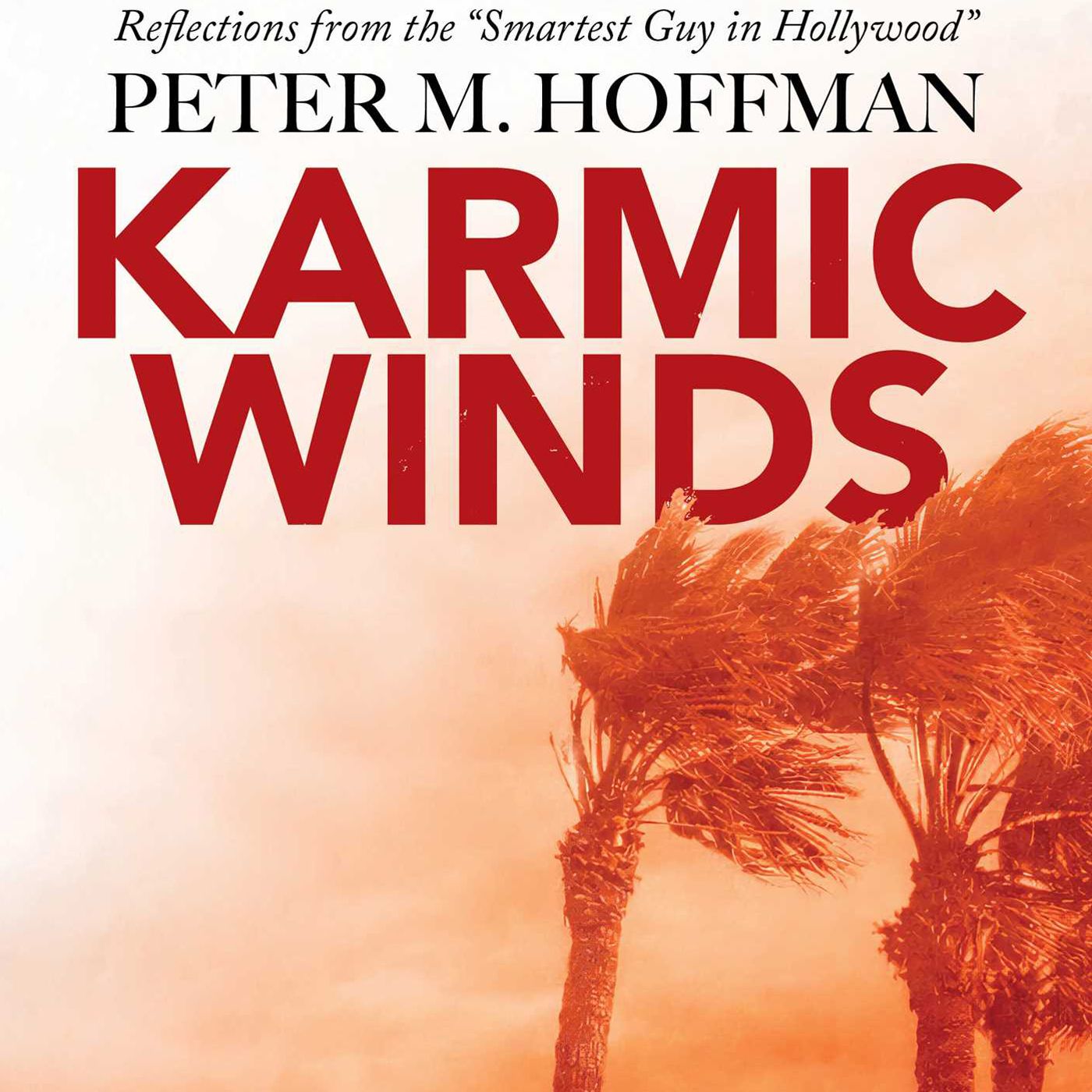
About this episode
They dig into Carolco, the independent studio Hoffman built with Mario Kassar and Andy Vajna, from the capital-gains maneuver that got Marlon Brando paid on Superman to landing Terminator 2 and Basic Instinct as back-to-back worldwide number-one grossers. Hoffman talks Verhoeven's instincts on Basic Instinct's ending, the collapsed Crusades project, buying Joe Eszterhas's script amid protest, and favorites like The Believer, Stander, and Jacob's Ladder.
Karmic Winds is out now; Hoffman's next project adapts The Master and Margarita.
Transcript
Automatically generated, so expect the odd misheard name.
Hold your ears, folks. It's showtime. People pay good money to see this movie. When they go out to a theater, they want cold sodas, hot popcorn, and no monsters in the projection booth. Everyone pretend podcasting isn't boring.
Turn it off. Hey folks, welcome to a special episode of The Projection Booth. I'm your host, Mike White. On this episode, I'm talking with Peter M. Hoffman.
He is a producer, and he has been working in the industry for a lot of years. Had a great time talking to him about his new memoir, Karmic Winds, Reflections from the Smartest Guy in Hollywood. I would not disagree with that from talking with Mr. Hoffman. He does seem sharp as a tack.
Hope you have a great time listening to this interview. Definitely check out Karmic Winds. Thanks so much for listening. Mr. Hoffman, I'm super excited to talk to you about your new book.
What prompted you to write your autobiography? What prompted me was that I was convicted of a crime I didn't commit. I actually, it's truly an absurd situation. My company filed for and obtained state tax credits from the state of Louisiana. They were three times allowed, finally allowed.
There was then a hearing in which The federal government tried to get a federal judge to say they were not allowed, and he rejected it and said that all the credits were properly allowed. And yet I went to jail for eight months for getting credits to which I was legally entitled to under the state law based on an ill-conceived prosecution by the federal government. And all my friends said, look, you can either be outraged all the time or you can actually sit down and try and write out what happened over your career and write out what happened in this particular case. and make something of it that's good. There's nothing in this world that says only good things happen to people, and this is something weird happened to me, and so I wanted to make the best of it.
So you're out there in the yard, and you're pumping weights and stuff, and you're just coming up with the idea for this book? Obviously, I wasn't writing when I was doing the weights, but of course, yes, that's one of the things you do when you're in prison is you do weights, and even in my advanced age, I was doing the weights every day. So no, I would. devote two to three hours each morning, and you can only. Write in pencil. You can't have a typewriter or a word processor or anything there.
So I would write it out, and then I would send it to my daughters who would type it up and mail it back to me, and then I would edit it. And then when I got out, we cleaned it up and sent it around, and I'm very pleased that it tells, I think, a lot of interesting stories about the movie business and also this kind of ridiculous story situation that occurred to me in Louisiana. You came into the movie business in such an interesting way. Can you talk a little bit about that path to where you ended up at? After I graduated from Yale and clerked for Judge Bazelon, my goal was to do public interest work and to be a high-end tax lawyer, the most sophisticated tax lawyer you can.
Horace Bitker was then one of the professors at the Yale Law School, legend in tax policy and tax law. And He had been a big supporter of mine. That was my plan. But then literally a year in, one of the partners said, look, we need you to go to Holland because there's this Superman movie that was made and they want to do, Warner Brothers wants to do a tax deal on it. And you should be the one that do that because that's up your alley.
So I ended up flying up to Amsterdam and suddenly I'm immersed in the movie business and And it then led to a whole series of other issues, solving all the problems that Alex Salkin had in the making of Superman 1 and 2. Sidney Kimmel, who was the Warner executive at the time, said to me, he says, Alex has more problems than God. I said, yeah, he does. And luckily, we were able to resolve them all. And he paid off everybody and made number two, made number three in Supergirl.
And it was the biggest grossing picture of its time in the late 70s. When you also worked in the music industry for a while. Absolutely, yeah. The mentor that I ran into, which I met literally just after I joined this law firm in Los Angeles, was this legendary manager, Albert Grossman. And Albert and I just, it was one of those things where we met and just hit it off, just like we knew each other forever.
We just became very close. I would go up and hang out with him in Woodstock and work on all of his deals and And the main thing about Albert is that he was just a brilliant businessman. He was a hippie. He always wore a dashiki and jeans and had a big, long ponytail and a gigantic head. But this was a man of enormous intelligence.
And he was a guy who recreated a lot of the basic parameters of how the music publishing and music and record recording deals are done. And so it was my good fortune to work with him That was after he had split with Dylan, but he still had his own record company. And we had a lot of time together and he had enormous influence on me and my way of thinking. I don't want to be exploitative or anything, but I know we just lost Dolly Parton and you had actually worked with her a little bit. Can you talk about your experience with Dolly?
That was, again, one of these strange things. I got a call from one of the senior partners there said, there's this manager, this new country singer that just came out. She's got some problems. Why don't you go over there and meet him? And I met the manager and I met her.
And she did. She had an interesting problem. One of the things that's so special about Dolly is all the publicity you see now is nothing but good. You don't see anything about any aspect of Dolly that was anything other than just the wonderful human being she was. But obviously there were issues.
And one of those was Porter Wagner, because Porter had a 10-year management contract with her. And when she decided to move her career to Los Angeles, that contract didn't matter anymore. But it did to Porter, right? And so that led to lawsuits. And that was the thing I got started with her on.
And it was the bonding that we did in getting out of that, not only settling the case in a way that was good for Porter, because she really cared about Porter. It was not that she didn't like Porter. It just was what she needed to do for her life and her career. And we ended up making what I thought was a very good deal for Porter. But one of those was to separate the library.
And because at that time, all of Dolly's songs and all of Porter's songs were in one music publishing company. And it was not, it was a corporation, which you can't do because you can't collect the money on your own songs in a corporation without a 70% penalty tax. And so they had done that, not really knowing. And we had to separate it. And her agenda was to get all her songs back, which was what we did.
And it was truly... And modestly, one of the more creative piece of legal engineering I did, we settled with Dolly. Porter got his albums put out. He got his songs back. Dolly got all her songs back.
Got it back with no taxes. She owned them outright, as she always owned them. You've seen in the press how important ownership of her songs was. She was a songwriter before she was anything. And she owned 100% of those outright.
And including a song called I Will Always Love You, which turned out to be such a gigantic earner. For years, she was the, I don't know, number two, number three earner of BMI and a marvelous songwriter. And not just the ones we know about, because you've seen all the press about all the different songs she's written. But, you know, you can go down song after song and ones that don't know so much. To Daddy, that's the one that always struck me that she had Emmylou Harris record for about her father.
She was a truly special talent, a special person. I spent 10 years of my life being very close to her. It was truly one of the great experiences of my professional career. The thing I kept coming back to in Karmic Wind is just that you solve problems, and it feels like the majority of your entire life has been finding problems to solve. Yeah, and trying to take something that's a problem and turning it into a profit-making endeavor and to avoid litigation and aggravation to do it.
So the biggest successes were the ones where we would get disputes or problems and we could solve them so that artists could get their artists back. The work would go out and do its work. And, you know, the success of the art would be the justification for what it does. It's one of the great things about being in the entertainment business is there's such a reward when you're able to resolve a problem. If you solve a problem for a company that sells garbage, it's still, for sure, creative.
I'm sure there were special things that had to be done, but it's not the same as when you are able to figure out how to get Dolly Parton all her songs back. I have a really dumb question for you because I've never known the answer to this, and you're probably the one person I can trust. Is it Carolco or Carolco? You know, the boys never really came up with that name. It was just a name they picked off the shelf in Panama.
So who knows? Whoever was the one who set up the name was the one who decided how it was pronounced. I can tell you, we almost always called it the Carolco, but there are other people who would say the other way. And honestly, Annie and Mark, could care less. They only cared if the pictures were doing some business.
Tell me how you got involved with Carolco. After this situation where I got tossed into the Alex Salkin thing, suddenly it was one of those things where if you're a young lawyer, you can get involved in something and you can hit the ball hard, hit the ball long, and suddenly everybody in the industry said, oh, who's that? And in my particular case, it was not only doing these tax deals so that Alex could pay off Brando, Donner, and Puzo, but also deal with the recoupment that Warner had so that he had enough money to make the new pictures and everybody would get paid. And the biggest part of the problem was Brando, because he had done kind of a, Alex had done, I don't know, He needed Brando. He gave him Brando's deal on another picture, which was 11.6% of the worldwide gross.
And now we have the largest grossing American picture in history. He owes Brando 11.6% of it, and he doesn't have the money. And Brando's lawyer is not in a situation where he can say, oh, that's all right, let's settle that. Immodestly, the first big deal I did that was... a little bit of a reputation maker, was I went to Marlon's lawyer and I said, look, how about this? We're going to give you the same amount of money that Brando would have after taxes for this $ 11.
6 million, but we're going to do it in a way where it's capital gains tax, so we don't have to give you quite as much cash, but he's going to get the same amount of cash after taxes that he would have got otherwise. And he said, yeah, I can live with that. And so the big deal was, how do we do that so that we can transform this, what would otherwise be ordinary income into capital gain? And modestly, I came up with what I considered quite a brilliant scheme. And of course, when the big law firm I was with said, whoa, whoa, whoa, whoa, whoa, we can't just allow you to do this.
You're three years out of law school. We're not going to put our name on something unless... One of the reasons I was there was a guy named Larry Stone, who co-wrote the main textbook with Boris Bitker in taxes. And so Larry said, Peter, this doesn't work. Come on.
I said, Larry, hang on. And so I walked through it all, walked through the regs. And I said, there it is, Larry. And Larry looks at me and says, this shouldn't work. And I said, yes, it shouldn't work, but it does, doesn't it?
He said, I think we can do it. So we did it. And Randall was no change. Got his money at capital gains rate, got the same amount after taxes if Alex had paid him all the money he was entitled to. And then of course, Randall pissed it all away on a resort in the war someplace.
So who knows whether it was worth the money, but that was the reputation maker. And suddenly everybody's copying my papers and who's this guy who came up with this idea. And suddenly that's all I'm doing instead of doing tax law and Public interest law, I'm just doing stuff in the movie and record business. You're like the young Turk. Not a fan of.
That particular phrase because there's some background to it. But what I liked was that it was an opportunity with a really good law firm to be able to be creative and to have the support. Because look, I was three, four years out of law school. I needed these senior guys to say, hey, wait a second, check this out. Let's make sure that he hasn't come up with something silly here.
Because this is big numbers. Not only when the Brando deal was audited, but later when I did the big tax deals with Warner Brothers a few years later, all those deals were highly audited. The revenue did not like them. The fact that these were no change deals, as we call them, that's the kind of thing where suddenly people say, who is this guy? I had built quite a practice quite quickly.
And then suddenly all I'm doing is entertainment business, which wasn't really the plan, but That's where it was. That was the fate. And on it went. So tell me about Carolco. How do you get involved in that?
And what do you do with that? When the studio system was breaking down in the late 60s and 70s, the European business, which had been destroyed by the Second World War, started to come back. And they started to make movies. And they were making movies independently. And sometimes they were making them in the U.S.
And unlike the situation... with the studio movies, where the studio makes the movie, they own all the rights, they control everything. These were cases where independent producers would make the picture, they would sell the domestic to the studios, they would sell the international to various independent companies around the world, and they would be in charge of making the movies. They would be their own little studios. And so Dino De Laurentiis was the guy who really started this. I got involved in it through Tom Pollack, who was the main guy there.
He represented George Lucas and truly one of the smartest guys. I dedicate my book to him. He said, look, there's a few of these other independent guys I'm representing other than Alex. You should probably join, help me out on them. And one of them was Carolco.
And they had just done this picture called First Blood and they want to do a tax deal on it. So that was kind of my expertise. Okay, let's do a tax deal. And so I did a tax deal and raised them several million dollars for it. And then they started calling me up.
Well, what about this? What about that? And, um, and then of course all the Canon stuff happened and Tommy and I were raising all this money and they were making all these pictures and one was worse than the other. I always have a soft spot for Menachem and Yoram, but boy, they just made so many bad movies. I was losing, uh, my enthusiasm just for raising money and getting, having them make a bunch of movies that really were units of product, but not much more than that.
And, you know, the, the success of First Blood and then when Andy and Mario said, look, we're going to make Rambo 2. And they made Rambo 2. And they did it with the banker I dealt with, Franz Hoffman, another guy I dedicate my book to. And they said, look, you know, come on, you know, we're going to have Rambo. And now we want to build a company just like what you did with Carolco and all the money you raised with Canon.
Because Tommy and I had raised $ 400 million in public offerings and other stuff for them so they could really make movies. And so they offered me a job and I took it. The first three years were kind of soft. Rambo III was not what we had hoped it to be. But then, immodestly, I'll say again, immodestly, when we bought Andy out of the company in mid-1989, Mario.
And I went off on our own, really. And between 1989 and 1993, we made what, in my opinion, is still the most successful independent slate ever made of a truly independent company. Not somebody just taking money from the studios or having Uncle John write the check, we had to go raise our money. We had a public company. We had to have bank financing.
And we did something that no one has ever done, no one ever will do again, in my immodest opinion, which was have the number one worldwide grocers back-to-back with Terminator 2 and Basic Instinct. And those were pieces of work. There were a lot of movies we made there, not just those two great ones, but there were movies that were riskier movies. There were movies that were challenging movies. There were movies that are very special movies.
Like The Doors to me is still one of my favorite of the movies we made there. Jacob's Ladder was one of these pictures we did hardly any business with, but everybody talks about it like, oh my God, that's one of my favorite movies. And so that was the me in the film business. And then the banks pulled our line at the end of 1991 and we had to struggle. And so I left the company because I was the one responsible for having the Lines were gone.
Your fault. I didn't think it was my fault. I thought it was the fault of the bank, which did something wrong. And it was the same time when the Peretti stuff happened. So suddenly, instead of just going to Credit Lyonnais and getting the extra $ 50 million we needed, there was no Credit Lyonnais to give money anymore.
The partners I brought in took over. Mario took over. And Mario didn't want to run the company in the same way I did. And four years later, the company was kaput. From that great program of what we did in 89 through 93, we had, sadly, a program that wasn't so good, and particularly the failure of the Crusades, which would have been a good picture, but they just couldn't get the picture under $ 125 million, and they didn't have the money for it.
Then they made Lolita at $ 60 million, which was a mistake. They made Cutthroat Island at $ 110 million, which was a mistake. And suddenly, that thing that Kassar was able to do It just wasn't happening anymore. And I think it was because all we wanted to do was make gigantic movies instead of making kind of middle of the road, the kind of movies that had been our bread and butter, not just Terminator 2. And so Caracal ended.
But that that library. And all we did at live entertainment and those things are, in my opinion, something to be very proud of. And actually, in today's world, not that widely known, but people do know the movies. I share that opinion. I feel that Carolco was a fantastic company.
I used to love when that logo would show up at the beginning and just know that I was in for something special. Some of the movies that you worked on are still some of my favorites today. You mentioned Jacob's Ladder. I was fortunate enough to do an audio commentary for that Blu-ray a few years ago. I love it.
I just love that movie so much. People don't realize. understand. Bruce Joel Cohen was a serious Buddhist, and this was really about the interrupted Bardo death experience in the Tibetan Book of the Dead. And when you look at it that way, I had a famous conversation with Adrian after one of the screenings, and he wanted to cut out what we call the death, the Jesse transformation scene where Jesse, where he comes back to his old house and then Jesse shows up and said, who are you? And she says, don't you know who I am?
And she spins around and then she's there in a sheet and the sheet comes up and there's Tim dead because he just died on the operating table in Vietnam. And people didn't understand a lot of that. But to me, it was an extremely interesting, risky, challenging kind of film. that really made a difference. And look, Chaplin was a failure. But Chaplin, and in many ways, we shouldn't have made the picture because of the economics of it.
Tom Pollack talked me into it. But I have to tell you, that's still a great movie. And Robert Downey Jr., that was a performance of a lifetime. You know, I am really, really proud of the films we made, not just because we had two huge grossing pictures, but because all of them were the kinds of movies that really make you sit back and think, And, you know, are very special movies. Couldn't be prouder of it.
And then I had the six years at Paramount. And we only did five or six pictures because mostly what I did there was do financing for them. I raised about $ 350 million of financing for their films. But, you know, I'm very happy with those movies. And, you know, Rat Race is, again, one of those movies that I think people never appreciated.
I think it broke Sherri Lansing's heart. That picture did not do the kind of business that both she and I thought it should have done. But Rules of Engagement, that was the one, you know, with her husband, Billy Friedkin. And, you know, John gave me that one because he wanted to make sure that I was responsible for making sure it came in at cost. But that to me, and look, Billy's a right winger.
He's not necessarily, I agree with everything he says, but nevertheless, that was a very prescient film. You know, those tapes in that movie, those were actual Al Qaeda tapes a year before Al Qaeda did what they did. He actually got them from his right-wing friends, and he was really telling us what we needed to do. And yet the reaction against the picture, the negative reaction and the tax on Billy for being violent and killing all those. Poor Arabs and all that, Jesus.
And yet I said to Sherry afterwards, I said, Sherry, this movie was really ahead of its time and would be different if it was re-released today. And she said, honey, we're not re-releasing that picture. But nevertheless, working with Billy was a great experience. Really, really talented guy. And working with Jerry Zucker on Rat Race, which to me is a work of genius.
And, you know, in the other movies I made, I mean, we made six movies, six, seven movies. I can't remember how many we made at Paramount. And then I went off on my own and everything went fine until these turkeys in the New Orleans indicted me for something I didn't do. How many times did you work with Verhoeven? We did two pictures with him.
And then I tried to do a third. We did Total Recall, which I think was just a great picture. And that was Schwarzenegger's first $ 100 million movie. People forget that. And then obviously Basic Instinct.
And originally, Mario wanted Adrian to do Basic Instinct because of the sex thing. But I said, I literally pushed Mario. I said, give it to Paul. This is Paul. Paul made a picture called The Fourth Man in Holland.
And this is that movie. But Paul's not an easy guy to deal with. But I'll tell you, this to me is the greatest noir picture ever shot. Because not only did he get a lot of the key elements of the old noir thing, but he did it in color. And he did it with the color so he would often reverse it.
Like that famous shot of Sharon where she's in white. She's in white against black. And she's got her legs crossed there. And I don't know if you know the story, but when he told her, I said, look, Sharon, I need you to take your panties off and flash Michael and George because I want to get their actual reaction to it, right? So she did it.
Of course, he was lying to her. He was getting her reaction, right? And of course, later at the premiere, she looks at him and says, you lied to me. But her expression, it's on the poster. The expression that she has when she does that, no actor could make it up.
It was done entirely in real life. And Verhoeven is a genius. I had my issues with him. But, you know, I remember when we had at the Academy Award thing, you know, when he said, you're mad at me. I said, why am I mad at you, Paul?
You did a fantastic movie. He said, because I made The Fourth Man for a million and a half dollars and I had $ 56 million for Basic Instinct. I said, well, okay, I get your point. I wish you could have made it for $ 40 million, but it doesn't make it any less a great movie. Truly one of the greatest noir movies ever made, in my opinion.
Couldn't be prouder of it. Couldn't be prouder of the intelligence. And, you know, one of those things about movies that sometimes you want to have movies that don't have a clear ending. They want to have an ending that ends the movie, but leaves, we'll call it a depth of ambiguity about what the movie is meant to leave you with, which I think is more fulfilling than something that just has, okay, an action picture and the bad guys die at the end. And so that's why I always ask people, I said, what do you make of the ending of Basic Instinct?
What happens? And it's amazing how many people don't understand that what really was going to happen was Sharon had the knife and was going to kill him. And then when. He says his famous statement, all there is to ethics that have rugrats, and then she drops the, you cut to her and she drops the knife. That's brilliant.
That's so brilliant. And that's Verhoeven at its best, truly a great filmmaker. And yeah, I think that movie, and the other thing about that film, and what we learned about it is, when we picked the picture up, everybody said, Mario, you just want some super sexy thing. It's only going to get the men. We're only going to do a Friday night.
It's not going to be something that the wide audience and the women are going to hate it. Wrong. Wrong. I can remember when the two ladies from TriStar called me up and said, hold your hat. I said, what?
He said, you've got higher want to see with women than men on this picture. I said, because they got it. They got it. They understood her. They understood who she was.
And they loved it. They loved it. They loved the power. They loved the fact that she could manipulate them. They loved how they could see the guy do the stupid things they see guys do.
And they just loved it. It was the number one worldwide grocer, and it was just staggering business outside the United States. And again, 70% women. Hard to believe when we make the movie. But this is where Mario was a genius.
He was a genius at that. The idea of taking on the doors when Tom Pollack said, that's too expensive, we can't make this work. And yet that, to me, is one of the greatest movies that director made. Extremely proud of those, proud of the Paramount movies, isn't it? And I'm proud of the movies I did on my own at Seven Arts.
None of them did any real business, but many of them are some of my most favorite movies, most closest to me, and that I'm very proud of. Can you tell me a little bit more about Crusade? How close did you get? Because I swear I remember seeing poster art. I know for sure I've read the screenplay.
It feels like you were so close with that one. See, I had left the company. I left the company in April, May 1993. I can't remember. And that was when Verhoeven and Schwarzenegger wanted to work together again after Total Recall.
And you. May not know this about Paul, but Paul is a real historian freak about Jesus. And he has three very strong ideas. He worked as part of the Jesus Seminar. He wrote his own biography of Jesus.
So he's a man who really focuses on Jesus. I once said to him when we had dinner at Cannes once, I said, so what is it? Do you believe or do you not believe? He says, I don't believe. But I didn't believe him.
I think he's one of those Dutch Protestants that actually really does believe, but has that kind of innate Dutch skepticism about everything. And he really wanted to show the Christ it really was. And the Crusades was his way of talking about that kind of hypocrisy. And it was a great project. But they.
He and Alan Marshall just would not bring the budget down, and they didn't have $ 125 million to make it. And so this was after I left. I heard about all this at Cairn, at various places, because obviously I was still in touch with everybody, but I really wasn't part of the ultimate final decision. I had brought in three major investors, Rizzoli Correale della Sera, Canal Plus, and Pioneer Electronics, and it was they the ones who would have had to fund it, and I just don't think they were ready to fund that much money You got to remember, at that time, the highest grossing picture ever made was Terminator 2, all right? And that was $ 105 million fully.
Absorbed, all right? So they won 125 direct, all right? And the Crusades is not... it's a period thing. It's not a sequel to a unique and exciting picture. You can understand why the investors, why the studio, and Sony offered 95 million, but they wouldn't make it at that.
The picture didn't get made. I'm sure it would have been great. Verhoeven's a piece of work. I have to tell you, but boy, what a brilliant man. Because he's an intellectual.
He reads. He's very careful in terms of his filmmaking. There's a lot of subtle stuff in his filmmaking that you wouldn't necessarily pick up unless you're a little bit of an aficionado. But you can see it in Basic Instinct. You can see how he uses color.
And he was working with Jan de Bont, his great cinematographer, and the way in which he would use the maison scene and the construction, the placement, the coloring. particularly the coloring and particularly the lighting of the way in which the coloring was used are all highly intelligent choices that don't necessarily register with the audience, but really make what, when we think of what we call a noir film in a modern noir film, make it so special. How much did you deal with Esther house? Not much. I made the deal to buy the script when he came in and he wanted this huge price for it. But Esther House, to me, was a snake in the grass.
So if you remember what happened, after we announced the picture and we had sent the script up to San Francisco to have it reviewed for all the locations, the gay community got a hold of the script. And the gay community thought this was an outrage to present a gay woman as a murderer. And so they were throwing stones at the lights. They wanted to shut the picture down. They were demonstrating.
And then Verhoeven decides that he's going to write a new script to change all the negative aspects about Sharon as a gay woman. And she wasn't a gay woman. Verhoeven said she was omnisexual. She was just whatever sexuality worked. To call her gay misses the whole point, really.
So he writes this script, and he comes to a meeting with the gay community, and he says, here's my version of the script again, when he wasn't asked to do that. And he puts in things like, oh, Catherine, some of my best friends are gay. Literally. That's stupid. And so, of course, there was no way in the world we would do anything other than trash that script.
And then, you know, Mario got angry at me because I really blasted, you know, Esther. Haas and his. and his, uh, and his lawyer, who was a, you know, a very good guy, but you know, he said, you can't talk to me about that way. I said, I can damn well talk to you that way. Trying to screw up one of our best pictures on a script. We pay $ 4 million for the highest amount ever paid.
And you try to undercut our screenplay. Are you kidding me? And, you know, Mario got angry at me. So why did you do that? But Michael Douglas came up to me afterwards and said, man, thank you.
I'm glad you did that. Just told them like it is. Right. And, um, So, uh, and Esther Ascot always $ 4 million. And then what was next?
And then to make it worse, I went, one of my close friends was Eva Gardos, who's also Hungarian and introduced her to Andy Vina, go back to Hungary, make work with him. You can, and they made a fantastic picture together. And then Eva edited Andy's biggest independent hit after he left the company called the minister speaks the great, the largest grossing picture in Hungarian history. Right. But then the name that we put on Eva's picture was an American Rhapsody because it's a story of Eva as a young Hungarian girl coming to America and then being upset, wanting to come back to her home country, going back and learning what really had happened in Hungary.
In American Rhapsody, which we put out through Paramount, is a beautiful picture. And we've got nothing but good reviews on it over the years. Very proud of that movie. But while the movie is being prepared... guess what comes out? A biography by Joe Esterhaus called, you guessed it, American Rhapsody.
Really? Come on. I'm open and honest about Joe Esterhaus. He's a good writer. He's had a good career.
I don't even know where he is these days. I haven't talked to him in decades. But, you know, to try and screw around with Ava's beautiful autobiographical film and to screw around with what Verhoeven wanted to do with probably the greatest script that you know, Esros ever made. I mean, geez. But welcome to the film business.
Not all music and lights. But we had all the matters of the picture. So how did they end up? Is it true that Arnold deferred payment and got a jet for Terminator 2 instead of a paycheck? Basically true.
What happened was, I'll tell you the whole story. We want to make a basic instinct. And Mario says, I'm going to break the price. I'm going to offer Michael Douglas $ 20 million. I said, no, you can't do that.
We agreed to pay $ 14 million to Arnold for Terminator 2. How can we pay $ 20 million to Michael? So I went and negotiated a deal where Mike, Ronnie Myers, the agent, lowered the price to $ 15 million. And I paid $ 14 to Michael and $ 1 million to JoJo to develop a project, right? I said to Mario, I said, this isn't going to hold.
I said, it's a fake thing. It's going to hold. Literally, Arnold's on the phone a week later saying, what the FF did you do being him $ 15 million? And so Mario said, what do we do? I said, what do you mean, what do we do?
We pay him $ 15 million to talk about. And he said, well, I think he actually just wants a plane. I said, fine. Buy him the airplane and we'll structure it in a way that it isn't actually taxable to him right away. And so That's what we did.
We bought him the airplane and Arnold was happy as a clam and did a fantastic job on Terminator as we fully expected him to do. And it all worked out just fine. Little dramas in. The way which movies get made that ultimately don't have much to do with the final product, which is all that matters. You've mentioned so many films, but there's a lot of films that you worked on that you haven't mentioned.
I'm curious, what are some of the ones that you have enjoyed the most? What are the ones that you would say, this is what I want to be known for? Well, that's hard because they're all things that have their own special place. I think I have to put at the top of the list, The Believer. This was a movie that our old friend, my wife's and I old friend, Henry Bean, he wanted, he hadn't, he was a great writer, hadn't directed, wanted to direct it.
It's a story of a Jewish Nazi, a true story of a Jewish Nazi. So who the hell is going to make that picture, right? And yet I said, he's a genius. This is a piece of genius. We've got to make it.
And so- We made The Believer. And we starred this kid who had really only a couple of small roles anywhere, but he felt he could do it. A Canadian white-bred kid is going to play a Jewish Nazi. His name was Ryan Gosling. So we did the picture.
And, of course, the picture was a sensation. And we won the grand prize at Sundance. And we thought it was going to put it out through my Paramount deal. But Rob Friedman said, I'm going to show it to the rabbi. I'm not going to have this go out unless the rabbi says it's okay for it to go out.
And the rabbi and his wife watched the movie and they hated it. They didn't hate it because it was a Jewish Nazi. They hated it because Ryan's speech about oral sex at the outset and about Jewish women and oral sex offended the pastor's wife. So Rob wouldn't put it out. So my buddies at Showtime put it out and then we released it and it became a sensation.
It was amazing. He put in, AFI put it in as the top 10 greatest movies of the 20,000s. It is, in my opinion, a small work of genius. And then he and I made another movie together, which didn't have that kind of thing. Two great reviews.
To me, it's one of the most intellectual, powerful movies I've involved in. It's called Noise. And really caught a lot of what, this was something that a lot of the thinking that Henry and I shared is in that movie. And I've had plenty of people call me up and say, wow, what a great movie. And I said, yeah.
I just couldn't get anybody to pay attention to this film. Now, the other one that sticks with me all the time is this movie, Stander. And this was out of the blue. Some guy I knew said, there's a story about this six-foot-two gorgeous Boer cop, and it turns out he becomes the biggest bank robber in the history of South Africa. What?
Can't be. And then I read the story, and I started talking to people. And we found people that, you know, and it just, it was one, I don't know, even, I'm not even sure I can explain today why that meant so much to me, so much in my life and the way of, here's a guy that is not a political guy. He grew up with the racism and yet they sent him out to kill a black person and he can't live with himself. And so instead of that, he says, okay, you guys are so busy killing black people.
I can rob banks. And he becomes the Most successful bank robber in the history of South Africa. All true. All actually happened. You can't make this stuff up.
I remember one of the guys at our Canadian distributor said. Peter, who cares about these schwarzes? Come on. I said, nobody's going to believe this. I said, hey, this actually happened.
And it's not about the schwarzes. It's about standard. It's about a white guy who's not a political guy. He grew up in a racist society and he killed somebody and he can't deal with it. And he then has to come to grips with it.
And it comes to the end where ultimately the It's a story so amazing that everybody tells me, you must have made this up. And we didn't make up a damn thing. At the end of the movie, he finally escapes from South Africa because they got the whole country after him because he's become the bank robbers, the bank hoppers stealing. They must have robbed 100 banks. And he had to get out of the country and fooled everybody into getting out of the country, came to the United States, was in Fort Lauderdale.
But he just. He just couldn't stop. So he broke into one of the police car lots and stole a Mustang that he was running around with it. And the cops stopped him. And then rather than just surrender, they shot and killed him.
And it's just it's one of those stories that, you know, every time I talk about it, think about it, it just wells me up because this was such a talented guy. He was so in love with his wife who couldn't deal with him. And I thought the acting was great. I remember Ridley Scott went out of his way. He said, I'm on all of my people.
You got to watch this movie. You won't believe it. You didn't do any business, but watch this movie. That's as good a compliment as one can get in this business. And so when I look back on it, Stander is one of those that I say, gee, that was a picture I'm really proud we made.
How was it looking back at your life while you're writing this memoir? Well, one of the things that comes from my own implant, immersion in Buddhism because what happened with Jacob's Ladder was something that also educated me about life, about the way things work, but about, Nietzsche calls it, love your fate. Whatever it is, you're going to make mistakes. You're going to screw things up. Things are going to happen that aren't even your mistakes.
They just did. That's what just, that's what happened. And so you got to come to grips with it. You got to live with it. You got to make that part of your life.
You That was what I wanted this memoir to do, is to allow me to incorporate the many great and very successful and thrilling things that I've had in my life together with the outrages, together with the things that were unfair, the things that I look back on and think that was wrong. But that's true for everybody. That was what the memoir meant to me, to live through all of that and to find in that kind of a way of just embracing the The fullness, the craziness, the insanity, the beauty of what I've had the good fortune to go through. The memoir is fantastic. And it really grips you and keeps you there.
So I think it does exactly what you intended it to do. And it really makes you think. I really appreciate that. Hope it does. And, you know, the movie business is a lot of fun.
And hopefully can learn a little bit about what makes movies great. So that when you look at movies, you're not just looking at them, oh, gee, this happened, that happened. But you can actually, the way we professionals look at them, see how they get constructed. What is it that makes the texture of the movie and it hold together so that it lasts? It's something that has an ongoing artistic value to you, not just a few moments of entertainment.
Thank you for talking about some of these movies that kind of missed the mark the first time around because I love that people can now track them down and see them. Good. Hope you enjoy them. Where's the best place for people to keep up with you. And your work?
I have some people to handle the Instagram and the Facebook and all that. I think you can follow me on all those and we're keeping up on it. And we have a great picture coming next based on one of the greatest novels in the history of novels called The Master and Margarita, a. Russian novel. And that's going to come early next year.
And to me, truly a work of genius. Neely, Danny, and I have been putting some movies together since I've been out, but this is the one that I think is really going to put us back into it because this is as great a movie as I've had the good fortune to be involved in. You're probably my favorite ex-con I've ever talked to. Okay. I'll consider that a compliment.
Mr. Hoffman, thank you so much for your time. This was so wonderful talking with you. I really appreciate this. My pleasure.
Good luck. So so Thank you. so so so so
More from The Projection Booth



Similar episodes across the network
Matched by shared keywords.
-
Writing 80s Icons: Dallas, Fame, and One Day at a Time | Linda Elstad
1 shared keyword: hollywood memoir
-
KCx80TVL: 9 to 5
1 shared keyword: dolly parton
-
Stocking Stuffers 4. Dolly Parton's Christmas On the Square
1 shared keyword: dolly parton