About this episode
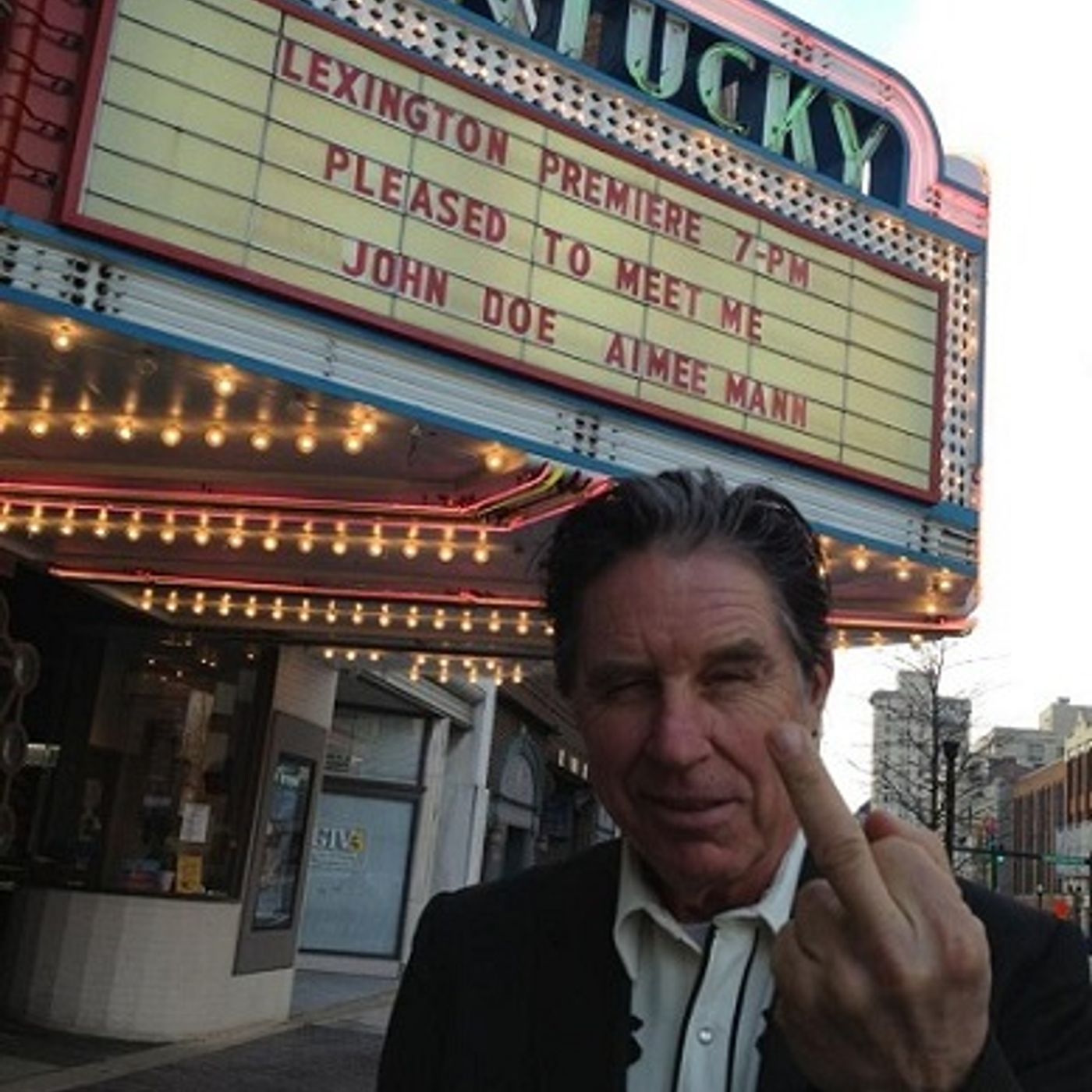
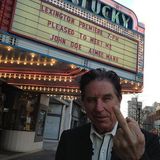
Movie Meltdown - Episode 263 This week we talk about movies, music and life in general with punk icon and actor... John Doe! John stars in the new independent film "Pleased to Meet Me", so we discuss his chemistry with co-star Aimee Mann, shooting movies in smaller cities, and playing someone in the music business vs. actually being in the music business. Plus of course we discuss his early days, his love of music, his decision to move to L.A., and the musical scene that formed the legendary band X. Then we round things out with Archie Borders, the director of "Pleased to Meet Me", as we find out about how this film came together and the challenges of directing indie films. Plus as we ponder the significance of the "O" in the Hollywood sign, we also mention… CBGB's, Wayne Wang, Illinois, doing accents, John Entwistle, Baltimore, The Screamers, Patrick Swayze, Katie O’Brien, California is epic, The Talking Heads, the East coast, Harry Dean Stanton, ex-NAVY SEAL, outlawing lead bullets, Max's Kansas City, Blondie, The Go-Gos, Tom Hulce, Jerry Lee Lewis, falling off the balcony, opera, Velvet Underground, The Weiroes, A.P. Carter, Rowdy Harrington???, Minute Men, Oasis, Elliott Smith, John Waters, The Who, The Ramones, Hollywood Boulevard, digging to find your inner Jerry Lewis, Paul Westerberg, classical piano, Andy Warhol, Tom Petty and the Heartbreakers, Border Radio, I blew my knee out, Rocket Man, sarcastic, Divine, Joan Baez, Gary Snyder, The Germs, Allison Anders, hanging out with LAPD, Road House, Universal Amphitheater in L.A., Sid and Nancy, Roadside Director???, musicians from the classifieds, librarian, pop art vs. fine art, Green Day, Jewel, Georgia, shooting in your hometown, I can starve on my own... I can starve in music no problem , The Big Red One, self-depricating, David Hockney, Robert Quine, Mary Elizabeth Mastrantonio, Breathless, finishing a tour, Don Cheadle, the King Ad Rock, is it a musician or an actor, movie reality, Mink Stole, Allen Ginsberg, visable holes even from the flatlands, Joe Strummer, bring that blue and white plaid shirt, Jennifer Jason Leigh, The Killer, Roadside Prophets, don't get off the boat... it's an f-ing tiger, Everyone Speaks Elton John, Nathanael West, Jim Thompson, Charles Bukowski, Diane Wakoski, a concrete structure somewhere where they can do very little damage,Ulu Grosbard, Winona Ryder, John Cusack, a big fish in a medium pond, Jon Langford and I wasn't afraid... for the first time - to rely on what I've done. "That was a total 'pinch me' moment... 'cause we're just hanging out, getting drunk at Sun Studios - playing Jerry Lee songs!"
Transcript
Automatically generated, so expect the odd misheard name.
Hey there, this is John Doe, and this is Movie Meltdown. Very glad to have you along. We have lots of exciting things to talk about tonight. 96 tears through 24 hours Sex once every hour. The following feature has been rated R by the Motion Picture Association of America.
It is intended for mature audiences and parental discretion is advised. It's showtime, folks. Enjoy the show. Our nuclear reactor, pumping out one million kilowatts of power. What's up and welcome to Movie Meltdown.
I'm Brian and this week I'm bringing you a special episode with a special guest co-host. This week we have the legendary John Doe sitting in with us. Yes, John Doe of X, one of the most influential punk bands ever, really. But in addition to that, as I'm sure many of you know, has become quite an actor over the years and has turned up in a lot of projects. Now, John is here in my hometown, oddly enough, and he is here because we just had the premiere of the independent film Pleased to Meet Me, which is a movie they shot here in Louisville about a year or more ago, and it's Odd and interesting that it happened here and weird to have a movie shot in your own backyard and actually technically right outside my front door.
But we'll get to that later. So, yes, he was here in support of that film. But I thought while he was here, I would take that chance to sit down with him and sort of get a feel for. where he comes from and how he got into the business, both music and movies. And then we'll get to Please Meet Me. And in addition, we'll actually have the writer and director of the film sit in with us at the end there and give us a little more information on the specifics of that film.
But first, we're going to focus on John. So let's head over there now and meet John Doe. Alright, well we are here in the middle of the sealed back bar, hanging out with none other than Mr. John Doe. Hey man.
Thank you for joining us. It, I guess, puts me in a weird spot. The movie that we're going to be discussing as we get into this, Pleased to Meet Me, the running joke in it is, she gives the normal, you know, how did you get into this, what were you interested in, which is usually kind of where I start. So I guess now, am I referencing the film when I start, you know, throwing that out there, but I think it is kind of interesting to go back and look at people when they were kids and see sort of where it comes from. It comes off kind of cliche in the movie, but it's funny that I think everybody sort of brings something different to it if you go back that far.
So I guess if we go back, was it Illinois you were from? I was born in Illinois, but only stayed there in Decatur, I think maybe six months, and then went to Tennessee, Kingsport, which is the Bristol... Knoxville, Kingsport, Tri-City area. Yeah. And I lived there for about four years and then moved to Wisconsin for three.
And then ended up in Baltimore for most of my childhood from third grade up through part of college. It's a good mixture of locations there. Yeah. You know, it helps with the accents if I ever have to say, oh, geez, you know. It's cold outside, don't you know?
And then down to Tennessee. And then I can say, well, no, I can't believe that you would just say something like that, which helped in the Jerry Lee movie. Definitely. It comes a little naturally. But, yeah, I mean, I've lived in California now for over half my life.
I get my AAA card, and it says, remember, Ferb. 38 years. Holy fuck. What? I did what?
When did that happen? It's good. I love California. California is still the land of dreams. California is epic.
It's mythical and it's wide open even though some people would like to say that it's a liberal police state. It goes in between that. All the Gun owners are pissed off because they've just outlawed lead bullets. I don't know. I don't have a gun.
Just use titanium or something. That's okay. Who knows? Just the hollow point bullets that split into a million. I don't know.
I love California. I live north of San Francisco. Definitely. Well, and coming back to the kid thing, is it something you were an artistic kid? Did you... early on had that sort of inclination or is it something you came to later?
I always liked to sing. My mom sang. She sang opera in college and by example she taught me how to sing and my dad played classical piano even though he was a librarian by trade. And so, yeah, it was artistic. You know, we didn't shoot guns.
And, you know, I think I rubbed off. They were thoughtful and caring. And even though, like most middle-class parents, they laid their own baggage of, oh, you don't talk about that sort of stuff. We just didn't talk about it. I am a child of the 50s.
And 60s. It was a very different era. Yeah, people forget that. But it's cool. I mean, yeah, I love to sing.
And they encouraged that. They had art books and stuff like that. Well, that's what I was going to say. Was it singing first? Or I know you kind of started off doing writing and poetry.
Was that something that set in that early? Or did that come later? No, that was later. Later? I mean, I was trying to write songs.
And I had quit school. I went to George Washington University for about a year, for a year. And then I quit for a couple and realized that I was not writing to the level that the people I admired were, you know, like Joni Mitchell or Bob Dylan or the band were the people that I loved then, still do like them. And so I went back to school at Antioch. But it was in Baltimore.
It was kind of a branch school. version of Antioch. And I was able to take some classes at the Maryland Institute of Art. Friends of mine were, you know, I met people and another friend of mine went to school there as artists. It was a great community. John Waters was around.
I was just thinking. I was trying to do the math as to what he was into at that point. He was probably doing his early experimental stuff at that point. Well, no, he was fully realized. He was famous.
Was he already? Okay. Oh, yeah. He had done... He'd done all of his shorts, like the Diane Linkletter story and Mondo Trasho and all those things like that.
But he had, by that point, he'd already done Pink Flamingos. He had done Female Trouble, which is probably my favorite, and Desperate Living. Desperate Living was right about the time that I left. Yeah. But, yeah, I got to hang out with Divine and Edie a little bit and hung out with John a little bit.
It was a good time because there was no way of capitalizing on your artistic ability or artistic pursuits. So people just did art for the hell of it. Definitely not the way he went about it. He came about it at a point that was almost unmarketable. which in a way is refreshing. He was just doing it for art's sake.
He was doing it because he thought Baltimore was hilarious, and it still sort of is. Incredibly sarcastic and self-deprecating and stuff like that. You mentioned Divine. What was Divine, hanging out with Divine like? Uh. well you know just a couple of parties so i do you know today he at that point he would you know be glenn units be glenn and then he'd be you know just to have a good time and and uh... playing pool i remember washington people which was sort of a character but uh... missing for you know they were they were tight they were they were tight good group uh... the other the other person who was more available was uh...
Bink Stoll, because she's kind of a mixer. And also Mary Vivian Pierce, although she she really never spoke much because she's just so so beautiful and and and kind of um icy but uh yeah it was it was great you know it was like having your own um window into what andy warhol might have been like because having a a company of players that John had a collective group right you know and you felt because Andy Warhol was always a you know a hero of mine just his artistic sensibility and and recognizing pop art as being different than fine art I like fine art too. But equally as important yeah. Ish but you you have well I mean it is but you don't you don't take it as seriously. No It doesn't take itself as serious.
Exactly. Yeah, yeah. Well, then I guess, at what point did music get involved? I mean, you always had that inclination, but at what point did you start pursuing it in some way? When I was about 15, 14, which was the...
I mean, I had listened to my brother's records. I have an older brother. Listened to his records in the 60s. Yeah. Was really blown away by the velvet underground and, um, Joan Baez was one of my favorites.
And, um, but when I was coming into like just post puberty, that was the beginning of psychedelic music. So the doors and Janice Joplin, probably my favorites. Yeah. Um, I like Jimi Hendrix a lot and I got to see them. Um, you got to see them live a few times and, It was amazing.
So that was the point at which I was thinking, well, this looks like a good job. Maybe I'll learn to play bass because bass seems easier. And it is. Bass is definitely easier than guitar. Are you kidding?
Of course it is. It's hard to be a good bass player because you've got to be simple. Guitarist players don't make good bass players, but bass players can make adequate sort of guitar players. If they're really, I mean, listen, that's, that's one of those things. Like it was almost not till after he died, but now going back and listening to the who.
He's playing the most complicated stuff in the song. Oh, John Entwistle. Yeah. Oh, my God. I couldn't play that if you put a gun to my head.
Pete gets all the attention because he's jumping around, but he was playing so much amazing. Even on My Generation. Yeah. And he said that. Later, he was like, I was covering for Pete because he wasn't kind of holding his own on the rhythm, so I had to hold down.
Both ends of it. I was a musician first, and then I went back to school because they had a writing program. to learn how to write better and be truer and be more economical. I had a couple of great teachers, and they encouraged us just to read new things, things that were in a language that we understood and beat poets and forward. So, yeah. Do you feel that the schooling end of it works better versus somebody just starting out in the garage?
I mean, it's obviously a different way to go about it, but it's. You know, I think yes to both. Everyone has their own path. And one time I asked Elliot Smith what kind of poets he read. He goes, I don't read poets, I just read lyrics.
And I thought, well, you're a good lyricist, so I guess it worked for you. It helped me because just deeper, stranger influences rather than just... and it showed me how to tell a story without it being linear just telling a story through whether it's Johnny Hit and Run Pauline or something off a last record that I did which is similar to character development in a movie you take certain images you take certain feelings and you put them together and then you create a fabrication of some sort. Well then, as you get into the music, is that specifically what led you to L.A.? Was it looking to get into music or find a band or something to that effect? Yeah, my parents lived in Brooklyn, so I had access to a lot of the New York bands.
I'd been to CBGB's and Max's Kansas City in 74, 75. I saw Talking Heads and The Heartbreakers and David Johansson was doing a solo. I don't think it was the New York Dolls. And I realized that seeing posters for television and Blondie and the Ramones, I realized that New York was really set. I mean, it was already pretty happening.
And at that point, I just hated the East Coast. It was full of ghosts, and I hated the weather. It's too hot and sticky in the summer, and it's too fucking cold. I loved L.A. more for the writers than anything else, like Nathaniel West or Jim Thompson or Charles Bukowski, Diane Wachowski, and Gary Snyder and all the beat poets that continued, not just Allen Ginsberg. Even though Allen Ginsberg was really... inspirational and that whole freedom his literary freedom was just liberating for everybody I don't have to rhyme I'm just going to throw all this shit out there and he was a big supporter of punk rock music and he corresponded a bit so yeah that I I went to L.A. more for, to be part, I knew there was something happening in music.
It wasn't happening in L.A. at the time. This was the end of 76. Yeah. They really didn't have that kind of scene yet. It really was sort of before that.
You know, New York had it, but L.A. Really, it was before that. Well, New York started it all. Yeah. And then it went to England and then it came back and started in San Francisco and there were good bands out there.
And we were very fortunate that there wasn't there weren't record companies snooping around and, but I was more, uh, inspired by the wide openness, the, the, the actual Vista and light that there was in LA. Um, David Hockney was getting pretty popular then. And, uh, yeah, this, uh, you know, it's still, like I say, mythical and, and it's, I love the movies, and I didn't have any intention of getting into the movie business, but through a few different people and having some kind of a name in music, then I was able to parlay that into getting a few parts. And Alison Anders would be the person I'd lay the most blame on for inviting me into the movie business. Well, it is interesting to hear that you still had that, you felt that allure to go to L.A., which now, I mean, people are so hardened to it and there's so many horror stories that come with it that it's, that's sort of refreshing that somebody still had that going into it and still seem to have that now.
That's kind of cool. Yeah. Yeah. At that point, you know, Hollywood was in decline. The Hollywood sign, actually the O, the second O of Hollywood, no, maybe it was the first O.
The first cell of Hollywood in the Hollywood sign had actually fallen down. And there were visible holes, even from the flatlands, in the rest of the sign. So it was like a, this is a Tennessee Williams, you know. It's literally a decaying system right there in front of you. Exactly.
So that was, I mean, but Hollywood Boulevard, even today, is still really fucked up. It's a really fucked up place. It's what it's supposed to be, isn't it? It is, but I mean, Times Square isn't. Times Square is all cleaned up.
It's true. I think they just don't want to clean it. It's like a ball. Yeah, that's true. Well, then I guess as you find the band and you start getting together, I mean, it is a very different sound.
You guys put together something that was wholly your own. Was that something you could tell at the time, or is it only now, kind of in retrospect, you see the difference? But it's just. One of those listening to that, and even everything else that was going on at the time, it's very different. Um, I, we had a sense that it was different.
Yeah. We knew that other people weren't as, um, good a player as Billy was. Yeah. And DJ and I had played in a number of bands. So at least we had a little more technical, um, ability.
Maybe Robert Quine from, uh, Richard Hell's band, uh, played similar to Billy, not quite as fast and flashy, but, uh, At that point, everybody tried to carve out their own sound. You know, talking about the New York bands, Blondie and the Ramones and Talking Heads all sounded very different from each other. And there was in LA there were the Screamers and the Germs Weirdos and us and we all had and Fear and the Go-Go's and we all had a little bit different sound and back then even Tom Petty was considered a little bit punk rock because he wasn't just playing the game and he didn't sound like the Eagles or Linda Ronstadt or something. It's funny now how much it's sort of become this cookie cutter thing and everybody wants it to fit into this little...
But I guess when you're in the middle of the scene and you're sort of creating it, it's very different and it doesn't have that 20, 30 years of people putting together greatest hits albums to sort of define what they think it is. Yeah. I don't know. Punk rock, I think, has become more. Of what it was designed to be, which is for younger people.
Yeah. And even though the sound may not be as eclectic, but it may be. I'm not in on the inside. Yeah. But now it's a lot of bands for a cheap price, and they're early 20-somethings or 18 to 20-somethings, and they're going down there, and it's freedom, and that's what it was designed for, and that's cool.
I can, you know. I can give Green Day that kind of credit because I think they really did bring it to a bigger audience. Sort of rebooted it and brought it to that new generation. And, you know, Billy Joe, I think, would cop to the fact that if Joe Strummer wasn't around, he wouldn't have his singing style. And if the...
You know, they learned their lessons. They learned them well and they have grand... They had enough... foresight and and ambition to put together that american idiot so this is a they've almost pretty pretty amazing almost. Graduated out of the system as well like now they're so huge they're doing broadway musicals and now there's some other kid that's taken over. So totally well it's it's it's more of a there there are two different types of punk rock now yeah there's an on there's the underground scene which is which is very healthy you know there'll be four five hundred kids that go to a a Some place.
Some designed. Concrete structure somewhere that nobody knows about. Where they can do very little damage. And just damage to themselves. Which is fine.
Which is just fine. As long as everybody's willing. Exactly. And then there's, you know, the more popular and... Yeah.
Definitely. Mainstream. Or stuff that record companies have latched onto and found a way to market now. Well, then, as you said, you were sort of lured out of the music industry and towards the movie scene. So I guess, is it something you were comfortable with, that idea?
I mean, you said they were offering these things just because you were recognizable, but was it something you. No, I pursued it, and I still will do auditions now and then. If it's something that seems worth auditioning for. Yeah. But Allison Anders is still a friend, and we worked together on three different projects.
Border Radio was the first, and then we did a movie called Sugartown, which was really a statement or a representation of what it's like being in L.A. and being in the entertainment business. And then the last thing we did was called Ring of Fire, where Jewel played June Carter. And I got to play A.P. Carter, kind of the godfather of country music, part of the original Carter family and stuff. Yeah, I took it seriously.
It was an opportunity, and I took it really seriously. I still do, whenever I have the chance. Yeah, I mean, that's what I was going to ask. Because especially, even now, you kind of mentioned this the other night when you were talking about the movie, that there's... there's a use of bringing in a musician almost as like a stunt casting kind of thing that like, especially in a movie that features a lot of the music or works in the music. And so was it something you felt like you had to prove yourself to, to sort of overcome that you weren't just there because you were named that you actually were going to bring something to the acting role?
Is it something you felt people, you know, you needed to prove yourself to them? Yeah. Cause I didn't want to make an ass of myself. Yeah. Like, Most people would rather not.
Sometimes. Yeah, you never know. Like I said, I think you have to, you can't be cavalier about, and I see that sometimes, and it makes me mad that someone thinks that they're just there to be a pretty face, which obviously I wasn't brought in for, but some people will just take that, oh, just, you know, come in and like, I'll figure it out, man. and i did some classes i did some improv and i did some some uh... scene study and things like that but that was only after i got in a couple of jobs was working with harry dean stanton on this movie called slam dance and uh... a kentuckian we have been i know there's a lexington festival there's a. Harry now lucy we will not matter she's on. The local and i was yeah i was working in in a movie and i realized holy shit i'm getting left in the dust This guy is acting circles around me, and I don't even know what the fuck he's doing.
So I think I'm going to go find out. And he still does now in his 80s. I know. I'm going to go find out. Definitely.
I'm going to go figure out what... So I did a little bit. You can always do more, but... I was going to hit a couple individual ones. That's definitely...
It was an odd one, even at the time. People didn't know what to do with Slamdance. And then since then, it's sort of found its own little pocket of people that really appreciate it. But I don't know. What was it like?
It was hard. It was really difficult because it seemed like they were telling several different stories at the same time. And the director, Wayne Wang, was very specific and I think sometimes got lost in the technique of his filmmaking. Yeah. And the DP had his ear a little bit too strongly because they would do a lot of tricky shots through broken glass, through broken mirrors and, and, you know, very ambitious.
And I'm, I have no problem with that. Yeah. But, um, there was one scene towards the end where I had just killed somebody and was supposed to be reacting to that, but I couldn't move more than like a quarter of an inch either way, or I went out of focus or it was, they were shooting through this broken mirror and it's like, holy fuck, can I just try to figure out how to, how to be in this place at this time? It's like, oh no, no, no. Like, no, you have to do it again because you were like, it's like, oh my God, that was hard.
But, and the Tom Hulse and Mary Elizabeth Mastro Antonio's was very separate from what Harry Dean and I were doing, which was all the cop stuff. We got to hang out with some LAPD detectives and that was fun and, I mean, I'm fairly, I don't mind saying I'm a little bit mercenary about movies. I want to get paid. I want to get paid whatever I can squeeze. Out of them.
It's part of the system. You know, but I mean, I can do, I can starve on my own. I can starve in music, no problem. But I also want to do some things that are interesting and I want to hang out with interesting people. And so in that way, it's a little mercenary.
I'm not, defining myself as, uh, like what my work, you know, in quotes work is. Well, it's finding, especially those directors that you have to find that balance of, you want it to be artistic, but it still needs to be functional as a story and, and to be able to work with your actors, which some of them don't really want to do. Yeah. Yeah. Yeah.
I guess I've been, I've been pretty fortunate working with, with good people. Um, Ula Grossbard was certainly one of my, one of my favorites, uh, Georgia. Yeah. Yeah. Because he really allowed you and helped you to believe in yourself without ever feeling like he was blowing smoke up your ass.
That's a movie you're just immersed in the performances. It's almost all right there. Jennifer Jason Leigh was so amazing in that. And I could not believe that some fairly well-known and respected critics were saying, oh my God, I can't even sit through that five-minute Van Morrison song. she doesn't sing that well. And I was like, that's the whole point is that she's not her sister.
Yeah. But the fact that the, the, in that scene, Jennifer Jason Lee was, you could see her entire life, past, present and future. Yeah. In that one performance. And it was like, I felt so fortunate to be able to watch that and see her.
Yeah. Deliver like that. So that's amazing. Yeah. Well, then I guess, cinematically, 180 degrees, Roadhouse.
Yeah. Talk about getting paid, brother. That's a huge following now. It's one of those, again, it took it a while, but now. It's amazing how many people...
Oh, yeah. They love that now. So I guess I had to at least hit on it. I guess, did you... I mean, was that one of those they came to you because they knew who you were?
Or did you go. No, I went and auditioned. and the point at which I had to fake getting my nose broken and screamed and like a like a little teenager and put my hand over my face the guy Rowdy Harrington the director said yep that's the guy but it was so much fun hanging out with Terry Funk and the wrestler and Patrick Swayze was totally one of the boys and And, yeah, there was a lot of testosterone on that. I would just step back and let all the cocks of the walk literally parade around. There was a lot of fight scenes. I mean, how much coordination and planning.
Yeah, luckily I didn't have to do a whole lot of the stunt stuff. There was a whole team of stunt people. And, again, Patrick Swayze was right in there. He did all of his shit. He was hardcore on that stuff.
Yeah. He was pretty great. The guy, his main nemesis was an ex-Navy SEAL. Was he? And he had some of that, you know, ex-Navy SEAL from Vietnam.
Oh, God. And had some of that, like, scary, dark Vietnam juju still going on. You see it in his eyes. Yeah. No shit.
He was the real business. He really could take down anybody in that room. Yeah. Yeah, yeah. That's crazy.
Yeah, and they kept going over budget, so we were all hired on for maybe six or seven weeks, and we ended up working 10 or 12 weeks, and it was like, it's awesome. Yeah, definitely. Keep calling me into work, baby. As long as you don't end up actually getting your nose broken. Yeah.
In that movie, I guess you never know. There was a, yeah, actually one of the stunt, the guys that doubled me falling off the balcony broke his ankle in several places because he over-rotated. And didn't land on the boxes that were supposed to break his fall. Yeah, it was weird seeing this guy who's dressed like you and has a wig on like you and a mustache like you screaming in pain as they take him on a stretcher off the set. Thank God that's not me.
Oh, thank God. I'm so glad I didn't. Because, you know, your ego starts kicking in and you start thinking, well, maybe I could do this and then... think now i can't do that i can do mails but i didn't know i had no interest and and there was a sub coordinator on that uh... charlie passerni who was pretty famous uh... did i think he did bunch of smoking the bandit stuff and and he said they don't pay you to do shit don't do it just don't no one's gonna take any less of you you're there to act And that's why they hired you. Well, those guys, that's their job. You don't have to prove anything.
Yeah, give somebody else their paycheck. Don't take their paycheck. And I thought, cool, I'll do that. I did have a stunt where I got stabbed with a knife that was in the chest before that balcony falling off thing. And they hooked up a wire under a piece of wood, which was over a big plastic... chest plate thing and then they then they had this this knife that had a a barrel like a piece of um tubing uh welded to the to the top of the knife but then it was stuck inside this wire that had a bunch of gun bluing on it so it would disappear and then they had this guy they had this guy who was like 15 25 feet away from me just winging this knife on a wire, like straight the fuck at me.
It was a real fucking knife coming at your chest. You were like, ha, ha, ha. Mother. Please don't mess this up. Please don't mess this up.
No, it was going into a spot that was all padded out. That's cool. But it was thunk. It's like, no problem. I can react.
Oh, God. Ow. Just relieved that it's got that padding. Yes, indeed. Roadhouse was fun.
It was real fun. I guess getting one that works in a good amount of music, not necessarily with you, but I was a huge Great Balls of Fire fan. I think it hit right at that point where I was discovering Jerry Lee and I became a huge Jerry Lee fan. So was that one of those you had been a fan of him coming in? Oh, yes.
Yeah. That was after the fact that we had a show when X had become popular enough to play the Universal Amphitheater in L.A., which is 5,000 to 6,000, 7,000 people, and it was our show. We sold a bunch of tickets, and it was 85, 84, probably 84. And we put the bill was the Minutemen and Jerry Lee Lewis and X. And we had to pay Jerry Lee like 10 grand.
Which is a lot. To tell people Jerry Lee opened for you? No. No, no, no. It wasn't something to be proud of.
It wasn't, you know, I... Yeah, it wasn't a bragging right. Just to be able to play the same venue. To play with him, number one. And also to put this eclectic, cool build together.
The Minutemen, Jerry Lee, and X. That's crazy. And it totally worked. Jerry Lee had a great band. He can hold his own with anybody.
Absolutely. He's amazing. And. But the musicianship with Jimmy Vaughn and Mojo and Dennis Quaid and myself, I mean, everybody really played music. And we jammed at Sun Records prior to try to put the band together.
Because at first, Dennis wanted to sing and play. He wanted to do all of it. He wanted to do it all. But he clearly didn't have the vocal range, which nobody has, that Jerry Lee did. So, or does.
But especially Jerry Lee from that period. And that was a total pinch me moment. Yeah. Because we're just hanging out, getting drunk at Sun Studios, playing Jerry Lee songs. It's like, and there's no cameras.
We're just there, you know, we just showed up four or five days prior to shooting to try to put the band together, try to meet each other and try to get some sort of relationship going. And we're, But we're doing it. It's at Sun Records. We're at the place. We're living this.
So that was pretty cool. So, I mean, that was a lot of those biopics they don't make until after the person's gone. But, I mean, that one, he was, is still around. So, it's like, how. Involved was he as far as when you guys were shooting?
He was there. Was he? Was he there a lot of the time? Yeah. And the fact that it was based on Myra's book, his ex-wife.
I always thought that was weird, too. It was totally weird. Because I read the book, and she's got some weird stories that don't necessarily make it in the movie. Reasons that she... ended up being okay getting into that relationship and why she was such a damaged person anyway to coming into that situation so. Yeah yeah he put a few wrenches in the in the works yeah and and jerry lee pays for for his genius yeah he's a he's a pretty can be a pretty dark um person and and he Did carry a Derringer in the back of his suitcase, and he did shoot a couple of drummers.
He did shoot at least. He did shoot a couple of drummers. He shot somebody in. A bar at some point. For slowing down.
Just for, they all got drunk, and he decided it'd be funny. He didn't even kill him. It's just a bar story now. Like, remember that time I shot you? Yeah, yeah, yeah.
But yeah, I didn't know how intimidating was that, trying to recreate his life while he's actually standing there. Can you do it justice? The first time that I met him, he mentioned the fact that he played with us, and I was sweating bullets because it could go either way. And he goes, yeah, I remember that time that I played with y'all in Los Angeles. You all did a version of Breathless, I remember.
You all did a great version of that. I was like, oh, thank you, Jesus. I will go back to church. And then I said, I think it was Dennis Quaid said, you know, Jerry, this is the guy who's going to play J.W. Brown. nico cox's head back dennis had a had him down i was at all this is so cartoony i don't know if he's he's actually playing it down in a minute and you've been around jerry lee's just as uh... crazy is that burris wild not crazy is just as wild as.
That if flamboyant at times very much a showman even offstage totally and um. anybody cox's head back jw brown jw brown's a fucking asshole oh boy you guys you might make a good jw brown and it's like did you just call me a fucking asshole i'm not but you're jerry lee so okay guess. What it's not you're jerry lee you can. Do whatever you want but he and you know he and jw had a long you know married history uh you know he was his manager jw was his manager for a little while and he was his bass player and You know, whatever. It was great. Family things happened.
It was great. And Winona Ryder was just, you know, so sweet and then became a convicted felon. And I thought, this is awesome. I'm not a convicted felon. Between the two of you.
Who would have thought? You're badass. You're badass. Yeah, that was right at that point with her. No, she was 16.
She was 16 at that point. But just that whole point in her career, looking back, she owned that decade. She honed some of the best. Teenage performances ever. She's a great actor.
Onward, and I think that we have not seen the last of... Miss Winona Ryder. She's still turning up and I hope she gets that second wind and starts delivering those performances. She's pretty damn, I can remember moments during that shooting where her emotions were so on the surface and so available to her that I was just as jealous as could be because it was transparent and beautiful and soulful and Damn. Wow.
Look at you. You needed that. I mean, in that movie, it's like you've got, you know, you've got to have something. And someone so likable to balance out, Jerry Lee's doing some questionable things and being very ridiculous at times. And you needed that heart.
And that movie was, the reason I think people didn't respond to that movie as much as they could have is because they wanted to see Jerry Lee the killer. Yeah. You know, because that article, whether it's right or wrong, had just come out in Rolling Stone. Yeah. About a mysterious death of one of his wives.
And they want to see Jerry Lee the killer, the mean motherfucker. And at that point, Jerry Lee was like a big kid. Yeah. And bless his heart. And still probably continues to be.
He has a lot of turmoil. I've been the whole world over ¶ A lot of places I have seen ¶ ¶ I've met a million. People ¶ ¶ But. Still nobody knows old Jerry Lee ¶ ¶ Yeah, I've been a lot of everything, folks ¶ ¶ From good to bad to what you see ¶ ¶ But I'm here to tell the world ¶ ¶ Nobody knows old Jerry Lee ¶ Yeah, I've known a thousand women, but not one took time for me. From Maine to California, they only wanted what they could see.
Why can't there be somebody somewhere who just wants. The heart in me? But I'm here to tell the world nobody knows old Jerry Lee. Good evening. It's intermission time.
Our service is friendly and quick. You'll find hot dogs, hamburgers, pizza, your favorite candies, hot and cold beverages, and other delicious snacks. So add to your fun of watching the movie. Visit our refreshment stand right now. We're glad to have you with us tonight.
We hope you'll come to see us often. It's great to get out to the movies. Rock and roll high school, the school where the students rule. The new principal hates the students, but the kids take over and rock the roof off the school. Tweet Audio, your source for high performance.
Noise reducing earbuds. Available in three styles and seven colors. Durable and designed to sound great for both music and those chatty podcasts, like the one you're listening to now. Tweaked Audio earbuds come with a one-year warranty, and now there's a special deal for Movie Meltdown listeners. Just go to tweakedaudio.com, and when you check out, enter the discount code MELTDOWN.
Then you'll get 33% off and free shipping. Tweaked Audio. Sounds better. Hey guys, it's the repeater from Tower of Technobabble, and we're getting ready to do our next show, and I thought it might be cool for you to look behind the scenes and see how the magic happens. In fact, Conduit is getting Towerbot ready.
Right now, as we speak. That. Religions. Needed. Science.
Got it. Sci-fi. Do you mean sci-fi? Space probes. Got it.
Sports. Screw that. Star Wars. Got it. Star Wars prequels.
Oh God, no. Superman. Got it. Transformers. Got it.
Troll Hunter. Got it. Twilight. That. UFOs.
Got it. Urban legends. That's weird tales. Got it. Weirdos.
Got it. Tune in at www.toweroftechnobattle.com and see what happens. We was hitchhiking down a long and lonesome road. All of a sudden, there shined a shiny demon. In the middle of the road.
And he said. Hey, this is KG of Tenacious D, and you're listening to Movie Meltdown with Brian. Oh, yeah. It's part of your problem, you know, you haven't seen enough movies All of life's riddles are answered in the movies. And now, on with the show.
My smokestack stuck up in the sky I worked this job until the day I died Never had kids, lost my. Wife All. I got left is this damn motorcycle. Well, then. I guess the.
Only other one I specifically, and I've actually watched it recently, I went back and was watching roadside profits and that's, that's, almost such a signature movie for you at that point i don't know how was how did you get involved in that and was it something that. Uh abby wool who had co-written uh sid and nancy with alex cox got an idea from this other guy david swenson about doing a road movie and his his idea of it was very loose and very you know just a maybe a paragraph of this is what's going to happen Then she wrote the whole script, and then she took it to, I guess it was New Line at that point. Yeah, I think so. Before it broke up into Fine Line. Before everything merged and got taken over.
Yeah. It wasn't merger. It was more like separating. They were all kind of doing it. That's when Touchstone came up.
They all started fracturing. Fine Line broke off from New Line. At any rate, she went into some meeting and said they liked the script, and they were giving it a go. green light and she said oh and i'd like to direct and they said sure wow she went holy shit i've never directed anything and i mean and then she got all of her the people that had they that had gone to like film school together yeah uh tom richmond who's a terrific he and i worked on salvador he's a cameraman and dp and was uh tom richmond was uh what's his name Bob Richardson's second camera guy on Salvador and then there were several other people they had all gone to school together and it was that is one movie I wish I could do again because I was in a really bad place my parents had just died I was literally the first day that we started I was finishing a tour of Meet John Doe which was a grueling heavy drinking God two-month tour, and I was flying back and forth from the last five tour dates to learn better how to ride a motorcycle to begin the filming of this.
And I guess they had offered it to Frederick Forrest. He was the chef in Apocalypse Now. Okay. His guy said, it's a fucking tiger. Don't get off the boat.
It's a fucking tiger. That guy. And he sort of wanted to do it, but he couldn't. And then they had also offered it to Max Perlick, and he couldn't do it. And so Adam Horowitz could, and I could.
And then we just did it. But I had no time to really focus and get prepared for it. But it was still really fun. It was such... Abbey Wall was.
Totally generous and said, let's do it again. If you want to do another take, let's do another take. And, and, um, John Cusack is hilarious in that. And, and, you know, I got to meet Tim, Timothy Leary and, and, uh, um, there's a, there were a number of people that have, that have since surfaced. So I was going to say, um, uh, what's his name?
Don Cheadle. I was, was the guy in the diner. He has like two lines and it took, you see him from the side. Like I didn't recognize him for a second. I'm like, he's like a teenager.
Like, yeah, that was, I was just like all the people that kept turning up in it. But that one, I was just like, nobody knew who that guy was then. And they, they, I think they bit off a little more than they, than we could chew because they tried to make some social commentary in addition to, to being just a road, a road movie and a buddy movie. But Adam and I had an amazing time, and I still miss him. How far away removed is he from his character?
Oh, he's so much cooler than that character. He really dug deep to find his inner Jerry Lewis. A little dorky. Yeah, no, he's very far from that. He's totally, he's Ad-Rock.
Yeah. Ad-Rock is much more of his real personality. Interesting. But I don't know. I think, I think some of it, again, I don't even know if the politics or the, it's almost more philosophy that comes into it as you watch it.
Like, I don't know that it, some of it does hold up, but it's more interesting now. Again, it's weird that it's been so long because now you look back and there's such a, there is such a nineties vibe that like you, you don't think there should be one for it yet, but there is a very like feeling of like everything that was going on in the world and everything that everybody's worried about is like, ingrained in every scene, and it really does speak to that time period. Oh, did I mention the first day we started shooting is my second daughter was born that day. One more thing to throw away. And I tried to start the motorcycle, and I completely missed the whole cycle, and I blew my knee out.
That was the first day. That was the very first day, where they were coming out of the factory, and they had gotten a location for some power plant down in in El Segundo or who knows where. It was a great experience, though. Really terrific experience. I think it's interesting looking at it now, yeah.
I'll have to watch it again. Maybe I'll watch it again. It has a different vibe now. But I tell you that, you know, I did see Border Radio, Alison and Kurt, Alison Anders and Kurt Voss and Dean Lentz's first movie was right after they got out of UCLA Film School. It was all that classic...
16 millimeter black and white footage and it looks so beautiful and it's actually a pretty fucking good movie for the first thing that any of us ever did with a bunch of non-actors damn and Allison would call me up and say oh bring that because there would be weeks between shooting between you know shoots when you have to do it that way right and she would say oh bring that blue and white plaid shirt you have and I'd look in my closet and I'm like Well, there's like three of them. Okay, I'll bring this one. And if you look, there's one scene where I'm supposed to go to sleep at night and then wake up with the same shirt. It's a completely different shirt. You got up and changed in the middle of the night.
Oh, fuck it. I guess just to get into Pleased to Meet Me, how did you get involved? I was recommended by Joe, Henry's wife. Melanie Ciccone. Yeah.
And because Dave Henry and Archie wrote the script many different drafts. Yeah. David came on to sort of polish it up because they thought they could put their money, you know, get the financing together. And they originally wanted Joe to play the part of Pete Jones. Yeah.
And Joe said, no, I can't do that. I won't do that. It's too much. I don't feel prepared or qualified. Right.
And then Melanie said, hey, what about John? He's done some stuff. And I don't get that many opportunities, to be honest. I don't really have an agent. I keep meaning to.
I'm usually too busy playing music and touring and stuff like that. So given the opportunity to be the main character in a movie is, yeah, definitely. And I liked the story. I liked Archie. I liked the back story to it, this American life part of it.
And then when Joe was going to be the engineer and Amy, at first we talked about trying to have an actor rather than Amy doing it. And then we did a read-through with Joe and Amy and I, and I realized our relationship, because we know each other, we're not close. We've known each other for a long time, and that relationship is deep, and that plays through the whole movie well. It fits their relationship, yeah. You can't, people say that you can fake that.
People say that you can develop that quickly, and you sort of can, but there's something that is a little deeper. If it's really there, I think that comes through more than anything. Well, then what was your take on shooting here? It's actually shot in Louisville. What was your take on being in this.
It's good to be out if you're going to play a different person if you're going to play a character it's great to be out of your own environment yeah it's really hard to to be traveling to and from your home to work because yeah i was staying in a in a place in the in uh highland the highlands yeah so i could feel like i was pete jones coming back to to louisville for the hell of it yeah you know because because he had another uh smackdown in his career uh i wish that i could have been a little more um a little less available as as the character but um you have to be true to yourself so yeah yeah yeah that's the way it goes. Well, it was an odd experience for me because I think the first I found out about you guys, maybe I'd heard that they were doing something, but I was standing there.
I'm probably opening the door to get the mail or something. I look outside and I'm like, there's some lady standing in front of my house. Is that Amy Mann? And she was. She was on her phone in front of my house.
And then there was a car across the street and the door opened up and I'm like, There's John Doe. Huh. So I'm like, why? What are they doing in town? Why are you guys loitering around in my house?
What are you doing around my place? You kids get out of the yard. You kids get off my lawn. Get out of my. So that's...
But it's actually... And then watching it the other day, it's almost surreal because that actually is my street. That whole thing where the story takes place on and where the studio is and where they go to the little... convenience store and all that i'd live on that street so it was very odd it was like surreal watching that movie because i'm like i walk up and down that street every day of my life and i'm like that's so strange watching it in the theater it's very strange. I think that i think that the advantage of doing indie movies like this in a place like louisville is that everybody's behind it a lot of people got just experience they didn't get paid And they worked their ass off. And what they lacked in experience, they totally made up for in intent and willingness and attention to their job.
We did the whole thing in 15 days. I was maybe in. Louisville for 18. Yeah. Yeah.
That's crazy. Yeah, and that's the way. It's nice when you can take your time and do longer productions like Roadhouse or Great Balls of Fire, but you can tell a simple story in three weeks. Archie and David and Mike Fitzgerald, they were all very organized. They weren't so didactic or rigid about how things had to be shot yeah but they didn't have room for experimentation they didn't have room for oh hey since we're here what if we la la la yeah and and that's the way that i love to work in music which is very much the same as you have a you have a song probably all written you have the you have you've casted the the characters the the musicians yeah But you don't know exactly what they're going to play.
And maybe you have 20% that's unfinished. 20% of the melody that you have a bunch of different choices. Just sort of let, let shit rip and, and see, see where you go. And, and the same thing with the, with scenes, you know, some of the scenes that Loudon and I did, we let rip a whole bunch of stuff that didn't end up in the movie. And it was pretty aggressive.
I'm kind of sad that, that some of that wasn't in there. Cause I think that would have, he has some great scenes. So, um, and, and I was so impressed with, um, Katie O'Brien as the drummer, the way that she changed her speech and the way that she spoke too fast because she was nervous, she, to me, was one of the MVPs of it. I mean, of course, Amy, man, goes without saying, because she took it very seriously. She knew her line.
She knew she had her intent, but she also was willing to play, and she listened, which is the most important thing. Well, and I guess just how did you... approaches I mean again knowing the music industry as much as you do and then coming at it sort of from a different angle was it was it something that you it was a very. Similar angle was it and I I like I said before I did try to watch some some other younger contemporary people like Paul Westerberg or or some of the guys from Oasis some people that were a little more cantankerous and, and combative with their public and their, and their, uh, interviewers and stuff. Because I think, really, the character I played, Pete Jones, was, was a little bit more like that.
And, uh, but I, I wasn't afraid for the first time to rely on, on what I've done. Because, because Pete Jones and myself were very similar. Yeah. Um, not that I came from a small town, or a, you know, smaller town, like, uh, Louisville, but, um, Yeah, I mean, I was a little bit of a big fish in a medium pond in L.A. Medium pond meaning like the punk rock world, not the big music world of Bon Jovi or Van Halen or something like that.
You're still hoping to get to those heights, is that what you're saying? No. I'm so relieved that I don't even have to think about those heights anymore. No stadiums for you. No.
Although we played with Pearl Jam, and it's real fun to play big places like that. In the past, when I've had to play musicians, like in the George Strait movie and also Georgia, I've had to think like, well, who am I going to pattern myself after? Because I don't want to pattern myself after myself. I want to pattern this character after myself. But at this point, I felt like, okay, I'll just draw on all the stuff that I know.
Because it's very similar, being either a punk rock icon or an indie music icon. You come from the same place, it's just a different set of specifics, I guess. Yeah. Well, do you have anything other than this you need to tell people about? Or anything else coming up that you want to put the word out on?
I'm doing the best of John Doe. It's called This Far. The best of John Doe, This Far. Because after my last solo record in 2011... I realized I'd put out more solo records the next put out.
So through a few people's urging and the willingness of the record company, that's going to be out in May. And it's hard to go from 100 songs to 22. It's not that easy. So I just kind of picked favorites and picked ones that I thought people requested or were accessible. And I'm going to tour in England and Europe in May with Nick Lowe, which is cool.
Yeah. He's smart and fun. And then I'll do a U.S. tour in June. And X is always touring. I think we'll probably tour in probably later part of the summer and the fall again.
I think I saw, I think the first time you guys got back together in these last, this last run, I saw that one. I actually saw the, John Doe thing when you were with, uh, Julian Hatfield touring. Oh yeah. That was like 95, five, somewhere in there. Yeah.
Yeah. Yeah. She's a great show. Both of you. She was, yeah, she was very talented.
Um, I hope that she continues to, to do stuff, but, uh, yeah, you know, working on new stuff with, uh, how Gelb is produced. Uh, we did a session down in Tucson, uh, and how's, um, really talented and, and has a, a sound working at, at this studio wave lab, lots of reverb, lots of distance, just like the desert. And, um, yeah, more records, more movies, hopefully. Of all the times I've seen you, you've always put on a great show. So yeah, I will tell people definitely go out there and find you and see you wherever you're playing it and whichever incarnation.
Of you you're with. So it's, it's, yeah, you do, you do good work. And, uh, Always good to see you on the screen, too. Pleasure. We'll work for all of that.
All right. Well, thank you. All right. I thought we would round things out. A little more information on Pleased to Meet Me with the director himself, Mr.
Archie Borders. Hey, how's it going? told this story a million times now but i guess tell people how this came about it's a very specific way that it came to you. So sure uh just the basics are it was originally a uh npr story by starley kine called everyone speaks elton john we bought the rights and it was about john langford from the mecons and starley kine who both cameo in the movie um but they put together a band uh made up from musicians from the classifieds, and the whole concept was let's put them together for one day, one day only. They've never met. They could never have played together before, and we're going to record a song.
In this case, it was, in the radio show's case, it was Elton John's Rocket Man. And in our movie, it's not. I kind of like that story. You were discussing that the other night, and that is something that I guess we'll throw at a lot of indie fans situations here, because you guys definitely come from a very independent film kind of world and are fighting the fight every day. So, I mean, you got into that situation that a lot of independent films do, where you're like, okay, you want to work in music, but then you hit that recognizable thing, and there's a little bit of a price tag involved in that one.
Sure, of course, there is. I mean, you know, the decision not to use Milton Johns Rockman was completely financial initially, and like all... indie projects when you don't have the money you figure out another way to do it and in our case it was like okay we don't have Rocketman so we still reference the piece we reference Elton John but we had Joe Henry and he's got a whole library of songs so we went back and we found a couple of songs that we really liked of Joe's decided which song it was and then we used that song to develop a backstory for one of the characters. And the reason he wrote that song and the reason he puts the song in the piece in it, it was like, well, we couldn't have done that if we stayed with the original concept.
I don't know if I like the song better. It's hard to compare things to Elton John. But I really like that song, and I think it adds so much more to the story. I like that that's where you ended up, actually. Yeah, it was fun.
I guess, you know, I was asking John what his thoughts were in being in Louisville. As far as shooting here, you've shot a good amount of stuff here. Is it something that happens out of convenience or is it something that you feel like adds to the stories as you set them here? Maybe a little of both. I mean, I live here.
I have family here. I've had to work out of Louisville a lot just because of the nature of the movie business. But overall... Being able to shoot a film in your hometown is great because there is a familiarity. There's a comfort level.
You know more people to call for things. Favors. Yeah, but it does inform... I like to look at the writers from the south, the Flannery O'Connors. I'm certainly not comparing myself to them, but they were a product.
Their writings were a product of the place where they were. And I think.... This movie is definitely a product of this you know this town and we reference it as much as we can and I think it does inform just the. Feel of the movie definitely yeah I think most places that you come from and definitely once you start shooting something there it does add to that sort of flavor of it and almost the you sort of get a vibe of where you are and how it plays with the characters. Yeah, and that adds to the experience.
I mean, if you're, you know, you're making a movie in Kansas City and you feel some of the landmarks of that or St. Louis or, you know, that's the great thing. There's New York and L.A. and they're represented in movies beautifully. And constantly. Yeah, and constantly.
But, you know, there's huge chunks of the country where vibrant, good things are going on and they've always been represented in literature and papers and things like that, but Movies are a little slower to it, so if we can add to that, then fantastic. Definitely, definitely. I guess, was it a specific thing you felt? I mean, you end up having everyone play music, but was it something you felt had to have musicians coming in to cast in these? You did?
Yes, this one I did. And nothing against, you know, a Joaquin Phoenix playing John. You know, that's great. That's a terrific performance, but at no time do you go, well, he's really... In this movie, we wanted to go, is it a musician or is it an actor?
And we were able to kind of blur that line and When they pick up a guitar, you've got to believe that it's them playing. In this movie, it is these guys playing those instruments. There's no faking. I think there's an authenticity you can't get from. One of my favorite films is Amadeus.
I think it's a brilliant film. But Thomas Hulse, he's playing a few of the things, but it's not him doing that stuff. And you know that on some level. And it's different. And when you know John Doe's picking up a guitar and playing, it's John Doe.
That was a good moment there. Just as he came out of the studio and picked up the guitar, I was like, okay, here we go. This is what we really want to see. We got John on screen. Let's do that.
Well, then I guess you... I think you've even mentioned you worked with young filmmakers. So I guess as someone who's worked in the independent film scene for years now, what do you want to tell people out there that are trying to get into it or that have been doing it for years? And I guess is there some approach that you have that you could throw out there to people? I always look at filmmaking, especially in Kentucky, two ways.
One is that you separate the creative from the business. And the creative is where you go in and you're excited about something and you You're passionate about something. You want to write about it. And, you know, it's like I think you've had Lucy Jones on your show before. Yes, quite a few times.
Lucy is one of these people who's incredibly informed about movies. And she knows me. She just gets it. And that's great. That's your artistic personality.
And then you go home and you write your script. And you're like, I'm going to tell a story. And you're going to tell that story with all the... stuff that infuses you, your movie knowledge and all that. And that's a wonderful, exciting thing. Then there's the business.
How do you make that vision come to life? And it's budgets and it's scheduling and it's this and this and how much money can you realistically raise? And if you raise it, is it a responsible use of that money? Those are two hats that I never used to know how to do. And as an instructor, I feel like You know, when I grew up, when I went to film school, nobody taught you the business side of it.
Yeah. I know the business side of it. I'm doing a disservice if my kid comes to me and says, you know, I'm going to shoot this thing and I want the Roman legions coming over the hill. My first thing is, how are you going to pay for that? That's great.
And I don't want to stifle that creativity, but you really want to do this. Here's the hoops you're going to have to jump through to make that. Otherwise, you're doing a disservice to that vision. So, you know, it's... But it's great.
It's working with your limitations and finding a way to be creative within your limitations. You can't afford the. Elton John song? Elton John would love it. Didn't happen.
So let's circumvent it and find something else. Find a way to make it better. I think that's what it always seems to be. When you have limitations, it makes you more creative. Because you watch directors.
That have just. millions and millions of dollars to blow and sometimes it seems like they're just kind of resting on their laurels and phoning it in and you don't see a lot of creative stuff coming out of them after a while. Like uh and i'm not making a comment on their ability but you know you got a michael bay who has 100 millions and a computer cga you have a sam fuller who you know did a movie like the big red one or something like that don't have much money but his battle scenes are I mean, there's a story there. You're worried about those guys. You don't need the Roman legions coming over the hill. You've got these guys on a hill, and are they going to make it?
It's a lot cheaper to shoot that. Yeah, you're worried about their relationships and their story versus a million dollars worth of CG that nobody cares about anyway. Exactly. Definitely. Well, I guess tell people where to find it and what's the best way to... go looking for it out there.
Well, we, we just finished up our, uh, Kentucky run, although popular demands looking like we're going to have to come back. We're, we're getting a lot of calls from please show the movie some more. So we, I think we're going to, we're setting that up now. We're also going to play Cincinnati, Columbus, Chicago, already played New York or that, but the film goes wide, um, on video on demand in April from virtual films. Um, And we're going to try to cram in as many theatrical screens as we can between now and then.
Because, you know, just from a personal standpoint, watching it on the big screen is so different than seeing it on your home TV. It's great, but it's just a difference between being in the room and being watching, you know, peeking. Well, those lines were really blurred. That's what I was just telling John. You guys were on my street, you know.
Yeah. Yeah. I'm across the street from where the studio is. Oh, wow. That's great.
I didn't know that. That's great. That's a great area. So that, like, it was so surreal watching it because I'm like, that's where I walk out and get in my car on that street every day and I'm watching you shoot and I'm like, this is strange. You know, it's fun because, you know, I've done three movies here, you know, as a writer, director, and I've been able to showcase little bits of Louisville now and over, I'm hoping, before I finally kick it, you know, I've, covered my Louisville.
Yeah. And that kind of goes back to your question about, you know, does the place where you live, you know, inform that? And it does, you know. I'm a Highlands guy and, you know, that's, that's, that's right there. Yeah.
It's great. But then there's a little technical. I didn't get up in the theater and start yelling, that convenience store is never open at night. This is all a lie. It's bold, man.
This is so bogus. Yeah, no, that was great. Yeah, it's an interesting... Well. It's like a cab.
There's a big cab scene. Who the hell gets in a cab in Louisville? Would you stop in front of my house? He stops and I'm like, there's my house. In fact, there's me in a bathroom.
While I was waiting, I was like, am I parked over there? it's a different game I was playing than everyone else in the theater. But, but yeah, it's, it's, it's an interesting, it's an interesting neighborhood and it's, it's kind of interesting to watch you guys play with it and use it for what? Cause again, there are those weird little things. I'm like, that's, Like, making use of the situation. It's like, well, they're going this way on the street, but it's like everyone else in the world doesn't know they're driving the wrong direction.
There's reality, and then there's movie reality. There's within the... It's like Stripes. Remember when Stripes. Oh, yeah.
You go, why is Bill Murray going the wrong way? Across the bridge to the airport? Wait, wait. That's not right at all. He's taking the wrong way.
Yeah. He's just running up the tab now. Exactly. So, yeah, that's kind of interesting, just knowing, again, as a filmmaker and as, like, you get into this you're like well no one else knows this like i can use this for my story and like you know the people sitting in the audience watching at home whenever it's like they're not gonna know i how i manipulate the real world to make my fictional. World exactly well they're driving down east washington and the scene's four minutes you can drive down east washington in 10 seconds it's one it's a long version of it's a it's a hyper realized.
Version of east washington Yeah, it's fun. It's movie realism. It's like Silence of the Lambs. I like to teach that movie in my classes where Claire East comes down and starts talking to Jack Crawford. Yeah.
He's like, so, and he basically reads her her resume. Nobody reads you their resume. That's movie talk. You know, I understand you want to do this, this, this, this, this. Yes.
Yes, I do. You know, it's... it works in the film, but it doesn't matter. You're watching the movie. You're like, okay, I'm there. I believe it.
They have their own reality and their own weird little cliches that we've almost come to expect. So we do kind of like fall right into it and be like, oh, okay, well now I know where the story's going. Right. We use it as like a shorthand to be like, let's move the story along. Exactly.
Exactly. It is interesting, but yeah. Alright, so did we throw out the website or is there anything else to go look for? PleasedToMeetMeMovie.com and here's the other thing. We're a low budget film.
It's not a huge budget and it's super important. I love superhero movies as I said but I don't want to just see superhero movies and we're seeing less and less indie films in the theaters these days. If people want to support filmmaking and I'm talking about anything you know Seek them out, rent them, download them. That's how we make our money. That's how we get to make more movies.
And, you know, so, yeah, go to the website. Follow the film on Facebook. Follow the film on Twitter. Do all those things. But support them.
And not just mine, but, you know, everybody else. There's so many good little films out there that are trying for distribution. We're beating the odds. I mean, we got a nice deal. We're thrilled for that.
There's 144 movies at Sundance every year. Five or six get a big deal. What the hell happens to the rest of them? Seek those films out. There's more people making films now than ever.
It's all the indie world. They're making less and less of the big budget stuff. It's everybody else that's just picking up a camera and making their own films. So don't complain about only seeing superhero films because if you're not watching other films, then you're part of the problem. You have to seek out what you want to find.
Yeah, again. All right. Well, thank you for talking to us. Thanks for bringing John in here. Absolutely.
We will look for more stuff from you. In the future. All right. That about rounds it out this week. I do want to say once again, thank you to Archie for coming in at the end there to not only tell us about pleased to meet me, but also independent filmmaking in general.
I also wanted to give a big thanks to Michael Fitzer, who was mentioned briefly in there, but he's not only the cinematographer on the film, but has actually been an instrumental part in putting this episode together. We've been talking about putting this together for about a year or more now, and Michael stuck with me every step of the way, so I do want to say a big thanks to him for helping put this episode together. And of course, thank you to John Doe for coming on and giving us not only his take on being brought into the film world, but also his amazing stories about getting started in music and his early days in Los Angeles. And like I said, go support John in everything he does. He's great to see live, and look for him in the movies as well.
In particular, look for him in Pleased to Meet Me. So now, for the man who still seems to have a love for the mythical lure of Los Angeles, as well as its gritty reality, I thought we'd go out with this one. Otherwise, that about does it. We will return next week. Same geek time, same geek feed.
Thanks for listening. All the toys were. Round and black and the boys had two. She's got a head of a nigger and two. Every Mexican they gave her a lot of shit.
Every homo. I know the deadline. Oh, it's a risk. But the day is changing night. Changing is done.
But it's changing night. She found it hard to say goodbye to her own best friend. She bought a clock on Hollywood for the money that she loved. It felt sad. It felt sad.
It felt sad. Here we are, not in the Rathskeller. No Al Capone's escape hatch in Louisville, Kentucky. 2014. There's nothing in his secret vaults, by the way.
Yeah, I know. As we found out, some of us ruined our careers with it. Yes. Good old Jerry Rivers. Had a problem with that.
This episode is a production of Movie Meltdown, produced and edited by The Oddity Studios, with opening music performed by The Empires. For more on how to sponsor or support the show, email producer at moviemeltdown.com. Talk hard!