About this episode
Transcript
Automatically generated, so expect the odd misheard name.
Hello, creeps. It's me, the Crypt Keeper. And you're listening to Movie Meltdown, the greatest movie geek show on Earth. . Good evening. The following feature has been rated R by the Motion Picture Association of America.
It is intended for mature audiences and parental discretion is advised. Our nuclear reactor pumping out one million kilowatts of power. And I had that house of your father bulldozed to the ground. Boys and girls of every age Wouldn't you like to see something strange? Come with us.
And you will see This our town of Halloween. This is Halloween, this is Halloween Won't you scream in the dead of night? This is Halloween, everybody may see Don't cheat, don't. Hate, let's get a damn right This our town of. Halloween This town of.
Halloween What's up and welcome to Movie Meltdown. I'm Brian and we're coming to you live via digital recording from Meltdown Macabre right here at Nancy's Bagel Grounds and it is the second annual Halloween Horror Festival. And it's kind of awesome. The first one without Mama Dracula. The first one where we've tried to make it through without.
Our Mama, Mama Dracula. Alright, let's go torment Yoko. All right, look who it is. It's Yoko. Hey.
Hey. I'm completely famished. Brian's been holding me captive here for eight to nine hours. I've been chained to the wall. He won't let me leave.
You're going to watch your movies, and you're going to like it. I need to eat. I especially love the cartoons, but I've got to think for cartoons. I love, love, love Max Fleischer. He's one of my favorite animators of all time.
There's some very strange cartoons in that mix. Yeah. I love the simple character designs, and they're very dynamic. I really liked the Felix the Cat cartoon a whole lot, too, and they were all very cute characters. I really need water, Brian.
You have to start. I mean, can you just call my mother and tell her that I'm okay? Are you really, though? I think that's a questionable sort of thing. My wrists have been rubbed raw by the cuffs from the wall.
Eventually you'll gnaw your way through your arm, I mean. Yeah. He won't let me leave, guys. He really won't. Where did you find this film?
This is a great film that you showed. It. I don't know. I like art films. I love the cinematography.
I loved everything except for you forcing me to be here. That's the only thing. I don't think I'm forcing you up until right now. Before that, you were enthralled in the film and the music. They call it Stockholm Syndrome.
And you love it. No, really, that's how it works. And the score was beautiful. It was very ethereal and... It was fitting and it worked and it was really rad.
Very cool. I'm not used to being in the presence of real musicians. You yourself are a mostly real musician. Yeah. I mean, it's art, so you can call it anything.
It's fun, right? That's the best part about it. Right. People can't call you on that. I liked everything.
I like you, Brian. This was good. This was. I like to put weird things together and I continue to do so. Whether anybody else wants to come, at least you can.
What was your favorite cartoon that you showed? I'm disturbed by most of them. You're disturbed by them? You don't love them? I saw that you had that claymation of that Mark Twain movie.
That thing is so weird. That movie reminds me of having strep throat because I watched it when I had strep throat as a little girl. So whenever I watched that Halley's Comet, is it called Halley's Comet? It had a whole big long name and a subtitle. It was like The Adventures of Mark Twain in Hell.
It's weird. I really like that movie, though. Here, Phillip, would you like to join in? Hi, everybody. This is Phillip.
It's really good. Taylor, what did you think of the film? Tell me what you thought about the film. It was pretty good. It was pretty good.
It had a good score. A good beat. You could dance to it. I really want Usher's outfit. Not the popular late.
90s R & B singer. Or when he's dancing with that Honey Nut Cheerios bee. No. That's what I want. Actually, I want the bees outfit.
I liked his little bitty skinny trousers. He had great legs for skinny pipe jeans. He should be in a glam rock band. Did you see how little his legs were? I believe at this point they refer to that as vintage.
Those clothes would probably be considered very vintage. I really want that outfit, though. I would look really bitchin' in a vampire outfit like that. Are you saying Usher is a vampire? Is this what your conclusion.
Is for the film? I just want to go home, and you won't let me, and I can't be held accountable for what I'm saying. It's like you always get me in these altered states. This time it's extreme duress. It's like the last time it was mania, and before that it was drunkenness.
You notice you always have these states, though. I don't have any of those states you mentioned. I mean, a little mania, but... I like to keep it under control and bury it under my house. Other than that, I don't have these crazy states that you have.
Chicken and waffles. I think that's what I had last time I left one of these ships. All right, Yoko, say goodbye. Good night. Brian, thank you.
Thanks for coming out. If you're touched by the words in this song Baby. You got it, you got it bad. And you're gonna feel. Hanged up when you call right back.
Oh, you got it, you got it back. And you miss a thing without a friend your whole life's a drag. Have you ever walked through a graveyard late at night and seen a coffin open? Have you ever thought what it would be like to see a person's head amputated? Think.
Think of things so horrible that the human mind cannot imagine them. See all this and more when you see on stage, in person, that crazy mixed-up Dr. Evil and his tears of the unknown. Unlike anything that you've ever seen or heard. Of in the past.
Hideous creatures from beyond the grave leave the stage and grab girls right out of their seats. Girls, do not come alone. Bring your boyfriend to protect you when the lights go out. You may find a live snake or rat under your seat. A real dead body is given away to some lucky person at every performance.
Also in person. The Mummy and King Kong, famous Halloween gorilla, real and alive. Plus on the screen, two horrific motion pictures. Dr. Evil and his tears of the unknown.
Plus two horrific pictures. Ah! Hey guys, look what I've got. Check out these awesome earbuds I'm using right now. Look at that.
That's wood right there. That's actual wood. Why would you use wood to make technology? Because they're... It's like.
They're steampunk. Is steampunk really wood? I thought it was more of a brass thing. Well, you gotta work the wood in to hold the brass together. These are the fancy high-end steampunk versions with a mic built in, mind you.
But yeah, where would I. Get these you under tweaked audio. Way to pitch. You want to hear more? You say.
Tweaked audio.com. Hey, they are available in three styles and seven colors and they sound pretty damn good. I kind of forgot cause I hadn't had my old pair in a while and I was using the knockoff crappy ones I bought at the store and I, I got these and put them in. I was like, Oh shit, that's right. These are actually really good.
So they are professional quality earbuds, mind you. And noise reducing, compatible with your iPods and most phones, unless you have a dumb phone. You should really get a smartphone, not a dumb phone. So anyway, the basic rundown here, if you need yourself some earbuds, tweakedaudio.com. And if you go there, there's a deal.
There's a meltdown deal. If you go, there's a discount code and you put in Meltdown, you get 33% off and free shipping. You guys are excited, right? Yeah. As well you should be. tweakedaudio.com Use the Meltdown code.
That's all I'm saying. house. Enter at your own risk. I made it for $ 30, 000 in two days and a night. This is Roger Corman and you're listening to Movie Meltdown. Want some music for your ears?
Doo-Wop Shop makes it easy to rent for any event, business meeting, or special occasion. From PA systems to karaoke machines to just about anything that makes noise, you can rent it from the Doo-Wop Shop. In Louisville, find them either at their Highland Store at 1587 Bardstown Road or in the East End at 2915 South Hurstburn Parkway. And look for them online at DooWopShop.com. Doo-Wop Shop.
We're serious about music. Your mission, should you choose to accept it, is Project Poe. And at those mere points of time where the confines of the waking world blend with the world of dreams. And so I captured this fancy where all that we see or seem is but a dream within a dream. From childhood's eye, I have not been as others were.
I have not seen as others saw. I had walled the monster. Up within half. A tomb. It was many and many a year ago, in a kingdom by the sea, that a maiden there lived whom you may know by the name of Annabel Lee.
And this maiden, she lived with no other thought than to love and be loved. By me. That motley drama, I'll be sure it shall not be forgot, with its phantom chased forevermore by a crowd that sees it not. through a circle that ever returneth in to the selfsame spot, much of madness, more of sin, and horror, the soul of. The plot. Once, Upon a midnight dreary, while I pondered weak and eerie, over many a quaint and curious volume of forgotten lore.
While I nodded, nearly napping, suddenly there came a tapping, as of someone gently rapping, rapping at my chamber door. To some visitor I muttered, tapping at my chamber door. Only this, nothing more. On the raven! Leave my loneliness unbroken.
Put the bust above my door. Take thy beat from out my heart. And take thy form from off my door, quoth the raven. No more. And the raven, ever free, still is sitting, still is sitting on the pallid bust of the palace just above my chamber door.
His eyes have all the seeming of the demons that he's dreamin'. A lamplight toward him streaming throws his shadow on the floor, and my soul, from. Out that shadow that lies floating on the floor, shall be lifted. Nevermore. Hi, I'm Philip.
I'm Jeff. I'm Sterling. All right, so to get into the movie information here for our Project Poe, Our ongoing series of Edgar Allan Poe films, which it's been a long time since we've done one. So that was another reason I was glad this one was picked. The Fall of the House of Usher.
The year is 1928. Let's see where. Would you like to give us the proper pronunciation on the director? Because I'm going to say it all American-like. I probably...
Jean Epstein? Epstein? Jane Epstein. Jane Epstein. Epstein.
I think that'll work. On the film it says Jean Epstein like in the title. Jean Epstein. More Frenchy. Come on.
Jean Epstein. Nice. No, I think my favorite was Jean Epstein. Jean Epstein. So my German popped in there for a sec.
It's like twangs up all of a sudden. And usually I'll try to do the IMDb plot summary but they just kind of start like it's just rambling about the movie so I don't know. It's an adaptation of the Edgar Allen Poe story. There you go. You can start with that.
All right, so tell the people your names and this rocking band that you're in. I'm Jacqueline. And I'm Nick. And we make up Bermudan. Yes.
Which is an experimental, partially metal-y band. There's metal in there. Yeah. So is it just the two of you, or are there more. It's currently just us two.
We are in the process of recording a little demo album. It's just us. She plays cello, keys, bass, and does vocals. I do guitar and keys and vocals. We're just looking for a drummer right now that can do a bunch of different kinds of stuff.
We shall talk after. Hint, hint. he's a really good drummer. There are like no drummers, no available drummers in Louisville. And I'm just like, no, I'm, I'm pimping you out. I appreciate that.
That means a lot. But I mean, you were like strapping cymbals to your knees there while you were trying to play. So I think you guys got it covered if you wanted to, but you. Know, that's, you can expand. Yeah.
In all honesty, I didn't mind your sound without drums. I mean, maybe it was just the confined space that we were in while watching. It would have been a little much. But at the same time, uh, you know, having, having the sound and having the sound fade in and out and having the tempo be able to change so subtly in the middle was a real, was a real advantage. I thought, you know, um, your choices consistently were surprising and interesting.
And that's one of the things that I enjoyed so much because this film is consistently surprising and interesting on a visual level. Um, speaking of which I also want to say that, yeah, the, the film has a kind of, it's got a hazy quality. It feels, it feels like it was filmed, like half of it was filmed in smoke or fog. Right. But with that said, it's just France, but it may, yeah, that's just the way France looks, but, uh, collects all the fog from Germany.
Um, but, uh, as the, um, but as the, uh, the, the images. Emerged, you know, as you see like the image of the castle or the people, you know, they sort of gradually became more definite and your music had the same quality during the show itself. Um, you know, we heard melodies emerge sort of seemingly spontaneously. But I was like, oh, wait, but I was hearing that earlier, too. So, you know, it was a really fantastic accompaniment.
So I want to thank you guys both for your accomplishment there. Thank you very much. We chose it because a lot of the other silent films from the period didn't have that kind of imagery. They just were people piddling around, shuffling around really quickly. They were shuffling, yeah.
And just talking to each other and not doing much. And then this film had, like, the layers of things and, like, cutting to, like, an ocean and some trees and some, like, close-ups of his, like, really desolate face, which was much more inspiring to write music to than some of these other films. In their defense, people did a lot of shuffling in the 20s. Yeah. Yeah.
Yeah, I know, and it's interesting that there were a lot of moments in the film where I felt like the film itself wanted to suggest the kind of sounds that you were to hear. For instance, in the section where you're playing guitar and you see flashes of the lake, of the ocean, of the trees. Waving in the wind. In other words, it almost keyed you as to what kind of sound you should expect. Yeah, yeah.
One of the reasons we chose this movie is because the imagery was so evocative, and it was just really easier to write things to accompany it. That's kind of why, also you mentioned the haziness, the kind of abstractness, that's why we, why I, I guess, kind of use some guitar effects and things like that to kind of create layers, especially when we did these loops, kind of create these almost like Robert Fripp earlier, his tape loops. That was kind of an inspiration. Definitely some no-pussy footing somewhere. Yeah, yeah.
Roderick, you must not always be gone. I will read to you, and you will listen. The accompaniment to the movie was actually extremely effective. Yeah. I thought so.
Well, the camera work was just really ahead of its time. Yeah, I was sort of surprised when they did, like, some of it looked like in slow motion. Right. And I was like, I didn't think they could do that back then. It was like, that's one of the things I was going to talk about.
It's like super effective, too, because I feel like a lot of times, especially even now when they use slow motion, it feels like it's out of place or they're Using it where it doesn't need to be, or they're just. Using it over... I don't know. Something about that one was really, really effective. It all just worked so well with the mood of that scene, and then just the whole detail of it.
It worked really well. You had some story issues with it? Oh, it was just creepy. That. It's supposed to be creepy, but I think you were saying an extra level.
Some horror movie fans would regard that as an advantage of the film. Yeah. That's true. In Edgar Allan Poe's story, Roderick and his sister live in the house of Usher, and he calls the doctor to help his sister, not his wife. And in the movie, it's his wife, and I'm just like, uh.
I don't see the difference. Yeah. And it totally could be. I mean, it was, what, 1700? 1700. in the movie or something like that, it doesn't surprise me.
It's the nondescript Edgar Allan Poe in times past when people had names like Roderick and lived in castles. I totally want to get a castle. There is the Edgar Allan Poe age that existed somewhere between the years of 1850 and 1650. He kind of invented everything in literature, so we'll let him have his own world. It's okay.
There was another discrepancy too, which if they were trying to make it a horror movie, I don't know why they would leave this part out. In the story, at the very end, when Madeline reappears all ghostly and stuff, she falls on top of Roderick. The doctor escapes, or his friend escapes, everybody else escapes, but they just burn alive as the House of Usher just falls apart and burns. That's pretty creepy. Yeah, but in the film, they escape, and everybody's happy, and they.
It's the first example of studio tampering. They're just like, okay, that ending ad is just too dark. We're going to have to rewrite it. It's a downer. It's just not testing good.
Come on, we've got to change it. It'll never sell if everyone dies. The test audience didn't approve of it. Yeah, right. They're filling out little cards in 1928.
That's what confused me because all of a sudden she's alive and the movie ends and nobody questions, oh. Hey, she's back. Oh, I can address that. she didn't ever actually die. She had an illness where she just kind of lays there motionless and appears dead, but her heart is still beating, so they buried her alive. Right.
And so she just kind of came back like. What the fuck, guys? Well, thank you for clearing that up for me, because. Otherwise I'm like... Sorry, my narration didn't do a very good job of clearing that up.
Yeah, that French Sterling guy, he didn't tell us that at all. It's true. It's like you didn't have any practice or anything. And I was talking out during a crescendo of the music. You showed up drunk.
You were just. That's at. Least partially true. I was going to be on Brian's podcast tonight, so I had to, you know. We pre-gamed over at Hilltop before we came.
Well, naturally, Hilltop is the place to be if you're in Louisville, Kentucky. Send your checks over now, Hilltop. But, no, yeah. It was actually kind of unusual in that way. Afterwards, I kind of wondered what I was...
I mean, it's... This isn't a jump out and scare you movie. Obviously, they didn't really make those back then. It's an experience. It's a, I'm going to suspend you upside down in this really unusual world for a while until you sort of lose your sense of perspective.
And that gradually makes you a little crazy while you're watching the movie. But even then, even taking that into account, I was still kind of left at a loss. I agree with you that at the end, like, okay, they're out and the House of Usher has fallen and Well, what now? Like, I mean, it's not exactly a tragedy. Like, it didn't, like, nothing, like, everything kind of fell apart, but they're okay now?
Mentally ill, severely, but okay. Yeah, I know, but. She survived getting serpent in the rainbowed. Right. So you're never the same after that.
Well, yeah, they made a big deal. About there were to be no nails in the coffin, and then you see the doctor stereotypically nail her in the coffin, but then... She gets out and there's. No question about, how did you get out of the coffin that was nailed shut? I had it put in my will that, like, buried with a crowbar.
I mean, I hope everybody puts that in. Because we all saw that Ryan Reynolds masterpiece buried. Or sort of a breakaway coffin with a side hatch. I think that's how all magicians are buried, like, as part of their professional, like, if I die on the job, you have to bury me in a coffin with, like, one side loose, you know? I can verify that.
I think it was Grady from The Shining. He let her out of the coffin. I thought it was Grady from Sanford. It's just because I like Grady. It's a great name.
Well, there's one moment where when you first meet Roderick and you are just lots of dissonance. And it really sort of made me think, this man is insane. He has lost all grip. It wasn't the eyebrows? Well, and then it just sort of stops.
Like, this is the world from his perspective, and then it stops. And the world's actually normal, but. To him, the world is just this crazy place filled with noise, and he can't deal with it. Yeah, in the story, and I guess the film, he actually has this relatively common mental disorder where... senses are very overwhelming and he's very in tune like he can hear things that his friend can't. That's called the Edgar Allan Poe disease.
Yeah no they actually like they they gave a word for it on the. Wikipedia early no it's a superhero no but I yeah yeah it's it's true it's and there's some hypothesis that Edgar Allan Poe might have suffered from something similar because you see that in all of his in all of his stories like there's almost inevitably one character that like in telltale heart, which we saw before, who suffers from some kind of like, Oh my God, I can hear this thing. Why can't anyone else hear it? And it's driving him crazy. It might've been called schizophrenia in today's terms.
Well, that is needed more medication. Well, that is a part of schizophrenia actually. Well, and you're also, your brain certain sort of can't, uh, can't separate certain things. Um, for instance, uh, They did a study one time where they did basically a flashing strobe light at people and measured their reaction as the strobe light got faster and faster to see where they couldn't tell that it was strobing anymore. And they discovered that schizophrenics can discern the strobe effect much, much further into the cycle than anybody else can.
So their brains are much more hyper-aware. I think it's called hypersynesthesia or something like that. Something like that. Hypersynesthesia sounds good. Yeah, that sounds pretty good.
Yeah, let's stand it. Yep, boom. Name of my next zine. They talk about. The voices they hear, like the input of the sound and their brain's ability to process the sound.
There's a huge delay and sometimes a variable delay. So they may actually be hearing things that someone said to them hours, minutes, days before, before it actually makes it into their brain. And that's the voices in their head. It's true that I don't remember whole conversations sometimes until the next day, much to my chagrin. Well, but you don't experience it as someone's in the room talking to you.
How do you know? Well, that's true. Jeez. I can attest to that. Let's make a trip to the room.
Schizophrenic. And she will answer questions from, like, days, sometimes years before. And everybody's like, what, huh? Yeah. What is interesting that some of that then plays into, like there's almost a medical or scientific fact involved in what some people have with almost like a paranoia or a paranormal reasoning, like you're hearing ghosts, but like, no, it's actually something that someone literally said to you, but it might've been yesterday.
You know, it's like, it is a weird, you know, almost we're tracking down the reasons things are like that, that at this point when they made this film, probably they just would have, Not only attested to craziness, but maybe some other level of paranormal goings-on. Possibly, but I don't know. Edgar Allan Poe was obviously concerned with things like those kinds of diagnoses of problems. I mean, he was obviously concerned, I think, on some level with the scientific basis, quote-unquote, of... of some of the horror stories he wrote. But I feel like when we look at stories like this and we're trying to track down a scientific explanation for what's going on, we always wind up kind of missing what the stories communicate.
And I'm not, by the way, arguing that anyone at this table is trying to do that. But for instance, Poe, who seemed to, for instance, know about things like hypersensitivity and certain mental illnesses and what they can do. He was obviously less concerned with, well, yeah, yeah, yeah, that's a reason why this is happening, but really what I want to talk about is the guy who can hear the thumping heart underneath the floorboards. Like, that's what's interesting to me. And that sort of head space that you wind up being put into.
Well, and I think that once you know the science behind it, the horror of the experience or having that happen to you goes away. You know, it's not nearly as unexplainable. If you just hear or see stuff as a go, yeah, I suffer from hypersysthesia. And I think Poe was kind of playing around with is it an endless or is it paranormal in this movie? Because at the beginning, he's all crazy-eyed and he's hearing stuff and he's all temperamental and lashing out at people.
So you're like, this dude's nuts. But at the end. he proves to be correct. Like the house is falling apart. His friend, he goes, can you hear it now? And he says, yeah.
And he says at one point, my wife isn't dead. Yeah. You know, uh, I mean, uh, I think to my mind, uh, in this story, at least all those explanations that we can come up with for mental illness and stuff, all it does is muddy the waters. It makes it harder. In fact, for us, it doesn't make it everything clean and simple.
Oh yes, this guy is crazy and things are done. But yeah, uh, he suddenly, suddenly the fact that we have an explanation makes the stuff that we don't, we can't explain all that more palpable to us. Well, I think that also plays in really well in addition to like the things going on in his head and hearing things into like the situation with her too, because again, you're watching it like, okay, so she's a zombie now. Right. But like, there's a scientific reason, like now we can piece together, Oh, well she suffers from this illness and like, that's why this happened.
But like, if you don't know any better or at the time, if they didn't medically figure that out yet, that it just looks like she's rising from the dead. So it's kind of acting like she was rising from the dead too. She's pretty creepy. Like those are some good scenes. I want to, I want to throw out, I want to throw out the third, the third option there and say, well, let's say that she is rising from the dead.
Then doesn't the, then, then doesn't the fact that we know like, okay, he has synesthesia or something. Somehow that information now becomes, I just called it synesthesia. He tastes, he tasted purple. Uh, yeah, but, but now suddenly like his issue has, uh, so you pat him on the back. Do you suffer from synesthesia?
Uh, is that how you recognize your scales? Uh, suffering. Yeah. Yeah. Is it, is it, uh, like, do you recognize your scales in terms of colors going up and down?
Um, it's just sounds, sounds have certain colors and it's pretty much, or like with this movie, you just, I just watched it, um, with the sound off and then I was like, and it's kind of like you hear something, um, like in another room, that's kind of what it sounds like, and then you kind of have to dust it off and do a little bit of exploration to find it. But, I mean, it's fair. If Poe were around, he might be writing a story. About you, right? No, that's fantastic.
By the way, you're the first person with synesthesia that I've ever actually met. It's a pleasure to meet you, sir. Don't mind me singling you out here in a group. Yeah. We're going to make you do tricks later.
Yeah. Find the green. Go. No, but the fact that we know that he has, say, hypersensitivity or whatever we diagnose him with, somehow that information now makes more helpless at the end. It's like, oh, he.
Suffered from mental illness. Don't worry about him. And his wife is now rising from the dead. Well, damn it. And his house is gone.
And we're back to square one. His guitar is broken. That was the real tragedy here. I love that sequence, actually, where you can see as he's wandering around, and your music, again, kind of perfectly accompanied this, because we have the not-quite-so-slow buildup of noise going on during that entire phase, and you see him strolling around, and his eyes are getting bigger and bigger, and meanwhile, you see the guitar strings tightening and tightening and breaking and still tightening, and, oh, it was wonderful. Yeah.
And again, that like, sometimes I want to give them credit for the direction and like just the filmmaking in general. Cause like, can you imagine like how much they wanted to convey that message and not having sound to do like being like completely confined to the technology at the time and be like, okay, I have to make them breaking. I have to visually show you how much I want the sound to be going on in your head. So, Yeah, I give them credit for a lot of the stuff that they did. Tie a little fishing line.
Come on, come on. Well, I don't know. And yet they still managed to make a masterpiece, whereas Ed Wood, somehow with all the technology at his disposal, that's also a masterpiece. Different kind of masterpiece. Hey, you're talking to a guy who played Ed Wood, okay?
I know he's a genius. You look pretty good in Angora. I've seen into his mind. Fun place. And panties, but whatever.
You make an interesting point that some directors given a large tool set still can't make something that's effective, whereas some people can have an even smaller skill set and come out with something that still manages to convey the full range of experiences that you could get if you could show them or do everything. Yeah, absolutely. And some could argue that... And some have argued. I remember a photography professor once said that every great photograph ever taken that you will find in a history book somewhere has been taken with technology less sophisticated than what you have available to you.
Just remember that when you go shopping for toys. That will always be true for me. We're constantly coming up with better technology, but nobody really does anything. More impressive. Not normally, anyway.
Well, but that's sort of the stereotype, is that, well, in the past, they had these limitations. They didn't have CGI, et cetera. So, obviously, when they made, you know, Phenomenon or whatever, they were like, well, they really have to care about what they're doing and really work to make a masterpiece. That's not always true. But, yeah, I find that that limitation, at least for me creatively, often helps me.
You know, you have to, in a weird way, the smaller your box is, the more you have to think outside of it to get what you want. Well, it's sort of like you're not as distracted with everything as you are if you have a very smaller set of things to focus on. Potentially, yeah. And then ultimately, I mean, an artist is an artist regardless of the amount of tools that they have. And they're going to come up with art no matter.
How much they have to play with. I was definitely always one of the people attracted to minimal tech, both because of my poverty and because of my, I don't know, I read an interview with Ian McKay from Fugazi a while back, and he was like, yeah, no, I never use any pedals. Well, just my noise pedal or whatever. Because if I have more than two in front of me, then I just get confused. And I was like, well, he's like the greatest punk rocker alive.
I can't not do what Ian McKay does. But just that attitude of want to make it as simple as possible, which is not always the best thing. For instance, your music was very complex tonight. All of it is like that. Yeah.
All of our music is weirdo stuff. And it sounds fantastic. I will give you credit for just planning logistics and planning it out because you very impressively timed it so that when you had to switch instruments, he would be working what he needed to do separately and didn't have to have. You there while you were grabbing the, let's see, what random instruments. Yeah.
Yeah, whatever one. All three of them. At the same time. I can juggle. Oh, man.
Weren't those cartoons fantastic? Yeah, they were. Yeah, no, we're going to make the audience hopefully be like, damn, I really wish I had heard this thing and go out and seek out your band and be like, all right, we need to know what they're talking about. One more reason to come to all of these. It's not going to be the same.
Yeah. Because our band camp is like, chug, chug, chug, stuff. Oh, you have a band camp, you say? Oh, yes. Plug, plug.
Go ahead. Awesome. Plug your bandcamp. Bermudan.bandcamp.com. Well, luckily I have my bandcamp app here, so I'm going to geek.
Look, you guys. Well, I happen to know where the hottest independent music can be found on the internet. We have them right here. What more do you want? Well, I've never actually met them.
I'm so nervous. Yes. Well, we can also talk about the fact that this is doing things. Again, years and years beforehand, Philip, you were talking about the shots and the stuff that seemed very reminiscent of something that didn't come along. Until the 80s so.
Yeah there were shots in there that for today's movies would seem commonplace and not that big of a deal but for I guess 90 years ago that was really just advanced. Stuff specifically kind of Evil Dead like kind of yeah you could say that yeah. Well, you know, you mentioned that. So there was a part where he was going through the castle at the end, and you had all the sort of, not so much dissonance, but music. And it distinctly reminded me of the end of the movie The Keep, where you've got this wall of sound, great movie.
Maybe. I love it. But this wall of sound and then, so the, but there's no ambient noise of the person walking and you just got, it's sort of in slow motion and you sort of got mist and wind and he's walking and you just got this, this sound there and I'm like, that's the key. And you're also going, does anybody else hear that sound? Don't you hear that sound?
Well, it's interesting that the film in this time was also coming about at the same time that A lot of what we consider very important modern art movements were coming out. You had all the messing with perspective going on in cubism and various kinds of abstraction. And then, most importantly, you had the surrealists running around who were really interested in all these new technologies and things that were going. It's not surprising at all that a little bit of that weird disjointed, like we're going to show this from multiple perspectives and show it in unconventional ways kind of found its way into this film. What, what I was really impressed by was.
That the film had this, it was really ballsy about putting things in extreme areas of the screen. So they didn't, so like there's that great shot of like the wall with the two windows and you see her face like pop up in the extreme bottom right-hand corner and then vanishes and then pop up in the extreme left-hand corner, you know, like, that was happening all over the place. Like, you know, they would constantly be using all the areas of the screen they could and they would not just be, you know, they wouldn't just be close up or, you know, putting everything in the middle. They put everything all over the place. I think they also, and I don't know if this is just because they were super artistic or if it was also maybe because it's such a new technology, there hadn't been these like standards and set ways that everybody does everything.
But I was so impressed with how many times they would be like, almost walking into the camera, like to the point it would be uncomfortable. You'd be like, now it suddenly feels like a weird home movie that like your dad's got the camera in your face. And you're like, it had almost a realistic feel to it that didn't feel like a weird horror movie. You know, it did feel like you're almost just watching regular footage. I think it's because it's shot in that weird unconventional way that again, maybe just because the conventions weren't there yet.
Well, And they definitely made some other choices that were very interesting and made you like... Again, the word thing just comes to mind. It's like they really had some courage in doing some of these shots. One thing that really struck me was how they, when they buried the body, put the body in the coffin, they let the enormous train of the funeral gown... just linger out of the coffin. And it dragged through the next like 15 minutes of scenes.
You see them like walk through the woods and there's the white trail of the, the gown. Just like, it's like, anyone going to pick this up? And then very in the end, like right when they're putting her in the tomb, they stuff in like the tattered remains of like what's left of the train. And it was just like. Part of the veil, like swirled and fell into the ocean.
Yeah. It, it, There were just so many strange moments like that, and it added to that dreamlike quality. The film itself had a very dreamlike quality to it. Yeah, I think that Louis Bunuel, is that his name? Yes, yeah, yeah.
He collaborated with Salvador Dali, didn't he? Yeah, he definitely did. Surrealism did not surprise me. And I was very attracted to it when trying to find a movie I wanted to play music to. He gets even more surreal.
If you go even a couple of years later when he actually does, he co-directs. The movie about the donkey. Yeah, he co-directs that. The movie about the guy sitting on the pillar and seeing Satan as a beautiful woman and then his mother. Like, yeah, there's some weird stuff.
Yeah, if you want to co-direct a movie with Salvador Dali, you know you're a messed up dude. Yeah. I think there's still, like, So much of it, I think, was impressive just, again, because of the way it's set up and the way that it's shot. It's just some of the camera movements. Like, again, the one towards the end where the camera's moving on the castle floor and there's leaves blowing around.
And it's like, you don't see that kind of camera movement. Now, let alone in the late 20s. I don't know. Just some of it was just so artistically done, especially to be that. Ahead of the curve.
European films, man. They're easy French people. They're deep. Some of the other films that I was looking at, just because I went through like 20 of them trying to find one that I wanted to write music to, they were, yeah, the camera work was all really bland. It was all just like third person.
There's just like, you see the whole room, you see everybody in it, and they're all just walking around. It doesn't really change a whole lot. It like might shift to just two people talking or just whatever, but it wasn't like these angled things when... after Madeline quote unquote died and Roderick's like kneeling in front of Madeline's portrait and it's angled down on him like he's worshiping it and he gets that like super duper weird euphoric look on his face with giant eyes. Yeah, I think that's them not even, like most people, not even understanding the technology. So you've got.
Directors that are just like, I don't know, point it over there. Get the whole room in. We don't want to miss anybody. So it's like they're just slapping on a tripod. See, I'm not sure I'd go with the don't understand technology angle as much.
I would say, for me, what I saw in it was it was very much set up like a series of still shots. What they didn't really know that well, and what was interesting, and I completely agree with you on this for its forward-thinkingness, was that when they did do moving shots, like the panning shots or the shots of the camera in motion, those were quite sophisticated. Like you said, it was interesting to see how they passed in front and past the camera. But most of the film was set up like a series of shots where people happened to be moving. It was still very much camera movement, or sorry, cinematography derived from photography style.
It's just that they happen to be deriving it from all the photographers who were nuts and were like. Why do you need most of the photo to be lit? You don't need light. All you need is like a shadow and a beam to hit their eyes, you know, and then everyone's going to get the idea. Yeah, I was just referencing all the other stuff, like the stuff you were passing by.
I was just like that they probably just figured out the camera enough to be like, we want to make sure everybody's in the frame. We want to point it towards the room and go and just say your lines. We're like this movie. They're not doing that. It is artists at work.
And they're just like, well, how do I shoot this and make it interesting and make it different? And again, that's, I think they, okay. Yeah. Comprehending the, the artistry involved. And I will give them, I will give them credit for, uh, speaking of which, uh, the model of the castle.
Um, I really love that. Yeah. I don't want to, I don't want to, I don't want to spoil it for anybody, but yeah, that castle is a model. It's not real. Hell, you say.
It was impressively done for its time. When it was crumbling and falling apart at the end, and the fog and everything was blowing, and it was, I gotta say, it would take until at least Hammer Horror Films to make models of gothic castles as convincing. What I really liked about the model was, I mean, the model itself was pretty spectacular for something from that time period, but it was behind the castle. The way they had the, you know, they were actually, you know, lights meant. To look like stars.
But there's just something beautiful about the way that they did it. So was, so we, like when I think of silent movies, I think of, you know, the someone talks, the placard, someone talks, placard. And again, there's sort of this sped up look to it. So did movies. Was this the first of the movies to do these kinds of things?
What do you mean, these kinds of things? Well, the tracking shots. Or was this just sort of this isolated incident of this person going someplace no one else had gone? I think a lot of it was European cinemas. I think they were just way more advanced than we were.
So were there other films? Nosferatu's around this time, too. If you watch a lot of the German films from the same time period, I don't want to say the camera shots are the same, but they're still going, they're pushing forward at a much higher rate than what the Americans. Well, that's not entirely true, however. There's, I mean, one very notable example needs to be brought up, which is D.W.
Griffith's. Who was one of the early geniuses of cinema, 100%, uh, grade a American. Uh, but no, he was the first one to actually pan a camera in film. Uh, he, and, and the story goes is that when that shot happened, when people were watching it in theaters, I believe it's in, uh, I believe it's in Birth of a Nation where, yeah, it's like suddenly the camera moved and everyone in the audience went. Like, holy crap, what the hell was that?
Like, the camera just moved. It's alive. And later on you see in like intolerance and some of his other movies he actually got kind of got really happy with that technology and was like look i'm gonna look over here i'm gonna look over here and all this stuff but yeah no a lot of those uh but what the but yeah so a lot of those techniques like were done by him and a lot of the european masters of cinema would later on say oh no dw griffiths like blew me away like U.S.A. It's weird how many great filmmakers who made this wonderfully brilliant, dare I say, progressive cinema later on referencing, you know, Birth of a Nation as being one of their big inspirations for movies. But yeah, no, a lot of, there were a lot of great German cinematographers who took that same technology and you see it in pictures by guys like Carl Theodor Dreyer and F.
Debbie Murnau where they will, say, hang the camera from a ceiling and then like swing it to the other side so you get that effect of passing under it and the camera still follows them or you know something like that so the more extreme examples of it started to be experimented on once they realized holy crap i can swing my giant film camera around and it won't break on me okay that's. What i always found very interesting um the things that we today sort of take um for granted um and and the track in history where those things first happened you know sort of like you know everyone talks about um shoot, what was it, Orson. Welles, what was his big. Citizen Kane. You know, as a great movie.
And they're like, story-wise, it's not that great of a movie, but he did things in that movie that no one had done before. You know, the sort of in-focused, side-by-side shot. He invented the technology to do it. The deep-focus shot, yeah. Which has so many great things.
And by the way, Don't ever tell me that Citizen Kane is a poor story. You shut your whore mouth. Well, I mean, he ripped it off from real life, but he perfected it. Well, but it's one of those things where, you know. No, but I get what you're saying.
It's one of those things where, if you look at it from a Ted Ingo standpoint, it is leaps and bounds above anything that was done at the time. But from a movie standpoint, eh, this is an okay movie. And especially from a layman standpoint of, your average filmgoer is not going to be impressed by some of the technical things he did, but other people go, oh my God, how did he pull that off? But I think that one thing that we can say is that for us coming to see these movies later on is the artistry of the use of these techniques, though, is still pretty plainly apparent. That's one of the things to me about, like, for instance, when I show Citizen Kane to people for the first time and they're like, my God, that was beautiful.
It's like, yeah, it might be a technique that's available to people today, but you don't see, for instance, deep focus, especially, you know, you don't see a lot of shots where people are going to walk all the way down a long hallway and come all the way back in the middle of a single scene, you know, and it's still pretty remarkable to see today. But I actually have a question for our musicians. You mentioned having watched numerous, I wish I had a picture of this. You mentioned having watched about a couple dozen films. At least scanning through them.
Yeah, scanning through them. Could you name some of the other frontrunners? Like, you know, when you made the initial cut, like, what were your, like, top four or five that you were like, oh, man, these are all pretty in the running? Or was this one? Oh, this one, House of Usher, is, like, far and beyond the favorite choice.
But Cat and the Canary. Dare Golem. Yeah, Dare Golem. Oh, Golem, yeah. It's a neat one.
There was Jekyll and Hyde. Frankenstein. Edison's Frankenstein. Sorry, does he electrocute an elephant in his Frankenstein? I had to ask.
And how many things did he steal from Tesla, basically? The cabinet of Dr. Caligari was another one. Okay, good. I was going to ask.
Yeah, that was another one where there's too much shuffling. Really? You thought there was too much shuffling in cabinets? Lots. At least the first.
Everything seemed almost like it was moving in fast motion. Yeah, and it had ragtime piano in the whole film. Which you could have done. Or we could have just grabbed some cheapo video editing software and just slowed it down to about two-thirds speed. Make it avant.
Really avant. We would talk about how much Cabinet is overdone at this point. And Nosferatu's been done a billion times. Which sucks because I love them. I love every chance I get to see them.
I think you guys picked a really good one because I hadn't seen it before and it gives so many other options to add music to. And I'm just curious, why are the other ones so famous and so done? How did this one fall by the wayside? It's a little gem. It's a little diamond in the rough.
There's a lot of because again, I was just kind of looking through a bunch of them lately. It's funny how many there are that like some of which you haven't even heard of, but are even done by really big people. And I think the one I just saw a couple of years ago that I didn't, I really didn't even know by title, like the, the unholy, well, no. The unholy three. It's, it's amazing.
And like is Todd Browning and is Lon Chaney senior. And it's, yeah, it's like Dick Cheney. If they would have. Cut his arms off, I think people would be okay with that. But yeah, stuff like that, I'm like, how have I made it this far and not come in contact with this movie?
So I think it is one of those you just kind of have to go seek out cool movies because they're out there and you can go back as far as you want and they're still awesome stuff. I mean, I didn't find it on lists. I didn't find it on any kind of Netflix or anything, categories. Of silent movies. I seriously.
I specifically searched for, I was Googling silent films, like artsy, slow. Question mark at the end. Question marks. And had to scroll through several pages, and then there was just a blurb on somebody's blog. And I was like, okay.
And it was on 2+, because otherwise I won't. I mean, I think there's a couple versions on YouTube, but that's how I found it. I had to seriously look for it. Yeah, and we saw it for maybe like 15 seconds. And we were like, yep, that one's good.
This one's got style. I like this one. It's got attitude. Moxie. You got Moxie, kid.
That's it. We're going to make you a picture. Stop. So I don't know. Is there anything else you were trying to bring to it?
Anything else to? I mean, it really, we shaped our music to fit the film. The film did most of the legwork for providing like what kind of sound should go with that scene. And we just tried to match it as well as we could. Yeah.
Yeah. And the performances were really well done, too. Oh, I know. Roderick. Crazy man.
What a wonderful acting job by him. He looks like my dad. Actually. A little bit, yeah. He made me think, along with.
What's. His name from The Cabinet of Dr. Caligari? He's another one of those weirdly beautiful and creepy-looking silent movie actors who has... His hair is perfect, and his eyes are enormous.
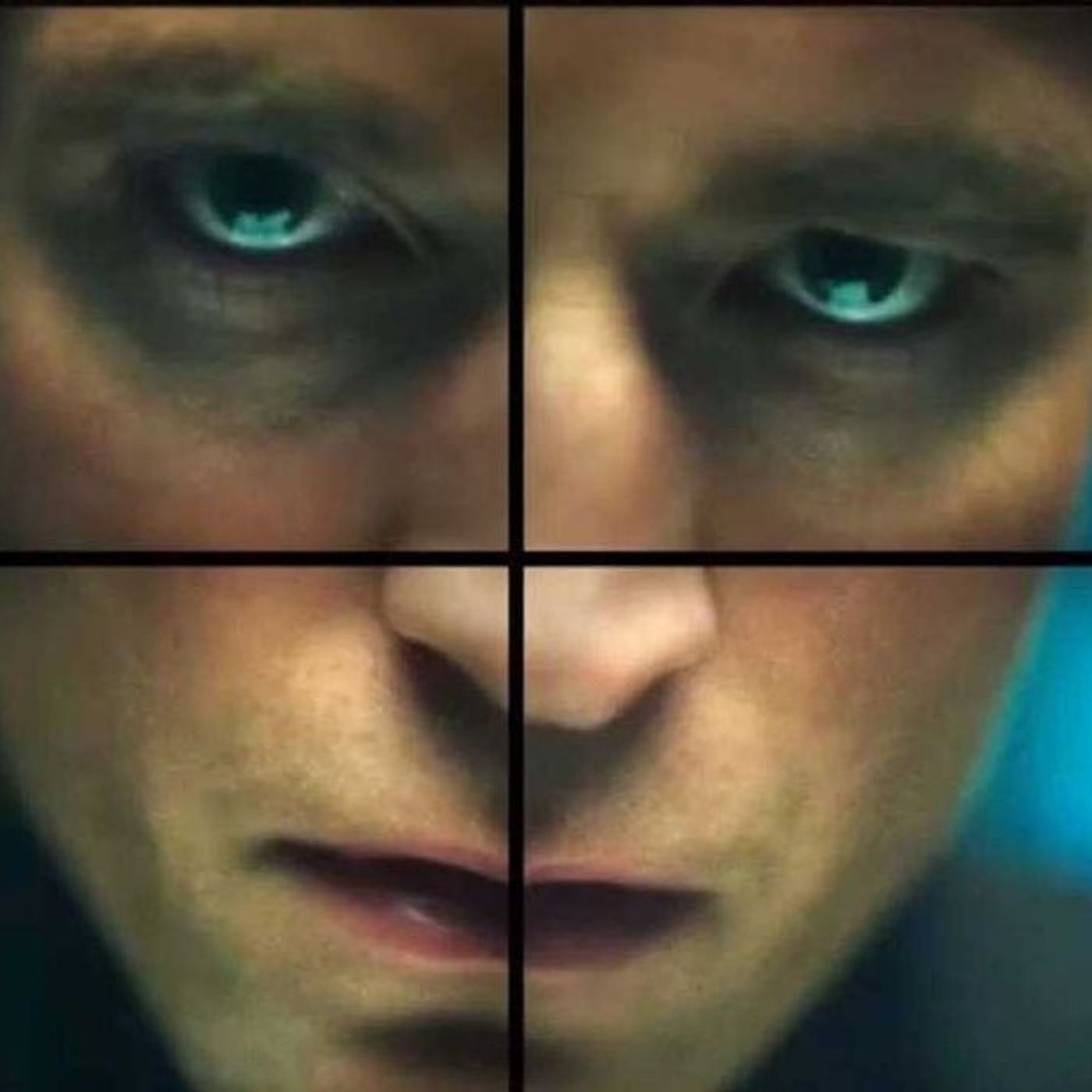
I don't know. He looks like a comic book character. He looks very unreal. He brought up Roderick looking so perfect. I know it's the only thing. that was never in focus on him were his eyes.
And I don't know if that was something that they did on purpose or just some weird thing that came out, but he had, like you said, he had this nicely, almost, yeah, almost chiseled face, and then he's got these weird, like, fuzzy eyeballs. It almost looked. Like he had cataracts. Yeah, yeah, almost. That's where the fog comes in.
And it helped with that kind of, you know, the feel of uneasiness, kind of. It makes you feel a little crazy. Like, he's a little crazy. It's because there was so much fog while they were shooting this and smoke they had to put into every scene that, you know, his eyes were watery the entire way through. Especially keeping them open that long.
Yeah. Like, when did he blink? Did he blink ever? Just when they cut. All cut.
He just, oh, God. Someone came up, Roderick, blink now. Eye drops immediately. Or I'd like to think that there was no way that film could capture the true reality of his crazy eyes. Actually, maybe they didn't even do anything to it.
It just physically can't capture it. That's the whole reason he got cast. His eyes are hyper-dimensional. That's what's going on. He sees into another world.
It's like when you point the camera at the TV when you've got it hooked up and you enter into another universe of looping upon itself. Those are his eyes. And from beyond, he just sees that whole world. He doesn't need his... Pineal gland stimulated.
That's what he lives. Wow. Way to bring up one of my favorite movies. I like any reference to the pineal gland when discussing cinema. Often underlooked gland.
This is one of our favorite times of year. We're constantly doing our Halloween episodes and cramming as many into October as we can. Do we have any, while we're doing that, any horror movies that you like to work in every October? Any fun, maybe forgotten or overlooked movies that everybody should check out? I like all the old universal horror. films, you know, Frankenstein, Dracula.
You kind of can't go wrong with those. Wolfman. And again... That's my go-to every fall. Directors that we're kind of honing that, you know, this is just a few years after, but yeah, you see them start to get really artistic in Hollywood and as close as we're going to get in Hollywood anyway.
Hour of the Wolf. I know. Thank you. I have mixed feelings about that. A greatly underrated Ingmar Bergman masterpiece, that one.
What year-ish? What time period? 1966, 65. He actually made it. He was working on Hour of the Wolf, and then they ran out of funding or something, which is almost impossible to believe when you're watching that movie, because it's literally Max von Sydow on a rocky beach and then in a house.
It's whatever. But they ran out of funding on that movie, so he's like, well, damn it. So he ran off, made Persona, sold that, and went back and continued working on Hour of the Wolf. So they were made at about the same time. And they both have that same sort of.
Persona is psychologically creepy on so many levels, but Hour of the Wolf really externalizes that and turns it into this very weird horror movie. But what do you love about it? Just. I don't know just how creepy it is. It's just, I'm not scared ever, but I just feel unsettled for the next six days.
Nice. That's a, they need to put that on the box. That's awesome. Anyone else? Um, yeah, for me, uh, it's, it's weird.
Cause when you're a, uh, an obscure film fan, like all of us are obviously, um, it, you wind up coming into a lot of movies that are, that are unusual and, and, you occasionally come across these diamonds in the rough that you're like, every time you show it to someone, you get that little thrill from like, yeah, I know, no one's heard of this, and it's awesome, and yeah, I'm really happy to show it to you. But you get a lot of those movies, a backlog of those movies that, you know, you really can't necessarily recommend to a whole lot of people, but you really love them, like for some reason. They really get to you. And for me, I think one of those movies is definitely something I've mentioned on this show before, at least once, which is Blood on Satan's Claw.
I believe you have brought that one up. Yeah, it's a film that takes place in the 1600s, English countryside. A farmer finds a skull in the woods with fangs and fur growing on it. Like you do. Witchcraft and demons ensue.
It's a very strange movie made in the late 60s, and I gotta say, I love it. I think it's wonderful, that one. And another movie which is probably not a masterpiece by any stretch, but it's called Don't Be Afraid of the Dark. either the 1970s version from TV or honestly the movie version from a few years ago was also pretty good. I didn't hate that one. Most people did.
Oh yeah, no, it's, uh, they name check one of my favorite horror writers. They name check Arthur Mackin, uh, uh, Welsh writer of stories about the, the, the fairies coming to get you at night. Um, and anyway, yeah, both of those are a lot of fun. Can't recommend them to a whole lot of people, but, but I love to watch them come Halloween. Well, and that's so, um, I'd seen Don't Be Afraid of the Dark as a kid, and all I could remember was dragging her through the vents to hell.
And it literally took me, like, in my head, I have a list of ten things I remember seeing as a kid. And I'm like, I'm going to find all these things. And that was one of them. And you can't believe how difficult it is to construct a Google search. LAUGHTER Woman drug through vent to hell, tiny people.
Oh, I've seen that one. There's one. I can send you some links for special sites for you. Woman drug through vent by tiny people? Oh, God.
And what I found interesting about the reboot, besides Del Toro, which I'll always support anything he ever does, just because I eventually want my At the Mountains of Madness. Yes. Yes. It is, again, the way he turned it into fairies, because there's the whole thing about fairy circles, and once you walk in a fairy circle, you belong to the fairies, and the little girl walks in the fairy circle, and just fantastic way of sort of turning the existing mythology into a film that didn't have it in its original version. Yeah.
And they mentioned that with, with reference to, uh, they mentioned that with reference to Arthur Mack and again, who was really into the theory that there really were like small humans at some point in our history, which actually we have discovered recently on an Island. Apparently there were. Yes. Uh, and, uh, who apparently they did in fact exist, and the legends surrounding them were that they didn't know how to cook food. That will kill you off.
Yeah, no, no, no. They were constantly apparently attempting to steal children from the neighboring tribes and get them to teach them how to cook food, and the children would outwit them and run away. Anthropology nerd. That's the most adorable thing I've ever heard. I know, but it's like of all the scary legends to be told.
Right. I'm going the other way. You know the neighborhood kids were just making fun of him all day. Well, naturally. They're flicking a big ass.
Well, naturally. But no, yeah, so yeah, that notion that, yeah, taking the fairies and turning them into a horror story. Del Toro's obviously read a lot of that. I'm really looking forward to the At the Mountains of Madness update. Yes, my heart quivers for that.
Although, I hear an interesting story about that that might be apocryphal, but I love it because it raises the category of my. Raises one of the films I really love and everyone else really hates up a category, which is Prometheus. Which one of my favorite movies about Lovecraft that isn't explicitly about Lovecraft. But anyway, apparently Del Toro went out, saw that movie, and was like, you know what? Forget it.
They just made Mountains of Madness. I don't need to. That's what he said. I no longer can make this movie because it has been someone has already come in and checked off all the points for Mountains of Madness and I can't tell that story anymore. Right, yeah.
Which is a shame because, man, I want that movie. No, no, no. I want that movie so bad. Yeah. And he is the only one, I think, that currently makes movies that could make that movie the way I want that movie to be made.
Yeah. So do you have any films that are near and dear to your heart this season? Uh, horror movie season. Um, like I mentioned, uh, from beyond, that's kind of a, just a, it gives me just a nice warm feeling. Like all, like all of our favorite horror movies do.
You remember them with a mixture of warmth and dread. Yeah. Um, I'll probably watch, I usually watch the exorcist once a year around this time, even though it's kind of, you know, might be considered hack, but. It's, it's, it's important. Brilliant film, too.
I mean, it really is good. And, yeah, I'm really just kind of actually looking for something now to watch Halloween time that's not all about jump out scares. It's more about what you're talking about, where. You feel just very terrible for six days. I got you.
Oh, you got me? Okay, good. Hour of the Wolf, man. It will keep you up. And, actually, I might have a suggestion for both of you for your next project.
Have you seen. We talked about the dreamlike quality of this film and Hour of the Wolf. There's one film that actually checks off both of those boxes from my mind as well. It's a silent film. It's called Vampyr and it's by Carl Dreyer.
Have you taken a look at that one? I've not seen that. Okay. It is a film that normally, like all these films, it comes with sort of a cheesy soundtrack like baked into it even in the Criterion edition. You should have heard the fall of the House of Usher.
Yeah. It was really bad. But yeah, no, Vampyr, I have seen this movie at least half a dozen times, right? It's another one of those short, like, hour and 20-minute films. To this day, about 45 minutes in, I have no idea what's happening after that point, because I just kind of get locked into that dream logic that it possesses, and I'm watching it, but I don't really comprehend how the one thing led to another.
It is creepy and terrifying and really unusual, somehow about a vampire. Yeah. But yeah, I highly. Recommend that to you guys to check out. Sorry, I'm not trying to pitch you guys like, hey, do this as your next thing necessarily.
We'll show it at the Alley Theater. Well, if you should wish to, give you part of the door. But seriously though, check that out. It's really creepy and it might fit your boat. Thanks.
Since I name checked it earlier, that's kind of just to give people the... Because I wanted to double check because I also ran across an Unholy 3 recently. and it wasn't the one I knew. So I kind of wanted to make sure people got the one I was talking about. The one is from 1925 that is the Todd Browning one, and it is, that's what's really weird. It's only 1930 when that other one comes out, which also has.
Lon Chaney in it. Like, why would you title it the same? But it's like, I don't know if it's an unofficial sequel. It doesn't seem like that's possible with the way the story goes in the first one. But, because they also are like, Unholy 3 and 25 is circus performer's In 30, their former circus, so maybe it's some alternate universe sequel.
I don't know. But the one from 25 is, again, I don't know if you'd call it normal horror, but anything directed by Todd Browning becomes horror. And to me, it's also like the early stages of body horror. Everybody wants to give Cronenberg that one, but I'm like, Todd Browning, like, I mean, this one is... a it doesn't start off that way but by the end you're like oh oh god. Watching a guy with no arms and legs light a cigarette for himself is.
Yeah no cronenberg can't make up that shit you know. And that's not even that movie, but he did that right around the same time. Yeah, and they did that so smoothly, too. Like, if you're not paying attention, you don't notice what he's doing. Yeah.
But yeah, this one also involves someone, you know, who... It's a circus performer. They may or may not be missing limbs. So from there, I say go check that one out. And you get to see Lon Chaney in a dress, which.
Is always, you know... Sold. Wait, which one are you talking about? You might be talking about the other one. Are they doing a jewel heist?
That's the 1930. Yep, see, that's the 1930 one, which I need to watch that one because I've heard that was pretty decent, but no, the one in 25 is he's an armless knife thrower. Not kidding. That right there should sell you, so go see it. I would go look for that right now.
Otherwise, one more plug for the old band camp. Www.bermudan.bandcamp That's B-E-R-M-U-D-A-N. You don't have to say the W-W-N. H-T-T-P. Colon backslash backslash.
Hook up your modem. In the words of Joe Bob Briggs, man, you guys got some dot com talk. Some dot com. Only accessible through the Tor browser. All you hipsters out there really concerned about your security.
Your Linux systems. And your Tor browsers. But once you download a Tor browser, you're on a list. Let's not go there. They know what you're up to.
And also they post the list of how they redirect the sites, so it's not exactly like. It baffled me. I tried to use it for a little while, but it was frustrating. Yeah, that's just it. Use DuckDuckGo instead.
It's your safe search alternative to Google. They don't care what you're looking for. They don't keep records. All right. Want to keep your sources confidential?
DuckDuckGo. DuckDuckGo. So my search for woman being drugged through beds by tiny people. You got red flagged a long time ago. There's an episode of South Park where Cartman tries to infiltrate the NSA to find out what they're saying about him.
And it turns out no one gives a damn what he's doing. He was very, very upset. Did you give a movie for your Halloween movie? I don't think you did. The Keep.
No, see, when I think of a movie I want to watch around Halloween, it sort of has got to encapsulate the season. And this is going to sound kind of lame, but John Carpenter's original Halloween captures the fall season. There's a scene where the girls are walking down the street and it's fall and there's leaves and he's way down. To me, that makes me feel like This is something that could happen today if I walked out my front door. I was just going over that yesterday, actually, because I'm like, that's why I discount the Rob Zombie version.
Because in his weird backstory, he wanted to trash it up so much that it's nothing but trailer park stories. And I'm like, that was what was so awesome about Carpenter's version is because it's so middle America. It's so any town USA in the. That he is the boogeyman. He's not a backstory.
He's any boogeyman. And then at some point it reminds, that makes me feel like my childhood. So I am, I'm watching a horror story set in my childhood because I, that could have been the neighborhood I grew up in. And that, so, so of all the horror movies out there, that one evokes a time and a place and a feeling and a sense of season. That I like.
It's pretty amazing. Yeah. And it's one of those, like it, it doesn't really become that kind of horror movie till two thirds of the way in. But that first part is equally as effective as being a representation of fall and Halloween and your childhood. And like all the rest of that stuff is so well done in the first part that like, that's why I think delivers so much when it kicks into the horror mode.
And it doesn't help. I've been on a John Carpenter kick for a while. So, you know, she's got a few classics. Otherwise, that about does it. We will return next time.
Same geek feed. Thanks for listening. The busher was doomed to fall, and for it. Hung a deadly pall. The dreary winter night I came to call.
In melancholy and bleak decay, its crumbling walls of lead and gray were groaning in the throes of giving way. My young friend Usher was wild of eye His sister Madeline. Had just died And seeing her laid out made my heart cry We placed the coffin in vaults so deep It once had served as dungeon keep And left the lady there for her long sleep A raging tempest blew that night and bathed the house in ghostly light as ashes trembling mean right. I heard a muffled sound, and sick with dread I turned around. My eyes could not believe the sight they found.
In bloody shroud, dead white of face, but walking. Proud, she clasped her brother's form. And shrieked aloud. As both fell lifeless upon the floor, And I fled screaming through the door, The. House of Usher fell and was.
No more. I would love to know if the. The settings filmed if they used, like, if there was one palace that they used or something like that, if there was, if they actually had to construct sets or what they did. Because one of the things I found interesting also was how disjointed the experience of walking through the place was and the fact that they had thrown drapes on virtually everything so that it really could have been, like, it could have been a palace where everything's covered with drapes and that's just the way they contracted to use it. They said, okay, you can use it, but all the statues have to stay covered and, you know, you can't touch them and so on. or it could have just been that they built it on a back lot somewhere in France, and that was the easiest way to conceal everything.
But either way, the place had a kind of grandeur to it, and at the same time was very gloomy and dark and spooky, and I'd just love to know where that was. Bunuel's Loft? In France. Yeah. It's obviously a question for all of you guys.
I must. Quoting Conehead. Let's put answers in a hat. You have IMDB right there. You have it too?
It belongs to the world. Doesn't it belong to all of us? That'll give you guys some homework to do at home. I hope you haven't taken my stories too seriously. This episode is a production of Movie Meltdown, produced and edited by The Oddity Studios, with the opening music performed by The Empires.
For more on how to sponsor or support the show, email producer at moviemeltdown.com. Talk hard!