About this episode
Transcript
Automatically generated, so expect the odd misheard name.
Guess who? It's 10 o'clock. Do you care where your parents are? The following feature has been rated R by the Motion Picture Association of America. It is intended for mature audiences and parental discretion is advised.
This is an emergency alert. Defense Corps forces reported just moments ago. This is not a drill. Repeat, this is not the drill. At this time, we are requesting the immediate and orderly evacuation of the vicinity.
The Coast Guard and the Navy have been alerted and are standing by on Eastern Sea. And it continues to burn out of control. It has been regular. Every five to ten minutes, there has been another convoy of units, fire companies, paramedics. A citywide emergency has been declared.
Police officers are still on tactical full alert. 2,000 National Guardsmen are standing by. Air defense warning read. It's time for Movie Meltdown's Attack of the Killers soundtrack. The live transmission has begun, and we're into the final hour of hell.
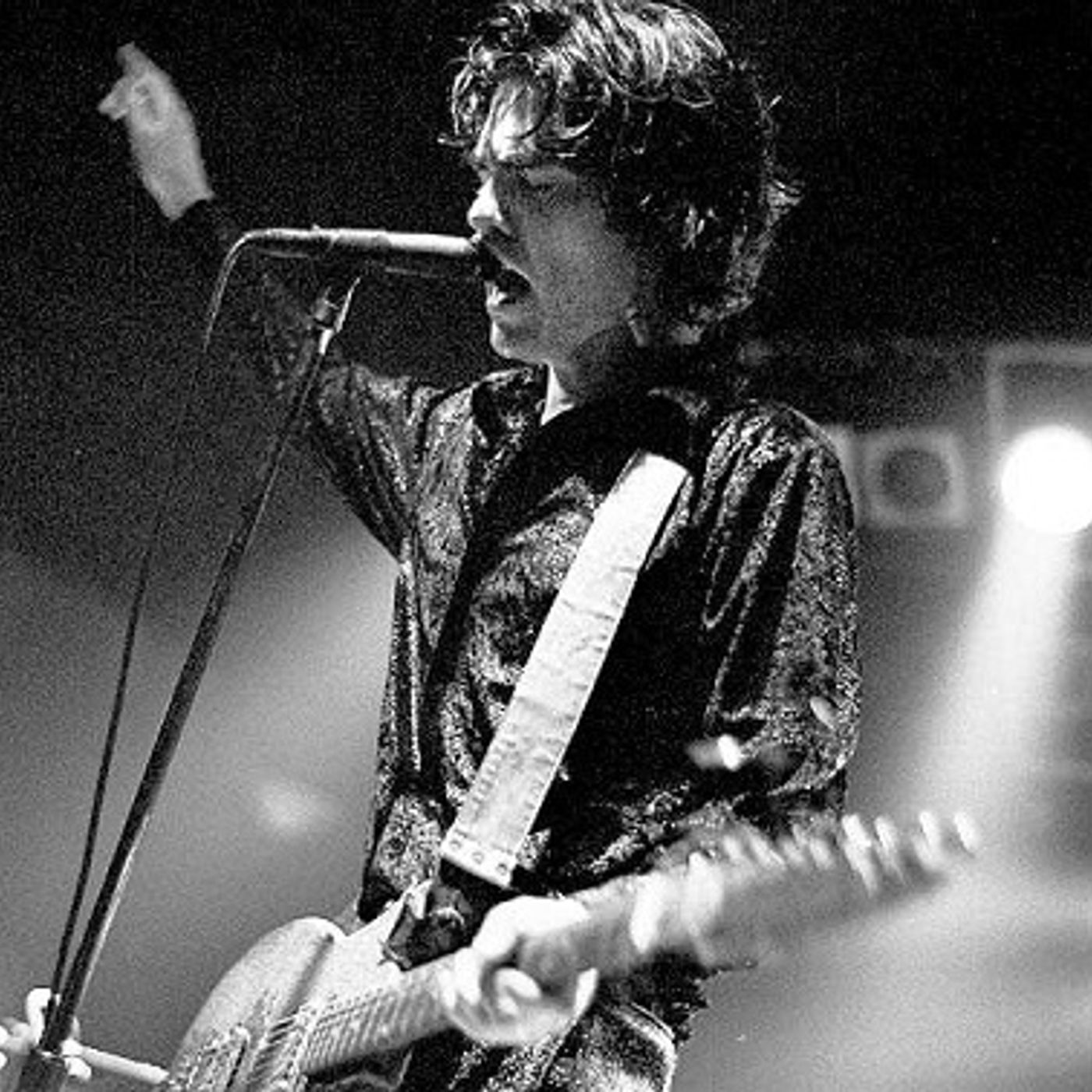
What's up and welcome to Movie Meltdown's Attack of the Killers soundtrack. I'm Brian and this week I'll be joined by a very special guest, the innovative and always impressive Mr. John Spencer. John's not only going to give us his killer five this week, but along the way he's pretty much going to help us pick all of the songs for this week's episodes. But first, I thought if you aren't familiar with John and the Blues Explosion, then we'd introduce you and kick things off with a song from his new album entitled Freedom Tower, No Wave Dance Party 2015.
So you're not going to go to law school? What do you want to do then? I want to dance. And this is one of my favorite songs on that album, and it's actually the song that starts things off. So I thought it would be a good way to intro the band and this episode.
This is Funeral from the John Spencer Blues Explosion. Here we go. Here we go. You want a chicken? I do still.
Oh, come on. Summer, spring, winter, fall. I'm going to dunk your head just like a basketball. Chicken, I'm going. To make it.
I take it to the lake. Let's do. It. All right, get together. Fight to the back.
I want to see everybody. Yeah! I want to know right now. Who's ready to do it? Come on, man.
That's right, ladies and gentlemen. Got it All of them are. Stronger Fellas Are you ready to hit it And. Quit it Countdown Here we go 5, 4, 3, 2, 1 Go Come on I'm. On a date now And I just Respect.
Now, I've known of John Spencer and the Blues Explosion for quite a few years now. But in looking back, I also forgot how many other bands he's been in over the years, and still a few that he's currently in. Aside from the Blues Explosion, John's also been involved in Heavy Trash, Pussy Galore, The Honeymoon Killers, and Boss Hogg. So as we continue on here, I thought we would tap into an older track from one of John's other bands. This is When Coma from Boss Hogg, originally on the Joe's Apartment soundtrack.
And actually, if you go back and re-watch Joe's Apartment, you may just see a slightly younger John hanging out in the band, which also happens to be Boss Hog, playing in the club scene. Stand back, hold me, suck your belly dry. Clever girl, you're diving things away Never lie to those you don't. Love Cross my heart, I hope you die Nothing to lose I got nothing to lose Nothing to lose I got nothing to lose. As I swallow pieces of my pride Try so hard to feel.
Like you Try to make you understand Nothing to lose I got nothing to lose Nothing to lose I got nothing to. Lose We'll be right back. Want some music for your ears? Doo-Wop Shop makes it easy to rent for any event, business meeting, or special occasion. From PA systems to karaoke machines to just about anything that makes noise, you can rent it from the Doo-Wop Shop.
In Louisville, find them either at their Highland Store at 1587 Bardstown Road, or in the East End at 2915 South Hurstburn Parkway. And look for them online at doo-wop-shop.com. Doo-Wop Shop. We're serious about music. Alright, so we've got a handle on John's music, so let's just talk to the man himself, as we welcome this week's special guest, John Spitzer.
Hey! Were you pretty early on influenced by music? I guess so. But music that was on television or was in films, things like The Banana Splits or The Monkees, there was a time when it seemed like every Hanna-Barbera or other Saturday morning cartoon show They would have a band, people like Josie and the Pussycats, and it was a real part of the counterculture, I guess, that's filtered through capitalism and everything. And that's what we ended up with.
The Stanley Kubrick film 2001 made a big impression on me as a young person, and I was really obsessed with that. soundtrack and the way in which the music was used in that film. So I didn't listen to a lot of records too much when I was a kid. It wasn't until I was a teenager or adolescent that I began to get really interested in rock and roll. Were you drawn towards classical stuff once you got to 2001? Well, no.
I didn't mind classical. My mother's a big fan of classical music and opera. So that was in the house when I was growing up. So it's not I don't think. say I was drawn to classical music. I think it was just the way in which certain films or TV programs used music, and it could be classical.
Well, then I guess what... did you start listening to once you got to teenage years? They called it new wave music. I was really into bands that used synthesizers, Devo, Kraftwerk, The Residents. And these are also bands which had a very strong visual presence. And also it's kind of a mythology or something.
It wasn't just that this was These were rock bands playing songs. It was a whole concept and package. So that's what I first started listening to. And then a little bit later, I got into some kinds of punk rock and then really got into 60s garage punk. And I was also really into noise, industrial music. bands like Thriving Gristle and Cabaret Voltaire, Einsturz and Neubauten, and rap, a lot of rap music.
When you started playing, did you do it traditionally, go take lessons, or did you just start banging things? No, when I was little, I played trombone in the school band, and Me and all my brothers and sisters, we all played instruments as kids. But as far as the popular music or the rock and roll, no, I never took a lesson. Yeah, it just, I guess, started banging on things. Again, we're kind of hitting at that point when music video took off.
How much of that do you feel like influenced you as well? A little bit. I mean, yeah, I graduated high school in 83. Um, I grew up in a small town in new England. Uh, we didn't get cable television until 81 or 82, you know?
So, um, I was excited cause, um, yeah, MTV had just started. And at that time MTV showed my videos and they also, they used to show some interesting things and bands like the residents and Devo, uh, were shown because they were one of the few bands that made videos. In addition to early MTV, there was a program on the USA network called Night Flight, which ran through late night, Friday night, or maybe Saturday night as well. And it didn't go all night. It went for a few hours.
And they would show music videos. They would sometimes have interviews with bands. They would have some live footage. They would also show cult films and, you know, it was a smorgasbord of sort of, you know, this, I don't know what you'd call it. It just seemed, you know, it wasn't really punk, you know.
It was just the pop culture at that time. It wasn't really pop, but it wasn't popular. We didn't know it at that point. Yeah, it was, you know, it was supposed to be underground or alternative, but they weren't using words like that, you know, and I think it was, this is again, 81, 82, 83, you know, the 50s, and the sixties still loom very large, you know, and they would show things like, uh, safety films or things, you know, duck and cover. I mean, it was still, um, there was such a kind of shadow or weight of all this, you know, kind of America, the golden American, you know, uh, uh, boom that was sort of hanging over everything.
And it was, you know, it was the eighties. We had Reagan, it was fucked up time. And, uh, so, uh, yeah, night flight was a huge influence. Um, uh, Lisa Robinson, the, the, the famous, uh, or celebrated rock journalist. She was involved in that program.
She did, I don't know if she was ever on camera, but she did the voiceovers. I think maybe she was on camera. I don't know, but that was, um, that was a big thing for me. And also, um, heavy metal, there was a heavy metal magazine had a, um, this is a comics magazine, you know, kind of adult fantasy comics. And I, I won a subscription and an art prize.
And, uh, They had a music column, and I heard, found out about a lot of bands through this, through heavy metal, through that comic book. And then did you get into the movie? And I've had a few people that cited that was such. A touchstone thing for them, the movie heavy metal. I never saw it.
Really? Yeah. I don't know when that came out. 81? Yeah, I don't think I've ever seen it.
Mid-80s? I don't know. I can't remember if that was after I'd already... going to college and then it moved on to like much much harder more you know really true punk underground you know serious shit um i don't know it was it was really just the um it was the magazine and you know this is again it's a long time ago there were no there was no internet there was no uh compact discs it was very hard to you know and i was growing up in a small town it was hard to find out about stuff, you know, and you'd kind of hear people talk about things and yeah, occasionally someone would turn you on to something, something, uh, you know, I was in high school when, uh, a classmate, uh, played me the gun club record, you know, but it had to be, it was usually that somebody's older brother or some, a relative from somewhere else, like, like they brought home this record or something.
And, you know, but it was hard to, you know, you have to mail away for records. And, um, A few years later, I guess you get cassette tapes and then people start trading and you start getting a little more of that kind of stuff. Yeah. No, I definitely had a cassette deck and I would make tapes. And, yeah, I didn't, you know, it wasn't, there weren't a lot of people that I, you know, I went to a small high school.
There weren't a lot of people that was into this stuff. And, you know, so it was sort of hard. hard fought, uh, information. Um, you know, but as far as like heavy metal, the movie versus heavy metal, the magazine, I'd just like to say that for me, this reading about music, you know, has always been a big thing for me because you can read about something and it's a very different from listening to it, you know? Um, and I think sometimes that's even almost as big an influence for me as, as watching a band or, or, or listening to a record, sometimes reading about some new wave act in Heavy Metal Magazine or reading about a Howlin' Wolf live in concert. I never saw Howlin' Wolf, but to read these stories or read about these performers or these musicians, you kind of fill in the spaces in your own head.
I mean, it allows you to kind of create what you think it was. Yeah, and I think that's really at the heart of rock and roll. Rock and roll is an opportunity to recreate yourself. And so, yeah, it's definitely been that way for me. Do you think that was a key to your sound, like finding your sound as sort of all those things you imagined over the years and then trying to create it yourself?
I guess so, yeah, yeah. Well, then we try to do a lot of crossover with, you know, how music works its way into film. I guess at that time when you started getting into stuff, did you start getting into film as well? I think I was always into, you know, we grew up with the TV. I always watched TV.
And, you know, I don't know if this happens anymore, but, you know, when I grew up in watching TV in the 70s, you know, the There was, you know, this was pre-cable. There were only so many shows. And I probably watched the same things that anyone else in my generation. You'd have Star Trek and reruns. You had Gilligan's Island, The Munsters.
There were programs that were in syndication that were on every day after school. And then you had a Saturday morning lineup. And, you know, we had a subscription TV guide and podcasts. I would look at the TV guide and read it and, uh, and, uh, you know, what the, the ABC movie of the week or the, whatever the fuck it was, that seemed terribly important, even though there were films were, you know, heavily edited and, and, and filled, you know, chock full of commercials. I used to watch those every week. you know, you'd, when, when there was, when they'd show a James Bond movie or they'd have Planet of the Apes or whatever, you know, you'd, the next day or a couple of days, you'd be, when you're playing with your friends, you'd talk about it.
Yeah. And, You wouldn't always get to see the whole movie. But, yeah, so I think that film and television from an early age, you know, definitely had a strong grip on me. And I've always been a fan of horror and fantasy and science fiction. And that has always and continues to hold sway over me.
Tweet Audio, your source for high-performance, noise-reducing earbuds. Available in three styles and seven colors, durable and designed to sound great for both music and those chatty podcasts. like the one you're listening to now. Tweaked Audio earbuds come with a one-year warranty, and now there's a special deal for Movie Meltdown listeners. Just go to tweakedaudio.com, and when you check out, enter the discount code MELTDOWN. Then you'll get 33% off and free shipping.
Tweaked Audio. Sounds better. It's time for the Killer Five. We usually do our top five picks as far as film, like music that's used in film that you found really. Well, I think if you want to talk, we've mentioned Q Kubrick.
And 2001 really blew my mind as a young man. And I saw it when I was a kid. I don't remember where I saw it the first time. But, yeah, I was obsessed with that record and that soundtrack. Yeah.
Clockwork Orange when I got a little bit older, still quite young, but I saw that and that's the amazing, I don't know if it was Walter or Wendy Carlos, I don't know where he or she was at at that time, but the kind of synthesized classical pieces..... Thank you. So so. Thank you. So so.
So so But Kubrick was a real genius, I thought, for lots of different things, but the way in which he used music in some of those films. Those two mirrored against each other. They're pretty close together, but the way that he's using classical is almost complete opposite of. It's sort of the subverted version of it in Clockwork. Orange versus the true glorious version that he's trying to use in 2000.
Yeah. You know, another person, another great director who used music in a great way, or I mean, made some great music, John Carpenter. Oh, yeah. And I don't know what to say. Is there a specific one of his that you remember?
Well, I mean, They Live is a favorite. The Thing is a favorite. Escape from New York. But he didn't do the music to The Thing. Yeah, which I've always said it sounds the most like his style.
Well, I saw an interview with him and he talked about how he went to Italy and talked with or sat with Ennio Morricone. And Morricone had written, the thing I think was Carpenter's first big studio feature. He had kind of made enough money. He had a reputation. This was a guy who was, and it was interesting also in the interview where Carpenter talked about the kind of font he would use for his titles and how he would have his name above the title.
And this was a smart guy. And this was a guy working in a kind of independent, you could almost say punk rock way. You know, it still was, he was making movies, but he was, he was doing his own thing. So the thing was, was, I think it may have been his first major studio picture. And so they got Morricone.
I don't know if that was Carpenter's idea, but anyway, so it's a big movie for Carpenter. And so he goes to Italy and he's talking to Morricone and John Carpenter says in this interview, he didn't speak Italian. So Morricone had written something quite, I can't remember how he described it, was busier. His usual style. Yeah, and John Carpenter was able to, just said very simply, less notes or something like that.
And then Morricone came up with what he did, which is a really great score, I think. Yeah. You Thank you. Thank you. Reach anybody we're a thousand miles from nowhere man and it's going to get a hell of a lot worse before it gets any better.
Whatever but john carpenter's no slouch as a as a film composer certainly no yeah yeah. That that thing piece especially the main title is like so impressive even now just the film as a whole holds which one what's amazing that the main title theme for the thing oh like yeah anyway but yeah the whole thing kind of It's amazing how well it holds up as far as special effects that were cutting edge and everything about it. Oh, it's great, yeah. I can't stand the CGI stuff, but The Thing is a great movie. They Live is such a great movie, too.
It's interesting because it so feels like he probably had Kurt Russell in mind. Because he'd done several in a row with Kurt Russell. You get to Roddy Piper's, he even kind of got the hair and the shirt. He's almost got that same look. I don't know.
I've never heard about that. I haven't heard his official story, but to me it's like it was right after he was doing that string with Kurt Russell. But yeah, I don't know. Were there any other big songs that you can think of? Like moments in film that really kind of.
The shower scene in Psycho. We all go a little mad sometimes. The town I grew up in was Hanover, New Hampshire and that's where Dartmouth College is and they had a film society and so I got to see I would go to the film society at their art center and It wasn't just for students. You could, you know, non-students, non-college students could go. So I saw a lot of movies that way.
And Psycho really, yeah, scared me. And Eraserhead totally fucking blew my mind. And that, I think, is a really great, there's a lot of, you know, clever use of, it's music, but it's also, you know, soundscape. And, you know, yeah, it's a great movie. Thank you.
You've seen his early short films, David Lynch. I have, yeah. They're equally as disturbing and weird and sort of music-oriented. Yeah, his stuff is always kind of great. Another one, what about Beyond the Valley of the Dolls?
Oh, yeah. Yeah. Is there a specific song? Well, I mean, Look on Up from the Bottles. Lately you feel so insecure It seems you had a bad affair.
And now you're out to give a chore. To hide the hurt you. Bear You've gone now. I'll get your love Caught up in a rut. You warm your hands, an empty pocket.
Where's the good lover that you knew? You took a backseat, now don't knock it. When no one remembers. You, you're gone. Look on up, look on up at the bottom Look on down, look on down at your luck Oh, look on up, look on up at the bottom Look on down, look on down at your luck You know But even though it's incredibly schmaltzy stuff, uh, um, you know.
Uh, In the mid-' 80s. When Pussy Lord started, the VHS, the VCR was commonplace and affordable, and there was so much stuff on cassette, video VHS cassette, and we spent so much time watching movies and movies. and watching a lot of really bad movies. And, you know, there were things like the Psychotronic Film Encyclopedia, even books like cult movies. I had several. Yeah.
Do you know the books I'm talking about? Oh, yeah. There were three volumes or something. There were the research, like Incredibly Strange. So, you know, we would watch all these.
We spent so much time just watching movies and a lot of bad movies. So you kind of go through these At that time, there were these directors, people like Russ Meyer, and they'd talk about. I was going to ask if you were into him. Yeah, and Herschel Gordon-Lewis and John Waters and everybody. Meyer's had such good music, especially in that mid-run, when he kind of got in his stride, like the boss tweed that he works in, and his use of music when he got where he started.
In the beginning, it was kind of awkward what he was doing, but when he hit his stride in that middle, late 60s era. He put some really good stuff in there. Oh, yeah. He had good musical taste, too. Yeah.
Again, yeah, those psychotronic ones. And I think from what you said, that was kind of that same thing, being pre-internet, just sort of poring over those and like the little picture every once in a while that would come up and you're like. What is this? Yeah. Why have I not seen it yet?
Yeah. And you're like trying to find them then because then you couldn't just go. Find it on the internet. You had to track it down physically. Yeah.
Did you guys have a good video store, I guess? We just recently closed one here. Yeah, I mean– Sure, it was always great to find a good video store, but you'd also trade things with friends and mail things around. Well, then I was going to ask, as far as getting into almost many movies in itself, the music videos that you've done. You've put together some pretty epic music videos.
Is that part of it that you like? Is that part of the process? Well, yeah, I like it, but I don't really... I don't do it myself. I've been very lucky to work with some very clever people.
I'm involved. I'll put my two cents in. It's not just that it happens. Some people seem like they really don't like doing them. Oh, I don't mind.
You've put together such good ones over the years. Oh, thanks. No, I don't mind. I used to make film. Before I started playing music, I studied filmmaking, and that's what I wanted to do.
And I ultimately chose... playing in a in a rock band because it was it felt better it was satisfying there was a there's an immediate satisfaction. Yeah definitely what little filmmaking i've messed with is such a long drawn-out process. I don't think it's as long and drawn out anymore i mean with. The yeah it's a little better but still compared to like the immediacy of being on stage and doing something live and yeah it's it's a totally different process but is it something you've considered doing more as far as directing and that type of thing no no i'm not really interested in it's a lot of trouble i have to say just what i know of seeing people deal with it it's so much orchestrating and planning and prepping yeah it's a lot to deal with but oh just this one i'm sure you've talked to death over the years but i this is almost more for me because i've been fascinated with theremin since i was a kid I guess you.
Were, too. When did you first. Yeah, but I mean, you didn't know what it was. No, not at all, for years. It was just sort of the spooky noise.
Yeah. Or the eerie, otherworldly noise. And then at some point, I learned what it was. And when the blues club started, I had the idea of like, what? To have a theremin to really...
You know, push the music way out there. And a friend of mine worked at a big company that rented musical equipment in Manhattan. And I called him up and said, asked if they had it there. And he said, yeah, we got three. Nobody ever rents them.
And so he dropped one off. And that was like within the first few months of the band starting. How much? I mean, it seems what little I've messed with them, they're so hard to get the hang of. They're incredibly hard to play.
And they're meant to be, my understanding is Leon Theremin meant to be like a violin. It was meant to be a serious instrument. He always used it, yeah. The way I play it is, you know, again, this is not just banging things around. So it's a very, very hard instrument to play.
So since this is John's episode, and he's one of the few musicians out there brave enough and inventive enough to work a theremin into his music, I thought we'd have to add something to this week's lineup. And of course, me being the sci-fi geek that I am, I immediately thought of The Day the Earth Stood Still. Now that film was released in 1951, and though the film was looking to the future, at the reality of a world having to deal with the actuality of space travel and the possibility of life outside our own little planet, The theremin was not a piece of futuristic technology. In fact, the instrument had actually been around for decades at that point. And truthfully, this isn't even the first soundtrack it was used in.
But this is probably the moment when America took notice of this instrument. Now, I'm sure they had no idea what was actually making that noise. And there's still plenty of people out there who couldn't idea theremin if it were sitting in front of them. But it's in this soundtrack that we familiarized ourselves with that strange noise, and it immediately attached its weird and otherworldly sound to the science fiction stories it would become synonymous with. With this song, we return to Bernard Herrmann, who you heard earlier with the epic Psycho soundtrack.
But this was Bernard's first soundtrack after he moved from New York to Hollywood. For The Day the Earth Stood Still, Herrmann chose an unusual list of instruments, which included three vibraphones, two glockenspiels, Two pianos, two harps, three trumpets, three trombones, four tubas, and two theremins. The soundtrack also used some unusual overdubbing and tape reversal techniques, which also seemed like the sort of thing that John's more experimental side would appreciate. So in honor of John's commitment to the theremin over the years, this is The Day the Earth Stood Still's main title theme. Thank you. © BF-WATCH TV 2021.
Thank you. Thank you. Thank you. Thank you. Hi, I'm Malcolm McDowell.
You're listening to Movie Meltdown. So just keep listening. I'm with the rain. I have a smile. On my face.
I walk down the lane. With a hand here in the rain. And I'm singing, just singing. In the rain, doop-a-doo, doop-a-doo, doop-a-doo. Well, then I guess you've got the new album out now.
I guess what do you want to tell people as far as what you're doing? Because I was thinking back of the first time, almost when it started, when a friend of mine was like, hey, you need to check out this album. And it was one of your early ones. And I was thinking how many years it had been for me. But I'm like, also from your end, you keep coming back every few years.
And what is it that you're still bringing to the blues explosion that's sort of different as the years. Have gone on? I don't know if it's what I'm bringing to the Blues Explosion because it really is a collaboration. I think that the partnership or the collaboration still seems to be very fruitful. There's still a lot of juice left in the rind or whatever.
And it feels very good to play together. Yeah. We never really had any big plans. It was always very much like a garage band. We were really into rock and roll and all sorts of crazy music, and we wanted to do that for ourselves.
And I think that still sort of holds true. It feels good. We enjoy it, so we keep doing it. We take it very seriously. I take it very seriously, and I work very hard at it.
So it's kind of like an obsession, a passion. But it has been a long time, about 24 years. Yeah, because I've seen different incarnations, and Heavy Trash was another one I'd seen recently in the last few years that you've done some great stuff. Thanks. Where did you see it?
Was that at the Lebowski Fest? You were here several years ago. I think then, too, but I think after that you came back for the second album, maybe. But yeah, so it's one of those, yeah, just watching you sort of, Do different things and then come back to. Yeah, I mean, Heavy Trash compared to the Blues Explosion, there are things different.
Heavy Trash allows for a different sort of vocalizing. It sort of gives you a different space, me a different space, to sing different kinds of songs and to do different things as a singer, as a vocalist. So, you know, it's nice to... to do different things and to, and to play with different people. I was just going to tell people what on this tour, where's the best place to find out as far as, you know, where you're coming up next. Or, Oh, if anybody, if anybody's curious about the blues explosion, a good place to start is going to the John Spencer blues explosion.com.
Uh, the band's website has information about our new album, freedom tower, and also about our, all our concert dates. Cool. All right. Thank you for sitting in. This is, Now, you heard John talk about branching out with his other band, Heavy Trash.
So I thought we'd work in one from he and Matt, and I think this song is a good example of just those different vocalizations and how they come into play in this other band. This is Heavy Trash with Fix These Blues from the 2011 film Girl Walks Into a Box. ¶ ¶. There must be something wrong Something in my mind No matter how blue I turn You still act blind You act blind guitar solo I play the dancing fool. Singing skip every night Fall. On my knees and tear my hair But you're still acting so more alive guitar.
Solo Well, can't you people see There's something. Wrong with me I don't want to. Sound like a crybaby on. The TV But there's something wrong with me I don't mind feeling sad. But one thing's for sure.
I've had all that I can take and I. I can't stand. No more, no more. If you can't fix these blues, am I crazy too? Can't you see.
Now these next couple of songs were picked by John and myself, because as we wrapped up our segment there and headed back over to the venue that he was going to play that night, we hung out a little bit and kept talking about movies, as I'm known to do. And we were just discussing some movies that we've seen lately and some stuff that we've liked and... kind of came to two different ones that not only were movies that we both liked, but also the soundtracks were really impressive. First off, John mentioned that he'd recently seen It Follows, which itself is an interesting movie, but more than that, the soundtrack is quite impressive and does such a great job at capturing the mood for that film.
So now I thought we would work in the theme for It Follows by Disasterpiece. I'm sorry. Mm. Mm. So the other main movie we discussed as we were standing there before John was about to go on was Under the Skin.
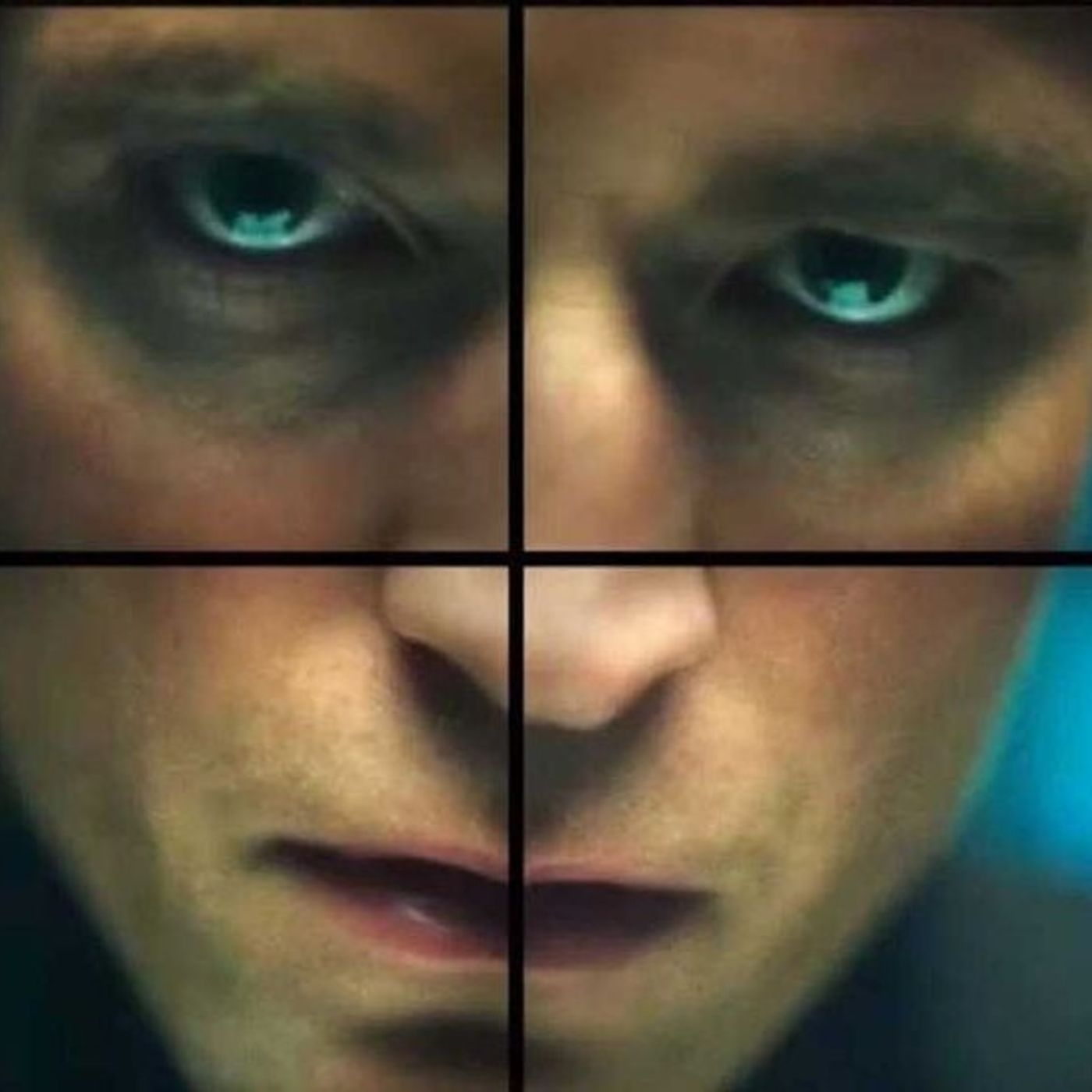
I've gone on record many times before, both on this show and in a gushing written review on our website, just how much I like Under the Skin. I think it's an amazing movie. It's definitely a polarizing movie. There's no gray area. You either love it or you hate it.
But I'm one of those that loves it. And I think it's so well put together and so imaginative and so impressive in the visual sense. But even more impressive is I don't know how well those visuals would work without the score itself. This unnerving, weird score that so perfectly fits this movie and perfectly captures each of these weird scenes that we're thrown into that it's nothing short of amazing. So since John is also a big fan of Under the Skin, I thought we would play what is probably the most memorable song on the soundtrack.
This is Death, composed by Mika Levy. Mika Levy © transcript Emily Beynon. That was fucking trippy. All right. Once again, I'd like to say a big thank you to John Spencer for joining us this week.
He was great to talk with, and I loved hearing his picks of different songs that have inspired him over the years and just the type of music that he enjoys. Again, you should go to thejohnspencerbluesexplosion.com, and there you can check out the new album and see if he'll be coming to play live somewhere near you. So now we're going to round things out with another song from John's new album. So this is a track that he really seemed to like on the album, and he also mentioned that they had done a very cool video for it. So go online and look for that as well.
But otherwise, we'll send you off with Tales of Old New York, The Rock Box, from the John Spencer Blues Explosion. Thank you once again for listening, and with that I will remind you, Get a Life will provide the soundtrack. When we were, you. Know, a lot of people from the scene and all their friends got. I don't know, we went through this explosion.
We're live. We really wanted to push the music there. You know, we wanted to get way out there. Yeah, nothing matters except. I got a rock box, baby.
Down in New York City. You know the place is so pretty. I got a rock box, baby. I said CBG, but that's the place to be. But they got to make.
A left on the boundary. Got a lot of dudes asking. For a quarter-patch room. Oh, we've been out of order. Rock box, baby.
Down in New York City. Everything is so pretty. I got a rock box, baby. Everybody wants just. A little bit more But you gotta get money.
Just to get to know Don't. You fret now, follow me Cause we're gonna sneak in through. The back alley Hey! Go! Rockbox, baby!
California had the ride going on with the Neocon core from dust to bone. Give me squad car number one and two. Come on, punk, do it! Rockbox, baby! Can you say shit on your.
Oh, yeah. This episode is a production of Movie Meltdown, produced and edited by The Oddity Studios. For more on how to sponsor or support the show, email producer at moviemeltdown.com. Aloha! Aloha!
Talk hard!