
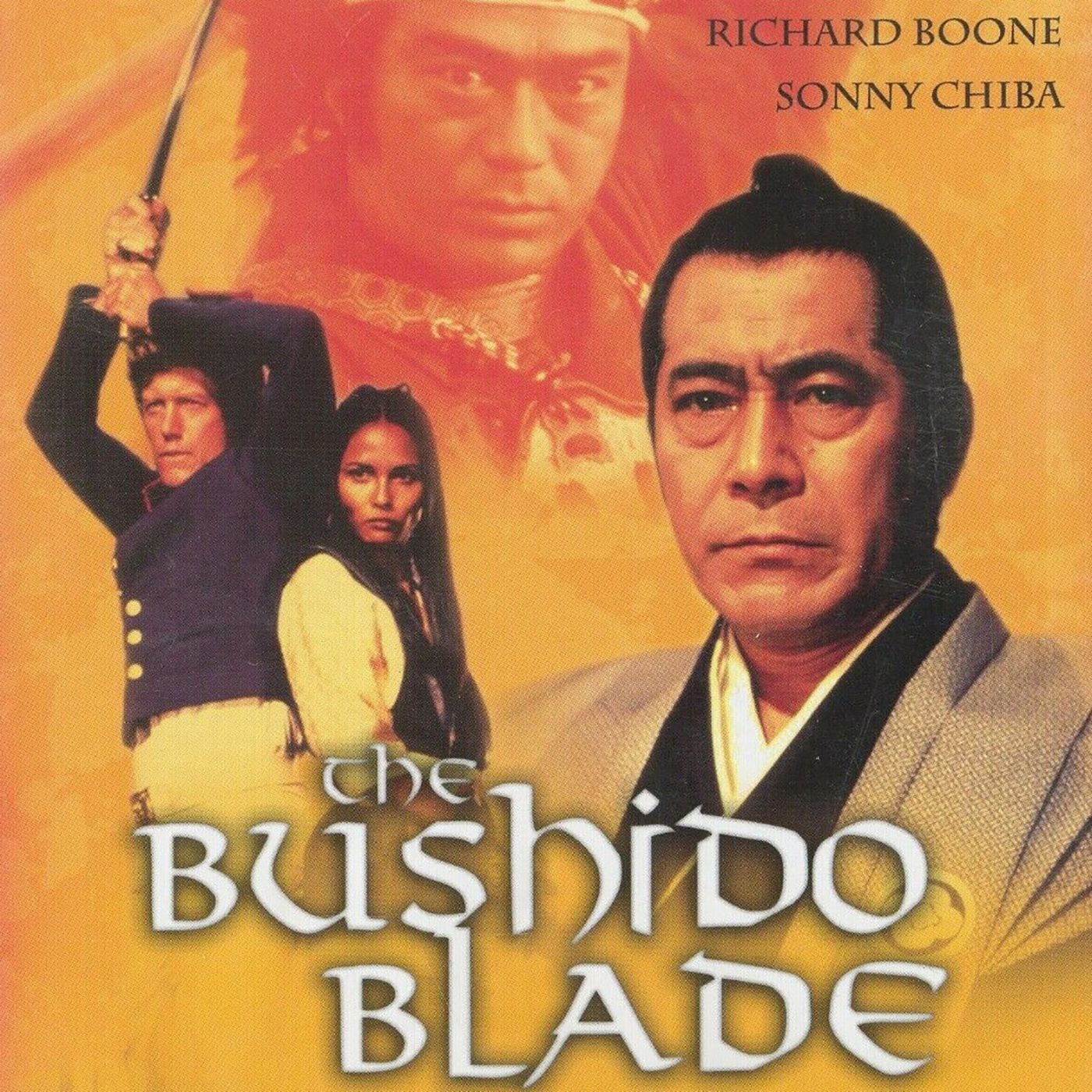
About this episode
Interviews include a snippet of an earlier interview with Starr as well as a new interview with producer Benni Korzen who worked on the live action Rankin & Bass pictures going all the way back to The Enchanted World of Danny Kaye.
Transcript
Automatically generated, so expect the odd misheard name.
The hood of the boat from the land of the Showgun, the Bushido Blade. In the name of the US government, I demand the return of the stolen sword, the Bushido Blade. Bushido means beauty, honor, and courage for us death sharpened life. The Bushido Blade, starring Richard Boom, Sunny Chiba, Frank Congass, Laura Gimso, James Earl Jones, and to Shirah mcfune as the Showgun's commander in a daring quest or the weapon that would unite two words, the Bushido Blade. It cuts to the heart of courage.
Welcome to rank and on bass and off hand joke that became a podcast. I'm your host. Mike White joined me as a bosun who's taller than a horse, Mister Chris dashe I prefer to go ba my stage name Richard Boone, but since Richard Boone has already come and gone, it's actually Dick Boone, so I just go by Dick Boone. Now, how about we just call you Dick? Also along for the ride as Admiral Richard HadAM.
I've been called Dick many times. On this podcast. We discussed the worse of Arthur rinkin Junior in Jewels Bass, specifically some of their stop motion and animated work. But yet again we are in live action territory as we look at the nineteen eighty one film The Beshido Blade. Yes, it's Richard Boone, the Last Dinosaur himself at the helm as Commodore Perry, heading a crew consisting of Frank Converse, Mike Starr, and Timothy Patrick Murphy, who all get to interact with the likes of Maco or Mako, Tashiro, Mufune, and Sunny Chiba as we tell the very windy tale of the titular Bashido Blade, a gift from the Emperor of Japan two Commodore r to seal the new relationship between America and Japan, our relationship we all know will go swimmingly and never have any problems.
That was my favorite part at the end. It's like this will be good for both of our countries. It's like, uh, it's like Ron Howard cuts in. It was not fuck it or more like just like that bopop bop, like fucking curb your enthusiasm. I don't know what the point of the end of this movie was, because it was guys, we know how this.
We know how this ends. It was ironic. If white men and Asian women could simply come together in the ratan covered walls of the Japanese domiciles, everything would have been fine. There was a moment of hope, and now we realized that later that moment was fumbled. Richard, has anyone ever told you you could sell snow to the Eskimos?
You just convinced me this movie was not as insane as it was. Holy moly, what an insane film. Please correct me if I'm wrong. But at the end, they still end up signing the treaty, even without the blade, without the mcguffin. The mcguffin is not present.
Then they show up with the blade and it's like, oh, it's all good, Wait we did that. So basically the whole movie is a waste of time. Well, and the Blade is viewed as like these savages and they're like and they're important thing, like you know, like something that you know, like the shunka stones in Indiana Jones, something to that effect, where it's like, we need this thing. But everybody, y'all, the white people are just kind of rolling their eyes. I mean, Richard Boone kind of rolls his eyes.
He's like, this fucking blade is going to hold us up and then it doesn't matter anyways. It's the messaging in this movie is bizarre, but not surprising given what we've seen from these Ranking and Bass movies. You know, the message of the movie, I was sort of joking, but now I'm not joking. Was the second act. I wasn't expecting it turned out to be, Okay, you three go out on your own into Japan, far away from the harbor, actually go in country and do this thing.
Well by doing that thing, what it really just did, they immediately all separate. It gives each one of them a chance to have a separate adventure. For two of them, a woman is central in that adventure. The different philosophies like, they're the ones who actually went and lived a little bit of what Japan was at the time. So it feels like at the end of the movie they were sort of like, whoa, we know something now about the Japanese people in all these different areas, you know, the agricultural and the warrior and the royal and all these different things in all these different ways.
Yes, sexual also and sumo wrestling, and they're the ones who come away sort of like, yeah, the Bushida Blade kind of was irrelevant it to actually knowing something about the people that were signing this treaty with. But yet they never make it back to the ship at the end of the movie, so none of the knowledge is ever transferred to anyway. What does he don't They don't at least one of them does. Don't They all sort of make it, don't they sure that the squirreliest of the three does? Yeah?
Tim Patrick Murphy the Robin Burr aka the nephew of Mike Starr Wilson Cave Johnson, the late Timothy Patrick Murphy. He died at twenty nine. That's messed up. Man. The whole time I was watching Frank Converse, I kept thinking that he was Doug McClure.
It took forever for me to realize that he's not the same person as Doug McClure. That was Doug McClure, the character that Phil Hartman plays on Future Lamba. Oh, that's but that's The Simpsons. That's Troy McClure. You may know me from such films as h for Herpes.
Doug McClure. I mostly know him as he was in a whole series of Edgar Rice Burrows adaptations in the early seventies, like The Land That Time Forgot. At their core, He's got that same type of chin, but Frank converse, he's got an interesting look as well. And I was looking at him up and I'm apparently his most famous role as being in Bob Bob Black Sheep. Otherwise it's like nothing that really stood out, mostly a lot of soap opera work, and I could totally see him being a soap star.
He looks like a perfect character actor to play someone in like The President's White House in the seventies, do you know what I mean? He just has that look to him like New England, rugged good looks kind of looks like Robert Redford, like Robert Redford, but not yeah yeah, yeah, yeah yeah. He looks like you could meet with hr Holdman something like that, you know what I mean. Like he's got that look to him, and it kind of makes sense because he's also in some other Western stuff, so putting him in this movie, he kind of has that rugged American look to him. I think, you know Clint Eastwood, John Wayne and then you have Mike Starr, whose facial hair.
My friends is just say magnifique, seriously, how great is he? He was the dangled Stern of the nineteen seventies. This is one of his earliest roles too, and he just takes it over. I mean every scene with him. I'm just like, yeah, more of this guy, please, i want more of him.
He has been in ten million things and still is and he's in my favorite movie, Goodfellows, where he plays I mean again, I would say a smaller role, but still a crucial role to kind of the grand scheme of the movie. But in every scene he's in in that movie, he steals it. I mean Jesus Christ. And then obviously, I think most people my age know him from Dumb and Dumber, where he steals practically every scene of that movie that is in. Mike Starr is just, like you mentioned, Richard, one of the more recognizable character actors who's been working for fucking fIF fifty plus years now.
Holy moly, because like in the first fifteen twenty it's almost like the end of the first act before suddenly he's there. He's like, Oh, he's one of the guys that's going on, and I'm like, okay, great, and then and then suddenly he's so fun and so engaging. Yeah, he was great. One of the most recognizable character actors working that I can think of. I mean again, when you see him, you know exactly who he is, and you know exactly the kind of voice that's going to come out of his mouth.
But he opens it in this movie. It's a little different than kind of what I was expecting. But the facial hair and that just like the look is just so never gonna see Mike Star looking like this again, I would wager. I guess, well, this was a weird time for American col ure in Japanese culture and the way that we intersected. This was around the time of things like Showgun.
I think was the year before, though I do have to say from what I've read, this was shot in seventy eight, released in eighty one, so it's right there during the whole time of like Bad News Bears Go to Japan, Showguns going on. I'm trying to remember what else was happening. And of course this is all right around the time that the Big three automakers are starting to collapse and we're starting to get Japanese automakers coming in and eating our lunch. So there was a lot of like, oh my gosh, Japan is waging a second war against US, this time in economic war of course. Two I've Forgoten nineteen forty one, also nineteen seventy nine, so a lot of weird intersections of Japan and America at this time.
Perhaps one of the weirdest was the phenomenon of Pink Lady and Jeff Oh Boy, one of my favorites. If you could look at shelf you and see I've got the box setback there? Are you serious? All? You're a hero?
I thought that that was a fever dream, But I watched every single episode when that was on TV back in the day, back when it was originally airing before his tragic death. Gilbert Godfried had Jeff on the show and this was just like a few months ago, and they talked in detail about how that show even happened, and how those women quite seriously did not speak English. It was just like they're big in Japan. Were put them on. Here you're going on with him, mister Altman, here we go, and he was just like I went to introduce myself and they seemed really friendly until I realized that literally Hello, nice to meet you, was all they could say.
I think it was welcoming, and I think it was fascination with Japan. I think for most Americans it was like, oh, yeah, what what what? What is this culture? You know? And Showgun, James Clivell's Show Gun had a lot to do with it.
I don't know if it was just pure fascination or if there was that I mean, god, what's that awful? Speaking of Ron Howard gung Ho, Oh my god, that is one of the worst, because there was a lot of racism going on around Japanese people because of this economic war that was happening. You're in Detroit, yes, oh boy, Yeah, you couldn't if you drove a Toyota onto the lot and park there, say goodbye to your car. I was. I was in Los Angeles, so it was just like, yeah, sure, let's go to a sushi bar.
It's this new food, it's raw fish. What a gong tells you a Japanese character is arriving and don't forget Even our good friend Steven Spielberg gets in on the kind of japan craze in the eighties, Richard with a film that we talked about, Oh so long ago. Empire of the Sun. Yeah, that was a little what was five or something eight seven, but still kind of in that same wheelhouse. And then it all changed with Michael Crichton's Rising Sun.
Oh my god, talk about races. It all changed that and that and showed down in Little Tokyo. You have the biggest dick on the man I've ever seen. While there was also what Black Rain and You're the Dragon Black Rain. I remember that.
One Tender Mind has been approached to redevelop Black Rain into a feature film. He was like, it's gonna take some work. I stand by my statement that things that are bad should be the things that should be adapted again, not good things, because like things that are good don't need to be redone. Take things that are like middle of the road. Yeah, the things that don't age well, remake those and comment and six the thing that did made well so that it's interesting, it's like, oh cool, oh instead of Michael Douglas, it's it just Elba.
That's weird. Okay, there's hot look at this, but Bushido Blade. I don't think they're gonna be remaking that. No. I have to say, it's a very ambitious film.
To the point where I was thinking, is this a book? Just because there's so many threads. You know, Richard, you mentioned that they're the three guys who are sun Out, and each one of those guys has their own adventure. It's almost like this is a pilot for a TV series or something, because each one of these stories could have been developed into its own thing, because you've got Frank Converse and his relationship with the girl who is a mixed race. Then you've got Mako and that girl, and then the younger guy, Tim Timothy, and then you've got Mike Starr was just kind of wandering around and yeah, hangs out with with sumo wrestlers and stuff, you know, and then eventually their paths cross.
So I appreciated what was going on. I recognize Sunny Cheeb, of course, and I knew his character way better than who eventually is the bad guy? What's his name, like Baron Zen or something like that, And I'm just like, I wish that that had been a more recognizable face and like had more gravitas to his role, because it just feels like mysterious forces are at work when really there's one guy who's like, no, no, we need to remain isolationists and we don't want the Americans here. But we don't really get his voice too well in the film, which I think would have been an interesting counterpoint to the oh yeah, let's sign the paperwork with them, no big deal, like there would there were people that were not wanting to do what happens in the movie.
Understandably. So was the implication that the guy, the guy who signed the treaty with Richard Boone was the implication that came. Now that I've done this, I have to go kill myself. Not that I got I didn't get that mufun I had to kill himself, all right, But I understand where Richard's coming from because he's like, he has to weigh it on his soul. Now, yeah, it's like I space.
And because of the tropes the movie trades in, I literally almost expected him in that boat as they were sailing away to just keel over and we see the hilt of the sword in his gut and you're like, oh, maybe this wasn't a great eye thee. But that didn't happen. So that's the movie in my head rather than the movie on the screen. When our listeners see the movie, which they will in droves they will understand that did not happen. And someone does commit seppuku in this film, yeah, while his head is being cut off at the same time.
Oh yeah, and you get that freeze frame. Well, yeah, that's how you do it. You get the guy shook Konduan who chops off the head and then yeah, you're slicing your belly with the short sword. Yeah, but why do both like like it's a murder suicide all on the same guy to relieve them of their pain, Like it's really to show that they're willing to disembowel themselves, but you quickly cut off the head to relieve them of the pain. And is that a thing?
Is like a real if they were like if it was honorable, if it was dishonorable, they're not granted the head cutting. They just disembowel themselves. They do the up and they do the side and then up. But just like fucking narly man, what I'll tell you, that's the funniest thing about this movie, not funny, but kind of the weirdest thing of all the things we've watched. This has nudity, Oh yeah, this has blood and gore, and decapitation, like farther every day.
We strayed from ranking and basses, stop motion, loving light because we're we're farther than we've ever been at this point. Really, there were breasts in this film, and I was like, we started with a little red nose reindeer, and now we got a bathhouse filled with nude men and women. That's not even that's just the start. I gotta tell you, man this. And there was a plenty, plenty of grown up material for a little richie.
I did really appreciate how the English people are much more like, oh god, they expect you to bathe once a week. Horrified. They're like, literally, it's like it's going to kill Like, wait, they're taking us to a bath. No, here's where we draw the line. We will lose our lives to avoid being exposed to soap and water.
And a very underused, underappreciated James Earl Jones shows up and I'm just like, wow, where did this guy come from? They left us, They left us, We've been prisoners for years. It's like these assholes have been sitting in a cage for like how many years? Just much that's real, that that happened I wanted to do that movie. What just guys eating one another after they die in a cage in the Japanese heat.
No, I want to see the Great Escape slash, Papion slash. Whatever about those guys led by James Earl Jones. I was not did you guys know he was in the movie? I for whatever reason, I was just like, wait, could that possibly be? I can't remember if I saw his name in the opening credits because I've seen this movie multiple times now because I saw it before I spoke with Benny Corzen for the interview that will hear later.
I watch it for this and I think I watched it a third time just because the first time I was kind of confused because of all these different storylines. I was just like, what did I just watch? I need to see this again. Well, there was a lot of very specific sort of political stuff in the Frank Converse storyline. That's the one that got deepest into Okay, what is the meaning of the Bishita blade?
What does the meaning of the old empire? Who stands for the old ways? What are the factions that are pushing for the new? What exactly is that? And then I did get a little like I got a little lost, but I understood in general.
Okay, they're talking about that stuff. Yeah, the Mic Star stuff was I think the most fun, kind of the most lighthearted and fancy free of the three Ryan. I mean the sumo wrestlers. You know, they do that thing where for a second I'm like, oh, so obviously this is going to be you know, oh shit, he's got to fight, you know, a sumo wrestler, like this is danger. They're going to fight a hurt him or something.
And then it's like, oh no, they're not going that way at all. They're in a bar having an arm wrestling contest, and now they're all gonna buy each other shots. Like I would have been fine to just follow him the entire movie, just like Mike Star traversing Japan like eighteen eighties Japan, just like walking around doing stuff like I don't care about Frank Converse fighting this guy. Like, I mean, I gain it's entertaining, but I think it's just infinitely more fun obviously, and clearly the Japanese goes like, oh, Mike Star, he's a cool guy. This guy, come on, man, it looks like a jovial American.
Did you see how much Saki picked up in that big crate over there. Look, okay, it's pretty cool. Now let's drink at all. That was my other favorite thing. He's like crawling up into that lighthouse and he's like, oh, liquor, and she's like, no, that's for lighting the fucking light, you idiot.
Oh this smells great, Like you're to go blind, you know, drink woodgrain alcohol or whatever the hell that is. Yeah. Again, like when you get character actors who are just so good at what they do, they steal the show and he feels the show. Well, it's like Mako. When he shows up, it's just like, okay, yeah, this guy, all right, whatever you're up to, I'm interested in hearing it.
Tell me how you know English in this time period, and I'm very curious to know more about you and your story. Take that little guy under your wing and you know, help him out, maybe get him laid. That's great, But I just, yeah, I really appreciate when he shows up and all of the stuff to do with him. I was like, yeah, just Mako a mic Star team up and solve mysteries and feudal Japan. And this is right before Conan.
This is the year before Conan the Barbarian, which is I would say undoubtedly Mako's kind of most famous role, right fortunately unfortunately determining how you feel about the Destroyer. So now now I got to circle back and ask the question that I always ask about these live action movies. Okay, so this was one of their later ones. This is the last one? Is it not last to be released?
Though? I from what I read, shot seventy eight, released eighty one, So I think the White Ape comes out in between there. And I want to say it's the same writer director team, because we've run into these guys a few times now. I think these are the guys from the Bermuda depths. And what was the one we watched, not Sensi Doory Gray, but another one that we've watched, Last Dinosaur, Thank You.
It almost feels like Rankin and Bass were like, or Arthur Ranking was like, oh my god, there's there's this cultural interest in Japan. I've got deep roots with this company. We've got to cash in on this again, that's my assumption. That's the thing that makes sense, right, right? Did this movie?
So? What happened with it? Was it in theaters? It on television? What was it had to have been in theaters with all the nudity, right, there's no way that could have gone on network television.
Well I did do a little creative snip snap you could get around. Sure, sure, I mean, yeah, that's also fair. But it doesn't to know anywhere that there's a different version of this movie floating around, so I would lead me to believe it came out in theaters. Last Dinosaur was on ABC. This one doesn't seem to have that, which was weird, which is why, Like when I saw nudity and like grotesque violence, not like the Last Dinosaurs, comically stupid, like over the top violence, I was like, fuck, this guy's just getting decapitated, like the first five minutes of the movie, right, somebody's getting their head cut off in the first five minutes of the movie.
Like all right, like here we go. But I did not expect nudity. But like Mike said, that would lead me to believe this came out in theaters. This movie has very little information tied to it outside of the ranking in Basque Book. But even the ranking in bass Book doesn't make it very clear kind of what happened to this movie.
My favorite moment of violence was when towards the end when she throws her sword at the guy on the horse, and then there's a moment where we're on his face and he's like what just happened? And then you pull back and the sword is going through his neck like the narrow through the head. It's just like and then he just keels over and I'm like, oh man, that's badass. Again, I don't want to trust IMDb. But IMDb says it was released on cable first and then they released it in theaters.
I believe that, but it was one oh four in theaters ninety two on TV. Again, that's IMDb, though doesn't say it on wikipedias, and it's only showing up on IMDb, which is why I don't necessarily outright trusted. But by the eighties, cable was a thing. The thing is like, this movie doesn't even feel like it was made in the eighties, like obviously because it wasn't, but it feels so late seventies. Yeah, yeah, yeah, the look in the field like that, And that's that's the other thing, Like when this comes out in eighty one, who is going to see this?
It's like that was this weird period where you could have really squanky movies getting theatrical releases, but is anyone going to see it? Drive ins, second run regional there's all. There are a lot of shitty movies that were not Star Wars. They're all. There's a whole hierarchy now everything is approved primo all the time.
Everything is produced at a very high level. Even independent films. You never go to av I couldn't hear what they were saying, or that one shot was out of focus or the special effects. Everything is like no, no, you can make something that looks good announced as a matter of writing, directing, and performance. If you go out and you do an image search, you'll come across so many different movie posters for this, more than television type of things or TV ads or anything also released on VHS in so many countries, like just a real cursory look.
There's Norwegian versions, Swedish versions, German versions. I even read a review of this where the person that was reviewing it didn't realize they bought a German version of the DVD. But then luckily there were English English stubbing on there. But yeah, it was. There's a big ad on the IMDb listing for the summer of eighty two Thorne Emi Video.
So it's when it came out in the UK, I believe, and that was a big thing. That was a whole new market that it never existed, the home entertainment market where suddenly people, you know, not a lot of people, but people were starting to own VCRs. So from the beginning of the eighties to the n of the eighties was the VCR revolution, and that's when everyone bought their top two hundred movies on vhs. Then DVDs came out, so they threw those away and bought their DVDs, and then streaming came out and they threw away all of those. I still have my DVDs.
I'm never getting rid of them. I refuse because I know better. You have to know. You have to know better at this point, like, we can't go any further. So that's the fun.
The nexus of physical media is DVD, not Blu ray, because Blu ray is its own problematic thing. Most things never got Blue ray releases. But man, DVD DVD you can watch literally on demand. You can't trust that Peacock is going to keep showing the Rockford files. They decide, no, we're not telling that anymore, you know, may come back, may not.
People were about to riot when Cold Check was taken off of me TV. Yeah, you know, and no one wants it. We're not in a culture anymore that waits. I want to see it, and I want to see it starting within the next five minutes. Well, speaking of Colcheck, I mean, what's insane about Colcheck is we were on the rerelease Mike obviously, the one that Kino did before that it was like oh four, So I mean again, I got that DVD from my dad in high school, so that had to have been around when it was.
That's eighteen fucking years that that stuff's essentially unavailable unless you want to shell out. I mean, those Cold Check box sets on ebayn were not and are not cheap. So where else are you going to see the show? And that's again that's the physical media. Like people can poo poo physical media all they like, takes up space whatever, Fine, I don't care.
Like I'm going to hold onto the fucking DVD, buy news that I have and stuff like Bushido Blade. I think is a reason why because this movie is it on DVD, you can still find it on DVD. It's definitely not on Blue right right, that's as far as it went right. So, and it's out there on YouTube a bootleg copy as well as an Italian dubbed version of it, which I happened upon first. By the way, do not confuse this with Revenge of the Bushido Blade from nineteen seventy eight.
I doubt that's why they moved the release date to not conflict with this Jays film produced by Frank E. Johnson of many great exploitation movies films starring Cameron Mitchell. Don't confuse it with that one, though I would. I'm kind of curious to see it because I'd like a good, bad Cameron Mitchell film. In the same year, two movies were made, Bushido Blade and Revenge of the Bushido Blade, and they're totally unconnected.
Totally unconnected. So is the bushto Blade then a real thing? Is this a real bit of history? Well, there's a video game series called Bushido Blade as well, so it must be like it's it's a it's a It's either that or it's just a really convenient pairing of two words that sound good. Well, Bushido is the way of the samurai.
Just you take that and you add the word blade to it, and yeah, it sounds like alliteration B dand ex caliber. Okay, well, and Bushido Blade when it was released in theaters again, according to IMDb, was called the bloody Bushido Blade, speaking of alliteration. So they're really hitting it. B B B baby, I mean, Jesus Christ. Yeah, don't don't feel you're not going to get blood.
Don't worry, you will get bloom if you wanted blood and all the if you wanted rank, if you wanted blood and all those ranking and bass Christmas Special sighting ages and gentlemen, you've got it here. You've been waiting two and a half years for breasts on the Ranking and Bast podcast, and it's here. I have. They could have been in the Last Dinosaur. We were close with the Hazel character that Richard was so enamored with.
This was a tasteful, I don't know, this was This did not feel like a cheap, stupid movie. Well you know, I mean, sometimes you watch it and sometimes that's fun. Sometimes the cheap the movies what you want and when you're it's called The Last Dinosaur that you should possibly not expect more. But this one kind of felt like, no, this was an afternoon's entertainment kind of serious. Production values were decent, you know, a lot of fight, a lot of fun.
If I was a ten year old, I would feel like I got a lot of fun, a lot of sword fighting, a lot of action, and I had to put up with a little bit of nudity. And then a few years later I would have liked it all. This is a movie with a capital M. I remember really liking Showgun when that was out, and that was one of those like rush home to see more of it. And then years after that, I think I was eighteen when my family got the big Showgun box set, rented it from the video store, and we watched it all again, and there were so many things that I was just so enamored with when I saw it the first time, like the beheadings.
So seeing beheadings when you're you know, I can't remember. I guess it would have been eight years old when the original Showgun showed on TV. That really made quite a mark, so I would have been all about this movie had to come on cable. Mike, you're a typical guy, jin he oh. I am surprised that we have gone this whole time without talking about that great camp Town Ladies song, Oh ladies and gentlemen, boys and girls, black face?
How about the camp town Lady? The camp Town Ladies. Oh you know, I thought that was all we were going to talk about, and then the movie started and it actually got good. But my god, if the movie had sucked, that's all we would have been talking about. If that had been in anything else that we had talked about up unto this point, there would have been nothing but that to talk about.
Richard. It was that that had to be real. Someone had to have It was not a fever dream. You you saw it, and so did we well know. But what I mean is somebody must have cracked open a history book and gone, oh, here's a weird thing.
They would actually do these weird black face minstrel performances as a part of sharing our culture on the first night when we all, you know, broke bread together, and so we should do that because it'll be a good, you know, sort of weird, anachronistic blah blah blah. In nineteen seventy eight, whatever, Oh my god, oh my god, I could not believe it. Really. This film came out in eighty one in theaters like Jaws must I mean, the people who went and saw Mu's just been like, the fuck are we seeing here? What I This ad is fantastic, This ad that you shared.
It's starring Sunny Chiba and James Earl Jones. Oh boy, wouldn't you have been disappointed had you gone expecting James Earl Jones to be the star of the film in the movie for five fucking minutes? If that Brushido means violent death plus the second feature a second shucker Texas chainsaw massacre, right, one of these things is not like the other. Clearly the Bushido blade does not belong. Oh boy, and three pictures of Sunny Chiba with this the great I didn't realize that the Bushido Blade logo has a drop of blood coming off of the A Did it always or just in this print ad.
Oh that's a good question. I'll have to look at the DVD box cover. But to answer your question, rated R Richard d R. Yeah, violent death. It's like, hey, you know, if you're looking for thrills, you know, seventeen year old dudes who don't have girlfriends, go see this.
There'll be some immunity heads get chopped off and then Texas Chainsaw mask. You're the same thing with chainsaw. What's really funny, is it? Kind of I think reinforces in my mind how this movie was positioned when it was released, which was as an exploitation film, because look what it's paired with. But the funny thing is, like you mentioned, Richard, I would contend this is not much of an exploitation film.
It takes itself way too seriously. It's not primarily that. It is that in part of its execution, and very cannily. So you know, I think they were like, Okay, guys, we're gonna do this, and we're gonna do a good movie. But yeah, some people are gonna take the clothes off.
We're going to see some movies, and we're gonna see some guys get heads dropped off. Okay, I just have Richard as my ringtone saying we're going to see some boobies over and over again, Mike going yeah, and the backer, Yeah, I know who I am in this moment, and maybe I'm Arthur Rankin, maybe I'm the head of his studio. Maybe I'm the money guy. I don't know who I am, but someone made it real clear. Guys, you're gonna take your shirts off, ladies.
A little bit more than that. This ain't Rudolph triple x L Yeah, Rudolf bloody knew here. It's you know what though, I think ultimately it is fun. It's kind of what I was expecting from this movie. I think it does.
He a little closer to the like self serious than I was hoping for. That's the thing, like, I guess when I think about it, Last Dinosaur is pretty self serious, like the title thing alone, Like Richard Booney is the Last Dinosaur. It's like, oh, you're taking all the fun out of this. Huh are you talking about the character that he played. Maston Thrust would have been right at home in this film.
Watch Last Dinosaur, and then mere weeks later watching this. I am a Richard Boone fan. You should see him in Winter Kills. He's pretty good in that. I saw Kills thirty five years ago.
I remember nothing. I should probably see it again. I have downloaded all of heck Ramsey because I've been so curious about that. Oh my god. Well, and he was Paladin too, wasn't he.
I think he was. Yeah, Yeah, he's charismatic, I do, Yeah, he is Paladin. Yeah, heck Ramsey was on the was on the Wheel, right, that's right. Yeah, that was the first year I think of the Wheel. I think it only lasted one season.
It's dangerous. That's we're getting back into dangerous territory here, Mike with human close to Colombo. I don't know if Richard Boone is just a very in the moment actor. I don't know if there's a result of him being out of his mind drunk. But when he's on screen, it's like, okay, like from second to second, you don't know what's going to happen, long, weird pauses before speaking, and then whilst drastic changes in volume and intensity to come out of nowhere and seem to mean nothing.
I couldn't dig my eyes off him. He reminded me a little of Timothy Carry as far as like, what is this guy going to do? I have no idea what's happening with this character? I really want to watch heck Ramsey. Now, I mean like, well, we're going I think clearly somebody's going to There's no reason not too you like Richard Boone.
Richard I do. I'm a fan. Now I'm team Boone, and this is his last I think Winter Kills was the last one that they filmed and then this was the last one released, his last performance. One thing I've found very interesting other than Camptown Lady, there's not a lot of music and this as far as there's no songs. You know, we don't take a break for a song.
So it's like poor Marie Marie Laws. He was probably lost the bousheto lay. Where's the music? I expect it? Now?
Where's the hit single? The last NA? So where is it? Come on? Don't leave us hanging?
If Ivory Ape doesn't have one, I'm gonna be really disappointed. For sure. I'm hoping that there's like some sort of gentle Ape song. A new sentence has just been invented, gentle apes song. This second, wait a second, there's another movie.
We're still doing this. This was not well. There's still plenty of things left besides the live action stuff. Richard, why do you pretend like you don't love this? There's one more Sugo Nubo Kotani William Overguard Joint, but unfortunately it's not Richard Boone and that one is Jack Palance.
Yes, but I'm so excited the name of the movie alone The Ivory Ape. Is it based on the gino'nio play Oh that was the and Hey it's also got returning once again from the Last Dinosaur, Stephen keats Well, much like the character the Ivory Ape never sang for his father. That is. That's sad. But if the I am if the Wikipedia and I AMDB are to be believed theme music composer, there may be some music with the Ivory Ape.
Ladies and gentlemen, fingers crossed, we may get we may get some we may get some true monkey shines. As they would say, be super careful after this movie. We don't know what we're gonna see. Yeah, I don't know, Yeah, I really that's the thing I did get released in theaters. So maybe there will be breasts.
Maybe that apeill have tits. Jack Palance is the Ape, right he is the is the Ivoryquist the whole time he was the Ape. Let's go ahead. We have not yet had any interviews on this entire podcast series, but only do we have one, but we have two interviews for this particular episode. First time we're going to hear from Benny Corzen, a regular ranking and bass producer, and after that we'll hear from Bos and Cave Jonson himself, mister Mike Starr, and we'll be back with those right after these brief messages.
Hello. This is Will, a writer of three films plus a Christmas special, And this is Kevin, a writer of one in a bit films of three and a bit episodes of TV. Okay. We're screenwriters by day, podcasters by night. Yeah okay, Batman, And we're the hosts of The Best Bits I Show, where each episode we pick our favorite film scenes for randomly selected, weirdly specific themes such as best spicing, best sex scene, and best Tom Cruise running scene.
Why should I know these things? Do you go? And we have the world's first podcasting AI to keep us on the straight and that lou Say Hello Bodbot. Hello. So, if you're looking for another film podcast to subscribe to, why not check us out The Best Bits with Will Collins and Kevin Leehan past.
Yeah it's a good crack. I was cracked. So if you want legal crack, subscribe the Best Bits podcast. Please. Hey, folks, welcome to the interview portion of the show.
First up, we're going to hear from producer Benny Corson. I know that you've got your start in Europe, and I was curious as far as how that went and then how that transition to America happened for you. I actually come from Denmark, and I lived in Denmark until I mean I sort of moved around because for a couple of years, from early sixties until I moved to New yorkist sixty four. And I'm talking about nineteen sixty four, not eighteen sixty four. The reason why I moved to New York in nineteen sixty four was simply I was chasing a girl.
We had you been sort of we met, and it was one of those things that you do when you are a young person, which I assume you are. The first movie I produced came about because, oh and then the girl I was Jason dumped me and I met somebody else. Her name is Annie, and we have now been married for fifty eight years. She is my age, and she also is as busy as she's ever been. One reason for that, but only one of many reasons, is that a young woman convinced her to get onto TikTok.
This is a less than a year ago, and Annie has had all told she just got from TikTok some information that indicates that she has had one point six billion views in about ten months. One of her TikTok's was about Speak Creme. It was seen by seven and a half It has seven and a half million views. But then it had something like I don't know, many hundreds of what it's called sounds, which is people who do who take Annie's voice and then put their own image to that so they lip they lip sync with Annie's voice being heard, and that spreads. So it's I mean, it's it's the TikTok phenomenon.
Of course, it's not the only one. In Facebook and then Instagram and so on do the same, but right now it's it appears that TikTok is the one that has small traffic. Anyway, back to me, back in in the early sixties, in the mid sixties. The reason why I actually produced the first movie then a movie with the title Doctor Glass. It's the title of a book that Annie had found in a local library, public library, and she brought it home and I read it and I knew the author who was Swedish, who was Swedish.
It it's a story that takes place around the turn of the century. So and that movie then led me to make more movies. You know, it's like you meet people, and those that you enjoy working with you continue working with. Early on in that actually, in earlier before I had moved to New York, I spent a year in Paris and I met an American by the name of Paul, and we are still friends. He is older than me, if you can believe it.
And his career was took off when after many failures, he decided to get property that ended up being The Police Academy, the first Police Academy movie, and then it was followed by what I was, five, six, seven others, And so we just saw him and then his third or fourth wife. And it's wonderful when when old guys can still remember what happened when they were young guys. And then we had a lot of fun talking about what we did in Paris. In nineteen sixty at some point I met Arthur Rankin and Jules Bass. I forget how it came about, but the first thing that I worked on for them was a Danny Kay show that was shot in Denmark, and you know, because of his song Wonderful Copenhagen whatever it was called, that sort of was known almost like a not a hundred years ago, but this is something that he was known for.
We met, and after that I worked for Jules and Arthur on five movies. They had already begun to specialize in those animated specials that are still in there, something like forty fifth year showing Rudolph the Red Nosed Reindeer, and they did something like six or seven of those that are still being shown every year. They asked me to sort of deal with the live action movies, and so we did five, one of which was Bushito Blade. The titles sort of will tell you a lot. One was called The Bermuda Depths, one was called The Ivory Ape, and then there was The Last Dinosaur.
And the very first the real movie that I worked on with Author and Jules was a musical called Marco about Marco Polo, and we shot that in Japan because Author had already established for the animation activities a series of strong Japanese contact, very wonderful creative people who most of whom we later also used for the for the live action movies. That's how I got involved in making movies were they solely directed by a Japanese man, or was it like a co production of a Japanese director and an American director at the same time. One example of what they did which had nothing to do with Japan was the Jackson five. They did now however, since they also already at that time had certain there was author who who was the locomotive, there had Japanese contact.
I think some of the animation was actually also done in Japan as early as as for the Jackson five. But Katani was the director that the first time we worked with him, or it was actually I think he met author before I had anything to do. But I think the three movies that he directed, of the five I was involved in, you know who were fine the co director of I don't remember why we did Pie. We did that, but Kotani was Japanese director. He spoke no English.
We had a translator. But in spite of that linguistic difference, we worked extremely well. He had found a way to fit in in spite of the fact that he spoke too. I mean he under listened, he understood you know, a hundred words, but spoke not one of them when in his position, you know, the word action when he starts he did very well. And also obviously he directed in the five movies.
In the three movies or three and a half movies we're talking about, the cast was very much American and English speaking, so you can ask yourself, how can that be? Well, it worked there at certain times when we do things in a different way than the formula way. He definitely was part of the Rank and Bass family so to speak. Well, yeah, it feels like a lot of those films were all made with you know, you've mentioned how you were producing on all of those and none You've got William Overguard as the writer, Marie Laws as always doing the music. It feels like there is just this very tight knit group of people behind the scenes.
I kind of knew the New York scene then I had nothing to do Los Angeles. But in New York they were unique in that they had a miniature studio so to speak, I mean compared to standard huge studio with two thousand employees. The two of them had created a way of using the same people they like, you know, one stop shopping, so to speak. And you just mentioned Bill Overgard and more Laws and there were several others who were repeat members of an ongoing number of project There was a Japanese young man, well at this point he's not so young, Massaki Issuka, who more or less whenever we were in Japan, Author kind of treated him as if he was his son, and they had that kind of relationship. And because Massaki was very efficient bilingual, he was more than just helping producing hand.
He almost kind of became a member of the family. I guess the two of them had between them the talent of working slightly differently than anybody else I've ever worked with. They created a main group that became the locomotive that pulled every train from then on. What were Jewels and Earth, you know, just as regular folks as well as co workers, very interesting to the point of eccentric at certain times, like any two creative people, they quite often disagreed. They had two different opinions, and so at some point I had an office within earshot of their two offices, and they were quite often arguing.
I'm sure that you know, of the history of creativity, two people cannot possibly be on a one note creativity. I mean, they had different specialties. You know. Jewels was a songwriter and created both lyrics and music, and Author was simply a very efficient and smart producer. He early on, I forget his background I think was advertising.
One typical example of how they functioned was one of the first things that I noticed was that in the conference room of the floor we had we had in New York in a building of fifty second Street, there was an easel that had a poster without text. And that poster that they had one of the you know, the Japanese artists that they worked with, had created this poster. So here's what I saw in walked a bunch of executives. I forget for which movie the pitch was that I'm now describing, but here's their pitch style, and this was basically author The poster was covered by a piece of paper on the easel, and five guys walked in. Later I learned that they were the eight BC network at top executives because ABC financed some of those movies we were talking about, maybe including the Shooter play.
Anyway, the five guys sat down and also went up and whipped off the piece of paper and there was this poster for the project that they wanted to do and for ABC to pay. The pitch then took twenty minutes they talked about the story, but basically the pitch was really a visual presentation. So they did something in their way that we now do when we create decks. You know, everybody creates a deck for whatever, and they summarized it all into one poster, and that's why they were very successful. Tell me about the shooting of some of these phones.
I know, for me to depths looks like a lot that was actually shot on location or somewhere in the Caribbean. Yes, well, and we was shot on Bermuda. This is how we also worked. One of the things that I delivered to Arthur and Jules was from the first movie until other movies that I then did in New York, I was very good at noticing who were the talented people. He had just moved to Bermuda.
He had gotten a Bermusian passport and while he retained his American passport, and so Bermuda was a place where he had a sort of a connection. His question to me was he basically said, listen, we know nothing about live actions, but you do. So can you put together a crew that can give us some quality? And I say yes. And so the director of photography by the name of Yarry Sapanon was a friend who had worked with me as a cameraman, and he did very well.
At some point after we saw some rushes that were flown back and we viewed on a movie and Jules said, Jerry is an artist. Those were his words. I don't think we did anything outside of Bermuda. There was those sort of post pickup shots or anything like that. I imagine Bshito Blade was that also.
I mean some of that looks like a set, but then there are other parts. Were those actually shot in Japan? Shot entirely in Japan. The one thing I remember about Sanni Chiba was that there was a shot in which he comes riding towards the camera and very close to the camera, he leans out and picks up something as he's galloping. He was a very experienced a stunt person who could do things that no actor could do, and he insisted on doing everything this script had had written, so theres there was a certain kind of dangerous thing.
I also believe I remember that he injured himself, not seriously, but you know, one of the things that should not have happened happened, and he handled it like, yeah, well, you know what movie that I've already done doesn't have that kind of a thing. We all thought he was a very cool guy. How was to share more funny to work with? Well, he was very impressive. I remember two things.
One, when his performances took place, he knew his lines, he knew everything. He was a very disciplined thespian. The other thing I remember was that this has something to the fact that in the Far East, especially in Japan, gift giving is very different from what we know here, in the sense that if you give a gift to somebody there, that person is likely to give you back a gift that's better. This is not an unknown I mean there's a word for it. But whatever.
So at the end of the shoot we had a standard cast and crew celebration. Arthur had found not a Danish but a Scandinavian food wise, and everything they served was from Denmark and Sweden, including open face sandwiches and beer and activite, which is what we normally drink when we have those sandwiches. So you know, we had a wonderful meal, except that early on kind of a human cottage warped in, like three or four people carrying on some things they held up something like many many peoples, and the bottles were champagne, which at that time was incredibly expensive because it was like, you know, the best champagne that Mifuna had ordered to be delivered, not realizing that champagne and be an actively it's two different, it's two different things.
This was his return having been asked to do a role in this American movie. His return was to deliver the ten bottles of the best champagne you could get in the Far East. And I forget how we dealt with that, but I remember this because Arthur had found this. I advised him about this restaurant before we went there, so I was co responsible, so Arso said, basically because he had been to Denmark in the Danny Kay for the Danny Kay thing, so he knew about beer and actually that's why he had picked it. That's my memory of Maifune.
This was also not the first time that Richard Boone had worked on a ranking a bass production. What was he like to work with During the shooting, we were basically on location most of the time, more than to the studio in Tokyo was the Toho studio, So you know, when you live on location, and especially in Japan, you become a little village. You're a member of this village. And so early on I learned from his wife the bottle of vodka that Richard brought with him wherever he was, actually she sort of diluted it with water. You know, I've dealt with some people can function very well, either being high at all times or being drunk at all times.
He was a highly functional person, even though he was basically inepriative all the time. It had something to do with the fact that he was away from his Florida residence and I don't think he had done too much sort of location shooting anyway. It was all, you know, we had a fine time. By the way, the first movie that I was involved in, which you know, with author and Jules, was this movie about Marco Polo Marco, where one of the highlights for me was to work with or four and actually befriend Zero Mustell. I've had two lives all my life.
I have two different things I do. I have something to do with movies and I have something to do with art. I paint, and then I started that. My first showing was at the age of fourteen in Copenhang anyway, So I spent some time with Zero in his studio. He had a studio on twenty seventh Street of Broadway in New York.
He was a very serious painter. He had more admiration for being a painter than being an actor. And everybody who knew him knew that. In his very impressive apartment on Central Park West, when you walked in in the hallway, staring right at you, very smartly lit and all that was a painting by Paul Clay k l. The world of art was I think, much more important to him.
And by the way, when we got back to Tokyo after location, in my hotel room, you know, I've had a bunch of canvases and paint and you know, because there were time off on weekends, so I painted and at one point there's a knock on the door and it's Zero. He walks in, and he did I had not told him that I was this painter. So he looks at this and with his booming voice, he says, Okay, one brushstroke of mine, and I'll take these two canvases of yours. That was that was his offer. Later I had a friendship with John Abelson.
John Abelson is the director Rocky and Coate kid and soon Anyway, So at some point a New York person that I didn't know contacted me and said, I have an idea to make a movie that actually is like four different stories that we then put together. And he knew a number of New York people, including Dan Greenberg, Joles Peifer, four well known writers who he had paid to write a story that then was supposed to be the feature. One of the features that was written. I then got John to come on board to direct. The story was about a mafia don who is daughter is kidnapped, and I mean, it's a bizarre story.
I got Zero to come and play at dual part as mafia don and as the President of the United States. The plot is this that in order to get the daughter back, what the Don forces the President to do is go on live Saturday night television and make love to his wife in front of forty million audience members. And so we didn't really have a script ready, so I had to sort of explain to Zero what this was about. And I got the jusy part. He said, yes, he had a certain, shall we say, natural wildness about him.
How did you get involved with Bob Shay and Alone in the Dark. Our kids grew up together. I have a son whose same age as Bob's oldest daughter. So by the time New Line was ready to make its second movie, the title of which was Alone in the Dark, Bob knew that I knew some people, and so again we shot it in and around New York and it was something that kind of taught me how interesting at the same time as being complicated making movie, that whole world of making a movie. Just before the pandemic, we had lunched together and I suggested that we work on something, and so we probably have a fiftieth anniversary or something like that.
And of course Bob's you know, career took off, and the pinnacle was one of the heights. Was that in year two thousand, to celebrate the millennium, Bob chartered a ship that had a crew of two hundred and fifty people and had fifty cabins, and he then invited many friends that he had worked with over the years onto four different voyages hours it was ten days in the Caribbean and another one went up the Amazon River. Anyway, so on board that Bode there was a salon where everybody gathered at night, people performed because there were obviously a lot of performers. My wife gave her first performance of something she later created as a one movement show. And Francis, a couple of one day flew in to one of the Caribbean islands that you were anchored at by and when it was my turn to perform, I said, I'm sorry, I'm not a performer.
This is not something that I'm good at. And she said, yeah, but you know, do something, do a clown. I mean, make yourself look ridiculous, because it was a very hip bunch of people there. So here's what I did. There is a levitation game and it actually works, and what it is is that you put a person down sitting in a chair, and then you placed four people, two on each side, and you try to lift this person by just using two fingers from each hand, and you try to do that and nothing happened.
Then you do you do the same but with an added touch, which is that the four people put their hands without touching, on top of the sitting person's faith and you hold that until you feel certain heat from from all the respective hands and the and the faith, and then you do the same thing, and it works. You lift a person. So what I did was, I said, Francis, we're going to do a little thing here. Please come up and sit down, and he, you know, he came and sat down, and then we did it, and this was you know, somebody filmed it, so I've lost it since. But after we put him down again, he said to me, as a joke, Benny, can I buy the rights to this one?
This is a good one. And I also said, by the way, what do you want? And he said two sixty five, so four people. And and by the way, the really tricky part is that when you don't bring four big guys. So I had selected three very you know, normal smallish women to do with this with me so that nobody could think that we were just cheating.
So anyway, this was one of the i'd say, one of the long highlights. You said that you're busier now than ever, and I'm curious, other than working on art, which I'm sure it takes a lot of time, what else is going on with you. We're working on doing a new version, contemporary version of one of the movies was involved in, called Bad Bad's Feast. Yeah, that's one thing. Another thing is that I bought the rights to a book that was published a couple of years ago that tells a very interesting story of what happened in nineteen forty three when four guys, four young Danes, decided when the Germans had Germans the occupied Denmark from nineteen forty and by night, but by nineteen forty three, as in the this happened as the only country they had simply not dealt with the Jews.
I'm Jewish, and so there's a long series of reasons why that was that the history went that this happened. So these four guys, calling themselves the Elsinore Sewing Club, managed to save fifteen hundred Danish Jews, I'm one of them, by say it, by finding them where they were. We went into hiding because rumor had gotten out that Gestapo would be there the next day whatever. So they managed to find people and sail them across the water from Denmark to Sweden. And so the story and how that could be given the fact that the sound between Denver and Sweden was heavily patrolled by German you know, heavily armed patrol boats, and you know, German soldiers were everywhere so how they managed to do this is a very unusual story.
It also has some residents today because unfortunately there's what thirty five million people are refugees and in need of help. Not to mention what's happening in the Ukraine anyway. That's one project that I'm working to try to turn into a mini series. And another thing is that we own with a partner. I own the rights to a screenplay by Buck Henry based on Kurt Vonnegut's book Jailbird.
And another thing that we're working on is very good director Mark Forrester is interested, but too busy. Unfortunately, He's interested in a book we own called Vanished, and we have a very good screenplay, you know. So look, I'm describing to you something that every producer in town deals with at all times. And the only difference here is that I'm eighty three and having more fun doing it that, I bet you than ninety nine percent of the others, because I actually I actually enjoy the fighting that that inevitably developed when creative people are being creative. You know, that's exactly the way.
Well, mister Corson, thank you so much for your time. This was a real treat talking with you. I enjoyed it too, Thank you. Up next, we were supposed to have an interview with Mike Starr, and we do kind of. This is an old interview that I did with mister Starr where he talks a little bit about the Shido blade.
I just used that portion of it. Fortunately, mister Starr was busy, which means that he was working, and we can never fault our friends for actually working. So here's a little bit of mister Starr, and hopefully one of these days we'll get the chance to talk again. I actually was going to be a polly Phi major, but they would bring the public theater around Joe Pass public theater to the neighborhoods, and I was getting interested in theater. When they brought him around to the House and projects.
I look at the working class area and I said, jeez, I saw people like James Hill, Jones, Cleveland Little or Live and Trent Think the Other. Then I saw it was incredible. It was in the John Wayne movie Brown. Oh God, he was great. So I was starting to get the bug, and my brother was going to hop Street University.
My brother saw me in a high school play and said, this is what you're gonna do. I said, no, no, I don't know. I'm gonna be a I'm gonna be a congressman or something. I said, I can do it for fun. And one day my brother Bodle, who we did a bud We did six movies together.
He played the Dad and Good Fellas. He's playing with the Jets, So my dad and I go out to see him. So I'll make this as big as possible. Basically, he am verses me with two people from the drama the pop and the top actress in the country at the time in college, one whatever top actress and one of the heads of the department. And I'm sitting there and they gave me this pitch about a drama corps and I'm going, yeah, right, that's what I'll do.
I'll be with fifty you know, trying to come out you know, from like fame, you know, performing arts. So I thought that was polite. And they told me about it and said, I'll just be a Polycide major and do a play every now and then my brother says, they schmuck. They have no one like you, no one sounds like you, no one looks like you. Gits into trop at that time, you know, it's the late sixties, early sevent diseases.
He said, if you're any good, you're gonna get a scholarship. Well, sure enough, I was very fortunate. I took the minimum amount of credits and got a scholarship and stayed four more years, did musicals that everything, even walked on and played football and did these things, and did a couple of interest in things for a while, and these friends of mine called me into doing a summer theater. I said, nah, I'm gonna take a couple of years off do this. Maybe I'll join this, So leave this and with matter each in nineteen seventy two years later, I wound up staying two summers at that summer stop theater.
Two years later, we're married, and I work in every job. I tried to actually go out and play football. I went in this minorlygue team and then know which I'm writing a script about hopefully do a slapshot story. And nineteen seventy to seventy seven I'm staying. They're going, hey, I had a scolentre theater.
What am I doing? I'm making like AE hundred and quarter a week working at a gym, And I said, I got to find a way to get into business. How did you get into business? Because I had a baby, had I should say that I'm sorry making it so long, and I just said, I said, okay, let me see what I'll do. So I had friends at Hobster.
Gary Epstein became an agent. Just it's crazy crazy. I mean Max Nels, who was a jet super Bowl player, was trying to help me get a shot at football. And one day I said, there's a movie semi up, which I didn't get it in semitup, but I said, can you get me? He goes, why are you an actor?
Said I'm a lot better act in a football play? Said what the hell are you doing? I almost got my story, almost exploded it on a flight foot after a dolphin game. He said, today he sent me to an agent, former me An Shamsky and restless soul Cynthia Raglin. So I started going out and I got a couple of commercial got me in and I started doing a lot of theater.
Dan Lauren from The Wonder Years put me in a play I got seen. I got Lou Djamre, the casting director saw me, and I got in the movie Cruising, the controversial movie, and they were searching for this guy. They wanted a big guy. I even had a game way to do the movie. They wanted a big guy.
It was about Tomodore Perry, the first Americans at the Japan Well. They went looking for me through old connections on Champs the lot. Let me worked at the gym, all these characters X coops working and said, what do you want with Mike Son. Guy said, I'm an ex basketball player. This other guy came, I'm a manager.
Now we want to put him in a movie. So I this movie called The Bushido Blade, and they said you gotta gain weight, lift weights, take acting classes. Because I always liked film, but I decided to do theater and all of a sudden, like I'm a different person, you know, I hadn't done any film, so so Bushido Blade was my first film. They put me on a loss. They said, you just have to sit on it.
I was going down clips following action stars like Sunny Chiba and I get this big red hair. I'm laying about three hundred pounds. It was a stoical I mean, and the stars I had there was magic and then I have a two year old at the time, and I had all these days off in Kyoto, and my wife had been born on American abbas in England, and those problems getting the passport. My life was very young at the time and they couldn't come over because I was in Tokyo. And I said, oh, I promised, someday we're going to return to Kyoto.
So a few months later my wife said, as you know, I mean a few months ago. My wife says, you know, there's a conference and killed to Japan, and he takes me to Japan. Brushido Brady had the famous I don't know if you would know who this is, but he had a big effect on the film This Well, James Old Jones of Courses, and then I got to tell him. I wrote a paper on him and he inspired me. But Richard Boone, who was a great character actor and he changed a lot of TV, played a character, have done little travel and this and that one of the less black and white TV shows, and that's another story.
He had a big influence. I spent time with him and I turned back at point I was going to be a star in La I'm living in pleasing the project. When the film comes out, well, guess watch. We had our own private premier when it came on a local TV three years later. Two three years later, the neighborhood boss threw a big party for me.
That's about as much as I saw it. You know. There was a great actor, Maco Ilmatsu who was born in Kyoto actually and grew up in the States, and he was nominated for an Academy Award. I hope he wont Sam Pemis Sporting actors. So I turned him one day in Japan and said, so, how does this business work?
I just go to l and I had become a star when this comes out, because I don't. He said, Man, I hope. So it was like a street guy. He was great. It was also a great painter, he said to me, I hope.
So, but you know, I get nominated for an Academy Award. Two weeks later I was cutting trees in La in my tree business. So that was the boy. And I'd love to meet you some time and tell you all the crazy things that happened. But it was magical experience.
All right, we are back and we were talking about the Bushido Blade, not the revenge of that Bushido played, the bloody Bushido played. I have to say, this is pretty easy to find on DVD and YouTube. Like I said, but to your guys point, I don't think this is streaming anywhere for those people that have to have it on a regular service. It feels like this would be an Amazon Prime thing or a Filo TV or a my favorite Toby take your time and go on down to Tubi. Tobie has plenty of this kind of stuff Like this is what I think to be stock and trade is weird movies that have no home.
When I look up Bushido Blade, I don't even get it on just watch. I just get all of the versions of Blade, Blade, Runner, Blade of the Immortal sling Blade, Blade, the series, but no Bushito Blade, the Bushido sling Blade. Would you watch that film? I killed him with the Bushito Blade. I sign it with the Emperor.
Ye'll be bag I know it at Samurai leaves in his heart and had a big place. Revenge of the Bushito Blade is now available as the Last Reunion and you can see that on two B. Welly you go. See. That's why I was expecting that this movie got released under like five million different names elsewhere, right, Like I've seen this before.
As you know, the way of the Samurai or something to that effect. No, this movie seemed to retain the name Bushido Blade almost everywhere that it went. So, so, Chris, what is happening with you in your world? Sir? As?
For me, the Culture Cast, that's where my movie podcast is. So that's what talking about movies every week. That's what we're doing, Mike culturecast dot com and cstacchiw dot com, cstashi dot com. That's my link tree. Go there for all the things that Mike and I work on, like Columbo and Kohle Shack and Barney Miller and Dreams for Sale and Midnight Viewing.
I think that's all of them. I think. So, yeah, you've been on the Culture Cast and I've been on the Projection Booth. So that's that, and there's well we're on this right now. I plug this show on all the other shows.
So yeah, that's where you can go for my stuff. What about you, Richard, I'm in Toronto right now. They don't say Toronto, and they don't even say Toronto. You got to say Toronto, C h R O n O. Trount you out yourself immediately in that town If you say it as Toronto, they're like oh hello you non Canadian.
I know, and I want to pass for Canadian. Believe me, everywhere I go, I'm with you. I would like to as well. We're here just tirelessly producing season four of Titans. We're about halfway through.
I've written several of them and having the time of my life among the kindest people on earth, the Canadians. So you can see me on HBO Max Titans season one through three, Season four coming in August of twenty twenty two. As for me, you can always see me over at the Projection Booth podcast. Well you can't see me, thank god, but you can hear me over at the Projection Booth podcast, which is available at Projection Booth podcast dot com. Any others links over there to all the other stuff that I work on, usually with Chris, sometimes with Richard.
Richard, we got to get you back on the Projection Booth in twenty twenty three, my friend, I'm ready. Had a great time talking Planet of the Apes with you last time. That was fun, That was great. Yeah, I'm ready whatever you you assign me my work and I will be there on the day of the exam. Well, thanks everybody for tuning in.
I want to thank Abby Stabby for our artwork, as well as the Great Octopus for our theme music. Be sure to subscribe to us on your favorite podcast platform. We'll be back next month with a look at the Rank and Bass film The Ivory Ape. Can't wait for that. Until then, be sure to rate and review the podcast wherever you get it, Tell your friends, tell your family, and please stay weird.
Similar episodes across the network
Matched by shared keywords.
-
Rollercoaster (1977)
1 shared keyword: richard hatem
-
Episode 56: Landmark
1 shared keyword: richard hatem
-
Episode 4: Under the Rainbow (1981)
1 shared keyword: mako