
Season 1 · Episode 133
133 - From The Blob to Pan’s Labyrinth: Tommy Williamson Talks VFX, Guillermo del Toro and Making Movie Magic
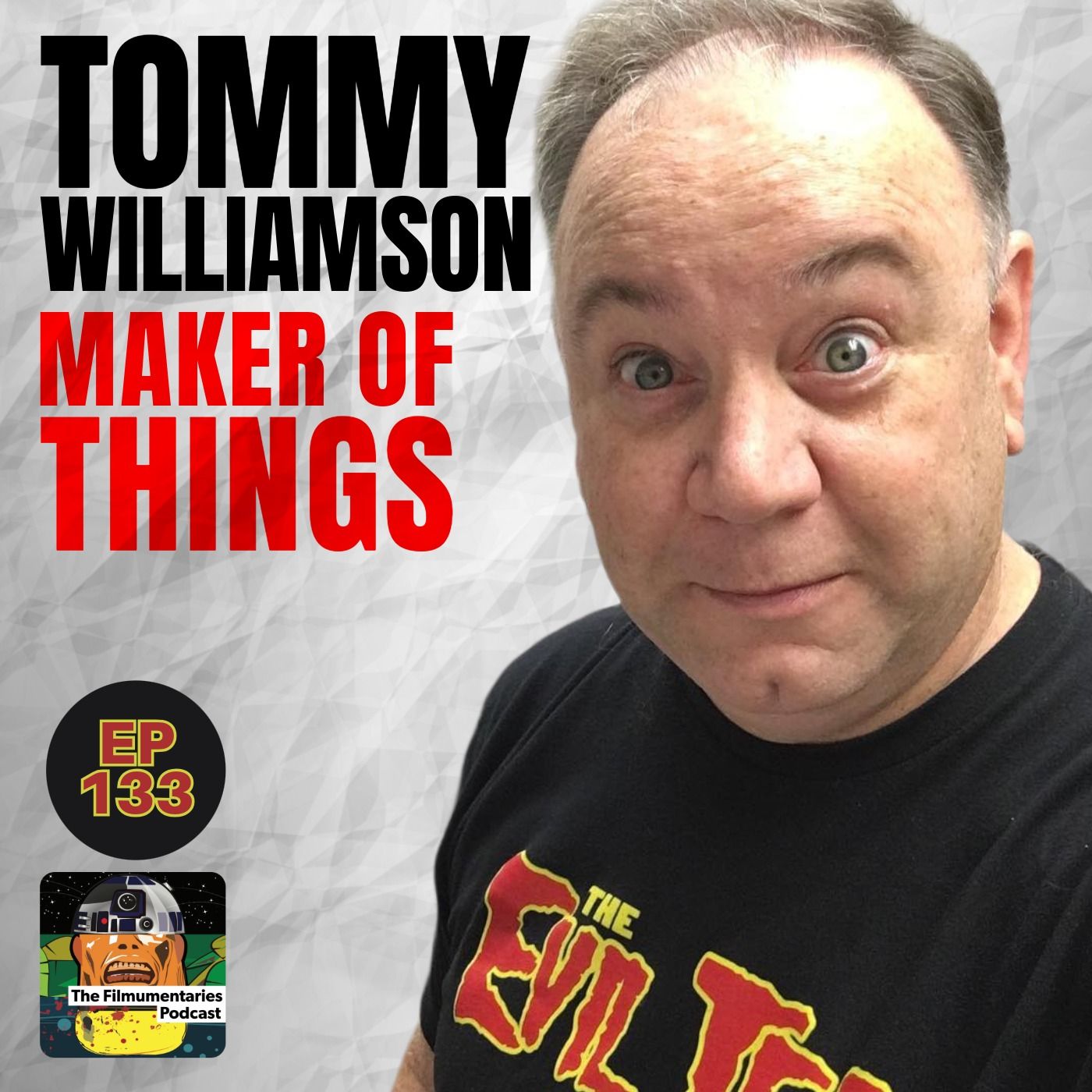
About this episode
- Tommy’s early love of model making and practical effects
- His first big break on the 1988 remake of The Blob
- Adapting to the digital VFX revolution after Jurassic Park
- Working closely with Guillermo del Toro on Pan’s Labyrinth
- The creative process behind his Nerds and Makers prop replicas
- Why keeping one foot in both practical and digital worlds makes him a better artist
- The importance of experimentation, curiosity, and lifelong creativity
You can follow Tommy and see his incredible prop builds on Instagram: @nerdsandmakers
This podcast is completely independent and made possible by listener support. If you’d like to help me keep making these episodes, you can join my Patreon community here: https://patreon.com/jamiebenning
Watch more on YouTube:
Check out the Filmumentaries YouTube channel for behind-the-scenes clips and extra content: https://youtube.com/filmumentaries
All my links
Transcript
Automatically generated, so expect the odd misheard name.
Weirding Way Media. Welcome to episode one hundred and thirty three of the Film we Mentories podcast. This is Jamie Benning, your host and sole creator of this podcast. This episode is arriving a couple of days later than play and thanks to some hiccups, but I promise it's worth the weight. This week I'm joined by Tommy Williamson, visual effects artist, maker of things, and all round creative force.
Tommy worked on an incredible range of projects over the years, from Spider Man two to Sin City Pans, Labyrinth, The Mist, and most recently, Dune Prophecy. He's one of those people that has managed to bridge the gap between practical effects and digital wizardry, and his passion for making whether it's movie magic or replica props, just well, it just shines through. We talk about his early love of model making, his first big break on the Blob remake, working with directors like Gillelmo Del Toro and Frank Darrabond, and how his creative drive spills over into his personal projects, from prop replicas to beautifully designed collectible pieces. Tommy also shares insights into the shift from rubber puppets and miniatures to the world of CGI and how he managed to keep hands in both those worlds throughout his career.
Before we get into it, a quick reminder. This podcast is completely independent and only possible thanks to listener support, So if you'd like to help me keep making these episodes, please please please consider joining my Patreon. It's patreon dot com forward slash Jamie Benning, that's j A. M I E B E. Doublenng.
Yes, I'm speaking to you. You know those people are out there that have been listening to this for five years now, maybe maybe it's time for you to give back a little bit. It's going to be like the cost of a couple of coffees, but if enough of you do it, then it really makes a huge difference to my ability to continue to make it. If you do sign up, sometimes you get early access, you get video versions, occasionally, you get an ad free version of the podcast as well, and if you haven't already made sure you also check out the film you Mentor's YouTube channel, where I've been sharing some great behind the scenes clips and short videos alongside the podcast, as well as some of my longer form documentaries recently.
Right, so here's my conversation with Tommy Williamson, and I'll be back at the end for a bit more jabbering on Tommy, When did you first realize you wanted to create things for a living? Was it, you know, like many of us building stuff as a kid with legos or lego as we say here you pluralize it over there, or cereal boxes or something. Was there something more elaborate? Did you jump into kind of model making, proper model making? The earliest stuff I remember doing it was probably papercraft.
It wasn't I didn't get a lot of support from my parents as far as the artistic stuff goes, so I wasn't like, next, say I want to sculpt and it would just buy me some clay. I had to kind of fight for everything. But I found that paper craft. We always had plenty of paper around. My dad had a restaurant in town and he would print the the menus on different colored paper.
So if everyone needed some stock, it could just grab a big stack of menus and I could make anything I wanted, and I got actually pretty good at it. I could build, you know, whatever I needed, just just to be able to build it. But I also. Was that and what age are we talking? About here.
This was like six or seven years old somewhere around there, maybe even a little earlier than that. And I also had you know, plastic model kits when I could get my hands on one. I was very much into that. Later it was like anything that I could do that was creative if I could get my hands like I didn't have getting model in clay was actually kind of hard to do when I live in a really small town. It was even smaller back so getting my hands on supplies was always a bit of a challenge.
But I found out I could, like tutsi roll another thing from the restaurant. My dad always had this big ball of them that we could just you could just grab out of. And I found out tutty roll is actually a pretty good sculpting materials. I would make little things out of a tutti role. And that kind of sparked your your creativity.
And were you what were you sculpting back then? Were you inspired by things you were seeing on TV or anything at the movies at the time. Yeah, I mean whatever type of thing is I would see like back then it would have been like you know, Harry House and type stuff, or you know, I mean I didn't really get truly twisted until I was about nine years old when Star Wars came out. Then I was absolutely bent. From then on, two things happened when I was nine.
I went to Universal Studios with my family, and Star Wars came out, and that was like all the ammunition that the universe needed to work me for life. It's amazing, isn't it to think you were at that sort of perfect prime age for the intended audience. I mean nine years old. I mean I was seven when I saw a Return of the Jedi. I was four four and a half when I saw Empire.
But it wasn't until Jedi that I sort of realized people make movies. Did you have a sense of that then, that those movies were made or are you just enjoying them for what they were? I don't remember when I ever made the kind of the flip. There's always that thing that people talk about where they were like, oh, wait a minute, movies are a thing people get paid to do that, And remember kind of slowly working that out. It wasn't until we went to Universal I kind of kind of taste of what behind the scenes really look like it felt like, and there wasn't much.
They were shooting a couple of things, like on the back lot. We drove past it and I could see kind of what was going on, and they had a couple of the things set up with like you know, the big hot set thing on there. It was just you know, completely fabricated. But I became really really fascinated with just the whole mechanations and how you all the people it takes to make it and all the stuff you need to make it, and the whole creative process all the way through. Absolutely fascinated with it.
Yeah, it's just there's something about that period, isn't there that has opened up so many people's minds. I think, just like films like you know, just just that same year, Close Encounters Arriving and Saturday Morning cartoons and all those things I'm sure inspired you as well all. Other stuff that I shouldn't have any but it shouldn't have been privy to, like The Exorcist and Jaws. I shouldn't have been able to see that stuff when I was at yet, but I'm somehow managed. And yeah, the Exorcist was really scary, but also Dick Smith was in it.
But did the effects works or I was really fascinated with makeup too. In fact, that first trip to Universal, they used to have a thing where they would sit down. They pull a couple of people from the audience and they would sit them down to the front. They may have been plants, I'm not sure, but they would make them up as Frankenstein's Monster and the Brider Frankenstein. And while they just talked about the history of makeup, and the rest of the family got completely bored with it.
Oh, you know, we were like ten minutes into it. I was not going anywhere. They were like, come on, let's let's go down. I'm just like, hit hit, I say, for the whole thing. I was absolutely fascinated.
So that was another early obsession with mine was makeup and makeup effects. In fact, that's what I started doing professionally before I moved into the digital side of things. Yeah. Was there a point in your childhood, though, where your parents kind of acknowledged that potentially this could be something on your horizon rather than just a fad. No, I mean they kind of figured out early on that I was serious about it as far as time dedicated to it.
You know, it wasn't just I mean I just I loved the stuff. I loved making things, like I constantly make things. I have to make things. It's absolutely in my DNA. Their acknowledgment of how much I was actually doing that stuff and taking it seriously.
It wasn't like, oh, you know, why don't you go outside. They understood, Okay, he's not interested in baseball or football. He wants to create things. But the ambition of working on movies, which is really where I want from a nine on, it was never really taken seriously by them, especially my moms, who was just not interested in supporting that at all. I was supposed to go to college and and you know, just be an upright citizen and you know, the the art thing, and it was never serious.
So I always had to really really fight those battles. And my dad was artistic himself. He would give me more leeway. In fact, he encouraged me a lot. It was never like it was taken seriously, but it was.
He knew that I was creatively motivated. And like when he was a restaurant tour he started a restaurant here in town, a deli with his brother, and they wanted to redo the front of the building and so he just laid down the architectural drawings that he got from the city for the building and said, designed the front for me. You know who get that was like seven years old? How do you go? That way?
For his next restaurant, or close to the next restaurant was a burger joint here in town. It's still open called Tom's. Named that for his favorite and I'd like to think I designed the logo for it because he wanted to make it was home of the educated burger. We had twenty seven burgers on the menu and it was a through z. Still do it there, Still fantastic if you're ever in Lompop, California, Tom's Burgers.
It's really delicious. Yeah. I designed the logo for that, and it's still in use. They in fact, they kept the original window from the restaurant they moved into the new restaurant and kind of put it inside. It's like an entryway.
It's still there. I was probably nine when that was designed, So, I mean, my dad was always there to say, you know, to acknowledge that creativity and the things that I could make had value, but it was also never encouraged like that was a career path never to be you know, a one thing to do, but that's a serious thing to do. Yeah, But being so young and having something that you created out in the world must have been a pretty big thing. Because most kids of that age, when they're creating things, you know, like here, we'd have air fixed models and things like that and tamia models. You sort of do that stuff like behind closed doors.
But to have stuff out in front of people that must have been pretty cool for you. It is pretty cool. A lot of people didn't believe me I designed that logo, and they were like, oh, yeah, right, not really talk about the front of the building. My dad let me lay this out and he's like, oh no, okay. Or they would just look at it and go, well it's neat, you know, just kind of blow it off.
Since then you. Said it it's gone. I have I had an epiphany when I was on a plane once that the likelihood that everyone on that plane had seen something that I had done or had a hand in was very high, maybe one hundred percent. It was a domestic light and they were, you know, one hundred and twenty one hundred and thirty of us on board, and I realized that everybody here has probably seen something I've done. How cool is that?
How cool is that? In fact, I tested it. I did a speak or a talk at a Lego convention. I'm also big into Lego, and I did an experiment where I had everybody put their hands up and I had I just was lifted on some titles from things I'd done. I wanted to get to one hundred percent.
And I got to down to one person who hadn't seen anything, and I was like, okay, well I gave up. I thought I had it. And then like maybe fifteen minutes later, in an offhand and I talked about working on the Barney movie and he was like, I've seen that, and we were like, oh, place exploded. I had one hundred percent everybody in the room and there were it was a good crowd in there. That's pretty amazing to have had that impact on people.
And sometimes, you know, design things, we sort of people consume them. They don't necessarily they couldn't sit down and draw the logo that they've seen or you know, talk about what the work that went into something. But those things sort of permeate us, don't they. They sort of there's a sort of collective what's the phrase I'm looking for. There's a cumulative effect to that stuff.
I think after a while you realize just how much you know. I mean, we've all played some of those games where you have to name the logo or name the catchphrase or whatever it is. So Yeah, to have an audience like that and to get to that one hundred percent, that must have been very cool. You mentioned though, your dad was a creative guy, and in your book that you kindly sent me, you said that, you know, you had sort of lots of memorable moments with your father, who was a bit of a jokester and would kind of would kind of sounds like he sort of planted these creative seeds in your head, kind of making up stories about things that were scientific, for instance, or you know, creating some skepticism within you.
Yeah, I would say that there was definitely my dad was. He was a character. He was bigger than life. Everybody loved him, walking the room, just the focus of attention. He was boisterous and loud, very funny.
I might take after him from for my sense of humor, but I'm definitely more on the shy side of things. He was not shy, right, but he would also he had a tendency to kind of to get things wrong. I think I put him a couple in the book. I'm trying to remember. I've been writing that book for a little things.
You actually read it, yeah, I did. There was the one about the there was the one about the the spray, the silver spray pain. Oh. Yes he was well intentioned, but uh yeah that was a disaster. Yeah, we I was.
I can't remember the project was. It was the thing. It was a science fair at at school, but we had to make like displays or it was like a book report or something, but I remember making. I had like a UFO attack and there were like three decent sized UFOs put good podcast material while I make gestures to the screen. There were about a foot in diameter, and I had been able to work out how to make them.
I was. I put a dowel through them, I was spinning them, and I had sanded them so they were nice and smooth and cool looking. And then I built a terrain and had grass on it, a little barn, a little car, and I wanted there were UFOs. They should be silver, bright silver, And at first I tried, I think putting foil on them, and it just didn't work. They looked terrible.
So my dad was like, well just spray them spray painting the silver, okay. So and I wasn't allowed to use the spray paint for you know, obvious reasons. I was, I was a kid. I was this is like eight years old something like that, maybe a little bit older. And he grabbed the silver spray paint off the top shelf and gave eat it.
It takes it away. You know that the scene in Aliens when the floor is melting from the acid blood, that's just solvent on styrofoam. That's the exact result of it, right. So I watched in horror as it started crinkling up and dripping and dissolving, and he was already r space panting the second one, and I was like da, da, Dad, Dad, and we both just stopped and watched it. And it just started dripping silver splots.
So now my UFO is ruined and the ground is ruined, and I just I was in horror. And then my dad just kind of went, well, that's that's something, isn't it. And I just I started crying and went off to the room. He went off to the bar, I think. But those those those sort of formative experiences, aren't they those to sort of handle those creative disasters because your your job, you know, which we'll talk about your transition to the job in a moment, but you know, being able to handle those moments and being able to adapt and problem solve.
I'm did you go back and rebuild the UFOs or was it onto the next project. I did a full rebuild on it. I had to to clean up I mean, the UFOs they melted and then they slid down the bar and then continued to melt, so there was only it would only go so far, so there were like these big crinkly glimps that I was able to pull off of it. And the ground was just that flocking that you used for model railroads. I was able to get some of that, so I was just able to put some more glue down and go right on top of that stuff, put more flocking on it, and it looked okay.
And I rebuilt the UFOs and I used silver acrylic paint that my mom got, which normally getting paint was a pretty big deal. They wouldn't give it to me, but had my dad not completely destroyed my thing. They probably wouldn't have been able to do that, but she felt bad for me and was able to hook me up. And after that he looks pretty bad. I mean, it was also a thing built by a little kid, So yeah, I'm sure my in my head it looked a lot cooler than if I saw a picture of it now and be like, oh, yeah, that's what I did, that, didn't I.
There is something about that, though, isn't it The sparks the imagination? Because you know, real toys, the toys that are produced by toy companies that you get for gifts at Christmas or Birthday, I find I always found, apart from my Star Wars figures, probably I always found they were slightly disappointing because you'd see the TV commercial or you see the advert in the catalog, and then when you get the toy, you're kind of like it's already done, Like what do I do with this? You know, at least with the Star Wars toys, I could sort of recreate the films or whatever, and you had that that disappointment of what was it one hundred toy soldiers or something? You book, Yeah, we've all seen that thing in the back of the comic books.
I mean, if you're an old cojure like me, back then, in the back of comic books there was all kinds of thing all the way through the comic books actually, but there was advertisements for stuff that you can get like X. Race Bex yeah I don't remember those. Yeah, just a. Whole bunch of stuff. And there was this it was a full page ad for like a hundred soldiers in a in a locker.
It was a locker I think it was foot lockers called and it was like a buck sixty nine, you know, this is I was like six. I was this is you know, the mid seventies, and yeah, that that was a betrayal to everything that is toys. I opened up, I got the box and was like, you know, it's like six inches across or something. I was like, no, this, this can't be right. This is what is this?
Popped it upen and true to their word, there were one hundred things in there. But these soldiers, I'm sure you can find a YouTube video or some photo reference on there. They were like a millimeter thick with these little base on them. They were just thick enough to be not transparent. The plastic and it was ad this like really crappy plastics was all swirly, and I was just like oh.
And then the scopes on it were terrible. They were all out of proportion. You know, it was like, what what is this? I set the whole thing up, you know, kind of like got the whole thing out there because I was curious, is there one hundred pieces? Sure enough, there were one hundred pieces, but and nothing was in scale, even the people.
Some of the soldiers were bigger than they should have been versus the other ones. And then there were waves, which apparently was a some I don't know the female ranks of that. They were called waves on the set, and I never really I didn't know anything about it, but you know, there were girls in the set, and I was like, what is this? You know, I ordered army men. There were girls in the set, and there were vehicles in there too, but they were also just arable.
There was an airplane, and I think there was some boats in there, and they were just as thin. It's a little they were like like like theater flats, you know, you put them in the background. Maybe, but you know, I had grown up with the classic army man, but you'd get in the set a big bag of them. In fact, we have used to set up like battles. We'd set up army.
We had like the green in the Tan. We'd set them up on either side and me and my brother would take turns and knocking them down with rubber bands. And that was you know how you play war and you know you can get some guys. Taking out the gunners who were laying down their on their bellies was always difficult, but you know that was that was war. That's to be able to get a hundred soldiers.
I mean I'd have the biggest army and no, it was terrible. But another important life lesson about value and expectation, mixed with the lesson with the UFOs where you had to sort of adapt and handle these creative disast. What's that going to do to your that painal wreck? Anything made out of the material material interaction has always been I think I was cued into that day and it's always been kind of very in front of my mind when I'm actually making things, is what's gonna work with what? And that's like an early lesson.
They kind of pounded that home in a big, really influential way. Yeah, and with the Toy Soldiers. I'm sure in the back of your mind somewhere it's inspiring you to make sure your work is of a standard that you would accept and hold a high standard. But so you you know, we're now sort of talking in your early years. But then what was the sort of transition where you kind of thought, right, this is something I'm going to pursue.
Is this via things like Famous Monsters of Movie Land, magazines like that? Was it sort of doing star Log? Yeah? Yeah, and then you felt like there was potentially a place for you in that world. I actually, because I grew up in Lampok, even getting a copy of Starlog was kind of a novel thing back then.
I was able to put my hands on a few issues every once in a while when we build someplace else. Fantasmic, I think, was another one. What's that phantasma Goria, Phantasmagoria. There was Famous Monsters, star Log and Fangoria was a big finding that for the first und was actually kind of a watershed moment. I was like whoa, And I got to read about all the materials and scene behind the scenes pictures stuff like that.
So that was always fascinated. I never really knew what I wanted to do. I just knew that I wanted to work on movies, to make movie magic. And I wasn't. I wasn't kind of discipline oriented early on.
I was a generalist by necessity because I was alone and I can get my friends. I could talk them in to help me every once in a while, but for the most part, I was always an island. I just here in this town finding other people doing that stuff. It was impossible before the internet. Yeah, many of the people I've spoken to, you know, like people like Ken Rouston and Feel tipp It and Dennis Muir, and they I'm pretty much sure that all of them were in a situation where they one day picked up the phone and just called an office and said, look, I'm interested in this.
Can I come down and check it out? And eventually their their faces were sort of recognized and they got in in that way. Is that something new? Did you? Did you pursue it in that in that manner?
Yeah? I mean breaking into the film industry it's still hard, but back then it was next to impossible. And Hollywood quote unquote is three hours south of here. I'm on the central coast of California on the elbow, just to get down there. My parents would never take me.
So I think somewhere around my early teens, I decided that I liked make up and makeup effects the most of all the stuff I was doing, so I was going to pursue that as a career option. So I would go. There was another local guy that was want to be filmmaker, and he would go down to try and take meetings and try and he was trying to actually make a real movie, trying to direct. But he was kind enough to let me tag along and then he would take me over around to a couple of the shops. So I was I would knock on the door or call up all kinds of makeup effects shops.
The only place that I ever got kind of quality time was John Beekler's, for which I will be eternally grateful. John Carl was an amazing guy, and all the crew that were all real welcoming, and it was all back then there was kind of this kind of anti establishment attitude with all the guys. You know, there was a lot of long hair and metal band t shirts and stuff, and I really I didn't fit in with those guys. Very well. But I was I was of a kindred spare because I was creative and I'm really interested in stuff, and I was just a dumb kid.
It was willing to do anything just if they would not kick me out the door. So I swept floors and I tore off plaster bandages, you know, got pails of water ready, and I would do whatever they would allow me to do, you know, no pay, you know, and eventually every once in a while it was you know, you probably gotta you should probably take off. If I hadn't even had the opportunity to stay for very long, because I was, you know, just down there with a friend to try and meet up with some people. And eventually I moved down to Long Beach and stayed at my cousin's house and I would just go I had finally had a car, and I would go up to the Fan Eyes and kind of the creature centric area. It's more in the valley, not really Hollywood, and Don Carlos is one of the places where they would let me actually hang out and actually stay for a while.
And I met a guy there. I'm not sure how I met. Like all the different people, they ended up associating with. But I got invited to a bachelor party, first one I'd ever even been to. And while I was there, I saw familiar face.
There were a few other faces. This is a James Cummins house. James Cummins was another effects guy. I can't remember how many people were there, but I saw familiar faces, and every once in a while it would be like, oh, hey, you know, I saw you there and you're just trying to please be my friend. One of the guys there said you asked if I had been able to find any work, and I said no, and they he said you should call the block Shop, and I was like, what's the Blob Shop?
Apparently they were doing a remake of the Blob. This was nineteen eighty eight, the remake of the Blob, and Lyle Conway was in charge of the whole thing on the blob side of things, and Tony Gardner was in charge on the creature effects and makeup effects type of side of things. It was all in one big shop and there had been some sort of upheaval. I don't know what had transpired, but a bunch of guys had left, so they were kind of hurting, so so he gave me the number. I was like cool.
So the next day or the day after, I think this was like a Saturday night. He called Monday morning and they were like, yeah, yeah, come on in, come on, come talk. So I grabbed my portfolio, which you know, was crap, some stuff I just did at home, and went barreling down there. And it was actually in Hollywood. After years of saying, oh the you know people that you're gonna work in Hollywood, I'm like, nah, it's nothing happens in Hollywood.
My first job was right there on Hollywood and Wilcox and I went in and showed my I just actually talked to I don't think I actually opened my portfolio. I just talked to one of the coordinators there and it was chaos. There were people walking around talking to all these people are picking up the phone talking on people coming in and talking and the place was like half empty, and it was because of whatever had gone down the week before. So she was like, what do you do. I was like, oh, I'm kind of interested in the mechanical stuff.
But really, up to that point, I had never considered that I needed to be a specialist because I always did everything. But one of my favorite parts was mechanizing things. So I was like, she's like, great, you're a mechanic, you start today and pointed me in the back of the shot. The answered marks attraction, who absolute legend sends me back there. So without even showing my portfolio or interview or even meeting the actual guy love Comma, I didn't meet him for four days and then he was gone, like two weeks later.
He had just left the project and Stewart's IF came in and I suddenly I was working in movies. So it had gone just like kind of tumbled that way, where I had been showing portfolio and making calls for just weeks and weeks and weeks making driving, putting endless miles on my truck, trying to get my foot in the door, and the whole thing happened because I went to a bachelor party and talked to the right guy at the right moment. That's Hollywood's weird that way. Yeah, but you know he's being open to those things, isn't it, And just you know, just seeing what's going to happen, and eventually the stars the line a lot of the time. But I bet that was a hell of a steep learning curve, being thrown into a production that was already in some disarray.
Yeah, yeah, I was luckily. I mean I didn't really even know what I was doing. I had never used proper materials for anything. I mean, I you know, it built like mechanical hands and creatures and stuff, but it was always just what I could get my hand, I mean, in high school. Luckily, in high school, I got a lot of support from the drama teacher, and he was actually a he was married to the choral teacher, the who also did musicals up at the rival high school.
So he would do a play in the spring, then they would do a musical midway through the year, and then I would do another play at the end of the year, and I basically would go to the other school, work there, come back down and do the other play. So I was working on three projects a year, and always I was encouraging to get me what I needed for and then just add a little bit extra. So I was able to mass materials, but still never amounted to like, man, it didn't actually like that's the first time I was able to get foam latex, proper foam latex to work on stuff. But you know, before that it was like sheet foam and I would cut it with scissors and try and make it work, or you know, liquid latex and spread on.
It's all really really crude. And my mechanics were like you know, styrene tubes with the little nylon hinges made for model airplanes and aquarium tubing and fishing line and just whatever I could do to just kind of cobble it together. I understood the principles of it. So I've always been fascinating my mechanics, but actual working materials, and certainly I was never going to get anywhere near a mill or a lathe. I had no experience with those whatsoever.
So I was really thrown into the deep end on the blob. But luckily Mark was super patient, and the other guys were working there were also really cool and really patient with me, and I was able to kind of quickly quickly learn, especially since all this stuff was there. He was like Mark would say, like, I need a couple of tentacles. I had one there that I could study figure out how to make more paddles, which was the things we could put under doors and stuff like that. We need a paddle that's like long and thin.
Okay, but I could look at how it was previously done, or maybe even use some of the materials that were still around, and quickly quickly learn how to do this stuff. So it was a blast working on it. It was long, long hours, long long commute, and then you know, shooting it was grueling because we were you know, the blob itself was these silk quilts filled with messazel, which is like a food thickener you ever had, like a hot little apple pie, that type of thing, that thick stuff inside beth the cell. So it's a ghostbuster slang, same stuff. We would make trash cans full of that stuff.
We lived in it, and when you shoot, it would just get everywhere. I remember driving we drive home, you know, I'd work ten twelve hour our day shooting and then we would just be saturated with it and it would start to peel off and flake. I remember stopping at you know, to get something to eat, or stopping for something to drink, and people just looking at you like what you know. I'm sure wherever my car is, my my old beetle, it's still got traces of methaside. I ruined at least two pairs of shoes.
Yeah, it was. It was a mess, an absolute mess. How long did you work on that movie? Do you remember? Oh, probably about three or four months.
It wasn't very long. They were pretty close to well, I don't know if they were close to done, and principal photography was mostly done when I got there. That stuff they were doing. We were all doing stuff on the on the sets or on the stages, but principal photography I think was done. So we were probably just in post and it was probably about three months.
And did that dovetail with the next project? I mean, you know, I hear from a lot of people. Of course, once you're in that world and your people know you, they want to take you to the next gig because you've got that shorthand with them. Yep, exactly. I was working with a guy on the block Stop named Doug Turner, and he went on to work at Bob Shorts shop and he was like, I need a mechanical guy, but I need somebody cheap wat Tom.
So he called me up and I was like, yes please, So my next. Job place right price? Yeah? Yeah yeah. I was young and inexperienced and cheap.
Yeah, so my next My next gig was I worked on two things. I looked on Little monsters and something else at Bob Schwartz. I remember what it was at a little shop in Reina Delray that's not even there anymore. There's an apartment complex where it used to be. Kind of makes me sad.
It was right up from where Greg Jean's shop was, too, So at lunchtime, I would just go to Craigs and hang out. It's like, you don't understand your legend. He was like he was totally down to earth, totally cool, and he just let me hang out. So my every lunch period, I would, you know, I'd break, I'd have whatever I had for lunch and popplic school across the street, grab out sandwich or something. But I come back and hang out in Greg's shop.
It's way more fascinated with that than I was the I mean, I mean, I made some terrible mechanics for little monsters because all Bob had was a drop press and a belt sander. So I was just drilling holes and trying to remind me of things. It was all like really weird stuff like eye on a tentacle, uh eye all with the in or trying to you know, cobble together own eye mechanism. It's all very very crude, very very fast. Yeah, you're sort of talking about a period here, late eighties, early nineties where we're just on the cusp of computer generated imagery appearing.
I mean, if my memory served, you've got young Sherlock Holmes just having arrived around that time with the stained glass Window. Then of course we reached Jurassic Park in ninety three release at least, but ninety one ninety two that stuff started to emerge. Were you aware you were on the cusp of this big change. I was a friend of mine had really been fascinated with computer graphics, and we dabbled in in ourselves. But it was always I was like, it's all right, you know we saw Tron went that's interesting, and other things came out.
It was you know, we saw like it was a lawnmower man. It's like, okay, you know this is all wrong, this is not what is what this is supposed to be, you know. So I never really took it terribly serious beyond like just he had a an Atari computer, so we had like quite a good palette, so we can do digital art. So we would kind of take churns of one up in each other doing art with it. So I was well aware of digital imagery, but it always just seemed like kind of this niche thing, you know.
Not there were like projects that would come along and be like, Oh, that's okay, that's that's fascinating. I think that one of the first picks are short tintoy. I think that was that was actually there was the what was the name of that Wally or something, Then there. Was yeah, yeah, I was trying to remember. There's also lux On Junior.
Wasn't there the little angle Bois lamp, and yeah, that. Was the first became really evident that okay, this is a burgeoning creative tool that could be could be something, But it also seemed like it was really really difficult, really really slow, and it's going to be a long time before anything really comes of it. So Jurassic Park sort of pulled the carpet out from a lot of people, myself included. When I saw it, one just went oh, okay, okay, that's where this is going. That's I'm actually interested.
Before that, because my friend got an Amiga computer and just showing me some of the stuff that you could do with that, and I was like, oh, that's fascinating. So I got one and became really fascinated with just the more of the hard surface modeling stuff, you know. So I built like stars models and flying around. You could do that really easily. And you know, it was slowly, slowly getting better.
But the the shift that happened when Jurassic Park opened, we all just went, oh, Okay, I get it. I became more serious and kind of switching over the same thing. At that same time, I was also getting really sick because the creature effects industry was a really toxic It still is a really toxic thing if you're not careful. So and I mean my first the first time I really had to take it seriously. I was working at robo Shop, the Landmark Roboshop on the Ghostbuster's attraction for Universal, and I was just kind of feeling worse worse every day.
And I finally went to the doctors. I had this uncontrollable cough and was really feeling terrible, and he was like, you're you need to stop, you need to get doubt. What are you doing. So I look back at it now and there were guys like they were making these huge molds. I mean, like you know the size of cars or buses, these gigantic molds, and they were just mixing cavasil and in resin right there.
They have like drapes up, but they were just plastic, you know, things hanging from the ceiling. So we were all just kind of bathing in it all day long. And then through the years, I would work out someplace and it was get a lot better, working out other places get a little worse. And then finally I can't remember what project I was working on where it just came to a head. Might have been Power Rangers where I finally went to the doctor and he's, you know, coughing again, and he said how old are you?
And I was like twenty five. He said, do you want to be to be thirty five? Yeah, he said, stop what you're doing. Move out of LA because I still have a cough. I've probably coughed a couple of times.
I don't even notice it anymore, but I had. I was damaging myself to a point where I just needed to not do that anymore. So that's when we moved out of LA back up to the central coast, and that's when I switched to digital because computers don't make your lungs go bad. No, true? And what was the first gig you landed on that, because that must have been like walking into uncharted territory again in many ways.
Well, I had. I've been training myself at home quite a bit. I had, you know, I became pretty fascinated with it. And the Amiga computer was kind of this kind of a real special thing. It had a really tight community and real kind of this underground energy flowing with it, especially with the video toaster and LightWave.
So and my soon to be mother in law that was that was my living with my girlfriends at the time. She's now my wife. She sent an article to us in the mail and I opened it up and it was like these guys locally had opened up a computer graphics house. And I looked a saw in the picture that they were using Amigas, and I was like, ooh, okay, So we planned to get up the hell out of la anyway, So I called him up. It was like, I'm working in the movie industry, but I need to get out, and I you guys want to work on movies and they were like, you think we can.
I was like, yeah, I'm sure of it. But you know, we came up and we started just doing local advertisements and that's pretty much all we did. So doing stuff for Foster's Freeze, you know, the the stakes were far far lower than working on feature films, and it took it was about a year before an old connection that I stepped kept in touch with Tom or NONI was having trouble getting some stuff done for one of his films, Lord of Illusions, and we were looking to get our foot in the door as far as the digital effects film digital effects or film goes. So we got three shots on Lord of Illusions, all not terribly I mean I could do all three of those shots over lunch now, I mean it was but for us it was like critical.
And this is also very early in the digital side of things. So we were using X by tape, you know, they were scanning stuff. I think when we first started it was all still a bit and well the files were I think there were two K and that was still like twenty forty eight. By fifteen fifty six, Oh my god, it's gigantic. You know, these are the vg A days.
So but you know, we we as hard as it was to get it all done. We managed to to to get these three shots. And that's always that that that one job leads to the next, leads to the next. So that's how we ended up working on Star Kid, which we worked at it. It was called Warrior of Waverley Street at the time, and we ended up like one of the primary vendors on that one.
You know, it's still small times, still h pretty simple stuff, not not terribly ambitious, but a lot of fun. And you know, this was very very early days and to get like a major chunk of this low budget film but still you know, a film, So to get a huge chunk of that was really really big deal. Yeah, and we still sort of keeping half an eye on the rest of the industry, reading Sin Effects and things like that to kind of see what was going on elsewhere. Yeah, and I was actually watching the the morph of effects happens. It's well documented in Sin and Effects.
I've got my collection on the top of my closet and you can watch the before period. And then just around the time Jurassic Park happens, the pictures started turning into what they are now, which is basically a guy sitting in a computer and another guy behind him with a cup. That's like all you see now and order pointing at the screen. You know, a little bit more of the of the practical stuff has been kind of resurfacing recently, and I like to see that. But it's always been my philosophy that well, I have a saying that the effect takes the means, whereas you the fact itself.
What you're trying to accomplish, what you're trying to put on film is it has a logical solution what it should be. So if it means you build in a miniature and you blow it up, that's the way to do it. If it means, you know, you hire a team of guys that do the effects animation and you simulate water and fire and all that stuff, that's what you do. It's it's whatever the shot itself, it kind of tells you the most logical way to do that, and that's just the way it should be done. So to watch the everything went digital very fast, super fast, and most people weren't really ready for it.
There was a lot of carnage in the industry at that point, and we were kind of well suited to kind of slip into where this this need suddenly arose. It wasn't certainly wasn't easy. I remember sitting in we were working on these Lord of Illusions. I was sitting in Clive Barker's living room and having a conversation with him, trying to convince him that we could do a photo reel bottomless pit. It was supposed to there's supposed to be a camera flying through a pit at the end of the movie.
And I can't remember what happens, but and he kind of it took a lot of convincing and then eventually he's like, Okay, well maybe, but they've ended up doing it practical anyway. And when you're doing a practical thing like that, you've got to build this big model of a tunnel. You've got to somehow send a camera through it. So you've got to like hatches you got to pull off, or you need to put it on a long boom arm. How you're gonna light it.
You have to leave cavities for lights to get into that. None of that's the problem when you do it digitally. But convincing people to use those evil computers because everyone didn't seen lawnmower Man and the Last Starfighter and kind of went that's cute, but you know, not something to be taken seriously. And to this day it's like, dude, we could have done that and it would have looked a lot better. Not to disparage to the guys who put the effectual effect together.
At the end, I think it was the Scotex. It's those early days getting the Hollywood to not fear effects. We had to work really hard and then suddenly everybody just went, oh okay. And now the exact opposite sort of happened, where they just think you can do anything. It's really promoted a lot of lazy filmmaking.
Actually, there'll be like a c stand and a flag or you know, someone sit in the back, you get donut, like I will take it out later. It's like no, just say hey, Bove, you know they just there's this, you know, you just type it on coop. You're just just one of these and make it go away, and a lot of people don't. And kind of disappeared then yeah. Yeah, And do you think though that you're you're grounding in that physical world initially sort of stood you in good stead for the transition to computer graphics, because you know, maybe you have a more discerning eye in terms of what the audience perceive as as real.
Yeah, yeah, I definitely do. And I feel kind of privileged to have bridged that photo chemical to digital world. You know, when I started, it was all film and you know, everything was edited onf flatbed and I got to watch the entire digital revolution happen. And now we're working at AK and doing stuff with you know, we have one shot. The frames from one shot is bigger than the entire storage capacity of the company that I worked at when we first started this stuff.
It's just been an amazing jump. But I was there for the rubber puppets and model work and you know, film rolling through a camera. So there are some things that's still way more difficult to do or make way more it's difficult or convincing to do fire water all that stuff. Then the natural stuff, you can do amazing stuff with simulations, and there's some stuff that I wouldn't want to try an attempt where that you can do it. You know, if you have a really large object falling into the ocean, you know, setting out the scan line and let them do their their magic water work on it, because that type of thing you can easily do.
But you know, if you've got like on the Mist, we have the guys using a blowtorch, torching this thing on a like a nest on a tree. I can hire a physics guy or a physical animation effects guy and have him work on that thing, and it'll take days and days and days using the most powerful machine in the company to do these simulations of the fire working. You know, then give them notes and try another version, give them notes and try another version. Or I can just go get some chicken wire, wrapp it newspaper, slather it the spray blacks, slather it with rubber cement, shoot it while I set it on fire. So that was the kind of stuff I did a cafe all the time.
It was just, you know, it was just a more logical way to do it with the You know, there's amazing physical stuff can be simulated, but the speed at which it can be turned around has never been fast enough or convincing enough for my taste. Not when I can just go shoot some elements. So I shot elements of fog, of water, of smoke, of steam, all kinds of stuff. It's constantly doing that, and every show was like, okay, well, what do we need for this? Or we've watched were sitting in dailies and someone say, well, how are we going to do that?
It's like set something on fire. You know, I don't have a problem with that. I'll shoot it with a red camera. Now it's you know, it's still digital and you can hand it off. But it's good to have, you know, your feet in both camps because you can always think of a solution because ultimately, you know, money, time is money, right, so you need to get this thing done.
And maybe the practical solution is the best, maybe the computer is the best. But being able to have half a brain in one arena in half in the other must be really useful. And I'm sure has helped you be employed on many films, you know, throughout your career. I mean I look through you know, your IMDb and I look you know and I see Spider Man two. I remember that was quite a big leap at the time with some of the effects in that.
And then since City as well pans Labyrinth. Is there is there a film that you worked on that you really felt a kind of kinshipped with the person helming at the director where you felt like you were kind of on a level with them and had that similar appreciation of both practical and digital effects. Guerramo del Toro is definitely one of those guys. He's he's got a very practical mind for what really works for the shot and what just makes sense. And you know, he's another geek.
We were all just nerds to working together, so he was definitely stand out. And Frank Derebant was always really practical with you know, just just make it happen. I kind of wanted to look like this just you know, make it happen whatever. Trust in you. Yeah, you know they're dictating this has got to be done this way.
You're like, why we used to get inquiries about what software were you using? What do you care? What does the matter? There was soft homage, It has to be soft homage, but it later became s SBA or whatever. You know we were using Lightweight was like, oh yeah, that was real software.
But you know, the more the better directors and creatives to work for didn't care how you got the how you got it, you know, the means of the shot just just as long as it looks, kids long as it tells the story. Yeah, I hear that about Gail Mode. I mean, I've heard interviews with him recently. I think there was one with Mark Maron I listened to recently where he was basically just talking about how his house is full of models and collectibles and. Yeah, he's a huge get.
He gets people to build him stuff that's kind of screen accurate, rather than spending one of his money on actual props that were. In the movies. Do you do stuff like that. With Oh nice, that's good to hear. Do you own stuff like that yourself, like things from movies that you worked on, or do you go about recreating those things?
I make a lot of reproductions and stuff. There's things that I want to just, you know, fun stuff I want to surround myself with. I've never actually bought like a proper or anything like that. You know, I'll just make them. I'm constantly doing it.
I've got to start storm Trooper blaster over there. I've got Hans Sol those plaster up there. I've got you got a lightsaber. This is, you know, as close as you can get us an actual graph Lex thre Cell. Yeah, yeah, hard to get hold of these days, definitely.
Yeah. I was looking on your. Make stuff so this is actually this is plastic. The stuff they head deep to the staff of raw. You know, yeah I made I want.
You made that now? I am did you where did you watch you? Just from reference photos or yeah? Actually that was started as a digital model that I modified wasn't quite right, and then I have five three D printers constantly making weird stuff. So I printed that in resin and then the edging on that has this wasn't in the model really, so it's got again more super cool podcasts content.
We'll issue you stuff on camera. But the edge of it, if it'll focus, is actually chain. So to get it to look right, you have to glue chain on the outside of it, and then you know you weather on top of that, and then it's painted with a chrome paint and then use clear yellows and oranges on top of that to get the gold cast lebronze cast and then weather a little bit. So it's got some washes on it and some oils. But that's very cool.
But it's the waiting thing. So there's always into my mind, what if they make one out of metal. It's crazy to think, isn't it Like the original screen used version of that would be hundreds of thousands of dollars, probably more these days with some of those big collectors throwing in millions. Now. Yeah, probably made in a very similar way.
I mean obviously not three D printed necessarily back then because they didn't exist, but you know, just done with a simple mold and painted and. I'm sure that we've just sculpted a sand cast and cast and browsers. You know, some of the pot metal not not terribly sophisticated. But there is something, isn' there about having like those reproductions in your hand that sort of connects you to those movies because ultimately, you know, I see you, Tommy very much as somebody in the industry, but also a fan of the films. You know, I could see that from your Instagram, and we all just want to get closer to those movies that we love, and just having making that stuff must be very cool.
I mean, I've you know, I've got a Stormtrooper helmet, and I've had a graphlex before I sold it. Stupidly, I don't know, but there is just there is just something about having those things in your hand that connects you to those films. I have always been absolutely fascinated with the film industry. And by now, I mean I've been doing this since nineteen eighty eight. I should be completely over it.
But anytime I get to go on set love it. Anytime when we start talking about a new movie working on love it, you know, start seeing that first foot of drawing through. Even like I'll do an articulate Matt, I'll just do some rotoscope and watching that playback in motion for the first time, just the black and white mat that I've hand animated, I just think back to all those guys doing that on the actual big rotoscope machine, And yeah, I was absolutely fascinated with that back then. I still get a little giddy watching it. Now it should be completely over it.
But the twelve year old in me, I'm a man child. They say they if you can if you can end up working in the field that you loved, or you know, doing the things you love when you're sort of between the ages of nine and twelve, then you've really sort of found the dream life in any ways, I also like your your sense of humor, Tommy on your Instagram paging some of the things you created, Like one of my favorites was the Forgotten Colm link that you made in the Kenna packaging is up there behind you. Yeah, that's all they started with this. I just it's a droid part. Yeah, so droids.
He holds it up. This just popped in my head kind of fully formed, and I went, oh, I should make that. For people listening. This is this is the little ring kind of piece that the stormtrooper holds up and says, look sir, droids. And you've put it in the kenneed packaging with the stormtrooper holding up and it's just in the bubble there.
It's just just roll around. Yep. It's called droid part. Yeah. I just wanted to have one.
I thought it was just popped in my head. I thought I'm just gonna make that. But I made ten of them so I could give some of my friends. Yeah, but the minute I posted it on Instagram, I suddenly got assaulted with people requesting it. I was like, okay, well, based on the the man, I was okay, I'll make a hundred of them, and those sold in three days.
I was like, oh my god, god, okay, well I'll make another one hundred of them, and those sold out in like a week. So I've stopped making those particular ones, but only because I ran out of the cards, so I was having them made and. And you making sure the card is the right you know, thickness and has the right gloss on it and all of that stuff. I'm sure you are, I can see just from the smile on your face. Yeah, I've actually recently the originals the prototypes I should say I make, I've done.
I decided once that happened, I thought, we I'll make another one. And that was what Forgotten calmly turned into. And which is the the storm Trooper calmlink that the three these on the table when they're hiding, so the scene where they burn the trash compactor. Yeah, three D printed pretty simply, but if you look at it, this one was a little big glossy, too glossy. I finally found a vendor that can make them how I like them.
So this is one of the most recent ones. This is the Fanboy tears. But you can see the gloss on that one is pretty accurate. So and I found a vendor I can make that that will make these for me. That is there that shows your other stuff on there?
Or is it just like a replica of the you know, collector twelve or whatever. Yeah, it's it's just the class card back. Yeah, there you got all the differences. Has got my logo down there? Your logo?
Yeah, very cool. Yeah. I tried to knock up a few things years ago. I I had this idea of making figures of crew members from from the Star Wars movies. So I made a very rudimentary kind of Lawn Peterson from a general medine by making his hair a bit longer and painting him differently.
I mean, I would totally buy those figures. If somebody was to make figures of all of the major crew members, I would I would definitely buy that. There's a photo they were working they were shooting on in Tunisia. There's a guy's got wearing nothing but short shorts. Pink shorts and a boom mic.
Yeah, that's a perfect action figure. I should make that. Yeah, I don't know somebody else. The bubble would have to extend off, wouldn't it. Like it'd have to be sort of an upside down l to accommodate the boom mic.
But a pack in the picture will show what it's supposed to be. But I'll just be on its own custom blow. Yeah, yeah, yeah, sure, yeah. Yeah. Since the first one was the prop, the second one turned into a prop, it's like, okay, well I'll just continue doing that.
Yeah, And that turned in I decided to make a trilogy of the trilogy, so there's gonna be three figures from each movie. And then I expanded onto a little bit. I've made two figures that are not from the movie so much. That was the George Lucas cash roll and Ya and those are this. They're super simple ones that just kind of popped in my head, and all of them were just made for me.
I decided I want this, and sometimes there's a lot of work to make it happen. And then I'll make extras that I could just give to my friends, and then I'll sell a few of them to help cover the costs and fund the next one to make. So the hardest one was the needlessly complicated microphone. Oh yeah, the Lando caw is in a cloud City microphone advise all of you, all of you to leave or whatever. He says.
Ye, that's really weirdly come. He goes up. He has a punch like a punch coat in and it pops out and then it takes it off. Target into it. It's like every other sci fi movie ever made from Star trek on.
They just go up on the panel on the wall and they push a button and talk, you know, to do this, and it's like, okay, we'll make that. I got the whole line planned here. I'm just about to release the Third Empire one, right right, yeah, the Third Empire one. It's gonnas gonna drops very very very very soon, very soon, I should do, but I'm not certain of my I turnaround time. But when we're done recording, i'll give you a preview of it.
Cool, that would be good if weckon people for what what's your Instagram address to me? Just say people can go and check your. Stuf nerds and makers. I made it plural for for some reason. It's just it's help for my family.
But that's about it. Yeah, it's like my filmmentaries thing. It's just me, like I talk about It's like it's a company, but it's just me with a little logo and doing interviews over the internet. I'm sure there's so much more we could talk about, but you know, I think an hour is always kind of my target for each episode. But I'm sure if we stay in touch.
It'd be good to hear from you again about you know, some of your upcoming projects in the future. Definitely have you back on talking about those, But yeah, I think you've had an incredible career looking at it. You know, there's been some cult classics in there, there's been some proper blockbusters. Is there one you talk about? There's always plenty of there.
Feet on the ground. Yeah, but you mentioned about Girl Do Toro being the sort of director that you sort of felt a kinship with. But is there a particular movie where you just think, well, we really broke the mold with that one and they represented a leap your industry. I don't think any of them were any kind of paradigm shifts. There's a lot of work that that is.
I mean, like the movie that I'm most proud of is probably Pants Labyrinth. I had a lot to do with every shot that's in that film. And when they were shooting it in Spain, the producer, the effects producer and co supervisor and the the VFX supervisor were off in Spain and me and Nikira were like the kind of the guys on the ground and we set up a whole pipeline We had to do a tremendous amount of work just to kind of lay the groundwork to be able to do that movie. And then when it came back, I was compositing supervisor. That's when we actually started the film, and when it came out, I mean, I knew we were doing something pretty cool when we were working on it and just working with GDT was great, But when it came out, it was like, oh my god, we have worked on masterpiece.
We had all of us and I actually send a mail out to the crew of the entire company when I got back from the premiere. I was like, listen, people, you're only going to do this a few times, maybe only once in your entire career. That was it. We just did it. That's that was It was super hard.
It was really hard. The mist also was really really difficult to kind of pull off, but you know, we just really stuck to it and finally, you know, got everything out on it. But some of those shots were just absolute killers. But we're real proud of what we did on it. Yeah.
Yeah, I think Panics Labyrinthy is one of those films that's really stood the test of time and will continue to stand the test of time. It just always looks amazing and fresh. Whenever I revisit it, like if I a few years pass and I go back to it, I'm always kind of blown away by what you and the crew is to achieve everything something special. Very very proud of what we did. Still am I'll stand by that movie.
It's it's it is a masterpiece. It's amazing. Yeah, what you're working on at the moment, or what's the latest project you worked on. I can't talk about the current thing, but the last thing that's out now would be doing Prophecy, which the last episode actually just just premiered last week, and that was a lot of fun we ended up working on. That was, as they called this, the in house effects house, So we kind of did like a total mixed bag stuff.
Nothing super sexy. You know, all the ships and there's all that cool stuff, and the show's known for we didn't do any of that. We're just kind of the nuts and bolts making things work. I mean, probably the only kind of cool thing I did there was like this little lock that she puts on the wall that has like a little animated partsicle on it, and all they had was a static prop so I made it move around a little bit, and the glow we put on it everything else. I describe it on the shot by shot basis, you know, oh we did that thing in the corner or that's gone.
This is actually two different takes. So it's really unsexy work. But it's all very important stuff. So that's cool. So my names on every episode, it's like, oh, okay.
That's cool. That's cool. And you know you sent me this this word document of your book is there there? Do you have proper plans to get it out there? Get it released.
I don't mind babble with it. Every once in a while it's something pop in my head. It's an old story, or you know, decide, I'm just going to write down something, you know, an interesting thing that happened. The whole thing started because I've I would, you know, I had stories to tell people. We were all hanging out to lunch and stuff I could talk about, you know, the time we almost got blown up on the boneyard, that type of thing.
It kind of it grew and grew and grew, and now it's like, you know, like novellas, I don't know what the cutoff is. It's like eighty thousand plus words. It's like, Okay, this is actually a proper book now. But I don't know if I have the confidence to hire an editor and even if I self publish. But I've always kind of maybe someday I'm going to do it.
So I've been collecting old photos and putting them into an archive and it's got a you know, a place where it may happen someday, But there's no media plans to If there's any publishers out there who want to take a chance on some nerd musings about a film industry. I definitely think there's an audience for it. Yeah, I think I definitely think there's an audience for it. You caught it Memoirs of a lifelong geek. I think that that's a perfect title because you know, as I said to you before earlier on you, you're one of us, you know, but you just happen to be in the industry as well.
Yeah, I kind of look, I should have like eight feet for how many legs I've got into all these different things and prop making and manufacturing, you know, me, my own coins, I've done this all This is really really wacky stuff, and there's No, I'm really find it harder to classify what I am. I just say I'm a visual effects artist and maker of things. That kind of encapsulates it. But even that, it's like, but none of it should be taken very seriously because I don't take myself very seriously. It's all a lot of it's very very dumb.
Yeah, But I when I speak to people who create to the extent that you do, it feels to me like it's you know, it's part hobby, it's part profession, it's part meditation, it's mental health. It's like you are driven to create. You have to create, and it's it's great that you've got your feet in all of those camps because you know, we get to benefit from it. Sometimes sometimes it's just for me. My wife gave me a pair of scissors.
I needed a case for it. I got my leather around and I made a case and one day now I have a little sheath for it. But and that's the kind of things like I might put a picture on Instagram, but it makes up dayly. I've already today only I've worked on three different projects. I have to Yeah, I wish, I wish I had the same abilities as you.
I appreciate your time today, Tommy. It's been really nice to talk to you, and I hope that book comes out sometime in the future, not too distant future. Oh, I appreciate it. I'm amazed we even read it. No, I did.
I enjoyed it. It was great cool. I hope you enjoyed my chat with Tommy Williamson. I love speaking to people like Tommy who not only work in the industry but still have that pure fans enthusiasm for the movies that we all grow up with. His passion for creating, whether it's on the Blockbuster films that he's worked on, or and his work bench making prop replicas, and you would have heard in our conversation, you know, he's made these wonderful kind of Kenna star Wars, Kenna carded alternate reality kind of collectibles which he does sell, so if you follow him on Instagram, nerds and makers on Instagram.
But all of that really comes across so well from Tommy and that enthusiasm, and I have no doubt that I'll have him back on the podcast in the future at some point. If you'd like to see more of Tommy's work, you can find him. As I said on Instagram at Nerds and Makers, it's well worth a follow. Some of his great builds are They're genuinely brilliant. They make me chuckle.
And if you want to support this podcast and help me keep these conversations coming, please do head over to patreon dot com forward slash Jamie Benning, j A M I E B E double ni NG. Every bit of support really does make a difference. Once I've spent my money for you know, editing software, the hosting, the software I used to transcri ribe, there isn't really much left over and I need to find a way to justify doing this. Otherwise it's going to stop, and that would be sad for me and hopefully sad for you. Also, don't forget to check out the Film You Mentor's YouTube channel, where you'll find lots of extra videos and behind the scenes clips.
Thanks as always for listening, and I'll be back soon with another episode of the Film we Mentors podcast Weird in Way Media



Similar episodes across the network
Matched by shared keywords.
-
Special Report: Beware Boiúna (2026)
1 shared keyword: vfx
-
Episode 755: Return of the Jedi (1983)
1 shared keyword: filmumentaries
-
Special Report: Tommy (1975)
1 shared keyword: tommy