
Season 1 · Episode 155
Ep 155 | Skywalker Sound's Sean England on cattle gates, Brillo pads and Birkenstocks

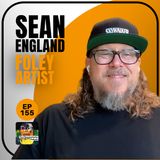
About this episode
The show where he cut his teeth was The Clone Wars. There was one foley stage at the Ranch in those days, so he and Ronni Brown took the night shift and cranked the episodes out, learning to work fast and picking up the Star Wars tricks handed down from Dennie Thorpe and Jana Vance.He's very good on what the job actually is. An egg crack might be an ice cream cone. The sizzle in the pan might be a candle held under tinfoil. He's got a recording of a cattle gate on his phone that he still hasn't cracked, and then somebody gave him a metal contraption built for hanging blueprints and it turned out to be exactly the sound.
He picks up leather purses in thrift shops and holds them to his ear to check for creak. He puts shoes on and looks for a hard surface to walk on.He's a drummer too, and he came up in the eighties being told drum machines would replace him, so he has a settled view on whether sound libraries and new tech are coming for his job.We cover the anatomy of a foley stage, why the mixer isn't watching his hands, the weight difference between Marvel and Star Wars and Pixar, Lincoln split between a day crew and a night crew who had to match each other, grasshopper footsteps for documentaries, mic placement as performance, and the off-mic tricks he doesn't always mention to the mixer.
Thanks so much for your continued support!
This podcast is completely independent and made possible by listener support. If you’d like to help me keep making these episodes, you can join my Patreon community here: https://patreon.com/jamiebenning
Watch more on YouTube:
Check out the Filmumentaries YouTube channel for behind-the-scenes clips and extra content: https://youtube.com/filmumentaries
All my links
Transcript
Automatically generated, so expect the odd misheard name.
We are Ding Wei Media. ¶ ¶. Hello and welcome to the Filmumentaries podcast. I'm Jamie Benning, your host, coming to you from my little office in my house here in London. And it's episode 155, recorded just a couple of weeks ago. Before we get into that, just a quick word about Patreon before we start.
If you get something out of these conversations and you want to help me keep making them, It's patreon.com forward slash Jamie Benning, J-A-M-I-E-B-E-N-N-I-N-G. That's the place you can find all the episodes ad-free. And if you do sign up, you get episodes early, you get some extras, you get to chat to me. And I'm thinking of bringing some other things in on that pretty soon. But if you just want to support the podcast because you like it and you would normally support people whose work you enjoy, then please consider it.
It really genuinely decides whether this thing keeps going, so... All the support I can get is greatly received. Everything else is in one place. Go to linktree.com and you'll find a lot there. That will be in the show notes.
You'll find the merch shop, the YouTube channel, all of the stuff is there. And I'm also on either JamieSWB on X and Filmumentaries on just about everywhere else, including Instagram, Threads, Blue Sky. OK, so my guest this week is Sean England, Foley artist at Skywalker Sound. And Sean walked through the door at Skywalker Sound in 1993 in a technical role. Back when everything was on analogue tape and film was being spliced on a cam or a moviola, he spent his first years in the machine room and in the transfer department, which he calls his film school, watching how sound got made from one end of the picture to the other.
Then he became a Foley recordist. Then he sat in a mixer's chair. Then he went through the glass and became the Foley artist. One of the shows where he really cut his teeth was the Clone Wars. There was one Foley stage at the ranch back then, so he and Ronnie Brown took the night shift and cranked them out, learning all the Star Wars Foley tricks there.
He talks very well about what the job actually is, you know, cracking an egg. Sound could be an ice cream cone, a Brillo pad for the sizzle in a pan, the recording of a cattle gate, sitting on his phone because he still hasn't worked out how to reproduce it, And then somebody hands him a metal contraption for hanging blueprints and it turns out to be exactly the sound he needs. He picks up leather purses in thrift stores and holds them to his ear to hear if they kind of creak and crack. He's also a drummer and he came up in the 80s being told drum machines were going to replace him. So he has a very settled view about sound libraries replacing Foley or whether new technology is going to replace his job.
He still loves it existing in that physical, tangible Foley world. We talk about Marvel versus Pixar versus Star Wars and how much beef goes into a shoe. We talk about Spielberg's Lincoln splitting a day and night crew who had to kind of match each other. Sounds for documentaries and some of the off mic tricks he pulls that he doesn't always tell the mixer about. So here's my conversation with Sean England and I'll be back at the end for a bit more jabbering on..
Sean, appreciate you joining me today. Now, I always seem to be opening with a question recently. Like, how did you find yourself getting into the industry? Did you have a creative childhood? Were you into music?
Was sound something that kind of particularly appealed to you when you were a kid? All of that kind of covers where I came from. I grew up with my dad in the music business and my mom actually worked in the film business. So I was surrounded by it. Where I grew up in Marin County, just north of San Francisco, is a very creative area.
Lots of artists, lots of musicians. And my parents had friends of all walks of life. As you can see behind me, I'm a drummer. So I've been playing music since I was a kid, playing in bands. And I've always loved film.
So that brought me here in a roundabout way. I wasn't intending on working in the film business. I was much more interested in music. And I started working in building home theaters in the early 90s. And through that, I met some folks at Skywalker, interviewed, and started working there in a technical capacity.
And that would be 1993. Right. Interesting time around then. There's a lot of change going on in the film industry. But Foley is something that has kind of, I don't correct me if I'm wrong, but it feels like there's, there's been, there were foundations a long time ago, uh, you know, with the Mr.
Foley himself. Um, and the techniques haven't necessarily changed the ways in which you do. You're trying to reproduce a sound that's on the screen. You're trying to get a sound that relates to what's going on the screen. You're trying to make it, uh, relevant and natural to that sound.
Do you feel like there's been big technological changes throughout your time since 93? There have, um, When I started, everything was extremely analog. They were recording to analog tape. People were editing on moviolas. They were using a machine called a chem.
Everything was being spliced. It was very traditional. And at that time, I didn't start as a Foley artist. I did start in the technical side of things. I worked in the machine room, on the mix stages, in the transfer department. which was sort of my film school.
I got to really see how films were made on the sound side, the process from start to end. And I was very fortunate to come in in the analog days and really see a craft that was fairly traditional and longstanding. And during that time, technology crept in in different ways. Digital recording, you know, Pro Tools eventually won out. digital consoles, projection, things that allowed us to work more fluidly, faster, more detailed. And that's all of the sound side was subjected to that.
I started in Foley as a recordist. And again, originally aligning two-inch film machines, recording machines, and projector, hanging film, that kind of thing. And the artists at that time had to be even more, precise than we do now in the performances. They really had to go for sync. You could edit fully, but there were limitations in the analog world.
And once digital recording came in, there was a lot more opportunity to worry less about sync and more about performance and more about sound and be more creative. So that was a big change that happened pretty quickly in the first 10 years of being in the business. And eventually I started mixing Foley and thought it might be interesting to try to be a Foley artist. So that was kind of my path through those first 10 years was really figuring out what I wanted to do and then figuring out how to do it. Yeah.
And you talked about like the analog to the digital kind of revolution there. Has there been much change in the microphone technology in that time? You know, some of it's been more of an aesthetic change. When we first started, we were recording using these Neumann U87 mics, a very classic large diaphragm mic. They were modified specifically for Foley to have a really low noise floor, high gain, so we could record very quiet and subtle things.
And that was the mic of choice. We mic'd things... kind of close again originally we were recording to analog tape which is a forgiving medium it has natural tape saturation and compression and we're running through Dolby noise reduction and all of this you know going through an analog console as well all outboard gear you know plugins warm very natural over the years people wanted to hear different things from Foley they wanted to hear it sound more like production in some cases and So we started using more production-based microphones like a KMR-81. And again, over the years, we've gone through progressions. We use a Sennheiser MKH-800 is our main mic. It's a very versatile mic.
We can record everything with that. The funny thing is recently we pulled out the Neumann U87 again and started using it in conjunction. So It's a moving target. There's no rules. It's all abstract kind of thing we're doing, if you really think about it.
So there's a lot of leeway to what sounds right, what sounds good, and what know, what people like, what people want to hear. Some people want Foley to be very detailed and hyper and, you know, in your face, which has its place. And some people want to be very natural to the point where you don't realize it exists. You don't think about it, which, you know, both of them have value. Yeah, the sort of cliche sound effect when you think of a Foley artist is footsteps, right?
That's the one that people know about that Foley artists might be involved with. What I'm interested to know is who and when and how are all of the sounds in the movies divided up? Like in terms of, okay, that's going to be a sound design thing. We're going to generate that or we're going to go out and record it in the field. It's going to be something from the set itself. production sound or it's going to be foley something we're going to reproduce on the stage at the foley stage when when is that actually divided up you.
Know it's interesting question because it's something i don't really think about too much i feel like we know our roles and and and sometimes we double cover events sometimes effects and foley are both it's a collaborative thing sometimes it's an either or depending on what works better um But I really think there's obvious foley things. The footsteps, like you mentioned. Anything humans interact with. Whether it's a dining scene and you're handling cutlery and plates and drinking and sliding chairs around. Maybe you're handling paper and books.
So anything humans really interacting with, we know that's foley. Where it gets a little more... abstract is when it is things that don't exist in the real world where we're making sounds for droids or creatures. Often those are collaboration. You know, effects has their go at it and we do as well. And again, fully often grounds things, you know.
So a marriage of those two sounds is kind of the ideal thing. And it's also going to depend on on the project. If you're very dialogue driven, slice of life type movie, it's going to be more based in the production kind of sound. You know, they want it to be natural. So the effects people are going to be doing, you know, city ambiences.
They're going to be doing cars driving by, doors slamming closed. You know, we're going to be doing the feet. We're going to be doing, again, the people stuff. When you get into animation... There is no production sound.
And Foley is heavily relied on in animation. And at Skywalker, we do tons of animation. We're obviously doing Pixar, Walt Disney animation. We have clients like Illumination, Blue Sky, DreamWorks, and on. So we're really well-versed in animation.
And my expectations when I'm going to work on one of those is I could be asked to make any sound. And often am. So I think people like to have options in the end and having things addressed on multiple levels, whether it's effects or Foley, is the ideal situation given the time and the budget. And when you're first presenting, say you're doing a show and there's a particular list of sounds, do you see them as a list first? Do you see the dailies first?
What do you see first? What's the thing that kind of gets the gears turning? Well, ideally... We watch the film first. We don't always have time to watch it in its entirety.
And when I do that, I don't take any notes. I'm just watching the movie and trying to take in the story. The story is the most important thing. So I'm just trying to get a sense of the characters, the locations, the environment, the feel of the film. And then when we're on the stage and we put up, we work in reels.
So roughly 20 minute increments of the film. We put up a reel. And it's generally myself, another Foley artist, and our mixer. And we will watch it at that time. So it's fresh.
And I might jot down a few notes then. And then, you know, our mixer directs us through the process. An editor ultimately has viewed it and spotted it, is what we call it. So they've given us events. And generally we do the footsteps first.
And the mixer kind of guides traffic he says we're going to do this character okay great um they're wearing this let's do all of the interior wood locations because we have to have a process that's efficient right um okay let's do all the cement locations let's do all the dirt and we go through every character and and kind of work that way and at that time you've seen the scenes in the film many many many times so you're starting to recognize other events that are happening other props they're handling And in the case of props, they do print out a list for us. And then we kind of go through and figure out how we want to tackle things. One of my favorite things about Foley is that every day is different.
You know, even if we're doing, you know, we're working in this process where we do the feet first and then the props and then the cloth and movement. Within that, it's a wild card. You know, it's very different. And when we get into the props, I like to work in a way that like, how am I feeling that day? You know, am I feeling like super hyper creative and want to tackle this complex thing?
Am I feeling like, you know, we just want to, we want to get a lot of stuff done and move efficiently. And, and we'll take, you know, something's a very reoccurring sound. Maybe we'll do all of that first. And we sort of just work through this list and the sounds in that way. It's very fluid.
There is no, It's not regimented. Everybody's process is different. You know, each foliar has a way they like to work. And I want to allow for that. I want everybody to embrace their process, their way of working, because that's where the creativity, you know, really shines.
We're not being stifled by it being an assembly line or a system like that. Sure. I've been lucky enough to be on a foley stage, but can you just describe for people what that stage is? looks like, and you talked about the mixer. I know they're sort of behind the glass in a booth there with the Pro Tools and the faders and everything else, but can you just describe the kind of environment so people can get an idea of it? Sure.
The traditional Foley stage we all think of is a reasonably sizable room, and it has a multitude of surfaces on the floor. Four footsteps, but also, you know, if something gets dropped to the ground, if someone falls on the ground, you have to replicate that. So Generally, there's a couple different types of wood surfaces that are built in place. We call them pits. They're Foley pits.
And there's a giant dirt pit. And then a couple kinds of concrete, brick, gravel. You name it. Those are built in. That's our sort of base sound.
And then we have other surfaces we can bring in. Different wood surfaces to create the sound of a deck or a boat or whatever. whatever it might be, something's more rustic, something's more refined, we have to convey that. And metal surfaces, same kind of thing. If we're working on a space film, let's say, you know, we have a multitude of metal surfaces we have to cover and you don't want it to sound all the same. Everything has to have its character.
So we've got a couple built in and then we have a number of surfaces that are somewhat portable that we bring in. And that is kind of the foundation for, And generally, a Foley stage looks like a giant storage room. There's boxes on the shelves with all sorts of sounds, some very obvious, like books and paper. We'll have boxes for horse or animal sounds, a box of feathers for birds. There'll be boxes that say squeaks, boxes that say kerchunks, or boxes of sounds that slide. that type of thing.
There's chairs hanging on the wall. There's a bicycle in the corner. There's a giant tank that we fill with water to do water cues. And beyond that, we have a couple other rooms that we keep a ton of stuff in because, you know, if you're working on a medieval film, you're going to need swords. You're going to need armor.
You're working on a Western, right? It's a whole different vibe, you know? So we have to have all these things available at a moment's notice, basically. And that said, you know, I've worked in Foley stages that are, you know, size of ADR booths. You know, this room could be a Foley stage.
You know, sometimes it's more limiting. Sometimes there's less at our disposal and we have to bring in certain things and everything's a setup. And in regards to the mixer, I've worked in rooms where the mixer is actually sitting in the room with me on the board, which is kind of cool. It's kind of cool. It's intimate.
That's the way they do it at a couple stages in London, actually, that the mixer is in the room. And that's a music thing. There are some famous recording studios where the mixing console is right there in the room with the band. And you know, not being behind the glass has these advantages, just communication and camaraderie wise, you know, you're both in the, in the dust and together, you know, and, and the mixer, you know, generally behind the glass, large console, you know, they have all their tools at their disposal. Sometimes the mixers get overlooked in these conversations and, you know, they are, so valuable to what we do.
They really help to not just create the sound, you know, they're attenuating it, they're setting the level, they're processing it in various ways. They're also giving us direction sonically, but also on our performances, you know. So, you know, the Foley Studio is, it's kind of this pressure cooker in a way, you know. There's a lot of a lot of demand and we do have to work fast and be hyper creative, which seems like a conflict of interest, you know, so having those surfaces and having those tools at the ready is ideal and, and a huge part of, you know, how we're able to be so creative and, and do it on a schedule ultimately. Yeah.
I was amazed at the speed at which the people were working. When I was on the Foley stage, I was sitting in the same room as the mixer and, There was a scene where a kid broke an egg into a pan and was frying it. And, you know, I'm peeking through trying to see what they're doing. And they've got these little kind of egg shaped things. They're crunching.
And then I think they dropped like a piece of putty or something in the pan. And then they were using like what we would call a Brillo pad here to sort of scrape around in the pan for the sizzling. But I did notice that the mixer wasn't really looking at what the Foley artists were doing. They were they're busy. on the equipment, on the protocols of recording it, and you've also got the bar that goes across, what's it called, the streamer, is it called the streamer? That's correct, yeah.
And then you know when that sound has to sync with the picture, so they seem to be very focused on that, and I've heard a couple of mixers saying, oh no, I don't watch them, I don't want to see what they're using, because it sort of, I think one of them said that it sort of brings on a certain bias in your mind, that oh, maybe that wasn't the right sound, whereas if you're not looking, you're just driven by the sound itself. Is that something you've come across before? Absolutely. Uh, again, you know, I started as a Foley mixer and I didn't want to see it. Also, you know, some of the artists don't want you to see it for a number of reasons.
You know, um, it used to be, you know, uh, it's kind of dark art of Foley, you know, you wanted to, you know, not share your, your magic, right. Um, maybe for job security, maybe for creative reasons, you know? So, um, Foliars can be a little secretive that way. And as the mixer, you should be watching the screen, right? We're all watching the picture.
The picture is our point of reference. So the mixer shouldn't be watching his hands and watching the knobs and watching the meters. I mean, you glance at that, but you're watching the screen. You're listening to the sound. If I'm believing what is happening at that time, it doesn't matter what they're using.
And like you mentioned, in the case of doing a scene like that, for an egg crack, I might try a real egg. Why not? Right. But, um, I might use an ice cream cone to get an egg crack, you know, and, you know, and again, egg crack. Okay.
Are you talking, you know, someone's making breakfast in a film about chefs? Are you talking about a giant dinosaur egg? Is it animated where it could be cartoony or comic, you know? And then like the Brillo pad is a great example of a cheat that we do. You know, you just, sell the person on the sound, you know, that's what it is.
You know, there's, you know, you could make a sizzle sound with using an iron and a wet rag, right. You could make a sizzle sound by, you know, holding a candle under a piece of tinfoil with water on it. Right. There's, there's ways we do it that are more literal, you know, so that's a big part of the, the, the individual nature of Foley is, is what is that human being that Foley artist, come up with in that moment. We have our bag of tricks, but we like to try new things as well.
It definitely is smoke and mirrors. Much of film is, right? In regards to, we used to not share this information. It was secretive for a number of reasons. One is also not wanting the audience to catch on to the fact that we're lying to them.
We're cheating these sounds, right? I want you to watch this and be like, that's an egg being cracked. That's a pan frying and not realize how we do it. And in recent years, especially with social media, we're all starting to show those things, which is actually pretty awesome. You know, there's this bigger community of Foley artists that I've been connected with because of the internet.
We're all making fun reels. You've seen them, you know, we're, we're showing our tricks, you know, and we're showing them to each other and, and the world. You know, going like, hey, there's humans making these sounds. And, you know, yeah, films aren't real. You know, you probably know that already.
So people love special edition stuff. People want to see the behind the scenes. So, yeah, I love giving him that, you know. But still, our mixer doesn't want to know what we're using. I sort of, whenever I mention to people about having seen people doing Foley, your average kind of film viewer doesn't, understand the process and everything, but they go, well, they still do that?
Surely, aren't there enough sounds in the library for them to reuse things? So what is the answer to that? What is the answer you'd give to people who do ask that question? Well, we're always trying to create new sounds. Even the sound effects people are out in the world recording stuff.
You know, they want new sounds, recording technologies, chains, like we said, microphones, sample rates, you know, they can record things at higher resolution, higher quality. So sound that was recorded 20 years ago may not hold up to, you know, a modern recording technique. It may not work as well in a modern film. So there's an aspect of that with Foley, of always wanting fresh, new, bespoke sounds. But Foley's the human element, you know, and it's the performance that is really a big part of it.
We're trying to sell the emotional content of what's happening on screen at that moment. And you can't do that just cutting in sounds. It just cutting in footsteps doesn't sell. Is this guy, is it a big guy? Is he, is he strong?
Is he sad? Is he, is he happy? How is he, how is he moving? You know, what's happening in that, in that moment of the scene and we can do it much faster is the other thing, you know, we're able to, yeah, I mean, if you had to cut in every footstep from a library and try to make them all sound great and interesting and different, you can drive yourself crazy, you know. And foliars, you know, seasoned foliars can quickly assess a scene, pick out a surface, get the right shoes, capture that performance, you know, the mixer's doing his thing.
And it just could be much more natural and realistic, I would say. And, and it's one of those things that, um, they, I mean, people have cut Foley from libraries. Um, you know, people have created, you know, applications that, that try to replicate Foley. Um, they, you know, there was, there was a time where people were, were doing it with like a keyboard, like a musical keyboard, like a single of ear or something trying to perform Foley in real time on, you know, keyboards or, you know, that type of thing. And, um, As a drummer, there's many correlations between being a musician and a drummer to Foley.
And one of the things as a drummer, I came up in the 80s learning to play drums, the drum machine had come out. And it was like, oh, a drummer's going to be replaced by a drum machine. And then electronic drums came out, like, oh, acoustic drums are going to be replaced by electronic drums, and so on and so forth. And they've made their way into that world. So as a Foley artist, like, the, you know, the, why we do it and the threat of being replaced by a library is something that like, I'm no more concerned with that than I am as a drummer being replaced by a machine.
You know, it's, it's a human, it's a human thing. We're, we're acting, you know, we, I am Tom Cruise or whoever's on the screen in that moment, trying to really just sell you on that, you know, to the point where you don't even think about it. Hmm. it's interesting. I just interviewed, uh, Brad Vidal, the composer who worked on Terminator and Terminator 2. And even though he was using, you know, technology and an electric drum machine, he was still having to sort of trigger them manually because he didn't have a way of synchronizing because he didn't have MIDI, you know, so people have been unable to reproduce that soundtrack because it is not, it does not keep time.
You know, there's a human element in that as well. So I find that's kind of fascinating that, um, You can still see the human touch sometimes depending on the technology that's used.. You mentioned about the sort of lateral thinking. You know, sometimes it's a literal thing. Oh, there's a sail, so I'm going to flap a sheet or something.
Other times you have to think really laterally. Do you kind of walk around this planet kind of going, Oh, that's a good sound. When I open that gate and oh, I dropped that. I know where that could go next time I need that. Do you think like in those terms?
You can't not, you know, and the gate is a great example. I've got a dog. We do a lot of hiking and there's a lot of open space around here. And some of them, it's shared with like cattle grazing. So you have these cattle gates to go through and you open one and it, you know, whatever it is, it has this sound and it's, it's bigger than this little hinge.
Right. And you're like, well, how do I replicate that? Is it the hinge? Is it the spring? Is it what it's attached to?
It's all of that. Right. I actually have a recording on my phone of the cattle great, you know, a gate, excuse me, a cattle gate that I'm trying to figure out, like, how do I, how do I get this out? You know? And then recently I was given a prop It's a strange metal contraption that was designed for hanging like maps and blueprints.
And the company didn't need it anymore because all that's digital. And they're like, Oh, do you want this? And I grabbed this sort of apparatus and I'm like, Oh my gosh, this sounds like the cattle gate that I just heard, you know? So I've taken that to work and everybody loves that, you know, that thing. So we're always listening and we're always looking for new sounds.
You know, if you, if you see me at a garage sale or at a thrift store, you know, I'm picking this thing up and I'm like, you know, I mean, I'll pick up a leather purse and they're like, why is this dude checking out this leather purse? And then why am I holding up to my ear listening if it makes a good creak sound? You know, I'm in a thrift store putting on shoes, trying to find a hard surface to walk on to see what they might sound like, you know? So, and I listen, I listen to people's feet. You know, if you think about it, you don't often hear feet, but when somebody has like a certain type of shoe, maybe it's a cowboy boot or a, or a woman's heel on a certain, you know, wood surface, you know, it catches your attention, you're like, wow, that sounds amazing, you know, so I can't not, and, you know, watching films is the same thing, like, as a lover of film, I don't want to critique the sound when I'm watching it, you know, I want to be immersed in that story, and if the sound is doing what it's supposed to, I'm not thinking about it.
And to me, like, that's great sound and that's great Foley, you know, and there are moments of things that are supposed to pop out and catch your attention. And, you know, when they do that correctly and you do acknowledge like, oh, okay, that, that's probably Foley, but that's brilliant. That sounds amazing. You know, like I know it's Foley, you know, maybe not everybody does, you know, but, um, you know, so it, it can work, you know, both ways with that kind of thing. But yeah, I mean, music informs me, um, all sorts of, all sorts of, sounds in the world you know just um you know catch your ear you know sometimes i drive drive home from work with nothing with no music on my stereo because i don't want to hear anything because i've heard enough sound.
For the day but always listening yeah i work with a lot of screens so i yeah i just turn them off when i get home sometimes don't look at my phone or anything yeah there's sort of a saturation point isn't it there must be a sort of saturation point in terms of the amount of items you have there though i mean i know at skywalk sound you have those sort of floor to ceiling shelves and cabinets, but when do you, how do you decide, uh, this one, we should throw this one away. Um, it's interesting because every artist has props that they like and they don't necessarily use them in the same way. So I never know. I'm like, I'm like, okay, I don't know what this does clearly. Right.
Like, why do we have this? So we communicate with one another, um, We're not terribly good about throwing stuff away. Fortunately, we have a lot of space. So some stuff may kind of go to the second tier of storage. That's a big thing.
We also all have our personal prop collections. You know, we all own our own shoes. So, you know, there's not much sharing going on there. And we have personal items, whether it's because they make a unique sound or because, you know, maybe it is a personal item that I brought from home and I don't. want that to disappear or get damaged. Things break.
And again, people use things in different ways. So I'm always surprised. And I'll be working with, I work with Ronnie Brown a lot. She's a fantastic Foley artist. And one thing that makes the collaboration so good is if a certain cue comes up and I do it, I may use a very different prop than she would you know, used to do it.
So therefore it's going to be unique. Um, maybe she makes that kind of sound on a different film and she used the prop that she likes. So we're not using the same prop for every item on every film. You know, we want, we want it to be, you know, custom for that sound, you know, in that moment. So, and you never know, you might bring a prop that you don't use for 10 years and all of a sudden you discover a need for it.
You know, that's a big part of it too. Hmm. And when you're working there with your colleague, let's say you're, I don't know, you're doing like a weather sound or something and you've got some leaves or something and a blanket. Do you try and record those separately so that in the mix they can be, you know, the levels can be changed? Or is that a combined sound that the both of you are doing at the same time?
I mean, I'm sure it's a case-by-case basis, but what's more common? It's definitely case-by-case. The most common is that we do separate things. for obvious reasons, you know, to give them control editorially, to give them control in the mix. But there's an aspect of recording that, you know, what leaves sound like, what frequency range they live in versus some cloth rustling, you know, whatever else may be happening at the same time. You know, sometimes it's hard to capture those things with the detail and nuance that you want. when you're performing together.
Now, that said, there can be a magical thing that happens, this gestalt thing that happens when you combine elements. Say it's a scene where there's soldiers running, so we've obviously done their feet, but we're gonna do their gear movement. And then we're gonna do another track that's their gun movement. But what happens when we perform all that together can be quite magical. So that's one example.
And sometimes it's one artist with the multiple elements performing them as one. Sometimes each artist takes an element. I might have the guns, Ronnie might have the armor or the gear, and we're trying to work together. And sometimes that is the better sound. The other thing is if you have to go fast, if I'm working on a low-bud staying with a limited schedule, we will often combine stuff like that just in the interest of time.
Sure, sure. And you've worked on like so many big movies and shows. I mean, you know, Star Wars, Tick, Marvel, Tick, those, those franchises that I just mentioned that they have their own kind of defined soundscape, right? They have people know what Star Wars sounds like. They know what a Marvel show sounds like.
Does that happen on the Foley side of things as well? Like, oh, this is a Star Wars Foley. This is a Marvel Foley. Like, is there a dividing line between those two? Oh, a hundred percent.
Um, I've been working on a animated feature and I made a sound and it was like, great. And we played it back. I'm like, nah, that's too Marvel. You know, it was too big. It was too punchy.
It was too violent. Right. For this animated thing, you know, it was, that's going to scare the children, you know? So, um, every, they have their aesthetics, you know, when we're working on a Pixar thing, we work with a level of precision because they're so precise and detailed. Right.
Um, We want to make things cute, you know, which is, which is such an interesting thing to think in your head. If you're performing a character, whether it's, you know, actual wearing shoes, doing feet, or maybe it's an animal or creature that you're performing with your hands, you know, I'll get a good sound. The sync will be good. You know, play it back. I buy it.
But then I'm like, no, it's not cute enough. You know, like, what does, what does cute sound like? And so I tell myself, I'm like, okay, be cute. And then I perform it. And I'm like, and we're like, yeah, there it is.
Right. So Marvel is kind of the most extreme. We mic a little closer. There's a little more weight. Some things like shoes would be darker sounding.
Star Wars, slightly less so. Darth Vader has his level of beef, but it's not quite Thor or even Captain America. It's a slightly harder shoe. And there's also been an evolution if you think about it. Different artists did the original films, you know, 50 years ago.
And recording techniques were different. You know, the shoes, if you listen to some of the early Star Wars stuff, Stormtroopers and even Vader, they're much harder sounding soles of the shoes than what we do now. And, you know, that's just a natural evolution of things. If you're working on a film that's very production-like, again, back to the dialogue-driven story, we try to match the production. We listen to what they recorded on set, and we want to blend in so seamlessly that I can't tell where our sound ends and their sound begins.
Yeah. So that's a, that's a big thing as well. I noticed on the clone wars, um, you're down as Foley artist, Foley recordist and Foley mixer. Was that just you running around doing everything or was it like a rotation with a team or different stages you were doing different jobs? It was, it was the, the ladder.
Um, that was the point where I was starting to become a Foley artist. So, I was the recourse originally where you sat in front of the Pro Tools, you managed the session, the naming conventions. You had cue sheets, a paper document in front of you with footages, tracks, descriptions. And you'd get on the microphone and you'd be like, okay, at 72 feet, Anakin's going to run on concrete. And the mixer punches in 72 feet and we watch it and they get the sound and I make sure it's all good on the Pro Tools and we do that over and over.
I moved over to the mixer chair during the Clone Wars because we worked on that for years. And then I hopped on the other side of the glass and I became the Foley artist for Clone Wars, which I'm glad you brought that up because that's really where I cut my teeth as a Foley artist. We were working on the night shift. We only had one Foley stage at the time. We have three now.
We only had one stage, so hours were limited. So Ronnie and I, who were kind of coming up at the same time, We took that on, we worked on the night shift, and we just cranked those shows out. So we had to learn to go really fast, you know, and learn all the Star Wars tricks that had been kind of passed down. You know, Ben Burtt to Denny Thorpe, who is our legendary Foley artist. She's the original Skywalker Foley artist.
And Jenna Vance, who worked with her for decades. You know, they set the bar. you know, and so we tried to basically take that and, and literally run with it. Um, you know, and, and I love that show. It was, it was so much fun to work on and, um, obviously seeing Dave Filoni's evolution too, from being the creator and director of that show to where he is now. Um, you know, I, you know, feel attachment to that show in a lot of ways.
Yeah. Yeah. It was a real breeding ground for a lot of talent. I think that show, um, It's still great. I'd watched it quite late.
I was one of those people that kind of went, ah, it's a kid's thing. I've grown up away from Star Wars now, but I've watched it in recent years with my kids, and yeah, it's really, really enjoyable. You mentioned working on a, or I brought up the topic of working on a Marvel movie. Now, on something like The Avengers, is there ever a sort of tension between Foley and sound design departments? You know, hey, this is my area.
Because a film like that, you've got a lot of servos and there's lots of heavy design sound in that. Where is the space in a film like that for Foley? It's all very collaborative. They know what Foley can do and they rely on us to do that. It's an interesting process.
Cause sometimes we create sounds that they'll actually take and turn them into sound effects or turn them into sound design. Sometimes we will, we will inspire them to do something, but ultimately when you're doing fully, it has to not just sound good on its own, right? It has to, I can make great sounds, capture the moment, great performance, but if it, if it interferes with dialogue, if it conflicts with the music in any way, it's not going to work, you know, and so therefore it has to fit in with the design and, you know, any effects that exist, any production sound, you know, so it's all very collaborative. When I worked in Los Angeles briefly, I did some freelance work down there, and I remember a mixer saying to me, like, oh, sound designers, you know, we call those Foley artists down here, you know, and that a lot of the design used to be done on the Foley stage, you know, the supervisor, the the, you know, would come down and, and even work with you.
I know a lot of Foley artists that credit some, you know, great legendary supervisors with inspiring them by working together on the Foley stage. And we don't get to do that that often, but at times, you know, we will have kind of a design day where we try to do abstract things and, you know, the designer's will again, like I mentioned, take it and use it as an element in their sound design. So ideally it's all collaborative and that's, that's part of what makes it fun. And that makes it interesting. That's where I go back to the music thing.
That's where it's like a band, you know, we all have our roles and we all have to hold down our parts, but we all have to work together. You know, if I hit a craft symbol too hard and it, it steps on the singer's vocals, that's not going to fly. You know, if you listen to Beatles records, There's not a lot of craft symbols on the one because it would step on the vocals. So I think about that kind of stuff. Orchestration.
You know, I think about that a lot when it comes to film sound. And, you know, we've talked about Star Wars, we've talked about Marvel a bit, but you worked on Lincoln as well. You know, this Spielberg period drama with the historical weight. And where do you start with the sort of folie? philosophy on something like that? Is there room for experimentation even?
I mean, what does 1865 sound like? Where do you even begin with something like that? Right. Well, sometimes with period pieces, I'm not gonna say they're easier, but you are informed by the fact that they would have been wearing harder leather shoes, you know, that wood floors might be more rustic sounding, you know, they might have more creak, more texture of the wood than a, you know, a modern floor. Um, and then you have some very, um, you know, palatial set locations as well that have to sound refined.
So it's just getting in the head space and, and in a, in a weird way, you know, something like that or a Western, you have an idea of the aesthetic, um, and, and they have great production recordists. So we were listening to the production sound and trying to, again, blend in with that. So, um, It's funny, I haven't thought about that film in a long time. We split that film between two crews because of a time schedule thing, which was also interesting because there was a day shift and a night shift. So we all had to kind of match one another's aesthetic.
So it's just listening and it's just getting into that moment. I think the harder things are worlds that don't exist. What does that sound like? Those are the ones that are wide open, especially when we're not given directions. When they're like, yeah, figure it out.
So what does a spaceship sound like? Do you get direction from the director themselves as a Foley artist? Or does it go through the sound supervisor? Or are they interacting with the director? We rarely interact with the directors.
We're on shows for the shortest period of time, probably, of the sound crew. Generally, on a big feature, maybe I'm on it for 20 or 25 days. More recently, it's been 15 or 18 days. And where we are in the process, the director's not necessarily around. So any direction we receive is through the sound soup, the sound designer.
And it's a mix of their direction. But we will literally get director's notes. And I'm always like, hey, if it's a director's note, mark that. Because I want to get that right. And some directors love Foley and are very into it.
Some of them still... Don't necessarily really get what we do, you know, which is why doing these interviews is also fun. You know, some directors love Foley and some of them hate Foley, you know. So, you know, the ones that hate Foley, we're still doing Foley for them. Right.
So we really got to sell them on it even more. We have to get it right. Like Farrell, what don't what don't they like about Foley? Oh, it's it's fake. OK, well, let's make this as real as possible, you know. we're always trying to make things sound good and the world doesn't always sound good.
You know, certain shoes, you know, like Birkenstock sandals don't sound good. Honestly, if a character is wearing them, I'm not using Birkenstocks with the exception of one director. I know that really wants to hear the real thing. So, okay, here's this kind of nasty sound, you know, and that's fully in general, you know, we're, we're not using the real thing. Like we mentioned earlier a lot, because, It doesn't sound good or doesn't sound right.
Yeah. And how much of the job is about mic placement as well? Because, yes, you can reproduce the sound or make the sound or create the sound in the stage. But the placement of the mic must be an important factor, right? It's huge.
I'm actually glad you asked that. There's a few elements of that. There's perspective. Is this sound happening close or is it happening far away? Right.
Sure you could turn volume up and down. you know if something's further away it's probably gonna be quieter but but air you know the air matters the space matters and you know if it's interior in a big room we might might want to hear more of the room more reflection more tone If it's outside, we don't want to hear any of that stuff, which is complicated. If something's happening off screen, maybe we physically move the mic off axis. So it's not pointed right at the sound. So it's pointed away. So this thing does sound like it's in the other room.
And that's a fun thing as a performer. Sometimes when we're doing feet, I'm walking right in front of the mic and I will, if somebody goes off screen, I might wander a little bit to give this sense of movement or, If it's paper flying through the air, rather than being right in front of the mic doing this, I might pass the mic. There's this kind of balance. Do we want to hear the shoe, the contact of the shoe, or do we want to hear more of the surface? So sometimes I might point the mic more at the ground to get more weight or more of just kind of the presence of the surface.
If something is too tappy or transient sound, recording it off mic can help that. It used to be like the mixers were like, is that mic pointed right at you? Are you right on it? And that was the way to go. And especially in the last five years on my own, I really play around with it.
And there's a lot of times I don't tell the mixer that I'm off mic. If it sounds good to him, that's what matters. So yeah, mic placement is huge. And are you recording... in mono or in stereo or is there a case for both? Foley's traditionally mono and traditionally played out of the center speaker like dialogue, you know, depending on what it is.
You start to pan Foley, you know, just like panning dialogue, it can get a little dangerous. You can get into some traps with that and, you know, sometimes it could be brilliant and sometimes it could be distracting. Obviously, if somebody's coming in through a door off screen and You might hear that door open and close in the surround and some footsteps come in and pan on. But we record it all in mono. We've done stereo stuff.
And if there is something that needs to happen from a stereo image, let's say it's a full screenshot of curtains opening, we might record the right track and then we record the left track to allow them to pan them. We'll do that with footsteps if there's a group. We'll record them individually so they can move them around you know in in the soundtrack. Yeah and what are the challenges of like working on a documentary for instance because they're completely different in a way to to feature narrative films um you know i think of like some of the nature documentaries that we have here on the bbc where you'll see somebody walking on gravel or walking on snow a lot of that of course is is foley work right.
Right yeah again um you know i I'm a, I'm a salesman. I'm trying to sell you that, that that's happening and that's real. Um, working on documentaries is interesting because, you know, that kind of stuff is at least, you know, um, you know, literal, right? Those sounds. But when you have a grasshopper walking on a branch and I'm making the footsteps for it, it's like there's somebody with a boom mic recording the grasshopper, right?
You know, so, um, I want to do it in a way that you're not thinking like, Hey, wait a minute. You know, we're not really hearing this grasshopper's feet, you know? Um, so, uh, you know, again, it's kind of being hypernatural and it's, you know, it's, it's selling you on this moment, you know, hopefully we've done it in a way that, um, you don't even consider the fact that this is, this is, you know, we're, we're lying to you, you know, basically about what's happening here, you know, bird wings, all that kind of stuff, you know? Um, it's fun to do documentaries too. Cause it does bring them alive.
I used to be like, Oh, why are we doing this for a documentary? Like I want to be real, you know, but again, it's all, it's all smoke and mirrors. I, I've been to Skywalker ranch. It's an incredible place. Uh, you know, you, you go in that gate at the start and you go to the little booth there and the kind lady in there told me to, you know, go along and go left through the covered bridge.
And then you come through the sort of the vineyards and you see the beehives and the cows and. The rolling hills. I mean, What does working in that environment do for you in terms of your creativity and your sort of mind space or headspace to be able to be creative compared to like just walking into, let's say, an office building in a city going down to the basement, no natural light for the day and then leaving at 6 p.m.? What does Skyward Garage do for you? What's individual about working in that place?
Well, again, I grew up in Marin County, which is where Skywalker is based. So we're spoiled. It all looks like that here. I mean, yeah, we have cities and office buildings and stuff, right? But you quickly get out of that into this open space where there's dairies and vineyards.
So it's calming. It's soothing. It's peaceful. There's a lake. Every day is different.
The weather is different every day. We're very fortunate. And you bringing this up reminds me of that. And when we have clients or new employees out there, you're quickly reminded of that. When I worked in LA, I did work in a bunker, basically.
And the commute to LA, it's typical. You're driving in traffic and it's loud and you're getting wound up. And as soon as I get outside of my town, we're in those rolling hills. So I love my commute to work, you know, that's, that's peaceful and soothing and beautiful. So, you know, art inspires, you know, beauty inspires, nature inspires.
And, you know, we're very fortunate to be out there, you know, we're in beautiful buildings, you know, even, even, you know, Foley's inside, we're in a basement, we are in a bunker, you know, so, you know, you like want to take a break and get some fresh air, you know, you do walk out and hear the birds and, see the cows walking on the hill right next to you. We've had a lot of nature. We've seen foxes and bobcats and coyotes running around, you know, quail. And, you know, you listen. You hear that animal rustling in the bushes or, you know, you hear this metal sign creaking, you know.
I'm very fortunate to work there and it's beautiful. Cool. I think we better stop it there because I've got to shoot in about five minutes. But that was great. I wish there was more time to talk about specific films, maybe.
But I thought that was fantastic. That gives everybody a good overview of what it is you do. Because I just want people to appreciate, you know, behind the scenes artists. This is what this podcast is about. So I appreciate your time today, Sean.
Yeah, of course. Of course. Thank you very much. So that was Sean England, and I think that's one of the clearest explanations of Foley I've ever had, not just on this podcast, but just in general. Two things stuck with me.
First, his line about being a salesman, you know, he's not reproducing the sound, he's selling the sound to you. He's completely relaxed. about the fact that that's, you know, it's a lie. The egg might be an ice cream cone, like I said, you know, or like he said, the sizzle might be a candle under tinfoil. What matters is that you believe in it and whether you stop thinking about it. You know, if the sound is doing its job, you shouldn't be thinking about it unless they want you to think about it.
But you've got to consider those things all the time working in sound. And there's that emotional part, you know, cutting in footsteps tells you, you know, somebody walks across a room. It doesn't tell you if he's heavy or frightened or sad, that's in the performance that Sean and his colleagues are doing. And I always like to talk to people about, you know, what it's like working in the ranch. My dream of working there is gone.
I'm 50 now, but I always like to talk to people about what it's like working there. But, you know, as Sean said, he grew up in that environment. So it sounds like he's had a very nice life in Marin County there. Thank you to Sean for giving that time. and squeezing me in before his next project, and as you heard, my next meeting there. If you like this episode, please leave a rating wherever you listen.
That helps more than you would think, actually. And the Patreon, again, is patreon.com forward slash Jamie Benning, with a discount if you go annual. Add free episodes for every tier. The bigger tiers have some merch included, and occasional video versions as well when I can do that. Otherwise, find me on my link tree, which is in the show notes section.
Right, that's your lot. Thanks for joining me and I hope you can do so for the next episode of the Filmumentaries podcast. © transcript Emily Beynon We are getting away.


Similar episodes across the network
Matched by shared keywords.
-
Seasonal Differences, Shifting Fandom
1 shared keyword: the
-
Resident Evil - Kulture Meltdown
1 shared keyword: the
-
Linus O'Brien - Unsung Cinema
1 shared keyword: the