
Season 1 · Episode 73
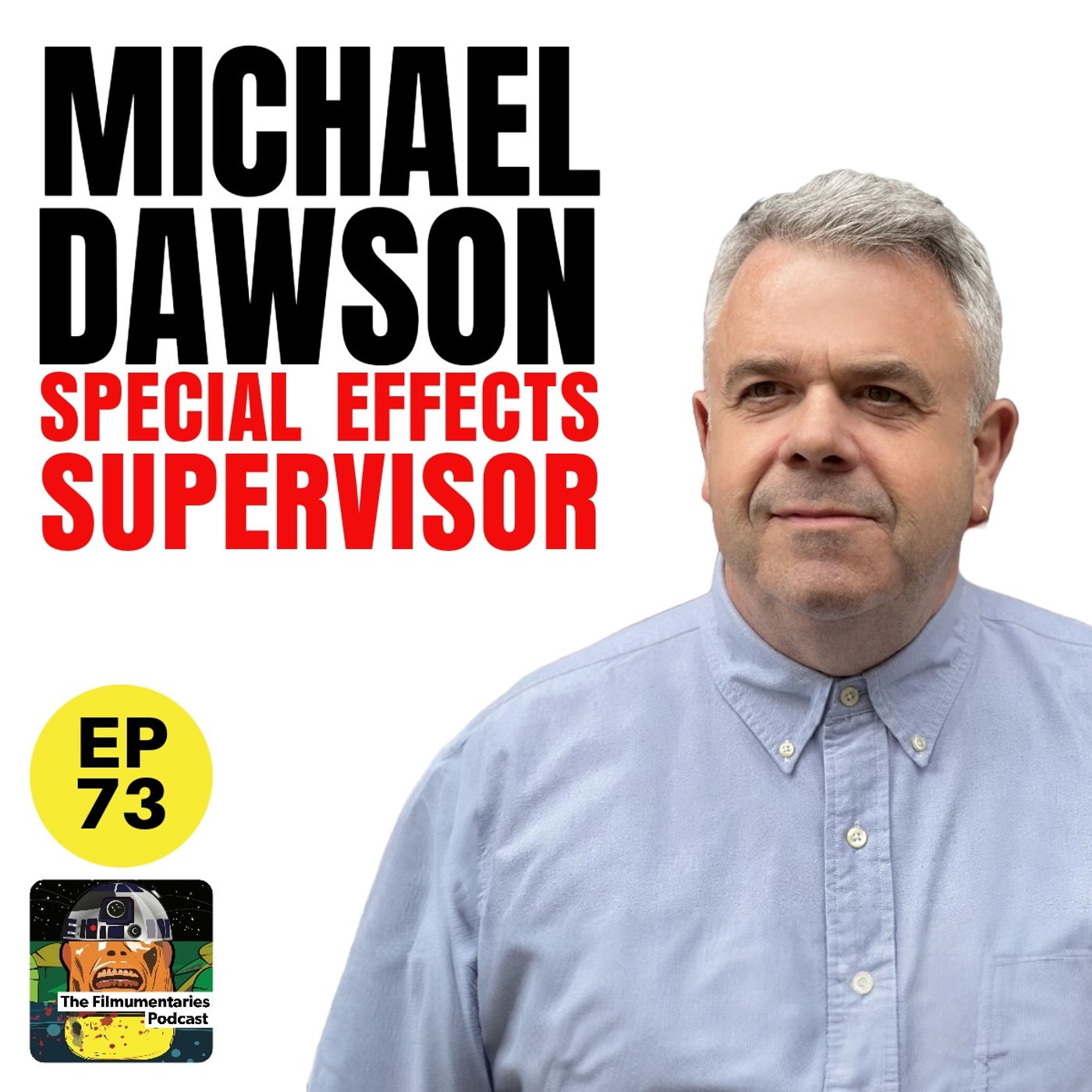
73 - Mike Dawson - Special Effects (Supervisor) - Superman, Return of the Jedi, Indiana Jones
About this episode
If you remember, I interviewed House of the Dragon writer and showrunner, Ryan Condal back in September 2022, episode 59 I think. Well he and I have become friends and we chat quite a bit on Whatsapp. He suggested I speak to his Special Effects Supervisor on Dragon, Michael Dawson. “He’s been in the industry since Superman in the late 70’s. He’s a great guy and would be perfect for your podcast”.
So, a couple of weeks ago I did indeed have a great chat with Mike. He not only worked on Superman, but also on the three original Indiana Jones films, Return of the Jedi, Return to Oz, Alien 3, Patriot Games, Charlie and the Chocolate Factory and so many more! We didn’t get the chance to talk about all of them but we did have a great conversation about his job and his 45 plus years working in special effects.
So here’s my chat with Special Effect Supervisor Michael Dawson.
Links
Return of the Jedi Timeline Book - Register your interest!
Filmumentaries Merch!
Support the Podcast on Patreon
This podcast is completely independent and made possible by listener support. If you’d like to help me keep making these episodes, you can join my Patreon community here: https://patreon.com/jamiebenning
Watch more on YouTube:
Check out the Filmumentaries YouTube channel for behind-the-scenes clips and extra content: https://youtube.com/filmumentaries
All my links
Transcript
Automatically generated, so expect the odd misheard name.
Welcome to episode number seventy three. This is Jamie Benning talking to you here from my rat and Mouse house in Greater London Town. It's April twenty twenty three, and this is the first episode of the month. If this is the first time you've listened to the podcast, Welcome. You have about an hour or so of film history chat ahead of you.
Please do check out some or all of the previous seventy two episodes. There are some good ones, there are some great ones. There are no bad ones. That's why, as I'm concerned, and each of them gives you a unique insight into the film industry and the people behind the scenes, including who have I interviewed, stump performers, editors, directors, visual effects artists, sound designers. There are lots to choose from.
If you're a regular listener, thanks as always for your continued support. If any of you like my work and this is work, then please visit Patreon dot com forward slash Jamie Benning. There are several tiers to choose from with different perks and merch two. Thanks to those of you who support the podcast via this means and talking of merch, you can also support the podcast by buying some film mementories goodies, including film ementories, monks, T shirts, bags, bottles, and even socks. I'm wearing a pair right now, and T shirts with the inside Jabber and inside Jaws posters on them that my buddy Pete Starling creative for me all those years ago.
They're still cool designs though, and you know you could buy one for your next film convention. I know styles Celebration is now done. More on that in a moment, but there are more film fairs and conventions to come, and you know you'd look pretty cool an individual wearing one of those T shirts. All of that can be found at Filmingmentories dot creator, dash spring dot com. It's a bit complicated, so I'll post the links to all of that, the Patreon and the merch in the show notes.
So a short report on my experience at styles Celebration. Now, back in when was it twenty was it two thousand and seven? I attended styles Celebration with a couple of my friends, Richard and Rebecca. Not really my scene as such, going to conventions, you know, all of that getting stuff signed and dressing up and all those things. I prefer my more distant considered fandom, but I have to say after attending this year's convention, I changed my mind quite a bit.
I had no plans to go, actually, but the publicity team at Industrial Light and Magic got in touch to say that they were impressed with my podcast and secondly to ask if I was available on the weekend of Styles celebration. By some fluke, and it is a fluke because the majority of my TV work is over the weekends. I was available on asking why they suggested that I host a panel about the visual and special effects on and Or, which is a series that I really connected with. It's my kind of Star Wars. I love the kind of slow burn build up of that show, and dialogue heavy and not too flashy.
Yeah, and fantastic writing by Tony Gilroy. So with just a couple of weeks to go in fact less than that, I started watching and Or again and swatting up on the visual and special effects in the show. I was used to interview TJ Falls production VFX producer, Moe and Leo production VFX supervisor, Richard Van Denberg special effects supervisor, and Scott Pritchard, VFX supervisor and aerial supervisor during a short Zoom call to meet the guys and discuss what sequences we should talk about. I was left with one of the publicity guys and we came up with a plan. All nice guys actually really nice to meet them more, and I was looking forward to meeting them in the flesh.
So on Saturday, the eighth of April, arrived at London's Excel Exhibition Center with my special guest pass that I was kindly given by IM, which meant I was able to get into the show immediately and skip the cues. So for about thirty to forty minutes or so, I walked pretty freely through the floor of the exhibition halls, looking at merchandise, props and sets. I even bumped into Kathleen Kennedy and John Favreau, but like an idiot, I didn't get a photo of myself with them, or asked for an autograph, or indeed even give them my business card. But really the best part of the day was meeting up with so many friends, including Rachel Finch, David Whiteley, Phil Hawkins, Stephen Lane, and previous podcast guests Colin Gowdie and Alexandra Ponceet.
Check out episodes thirty five and fifty eight. From my chat with them, I also got to see a return of the July fourtieth anniversary panel and got myself one of artist Matt Ferguson's great new posters. I was actually sat next to him. I introduced myself and said, oh, I follow you on Twitter, and he asked who I was. He had no idea who I was, but he was rightly very proud of his new poster, which is great.
I think I'll get that framed and get that up on the wall soon. So then I went for a meeting with the ILM guys over at their hotel to finalize the panel details. But rather than really pinned things down, I wanted to keep it very much in keeping with my podcasts, which is, as you know, is very conversational and free flowing. And they were in agreement on that, very relaxed about that idea, and me bringing my ideas and my style I guess to the panel. So the following day, Sunday, the ninth of April, I got there early again spotted some more wonderful costplay on the way in, including a Jedi jar Jar Binks getting dressed in the car park in the back of his car.
I went up to the Twin Suns stage to check out the space, and what I thought was going to be a small, intimate space was in fact a huge room, and I was told by one of the people, one of the organizers, that it had seating for one thousand fans. With a couple of hours to go before the panel, I walked the floor some more, bought myself a couple of bits and bobs, including a retro return of the Jedi Luke Skywalker figure kind of had too really, and a couple of books, and as I approached the Twin Suns stage again with about forty minutes to go, I saw the queue of several hundred people already beginning to form. So I kind of walked around the que because I knew a couple of friends were going to be in the queue, and one of the organized says, I, so you need to join the queue, and I said, oh, no, I'm hosting the panel, and they said oh okay, and I sort of said, I'm just looking for some friends in the queue.
And this guy in the queue, just some random guy, said listen, if you're hosting this panel, then we're all your friends. And whoever you were kind gentleman. It really put me at ease, and so I so I head up to upstairs to the hall, and I bumped into none other than Rob Bredo, that the chief creative Officer at ILM and SVP of Creative Innovation at Lucasfilm. A lovely guy, said that he'd been having a great weekend and it was such fun, and we chatted as we climbed up the steps to the hall and even managed to grab a quick selfie with him. On arriving in the room, I got to meet the panel guys in person, all of them very tall, much taller than they looked on Zoom zoom does tend to do that weirdly.
I wasn't nervous. It was just going to be like doing a podcast, I told myself orbit without being able to edit, and with you know, a thousand people looking at me, well looking at us. You know, it was about them, it wasn't about me. But it was down to me to curate it. And in no time at all, the announcer exclaimed, please welcome to the stage at our host, filmmaker and podcaster Jamie Benning, literally like a boxing announcer.
The huge crowd now fully warmed up, went crazy and what a buzz is just going onto that stage. It's all a bit of a blur actually, so I introduced myself and a sizzle reel of some of their work, and then I introduced the artists to the stage to more rapturous applause. Actually, I do have a little clip of that moment that one of the ILM guys captured. Here is my podcast is very conversational. I like to keep a conversation flowing, let people talk over each other.
Who've got four amazing artists here. Let me introduce them. First of all, we've got Production VI Effects Producer T J. Falls. We had Knowingly Production the Effects Supervisor, Fandom Special Effects supervisor, Stop Pretty Yard, the Island Supervisor, and er and the hour flew by as we chatted about their work, while the Island guys backstage fed the screens with relevant clips and stills, keeping up with our free, full conversation.
I finished the panel by asking the crowd to show, by way of applause, their appreciation for the work these artists did on Andor and Wow Blimy. The crowd really lifted up another notch. Everyone on the panel was beaming with big smiles as I turned around and we were left happy with how it had gone. Backstage was all pats on the back and handshakes from all involved, including mister Bretto, and it was done my first panel. I do hope to do more again.
Do check out film umentaries dot com for a short report and some photos of the experience. I'm also trying to track down a recording and get permission to use it as a podcast episode, so listening out for more news on that soon. Fingers crossed. I really should have sorted this out beforehand, but it was all such a blur that I kind of forgot to have my business head on. So with the panel, the friends, the fantastic show that they put on a celebration, I must admit I've become much more enamored with the whole affair.
And they've just announced the next one will be in Japan, and wouldn't it be great to revisit my favorite country in the world and combine it with some more Star Wars love ins. Maybe maybe possible, possible. Okay, back to this episode. If you remember, I interviewed House of the Dragon writer and show run a Ryan Condor back in September twenty two, which would make here episode fifty nine. I think take a listen if you haven't already.
Well, he and I have become friends and we chat quite a bit on WhatsApp, and he suggested I speak to his special effects supervisor on Dragon, Michael Dawson. Ryan said, he's been in the industry since Superman in the late seventies. He's a great guy and he'd be perfect for your podcast. So a couple of weeks ago I did indeed have a chat with Mike. He not only worked on Superman, but also on the three Indiana Jones films, Returned the Jedi Returned to Oz related to of course, and Walter Merch, the director who I also interviewed in the previous podcast.
I know I like mentioning that, but that was one of my highlights of that year. What else? Alien, three Patriot Games, Charlie and the Chocolate Factory, so so many more. We didn't get the child still about all of them, but we did have a great conversation about his job and his forty five years of working in special effects. Well forty five years plus.
I think it's going on for ever than now, actually, So here's my chat with special effects supervisor Michael Dawson, and I'll be back at the end for a bit more. Jabbray on Superman is the first film that's listed nineteen seventy eight release. Is that the first thing you worked on? How did you get into the industry? Yeah?
Really, it was obviously like a little bit before that because release dates so like a year later or whatever. But my dad, my dad was on it as as West to the World, and he came home one night and he's like, do you want a little little job on a film? And I'm like, yeah, Okay, I'm not really because it's not really one and I want to do. But he's like, try, come on, try. You learned some good money.
It wasn't good money at the time. It was like fourty pound a week is to get paid. It was nothing. And it wasn't really special effects. All that was kind of special effects.
It was more it was working with a guy called Derek Botel who was who used to have a company called Eugene's Flying Circus and he had did buy as the system where by they flew Superman. So we would put the tracks up in the into the reds and fly him through the ice cavern and basically Paul wrote, it was all Paul. It was all ropes, no no screens or anything. It's all like flying through this ice cavern. And then he would come round the corner and then the three baddies would come round after him.
And it was crazy shit. And and that was my first job, and it was and it was strange because we just we'd rehearse every night, so we wouldn't we wouldn't do anything during the day and at night then we would start rehearsing and pulling him along wires and things like that. And it was like pretty horrendous job, to be truthful with you. But and I didn't never really warm to heights. I don't really like heights.
And Derek was lovely with an old school and He's like, you're no good to me. You don't even like heights what you sent to me. And I'm like, I'll try, I'll charge her. But so it was so nervous at the time because it was a different industry then. It was so small.
It was much more like four or five um like they're almost like doms, like heads of houses, you know what I mean. You had like the Johnny Richardson's and the kit Wests and the and you know Johnny Evans and people like that, and they had their teams with them, and you were trying to get into a team or into a house. I kind of like to look at it like a mafia house. You know. Yeah, yeah, you broke in.
You were safe. But until then you were like almost like a roaning. You had to go and sell yourself your soul. Like I buy your drink at the bar, because every pimer of times everyone used to go to the bar. It was a green room at the bar and everyone would go down there.
But like John John charge, you want to drink to one thing, let me buy a drink. Make It was like all that, actually that's gone. That's that's gone now. Yeah so what so what did your dad do? Then?
What's your dad's role on that film? He did the special effects. He worked for UM. He worked in doing some of the visual effects shots like the crystals, the breaking through, the spacecraft coming through. And he worked for a guy called Les Bowie who went with Films, who was based on the slow trading estate where from that stable came some some guys like Nicky Nikki Order who did aliens.
He did a kit West obviously who I worked with after that. Um, a lot of them came from that stable, you know, and he was part of that. So you got in did you get in with into that sort of Kit West Matthew, if you like, into that house. Yeah. After after I'd done that, I did a couple I did a couple of little things for um, Like I worked on Dracula and I worked on was that the John Badden Yeah, the John Baddam one, which I was just working on a wave machine really basically.
But I would say my first full proper film was was was like Raiders. Really when we when we when we started Raiders and I was actually a trainee in the workshop, you know, and that was when I look back on it, really, it was like such an amazing, such a big film, And when we did it, we didn't have like the technology that was available now, Like everyone's got a computer mac on their desk. Didn't have that at all, you know. And the in the like if you were in the sequence where he steals the idol was real, you know. All those darts coming out of the walls were real.
Robert I remember loading them, you know, when they pulled on a little solenoids. They all fired and the big ball running down that was real. Now it would probably be CG you know. Yeah. I spoke to Robert Watts, the producer, who said, yeah, yeah, a couple of years back now, and he was saying that he was told by Norman Reynolds, just just run in front of the ball, Robert, and you know, he did and he said you would have been able to stop that, wouldn't you really said, oh no, you know, and he said it was crazy although it was fiber blast, it was it was it was on its way.
Yeah, there was no break and that's another thing, like you wouldn't do that. Now you have electronic breaks on it and little counters and everything, but no risk assessments either anything like that. But that was really the first because you were just we were just breaking into like visual effects as well, like the because because they were obviously Lucas was coming over and Star Wars and there was all these big blue screens appearing, and everybody in the industry thought it was the death Knuves for special effects because no one, you won't need anybody. You will just do visual effects and it will We'll be dead, we'll be out of the business in it in like a year or so, and used to be on these these stage is were all it blue because I had used to have like for essence behind and you'd come out and everything would be pink because he'd been there all day.
You shot, shoot you like receptors in your eyes. And when we did the opening of the of the Ark, there was all the kids and the obviously the big Bist division cameras would come in and they aid them to the floor and say it all up. No, we didn't know what we would literally, we just did what the guys from America at the Island guys would say when when we when I saw it on the pre on the print like not premiere, but the crew showing it was like a mind blowing I had no idea what I was doing and it was great. And that was the beginning of the big the big league stuff really and you you would have been based to Elstreet for quite a while then because the next up to Jedi, Every Turn of the Jedi was it?
Yeah, every Turn of the Jedi after that, Yeah, and that was that was that was kit as well. Yeah, well you did you did you travel for that as well? Were you out in Arizona and up in the Reynolds and stuff or all UK based studio stuff or all UK on on radars on raidars. I went out to to Genisia. Um.
That was under duress really because I don't I don't really like check taking kids with and they just take the high high end stuff, you know, right. My dad went to Hawaii on that for a bit. You know, so you were only sort of twenty at this time, where you're something I was young. Yeah, so you're about to say the bit where what you know? Where where when he came out of the of the tech, like when he when he got the idol, when he burst out.
That was why they went there. So they were like two or three people out there for that. But but other than that, we would just stay in the workshops and make things because I was pretty much workshop bound by that, just assisting people and sweeping up and doing all that kind of stuff. But is there a way to sort of summarize what your job is because I think when I was a kid, I was always confused between special effects of visual effects. Obviously I know the difference now, but is there a way to sum up where that divide line is between special effects and what now, Yeah, well but our back then, yeah, I mean our I look at them right now, I look at I look at I always look at special effects as a service for visual effects, like it's like a room service thing, you know, and we we work a lot.
We initially, like going back there years ago, it was very much them and us kind of thing, like them and us and we wouldn't help each other, and it was a bit it was a bit of a standoff thing. It was a bit like, no, you're going to try and steal our job and all that. I feel like you're approaching on each other's which kind of thing, because we always honestly thought they were going to steal our jobs and things like that, which wish they weren't. And well they might have thought they would, I don't know, but right now I think it's I always trying with Foster a much more symbiotic relationship and it goes both ways. They like what we can do for them and we try to do and we love they can do for us.
Because we can't shoot what we can't shoot anything like we used to be able to do. Now we can do to do so much more, you know, So we need them and they need us to a degree. So what where does the sort of planning begin with the special special effects department? You know, what point do you come on board projects like a movie? You know these days we'll go back to some of the others in a little bit, but yeah, what what's the first step?
Like when when are you brought on? Is it you big part of pre production? Or is it amount of weeks or months? No? No months, months?
Months? Like like how to the Dragon? I'd come on pretty early and we've got you've got all those scripts. I mean obviously with How's the Dragon, you've got ten scripts or eight scripts, and you have to break all those down. Then you would you would read them and break out what you consider to be a special effect even though there is an element of visual effects in it.
And normally at the same time visual effects would have started as well. So then we would have a meeting or a crossover. I would I'd like, we share you show me yours, I'll show you mine kind of thing and we kind of lay them out on the table when we say, well is that you or is that us? Or is that or is that both of us? And we establish you know what what is what's to do in from each each direction, and we work like that and from then on we are pretty we're pretty close.
And we especially on the House of the Dragon because there's a lot of lightens, a lot of buck works, so we would build the motion control base. We built that on season one, where previously they had always rented they'd always rent you the motion base like a six axis, but Ryan decided that he wanted more of a more a serious move and if you can't get on a six on a six you can only do that, really you can do that. And we and it's and we just met said let's let's build it, because you're going to do more than one season hopefully, and and we built it. So once we've built it and we've we've we made it, we rely on the visual effects to give us the information that they like the previous and we can feed that into our computers will mimic what their previous is saying.
And they love that and then they get they've got the automated camera that goes round and shoots and it's great. I've just been nominated for a befter so yeah, that's fantastic. Yeah, Well, it's got to work well the other web ro gat No, I don't know, but fingers crossed. Well, it sounds like it's evolved a lot over the years. I mean I've spoken to a lot of visual effects supervisors, people that started off, you know, the very low rungs of ILM, and ended up as supervisors, and their technology is off.
You know, it's obviously changed a hell of a lot. I mean you're still doing very physical stuff, right, I mean you go back to something like Raiders, you say you know every thing was built, you know it was real, it was and dangerous to a certain extent. What has changed over the years in terms of how your job has evolved in those terms in terms of like the the amount you have to build. You have to build less now because visual effects is more more easy to achieve in a computer, and therefore you're not building as much. We build, we build, We build the same kind of staff, but we build, we build.
Um. We are more conscious of what how much we have to do, So we wouldn't do like on a battlefield. We wouldn't. We'd only do to a certain point, and we know that visual effects will take over like we would have if we were doing snow, we would we would see the avenue that we had to snow up and we would say, well, we're going to go up to there, and then X said, yeah, we'll take over after that, or we'll go that high on a tree and then effects will go up. So we know now each other's limitations, so aware of that, and there's no there's no there's no pissing contest.
Really we're in the same we're trying to help each other. And from that point of view, I think it's a lot more stable. And that's a lot, it's a lot, And obviously it's it's safer because you can't on a battle for on a battle for once, you just put a little red flags in there and and you knew, you knew basically where the stunt man would be at that particular time, and that person was looking to make sure that he was clear of that that flag before he hits the back the main you know, like whereas now we would do a field with no one in it, do loads of elements and they would they would foot they would film the elements and then they would plung come in. So you know a lot of elements for visual effects as well, like at the end of a show we'll get a whole ream of paper of elements that they want to do, like fire, like on the keep going back to dragons, because that's really where of my at the moment, But like on dragons, we've got loads of different kinds of I'm trying to develop different different looks for the flame from from the dragon because there are more dragons in season two than it was in season one.
Right, we want to do what I'd like to do and which I'm trying to develop before I get it approved, is is get get the older big dragons they've got like a dirty burn, right, and the new ones, which are more cleaner because they're young, clean and they're fresh, whereas I want the older ones to have really dirty burns. And then we're going to so we're developing different burners for that, and then we'll film them and show Ryan see if he likes it, and then we'll shoot that as an element because we obviously we'll do on a stage because you can't it's too hot, and that what we're doing in the field, and then the visual effects will plunk that into what to do. Yeah, because my assumption is that the stuff like fire and things like that and explosions these days are our visual effects and not special effects.
But you're saying that you would provide it and they would compit in and maybe expand upon it and bellish in something. Yeah, definitely, definitely we would. I think it looks better if it's real. I think so. I think you know, it was always tricky, but I was always tricky to water.
Yeah, it's tricky, so it's better to just do it for real and then and then just shoot it as an element and then bring it in direct. If you go back to something like Raiders or Return of the Jedi, what kind of stuff on Return of the Jedi, let's say, what kind of stuff were you involved in? There? Would it be things like you know, sparks coming out of gun hit and gun shots and things like that. Um, I mean it was we did obviously the scoot.
All the scooters were on pole arms, so that we think we did that. We did all the scooters. So when you they're on the scooters and you see all the little fins come up, that's us. We made all that. Um and we did h Yeah, all the the fight where loops fighting staff at the at like the end where all those that had to be choreographed because they were basically fighting with the rod.
Anytime they hit a wall, there would be there would be a spark at that on that wall. So they had to hit these different thing and people were like barrowing them off individually, and all these helmet had sparks on it and all that, and it was all choreographed to hit where where it was going. So it was it's it's a triggy one because if you mess that up, you're out of sync and got easy seating there and the spots going off over there, you know, and it's all that kind of stuff, which happened a couple of times. Yeah, And I guess and then it's the time it takes to reset it all as well and have another go. Yeah, yeah, yeah, yeah, because I think I've seen like a bit of raw footage of that scene actually, and you can hear the polls, you know, the lights they was clanging together, and yeah, you can see the sparks going and I guess, like when he cuts through the barrier there, that's a gag that you guys did there as well.
Yeah, women were sitting in the little room with like little bags making up charges of like flash ouder and and little color art garniture and stuff like that, and just wrote little miniature ones and like wrapping them up and then putting them in the walls and things like that forever and what you have to kind of just like paste them into the wall as it were, into the wall shellac over the top, you know. Crazy. Yeah, And how has that kind of stuff changed over the years in terms of making a little as the compound of these things changed over the years. Has it becomes safer, as it become you know, more choice for colors and things like that, or has it pretty much stayed the same. It's it's it's it's more.
It's more farmed out now to two companies that actually do it right. So there were guys that actually said, well, we can do this for a living. These up for you. And because because technically, if if you're sitting in a room making it, making a chart a potential, you're you come under the category of manufacture, right and you really need a license to manufacture. I mean, I've got a license for part.
I haven't got a license to manufacture. I've got a purchase in store. But those days you could just do it. But these days it's a little bit more tricky with with everything that when they clamped it all down. We'll obviously because of what was going on in England with the IRA and all that kind of stuff, it became very very white and its remains and so it should you know, because you're dealing with a lot of stuff that can hurt people.
So yeah, and I think if you if you did another one, you wouldn't be doing those charges in the walls. You just do. They might put LEDs in the walls or that just to just to give a lot for visual effects to put this right, they would do it. So it's changed in that respect. Yeah, so it's safer.
But I mean that to me is that's the fun bit of special effects that the explosion I mean like band like Band of Brothers and Pacific. Yeah, that was the last for me, the last of the big you know, the big big buster explosive explosive things. Because we were like laying it in there, we were getting like the truck was coming from its company called x KEM would turn up with dynamite. Basically we would we would just whack them in and blow them up and then do it again and do it again and on the beaches in far North Queensland where we were shooting in the Pacific. It was like crazy shit we were doing it.
But that kind of stuff, I'm not sure they would do it again, Like like I said, they would probably do elements and just yeah, so I guess you're in a way, you're sort of there's more shooting going on because you're doing the elements, because you're having to piece it together. But at least you know, they get a chance to choreography and post rather than having that one one shot at it and well there's no reset, so so yeah, saving a lot of time in like resets and thinking what we're saying. Really, I always think of, like when I think of some of the things that first inspired me with movie making, those documentaries and things. There was that I've mentioned it several times on my podcast. There was a show called How to Film the Impossible where they went to Ilm and I think they went on set at Elstree for Temple of Doom.
And you know, you had that whole mine car like a little mini roller coaster building, remember that, which is insane? Yeah, yeah, it was. It was like a roller coaster. Really. We made basically the coaster for that, you know, which is insane.
But all the spark likely big flints like flint. They were big, you know when I when you get a lighter. They were not they were bigger. They were like that round and we would put them into the into the thing so when they pulled the break, it would like all the sparks would come out of it and all the still think a little bit of that. That CG shot.
The visual X shots were a bit dodgy, yeah, and along they do look a bit weird, but the real stuff great, I thought, Yeah, yeah, I think you know as a kid that you just don't see that stuff, you know, But over the years of revisiting it, yeah, you can see the little animated puppets in the in the mine car. But was real. I mean the big the big conveyable and that thing that was turned in oh yeah, yeah was real. And the you know when the boat got chopped up with the last crusade, Yeah yeah, yeah, that was real. We've fed it into this thing and it was like a bowls of boat.
That was real. Wow. So where does your kind of where do you interact with the stunt performers, like when you know, when is it discussed what is it that is that's part of the planning. Presumably you say, right, we need this. This gag requires a stunt performer and they've got to have a lot of trust in you guys obviously to make sure that's safe.
And likewise, we've us, we've got us seven and we meet. That's another department that we need to we we do get on or not anything that has an element of danger. I would I would obviously asked Rowley, who's on dragons. I would I would ask him his opinion and whether he wanted to put one of his people in there, because you can't risk anybody's So if we were going to put somebody on a dragon, the initial on the back for the first time, it would be a stunt person that's just to shry it out. Normally they would bring in the an actor to watch can get they can see what it's going to do.
So it just does its move and they can see what the Then Rawley's very good at calming people and keep it and making them feel safe, which has likewise, I'm you got you don't just go oh, we should have done that. I don't know what it did that that that's meant, that's fantastic, it's great, and once they're safe, we put it on. We put them on. But Rowley's really part of that safety because here's responsibility is um the actor's safety. So we tried, we tried to work really because we do work close anywhere.
Rawley is great. I remember Peter Diamond, stunt coordinator, talking about when he worked on Stars and he tested like the swing across the Chasm with Luke and Layer and there was this big tearing sound and Mark Hamill, the actor, said, what was that? The harness is torn? And he said, no, no, it was my trousers and it wasn't It was harness, but he replaced it, you know, a maze. Sure it was safe, but he didn't want to put the frighteners up up the actors obviously.
So yeah, there is a sort of fine line there, isn't it. Because also there's some actors today that kind of want to do this stuff, you know, they want Well, Tom Cruise wants to do it all, doesn't he. Yeah. I saw an interview with him, I think it was on Graham Norton where he said the stunt guy said to him, Okay, you're going to go on three, and he went, okay, three, two, and he's like, well, whoa, hang on, you said, I'm going to go on three. You're counting from three.
He said, do I go on three or go on? Go on one? And he's like three two, and he said, well, hang on a minute, do I go on one or do I go after one? Because he waited for this explosion to happen. So these things have to be coordinated so precisely, don't they.
And I was there, I was watching him. Oh, I was on I think I was on Wonder Woman. And they were filming him then and he was going up It was him. He was going up a massive crane and they were taking him up on his crane. And I thought, we've got to have nuts to do that.
Oh my god. Yeah, I mean, and that's when he hurt himself jumping from one container. To know, he broke his ankled in the stuff. Yeah, he's ribs and things like that. But in these days of face replacement and all of that, which is, you know, very effective, it does make you wonder.
But then I guess, and he understands the mechanics of movie marketing as well. He knows that that's going to get in the press, and it's going to be everywhere, and it's I mean, you know, he's despite all of his you know, scientology stuff, the man is a bit of a genius when it comes to that kind of stuff promotion. He's a clever guy. And all the bike stuff he does his own bikes, don't stunts because he can ride a bike. And you know when you see him on like top Gun and he's driving along on a bike and you think that's really good, that's him.
Yeah, So I've got a great I've got great respect for the many same stuff. Like he was like, I was talking to somebody other he's doing a film. He's they're talking about him doing a film in them and he wants it's a lot of it's going up into space, and he wants to go up into space basically like to where the gravity starts, so you're like floating around, you know, because I worked on gravity and all. That's that why Rick was crazy, bit crazy complicated, But he wants to actually go up there. And I'm thinking, yeah, but he can, so why not.
What a life experience? What tick in the bucket list? Ye? Absolutely? I mean I work on Formula one and I've seen him drive a Formula one car, which isn't an easy thing.
You know. Red Bull said he could have been a really good driver. You know, He's just one of those guys that just has got that kind of drive and passion. Yeah. I think he actually one of those guys that could that believes whether it's his scientology or his mindset or whatever, but I think he believes he can do anything, or he does.
Yeah, I've talked about I've heard other actors talking about working with him and how you know, he brings like two hundred percent every day, you know, and you have to kind of try and try and match him. Crazy. Really, you worked on Return to Oz as well. I noticed for Walter. I actually interviewed Walter Merch on this podcast last year or year before, and then I realized we hadn't talked about Return to Us.
So he said, oh, let's do another episode then, so we talked about that at length. It's one of those films that kind of gets a bit of a bad rap because it's quite scary film for kids. But there's some all those things on the Little worlder skates yeah, yeah, but but it's there's some fantastic moments in that film, and it's got a real kind of style to it. What what what were the kind of gags you're involved in on that? Well?
We did obviously the be the flying so far? Really remember when it came through the then down? We did that on that was pretty pretty much the same method as as the as the Temple to Doom. Really it burst, came down and all that kind of stuff. I can't remember.
I didn't want that, to be truthful with you. That was else three again? Was it? You were going with a supervisor called Ian Wingros And I think it should have been better than it was. I think it was a little bit and they used they used from projection on that a lot of front projection, which was like old school almost obviously you know then and you can the trouble with front projection is is like a three m material and you can see the lines.
You can see sometimes you can see the sheets. We've built this massive screen and vibrated it like oscillated it so you be blurred. Right. We tried that and I think it will It worked really well. That system interesting.
I think it should have been better than it was. How much of that are you doing on the set that improvisation, you know, because you've planned stuff. Everything's you know, tightly planned and scheduled and priced up and whatever else. But there must be moments where you kind of have to think on your feet as well, because maybe it isn't working out as it should and you've got got improvised. Does that happen?
Doesn't happen as much you used to, Right, we've pretty much like nail it now because everything's got to be approved, and everything's got to be tested, and everything's got to be shown. And they don't deviate. Now it's such a big it's such a mammoth thing that that they don't deviate. They just crack on. Now it's more that's the that's the that's if anything's happened in the industry since I started.
Now it's become more of a business, more of a fact a film factory. Because when they used to call it, all the guys that were in it used to call it the game, you know, and it was a game for them. They were all having fun. But now it's more of a business. It's more I mean, my day is like business is like meetings about budgets and deadlines and we need to see this, and we need to see that and can we do this and can we do that?
And it's it's crazy. It never used to be like that. Yeah, but it's a good I don't mind. It's obviously it's my job. But but you need an non charge around you just to to assist you, you know.
Yeah, Yeah, I guess the teams have got bigger over the years because of that, haven't they. Yeah, they've got bigger, and they've got there's a lot more, a lot more office work as well, a lot more like that, submitting stuff and getting it approved and all that was like Munich. When we did Munich, even wasn't there for the first maybe two weeks or shoot. Really he didn't. He didn't turn up until the second week or shoot.
So he didn't see anything that we've done anything, everything that we made he didn't see until we turned up. Was he was he finishing another film or something? I often does that, doesn't he bree crosses over that. Yeah, And we were showing him some of some stuff we were showing him on the day and he did and he was like, no, I don't like that, And so you're you're really screwed. So you've got to like go back, go away with and they go and shoot something else.
It's not ready. That was a crazy That was crazy, catch, catching up, catching your chasing your tail all the way through that because it's not ready. So he's not going to shoot the weather the weather, you know, with the bed blue and it blew across the room. He didn't like that. When we did, we showed it to him and we had to re revise it and do it again, and we're going to shoot something else.
And then we would do a big shoot him out on the on the harbor and we've done we've done it for that angle, and then he'd turn up and he'd be like, I'm shooting. I want to shoot that way, and you well, that's not ready. It's only we've everything debted that way. Yeah, I know, I want to shoot it. I'll be back in and then we'd have to rush and move it all over to the other side and all that kind of stuff.
So that was crazy, busy, But that's that was the last one that I did that was that crazy. And I guess there's always a danger that you know you're because you're improvising and changing to that extent that you know things aren't. I wouldn't say not necessarily safe, but there's potential for things to go wrong. If I think you're you're you're justified in saying safe. Yeah, I mean everything that we do it's really choreographed.
It's like a ballet. Yeah, everything is like a ballet. Like a bullet here is a ballet. Really, he's a certain point in his arms because if as if a stunt guy puts his hand in front of his where he gets bullet here, he's going to get he's going to get hurt. It's going to get hurt or his arms going to get hurt.
So it's all got big, choreographed and rehearsed, and if you start changing stuff, you don't not really one hundred percent sure. You can't say for one hundred percent that it's going to be there, you know, at that particular time, So you have to and it's hard to say no as well. Like my job is sometimes really difficult because you have to go on to a director and say you can't have that, and you try saying that to someone like Stephen Well I was going to say, yeah, that must be or any of those people. It's really takes big nuts to say you can't have that or is scary, Yeah, I could imagine. I also think like a film like Roger Rabbit, which he works on, who friend Roger Rabbit.
Working for zemeckis just the complexity and the choreographing and all the timing and of everything, because you basically got characters that nobody's seeing, you know. I've one of my one of my friends now is Dave Barkley, one of the Puppet Tears, and he'd be there with a with a gun on a fishing rod, you know, and all that kind of stuff we made. I loved what I loved working on that film and one favorite film, and I had no idea when I did it, because it was a fill in as well. I was I was told a little little cartoon and fill in before something biggert else come along. And we started it and I had the best time on it because we had like we had this little automated rig that would pick a plate up and smash it, smash it, yeah yeah, and then that would just do that all day and I had to go and react to find this Greek shop that made you know, for that sold Greek restaurants, and we were just smashing these things, and then we had a grand piano made out of bolst wood, and then we had it painted like in that high gloss that they do grand piano when he chops it up and all that kind of stuff.
And I had no idea what I was doing. I'm like, I know that this is going to happen, but I didn't know what was good doing it because you never saw the characters, you know, And then when we saw when I went to see I was blown away. When I saw that, I thought I was so proud. You know, when you go and see something and you've worked a year, or say you've worked a you on it, on average a year and maybe you and a bit. It's so disheartening when you walk out and you think that that was rubbish, waste in my life, and it doesn't happen.
Actually it doesn't happen often. But but when I went to see that, I was so happy that I'd spent a year with making that, and Robert obviously Roberts it was amazing. And that and the all the the cart which shoots out all the die We did that in down by Acton in an ground where the underground They used to repair undergrounds, obviously tubes right now, and we had all this die was called it was called fluorescene. It was like a fluorescent yellow and we were using it. So we were using so much.
It came on the news that there was there was this yellow band of die going down the ms and nobody knew where it was coming from. But it's crazy. But that was a great film. I love that. I've watched it again, probably about a year ago, and I forgot how dark it was.
Actually it's quite a dark film, you know, but but he still hold up more stuff, but it still works really well. It's a great cast, and you know, Zamechas did a great job. And that's the thing, isn't it about films? Is people, Oh it's a Robert Zemecas film, it's a Steven Spielberg film, and there's this all tur theory. But if it wasn't for all the collaborators like yourself and visual effects and sound design.
I mean, when you're on set, you're hearing these strange sounds. I always think of Jaws when you see. I spoke to Joe, you know, I'm making a documentary about Joe Albs, the production designer who worked on jaws and close and counts, and he said, you know, the shark would go, they hate, and then people hate us. They hate, they hate us because everything we do is noisy. It has to be noisy, because because us, because of what we do.
You know, if you've got lots of wind on someone that's coming from a big, big like a like a jet, like either a jet engine or a massive ape ape propeller prop, and it's going to make noise, you know. And even even the fires on season one of Dragons, we were they were moaning at us to the fire as they could hear the hiss of gas and there was like, honestly, we on Dragons, we had eighty eight kilometers of copper tube in the sets. That's a lot that they were feeding sconces and fire fireplaces and chandeliers. And that's if you've got them all running, not all at once, but if you've got a big set, there's a lot like hissing going on. Yeah, that's and they hate they hate it.
They go like, oh my god, you can hear the buyer. So like on season two, we've developed we we we've spent so much time getting the hiss out of all these things. So I think we've done it. I think we've cracked less bullicking. I'll get what's the risk assessment on something like that with like you described five places, chandeliers and all sorts.
I've got, I've got. I've got this amazing lady called Liz Baron, and she does all my risk assessments. That's all she does is my risk assessments. And it's a hideous job. A hideous job because I've done risk assessment courses like yeah, your knee bosh and all that kind of up.
And you go around the room when you first go in there, and they're like, I work for BP, I do oil rigs, we do this, And they get to me and I'm like, I had blow people up for a living and shoot people and cash them one fire. How do you there's assent for that? You can't, can you really? So it's it's not a great job, but someone has to do it. Do you enjoy the aspect of traveling for the job or is there or is there a kind of a delight when you know you get to work again.
I'm looking at your list of films here, Patriot Games, you know they shot that down some that down at Naval College in Greenwage, just down the road from you. I'm guessing many times in there as when we did the car Yeah, that was all that was all that naval cottage. It's I don't know. Studio work is easier, you know, because you're always moving and you've got to transport what you you make, you make it and then you transport it to work. It's got to go, So it's always easier, but it's all part and parcel of it's not really And I guess when you're in a studio you've got your sort of workshop at hand, or your trucks at hand that have got all the extra bits and bobs you might need, Whereas if you're out on the road there's always that danger that there's that one thing that you But we've got we've got big caravan, we go, we go, we do.
We have big trucks and we have a lot of stuff. And now that when we load them, I always freak out because the guys that run the floor, it's their responsibility for me. They load their work, their trucks, they make their list, they load the trucks, and I always freak out of them, and I'm like, why are you putting all that on there? Why are you putting that on there? Why do you don't need that?
It's everything. You can't believe what they put on their trucks. And they're like, well, if they want it, there will come to us and we've got to have it. And I'm like okay, and I just leave him a lot bit it always like any think, can you cost me so much money to fiddle it? Yea?
It grades That's the thing. I guess a lot of this comes down to the cost. And I'm wondering where that sort of dividing line is between special effects and visual effects, because both have their expense, you know, both both have their cost. Like where do you decide where is that dividing line where you say, oh, actually that's a visual effect because it's going to cost us too much or it's going to be too difficult or too dangerous. Well, there is a there is a like an it's a tricky one really, because they case their budgets are so much bigger than ours, hands of millions more than ours, um so we have only got a set amount of money to to to spend, and they will they will a can well lit some little things.
They will say, can you you can do that? Can't you? You can build that? You can do that water tank? Can't you you can rather than us, because if you did that, it would cost us a lot more than it would cost you to major and and that.
But sometimes we simply can't do it, you know. So um the night, I mean, obviously, if you're if you're burning people on sets, that's real, but they will take over with with the with the dragon's breath coming down on top of them and all that kind of stuff. So it's it's you don't really talk about money, really, and I know they've got more money than me, but I don't. I don't ask has it made your job easier in any way to I'm thinking that, like why a removal and stuff like that sins visual effects. Howard the Duck was Masst Films where they did that, but because I think of Super Duck, you had to kind of disguise all of that stuff.
Whereas since Howard the Duck did, you didn't, No, I didn't. They'd have such thin wires that you can you know, you try not to see them, you know. But but yeah, it's much easier now and we do we rely on them, like we would say, we can put something underneath it and just put a blue And it's so much easier now because before that you couldn't. Actually they struggle to remove. But now you just put the slightest thing over there.
You don't even sometimes you don't even have to put anything around it. They'll just take it out. You know, it's so much advanced now, and it does make your life a lot more easier, and we do we do um rely on them to do that and take it for granted that they will, you know. Yeah, it's something you don't have to sort of consider anymore. I guess let's you focus on and if you don't want to think cables because you've got to hide them.
Now you can have safer cable size. Yeah, you can have a decent thighs. Yeah. Yeah. So when when you get a script and stuff and you're do you get the full script and you're you're breaking it down or are you just given elements of the script going through and going like, oh, people I've got to burn you know, yeah, Or he's a little talent and I really like that person, right character, we haven't got to kill that person, you know.
It's all that kind of stuff. Yeah, we just notch him up. How many people you've got to burn? And my dog's bark and shall go and stop them? Right.
It's a bit flavor, isn't It won't stop though. Once he starts, he won't stop. If it gets I can't really hear remax. And it's interesting to me when I speak to visual effects people, you know, they're always talking about it's all about serving the story. It's not about showing off what you've done, you know.
Again, I think of Lucas when he built that big seal barge jamb of the Hut seal barge in Humor, Arizona. I think he said, you know, two hundred craftsmen work for twenty weeks building and it's on screen for like thirty seconds or something. Yeah, is there a bit of interior with down Elstreet? So yeah, you know, yeah, I was there. So it's like, why are you spending all that time doing it?
And some of it is vanity, a vanity thing, you know, they like to do it. Well, that was going to be my question. Is there a part of in you that kind of wants to show off what you've what you've done um or is or are you always super focused on the story. Well, it is nice when you do it, when you do it an effect like like um on say that on the Nevers when we did that little three that three back three wheel buggy thing. Yeah, and the electric was it.
We built that from scratch and and it was when it burst out the back of the of the of the carriage and went down the track. Everyone was like obviously they liked the shot was great. We got it in like in one and they everyone clapped and that's that's really good. And the director came over and was like, well done, that's great, and he walks off and and you you feel good. Then that's that's a nice thing because before that you've got you've had sleep this night, literally sleeping.
Like when we built the three access motion base, I was like, or will will this do what they wanted to do? You? Will it work? Will they be happy? And the uh they when we shot it the first eye and it was like that's I love it.
It's great. You know. Of course he's in two and I'm like, yes, I've bought Eason two. Well that's great. Yeah, I'm getting around of the clause.
That must be a nice moment. Is there is there a particular um sequence that you worked on where you you kind of see it as your favorite. You mentioned your friend Roger Abbott being one of your favorite films to have worked or is there a particular sequence in any of the movies that you've worked on our TV that you've worked and where you just think we nailed it, We nailed it reports. I don't know, really, that's a tricky one. That's a hard one because I worked on too much I think to do that.
Yeah, I mean it's obviously the big sequences, like like obviously on Bandon when we did the battle sequences and the houses blown up and things like that, and and likewise all the beaches whenever coming in and in the things that in the landing craft and everything on the beaches were growing up. I mean, takes such a lot of of time and planning to get it right and does work. It's it's so nice. Obviously the chocolate river on on on chart On one cut Charlie and the chocolate factory when that on for the first time and the waterfall came over. I mean they probably wouldn't do that now, they would probably do that CG as well.
Yeah, that was real. That was real chocolate river. We made that chocolate, you know, we had we built an actual factory outside the Double O seven on Pinewood and made the chocolate and pumped it in and it went off really quickly, people like Bury and a half a roll in front of the river and it was going on. We had to drain it and then do it again. But but the actual thing when we turned on, it will look great.
And I thought, I'm you know, you're I'm proud of that because that was a big, a big, big thing to do logistically and take it on and say, yeah, I can do that, we can do that. It's cool. Has the advent of digital over film, you know, shooting on digital changed your job in any way because you know, you talk about those sort of one chance moments to get that shot, and on film, of course you're actually burning film as it were, you know, but digital you can shoot again. I mean, you still got a schedule to keep two and a budget to keep two. But has it affected you The only the problem from from our point of view, with with with digital and it's not a problem, but it's what they do is they tend not to so when we're shooting something like on on dragons and there we've got all the sconsors going, all the gases going, all the chandeliers are going, and the fires and everything like that, and they don't they don't they don't cut, so we can't turn them off.
We have to keep them going, and obviously the consequences of that is the fumes will build up and the gas where you go through is horrendous. You know, we're not cutting, so we're not turning anything ofsh and we have to keep the smoke at a certain level all the time, and we don't get we don't get a breather, you know, like a little gap. And that was that was our biggest issue on that is like they'll just go again. Can't reload it. So you can't do it so much when you when you've got certain things that you need to go off at a certain time, like explosions or or bullet hits, and that you have to cut.
But but nine out of ten times they'll shoot it real they'll shoot it with us, and then they'll just go again without reloading, and so they'll just go again and and do it digitally after that, you know, or mix a match. So that's that's the only issue. You don't want your bit of the job, a bit of the shoot, to be the bit that stops it from working, do you yeah, Or they'll shoot it, draw a three times and then they'll do the last one. They'll be with the effect. So you get with your blood, you know, stumes and things like that.
So that that that to me is like is a negative from from so I like to do it real, you know, I hear from editors that's also a problem because they can't log things in the way that they used to. Like that you just just keep holding and they're just like, one more time, one more time, keep it rolling, keep it rolling. It drives me insane because because it's like it's a lot of pressure on. Yeah, yeah, it does, and you have to keep it. You have to match it all the time and keep it going.
M m. You got in the industry through a bit of nepoti is a bit of luck, and you know the rest was up to you, the hard graft to get you to where you go where you are now. Where do people start now? In special effects? What is it?
The first run on that ladder, the first run on any ladder, I think for film industry or special effics or whatever you want is tenacity. You know, it's got to keep going. Don't take no for an answer. Your head on that wall, you know, keep keeping keep it going. I mean I started obviously when I was like, I was young, and I'm a gay man doing a very alpha male role in the film industry.
I think, yeah, not asking anyone to come out, but I think I'm probably the only special gay special XS man in the world. Right Yeah, I don't know really even any if they are not football blaws, they're not going to come out, you know what I mean. Yeah, yeah, and at that time you started as well, in the seventies and eighties the Wall, So yeah, Slanders, it was. I was very closeted initially, it all okay. I had to come out when I went to Thailand on Air America because everyone was getting hooked up with girls and things like that, and I wasn't.
I think we came early, honest, like everyone was like, what's the matter with you? So I had to come out. I was forced out. But but they'll regret coming out, and I've embraced it, you know, great, but it's it was really really hard from from my point of view. So if I can do it.
Anyone can do it. That's what I'm trying to get to. I mean, it does. Don't take no for an answer. Just keep going it and and and show willing and and smile and knocking on that door and someone will let you in.
Yeah. I mean it's like, you know, if someone turns up and said and I'd say, I'm sorry, I haven't got anybody, and then two months, two weeks, two months later, they'll they'll knock again, and I'm like, he wants to do it, let's try. I'd like to see a lot more diversity in in in effects, particularly, you know, because there isn't there aren't any you know, there's no people of Carlisle. There's no very few anyway, and I'd like more. And girls don't go into it.
And yeah, maybe based on that perception that it is a white, alpha male industry and it's impeligible, but I've in my part of the industry and I work in sports TV live TV and the same, isn't it. Yeah, it has been over the years. And you know, whenever I do a lot of training for people, and I whenever I've got a female that you know, comes on the training and she shows a bit of you know, that drive and stuff. I've put them forward and I've got them on the team and you know, and give them that opportunity because unless people have represented, there's no there's no visible route for anybody else to join that. I've got two girls out of a crew of thirty thirty four.
It's not good, you know. No, I'd love to I'd love more girls. I'd love I'd love to have a girl run a floor for me. I mean, I'm trying. There was one one in particular I've got my eye on, and she's she's great and after her a job, she's she's getting married this year, so I don't think she can do it, but maybe next year.
I'd love to ad ago. It's really important, isn't it. When you're in a position now like where you are, in a senior position to give people a chance to come into the industry, and you had mentors I'm sure you know throughout your time and people you looked up to, and it's great to sort of pay that forward, isn't it. I think I think it's your duty to do that. I think it's your it's your responsibility because because you could just be really selfish and say well, this is my this is my mine at the moment.
And when I'm gone, I'm gone. But I think it's your duty to actually train people and bring them in and and and also if you've got a skill set. I've obviously got a skill set. It might not be everyone's idea of a skill set, but it's but I've got it. I want someone to have that, you know, I want it to leave it.
I want to give it to somebody. So when i'm when I do kick back and hang hang up the gloves or whatever, someone's can carry on with that, you know. And I'd always love to be part of. If someone rings me up and say what would you do? Well, how would you do this?
I'd love that. It's part of life, isn't it Almost like sitting in the cave and when anything like it's it's it's a village elders, isn't it They go and Japanese e. Thing's like respect someone that's got that kind of you know, that knowledge. Yeah, I think we sort of lack that a bit here. We're disposable, a disposable society, I think.
And that goes for people as well. And and and knowledge and skill sets and you just start move on. Yeah. Yeah, I think you're right, and we don't put value in it as much. But I guess the hardest thing is, you know, hanging up the gloves, isn't it?
You know when when they take I mean you've been to hang up the doves when you actually enjoy what you do. Yeah, and you're keep saying to the next job and yesterday, man, no, No, I've got like people ringing me up and saying they were like, what you're doing after this? When have you've got We've got something else would you be interested in? And I'm like, yeah, yeah, And I'm thinking about what you're doing. What you're doing.
I mean, you're you're tired now, so and obviously though I don't know, but I'm hoping that I'll do season three or Dragons, and I do not pished on too now. Then it's just shooting. Let's start shooting in a week's time about okay? And that believes them again, is it? Yea believe them?
So we've got that to come. So that's going to take me up to October and then then I'll be free to do something else. But I'm already getting like calls about September and something else or this or that. You sort of kid yourself into say I'll have a few months off like in between, but then it's yeah, I'm not good at that though I'm not actually having times off. And the guys that work for me, um, they they don't want to.
They don't want time off. They want to they want to keep going, you know. And if I do have any length of time off, they will just go and work with someone else. So I have to keep them like happy, fed. And it's hard in that respect, you know, because you're only as good as your crew.
It's not me. It's my crew to make the film, you know, So I have to keep them happy. They're thirsty. They're thirsty. Well, hope you enjoyed by chat there with Mike Dawson.
I certainly did great to chat with you. Mike. Thanks so much for your time and for sending over some amazing photos of your time on Raiders of the Lost Arc. These have never been released and I'm still trying to work out what is best to do with them. Next up on the podcast is VFX master Todd VAZERI everyone's favorite VFX tweeter.
We are chatting later today in fact, and after that have Peter Kuran, another veteran of ILM, then Special Effects Whizz, Kevin McTurk, Stu Phillips and I still intend to chat. We're still trying to find that date. He is the composer of About Star Galactico if you remember, and Night Rider as well. And plus I have some other guests lined up, but I want to keep them as a bit of a surprise. We're just confirming all the final details, but it's going to be quite exciting.
Please don't forget to tell your film loving friends about the podcast. Tweet, Facebook, Instagram, shout in the streets. Please also leave a review on Apple podcast as that really helps get it in front of eyes and then ears. Yeah, I really do appreciate your support. As always, in thanks to all of you for your kind words about me doing the panel at Star Wars celebration beforehand, afterwards, and on the social media post as well.
You know, just having you will back me up really did make it a great experience and one that I'll never forget. While I've got you here, I do also just want to mention that the book that Justin Berger and I have been working on the Return of the Jedi Timeline. The Unauthorized Timeline is going to be out on May the twenty fifth. You can currently register your interest. You can't pre order because it's a self published on Amazon.
You can register your interest, will get your email address, and we'll email you all on the day of release ready for you to order it. There are going to be a couple of versions available depending on your budget, and we'd really appreciate your support the money. On my side of things, we'll go straight back into the podcast making sure I can keep this keep this endeavor going. I'll post the link in the show notes. Thanks for joining me and I hope you can do so again For the next episode of the Filming Mentors podcast Eying Away Media


