
Season 1 · Episode 90
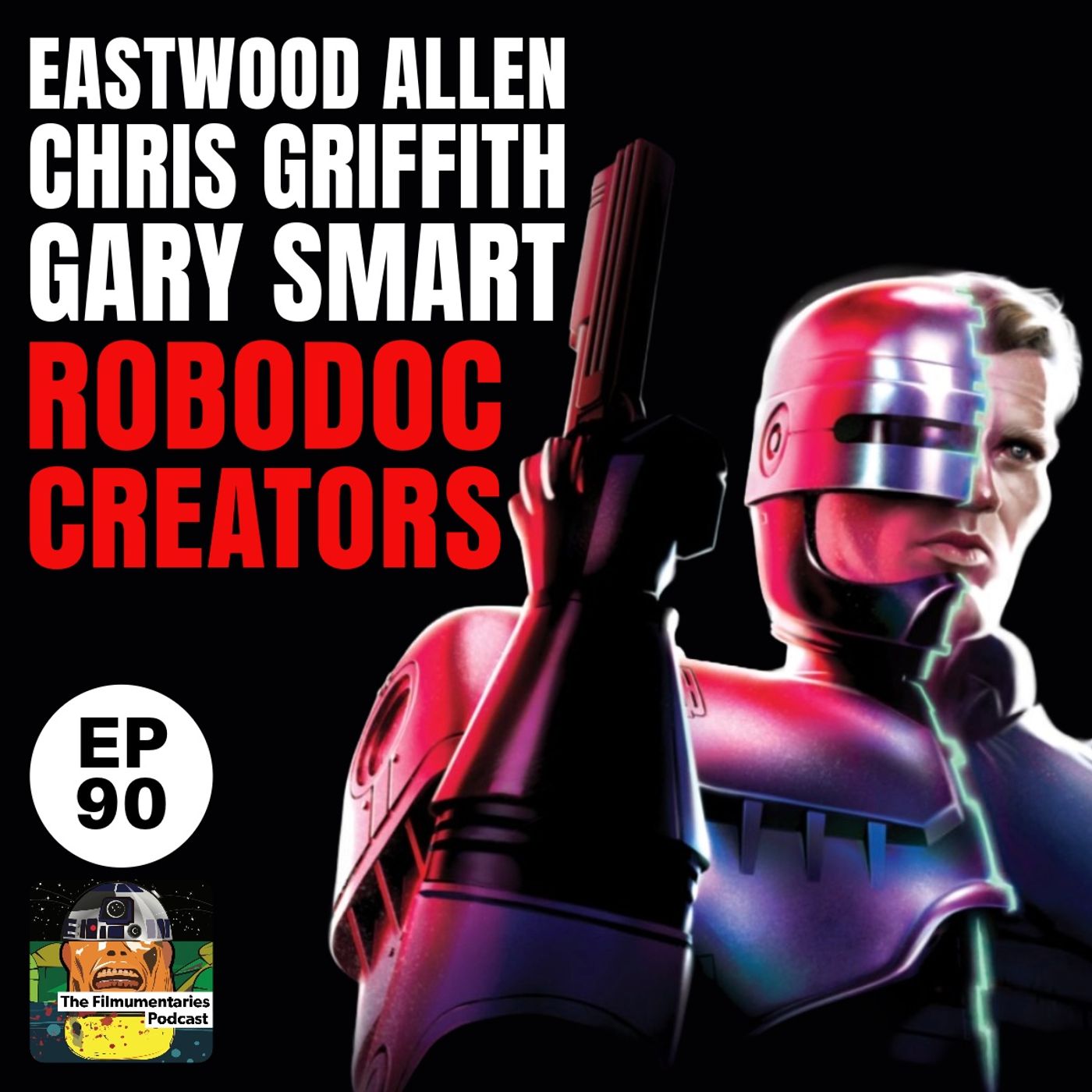
90! - Robodoc - The Creation of Robocop - With Gary Smart, Eastwood Allen and Chris Griffiths
About this episode
The trio talks in-depth about how they transformed their passion project into a widely acclaimed series over several years. They reveal that their journey was far from smooth, battling legal issues, budget constraints, and meeting stringent fair-use criteria, among other challenges. Their tenacity to produce a series that deeply analyses every scene of the cult classic is ultimately what led to the final output.
The documentary features over 100 interviews with cast, writers, producers, special effects designers and countless crew members of the Robocop universe to provide fans with an incredibly detailed and insightful look into this much-loved franchise. The creators finally discuss distribution, the importance of physical media, and their hopes for future projects.
In the meantime “stay out of trouble”...
ROBODOC: The Creation of RoboCop. A 4-part limited series detailing the making of the seminal sci-fi movie, RoboCop (1987)STREAMING NOW:
🇬🇧Prime Video via The Icon Film Channel
🇺🇸Prime Video, Apple TV, Google Play and other VOD via Screambox.
💿 BLU-RAY
🇬🇧 SPECIAL EDITION (REGION B)
🇺🇸 COLLECTOR’S EDITION (REGION A)
All the Filmumentaries links
This podcast is completely independent and made possible by listener support. If you’d like to help me keep making these episodes, you can join my Patreon community here: https://patreon.com/jamiebenning
Watch more on YouTube:
Check out the Filmumentaries YouTube channel for behind-the-scenes clips and extra content: https://youtube.com/filmumentaries
All my links
Transcript
Automatically generated, so expect the odd misheard name.
Weird Ingway Media. Hello and welcome to episode ninety of the Filmmentaries podcast. This is Jamie Benning talking to you on a cold but sunny day here in London, England. It is November the seventeenth, twenty twenty three. Yeah, this is the ninetieth episode.
I can't quite believe it. When I started this a couple of years ago, I thought I might do ten episodes and then kind of that would be it. It'd be a little ten episode thing. Ninety episodes closing in on one hundred. I will get there.
If this is the first time you've listened to the podcast, the remit is all about preserving film history. You can treat this and the eighty nine episodes that came before it as an archive of film history that can be used to listen to for your entertainment, for research for your book or podcast or even essay. You have about an hour of film chat ahead of you, and I hope you enjoy it, and I hope you come back. There's some great episodes that you've missed. If you've only just found it, have a look back at those eighty nine episode There's some real gems in there.
If you're a regular listener. Thanks as always for joining me and for all your support. Thanks to the lovely people that already support the podcast via Patreon that's Patreon forward slash Jamie Benning, I really do need your help to keep this podcast going. It does take up increasingly more time to do because I'm trying to find guests. I'm doing the research, I'm doing the recordings, I'm paying for the infrastructure to do that as well, doing the interviews themselves, traveling to places sometimes to do the interviews.
It is work, work I love, but it's still work. So if you appreciate my work, then I really appreciate your support. And to make this financially viable, i'd reckon I need another thirty five patrons or so. So if you enjoy the podcast as I said, or you buy me a pint or a coffee if we were to meet, please consider supporting the podcast and twelve dollars or your currency equivalent. Good bye a whole year of podcasts, or help support a whole year of podcasts.
That's twenty four episodes, probably more because I do do bonus episodes, as I did last month. There are several tiers to choose from on Patreon with several different perks, including videos and merchandise, and you can find all those details on Patreon dot com forward slash Jamie Benning. You can also support the podcast by buying some clothing adorned with the podcast logo and with some of my film Mementary's posters. In fact, I'm starting a collaboration with my artist friend Pete Starling. You'll recognize his work from some of the posters on my filmingmentary stuff.
Previously, I've ditched Tea Spring because after receiving a couple of examples of the merch I was really appalled at the low quality of the printing on the hoodies and the T shirts. So I've switched to T Mill. So now filmmumentaries dot T Mill. That's T E E. M.
I L L dot com. I've been told they're much better. I'm yet to see a sample, so there are a few designs you can choose from and that will grow thanks to this collaboration I'm doing with my artist friend Pete Starling. I'll leave links for the Patreon and the shop in the show notes. Of course, if you can't support the podcast on either Patreon or on the store, please to share, like subscribe.
Review A review would be really useful. That's a good way of getting it seen by other people, I believe on Apple in particular. This is a very small podcast. It is literally just me and my laptop and my microphone and a guest or guests. You can also support the podcast while I think of it, by heading to Amazon in your region or to Jedi Timeline dot com to buy our amazing book Return of the Jedi the Unauthorized Timeline.
Forget about the unauthorized bit. I mean it is unauthorized, but it's still great. You know. That doesn't mean it's a bad thing, but we just have to say that for legal reasons. It catalogs the entire history of Return the Jedi, from all aspects of production, pre and mid and post production to the toy lines, the video games, the books, or comics.
Check it out. It's a great piece of reference material for you to keep on your shelf there, particularly if you're a podcaster or if you're in the Star Wars space No pun intended, then this is a book for you. The softcover version is actually currently for sale for twenty pounds Amazon or your currency equivalent on your local Amazon site, so please check that out. That's the Return of the Jedi the Unauthorized Timeline. Remember you can find me on Twitter at Jamie swb and my profile on there has a link tree linked to all my various sites, including my Vimeo channel, where you'll find out as a video for free for you to watch on films like Star Wars, The Empire Strikes Back, Return the Jedi, Jaws, Raiders of the Lost Arc.
There's also the YouTube channel where I'm beginning to upload the podcast. Some of them are just audio only, but increasingly there are video versions. If you are a Patreon on the second tier, you do get the video episodes early if I have the time and if I'm able to do a video recording and I get the permission of the interviewee. So do check out the filming Mentor's YouTube channel as well. So for this episode number ninety, I speak to the creators of the new Robodoc series.
It's currently available on streaming here in the UK and on physical media. The UK date is in December twenty two, twenty three. I chat with the directors Chris Griffith and Eastwood Allen, along with the producer Gary Smart. We chat about how the project was conceived and developed, the early kickstarter that they did, I remember that back in twenty seventeen, how they managed to get so many contributor interviews, the deals they've done to get this huge project across the line particularly interesting for those of us that are keen to hear just what it takes to make something like this. I think people don't always realize how difficult this is to do.
These guys, you know, they've done some documentaries before. They're not really in the industry, as you'll find out, some of them have regular day jobs in completely different industries entirely. So here's my conversation with directors Chris and Eastwood and producer Gary and I'll be back at the end for a bit more jabbering on. Excuse me, robof many special message role the kids watching it all, stay out of trouble. Okay, guys, So what was the genesis of this project?
How did it come about? Go on? Gary? Yes, So we'd already done a couple of documentaries. We did a documentary on the Hawre's a series Why the first two films in particular, which obviously we deemed with British films.
Harris of one and how Abound arras of two, and then we moved onto a documentary about Friday Night, Tom Hollins Friday Night from nineteen eighty five, and we also covered a sequel, so we'd gone and filmed that in the States, came that was in post production. Eastwood got in touch and got involved. Then obviously in our editing of that edited the project for us. Chris entited part two, did the motion graphics as well, and we're kind of when we know are about our next project, and then he kind of came up, you know, shall we do robocut? Because Chris was a huge, huge rowber Cup fan, as is Eastwood.
We were kind of told by a few people, no, don't do it. You're never going to be able to do a documentary on that. A book had just come out on the kind of like the legacy per se of the series, which was doing okay. But again we were told by some people not to do it because the book could come out and already loads of already been said about a couple over the previous twenty odd years whatever it was. And then I kind of like we kind of went to when we're in la before we kind of met with Ed Neumaia and Chris Caw about story and kind of he encouraged us to do.
So that's kind of kind of happened. Its kind of simple to a degree. We were told no by somebody, so we said let's do it because we were told no, and that was basically just resistance. Yeah yeah, I mean seven years later we still were doing it. But yes, so, I mean the lads were chip being obviously because they're they're probably know, they're kind of in the backbone of the project, being the super Fans, But that's how it kind of really kind of started.
Originally, I didn't want to cut in then Gary, that's the quickest and most successful I told that story. Enough time, Well done to you, mate. Yeah, I mean, going on what Gary said, you know, with this chance meeting with Ed new Meyer, we were shooting fright night at the time, and I actually had Ed Numeyer, who's no longer on Facebook anymore, but this was at a time when he was still lurking around on there, and I'd noticed how he had, like, you know, some he'd post for photos with some like super fans, you know, in their artwork, you know, certainly in a more candid yeah, candid, I guess setting than against like you know, at conventions, and as ever's the case, Gary always kind of pushes me over the edge in terms of making the decision.
I was like, oh, shall I contact him? You know, I don't know what I'm going to do if I meet him, but you know, just be great to meet him. So he's like, no, go for it, go for it, and so I like, wide eyed fanboy, I went to message him, and then the tone of the message was something like, hey, Ed, we're in town making a documentary on the film, trying to sound professional, do you fancy meeting up? I think I told him as well. It was fright night, and I don't think we heard anything for a couple of days, and then Lowberholds got a message back.
He's like, oh, yeah, let's go out for a meal. I was like, holy shit, So scramble to get any I could find RoboCop. I think I've found the vinyl soundtrack in Amba over there, you know, to get at least that out of him, assigned a piece of work and then Yeah, during the course of the meal, he made the fatal error of saying, oh, you boys should do a documentary on RoboCop, not that that wasn't on our minds already, but as soon as he said that, I was like, well, we've obviously got his permissions, let's just go for it. And then I think one of my first portocolls after that was because we'd already had our relationship, had already started with Eastwards, and I know, we obviously had the mutual love all of us of fright night, and of course it was like, oh, guess who I just met for a meal?
Yeah, and then that's pretty much where that kind of came on then really, so it was a bit of a rush. Really. We were like, you know, doing sort of two things at once and then all right, let's commit ourselves to doing RoboCup. Now. There's nothing quite like being in the middle of a project and deciding to take another one on, I mean one of our other halves.
Think when nuts whenever we do these things, could you just sort of tell me as well, you know, each of you individually, is this your regular daye? Is this what you want to be your regular data? What is it that you do? And are you fans that are just trying to make the best of what you can what you can get? I think we started off ten years ago wanting to be our regular job, and that was ten years ago when me and Christophers first met.
I work in education. I worked cross eight different schools in the Midlands and I've worked education for the last twenty four years. I think it is long time, so twenty three years. Sorry. So yeah, we've always wanted to get into production, you know, and into the industry.
I think when we started doing documentaries, originally we've Levive and we kind of like well wide eyed, thinking that was going to be, you know, We're going to be the the UK's equivalent to like shower Factory and stuff like that, or with red red shirt pictures whatever it was over there. And obviously you know when we did Levivan and Brewster it it was very much low key, under the radar. They now thankfully got successful regards to the studios who owned the rice to those they've embraced them. They haven't sued us, but you know, at the time, it was very low key, under the radar kind of lot, you know, just setting on our website and stuff like that. And then now things are changing for us a little bit now in terms of obviously Robo Dark and the Hollywood Dreams is not mes and penny Wise.
You know we've had three number one Amazon documentaries. When the wardlash of penny Wise, I know we're going to get some stuff for robodoc and for Hollywood Dreams. The things I have started to change now for us, and again I think were talking around about the pandemic kind of screwed everybody for two or three years. He helped us to a degree, probably be obviously we're working from home in our day jobs or for three of us were affected by that. But yeah, so yeah, sorry taking over the lineline, but I'm here education.
I want that. I love education, if anyone's listening, But obviously my ambition needs to obviously get into his full time and bish into TV and film full time. God he so do you haven't had a chance yet, mate? That's good. I kind of like listening to you.
But it's kind of nice. It's better than I've been a little screaming in the background downstairs, and I've got a baby. So I work as a similar to Jimmy. I'm an editor by trade. I work for Channel four currently running their post team up in Yorkshire.
We've got a HQ which is our sort of Digital Arm Channel four, So I run. I think we've we've got twenty two editors and the digital librarians, so that's sort of day my day job. I love this stuff. I don't know all of us on this call does like we've grown up loving Blu rays and special features DVDs and making ours commentaries like all all of that. So I think that's why, Yeah, we absolutely love it.
And if we could pick a job, it'd probably be working in that full time, getting paid an absolute whack of money, wedge of money. It's just the thing is now we're sort of like running out of films that have never been touched and the newer things, I know, you look at sort of like the mandaloriin and how that's leading into obviously the led volume and the Practical and that's super fascinating. But a lot of other films outside of sort of ILM if you like, and Star Wars, it's very much people, you know, putting together on a computer. Like if we were to do sort of a documentary on it, it'd just be like filming a load of geeks. You know, what renders and what render farm they used, and what three D model ad system and It's just like, would that be as interesting as you know, a maniacal director screaming at somebody walking around in a rubber suit.
Probably not. Maybe in a quarter of a century or so, you know, there'll be enough sort of nostalgia built up for those and the stories will start to emerge. Who knows. It's a bit too long to wait though for your next project. And Chris, what do you do for a living?
I do video still. Unfortunately now I shouldn't say you remember what you said the father. Now, I've been working probably for the last ten or so years now in corporate videography, which I've got to be honest, has its own sort of challenges and hurdles and is you know, quite entertaining. I'm trying to do my best to drift as much filmic material into that job now as much as I can. But like the others have said, you know, we've well actually we've been doing this for about ten years now, so it all kind of happened once.
And I think, like you know, Gary, and I think all of us, you know, per project, You're like, this is the one that's going to get us into it, this is the one, and here we are now, like a decade later, and like at times when when I'm feeling high as a kite, I'm feeling like, Wow, we've done it. We've covered those films we love, we've met those people we love, We've got the final word on all these films. And then at other times I think to myself, when it comes to kind of like the financial and progression in life, it kind of feels a bit like I've just been doing a giant show real for ten years. You know, no one's auctionally grabbed me. But now, I mean, we've been very I think lucky.
It's been a bit of an achilles heel, I think having day jobs, and that it definitely is reflective of, like, you know, the time it takes to get these things done, to which I always say, to be honest, if we weren't going to do these who would I'll certainly go to the level that we've gone. Yeah, it is taking fans, isn't it to come out with these projects at the moment. You know, I'm working on my own documentary at the moment, and you know, realizing that I've bitten off more than I can chew in terms of the time it's going to take because I was just saying, you know, before your other guys started, Gary and I were just chatting that, you know, I'm still recovering from the COVID year when my work dried up for four months, you know, and I probably lost a third of my income that year.
And this is the thing is is these are hobbies, but we're also doing these and you're doing these things so really good professional standard. Yeah, you wouldn't guess it was a bunch of guys that don't do this full time. But that's a frustrating thing for what we've seen recently. I mean, you be reading like some reviews should have been amazing reviews of Rebeluck have been, but they always put like, you know, this is really good for fans. It's like we are fans, but hopefully alls bringing a specialism to these projects and expertise.
It's not just like you know, Bobby sitting in his bedroom in his pants watching a film and liking him and going on, you know, fineal cut and making some big we're actually putting all those of work into this. And I think, like you just said, don't know, we were Adobe Software, but it's kind of like I've think that fandom kind of like is a catch twenty two a little bit because I think people think when you say it's a fan made project, but it's just a bunch of Nope, say nobody's a really horrible thing to say, a bunch of people, just huan professionals who are trying to club together at a little kind of documentary with a few talking heads and a few clips, you know, best star of kind of like you know, MTV special.
But we hope obviously that because we we I think all three of us definitely are a fishonado of a film in all different types of film. We kind of understand hopefully of what we're doing, and also we try and get the best stories out. It's not just a fluff piece. Three. It's not just about it wasn't his film great.
It's about the least would have obviously very far with regards to his editing. You know, it's about really getting you know, inside the filmmaker's mine. He's obviously getting into the editors. It's getting into the sad people and how the films may. He's not just about we made a great film twenty five years ago, aren't we amazing?
And I think it's kind of we're hoping to move away from being called a fan made project to a corks Greening's project. And he's kind of like, it's well, Catch twenty two because we are fans. Yeah. Because the thing is, there are professional programs and I won't name it, but you'll probably guess it. There are professional shows out there that do feel like fan shows in the way that they treat these movies.
You know, I think you guys have taken the film and you've given it, you know, the full amount of love and attention that it deserves. It's one of those classic films that you know, I've always been aware of. I loved it as a as a kid. I was scared of it for many years. It's you know, it's a super violent film, but great to see, you know, you taking your time to tell the story.
When did that become apparent that you weren't going to be making like a traditional ninety minute documentary and it was going to be a multi part series in a gradual evolution, I would say, because I'm talking about this relentlessly at the moment to people you know and work and when trying to explain how things came along, I think it kind of happened organically. To be honest, we weren't going to do you know, as Eastwood said, I think you were saying as well, Jami, like there's been stuff on RoboCop before. We know that, and primarily what we try and do is look for gaps in the market, which we did with Penny Wise because that never had a retrospective, you know before or even like featurettes with RoboCop.
We as super fans, we knew going in. There's that buzzworth again, isn't it super fans we knew going in though they'd been like the you know, Criterion edition, the trilogy box set in the early two thousands, and then the Anniversary edition, so they'd been coverage of RoboCop, but much I think the initial format was going to be somewhere like we knew it'd be about two hours, and it would follow the traditional making off of pre production production, post production legacy. And then really how I say it's organic, I think it's just a testament to how everyone had their part in making that happen, of turning what was a documentary into a monster, starting with you know, Gary and our other producer Mike Perez.
You know, we start off with about sixteen confirmed interviews at the start of the documentary. By the time we came back from our initial production, we had about sixty four people record, so it's like, oh, that's a little bit more the questions that were laid out as well, you know, with everyone we got, it was obviously you know, especially if they're scene specific, like well, we'll talk all about that scene. And then I think it was then it moves on to Eastwood really with the edit and he's so, I'm gonna let you take over on this, but because you explain it a lot better than I do. But I think that was the final moment where I was like, oh shit, this is it. Yeah, I think.
And by the way, that's like sixty four people from the first movie. We interviewed people from the sequels. I counted the other day because somebody asked at where by past, said how many did you if you're altogether in three weeks, it was like one hundred and four people for the three from three movies, with some people from the TV shows and there's some of the guys got people outsourced, and I know Gary and Chris met with the cinematographer in Munich, so we ended up we've got like one hundred and six hundred and seven people in total, probably be off of your expenditures on storage. Then presumably hard drives. I've constantly like invoicing Gary for hard drives.
But yeah, we again once we got everything in the count, it was memory cars and hard drives, and I was I had those backpacked sat all my lap pretty much on the flights, I think. So I was so scared that, you know, we packed everything up but everything was here, so again back and then transcribing everything, but transcribing everything in a way where it wasn't worth for word because I we would still be doing it now. It was, you know, just going through and getting bullet point statements. You'll be used to this sort of Jamie as well breaking it down. So then I'd create bins in Premiere so where where exclusively Adobe, so Premiere after effects audition.
We used some sort of like Topaz Labs as well for some of upscaling, some of the upresident some of the stock and things like that. But yeah, it was throwing it all in the edit, organizing it by BINS. I did a folder which was chapters, which was every scene of the film in linear order, and then I did the folder, which was topics, so it would be you know, Paul well Oven's antics, or it would be the suit, or it be the sound effects, or it would be you know, the bitches. It would be like just just things that were just sort of more generally sort of fit anywhere in the dot. And then just getting on the phone with these guys and going, look, we can do something here that's not being done, which is covering every single seed in detail with exclusive interviews from those people that are in every single seed, and have it run.
You know, it's not the film with commentary, but it's it's the film that breaks in and out and it goes off on tangents, and we can do something it. It's going to take a lot longer, and I know it took me a while to convince. I think Chris was just like, whatever we Chris is happy for. The more Robo, the better he looked. We all love it.
Gary was like, how long is this going to take? He would and two decades and then COVID happened and that gave me a lot of time to sort of whidl it down and I actually enjoyed Lockdown for that reason being able to just sort of get you know, sit in something, yeah, and not have any excuse to go out and not think I was missing out on anything. So yeah, I think, And then what was it back end of twenty twenty or early twenty twenty one, I got the guys around the house and we watched it and I sort of said, does it work as this sort of in commentary and they were just like yeah, And that was like good because there was a lot of effort that's gone into that. But yeah, we we covered all bases. We had so much archive given to us too.
John Davis and the original producer shipped out archives, documents, tapes, literally VHS tapes that we had deised, stuff that nobody had seen. So I think, as Chris had mentioned before, we knew that there were RoboCop documentaries and we love those dogs. We grew up watching them, you know, we knew him word for word, We watched them that often. But we knew that there was sort of especially with like the RoboCop archive and other fan sites or other sort of commenters out there, we knew that there's something missing. We knew that he was a bit of a tyrant.
Albert was Behoven and everybody said that it was difficult, but in those epks, in those docks, it alludes to sort of the suit and the temperature and the heat in Dallas. And we know that he was a demanding director, but we knew this there's something, there's something that especially when you hear about how he was sort of follow it films the follow up, so we knew going into something's going to come out here. And I think we've put it all in the documentary. But that's that's what's been great for us is so many like super fans again our thrown in Chris, have been sort of coming out towards saying I didn't know that and I followed robot coops since you know, where did you find this stuff? Yeah?
Where did we get all that from? Where did we get it all from? It? So we were we were so grateful. It was just you know, for people to be patient and we understand it's taking a long bloody time on this and what the Kickstarter and the backers sort of thought they were getting, it's not like that at all, Like it's four times bigger.
We've got the sequels as well to cover still, So yeah, but with a project like this, it would seem so much a lesser film if you didn't have, you know, that certain Interviewee, how difficult was it to find everybody and convince them to be a part of it? And did you go for the approach of trying to get the big names first for Hoven and well of first or did you leave that till later or how did that come about? I think we went to the Higgman's first, didn't we? I know, we had the home and early on didn't we Garret? Because yeah, you secured home.
And so we had John Davison, the head, the main producer, the guy who owned fifty percent of the movie. He was crucial, Mike Minor and Ed new Maier, the two co writers slash co creators if you like. And then I know the Hooven was on early, board was on early. Nancy wasn't there? She took it at a convincing Nancy did.
Yeah, the Hoven was surprisingly on What early is? He said? Probably by the first he said, the probably the fourth person to come on board. And then Nancy took a little bit of persuading again, I think for the production, wasn't she because I think, yeah, we arrived in the States. I say, we initially had sixteen to interview, but I think actually when we actually sat down, when we know landed like, okay, we're here to go.
Who've we got confirmed? Then? Guys, is like one, two, three years, four, five, six. The progression was very slow to start with on this. Yeah, I think sometimes like you got like with Nancy, I think, give a lot we're to do with management, you know east least where she went.
We had the project we've done before was successful, but very independently successful. Also, we didn't really have a background really all kind of it. We were looking with Frday Night because Tom Holland new Clive Barker, and obviously then once Tom Holland was on board, everybody came on board. For that, it wasn't so much the case we foot by having ed that Edboardy would come on board. He'd got quite a few people for us, but had said, you know, once these projects start, you know, rolling, it is a snowball.
People start coming on board then. But obviously, you know, the big one was well it was five years to come on board. Well, I mean it was literally you know, stressful trying to get Weather on board and convincing him. We ignoredly thought we would be able. I mean for years we had edits where he wasn't involved.
And that's not from having tried, you know, everyone trying. But it's amazing now looking at it and the amount of comments we get, going, oh my god, Peter Weller is amazing and this and all that, and just I keep thinking that to myself, like just what two years ago, three years ago, it's like, yeah, we don't need him now, you know, if he doesn't want to play ball, then fine we won't. We won't have him. We'll we'll use this archive. And now part we just going fucking idiots.
How the hell do you think that now? You convince yourself, don't. It's like a lot of things. I think we all convinced ourselves we didn't need him because we couldn't get him. And I think we you know, we'd all tried.
You know, even we've gone through Nancy, gone through, We've gone for Random Moore, We've gone through you know, every actor we we could find who knew him. We'd gone through. I'd trapp him down in Germany conventions, been to the people there. I'd be speaking to him directly on email for three years. He was always courteous and polite to me, always said no, people are at people shows when you're doing Q and a's and they're asking him on the stage, and he was basic saying no to them.
Yeah, So it kind of I think we'd given up, but we convinced ourselves. And then something happened, which I'm sure he's put in Crystal Tabas story where it kind of we thought ship, we've got him again, and that we were close again and getting him. It was kind of it's actually you tried his manager as well in the in the Burbank studio Rember, Yeah, you're super nervous, wanted to speak to the director and you offered seven dollars did he offered seven hundred dollars holiday money? That right was initially he does he's done talking about robocops, so we had to respect that. And then after three four years he started popping up in KFES commercials and was doing voiceovers and I know that Gary was sort of like, he's doing stuff, so I can't be sick of doing RoboCop.
And then what happened is we were back home, we'd we had an assembly, we've had archive of Weller in there exclusive archive that nobody had seemed. But again, if we'd if that would have gone out now, it wouldn't it been half the film that it is with Weller in it properly. And there was a sci fi convention coming up in Manchester for the Love of sci Fi. We reached out to them and said, look, I'd love to showcase something for RoboCop. We know that Peter Weller as a guest.
Could we tie something in And we're just trying to be cheeky really, just so we could have some sort of like backstage access so that we could sort of collar him and say, look, a massive fans, we want to get you involved. You've got to trust us. And what happened is they said, do you and Chris want to do I want to want to do the Q and A live on stage, and we're like absolutely, So we thought we would get there meet him do the Q and A. We got there early because we're professional. Well it turned up five minutes late, came up, shook our hands, We walked on stage with him and Chris and I like Chris did the majority of the questions, but we would not introduce who we were and then it was he went fine, he won't find he was super boisterous.
Chris asked probably one question or three questions. I asked one, and then the full hour was just covered by well to talk because he just he just talks. He could talk. He goes yeah, vibe about him asn't he and he'll go on tangents and you're like, oh, well the stages yours make knock yourself out, leave you to it. But that was that, Just that in itself was amazing the fact that we got to meet him and got to do a robot Q and A, and then afterwards, I know the boys were content and sort of happy that we'd done that, and I sort of said, I'm gonna I'm going to go introduce herself and nobodys to knowing our sort of like boisous that can be.
We're a bit nervous to say experience. He's going, he's going no, no, no, he's running away, getting back, getting back. And I walked off and said, you know Dr Weller because he's a doctor and he likes peak called doctor Dr Weller. I wanted to get him on my side. We're we're you know, Colled Green's Dead Mouse we're the guys putting the robodoc together.
And he sort of like looked at us sternly, gave us that sort of like you know Rowercop look and said you would you weren't filming that way, yeah, And I sort of like, oh, no, no, no, we would, We'd never, we'd never do that. We wanted to introduce ourselves. But the fact that you know, we were running late, you were running late. We couldn't introduce herself. And he was like, look, boys, get to get me in this documentary.
I think because he knew that Chris and I we know, we know our stuff when we come to it and we're not there like just drawling over him. We do it in the back, you know, we do we do it off camera in the back. But like, we were never doing that. We were professionally. We asked questions that he wasn't used to, and I think he sort of knew that that was sort of part of our makeup.
And when I know the day after Chris, Chris went and approached him because he was there for two days and he gave you his manager's information. Didn't wish I think Gary might have already had. But the fact that there was exchange and he put a face to a name, and then it was over to Gary then to sort of to sort of get getting bogged in, and yeah, there were negotiations involved with that. Amazing, amazing just to be able to get in front of him, and then everything switches around. Because I imagine for people like Peter, you know, and other stars that have been in these big movies, there's probably for every twenty times somebody approaches them to do a documentary interview, maybe one of those or not even one of those is finished, let alone successful.
I think it's a real testament to you guys to have worked for this long. I think I remember first seeing it mentioned when you had your Kickstarter running and your intention was to release it in twenty seventeen. Yeah, and you raise like hashtag two seventeen, that's yeah, and you raised like thirty odd grand. I mean, did you realize at that point that you, you know, bitten off more than you could chew for that? You know?
And I think when the bill came in at about two hundred and fifty grand, we kind of realized that, you know, but he's kind of artists what you see in front of you now, we only raise thirty and we actually had to make two hundred and fifty. So I think we kind of realized that this thing was a beast. But as lads will say, when he started evolving and developing it, you came became a monster. And he did. And I remember like when we was doing the outsource and the interviews and it was like we'd already done the main shoot and I was and I was getting invoices for like a dop in La, a dop in New York, and I'm thinking, ship, you know, where's this money coming from?
But again I remember like Eastwood message me, going we found so and so who lives in New York? We found and going fucking hell, really, okay, just one more that's going more goes back to that kind of organic nature I was saying about it grown as well, you know, like chicken eggs. Like we got in depth questions, we got a wide array of cast We've got what Eastwards put down on the edit. And I think that's where kind of like when you knew when you had an inkling, It's like and this could almost be as definitive as it possibly can, like every seat covered. That kind of that's where that sort of the outsources stem from, apart from some crucial into he was like kurtwood Smith for example, who you know, you're not going to have a Rubercop documentary without Clarence Potaker there.
But when we started going like, oh we got that guy and oh we got that gal, you know, like cops or something like that, you know, it was because we knew what it was turning into. So it was like it just evolved it. So it's like, well, we've got to get everyone, you know possible, And I think we tried to sort of go and covering some ground that we had attempted first time rounds, like you know, your your rob botines and whatnot. Oh yeah, I think I think it's cliche to say everything happens for a reason, and it's really corny. But you know, if we we didn't, if it didn't evolve weight it did, and we didn't have obviously all the issues that we had and all the arguments and the stress, we would have released it five six years ago.
He would have been one hundred mege documentary. He would have gone under the radar. Independently, we've been on a couple of Blu rays now sitting on the shower for ourn eBay of a couple of quid and most of our stuff we used to happen to but that would have been here, you would have disappeared and we would have been, you know, talking about something completely different. Now, the fat base took so long. The project has evolved, and you know, we managed to get a deal screen Bucks and we and she could have four hours, which no one ever believes were going a four hour series.
No one did. I remember when Eastward first had four hours, and I remember I remember exactly where I was at the times in one of my schools, in the caretaker's house which is now a behavior unit, and I was on the phone going, this fucking guy's nuts and we're not try to argue with Eastward and an Indian's giving in going I'll try. I'll speak to Lawrence, who's our sales agent. And then it kind of just that if we were just given up and has gone along with it and actually bowed to the pressure, we would getting enough people, especially the Kickstart people, and you know they're playing where they were right to be annoyed, but they were giving us a lot of pressure and quite a lot of abuse. Some people given us if we would have bad adds that he would have been released and just done.
I'm kind of glad now, even though he's taken all this time that it's it's the best week that we could have done. It an amazing work by Eastward, obviously direction by Chris as well as Eastwood. You know, it's it's a masterpiece Rey, and that's not being egotistical. It just is. And it's the best sping you're ever going to see on robot Coop ever.
Yeah, amazing to have that final word, guys, I mean, as fans and filmmakers, to have that final word on such an important film, I mean, fantastic people. They must realize, but they never they never vocalized it. We could have made a life so much easier for ourselves, particularly for Garry, if we'd have just gone right one hundred minutes. We've all got day jobs. We were juggling other things too, Like I had to edit the Frida Night documentary before I jumped on RoboCop.
These guys were off doing penny Wise, they did the Robert England documentary. There are other things. We've all got full time jobs, and it's like and we wanted to get a trailer out for twenty seventeen. Would it be the thirtieth we put a trailer out. He sort of went viral on Twitter and we had like Elijah Wood and leew and l and Neil Blombcamp like tweeting it and sharing it and comment on it.
And it was like shit, And that's that's when the clock was like, shit, we shouldn't have really put the trailer out. That trailer, Jamie's I'm sure you'll know I manufactured that out of raw interviews there was. It wasn't me pulling from the documentary to stick in a trailer. So I think people watched it and was like, it's nearly done and it covers all three films. That's what we We sort of shot ourselves in the foot boar.
We wanted to get something out, if not for ourselves but for the interviewees that had put give us time and effort. We wanted to say, yeah, for the thirtieth we're going to get your faces in the trailer. We're going to put something together. We didn't realize then that everybody was going to be banging on our door for the next six seven years. It's kind of like a glorified siss or real that initial trailer when you really luck at it now, like who what you know you don't go to a cinema off and and see a six minute long trailer.
I mean reason, it's got a point. Obviously, Yeah, it did probably start the clock ticking, but actually retrospectively thinking about it, and especially in regards to you know, the existence that we've actually covered two and three as well, at least it showcases like, look, this is a thing, this is what we've got. And yet ironically we still have people call and as Gary said, can't It's like, oh, you just took the money and run and you just want to be like yeah. People don't appreciate the complexity, not only the complexity of actually just going and shooting one hundred interviews and editing it together, but the back end of it, you know, the logistics of all of that, the time that it takes to contact people, the finance that we did because had been done under the radar before, and we were very lucky, so so lucky.
Before again his testament to the engine skills of these lads, where you know, in the use of footage that we kind of probably did fair use by not doing fair use you know, in a degree on the previous projects. Once we started going to legit guard, he was a nightmare. He was just having to have legal involved and having fair use lawyers and insurances and and q C. I mean he was like, I remember, like we were being lucky. We've had obviously a postrics team has been brilliant, but you know, getting all these like spec sheets in what we had to do and these contract was a contract.
It's like and then we have to get contrast to each other. It's like I'm going to meet with friends and suddenly I'm issue in east with the contract he has to sign and we can't what what what's happening there? Yeah, but you say with sorry, you're in somebody else's hands with that as well. It's it's when it comes to like lawyers and you know legal firms, you're on their dime. So yeah, you waiting for them, and the amount of times we were just sat waiting and just sort of having to remind them to say can we get that can we get that fair use assessment delivery so that we can Q see it so that I can do the other three episode.
And you just wait and they're just off on a jolly, probably having a nice holiday with all the cash that they're earning. RESTful because what people don't realize as well, I don't think, you know, with a fair use route, it's not just a matter of saying, oh, we're not going to do this through the studio officially, we're gonna we're gonna meet a certain number of criteria which we define. You still have to pay for the lawyers, like a minimum five grand or whatever to look at something, and it has to be like bullet pointed and listed out, and how many frames you're using, and whether you're using audio with it, and and sort of proving that you need to use that clip there and you're not using it as filler.
I mean, that's that's the thing is it's amazing that you've managed to get this together and it's entertaining, It tells a great story, and it looks and sounds great as well. You know, you've managed to do all those things. I think penny Wise for us was the learning curve because I mean, christ to work petty wise today. But that was a learning curve for fair use because we went we chose the wrong lawyer, but he chose the lawyer that wrote the well rights the fair Use policy in the US, so they were strict, and may they were proper strict. So I mean, you couldn't even do it kind of you should show a five second clip without them ripping into us.
But because we learned from that, I think when and we obviously chatted with Eastwood a bay and obviously he should store obviously the sheets we had to do for that, and obviously documents crocept to do. And I think Chris and Eastwood, I know, for years of was really conscious. We had many conversations about fair use and he was really worried about her. We all were, particularly with MGM particularly they'd already been kind of in contact with us. We had a few emails and messages from them over the years when we're thinking, shit, we're going to be done here.
I think when when he went to fair Use and the big Eastwood up now for a change, But when the results came through, I was gobsmat because I know, I'm penny wise, it was a different lawyer. It was thousands of his shoes. That's not that's not inflection on Chris and Chris's crap edy. We have about fifteen hundred entries for penny wise Excel spreadsheet, and we had somewhere in the region of like I don't know, forty eight maybe even seventy two hours deadline for the Citrus Film Festival, and we'd been it had been like evenings working on that, you know, in a twenty four hours No, the twenty four hours didn't didn't happen at that point. And then so you know, thinking, right, it's off to pasture.
We'll probably get some notes from the lawyers. It'll come back in all. All's well, you know, great, And then like there was this like emergency call between Gary and some of the producers like Hank and Lawrence, the you know, working on distribution and sales and the guys. Have you have you seen this document that's come back? And I'm like no.
And so I was looking at this Excel spreadsheet on my phone outside of cinema, ready to go in. I was really looking forward to go to the cinema. It's probably some crap I was going to see. I look at this document and basically they mark up on this spreadsheet of fifteen hundred entries of photos, videos and gone as what about sixty percent of that document was flagged red, like you can't even adjust it. It's just you can't use it.
So as everyone's going into a mountdown, I was like, no, I can save the day. This is going to happen. We're going to make that deadline, which we did not without a few cracked eggs. And yeah, that was pretty traumatic. That was probably like a good twenty four hour stint on that one to get of a line.
And I wouldn't to be honest, I don't think that project was necessarily compromised. I think there might have been a feeling at the time like wow, we've lost all this stuff now kind of like pushed us into a certainly pushed me into a corner to sort of think outside the box and oh what does Eastwood do with oh yeah, old the TV screens and all this, so kind of like I worked from Eastwoods kind of stuff, like well, actually, you know, we'll do stuff like this. So I'm kind of quite glad how it turned out. But that's my anxiety was going through the roof at that point when I thought, oh, I know how robodoc works, and if we're going to go through this again and it's exponentially longer, and the fact it is we're on a scene by scene basis and you need it all there for context.
God knows what that's going to be like. But fortunately we had a change of lawyers. That's pretty much straight after penny Wise, I think was that. But also I think, you know, again credit that he sort of thing the research he had done in Fair Youth. I remember being Eastward's house watching that first cut in the memberssay there of Adam going that's fair, use, that's fair and that we only another one where we watched you online.
I think he would set up a thing for a song. We watched it, and I remember sitting there going, that's seven seconds, that's okay, that's context, that's there. I think we all got so kind of like adjusted to that. And again when that first sheet came through, I was crapped myself and it was it was mainly okay, it wasn't Eastwood and it was Tweaks. Wasn't that, And I think we were.
It took time, but we were lucky considering your math stuff in there. And again I think may maybe it's the nature to project because he is a scene by scene dissection and it is narrative content. He's not this huge and stuff just for the sake of it. He's actually analyzing a scene. That's fair.
She has educational so that. But again people adding people really going back to original point, people don't understand the complexity of making a project, particularly now, and I think what's happened These projects have been released on kickstarters of the last few years, which have raised two hundred thousand pounds two hundred and fifty grand. Amazing for them, it's absolutely brilliant. They have money to do what you want with it really and putting favors and we would do it for thirty three grand and it's cost us two hundred and fifty that's just on one I mean pennywise, there was one hundred and fifty grand. It costs me raised again, think thirty grand on that that.
People don't understand that as well. And kind of one day I think we'll do a documentary on kickstarters and they never do them again. Yeah, yeah, yeah, it's a shame because I think there are a great source kickstarter campaigns Indigo Gos. I think when they originally set up, the whole point of them was for fans to support a project to be made the problem what happened with Kickstarter and Indiegogo was the rewards being the physical rewards. Yes, I remember we with Leviphon.
We did do physical reward of Leviaphone at first, and we raised a little bit of money. If we're about, you know, get a thanking the documentary, get a post. But as soon as you start doing the Blu ray, there's an expectations. It's a it's a pre sales, pre order site. Again, but every people realize that twenty quid you's given us, how about twenty quid eighteen quid's gone into the production of the actual doc seven seven years ago.
So we've got to then find that money then and also now to does she post them? That's our fault, that's not a person's who's pledging. But again I think the world of crowdfund has completely changed, where whereas it's become a shop. And then that's why, that's that's the battle we have. We're not we're not Amazon, we're not you know HHMV.
You know, we're a production company independent and this was self funded really well. The other one hundred and twenty grand was self two hundred and twenty grand came from our previous projects basically what happened in terms of distribution then did that come very late on in the project or was there you don't have to give me details that was there a pre sale to finish the project? Or y? So our previous projects are quite simple, really, was you make one, you raise the money, you make one, you put it on pre order on the website, and then the money you make from the pre order you pay for the post production and the production of the blue rays, and then anybod any profits going to the next project, and you raise some money on Kickstart and that will flow twice.
It did work twice, sad did. And then when we came to that delay we had between Brewster and the other projects obviously was penny Wise the Dreams and RoboCop. We're kind of really we needed we needed money and we need to go legit to a degree and we I had a friend, a couple of friends, Chris is Out and obviously Eastwood called the Buenos and they were working with Eastwood on It Goes for a documentary. But they had got a distribution deal basically, or a sales agent got involved and a post production producer called Hank Stars and Lawrence Gorn gone gone out from unannounced films, and then they messaged me and said, oh, you need to really meet these guys are going to be good for you enough. Oh yeah, bullshit.
It's the usual kind of like sale And they phoned me and I was trying to sale for Brewster and he's already been released. You know. It was really kind of low. And then the end that was, you know, I kind of I kind of went with them on the projects. So listen, we'll give you penny Wise and we'll give you Robodoc.
The whole dream was just in production, see what he can do. And they started obviously then, you know, working their magic, and it took some time. Penny Wise particularly was a hard one to sell. Penny Wise, and it gains strange because how successful the remake was. But the original back then wasn't.
Of course, it was popular, but there wasn't the action figures and masks. Now suddenly Team Curri's penny Wise has become really iconic again. You know. Ever you look in H and V, Pace love that and toy stores, it's that figure. But when we're doing Pennywise, it wasn't that.
It was the remake. It overshadowed him. So it's a really hard sell. But the kind of formula we do now is is that obviously we've got the product virtually done in terms of the edit, and obviously the motion graphics and the scoring and stuff like that, and then the post production deals that we get then that pays for all the kind of legal stuff for legals, any dishal sports they say, go on rubber cut, that Eastwood needed, the QC, the assurances, and you know that that substantial amount of money disappears really quick because we have to meet certain criteria for the release, and like releasing ourselves on Blu Ray, we have to meet certain specs which cost money. You know, we have to go to a QC, we have to go to professional post houses.
So we were lucky to get involved with screen Box. You know, we did our first one with them on penny Wise, hard sale, real difficult, and they came on board for that. They were very keen on physical releases, and all three of us love physical so the fact they did the physical map was a real kind of big thing for us. Ended the vhs of it as wear, which are strange, and then when they did Hollywood Dream, we had a bidding more Hollywood Dreams too. Should That?
Well, I say, don't, yeah, I don't care. We had a bid all between should That and screen Box and it was it was really kind of getting intense. And one day I was having a lot of mes who should that? And they were telling what they're going to do with it, added and promote it, and actually, you know, I'll be quite honest, I don't mind this going out. Should It offered more money than screen Box, but I remember having this comptation of certainly sorry visa with Chris, Christ and Adam.
Yeah, I forget their names, and I'm kind of Christ and Adam about the money difference, and it was quite to find some amount of many difference for me, and I think with the lads events. Yeah, it was we fell our home with pet with with screen Box because I think they was so passionate about releasing these things as kind of cult classics and physical media and the promotion they were doing. So we went with them partly with Dreams and we got a good deal. You know, that's fair enough, and they jumped at RoboCop. It was just, you know, I was surprised because if they were a horror channel and they wanted four hours, you know, and I was really worried because I remember saying to Eastwood, you have to do four hours.
It's an hour. Episode has to be four and then typically Eastwood one at one episode an hour and twenty one an hour at eight. I was thinking of you little shit, and I was thinking that they're going to screw us. Some contrasts specific. Basically what happened is the sales agents had put pressure on Gary, and Gary's don't want us to face the front of this, and so we wanted no more than two hours.
I've said, he can't work. It's a scene by scene analysis. The film's nearly two hours. It was we're gonna watch it's gonna sound like chipmunks a double speed if we do that. And then Gary said.
Gary went to them and said it's going to be four hours. And then I've basically gone, well, it's four four thirty five, really four hours. I would always pushing. I never told him that bit I can, I can slip in if we can come into four hours, I will just get it by with an hour, ten hour, twenty and we did. No one even knew until Bill got delivered and then screenwoks were not for us, they six hours if they couldn't.
But I think it was the beauty of streaming because originally when we were first talking to people, it was going to be with HBO Max. People are that it was going to be a channel, and I think that was the concern. If it's going on a channel, it has to be can't be any more than an hour forty eight minutes where if you want to call it, because obviously it's a channel and it's a slotted obviously time. Yes, yeah, sorry, Christia. When he went to streaming, I think we had more flexibility and we we hadn't because as Chris He's said, it was really weird because the key number always was one hundred minutes and all of our projects because penny wise, we would add, it's going to be longer.
And actually it worked out better for us being one hundred minutes on penny wise, because you would have got to you would have got there had been too much in terms of like it wasn't ask as depth would would be, it would have been. Yeah, And I think you know, we kind of we we stopped one hundred minutes on that we kind of squeezed over with Hollywood Dreams because we had to because Rober's christ fifty years. There's no way we could have done it less. But yeah, so we've been extremely looking for screen Box. You know, I didn't me you know, around with with Lawrence talking about obviously future projects and he's in Cans at the moment and just about our next stage.
We want with screen Box used to be an exclusive for screen Box, whereas we were, don't want to do Kickstars again. We want to be working with them for exclusives. Quite happy to do that. Similar but if if they are without being big headed, when when screen Books started, they it was quite small, you know, they had the massive success with Terrifier, but we've been now being told that their two biggest kind of light assets are Colt screenings and Terrifier. You know.
So that's great for us because we've got some kind of like you know, you know, for the first time ever, we've got some credibility other than just people like our moms and dad sayds a great documentary, our mates saying it. We've actually got credible and you know, you've seen yourself people have you know, the the response to the last three projects, particularly Robot Dark and Hardly Wood Dreams you know, internationally has been unbelievable in regards to especially promotion and gods and regards pr that's give us some credibility that so so we can now start going we want to do this, this is how we want to do it. So yeah, I mean I'm much of an answered your question at all then, No, it did, Yeah, absolutely, yeah, Well this isn't even a podcast.
I'm just asking you these questions for my own information. Ye. Well, yes, yeah, yeah. We we've been really lucky and you know, I think it's given us some freedom as well. Screen Bucks have I can't fang them more, you know, and you know when you look at what they're released in regards to wal Mart excluency for the steel book for for Robo Dark, we've done the steel book for Hollywood Dreams and Nightmares.
We got Clydescope over in the UK doing it as well, you know, in the beautiful release. I know that East has been working with Clyudescape on the sleeves we had. We've had input on that as well. With Pennywise. We don't have any input reading on penny Wise because our first one we've grown a pair of boots now as East was always telling me to do many years ago, and where we're actually saying I actually no, no, I'm a happy that cover.
I don't want it to be and we've actually been able to shape that now. So I know Chris has been supporting on them as well. I know they last week Clyudoscope. Again, it's nothing major, but they sent us a sleeve and then East would change the whole fucking lot and they went, yeah, thank you. They've had a design of doing that for it's changed it.
But that I'm always playing the bad cup. I'm always that dick on the other end going we can do it better. Yeah, we wanted we want it in green. That's your one green, just just switch the hubitt be fine, and yes, but that but that we've had that freedom, I think because we've evolved as filmmakers that we've got the confidence probably now and particularly enough I feel I have in terms of saying something not happy of that. We want to do something different, you know, and I hope that would evolve.
You know, we won't get too cocky. You know, we want the best project because we know as fans ship as professionals, but as you know, we what what we what would we buy? What would we want? And you know, and it's I remember going like, you know, we've all done it. I know we have we to H and V in the very rare Hatred exist and seeing Pennywise on the shelf just just just nice.
See our stuff there on the shelf. Now, I mean we did even before obviously, Bruce that when you pull out the Eureka copy of Friday Night and there's our name at the back, you know, all the blu rays of other RoboCop and our names on a map for the commentaries, because the three of us do commentaries for all three films again, which is a strange experience considering, you know, we were in the radar at that stage. So yeah, it's just nice, you know, and I think hopeful that our relationship will just grow and grow with screen bunks. I was going to say, it must be so satisfying to have the sort of physical artifact there, because it's one thing to be on streaming and to be on the front page. I mean, it's on Amazon Prime at the moment where I've seen it, and you know, it's great to see that, but just to have that physical box on a shelf and there is a whole audience there that is now curating their own collections of physical media.
You know, I think there was always an assumption, oh, it will be on Netflix, or will be on Prime or be on Disney. Well, no, it's gone, it's been retired. People are now back into physical media again. I've chatting to one of the guys who runs the restoration work at the BFI, and he was saying that, you know, the I think it was Get Carter. They did.
They're probably the final physical release of that film. He said. The sales were unbelievable, Yeah, because there was this sense that this is my chance, you know, to get Yeah, and I think, you know what even better for us, you know, particularly with Hollywood Dreams and with Robodoc over here. You know it's you know, you got obviously over there as well in the States, but you've got the bonus features which you wouldn't get obviously on the screen boxes. Over an hour of bonus features on both projects.
I think on both projects for the like postcards, you know, posters included and reverse sleeves. They're all the geekings that we love. You know, you know you're gonna open that and have the postcards in there and the reverse sleeve and the old card. It's just it's just it's just that's what fans want. I think we're quite lucky timing wise as well, because you're saying as well about the streaming, you know, when we started, I don't.
I think streaming was certainly in its infancy when we started out, and I think what we sort of called the pinnacle of our experiences, like yes, we'll legit, we're on a bonus feet, you're on these Blu rays, which in retrospect we didn't get a lot of money for them. But then you know, you've got the whole COVID thing and then the whole streaming thing, and you know, to be honest, even just tonight, I actually because where we now, so I probably shouldn't say this. We're past episode three now on the Icon Film channel. So that's where I'm like, oh, cool, start my seven days free trial now so I can watch on their legit. And I'm saying, even though I've got a bit of a thing against streaming in some respects, you know, being a physical media collector, you know, and the issues might have a streaming it just to see, you know, said if this was released the way we did our first documentaries with all cop physical copies stacked up in Gary's toilet out.
Yeah. Sorry, there's an honest true for people signed by wipe down your copies. Yeah, I mean just even seeing it though in a monst you know what I mean, Like if it pops up as a recommendation, I think that's cool. But you're right. And again in terms of the evolution, I think it's interesting, isn't it, Because I definitely get the sensors constant debates online about you know, best Bystop has now ceased to sell physical media, but then Walmart now is starting to do steel Bucks, and I feel like it's kind of this weird evolution again now with physical media making something of a comeback or having a renaissance, but maybe for a more niche market.
And so I can't imagine like ten years ago you could have necessarily justified I mean, even though they did exist, but you know the extent, now we're getting stuff released commercially on Blu Ray as standalones. I suppose it's a bit like you had physical media DVDs with all the bonus features, which we all love. That's why we got into it. Then, Blu Ray. Then it kind of moved to streaming, and I feel like, certainly for the big studios now, you know, special features.
I've seen this a lot in reviews. Special features are a bit of a thing of the past now, you know, getting a collector's addition, if anything, you buy physical media for pickture quality. So it's quite nice to be doing this at a time when actually, you know what those things that were just extras before now you've become the main feature. Yes, and then we've got extras on top of that, so we're not we're not taking that for granted. You know, I did the one, but out of what like, we've got six or seven extra features which are quate to about an hour and a bit of remo.
So we're not taking out for granted. We we know what the thing is. Yes, you have got a glorified you know, to some people's opinions, glorified extra feature is the main feature. But no, we're going to give you just that bit more so you know it is. Yeah, but just being able to go like, oh cool, look we're making our own ones now, we're not just part of you know, another you know, pre existing release.
And before going sorry ahead, he does sadden me. Now I do see, like, oh, there's a four four kale tur HD copy of a film coming out and he's got three hours of extras and you've got amazing like the Top of Maverick Set one of my favorite film last ten years. I know, the big hit. Love that film. So it five times at cinema.
Couldn't wait for the Blu Ray, got it two hours, special features it, whatever it was. It was all epks of like eight minutes back to back, and there's nothing worse for me who likes and know Gary's to say, we're all the same. We like to sit back and just enjoyed it. Every eight minutes a credit comes on and like you can buy top Gun in whatever. Every every lazy it starts again, you get the same shots and the same intros and the same sort of like lower and I'm just like just let it flow, Like why did you have no curation?
Yeah, because they just obviously make those tailored for social to get them on YouTube and then stick them on the Blu Ray after It's almost like it's social first and we see them on Instagram and it's the same thing. But I was just so disharmed when I got that set and it was like such a shame. It's Chris has shown me the very disc as we talk now before we go, guys. It's just reminded people where they can see it. I mentioned obviously Amazon Prime here in the UK, but I do have a fairly big listenership in the in the US as well.
So where in what territories can people see it and on what platforms? So in the State, it's already out now on screen Box and it's on Blue Ray. I'll say tomorrow, but that's probably the date the podcast. It's on Blu Ray on the eighteenth of October in America in the States, which is Region A locked. Yeah, if you Canadian, I think you could probably watch that, even though it's each Region A or it covers your region.
And then we have it in the UK on the Icon Film channel on Amazon Prime, and that's coming to the Blu Ray on the eighteenth of December, and both sets will have the sixty minutes of special features. Yeah, and we're just working on some deals obviously for a worldwide distribution, so we're looking at Germany at the moment and Australia so and hopefully a minutes a couple of weeks we'll get some traction on those, some hoping great. Well. I wish you guys are best. Lie.
I have to say you've been a real inspiration to me as somebody you know who's dipped my toe into this world and had several tempts at doing it and has always ended up not quite managing it. But you know, I'll always push and keep going, so you know, thanks for what you do, guys. And I have to say I was really impressed with what you what you put together with Robodoc, and yeah, I hope everyone else enjoys it. It's getting some great, great reviews out there already, and I hope they keep coming for you. Thank you, appreciate you, thank you.
I just want to say as well, I watched Inside Jaws about ten years ago and that inspired me. So oh, isn't it. We're all we all sort of see each other stuff. I hope you enjoyed my chat there with Chris Griffith Eastwood, Allen and Gary Smart. Thanks to all of you for your time and for your work.
I look forward to chatting with you again on your next film or series. Let's not leave it, you know, like five years four years next time. Up next on the podcast, I have creature creator and head of Regal Robot and Tom Spiner Designs. Spoiler, there it's Tom Spiner. I also have three interviews in the bag, with another four lined up, including author Paul Duncan you recognized his name from those Wonder four Star Wars Archives books?
And the producer of the new holiday special documentary A Disturbance in the Force, Jeremy Coon. I actually saw the documentary last night and I have to say it was fantastic. It was with a fairly packed screening premier screening at the Prince Chell's Theater here in London in the West End, and I laughed out loud, probably twenty or more times more than in some comedy movies that I've gone to see. It's very funny. You'll find out things you had no idea about.
They've found some great contributors, some great clips as well. I'm going to be getting details of release dates and things on that when I speak to Jeremy soon. I've also got an interview coming up with Hollywood stunt pilot Fred North, bit of a legend. His publisher he's putting a new book out has approached me and yeah, I'm going to to view him soon, so I'm sure he's got some fantastic stories. I'm still working on getting director of the creator Gareth Edwards.
I'm getting closer each day the passes and I have a few more ILM and scarbal coersund alumni on that want list, so plenty more to come. Thanks so much for joining me, and I hope you can do so. For the next episode of the Film Yourmentaries podcast weirding Way Media



Similar episodes across the network
Matched by shared keywords.
-
Father Malone's Weekly Roundup - Predator: Killer of Killers (2025)
1 shared keyword: scifi
-
A Case of Immunity
1 shared keyword: peter
-
Special Report: RoboDoc - The Creation of Robocop (2023)
1 shared keyword: robocop