
Season 1 · Episode 92
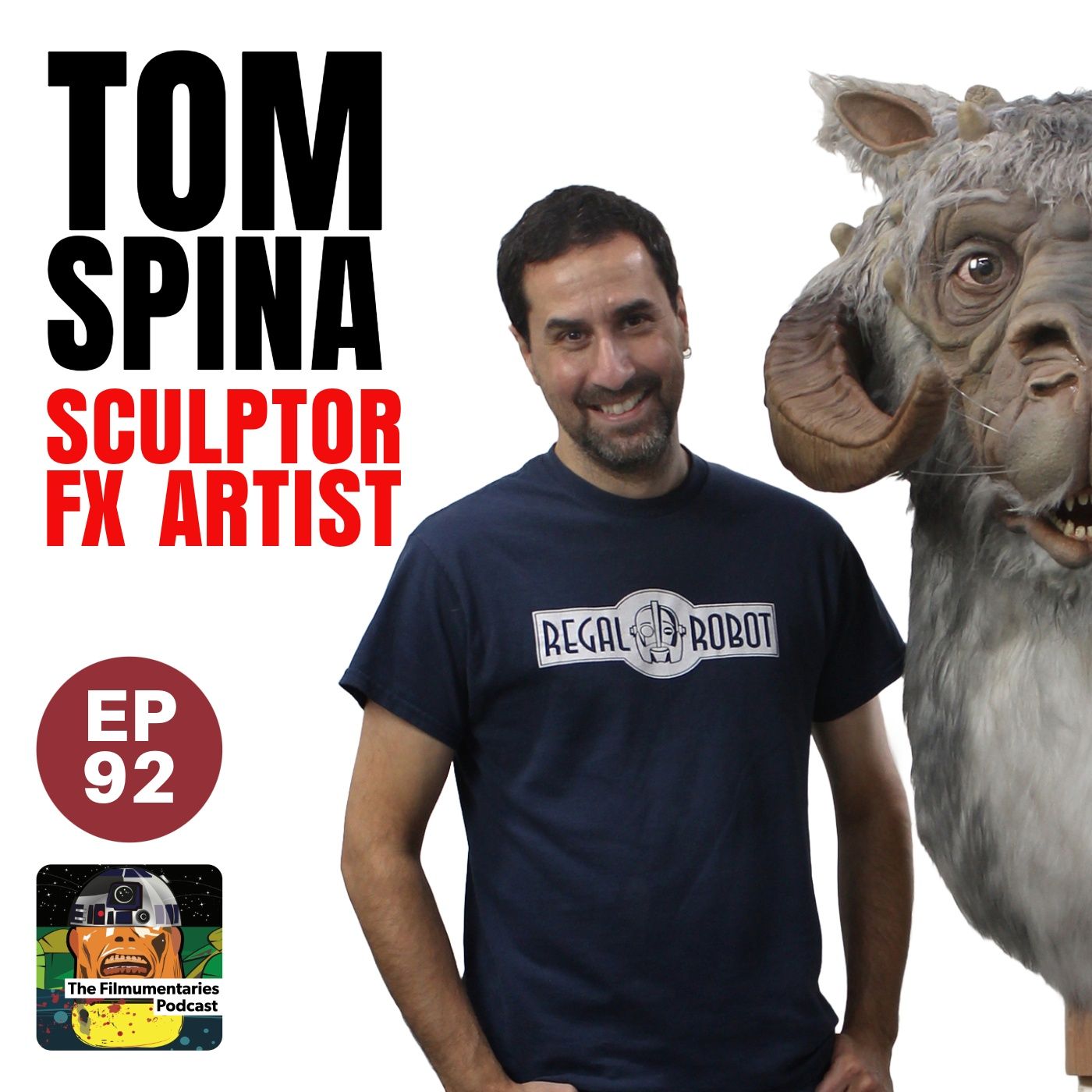
92 - Tom Spina - Sculptor / FX Artist - Regal Robot, Tom Spina Designs
About this episode
Tom is an avid Star Wars enthusiast, restoration specialist, and the founder of Tom Spina Designs and Regal Robot. In our conversation, we delve into his early love for Star Wars and those toys, his passion for computer graphics on his Amiga, his brief stint as a TD in live TV, and his current work in restoring historical movie props. We also touch on his Star Wars Celebration panel, his interactions with the film saga's crew, props, and monsters.
It's a fascinating insight into his creative process, and I hope you enjoy our conversation.
All the links
This podcast is completely independent and made possible by listener support. If you’d like to help me keep making these episodes, you can join my Patreon community here: https://patreon.com/jamiebenning
Watch more on YouTube:
Check out the Filmumentaries YouTube channel for behind-the-scenes clips and extra content: https://youtube.com/filmumentaries
All my links
Transcript
Automatically generated, so expect the odd misheard name.
Weirding Way Media. Welcome to episode ninety two of the Filmingmentaries podcast. This is Jamie Benning here and I'm talking to you from my house here in London, England. It's the eighteenth of December, a lot later than I would hope to get this episode out. Well it's you know, it's the Christmas month.
It's a busy month and this is the first episode of this month, so there'll be another episode coming very near the end of December. If you're a first time listener, welcome. The podcast is dedicated to preserving film history and you can treat this and the ninety one episodes that came before it as an archive for entertainment and research, and I hope you find it enjoyable. For the regular listeners, thank you as always for joining me and for your continued support. A special shout out to the wonderful people supporting the podcast via Patreon that's patreon dot com forward slash Jamie Benning and your support is so crucial to keep this podcast going.
I'm aiming for at least another thirty to thirty five patrons to make this a financially viable exercise. So if you love the podcast, and will buy me a pint or a coffee if we met. Consider supporting the podcast with twelve dollars for a whole year twelve dollars or your currency equivalent, plus you get ten discount when you support the podcast for an entire year, so rather than doing it monthly, consider the one off payment of twelve dollars as a Christmas gift to me. There's still time check out the various tears and perks on Patreon dot com, forward slash Jamie Benning, and you can also support the podcast by grabbing some exclusive clothing at Filmuamentaries dot t mill that's t E E M I L L dot com.
I've switched to Tamial for better quality clothing because I wasn't impressed with the previous company I used. Now there are new designs on the way thanks to my collaboration with my talented artist friend Pete Starling. The links for the Patreon and the store in the show notes. And if Patreon or the store isn't your thing, you can still support the podcast by sharing, liking, subscribing, and leaving a review. This is a very small podcast.
It's just me and my laptop. Had a guest or guests, and it can only thrive with your help in spreading the word. You can also help by heading to Jedi Timeline dot com in your region to grab Ouri in book. I say hour because co author is Justin Berger, and we made Return of the Jedi the Unauthorized Timeline. It's a comprehensive cataloging of the entire history of Return the Jedi, covering production, toy lines, video games, books, comics, and more, including exclusive, never before seen diary entries from key crew members, an introduction from the producer Jim Bloom.
And this softcover version is currently available for twenty about twenty pounds or your currency equivalent on Amazon, so check it out. If you go to Jedi Timeline dot com, all the details are there, or you can go to Amazon in your region and search for Jedi Timeline. Also remember you can find me on Twitter at Jmie SWB and there's a link tree there on my profile to all my various sites, including the Vimeo and YouTube channels, where you'll find hours of material on these films that we all love. Now, for this episode, I had the pleasure speaking with Tom Spiner. Tom is an avid styles enthusiast restoration specialist and the founder of Tom Spiner Designs and to Regal Robots.
And in our conversation we delve into his early love for Star Wars and those those toys, always about the toys, his passion for computer graphics on his Amiga, his brief stint as a TD in live TV, and his current work in restoring historical movie props. We also touch on his Star Wars celebration panel, his interactions with the film Saga's crew, props and monsters, and it's a fascinating insight into his creative process. And I hope you enjoy the conversation. So here it is my conversation with Tom Spener, and I'll be back at the end for a bit more jabbering on. So, Tom, where did it all begin for you?
It were you just one of those kids that had all the toys and you know, the curtains and the douve cover. Never had the duvet cover. I didn't have all the toys. That was a big point of contention with me and my parents. So I'll tell you that the storybook actually I had before anything, even before I saw the movie.
It was, you know, and I still have my copy of it. It's got my name scribbled on the inside front and back covers, just in case someone you know at school tried to make off with it. I could, you know, I could identify that book. And it's really cool that I've still got that. That that was Star Wars for me at the start of all of it.
You know, I didn't I didn't have my my own car yet, so you know, it's dependent on my folks get me to the movies. And they were as anxious to see it, I suppose as I was. But I will wait. You then back in seventy seven, I mean, but you don't. You don't look old enough to have been around.
No, I just turned fifty, so I was four years old when it became out, five when I finally saw it, and it was you know, foundational, like that's that's an age where something can hit someone and uh just you know ingrain itself into the fiber of their being. Yeah, I mean it happened to so many of us. I mean, I'm I was born in seventy six, so I'm just I've just turned forty seven, so I don't remember a time when Star Wars didn't exist. I mean, it's probably the same few in many ways. But it's funny, isn't it Like that?
I think there was somebody said to me once, you know, if you can find a job doing what you loved when you were six or seven, like what you were into when your six or seven, you've heard the dream, you know, the jackpot, and you seem to have done that. I mean, what's there a period for you where Star Wars wasn't a part of your life? I mean, obviously there are parts of our lives that Star Wars doesn't enter into, you know, partners, children, all that kind of stuff and other activities. But was it always there? Was it always in the background for you?
Or was there did you're saying there's parts of life that Star Wars doesn't? I mean you remember those years though, Like I mean where I think is in between eighty six to ninety one or something like that. For you know, I was probably one of those sort of like keeping the torch going during that time. Yeah. So for me, yeah, you'll remember the time before Star Wars, which is kind of strange because it's it's it's like a very oddcust thing.
For me, it was Wizard of Oz and in Kong and all of that stuff that I was obsessed with until Star Wars hit and then it was just like, oh, well, nothing else exists, that's it, you know. But through the eighties, you know, so the thing that hooked me about Star Wars it wasn't so much the story of it. It was the making of it. And even as a child, that was what I was driven by. That was what got me going.
And you know, uh, it was the creatures especially, and by the time from Star Wars to Jollity, the making of a Saga comes out, you know, which wonderfully focused on Phil Tippett and his crews were that was just a a like, oh, okay, you know, that's that's a thing I can do. And much to my parents dismay, that was that was just going to be it at that point. Was it was it genuinely a moment where you thought I could do that, Like, because I think for a lot of people, you know, for me, for me included, I kind of didn't really think I could do that. I just thought, oh, these are made that don't just arrive in the cinema. I mean that was probably a lot maybe between Empire and Jedi, but but you actually thought this is something I could do you saw yourself in Phil tipp It and all those guys.
I don't know if I would be that. I don't know if I've quite that flar with philp but yeah, I mean I immediately was mimicking whatever I saw on the screen, you know, and and like from the time I even even going back to the first film, and we would have these things in school where you know, the teacher would give everybody a paper lunch bag and you were supposed to make a mask out of it, and everybody just to pray on and drew on the front of it. And I would, you know, go to the teacher desk and I'd be like, well, what do you have that I can work with? I got I see scissors, I got a stapler. There's a roll of masking tape, like, let's let's do this, and you know, was making three dimensional things out of the paper bags.
You know, it's just if I was just give me a couple of ecswer let's let's make this for real. And you know, by the time we're talking, you know, ten or eleven, when when uh from Star Wars to Jedi Hit and I managed to tape it and then and here's the really crazy thing about that. I had no idea. That was odd, you know, like there was no planning, There was no this was going to be on the air thing. My local mom and pop video stores like didn't have this.
It was we were flipping through the channels, all like five of them one day and you know, went to Channel twenty one, which was one of our local public broadcasting channels, and there was something with Star Wars, and so very luckily my mom had a VHS tape in the machine that you know, I was like, this is now going to get recorded over no matter what. Hit the button and we just started recording it. And I think I was only about five minutes into it when I hit record. Luckily, so I recorded, you know, ninety five percent of that show, which you know, probably not the correct math, but I was going to say, five minutes into that, it's just the kind of movie clit and then he getting into the meat of it.
I had a similar experience as well. It was like, I think I was at my grandparents' house. My parents were chatting with my grandparents in the other room, and I turned the TV on and there it was, and I remember sort of scrabbling to put this this tape in. Yeah. And then also when he was finished, taking the little tab out to make sure my sisters didn't record some crap.
Oh not, what's going over this? Yeah? No, And I wore that t out and it was just constantly just pausing and sketching, you know, just Okay, that looks like it's a piece of tubing with a string running through it or something. You know, that was in my mind. That cable was, you know, so it's like, okay, that's pulling on the nostril of the of the Gmorian.
So I would take, you know, whatever I could find in my dad's garage, which luckily was was bountiful. And and he had a friend, he called him Georgia junk Man. And you would go to this guy's house and he had a two car garage filled with I don't know everything, like and I we would go and I'd be like, do you have any you know, fallmer rubber? And he's like, well, I've found a roll of foam rubber. Here's half inch flumber.
Perfect. And I would take that and I would cut and pattern it and try and make the Gmorio head out of it or whatever I was trying to remake Return of the Jedi in my basement, you know, I built a Child of the Hut out of this blue bedfold that my grandfather had gotten me, and like some some curtains and things like that. Like it was literally like whatever I had just went into trying to make this stuff. Cardboard and you know, masking tape and wire and spit whatever else just happened to be around. And yeah, I mean I thought, this is not only what I could do, this is what I would do.
This was you know, from literally from that age. And it took you know, going into the eighties, getting further into makeup effects and learning about Tom Savini and Rick Bickberg, Rabotine and you know, just the pantheon of eighties rock star makeup artists, and getting Tom Savini's Book of Grand Illusions or Bizarre, depending on which title you got, which was you know, there's there's the first real information I have on any of this stuff, not just going by whatever Mark Hamill as narrators said that was in the stript usually wrong for whatever they're actually doing in the shot too. Not helpful, Mark, Thanks, but but that time, you know, I'm I'm i start getting into more of the horror stuff.
There's some great, you know, fun slash of things happening in the eighties. I had a friend whose father was really into the old vintage horror stuff, the everything from you know, the thirties and forties all the way through the hammer stuff, and he introduced me to all of that. Thank goodness, because oh man did that like take Hold. But Star Wars never went away. It was always on the on the along the side of whatever I was doing.
If I was making, you know, some kind of a monster. I you know, I remember making like a vampire with half his space torn off as a maxk or something like that, You're right alongside it. I'm trying to figure out how do I make Canteen the band guy mask, you know, and and trying everything from boat fiberglass that I found at the at the hardware store too, you know, mold building, rubber latex that I found at UH a local art store, to uh plaster Paris, to you know, plaster bandages like just paper mache, whatever I could get my hands on. I was I felt stranded. I would you know.
I'd read Tom Savini's book and stuff, which is probably even a little later than some of this, but I you know, and I would read about things in some of these magazines Starlog and uh Fangoria and then you know, getting into like Gori Zone and Deep Rants some of these like more out there like horror magazines, and seeing what people are doing and going like you know, they're talking about going to two shops out in LA and I'm just like I'm doing at Burbank. I can't go there, you know, and not not really putting together that, like all right, this is like I could write them a letter and maybe get a paper catalog, like some kind of photocopied catalog, and eventually I did some of that. I got some proper like slip latex and some cold foam latex like cry Land that like you know, cold Cure three parts.
It's really just a soft POLYPHLD with a self skin, but everybody called it cold salt latex. Yeah, you know, my mom will let me use the oven, but like I can make stuff out of this, so anyway, But yeah, no, Star Wars never went away, and then the role playing game came out, and that's when it really came back for me, because now we were getting a look at more of the props. They were great behind scenes photos, not behind the scenes photos, but like close ups of different things and the sorts up. And my friends and I dove into that, you know, we were we were the Star Wars version of the Dungeons and Dragons and Nerds. Sure, yeah, yeah, Now I remember those cards because I remember seeing some of those characters like that for the first time, like like you say that close up and the other thing that, yeah, oh that's the Even later that's the decipher cards, yeah, right, West End Games, the role playing game.
Yeah, source book which yeah, oh, the decipher cards were oh my gosh, that brush bro. But yeah, and another always hits. And of course later there was the big what was it called the Archives book or no, not archives, what was the the big gold the Chronicles. I remember buying that in the Cinema book store here in the in London, paying an amazing amount of money for like one hundred and fifty pounds or something here. But just seeing photos I'd never seen before.
You know, some of these characters that are behind you right now. It's interesting you brought up horror as well, because there is a bit of a horror aspect to those characters. In the CANTEENA I mean, my daughter is now. I think when she first saw a bit of Star Wars, she's like, what's wrong with that guy? You know?
Is that it was the CANTEENA band. He looks like a giant baby, like what's going on? And then you know, you've just got this array of characters that have just come out of the imagination of Stuart Freeborn and and co. And you know the other stuff that was shot in la and there is some of it's kind of off the shelf, of course, isn't it. And some of it as that or a twist to it.
But although, yeah, even the off the shelf stuff. Really you know, it's when Rick Baker says, like, oh, I used to holler lead mask, Wolfman. It's still a wolfman he made. He just made it in seventy three to sell as a lead mask. Now as something for the movie.
He's still disappointed the fact out of close up. But I you know the one I fight for, the gray looking wolf with the red eyes. Oh yeah, the devil, I guess is what it's called. He calls it a bat demon guy. It is a rework of one of those brown wolf man masks.
But he like cut the whole snout off. He redid the whole thing to be more of a bat and that was used in Bob Burns as Halloween special, Uh than the thing in the attic that was based on the Exorcist, and that that mess to me, that holds up and it's still like we got to restore that for old Bob years back, and it's freaking amazing, Like you know, so it it guffs me a little bit when they cut that. You know when whenever I watched a special edition, Yeah, they're showing me the back half of a different mask instead of this great Rick Baker mask. Like what do you do? A couple of mons?
I know? And did you have the mask as a kid? Like the dom Post masks where they feature you. I lusted after them. I there was a local magic shop at the same wall where I would go and pump my quarters into the Star Wars Arcade game incessantly.
Yeah, still my favorite game of all time. It's so good. As a kid, you just felt like you were in the movie. I mean genuinely you were in this col Yeah, the sit down version of course, you know, with the yoak in your hand, and yeah, we only had the stand up at my local, but every there was. So this is actually a neat little thing.
So there's a little theme park called adventure Land which is in Farmingville, New York, kind of near here. It's actually it was the inspiration for the movie adventure Land, and it's been as a backdrop in a bunch of movies. But they had the sit down version, and what we would go there, I that you're I mean the stand up. I felt like I was in the sit down forget like God, just like the world disappeared in the trench. This is it?
Yeah, here goes nothing, you know, wrong movie. But yeah, but that was that was huge. And we actually just did I literally on the website yesterday because they just installed it. Uh. We got back in touch with that park about two years ago and had been talking with them about some ideas and we built them a six foot bronze look statue of their mascot to be kind of like the little icon of the park over there.
And it's just like, you know, that was my childhood park growing up. My dad would always tick me on the antique cars and let me drive, you know, even though it had the track, I do like just just as much as I was flying in the trench, I was driving and it's it's really cool to have done something that's now at that park. It's a sixty year old place. I kind of wish my dad was stolen around to see it because I think he'd got real kick. The circle is complete kind of thing.
Yeah, it's great when that comes Aron. Yeah, it was a good feeling. So to point out, then you are on the East coast during New York, right, so yeah, you're kind of on the wrong side of the country for what you do in a way. I mean you're you're knowingly about that's the option of moving out west of a kind of been on the horizon forew it. Yeah, you know, it's funny.
Right after college it was, or even in college it was in my mind of a good friend of mine made the trip out and he wound up, you know, try and try to get the studio job things for a while. He wound up you know in uh, you know, selling business materials and I it equipment like that, and he built a great business out of it. He's got a wonderful life. But it wasn't what we were hoping. I guess the the thing that ended up happening, though, was in college I parallel to all of this because I wasn't busy enough with you know, all my Star Wars stuff, my basement laboratory of makeup effects and full rubber.
I was also playing guitar like three or four hours a day and building puppets because the other obsession of mine was the Muppet Show growing up, and that predates Star Wars just a little bit. And and you know, certainly Sesame Street was big, but the Muppet Show was really like, oh okay, and you know, similar path of Muppets and men. There is a great book that was in the local library about the making of the Muppet Show and they had done I assume it was a half hour special of the Making of the Muppet Show, and they this is a little later. This is probably like the eighty one eighty two season. And that was another one where it was just like, oh, this this is the thing I've ever seen it.
Oh, it's look it up. Is anybody and anybody who's watching look at it? Just stop this, look come back, but look it up and go on. But it's it's so good, and it's it's another really great raw look behind the scenes, you know, showing you not what's behind the curtain in this case of Puppetree, what's under it and it you know, it inspired me to build all kinds of puppets, upet replicas, my own characters, whatever. And so in college, I'm going for TV and film, but mostly I'm using the projects as an excuse to either you know, dressed like Indiana Jones and do dumb stunts with my friends.
Uh, to build new puppets and characters and put them into secenarios or whatever else, you know, or just to try special effects, you know, to try a little the keys, to try crawl the keys, to figure out, you know, we can we double up on something? Can I get something that you know is comped in in the front, something else that's behind it that looks you know, I just messing with whatever I could. H this is. I was into computer graphics too at the time, working with an Amiga one thousand, called that because it had one thousand kilobytes, I remember, I remember, because the Amiga five hundred was at the like consumer level. Bit you were like, yeah, big business hit he was a king basically like that was I mean, uh, And I had won a couple of local like art competitions for some some animation stuff.
I mostly was trying to do H the equivalent of two D like Warner Brothers E type animation, but using the computer to do it, because to sit down as a person in hand draw and paint all those selves wasn't going to work. But I could use the computer to carry things over into tweak frames and stuff, and even with just a thousand killed bites of RAM, I was able to make a couple of like thirty second or one minute cartoons and I made all the sound effects on my guitar and things like that, Like it's just whatever I could make court and it was a lot of fun. And had computer tech been stronger at the time, that's probably where I would have ended up, because I really enjoyed it well using what were you using on the Amigo at the time, so I was using deep paint was the primary thing, which had I think at the time, thirty two colors at a time, so a little limiting.
Eventually I got a machine from my house, I think it was a twelve hundred, and I had a genlock super gen SX or FX whatever it was called, so that I could lock graphics over video, so now I get to titles and that was that was the big leagues. And then there was I think it was about three hundred dollars at the time, there was a krobat heat that you could buy and it would work if you had the gem block all right, So I invested in that and with our puppets, we were doing green screen stuff in the house we set up the pit was blue. We had a big blue velvet sheet that I got from a local fabric store. We puffed a bunch of light on it and we figured out that you know, putting yellow lighting gels on the back light for the characters help them get better separation.
Like we We were working it out and wound up doing some puppet stuff in college that we sent it to the Ensign company just as a goof because we had done, you know, this our own version of the Muppet Show, basically me and my buddies and h and we had a ton of love with it. I sent it in with no expectation to wound up getting a call from them from Kevin Klash, the guy who plays Elm. And didn't know who he was though, because I was kind of tuned into the Muppet Show, but you know, he was post Muppet Show, and I just I thought he was just some producer or whatever, and through that wound up. You know, this is one of those and I'm sure you've encountered these moments in your life where you know, you've you've said, you've given the wrong answer.
You know, he asked about, you know, the puppet stuff we were doing, and I think I made it sound too much like the puppets were just an excuse to shoot stuff on video and that you know, wasn't necessarily, you know, my true calling to be a propet up teer or anything like that. But I did find out later. I was like, you know, I think I must have seen a nothing behind the scenes thing, maybe the Jim Henson hour behind the scenes, and saw Kevin Klesh like I know that name Son up. So I drafted a little letter and I said, you know what I'm gonna go. I'm gonna go to the Headson office.
They're in New York City. I'm on the Island. I could take a train to take me an hour. I'm just gonna go right to the office. I'm gonna see if he's there, and if not, I'll leave this letter for him and not and not realizing like, of course he's not there or that's not but she doesn't have a job.
But I wound up meeting a woman who uh was a you know, uh an executive or producer or whatever there, and she had she had seen the tape as well though, because apparently they got a kick out of it and shared it around, right, and so we uh she gave me a tour of their just beautiful headquarters. That it was this wonderful townhouse on I believe that was one on sixty ninth Street. They had the workshop and the carriage house on I think that was sixty seven. It could be getting the streets reversed. It's been a while, but it had, you know, a beautiful stained glass window of Ernie and Bert.
It had wonderful he digs on the wall. It had, you know, Jim had just passed away maybe two years earlier, two or three years, I guess, and there were, you know, things he had built. His office was still there. They hadn't you know, reused that space at all, right, how could you? And you know, so he had had this like light up pink moussaid here that he had built out of paper mache.
He had a shrine to the Almighty Dollar that he ate out of pennies. You know, like just wonderful, wonderful, awe inspiring art inspiring art, right, and and so yeah, I had this magical visit that really just came out of And this is like anytime anybody asked me, it's like how do you how do you get to do what you wanted to do when you were six or seven years old? Right, And it's just like you just you do it to the best of your ability. And and it's like you you basically just keep doing it until someone tells you to stop. I guess yeah, But it's it's like, you know, nobody gets anywhere planning like you.
It's like, yes, you've got a plan, but you got to do it and then you got to push and you know, here it was just you know, my my own gumption of thinking I could go there. They had every right to just go like who, no, what you have something great? You put it through the slot big Yeah. But your passion, your passion clearly counts for a lot here. I mean, you're a very enthusiastic person.
You know, whenever I've seen you interviewed. The passion of what you do comes across instantly. People like to see that, and you know it's I feel it, you know, I really feel it even through it you've got yeah, yeah, I mean I have it. But I'm an understated British guy. You know, I'm not allowed to kind of really exactly exactly what else could you do?
When did you when did you first kind of look into getting an original prop from Star Wars? Because I know you have a collection yourself that now it's almost impossible, right, I mean, you look for people listening, for people listening, Tom is sitting in front of multiple cabinets with heads and hands in of many characters that you would recognize from the CANTEENA. But yeah, I mean, now it's impossible. Really you have to be multi multi multimillionaire these days, but yeah, or you have to have just started at the right time, I guess. But if there's I'll say this, maybe you know, the sort of the high ends better, the better kind of pieces are a little out of reach for your average collector.
But the fact that those pieces have done so well have shaken loose so much other material, and you've got folks like you know Steven and Brandon over Prop Sword London, who do such a great job of getting this stuff out there. You know, they've got a couple of auctions every year and they've got tons of stuff on the site. And I'll tell you what, if you went in with a couple thousand dollars, you can come away with some decent Star Wars pieces and and and slowly build up to a collection where maybe, you know, and this is really how it was for me. I didn't, you know, come in at your giant purchases of a very expensive mess. I started collecting replica props, initially started building replica props really more than anything I you know, I didn't been a time before the Internet.
I didn't know you could buy replica props. You know. It was just like I wanted to make whatever I saw. Yeah, I did plenty of that. And ultimately it was through Prop Store and a fello named Fuller French who had been uh you know, kind of circulating a list of sci fi props that he had had that I wound up picking up a couple of Death Star pieces, death Star panels, and you know those were things that like Bang Club used to give away back in the day, and so there there there were plenty of them made for the movie as well.
And though a lot of that stuff got thrown in the bin, they did, you know, a lot of them did make it out there into private hands. And so yeah, there's that was a pretty good entry level sort of thing. And then there's other things like pepework, call sheets and behind the scenes sus and polaroids and things that are that I signed infinitely cool and fascinating. You know, of all the masks and props and things I've got, I've got Stewart Treeborne's notes from the canteena and and you know, it's it's I would say about ninety percent of what those notes were. There were a handful of them relating to Grito that I think went off with one of the masks to Grito, but the rest of it are there, and you know that to me has been gold mine, especially you doing all the panels for storer celebration and stuff bab Blovinago, and I would just like pour over those notes and just try and connect characters to actors and development to the final character.
And you know, oh, they were calling this a hippo then, but we think it turns out to be this guy and you know that kind of thing. This was the Wasp, and that was this I love that stuff. Yeah, it's so good, it's so good and and so yeah, you know, I lucked out in that. When I did start to get into screen use stuff, replica props are selling for a lot of money, so I could trade my replica collection for a nice stack of dollar bills that I could then hand to, you know, either folks that worked on movies that kept stuff that I got lucky enough to know, or to places like Crop Store or you know, other auction houses that maybe we're auctioning all things I wanted. I work really hard to keep my collection sort of dollar neutral, so to speak, and not dump a lot of money into it.
I'm very you know, it's weird. It's weird. I've sort of it's a it's it's I never want to feel braggit nocious about it. I feel like there's you know, anything I've got. It's because I genuinely love the the item, or the maker or the movie it's connected to.
You know, all of this is everything you do, Everything I do in life is just about getting closer to these movies that moved us. Yeah, absolutely, whether it's buying the action figures. As a kid, you wanted to play with those characters, or you were just in the backyard or in the garden or whatever, playing pretending to be Luke Skywalker, or you were wearing the mask, you know, or you went to a fancy dress, or like when I was in college, I made a radio show about making movies, and of course I put Star Wars in there. I made a documentary about the Elstree studios at college because I wanted to get start. You just always find a way.
And this, I guess is the most grown up version of having the toys is what you've got really, because you've got the things that were actually made for the screen. And I do still have the toys. I kept everything from when I was a kid, save for a handful of things, some that got lost in a move, sadly, but I've been slowly going back and buying, you know, whatever got lost and then and then realizing like, oh, okay, let's see. You know, these are things I either never knew came out because the way we knew what was out was, you know, if you saw it on the back of the action figure or in that little flip book, or if you saw it in the store and if your mom didn't happen to take you to you know, toys r Us that that in that six month period you might miss stuff.
But yeah, so I've been going back and filling in some little holes. But I was. I was really diligent about the the three three quarter figures as a kid. I kept them all together with their weapons and I or well weapons were another bag. But I kept them all and I I got as many as I could.
I think I was only missing a very small handful that I picked up in the mid nineties. What are those one of those deals in a parking lot? You know, I found a guy in the newspaper that you know it's like, hey man, yeah, it's like yeah, yeah, I got a manic man. Bring bring the cash, meet me at the Walmart parking line. Okay, I definitely had a few of those.
It's funny you said about the card back thing, because I always associate those card backs with my parents being pissed off because they were like, I thought you had every every figure, and now there's seventy nine of them, Like I love it. And then of course, that's that, you know. It wasn't until I guess the early nineties when I found out they were collectible again, that I even found out about the last seventeen I think I was aware of Luke Stormtrooper, but I didn't have a Manamon or Barada or any of those guys. And I've had them, I've had them several times in my collection, but I a few years ago I sold that. I sold them and only kept the ones that I had as a kid.
That was That's what I decided on in the end, just to get the best good call. Yeah. But that's the thing with Star Wars though, isn't it. You know, there are so many worlds within worlds because you could buy the you could collect the figures, but you might just collect Vader. You might just collect Vader on his Empire card, and you might collect him only on a US card.
And you know, there's just so many, so much room for Star Wars fandom. It's it's amazing to me, you know, especially now as someone doing licensed Star Wars stuff as well, to see how people collect this stuff and what attracts them, and to even to intentionally offer stuff that you're not gonna get elsewhere and to find ways to introduce the making of the film into collecting. You know, collecting real props is one thing, and as you know, that's when you're dealing with things that are one of one. Oh, that's a pretty limited collectible. But when you get into stuff where it's one of a hundred one or two hundred whatever, now it's like, you know, that's still pretty premium, that's still really special.
But you can you can do it. You're not like people are just completely shut out of it. Maybe happens a little bit with the Springing stuff. Yeah, Well, one of the things I found out about the sort of collecting community having kind of met you know, Dan Lannigan, He's got a big kind of indie collection, and obviously oh yeah, Brandon and Steven and you know, I know, uh, I know Jason to Board who runs Julian's, you know CEO of Julian's. Actually had lunch within the other day.
It's just how small that that that proper collecting world it is is I've had meals with every one of those people. I've yeen days and days at Dan's house. If yeah, I mean, those are all good friends, and it is it's a tight knit community. It's I feel it's getting bigger. I think, uh and I think a lot of that's down to, honestly, just the press push that that Steven does.
Yeah, like those guys are really ambassadors for it as a hobby, I think beyond just like their own business. I think, you know, they inspire people to get into this, which is brilliant. It's great from both the business point of view, it's just from a hobby point of view. But but no, it's a very tight knit community. And it's it's I you know, even the Replica Proper community was tight knit.
That was where I met Jason and branded. You know, I met Brandon he it was fourteen, Yeah, to get around in the sands like trying to find it right, well he was, but yeah, like we we met. He started the RPS the REP and that was something where he started and some folks took over. I came on to help out and I ran it for a while. Now our Andrews runs it.
So also with prop store. Like it's just you know, like you said, it's a very it's a tight community, but you know, yeah, it was it. It it's kind of look, we share the same passions. We are obsessed with the same things. But everybody has their niche, yes, you know, it's like, yeah, everybody has what they collect.
Like you said, it's just the Vader on the Empire cart is just the best carted? Is that? Is this for me? You know, the focus is really the canteena stuff with some other things thrown in. But for the Star Wars stuff.
Look, there's no way for a mere mortal to own all the Star Wars props, you know, unless you're George you don't get to do that. Yeah, So it kind of struck me though, Like I've been to dinner with like Ryan Condall and Stephen Laying, a bunch of other British collectors and just Christmas just gone. And it wasn't necessarily you know, keep your friends close, keep your enemies closer. But there was clearly there was clearly a bit of that, you know. But there was a lot of talking about individual conversations or conversations with two sets of people certain times throughout the evening, and I think all of them at some point had said that they'd stepped out of the way for their power who wanted a particular item.
So there is that but I also wonder, given the sort of rise and interest in props movie props in particular since since COVID, it seems to have gone crazy. If you ever have that moment when you're bidding, where you think, who's this other person? I mean, I was going to say, other guy, It's going to be a guy, right, who's this other guy? Like, we don't he's not in our circle? Who is this?
Is it a miriqum bidding against us? Now? Yeah, it's like I've talked to like I already talked to Gus and man Fellen. I know Dan's not bidding against it. Who is this?
Oh yeah, that's definitely happened as I crept in recently. Do you think has that been a since COVID thing? For sure? Yeah? And it's what's funny is I mean I've had times bidding on something where I thought, oh gosh, this was a Star Trek piece, but there was I was bidding on a spacesuit from from like the original series Star Trek in that Christie's auction in two thousand and six, and I'd held off on bidding on anything else.
It was one of the last items and everything else that day was going pretty recentably, and I thought, I'll throw a decent amount at this, and I can probably go home with this, because even the other original series stuff wasn't going crazy, and it was like it gets to a certain point and the bidding stalls, and I'm the high bidder. I'm like, hey, all right, you know, like I got a chance to And then someone comes in on a phone bit like who is this? Like I'm literally there with Steven and Brandon and Rob Clyde and Andy Gooling and like all the people I know and the movie prop king Psyche guys Jason and Taron Whider there and a couple of other big hitters, you know, We're all in the room and I'm like and I'm like looking around, the world's like none of them.
It's a phone bitter, like who is this? And then I want to say I saw I go in another like I'm like all right, and we go and then you know, now you start making deals with yourself. Well I could sell this, and I'll do that one more bit, Okay, all right, I'll sell that, and then I could do one more, one more bit, And then another phone bitter comes in and then the thing goes on for like another one hundred thousand dollars past that point, and I said, you know what, if I'm gonna get out bid, I don't want to be outbid by a dollar or two hundred dollars or five hundred dollars. I want to be outbid by one hundred quand because then I know I was never in the running in the first place. But yeah, who that was beats me.
You know Paul Allen, you know, he was a big play pretty bit him fighting with someone else or whatever. But yeah, it it definitely happens. And it's always, like I said, just you just you just don't want to be the underbitter. You don't want to be the guy who bid second to last, because then the rest of your life you're just gonna go like just one. Yeah, yeah, you know.
Talking to museums as well. I went to the Academy Museum when I was out in La last March, and you know, some amazing pieces in that collection, and one of the ones that I was drawn to was the two thousand and one space suit because I think you know, that had been up in auction and there are a lot of people talking about what it might go for and the museum won that item. You know, when you're up against museums, that's a whole different realm because who knows what their budget might be. You know, it's interesting, you know they I find the museums have actually not have that muchriber budget, but sometimes they do have like these angel bidders where some are going to come in yeah at it for the musical, you know.
I know Leonardo DiCaprio has done that with a group of Yes folks, where they've been on things to donate it to the Academy Museum and yeah, it's like, what are you going to do that? I know, uh, Ben Spiller out bit me on a couple of Star Trek pieces at one point. I found out after the fact because those were other times where I was the other bidder and I'm just going like and and there's the only time where it is good to be the other better where you find out that because then you're like, oh, right, okay, I had no chance. It's fine, you know, he was just going to keep going. It happens, but yeah, it is.
It is. It is an interesting, uh aspect of collecting. I'm not I mean, no one who collects as a fan of auctions, you know, Like I guess auction houses are fans of auctions, but I don't think anyone else. Oh, I've seen the commission percentage rates. I mean, yeah, I thought about it.
They do okay if you're bidding, although you know, they also definitely put a lot of work into those options. I oppressed with what they're pulling together, but yeah, it is. I've always it's more special with me. You know, some of the pieces where I picked them up through somebody who's worked on a movie and kept it or you know this secondhand through some effects friends or something like that. That to me, you know, there's more of a story there, There's more connection there, there's more of a personal thing than just how did you get this?
I spent money? Yeah, okay, great, we're special. I'm aware that we're kind of forty five minutes in here and we haven't really talked about your work, which is of course, you know the mess. So how did you like turn your passion your hobby into your job. What was that first step you took?
You know? So it's funny that that faithful drive into the Muppet headquarters in a way is a first step, because that got me introduced to some great folks, and I was clever enough to ask them, well, where do you build all this stuff? Because I don't see a workshop here. And they said, oh, we have a workshop and a few blocks down, and I said, do you ever show people around there? Because that's really interesting to me, and they said, get out of here, kid, No, They very nicely said sure, I could set that up.
Give me a call, you know, here's my number, and so, you know, went home, called and got it toward the workshop. And then at the workshop, I asked, how do you hire people here? Do you do internships? I'm in college? Can I do an internship here?
And that led to an internship at Sesame Street, which was my you know, gateway to the industry. That was my first time on a set. That was my first time seeing things shot in a professional way, luckily not much different than we were doing it in college. You know, the school I went to had a nightly news program that was on the local station, so you know, they've been a pretty well set up TV studio and they were pretty pretty good course there in terms of getting you prepared for that. So that was nice to go in and not feel completely out of depth.
But you know, I was I was an assistant to the puppet wrangler, So I was there handing the puppets back and forth to the per formers, setting them up with arm rods, doing little repairs, you know, going to the what they called the Muppet Room, which was a little storage room upstairs, and you know, pulling the characters for each day, and getting to sit there and go like, okay, I need to bring girl for downstairs, you know, or here's here's Tally. Okay, I've got to get you know, Burt Nernie for you know, they're needed in a couple of days, like you know, wild stuff and and you know, even better to be around people that now were uh, most of the crew had been there since the show started in the late sixties.
The show was you know, I think twenty five years old the season I was on it three ninety four ish, and the and and the performers other than you know, Jim and Richard Hunt had passed on, were all the original folks. So Jerry Nelson was there, and Carol Spinney and Martin Robinson and then on down the line, all of these amazing men and women, uh you know, some of them I'd seen in books and magazines. Some of I've seen him behind the seat specials, and some I had just got gotten to know because they were always under a camera and never in front of one, so I never got to see who they were, but just wonderful, inviting, warm folks that you know, immediately made somewhat lost feeling Long Island kid feel very at hole on that set, and and so yeah, so that's that's when.
That's when I put together the feeling I had when I was a kid, that this is what I'm going to do, and the practical question of yeah, but really, And that was when it was like, wait, they can do it, I can do it. Yeah, the they can do this for a living. Okay, that's now a thing. And I had to go home and tell my parents, like I just saw one hundred people that do puppets and special effects and make stuff and make TV stuff for a living, and you know, and you still think I'm supposed to be a coup or an accountant, which is weird because you're my parents and you have met me, and you should know better. But it took some convincing on their end.
But you know, you asked earlier, why didn't end up going to California, and so that internship then led to me meeting a fella named Victor Yard, who has since gone on and done puppetry in all sorts of stuff. Amazing, amazing puppeteer, brilliant character, and a real brilliant improviser, one of my one of the most demented people you ever meet. And I say that as the biggest compliment possible. I met Victor who was in the music department as an intern. My buddy Steve, who was in college with me making dopey videos, and a friend of mine totally from high school, got together and formed a company doing puppet stuff.
And we had just doing some low local, commercially typed stuff, and eventually Victor got a job driving a van for QVC to pay the bills, and he got us in with a producer there and we brought some puppets in and we said we could, we could do a character or one of your your QVC shows and like sell toys or whatever. Really like puppet prostitution when you think about it, but it was uh and for whatever reason they said yes, And so I built the characters, Victor performed them, and I did some uh here and there as well, and then uh, we did that for a few years, and that that was what grounded me, I think in the East Coast, along with family and friends and all of that. But but that was where it was like, Okay, we can make a go of this here.
And then as soon as he Internet hit that, that was when it became like, okay, especially if I'm just doing my own thing here, then yeah, I can kind of be based anywhere. Yeah, And and you know, the potential of that was clear to me very early, and it was just like, oh, okay, this is no this is gonna this is gonna change things. Because we had we struggled with that first company. We didn't have a way to connect with anyone, We had no way to get jobs. We were you know, try to try to find like an agent and stuff like that.
It was just weird. And then you know, I took some other TV work. I took I took a job at KB Toys to pay the bills roll a while to at some other TV work and that all the while I was building masks, building monsters, making replica props and finding way to connect with folks on the internet now and sell stuff. I was making and find people making similar stuff and learn more and learn more about materials and all of this other stuff. And and that's what ultimately, you know, combines with then the movie prop collecting and the fact that making stuff is also fixing stuff and finding I had this passion for fixing things and a passion for doing it in an archival way that you know, really was respectful of the material because I the the the To me, I've said this a lot, but like to me, movie props are the like some of the highest art of our time.
The some of the most brilliant sculptors out there are sculpting monsters and you know, put behind the scenes on some of your favorite movies and and doing the cats and doing concept work and you know, doing make up directly on people's faces and whatever the hell else. And you know, to to have the opportunity to be around that stuff is great. Have the opportunity to help preserve that stuff is something that is meaningful and not lost on me. And it feels important and satisfying and weighty in a good way and scary and sometimes a bad way. But this, all of this stuff just sort of networked its way into this weird match, and it became you know, restoration with something other people weren't doing and weren't offering the way that I could or would or whatever you want to call it.
And so yeah, it was like all of this history meshing with the Internet taking off, meshing with the RPF and the building up of prop collecting as a whole, with prop store and auction houses, you know, really bringing screen used props to not just you know, uh, the highest end people, but to the masses and you know beyond just museums and things like that, and and uh, you know, it just was like, hey, this is this is it? This is the spot, Like I just you know, everything bashed in. There's this beautiful little tunnel appeared. That was just like, yep, that's where I'm going in. Yeah, yeah, exactly.
It was like this, but yeah it was I could fit. That was like when Roger Rabbit goes through the window, you know exactly when you did that. Yeah, yeah, that's it. Yeah. What was the first thing you restored then?
Or was it an attempt to restore? I mean it did it go well? And how much experimentation was there? So? I mean, you know, the making rubber masks always involved some level of patching.
You'd never get a proof casting. There's always seen lines, there's always things like that. So, you know, developing my ability to be cheap and not waste a bad casting and fix it, you know, help me to develop some of the stuff I would do with restoration. It's just a matter of switching materials into things that would hold up better over time, it wouldn't hurt things underneath it. And so some of the earliest stuff it was stuff that I owned.
I had a marshmallow manhand from obvious staypust there was a polyphone piece that had a section that had deteriorated away, and I thought, you know, it was just a very specific section, and I said, let me, let me give this a go, let me see if I can do this. And and the biggest thing for me and patching that was I didn't want to I didn't want what I patched to stand out at all. But I also didn't want to repaint the whole thing the way you would like a car restoration or something like that. That to me is that's not that That's fine for for you know, maybe for a car, but for movie props. You know, it's all about preserving every ounce of this you can.
So you it's the technique you say, it is called it painting, and that's when you just paint the repair. And I'm I'm a little obsessed with things like color and stuff like that when it comes to that I have, But luckily for the business, I mean a very lucky to have a very short high for that, and and and and it turned out I had a real skill for color matching and forgetting that down and making stuff disappear, and and figuring out how to make those patches that look brand new, how to age what you're doing, et cetera. And that was So that's one of the first ones, the first Star Wars pieces. Uh, we're getting together with Brandon on that, as Stuart Treatborn had parted with his sort of archive of stuff he had kept at once.
Yeah. Yeah, and you know, and and actually from that that was where those that people working from. That's where the fly and the pickle head behind me came from. And yeah, so the the other nights which are on the top speed. As I've told the story a million times, if anybody's out there and bore two bad, I'm telling you again.
Uh, the but no he here brought to me and I said no. I was like, I don't want to ruin that, and he just said, dude, they're ruined already. You know, I'm gonna throw them away. They had been stored with newspaper in them for decades and that had just whipped all the moisture out of them. They were crunchy as hell.
They were made out of they were pulled latex, but fascinating. They were a really nice case study in how Stewart and Graham worked on that kind of stuff because even though they were slip masks, they were made with layers of pieces the way you wouldn't apply it, and it was too I assume they did that so that they could put variation into them, and it was really neat the way they were pull together. And the thing that it taught me, actually the biggest takeaway from that project was you know one, I mean, I learned to help a lot doing it, and I put a lot of stuff that I had thought about into sort of into the process there. But the thing that that that really jumped out of me is it's never as bad as it looks.
For as bad as they looked. Once I was able to reshape them a bit. Once I was able to unfold some things. Once I was able to you know, there there were some cases where things wouldn't no matter what you would do, they wouldn't get flexible in it. You literally you'd have a piece of hold it in half and you just had to you know, like bravery test snap, you know.
And it's like you knew you were going to get a crack here, but you were going to get back all of this material, so you didn't paint the crack and you'd you put that back where it belonged, and you just some fabric backing and face the supporter on the inside. And it really there were some of them that looked really, really bad. But when I got them on a form, when I got them unfolded, but I got them, you know, all the puzzle pieces back where they went. There's not a lot missing here. These are these are actually in pretty good shape other than the fact that the material is so dried out.
And and luckily I had come up with some things we could do to help with that, and and it was just eye opening and and really, I mean, you know, talk about idols, people like you know, Stewart Freeborn or Uh, you know, there's there are not a lot of people that affected me the way he did. Uh, certainly his work especially, And I was very lucky to meet him once, uh spend a very very long time, five hours at a curry has talking makeup and monsters with p and k oh goodness, and and you know that to preserve some of that work, Uh, it's it's a really great feeling. And then and and you know, to have done that prior to meeting him actually and to be able to show him some of that stuff like that feels nice too.
To be able to you know, go like, hey, look, you know we care about what you did. You're you know, your legacy lives on here. It is. We're like, we're keeping this around for folks to continue to enjoy. But yeah, those were those are special pieces and and uh wound up being the first of many many pieces that we would restore, and many from Star Wars as well.
So yeah, pretty pretty freaking lucky kid. Yeah, definitely, And think including some things from the Lucasfilm archives themselves that you know, you've you've been tasked to go up there. I mean that that's a moment for Star Wars fan the first time walking into the archives there. I mean, I've dreamt about that whole my life. No, No, it's getting to the point now where I think it's never going to happen.
But you know who knows, I highly recommend it. Yeah, I'm sure. I yeah, yeah, definitely, you know, big moment in my life the first time I went there. The first time I went there was not necessarily related to the restoring work, just flucky enough to be invited. Uh.
We had helped out folks that the archives were on a commercial set with us. We had built a bunch of creatures for Volkswagen uh super Bowl commercial. They had brought some of the prequel aliens to be in the background of our stuff, which we were like, wait, the real things are gonna be in the background of Okay, no pressure, Yeah, yeah, hold on, let me just I'm gonna just do one of these. So these are some of the some of the stuff from that. Okay.
Anyway, I always like to keep a little of what we've worked on around, so lucked out that you know, they were there and got to know them, and and you know, running a set like that with a whole bunch of people under masks, it's tough to keep them all alive, and so we helped keep their guys alive. They helped keep our stuff going. And at the end of it, somebody said to me, oh, do you ever get to San Francisco. You should come visit us at the Archives. And I said, I'm going to be there in two weeks.
I wasn't, but I sure as hell was now. I said, I say two weeks. I know the exact date. What are you guys there at that time? Are you going to be around?
Yeah, yeah, we're around from this date to this day, so greaty I'll send you my dates. Immediately just went back bought a plane ticket and and I said, okay, no, like this is happening. I'm not this is this is not a chance I'm ever going to miss. And yeah, stunning, jaw dropping. I foolishly I thought it wouldn't be as good as it was.
Maybe I was just trying to psyck myself out. Maybe I was trying to be you know, I don't want to I don't want to build it up too much, would be disappointed. There is no building it up too much, there is no dip. This was uh so far beyond anything I ever expected. And it was, uh it it's yeah, it's incredible to me how many times I've been back now and you know, the various things we've done there.
But but that first trip was just for just for the fun of going to visit and see some new friends and uh. But it was at the end of that trip where you know, there were a few things we saw that I pointed out, you know, we might be able to help with that, and and let me show you some of the stuff we've done after the fact, set them some things and eventually they set me a list of things to say, like what do you think you do with these? I set some proposals and found out after we had after everything was a contracts with that and things like that, I found out that it was actually George himself that that specifically signed off on everything that we were going to do, which is a really kind of a cool feeling.
And I said, you know, I would have come to sign in person had I known, but I never got that chance yet. But yeah, we very luckily got to work on a whole bunch of stuff we had we had just wrapped up. I'm pretty sure the Henson stuff was first. We had the two of them back to back, and I'm fairly certain it was the Henson Archives. So we had done a bunch of stuff for the Museum of the Moving Image, who has an amazing Jim Hedson exhibit now permanent exhibit.
Massive gifts from the Headson family. We got to go in. I consulted a little bit when they were initially getting the gift on what pieces they were going to take and things like that, and then we did some continuation of that with in terms of conservation and you know, what pieces we could help with, and then what pieces they were going to have some of the Hentson Creature Shop work on and things like that, and you know, we got to have this this huge batch of Picha pieces from them come into our studio. So you know, we have this one stretch of time where where the studio is filled with crates of pardon me, you know, original stuff from the Dark Crystal and Labyrinth and Muppet stuff and you know, hard to comprehend why is this here?
What you know, all at once, this is crazy all he has on deck. You know, we all get in. We have we had we have some free lassers who work with us and sometimes travel with us, and stuff it's like, nope, you're traveling the whole base. Come on, like, let's do this, we do that whole project. And then you know, almost no time after that, the phone rings and it's like, yeah, we're ready to go, and you know, crate upon crate of stuff from the Lukesmark shows up our little studio and you know, I have a picture I took from up in the rafters and the crates are in an L shape around the perimeter of the building because they took up that much space of of like our floor space at the time.
Units what are you going to say? It was like Mike Pangratzio's painting at the end of Raiders or something. You know, just it certainly felt that way to us. We've since taken over, we've more than doubled our space, which is great, so you know, we're always ready for the next one. But it's you know, so this was another time where it's like we're just pulling pieces and pieces and out of these crates that were just you know, mind blowing.
They'd be amazing to see an of ucer, they'd be amazing to see up close in the archives, so they were but to have them, you know, directly in front of you, and you're working to conserve this now is mind numbing and it's intimidating, but it's incredible. Yeah, And it's the culmination of everything I could have hoped for as a restoration artist, as a somewhat just passionate about conserving movie member rebeliate you know those two, right, It had to be. It had to be the Hentson Archives, It had to becus. I'm just you know, like a like a lucky pinball bouncing around and just always happening to hit the flipper like it's insane. It doesn't make any sense beyond those Beyond those two I don't want to call them franchises.
Beyond those two amazing creative cultures that those people built, Star Wars and the Muppets, I guess. You know. One of the most amazing things about your job is the variety of things that come to you. I mean, you must sit there sometimes thinking what's that next phone call going to be, what's that next email going to be? Is it going to be a museum, is it going to be a private collector?
Is there going to be something on earth that we didn't know about before? Yeah? Absolutely? And then you know, beyond that with all the stuff we do, the bronzes, yeah, wax figures, custom annequins and displays for costumes, the giant foam stuff. You know, we got a call for you know, hey, we need half of the top half of the Statue of Liberty, you know, twenty twenty feet tall?
Can you do that? And you know, sure, right, And that's that was actually how we got one of the units behind us. Was I called the landlord and saying, somebody's got a big built it's only going to take us a month. You know, do you have anything about Yeah, I got one right behind you. How much he's smart, landlord, he says, free as a son of a bitch.
You know, he knew as soon as we got our feet inside them unit we were never letting it go. Oh you know, you get comfortable. It's like, how did we ever operate before we had this? But yeah, you know, so there's big foam stuff we're building, there's theming rooms out for people, there's you know, doing digital work even you know, it's yeah, the variety is a huge, huge part of especially the Tom Spien of designed business. That was when I when I left my my TV job, which was.
You know, I was sitting at the Grass Valley Switcher blowing up al durand all the time, you know, going between. Every time I went to commercial, I'd be like, but yeah, that's that's nice. There you go. Yeah, it was a TD and you have to get on the headset with the guy at the hockey game, and you're going between the truck and commercial and all of that stuff. But you know, when I left that job, I had a gig.
It was a puppet gig that a friend of mine got me doing a latex puppet face with this big tree puppet. And I had just quit. I had just put my notice in and he calls me up with this job. He says, you're available. I said, I absolutely am.
He's like, you know it pays, it's not quit your job money, And I said, funny story. I found out later he's he was extremely worried for me when he heard this. I told him that, But I you know, the whole thing there was cast a wide net, like this is a creative business where creative people we can do all these different things. Don't block ourselves down. Let's cast the wide net.
We'll see what catches. And you know, well, we'll be able to have a little fun with it too, because we'll be doing all this different stuff. And yeah, you know, horror stuff comes in. Revlin's come in, spaces, will Christmas movies come in. We just had Buddy the ELF's costume from from Elf that everybody got along the way.
So tons of we've had a bunch of stuff that the Grinch movie come through. We've had you know, I mean, you name the genre, there's we you know, name a favorite film, We've probably had something and and it's yeah, it's always cool, it's always it's always something new, it's always a new challenge. It's you know, we've learned so much along the way doing this stuff. And uh and yeah the variety. Boy, I'm so glad that I cast that wide net because it definitely makes it, you know, that much more exciting to get to work every morning.
And with that core work, you know, you've gone into other realms with you know, sideshow collectors of Regal Rod. But you're doing you know, these reproduction sort of of the maquette that Phil Tippet would have created. You're doing you know, like a I saw a bow caster door handle, just the carbonite table I mean this, this is this is kind of the stuff the dreams are made of, you know, to quote the movie line. But also I think you said in another interview that I heard a while back, that it's a kind of wouldn't it be cool if? Is the line?
You know, it wouldn't it be cool if we just had this or that or the other? How do you kind of keep creative? And how do you that comes? There comes a point where you think I've just plumbed the debts of every idea, and yet something else pops us. It's so funny because so they wouldn't it be cool?
If that comes out of Richard Riley, who is someone that I've been working together with since about two thousand and two thousand and three, two or whatever. She's a carver. He's a guy that takes big blocks of styrofoam and hacks away at it until it looks like something cool. And he is a particularly gifted sculptor, and he is my favorite kind of artist. He is a natural.
He is someone that doesn't think about technique. He just thinks about what he wants to see. But he's also he's one of my favorite people. Where one of my best friends and he constantly is coming up with cool ideas, and the wouldn't it be cool if actually started as an insult to him because he would do it all the time when we were just about done with a project. Yeah, we'd be just about finishing and go, oh, you know, it'd be cool, and then he'd say something that's freaking amazing, and well, great, now we have to do that.
I'm gonna lose you know, thousands of dollars on his job, but we have. But it is, it's cool, we have to do that. So, you know, anytime we were doing a theme for somebody, anytime we were doing stuff like that, he was always you know, what we did behind carbonite table? That was he did the fabrication on that. He and I came up with the idea and it was just you know, it's it's just we just dueling.
Wouldn't it be cools? Rob did Nicola is now at the studio with me for the last four or five years full time. He had been working with us on the side for years off the charts design. Since he does a lot of tech. His technical title is creative director for Regal, but he really is he's you know, does all of the marketing for Regal, but is you know, my right him when it comes to product development.
So he posted something we were having a text conversation last night and I replied with the yip gip Martians from from Sesame Streets going Yippi gip and they were like fast forward because it was a gift whatever. And he just goes like, that's us coming up with ideas. And he's not wrong because we will just sit there. We have a board in the office that whenever we do our livestream videos, you know, everybody always tells it. Then like we get the comments, turn the camera, show us the board.
Oh, it's like, so we have a board for everything we're working on to Regal. And the comical thing is we call it everything we're working on. It's two thirty six by twenty four court boards with slips of paper that are like half the size of an index story, and each one of them is a different product than we have in the works at some level, and they're overflowing filth. They're tacked onto the wall below, and we still have sheets and sheets of paper with other ideas of them, and it's just like you sit there and you go and all the time we're like, you know, oh, we got an idea for a prequel thing. I say, all right, well, we just got to get through all of this from the ot first, and then we could get there like you would think you would go.
You know, you can't come up with this many ideas for a movie that's that old and still have some fresh idea. You can come up with a new merchandise for a movie that is from nineteen seventy seven in twenty twenty three and come up with something no one's done before. And I will say this, so one, I look like I'm creative guy. I've worked with very creative people. I'm very lucky to be surrounded by other people that challenge me to be more creative all the time.
But I don't give us the credit for I give Star Wars the credit for the depth of those movies is I think unmatched. There are other movies that maybe have more depth of story. There are other movies that have more history of the characters, or there were books before, or whatever else. The depth of in particular, the making of those movies, I feel like no other franchise comes near. I think you know the I have done, thinking through out loud hear.
I'm even gonna I'll go further and say the unintentional depth. I feel like you could look at Lord of the Rings or more recent movies, and there is more intentional depths to the production. There is more production planning, there's more money, there's all of this, you know, and all of that leads to longer production side and tons more stuff happening. But the you know, forced creativity of limitations that happened in the making of those movies is what is our touchstone. It is it is that's our you know, that's my my, my creative free charge.
That's my cup of coffee, that's my you know, anytime I am short on passion, I put in from Star Wars tod anytime I'm I'm not sure what to make next, I flip through the chronicles, you know, I pull out the for Star Wars Indiana Jones Best in Lucas from Archives book. I you know, I go through the old Marvel comics like there's there's I look at the action vigers, I look at the stuff around me, and and instantly, well it's just oh yeah, okay, we're back here, We're good. Let's do this. So the question is is where's the full size Declan mulholland Jabba the Hut? You know, Ah, don't you tap me?
So low? So low? Yeah, yeah, you're right though, I mean, I think I've said it a few times on the podcast I heard when I can't remember her name off hand, but the director of the behind the scenes documentary for was it The Force Awakens or was it the last sequel? Anyway, she had said that there's three hundred and fifty hours of original trilogy behind the scene footage in the archive. Now, my kids are talking to me at the moment about they wanted to go on a vacation on the holiday, and they say, should we go here?
Should we go there? I just want to be locked in that room, right two weeks and just at least three hundred and fifty hours, Yeah, yeah, and just watch the whole thing. Every time I see a snippet of behind the scenes until that I've never seen before, it makes my day. You know. It's there's just something about, like you say, the depth of that stuff, it just seems never ending and that yeah, and we don't.
It's like, how is it possible it's still giving us back? Right? How is it possible. All these years later, there's still new snippets to see and to know that for every snippet you're seeing, there's footage on the beginning and end of that absolutely that editor didn't choose. Yeah, and he's just just some dumb editor as well, Like not even a dumb editor who has a grudge against you.
It specifically wants you to feel bad, decided I'm going to cut this off just this week. You can see a point of this, do you know. One of the biggest disappointments for the return of the Jedi Anniversary that we just had the full tientth was that there wasn't one of those videos like they did for the Empire one where they were showing well, yeah, you know, like a five minute videos like where is this video? I would have made this video for you. You know, I would have done it.
Give us a call. Yeah, you know, it's funny. One of the coolest things that came out of you know, we do these. I'm I became known as you know, the obsessed canteeno guy just right. Yeah, So I got to start doing these panels at celebration and going in you super deep me And it started out with me and Pablo and now it was the last one was me and the guys from Blast Points and uh and Kirk Thatcher joined us and and Amy did as well, and it was just, you know, we we had we have so much fun diving into you know, the Canteena jobs Palace whatever, and finding as much of that footage as we can't, finding as many of the stories as we can't, interviewing everybody that worked on it, like you know, how it goes right you you want to know this stuff no one's asked them about before.
You want to find out what was the spark that led to their thing that now sparks us. But one of the coolest thing that came out of that was Pablo got to dig up that there's there's a bit of b roll footage from the Canteena that were shown on the Empire of Dreams documentary initially, and it's I always called it the brown footage. It's got a very sort of like CBA kind of eye. Yeah, you'd only seen maybe a handful of shots. He managed to actually pull that full footage for us or one of those panels.
I hope the people in the audience that got to see it, realize how amazing it is that they got to see the full eight or ten minutes of it that prior to that you'd seen maybe fourteen or fifteen seconds, you know, And it's incredible the stuff that we pulled out of that footage. I mean, I managed to figure out some stuff about the space s's in there. We found some stuff about Alfa Curtis in there, stuff about the blasters in there, because there's a shot where they're showing the somebody putting drops of it looks like not toms like alcas Seltz or whatever into the jugs so they'd be bubbling. So he's putting these pellets in to make the drugs bubble and they kind of pan across and on the on the counter you could see some of the blasters and it's like, oh, well, that's interesting.
You know, there's the amount of stuff that we found in the background of that footage. It's insanely cool and and you know, never seen it before. Yeah, and also bolt the footage of Walrus Ban's head on the ground after he was decapitated. The cut the cut scene, and uh, you know, we got to play that for folks, and just you know, again it's like people have to realize, like, this doesn't happen. Nobody goes in and pulls footage out in there.
It's just like you know, Fort Knox and so to have the chance to share any of that was amazing. The sharing is nice seeing it even better, you know. Yeah, yeah, yeah, I keep thinking there's another project like I could pitch. You know, for years, I've thought about doing something that's just from the perspective of Mark Hamill, like his whole journey through the Saga, and then you do one on Harrison Ford and then all with interviews from the time, all with behind the scenes material from the time. You know, I do want to carry or something like that, because yeah, I just want to see more of this stuff ultimately.
And it's like you you know, you're making stuff that you want, you know, and I mean, you know, and I'm getting to interview people like yourself and like people who worked on the movie. You kind of share that passion. And you know that book that Justin Berger and I have just made about Return of the Jedi the Timeline, but we're you know, that's just us putting back into the galaxy that we care about so much, you know, there's just so much, so much love for these movies from so many people, and I think, you know, it's great to see the work you're doing. You know, I was looking through your website again this morning and just just reminding myself I have no money at the moment is the first thing. But secondly, just a just thinking, Wow, you know, the amount of stuff you've come up with with your team.
It kind of use my mind actually, because it's just, yeah, just when you thought everybody had enough style stuff, that you're coming out with new things that people haven't done. Yeah, it's it's pretty amazing that. I mean, one, I feel just lucky that we get to do it, but uh, two that you know, if we're gonna if we're gonna do this, we gotta do it our work, right like if we if we're gonna do it, you gotta put your mark on it. You gotta do something different. How many how many companies are out there making statues of Darth Vader or Stormtroopers are both with that over and over and over again.
That's great for people who like that, let's this that the depth of this franchise is such that we can mine it seemingly forever like, I genuinely can't think of a time where we run out of ideas. Like if I did this for another twenty years, I don't think I could run out of ideas. It's there's so much that we would love to do, and you know, just physical limitations come into in terms of either what we can physically make because we do so much of it in ouse. You know, we're not some big corporate conglomerate and stuff made over scenes all the time. Like most of the stuff we do is handmade.
Yeah, but you know, beyond physical limitations what you can make, it's also what can people absorb, what can collectors take in? You can't jump thousands and thousand dollars of merchandise on them all at the same time, they'll go broken than we do. Who knew that anybody needed a do back sofa. You know, it's just one of my favorite things we've ever done. It's so cool, it's so insane, but it's so great as well.
It's that was we only did it because we were doing Star Wars celebration. It's the first show for Regal Robot at one of the shows, and it was like I wanted to have a photo op I wanted to have something that people would stop and look at and instantly be able to understand us. And you know you called it insane and ridiculous. Whatever, great, well we'll take it, you know, Like that's that's what I want. That I wanted people to go, Wait a bit, is that sofa a do bach?
You know? Is that bac a self? You got your furniture in my Lizard creature? You know, like the incredible that you you know, you knew that there was an original casting of the head, and you write and again you're going back to the source material each time to sort of you know, that's the way I mean, you know, our big thing now with the archive collection has been, yeah, going to the archives and scanning things digitally high res you know, and and and digging deep. You know, we're we're trying to archive what we can there.
But you know, to me, that ma Cat series, so like you know that old Smithsonian magazine where there's all the ma caets on the covers, on the cover of it, and the article is is basically nothing of you're a prop collector. It's very disappointing, but that cover is amazing. And I picked that up in the in the early nineties just because of that, you know, and and to see all the mckets in from Star Wars to Jedi and see them all in the chronicles where I think that's the coolest thing they did in that book. You know, they could have just showed us a Mada Man and Fon Boden, Hermie Odelin, whoever else, and instead it's you know, here's the final Reggiez. Here's how Reggez was, you know, looked as a Mackett.
Here's what the concept for nine None looks like. Here's nine numb looked on the in the movie. And you know, that to me is something unique. Again, It's more than just a mini buster character. This is the history of the character.
This is the story of out got made. And we're bringing the people who made it into the mix. We're doing the signature editions with them. We're hearing their stories. You know, Uh, if I if I might plug my YouTube channel, so if you go to Tom Spiena Designs on YouTube or Regal Robot on YouTube, I've got interviews I've been doing with you know, everybody from Phil Tippett, John Berg and Dennis Muiren and Ken Rawlston.
Then Judy Elkins and Dave Carson, all these people, Chris Wayliss who did all of these mcketts, And I'm asking them ridiculous and terribly nerdy questions about, you know, the most the most infinite minutia of characters that never even made it on screen, because that's just interesting to us, right, Like, you know, So we go to the archives and we're uncovering ones that we didn't even really know we're there before. We're looking like, is that out? Was he in the panting shot from Returning the Star Wars C generation? I don't know? We go back to the footage, Oh, there he is he buy belong that guy, you know whatever?
And then it's like, well, who the hell maide this? And so now we're you're you're going through We're looking on the bottoms up them to try and see this, say but you have initials or we're comparing sculpting styles and them going like, hey, Ken, you know we found this creature. It looks like this It was weird the lizard guy. But the texture on the back looks like Weekway, is that yours? And you know it's like, yeah, look on the back there should be a k shure up there it is you know where a k are Crosston, you know, or you know they called a rock to great you know, wret that down?
Yeah, yeah, like that. We've gone through this whole process of figuring out who sculpted what the cat, and out of about ninety the cats for Return of the Jeni, we're down to only about ten of them that we don't know who's got it. Insane that we managed to do that, but it's like so much archaeology. Yeah, you're you're still Indiana Jones and Luke Skywalker here, you know. You know, I feel like we could talk for maybe three hundred and fifty hours, that's right, But I'm sort of also where that I'm taking you away from craiging the next amazing thing as well.
Tom, So we should probably sh it, We should probably call it a day at some point. But I want people to not only look at your YouTube channel stuff, but can you tell people about your your website dress and absolutely yeah so, Tom Speena Designs dot com or Regal Robot dot com. Speeded Designs is where we're doing all our restoration sculpture, all the theming and theme park work, and then Regal Robot is direct to consumer licensed Star Wars and Indiana Jones stuff, cool stuff, decor and things that you never knew that anybody would ever make, and also prop replicas and things like these these great cats and the life sided busts and all kinds of fun stuff. And then just look for at Tom Speened Designs at at Regal Robot, pretty much everywhere Facebook, Twitter, Instagram, TikTok.
We're not really active on TikTok, but we got it, squad friends, press, yeah, all of that stuff that I'm sure somebody's taking care of. But we also have if you are onto Facebook, we have a fan group that was recently built. It is the Regal Robot Fan and Collectors Showcase. Just look up Regal Robots Showcase. It'll come up.
Join it. It's a lot of fun. We post behind the scenes stuff. We just were in the middle of making fifty life sized tusk of Raider Bus at the moment. That's actually the first wave of fifty.
We have two more, but and we just posted some pictures from the studio of those in the works. And I love being able to share that stuff. We all always get the opportunity to do it, so that's the place to see all the really cool behind the scenes stuff of our studio, what we're working on. So check it out. Thanks man, and listen.
I appreciate, on the off of everybody you know on this end of what you do. Just thanks. Thanks for doing what you do, because you do amazing work. Your enthusiasm is fantastic, and I just hope that you know you never run out of ideas. I didn't think you're going to, but I just thank thank you very much for that.
That means a lot coming from you. I appreciate you have me on and just the fun of chaining. I like we we have circulated in the same zones for so long just somehow didn't collide, and just you know, finally did. I'm so glad we have the chance chat and I look forward to chat. It's more so me too.
Man. Yeah, next time I'm in the in the States, I'll give you a call. I'll take you for dinner or something and we can chat some more. Oh I'll take that. Yeah, all right, man, good to speak to you.
Hey, you well, I hope you enjoyed my conversation with Tom there. It was recorded back in July twenty twenty three, but given some of the time sensitive, time crucial episodes I've released recently, poor Tom got put on the back burner, but I'm pleased to have finally got this episode out. He's a great guy and I hope to catch up with him in person in the coming years or months. Hopefully coming up on the podcast, I have my conversation with author John Walsh about his two newest books, on the Conan Films and on the Wickerman, the Official Story of I've also just recorded a great conversation with two of the VFX supervisors that worked on Mission Impossible Dead Reckoning Part one. That would be a bonus episode maybe this month if I can find the time, or it will be the first episode of January twenty twenty four.
In January, I also have a number of interviews lined up on Don't want to give away too much now, but more on those later. Keep the sport coming. I do really need you. Thanks for joining me, and I hope you can do so for the next episode of the film Yourmentor's podcast weirding Way Media



Similar episodes across the network
Matched by shared keywords.
-
Special Report: Nightbreed (1990)
1 shared keyword: restoration