
About this episode
———
The Kulturecast is a film and culture podcast from Weirding Way Media, hosted by Chris Stachiw, the Doctor of Podcasting, alongside a rotating table of guest co-hosts. Each week digs into where film and culture meet — and how each one bends the other. Now home to sub-feeds including Required Viewing: A 360° Film Study with Dr. David D. Perlmutter.
New episodes weekly.
Subscribe on Apple Podcasts → https://podcasts.apple.com/us/podcast/the-kulturecast/id931361376
Spotify → https://open.spotify.com/show/5wjxip9XVYapYuY12yEaGY.
Back the show: https://www.patreon.com/cw/kulturecast
Transcript
Automatically generated, so expect the odd misheard name.
Wait, wait, so you wanted to know more about Sonjay dud, Well, let me tell you my friend Sanjay Dout is. Well, this is the second Sanjay Dout movie we're doing this month and technically the last month. There's going to be a bonus Singham episode coming out after this one, but this is technically the final episode for April because we're recording it on the final evening of April. But if you want to know more about Sanjay Dut, he interesting guy. It seems like his I would say, like his hardened exterior facade may not necessarily be a facade.
Best I can tell, And speaking with Josh Hurtado, who is a lot more learned with Bollywood cinema and has traveled the roads of Bollywood cinema a lot longer than I have, Sanjay Dout apparently got involved in a in a bombing that happened in two thousand and three in in India that was possible that was perpetrated by Pakistani people, and Sanjay Dutt apparently helped the Pakistani bomb like hide their weapons. So he is like, I guess like because Josh on the last episode was telling a story about how Kumeil Nanjiani really liked Kalnayak, which is the movie that Josh and I did, because it has Sanjay Doutt in it, who is I guess at the time was kind of revered in Pakistan as kind of like a hero and a badass because Pakistan in India don't get along folks in real life and in the movies.
But that story alone's pretty crazy. But this is the This movie is the first time I've ever gotten to hear him sing Oh my god, or was scat? Maybe it's not really singing, it's like spoken word, the sharp itch. Where is he gonna hide? Can't he hide some mask from time?
Some mask for mercy. All I can do is give them the sharp I can't. I can't do it. But like, I love his voice. He is the MVP of this of musafear.
Every time he is on screen, the movie like just gets even better. I wish there was more about him. I love seeing him twirl that knife all the time. Even at the end of the movie when he's in a gunfight shooting a gun, he's still twirling that goddamn knife. He just has his walk the knife twirling, the you know, the gold teeth he's got the way he you know, wears that the duster like he's There's so much going on with his character.
It's really wonderful. And what's funny is on this episode of the Culture Cast, I am still your host, Christashio, much to the chagrin of many, and I'm joined by my guard friend. It's been a it's been a minute. It's been a year apparently since last time we did one of these. All the way from Uh, where do you want to do?
You want to be known as a musician? Colin Gallagher? Now? Is that? Is that how you want me to introduce you?
Just Colin Gallagher's fine, Okay, Colin. Colin Gallagher's back, Folks. It's been a hot minute. Uh. And yeah, we are, as Cullen kind of already alluded.
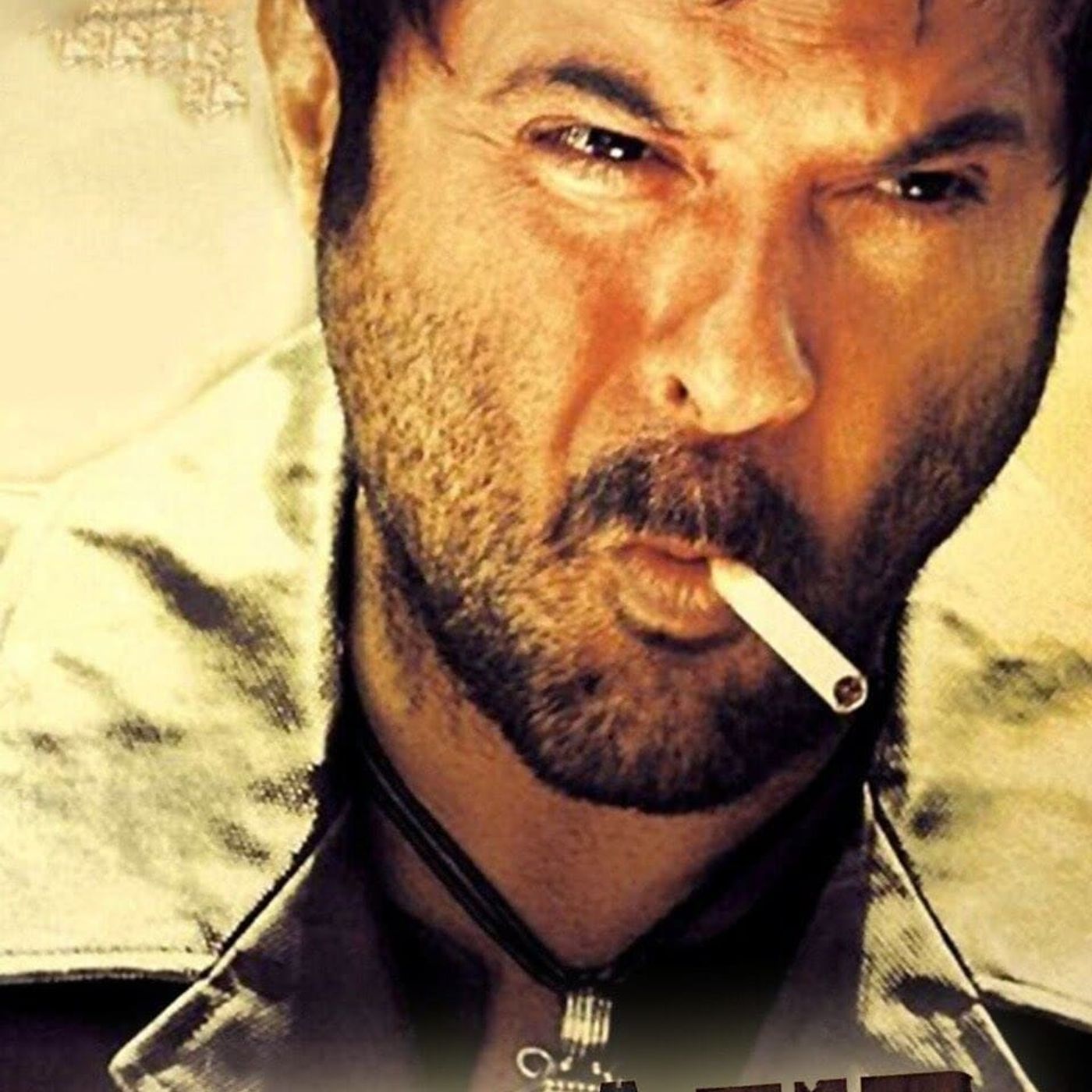
We're gonna be talking about two thousand and four's remake of Oliver Stones You Turn. Apparently Musafir Musafir is translated to traveler, and I'm going to assume that Musafir is in reference to Sanjay Dootz character otherwise known as the reason you would watch this movie. Uh, And we'll get to that when we get to it. But the film also stars Anil Kapor, Samira Ready, and Aditya Pancholi. Anil Kapoor plays like guess he plays what the Sean Penn character from You Turn a a low life, a small time criminal who gets And here's the thing, it's it's You Turn for Like this movie's three hours long almost, so it's You Turn for maybe forty minutes of this movie.
So You Turn is I think only ten minutes shorter than this because this is two twenty five. So okay, there's a half hour twenty twenty twenty to thirty minutes difference. What You Turn in this movie is only like thirty minutes of this movie. It's kind of the crazy part. There's say that this is a remake of U Turn is not fair to this movie, not saying You turns a good or bad movie, but I think this movie is doing more things than You Turn is.
It's kind of what I'm alluding to because it is because there's not a Sonje Dout character in U Turn Turn could have used because in You Turn his character is you know, clearly Sean Finn is supposed to get some money to somebody, but it's not really a physical presence. There's really no threat, right, they needed the threat. Should we talk about the stories or like, what part of you turn is in this? So? Anil Kapoor plays a low life, small time criminal who steals money from Sanjay Dout and then Sanjay Dutt gives him the opportunity to kind of make good by taking a bag of something to goa to Jacko played by shat De Kapur, who looks like Gotbi top Bagchan by the way, and there a Milkapor meets sam Samirra Reddy's character who has been and trigger warning, I guess, but not that it really matters.
She has been raped by her husband played by Mahesh Mandrakar, who is also her father. Right, is that what's going on here? It's incest? Yes, at least it is a U turn. I guess it's kind of you.
It's not as I guess it is. That's what's It's not as heavily imply. It's not as explicitly said in this movie the way it is. I mean it is her sister's husband, right, so you turn It is very explicitly Jennifer Nicknolty is Jennifer Lopez's father, right. They they tone certain things down for this movie, and I think that aspect of the story you turned didn't actually handle very well.
Right, it just sort of throws it at the end. It's just like Nick Nolty, you know, incestuous creep. It's like, all right, there's doesn't that bake it worse? Like it just kind of feels like it's already bad, and it completely ignores the other aspect, which is he's white in they're Native American. Like, there's some racial and political stuff going on with that relationship that the movie just maybe they filmed it and it got left on the cutting room floor, but it just seemed like all of that seemed heavier than the movie could sustain.
And one of the things I think Mussa Fear did really well is they fleshed out a lot of the characters, but they also decided a tone that worked, which is it's like someone watched U Turn, then watched Fast and Furious, maybe some lock Stock, and then thought crime is fun and sexy. Oh, let's turn on MTV. Oh let's get some really good like ninety eight degrees, like Aliyah dance stuff going on. Rance music. Man, That's that's this movie's bread and butter.
Baby it's Indian trance music. So I watch You Know, You Turn. I don't want to live in that world. I look at Musafir and I'm like, despite the crime going on, I would want to be hanging out and go I'd be having a pretty good time being on the sidelines. So I'm very curious.
Colin, tell me what you thought of Musafir. Overall? I really liked it the first time. It was a really fun, you know, not too heavy, you know crime movie. You know, it's the great twist.
You know, he's you know, the criminal get He steals the money, but then his girlfriend runs off with the money. Then he gets a chance, he's got to get more money. Then that goes away. He meets this woman, her husband hires him to kill his wife. The wife hires him to kill the husband.
It's got some classic noir stuff going on. But you know, it was really fun. And then I saw U Turn, and I had very high expectations for You Turn. My two favorite Olliver Stone movies are Seizure and The Hand in Reverse Ord of the Hand. Then Seizure and there's so many good people involved with U Turn.
Incredible cast, and then it's got Enio Moore Kona, who did the score, and it was just a bit of a letdown for me. It felt like it was just retreading standard noir tropes without really adding anything. And then when it gets to the sort of racial and gender politics, it seems like it didn't really care about that aspect of it. And then I went back and watched Musafir again and I liked it even more. Sanja Doutt is just he's the MVP of that movie.
He pulls it through. I really like the fact that Musafir has the wife and husband when there it cross cuts both of them telling the main character why they want their spouse killed at the same time, all right, which is cool. Which doesn't happen In Turn You Turn, You you never get Jennifer Lopez's perspective, and even at the end when you do, you sort of get a filter through Sean Penn who doesn't really trust her. And I'm like, I don't know, man, this seems a little skeezy. Like so, I think Musafir just was a much better structured story.
The thing I was kind of alluding to with U Turn being again like again, it's this a remake of U Turn, but it's really not like it's that's not the The story of this movie is much more about the conflict between a Nil Kapoor's Lucky and Sanjay Dud's Billa. That's and which there's none of that to your point. In U Turn, that's it's that's this is movie's own thing. It chooses to have him go somewhere where two people try to hire him at the same time to murder one another. But even then it it the payoff is different and the way it operates is different because that's not that that in U Turn is the climax of the movie.
For this movie, there's other Like you know, Aditcha Pancholi's character is a completely other thing that has is not a U Turn either. That is a complete other tangent that this movie goes on. This movie goes on like five tangents, which is why it two and a half hours long. But I think it actually benefits from being two and a half hours long because not saying that the plot of U Turn isn't great, but to use the plot of U Turn art and parcel with other things and making it not the singular thing going on, but a part of a bigger kind of crime. Story I think is smarter than just oh it's this one thing and we're gonna hang our lantern on this one thing.
I completely agree, and I feel like they found the weaknesses in the vague areas of U Turn and you know, really extrapolated upon them. I think a key one right at the beginning is you know the lucky the Aneil O'Neil's character from Musafir, Sean Penn. You know, you know he used to be involved with tennis and now he owes some people some money and that's about it. I love the fact that you know, in Musafir we found out that his father, you know, painted posters for movies. There's more of a background for like, how did he fall into this?
It's not just that he's a scumbag, that's all Sean Penn is. He's a scumbag. He's not deeper than that. You know, this one, you you you feel a little bit for for him. And then not only that, that great opening you know where he's you know, it's a drug deal.
You think he's killed a cop, and then the bartender pulls a gun and then his partner runs and you hear the cops coming. Then you realize that he's just ripping off other crooks, which I think is really interesting because we've encountered this and other Bollywood noir movies where the main character is the anti hero, but they're not that right because he's not. He's not he's not stealing from other people, he's not killing other people. Like I think the movie smartly is like, if he's going to be the main character, he needs to be relatable, right, Sean Penn is not relatable. This guy, He's relatable, He's empathetic, you care about him.
He seems like there's still like a good guy somewhere, and he feels put upon by things. He's not like relishing having to do any of this. I mean, this is this is you know, also the story of the criminal trying to go straight and this is his final job and you know, I can retire after this one, you know, the one last big you know, big hit, big job. So I like, like, to your point, like that that makes him a much more interesting and relatable character. It gives him some nuance because again, he kind of seems like he's in a life of crime by happenstance, not necessarily by choice, which to your point, We've also seen in Indian cinema as recently as Carl Nayak, where Sanjay Dutt plays a character that is a anti hero who is a criminal because of the life choices that he had no control over, and you see it here with a Neil Kapor's character the same way.
This is a little bit more relatable. In Carl Nayak, Sanjay Dutt murders someone in the first five minutes of the movie, so a little bit of a different way of doing things. But you know, there's also we haven't talked too much about her, but his girlfriend Laura, you know, we sort of meets him because you know, she comes to the door and knocks and he's like, this is our house for the time being. So clearly he's sort of moving from place to places he does his crimes. And he says to her like, oh, I want to you know, now that I have this money, we can you know, buy a house of her own.
And he seems pretty sincere about it, like he is, he's a romantic at heart, right. Sean Penn is a scumbag at heart well, and that's the thing. Like the Sanjay Dout character in this movie is ah he's not relatable. He is not He's not an anti hero. He is a villain, right, Like, I mean, I guess he's an anti hero.
Well, he calls himself the villain, right, Well, he calls that's I believe that's also that feels like it is a direct reference to Calm Nayak, which translated means villain. And the most famous one of the most famous songs from that movie is him singing about how he's a villain. So I can't help but feel like Sanjay Doot is just like, well, that's what they kind of know me for, so make sure to bring it up. Well, he's dropping. His character drops so many movie references, right Chole, and I really one of my favorite lines is when you know a New York calls him on the phone, he says, like, you know, like in most movies, the villain makes the hero nervous.
You're the first person to make the villain nervous, which just to me really endears Sanjay to me as a viewer. I'm like, the big bad in this movie is nervous. Like there's just something kind of weird and sweet about that. And it also says something about their relationship, like he keeps giving him opportunities to redeem himself. I think it's because deep down he actually likes that guy, and that's why that relationship, you know, keeps the movie together all the way to the very last scene.
Sanjay kind of disappears from the movie for a while when the movie decides to kind of go full U turn and you have a Nil Kapor interacting with Samir Ready and Mahesh mandra Car as the husband and wife it Sanjay Douk kind of takes a back seat, and honestly, for me, that's the least successful part of the movie because he's the best part of the movie. I mean, he's the best part of the movie in a way that you kind of almost wish he was the main character of the movie and it and it could work because he's been the main character in other movies similar to this one, doing similar things, so it's not like it's unexpected for him as an actor to be able to carry a movie. But I personally I found his character more interesting.
Obviously, Anil Kapor is more relatable, but Sanjay Dout just walks away with the movie. Anytime he's on screen, he just walks like five miles down the road with the movie. But I think that's what's smart because like so many times, he makes an entrance, you know, like you know, he you know, you'll you'll see it will be like a dark alleyway and then his silhouette will appear and then he walks out of the shadows. Another time, you know, his goons are trying to steal a little you know, convince a bar to sign over their property to him, and he's like, no, no, no, you're you know, Billaw's not here, and then the guy steps aside and you just see Billaws like silhouette. Then you see the knife, the light shining off it.
He knows how to make an entrance, and this movie understands his role, and the movie knows that every time he shows up, you know, the movie's gonna like uptick and get a little better. And so I think they smartly keep him to like, ah, maybe the movie's dragging, let's bring him back because he's gonna spice things up. That's fair. He could be a little too much for the movie. I don't know.
I mean, you know, Sanjay Dutt is someone who when Heather and I talked about Agny Poth the original we kind of gushed at how amazing Omi Tap is in that movie. But and Josh and I were talking about this on the last episode with Sanjay Dutt. He is amazing in the ogny Poth remake. Have you seen it? No, he's the villain in the Ognipath remake and he steals the show in a lot of ways.
He makes the remake better than the original movie because the original movie's villain is not as memorable as he is, and Prithique Roshan is amazing as well. So it's just that Omi Toop didn't really have a powerhouse of an actor opposite him as the villain in the original one. But when you put a powerhouse in that villain role, like Sonjay Doutt, he literally steals the goddamn show. I know, in a way that's like it's his movie. In a lot of ways.
It says a lot that this movie. The opening song, like for the opening credits and the closing credits are both Sanjay. Yeah, I mean it's it's the sactly. I mean it's and it's the same song, but just I mean it's almost like something out of a like master p video. It's just like him in the back of a limo with all these women around him drinking and he's just like got his knife and he's just like bouncing side the side.
Such a good song it is. It's a good song. It's again like he it's not that he's not a good singer, it's just they're not with this particular song. They're not asking him to do much singing wise. So it's just kind of like spoken word it's wear Cohen or something.
Yeah Cohen. It's it's pretty crazy. It does end up working because I don't know. What's funny is that the movie has like a James Bond opening. It takes twenty four minutes to get to the opening credits.
That's like a quarter of thing, Like I guess like a quarter. Yeah, it's it's a fair amount of the movie just gone before we even get to the credits when it So I watched it with Lauren and when when the opening credits started, we forgot that there hadn't been credits, right, Yeah, they're just like holy shit, And it's a great credit sequence. I think the credit sequence may be one of the best parts of the movie. Like it's so I don't know, it's so wild. Like again, I haven't seen an Indian film do that yet where it's like that the lead sit the lead singer in the song is the actor, and it is very clear that they're not really singing as much as doing like a like a trance dance number, because it's such a weird song, like what it is as a song is kind of strange.
So it didn't occur to me the first time I watched About on rewatch MTV gets a credit at before the credits, like before the movie even begins, right after the certificate. That's right, and I would be very curious to know what they're in involvement was because the filmmaking aesthetics are very music video. It's very like I mean, I think about you know, Fast and Furious, which really incorporates so much of like nineties music video you know, aesthetics into into narrative storytelling, and then you get to the like the musical dance numbers of this movie just look like straight up music videos. Yeah, and they're great videos. Like I love all of the background dancers, Like all the guys have like little like soul patches, you know, they're matching things.
I'm like, this looks straight out of a nineties movie. Then again, it's only it's two thousand and four, so it's five years removed from the nineties. Like it's I find it to be very nineties. It's it is. I don't know, like the movie feels very like early two thousand z E.
Like the way it shot, just like the color palette you you mentioned the kind of the editing of the movie. The editing is is music video. As much as I've seen in something in a while like this, it does kind of feel like a Fast and the Furious movie without the cars, because that's the only thing this movie's lacking is like a car chase. There's not really a car chase in this movie. I love when they go to goa and you see all the American tourists, cause it's just like there's a lot of sexy people dancing, and then you'll see like a guy that looks like he should get like a Dave Matthews show.
And then you see a couple of like older folks, and you see some like obviously like college students that are there on a trip that like aren't dressed to ice as, like in a T shirt and jeens, and it's like everyone else's like shirt lists and like Waxed, and I just it's just a nice little touch. I think it's it's it's fun. It's those sequences I think are just really thought out. I think there's a yeah, they're they're really incredible dance numbers. I have nothing more sophisticated to say to that.
They're really no, You're no. To your point, they're really well done. I mean, I think that that kind of early two thousands MTV music video aesthetic really informs the way that the music is used in this movie. And to have that opening song be like a crazy kind of club dance number, and then almost all the other songs are kind of club adjacent music like it. It is very clearly the kind of music of that time, which is like house music was very popular in the early two thousands, like Derude, Sandstorm, shit like that, and this movie's in that world like it it it it creates its own soundtrack of things that are kind of popular at the time, and one of those is house and trance music.
And look, like you mentioned the opening credits, I have not seen a Western film that has that kind of credit sequence before, but I kind of wish that I had because It's pretty great, especially if you're trying to emphasize how much of a badass a character is by having them just wrap in the backseat of a limo with their switchblade and all their bitches unquote. It's the second real scene with Sam. It's after you know, he's Lucky's discovered that she's married, and it's when he has to go deliver the bag of money to the tattoo artists they're meeting at a club. And so of course when we get to the club, Sam is doing one of her insane dances with the you know, with her goatee soul patchy dancers, and then Lucky has to like bring the bag and walk through them on the stairs even though the song is over.
And so I just love the idea that the movie almost seems to want you to believe that this fantasy dance number is not a fantasy dance number. This is the actual world that these characters are in, Like her job is just to do this all day long with these people. And I think that was that's kind of cool because a lot of times I feel like the fantasy dance numbers, it's like, Okay, the narrative is going to stop and we're going to have a song. I like the diagetic dance numbers because I mean, in a lot of the stuff I've watched recently that is more either. I mean with something like Fan, which we watched earlier in the month, there was one dance number and it was diagetic.
That was it. And I'm trying to remember what else we watched this month. Yeah, call Nayak's dance numbers were all diagetic as well, like it was taking place within the the fiction of the world, like you said, it wasn't this like, oh, it's inside the character's mind for a moment, or they're kind of thinking about the way they feel about another character. I mean, there there are some musical numbers in like what is it, Tiger the Tiger, not Ak the Tiger. That's the first one, Tiger Zenda high, which is the second one, and then Tiger three.
They Tiger two and Tiger three both have a musical number that is essentially the two main characters essentially in like a sales commercial. And it makes no sense in kind of the grand scheme of the narrative. So it's like this weird aside where they go and cut wood in the forest and make it look sexy, and it's like, what does this add to anything? At least here, it's like it's it's not only adding, but it's actually part of the framework of the movie. Then there's the is it the first song is a Lara when she's a washing the car, Is that right?
Yeah? And she puts the soap SuDS all over herself. So that's I mean, that's that's a little something that you know, it's not purely diegetic, but it's like, Okay, it is taking place at the house where they're at, and there is the car, and some of the other numbers are a little more non diegetic, but I I appreciate the way that the film tries it in, you know, bridge the gap between the song and the narrative. We haven't talked about one of my favorite shots. I think the Lawer characters is quite interesting.
I like, she doesn't exist in the U Turn movie at all, but I love that she sets the trap or Lucky by leaving not only a trail of rose petals, but she's taking selfies with a polaroid camera, And then when he picks up the polaroids as they develop, you know they've animated it, you know, the so it's like within the photograph, it's actually like a moving picture. I was just like, it's to me, that's like, it's another really interesting touch. It's the director going above and beyond to work in some new editing techniques. Some you wouldn't expect that the scene would need special effects, but he found a really unexpected way to incorporate them. And I like seeing that creativity.
It's going above and beyond what the scene requires. Well, not only does it go above and beyond, but it actually makes a case for it needing to be there. Like it does it it it makes sense. It's not necessarily just a flourish, which it could have been. It could have been a flourish, but it ends up being like, well we get to understand what exactly is going on here.
I think it also there's a motif in this throughout this movie mainly related to Sanjay or he's referencing movies. He clearly feels like he's a character, that he acts like he's in a movie. And I think, you know, when Lucky's looking at those photographs, it's like he's looking into a movie and he's seeing he's seeing Laura as you know, he's following the narrative that she has created. He's looking at the polari and he's seeing a movie screen. He's watching something, and so I think that sort of ties into this, you know, almost like Metanis.
It's a movie that's very aware of the style in what it's you know, in the tradition that it's following well, and to your point in having the Sanjay doo It character be the one who acknowledges it, it does. I don't know, like if it were an nil Kapor, I don't think they'd be able to get as much mileage out of it. But because it's Sanjay doot and his character is already kind of so off the wall and strange, it kind of doesn't feel as weird coming out of his mouth as it would if we're trying to like, okay, so we are now finding a nil Kopur relatable, but we're gonna also have to have this like metanist to it, which might get in the way of him feeling relatable because it may come off as smug. But if it's Sanjay Doutt coming off that way, it doesn't matter.
Because he's the villain. He's the villain quote of the movie. So it's okay if he comes off as smug. I mean something both in U Turn and in Musafir, and it is just a large and near trope the anti hero main character is never as bright as they think they are, right, I mean, Sean pen gets come up, and that's the whole point of that movie is his come up. It's you know, it repeats lines of dialogue.
Lucky is not a smug Clearly he's unlucky. You know, you know that these things happen. But I don't feel like the point of the movies that, like, he's a smug asshole who's going to get his come uppets. That's not the point, right, And in that sense, it is a little different from the traditional noir archetype. He's a lot more They're going out of their way to make him a lot more relatable than I mean a lot of the noir things that I've seen.
I mean, the Killer inside Me doesn't really try to make the lead relatable, like that's not the point of the piece. No And here, I mean like here that is kind of the point of the Lucky characters to make him the hero of the movie and not again not just a schmuck like you've put it, because again, that's that kind of would make sense with the noir tradition, and he's not that. He's more of a traditional hero from a traditional narrative. The you know, we've heard about the cop. This is his one last night out on the job.
This is the the criminals one last night, and then he's done. But what a crazy night it is. And that's this story. I love it. We mentioned earlier, but I think it bears repeating.
Sanjay calls him to the hero, right, you know, he doesn't call him the anti hero, and I also think that speaks to their relationship. You know. You know, Biila knows he's a bad guy through and through. He knows the people he works with are unscrupulous, right, he has no problem shooting people, men and women for that matter. And he even remarks about him, but he's like, yeah, Billa has never shot a woman before because a woman's never crossed me.
He knows he's he knows he's an asshole. But I think he knows deep down that Lucky isn't He doesn't belong in that world. You know, he still almost kills him, you know, he gives him the blindfold and says, walk across the highway, right, you know, if you get to the other side, then I'll give you a chance to live. And then at the end of the movie, walk toward an oncoming train. So he's he's not the nicest guy, but you know, I think he recognizes something a little more wholesome isn't the right word, but he know, he knows is that lucky, isn't you know the villain?
He doesn't belong in that world. Well, and given the way the film ends, I think that goes one step further to reinforcing. Kind of the movie itself sets itself right intentionally at the end, it goes, oh, you know, Musafir, the sitular traveler, goes off on his way and drops the money bag because he needs you know, as silent Bob says in small rats or chance on Bob strike back. You know, Jedi wants not for you know, Jedi needs not earthly goods. He just goes and travels on.
He's like Bruce Banner from fucking Incredible Hulk, right onto the next town for Billa, Right, Because that's the thing, like if this word American movie, that's what would happen is then there'd be Musafir too, where he meets a whole new group of people Sanjay Doutz does and you know, inserts himself into their lives the way that it kind of happened in the first movie. Obviously, this is not American cinema, so we don't have that happening. This movie is self contained. But Sanja Ditk plays this kind of character. That's what Indian cinema does.
They just have actors play the same kind of character over and over again. As opposed to the same character, they just play a same kind of character, not the same one specific. Actually, I think Lucky is the traveler. That's how I interpreted it. Oh really, because he's he's the one who's not supposed to be in this story at all.
He's he's only in it because he has to bring this package in order to you know, settle this debt. Yeah, that's I mean at MIT's I think it's I think it's just as fair of an interpretation. Yeah, no, I agree, And it's an interesting to that level of interpretation. I don't see that sort of ambiguity in U turn, No, not at all. That the movie is not even going for that in a substantive way.
The movie is much more interested in something else, which is unfortunate because again the movie that is You Turn, it's not a bad movie, it's just it's not doing enough. It doesn't do and it's two almost two hours long to your point, Like this movie, it goes in eight different directions and it ultimately pays all them off to the point where Aditya Pancholi's character does get the payoff that the movie has been spending two and a half hours getting to. In the last five minutes of the movie, you get that payoff, and it actually we're talking about someone being an anti hero. That is the kind of Bela's anti hero moment is killing the dirty cop who has been kind of hanging out in the outskirts of the movie the entire time.
Aditya Pancholi is an interesting actor because I've seen him in a couple things. He looks really different in this movie, to the point where he looks Hispanic. He doesn't even look Indian. The character that he's playing doesn't look Indian at all. And I was surprised when I looked it up that that's who that was because I've seen him in one or two other things, but he didn't look like this in those things I didn't recognize of him.
I loved his energy. No a bald head. He just looks like a total badass. He's kind of got like some Steve Austin vin Diesel vibes like. He's very imposing.
He's a very different, different, very different stature than Lucky. But Soance is a pretty big guy too, and he's wearing that leather duster. He looks like he should be out of like a Sergio Leone movie. They really spend a lot of time making Sanjay Dutt look cool in this movie. Don't they like that?
The movie almost seems like focused on that, maybe a little too much at times, where it's like he's got to look cool, like you mentioned, like he's got to look cool every time you see him. And we've direly talked about the other characters compared to which I think says something about the movie. But the movie. I watched it twice. I would gladly watch it a third time.
It's very satisfying. As I said earlier on, I thought it was fun and this is a world I want to be in. And not to sound shallow, but you know, frankly, when I watch movies a lot of times I think like, this is a world I want to be in, And to use James Bonda as an example, I'd want to be a I'd want to be in one of the Sean Connery movies, even if I'm just like at a table nearby. I would totally want to be in the world of Roger Moore one hundred percent. I would want to be in the world of Timothy Dalton.
I would love to be in the world of Pierce Brosnan. I would never want to be in the world of a Daniel Craigbond. It's severe, it's sad, it's depressing, it's you turn. I'm like, h it's sweaty and grindy and like, yeah, look looks uncomfortable and it's supposed to be Like that's intentionally supposed to be hell. And then you look at Musafar and there in Goa and there's music.
People are sweaty because they're dancing a lot of pretty colors. It's like, yah, this is a pretty nice world, and I'm glad there's a happy ending. I don't always like to see a pretty dark endings. Well, I mean, isn't that the noir thing? Like that's kind of where the movie bucks the noir trend.
Is the movie you have every main I mean other, well other than Lucky's initial girlfriend Laura, who I guess she's one of the kind of second or third antagonists of the film. If you have the kind of the sex pest husband, you have the police officer, and then you have her as the other villain, as the true, true kind of villains of the movie. Her character is it's I don't know, it's weird to me the way her character is kind of just disposed of, But I think it furthers I guess how little fucks Billa gives as a character, which I think works in the movie's favor. I think it makes him again like seemingly necessarily too. He needs to be unhinged.
The movie has to get there, and it gets there. It weirdly seems like he kind of respected her for like stealing the money, right, he doesn't when he's revealing when they're in bed together, because he gets on the phone with Lucky and then he hangs up and he's like that's Lucky and she's like huh. He's like, yeah, you know, the person who stole the money from right. He seems he seems to sort of enjoy this, like, but not in a sadistic way. It's it's and she seems very surprised that he's bill At a big gangster.
But yeah, I think in a weird way, he kind of saw her as an equal, like you're a gangster just like me, right, which I think is interesting because in a lot of Indian cinema that I have seen around this time, the female characters can get short shrift, and I don't think they get short shrift in this movie. I mean again that I think that this movie handles the whole U Turn parts of the film better than U Turn does, and that's because it actually gives the female character in this movie some autonomy of her own, because that's the other thing we haven't mentioned. The way it ends up playing out in this movie is Anil Kapor does nothing. He essentially shows up and everything's happened already. She kills her husband by I guess not really accident, because she does shoot him like six times, but it got to the point where he tried to kill her, then she tried to kill him, and then she kills him outright.
And the way that the movie does it I really appreciate because you have Lucky show up and seeing kind of the aftermath of everything, and then we cut back to her telling him what happened, and it shows us then chronologically what happened. I like that style of storytelling because I think it it kind of ratchets the tension up a little bit because we don't know what happened, but we see the aftermath, which is, you know, fucking crazy. They're like pushing each other through. There's a point it's like it's like fucking Buster Caton level of nonsense where they're one of them is like holding the other one and slamming them through things or pushing them through tables. It's like a WWE match.
I was expecting someone to hit a rock Bottom through a table. I mean really like it. It goes kind of over the top between the two of them, but it kind of makes it slap sticky in a like maybe unintentional. I kind of assume, well, I'm talking about well, you're talking about yeah, the two of them. Yeah, Yeah, it's like comed It's like comical in a way I was gonna say, because the final shootout kind of goes to like John Wu level parody right where we're you know, Lucky in the Tiger the cop are, you know, jumping in the air and doing these sort of like slanted moves in slow motion shooting and yeah, it's it's total like, oh, yeah, we've seen John Wu.
We're just gonna like amp it up to eleven and it is very funny right like that, And and that, I think for me is the thing that I appreciate about the movie is that it it knows that it it's not that it's not taking itself seriously, but it doesn't need to be self serious all the time to be able to land the serious moments like that. That's the you you kind of alluded to it with Daniel Craig. Daniel Craig's James Bond is devoid of fun because they somehow, for whatever reason, believe that fun and serious cannot work at the same time. It's either serious or it's fun. It can't be both.
And this movie actually makes the case that you can do both by by attending to both in equal amounts, by having serious moments interspersed with bun sly tongue in cheek things. Because yes, Sanjay Dutz's character is more or less breaking the fourth wall constantly, but it's not done in like a dead Pool way where it's literally smirking at the fucking audience. It's done a lot more nuanced. I would say it's it's less specifically breaking the fourth wall, but more just acknowledging the movies construct that this character finds himself in. Yeah, I think I think you sum it up.
He's he's he's playing a character, he knows he's playing a character. And I also think that he's Billah. He's this mythic figure within the world of the movie. Right. People know him because of the deeds that he has done and the way he like.
You know, it's Seena mentioned earlier where they're trying to, you know, take the bar, the fact that you know he's standing behind, you know, his lackey, you know, just out of sight. You know, he's planning these dramatic moments with Laura in bed. He plans when he's gonna do the reveal, Oh, I just hung up with your boyfriend that you jilted and stole the money, my money. You know he got her in bed. He clearly spent some amount of time with her right he didn't, you know, he didn't lead off What's Gonna Shoot You right away?
Like he's a dramatic character. I don't know if campy is I don't think campy is the right word, but uh, I think it gets close. He's like a modern day gun slinger, Like I don't know, it's it's one of those things where he's a character that has a bone to pick with the movie that he's in, and he wants you, as the filmgoer, to know, like, anytime you see me on screen, you're not gonna be able to look anywhere other than at me. And there's so much of this movie that's tailored to him. I'm actually kind of disappointed that there hasn't been a sequel to this.
That's just the prospect of the character he gives the knife to being a small child who he says, twenty years from now, I hope you hunt me down and try to kill me. And it's been twenty years since Musafir came out, And wouldn't that be like a wouldn't that like that's the thing again, Sanji's played this character a bunch of times, so it's not like he's never done this kind of character again, But to have him play this character from Musafir finally getting his comeuppance twenty years later would be a pretty good would be a pretty good payoff. But to your point, that is dramatic as fuck. When he's like, I'm not gonna kill you, I'm gonna hand you the knife and say come kill me in twenty years kid, and he says that, he's like, he makes a movie reference with that, isn't it, Zanzir?
I think so, yeah, yeah, like he's a centiphile. I love it well, Kat, And that's kind of where it works with the payoff because again, like if you have him referencing movies, which is part of really the language of India, like film is a lot bigger of a thing. I mean again, not tolling you something you didn't already know, but dear listener, if you've never listened to us talk about Indian cinema. In India, film is revered in a way that the United States we view it as a product. They in India view it as a pastime.
And that is something that we have lost. And I'm to blame because I don't like going to the theaters, but that's because For the most part, the theater going experience hasn't been great, and most movies I've gone and seen haven't justified being shown on the big screen. I just went and saw The Mummy, the nineteen ninety nine movie. I went and saw it on the big screen. It's a great movie.
Man, Twenty five years later, that movie still fucking hits. And that's kind of the thing with something like Musafir is this movie still works twenty years later because what it is doing is is just riffing on things you've seen a million times before in an interesting and new way. The plot of U Turn isn't anything particularly novel on its own. It's kind of just to play on strangers on a train, if we're being honest here, it's kind of like so sort of weird mutation of strangers on a train, if you I mean again, rightly, you have two people that don't know each other asking one another to do something that the other person may or may not feel comfortable doing, and what happens when those things do or don't happen, right, I mean, we're kind of in that same realm musafr goes.
I'm not necessarily interested in that story as much as the guy who gets involved. I want to know why he is involved and what happens before and after, because in U Turn, we don't see any of that, Which is why Sean Penn is the schmuck in the movie, because in that setting, in that specific spot, in that narrative, that's the character. But we don't know before or afterwards, so we can only, like you've said, assume that he's a schmuck the entire time. There's really no after right right exactly here there is, which I think to your point, I appreciate that the movie also does have kind of a happy ending. It gives everybody a happy ending, including the money.
The money has a happy ending. It does, I on a sound shallow, but I feel like movies. I'm tired of movies like hating their characters. Like it is just very nice. This is a very pleasant movie to watch.
Despite there being some like you know, unsavory violence, it's they handle it with a delicate touch. It never like even the sexual violence. They don't linger on it. Whereas like you Turn, they really want to see you. You get to see a Nick Nolty on top of Jennifer Lopez in a way that you don't forget it's right in this movie.
You know there's disturbing elements, but cool, we're gonna do them just so you know what's happening. We're gonna get on with it. And I do appreciate that well. And also to your point, I mean again, this is Indian cinema, which is known for being rather conservative, especially with I mean again, you see it with plenty of stuff. Now you know, character is smoking cigarettes on screen or drinking and they have huge warnings.
You know, this is injurious to your health. And like, that's India. And Josh and I talked about the last episode with just the conservative nature of the Indian government right now and the way things are in India and the way things are being censored. And it's fucking crazy to me how far this movie goes for two thousand and four in Indian cinema, because like in Western cinema, this maybe would have ticked the needle up a little bit because there's kind of again, this movie doesn't have the incest angle, but U Turn does, but it does have kind of the sexual violence. I don't think it really would have moved the needle in Western cinema, but in Indian cinema.
This is kind of an unheard of thing to go as far as this movie does, because most Indian cinema is not, especially at this time, is not known for pushing the envelope with sexual violence or sexuality in movies to begin with. That's a really good point. And I like that it goes there. It doesn't feel unearned. It feels like it needs to go there to pay off the scene later in the movie where she ends up killing her husband, where Sam ends up killing her husband and you have to see how terrible he is.
Because that payoff is that that much I think more impactful because you get to see her really lay it in on him and you understand why he deserves it, and he does deserve it. And I and again, like you you turn, never U turn doesn't give you the payoff because it's not about the payoff. It's about the comeuppance. And in this movie, the payoff is more important than the come uppance, because, like you said, the movie's not engaged in hating its characters to the point of making sure they're all dead by the final frame of the movie. I don't I kept waiting for a moment in uturre and I've only seen it once, so maybe I missed something like I don't want to I don't I don't want to show you you turned under the rug.
I'm reading the novel right now, and so I might go back and flatch the movie again. It never feels like it really was behind Jennifer Lopez's character being behind it, and like it never felt like it gave her a moment to say something, and it never believed her. Right even at the end when she's talking to Sean Penn and there in the getaway car, it feels like it doesn't fully believe her. It feels like, yeah, she could still be lying to me. And in the very last scene, you know, it's she gets you know, he gets his revenge on her, and I don't know.
That didn't really sit well with me, and like, come on, man, she's it didn't really work. Where is this movie? You know? It believes her, It listens to her, It gives her, you know, the agency to tell her side of the story, and it gives her the agency to do it on her own too. Yeah's that is the part of this movie that I did.
I did enjoy probably more than anything else. Is the subversion of expectations within the genre itself, like you would think that Anil Kapor would show up and have to kind of take care of business or something again, something more noir ish would happen, like he would kill her by accident or who knows, something again, more in line with the genre that this movie is kind of attempting to be, and instead it just goes, Nope, We're gonna do something completely different and have her kill him, and that's the outcome that is not expected at all. What's also interesting about the way that scene is edited is it comes right on the heel of, you know, the cross cutting between his and her stories, and then it crosscuts between his and her both giving Lucky instructions for how to break in and kill the other person, and you see him sort of doing both of those at the same time.
And then it's just so it's like you're watching like, Okay, yep, he's following in this narrative, he's following these steps op in her narrative, he's following these steps, and then boom, he walks in and it's not what he expected and it's not what the movie just told us is going to happen. Right, And I think that's a really cool way of setting it up and paying it off too. Like it ends up, it ends up kind of and you know, reading and doing the research, you know, before the episode. I think this movie totally deserves the credit of being better than You Turn. If we're going to say that, if we're going to say that this this movie is in fact a remake of U Turn, then this movie is fucking heads and shoulders better than You Turn.
And I think it is a remake. I think it. I would consider it. It's it's got enough of what makes You Turn You Turn in it that you can't ignore the U turnness of this movie. If if his if his girlfriend hadn't gotten murdered and Sam had somehow gotten murdered by Bela instead, and Anil Kapor ends up with his original girlfriend from the beginning of the movie at the end of the movie, I think we might feel differently.
But given that she ends up being heart and parcel to the way the movie ends up playing out at the end, she's in the actual climax, the third fucking climax of the movie. Uh. That's the thing like Indian cinema, it's not not just one climax, it's like two or three or four. It's more in line with the way I think about Steven Spielberg making something like Indiana Jones, like every fifteen minutes, we have to have like a musical surge and something happens. Indian cinema, there's a lot of Indian cinema movies that have like something happens right before where the intermission would be, because that's the other thing.
When you're seeing these movies originally in theaters, you're not sitting through a three hour movie all at once, only fucking psychos like Western cinema does that. I don't know why. I don't know why nobody has thought it's actually probably not a bad idea to give them an intermission so they can go spend more fucking money, unadulterated and not have to rush, because that's used to I know, I know, I don't like Lords of Arabia that's got an intermission? Is it because they can't show as many movies? You're telling me that because you can't show as many movies, you're not gonna somehow offset that by making more money by giving people fifteen minutes to go, Oh well, no, you're right, there's another hour and a half of the movie left, so I'll get a fucking slice of pizza, as opposed to I have to rush back to get a coke, to go back to make sure that I don't miss five minutes of the fucking three hour movie because it's kind of ridiculous, and I love that Indian cinema takes that into account with the movies, like things are kind of always happening, and with this kind of movie, it's cognizant of that.
So this movie's, like we've both already talked about, like it's moving fast. It's a three hour movie or two and a half hour movie. It doesn't feel it. It doesn't. There's very few parts of this movie that drag, if any parts of it drag.
So I've not what I would agree at nothing drags in this movie. It. You know, both both viewings went very fast. So I've not seen a movie in India. I've never been to India, so I can't make this comparison.
But what it sounds like to me is, you know, it's like seeing a concert, whether it's a rock concert, where you have time between bands to talk to your friends, walk through the crowd, go get a drink, go to the rash table. Or at a classical concert where you have an intermission and you get up and you go stretch your legs, you you walk out of your seat and you are with a community of people that are there for the same event. So that's my point. Like I feel like in if you get to like a multiplex, you go in, you get your seat, and you sit down and you're having your experience. The movie ends, everyone leaves the movie theater.
The way you're describing movies being shown theatrically in India, it sounds like, well, you get up in the middle of the movie and you have your intermission and you're gonna be mingling with other people. Even if you don't talk to them, you're gonna overhear them talking. Like it feels more communal the way a concert might. It's again, like I alluded to in the opening, like it's not this is not a product in India as much as it's a pastime, like cinema is a thing that you go to with your family. And that's why so many of these movies are masala movies because they're trying to check every box.
They got a little bit of action, they got a little bit of romance, they got a whole lot of comedy because everybody loves comedy, and they maybe have a little bit of you know the dshume which with Josh was talking about, which is you know, the noise that they make when they punch each other. It's the automnopeia of them punching each other. And that's the thing. Like DDLJ at the end of it has a kung fu scene for no fucking reason other than because I think they needed to get five minutes of shahru Khan punching someone at the end of the movie. It is.
There's no reason why there's an ass kicking scene at the end of DDLJ because it doesn't need it, but it has it because Indian cinema, to your point, it's more it's a shared thing. Everybody loves. Everybody loves movies. There are plenty of people in this country, both younger than me and older than me that don't like movies for a whole host of different reasons. Couldn't tell you the names of actors, couldn't tell you the names of the directors, couldn't tell you their favorite movie.
If they've watched a movie this year or last year. And I'm not bemoaning these people. I get it. There are just some things that are more important that people are into. In India, cinema is kind of a thing that everybody loves.
It's just part and parcel with culture in a way that the movies are big, and then the songs from the movies are big, and then the songs from the movies ingratiate themselves into real life. Like one of the songs from DDLJ is played at or less every Indian wedding. Best I've been told, which tell me a song from a fucking movie in this country that gets played it like every single goddamn wedding. Yeah, Like that's my point. Like it's so heart and parcel with so much of Indian culture that it's just intrinsically linked to everything.
And this is not me speaking hyperbolically. That is the case. That is the truth. And that's why India, a massive country, has many different fucking woods within it. You know, there's Bollywood, there's Tollywood, there's Hollywood.
There's so many, and there's so many that I've never even gotten a chance to watch it. Like Canada, films, I have seen none of them. I've seen a handful of South Indian movies, but for the most part, I've watched Hindi language films, which come from Bollywood, which everybody's heard of. But it does make me sad that film in this country isn't the way it isn't consumed the way it is in India, because, like I mentioned going to see The Mummy for my birthday last week, I mean, the people that were in that fucking theater were my age, Like, who the else is fucking Who's fucking nostalgic for the Mummy? It's people that were within five years older or younger than me in nineteen ninety nine, Like, maybe you saw it in your thirties, but I feel like if you saw the Mummy in your thirties, there's a high possibility you think it's drivel, which I know.
We know plenty of people that don't like the Mummy, but we do know plenty of people that do. But most people my age think of it rather fondly. And to your point, like that in and of itself was kind of nice because I knew why everybody was there. You didn't wander in off the street accidentally to see The Mummies twenty fifth anniversary showing of a movie that you can watch effectively for fucking free, like on streaming, because it's probably on like four different streaming platform But no, I paid seven dollars to go see it in theaters. Seven bucks.
It was cheap. It was cheap. I was gonna say, movies, multiplex movies in New York are not seven bucks. Well, that's the thing. Like these, like these anniversary showings of things all also tend to not be full like a full price ticket.
No, they should do. I would love to see both for my wallet's sake, but also to read democratize movie theaters as a place to go and hang out, bring the price down, like the idea of it being a premium experience. If you go, if you go to your generic multiplex, charge in twenty bucks a ticket. It's not going to be a premium experience a sea, it's premium. Colin, what are you talking about it, reclines, buddy, that's pree meum.
It's leather. It's not leather, it's pleather. I'm with you. I've bemoaned the fact that the cinematic experience did not change post COVID, and it fucking bufms me out that it didn't change post COVID. I mean, a lot of things didn't change post COVID.
One of them was the film going experience never got better. It just kind of I guess less people went to the movies, so now it's I guess it's kind of better that there are less people. In a way. The price has gone up, though, well, yeah, at least in New York. That's farewell.
I mean, I can't say that the price had I guess the price has probably gone up here. I just I try to find a way to keep it as cheap as possible. But for the most part, to your point, it has gone up. I mean, if you can't go, if you if you have to make a decision between buying it on Blu ray or four K or seeing it in theaters, and those two prices are similar, that's a fucking problem. My favorite movie theater in New York is still five dollars per screening.
The way since it's start twenty ten, twenty out Spectacle Theater. It's amazing. That's it. I'm there, and I'm there. They're not showing, you know, mainstream stuff like it's it's alternative.
But like they occasionally if like a filmmaker artist is there with like a sixteen millimeter print, they'll charge ten bucks, you know, to for special occasion. I yeah, no, I have a ten dollars a month memberships, so I get into all the five dollars screenings free. It's amazing. And that's the thing. Like I I guess maybe my biggest complaint in all of this is kind of again goes back to the kind of commercialization of all of this, at least for us in the West, which is because it is now just a product and all they do is find ways to builk you of your fucking money.
They now realized the thing that Tokyo Disney is known for the last twenty years, which is people will spend money on a fucking piece of plastic to put put things in. So now we're selling pop I'm not bemoaning popcorn buckets that are shaped like fucking sandworm flash lights or or Slimer from Ghostbusters. I'm not bemoaning it because I actually think it's cool. And I have the ghost Face one. It sits on It sits in our living room on top of one of the bookshelves, but because it's it's such a product now, and everything feels so corporatey and gross, and everything is so expensive, and everything is expensive, from the ticket to the drink to anything you are doing at the movie theater.
It's like going to the fucking airport at this point. The problem is it hasn't gotten better. Nothing about it is better. It's just the same. And when you talk about a place that charges ten dollars, they probably charge ten dollars and they care more about what they're showing than any of these megaplexes do charging twenty dollars a fucking ticket.
And it's sad, but again it's the state of things when this country's feelings on movies are it's a product, and all we care about is all we care about is the fucking box office, nothing else. Movies are successes or failures based solely on their box office and not whether or not they actually have done anything important or said anything important, or added anything to anything. So whether or not it made money, it's like fuck that completely, like that is not the end all be all in terms of measuring sticks for fucking anything. My record store was this the previous weekend, and when I'm my local store. I think in the past few years, like a lot of places, they haven't been participating in a record store Day because if anybody's listening that doesn't realize this record store Day releases, they charge more than most you know, prefer stores to get the stock.
They can't return dead stock. No, they cannot, and they don't. They also don't know what they're getting, and so it's just a pain in the ass for them. So my local record store, record Grouch, did more than just announce we're not going to participate in the Record store Day. They shut down all business and open it up to have free concerts all day long.
So that required that was really lovely musicians to volunteer, you know, their art. But to me, that was really the spirit of record store Days, presumably about record stores and their role within the community. It's not about getting whatever limited red polka dot repress of XYZ. And I love the fact that they just gave the middle figure and said, no, this is about the record store as a hub of the community between artists and people. And that's what they did.
And I thought there was really lovely and beautiful and I New York Rent is not cheap. Uh. They had their employees there that day, so they they did what you were, you know, talking about. They said, screw the profits, that's not what this is about. It's about something else.
So they really moved me that they did that. I thought that was really remarkable. Well, and it again, it shows a commitment to what I think is so important at least for me and what we're trying to do at weirding Way Media, which is collaborate and be you know, open and creative with other people and do it transparently in a way that is not about making money. It's about being creative and collaborative and being a good steward of a certain corner of the community, of a certain corner of pop culture that we occupy here in the podcasting world. And yeah, it's it's hard to go to a movie and get excited about going to a multiplex where it costs thirty dollars for a popcorn and a fucking soda and two tickets to a movie.
But man, if that's the only option, sometimes I guess that's the only option. I just wish it wasn't the only option. And then the other option being Alamo Draft House, which don't get me started, because that's its own problem in and of itself. But at least Alamo Draft House for most people, is going to be a better film going experience overall because it is curated and they do care marginally more. I mean at some locations, given that we know some of the people that work at some of the locations to be upstanding human beings.
So I would say there are some that I could say, if you're going to that one specifically, you're going to a one that is at least well I would say, well stocked with good people that work there, but at least people that are cognizant of the problems of a place like Alamo Draft House. But you know, again, for most people, a megaplex is your only option to go see a movie, and they show, like, if you're lucky, they show five to ten movies, and then if you're lucky, you get a Fathom Events thing once a month. You know, there's I'm lucky that in Lincoln, somehow there's Indian cinema being released in theater in Lincoln, Nebraska. It's fucking insane to me. It's just as insane to me in twenty twenty four as It was in twenty twenty two when I saw my first Indian movie in theaters in Lincoln.
It's fucking nuts, but I low key love it because that means that these kinds of movies like Musafir are making an impact, even if it is small. But uh, you know, the Grand Canyon wasn't created in a day. It's a it's a constant drip. Someone like myself, someone like Josh, someone like yourself. I mean, you're probably the person you know, other than Heather Drain, who I've had the most conversations about Indian cinema with outside of just talking about it on a podcast, because you you seem to genuinely really like it too.
Yeah, I get. I got a list of things I want to try and do with you. Yeah, I know, which is which is exciting because like for me, it's like hell yeah, Like if you if you're picking things, I'm totally down. And that's the thing. Like with something like Musafir, it makes me want to watch more Sanjay Dout movies.
Clearly you're the same, but it also just makes me want to watch more movies. And movies like that are a good thing. Movies that make you love movies and want to watch more. Movies are hard to come by in this day and age, at least, so Culin final thoughts on Musafir. Great movie, as I said at the beginning first viewing, really enjoyed its second viewing even better.
Yeah, I completely agree. I think that this is you know, there are a lot of good movies in terms of the Indian cinema that I've seen that we've talked about together, that I've talked about in other episodes for Culture Cast in Bollywood Cinema Club, but this one is a good one. And I think that this is a good introductory one too. If someone had never seen Indian cinema. This one's on prime video.
It has kind of tropes and things that you'll recognize from Western cinema. It's a crime movie, so it's kind of action movie adjacent, so that's easier than you know more I guess challenging genre. Fair read that a horror movie. It shouldn't be, but it is. I understand why it.
But I think this is again, like this is a good introductory Indian cinema movie. We kind of didn't talk about him a whole lot, but at Nil Kapoor is great. However, when your opposite sign Jay Dooitt, what what are you gonna do? I mean, you know, you're playing second fiddle to a guy who's who's who sings the goddamn intro song for the movie, so we know where the movie is holding him in terms of in terms of regard. But but yeah, no, I'm glad we both enjoyed it.
And yeah, to your point there there should be more Indian cinema stuff coming down the pipeline of you and I doing a couple bonusy things. So but yeah, on that note, let's take a break, play some ads and play a preview for the first Culture cast of Mike white May from weirding Way Media, Cambridge. And with Shan is a podcast about two guys, obsessions, passions and hobbies. Those two guys are Mark Bigley, host of Wake Up Heavy, Recollections of Horror, and Ronald Zuriggian, host of the Skelevator YouTube channel. Each month, we talk about the toys, comics, movies, books, TV shows, and other cultural phenomena that captured our imaginations and helped shape who we are today, from Masters of the Universe to Saturday Night Live Star Wars to Harry Houdini, The Muppets to the Elephant Man, Ronnie and Mark dive deep into the recesses of their minds to pull out treasured memories of things lost but never forgotten.
Join us on the first Tuesday of each month over at weirdinwaymedia dot com or wherever you listen to podcasts. Yes, join me Jamie Benning on the Filmmentaries podcast, particularly if you enjoy stories like designer Nilo Rhodis Jamiro convincing George Lucas to push him around to help gain the support of his crew on the Ailing Howard the duck Plam, The door opens its George, everybody gas. George makes a B line to me, I'm literally back against the wall or here Puppeteer Tim Rose's emotional story behind that iconic Admiral Acbar shot in Return of the Jedi. I believe it or something to be proud of, but not the cell Burg or how Star Wars editor Paul Hirsch tackled cutting so many successful films.
The thing that I learned from work with the Parman is that tension depends on a clock. You need to have the sense that time is running out. Maybe Oscar winning sound designer Mark Mangini's insightful chat about his work on Blade Runner twenty forty nine. Not a single sound from the original Blade Runner in the new film, A great deal of inspiration. That's the film Ntories podcast with me Jamie Benning.
Hello, Twisted Humans. Do you find yourself wanting to know more about the latest murder, conspiracy, cult or haunting than this is the podcast for you. In nineteen fifty two, there was a record high of UFOs reported fifteen hundred sightings. There has been evidence of human sacrifice, double worship, and it is haunted by more spirits than can be counted. A family of two adults and two kids reportedly saw a giant flying thing with glowing red eyes.
And meanwhile, the family's nanny that helped Veronica to care for her and Lucian's children, was found bludgeoned to death in the basement of their family home. I'm Militia and I'm Sierra and this is twisted and uncorked. Why is everyone looking for Tom Hanks? Disgusting fie. Oh, come on, Morris, there he is because he was in the right place at the right time, in the wrong shoe.
Now, double agents are fascinated by him? Why are the one red shoe? Beautiful women are attracted to him? I knew it was you. Can you please just step aside?
You're cooking them? Yeah, I help you? And complete strangers are knocked out by his charm. Something wrong? No, mom, I did pass out today and got him hit by a bass buying then brush my teeth for shampoo.
I'm a cross for the part, but no, I'm I'm not tans. You need to relax and I'm going to help, not like you're calling for the star. How do you like that? Are you an agent? No, but I used to have an agent.
Are you a Swatson? I'm no more spine than you're a spinet. Tom Hanks, Dabney Coleman, Laurie Singer, Charles Derning, Carrie Fisher had Jim Belus in this summer's most hilarious comment. That's one step ahead of the rest. The man with one red shoe?
Why is everyone looking for Tom Hanks? Disgusting fe Oh come on, Morris, there he is because he was in the right place at the right time, in the wrong shoe. So that's right. On the first episode of Mike White May Mike White and I will be joined by Father Malone to talk about leg Grand Blonde avec un chasou noir, which is The Man with One Red Shoe. Not only are we talking about the original Franz Heerber film, but we're talking about the American language remake with Tom Hanks.
Shockingly, I have seen neither of the films, which is literally Mike white May every year. Every year, every year it's me going, I haven't seen these movies, and by the end of it, I go, well, sometimes I enjoy them and sometimes I don't. Twenty twenty was probably its own year, because little did Mike know picking host apocalyptic Soviet films in March of twenty twenty would be really depressing for a whole lot of reasons that he probably couldn't have anticipated. So yep, right, so but yeah, so that'll be That'll be the first episode of Mike white May. But until then, Cullen, where can people find you on the internet?
On the Internet, I have normally I say I haven't updated my blog. Well, I still have not updated my blog, but I have updated several other websites. I've been doing a lot more music, so I started a label called Bad Channels Records, So Bad Channels Records dot com that is updated as of this morning. I am this is twenty years for my instrumental project, Modern Silent Cinema, So Modernsilentcinema dot Com. One of the albums does have singing, so it's not entirely instrumental, but it's largely and so to celebrate, I'm releasing six albums and the third one comes out on May third, and it's sort of a collection of archival things.
I found tracks that kind of went astray over the years and got lost, some stuff recorded on microcassettes, some stuff on regular cassette recorders, so it's a bit of a bit of a diary. It's called The Cabinet of Modern Silent Cinema. And I co authored a book with Kevin Storr on King Vidor, which should be out from McFarland in July, and Noir speaking, I am currently writing an introduction to two etaly sebooks that Starkhouse Press are reprinting. I don't have the dates for that. Weirdingwaymedia dot com is where you can find this show Bollywood Cinema Club, which this is getting reposted on every week, so you guys got like five free episodes for the low price and nothing.
You got a whole month full of free episodes, not like I charge for them, but it's every other week, and now it's it was every week for a month. So maybe they're like, oh god, damn it, Well, don't go back to the other way. But but yeah, that's where you can find everything that I work on Patreon dot com. Slash Culture Cast is where you can go to get in on Rank and on Bond, which features Mike White and Richard Hadham and I talking about Bond once a month. We need to have Cullen on there, clearly because Cullen has opinions about James Bond.
And it has been a minute since Richard and Cullen and I have done anything together. I think it's been two fucking years at this point. Oh my god, it does not feel like that. That is, it feels like it's been too long. But now that two years just feels like tears.
I know that was that was like, that was like the Three Musketeers for a while. The three of us were like a constant for a while. But but yeah, no, we'll have to have you on there. But Colin, thank you so much for joining me. It has been a minute, but I'm glad we got to talk about lucip Here together.
Thank you for having me and UH and as always, we'll catch on the next episode.


