
About this episode
———
The Kulturecast is a film and culture podcast from Weirding Way Media, hosted by Chris Stachiw, the Doctor of Podcasting, alongside a rotating table of guest co-hosts. Each week digs into where film and culture meet — and how each one bends the other. Now home to sub-feeds including Required Viewing: A 360° Film Study with Dr. David D. Perlmutter.
New episodes weekly.
Subscribe on Apple Podcasts → https://podcasts.apple.com/us/podcast/the-kulturecast/id931361376
Spotify → https://open.spotify.com/show/5wjxip9XVYapYuY12yEaGY.
Back the show: https://www.patreon.com/cw/kulturecast
Transcript
Automatically generated, so expect the odd misheard name.
Wait, wait, so, Josh, you and I have talked about Indian cinema off offline plenty of times. I think at least it's come up a couple times. But what's interesting to me is you've been kind of much more at the forefront of this for a lot longer than I have. So I don't know, maybe we should have talked about something that's a little bit more. I don't know if this movie is not important to Indian cinema as a whole, but this is a fun movie as it were.
I don't know, if I mean again, there's a lot of there's a lot of things that can be talked about in terms of the the meaning and message of the movie as it applies to the Indian culture, which I mean again, there have been several movies. Bot Hy Do is another one that's very again kind of pushing the social message and pushing a kind of more progressive message, and I think that this movie is kind of in that camp of other care on Joharr films. But I'm kind of curious before we talk about this movie specifically, tell the audience of the culture cast a little bit about your kind of experience with Indian cinema and how long you have been in the world of Indian cinema and what that means for you.
Okay, yeah, I am. I've been writing about Indian films for about fifteen years now. I've been watching them for a little bit longer than that. I had my interest very quickly turned into to writing a year or two after I started watching. I just became insatiable and consumed a lot of films in those first couple of years and just found it amazing that no one was talking about them.
You didn't really hear anything about Indian films unless you were Indian back in whatever, two thousand and seven, two thousand and eight, you know, or before that even you know that, I didn't know much about them at that point. There was like one place to go see them in North Texas for the longest time too. Yeah. Yeah, That's the other thing that we kind of do share is I would say I probably left North Texas right as it was kind of becoming a thing, and like now it's I mean, now it's way more of a thing in North Texas than it ever was. But bun Asia used to be it.
That was it, you know there, and now they have it at Cinemax. Cinemars is showing Indian cinema and not just it, like not just Hindi language stuff like Telugu Tamil as well. Yeah, I mean the markets, the market has definitely expanded, and they've they've they've been trying to get some of those Indian dollars, the Indian film viewing dollars, which you can't blame them. I mean, the movies make money. So you know, writing turned into film programming at festivals, and that turned into festival consulting and strategy, which turned into marketing and sort of a sideline and distribution.
And so I've got my finger in all those all those pies right now trying to figure out, you know, how I can best support these films from this country that I've grown to love and talking about them, writing about them, sharing them. It seems to be working pretty well. You know. I've we've managed to get a couple of things some recognition, so I'm happy about that. And uh, for those in the audience that may not know, you worked directly, uh with the marketing for Triple R.
Right, Yeah, yeah, I was, I was right, Yeah, I was on the the US distribution team, uh for for Triple R when it this for the second UH run of the film starting in the summer of twenty twenty two, and so I was along for that ride. I'd known the director Rush Molly for a very long time and gets name checked in this movie, right, And so yeah, that was that was a sort of a test to see if if Indian films could work in a in a different space outside of their you know, natural audience. And you know, we were we thought it might work, but I don't know that you knew would work as well as it did. So hopefully we can we can keep moving in that direction. Well and yeah, what's funny is obviously I mean again, I don't have to tell you this, but for those listening who aren't as familiar with Triple R as I don't know, that's the thing.
Like I feel like at this point, if you're a certain film goer in this country and you watch certain movies, there's no way you couldn't have heard of it. Because even people I know who had never seen a single Indian film for watch Triple R. And I feel like that was a big part of it, was that the push on Netflix to make it like front and center on the front page of Netflix for people that were never watching anything close to that before, at least not in terms of international cinema, Like I don't. I mean, I think international cinema is something that everyone in this country should be exposed to, but I don't think it necessarily is. But for some reason, and I'm sure you were obviously part of it, Triple R got pushed rather hard on Netflix so that people would would be exposed to it.
I mean, we didn't have anything to do with Netflix did the theatrical stuff, but you know, it picked up picked up some steam on social media, you know, in little clips. Because one of the things that Indian film has always been really good about is that even the worst films are sometimes really good and really small increments, you know, and very small scenes. It's just that Triple R is nothing but those small scenes that that that sort of blow your mind. That's all the whole film is that, And that's not that's not terribly normal. And so when it you know, we started working on it and pushing it and talking about it and started the marketing going and getting all of our you know, publicity moving.
In the immediate run up to our theatrical re release was right about the same time. Actually it was. It's a it's a long confluted story, but the the Netflix was supposed to release it the day after our or theatrical re release, but they pushed their Netflix pushed the data up for themselves two weeks. So we have been essentially doing marketing for this film during those two weeks anyway, and when it came out on Netflix, it got a little bit of a push there as well, so it was kind of it was frustrating because we had planned to have our movie back in the years before hit Netflix, and then Netflix decided that they were gonna sort of jump the gun on that. But it worked out in our favor because people saw it and thought, rightfully that they really wish they could see this in a room full of people on a big, huge screen, and a lot of them did well.
And to your point, I mean, there, I think the expectation for Indian cinema is based on I think rightfully, so maybe again, like maybe not, some stereotypes that I mean, Triple R does kind of lean into, like I mean, and that's the thing on this episode of the Culture Cast, I am still Cristashian, much to the chagrin of many, and I am joined again someone who has seen a hell of a lot more Indian cinema than I, hell of a lot more Indian cinema than I have. You can find him on. Latest release is the Steel book release for the Green Room. No, yeah, the limited edition second Sight UK four K disc of Green Room that just came out this last week. And you're in that.
You're in the booklet, Yeah, yeah, I have an essay in there. Yeah, I have an essay coming out soon. I know they have them on Fractured Vision's new blue release of Doberman, the French action film from the early well around two thousand, so that should be coming out here pretty soon too. That's been announced already, so I'm excited about that one. Also.
Josh Hurtado's trying me clearly, I haven't even said your name. Jesus, just keep introducing me that I would say your name. And like we've kind of alluded to on this episode of the Culture Cast, it's finally April, which means life programmed a month, and this month I wanted to do Indian cinema, not necessarily just Hindi language films. However, this is firmly a Hindi language film. It is in a lot of ways, I almost say like the stereotypical Indian movie of a certain kind.
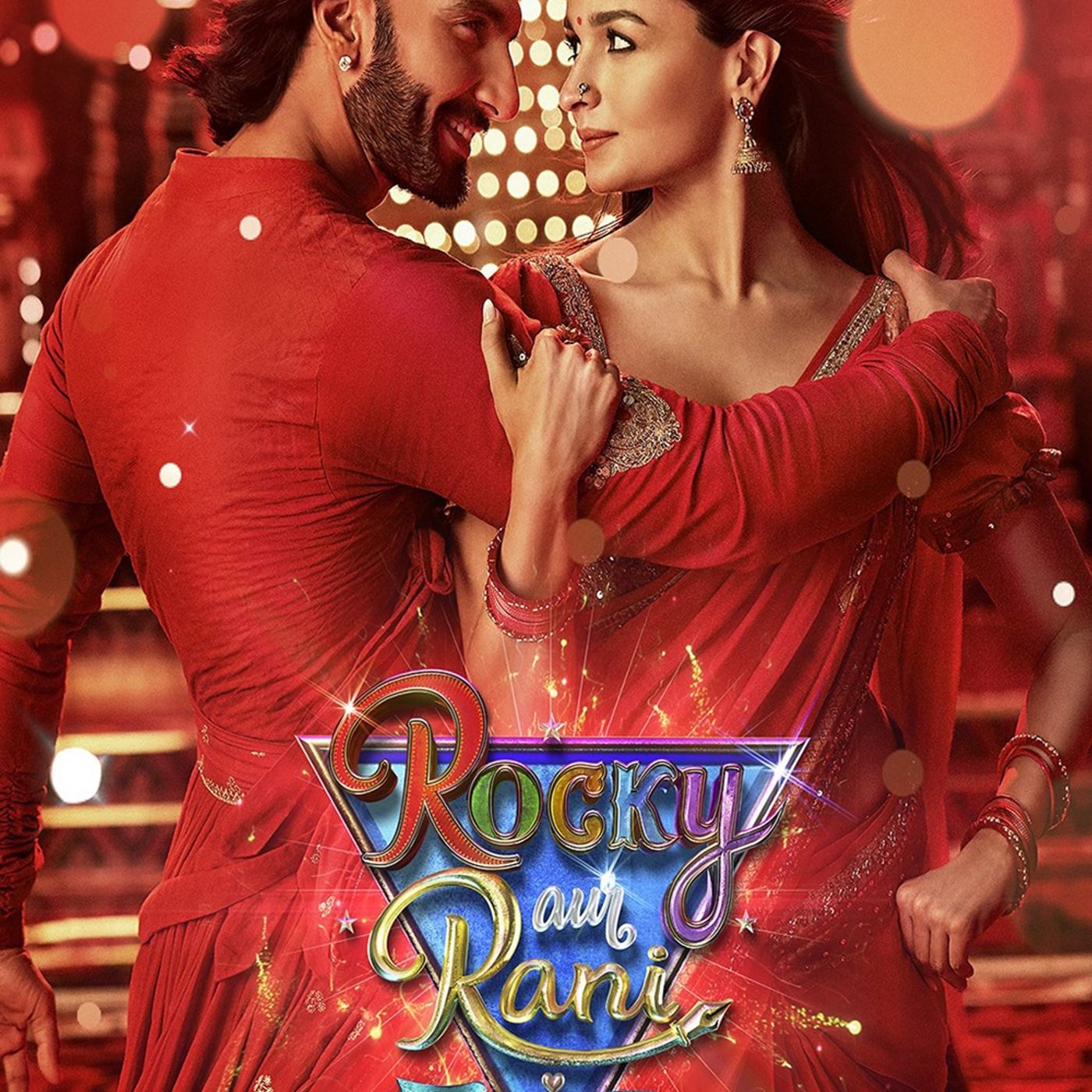
Especially I mean, and I would say the person directing it has definitely done this a couple of times before. But on this episode of the Culture Cast, we're kicking off Bollywood Cinema Month Indian Cinema Month with Rocky r Ronnie Kee Prem Kahani otherwise known as Rocky and Ronnie's Love Story. Shoot. No, I'm sorry. I didn't objectify you.
I objection I love. They're gonna get to but he man all natural, no steroid answer. I really beg you to educated enough problem. You know that the fristmosphere tell us to google the che thtay party and a Maranami make that rest East May. But that's thick question.
But pH you can check out Big Occupy watch March. You see. The problem is family is water seek cheering, chug up, not now backs trying family for I don't tell you family cause too many family as too many families, my oh my god, genius, it's a switch team. Many to America is a White to Shire Charlie Ali switch. Hi.
You see day I know Aga forty two poting national duty citizens. Omeo would the name of Shamas the constituency big boss class not educational char such cases. A thing in the keep, Praim Kahani your cut man in a great tom Amita and luxury. Hello, what you say, yanderte Laundry, Laundry Bepranica. The film is directed by Karen Johar.
It stars Dahar Mendra, Ali Abad Ron were saying in Jaya bag Chan and if you can't well yes. The leads are Ali Abat and ron Ver Singh. Ron Ver Singh pleased the titular Rani and Ali a Bat plays the titular Rannie, and the two of them fall in and out of love and have to, oh my God, have to prove to one another that they can live up to the standards of each other's family, along with unraveling a subplot of It's there's a lot going on here. It's very similar to a lot of other movies that Karen Johar has directed. So I'm gonna kick it to you first, Josh, what did you think of r A r K p K.
That's probably how it's wanting to be referred to at this point, that's too many letters. I yeah, I agree with you, Er, I really liked Rocky Irani. It's uh, you know, I I've kind of been lamenting the lack of films like this over the last several years. There. You know, there's no shortage of romance films in Hindi cinema.
I mean, there's there are plenty of those, but the way this, someone like Karen Johar makes them, that's a different, a different you know, sort of stratosphere of melodrama of you know, scale, opulence, visual aesthetic kind of everything. Characters are huge, everything is big about the film, and it's really easy to do that poorly. But he has a pretty firm grasp on what the audience wants. And you know, if I'm I think I'm a part of the audience that wants this. I really enjoyed this movie.
Yeah, I mean for me, Karen Johar's first two films are kind of like what this is more or less re kind of readdressing, which is, how do we do this, you know, twenty plus years after I've done it the first I mean again, I don't I don't know if Kuku Hotai or K three G is a bigger movie. I mean, those are both big deals in their own way, and I think that they're both movies that are are very interesting. And I think that this movie is firmly in that camp because for me, it's it's similar to DDLJ and that it's a romantic comedy, but there is a point, there is something to say, and in this movie there's kind of the interesting comment of you know, the woman's place in what is being assumed to be a progressive or you know, positioning itself is a much more progressive Indian society, which I mean is a conversation that is being had and needs to be had, not just in India, but I think I mean around the world, but obviously with a culture like India, which is you know, again can be rather conservative, obviously, you know, this is an interesting and I think timely conversation to be had.
And you know, that brings me back to something like you know, Kuch Kuchhutahi or K three G and that it's not just a movie about you know, characters falling in and out of love and the kind of almost Shakespearean machinations going on around them, but there's also something at the heart of it that it's saying is not okay or isn't great in Indian culture and wishes it could change it, and again is showing what it would look like if people did actually change and it changes it easy. I mean, that's the thing. You know, bod Hi Dough came out in twenty twenty two, and that's about a that's like the first time a gay marriage and gay characters have really been represented like that. So and that's from a couple of years ago.
So I enjoy this movie. It is very much exactly what I was expecting it to be though, just by the look of it, I mean, and I think I appreciate that the most about it. And it's kind of redeemed ron Vier Sing in a way because the last thing I saw him in was Circus, and oh boy, that movie was kind of rough compared to this one. You know, Runer Sing is is an interesting a former an interesting actor. You know.
I what you see in in Rocky Irani as as over the top as his character is. And we'll talk about his the way his character acts, that's that's basically his public persona in general. It's not just in the film. And so if you ever see him doing interviews or on red carpets or anything like that. You know, he's he's always dressed in some outlandish thing.
He's always kind of going over the top, very you know, very demonstrative with his physicality all the time, to the point where it's kind of exhausting. And I don't particularly enjoy his public persona. It just feels it feels like he's never off. It feels performative all the time. He's always on, as it were, Yeah, always on.
And you know, it's it takes a special kind of film, or the right kind of film to harness that into something that works. And I think Rocky Irani is definitely that. It takes the character that is Ron Beer singing and creates the character that is Rocky Rondaua. And they are close enough that I'm not annoyed by this person in the film, because it's clearly a character that's built around his own personality in a way, you know, dialed up a few dozen notches, but still essentially him. And you know, and when he's not casting those roles, it's a little bit more difficult to take because he does that sort of high pitch acting that he does doesn't go over in every single kind of film.
So yeah, he can be hit or missed for me, but he's a solid in this one, and I totally agree. The only other thing that I want to say I've seen him in is gully Boy, which is a very different kind of movie, and that performance, I think is is interesting in comparison to these two because that is a much quieter performance. Yes, it is very much the center of that film. And obviously he's the main character. He is the titular gully Boy in that film, and he's I mean, it's very much in a you know, eight mile but set in you know set, And by I think I believe said I mean, that character is very different from these two characters.
But but the character that he plays in Circus and the character in this movie are very much similar in terms of the high energy thing. And you're right, I mean, if you watch him in speaking of Netflix, the Netflix documentary The Romantics, he is I mean, he's always on like yeah, and I'm I look, I get it, like as someone who as an I mean again, like anyone who makes content kind of feels like what point are you on? And off? So I kind of get that problem because again like you grapple with how much of this is for real and how much of this is him playing it up for again, the the benefit of his audience. Who I think you would agree love that and eat it up like period all And then he knows that, which is why he does it, Uh I do.
I was wondering if you were going to bring it up, but I'm glad you brought it up more or less immediately. The meta nature of the movie is interesting that, Yeah, the character of Rocky is pretty much just Ron Vier saying and yeah, I totally get why it would not be something that would resonate with I mean again, like with a certain kind of audience, And I'm kind of with you in that sense, Like it is a bit much, But I think here it is obviously like we know that this is a problem and it's it's essentially being addressed immediately in the movie that this guy's a ding dong and they need to like he needs to transform in the movie as much as again, like the person in real life maybe needs to. Or again, maybe I don't think that there is a reality here that this is is an a thing that he's aware of.
I think he just leans into it. I think the movie just it the movie is the expectation is that's the kind of character you're gonna play, and he doesn't disappoint in that regard. Same with ali Abot, like this is very similar to other characters I've seen her play as well. Yeah, fantastic here too. I mean I love her and everything I've seen her in.
Yeah, she's very good. And you know, she there's a there's a big I mean we've talked about it or in the US, not we particularly, but in the US there's been a big pushback against the you know, the idea of the Nemo baby. And nowhere does that exists more more obviously than in the land of Indian film. I mean, it's almost all of the major performers are descended from some some branch of someone's family tree that was in the business or in entertainment in some way. And Alia bought her.
Her family is no different. They come from you know, producers and directors. Mukeshot the Bought family, vickorm bought. All those people are have long histories in film. What's interesting though about the way that she's sort of developed over the years is that her career has taken a turn towards the more serious mainstream stuff or even like this sort of masala mainstream stuff, whereas her family, her family's films have historically been more in the genres based exploitation, b movies, that kind of thing, and so she's kind of escaped that part of her family's film lineage.
And she's she's done great. I mean, she's she's done really well for herself. She's made a lot of really good films over the years. She's she's just like any other star, made some kind of bad ones too, but I think at this point the good ones are outweighing the other and people are really recognizing her as one of the most talented actresses that Hindi cinema has to offer well. And her chemistry with ron ver Sing is really right, Like the two of them play really well off of one another.
And I mean, again speaking of gully Boy, she was in gully Boy opposite ron Via Singing. I like her more here because again, like I think that they really go on a lot. I know, they go on a further journey as characters together, and in gully Boy, I don't necessarily remember her character getting an arc as much as you know, his does in that movie, but in this movie they both get a pretty I think they both get a pretty interesting arc as characters because he again he starts out as very much like a ding dong, and by the end of the movie, I would say he's as close to being in touch with his feelings and reality as any character can be in any one of these movies. I mean, again to the same point where like a shah ru Khan and d DLJ gets to where it's like, all right, he understands everything and he's ready now, and that Ron Viersing character gets there and it's believable, which again I think to your point, like is a credit to how good the two of them are as actors, because she really is in his I mean, like, if anything, he's her equal.
I think that what she's being given is a little bit more interesting because in a lot of ways, the female perspective in the Indian movies is not always the one that we're getting if if I mean, if not, they're just being sidelined completely, which we've talked about a lot on Bollywood Cinema Club, where sometimes the writing for the female characters is a little lacking, and I would say it is far from lacking in this movie. Oh no. And I think that's one thing that definitely Karen Johar's films do well as they they treat their female characters with the respect that they deserve. Most most of the characters in this film that are worth the shit are are women, Yeah, that are given any kind of story at all.
And you know, she's great. We did mention her off the top. But Shabana Osmy's another like very talented old school actress who's been doing who's working for decades and doing really really great stuff. Uh. She plays a woman who had a brief fling with Darmendra in their younger years, who is uh sort of uh we're be connected with in order to help him regain his memory.
Uh, and it gets messy in terms of his own current marriage, which is not great to begin with. But like all of the all of the main uh the main five or six characters all have you know, tremendous cvs. You know, they go back years. You know, Darmendra and and uh and Jaia buck Chahn were both in show lat together. They were uh, they weren't partnered up in that one.
Uh. Chaya was was partnered with her her soon to be husband on the top Buck John and Darmendra was was paired up with Harmaldy, but they were both in those and you know, it's it's interesting because in that film, Dermendra was you know, playing kind of a tough guy or to save village, and he spent most of the eighties and nineties playing like big burly, tough action guys. Right, and his kids also still have that sort of reputation. Sonny Deel and Bobby Diel Sunny Doel in particulars sort of a big action guy, and Bobby Diel is kind of making a comeback as a you know, supporting character, a character actor. I love him.
And Dermendra has to sort of pull way back in this because he's essentially comatose the entire film, or in a catatonic state for most of the film. But he's he's really wonderful. It's an interesting choice for him in this movie, right, like to Sideline because again you mentioned Chole, which we covered god a couple of years ago at this point, and like it's interesting because this is such a different role for him. It's such a again like out of the way, I mean, Jaya Bachchan has more going on in the movie than he does. And I mean again, she's playing a character very similar to other characters she's played because she's in couch Hota hide or yeah right, yeah, well she's in she's in a lot of stuff.
She's in she well, she's in K three G. And she's in K three G. Is what it is. That's what I was saying. Yeah, she's she she plays Amitav's wife in that right, brother of Shark.
So yeah, she's you know, she's great. She doesn't work as much anymore because she's you know, involved in politics these days, but when she does, she's she's solid. And I like her in this movie. I mean again, it's it's a role that could have gotten lost in the shuffle of you know, another movie like this, because again, some of these other movies don't have this the general rational love story. I found that to be interesting.
The Darmendra part of the film, uh with the with Shabana Osmy like that's that was the interesting part of the movie for me because again, like that, that felt like where the movie had it part of its message was coming from was their relationship because again, in a K three G or Kuchkuch hota hi. It's more like you know, lost love or someone passes away. This one is again a relationship being committed out of wedlock, which again you know, they don't they don't necessarily hang a lantern on it in the movie. They kind of address it in a way that's interesting, which I wasn't expecting. Yeah, yeah, no, totally agree.
And I didn't see that coming the first time around either. This is my second time this. I actually saw this when I came out in theaters because I heard such good things. I typically I don't usually run out to watch rounder seeing films because as I mentioned before, his personality can get a bit grading. But I've heard enough good things about this that I wanted to go see it, and uh yeah I was.
I was surprised at a lot of the uh a lot of the things that it was approaching in ways that you know, you don't typically see in these sort of you know, four quadrant Indian you know, big Massala romance films, right, but yeah, it does everything. It surprised me a lot, which is unusual at this point. You know that that they can do something that surprises me still but great, you know, always exciting, well and to your point, I mean again like something like a d DLJ. For me, that was my initial entry point into these kinds of movies. And so I mean, fairly or unfairly, that's kind of what I hold most of these movies up against.
Is the one that kind of I don't know, did it the best at least the way I was hoping it would be done. And I think it also has the best actor for any of these kinds of movies. That's, you know, that is the thing here. Obviously ron Veer Singh is a great actor, but he's no shah ru Khan. I mean, because nobody is.
And that's the thing, Like I to your point about like his personality type, I like what shahru Khan brings to these kinds of roles a little bit more because it doesn't seem like a like you mentioned, doesn't seem like as much of a put on here. It's a little bit of like ron Veer saying, is a little bit he's putting it on a little bit like and putting it on maybe in the direction that's lesser than he actually is, which again makes this character or more depending on how you look at it, filtered or unfiltered, but I don't know. I think for me, I think these kinds of movies, these massala romances, shahru Khan is kind of the king of them deservedly. So yeah, And I think, you know, for one of the one of the ways that I've very early on when I started writing about the films and programming them and sort of doing curation in both ways for these kinds of films was to not really consciously but just kind of take them apart and figure, you know, Okay, what's gonna work with the Western audience, what isn't going to work with the Western audience?
You know, which, which of these tropes of Indian cinema are will translate and which won't or which will be challenges. You know, this is the kind of film that if it's your very first Indian film going into it, I don't think it's right, you know, an ideal launch point because there is a little bit of inside baseball going on with the film. There are a lot of references to other films throughout, which is which is not uncommon because you know, cinema in India is not just a pastime, it's a it's an obsession, and so everyone is expected to understand certain elements that crop in from other films. They're expected to know when someone whistles a certain tune that it comes from this movie, as happens at this certain point in this film, And if you are unaware of that, those things can be a little bit alienating.
Not always, there are times where it happens and you just kind of understand that something is going on and you just kind of but it moves so fast. One of the prime examples of that as a film like gom Shantiom, which I know for a lot of people, he took the words right out of my mouth. Yeah, for a lot of people, it was sort of an entry point. For me, it was an entry points was Omshantiom? And what really when I first saw it all those years ago, fifteen sixteen years ago, was you know, it was just the everything was the atmosphere of the whole thing that really took me in and I I had the vague feeling that like I was missing stuff, but it was all moving so fast and it was so entertaining that I just didn't hear right, you know.
And in the years since, you know, I've I've come to understand a lot, not all, not anywhere near all, but a lot of the references in that film and an other film, and so it's just comes with time. You know, people my age that are that are living in India, I have been watching these films for forty five years, you know, I've been watching them fifteen, So I've had a lot of catching up to do. You know, there weren't they're not you know ingrained and they're not in my bones like they are with those people. But I work really hard to try and get there, and I still miss things all the time. But you know, there are certain things about this particular film that could be a little bit alienating, but they're still kind of sweet.
There's one particular segment of the plot that if you don't understand exactly what's happening, it gets a little bit confusing. And I think it's at the very very end of the film. Are near the end of the film when there's a dance, a song and dance sequence that if you don't understand the the original reference points and that they come from other places, that can be a little bit discombobulating. Talking about the Devdas song part Yeah, the Devas song, and it's not the only time that Devdas has mentioned, you know, when they go to when they go to his friend's wedding and they Ronnie's Father's invited up to dance, which turns into this horrible fiasco that he asks for her family. Is Bengali.
Dev Doas is a book by a Bengali author. It's been uh, it's been adapted in in the Bengali language back in the fifties, and the one that people in the western were familiar with is the one from two thousand and two, which is the Hindi language version. And so when he goes to what he asks, you know, for a song to dance to, they they offer him something from dev Dos because that's just what people in the Hindi belt understand of Bengali culture is dev Dos like but not but not that Dhali person, dev Dos, their version of Devs. And so you kind of see him shrug it off like okay, if that's all you got, like, if that's all you know about Bengali, but just sure, I'll do that, you know. So it is there's this culture class that goes between her, her family and his family that is more than just you know, the idea in the film is that his family is this very prosperous family who owns a candy company or sweets company that is just massively influential and successful, and they're very, very wealthy.
And her family is this very sort of academically inclined, artistically inclined family from Bengali family that has moved to Delhi so that so that Ronnie can work at this TV station, right, But the culture class between the Hindi family or the northern family and the Bengali family is the main gist of the conflict between the two groups, and that unless you understand a little bit about that, and my understanding is still pretty minimal, it can be kind of confusing as to the levels at which this is working, because that's something that people in India understand, you know, the idea of people from West Bengal, that those Bengali families are automatically assumed to be sort of more esoteric, more sort of artistically inclined intellectuals, that kind of thing, and that's what her family is, you know.
And if you don't know that about the cultures in India, then it just feels like this family is just kind of sitting here. They're just a bunch of nerds, you know, right, but it's not exactly the same thing. And you can see the sort of alienation that he feels when he goes into their home and immediately, you know, you know, points out a portrait of verbind Roth Tigre and asks if that's their grandfather, Like, no, it's like the greatest author in all of you know, contemporary Indian literature, right, you know that he just would know because he's this, like you said, this sort of ding dong. Yeah, who can bear who doesn't speak English very well, which is adorable and infuriating. If you're not quite sure why the subtitles are messed up in these which which is another cultural thing, it's the subtitles are intentionally written in sort of pigeon English because that's how he's speaking, is in sort of a pigeon English, because he hasn't learned it properly.
He's just sort of, you can tell, picked it up from from TV and picked it up from social media the best he can. And so everything he says is just not quite right. You know, he wasn't educated in that way. There's a lot going on, well, and to your point about kind of the inside baseball of it all. Yeah, it's you know, it reminds me.
Yeah, it does remind me of Omshanti Ohm a little bit in that regard, because again, like I don't think it's necessarily needed to understand the idea of like why her parents what is it about her parents that is making him seem lesser in their eyes? But I think the movie does a really good job of it. I think the movie lands that as much as it can for a Westerner who like, like, you've got to mention, I know even less than you do about exactly what you were talking about, But it did kind of come through and makes sense once I did a little bit of the addition to legwork, because yeah, it doesn't necessarily make sense initially why they're all laughing at him when he's performing that song. And then yeah, the scene, I think the scene afterwards does a really good job of explaining it, at least in as much as the movie can, or at least as much as the movie's interested in doing.
Because that's the thing you know that the Ron Veer sing character and the Ali a Bot character, they are they're the kind of the movies like differing mouthpieces at any one point and it is interesting that her family, who are so smart compared to him, are willing to put up with him even though he's a complete kind of again kind of a moron throughout most of the movie. And yeah, the thing with the subtitles. The first time I watched it, I was like, is this intentional? And then yeah, it does it so many times it's like, yeah, not only is intentional, it's part of the characterization of this character, which for me, again, like Karen Johar thinks of everything, and that's just one more thing that pushes the movie in terms of me and my ability to enjoy it.
Every little thing is thought of in a Karen Johart movie, and that even having the subtitles being kind of broken English, because it's clear he doesn't know how to speak English, at least at the level that her parents have taught her. I like that the movie is never at any point saying like I'm not making you aware of what's going on in MA does not seem like it's intentional initially, but it totally is. Yeah, for sure. I mean it's he's he is nothing, Karen Johar is nothing if not fully aware of everything that's going on. On the screen.
He fills every inch of the screen with something, so if your attention drifts for just a moment, you might miss it. You know, there's always something going on, and it's I think, you know, the characterization between the two lovers in the film is it's believable because at first, you know, just like you know, Ronnie is sort of she's laughing at him the first time she meets him, when he he comes to her office to try and see if if this person that his his you know, catatonic grandfather is pining for is actually the woman that heard her her grandmother, and he goes to meet her in her office at this TV station. She laughs at she laughs at them, you know, the second he leaves. She thinks he's ridiculous, which he is, and she doesn't take him at all seriously.
So it's kind of you're starting at a point where it doesn't feel like there's romance in the cards for these two because they are so different. But you know, we get to know the you know, the people beneath the facades that each of them have put up as the film goes on, and so it becomes more believable, and then things get complicated there are several twists. You know, when I was watching the first time, there are twists later in the film that I would have certainly expected that that really really work in the film's favor. You know, there's lots to enjoy here well, And that's I mean to your point that the movie doesn't it's not all again told in a way that I don't know, like, I don't think the movie needed to have twists, but I think that those twists later in later in the film do help kind of make it feel different and interesting and again not just like every other one of these movies, which it could have.
It could have just fallen into that camp of it's a Masla romance just being told with twenty twenty three, twenty twenty two conventions, and it doesn't feel like that. It feels like the movie is really trying to tick apart the expectations of people now in terms of what like what it means to bring a partner to your family, Should your partner have to change for your family, should your family even expect that they're going to and what does all of that mean? And it's interesting to see that in an Indian movie, because I don't think in a lot of ways American movies are even having this conversation, not this specific one. This has kind of fallen by the wayside because when I think of romantic comedy dramas in American cinema, they tend to not have this generational component to it that feeds into the main story.
Oftentimes it's just, you know, the entire movie is a you know, like, oh, what's the movie with Steve Martin and Alec Baldwin where it's like, oh, it's an they're older and it's Meryl Streeps. Well, it's get older romance. This is like, no, there's a lot of components here, but they all factor into and play into the main story, which is these two people falling in love. To your point, the facade that they've created is fueled by these people who we get to see what their problems are and they go on somewhat of a journey as well. Yeah, I mean, if you go back to you know, Kabi Kushikabi, I'm the tagline for that film that Karen Joe HARKing up with was that it was you know, it's about loving your parents, and so there is this sort of generational aspect to Indian relationships in many, many, many cases, not all cases, but in many cases.
That's you know, American families and American relationships don't really concern themselves with at the same level. You know, Right when I got together with my wife, you know, I hope my parents would like her, but if they didn't, I didn't wasn't going to stop me from doing what I was going to do. Whereas in you know, in families like this, you know, both of the both of these adult children are still living at home with their parents, not uncommon in in Indian society, and they, you know, the plan was and remains for a lot of them to stay at home with their families, you know, until they have sometimes even after they have their own children, and then they just take over the family household when their parents pass away.
You know, those multi generational households are not uncommon. They're not every family, but they're not uncommon, especially for big families, you know, affluent families like like the ones that we have in the film here, which is you know, it's it's kind of a foreign concept the level at which parents are involved in their adult children's daily lives, right, which happens a lot. I mean in Kabi Kushi kaby Goma happened. You know, it happens day, it happens. Yeah, it happens in a lot of films over there, because it's reflective of the society.
And what this film does is that it understands that, yes, that is a thing that can happen, and that is a thing that is a part of Indian society. And it's not necessarily a part that it's not an archaic part of Indian society. It's just a part of Indian society. And that these kinds of relationships and the kind of progressiveness this film is moving. The Indian family tours can't exist, can coexist with those older traditions.
It just takes a little bit of flexibility on their part, which is kind of where all the conflict comes in, is trying to encourage these people to be flexible, right, And what's interesting is, I would say that in a lot of these Massala romance is that is ultimately the point, is the flexibility of the society and the culture that these things are contained within. Because again to speak of the kind of conservative nature of Indian culture, I mean again, in our society it is looked upon very differently with a child living at home in their thirties, it's it's if anything is viewed negatively, or you know, you live in your mom and dad's basement. I mean, that's kind of always the you know, the flippant aside that one would say to someone.
But yeah, here it's it's not only acceptable, it's kind of expected in a lot of ways. And I think that it's interesting that the movie, like you said, it kind of it kind of says not only is it important, but other things, like it's important to be cognizant of what your family wants and how you are representing their legacy. But at the same time, like you mentioned, with your own personal life, similarly with my wife, if her parents had said no, I don't think that that changes my decision, and I don't know if it changed would change my wife's thoughts on being married to me anymore if something similarly happened to you, Like you know, that's the other direction that this story kind of goes, which is, we don't think this person is right for you, and what are you going to do about that if we say no?
And again in this story, they kind of push and pull, you know, tug a back and forth on what does that mean? And I like where the I like where the film kind of ends up with with that story. But at the same time, this kind of generational expectations are really I don't I don't know if they're ever not going to be in India, in these kinds of Indian movies, unless unless they get to a point where it's just everything is progressive. But I mean, again, I would assume it's probably more progressive now than it ever has been, just based on the way things are. Yeah, and I don't think that it's you know, I don't know that it's it's intompatible with with you know, being progressive in any way.
You know, those those ideals can still certainly work. What I think is very interesting and and I mean it's probably a bigger word than it's necessary for this. But what is kind of noble about the film is that it has those conversations out loud, you know, right there is the conversation like that they have very blatantly in the in the middle of the film where they kind of decide they're going to be together and then they have to you know, they they get into an argument about who's going to move in with whose family. That sort of leads into the second half of the films, you know, the conceit of the drama. But you know, Ronnie is not not conceding that, oh well, just because we get we get married, I will automatically move into your parents' house because that's what that's what's expected of us.
Why don't you consider moving into my house? But if I don't want to leave my family, even though that's what's kind of expected of Indian women is to leave their family and move in with their with their husband's families. And so you know, that discussion doesn't happen in that way very often, like I said, And that leads into the second half where she gets the great idea of them switching households and seeing if they can, you know, survive for three months with the other's family, which you know, everyone learns a bunch of, you know, lovely lessons about what it means to be a good person and you know why someone is the way they are, and and and all that sort of stuff. It's it gets a little bit hokey here and there, but you know, not not in a terrible way.
I mean again, like in my mind, it's similar to all these other movies we've been talking about. There's like a Shakespearean level of trauma to all of this, right, and and that's where I think for me, and you've kind of alluded to it, like the hopiness of it, the contrived nature of the story is them trying to really operate a like an elevated I mean, it's high concept. We're like, oh, you're going to go stay with her family and you're going to insert yourself into their lives and we're all going to learn that we need to grow together like a joy right, Like I mean, like it is kind of grown inducing because that is far from how reality works. But using the filmic language and filmic conventions, this is how this works all the time.
Is you know, the yeah, you inserted yourself into their lives and you change them. They'revocably like Jesus Christ. Really movie. But I mean it's there's something about it that, again, like Indian cinema just kind of revels in the fact that it's operating at this high of you know, peak human emotions. It's operating with the broadest of strokes, which I appreciate.
I mean, again, I think you get a lot of interesting performances from the actors when you're asking them to just like just go big for the most part, like just don't leave anything, don't leave anything on the table, go as big as you can. And I think everybody for the most part is going big in this movie. Maybe not loud, but they understand exactly what this movie is expecting from all of them because they're all playing very much elevated versions of these kinds of characters. Yeah, and you know, probably the only the only characters in the film were real grounded would be you know, Shabban Osmi and Drmendra in their relationships. You know, those those two characters for the most part, are are really the only ones who are playing real people, right, I think, you know, and that's that's required because they are kind of you know, apart from Rocky and Roddy, who are going back and forth costly, they are the emotional core of the film is and they're the reason for this whole thing to come together in the first place.
And you know, they they end up in the climax, you know spoiler, when when Drmandra passes away towards the end of the film. You know, it's it's part of the conflict of the film is you know that this woman who who fell in love with him forty something years ago and had never stopped thinking about him, and he about her, and she wanted to attend his funeral rights but you know, his his wife, who has never shown an outs of love for anyone in the film, refuses her or tries to refuse her entry to the funeral site. You know, it's she's the only one who is consistently throughout the film acting like a real person, you know, real person with real emotions. That's not like playing some kind of game to do something or trying to manipulate someone or impress someone.
She's just she just found this guy that she fell in love with and she wants to spend whatever time they both have, you know, getting to know each other as best they can. And I like that aspect of the film. And you're right, Darmendra and Shabana Osmy are really I mean again, it's the part of the movie that I was like, oh, this is different, Like I've really never seen this in another one of these movies, because again, most of the time, it's just it just exists. I mean, like in K three G it's I don't know it's being used as kind of the antagonary antagonistic point of the movie is, you know, the parents are kind of misunderstood and we have to how do we understand them? There's none of that here, it's we understand these characters.
It's just what they want is kind of not I mean again acceptable in Indian culture. But I mean again, stepping out on your significant other with someone else I don't think is acceptable in any culture best I can tell, right, And obviously, like that's the big kind of cultural cultural sticking point of the movie is what does it mean in a conservative society to step out on your significant other with someone else? And how does that affect you and the rest of your family down the road if that were to ever come out. And again, I think that the movie it's not necessarily the conversation and what that it wants to have, but it does make an interesting case for Okay, just because the older generation does kind of have this different view on love and relationships doesn't mean at the time, but they were the age of the characters in this movie, they weren't willing to kind of break the social mores then, because that is ultimately what Ron beer saying and Alia Bot's characters are about is kind of breaking the expectations that you see when you see someone like this, which is he's a more on that can't change.
And she's you know, I don't know if she's high strung in the movie, but she's a little a little high strung. I don't I don't think that they paint they don't paint her as kind of this you know, a nagging, you know, rich girl, which they could have I mean again, because like maybe not rich, but like she's so conceited and how smart she is, and she knows she's smart that she could run, you know, laps around him. There's none of that. So there's a little bit, but it's not as much as it could have been. And I don't think it again, And there's other movies like this where it would have made for kind of again, like a nag, and she's not a nag, thankfully.
It's it's an interesting performance, yeah, I mean, and she does it at a point later in the film, you know, when they're I can't I think they're they're broken up at this particular point. It happened several times throughout the film, but when she almost She almost you know, crashes into him head on, going the wrong way on the freeway. In order to, you know, just talk to him, she does run down a list basically of her old boyfriends and how you know, stellar and intellectual and you know successful, they all were in it. It's for her, it's in an effort to show that, yes, I was with all of these successful people but it didn't work. But I really want you, even though you are not this but you know, I could imagine being on the receiving end of that and being him like, okay, so you're just gonna tell you about all these you know, awesome people that you were with and now I'm the dumb ass that you're stuck with now.
Like it. It sounds different going out of one person and coming into the other person's ears, you know, and she's there's that sort of barrier, that communication barrier between the two where they haven't quite figured out how to communicate, you know, which is what relationships are all about. You have to learn how to communicate and and how, you know, communicating with each other, communicating about their feelings is so important. Even when they agree, you know, I've I've I don't know about you, But I've been in dozens of arguments with my wife over in the last ten years where we're saying the same thing just in different words, and after a while you're like, why are we arguing? We feel the same way about this?
This is stupid? Can we stop this please? Right? You know? And a lot a lot of this feels like that.
There are genuine concerns between the two of them they have to work out, but for the most part, like you can, they're the sort of you know, the Paula Abduel and mc scatcat, the opposite and tract of of the Bollywood film Here is these two characters. They couldn't be more different, right, but you know, some somehow they fit. I love anybody who makes a Paula abdul emc scatcat reference, by the way, you know, for all you kids out there taking two steps forward and two steps back. I think it is funny though, because again it does have that that again for me, is also part of these movies where it's like the I mean shahru Khan and kajole In and d DLJ. Like again, it was a different kind of opposites there, I mean, but I guess it's the similar.
It was similar but different, right because he was rich, he was rich, and she was more, you know, culturally in tune with the expectations of her parents. And there is some of that. Yeah, there's some of that here. I think that this movie is less I think that this movie is less interested in the the old school cultural mores being ignored. I think this movie is saying, like, we know that we exist in a universe where we've already had parts of these conversations, Let's continue the conversation in the direction that those things have gone without necessarily retreading the same ground.
And that's the thing I mean. Having these two actors in this movie, this movie coming out we know fairly recently, twenty twenty three, I think it makes a case as just as important, if not needing to be mentioned in the same conversation as some of those other Karen Joharr films, but also these masala romances that are again about where does your relationship fit into the grand scheme of your family and what does it mean ultimately to be part of someone else's family in the way that they're part of your family, and what does that mean for your family member too? Because that's the other thing about this movie. The family members movie is almost three hours long, that everybody is given a lot of time, a lot of time, which, again, in my mind, if you're gonna do these kinds of movies, you do them right, which is you have to make every character feel fully formed because you're going to kind of put them through the emotional paces and the movies three hours for a reason, because I think every at least every character in their family is a fully formed character in a way that if this were in an American film, they would just be supporting characters, maybe possibly just stereotypes, and these characters are far from stereotypes.
Yeah, I think there's a lot of transformation and evolution that happens among the characters in the film. I'd the only character I feel like, and I could be wrong in my memory of this, but there's the only one character that really doesn't do much evolving at all, is to Jory. Rocky's father doesn't seem to change much throughout the course of the film except in very very subtle ways. He's a very stern, stern father throughout the film, doesn't seem to have much care for his children or his wife. He dotes on his mother, and that is pretty much seems to be his entire life is doting on his mother, making sure that you know that she's okay, while his children and his other relationships have deteriorated to the point that they are almost non existent and he doesn't even realize it.
But you know, on the other side, you've got Roddy's mother, who is this sort of hyper intellectual woman with a vocabulary that is absolutely ridiculous. In fact, it's comical most of the time. And they point out how comical it is by one of them calls her their Shashi Throhor, who is there an Indian writer and intellectual who's sort of famous for using all of the words at the very bottom of this of the sourus to explain simple concepts. And you know, it's kind of taking that that woman and you know, getting her back into her feelings as opposed to you know, being in her head all the time, which which takes a minute. You know, they're they they do things.
Both sides do things to sort of intentionally or unintentionally alienate their their guests. Once the families have switched, that are you know, would be genuinely hurtful you know, uh, the uh, the way that that Ronnie Stanley treats Rocky as this sort of you know, big dung galoop sort of stomping around, and then at the same time, Rocky's grandmother just keeps trying to beat Ronnie down into being the subservient you know, quote unquote traditional Indian Hindu wife, and it doesn't work for either of them. It's it's it's highlighting the archaic nature of both sets of families. There's not one that's better than the other. It's just that they are, you know, they have to learn that the world is different now, which is it's made very clear and very obvious on numerous occasions, you know, the most obvious probably being segments in which Rocky's family is at a board meeting for their company, who has an ad that is not going overwhelmed because it's all about how women should be serving their men's suites at all times and should never stop cooking that they they point out in the board meeting it worked very well in the eighties, so why should we change it, you know, And they were getting a lot of backlash for that, so it is it's it's interesting to see all these conversations happening, you know, out loud in this way, as opposed to something that might be more subtle, maybe more you know, artistically pleasing, or you know, more of an art house vibe, which this does not have at all obviously, but sometimes you know, you have those conversations in common language, they're going to reach you know, more people, right well, and you kind of mentioned the not subtlety of the movie's style.
We we kind of haven't mentioned the musical numbers, but I found the musical numbers to be rather charming. I mean again, they fit perfectly within this kind of movie and what I expect from it. They didn't necessarily break the mold, as it were, but I think there were a couple of fun songs, and you know, ron Vier sing and Ali Abot are two pretty good people to lead a musical number. I mean, to your point about ron Vier Singh's personality, it comes through in the musical numbers, that's for sure. You know, he definitely has a flair for the dramatic in a way that they definitely take advantage of in this movie over and over again.
In the musical numbers. Oh yeah, for sure. I mean, if nothing else, his wardrobe in the film is maculous is something else, but he has I won't put him on the same level because I just can't. But he has a similar feel in those moments to someone like Sharrak Khan, who you know, Sharik Khan is not the best technical dancer in the world. He'll tell you that himself.
What he does have is enthusiasm for everything that he's doing. So if you watch, I mean he's getting a little bit older now, so he's stepped it down a little bit. But if you go back get into you know, the late two thousands or sorry, the early two thousands or late nineties, he's he's thrown himself all over the place, you know, and making up for what he may lack in technical skill with you know, the kind of enthusiasm that really sells the moves. And I think Ron Viert does something similar. He may not be the most the best technical dancer, but he's you know, he's in it.
You know, he's in it to win it, which which says a lot and and and can really cover up small flaws. He's not someone like a rhythic grochan who can do anything he wants with his body. You know, rhythm. Groch Is is an incredible dancer, but you know he does he acquits himself well. And All you Bought saying, I mean a lot of the a lot of these musical numbers though, are they are his numbers?
I mean the very first one that opens over the opening credit is opening credits is all him. It's a song about how awesome he is, right, you know literally, yeah, which is is fun, like it's a it's a fun disco sets, not a disco set. Musical numbers in Hindi films these days, so it's good to see one of those. But All you Bought does well also, you know, even when she's just sort of following his lead. Well, and to your point, I mean again, I think there is something to be said for the the theatricality to ron Ver Sing because he I mean, yeah, he he knows what they're expecting of him, and I think he nails it.
And yeah, I mean, look, the other thing about ron Ver Sing and Ali Abater, they're they're just they're gorgeous human beings, right, I mean that's the other thing, right, you know, they're they're pretty people and so they look great when they're you know, on the side of a snow swept mountain singing together. They just look great together. So that's the other thing. It's it's always nice to see you know again, the people making these movies go, oh yeah, we know that the camera likes to linger on them, and we're gonna let it linger a little bit. And for me, that's just another one of those things about Indian cinema that I love.
It's like, we're not gonna stray away from what we know works and also what we kind of know you expect, which is, you know, pretty people being pretty doing things together that again are maybe moving the conversation in an interesting direction, or at least in a positive direction. And that's the thing. This movie has a message, but it also has moments where you're just watching two beautiful people walk through the forest together. So yeah, I mean they the film comments on that. It's from the very beginning, you know, when Rocky meets Roddy at her office.
One of the first things she says is did you forget to button your shirt? Or mentions how he doesn't like because there's literally one button at the very bottom of his shirt button and that's it, you know, And he's obviously freshly waxed, you know, oiled up chest is there, and it's there pretty much the entire film, Like buttons just don't seem to work on his body and they don't ever siteways, not because you know, if I looks like that, I probably wouldn't even bother with the shirt in the first place, right, right, right and fair, I mean again, like they you know what you're gonna get when you get ron Vier saying is what it feels like, and this movie does not stray away from that. And in something like Circus where that's all it was, versus this where it not only knows that but kind of is playing with your expectations to and the movies playing with your expectations, but he is as well.
I don't know. I mean, I'm here for it. This movie from me lived up to the expectations. I had heard pretty much nothing but good things about it for the last almost a year. And now because the movie's been out almost a year, and I mean, yeah, I think it kind of makes a case for being mentioned in the conversation of Karen Johar's other movies like these and some of the big ones of this specific genre in Indian cinema, which I think Indian cinema does these kinds of movies better than any cinema on the planet.
Romantic comedy, I don't. I think Indian cinema has that nailed down period. Yeah, and I you know a lot of those are going to be you know Dharma Films, Karen joharst Company, you know Yashva's films. Those companies kind of have a monopoly on the the the big versions of this right like that, this is a this is a big film. You've got what we talked about earlier with with Kabi Kushi Kabam, those kinds of you know, big overly emotional films.
Adikya Chopra who made D D L J and also made Rob the Banadi Jodi, which is another sort of shau Khan film. It's not as big as this, but the emotional need it is. It's more of a cartoony thing, but it's a it's it's the same kind of feeling that you get from those films, and they're just the good ones come along every few years. You don't get a really really great one of these every year, which I wish, I wish we did, because this is the kind of stuff that I like to watch to pass the Saturday afternoon, like it's it's good to just sit down and be in this world for a bit. That's so ridiculous.
It's a ridiculous world, and it is, I mean every I cannot help watching this film and thinking how expensive every minute of this movie must be, because there's never a subtle moment. There's never a frame of film that is not arc directed to, you know, to the end degree. I mean even And I remember seeing in the theater the credits starts to play at the end Rocky and Rodney get married. It's it's after the story really, it's essentially a tag on the film as their wedding. And I remember being in the theater and the wedding starts playing and the credits wedding plays over the credits, and that the audience was leaving my theater and I was like, this was really expensive.
You guys should watch this, Like this cost him a lot of money, you know, to put this wedding together. That doesn't look cheap because there are dozens and dozens of extras and a lot of the things. Is like with Indian films, especially films like this, with these giant dance numbers. Those aren't just extras. Those are talented, skilled performers performing a choreographed dance that took a lot of time to figure out.
They have very expensive choreographers, you know, if you didn't notice, at least one of the choreographers for the film was Fara Khan, who did direct Omshatiom and directed Happy New Year and made Not and those other films. So like, it's there's the part of me that wants to stay in the theater through the credits just because you know, all these people worked hard, blah blah blah. But there's also like this this final sequence of the wedding was just it's insane, Like the level of detail that goes into it, and the fact that the people in the theater were so accustomed to it, they're like, oh, yeah, it's just another song where just we're going to go, oh we're going to beat the traffic or whatever, you know, But it's it.
You can't make a film on that scale very often, you know, unless you are someone like Karen Johara, Didyu Chopra Rajamuli. You know, they're Sanjia l l. Bonsali, who's you know, who who made Devdas and who made you know, Badroa Mustani who made Dan Gubai Kati Wadi. Like all of these big, big films, there are a few filmmakers who kind of have the cloud to say, well, I want to do this gigantic thing, and then you know, the producers will just throw money at them to get it done right, you know. And Karen Johar being Karen Johar being one of those producers, can kind of throw that money at himself.
Well. And I like how you mentioned people leaving during the wedding scene because I was like this, this is going on for a while. This is going on for I don't know if I need to see this. But there's there's a couple of shots where I'm like Jesus Christ, like, come on, Like there's I think it must be a drone shot or a crane shot. I'm assuming it's a drone shot.
At the end of the movie that essentially the movie fades to black. It's like that, I mean, I assume that's what happens. But movie, you don't have to show me. Oh you're going to show me because that's the expectation, to the point where like you mentioned people are like, eh, I've seen this a million times before. I mean you kind of have.
Like most of the movies we've just talked about end with a wedding scene. If not, the next scene you would see would be the wedding scene, right, you know, Yeah, did I need to see it? Though? I don't know Karen Joe Hard thought I did, clearly. I think it's less that whether or not he thought we need to see it as he wanted to show it.
You know, it smarted flex a bit. You know, it adds to the heightened emotions of it. I you know, I think I said this maybe a long time ago, but action movies are to John Wu like romance movies are to Indian cinema, Like they're in a lot of ways, like it's operating at peak that genre. And like, like I said, I don't think any films are doing this kind of genre better than Indian filmmakers, Like there's something that they can get. The level of emotions that they get out of the actors is just it's different.
And I think people in India are also expecting everything to be really heightened, maybe even to a point where outsiders would call it like a level of melancholy we're not used to, but I don't. It doesn't bother me because I find it to be really interesting that it's just like we're painting with very broad strokes here, but the broadest of strokes again can be entertaining when every character is essentially just there's not any one small character. Everybody's just big, and it's watching these big personalities bump around one another in a very kind of small room, as it were. Well, the thing is that when American films do try to h incorporate big performances like this, they typically are as you know, comedic relief.
Characters like this would be jokes like this would be a comedy if if it were made with similar performances in America, this would have been a comedy film. You know, rober saying would have been played by Chris Hemsworth, Like you could see that, like yeah, yeah, yeah. And you know, one of the things that I've noticed, you know, having going back to talking about Triple R one of the things that was a reaction that we got from a lot of people, both in terms of you know, fans and filmmakers and people in the industry that we you know, sort of ran into along the way that saw the film and and would talk to us about it. Was you know that people outside of India who had never seen films like this just kind of thought that this, this level of performance, this level of heightened drama and melodrama, just didn't exist anymore.
Like they kind of forgotten that you could make movies like that. Yeah, you know. And so I actually had a a brief conversation I was when I was at south By Southwest a couple of weeks ago. I was seated to watch a film a few minutes early with Simon Barrett, who is a writer who was one of the co writers of the new Godzilla movie Gazilla x. Kong, And he was talking to me about how he had seen Triple R and was kind of reminded about, you know, you know, why why can't we do this, you know, why can't we do this, this big emotional thing.
Why can't we do these big action set pieces that are ridiculous but in an earnest way, you know. And and this may just be him sucking up to me or whatever. I don't know why we want to do that, but he was saying that, like after he saw this he he kind of went back to add a wind guard. The director was like, we got to step it up, like we can we this is the bar is here now, you know, the bar is at this level after Triple R. In order to if we're going to show people new things, we have to meet or exceed this bar.
And that you know, for action, I've heard people talk about action that way with that film in particular, you know, but I don't see anybody taking up the challenge as far as melodrama and romance goes when it comes to Indian fulms, because I just you know, how do you how do you beat it? Like they've been perfecting this formula for one hundred years and while there are lots of failures, when they're good, there's nothing better. Right literally, I would agree with you one hundred per I would love for someone to point me out a romantic comedy that is as good as d DLJ is in every single moment of the film, and that again features two actors who are operating at peak performance. And this is you know, in the first third of their career, if not the first quarter of their career.
That still holds up you know, thirty plus, you know, almost thirty plus years later. But to your point that they're still making these kinds of movies and they still have an impact is the most surprising part, because you would have thought peop would have gotten sick of this kind of movie, because in our country they did get sick of this kind of movie very quickly. And I think it, you know, you kind of mention it, and I've you know, said it a million times on this show, and I'm glad you said it before I got to it. Cinema in India is not just something that people do on the weekend like it is here. It's a whole thing.
It's an entire day. They put the goddamn intermission there for a reason because it is an event and the expectation is everybody's going to be entertained, everybody's gonna get there's got to be something for everybody. And this movie, similarly to the other movies we've talked about, is like that, and there is a little bit of everything for everybody. But at the same time, it is this specific kind of movie being made in the twenty first century, and what does what does that movie look like? What does it mean to make a movie like that?
Once all these other movies have already been made, So yeah, I I would rather only if I'm gonna watch romantic comedy, I'm gonna watch an Indian film. That's the way I've kind of That's where I'm at now, because are they the most realistic characters? Know? Is it the most unconvoluted settings? No, but the emotions and the heights that they're operating at are just there's, like you said, nobody is doing that as good, if anybody is even coming close.
So yeah, it's a big They're big for a reason, and nothing is as big as Indian romantic films in American cinema, and even even the smaller ones are are still like the emotions are big and the stories are are are the stories are are great. If you go back to uh rod Verer Singh's first film, it was sort of a breakout for for most of the people involved. Ben Baja Barat was H was a very successful film he had. He was an unknown at the time. He starts opposite of Nushka Sharma who is in Robed Bonowock did Jody with with Shark Konitz like two years later, I think three years later, and it's a it's a pretty small story, like they're there are two people who run a wedding band business and they, you know, they sleep together.
They have to figure out whether or not that's going to mean anything in their lives. Like that's they have to decide whether or not they actually want to be together if it's just a one night thing. And it's that's not an uncommon setup for like in a Hollywood romantic comedy, like there's a million of those, but the way it's treated is just different. It's it's the setting is unique, the emotions are heightened, it's you know, they can do this on all levels. I just get especially excited when they they crank it up to eleven, you know, and in films like this, well and I think you know this movie, this movie doesn't have the action hook that Triple R does because Triple R is like action hook is just it's too good to be ignored.
I mean, so much of the hook of that movie really is like some of those scenes in the movie that are just like I've never seen anything like this before or since, And this movie doesn't have those kinds of hooks, but it has again, like it has a self aware hook of we're this kind of movie being made right now, and we need to address you know, thirty forty fifty sixty seventy eighty one hundred years of history of these kinds of movies in our movie, because, like you said, some of it is just there are some ways to watch this movie that neither one of us will ever really be able to understand, unfortunately, and that's and it's unfortunate, but you know, we can appreciate it to the best of our abilities, which is I mean, again, you've been doing it a lot longer than I have, but we're both clearly seeing the same things, which is this is something that just doesn't exist like this anymore here.
Yeah, And to your point about someone like Simon Barrett seeing that, I'm glad to know that there are people in the industry who are seeing these things because that gives me a little bit more hope or bringing a level of spectacle back to these kinds of movies that I think needs to be there, because again, when you can just make one of these movies very pedestrian, like so many American films have been made, or Western films, when something like this comes out and it's really taking to task those kinds of movies and doing something different. It's like, well, why aren't they doing that here? I can't Why are we doing that here? Oh, because we're not pushing ourselves or they're the audience doesn't expect it, I mean, don't.
I don't think there's any one right answer. But I'm glad that we have. You know, we live in a time and a place where we can get easy access to these movies because look, this is on Amazon Prime. If you're a Prime, if you have Prime with Amazon, you have access to this movie. And ten years ago that definitely would not have been the case.
I mean, there's still so many movies that I would love to talk about that are going to be impossible to talk about because there are no subtitled English versions. I mean, and that's a lot of these movies. So the fact that we're talking about this movie, which is readily available on Prime video, I think is a good sign that I think, hopefully maybe a conversation is getting a little bit more culturally diverse in terms of the kinds of movies people are willing and wanting to expose themselves to. Yeah, you know, it's the globalization of these big corporations has a lot of negatives, but access to you know, culture from other places is fortunately not one of them. Like you know, Amazon has a ton of Indian content, just an absolute ton.
Netflix has quite a bit. Also, Netflix is probably better at getting it in front of people's eyeballs than Amazon is, because Amazon, if nothing else, you know, they have a ton of content, but there's it's not really user friendly. It's hard to find stuff if you're not specifically looking for it on Amazon, which could be tricky. A lot of people probably have no idea that Hulu has a huge selection of Indian films, just absolutely massive that you know, if you weren't specifically looking for them and and very careful to spell them correctly when you're searching, you would never ever know. There's just a ton of stuff there there.
I mean, they're even to be has a decent selection of Indian films, like you know, a show lay is on there most of the time, and a bunch of other stuff. So there's it's available, but it's it's it's a matter of pushing it in front of people and saying here, you'll kind of like this, try this, you know, and you know, there's also the fact, you know, you do have to convince someone to sit down for three hours in front of a single movie, which is a you know, even for me sometimes it's a bit of a challenge to like, well, I could watch two movies or eight TV shows in that time. So you've got to figure out what my where my priorities are for that exact moment. But you know, curation is part of it. I'm working on a couple of pride now to help get help get more eyeballs on those films and hopefully raise the profile of this stuff and you know, make it so that it's not it's not the exception that something breaks out, it's it becomes more commonplace, you know, and that people are are looking to these films as something that is both commercially viable, that is esthetically pleasing, that is you know, entertaining, because they are all those things, you know.
And I there's definitely room to grow. There's definitely room for the Indian film market to grow beyond its traditional audience. And you know, I'm kind of hoping that it happens fairly soon in our lifetime. Yeah, yeah, I'm and I'm with you. I mean again, you know, I think We're probably in a day and age now where watching a movie with subtitles isn't that big of a deal.
And you know that that kind of crowing point I think maybe is getting more and more by the wayside. But yeah, I think to your point, just getting people in front of these movies is really I mean again, I think they kind of speak for themselves in a lot of ways. Would it be better if maybe they were, you know, had audio English translation. I don't know. I'm not a huge fan of that.
Dubbing and you know, dubbing English over these movies where the entire performance is in Hindi. I'm not a huge fan of that. I haven't been a huge fan of that in manga or you know, anime or anything else. And I think that something is lost with a translated version as opposed to just reading the subtitles. But to your point, I mean, I want more of these kinds of movies, and more Indian cinema in general to be you know, to escape the seemingly very strong orbit of of India, because again, they have every reason in the world to not market these movies because they can perceive that they're not going to make any money.
But I think that there are plenty of Americans and Western filmgoing audiences that would jump at the opportunity to see something like this that is similar to things that they've seen before, but through a cultural lens that people aren't as familiar with. Still, I don't think that Indian culture is imminently something that Westerners are bothering themselves with, let alone going out of their way to educate themselves about. And you know, I mean again, I think a lot of it is. There are plenty of cultural inroads here. I mean Indian you know, for someone who enjoys Indian food, as I'm sure you do, you've been to India.
I've been to India, I mean Indian food, restaurants, stuff like that seemingly more common, more prevalent, more people going there than ever before, less just specifically Indian people, and I think that those are I mean again, anything and everything to erode people's preconceived misconceptions about what India is. That Indian food can be, I think is a good thing. And a movie like this being readily available on Prime video is pretty nice. Like you mentioned, Netflix and Amazon and Hulu have plenty you could watch all of that and still have more to watch because they would have added more things in the time it took you to watch the stuff that's there now. So yeah, I mean, look, you're you're doing everything you can.
I'm doing everything I can. But yeah, I would love for I really was hoping that Tripallar would have kicked the door further open than it did. I mean, it made a pretty good dent. I mean again, I know more people that saw that movie than have seen any other Indian film. But what it is doing, and this I know because I'm working with some people that are that are trying this.
What it has done a bit is it has encouraged some people in India to take some chances that they hadn't taken before in terms of marketing, in terms of you know, new release strategies, in terms of you know trying to you know, reach out because there there is an audience that is there for the right film. If the film's not right, it's not going to break out. That's just the way things go. But if the film is is the right film for the moment, you know, putting a little bit of extra muscle behind it could only help. Never a bad thing.
Yeah, And again I mean I understand the sentiment of, you know, oh, Western audiences have no interest in this. But I think Western audiences are a lot more amenable to these kinds of things than anybody would give them credit for. But I do understand the sentiment of don't necessarily want to spend money, we don't have to. I get it. I mean, right now, I get it.
So before we end the episode, is there any given that this is Indian Cinema Month, anything that you would suggest on any of the streaming platforms that stand out for you, Because again, you're, for me, kind of the font of Indian cinema knowledge, and I would be remiss if I didn't ask you what stands out right now that you would but point people to if maybe they enjoyed this, or even if they wanted to see something completely one eighty from a little love story between a goofy ding dong and a very smart woman. I'm looking the problem with with Indian films that on streaming services, they they're so fluid, right, They moved off and on very very frequently, So something that was on last month is not there now.
I honestly I don't have anything right off the top of my head that I know is currently available streaming. There was one that was a pretty interesting film that came out earlier this year from a filmmaker who I am very fond of, called malicots I alban That was made by the director le Jo Joe's Pellisseri, who if anybody saw Jolly Kattu a few years ago, that was his film about an escaped bowl in a small peril of village. That was a really excellent film. We showed it at Fantastic Fest. It showed at the Toronto Raational Film Festival.
So that's malicots I have a lib on is excellent. That's on Hulu. Again. You have to look that one up and figure how to spell it. So sorry about that.
And then there is his other previous film, which I think is also very good, which is called Like a Summer Dream. I believe it is the English title. That one's on Netflix, and that one is about a man from Kerala, so Maliali who speaks Malayalam, who stumbles into a village in Tamil Nadu uh and all of a sudden can speak the language and knows all of the people. It's sort of like a magical realist fantasy about this guy wandering into a town. It's it's very, very very well made.
It's a It's a really excellent film that I really really liked. There's a thriller on Netflix called Nayatu, another Malayalam film. Lots of Malayalam films I'm really digging right now. Nayatu is a crime thriller. There's a segment of Indian cinema I'm least familiar with this Malayalam like for me, there's it's unknown.
Yeah, I'm I'm finding a lot of like the really really interesting things are happening there right now, you know. There. They don't do as much of this type of film like the Rocky Irani. There's a little bit of that, but a lot of them are more sort of experimental or willing to take more chances. So those are all good Mental Murley another Malley Allum film is a is a superhero movie that Netflix produced that's really really good.
I think it's probably the first or one of the first superhero films from Kerala that did really well a couple of years ago. Uh I mean, there's there's no end uh of of Indian films uh on on the streaming platforms. I don't know his own Shantia I'm still on Netflix. It was there for a minute. It was the when when we recorded the episode on it.
Uh it was. It was on Netflix. It still is. So I have not seen that. Please go watch that.
It's one of my absolute favorite movies. It's a it's a fun one. I like Omshanti all malt It's I think we recorded the episode on that last year in twenty twenty three for Bollywood Cinema, so it'll come out sometime this year. That's a good one. I mean, I I think for me, I'm I'm partial to Shairu Khan He's I mean for me at least, and Chritique Roshan is a close second.
Yeah, I would like k G. You get both of them. Yeah, right exactly. I mean K three G is great. But I still, I still I think gravitates towards DDLJ a little bit more because I don't know it's d DLJ is just kind of a perfect movie.
I think it's it's so it's so good in so many ways that other things try to live up to. But yeah, I think to your point, definitely, poking around online streaming services is something that if you're a fan of these kinds of movies, or if you are amenable to the idea of kind of doing further research. Streaming platforms kind of make it easy. They have spots for these things. I mean, tracking down a specific thing to your point can be kind of a pain in the ass if you're not exactly sure how to spellet.
But we have Google. You can get there, folks, And and and I mean again, I know the Office is great, watching it for the emptieenth time, but these kinds of movies I think are for me the future of cinema because they're keeping cinema exciting, and they're making movies that are uniquely their own, saying in a way that I mean again, so much of everything we watch now that comes out of this country feels very samey. And look, there's Samy movies coming out of India, just like there is anything else. I just think it's a broad enough place where you can go into different pockets and see very specific things being done that are a lot more interesting than rather un rather uniform filmmaking landscape that we have here.
Are tend to follow certain kinds of trends, so very true. Final thoughts on Rocky Are rock You're Yeah. EGA's amazing. I had never seen anything like EGA before that. That might be the craziest the Indian cinema film I've ever seen.
Like that might be one of the craziest movies. I know. That's my baby, so I want everyone to go see that. I love how that movie is your baby because like it it kind of feels like a perfect movie to be the champion of. Like it's such a weird ass movie.
And the best way I remember showing the trailer people them just being like is this for real? Like, oh, yeah, it's for real, and it's a lot more endearing than it has any right to be. It's I don't know. I EGA is one of those movies where I'm really excited for the episode to run on that, but it'll be another six months probably Ego, I mean, I don't know. Ego's just I'm with you, like, if you watch any Indian cinema, just go watch EGA.
Frankly, like, and if you don't like what you're seeing there, I maybe I can't help you, like exactly, I don't know if I can help you really, So final thoughts on Rocky are Ronnie Rocky Irani Keeprim Kahani Is. It's a lot of fun. It's the kind of big, you know, Bollywood romance that I really enjoy that. Like I mentioned many times, we don't get as often as we probably should. If you're a fan of romantic films and you've never seen an Indian film, this is not a bad place to start there.
We talked about a lot of different Indian romance films, but you know this one is it feels very contemporary. It feels very of the current day. And I think that that's it does it in a way that isn't It isn't as preachy as it could have been, because there's a lot of a lot of concepts in here that are very topical to the current uh you know, social situations and political you know situations, and it could have been very preachy, but it it manages to handle everything with a pretty deft hand. And I really really enjoyed it. No, I'm I am, I'm right there with you.
I mean again, I I didn't know what to expect other than it's a pretty well made movie and you know, it's got Ron Beer Singh and Ali a Bot in it. But I mean, to your point, yeah, this is I think for me, the movie lived up to the expectations that I had for sure and kind of everything i'd heard about it. And yeah, I mean, look, I think this is now the best thing I've seen Ron Vier Sing in so far. I haven't seen as many of his movies as I would like, but in terms of the best performance that he's done, I think this is better than in Circus maybe. I mean again, gully Boy is a very different kind of movie, and this is movie's not even in the same sphere as gully Boy.
But I like what they have Ron Vier Sing doing in this kind of movie because I think his personality and the character that he is seemingly in real life, I think it meshes well with what this movie's expectations are. So yeah, no, I'm really glad I finally sat down and watched it, and I'm glad that you and I were talking about it. So we'll take a break and we'll play a couple ads. We'll play a preview for the next culture cast. Hi, I'm Susan and I'm Sharon, And where are the hosts of eighties TV Ladies?
Check us out wherever you find your favorite podcasts and Please like and follow us on Facebook, Instagram, and Twitter. At Eighties tv Ladies, you can find interviews and exclusive behind the scenes content on all of your favorite eighties TV ladies. Eighties tv Ladies is the place to go. Please join us. Hi, this is HP from Noise Junkies and this is follom Alone from Dark Destinations.
Please join us as we examine one of the greatest sitcoms in television history. Taxi on Night, Mister Walters Taxi Podcast. Good night, mister Walters, Good evening, and welcome to Knight's Gallery. Thank you, Rod, and I want to welcome everyone to Midnight Viewing, where once a month we talk all about your follow up to The Twilight Zone, Rod Serling's Night Gallery. They say it's Rod Swerling's Night Gallery, and it isn't really Rod Zeli's Night Gallery.
It's somebody else's. Oh we know, we talk about it a lot. Your curators at Midnight Viewing are the Projection Boots, Mike White. What can happen to human beings when trust is wiped out by suspicion and culture casts? Chris Stashu small boy Incased in the Crystal Ball, and I'm Father Malone, The kind of thing that usually infest nightmares.
Join us monthly at midnight viewing the Night Gallery podcast at Weirdingwaymedia dot Com. Doesn't remotely belong to me. I have no proprietary interest in that at all. Ratter b in the cam Lena, every boy said was king. Don't call me calling a darkner.
You conseils to marry mam. But for jelly jelly jelly a j It's not disappeared, dagon, would you remind me disappeared? Look give you hopidos kabook, sabo moto, sask a capacity pony Cokay your karasity. I've loved you more than my life. I'm pulling up my journey.
Didn't kit so longto Hey Mack John Lou John met Kny but love gu jarg Jahago start Kentucky and then maybe un guitar. Hello, Hello, Mike Testing one, two three, Hello Ava, Hello, Hello, Hello Hello. It's right out of the next culture cast. We are going to be talking about yet another Indian film. I'm gonna be joined by Spencer Parsons for that one.
We're gonna be talking about Hater, which I believe is is that I think that's the Macbeth one or Hamlet. It's one of the two, I believe. Have you ever seen that one? I have not. Okay, I believe it's a sharru Cott me and but I'm looking forward to talking about it because it's one of those movies that has been well, I guess it's not Sharrecott, but it is.
Yeah, yeah, it's Yeah, it's a It's Hamlet though, which I mean, I'm interested to see kind of you know what what that's going to be because again, you know, culturally interesting to adapt Shakespeare as as an Indian filmmaker. You know, if Rashell Barbwise the director has made a bunch like that's kind of his thing is making Shakespeare adaptations. So and he's he's the best at it. Yeah, well until then, Josh, where can people find you and the things that you work on. You can find me at Potent Jate Films on Twitter and Instagram.
You can find me at Hateful Josh on Twitter, and you can find my writing at screen anarchy dot com. And people can follow you on letterbox or that's the letterbox same Hateful Josh on Letterbox, Hateful Josh on Twitter. Also, I've just recently started using my letterbox more the case was made for me to use it, so I'm trying to do better about it. And then I don't have someone d Yeah, you can track one hundred of Lifetime movies I've watched this year. Just just I can't stop.
I don't know what's wrong with me. I see you posting about it on Facebook. I'm like, at some point, he's gonna run out of things, so watch he has to run Oh never, never run out. You've merely scratched the surface of these kinds of films, barely. Yeah, Oh jesus.
Oh well, I mean, you know what, at least you're not being forced to watch them. You're watching them by choice, which I think is they're fun. I think they're very fun. They're not always great cinema, but there I'm usually entertained, so that's a good thing. Well, I don't talk about those movies, but if you want to follow me, you can follow me on Instagram at at Papa Stash, and you can follow everything that I work on and along with a whole loss other things over weirdingwaymedia dot com.
We are an award winning podcast network. ADCV Ladies picked up three podcast awards at the Podcast Awards last year, and actually, as of today, the second of April is nominated for Best Indie Podcast for the Webby Awards. So if that is a thing that you want to help support us through, going over to the Webby Awards and vote for Eighties TV Ladies and check out Wordingwaymedia dot com, where this show and so many other shows can be found. Josh, thank you so much for joining me. This has been great.
Yeah, thank you for having me and uh and as always, we'll catch it on the next episode.



Similar episodes across the network
Matched by shared keywords.
-
Koi...Mil Gaya
6 shared keywords: alia bhatt, bollywood, indian cinema, karan johar, ranveer singh, rocky aur rani
-
KCxBCC: Rocky Aur Rani Kii Prem Kahaani
4 shared keywords: alia bhatt, karan johar, ranveer singh, rocky aur rani
-
Cirkus
3 shared keywords: bollywood, indian cinema, ranveer singh