
About this episode
———
The Kulturecast is a film and culture podcast from Weirding Way Media, hosted by Chris Stachiw, the Doctor of Podcasting, alongside a rotating table of guest co-hosts. Each week digs into where film and culture meet — and how each one bends the other. Now home to sub-feeds including Required Viewing: A 360° Film Study with Dr. David D. Perlmutter.
New episodes weekly.
Subscribe on Apple Podcasts → https://podcasts.apple.com/us/podcast/the-kulturecast/id931361376
Spotify → https://open.spotify.com/show/5wjxip9XVYapYuY12yEaGY.
Back the show: https://www.patreon.com/cw/kulturecast
Transcript
Automatically generated, so expect the odd misheard name.
Weird way. So it is a far between occasion where we get to talk about a movie that someone loves on this show but feels a certain way, very strongly about a lot of the times we're just talking about new things to people and talking about how we feel about it and not necessarily not putting a reputation on the line, because I think Richard, your choice of movies is often bulletproof for the most part. I think same with Susan. I don't know if Susan mentioned to you, but Susan has now brought a perfect movie to the show. Yes, I heard about that.
You're right, it is a perfect movie. It is. Yeah, do what are you gonna? Are you gonna name what that perfect movie is? For singing in the Rain?
Yes, go check out that episode that Susan and I did with her co host over on eighties TV Ladies Sharon Johnson, and on this episode of the Culture Cast, I and once again joined by Susan Lambert HadAM from eighties TV Ladies, Hello and Well, she's his better half, but he's one half or one third, one third of ranking on Bond and one of one of Richard Hadam's paranormal Bookshelf, the soon to be podcast over on Astonishing Legends PST Network. You're a friend of mine, Richard HadAM, and it's already out. My podcast is out. Richard Hadam's Pironormal Bookshelf in stores now. But on this episode of the Culture Cast, we are not talking about the things that we work on separately.
We're talking about something that, well, as Susan has intimated to me, has a very special place in one mister Richard Hadam's heart and Susan's I would assume as well. I was gonna say, I started this, and I just we probably should do this together. Yeah, that's fair, And I mean, especially if this as a it has some importance, and I can understand why. I think this is a movie that we're going to have a really good conversation about for a whole host of reasons. But yes, on this episode of the Culture Cast, we are going to be talking about I guess, a romantic comedy, drama fantasy film that would have been perfectly suited in February, but we're talking about it in March, because who cares about time?
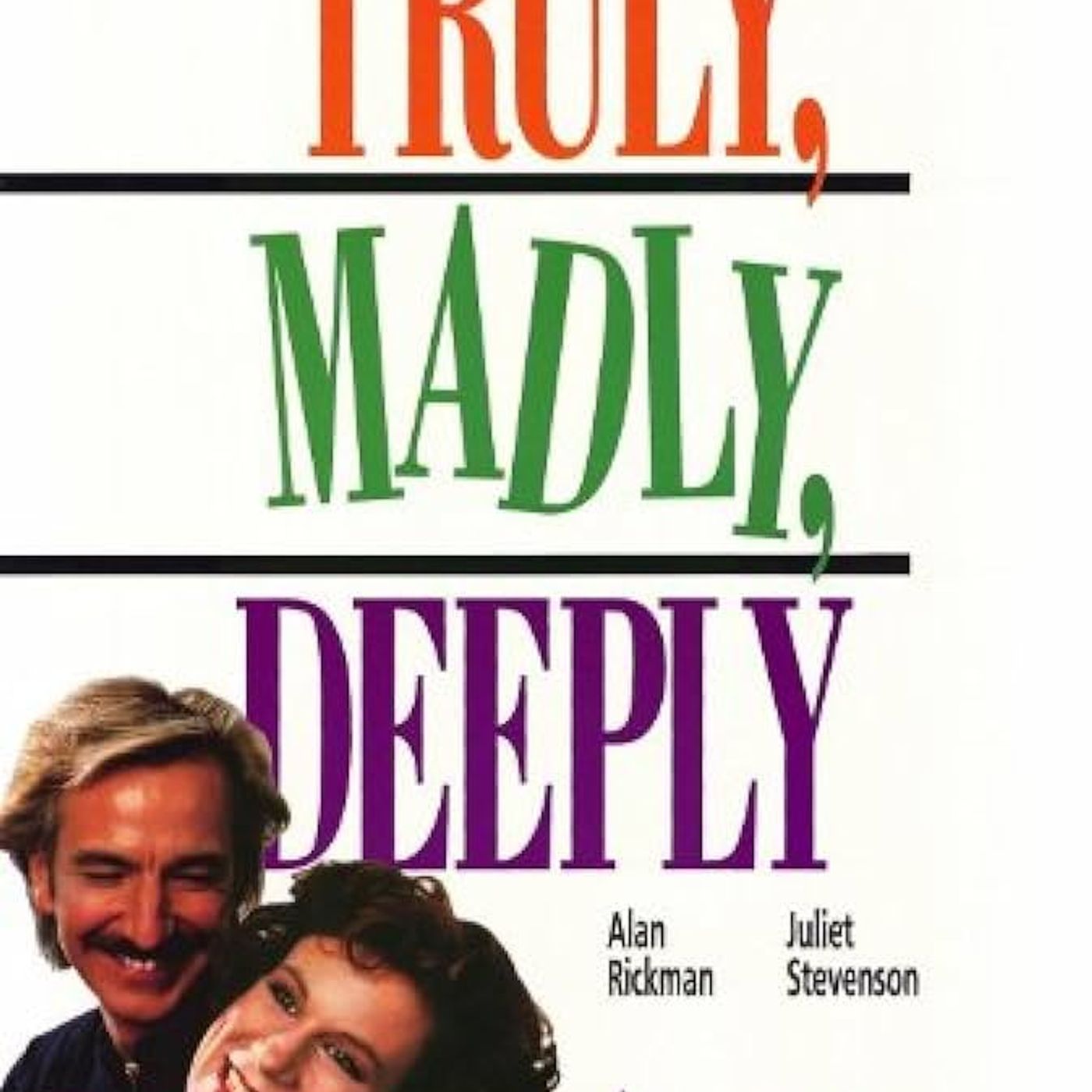
It doesn't matter anymore. We're talking about nineteen ninety one's truly, madly, deeply. The day Jamie went away, Nina's whole world fell apart. That's tragic. One minute is a sore throat and he's having an examination.
The next moment he stopped reazingly. Then without warning he came back. That was truly miraculous. Are you here? You are here?
I'm gonna sign any mood. I couldn't die properly and maybe us back and come back? Is this going to be your party trick? And he's back? But then what this is Freddy?
This is Pierre and some of the guys wanted to come back to me. He told me that there are dead people in my living room watching videos five Easy Pieces or fitzgald But living in the past was it? Let this perform? Give me a life without a future. Can I call you?
Yes? No, I'll call you. Do it. You've sort of worked out that you're living with somebody else. How can she choose between the man she truly badly, deeply loved and another man?
Why not? Basically everything music Curry, I completely recite the complete once at all, truly, madly, deeply alive. I've got to be somewhere else. It's very complicated. Darling, I don't want you to go.
I don't know what I want. Truly, madly, deeply, truly enough, I really truly madly love you, truly madly deeply, I really madly, deeply, passionately love So. The film is directed by Anthony Minhela is Anthony Miguela still alive. He died, and he died early. He died at fifty four because I was like, he's got to have made some films.
He died at fifty four of a hemorrhage. He had a surgery for cancer, long throat something and it went well, but then something was bad. Oh and it was very sudden and yeah, I know ironic, Yeah totally. Well. I mean that was a name in the nineties you heard a lot, and when it came up on this movie, I had totally forgotten that this that he wrote and directed this, And then suddenly I was like, wow, wait a second, I didn't A.
I didn't know it was him, even though I've seen the movie more than once before. And then B I was like, wait, what about so that was your talking that happened quite a while ago. Then yeah, he died in two thousand and eight. Oh, okay, well, and the last thing he did was the Number one Ladies Detective Agency British at optab okay wow, which is which is not bad. I actually really enjoy that show, if anybody's seen it.
Those books are pretty good too, the Alexander McColl smith books. But this is the first thing of his that I've seen. But it's not his debut, is it. It's pretty much his debut. He had done he had done television, British television, and he had done I think another even you know, sort of a low, low budget something like, you know, but this was the first bigger thing than he did.
This was the movie that got him englication basically oh right, okay, yeah, which of course is the one that sticks in my mind because it's the Academy Award winner and all that stuff. Right. So, the movie stars Juliet Stevenson and Alan Rickman as a couple who one of them passes away and then comes back to haunt the other one in interesting, fun and emotionally interesting ways. I think I don't know how to process this movie. I've seen it like three times now, and every time I've watched it, it's it's a lot, folks.
Yeah, it's a lot, and we'll talk about why it's a lot for me, but I'm going to turn the floor over to whichever one of you wants to answer first. Tell me a little bit about why we are talking about truly, madly, deeply Well. It is tonally a tricky movie to pull off, and it takes a minute for the viewer to even kind of hook into where you need to be. And I think it's that. It's it's the tonal shift between charming and funny and then just really beautifully dramatic and heartbreaking that makes each one of those it's almost like, you know, it's the salt on the caramel.
Both of those things make the other one stronger, and you're never quite sure what direction it's going. This is not a look. I don't know how old you are people listening to this, but if you're not as old as we are, watch this movie to find out how movies used to be made, which is they look like they're being filmed in real environments that are dirty and have been lived in, and the people in them aren't all great looking. They just look like normal people, and not all of them have a big gimmick, but they sort of do, and it's it's again. It's just it's a charming, beautiful, funny, heartbreaking film.
I don't know what more a person could say to make you want to go see it. And I this movie came out in nineteen ninety and I don't know that it made it across. I don't think I saw it right then. I think I saw it, you know, on DVD or cable or or DHS. But when I saw it, I was like, this is the kind of film that I love and want to make, where it's not quite a drama, not quite a comedy, not quite pennable to a board in a genre, but more importantly, it just to me, it was just this beautiful, beautiful film that is sort of about grief, but not just about grief.
It's about life and grief and living and grief and that is and it's just incredibly beautiful and it's it's stayed with me, and I think that the grief parts of that film just give you that ache in the back of your throat and bringin in a way that not every film, even when it's about grief, can do. Well. There's this one there's this one scene that I remember because I've seen the film a few times, but with giant gaps in between, like every ten years or something. But I in my mind, I know that AI like it, and b there's this scene that's really upsetting to me, like like almost like when you're a little kid and you know it's a scary movie you've seen before, and you know that there's this really scary thing coming up, and so I actually stopped it.
It's eighteen minutes in and it's where Juliette Stevenson's character is in therapy with her you know, in her therapy session and talking really expressing grief in the most naked way I think I've ever seen of anyone in any film. And her pain is so raw and the performance is so unshowy and authentic, and it's not a long scene and she's just crying and kind of like just losing your shit about all the emotions, all of them that are coming up as part of her grief. Loneliness, anger, confusion, resent, I mean, all these things are coming out and it's just this one scene, almost one take. And the first couple of times I saw it, it it was so emotionally raw that it it upset me. I mean it's upsetting, and so I was getting nervous watching this movie waiting for this scene to happen, like when are we going to do that scene?
I know it's early on, and I want to get past it because it's it's so it's almost so upsetting, and it still plays, you know, if you know it's coming, and then it happens, and it still makes you choke up. It is very hard to watch and not be struck in some deep interior place by her performance, which is really just amazing first and then my paper part of the scene is then then the session ends and she suddenly is like, oh okay, and and and it's so stunning. It's so interesting if you've been in any kind of therapy, But it's also just that moment of once you've expressed that kind of grief, it was very real what happens sometimes after that, right, it's sometimes just gone and you have to turn around and go back to work, or go in your therapy session, or show up for your kids, And that is I don't know.
There's a couple scenes in this movie that are just perfect and unique and particularly unique for the time. And and I didn't realize it was his first film until this rewatch. I mean it's his first real film, this first like, we're making this film, We've got some things. But he also speaks of it as the film that matters, that mattered the most people. Like there's a quote for him where he's like, I've made a lot.
I've made films, and people loved a lot of my films, and some got Academy Awards, but this is the film that basically, turns out it matters the most people. Yeah, and speaks to people directly, and he was also saying and weirdly, it was the film that I had the most fun to make because it was just me and my friends and we you know, and it was like I basically basically sort of it was a quick shoot, it was painless to make, and and so you know, that was just sort of an interesting thing to just sort of discover when I sort of went to read about it. I'm purposely taking a moment to give Chris a chance because I want to try back in. But I'm like, is Chris gonna jump in here? I was just I mean, again, like I'm just sitting here listening to two people who really liked this movie talk passionately about it, So I'm not going to interrupt.
It's really fun. But it's so fun to realize that this movie comes out two years after die Hard. So Alan Rickman, you know, is in this giant movie that introduces him to the world, and then he does this very small movie in which he's a you know, a very different kind of character and does a beautiful time. He's a romantic lead, but it's also a very particular peculiar kind of character. So, and we haven't really said what the movie's about, so just to give the synopsis, Juliette Stevens plays a woman who clearly was just in a relationship.
The movie starts, she's in therapy talking about what her life is like now since her I don't even think they were married, but they were very very close. Her boyfriend basically has died and some time has passed and she is still struggling with it and still struggling with just her everyday life. And the movie goes on almost half an hour before the concept of the movie happens, because she clearly is not moving forward and her life is kind of a mess, and there are people around who her and care about her, but it's just nothing's really working. And then one day she's playing the piano and her boyfriend who was a cellist. You hear the cello playing, and there he is in her apartment and he's back, and he's back physically.
She's able to hug him and kiss him, and he's back, and he just sort of now lives in her apartment. He's he's dead, he's always cold. He died. How did he die in the moor was very exactly clear, but what was from a sore throat? But what were the complications of a sore throat that led to death?
He just didn't treat it, and he treated it too late. I guess there's one line of dialogue and that's about it. And based on that line of dialogue, what I suppose is that he got a sore throat and his throat closed up and they could not intubate him in time. They could not. Basically, he died, you know, because he was sick.
But it was you know, a quick, like weird thing. Some people sometimes die of pneumonia or you know. I had a friend go to the er last year for a sore throat because they almost could not breathe, so I like, I've heard of this happened to someone that I know, and it certainly happens when you have a baby that has the croup or the sore throat or the thing that's all you're worried about. It's all you're thinking about, is their throat's going to close up. Person that I'm talking about has a baby and they got sick from their baby with the strip throat.
That almost like God, well that put them in the er. So yeah, it's yeah, it's it's like so it's like so ignominious too, right, I mean, obviously that's the That's one of the points, is like, if not for the fact that the stupid fucking thing happened, you might still be here. Yeah, and so, so the progress of the movie is her reaction to his return, which starts out as this sort of like just the top of your head coming off bliss and then goes through other steps. It's ultimately the story of navigating your way through a valley of grief and man, this movie it's not long. And rarely do I see a movie and I think it's got too few scenes, but this one gives you just exactly what you need to get to the end of the movie and the point and when you arrive, it almost happens too soon and it takes your breath away and then it's over, and it's very powerful and yet very entertaining.
I always feel the need to reassure people that a movie is entertaining, because I'm always afraid when people are telling me, oh, this movie is so good, it's so heartbreaking, great, I'm gonna oh. I don't want that. Oh, I don't want something that's a downer. And this movie is not a downer in a weird way. There's a ton of energy and a ton of life in this movie and a ton of fun so it but it takes a minute to get started.
If you're watching the movie and you're twenty five minutes in and you're like, yeah, I don't think so give it five more minutes and you're fine. As it really does sit in that grief place for a while and the stuck grief place, and it's laying some groundwork I think for how quickly then things are going to move, and how happy you are when he shows up, and how much you kind of buy that she sort of closed, you know, continued to keep the world closed to be with him and for a minute. So but I and this has all like my favorite sort of British film stuff. It's just odd and interesting characters and a world that's sort of just right there around you, and people are on the street, you know, and you're running into people in cafes and things are happening, and I don't know.
It just has so much harm. And the funniest thing I was watching it this time and for the first time, I was like, good lord, why isn't this a play? Like this feels like a play because it's so the dialogue is so freaking beautiful. And then when I go look up and then a Miguel turns out he started as a play right and a director. He's totally from the theater.
He's totally from British theater, and it totally makes a lot of sense for the rest of his career. To me, well, it is fascinating because they do get a tremendous amount of her life and her physical world in the first half of this movie. Now I'm good. Tell me if I'm wrong. She works in a place that is sort of a like a language center.
Here's what I think it is. Tell me if I'm wrong. People recent immigrants come there to sort of from all over the world to sort of get help get situated in London and to sort of interact with almost social workers who can speak their native languages and help them learn English and help them find job placement and apartments and stuff like that and sort of get their feet under them once they're in England. Is that correct? That's what it feels like.
They never really stop and explain it a lot. But Bill Patterson, who if you have watched Flea Bag, is Fleabag's dad. Okay, well, if you only know him from Flea Bag and you like him, you've got plenty of pleasure ahead of you because he's been in movies for about forty years and he's always the same guy that's slightly flustered but nice, avuncular kind of dad figure. I mean, this movie is thirty years ago and he's playing the exact same character, and he's probably forty, right, and yet he's her boss. And early in the film they surround her with this sort of it's almost like a Wizard of Oz feeling, you know, where she's almost got these older men in her life that are all kind of fatherly brotherly uncle Lee, and many of them are trying to fix this horrible flat that she lives in that is just falling down around her and is weirdly also infested with rats, which is such a bizarre detail, but it it plays more fun but also slightly horrifying.
And these guys are sort of in and out of her flat all the time, populating her life, surrounding her, kind of propping her up emotionally, at least that's the way it feels to the audience. We are reassured by their presence. We're so happy they're a part of her life, and it says something about the times we live in that on this viewing, I was worried for her. I'm like, is she okay with all these guys around? Is something bad gonna happen?
And I've seen the movie and in the in past viewings, I never thought that. I was just like, Oh, yeah, these are people in her neighborhood who are helping her out in various ways. They all seem to be aware of this tragedy she's been through. They all seem to be concerned that she make it through. And there's a wonderful scene again early on in the first half hour where she's outside dealing with laundry on a clothesline and these four guys are doing her dishes.
They're in her kitchen. There's just one shot of all four of them, and it's this scene where they're all talking and sharing what they know about her, and Bill Patterson's character knows the most because he's her boss, and they're all clearly concerned that she be okay and restart her life in the most compassionate, benign way. Again, very very charming, and these people populate the movie and continue on through. But I'm curious what Chris, because he hadn't said anything. We just chat.
Now you know what it's going to be like when you're here. With that, I'm excited personally. So here's the thing. And I haven't shared this on a podcast, I don't think, at least not in the last couple months. But I have been dealing with some personal grief in my own life, and specifically loss of a very close and personal friend, not to death, but just no longer.
I'm no longer part of their life, they're no longer part of my life, but it is a level of grief that I haven't really experienced in a very long time, if not frankly in a lot of ways ever, And so it was to me that I was watching this movie today because or talking about it today, I guess more aptly talking about it today and having watched it several times the last couple days, Like for me, it rang true in a lot of ways that I wasn't expecting it to. And I know if I had watched it three months ago, I would not even have not felt the same way about it, but those feelings would not have been ever present currently or at least at the forefront of my mind that I feel like I'm constantly having to deal with.
And the thing about this movie, I think, and the thing that I ultimately really appreciate about the movie is in a lot of ways, it says that that's okay to take time, but it also says it's not okay to be stuck. And it's also not okay to put this person on a pedestal, because that's part of this movie, is the grief process is putting that person on a pedestal, and they have done no wrong and they will do no wrong. Obviously, in Alan Rickman's case, he is dead, so it's a little hard for him to make worse memories with her because he is no longer around to be able to do anything at all. So his character is essentially acting the way he apparently used to act the things she's not remembering, which I understand nobody wants to remember the bad.
You can't grieve that person. That's not the point. The person that you're grieving is the person that made you feel X way, not Y way. Nobody is going to grieve a person that treated them poorly, or the moments that the person you love treated you poorly. No one is going to grieve that, and they shouldn't be expected.
It's it's interesting that you bring that up, because we see it all the time. We see it on in the public forum. You know, it's like people, politicians whoever, who were controversial. You know a lot of people didn't like them, but when they died, it's like, well, now's not the time, let's remember, let's you know, respect them, let's not speak, don's beak ill of the dead. And then you see it also in families where a clearly problematic family member passes away, and it's the same thing.
It's the well, you know, yes, but very few people are like, no, that person was the son of a bitch and I'm glad they're dead now. Don't get the wrong idea Alan Rickman. You know, he's not playing Hans Gruber dying. He's playing a real human being, right with a with a I would call him a sort of grumpy cat sort of personality. He's playing Alan Rickman as I assume Alan Rickman probably was in real life, like just I mean yeah, but at the same time, like this character again, like it's Alan Rickman, and the words coming out of his mouth feel like something Alan Rickman would say, Like like you said, he's just kind of grumpy, like but yeh again there he's grumpy, and he's kind of just a dude of a certain age, right, like a guy at that age at that time in our history of the nineties, Like that kind of guy acting this way makes kind of sense.
He's not really in touch with himself. He attempts to be in touch with her as much as he can be, but does ultimately he falls short. But he doesn't fall that short, and that's the no. He only falls about this short, not this short, which is the important part. But you get you totally get it.
You're like, Okay, I get why this guy is attractive, Like I get why a woman or women would be interested in him. He's a good looking guy. Obviously, it's Alan Rickman. He's an artist. He's a musician.
But along with that, he is moody. He has artist. He is an artist. There are things he you know, he doesn't like that. He does like this, and he's he complains, and he always sort of has this this almost forlorn, long suffering look on his face of a vague dissatisfaction.
And he has a lot of opinions and a lot of judgments. And then what they do, They bring in this notion that he is and I love this. And there's something I'll add this to all the words we've used to describe the tone of this movie. I'm going to add in eerie. There is an eeriness about his return and the way he is.
He's always cold, and they're not really pushing the eeriness of it, but it's eerie anyway because you're constantly they don't explain a lot. A lot of the questions you'd want to ask, they kind of don't ask. He's back, he is physical. We don't know who can see him. He's there.
He's cold all the time. Now the flat has to be heated at all times. He's still really cold, he's sneezing. Is he's sick. He's dead.
He died of a sore throat. What's happening here? There's something a little unsettling about his presence, and she is so happy to have him back, and you feel it, and yet they are also able to convey that there is something fundamentally unnatural about this. You know, it can't last. You know, whatever the terms of this return are, it can't last.
And what's so amazing is that I don't want to spoil at the end of the movie, other than to say he's there at the end. You know, they don't go through a big process of well, you know, you've got to say my name three times, turn around, and then I'll leave. You know, it's just you got to solve my murder. You've got to solve my murder, and then I can go into the happy hunting the peanut that gave me anaphylactic shock. Yeah, no, the beautiful Yeah, the beautiful part is the filmmaker understands that we understand that the point of the movie is she's got to navigate her way through her grief.
Once she gets far enough on that journey, however far that needs to be, the resolution of the movie will come, and it does. I also felt that the thing with him being always cold was more of a put on on his part, because everybody, at least in terms of doing research on these kinds of things, in a heated environment, you're just more you're more sensitive to emotions like and you're just you're on edge more. I mean, if you're warm. I mean they were doing that in those Stanford prison experiments. It would keep the room super hot just to make a point, just to keep them in kind of an agitated state.
And I look at this the same way. The entire point of his character is to make him make it seem to her like the person she's remembering isn't worthy of being remembered as fondly, because that's part of the grieving process, is coming to terms with the reality of the person was at their core. And it's the good and the bad. It's not just the good, it's not just the bad. It's both.
And you know, with him, I mean, the bad never really outweighs the good. But the bad is annoying enough and enough of a problem to her that it sparks her to remember the other things that he exactly, which is so great. It's just like, right, oh right, it wasn't ideal, and then it never was and that's the way. He was good and I was happy and I loved him, but it wasn't perfect. And now he's back, and I'm I'm able to really be reminded of the ways in which it was not perfect.
I don't think we have the conversation about grief and blinders enough because this movie does the thing that very few movies do, which is the blinders are in your life, as in your not wanting to go out and do stuff and you want to sit in bed all day and be depressed, which I understand, I'm by it like anybody else who's dealing with grief does. But it also has the conversation about grief puts blinders on with the person you're talking about grieving, be they alive or dead. And again, like you mentioned, with family members who pass away that were kind of terrible, it's hard to pull those blinders. If if ever. I mean, plenty of people I know talk very highly about people that I know they have no reason to talk highly, but it's because of the grief surrounding them not being here anymore.
But would you really want them here right now to deal with the bad as well as the good or do you just want the idealized grief fueled version. And it's I mean, that's the thing, like, no movies are having this conversation even now about grief the way it actually needs to be talked about, which is it is complicated and complex, and saying yeah, fuck this person is really easy to say, but in reality, fuck this person is anger at the person for them not being here, but anger at the person for also being that way that I don't like having to remember, which allows me, in a way to start to move on because I can go and do something else because they aren't perfect, they aren't here anymore, and life needs to be lived in their absence, in perpetuum or infinitum.
I mean again, like he's dead permanently, Like there's grief that can be permanent grief or temperate. This movie's more talking about the permanent, and so I know all we're doing is talking about grief. So again I want to reiterate that this movie is very funny. This movie is super heartworking, and this movie is about life. What's so beautiful is how many beautiful friggin' moments there are in this movie.
And there are two ones a poem and one's a story that those scenes that I two of the three scenes that I always am waiting for in great anticipation in this movie because I have also seen it a number of times. And so there's one the story that Alan Rickman tells about the playground. And it's also become clear and I don't think we talked about there are other ghosts, right, there are other presences that show up in the in the in the flat, and and it becomes clear that there are that that there are people kind of walking around, right, like some sort of physical manifestation of people, but who are mostly unseen. Right. But they talks about seeing his wife, right, He's like, yeah, I know, you see him too, And it's like, yeah, oh okay, Like is he being hyperbolic or is he actually seeing his wife in this universe where these things are happening.
I kind of believe he's probably seeing his wife. Yeah, And and the but so Alan Rickman tells a story about this girl that died on and and that that the family put a plaque on on you know, on the swing sets of her favorite playground. And the point of the story is how it affects the people who notice that and the living people. And and then there's a poem that they sort of uh speak to each other in. Uh that's a real poem.
Uh that is That's that's the other part of this movie that I just love so so deeply because it's it's literally a poem about I miss you and I'm moving on and I don't want to move on, but I'm moving on and and it's beautiful and it's it's one of my favorite scenes in the movie. But I also want to talk about how much hope there is and in this movie and how much life there is. And the guy that she ultimately you know, was one of the people, this new guy that sort of sort of pops up out of nowhere. It is that that sort of makes the outside world a little more interesting and attractive. But I think it's this there's a lot of hope in this movie.
There's a lot of joy in this movie. The music. You know, she's a piano player and he's plays the cello and music was a way they clearly bonded and connected and came together over and apparently Juliet Stevenson, who's so so, so great, actually played the piano like the part was written for her and was written around all of her strength. And I'm going to read another quote that I found from him, because I think it's so great as a filmmaker as a description of how you're a filmmaker, and I think it's particularly if you're like he was a filmmaker during the nineties and into the two thousands, which is not a time of great hope. There was a time of a lot of cynicism.
But here's what he says about the films he wanted to make. I'm interested in stories which insist on a dog fails to eat dog kind of world. I hate misanthropy, and I want to believe that there's a possibility that we might all be redeemed. That hope deferred makes the soul sick, that our humanity is fragile, funny, common, crazy, full of the longing for love, the failure of love. I want to tell stories which require something of an audience by way of thought, argument, emotion, because I'm more often in an audience than I am a maker of film, and that's the kind of movie I want to see.
That was like, oh, well, yeah, truly, madly, deeply right there in a little yeah quote, and it just maybe now want to go revisit all his films. Well, yeah, the nineties were not known as a time in cinema of of stories of hope and celebration of humanity. It was all the other stuff. It was just white male rage, falling down, fight club, American beauty, you know, Tarantino, please, Quentin Tarantino, Eventual Tarantino, cold, cynical and and you know, really celebrating a lot of dark emotions. And a lot of these are great movies, not all of them, but anyway, uh, yeah, there weren't a lot that well I don't think there ever are a lot of movies that celebrate these things.
There's a reason this movie isn't well known, unfortunately, And I think the reason there's one of these also, well there's you said it. There's a reason there are very few movies like this one because this is not a topic that anybody really wants to have this kind of conversation about. No, yeah, and it it allows us to feel the feelings and to come out the other side. I mean, we really are. There's not I don't cry at a ton of movies.
This one does get to me, and it does very diagnostically almost. It's like this moment, this shot, the last couple of shots of this movie, the last ninety seconds of this movie are joyful and heartbreaking. You know, I didn't I haven't listened to your Harold and Maud episode. I didn't get to be on your Harold and Mad episode. Oh no judgment there, But Harold and Maud is also one of those movies that is able to very poetically address the emotions it wants to address, as does this one.
I love the last two minutes ninety seconds of this film, and it's one of these great movies where it's only at the very and that you kind of fill in every last blank and go, well, of course that that is what has been going on here, which means he was the antagonist the entire time, which is why I really loved this because it's all been for It's all been for a specific reason, and you figure that out in the last closing minutes of the movie. Because they the other people the chorus, as it were, ask him, I mean done, yep, I'm done, and like what has he done doing? He's done, making it clear to her she needs to move on because it's okay and it's unfair to herself because in a lot of ways, grief is the absence of hope.
And I mean has know me pretty well, and people who know me in real life know that I am disgustingly hopeful and a great motivator and someone who wants the best out of everybody, probably to a full and that's a hard that's a hard torch to carry on its own. And this movie makes the case for like you, like you said Susan with what he was saying, like deferred, hope is really not something I'm interested in having anything to do with in twenty twenty four. I genuinely believe like having the discussion about things will get better, things are getting better, and you can do better and we can do better is better than saying everything's fucked up and shit's gonna hit the fan because hope, Because without hope, then all we do is focus on the past and how everything used to be better, or how I used to be better, or how this used to be better, and that's not the reality, because nothing is ever perfect and nothing has been.
It's funny how you identify him as the antagonist, and in mathematically and structurally you can make that argument. What's great is that he never there's never a scene like intuitively, we know what we're watching, and we know, well we she needs, she needs to move on with her life. She needs to sort of you know, process this loss and then move on. But at no point does he ever articulate anything along those lines to her. He's just there for her, and and he is also there being himself.
What's really funny about it. And Susan broughd to are for her. These other ghosts, these other ghosts that come along with him are all men, and they're all his friends. And he introduces them and they hang around her flat and watch videos movies, which great. I love.
You know. I'd like to point out weird, weird synchronicity today. Yesterday was the first time I'd ever seen Strangers on a Train, and I will actually be talking about a Colombo episode eerily similar to Strangers on a Train after this recording. Isn't that kind of that's kind of weird, Which is one of the films they watch is the one that they mentioned, and that was one of the ones that was recorded over Robert Walker. He's great, sure is right, And while you know that these are people he's met on the other side, you you sort of into it that this was part of their relationship and a lot of them turn out later and then others turn out to be musicians, and so you you again, you're like, oh, well, this clearly went on when they were together.
She'd show up and he would have been spending the whole day. Clearly he was hanging around smoking pot and playing the cello and making music and watching videos and just hanging out with his dude friends while she was at work. You quickly feel the landscape of their relationship without it ever being told to you. There's never you know, this is just like when you were alive. You know, I would show up and all your friends would be messing up my apartment.
It's like, we get it, clearly, this is what was going on, and now it's still going on. You're dead, but you're still you. You're still behaving in the same way. We get it anyway. It's fun and it's also the idea that again like be careful what you wish for.
In a lot of ways, like I mean, a lot of grief is centered around the especially with this movie, it's the lacking of or loss of or absence of a person. And in this movie, I mean, like you've already mentioned, Susan, like you have to be able to have the honest conversation here around this. And one of the things is if this person is here, they're gonna be themselves and that is good and bad. And yeah, like you mentioned Richard, like having these people over like this was clearly happening. This was clearly a problem.
This was clearly something she had forgotten was going on, because she doesn't mention it until it starts happening again, and then she's like, oh right, this was a thing that I constantly had to deal with and again, like in so many ways with in dealing with again like personally dealing with grief and having dealt with it before. In the way the movie conveys it, it just feels so real because it wants to have an adult conversation about it. The blurbiness of one of the reviews I read was it's like ghost but for adults. I think that was Ebert that said that maybe or I think it was the Lost Yeah, and like in a lot of ways it is, but it's in a lot of ways it's almost because ghost just doesn't have an honest conversation.
It it idolizes and glorifies the good parts but ignores the bad parts. And that's not real. That's why Forgetting Sarah Marshall is one of my favorite romantic comedies because in a lot of ways it has the honest conversation. People are complicated, nobody's all good or all bad, and it's easier to pretend than it is to be honest. And you know, romantic comedies are a form of you know, wish fulfillment or i mean entertainment.
However you want to look at it, and why would they have an honest conversation? Right? Fuck it. Let's just you know, what happens to the guy at the end of the romantic comedy who's left at the altar. Nobody gives a shit, he's not the main character.
Fuck him. It's like, there's a story there to be asked and to be mine, And just like there's a story here to be asked in behind, which is what happens when the person that passes away isn't perfect, and when they come back, it's not the idealized version of them, it's just them. Even the title is so great because it's true, is about how they feel about each other, truly, madly, deeply. They're obviously in love, But what you discover halfway through the movie is that it's also a word game that lovers play, where each time you say it to the other person, you add another descriptive, I love you truly, I love you, truly, madly, I love you truly, madly, deeply, I love you, And then they go they play the game, they go a few more steps, and it's such a great little encapsulation of that part of the theme, where where when you're in love you do write a story about your relationship with the other person, and it's a shared story about how great your relationship is.
And the little game proves it and they idealize and idealize and idealize with adding a word and adding a word. But of course the point of the game is that sooner or later someone screws up. They forget part of the story. They forget one of the words he does, and she jumps on it right away. You know, you're a fraud.
You forgot deeply and that was your word, which means you don't really love me, and they're teasing and it ends in kissing. But that game itself and those words say so much about how the reality of a relationship is built and how devastating it is when that mental matrix breaks because one person leaves through death or whatever reason. Well, and I think that it's his sudden death too. I think there's a there's a there's a lot, you know, it does feel like this is something that happened really quickly. He's clearly too young to die, you know, and wasn't sick for a long time, and it was a ridiculous thing.
But I also love that scene. That's one of my favorite scenes and I love but this time, you know, it was reminding me of uh is the Minister's Cat and the game they play in Scrooge Uh, which is a you know, an English you know game word game. It's like a party game or something. Yeah, and UH, And I was like, Oh, that's that's really funny. That's there, and it's just another way where their relationship is very clever and fun, and they they goofed together.
But it is also I want to point out that this is also a movie that you know, if you were if you were sick, if you're a friend of mine and you were sick in the nineties or the two thousands, or you were had to be on bed rest, or you had to you know, be hold up somewhere, if if you were just the one person with the flu and not the whole world with COVID at that point. What I one of the things I would do as a friend, because I wasn't really not really a great chef, is I would bring you a stack of movies. I'd bring you either VHS's or DVDs, depending on what you had, and at the top of the stack would be truly madly, deeply wow. And most of the time, not all the time, but most of the time this was for my female friend.
And I think this is a movie that is very much speaks certainly at the time to me, that felt authentic in its voice for the female character in this which, believe me, not many movies do from the nineties, and is known for its female character writing. You know, one of the things that becomes e tinting about him is that he starts rearranging her flat and the things in her flat, and while it feels like he knew about the flat, but she bought the flat, like like, ultimately, it's it's not clear that he was around for a lot of the flat business, and that the flat is her choice and her thing, and she's you know, putting it together slowly even as it's falling apart in the way that she wants. And that is such an interesting thing for women of the time, like the place of your own, the the importance of figuring out who you are outside of a relationship.
The I mean, it's important for everyone, but I think for women it takes a particular effort. And yeah, so that that is a really really compelling part of this movie for me, and one of the reasons again I think it think her performance reads so amazingly that it it just it really does. It's this is like, to me, this is a chick flick. This is but in the best possible way. I get it.
But I'm gonna tell you, Susan, and you're gonna laugh. This is gonna be in like rotation rotation now for me, like for real and again, like in a lot of ways, like I just wish more movies were like this because it's really hard. It's it's what's really hard is to be in the middle of this kind of grief. And again, this is just me speaking specifically right now, so this may never be the case again the next time I watch this one. It's hard to watch movies that don't take this shit seriously when you sit in it all day, when it affects your life, when you when and that's the other thing you mentioned about this movie that I do want to reinforce.
Like you said, Susan, it's an immensely hopeful movie because life doesn't stop. It actively continues while you're dealing with this, and if you choose not to participate, that's on you, not on the world around you, not on life outside. Life is going to continue. We see her family come and try to interact with her, and she doesn't come to the door. Why because he's there.
But you could interpret it as she's just continuing to sit with her goddamn grief and sitting with it and ignoring the world. And the honesty that the movie has about how unhealthy that is and how again you need to be able to accept that it can be healthy to a point, but then it becomes unhealthy, and then it becomes to override everything and get in the way of your daily life and your ability to even exist or to form new and meaningful relationships with people, like she does with the character that ends up kind of being her love interest. But again, we're not there's no guarantee that she goes off and marries him and they live happily ever after. It's just right the next thing. You need to be able to move on to whatever that next thing is.
It doesn't have to fix everything. That's not fair to that thing to fix everything, because it doesn't know the baggage you're bringing. But you need to be able to come into these things understanding that it is mostly your responsibility to be a better person, it's not someone else's. And she realizes that, she realizes she has to get better and he's not gonna He's helping her, but he's not helping her in the way that she expects him to help. He's helping her in the way he knows she needs to be helped, which is he has to be himself, not the perfect boyfriend that he apparently was in her mind until she started remembering he wasn't right.
And that's I love that about the movie, that we don't really get far into that new relationship at all, Like we barely. I mean, it's it hasn't even begune. It's just almost like, Okay, they're gonna go out on a date. Okay, fine, pty much got it, you know, But that's all it needs to do. It's not about replacing something.
It's it's about it's about negotiating your way through an emotional state and finding a healthy way to move on. And I'm really glad. I just want to say, I'm really glad you're you're recontextualizing grief. This movie is about grief in terms of losing someone who dies, but people are suffering grief all the time now in various ways, relationships, you know, all there's all kinds of ways to grief. You know, when we were talking about Mothman prophecies and how I kind of discovered that that movie was about grief as I wrote it, and yet then I'd look back and go, yeah, but that's weird for me because nobody died, Nobody important in my life died, but things were happening in my life, big changes, and I think it was speaking to those feelings.
I think grief is a larger word and operates in our life in a more active way than we think about. And sometimes in our culture that's not something that's not a good thing. Some don would say sometimes please, Well, you know, I mean it's all the time. That's why romantic comedies exist. I mean, that's right, it's that gratification that you can't get in real life because grief, grief is underlying always and like you said, it's not about people dying.
Actually, people dying in a lot of ways is the easiest kind of grief to parse because it's right there. They are dead, there's nothing else. Other people in your life are aware of it, and you maybe you don't have to articulate an excuse for your behavior because it's implied. But grief is not like people are embarrassed about being in grief. They feel uncomfortable about the way they're experiencing it.
There's a lot of talk about the five stages. You know, we've known about this for decades now, the five stages of grief, the five stages of death, and there's been a lot of pushback on that recently, and thankfully, Yeah, well, At first I was kind of buged by it, but then I'm like, oh, I see what they're getting at is like, look, there is no recipe for grief, and there is no prescribed timeline, and there is no right way to do it or wrong way to do it. There are people who feel guilty because they're not feeling enough grief. There are people who feel guilty because they think they're feeling grief too much or for too long. And a more modern understanding of that prim process is that it runs its own course, and the last thing you want to do is start further traumatizing yourself by berating yourself for how you're experiencing grief.
Anyway, all of which is to say, there are not a lot of movies that operate in this terrain and do it so charmingly and skillfully and yet still honor the emotion of it, and like you said, also playing to the idea that grief doesn't happen in steps. To put everything in a step process, like you said, means that one follows, you know, two follows one, and three follows one and two, and it's like, it doesn't work that way. Sometimes it's one, sometimes it's three. Sometimes it's one, two, and four. Sometimes it's five and then back to one.
And that's again when well, there's ten things or exactly two of them even matter. Sometimes it's B G or s right exactly or you know X and I don't know what you're talking about the print sign and then I mean again, like that's the thing. It's sucking. It's so hard to ascribe. It's so hard to generalize stuff like it really is because again, like you said, Richard, so much of it isn't just someone died or your girlfriend left you, which are the two I guess probably, or your dog died like an animal died like loss of X through death is probably the most easily recognizable form of grief because we're all going to have to deal with it at some point in our lives, and then the relationship one is next.
But like you mentioned, there's so much other grief that people could feel, and this movie speaks to that idea as well. Of again, like it's all around us all the time, Like you mentioned there, the ghosts are probably walking around out in the world. It's clear that they are so, and she even asks him, She's like, are you with me all the time? Are you are you. And he's like a little koy about it.
And y'all have seen it more times than I have, so maybe you have a different read of it. But my read of it is, oh, yeah, he is. He is following her all the time, but that's because he has to understand what to do when she it's back to help her out and further her process of grieving, because again, he is the guardian angel that she didn't know she needed but desperately begged for. And he again knows what he's doing. That the end of the movie makes that abundantly clear.
He knows that he needs to help her. It's late in the process, like we're not given any of that, We're just given he's back and he's himself, And oh, I think there's an argument to make that she's pulled him back, right, and that she's pulling him here in order to process her own grief. Totally like that, that there's as much agency for her that she's unconscious, but agency nonetheless, because he doesn't know why he's back, he asks why he's back. He's like, I don't even know why I'm back. It's like she she pulls you back.
That's why. Yeah, that that it's like, oh, I'm not done right and I have some things to finish up, sir. But I love it. But so it just plays out through the logic of emotion. There are no rules.
It's not like it's like, Okay, here's why I'm back and if you don't let me go within you know, but before the full moon, I'll never leave it. There's no there's no plot. It's just life and death and relationships playing out. And I'm gonna like, weirdly, I'm going to compare it to Chances Are, a movie that you and I and Sharon talked about, because that spent too much time trying to explain the rules of the thing and the who needs to be and it's like this this doesn't explain anything. It just it doesn't have to, you know.
And but but I'm telling you that this movie holds up. You know, I do think it takes it takes them. It has a pace of a nineties movie, which would they would cut fifteen minutes off at the beginning of that film now and just right right. But once it, you know, it's just there's so good. Everybody in this is so good, and you just want to watch them all the time, but Alan Rickman and the Juliet seems they're just you know, they're just perfect.
They're perfect. But well, I am so happy. I want to point out before we wrap this up that I have found a second movie that you like, Chris. I know, here's the thing. I like a lot of stuff, Like, here's something that Chris has spent the last couple of days doing.
Being apparently deficient on the use of letterbox in the last ten years of my life, I've spent a lot of days in the last couple of days on letterbox, catching up with all the things that I've watched since I started this goddamn show, which is a lot of stuff, and adding those things in and rating them, and I realize, like I have seen so many things that I don't care about, that don't that I oh, oh yeah, I saw this, and you just scroll and click and scroll like half the things. Okay, I scrolled and clicked and I don't remember. I'm not you know, I don't want to say this is a perfect movie and seem like a goddamn homer, But at the same time, I don't see that there's a lot of flaws with this movie and the message of this movie is one that again resonated with me in a way that it's not that I wasn't expecting you'd kind of hinted at what it was about Susan, But yeah, I mean, this is a movie that I've seen it like three times now and I have only watched it by myself, and I would be curious to watch it with my wife to see what she thinks of it.
But it's a movie that again, like I don't want to sound corny, but it has kind of already helped a little bit. It has it really like genuinely has because part of it is like do you want this person back to have these conversations with them or is it better to just have them in your head where you can dictate the narrative a little bit and and be a little bit kinder on yourself than they might be, to ease the grief process, not to accelerate it, because again she brings him back and accelerates her grief process pretty quickly. That's part of it, is like he helps her get out of the she could have sat in it for a lot longer, and again remembering the version of him, that's not the that's the idealized one and again I found myself doing the same thing.
And it's the movie has helped me realize that is not healthy because it's not real and reality again, reality is existing around us right now, whether or not I'm happy or sad, and if that makes you feel minute as a human being, it should. But at the same time, all of our feelings are valid at the same time. So that's the thing. It's it's a hard movie to kind of parse out, but yes, sus this is pretty close. If not, you did a very good job, Susan, Yes, very much.
So I'm dancing for those listening. And to be fair, I mean and Richard knows this. Richard wrote a movie that I liked long before I met it, so you know, I still too dark territory, Richard, I had never even seen it and I met you, know, so that's the true. I had seen Mothman Prophisees long before I watched a single Steven Segal, which speaks more to the person I was in my early years than anything else. But I will turn it over to you, Susan, and then are you Richard?
And then Susan final thoughts on truly madly deep. It's so funny that we feel the need to apologize for liking movies that are emotional and and trade on that and are charming rather than clever, and emotional rather than overwrought. But this isn't a movie you should see. Everyone should see it. Really.
The only caveat I would I would say, is give it a half hour. It takes a minute for it to set up all its stuff and then and then sit back and let it do its magic. I want to be like tyn Day and read you the poem from that they talk about in the movie. But the Pablo de poem. You should?
I was going you should? Why not? But I'm not going to say it in Spanish? Oh wow, it doesn't sound nearly is good? Is that what you're saying?
No, I don't know the dead woman. If suddenly you do not exist, if suddenly you no longer live, I shall live on. I do not dare. I do not dare to write it. If you die, I shall live on.
But where a man has no voice, they're my voice. Where blacks are beaten, I cannot be dead. When my brothers go to prison, I shall go with them when my when victory not my victory, but the great victory comes. Even though I am mute, I must speak. I shall see it come, even though I am blind.
No forgive me. If you no longer live, if you beloved, my love, if you have died, all the leaves will fall on my breast. It will rain on my soul night and day. The snow will burn my heart. I shall walk with frost and fire and death and snow.
My feet will want to walk to where you are sleeping. But I shall stay alive because above all things, you wanted me indomitable and my love, because you know I am not only a man, but all mankind powerful stuff. Anyway, I'm like Kime daily now, I'm so I'm so glad that I got to talk about this with y'all because this, Yeah, I mean, I'd never heard of this movie before, and it's yeah, yeah, there's a lot. There's a lot going on, and there's a lot going on in the movie that is really I think important, and I think important movies deserve to be shared clearly, and movies that speak to the human condition in a way that is as uncynical as humanly possible. I also think should definitely be part of a conversation that I think more people are having now than ever, which is, what does it mean to make a movie that actually resonates with people?
And how does one go about doing that? And I mean, this is a very clear case as to how you make a movie that will resonate with people long after, long after the movie's out, and long after even you know, I mean, Alan Rickman has long since passed away. It's been almost a decade now, and I mean as someone who loves him and everything, I've seen him and it makes me miss him as an actor who I never met that much more so. So Yeah, I enjoyed it. And boy, that's this Richard.
You've been here for some of the best episodes of this show. I often go back to the Lucky Lady episode as a high point for this show, and this will probably be another very high point because again, I don't know of anybody else talking about this movie, and I think this is a movie that more people should be talking about and definitely seeing. So on that note, Susan, where can people find you and all the things that you were gone? Well, they can find me at Susan Lambertadam dot com, but they can really find my podcast with Sharon Johnson at Eightiestvladies dot com or at any podcast platform Eighties TV Ladies. Richard, Well, you can find me on podcasting with Chris all the time, and of course with Mike White.
We do ranking on Bond. But you can find my personal podcast, Richard Hadam's Paranormal Bookshelf on any podcast platform. We just started up, so join in now. I hope you enjoy it. And as for me, they've both kind of alluded to it, so I'll mention it by name.
Weirding Way Media is where all the things that I work on, along with the things that I collaborate with Richard or Susan on can be found, including all the stuff we work on with Mike White. There's only one thing you can't find there, and that's ranking on Bond, which is over on Patreon, which if you're at the ten dollars level on either my Patreon or Mike's, you get access to it. And we're having a good time. We're gonna get to record an episode in person here pretty soon, which is fun. We'll finally have people that aren't just three white dudes talking about James Bond.
As if the world doesn't have enough of that. Oh, you know, it'll be good to have some people that aren't just you know, talking about how much they love people being shot and blown up. No, we don't do that. We're much higher grade podcasters than that. We tear down the mythos of James Bond on every episode, right, Yeah, we ruin it for everyone.
Yeah, I think we ruin it for ourselves by reading the books is what ends up happening, at least invice this case. It just makes it confusing. I thought it would be such a great supplement, and after two I'm like, I got to stop reading these books. I love the books, but they're messing with my head. And then when I talk about the movie, I'm like I'm talking about both.
I'm like, well, in the book he does this, and then in the movie they switch it around. And it's like enough already, Just watch the movies, read the books on your own time. And if you like what Richard just said, you can hear hours of that over at patreon dot com slash culture cast. As for me, Susan Richard, thank you both so much for a programming the episode and b joining me. This has been immensely fun.
And yeah, we'll catch on the next episode, Atta



Similar episodes across the network
Matched by shared keywords.
-
Special Report: Lemonade Blessing (2026)
1 shared keyword: dramedy
-
Good Luck, Have Fun, Don't Die - Kulture Meltdown
1 shared keyword: comedy
-
Special Report: Family (2026)
1 shared keyword: grief