
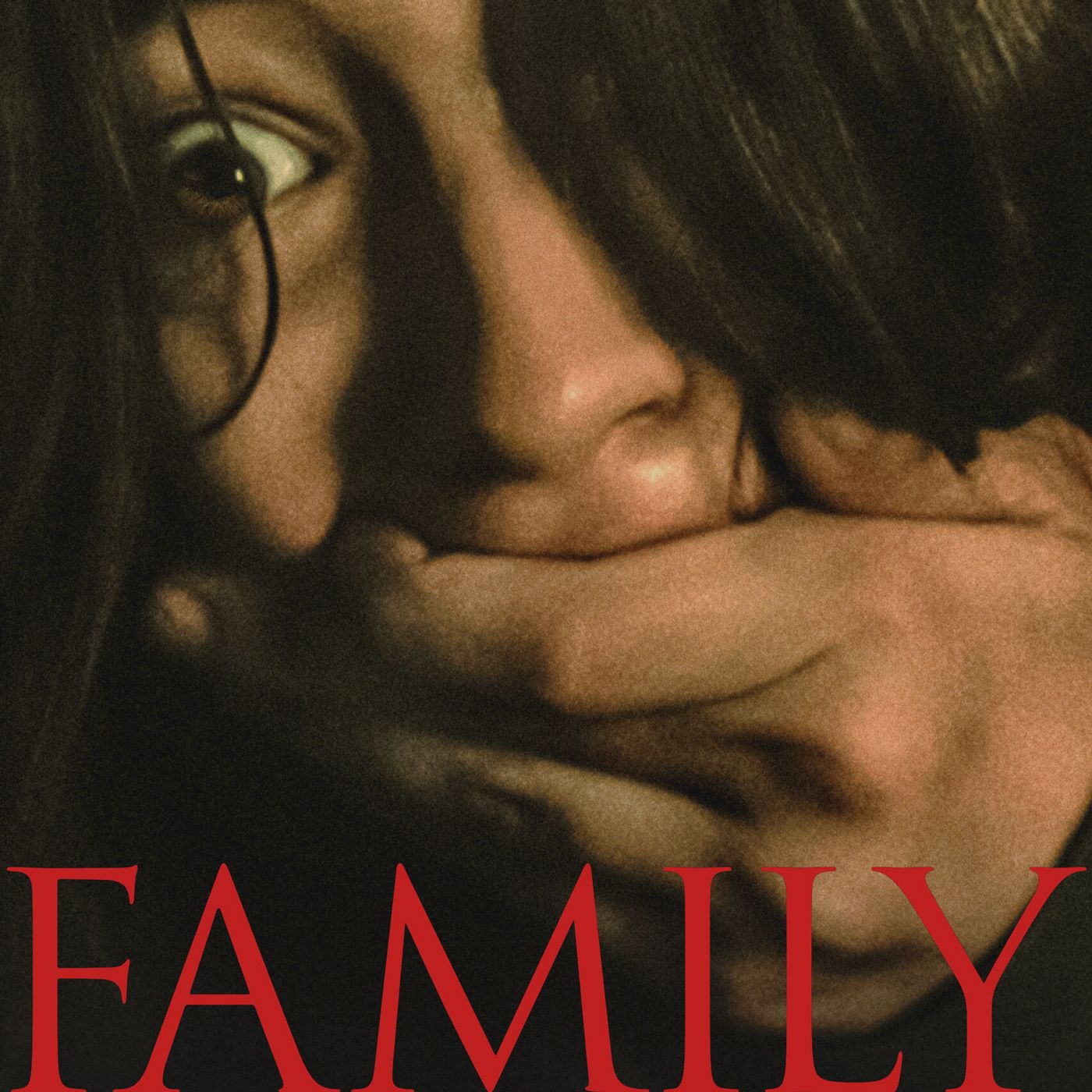
About this episode
Cameron Dawson Gray, who plays ten-year-old Johanna in her first feature role, joins separately to talk about the gap between her earlier series and short-film work and a full feature shot out of order, the scream coach she worked with to get comfortable going all-out on camera, turning twelve on set (the crew brought cake on her one day off), and the surprisingly lighthearted set — "we used to joke all the time ... that we were shooting a rom-com" — that let her trust her castmates enough to commit fully to the film's horror.
Transcript
Automatically generated, so expect the odd misheard name.
Hold your ears, folks. It's showtime. People pay good money to see this movie. When they go out to a theater, they want cold sodas, hot popcorn and no monsters in the projection booth. Everyone pretend podcasting isn't boring.
Turn it off. I don't think I've told you enough how much I love her. I know it's hard moving. Guys, be careful. But we're together, and that's all that matters.
They have better doctors here. I just wanted to see how you were settling in. What are you looking for? The birdhouse. It's good luck.
I don't want to get into this stuff again. She thinks it helps keep me safe. If you hang it up and make the right call, you can catch a spirit. You should get outside when it's still sunny. It's beautiful out.
Do you hear something? Toto? Toto! Something really bad is happening. Everything's fine, okay?
Your parents would never hurt you. Toto? I call for a good spirit, but something else came. Speak to me. Speak to.
Me! Your parents love you. Hey folks, I'm your host, Mike White, and today I'm talking with the cast and director of Family. First up, you're going to hear from actress Cameron Dawson Gray, who stars alongside Ruth Wilson and Ben Chaplin in this unsettling psychological horror film, her first ever feature. And then you're going to hear from writer-director Ben Finkel, making his own feature directorial debut with a deeply personal story he'd been carrying around since he was a teenager.
Family opens in theaters and on digital September 25th, 2026. I had a great time talking with Cameron and Ben, and I hope you have a great time listening. Enjoy. I wanted to know a little bit more about you and how you decided to get into acting. It was weird because both my parents, they used to be actors.
Now they work in production, film, behind the scenes and stuff. And whenever I tell people that, they assume that my parents pushed me into it. That was not the case at all. They did not want me to act. I used to ask them so much when I was like a little kid.
They'd be like, no. But I begged really hard. And for my seventh birthday, they gave me some commercial acting classes. So I learned how to not look into the camera and how to read off of paper and things like that. But literally on the last day of classes, some agents came and that is how I got my first agent.
And I've been loving it ever since. Is this the first feature that you were in? Yes, actually, it is the first feature I was in, which has been a huge step up for me. I bet. But can you tell me a little bit about some of the shorts and the series that you were in beforehand?
Right before filming Family, I worked on Fleischmann is in Trouble, the series on FX, I think. And that was really cool. I got to work with some amazing actors. I didn't have a huge role, but it was really fun. That was my first ever series.
I did one yogurt commercial when I was eight. My first ever acting gig, though, it was a short film. It was called Strawberry Shake. It was directed and written by Diane Bellino. She's a Sundance alum, and she was really cool to work with.
I remember really having fun on that project. How does that, working on those projects, compare to working on a feature film? I thought that I would be prepared, but I was not prepared at all. Because. I had been on sets of feature films because, like I said, my parents have worked in the industry.
And I thought that it would just be like, oh, show up, know your lines, you're good. But what I wasn't prepared for was how differently you have to know the story. Because when you're filming out of order on a feature film, everything is so out of order. So you need to know everything like the complete back of your hand. And it was a bit of a learning curve, but it was a really fun challenge to learn how to do that.
Yeah, it's going to be so tough to just even feel that you're in the right place emotionally for a scene. Absolutely. Because you'll be reacting to scenes that haven't even been shot yet. How do you come up with your characters? Do you write backstories for them?
How do you actually inhabit this other person's body? The answer is probably different now than it was then. Because since working on Family... I've gotten some more training. I've done some programs at Stella Adler, which have been so freaking cool.
But that has really helped me learn the character building technique specifically. But honestly, at the time, I didn't have that much training. So I won it. Some of it was I had very long email chains with the director, Ben Finkel, about my character's background and her history with her parents. And then some of it is just what feels right.
But I wanted a lot more than I do now. And what was that relationship like with Ben? It was really cool because that was his directorial debut. Neither of us had worked on a feature or anything like that before. So we definitely got to learn and grow together, which was really great, especially because my castmates were very veteran actors.
So. We got to learn from each other in so many cool ways. Ben loves painting. He used to be a painter. And so this is obviously from my experience.
I don't want to speak for him. But he views things very pictorially. And it was really interesting learning how to communicate with him and learn his style and have him learn my style. But it was really nice to kind of get to grow together. When did you actually shoot this?
I shot it in... Summer of 2022, I turned 12 literally on set. It was on my one day off. That was my 12th birthday. But I still came to set because they brought cake for me, which was really sweet.
We've talked a little bit about some of the challenges, but what do you think was the biggest challenge for you in that role? This is going to sound really weird. I didn't know how to scream at all. I would get so self-conscious and I would build up such a wall around every scream. I have to scream so much.
In this movie. So they literally got a scream coach for me. And she's very nice. And she lives on the Upper West Side. And I would go to her house and we would just practice screaming over and over again.
And it was honestly terrifying. But I'm really glad that I pushed through it because on the day of, I had to do it a lot. How is it? working on a horror film versus watching a horror film, I imagine it's got to be such a different experience. Absolutely. 100%.
Honestly, it's a lot more fun and lighthearted than you might think. We used to joke all the time on set that we were shooting a rom-com, but it really is one of the most important things to have such a strong community around you. And we definitely built that. I was so close with my coworkers and the crew, the cast, everything like that. But You have to feel so safe and secure in the space around you and you have to have complete trust because that way when cameras roll and everyone calls action, you have to be able to 100% go for it.
And if you don't have that trust, then you're not going to let yourself. Go all the way. So we really found a way to build such a strong connection. So in that sense, I guess it's different from watching a horror. How are you balancing school and working all at the same time?
At the time when I shot it, I was just going into a new school. So I guess in that sense, I didn't really have an expectation for what my new school was. Going to be like. Right now, I just try to be ahead on my homework so that if an audition comes in, I can be prepared. But thankfully, we shot during summer and I didn't have any summer homework.
So it wasn't really that big of a factor. Are you even allowed to see the final product when it comes out since it is a horror film? Oh, absolutely. My parents have never been like, The only thing they've shielded me from is like excessive gore, like gore for the sake of gore. This is not that.
It isn't just, oh, look, there's plugs. We want therapy blood. It's, I think it's intellectual enough that my parents were super happy to let me see it because I did see the film once in South by Southwest in 2024, which was such an amazing experience. But I'm really excited to see it again. I'm so excited to show all my friends.
I'm not like shielding. Myself from it. I know some people have real problems seeing their face 40 feet high. How was that experience for you the first time? Luckily for me, I have a very tall ego, so it was fine.
I'm self-involved enough that it wasn't an issue. What have you been working on since then? Because this was a few years ago. I've been fortunate enough to get a couple short films since then. But I think the biggest thing for me since then is I made my own short film a couple years ago.
I co-wrote it. I executive produced it. I was the lead in it because when you can make yourself the lead, why would you not? But that was a crazy experience. I want to go behind the scenes more.
That was really cool. It's called Everyone Loves Candy and it is on YouTube. That's fantastic. Yeah. Tell me a little bit more about that.
How was it writing and acting in a role that you wrote? It was honestly really weird. I was fortunate enough to, I was able to work with my parents on it because they have, connections and experience that are super invaluable to me but it also meant that on such a short shoot we had already built the language with each other so we got to skip the learning curve of working with each other but it was really informative and in a weird way I feel like it made me a better actor because it gave me more of a sense of what other departments are having to deal with because When you're in a lead creative role, you have to be aware of what everybody around you is doing all the time. And when you're acting, you have to ignore everyone around you a little bit so you can focus.
So I think it gave me a better perspective. Well, tell me a little bit more about these Stella Adler classes, because that sounds fascinating. I loved working at Stella Adler. I did a Teen Works intensive class in, I think, fall 2024. But I loved it so much, I came back for a new works intensive in the summer of 2025 and.
It was so freaking good oh my god i built such a family there and i learned some really amazing techniques i had some great teachers i had christa kimika jones and judson jones we were working with them they were instructing us a lot and they have so much insight to share it was a really beautiful environment i couldn't recommend it more. I want to know what's happening with family now, why people are able to actually see it now and how they can see it. It comes out on September 25th, which is so soon. Oh my God. It is going to be in select theaters and it is going to be available on most major streaming services.
So I'm definitely going to force all my friends to watch it, whether they like it or not, but they will. They have good taste. Have you got watch parties, you know, ready to go? No, because I'm throwing myself a late birthday party, so I don't have any funds to throw a watch party right now. Sounds like your friends should be throwing a watch party for you then.
That's what I'm saying, but you tell them that. Where is the best place for people to keep up with you? My Instagram handle is at camdawsongrayofficial. And what are you working on next? I'm really busy with school right now because junior year is crazy.
I should not have signed up for AP Chem. But I'm focusing on school a lot right now. But I'm loving to do auditions whenever they come in. I love it whenever my agent sends me something. Did a couple callbacks.
Those were fun. Cameron, thank you so much for your time. This was so nice talking with you. I really appreciate it. Thank you so much for having me.
This was really great. Benjamin, I want to know all about you. Can you tell me how you got invested in filmmaking? Everything started with this film. It's a very personal film.
Growing up, my dad was sick with cancer and he passed away when I was 14. And then I started writing this sort of in the years afterward. And I really just filled it with everything that was scary and interesting to me. And I went to college and took a screenwriting class with an amazing professor named Kathy DeMarco Van Cleave. And I wrote a script in that class and she liked it and she was incredibly kind and generous and passed it on to the literary manager.
And he took me on. And he's been my manager now for eight years. And I wrote this. I had written another script in that class that passed on to him. And then I wrote the script for this film, starting when I was like 22, and all this stuff that I'd been thinking about.
And I was like, I really want to direct this. And he, instead of being, I expected him to be like, oh, you're going to need to do this. And he was like, okay, you're going to direct this. And then five years went by, but then we made the film. What even compelled you to get into screenwriting in the first place?
Growing up, I wanted to be a painter. And I was always interested in that. But then as time went on, I just started writing stories. And I started writing down all these different ideas for visual things. And I started... making little short films.
And I think it was really the encouragement, the belief in the screenwriting classes, like, oh, this is something I could do, because I never felt totally comfortable writing prose, writing novels, that type of thing. But screenplay writing is, it is real writing, but it's not real writing. And it's very much on its, I love that it's like a blueprint. I love that it's, you're just describing pictures. And that's how I hung my way into it, yeah.
I want to know a little bit more of the path of this. You talked about how when you talked with your manager, you're like, Hey, I want to direct this. How does that become a possibility? How does this become a reality for you? The first thing that we did was we made a trailer that I shot in the house that I grew up in.
And then we used that, we sent it out to get producers interested in on board. And that's actually how it happened. I think that it's actually really useful to have something visual to show people, because it makes a lot more sense to be able to just give people the tone and the feeling. And that was always very important with this film, because I wanted it to have this somewhat lyrical sense of nature. And that almost turns malevolent at the end, towards the end of the course of the film.
And so putting that together, I think, was an important step, was... shooting this fake trailer in a way. I wanted to shoot a short film, but then I found out it was going to cost more money than I possibly could scrape together. I ended up shooting this fake shot, but I think that was actually the right move because people will watch a trailer. Did you find some sort of angel investor or producer that was like, yeah, let's get this guy some money, let's go? I was really lucky with this script.
Basically, everyone who we just sent it to just came on board. It was just like a weird experience where just everyone was into it. And I don't take that for granted at all. It was just a lucky thing. But no, we got a studio fifth season.
It was our studio and they came on board and they just were incredibly enthusiastic and into the project. And originally we wanted to make the movie in 2020, the event COVID hit. So then there's delays. But I think it was probably good because you don't want to be the first film out of the gate shooting during the pandemic. Yeah, I imagine that puts a little crimp in your plans.
Exactly. What was weird was on the film, and we were still doing COVID testing, obviously, at the time. And it's interesting because everyone, it was my first time making a movie, but everyone's like, this is so weird. This is so strange. This is not at all like the normal way.
And I'm like, I'm excited because I've never made a movie that hasn't been Behind a mask. Who are these people that are saying it's strange? How do you get your crew? And how do you get your cast? I was, again, it was, I hate to say it, it was just really lucky.
It was just like, I saw Hedda Gobbler that Ruth Wilson did. And she was just amazing. And it was very dark and magnetic and almost animalistic. And That was just a side of her that was incredibly exciting. And she can do anything, but I hadn't seen that as much on film.
And I really thought it would just be really cool to have that. And we just sent her the script. My producers, Lynette Hell-Taylor and Samantha Hausman, they sent her the script. And she connected with it. And we just met for coffee, I think, and had a phone call.
And she came on board. And it was the same thing with everyone. I was lucky to have producers who backed me and believed in it and would just send it to everyone. Imagine that your relationship with your producers, but especially with your cinematographer had to be really rock solid. Absolutely.
So Elijah Christian was our cinematographer and he's a really special guy. He's very lovely and calm on set, which is what you want. It was very important that the camera was always tied to Joanna. that perspective, a child's perspective, and that we're seeing the world through her eyes. And Elijah came up with all these very subtle great ways to shift us into her perspective and he also just has such a beautiful sense of lighting I don't know if you saw that film Columbus from 2017 he shot that and that's a movie that really speaks through its images and He's able to bring that to everything that he does, the way that he just sees space, the way that you can feel people moving through that space.
He has a really wonderful sense of that. Sometimes, you know, I think that cinematography becomes, you know, close up, you know, it's a back and forth. Elijah is able to bring a sense of the world and reality into it. And that's like a form of almost like poetry that you can't teach or something. I wasn't working with actresses.
It was the part I was most worried about going into the film. And it was my favorite part of making the film. And what's interesting is everyone's so different. I thought I was, when directors usually talk about when behind the scenes, DVD stuff, people always speak in very broad metaphors about trust and truth. And, and I was like, what are you, what are people actually saying to each other?
And what's interesting is you get on set and it's a conversation. It's just a conversation. You're checking in, and every actor is different. Everyone wants, it's a different conversation with each person. What was really exciting with Ruth was like images.
To throw out imagery, I would say, you could say, this scene, be the hammer. You are the hammer. And her entire affect would change in this really amazing way. And it was, so that was a very exciting, that was really a very exciting process. Obviously the center and the heart of the film is Cameron.
And working with a child is its own process. And it's really important to create almost like a, I knew going into it, it needed to be like a summer camp aesthetic, a feeling of just, we're going to show up every day. We're going to try to have some fun. We're going to treat the emotions of the characters very seriously, but that doesn't mean that we have to be very serious or sad or upset. And they're incredibly self-possessed and brought it a, huge amount, they came, they showed up with a binder full of preparation.
I was like, oh my God. They really carried that like spark through the entire process. Cause it's also, it's a, the shoot is long and hard and you get tired and they were able to marshal their energy and show up every day, which I was glad because I was exhausted like halfway through the shoot. We didn't have air conditioning and it was in the middle of summer. So I was glad that the actors were bringing the energy some days.
Can you tell me about your post-process? How was it working with your editor and your composer? I was able to work with David Barker and Julia Block, who are both really wonderful editors, and they really helped me shape the film. It's interesting when you watch an editor actually cut a dialogue scene, and you realize it goes from people feeling like they're just... line line line line it goes from that to suddenly oh here are actual human beings speaking in front of you and the small very specific changes that you can make to a scene in order to completely change the um the tone and the sort of subtext of what's happening um it was a real it was a real really beautiful sort of learning experience for me of like seeing how much of of Building up an atmosphere because which is that's so it's so important, you know a horror film and building up this feeling that we're just sort of locked in this situation and this space that like for me, I think that horror Is less about like a jump and like a scary face or a violin stab and it's more about like duration it's more about this feeling of you're trapped in a situation that you cannot get out of and and You have, there are decisions that have set up the situation are irrevocable.
You can't go back and change them. And now you're just forced to endure this thing. And the horror is knowing that you have to go through it. And I think it's something that I've taken from like, I've loved like Kiyoshi Kurosawa films. And I think that he has a beautiful sort of sense of pause and quiet and stillness that he brings.
And he sort of imbues with the most like dread per square inch that you possibly can. and get into something. And so that was what we were going for. And my composer, Logan Nelson. So throughout the entire process of writing this film, all I ever did was listen to Carolyn Shaw's Plan in Elevation for the ornery over and over and over again. And Logan, who's amazing, did, I think, a really stunning job on the score.
He was like, okay, so I think... I knew that I wanted to also bring that specific piece into the film. He was like, we're going to get the original Attica Quartet, who recorded that piece to record our score. So they recorded our entire score, and then they also re-recorded the Carolyn Shaw piece for us. And being in the room on the day, and it was at this recording studio in New York, that was like a really special moment, being there with Logan and watching the Attica Quartet They do the score for our film.
It was really amazing. Now, did you show the film to friends or family or anybody to get feedback and help fine-tune it? Absolutely. We did friends and family screenings, that type of thing, and bring people in. And it's really useful because it's interesting how very small details that you think are just there for texture can sometimes lead people down a completely separate path.
When they think something entirely different is happening. So I think it's actually really useful to have that kind of feedback. And it's also useful to have the encouragement to be like, when you're just watching the same thing every day and you're like, is this working? Is this good? And then having people be like, no, you're doing, it's really scary.
I'm always surprised when people tell me how scary it is because I've seen it so many times that I'm like, and I'm like, and people are like, no, it's really terrifying. And it's nice when also the people who work on the film are saying that our sound designers was Lou Goldstein and Tom Ryan. And they're just absolutely lovely guys. And I was like, this is really terrifying. I had a nightmare last night of the dog.
And I'm like, okay, good, good. We're doing the right thing. What's next for the film and what's next for you? Next for the film is the release this week. September 25th.
And I'm just really excited to finally have it get out into the world and for people to react to it and see it. People have taken to the dog standing up. And I'm really excited because that was an image I had in my head for 15 years. And I wanted to put it in this thing so much. And there's so many other images like that.
There's so many other moments like that I've put into this film. And I'm just really looking forward to audiences getting a chance to discover this. And then next to me, I'm writing stuff, but I'm just going to get ready to go forward with that. Is there a good place for people to keep up with you in the film online? Instagram.
My Instagram page, brfinkel. Benjamin, thank you so much for your time. This was great. Thank you so much, Mike. Thank you.
We are family. I got all my sisters with me. We are family. Get up everybody and sing. We are family.
Everyone can see we're together as we walk on by And we fly just like birds of a feather I. Won't tell no lie. All of the people. Around us, they say, can they be that close? Just let me.
State for the record, we're giving love in the family door. We are family. Yeah. We are family. Get up everybody and sing.
We are family. I got all my sisters with me. We are family. Get up everybody and. Sing.
Living life is fun and we've just begun to get our share of this world's delight. Our hopes we have for the future and our goals in sight. We know we don't get depressed. Here's what we call our golden rule. Have faith in you and the things you do.
You won't go wrong. Oh, no. This is our family, Jew. We are family. Sing it to me.
I got all my sisters and me. Sing it to me. We are family. I can hear you guys. Yes, everybody sing.
We are family. Have faith in you and the things you do. We are family. Get up. Get up, y'all.
Get up, everybody. We are family. I got my sisters with me. I got all my sisters with me. Everybody.
We are family. Get up and sing it to me We are family I got all my sisters with me We're having fun We are family Life has just begun for me Get. Up everybody and sing. Get up Get up Get up and sing it to me. Oh Have faith in you and the things you do.
Hey, hey, hey. Oh, hey, hey. Get up. Get up. Get up.
Oh, hey, hey. I got my sisters with me. Yeah, get up and sing it to me We're having fun Life, life. Has just begun for me. Yeah, we're back together like birds of a feather.
Hey, hey. Hey, hey. Oh, my. Hey, hey. Get up.
Come on, John. We are family. Yeah. Sing it to me. I got all my sisters and me.
Sing it. Kimmy, come on and sing it to me. We are family. Yeah. Get up and sing it to me We are.
Family We're having lots of fun now I got all my sisters with. Me Get up and sing it, sing it to me We are family We are family. We're family. Get up everybody. We are family.
We are family. I got all my sisters with me. We are family. I got my sisters with me. Get up everybody.
We are family. I got all my sisters with me. We are family. Yeah! We are family.
Oh, oh, oh, oh. Yeah, come on, Bernard. We are family. Get up everybody and sing. We are family.
I got all my sisters to sing it to me. Sing it, sing it, sing it. We are family.
More from The Projection Booth



Similar episodes across the network
Matched by shared keywords.
-
Weapons (2025) — "This is a true story. It happened right here in my town two years ago."
1 shared keyword: grief
-
Truly, Madly, Deeply
1 shared keyword: grief
-
Haunted Ohio
1 shared keyword: columbus