
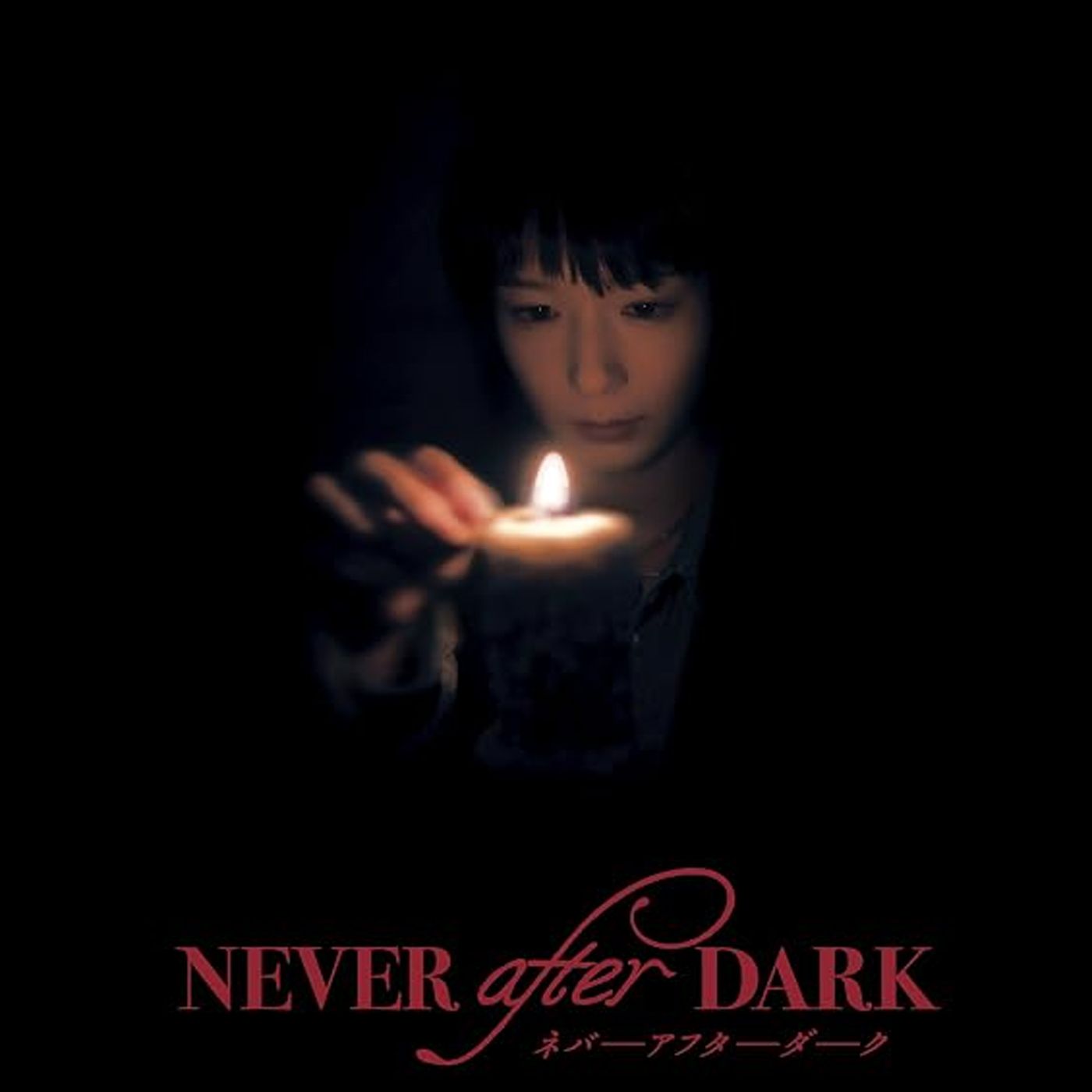
About this episode
Hoshi, who plays wandering medium Airi, talks about the unusual challenge of acting opposite co-star Kurumi Inagaki's dead-sister character Miku, who appears only as a reflection — meaning entire scenes were performed without ever actually making eye contact with her scene partner, down to taping marks on walls to hit precise mirror angles. Boyle also details the funnier-than-scripted performance castmate Mutsuo Yoshioka brought to the film's mysterious man, and a hint of what's next: his in-development remake of the J-horror classic Pulse, based on what he calls his favorite script he's ever been handed.
Transcript
Automatically generated, so expect the odd misheard name.
Hold your ears, folks. It's showtime. People pay good money to see this movie. When they go out to a theater, they want cold sodas, hot popcorn, and no monsters in the projection booth. Everyone pretend podcasting isn't boring.
Turn it off. There's a veil in. The middle of this world. You have to make a hole in the veil. I want to send my soul to the next world so that it can move.
But I won't do. It at night. The bell is too low. Where should we start? Do you remember what.
Kind of face you have? Do you always open that door on your own? I'll try to contact you tomorrow at dawn. This soul. is something different. Who are you?
Welcome to the Projection. Booth, I'm your host Mike White. Joining me this episode are director Dave Boyle and actress Moeka Hoshi, and Moeka's interpreter, to talk about their new ghost story, Never After Dark, a Japanese-set supernatural tale about grief and the afterlife. Never After Dark opens in theaters via Magnolia Pictures on October 2nd. I had a great time talking with Dave and Moeka, and I hope you have a great time listening.
Enjoy. Dave, I want to start with you. Where did the idea come from? The idea just came from my passion for ghost stories. I've loved them for as long as I could remember.
Just a passionate viewer, reader, teller of ghost stories is fascinated by the paranormal and the afterlife. I'd always wanted to try my hand at that well-worn genre and see if I could bring something new to it. So It was really just like, I feel like the horror genre overall and ghost stories in particular are so wonderful in their flexibility because you can express all kinds of ideas and kind of tackle really difficult subject matter and make it fun. Also, regarding to story, I feel like it's also horror story, but also. I guess it's kind of fantasy, too.
In order to make Ari real, I need to understand the setting of the world, this story. So I asked a lot of questions to Dave, and Dave gave me really specific directions and answers. So that helped me act so well. Was there time for rehearsal for this, or did you guys just kind of have to jump into it? We didn't have formal rehearsal, but we had a couple days in a conference room to do readings with all the main cast.
And that was great. I don't tend to like to rehearse to death, but it is nice to sort of get everything out there, figure out. what everybody's approach is to it, and then also just kind of get everybody on the same page tone-wise. Sometimes it can be hard to interpret from the script, like, okay, is this supposed to be funny? Is this supposed to be, you know, how kind of emotional are we getting here? And so those sessions were really helpful in terms of like...
Yeah, I. Think that conversation was really important because we can understand the world of the story at the very beginning, so... It was really important, I think, too. It also gives you opportunities for discovery. And I usually like to do those kinds of sessions with the cast, especially where it's something like this, where there's some kind of fantasy elements involved, just like going over, like, this is why I wrote this.
This is why it's this way. This is how it works. And then answer everybody's questions. And then once you get into sort of the actually like reading through the script together and everything, you can find unexpected you know you can find things that okay well maybe this part of the script needs to be tweaked this way like do we need this line I don't think we need it I think we can get it across with a look like that kind of thing and you know in this case like the biggest surprise that came out of that whole thing was Mutsuo Yoshioka who plays the man in the movie he really came in with a surprising interpretation of how to play that part like I I think on the page it's written as sort of like a slow, kind of a little bit of a slow talking kind of eerie presence.
And he kind of came in as sort of like a motor mouth with these odd pauses at, at, at funny times that there was really funny and way scarier than what I was imagining. And then, you know, everybody being able to see that altogether and react to it and, you know, Whoa, you know, this is, That's the joy of the process. Acting, actors, it's all very messy. Everybody's feeling it out. That's the joy of it.
Let it be messy and then we all find our way through it together. I imagine that the relationship you had, Moeka, with the woman that plays your sister had to be very balanced because you don't appear with her very often. Kurumi is an actress who played my sister. Kurumi and I don't have conversation that much. Also, it was interesting experience not.
To see Kurumi's eye because. So my interactions with Kurumi in the film were without looking her in the eye because she shows up always or almost always as a reflection. And that was the first time I've ever had that experience of acting with someone and not actually looking them in the eye. So, yeah, I always re I remember that I always reacted her voice. This is all bringing back memories.
Cause honestly I had like forgotten about most of this stuff. Cause like it, I gotta say that, you know, Cause some of those mirrors were also not very big. So like Kurumi would have to like sit like this. It's like, okay, one centimeter to your left, one centimeter to your left, too far, halfway back, you know, like that. And then there, stay there, you know, it has to be really, really precisely in.
And sometimes, you know, the, the ADs would, would sometimes help her like pushing her in, into frame in the right place. And then there was other places where, you know, cause I, I wanted to do, as much of that as I could without using CG. Not only from just from a style perspective, because once you start doing that, it's easy to kind of rely on it too much. But also just frankly, because budget-wise, if we were having to erase her from every single shot, then suddenly that would start to be a really challenging, money-wise, to pull off. So there was always like these, we'd have the, we'd have the camera here and Moeco would be sort of looking kind of at a mirror, but not really.
So like has to play with it. Like we give her a piece of tape on the wall or something like, look there. Yeah. That looks like you're looking at her, but actually, you know, the actual person is over here. And those are the ones where you'd end up just two people talking, but it ends up taking way longer than a action scene.
Just cause you have to get the, the eyelines, right. The camera just in the right place. Your use of sound in the film is phenomenal. I watch it with headphones on. So the use of the music, the sound effects, especially when you would have those little nightmare sequences where it's really loud and then super cut the sound completely.
Can you talk about the sound design and your audio artists? The sound of the movie was an interesting encapsulation of part of what we were trying to do with the movie, which was give... Japanese and Western artists a chance to collaborate in a way that they might not. Most Japanese film industry movies are pretty insular, and the same with Hollywood. There's not a whole lot of collaborative crossover.
I worked with this wonderful sound designer on the Netflix show I did in Japan, House of Ninjas, named Natsuko Inoue. And she's like an all-around sound designer. She not only does the sound design, cutting effects, but also does her own foley and everything, which is kind of how the system works in Japan. She's done great work on lots and lots of movies, like Godzilla Minus One. That was one of her movies.
And then I have this sound mixer, supervising sound editor in LA that I've worked with on, you know, between my work as a producer and everything else, I've worked with on 13 or 14 movies over the last 20 years at Warner Brothers Postal Production. One of the joys of this movie was putting the two of them together. Like Natsuko did all the sound design and everything and recorded all the foley in Tokyo. And then she flew over to Los Angeles and got to do the mix with Carlos at Warner Brothers. Kind of a lot of the philosophy behind sound mixing and everything is very different in Japan and the US.
And so, you know, I really wanted that. like the artistry that she brings to it and the very specific Japanese sounds that honestly you need in the movie, along with the kind of really, really bold and innovative mixing style that is, you know, Hollywood's sort of at the forefront. And watching the two of them collaborate was really, really cool. And then the third part of that sort of triumvirate was Jonathan Snipes, who did the music. And he also, he worked with Natsuko on House of Ninjas as well. So he was a lot of that same team just carried right over to this movie and you know he's he also he teaches sound design at ucla so he's always very conscious of the interweaving of music and sound design how they relate to each other how they complement each other all three of them are just wonderful human beings as well as as terrific artists so that was a great experience all three of them There wasn't a whole lot of collaboration in the room.
I don't think all three of them were ever in the room at any point. But, you know, Jonathan came in to pre-dub, to pre-mix all the music with Carlos. And then Natsuko came in from Japan and was able to sit in through the whole mix at Warner Brothers, offer her input on that. And yeah, it was honestly, that was the part of the whole process that was the most fun for me. It was just such a blast.
You mentioned your producing work and you've produced two movies that I absolutely love. Cat Daddies, and 25 Cats from Qatar. Oh, amazing. Well, I can claim very little credit for those movies. The director, Mai Hong, did a wonderful job, but Carlos also worked on those movies and did the mix, and they sound incredible, and I'm so happy to hear that you liked them.
Yeah, absolutely. And then, of course, Moeka, I was a huge fan of Shogun, and so it was so nice to see you in other things. Yeah, thank you so much. I know many American audiences are waiting for my next project after Shogun, so finally. There you are, yeah.
Dave, did I read that you are doing a new version of Pulse? Yeah, the news, I think, yeah, it just hit the news like last week. So I'm in the middle of, it's one of those things where it's, There's not a whole lot I can talk about regarding that project, but that was a script that Luke Petrowski wrote. It was one of the handful of times, maybe the only time. It was definitely my favorite script I've ever been handed.
It was the only time I've ever read a script in one sitting and just been like, I have to do this. It was really unexpected. I've been just inundated with people asking me about it. There's Not a whole lot I can say about it yet. I'm working on the script now.
Moika, what is your next work? Yeah, I only have some Japanese production. Yeah, TV series and movies. I have a big secret. Secret projects you can't talk about.
Yeah, no, I love it. Where's the best place for people to keep up with you guys and the movie itself? The movie itself, if you go to neverafterdark.com, it'll take you to our distributor Magnolia Pictures page where you can find theaters on where to catch it and everything. And then if you look up online, Google either of us, Moeka Hoshi or Dave Boyle, you'll find what we're up to latest. Moeka, I don't do social media that much, but Moeka is on Twitter, Instagram, everything.
But news about the movie, yeah, neverafterdark.com, that'll take you to where it's coming to theaters and also where it'll be available on VOD and streaming down the line. Well, fantastic. Well, I look forward to seeing your guys' next projects. It was really nice seeing this film, so thank you so much for making it. Thanks so much, Mike.
Thank you so much. We'll be right back. My pulse is racing, I'm hot to take. This motor's revved up into red. After midnight, rocking to the door.
Nothing till the morning, I'm gone, I'm gone. He has electric. Sparking power. Loaded, loaded. I'm getting hotter by the hour.
Loaded, loaded. I set my sights. And they're looming. Rockin' to the door Lovin' till the morning That I'm. Gone, I'm gone.
Livin' after midnight Rockin To the door


