
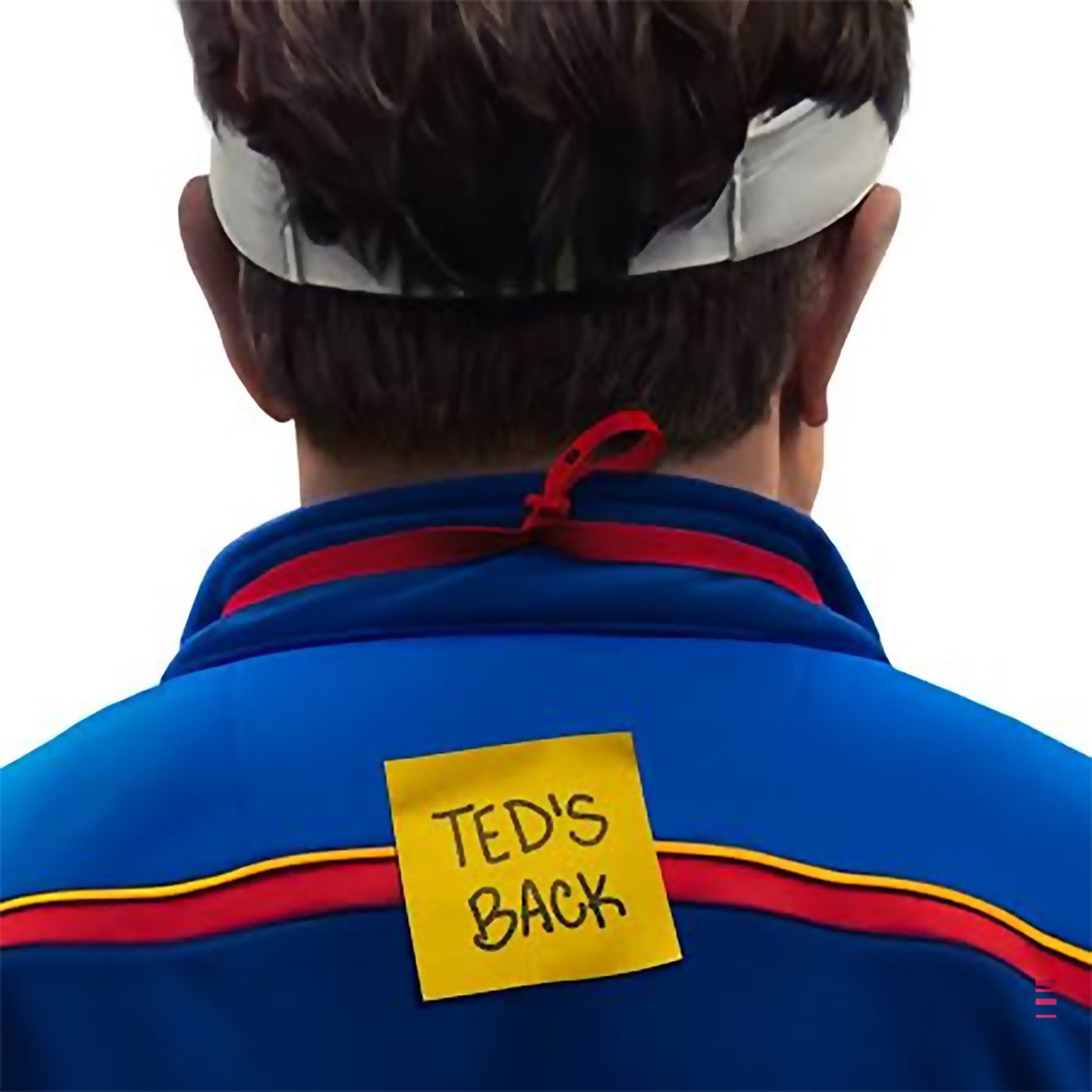
About this episode
Gonzales traces her path to the show through her years on Fargo (seasons 4 and 5) and Alien: Earth, where she worked alongside DPs Colin Watkinson and Dave Franco, and talks about the prep process behind Ted Lasso — full shot lists, overheads, and photo boards built with Lowney and longtime series DP David Rom and Vanessa Whyte. She also gets into her approach to blocking (including the deceptively simple staging of Nate's Backyard Barbecue), the influence of her father's decades on film crews, and what she's working on next for Apple TV+.
Transcript
Automatically generated, so expect the odd misheard name.
Hold your ears, folks. It's showtime. People pay good money to see this movie. When they go out to a theater, they want cold sodas, hot popcorn, and no monsters in the projection booth. Everyone pretend podcasting isn't boring.
Turn it off. Welcome back, coach. Thank you, sir. Too bad you're coaching a bunch of girls, you old wanker. FYI, the ETA is ASAP.
PP. As soon as possible, pretty please. Hey folks, welcome to a special episode of The Projection Booth. I'm your host, Mike White. On this episode, I'm talking with Bella Gonzalez.
She is a cinematographer. She was the DP on the first episode of the new season of Ted Lasso, season four. I had an absolutely wonderful time talking with Ms. Gonzalez, and I hope you have a great time listening to it. Thanks so much.
How did you decide to become a cinematographer? I grew up in LA. My dad grew up in the industry. It Went through the whole route. Started in transpo, G & E, was a camera assistant for 15 years, operator.
Became a DP when I was like about in high school. And I always fought the fact that I would be a DP, I think more than anything. And then I realized about the time I was 17 that this is what I meant to do. You know what I mean? I just made a list of all the things I wanted out of life.
To not sit behind a desk, to travel, to meet new people, to be creative. And I just, as I looked upon the list, I went, oh, this is exactly what you want to do. And then went full force into that. I think after just locked in and now I can't really imagine my life any other way. To be honest.
So your legacy, that's pretty fantastic. Yeah, Legacy, my dad, Hispanic man in LA in his early 20s. It was like a really tough ride for him to get to where he is. And I watched that and just really admired not only where he is now and how he got there, but just the journey, the crew, that camaraderie that you get from being a crew member. So really, my intentions were to go and strived to be a DP, but I didn't think I was going to be a DP quite as fast as I did.
I was really ready to, I was operating. And so I was really ready to be an operator for quite some time and just learn and be a sponge and soak up as much as I could from the directors I was working with, the gaffers, the keys, the PAs, everybody. It just gave me the opportunity to understand a set fully, which is what I wanted. Because I just looked so much up to my dad who had done almost every step. And I feel that it was really important for me to, even though it was shorter than I thought, crew like he did.
And it taught me a lot about this industry and what I love about it and why I love being a DP, which is working with a team and collaborating. So yeah, I would have loved doing anything in this industry. This was just the goal. And yeah, I feel so lucky every day that I get to do what I love now. It's amazing.
Definitely. You've worn a lot of hats over the years and even looking just at Fargo, you were DP down a few episodes, but you also camera assistant, you know, a lot of stuff that you were doing on that show. Yeah. Fargo is really great because season four, was my opportunity to join the show. And this is a show that I'd been a fan of since I was in high school.
As soon as I decided I wanted to be a DP, when you think about cinematography and specifically television and prestige TV, you think about Fargo. And so even though it was my dad and a bigger step back, it was just a dream show. And I love the Coen aesthetic. And I just love anything that is using the camera and lighting to tell an emotional story. So I joined as the C camera operator on season four, worked my way up to B camera.
And then by the end of the show, I was doing second unit and some tandem days and principal photography. That really gave me my big break. I would say was just Noah, our show runner being like, you're ready to shoot, go shoot. And then it just, everything fell into it after. Met a director shortly after that.
Basically, we went down for COVID during season four of Fargo. I went and shot a movie with this director named Steve Pink. And he basically told me who I was in the world and told me that I meant to be doing this and that I need to be on bigger things and I'm ready and really instilled that faith within me. So between him and Noah, that whole show, just because we went back after COVID. So just in the time of that show, I really felt like I had suddenly found my place as a DP.
And then it was really special to get back to Fargo for season five, where I got to shoot a block and work with the whole team and then go obviously to do Alien with them as well. And so it is like a beautiful thing to get to watch your journey again, happen with the same people, the people that believed that you could do it in the first place. And this might, all of this career, all of filmmaking is such a special thing because you can track every job back to an origin or back to a person or back to a conversation. And so it's really a people business. And I think that the people that I met on that journey just will be with me for life. really mean something to me because they saw me as a DP before maybe I even saw me as a DP.
Gosh. Yeah. The episodes that you shot of Fargo, just, I love that show. Just love it. Absolutely.
So much. And I just love that kind of magical realism with the, like the, the fairytale aspect, especially season five was just phenomenal. And I love the. Way that the show looks. It just, every show looks like a mini movie.
And that's the goal and the expectation. And I just think that I really like to be around people who are very great and great collaborators and very generous. But I also love to be held to this high standard. I think it allows all of us to work at our best level. And when you're asked to really not only dissect what our craft is technically, but what you're shooting as a story, and you come from that place and you come from subjectivity and what it feels like, to be in that scene, that's really something special that I learned on that show.
And I really think it crafted my sensibility and where I come from as a DP. And I find that every job I go into, I just have this innate desire to do right by the script. And so that's a show where the scripts are so great that you're just like, There's so much to bite into. There's so much to do creatively. Colors can mean something.
And as a DP, it's just you want something that's a full philosophy of creativity coming together. And I feel like allowing all those departments to work together to their greatest capability is what makes a show like that. And so I try and bring that with me to every other show that I come aboard and hope that it breeds a little bit of that same kind of creative flow with everybody well. How was your experience on alien earth because i can't think of a show that looks more different between fargo and alien earth but they share some of that dna but it just looks so so radically shifted. Yeah alien that for me i just felt like the closest i'd be to a part of film history you know what i mean i'm personally i'm such a I'm such a fan of filmmaking at its core and what it was. and what it has been.
And I just feel like it was taking a step back into the seventies. I tell this story about how the plane ride to Thailand was 30 hours. And I watched the first film three times, the second film twice, the third film twice and And I landed and they drove me right to set and I got on the ship and I walked it and it is all connected. It's not broken up. And I just remember feeling like I was in a fever dream, like the best, like a kid in the candy store.
And just every time you look somewhere, it's a Zeno with his head off. And then you're trying to replicate some of these things that really inspired you and everybody. And I think there was that immense pressure because it's such a loved IP, but I feel again, that pressure bred creativity in this way of obviously we want to make it an homage to the movies and really do right by the material. But we also knew that we had to find our own place and that it, it's a different show than Fargo. What it asks of it is different.
And I really think of Alien as like, Alien felt like shooting a movie. It was just a long hall shoot with four DPs who were all cross shooting. And I was shooting for, I was shooting for Franco and Dave Franco and Colin Watkinson and working with them to craft things that were in their episode that they would be proud of. And so like as a DP, I got to flex more skill even than just creating something to my own sensibility. There's something about working with a team in order to make something so great to do right by people and their work and what they want to do.
And so I do really feel like that was truly a team sport, that show. And just new people coming in, new energy and what that creates. But yeah, a seven-month journey in Thailand is a dream. We had unbelievable Thai crew. And I don't know, there was just moments where I looked around and we're in the field and people are shirtless and they're sweating and in short shorts.
And I think, oh my God, it's those photos from Star Wars with the boom operator and the little tiny shorts. People are smoking in the brush. And I just was like really soaking that in because our industry is changing and I'm embracing it and I love it. But there are very few moments where you feel like you're in another time. And I really did feel like I got to experience what it was to be in the 70s, to be in a jungle and to make something like that.
So beyond even what it was, what it felt like to be on a show like that and make something like that is really just gratifying. I don't know. It's so funny that you keep going through your career and you just pinch yourself with all these things that you are allowed to be a part of. And that I think will be like that for the rest of my life. I always think I'm going to look back at that incredibly fondly.
You talked about working with four different DPs on Alien Earth. And how is that? How do you kind of make sure that everybody is shooting a very similar way? So you're not just like, oh, that's shot. They're completely off the reservation.
That's something I talk about on every single show. It's so important to me. I think every TV show is different. I think that those that Noah Hawley shows in particular want to be consistent. They want to feel like it is like a movie.
You know, you don't want to go through each episode and go, wow, that episode was incredible. So good. I want to look it up. You want the whole season to be that good and all of the technicians to kind of meld together to take us out of that equation almost for the viewer. But I that's again, that's my favorite part.
The fact that I got to ride in a van with Colin Watkinson and talk about the work of the day or what's coming up and what his plan was and how I'm going to go and make that happen and do right by him. All those things are what I really value because I know I'm young. I know I'm still learning. I think I'm always going to be learning. I'm always going to be a student.
And so it's just the most valuable opportunity on the face of the planet to work with these people who have done such incredible things and are so experienced. So that team sport element of it, I think is the reason that I keep moving up as a DP, because I think that I am, it's like everyone is forced to be at the same level. Everyone's forced to, be thinking within the creative realms of the show that we're in. And so I feel like being asked to match these ASC, BSC level DPs only pushes me to be better. And that's what I want in my career is to learn new things and understand why people do things to inform more why I do things one way, or maybe I really love things and I pick them up.
I like to think of our industry as an apprenticeship industry, like we're like metalsmiths. I really do. I think that a lot of the spoken, passed down knowledge is really how you gain insight into this career. And so I thought it was a blessing. It's a lot of conversation.
It's a lot of prep. But I really feel like inherently when you're coming from that world and you're really basing it out of the heart of the story and the characters and what in front of you, it really does immerse you so much in it that you do end up all kind of having this similar creative vision and how to attack it. And Noah specifically, his shows have like rules and guidelines that kind of keep us all working together and working with our directors to make sure that no matter who comes in as a creative, we all have the same language to be speaking as we go through it. It seems like you must be pretty in demand to have, what, two movies, feature-length films coming out in 2026 with Twisted and Pizza Movie, and then the first episode of Ted Lasso season four.
Yeah, I feel incredibly lucky. I know that I've worked my butt off, but also I know that there's multiple elements in this. I really, I feel like it's a pinch-me moment all the time, but Again, it goes back to just every person that you meet matters and shapes your career in some way. And Ted Lasso I got because I worked with the director Declan Lowney on a show called The Big Door Prize for Apple years prior. We did one season where we didn't work together and the second season we did.
And then from then on, we've been constant collaborators, whether it be on commercials and Ted Lasso was his world. And so when he called me and said, do you want to do this with me? Do you want to be the American DP and bring this Americana into it? I felt so honored because to work on Ted Lasso is a dream, I think, for a lot of people. So to get offered Ted Lasso in this way of being like, we know each other, we're familiar with each other, I trust you, I want to do this with you, I think is a whole other pinch-me moment for me that I concreted that relationship with someone they could call on me for something like that.
And then every job I feel when I'm meeting for the next one, I know if it's right because it has some weird cosmic connection. I did this show called The Twisted Tale of Amanda Knox in 2025. And while I was on the job, I met for Pizza Movie with the directors, Nick Kocher and Brian McElhaney. And they told me that Amanda Knox had been tweeting about them and saying that They're her favorite comedians. And so it just felt too, it just felt too surreal in this way of just being like, my agent was already like, this is your movie.
You're going, you should do this. Even before I even saw it really like that. And then just for the jobs to be connected that way. And then Nick and Brian have connected me to other people and I've moved forward or even the job I'm on now. is really a job I got through both that Twisted Tale of Amanda Knox show and Alien through David Franco. So the biggest piece of advice I think I can ever give in this industry is be a cool, collaborative individual.
And I just feel like that's the part that's in demand. I think there are so many creatives. I think so many people could do what I do in terms of technically. But I like to think that where I come from as a collaborator, the support I like to give to a director, and the fact that I really want to make their vision come to life, and I want to be a part of that, and I want someone to look at me and go, that's exactly how I saw it in my head. And so, I don't know, I just...
I like to be a good collaborator and I like to think that the work moves me forward, but most importantly, the relationships. Tell me that relationship that you have maybe with your other DPs on Ted Lasso, because like you said, you're the American DP and you are handling the... first episode, which is all in America. So how much do you get to branch out on your own because you're representing America versus these other DPs that are all representing the British part of it? Yeah, that was a big thing for me because when I was brought on, they kind of said, we don't know exactly how we want it to look. but we know that we want it to look different. We know we want Ted to depart from his, the world of England that we've seen and we love and see a little bit where he comes from in a different route of his, a different life of his.
And so it was, you know, I think the intention was always to have it be different, but I felt the responsibility to kind of do right by the show, do right by the audience, I really also felt right about doing Right by Vanessa White and David Rahm. And they were really great. We got on a few calls and I asked them some questions and I told them my intentions, which was to keep the camera package the same, to keep the lenses the same. So, you know, really picking the things that I thought were unforgettable about the show and undeniable about the visual language and translating those over. while trying to make it feel crafted by a different eye because that was kind of the desire. So, but I think the pressure of the audience that is there that loves the show and is familiar with it and is so die hard to it, I felt like I wanted to do right as a fan myself of seeing the show and coming back after all this time and kind of a restart into a new direction, I felt it really appropriate, you know, but I also really wanted it to be something that felt in the language and also did right by all the things that David Rahm had set up through all the seasons.
You know, he's been on since the beginning, he shot the pilot. So I felt it was important to collaborate with them and talk to them and see what they were planning on moving forward for the fourth season, which was exciting to me as just a viewer. I'm just like really interested and, um, And then talking a lot to Declan and talking to Jason. And Jason is the creative force behind that job. And he has got such a vision.
And so I think when people can lay out the vision so well in terms of the emotional journey he wanted to go through, I felt that it fell together. You know, like the things that appealed to me about American cinema and America in general and just the quality of our light. is something that I really take notice of. I work so much out of the country that when I come back, I like to just examine the things around me that feel so true. And I think that was just it. It's just trying to learn about Jason and his actual upbringing in Kansas and the things that he did and what the memories that felt the closest to him.
And I feel like that just informs the way it looked, but still trying to keep that like Ted Lasso polished. that is just like a sweet treat at the end of a night. You want it to feel like a warm hug. And that was really just how I went about crafting the language for that episode. The cinematographers are just amazing to me. Just the way that you play in both art and science, you're almost like modern-day alchemists to me.
The way that you can think about the light in the way that you're talking about. Think about that camera package and the lenses and just be like oh yeah of course i'm going to shoot that with a 50 why wouldn't i it's just like why would you i don't know but i just love the craft that that i've shared in it and i love that you got that from your dad and you're carrying on this legacy. Yeah i think in a weird way like sometimes i do feel like an engineer because a lot of the beginning of my career, especially was a lot of second unit and a lot of pickups and additional photography in this way that demanded me to sit and examine a show and see the DNA through it and see all of the choices and why they work and why someone might've made them.
And I think through all of that, I've just really learned to take a really discerning eye to things. And And sometimes it's hard. I think it makes it hard for me to watch movies as a general audience member. And that's why I do love when a movie just completely takes me out of myself. And I don't even think about what I do or that I'm even on this planet.
I'm so transfixed by what everyone's doing. That's when I know that it really resonated with me. But I just think it's the same thing with anything. And I feel any show that I would come on that would be a new season, I would really do the same thing, even if the whole intention was to shift the look, because I feel like those decisions were really made for a reason. And I feel like you can tell.
I feel if you really dissect any image, if you go on Shot Deck and if you look at it long enough and where the light's coming from, I like to play that game. Like, what are they telling in this image? If it's a film I haven't seen, or even if it's something I have seen, just it's nice to look at it in a new light, in a new context, in that way of being a student. And then, yeah, I love it. I love a science experiment.
I'm really one of those people where if the tool doesn't exist that I want, I'm going to make it. I'm going to manufacture it somehow, or I'm going to find the creative low-budget solution in order to do it. I really wanted these expensive filters on Pizza Movie that were like, $ 3, 000 a day. They have three sets of them and I didn't even like them that much. And then I just went, you know what?
Why don't we just craft these are on our own and make them exactly what we want and really play around. And that felt like alchemy and like being a mad scientist, me and my business partner, Andrew LaBoy, who also is the operator, a camera operator on Ted Lasso. That's just the way we come from approaching a specific job. And what was really great about Ted Lasso is we finished Pizza Movie on a Saturday. And by Monday, I was prepping Ted Lasso.
And weeks later, LeBoy was back out with me. So we were in this zone of just creating a look that really suits the story. And just, you know, putting the camera in the place that gives you access or not to our character, which is Ted Lasso. And I feel like getting to be deeper in that kind of story and deeper in his connection to his hometown and his family. And it does what Ted Lasso does best.
It tells you a really hard truth of life in this really beautiful, funny package. And it has equal parts entertainment and giggles and deep kind of heart-wrenching themes of guilt and family issues. And life decisions, fatherhood. And I really just, I gravitated to that instantly. And I think working with Declan is, we've just got this collaboration where there's so much trust.
And he's the producing director. And so he's done all the seasons. And so I really felt like I was, I just had everything at my disposal. I had someone who'd been there since the beginning. I had the help of the DPs who are also crafting how they're going to move the show forward and hope that we build this beautiful journey for the season all together with that creativity, that alchemy, and just that innate sense of story.
What were some of those decisions where you're like, okay, I really wanted to have this type of look and just to again, separate it out from the more British angle of it. For me, it was like a textural thing as having been in London and having shot London. And there's always this kind of cast in London, even on a gorgeous day, it's a little more blue. For some reason, the colors feel more saturated than here. And I didn't want to make Kansas like how we would see Mexico in a movie.
I didn't want to put an overtly yellow filter and be like, it's America. But I wanted it to feel dusky. I wanted it to feel like a late afternoon in a park when the sun is down and you're seeing little speckles flying through the air. I just wanted that quality that is so innately America to me. And so what that meant is even though we use the same lenses, I really wanted to treat them differently.
So there's about a three stack of filters in front of the lenses. There's a little bit of a color filter just to bring a little warmth to the highlights, nothing crazy. And then a contrast filter and a halation filter, because I also think there's something about being in a car and driving in America and there being a mist on your windows and just streetlights looking specific. And I just wanted that kind of feeling throughout the town. I wanted it to feel alive.
And then I think our episode is a little more grounded, weirdly, in the fact that there's way less handheld. And I find the moments that it is handheld, it really relates back to the original series. And those moments are the ones I felt were appropriate. Them in the locker room when he's kind of giving a life lesson about stealing, that's him coaching him. And so I was like, oh, we're back to the changing room.
And so Declan and I both completely agreed that was the moment that for sure we went back into that sensibility. And then for me, when Ted comes back into his childhood home and he starts to see his father's belongings and kind of question the sense of fatherhood and pride and pride within himself, pride for his father, the pride that his son feels for him. And he starts to have a panic attack. We're back in that Ted language. So there was things I really wanted to keep, but to feel the difference between the worlds, I wanted it to be more studio.
So it's more dolly. It's a little more steadicam. It's a little more reserved, I think, in the camera work in terms of movement. But what was really important to me was still kind of being in that language of being eye level with Jason, slightly wider lens. So you can see what's happening in the background.
You can see all the beautiful background work that Townsend Wells, our first AD, and his team created. That's so the show. So I think like taking the lensing and just really trying to craft it. I really thought about it coming out of Pizza Movie. I was like, I'm in movie mode.
And so I think we were, you know, really trying to craft this beautiful thing where it's almost storybook. It almost really is like when Higgins and Keeley and Rebecca get out of the car, they're really stepping into the world of Oz. And I think Keeley coming out with the red sparkly high heel is effervescent of that. It's Dorothy in Kansas and these blue skies and hard sun and So I really wanted to feel that. And even in the pitch, it's pushing that kind of that low sunlight all day, which is hard.
It's a hard exercise and how to do that and how to keep it consistent. Or even some of our other references like Casablanca for the plane and doing that all at dusk and what that means in terms of trying to shoot a five hour scene in a time period that would have been 45 minutes. I feel like the lighting approach just altered because of how we were shooting. And I really wanted it to feel like it has that, I don't know, pop. I wanted Keely's heels to pop and the clothes in Dazzle Me Moi to feel utterly Kansas.
I wanted them to feel over the top like that. And just a little bit of we're leaving kind of this rainy territory and embarking in this hot. I wanted them to feel hot. And they talk about it in the show. And even the actors being in the space, it's so funny.
Them coming over from London to come shoot this. And it's 110 degrees in Missouri. Peak summer. And so I didn't want to hide from that. I really just wanted to amplify it and smooth it out in that way that really is the show.
It's just so curated in this beautiful package. And the colors pop so well. And so beautifully designed. That just taking all the same things that they were doing and altering them slightly so that they felt true to the world. Yeah, I really then felt like every other decision was made because the scene would block itself like that with Jason and all of our other cast.
Or there were moments where I wanted it to feel a little moody because he's in a sense of state that is just... of longing, of questioning, and I wanted to be able to put that on the screen, but then combat that with these really beautiful poppy storybook images. And this is my second show that has referenced Wizard of Oz, and I find it really beautiful. And in and of itself, Wizard of Oz is a journey. And so I think it's the beginning of the journey of season four, and I really felt that it was all beautifully appropriate. And I do really feel like it translates in the choices in a way that no one has come up to me and said it doesn't look like Ted Lasso.
And that is my biggest compliment because I just wanted you to have a really nice, fresh start to the season, be really happy to be with our characters again, and provide a palate cleanser as you go into this thing that you already know and love. It's just nice. I love a bottle episode like this. It's been... in my sensibilities since I started shooting. Obviously you're not coming up with this stuff on the day.
So are you just like taking copious notes, drawings? What's your method? I'm an insane prepper. I do a lot of documents, probably too many, but I find that it's better to be overly prepped. And for Ted Lasso specifically, every single shot of that episode was photo boarded before we did it.
Whether things changed which they do. I think that's what I like about Jason. I like that Jason will come in and say, actually, now that we put it on its feet, it feels better in this other room. So there is element of change and that's where I thrive off of. But I think what we usually do is we go through first and we story beat out the script and we see what's important in the scene, where Ted starts, where Ted ends, where he is emotionally, what the world looks like to him.
So we do that. Then we get into the space together and we talk about potential blockings and what that would mean. A really important one was Gates Barbecue and how they were sitting. And Declan said it to me in this way where he goes, Ted would be on the end because even though this is his space, he's uncomfortable and ready to leave at any moment. And so there's really intentional things like that about blocking.
And then once we kind of hone in a good blocking, then I photo board with Declan and then I create these kind of storyboards, which are a play, a playthrough of how the episode is going to go, which I find extremely helpful for all the reasons, not only because all the creatives get to see what we're doing and can plan accordingly and do whatever would be the best version of that. But also it just allowed us to have the space and freedom because when you get on set and you have a plan, even if things change, you still know where you're coming from and the intention and all the decisions you made. But that's kind of why I like to do these documents. I put the sides first because the script is the most important thing.
And then I put our shot list and then I put our overheads and then I put our photo awards. So it's Here's where the decisions are coming from. Here's the actual quantifiable list. Here's where they are in space. And here's how they feel with the camera.
And I feel like everyone understands a different way of communicating these visions. And so I feel it's important to give everyone the whole packet. And then you have where it's coming from in every way, even logistically. You know what directions the cameras are pointing, you know where things are safe. And also I give those to my operators and it's a collaboration.
So once they know where I'm coming from and what the plan was, I let the magic of set craft what we're doing. So we push each other. I really like to do this game of yes and. So here's our plan. Of course, if the director likes it, I really approach it as it's best choice wins.
And we're just always working to push it a little further. But I feel like giving everybody the room and the creative space and the intention that maybe not everyone is used to getting, it really puts you in that headspace of also being where we were during prep and why we made all the decisions we made. And I love it. I think it's a great exercise. I like to be ready.
It really helps me in terms of lighting and all of those things. But I just also like that it encourages you to read the script pages more. and look at how we're doing it at the same time. Because you can shoot something a thousand ways, a million ways. You can shoot something, everyone that would do, anyone that would come in that would do my job or would do a director's job, it would ultimately shift how this episode came out. But I like that they know where we came from, specifically.
And then conversations, but... I think putting everything together, whether that be costumes, production design, and my references, when you look at something across the board, you start to see why we made the decisions we made. It just comes out like that. So I think being overly prepared is the best thing when you have the ability to. Do you go to movies and walk out and go, wow, that was the best looking thing I've ever seen?
Absolutely. I'm a consummate fan of all film. And there are films that I can come out of and say, I didn't really love the movie, but I loved how it looked. More often than not, that doesn't happen. Because for me, the movies that are the best cinematography is work that really shows a specific point of view, a specific vision, and does it in this way that's cohesive and really doesn't take you out of it.
I like to call it like fingerprints. on the lens. I don't want to see the work. I just love to be transfixed in it. But absolutely, I'm such a huge fan. And I think I'm constantly changing in terms of who I'm massive fans of.
And I really like to tap into certain camps at any given time to push myself to in the directions that I go in. Right now, I'm really into director-wise and just sometimes they keep the same DPs, but Guy Ritchie and Edgar Wright and Martin McDonagh. And I just, I'm in this kind of sphere right now, transfixed by all their work. So I just love to see new things. I think going to South By for Pizza Movie, I went and saw as many movies as I could that didn't have distribution.
Because I was like, I want to see all the things that got made this year and go talk to the filmmakers because they're here. And that's a joy for me. I think getting to talk to DPs about the decisions they made and things that maybe they hoped someone would notice. My friend, Kasusha Jenenfeld, had a movie there this year. And one of my greatest joys in terms of that whole experience in South By was sitting with her after the movie and saying, I think that you made the world a character in the movie and this is why.
And that's such a beautiful conversation. And I think that it doesn't happen enough. I think it's hard. We're always so busy. DPs are like very in their head about what job they're on or the next job or their career or where they're going.
And I really like to sit in the now and be surrounded by all the work that's around. And whether that be like I email filmmakers all the time. If I just watched a documentary on YouTube and I emailed the director and I said, this is incredible. And I know you're not in this world yet, but if you ever want to talk, I'd love to pick your brain. Filmmaking is all life experience and just those conversations and watching other movies and being inspired and is pivotal in terms of our growth.
And I really just want to stretch myself as a DP and really not allow myself to be in a box. And I think I'm doing that. I love comedy so much. And I think it's so important to be present and bring that back to what comedy was at some, at a certain point in the late nineties, really comedy and rom-coms and was so prevalent. But also I love to do the aliens.
I love to do sci-fi. I love to do, lean into new genres and twisted was a horror movie and i just really always want to challenge myself and i feel like just challenging my brain with other creatives is number one to my sculpting of who i am and my pov as a artist do you have. A particular genre or type of film that you would really want to make tomorrow if you had a magic wand would it be a found footage horror film or period piece from late 17th century russia what would it be. Well right now because i'm in the place i'm in i would love to make just a bombastic big even like baz lerman one movie i love is romeo plus juliet i love that movie it's just the world the design, there's everything. All the decisions, the Old English, the casting, it's just so fun.
And I like things that have an element of darkness. I like dark comedy because I feel even Fargo and even Alien, it's like there's always this hint of comedy because I feel like life is not one note. Life is not just sad. Life has, even when life sucks, do you ever just, you're like, this sucks so badly, all I can do is laugh because it feels like someone's almost pulling a prank on you. I think that's what I feel like life is.
And so I really like kind of that dichotomy of those kind of hard, big moments combat by some wit and smart writing and Sherlock Holmes. I would make Sherlock Holmes. I want to make something big. I think they would even be considered maybe action movies, which is not something I've really thought about. But it's not even about the action.
It's about just the whole package and the world. So that's really a goal. And that's where I'm working towards right now. And the project I'm on now is very much in that world. But movie-wise, yeah, I would love to do something like that.
I don't know if you can talk about what you're working on, but I'd love to know what's next for you. I'm not sure if I can talk about it either, but I'm on another Apple 30-minute. This is a dramedy. So it's, I would say, equally as funny as it is morbidly dark. And it's perfect for me.
And I think really wants to be surreal and lend itself to perspective. I found a job where all of our decision-making comes from the internal state of the character. We had a full concept meeting today and it was just, talking about big set pieces, but do they really have to be big, or is there a way that we can do it that is maybe smaller budgetarily, smaller footprint, but does it tell the same story? So I feel really lucky, and I just feel like Apple has brought me on this whole long journey from back with my first show with them, which was Door Prize, and then I did a show called Houston with them, second season of Door Prize, Ted Lasso, and now I'm on this. And it's just really exciting.
I don't know that you can, you know, make, go get inspired by these amazing filmmakers, really dive into it and study it. And then something like that comes your way and then you're ready for it because you've just been like all wheels ahead on this kind of journey you want to go on. I don't know how much I can talk about it, but yeah, I just, a very different show than Ted Lasso, but I also feel like I want every show I do to be different. I want them all to feel individual. And I don't know, I really like being a part of a family on a show, but also I like branching out and meeting new people and trying new things.
And it's really great because Lasso, I think for me, was new. I think it was a new way of shooting, a departure from the usual. And It's very simple filmmaking, but it's effective. And so I think it's just carrying what I'm going to take from that into every job is this simplicity that really responds to the audience and filmmakers alike and where we can make something that just everybody could love and appreciate for the work. Well, I've had the best time talking with you today.
Thank you so much. No, I appreciate it, Mike. It's been awesome. This has been great. I hope we can do this again sometime.
Yeah, I would totally love to. Well, good luck with your new project. I can't wait to hear what it is. And hopefully Guy Ritchie will make that third Sherlock Holmes movie one of these days. And then have me on.
I'm ready. Thank you so much, Mike. I found a brother like me and myself because they never did. I wasn't winning, but just that very minute it occurred to me. The suckers had authority.
Who's sweating as I dwell in my cell? How long has it been they got me sitting in a state pen? I gotta get out, but that thought was thought before. I kind of played to the plan on the cell floor. I'm not a fugitive on the run.
But a brother like me begun to be another one. Public enemy serving time. They drew the line, y'all. They criticized me for some crime. Nevertheless, they could not understand that I'm a black man.
And I can never be a veteran. On the street, the situation's unreal. I got a raw deal. So I'm looking for the steal. Yo, Chucky.
Word him up. I'm looking for that steel. Yo, man, we gonna break you out of there, man. We ain't gonna like that, man. Don't you know they got me rotten in the time that I'm serving?
Telling you what happened the same time they're throwing. Four of us packed in a cell like slaves. Oh, well, the same motherfucker got us living in his hell. You have to realize what is the. Form of slavery organized under a swarm of devils.
Straight up, bring them up on the level. The reasons are several, most of them federal. Here's my plan anyway, and I say, I got gusto, but only some I can trust, yo. Some do a bid from one to ten, but I never did, and plus I never been. I'm on a tier with no tier, shit ever fall.
Self-blocked and locked, I never clock it, y'all, or deal. Time and time again. Time that got me serving to those to them. I'm not a citizen, but ever when I catch the CEO sleeping on the job I plan, it's all go ahead. I want a strength, but I'm going to tell you the deal.
I got nothing to lose. Because I'm going for the steal. Yo, Chuck, we're going to break you out of here, man. We're in the strategy. I'm going for that steal.
Burn up, G. I'm trying to put the black guy in the game. We'll be right back. We'll be right back. Yeah.
Yeah. Is fucking up the government. My plan said I had to get out and break north. Just like Oliver's neck, I had to get off. My boys had the feds in check.
They couldn't try nothing. We had a force. To instigate a prison riot. This is what it takes for peace, so I just took the peace. Black for black, it's my time to cut the leash.
Freedom to get out through the ghetto. No sellouts. Six COs we got. We ought to put their head out. But I'll give them a chance cause I'm civilized.
As for the rest of the world. They can't realize I'm sterile as hell. I'm a rebel, so I rebel. Between bars got me thinking like an animal. Got a woman CO to call me a copter.
She tried to get away, and I popped her twice. Right now I want to get nice. I had six COs, and now it's five to go. And I'm serious. Call me delirious, but I'm still a captive.
I got a rap. This time to break as time grows a tenth. I got my steel in my right hand. Now I'm looking for the fence. Hey, yo.
We got the dope plan in effect. G-word to the staff, man. I'm looking for that Benz. I got the 98 5C. Professor good for the S1.
Yo, Chuck, we coming, man. As I mentioned, into the courtyard. Followed by 52 brothers. Bruce, better than Scarred, but hard. Going out with a bang.
Ready to bang out. The power from the sky, from the tower. Shots rang out. A high number in dose. Yes, it's something close.
I figure I'd trigger my steel stand and hold my post. This is what I mean, an anti-nigga machine. If I come out alive... Then they woke up dreaming. Then I threw up.
My steel bullets flew up. And to my surprise, the wall and tower blew up. Who shot? What? Who?
What? The bazooka was who? And to my rescue, it was the S1W. To kill my kid away. So I just got away.
The joint broke from the black smoke. Then they saw it was rougher than the average bluffer. So the steel was black. The attitude exact. Now the chase is on.
Telling you to come on. 53 brothers on the run. And we are gone. Got me in the show. Got me in the show.
Thank you. Thank you.
More from The Projection Booth



Similar episodes across the network
Matched by shared keywords.
-
Required Viewing 03: Barry Lyndon
1 shared keyword: cinematography
-
120 - The Only Female VFX Camera Operator - With Maryan Infield
1 shared keyword: cinematography
-
Episode 26: Return to Oz (1964)
1 shared keyword: wizard of oz