
Season 1 · Episode 120
120 - The Only Female VFX Camera Operator - With Maryan Infield
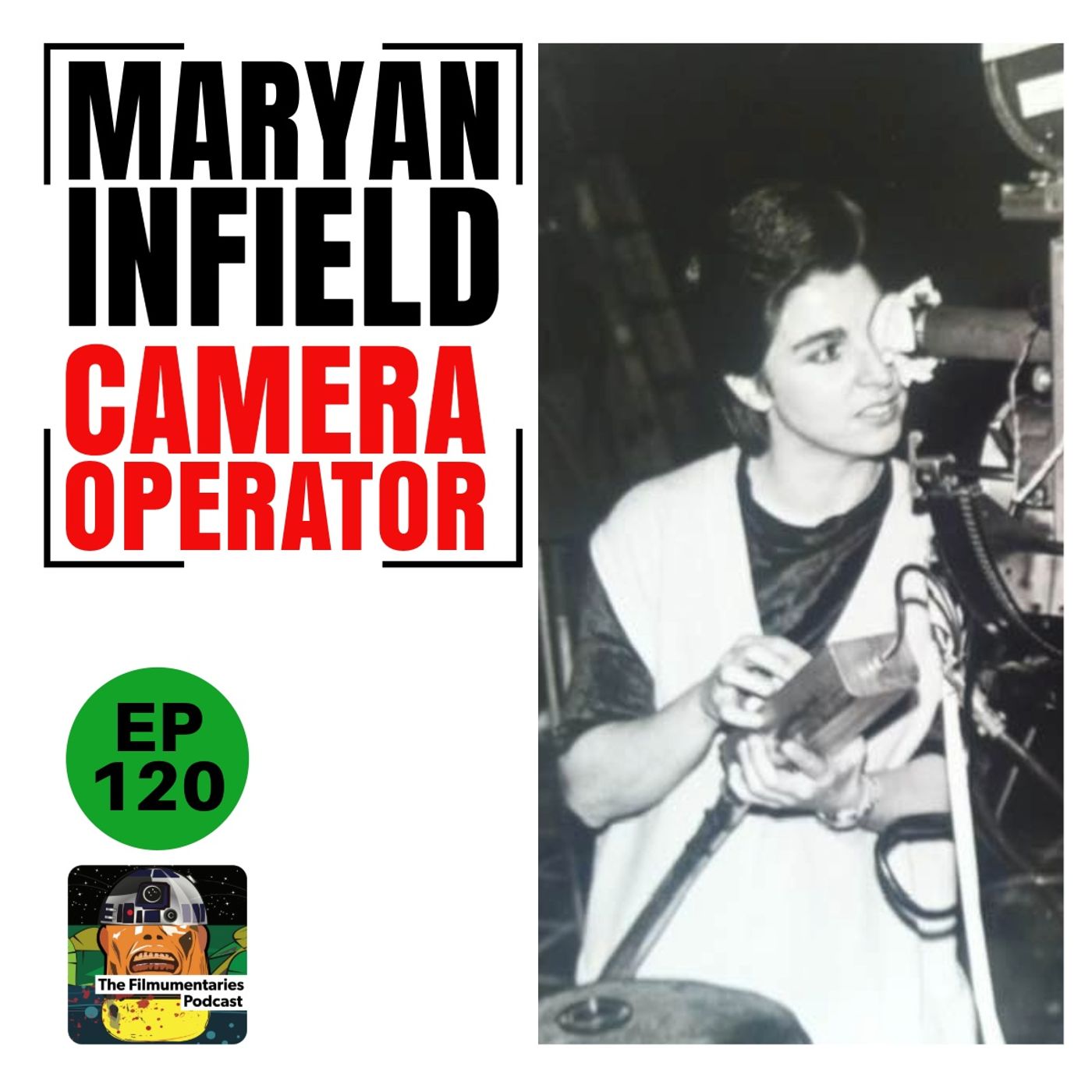
About this episode
We discuss the challenges of working in different effects houses, the importance of collaboration, and the evolution of technology in filmmaking. The conversation also touches on personal career transitions, the balance between work and family life, and the shift towards education in the arts.
All my links
This podcast is completely independent and made possible by listener support. If you’d like to help me keep making these episodes, you can join my Patreon community here: https://patreon.com/jamiebenning
Watch more on YouTube:
Check out the Filmumentaries YouTube channel for behind-the-scenes clips and extra content: https://youtube.com/filmumentaries
All my links
Transcript
Automatically generated, so expect the odd misheard name.
Weirding Way Media. Welcome to episode one hundred and twenty of the Film We Mentores podcast. This is Jamie Benning and I'm your host for the next hour or so. Thanks for joining me. If this is your first time here, you're very welcome.
Of course, you've got just about an hour of behind the scenes chat ahead of you, and you've got another one hundred and nineteen episodes to check out. Quite envious, really, there's there's a lot of good stuff in there, even if I do say so myself. If you're a regular, welcome back. Thanks for joining me again. Sorry for my slightly stuffy voice.
I've got a bit of a cold at the moment. And welcome to the one hundred and twelve patrons that help support the podcast. I really do need to double that to at least two hundred and twenty four. Two fifty three hundred would be amazing to make sure this is a financially viable endeavor. I'm not talking about profit here.
I'm talking about breaking even at the moment. But you know, if I can double it, then there would be some profit. Profit would be a nice thing. So you know how you tap your phone on the machine and the coffee shop and you don't even look at the amount. Well, for about that same amount, twelve dollars, you could fund an entire year of podcasts.
Your help would be very much appreciated. You'll also get an ad free version of each episode on the lowest tier. There are more tiers with more perks, but imagine that and add free version, so no distractions, just great conversations. If you can't do that, please do leave a review on Apple Podcasts. It'd be great to help to get this podcast to more ears.
I know I say this every time, and I know you probably just let it go by every time, but listen. If you could just stop now, stop this podcast, go to Apple Podcasts, just write a quick five star review, some nice words. Hopefully it'll take you all two minutes and then you can hit play again. I mean you could do it while it's still listening, actually, but I'd really appreciate it. With me makes such a difference.
There's so many big podcasts out there burying these small independent podcasts like mine. It's just me, that's it. I do everything, So i'd really appreciate your help. While I have you here a reminder that you can still go to Colincantwell dot Com and get some money off any of the items with the code Film fifteen. That's film one five.
Go check it out. They have prints, they have mugs, maybe even t shirts now, lots of core stuff anyway, So yeah, Film fifteen at Colincantwell dot Com. Okay, today I'm talking to somebody whose name you might not have heard of, but whose work you've definitely seen. Her name is Marie Anne Infield. She was known back in the eighties, the period of time that we're talking about this conversation as Mary Anne Evans.
So, Marianne started out in the film industry in the early eighties, navigating a world which at the time didn't have many women behind the camera, particularly in the effects world, and she got her break at ILM working as an assistant camera operator on Return of the Jedi, where she was part of the team capturing all of the visual effects that brought all of those amazing sequences to life. She also worked at Apogee and Boss Film Studios on projects like Life Force, Never Say Never Again, and Dune. And in our conversation, Marianne shares her journey from film school to ILM, how she convinced the right people to give her a shot, and what it was like working with legends like Ken Rauston and Dennis Muhan.
She talks about some of the inventive problem solving that went into capturing those iconic shots, including the hyperspace effect in Return of the Jedi. Yeah, some stories I've not heard about that film, given that I wrote a book. I was quite surprised by that. So Jedi Timeline dot com still available. By the way.
We also got into what the working atmosphere at ILM was like and how it compared to those other effects houses, and what it was like being one of the few women in a very male dominated department. So here's my chat with Marian Infield, and as always, I'll be back at the end for a bit more jabbering on. Marian, thanks for joining me. As I said before we hit record here, it was difficult to find out information about you. IMDb isn't that forthcoming?
I think it has Life Force and Return of the Jedi on there. Can you tell me how, first of all, how you got into the industry. What was your entry point? Well, I finished a film school at usc and got out and realized very quickly that the best jobs were all union jobs. However, this was nineteen eighty one, and getting into six point fifty nine, which is the cameraman's local, especially for someone like me, was next to impossible.
So I needed an angle. I needed a specialty to get myself in. And there's two ways to get in. You could get into. Special effects camera or live action, and since live action was fairly new, it looked like a really good chance that I could swing it.
So after USC I worked for a title house in Hollywood, and it just so happens that we had two Oxbury stands, animation stands, and then we had a. Studio with the twenty five foot camera track. So these two gentlemen came in one night and they persuaded my boss to let them work in this at night in the studio, and with them they brought which I had never seen before, none of my coworkers had. We were mesmerized this motion control system, which was crazy, you know, because everything we shot on Oxbury was by a foot pedal or you know, pretty much manually. So I thought, ah, this is my.
Ticket, and I persuaded these two guys to let me work as an intern. So I worked Title House in the day and I worked title house at night, and I did anything these guys wanted. I was their go for, you know, food, beer, it, and they taught me how this system worked. And it wasn't before long. I realized, because effects pictures were just starting to really some of them were super cheesy, you know, of course, but I didn't want the non union work that would not get me into the union.
So if I learned this system, that was it. And I did, and I put together a small reel and it was it's cheezy, you know. Maybe, but I had read in Variety maybe I worked for these guys maybe three months night. And then I read in Variety that Jedi. Was gearing up.
So I got on the phone. Back in those days, I got on the phone and I called ILM and I spoke to a woman by the name of Rose duganin I. Know RaSE we go in wonder. Yeah, she thought I was lying. I said, oh, I know how.
To work this stuff, and I explained, and she said, okay, well you've gone an art school background. I shot. I did sheet for a year for the main company as a catalog photographer, so I could light. So I had that kind of uh information and skills in my portfolio. I flew out New San ENCELMO, I had an interview, they hired me, and I was in need.
That's it. Yeah, that that was the beginning. It does it? Does? You know?
It did take that then, didn't it to? You know, make a telephone call and have a conversation with somebody and try and convince them, because imagine still in nineteen eighty one eighty two, it was still a relatively small pool of people that had motion control experience. Oh, very very very small. And for someone like myself, a woman, you know, they they didn't believe it. They didn't believe it.
And and you know, to tell you true, I don't blame them because. I showed up on the scene. But I had a very strong art and photography background. I knew how to light, I had a good eye for art and design. I was I was definitely great for the.
Job and uh and couldn't have been happier. I loved it, loved it, loved it. Do you remember your first day there at Ireland? Was this? That?
Was it? So? Were you Marin County by then or were you. Oh, yeah, in Marin County on the stages at Kerner Boulevard, which uh, you know, was like an industrial type warehouse studio set up. But I can remember walking in there and them asking me what I was selling, So they really thought I was a vendor and I told them I was.
You know, they're work. And then I was assigned to a specific camera crew. My we were two assistants, and then we had our operator. And under that crew we worked under a main supervisor, Ken Ralston Dennis Muern, and I worked basically under Ken Ralston and my supervisor was Don Dall, fabulous guy. My assistant was Peter Dalton, another great guy.
And I walked into stages that were full of honest to god puppets and oh big uh these Jerry Reid kind of wonderful setup cloud tanks, and you know, it was I couldn't I didn't sleep for I think a week. I was just I love I loved it. I was thrilled to be there with all of the super creative people. Yeah. And by this time, if my memory serves, ILM had kind of diversified from doing just Star Wars movies and they were doing things like you know, Indiana Jones and poulter Geist and that, you know, all those other filmmakers were coming to ILM by that point, so you really kind of joined a sweet spot there in a way.
And what was the first and with Jedi, the first film that you got involved with when you were there, is that what you were employed. People, what I was hired to do. However, the wonderful thing about working up in Marin County for ILM especially is they were so terrific about letting you. I worked in the art department because I had an art background, I did storyboards. When we weren't shooting, I could go and work in the creature department.
They would transfer you over. So when we hit different projects and the stages were tied up, I did a C three po commercial serial commercial kinds of promo. You know. They would just move you back and forth. Now, if I was in LA, that could not happen because you had to stick to either a second assistant, a first assistant, or an operator.
So when our operator got sick, Peter and I operated, I assisted, he operated, I operated, he assisted. But we all took a part in this three man team lighting shooting, you know, working with the optical department, running bypacks on the Moviola to check our status with the with the different levels of bypack that go into opticals. So it was an incredible education. And also, Jamie, you have to realize this was like a city. Ilm had a creek department, a wardrobe department, an optical department.
If you had something wrong with your camera, you didn't have to go to Panavision or Aeroflex. It was in house. Everything was in house with top top creative people, you know. We and then we had. Access to the fully sound stage, which was a skywalker and that was another education.
So you you know, it was seven days a week I worked and it was wonderful. And when you're working on Return of the Jedi, then was there a particular shot that you or a number of shots that you were working on at that time that you came you know, you said Ken was above you and you had your team below that doing those shots. Was there a particular shot you remember or something that was particularly challenging because that had some big shots in in that movie. Oh yeah, yeah, the hyperspace shot. We had a forty foot camera track and that that was a huge challenge to make that work.
The first couple times that we that we tried to shoot it, we thought we'd have to bypack it, we'd have to maybe make six or seven different passes with film for but then we kind of worked on it, worked on it and shot at maybe twenty five feet maybe thirty five feet. Then we we kind of did different phrase per second and we wrote different programs so that maybe some of it was thrown off focus. But we came up with a really great shot which is everything hyper space and it was done in one pass. So that was and then but then we had some really we always had fun. So we'd have this shot I remember, with the explains and they're all information.
So we would uh photograph tennis shoes, okay, and we cut them out and we paste them on the you know, on the board, and we shot them and then we plugged it into the and they really looked like it. I mean, we just had so much fun sometimes. You know that tennis shoe, it was actually auctioned some years ago, that's tennis, the Nike tennis shoe. It probably went for thousands, because you know, Ken has talked about that in the past. Yeah, yeah, And that's interesting to me because it's always been interesting to me hearing those little things like also when the Empire Strikes Back.
I think Ken was putting potatoes in instead of like, you know, asteroids, because it was about that perception of the audience at the other end, what could you get away with to maybe having fun right, but also to speed up the process, because that's the other thing I think a lot of people don't realize about movie making is you know, your deadline is super tight, your budget is super tight. You've got to get this done within that timeframe, and you need results right. And this is probably one of the big effects, biggest effects movies at the time, and you know you've got to work your way through all of those through all those effects within that time frame. With then multiple teams then of your other size of team you were talking about that were knocking out these shots.
Oh yes, we we had I think we had ten stages going and and when we also had a team that went out and shot on location the speeder bikes. We had that kind of team going. But basically most of it was shot on at Cornel Boulevard and it was we had a night crew also, we had a night crew and a day crew that overlooked. So we really never stopped our stages. We did you're right, we did.
We had this time frame, but some of it we you know, we had fun because you have to kind of break up that tension that you know, when you gotta get the shot done, doesn't look good, doesn't look good when you go back and you look at it again, then you try. So that takes time. It's not like, of course today CGI everything was done. I mean, look at the puppets, you know, just the models, the different sizes of speeder bikes we had to shoot. The optical department was major, yeah.
And CGI opticles were CGI. Yeah. Yeah. I had the privilege of going and visiting the ranch in April this year really, and then to the Presidio where Lucasfilm are based now, and actually they've still got the Kerner building door on the wall in there like an exhibit. You should try and get down there at some point because you know, seeing some of those Mate paintings up close and those models up close, you really see the artistry and that stuff.
You know, some of the Mate paintings. Of course, like the detail is not super detail, it's kind of rough in places. But that's the artistry, isn't it knowing what the I needs to see? What the camera needs to see. So you were shooting those speeder bikes, then, were you with with the puppets on as well?
Oh yeah, yeah, yeah, that that was incredibly interesting because the perspective what had to be you know, they were full size, but they weren't full size, but you had to make them appear to be something that was floating, something that was of another and speeding. You know, we had footage that was background footage that was shot by Garrett Brown steadycam that we could follow, and so that really influenced the way that. We shot these on stage. We had that and he was phenomenal. You could look at that footage today and see those you know, that steadycam work, which was just you know back then.
Yeah, yeah, yeah, great, great solution to that problem. I spoke to Garrett actually for this same progrest and just just I'm always amazed at people will work in you know, he came up with that concept, of course, but people that work in any part of the creative industry, particularly in film, the sort of problem solving level that you go through on a daily basis, And I think Garrett said to me, you know, he sat in a hotel for a week and was drawing ideas for this steady calm, steady, calm, steadycam and then got to the end of the week, thought he hadn't solved the problem. Look back and there on day two was the solution. You know, he'd already drawn it and he just didn't realize. Did you have days at ILM where a shot had to be abandoned because it just wasn't working out and you had to think of something else, think on your feet and give a solution that maybe wasn't the original shot intended or was it a matter of sticking to that precise storyboard and remit that you were given.
I think that would apply to if you look at the footage all the starfields that we shot. The first starfields we shot looked like somebody had taken a piece of black paper and punched holes and then shot, and that's what they look no matter what we did. We tried it, and then we gave adopticals and they kind of jazzed it up, but it was not it was not It had no depth to it. It was too flat. So our model department came up with the phenomenal solution and we just loved it.
They came up with this big cove on a wooden frame that you could and you could actually step in and walk through to change the bulbs. There were bulbs and whack of it. It was all again black paper with holes punched in various sizes, but it was on a dimmer so you could dim those lights, you could bring them up, you could change the color temperature on them. And the great thing was, and this was phenomenal, it was a pretty big starfield and it was a cove, so it gave that impression of depth. The Diyes came up with this idea in the model shop.
Let's put this on rollers. They put it on casters so we could roll this starfield from set stage to stage, so you didn't have to build. Yeah, that's kind of this is this is what happens when you have a large or maybe not a large, but a select group of super creative people working together, not just in the camera department, but working together. You know, you talk about Matte paintings, and those were hard to fit in sometimes because they looked so spectacular and if you looked at one frame of a Matte painting compared to what we were shooting, they almost look like oh this is another film. They looked that spectacular, So you had to really come up with ideas and ways that you could blend these images together.
And the starfield was just that that was genius as far as I'm concerned. I mean, we rolled that thing all over the place, you know, ten stages. And also I have to tell. You we we would blow up a lot of stuff too, because you know I had to blow up ships. So we're gonna blow him up.
Well, we go out in the parking lot at night, we blow up anything we have. We had this guy, Fain Fay Morris. He was the pyrotechnics guy, and he he was terrific. I mean I could do I could teach it now. I mean we just blew up everything and he showed us.
Well the ins and outs. And then a fabulous model maker, uh Ease o' young came up with an idea of instead of exploding a building, he imploded it, which was another genius. So we all worked together and while I should mention, while they were coming up with these ideas, we were shoes so that we could go back and look at what. They had done. I don't want what happened to that footage but boy, that would be great.
I'm sure it's in the archive somewhere. I mean, Lucasfilm kept everything. You know, it's crazy. Good for help, Yeah, yeah, good for you. I'd love to get in that archive one day.
I was so close to when I was at the ranch. I was like right there and I didn't quite get in. But yeah, I just think Return the Jedi really was one of those films that sparked a whole generation of people. In fact, I spoke to a guy who works at ILM as a supervisor VFX supervisor, now Andrew Whitehurst, last night, and he quoted this documentary that was shown here in the UK. He's from the UK as well.
It was shown in the US as well, how to Film the Impossible, and it was effects from Return the Jedi and Temple of Doom, and that seems to have sparked the imagination of that kind of new generation of VFX artist. What happened after returning jedife? You did you go to work on like any indie films or were you done with ILM? What was the process after that? Well, you know, I have to tell you, I looking back answer question looking back, you know, because it was my first, really it was big, and I always thought, oh, I just took it for granted that every place is like this, right, It's not.
So I'll get an offer from a company, another effects company, John Dykstra's company, Apage. I'm gonna shoot never say never again. James Bond Picture. Yeah, shot all the sequences for the game. Sequences in Monaco, and and that was another interesting place to work because that was like the you know, honestly, nothing can be island, this is no way, but it was.
It was a good effects house. I did. I did un I did never see them over again. We did tons and tons of insert work for pictures like The Natural and I mean there's so many. I worked for Apage maybe three years wow.
And we did a lot of commercials, a lot of promo stuff for HBO. But so there I was in the effects world and realizing, boys, you know, should I go back to il M. But I was in LA and effects was helping. I worked then for dream Quest, Boss Films, Robert Abel Disney, I'm looking at my list, and then people like Cannon Films where we didn't Invaders from Mars the Center of the Earth. I mean, these are hilarious coming from ILEM and doing those kind of pictures.
Oh but you know, winding a moment then just rewinding a moment. Then can you describe that kind of atmosphere? I mean you talk about not everywhere's like ILM. I've heard of it, sort of this kind of It always appears to me that George gave people sort of creative space, like you talked about a moment ago where you could go from department to department, try different jobs out and things like that and kind of feel your way through it. Of course, you've got the pressure of trying to get these shops done.
But can you just describe that kind of atmosphere at ILM at that time, you. Mean the atmosphere of the creativity. Of the just like what it was like to work there in terms of like, you know, what did you I mean, it has to be an organized company, right, and I'm sure Herman and Rose Doun and all those people, those production managers and people were making sure everything was organized. But did you feel like you had a certain kind of it had a certain kind of collegiate feel kind to it, like a relaxed feel to it as well at the same time. Oh, yes, absolutely, I mean we were not only a team because of you, and we spent so much time together, we were really a family.
We celebrated holidays, we went out, had a happy hour. It was just like a village. It was. It was the most incredible and I I I to this day, I am so fortunate that I had a chance to be there in the Golden made Special Effects because it was. It was and.
Working with such oh the model makers and the puppets and ah, the costumes. Yeah. Yeah. I interviewed Lrne Peterson and he said, because I'd interviewed Nilo Rhodish Jamiro a couple of times now, we've become quite friendly. And I played him, I played on some clips from that interview and he said he wrote to me and he said he got kind of teary and just realized.
He said, we were working in Florence during the Renaissance. You know, that was how it was. We were at the the absolute sweet spot working in that period. I mean, I hear from people like Lauren and Nilo and Joe Johnston, who I've spoken to a little bit over email, and Phil tip It and Ken Rouse and Dennis Muhan. I hear this same thing throughout.
You know, it was the best time. We had fun. We worked hard. Was there a kind of person within the company that wrangled the social aspect? Was that Rose?
Was she the person doing Oh? She yeah, she was. She was our yes, our go to exactly a lot of guys in the model department. Boy, they had fun. Hey they here, let's do this, let's do that, you know, and it was very spur of the moment we were all together.
But I have to tell you, Jamie, I mean, you know, because I had to on ten stages, I was the only woman cameraman. I know how to describe that. But I was always included you everything, and I'd be at the happy hours after work, and you know, if we were going with camera guys, I was the camera guy. But I really wasn't the camera guy. And I was never and I knew that I was never going to be one of those one of the camera guys.
I mean, I just wasn't because I'm not. And but but they hired me, so they must have and they kept me. So that pretty much says that they had the trust in. Me, which I so appreciated because when I went back to LA it was a whole different bargame the way I was treated really treated like that at I l M, and I should really mention that. Yeah, interesting, because yeah, it appears to me that Lucas fostered an environment where everybody was just kind of left to be responsible for themselves, but for their team as well, and of course he was breaking away from the whole kind of union aspect of people and enabling people to cross those borders between roles and things.
So I spoke to Madeline most who was in a similar situation too, in that she was a camera system but on set, you know, and she felt that she had to kind of prove herself to these kind of union guys over here in the UK that oh, you know, a woman or a girl as they called her, or here comes the girl, that she could carry a camera. So she said, she got this huge pelevision camera, you know, strapped it to her back and climbed some scaffolding and from that point onwards the guys were like, okay, she's one of us now kind of thing. But there is that sense that being a woman in the industry at that time, you did have to prove yourself to a certain extent. And you know, you don't get a lot of There were no mentors.
I had no mentors. There weren't really, very very very few women in my union. This was a total men's union. I have to tell your camera was a boys club without a doubt. And you know, how do you know this.
Stuff before you get into you just don't. I mean, I knew that this is what I wanted to do. I went into ILM. I didn't want to prove anything, but I knew that I could do this and I knew I would be very good at it. And you know what they did too, And that's why they kept me.
They didn't have to keep me. There's no government you know that you have to hire so many females because there I was the only one. So I give them a lot of credit. But I don't know if they were in LA. I don't know if that would have.
Happened to me, if they would hire But it doesn't matter. So what was that environment like what you walked into in LA after leaving Marine County? Mmm? Oh, well, there's a difference there. I found there were a difference in attitude between special ef ex cameraman and live auction cameraman and the special effects cameraman I worked with basically h.
It was wasn't too bad. The live action cameramen were horrendous and horrendous. Although I had more experience I had, I knew what I was doing. It was just some of the things you would not. Yeah, and that's a whole other podcast.
I actually did Jamie five years of music videos right. That, right, there is a whole other podcast. So I got. But my effects is experience. When I came onto the set in LA.
I knew exactly what to do and I was confident and it showed. And they tried a lot. Of them tried to sabotage me. They'd set me up when I went to latch my equipment that every time I came back, I checked my equipment because I was set up quite a bit. And this is something that you know, job's hard enough, it's a very stressful, but.
You just that's what you do. So, yeah, that's incredible, isn't it that people are threatened to such an extent about losing their job potentially or the job of their friend or whatever it is because of your gender, and because you're coming into a role that is typically a male role. Would go to the links to sabotage, the job potential. And a lot worse. But I yeah, but you know what, that's a very good point, Jamie, And I want to say that honestly, when I was going through it, and this helped me, I did not take it personally.
It wasn't about me. They were afraid. They were afraid the world was changing, their union was changing. They were afraid. What was changing about the union?
It was, well, there were more women coming into it. It was the union actually opened their doors to more people and of all ages. They were even suspect of people who were you know, over twenty two men were women. So the Union was changing in a big way. And it was no longer a club, it really wasn't.
It was becoming something else. And they were afraid. And so when I realized it wasn't me personal. I kind of thought, these guys are going ham a hard time in years to come, and yeah, a lot of them just quit. It's good that you could recognize that at that stage that it wasn't about you and it wasn't personal, and it was as it is you know throughout life, isn't when you reach when you meet people like that, it's always about them you know, I tell my daughter this, My daughter's this whenever there's any bullying at school, I say, but it's not about you, it's about them.
They're they're showing their colors, and you know, it's more to do with their background and their upbringing and their you know, insecurities and everything else. You know, it's difficult to communicate to a kid, but amazing that you kind of picked that up. What were you in your twenties at this. Time, Oh yeah, twenties, are almost thirty, and you know, you have to realize that some of these guys, well a lot of these guys camera men, they they came in through their buddies in the Navy and that you know that this was or their fathers or their you know, uncles. They didn't come in with the solid photographic background mm hmm.
And they they felt threatened because they knew. That new people were coming in and they were good and they knew they knew what they were doing. They weren't and they would. Be found out. That's the thing.
That's why people are worried about when you know. Somebody just said it, they were going to be found out, and by god, if they were found out by a woman. This was really bad. So you had to hang in there, Yeah, hanging and I did. I was in I was a caravan for twenty two years.
Wow. Amazing. M hm, just that's well, congratulations on that. I think that's that's you know, the staying power is is clearly strong in you. The force is strong.
Let's say I got that early. Yeah, going back to you know, working on Return of the Jedi there where you've got these amazing models and the death Star and you've got speeder bikes you've described, and did you feel kind of did you always feel like a responsibility to always do your best? Were you driven to always do your best because of all the work that came before it reached your department? Because you know, I work. I work in live TV, so I can be somebody who's playing something to air on the night, but it may have been edited by a team for over two weeks, and if I mess up that crucial moment of getting out on the right time in the right format, I've kind of ruined the work that's come before it.
Did you feel that pressure? Did it kind of drive you at all the artistry that came before your part? Absolutely? And you know of course, you know, our department got the Academy Award for Effect. Yeah, and that was dute.
You put that in front of you and you would just go in and do it. And like the Starfield and the different types of shots that you'd come up with, you you knew you were pushing it. But if you got it, man, you got it. And we did, we truly did. We'd sit in dailies, and that's another thing.
Every morning we'd sit in dailies and we would look at the footage. Of course, you know, no sound. We'd look at the footage we shot and we were like wow, wow. But then we could look at it and say, Okay, now next time we do this, this is exactly what we're going to do, because this could be and then that could be. But I gotta tell you something real quick, dar, because this is funny.
So one of the first days that I sat dailies, Okay, I go in dailies and of course all the you know sitting there new and they turn off the lights and they start running the dailies and all of a sudden, I hear all of these guys making all of these Now there's no sound of this film, these effects and. They're making all of these effects. And I'm like, I look around and I see a bunch of No, this is not being the mean ten year old guys. Having the time of their lives. Whoa these guys, they are so.
Lucky because look at what they're doing and they're getting paid for it. And this was all the time. They'd make these gigantic cooks blow ups and you know, and they'd stand up and they react to this film like, wow, oh that's great. I think there's a moment in the end of the Light and Magic documentary on Disney Plus where I think Phil Tippett says his daughter says she doesn't want to grow up because it means she will have to stop playing, and he said, just get a job in the film industr in your car. Well that was it.
That, That was it they you know, you can't get any better than that. And I realized, I'm going to have some fun here. Yeah. Did you did you ever get to see the on set stuff to see how your shots kind of fit in with what was already shot? Were you were able on the movie oola, for instance, to be able was that scene to be Were you able to see that kind of cut into the footage that have been shot in l Street.
Oh yes, yes, yeah. And when we slated everything, we put all the information down who the camera, when the operator, the assistant, so we knew our shots and I think that was a big plus because if you you know, sometimes some of the shots they start to all look alike and you can't really you think did I shoot that? Is that on our stage? But if it's slated, it's your. Foot And that was another another draw to be the best.
I'm thinking, oh, man, the way did they see this? You know? Way do they see this in daily So I'd say to Peter, come on, this is and he's saying me, okay, now. This is what we're going to do now. And it was you.
Couldn't wait to get to work the next day because man, they are going to have the best shot in hold damn dailies, you know, right. Yeah. And after about a month and a half, I'm there making all these sound effects and I'm thinking, oh boy, I had this is I drank the cool layer? What did I do? You know?
But wasn't there? It was returned the Jedi, wasn't it I'm remembering correctly where there was a particular Friday where George cut a ton of stuff out in the movie. Do you remember that Friday? Black Friday? Yeah, And we were.
Disappointed, not quite understanding if it was the money thing, because most of it goes back to money. But you know, you're you're he's the boss and that that's it. And honestly, he was the guy with the vision. I mean, you know they were. I worked for Richard Edlin at Boss Films.
He was another one of my supervisors, and he was tops. But working for Boss, working for Apogee and then working for ILM, those three companies, you could see that vision in ILM was revolutionary, to say the least. So we took what he said. That's it. Yeah.
Do you remember any shots that had to go that you wished were in there? I mean, it's a long time ago. Now, Maria, Well, I know it was a long dram ago. No, not not hand I don't, but you. Know it was there.
It was a, like say, a decision by the man himself, and it was to better the story and to make the film more efficient and readable by the audience and all of those things. When when you went to other effects houses, did you kind of notice that absence of George as it were, as the overarching kind of creator and you know guide, well, he's like a Yoda like guide by this time. Oh yeah, yes, I did. I. And you know, once you've done, once you've worked at a place like ILM, everything trying to compare it to you can't compare it to.
But the other effects houses did not have that consistency. M hm. I remember shooting the Boss films, the Abyss M and the Abyss. If you look at it, it's not really shot in tanks of water, it's shot in in. Rooms of smoke.
We had UH shot in a sighted Marina del Rey where we plastic coated all of the around, all the adubatined all the stages, and then we pumped smoke in there and then we put the models on a track and it really did Looking at dailies, it really did look like it was underwater, especially since you remember that was shot in sixty five meter. Yeah yeah, oh, you know you're gonna see. However, consistency was not there from shot to shot, and UH and shooting it in sixty five you in hand, you know, you can really see that. So the consistency in the work from day to day. Was not the same caliber.
What did you put that? But it wasn't the drive to do that as well. Right, Yeah, even when you've got a big director like James Cameron kind of driving the ship, he's not necessarily driving the effects part of the ship. Yes, Yes, I remember going out and shooting background plates were the Abyss with James Cameron, and we were on top of a tower shooting. Also, I should mention uh, in.
The Abyss to a Boss film's credit that was the first underwater blue screen as well. That movie that that was really huge. But to go back to James Cameron, when I was shooting background plates with him, he knew what he wanted. He knew what he wanted, and we had at that point. Because we had video assist.
You can remember that video SYS playback. We could look at. The footage that we shot and he'd say, this is not gonna work. This is not gonna cut into it, this is not gonna work. When you take those background plates back to Boss, You're not going to be able to fit this footage yet, it's not going to be again consistent.
Boy, he was right, so he knew what he wanted. He was very he's very talented and We took quite a while shoot background plates. I think he was the toughest guy that. I worked for shooting background plates, other than we were an eye lab. And this, of course was a film where the industry was starting to turn into something else because the arrival of the CG character that yes, not to pay and yeah put together.
Did you feel that transition beginning to happen and you did you have any concern about your future in the industry at that point? You know? I did a bit, Jamie, honestly, and and I thought to myself that, So I started to do more and more live action. That's when I got into music videos. I did TV.
I did Bob Newhart, Star Trek, I did TV series, I did commercials, and I started to get more into live action work. I actually did some work for wild World Sports. I did the Baja one hundred, the Baja one thousand Long Beach Grand Prix. Oh my, I love that. That was so much.
That's why I did. I worked as an editor of Formula one. Really. Yeah, that's a blast, isn't it. Oh?
Yeah? But but I'm going to tell you it was not as creative. It was a more of a technician's job. Job for me with more technicians, more technical working in lex was super creative with a technical background, you know, and that you didn't not fine in live action, did. Not find Yeah, I guess you've got a very sort of limited remit, particularly in live sport and stuff.
What with regards to the music videos, I know, obviously a lot of big directors have come out of music videos and out of commercials as well. I guess Ridley Scott probably being the most famous one. Was there ever a feeling on your part to go into directing at any point? Did you? Did you ever direct anything?
Uh? No, no, No, I did not. I didn't really have an interest in directing. Although I wanted to get out of assistant work. I wanted to be an operator.
I wanted to do nothing but operate. To me, operating was you know, the assistance really took over most of the technical you know, especially the first assistant, you know, focus and second assistant took care of most of the camera equipment and the support equipment for cranes and so steady cam and things like that. But the operator was the eye of the director. We're closely with the director, and that is the. Area that I really decided I wanted to go, and I did operate on a couple of things, but.
It was there wasn't enough. It was few and far between, you know. I operated a little bit on a picture called Dune that was shot in Mexico City. Yeah, and what was four months? Whoa do you know, Dalaurrentis?
You know? Yeah, Well, there's a great book I'll send you. I don't know if you've seen it as a great book by a guy called uh Kenneth George Godwin, his name isn't He wrote but he was tasked with doing all the behind the scenes stuff. Having had no experience, he was given this brand new HD for the time, Panasonic camera, and he went down to Mexico and he's written this kind of diary of his experience down there. I'm sure it would tally with some of the things that are in your mind.
And at the end of it, because the film turned out to be a little bit of a mess, Durrentis, Duris just destroyed all of this footage, so it's never been seen, you know, and people like me who are behind the scenes, you know, fans, and I'm sure like other people that have that similar interest, we've all dreamt the one day, these tapes are going to be uncovered to see truly what went on that film? What was it like then? That was chaos? I'm not kidding wild. I mean we had an Italian camera crew, we had a British camera crew, we had an American camera crew, and.
Then we had the Mexican camera crew. So we had and then we had an Italian restaurant, of course two Italian because you know del and then we had a Mexican restaurant. Then we had the British pub. I mean, I have to tell you the movie is not about the movie. The movie is about the making of it because with and then we had the Mexican prop department and model making department, and they made this gigantic worm.
Gigantic worm. Yeah, and it looked like somebody's organic mattress painted green, and it was on springs underneath. And so when the director called, you know, roll, all the Mexicans would jump jump up and down on these springs and it would make the worm move and oh like the stuff like whoa, you know, but and look at that that footage, you just you know, we'd sting in a loincloth and wilt Chamberlain and I mean, hey, it was yeah, David LOLd ship was it was out there, it was I. Was just going to say, out there. Yeah.
And what was it like for David Lynch? Was was it fun? Was he because he was under a lot of pressure there, and I think he realized that he was out of his depth in terms of the effects side of the movie. I totally agree with you. That's why they had a British effects camera crew and an American effects camera crew, which was a smart move.
But there again, you know, you have too many camera crews. It's it doesn't look like anything's put together. And it didn't. It looked like a bunch of you know. Sometimes it was shot so fast it looked like music video, and then it would slow down and then the worm would come and then But David Lynch, I got handed to him.
He was great. He was great. He was a lot of fun. He was great. And do you remember the particular scene you're operated on.
I would have to say that the worm sequences were. The most memorable. Yeah. Uh, the worm was the star. I mean, if you look at it today, it's the worm.
And and the fact that you know, the worm was. Built by people that had no idea. How to build effects. I mean, and and rightfully so. But the backlock at Cherbusco, Mexican Studio was all.
The rocks and all the fake stuff and. And you go, it looked like it was going to be blown over. You know, it looked like some blazing saddles, you know, where they have that thing that's propped up. I mean, don't move too fast because that scenery is going away. And it was hilarious, you know, Like I said, that's the movie that would have more phenomenal documentary.
Yeah, it's a shame that storage doesn't exist. Is there a particular scene that you remember operating on though that stays in your mind other than that, I mean, did you operate on the on the worm scenes or is there another series? I operated on the worm scenes, and I did a lot of the close up footage of. What was that actress named Kyle? Yes, yes, a lot of him and then the woman relationship.
That they had together. So I shot that. But mostly because of my background and effects, they put me as an operator in most of the effects a lot of the effects shots, so I not only it's just but I also operated. And because it was in Milco, hey, that was great, you know. Okay, so you weren't sort of constricted by the union aspect what they didn't.
Know they did not and I won't go to tell. Yeah, I mean, I'm not getting to paychecks, so why right? Yeah? Yeah, yeah, yeah. And I guess quite a relief to get out of Mexico and get away from the movie to certain extent because of the madness.
Oh yes, oh yeah yeah. And does an experience like that kind of make you really pick and choose what your next project's going to be or you're just happy for the work to come along and to continue working. Well, sometimes it's a combination. And because I was getting started in live action, I felt that I needed to do a little bit more live action because the effects pictures were. Still be made.
But I could see there was a big change a lot of it. I mean, you couldn't help it because it cost so much money and time to put together, and people in production above the line were really willing to go there. There wasn't going to be another Jedi somewhere else other than ILM, so it's either go back to ILM or you know, branch out. And I wanted to operate, so I felt that and I played that, you know a lot of music videos I operated, so that gave me a chance to do that. But if there was something really trying to think that there was a movie that I really really wanted to be on, I like Hunt for Red October.
Oh yeah, yeah, we shot that at Bottom movie. Yeah, that was. Actually that was the movie. I'm sorry, I'll go back correct myself. That was the movie.
We shot in rooms of smoke, those ships, some marines. I also went down to San Pedro and operated on some of those submarine shots. We shot in water tanks, right, Yeah, So that wasn't that. That water work was tough. I mean you have this division cameras that you have to put in a you know, in a housing, waterproof housing, drop them down in a football field of water and you go with it and it's a thousand foot load and that doesn't last that long.
So that was a huge challenge to do that kind of work as well. And I would have thoughten a chance to do that if I just stayed in live action m But look at that stuff today. I mean they could do that in about thirty seconds or whatever. Yeah, Yeah, that was John mctinnan. Wasn't it, I think, yes, yes, yeah.
Was there a particular director that you kind of whether it was in music videos or whether it's in movies, that you kind of felt a kind of understanding with. I think sometimes, you know, we describe it as having this shorthand with somebody where you meet somebody who immediately kind of connect and you kind of get each other. Was there somebody that stands out to you? Ah, Yes, there was. It was a gentleman in very very famous David Fincher.
Yeah. Yeah, and he started at ILM. When I that's right, yeah, yeah, yeah, from what movie? Was a director by that? He was not a director m M.
You know, he came from he came from everybody like us. I mean, he was working class, you know. And I really and then I worked with him later on on some music videos and I really admired him, and he's gone on to do some incredible things. Well it was all him, So I enjoyed that. M He seems to be one of those directors that is a is a perfectionist because he straddles that sort of line between a technical genius and a creative genius as well.
So he's he's aware of having feet in both camps. At the same time, it must be difficult to work for a director like that, but also rewarding when you pull off the shot or you you know, you you you get what he. Wants exactly, and to have the respect for someone who you Yeah, you have to work pretty damn hard to get to the spot where he was and you have to be talented, and he certainly is. You look at some of the films that are shot today, you know, whether their effects, but mostly with their effects, and you don't see that creativity or the technical because everything is so generated. And when it's so generated, it waters down the type of people that are hired.
And hopefully that will change. Will now people making their own things and podcasting or Instagram however. They want to view it. But the creative and the technical if you can do if you can do that, that's that's a plus. But that's yeah, people don't want to take the time to learn.
I mean when we were cameraing back then, we had meters, we had you know, we had to deal with the labs. We had to know our. Timing lights for each sequence. We had to shoot before every scene, Jedi ever, anything fts, live action, color bars. You know, we worked with we worked with the labs.
We knew they well, first of all, there is no labs left. But you don't have that background, you don't have that that skill that had to have a cameraman, you had to know how to light you really did. Yeah, there is a lot of discipline. I think probably is the word that describes it. I've noticed that even in my industry.
You know, when I went to college, I learned the engineering side, the technical side of things, And now I work with young people who have just been brought on because you know, they might know somebody in the industry, which does happen. You know, there is a nepotocia mate to it always, But when the shit hits the fan, they don't know how to solve the problem because they don't know what's causing the problem. They don't know the workarounds. They just kind of stopped dead in their tracks. Yeah.
No, I totally agree with you on that. But so you said you had thirty years in the industry. Was there a point where you moved on to a second career or did you move on to a different phase of life. What kind of ended your time in the film industry or was it retirement? Actually when my ex husband and I had our daughter, yet I realized, you know, you cannot do sixteen hour days.
Yeah, and he was a cameraman as well, so he was on location. He was a live action cameraman. He was on location all the time, so someone had to be home. So I did work part time still in the film business, and while I took care of our daughter. So I kind of ease out of it a bit.
But you know, in an industry like that, you don't ease out. You have to either stay in it and be relevant to go on, or you know, accept the fact that you're going to get you know, secondary jobs, which I did. I just got you know, commercials and little bits and pieces. Then we moved to San Luis, Obispo, outside of LA, and I still did went back and forth. In fact, when we first moved to San Louis, I was on a contract for a TV show, so I went to LA a lot.
But then, you know, having a young daughter, you just can't leave home. But there's nobody else there, so I. Stayed home and I became an art teacher, which you know, that was my background. I have a master's in fine arts. And I did that for a couple of years and to raise our daughter.
It was great. And I went back. In between being a teacher and did music videos. I did my cousin and I we did oh, I don't know, twenty thirty. Remember those big concerts, those those multi camera concertsah Kink Foyd and you go to different cities, and well we did tons and tons of times.
We went to Russia and did Billy Joel Live in Russia nineteen before the Walk came down. So wow. You know, I kind of got out of effects part time, went into just live action. Yeah, yeah, I you know, as I said, I work in the TV industry, and I know couples that work in the TV industry, and I can cannot work out how they manage their lives because they're both working, like you say, fifteen sixteen hour days. It's just crazy.
I mean, Luckily, I'm now in a situation where I'm not going around the globe once a year to twenty five different locations. I'm doing it remotely now because since COVID, they've figured out how to do my job remotely. Oh actually want to probably saved a lot of marriages and a lot of a lot of living. You're right. I wish he could have done camera remotely by a I've done work.
Yeah, well, do you know there's been experiments over the years with formula one of a guy standing there with some panbars in London and panning a camera that's in Brazil, and of course it doesn't work, because what does a camera operator do to see what else they can get in their shot? They take their head out of the viewfinder and look around, don't they. Oh no, that's too fun. I can't do that. Or you might hear a cars engine is wrong and you think, oh, I've got to pick up that car.
You can't hear that stuff, you know. So I'm sure they'll get there in the end, but I want to be out of the industry by then. I ah, good for you, good for you, Yeah yeah, yeah, yeah, yeah. Yeah. Well listen, we've done an hour here, Mary, and I think we could talk forever on different aspects of your career, whether it's the music, videos, the the movies, you know, being an art teacher as well.
My wife's a teacher, was a teacher as well. Yeah, maybe that's maybe that's another episode, as you said earlier, on entirely, but I really appreciate you giving your time today, Mary Anne, and fascinated to talk to you because people think that you don't exist because you're not. You've got two entries on IMDb, but you've talked about this catalog of movies. You need to get back. You need to get on that website and amend that.
I think you can do that. I think you you put that to me when yeah, when you chexted me the other Jays, there's not a lot on you when I thought, oh. Yeah, yeah, but you you know, you've got quite a catalog of movies you worked on there. And you know, I this the remit of this podcast really is me talking to people whose work I admire, you know, and I admire that effects work in return. The Jedi is what sparked my interest as a kid.
You know, I was like eight years old or something and got the behind the scenes book and all of that stuff. So oh y, you know, from this side of the camera, thank or this side of the screen, thank you very much for your work and appreciate your time today. Oh well, thank you. This has been fun and thanks again. I hope you enjoyed my conversation there with Marian Infield.
Thank you, marian for your time. I'm aware that we recorded this long time ago, Marianne, but I'm glad it's finally up. I had some time dependent ones that kept getting in front of this episode, but I'm glad it's up now. It's always great to hear from people who were right there on the front lines of visual effects, particularly from those those practical years. I just find it really interesting people navigating their way through the industry, and I love also, but hearing about that Maderi at ILM, it really does sound like a unique time and place in film history.
I mean, ILM is still a great company now, there's still a lot of camaraderie, but I think there's still something really comforting to know that there were good people working there, people were treated well, and that ethos still continues today. Thanks for listening. If you enjoyed this episode, do me a favor. Subscribe. There's YouTube now, Spotify, pocket casts, Apple, wherever you want to get the podcasts.
Share it with a fellow film fan, you know, just WhatsApp it to somebody, maybe leave a review. As I said in the intro, it really does help this podcast reach more people. Right. That's it for now. Thanks for tuning in and I hope you can join me again for the next episode of the film You'mentous podcast We Are Getting Away Media H



Similar episodes across the network
Matched by shared keywords.
-
Linus O'Brien - Unsung Cinema
2 shared keywords: of, the
-
Special Report: Bella Gonzales on Ted Lasso 4
1 shared keyword: cinematography
-
Seasonal Differences, Shifting Fandom
1 shared keyword: the