
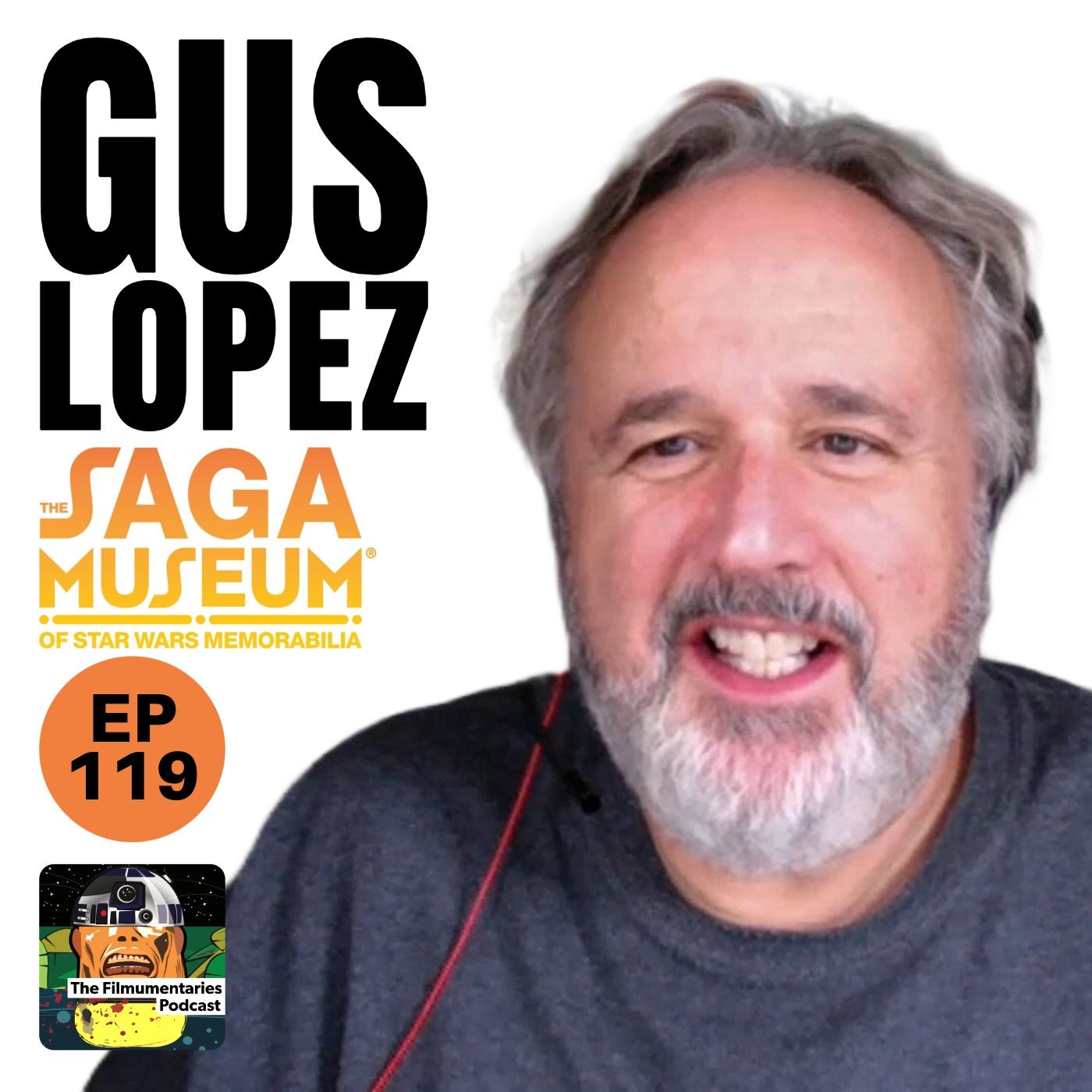
About this episode
- Gus Lopez was a Star Wars kid who began collecting early.
- The influence of Star Wars on film and culture is significant.
- Collecting became serious for Gus in the early 90s.
- Networking among collectors was crucial in the early days.
- The Star Wars Collectors Archive was a pioneering website.
- Collecting is seen as a social hobby by Gus.
- Every collectible has a unique story behind it.
- The Saga Museum project has been in the works for three and a half years.
- Collaboration among collectors enhances the museum experience.
- Legacy is important; sharing collections with the public is fulfilling.
- The museum aims to shareunique memorabilia with a wider audience.
- Fundraising is a primary focus, with a goal of $2 million.
- Educational components will span history, art, and science.
- Community support is crucial for the museum's success.
- Lucasfilm's endorsement is vital for credibility and support.
- Collecting requires a range of skills and experience.
- The museum will preserve cultural artifacts for public enjoyment.
- Choosing the right location is essential for attracting visitors.
- Fans can contribute through donations and merchandise purchases.
- The museum will create a space for both kids and adults to learn.
Tour of Gus's Collection
All my links
This podcast is completely independent and made possible by listener support. If you’d like to help me keep making these episodes, you can join my Patreon community here: https://patreon.com/jamiebenning
Watch more on YouTube:
Check out the Filmumentaries YouTube channel for behind-the-scenes clips and extra content: https://youtube.com/filmumentaries
All my links
Transcript
Automatically generated, so expect the odd misheard name.
Weirdingway Media. Welcome to episode one hundred and nineteen of the Film we Mentories podcast. I'm your host Jamie Benning, and today we're diving into the world of Star Wars collecting with one of the biggest names in the hobby, Gus Lopez. Gus has been a dedicated Style Wars collector since the very beginning, starting as a young fan in nineteen seventy seven and building a passion that has grown into one of the most significant collections in the world. In this episode, Gus shares how he started with trading cards and comics as a kid, took a break in the late eighties, and came back stronger than ever in the nineteen nineties, when styles collecting was evolving into a global phenomenon.
We talk about his role in pioneering the online styles collecting community, from creating the Star Wars Collector's Archive, which was the first dedicated website for Styles collectibles, to helping establish the Star Wars collecting track at Star Wars Celebration. Gus SHARE's incredible stories of discovering rare items, including pieces of movie history like panels from the End or Bunker. He also owns the Death Star and loads of CANTEENA masks. It's incredible. If you ever get a chance to look online at Gus's collection, there's some YouTube videos then have a look.
Actually I'll put one in the show notes, and he talks about how he's played a part in presier in these cultural artifacts for future generations, part of that being the ambitious plans for the Saga Museum. If you remember, I had Steve sandswite on a few months back. Unfortunately that news hadn't quite broken at that point, but it's a collaborative project that aims to bring some of the world's best Star Wars collections together in one place. Gus shares the challenges of turning this dream into a reality, the importance of community and the collecting world, and how fans can get involved to help make the museum a success. So here's my conversation with Gus Lopez, and as always, I'll be back at the end for a bit more jabbering on.
So, Gus, where did it all begin for you? Were you one of those Star Wars kids or did this spug for collecting happen later in life? Well, I was a Star Wars kid. I grew up with Star Wars. So you know, I had, you know, like many people growing up at that you know, at that time, it was hit by that film and it changed my life, you know, and I think people who weren't around then.
It's interesting if you don't talk about this. I think enough like what films were like before and after Star Wars, because it's really defined you know, films and in many ways television, there's like a before and after Star Wars. So much stuff has emulated and been inspired by Star Wars. But as a kid, you know, I wasn't even into that genre really in many ways, it really didn't exist before Star Wars, and I was just so into the film and from the very beginning though, even as a kid, I was a collecting Star Wars, so I was. I was, you know, into the trading cards and the Marvel comics and everything like that.
So I was all in when when it first started, but I didn't get into it seriously as a collector till later, till the early nineties when and as a young adult, and I was like, okay, it's time to go get the things I didn't have as a kid. I was still into Star Wars, but I wanted to like complete the things I had missed out on. Yeah, because when you first died, like you said, with the figures and the trading cards and the comics, you probably could have collected almost everything for a short period there, but by the once we reached the nineties, forget about it. Yeah. Yeah, there was a time when it was a tainable.
Yeah, early on, at least for you know, domestically, it was a tainable to get everything. It was harder to a network internationally than but we didn't even know what was available internationally at the time. Yeah, Yeah, And I guess people like yourself and Steve Sandsweet had that kind of sweet spot of time as well, where not many people were really collecting at that time, and you were super into it and you were making your own investigations of finding your own paths to finding these these rare items, because I remember that, In fact, the first time I realized that they were collectible to that extent was when Steve's book came out and I happened to see it in a comic book store. The concept to screen to collectible, and then I became aware of your website, the archive and everything, and I just it kind of blew my mind how much stuff was out there.
But talk to me about some of those years sort of in between and how you kind of navigated getting some of those items. Yeah, well, I will say to that point, like I think, I think Steve's book Star Wars from Concepts of Screen and Collectible was was very inspirational to a lot of us who were kids at the time. I mean, so Steve, you know, Steve was a reporter for the Wall Street Journal and became Los Angeles bureau chief and wrote that book in the early nineties, I think it was ninety two, and a lot of us who had grown up with Star Wars and were now like in our twenties, you know, and and saw that it was like wow, you know, look at you know, Star Wars collectibles being taken seriously and how Star Wars merchandising really was a huge part of Star Wars' impact.
And so that book was. Very inspirational for me, and I know for a lot of collectors at that time, it was. It was powerful because you know, folks like Steve were you know, you know, had the foresight to be collecting all through the eighties and and and on a large. Scale, and many of us. I was pretty active, as you know, getting staying connected with Star Wars till about nineteen eighty six.
I was, you know, still remember the fan maybe eighty seven, remember the fan club. I was. I was getting the comics and so on, but it really there was just nothing happening for a few years there. So I was sort of dormant from like eighty seven to. About ninety ninety one.
And then when they started up with the books and comics again, then I got very active in it. But for me and I think it was a defining thing for Generation X, which was the growth of the Internet. So I was part of that early group that got when we started the Star Wars news groups in the early nineties, and you saw all these kids that had grown up with Star Wars started to network internationally, and that's sort of a big part I sort of played. And it was early on identifying that there were these like minded fans from the early you know at that time that we're getting back into Star Wars, really into the collectibles, and. So I started to pull a lot of these people together.
We would we would you know, in act with each other, is in new in different you know, newsgroup so we did things like, you know, I drove an initiative to create a Star Wars collecting newsgroup, and you know, I create networks of these collectors and say, hey, we all know each other. We should start to do things together and do activities together, which we started to do. We started to do like events together. And then I created the Star Wars Collector's Archive, which was the first collecting website on the internet, and said, look what if we pooled all the best things we have virtually online? And I remember at the time people thought it was crazy because it was the idea of like a website devoted to Star Wars collectible was what an esoteric topic, you know.
And of course now there's like, you know, hundreds, if not thousands of Star Wars collecting websites, but at the time people thought it was crazy. So you know, so it was kind of interesting I look at, you know, when I reflect back on it. You know, people like Steve were you know, just sort of the first generation of these collectors, pioneers of you know, just way ahead, you know, and they were done adults when Star Wars came out, and so I Steve was, you know, this world class collection. He was buying like Gary Kurtz's collection he had. And and and you know, one thing he in mind is in the early days, Steve Sansor's collection wasn't Steve didn't have the world's biggest collection.
It would took some time to there were other collectors that sort of had big collections, and he bought some big collections, and he continued at it for longer and then a. Mass is just incredible collection. But there were also a lot of other amazing pioneers at the you know, early days, like I would say, like Steve Denny, who had lived near where Kenner's headquarters wasn't just found all sorts of interesting stuff related to Kenner toys. Or you know, another one would be like, you know, let's say tom Nieheisl who worked at Kenner and he had saved a bunch of amazing stuff or. You know, uh, so, you know, they're just.
A number of these collectors that were just sort of, you know, just sort of a generation older than us. And then when you know, generation next sort of collector started to come in. I think what was different was they were sort of the first generation that embraced the Internet and so could could really network worldwide. Not to say that the other collectors couldn't do that, either younger and older collectors, but really the first that embraced the Internet and leverage that and that just unlock things. And this is like pre eBay.
We're still buying in Toy Shop magazine. But it was just to open this world of collecting. And so that's in early days, that's something I did a lot of. But then later on, you know, there's been a theme to my experience as a collector. It's been about networking, like starting the collecting track for Star Wars celebration, bringing together people to do panels and social activities at celebration.
You know. So anyway throughout my collecting career it's been about how to I see collecting as a social, social hobby and so how. Do you bring people together? And then you know, now with the Saga Museum, the same way playing that role. Yeah, it must have been exciting times back then when you're sort of establishing the parameters of your hobby because sort of didn't know what was out there and what each other had in their collections.
I mean I used to sit there pressing refresh on your website. You know a few times a day just to see what new items had come in and going, wow, I didn't know that there was an unproduced figure of you know, a six breasted dancer from jam at the Heart or whatever. It must have been quite exciting to kind of make those networks, you know, across all you different collectors and figure out what you had and then sort of work out where your focus was. Perhaps yeah, yeah, no, it was. It's interesting you raised that because like we were driven by what inspired us, you know, so so that same you know, reaction you had was what was driving us, right, Like we were like, oh, you know, there's a Gargain Action figure Kenner considered God, Like we were the first, you know among collectors to discover that.
I mean some Kenner people knew, but and and Steve knew early on because Steve Steve had a protape of it. But like, you know, we found other pieces of the Gargan Action figures. We like would meet people at Kenner, you know, over the years, met like hundreds of people at Kenner. But part of it was like we were really excited about it and that was a lot of fun. And for me, that's been a you know, sort of a theme in My collecting has been that, you know, we you know, always chasing what's novel, like very early on, you know, I learned a lot about collecting.
It's definitely fascinated by a lot of the mainstream stuff like the action figures and and all the things a lot of people collect. But I got to a point where it's like, what is novel? What have we never seen? What? What?
What would be? Keep me really interested and excited and so and with the Stars Collector's Archive, it was that way. With other like minded people, It's like, let's push the envelope. What have we never heard about before? And we found that, you know, if we just chase what we were interested in, other people would be interested in the same thing as well.
And that was a big theme. And it's it's interesting because it's very different. I think sometimes then I think what drives maybe other other websites and maybe social media today and that we're you know, it's more chasing to get visibility, whereas we didn't even care about that, which we still don't to this day. I mean we get criticism of like your site's really dated and all that. It's like it is, it's just like the point is that we were just chasing what we like.
We didn't care to get traffic. It wasn't our goal. Was the best approach, So yeah, yeah, Now I remember clicking on your website one day and finding out that you've got the bunker panels from from the end that somebody been using as like a fence or something. And that's what I love about the collecting side of things. You know, there's a collector within me.
I don't have the budget for it, so I have to be very careful, but I love the stories, you know, behind the scenes. Part of the reason I did this podcast is because I love speaking to people that worked on those and other movies, and everyone's got a story, and that must be an enjoyable part of the process as well for you. Yes, yes, there was a Brandon Ellender who's you know, a friend and a fellow collector, and it's just you know, just you know, sort of a legend and proper. I think he's found amazing pieces. He had tracked down this guy that had worked on Return of the Jedi and he the guy had saved the indoor bunker as his backyard fence.
Uh, And so we went down he Brandon flew up to Seattle, where I live, and we drove drove down to uh to the area where they filmed Return the Jedi, which is on the border of Oregon and California, and we bought this guy a new fence and we paid for the panels and drove back the bunk, the bunker back to Seattle. But it was, yeah, it was, it was amazing. I mean, he's just such a great story of like this guy keeping this fence as uh, you know, this for his fence, backyard fence and uh and I still have I still have the padels, I mean I still have we have them. Yeah, it's it's an amazing But you know, you raised an interesting point. It's about the stories.
Like when I do tours of our house, you know, and and it's it's it's our houses. Our house is not set up like ranchobi Wan, which is opened the public. It's a private residence. But I have you know a lot of people come visit as friends come visit and. Do private tours.
It's hard to do a tour quickly because like every piece has a story, you know, Like like you talk, you show the bunker panels and it's like you're twenty minutes into the story. You know, bunker panels, like every piece is an interesting story and the story might be about what it was used for in the film or how you acquired it, but that's you know a lot of the a lot of it is the journey and the and have the discovery of it and. So on, and so that's what's fun about it. And when we do a museum, it's going to be a big theme and it is really about you know, uh, like how do you how do you create great you know, narration and and and narrative and tell that story like really explain to people, you know, this is what the significance of this piece, and how do you connect with people about it.
That's the other thing that's really hard. Like you can have indoor bunker panel, say, and the Star Wars fan can connect to it because it's iconic, you identify it and and you know you know it from the film. But what about the casual fan, Like, what about the family member that got dragged along to the museum. How do you connect with them? How do you relate to them?
And so you might connect with them about you know, the industrial design that influenced Star Wars and say that it actually drew from you know, X, Y and Z that you know, so you need to think about that from those angles, which is something. And when I people toward my house, I don't have to think about it. But when we think about a public museum, we're going to have to really think about that. So yeah, so yeah, but I love the stories. It's a it's a huge undertaking this Saga museum project.
I mean, I was. I visited Rancho obi Wan, I was lucky enough to visit Skywalker Ranch one one day. The next day I visited the presidio, and the following day I visited Rancho obi Wan. And my question to Steve when he came out at the end of the tour was have you ever considered combining your collection with other collectors and starting a museum? And I knew, I knew the answer was going to be, of course, museums are a minefield and expensive and all those things.
But I was really pleased to hear in the in you know, just a few weeks later that that's exactly the plans you have. Is that something that's been sort of brewing for a while. Yes, actively for like three and a half years, we've been working on it. You know, I think over the years, a lot of collectors, not just us, but a lot of collectors put out. The idea of doing a museum.
You'll hear collectors say, oh, I should do a museum, and it's actually. Very hard and very rare. If you look at examples of collectors who actually pull off a museum, you know, it's something we spent some time thinking about and reflecting on. Right, Most museums. Are created by either some government entity or you know, or sometimes an organization like a nonprofit organization, but like a big entity that that funds a museum, or it's a philanthropist with like billions of dollars that but actual grassroots fans doing a museum is it's just not collectors do it.
It's just not common, right, And a lot of collectors aspire to do it. And many collectors who do pull off quote unquote museums, they aren't really I mean, they are museums. They show their collection in a public setting, but it's not a proper museum. Like, there's so much that goes into a museum, right. You want to have like educational programs, you want to have you know, meeting space, you want to have guest speakers, and you want to have events there like a proper museum has.
There's a lot that goes into doing a museum. It's very hard. And so we were, you know, we wanted to do it, you know, go full out do a proper public museum. And ranch obi Wan is a is a public museum. But part of the discussion, you know, as I've been a board member of the museum since rach jobi Wan since the beginning, is how do we take Rancho obi Wan and and what's the future, what's the one hundred year plan for renchobi Wan?
And what what? What? What? What? I what I was thinking about what's gonna also happen to my own collection?
And so what I did is I called I talked to Anne Newman, who runs ranchobi Wan, and I said, you know, have you thought about like whether we go to a public space with Rancho obi Wan. And here's a crazy idea, what if we combined a few of like sort of top collections and did something on a whole crazy, big, audacious scale. And Ann thought it was a great idea, was really into it, and and I had had prior discussions with other people. I talked to had talked to Duncan Jenkins about it too. He's a massive collection, probably the second largest in the world after Steve, and Duncan had been interested in the past of doing something like this.
So I talked to Dunk and said, hey, what. Do you think of we combined with Steve and did you know something with all our collections? And he was into it. And I talked to Lisa Stevens and Vic Wurtz who had talked to them before about like eventually doing a museum, and but it was you. Know again, it was similar.
It was like, Hey, it wouldn't be great if we did a museum, but it's like, what if we're serious and really got together and started to do this and they were interested, so they said, O yeah, let's all get together and start doing this. And that's about three and a half years ago. And then we started just being very active and meeting and and then there were other people we pulled in, like Michael Wistock who was a board member of niobi Wan, and Rich Small and also board member renchiobi Wan and it's really and then Steve of course, and then the eight of us were the ones that just got very active in it. Over the last eight years and you're sorry the three and a half years, and it feels like eight years eight of us three and a half years.
But we've learned a lot. I mean, we've visited a lot of museums, We've met with some of the top people at some of these museums. We've read books on this, we hired consultants and and really dove into various aspects of the fundraising and the different things we need to do. We're working on requests for proposals for cities. We did research on sitting on how we're going to search our city.
So there's a lot that's gone into it, and we have a lot ahead of us. We have several years ahead of us before we launched the museum, but that's how we got started. But it was like, let's take this from Hey, it's a cool idea that a lot of collectors seem to have about building a museum, and actually, let's let's actually build a plan to do this. Mmmm. I think, you know, just it's a tantalizing prospect for somebody like me, who you know, has loved these movies.
But I also imagine it must be quite tantalizing for you, you know, a group of collectors to get together and in some cases probably complete an item because you might have one part and another part is elsewhere. That must be quite a cool prospect as well. It is, no, it's interesting. It's an interesting thing. Is like you have complementary collections, so you together you can The impact is vast.
There's some overlap in some cases, which is actually a good thing because a lot of museums want to have things that you rotate pieces. You don't want to necessually have things exposed to light and heat and all that all the time. You want to have things that go on tour. So we are plan is to have touring exhibits as well, so that you have things that you show in your physical location. But you know there are people that can't easily travel to your location.
You want to have exhibits that also go on tour. It's a sort of revenue source of it's great that when we have overlap. Yeah, I mean, but most of the collections vastly complementary. Like my collection, because I focused a lot on unique items, mine is very complementary to the other collections, as are the other collections to each other, and so so it works really well. It's a great blend of all the collections.
They all have different niches and and and areas of focus. So it's so there's not really a lot of redundancy in the collections. But yeah, it's it's it's gonna be just and by the way we talk about these four collections, the goal long term is that that isn't just our four collections. It's that we build this amazing museum and it becomes this place where you know, other collectors want to see their stuff loan to it or also part of you know, gifted to the collection that they see their stuff on display there and and do what we're doing, which is giving our collections to this public museum. Uh.
But to your point of like, you know, seeing the stuff there and mixed with others, you know, yeah, it's you get I've got a lot of interesting questions from people about doesn't it bother you You're not gonna have these pieces in your home, and it's like, you know, part of to me, it's like I like having the pieces shown to the public and what you know, you know, you don't live forever, like you know, your legacy lives on in this way in any ways it's more powerful and profound. And then you know, hoarding it in your house and no one ever seeing it, and then someday your heirs selling it off, you know, I mean, to each their own. That's a very valid thing to do if that's what you prefer to do. But you know there's something you know, we spend our lives building these collections.
They're very unique, and this is a way we can share them with more people and they can last, you know, a lot longer. You know, this is just a physical upgrade of your website, don't you you're talking about it. It's a physical manifestation and it's also a similar principle. It's the ideas will be the communities. The idea of the website was you build this virtual museum that's the best of the best, and we're going to effectively do the same thing physically here.
Amazing. So you said, this is you know, years long project already, and you've got many years ahead of you as well. What are the kind of primary goals at the moment, within the next say, twenty four months. Great question, Really very focused on fundraising. So we're raising doing a capital campaign that's very focused on You're trying to raise two million dollars first, to hire fundraising consultants, development staff to help them through the long range fundraising goals, an architect staff that will work with us too on some of the early planning stuff like working with cities to do things like feasibility studies, economic impact studies in the cities.
So really it's really our plan for the next two years that really get our ducks in a row about decide which city we're going to be in, whether we're going to build or renovate in existing building, Nail down basically everything we need to do and fund us for finance the whole thing. Get get us to that two year period, and then after that will be the main sort of fundraising activity for either the construction or renovation and everything else we need to do to launch the museum. So the next two years, that's what we're very focused on, is is that that phase of it. Yeah, very cool. And how do you see this sort of you mentioned about the educational aspect.
How do you see that kind of manifesting in this physical museum, what people going to see and learn about? Yeah, yeah, I mean all great museums have a big educational component and if you think about it, like a lot of museums, most museums fall into like one of three buckets right there, either art museums, history museums, or science and engineering museum broad generalization, but they're generally in those three buckets. The cool thing about Star Wars memorabilia is that you can span all of those. There's a historical aspectors, right like how Star Wars relates to history, like the draws from World War Two or you know, or the draws to you know, like indigenous cultures on planets and so on. So there's a historical part of it.
There's obviously a ton of stuff in art, you know, the art of Star Wars, and and that goes into whether it's three dimensional or paints, paintings and things like the art design of Star Wars, the the architecture of Star Wars, all that stuff. And then the science and engineering part of Star Wars is obviously you know, vast and they've done exhibits like glucosols and exhibits before. Relating to that. And so the ability to relate the objects to to educational stories about you know, all of those areas or you know, it's countless what you can do with it, you cant. I mean, you can do it not only about the Star Wars stories, but you can do it about how a toy is made and go through the manufacturing process and that has a whole engineering thing.
You know. You can do the printing process of how how you know, how printing has changed over the years and from you look at the old memorabilia and how how printing was done to you know, to how things are done in software now, and we can use the the the memorabilia to you use that to illustrate that, you know, and so there's so many things we can do in terms of educational aspects, and so we haven't like they're not specific exhibits we've planned or anything like that, but the plan is to have a huge educational component to it and a connection so that you know, the idea is that you use the artifacts to you know, connect with kids, but it wouldn't necessarily actually be kids. We'll have educational stuff also for adults and have guest speakers and advanced topics and things like ideally bring in like special effects artists and people like that.
They'll have very educational talks and so on. But going with kids in school groups coming in that will have programs where you know, they can like you can have a school group on a field trip where they're going to learn. About a specific topic. But we'll also have like after school programs like things like how to build a droid or how to create costumes and things like that, you know, not necessarily like school program that they might get credit for in a school, but things that they will learn about they'll learn skills from. So there's a whole bunch of aspects were like education and plays a part in this, and we'll have people that will be full time focused on developing all that.
Yeah, that's great. Yeah, I was just thinking about although we call it STEM here, I think you call it stetem. Yeah, yeah, stem as well. Okay, maybe I was talking to a Canadian recently who said steam. Yeah, yeah, because I think, you know, I think there's so many probably a whole army of willing participants, you know, whether because Star Wars fans are great on they whether it's making you know, a poster post or myself like making my filming mentaries twenty years ago and all that stuff.
There's a there's a willing pool of people to get involved. In. Do you feel like there's there's a real sort of huge collective to tap into here. Absolutely? Yeah.
I think the way I think about it is, I mean there's a huge fan community and and and uh. And one of the things consultants have told us, you know, who are generally very skeptical of collector trying to do their own museum, but that the area we're in and the background of the people behind this, because you know, several of us have experienced, you know, doing pretty big things outside of Star Wars and in our careers, that they they believe in us and think our chances are good on this end, but that the community here is so supportive and it's a very good bet, right. You have this support from so many people that have a lot of skills and very talents. We've seen that since announcing this, you know a lot of people have raised their hands and said love to help.
And there's there's going to be and it's a various stages we see like you know, little, very little, you know doubt about getting support from people, Like there's certain steps where I think it will not be a problem getting people to help out with it. I think I think there's other things where will be hard. It will be harder. I think, you know, the stage we're at, we're fundraising, I think, you know, I think a lot of people willing to volunteer. I think a lot of people to share expertise, people will give talks.
They've already had a lot of people offering their collections, you know that they left other collections to be part of this, which we want to do. But we're not in the stage yet. Until we have a building, it's going to be hard to take them up on that. We will there'll be a point where we will welcome that. This stage, we're very laser focused on a few areas where we need their help, and there's a few skill sets we're looking for too, Like you know that we are reaching out to people on but like right now it's like big donors is the focus.
And we tap the community. And there'll be other times though, where I think, yeah, it's going to be the big enthusiasm from the fan base is going to be We're We're very fortunate versus other genres. We're doing a. You know, like if you're doing a van Go museum, you might not have that basi of people that are willing to help. Even though it's a very worthy topic for a museum, You're not going to have this huge base of millions of Van Go fans that are going to go offer to help with your museum.
Yeah. True. Was it important for you to get the endorsement of Lucasfilm not only from a sort of legal standpoint, but also, you know, just to know that you were going in the right direction. Yeah, I mean it what is a very early on we we we approached Lucasfilm, uh, you know it was now part of Disney, and we also approached uh, George Lucas's folks, you know about because the Museum of a Narrative Art. We wanted to make sure that they were aware of what we're doing and that you know that we weren't doing anything that you know, that annoyed them.
That there was something that they were that they were you know that ideally they were excited about that they were supportive of right and uh you. Know, so we we we reached out to both. Uh and and we were we were pleased to see that that they were you know that uh you know that that that it was it was you know, something that that they were cool with because film we've we've met with them multiple times. They're they're really supportive of the idea. They love the idea of a museum created by fans to celebrate fandom.
It's something that in many ways, like you know, really could only come from fans, and so they're they're very excited about it. And you know, we reviewed with them the name of the museum and all that, like we wanted to just make sure that it was something that. You know, they were they were you know, pleased. With, and we're been It's been wonderful, like just you know, and I think a lot of that credit to them for always being a company that is embraced fandom. I really think a lot of you know, entertainment industry companies are not did not get it in the twenty first century that the world has changed and that that your community, the way you interact with fans is different than the old days of the relationship.
And I think lucasom has for a long time really understood that and and they get it, and I think that that has played well. I think it's also a credit to Steve who has the relationships there. I think that's also was pivotal. In that absolutely I was going to say that. I mean, Steve had such a huge impact with the you know, starting up celebration with his colleagues there, and just it's nice to see it all sort of coming full circle for him again and getting his hopefully getting his collection out there for everyone to see, because it is a great day to spend up there at the ranch.
But you kind of feel like you need I mean, he clearly needs more space, right. Space is a big problem for Steve at the moment. Does everybody, Yeah, yeah. I'm sure for you as well. Yeah, does this mean collecting stops for you for the for the time being.
No, not at all. I'm still acquiring stuff so yeah, No, I'm still actively early this week when buying some So yeah, we're all we're still pretty actively collecting, and we will be even after the museum launchers. Will still be acquiring things. So I don't think that ends. I mean it to some degree, it changes how you collect, I mean already has Like I think we've had situations like, for example, a big auction comes up and we will actually coordinate a lot more than we used to about I'm going after this, so you know you're going after that.
I'll stay away from that. So there's a little bit more coordination because we're like, why compete against each other, They're all going to go to the same place. But yeah, I know we're still still pretty actively collecting all of us. Yeah, I know that. I know Ryan Condall and Dave Mendo And I know that Ryan, you know, because he's based here in the UK.
He has these collective of British guys. I've been out for dinner with them before, and I know that they step out of each other's way or you know, they make sure that it ends up within the group because then they know it's going to be in a place where there is genuine passion for that item. Yes, and I know many of those guys and gone to the auctions in the UK quite often, you know. And and when we're sitting together and bidding, you know, sometimes we don't know till we get to the auction house. But like you know, people informally clude basically, you know, but it's a friendly thing.
It's like, oh, I know, okay, you're going after this. I'll hold off, and I've done that. I held off and I oftentimes don't find out un till I get there. That somebody really is really has their hearts out on one particular piece, and I'll say, look, I can live without that piece, or another one will come up, and so there's a very friendly Yeah. It's interesting that you know, you get.
This question often that people have this perception that the collectors, particularly the very advanced collectors, are cutthroat and competitive, and I would say no, like, at the at least among the very like advanced collectors, they're actually generally very cooperative. And it may be a unique thing in Star Wars, but I generally found them to be fairly cooperative and not cut through competitive. Maybe in other collecting genres it's a different way, but people generally help each other out, as all of us working on Soccer Museum have and the proper community has for years. I mean it really hasn't. I think we've benefited more from helping each other way more than I've seen in sort of adversity and competitive situations.
Yeah, this is going to be a really sort of crap podcast question. I'll usually avoid these kind of questions, but I want to know the answer. Gus, what is there was there one item that kind of appeared that you just went holy shit, I never expected that this would happen, that I get the opportunity to bid on something like this, let alone in something like this. I mean I have lots of pieces like that. Yeah, I've seen some of the tour videos of your place.
It's I have lots of like like I. I mean, I all the time kicked myself going how did I end up with so many pieces that? With the dust stop best star model from Star Wars is with obviously a big one, you know, how did I end I mean, as a kid, if you'd have told me years later you're gonna have all. These people, you never believe it. You know, it's just incredible.
But yeah, I mean I have so many pieces like that that is just and it feels, you know, it's funny. It feels a lot of times like they just fall into my lap. But I know at a certain level there's a lot of work that goes into you know, And I've given talks on this. I actually think it's a subject that I don't think people really discuss a lot, which is I actually think collecting requires a lot of skills and experience, and I think that, uh, you know, I think that many collectors, when they do talk about it. They try to boil it.
Down to a single skill like knowledge or having deep pockets or something like that, and I actually think it's a wide range of skills and years of experience you just get from doing it over many years that go into finding great stuff. And then some of it's just luck, like timing being in the right place at the right time. But anyway, no, I've I've been very fortunate that I've had so many great opportunities of things like that, you know, uh, you know, I have like John Mollow's sketch book from the first movie has pretty much the drawings of every costume everything like that Leah Darth Vader, all that stuff. It's all in there. This is what he won the Oscar for costume design.
This is where all the sketches are. Happened to you, gus, because I know, I remember but David Whitey shooting that doco over here and telling me about the great footed you got of that. And then of course John passed away and that went up for auction, and I you know, I'm one of those people who just hopes it ends up in good hands, you know. So pleased to hear that. Yeah, yeah, no, yeah, thanks Yeah, when it came for auction, I was like, I have to win that piece.
It's such an awesome like historical people. I have a bunch of pieces like that that I just it's incredible. A lot of my Kendra prototype pieces, you know, I have a lot of one of the kind stuff there, you know, many of them that were just it felt like lightning struck in the same place multiple times. And it's just a very fortunate and. It amazes me that this stuff just keeps turning up, Like I mean, when Greg Gene passed away, just the extent of that collection was unbelievable.
I mean, everybody kind of knew Greg had stuff, and I remember hearing from another collector he used to just say, Greg's probably got it. But just I couldn't even even imagine that some of those pieces would appear, you know, just in his garage and wrapped in plastic or whatever it was, and he's free his family to sort of find and insane. Yeah, with the Great Gene collection, it was what was amazing. I mean I had heard of the years people who knew him were aware, but that it would all surface after he passed is just was just wild like that it was never on display as far as I know, well live it was never you know, it was never sold. But you know, it's just that's what's just so wild about Like his collection, it was just unbelievable the quality and the quantity of stuff in that collection.
It was Yeah, and I think you know, as a big collector as well, you have this passion that drives you to get these ions, but then you have this responsibility for preserving these you know, cultural artifacts, you know, and now you're taking it to the next level and allowing the public to appreciate that as well. I mean, your your your journey through collecting has been a pretty immense. Yes, yeah, yeah, it's it's yeah, and it's a it's a different it's interesting, it's a different mindset. It's like that, you know, I think I think a lot of folks have the perception of like, oh, you're collecting for yourself and so on. But it's like, you know, ultimately what we do, and to a large extent, we do, but there's a point where we say this is for the public to ultimately own.
It's for the public's ultimately gonna be the ones enjoying this. And yeah, no, it's a big part of it, you know, want we want to make sure that they get to see it. I do like having people come see my stuff. But because it's in a private residence, as is the case with Duncan's collection and Vic and Lisa's collection, for us, it allows us more people to see it. And even for Steves, I mean Rechobi Wan can only do so many tours per week.
Opening a big public. Museum will just you know, you know, poor gasoline on that we can have like a massive amount of people like thousands, you know, thousands a year seeing that collection. What's what's the big dream? Then? Big kind of metropolitan city in the US with good transport links, you know, in a good spot.
I mean, have you got is there somewhere in mind that you have or is that something you wouldn't want to talk about because you don't want to. We've shared it a little bit. Well, we don't have going to keep it up in mind. I mean if we have, if we have cities that approach us that aren't our target list, will definitely hear them out. There are a few target cities we've reached out to.
Uh so, uh you know, some big cities like New York and Chicago, Los Angeles, San Francisco, Seattle, Las Vegas. Uh So, there there are a number of cities we are that we we've done some investigation of cities that were interested in and in general, you know, we want you know, a few things. There are several factors, like we want big metropolitan cities that have ideally active tourism. We want people that are you know, there's a lot of people live in the city, but also people who visit the city. We want to be in a city center.
Uh so that you know, nesa. You know, even though we know our museum could be a destination, like we could we could put it in northern Alaska and people would still go there to see it, but but it it but it We want it to be in a place where you also get casual fans. You'll get tourists that wander into the museum as well, so we want that as well. Uh but uh and so those are some of the some of the cities that we're considering, and we're going to be over the next few months reaching out to people have already started actually reaching out to contacts in each of those city governments and saying, you know, are you interested if we worked with you, what would could you do for us if we were to open a museum here?
Uh, And then we'll start to see, you know, if there are willing uh, you know, cities that can really make it easier for us, like provide land or building for us that makes our fundraising goals much easier. And so that's what we're going to be looking at. But we've done we did a lot of research on which cities do we prefer, and there are pros and cons to different cities. Costs of livings different in cities, or regulatory structures different in cities. The amount of giving that goes on in different cities changes depending on where you live.
We know we want to do it in the United States. You know, there's certain draws to certain cities, like San Francisco is obviously where Star Wars grew out of San Francisco. It has the history and and you know Lucasfilm loves it. You know, it's close to where at Jobi Wan is. You know, Seattle's where I live, and Vic and Les are near Seattle, so it's like, you know, that has an appeal to I mean, there's different pros and cons to different places, but I'm open to wherever.
We end up. I mean I've already sort of committed to that. Most likely we'll end up having a somewhere where I don't live, so we'll see where we land. But to me, the most important thing is to open the museum and pick the ideal place wherever that is. Yeah, yeah, very cool.
You didn't mention London, which disappoints me. But I saw that you've you've been on your travels recently, just to finish with I saw you've been to Jordan and Tunisia, and yes, very cool. I've been to I travel a lot. I mean I've been been to a lot of countries and almost half the countries in the UN and have been too many any of this pretty much almost all of the Star Wars filming locations. So recently in the last year year and a half, I've been to well, Tunisia, I've been now five times.
But I went to Jordan and saw the filming locations of Star Wars there. I went to Canary Islands last year where they film Solo, and earlier this year I went to the filming locations for and Or in the UK and in Spain. So yeah, yeah, yeah, I saw I saw some pictures of you at the Barbicane and at the Tube Station and Canary Wolf and things. Yeah, yeah, yeah, so yeah, so I love doing that. That's a big part of my fandom is going to places where they film stores.
Yeah. So what can fans do right now? Where can they go to find out more about the museum, more about the project? Yeah, a great question. So yeah, if they go to renchoobi wan dot org slash the Saga Museums.
Just you can also find it if you just go to the rancho obi wan dot org website. But if you want to go to a direct link rancho ob one dot org slash the Saga Museum. And if you go there, you'll have all the info you need. So basically you'll you'll hear about the vision, the mission, you about our collections, you know, what are our plans for the next two years, and then how you can help. You can get it signed up for the newsletter, how people can contribute and contact us if you have questions, and probably most interesting to them, if they want to buy a T shirt or a poster.
We have a special poster that's a nod to one of the early Star Wars posters and then also a special T shirt. You could buy those online. This is really the first merch for the museum. And actually the T shirt every Saga has a beginning slogan on it, like similar to when they open Fantom Menace. The first version of the T shirt has that.
Once we sell out of that, then later ones won't have that, And they can also request brochure. There's a brochure about folks that want to give to the museum. They can also order one of those if they want, so all the information about the museum can be there, so recho we wanted or slash the Saga Museum if they want to learn more. Awesome. Well, I really appreciate you giving your time today and I wish you all the best of luck.
I can't wait to walk through that door with my ticket in the hand. Yeah no, and see it all. We totally look forward to that day and then we want you and everybody else to see it. Were so excited about doing this. I hope you enjoyed my conversation with Gus Lopez about his incredible styles collection and the ambitious plans for the Sarga Museum.
It's amazing to hear how much effort and passion goes into not just the collecting side of things, but also preserving and you know, wanting to share these cultural treasures, and there's no point people having these collections that they just sit on. It's always baffled me that, so it's great to see this news about the museum. Be sure to visit rancho obi wan dot org and check out the Sarga Museum part of the site to learn more about the project and how you can get involved and even grab some exclusive merch to support the cause. If you enjoy this podcast, then please consider supporting it. I'm talking to you.
Yes, you you listening. Well, you've been listening for several years now. You regularly enjoy the podcasts, and yet you still haven't considered supporting it. I know sometimes you think, wow, that's for somebody else, but listen, it's just twelve dollars for an entire year. That's the price of I don't know, parking your car for a few hours or buying a couple of coffees.
But it really would mean the world to me to get that support because it means I can continue to do this something that I love is work it's work that I love and I do appreciate your support. So check out patreon dot com forward slash Jamie Benning to see the different perks on the different tiers. Plus you'll get an ad free version of the podcast whatever tier you choose, and some behind the scenes chat on what's happening at Filmumentary's HQ. You get a video version on certain tier as well, and you get some merch on the highest tier as well. That's it for now, Thanks for listening, and I'll catch you next time for some more movie chat and of course a bit more jabbering on on the next episode of the Film Youmentaries podcast.
The Film You Mentor's podcast is produced, edited, and hosted by me Jamie Benning. The music is by Michael Hewitt Brown of mb Music Weirding Way Media



Similar episodes across the network
Matched by shared keywords.
-
Special Report: The Mandalorian and Grogu (2026)
1 shared keyword: lucasfilm
-
The Mandalorian and Grogu (2026) — "The old protect the young and the young protect the old. This is the way."
1 shared keyword: lucasfilm
-
Episode 26: I'm Chevy Chase and You're Not (2025)
1 shared keyword: community