
Season 1 · Episode 118
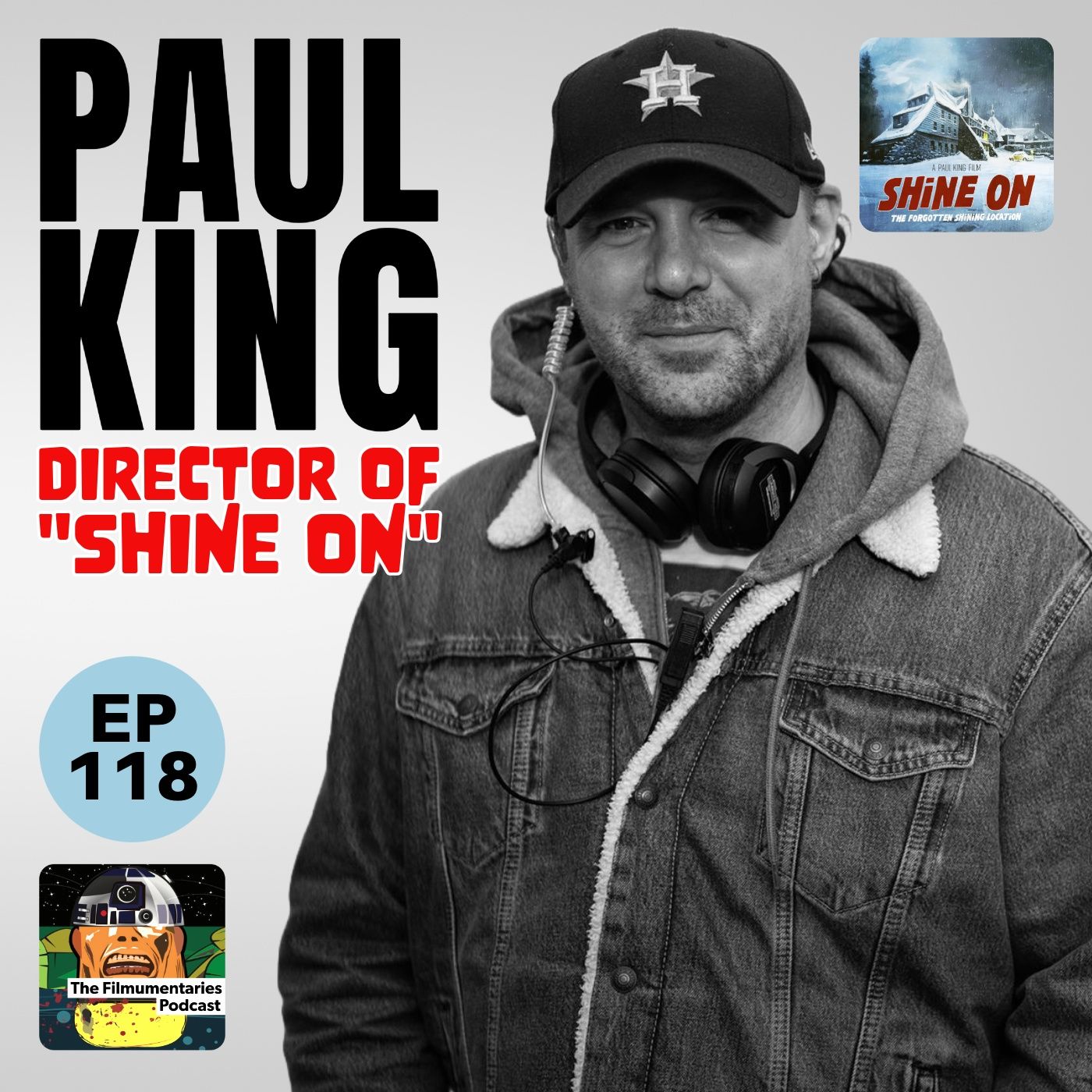
118 - Director Paul King on his new film "Shine On"
About this episode
All my links
Shine On Documentary
That Kubrick Season trailer from Film4
This podcast is completely independent and made possible by listener support. If you’d like to help me keep making these episodes, you can join my Patreon community here: https://patreon.com/jamiebenning
Watch more on YouTube:
Check out the Filmumentaries YouTube channel for behind-the-scenes clips and extra content: https://youtube.com/filmumentaries
All my links
Transcript
Automatically generated, so expect the odd misheard name.
Weirding Way Media. Welcome to episode one hundred and eighteen of The funen Mentaries podcast. This is your host, Jamie Benning, and today I'm bringing you a conversation that digs into the mysteries and details of one of my favorite films and one of Cinema's most iconic films, Stanley Kubrick's The Shining. My guest is Paul King, a director who's recently released a short documentary called Shine on the Forgotten Shining Location, which explores the hidden history of Elstree Studios, where much of The Shining was filmed. Paul and I talk about how his fascination with Kubrick's work and The Shining in particular, led him to investigate rumors about surviving parts of the film set long forgotten within the studio's office spaces, and he shares how he uncovered these locations, how he matched them with scenes from the film, and also how he worked with the Kubrick estate to bring this project to life.
We also get into the challenges and rewards of balancing passion projects with regular work, something I'm all too familiar with, and Paul gives us insights into set design, the production history, and how he collaborated with Yanhalan, Katerina Kubrick and art director Les Tompkins to piece together this fascinating story. As usual, it's a deep dive into filmmaking, nostalgia, and the power of these physical spaces that preserve cinematic history. So here's my chat with Paul King, and I'll be back at the end for a bit my jabbering on, well, when did. You first see The Shining? Was it a film that I don't think you're old enough really to have seen it back in the day.
Is it a film that you kind of grew up on and have increasingly loved over the years. Yeah, so I think the first time I saw The Shining, I think so God growing up obvious, I've got an older brother, so I used to watch. I think a lot of my film and influences have come from you know what you do with film music, you get it from often from older siblings. Came from him. But then also there was a time I think it might have been on like Channel.
Four in the UK. They were re running or they started to seem like they were rerunning lots of classic films, maybe on like Saturday Nights or something. Which my dad would often record, so and we'd watched them on the Sunday afternoons. And I've got a feeling there may have been like a Kubrick season, probably in maybe in like the early nineties, something like that, early to mid nineties, and I think that's the first time I saw it on it. I'd obviously i'd heard about it, but that's the first time that I'd ever watched it.
Yeah, it's probably not the ideal viewing for it. It's probably on a Sunday afternoon, probably in the summer in my parents' lounge. There is something about our sort of generation that had that kind of discovery of these movies though via television obviously, you know, we had we could go and rent hs's earlier on in our childhoods, and then DVDs later on. But there is something about that discovery of films on TV, especially when you kind of join them part way in you think what the hell is this and you're kind of hooked. And for me, that was probably the first time I saw The Shining Is on TV as well.
Just I think there was always that great curation of films, wasn't there on on particularly on the BBC and on Channel four where they would do a season of say Kurosawa or Scorsese or Kubrick. And I think later on there was even that fantastic season of Kubrick stuff think on film for Channel four where they did that that amazing trailer where they kind of recreated the behind the scenes that was still kind of blows me away today, that that trailer. But watching that in the run up to making this again, yeah, just see yeah, all the details that they got in that and even had you know, the scripts had a person I think who just looked very much like the script supervisor from the time, and the. Same out script ye glasses on and everything.
Yeah, yeah, and loads of nods to the to the making of throughout that as wells similar to when you see like Jack going down to the set for the first time and the cameras following him and you know, people are giving him a nod and yeah, looks really similar to that. Yeah, the bow and all that stuff. That is a wonderful making of by Vivian Kubrick. You know, it's I remember seeing it on arena over here in the UK and recording it all those years ago, and it's probably one of the best making of movies. Now this film, of course, because it's such a meticulously made film.
You know, Kubrick's known for his sort of meticulousness, and it sort of makes us as enthusiasts just as meticulous. And you know, despite it having books on it and documentaries about it. What was it about this documentary that you've made it shine on that you felt that there was another little kind of niche to kind of work on and make another film about what. I think that was it, And like you said, with the like with the making of documentary, I think that's when I got to college, was the first time that I'd seen that and felt and especially with we were studying film and TV, and I think a few of us were watching that for the first time and sort of feeling like we were getting in ex elusive like behind the scenes which had no clue that this even existed.
So I think when it came to the documentary. So the longer version, the longer story of this is that through my career, because I normally work in TV, and I've worked at Elstree Studios loads over the years, mainly on studio shows, but I always knew already heard all these rumors about part of the film or parts of the sets from the film still existing there that hadn't been built within studio spaces, but that had used office spaces which they then dressed up. So whenever I was at Elstreet, whenever i'd get the chances from you know, starting off as a runner as a production assistant, I would sort of sneak off and see like clipboard in hand, trying to look busy and see if I could find these areas, and I didn't know what.
I didn't know whether this was the rooms that I'd always heard that, it was some of the corridors that have been that have been dressed up. So then in recent years, so when I've been directing now for about sort of ten years or so, and it's all. On what shows do you work on? By the way, just so people know. So it's normally comedy.
Now, I'd started off more in sort of like factual entertainment television, you know, working on shows like I worked on Grand Designs for a couple of years as an assistant producer, and now sort of directing. It's been freelance, so it's you know, the job changes every three months. I guess the longest sort of period of stuff was on a show The Mash Report, doing lots of their sketches. But then I was working on a show for Sky when this was at the end of twenty twenty three, where we were doing a show about die Hard and a show about Indiana Jones. And it happened to be at Elstree Studios again and I was directing an interview with Vic Armstrong.
Yeah, like the legendary British. Stuntman, which was again it was a kind of a full circle story, a moment for me because I've worked with Sorry. I'd written him a letter when I finished university and he was on a Bond film saying, you know, like can I come in and I please work? And he yeah, he got me in and got a couple of weeks work on a on a Bond film up to twenty something years later and you know, now directing an interview with him, chatting about Indiana Jones. But then so that.
Into that day was finished, we'd finished filming, and again I sort of wandered off to see if I could try and find this location from the shining and I think in between then, you know, I'd seen more stuff online had started to come out about hidden filming locations or filming locations which may still exist, like other people had started to touch on a little bit, and they also had that it's Jani. I'm probably saying him wrong, but it was a Japanese. Reporter. It's incredible film. It's amazing, yeah.
From I think it's from at some point maybe during nineteen eighty. I think the film may have already come out, or he's just about to come out. I think the film was the film not in post at the time, because doesn't he end up having a call with stan Lee while he's there? Because yeah, what's amazing about that footage? And it's all sort of like rushes, isn't it?
This Japanese journalist's journey to the UK? Is you get him. You see him driving through London in a car and you see all the old buses and all the old cars and all the old buildings and everything, and then he arrives at Elstreet and he ends up I think he ends up chatting to Who does he end up chatting to that worked on the Shining Is it he's chatting with? I think it's Julian Warner Brothers. And then most of his times with Vivian, and she's sort of giving him a tour around some of the some of the areas from the film, and I think Julian shows him some of the stages and says where the fire was during the production.
But it's in that that they kind of point out this building that doubled as the kitchen area for the film. But then I think during production had been standing had his office in there. I think it was used to cutting rooms. I think it may have also been like a paint shop or for art department as well. So it kind of narrowed it down that that was this this building.
So the last time when I was there doing this interview with Fick Armstrong, I spoke to some of the studio staff there and said, look, is there any chance I could have a look around this building, which at the time had been it had been production the production offices for the Crown for like the last ten years. I think they were just wrapping up their final season. But so when had a had to look inside, like properly, like really kindly, the team they sort of took me inside, had to look around. I took a couple of pictures, didn't recognize anything at all. And then it was only when I got home that I spotted that this weirdly, I'd just taken a photo pretty much exactly at the same angle of when you first see when they're having the tour around the Overlook Hotel and Jack has gone off one way and Wendy halla and and Danny are having starting to look around the kitchen area and they first go in and you see this massive elevator on the right hand side of the screen left of them, and then behind a huge sort of sliding fire exit door, and it's that was the photo that I've matched up, like without knowing and unbelievably even knowing the film that well, didn't didn't recognize it.
You sort of had to see it on through a lens almost to kind of recognize it. Yeah, totally. And also because it was still the production offices for for the Crown, it was very much a fleeting visit, you know, and it's top secret and everything like that is I couldn't just sort I couldn't properly wander around just take photos of of everything. It was a real sort of let's see if anything looks similar with studio people there with me as well. This wasn't a sneaking off.
Time, and so that was sort of that's where the idea, that's how it's how. It began, really m because that's the thing about what's wonderfully described in your film as well, is how the shining really took over Elstree entirely, like all of the stages were being used. And I love that use of like you know, the aerial photograph of the studios where you've got some v effects people to work on that and show where each scene you kind of project it on the back wall of each stage, because for me that's always really interesting. I mean, I've been lucky enough to work at Elstree as well, and I visited it a couple of times. Just as you know, just as a as a.
Fan and just walking around there you sort of recognize bits from behind the scenes films like some of the Star Wars ones and Indiana Jones one, some of those brick corridors and the you know, the circular stage numbers on the wall and stuff like that. But it was really great in your film just to see just how much that film takes up and that is the reason why they had to move into these office blocks is because there wasn't any more room left exactly. Yeah, so that's that idea kind of came about partly. It was probably in my head a little bit through having worked on ground designs the past, where you see the house and you see it all build up, but just that importance of going just in my head, I now know where this building is and what's surrounding it.
But if you've never been there, and forty five years have passed and a lot of those studio spaces have now gone and has I think, like explained in the film, is now a retail park next door? What village was? I remember why Davis telling you that exactly the Frozenile exactly. Yeah, I've heard the same thing. And yeah, and I've heard that about yeah, about Dago Bar as well, sort of being in that area, and so yeah, it was just it was trying to give like an overview of where everything was during the shining, how it's changed.
And yeah, that was a team at a friend of mine, old friend of mine at nineteen twenty VFX who kind. Of built this. I sort of roughly explained it and then they came back with that and it was just, yeah. It's very cool very nice. Yeah, I love the way the back lock kind of the hotel stands up in the background.
Because that's the thing about these sets is because they are four warned. As you know, You've got interviews with Jan Harlan and Katerina Kubrick and Les Tompkins, the art director, and Les talks about how none of the sets. Were three ward. They're all four wards. So it kind of fits that they would use these office buildings as real buildings because that set kind of still today utterly blows me away in terms of its artistry and it's how convincing it is.
I mean, it feels like you're in Colorado. There's also something for me as a brit you know. I'm sure it's the same forew that there's something quite tantalizing about the fact that this huge American movie was built just up the road here in Elstreet with you know, with British hands, and that meticulousness is something that's always really amazed me about those sets. So it's no surprise that they chose these these these genuine places to shoot in. You once you've got the idea for this and you've got these photographs and you're sort of comparing them against the film.
What was the next step for you? Did you get in contact with Yan and Les and did they guide you through that? Yeah, so, I mean very early on, because what happened was we obviously I matched up those photographs, then went back to Elstree and said, look, can I come back and have another look around because I think there might be more than just this one area. So looking at the behind the scenes documentaries the film we spoke about from the Japanese journalist, I kind of sort of mapped out roughly where I thought things could be or where they where they might be now. So went back and had had another look around, Like Elstree were really kind and said, yeah, come have a look.
This is just before Christmas twenty three, went there, had a look around, and then obviously like new walls have gone up in there, and it's not it's you know, it's an office space. It's not the kitchen from from the shining, so it's difficult to sort of map your way around. And then I was sort of thinking, clearly there could be something here, maybe maybe we could try and document this somehow. And then from looking at this little map which I had drawn for myself, which kind of didn't really match up that that well at all. But then sort of seeing what we thought was the corridor and then the door to the pantry and looking at that and going, I think this is the door to the pantry, going to open it it was locked, and then getting the studio to open it for us, and then going in there and going wow, like this is I mean, it's it's ridiculous.
It's just it's basically it's a store. It's a store cupboard with some member. Yeah, but there's something so amazing that that is the real sort of wow moment I think in your film, because there's just something so central in the film about that location, you know, with Jack being locked in there and all of the American tins and tin cans and everything all stacked up, and you see that, you know, with your contributors in the film, you know, Yan and Katerina and Les when they walk in there, you could see on their faces just what an amazing experience it is to sort of be in that place, you know, all these years later, all these decades later, and for fans like me that, yeah, that is a very cool moment.
So that was the moment when we were walking around going okay, we've got something here. So the initial idea very much was just to do like a now and then and then then and now match because so many of those shots in the area as well, we're done on the steady cam, so we thought, you know, just using a small camera on a tiny little. Rig a, just match ups and shots. So very simple shoot and probably just put it up onto YouTubers or you know, a Vimeo as just a little personal project. But then at the same time, in the background, I've got in touch with Katherine Kubrick and we and then the idea just got bigger and bigger and bigger.
From what was going to be a two minute film, it just grew really. And then yeah. I had a meeting with Katerine, Jan Harlan and Howard. Berry as well. Howard, yeah, really helpful in all of this.
I mean he was kind of the whenever I had sort of a question about the facts or timelines of when things may have happened, Howard was sort of our guru on this really. Yeah. So Howard is just so everyone knows that it's listening. Howard works as a lecturer, doesn't he, But he's also a massive fan of the Shining and he did a thing called the l Stree Project, which was like a history of the studios via interviews with people work. He recently has just made a very cool film called Her Name Was Moviola with Walter Merch as well, which which I spoke to Walter about recently.
Actually, yeah, and he's just very knowledgeable about that is it's been part of his world for a long. Time totally, and he's you know, he's got a really good connection with the with the Kubrick family as well. Yes, but he'd almost sort of trodden this path that I was starting to go down beforehand, and yet and just was able to open a lot a lot of doors. But so we we all have this meeting. I kind of hitched them roughly what I thought the idea was again still it was an eight to ten minute film, and then through them being introduced to the like the Kubrick Estate and the Stany Kumrick Film Archive, Nicky Adams and Jonathan Cameron, them meeting or speaking to Les as well.
Les Tompson's who is just I mean, his CV is unbelievable. It's crazy and one of the nicest guys ever, and just great stories about the films that he worked on. But it all kind of led them to going to the to the film archive, to the Kubrick Film Archive at University Arts London and seeing what they had. Then it was I think it was obviously there's been low you're saying, there's been so many you know, books, documentaries about the making of the Shining and the behind the scenes and you know what took place, and but this was going to I just thought this could very much just focus on this building during a certain period of time and what took place there, totally with the angle of the Shining. Ah.
So then going into the archive and seen so much behind the scenes and of what what had taken place in this building, and then knowing through you know, through the stories that I could get on camera from jarn Les and Katherine mixed with this archive, I thought, yeah, we might have something quite a special here. So that was that was basically leading up to the filming. And and in the archive was there material that kind of confirmed your suspicions? Was there actual plans, was there actual set drawings? What what did you find in there?
There was I mean mainly was sort of photographs that I was sort of focusing on interested in. Obviously, this archive is huge, beautiful, and you know there would you want when you booked to go in there, you sort of you have looked for everything on a computer first, and then you just buy like a listing like you go into a library, rather than you don't go down the shelves and you know, open up each box. You know, you book in and sort. Of say what what it is you'd like to see, So then it's it can be they can steer you, but it can be a little bit of a guessing game as to what you're actually going to get. So you know, for instance, I had one box.
That it turned out was just think it was just cigarette machines. It was just magazine pictures of American cigarette machines from that era, but you know, thousands of pictures of different cigarette machines. But then relating to this area, yeah, it was more in sort of like the behind the scenes photographs and so much of it. The real sort of gems were the continuity photographs that had been taken at the time where you could see you know, some of the crew using I don't know whether they're testing it or but they're using like the kitchen equipment to cook, and there was a few pictures of like plans from that area. I think they had built lots of scale miniature scale models of the sets.
I guess we're standing to have a look at first of all. And even though this building was an existing building, they still created miniatures of this, I guess, so you could see the acts we play. It's where he put his lighting or how to use practical lighting within that area. So but again, it just it was like going through, especially with the continuity photographs, because there's so there's so much weird. I mean, there's one in the film where Jack is sat on the floor of the pantry with standing next to him and he's you know, pulling a face to camera.
Yeah, it's just like looking through a like a family photograph album. But it just happens to be that all those photographs are on the set of The Shining. Yeah. That archive is just incredible and it's such an amazing resource for people who you know, want to delve into. I mean that Lee Unkritch book.
I mean, some of the stuff that Lee found in there just kind of blows my mind. I Mean, you know, I've said it before on the podcast, but I've never spent so much money on a single light and other than a car. I bought that book, you know, I bought the fifteen hundredquid book. I looked through it once and I'm scared to look through it again because I just know such a huge investment. But yeah, it's very cool, very cool way to spend time.
I mean, you could lose your life going through that archives. There's some incredible stuff and all those photographs of like eyes wide shut, where his assistant would go up a ladder and take a picture. Of Holloway Road or whatever. It was just you know, just that again, that word meticulousness. But that's what I love about your film.
It feels like it's worthy of the sort of Kubrick cannon if you like. It's got that nice pace to it. Is that something you were very sort of conscious of working with your editors? John Blow? Is it Blow or Blow?
Yeah? So John Blow was for the Online and then yeah it was Thomas part Yeah, so Tom Parrot. So Tom is somebody I was at college with. We go back years and years and he is he's a huge Shining fan. Oh cool, So we kind of I mean.
Nearly i'd say, like ninety five percent of what we shot is in the film. There's sort of another five percent, which you know of went off a bit in a bit more where it was becoming a bit more of like a making of all, you know, to do with I think I was asking questions about like imagery from The Shining and how it's been parodied, which it was. It was kind of an opportunity of going, well, we're here now in this moment, let's let's have a chat about this. But you know, in the actual edit, it just it just wasn't needed. So I think with Tom and I, I mean we work really closely, probably over the course of like three months roughly like doing the offline cut of this, where we sort of found the feel for it and and the pace for it, and it was just I think we were just very lucky that you've got you sort of have a bit of a I'm probably looking into it a little bit too much, but you kind of have the parallel a little bit of the three characters, three main characters from.
The film from the Shining. Yeah. Yeah, then within this you. Have, you know, are three people walking around these areas, and it just the thing that it definitely tapped into which this became purposeful in the In the. Edit was.
Lots of chat about deja vu, which is obviously said about in the Shining, and that kind of feeling that they're sort of walking amongst ghosts a little bit. Absolutely, Yeah, yeah. That, I mean, that's really helped by doing these sort of like are crossing shots of now and then and people disappearing and areas slightly changing. Yeah. I mean, I'm on some pretty heavy painkillers after some pretty major dental surgey at the moment.
But I did actually shed a tear this morning watching it again, because there's something about people with a certain age revisiting something that happened decades ago and sort of feeling it again, you know, like they're also friend of mine. David Whitey did a documentary about the galaxy that Britain built, so it's about Star Wars, but the British kind of contingent that was there, and he took Robert Watts to Elstree and Robert's talking about how he can feel, you know, the energy in the studio and all of that, and I had a similar sort of reaction to your film where it feels like that, where there's something about memory there's something about that connection to the past that's in the film itself, but it's also in your film, and you can see it on the interviewe's faces as well.
I think it's really really nicely done. It feels totally up my street. As I said to you when we had that phone call a few weeks ago, you know, I kind of kicked myself for not making it myself. You know, it's one of those ones that I wish I'd have been involved with in some capacity, but no, it really feels like it. I was going to say to you, it feels like one of those DVD extras in a way, but it's sort of beyond that as well, because it feels like it fits with the film.
I keep saying that, but it does feel like it fits with the film. It has that same I mean, you know, you've got the music, you've got the clips from Vivian's film, You've got the clips from the movie. It does have that sort of evocative feel about it, you know, it feels like part of the shining and I think I just think it's really really nicely done. I'm so glad that it didn't just turn into a bit of kind of oh look we're here. This match is that, you know, great five minutes done.
Because there's so many of those films where people have revisited locations and done things like that, but your film goes that bit deeper and brings a sort of emotional aspect to it as well. Yeah, I mean that's and I think so much of that is brought by Katherina Les. And Yarn and there. I mean when we filmed it the day out the studios, I sort of showed them a couple of the areas, so I think they'd obviously they've been, you know, they'd all believe you know, or probably worked at El Street again over the years. I had definitely been back there for I think that Howard had done it an a shining anniversary there.
Yes, we brought back a load of the crew and. Then that night they did the screen against thet Albans. I was there. Yeah, But as far as I know, I think within the forty five years they hadn't. Definitely, I think those three say, definitely, from what I can tell, those three hadn't been back inside that building since, you know, and especially for you know, Yarn and Legs.
During the making of The Shining with that being the offices as well. You know, they pretty much spent probably two years in there during that time. But when we came to film it, I saw showed them a couple of the areas on the filming day because I you know, like I said, from that first time I looked around, a few new walls have gone up. It is, bits of it are difficult to recognize until you're sort of showing the photograph next to it. But then it just kind of let them sort of go with it really and sort of tell their memories as they as they got into each part, and then yeah, and each of their personalities kind of comes out on on camera.
And then obviously, you know, I was saying, I've got I've been doing more sort of comedy production over the last few years, so but and I purposely didn't want to steer it too much into into it becoming a performance from from each of them that they the three of them together have got such a great bond, and then it just sort of naturally led in each area to sort of stories coming out. And then obviously, yeah, we've got the the reactions from the pantry and then on the ground floor as well, be in the boiler room. Yeah, from the film. I mean from what I remember, I think as you see it in the film, as you see it in the documentary, that's chronologically how how we filmed it on the day as well. Yeah, yeah, it certainly feels like that.
Yeah, and that's that's a great little moment in the film as well, where you I think you still even see the board that's there that was like the boiler where the dials were kind of attached to, and it just sort of reminds you just how rudimentary sometimes set decoration and art direction is in terms of using the tools that you've got at the time and using the places you've got the time to create this thing just for the movie, and then it's scrapped and it's gone. But for us as fans, you know, again, it's I keep using the word tantalizing. But I love also that, you know, Katerine's talking about how her mum's house they've still got the table that Jack sits at typing, and Yan's got the bathroom and all of that stuff.
I mean, I'm spoiling a few moments in the film here, but and I love that because you know, for them, it's just it's just a thing. But for us as fans. It's like, Wow, this this stuff is still there, and that's it isn't it's I think for people like us, For fans like us, there's something about just creating a connection to that film that we love so much totally. And I think I mean for me, Yeah, those those moments which I because I spoken to each of them beforehand, so I knew about some of the things which they sort of personally had from from the film, But it wasn't until later on that we thought, Okay, we should we should definite we should. Film these just to show them.
And yeah, I mean, I think y Arm's bit about the bath is probably my favorite moment in the film. I think just because he's so you probably have it on your own, you know, if you on your own projects. I was going to say, I'll probably I will never work on anything that will ever become to the to the Heights of the Shining, So maybe it'll be maybe it'd be different if if if you had it yourself. But just that they don't necessarily have that that same connection you know, to an object as somebody you know, as as fans have who have you know, studied something or you know, just falling in love with something over over the years. But then like the bathroom, seeing it put to practical use.
Incredible. Yeah, I say that about not an emotional connection. I mean, but then you could definitely tell with with Catherina that that's the table you know, has has lived way beyond the film and has hosted many happy times and meals and you know, as a central piece of their kitchen. Yeah. Yeah.
I spoke to one of the people that worked at Elstree many years ago who said that, you know, when Stanley needed some knives for Shelley to hold, you know, he just went down to Woolworth's or whatever it was at the time, just thought so that you know, these are genuine items that we could have picked up. But there's a there's a sort of cultural value and currency in these items that a lot of people who worked on the movies never really understand. I mean, I've interviewed there was another guy interviewed, Evil Powell, who I saw a couple of weeks ago. Again, Robert Watts is memorial, and he was saying, you know, he's got some seventy millimeter film cells from two thousand and one some of which didn't make it into the final movie.
And he said, he's just in a box, you know, and like evil, this this stuff means something to people, and really, you know, and he's got the tapes of the the stuff that appeared on the screens in the Nostromo and you know, were then reused in Blade run Out in the Spinner and stuff, and it's just it's just crazy what some people have. But I love I love that, you know, they say, is this really important? Is it interesting? But what they kind of know is because it's still there, they've still got it, you know, they still held onto it. I mean, it's the oddest thing going into somebody's house to say, you know, can I come up and film your bathroom?
But he was lovely about it and really understanding, and yeah, it's a I think it's a special moment with within the film. But I think, you know, like you were saying as well, though, I think there's I mean, I'm I'm quite a nostalgic person, but then also have this connection where I've always just had a thing about film, movie sets, film sets that I think it's seeing it on a screen and then seeing it in person and that's when we went into the pantry, which is the store cupboard. But when we went. Into the pantry, it kind of it felt a bit like stepping into stepping into that movie, that world. I mean, you know, when Doctor Sleep came out, all I wanted to do was take a walk around those those watching the film.
I was just like, I want to be walking around those sets. Well, I asked Critch when I interviewed him about the book, the Shining Book that you did with Tashan, I said, you know, did you did you get to go on the set for Doctor Sleep? And he was like, do you know what? I didn't? And I still feel sort of sick to the stomach that a fan of that magnitude didn't get to go and sort of experience those places.
I mean, part of me got to the end of your film thinking, right, you know, Harry Potter has that experience thing up at Leavesden. Maybe like we could recreate the sets from The Shining in that building because the building looks mostly unused at them And I think Elstey's pretty much shut down at the moment, isn't it. There's not much going on there? What was there? When?
So we were back there a couple of weeks ago. What they've just been shooting. They just finished production on something, but they were fairly pretty busy at the moment. Oh good, I'm just trying to find a way that you know, those rooms could be you know, recreated in all their shining glory. But how long did the film take you then, from kind of start to finish?
So all everything really kicked off in towards the end of January twenty four and then finished in uh, was at the end of July. Obviously, when we were in the edit for this was when Shirley devou passed. Away as well, Yes, dedicated to her, which I thought was lovely at the end. Yeah, yeah, it was one. I mean it was It wasn't somebody who I've met would love to have, would love to have matter, But you know, for five six months had been on a computer where every day her her image was on there.
So when that news came through and we were still it was I was with Tom editing and we got the call to say she's just passed away, which was, yeah, like a really surreal and sad moment. Mm hmm. Yeah, definitely. It's nice that it's a lovely photo at the end where Stanley's looking at her and smiling. I've not seen that one before, I don't think.
I also love the poster for the for your film. Who did the artwork on that? So that was that was a guy called Andrew Jones, was based on an artwork that he'd already done. But yeah, incredible. It was great to hear Michael Sheen as the narrator of the film as well.
How did that come? Bay? It's got such a great voice. What he is a macive Kubrick fan, really really big fan of all his work, and then. His voice just sort of it.
I just think it subtly plays in as like a story like the storyteller really to the film. It doesn't it doesn't overpower too much, like hopefully. You don't listen to. It and go, oh, that's Michael Sheen, right, hopefully it sort of it builds in a bit subtler. Than that, you know.
And obviously he'd done that film as well. Is it Passengers where he pretty much is or there's a massive nod to Lloyd the Bartender. And also, I mean he told us when we were recording with him as well that for a period his dad had been a Jack Nicholson impersonator for. A period of time. Yeah, so he was telling us like all these all these connections he's got to the shining and his and his love for the Kubrick as well, and just a solidly really nice guy, really nice guy.
And what's the reaction being to the film if you had a screening of it, and what's the reaction from from the estate, from fans. Yeah, I think like reaction generally has been really good. Obviously it's a selective audience, so but there hasn't been There hasn't been sort of like the usual comment hate you you'd see to stuff. I think not of the most negative thing I think I've seen or is saying this is too short, why can't it be younger? I think that's nearly everything we shot is down there on on on film.
That's crazy. If anything then end, Yeah. I think so. I think. So it's been too on that side, it's been like really positively received.
The you know, the family and the estate are really happy with it as well, you know, and so much of this was there because they you know, they didn't know me, and so it was then putting their trust in in me and sort of going along on this this journey. Yeah, they're amazing, They're incredible, incredibly supportive with this. And then at the end of it, from what I can tell, I've really liked it of being joy sort of like the final outcome of it and just seeing that it was something that hasn't been covered maybe to this this level before. But and so then yeah, we had a screening party on Halloween Halloween of this year back in the Enigma building at Elstree Studios with lots of the original crew from the film Wonderful and the Shining Twins as well came along and it was.
Yeah, we had that kind of what I definitely. Had a surreal moment of going so we're watching the film and you know, having a couple of drinks in the building where we've shot this documentary where the original film was shot. It was like a movie within a movie and the dream within a dream inception. I just sort of had to pinch myself really going like, I would love I would love. To be able to have told my sort of twelve thirteen year old self watching that back at home that this your sort of interest in this movie will eventually lead.
To this total sort of geek ount moment. But I think and the nice and one of the nicest things about it as well was that some of the paint shots that have been at the studios for three years, they've done a new painting which is on the entrance to the Enigma building. Now, so anybody going in there, I mean there was a mirror which we highlighted in the film, yeah, of the blood elevator scene, but now that a new painting that's as soon as you go up the stairs is right in front of you. So anybody working in there from now and will know this was this is this building's a part of the shining. Another of the things I love in the film is how you've matched up those shots.
How did you go about doing that? Did that was that time consuming? Did you have like a a good friend that you could sort of direct, Did you have an iPad walking around trying to match the shots? How did you achieve that? So what I've done is I'd taken all the clips from the films, edited it down, put it onto a phone which we then rigged up to basically like a mini steady cam, which so I have my dop John Gasel doing that where we've literally, I mean so much.
It's so difficult because the spaces do look quite different. But then you know, luckily with things like the pantry where you've still got what we think is the original shelving in there, he's got his camera the phone on top, matching the scene and basically just trying to match. It back and forth. So yeah, that was sort of to John's hard work really of seeing how closely you could if you get those shots to match. And obviously with some of it as well, you know the speed within that they're walking around with the steady cam is trying to match that as the framing as well.
So I think we we got pretty. Close to it. Yeah, did a great job on it. Yeah, really close. No no need for like one hundred and twenty takes then Kubrick's dial.
I think we were two at the most. Once once you've got all this footage as well. Obviously, as I know as somebody who kind of edits live for a living and has delved into post production, you know a lot of the film is made within the edit itself. What was that online edit process like for you in the end. Yeah, so we'd had the big offline with Tom, which I spoke about where we kind of created like the essentially sort of like found the story, and then I did the online suite in soho with that was with one of the big editors there, John Blow, who gain incredible and just has that that sort of attention to detail which I was always trying to hit on throughout.
Yeah, and so we did, you know, like our online online cut there, did our grading there as well, and all our dub just bringing it all together really just I think we were a final online on that was probably about a week and a half roughly something like that. But yeah, they just did a brilliant job of pulling that all together. So is this giving you the bug to explore more iconic films and make films about them? Because you know this, this is a film that you've made in between like doing your your real. Job as well.
So these these passion products do do take time and do take a lot of effort and dedication. But is it kind of giving you the you know, the spark to do anymore? I think you would be. I mean, I'd love to do another cubric related one would be amazing. We've had so we've had a few chats about that with you know, with the estates like see what comes seem really what comes up and if and if it naturally fits really but I think it's just if if there is a story that sort of like really connects.
I mean, the with this it was never there was never really an intention to make a film out of this. I just wanted to go and see this these areas and these spaces and. Then you know, Lstree. Sort of we're really on board with the idea of documenting it somehow and then and then Kubrick family were interested as well. So I think if something comes up where yeah, that's like another treasure trove find, then then definitely cool.
And just just to finish then, Paul, where can people watch your film? The film is on the official Stanley Kubrick YouTube channel. It's like at Stanley Kubrick under Shine on the Forgotten Shining Location. Love it well, I appreciate your time today, Paul. And I you know, I keep saying it, but I really love the film and I hope that people were.
People go and check it out and enjoy it. And you know, I think, you know, for I'm always amazed at what fans can do. You know, it's great that you're in the industry and you've got a sort of facility to do this, because I think the production values are really nice and as I said, has a real nice, real nice feel to it throughout. But yeah, from people on this side of things, thanks very much for making it. No, thank you for watching it.
I'm glad you enjoyed it. I hope you enjoyed my chat there with Paul King about Shine on the Forgotten Shining location. If you haven't already, I highly recommend heading over to the official Stanley Kubrick YouTube channel to check out Paul's documentary. It really is a fascinating look into the hidden corners of Elstree Studios and a real treat for Shining fans and Kubrick enthusiasts as many of us I'm sure are. I know I am.
I've still got my Shining book. Actually, if anybody wants to buy my Tash and Exit XXL Shining Set the Books by Lenkrich, I'm looking for about two and a half thousand pounds. I need to fund a trip to the States for my documentary and I really do need to find the money soon, So if anybody wants to buy that, give me a shout info atfilmiamentaries dot com. As always, you can find more interviews and behind the scenes stories on previous episodes of the film. Youmentari's podcast and don't forget to follow me on social media at jmswb on x or Twitter at filmumentaries on threads, Facebook, Instagram, TikTok and YouTube.
I'm posting some more stuff on YouTube at the moment, the little snippets of these episodes in video form. Oh I should also mention there's going to be a bit of a change to the podcast in twenty twenty five. The episodes still two per month, are going to be released on the second and the fourth Tuesday of each month. The second and the fourth Tuesday of each month. It keeps it more consistent.
It's going to be in a bit more work for me, a bit more planning, but I think it will be worth it, and it would be great for you to know when those episodes are always going to land rather than just those random times that they were landing before. Fitting it in between my work. But I've been working on a schedule with dates, when to record, when to edit, when to do social media, when to upload, etc. So if you like my work, and will consider supporting it. Please head to patreon dot com forward slash Jamie Benning, jam I e be e double Ning.
There you will find several tiers to choose from. So from twelve dollars for one year, you would contribute to twenty four at least twenty four episodes. I really would appreciate that. It really would make a big difference independent podcasts like this one, and it is just me. We're being buried by huge, corporate and celebrity driven podcasts.
But if you like this podcast and you want it to continue, I'd really appreciate your support. A quick reminder that the Unauthorized Return of the Jedi Timeline book is still available on Amazon in your region, so you can search on Amazon for Jedi Timeline, or you can go to Jedi Timeline dot com. The links are all in my link which you'll find in all my social media profiles, and I'll link to my link tree in the show notes of this episode as well. Later this year, to save money, I'll be canceling my Vimeo Pro account, which kind of housed all of my filmumentaries. So if you want any of my feature length or my short filmumentaries, I would suggest you log into Vimeo and download them as a matter of urgency.
After the subscription has ended, they'll no longer be available to you, So yeah, go and do that if you If you still love returning to Jedi. Inside Jaws, styles begins Building Empire, Raiding the Lost Ark, the Evil Power On the Robert Watts One, the Dave Barkley one. Yep, you can log into Vimeo and download those right. Thanks for listening, and I'll catch you next time for more movie chat in the next episode of the Filmmentaries podcast. This podcast is produced and edited by me Jamie Benning.
Music is by Michael Hewitt Brown of MB Music e MBE Music and hopefully I'll see you next time. Take care. Weird Being Way Media



Similar episodes across the network
Matched by shared keywords.
-
Special Report: Mye Hoang on 25 Cats from Qatar (2025)
2 shared keywords: documentary, filmmaking
-
Special Report: David Kittredge on Boorman and the Devil (2025)
2 shared keywords: documentary, filmmaking
-
Special Report: The Hole Story (2024)
2 shared keywords: documentary, filmmaking