
Season 1 · Episode 117
117 - Colin Cantwell - Concept Artist - My chat with Sierra Dall, his long term partner.
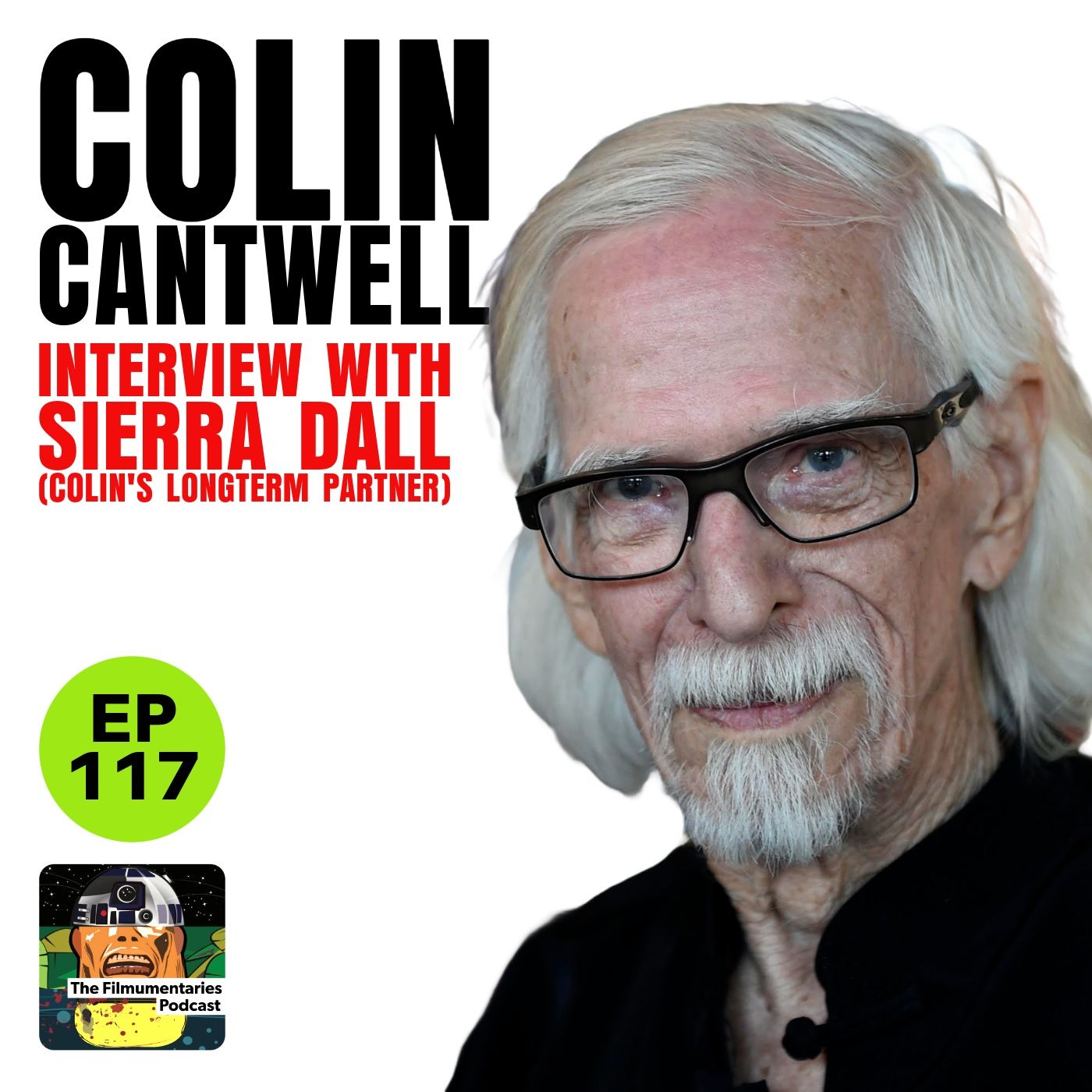
About this episode
- Colin Cantwell was a key figure in the creation of iconic spacecraft designs for Star Wars.
- Sierra Dahl shares her personal journey with Colin and his legacy.
- Colin's work with NASA included contributions to the moon landing broadcast.
- He was the first graduate of the animation major at UCLA.
- Colin's designs were influenced by his passion for quantum physics.
- He created the concept art for Star Wars before being officially hired.
- Colin's approach to design involved viewing ships as individual characters.
- His work on War Games showcased his programming skills and creativity.
- Sierra is dedicated to preserving Colin's legacy through a new website.
- The CSJ Foundation aims to inspire youth through STEAM education using Colin's work.
All my links
This podcast is completely independent and made possible by listener support. If you’d like to help me keep making these episodes, you can join my Patreon community here: https://patreon.com/jamiebenning
Watch more on YouTube:
Check out the Filmumentaries YouTube channel for behind-the-scenes clips and extra content: https://youtube.com/filmumentaries
All my links
Transcript
Automatically generated, so expect the odd misheard name.
Weirding Wave Media. Welcome to episode one hundred and seventeen of the Film we Mentories podcast. I'm your host, Jamie Benning, speaking to you from a rather dreary. Day here in the UK. The weather might be dull, but I've got a fascinating conversation lined up for you to brighten your day.
As usual, in this episode, I had the pleasure of speaking to Sierra Dahl, the long term partner of the late Colin Cantwell. For those of you who may not be familiar, Colin was the visionary concept artist behind some of the most iconic spacecraft and spaceships in cinematic history, including the X Wing, the Tie Fighter, and the Death Staff from Star Wars. Colin's career was nothing short of remarkable, though there's so much more to it, as I found out in my conversation. Before his work on Starles, he collaborated with Stanley Kubrick on two thousand and one, A Space Odyssey, contributing to the film's groundbreaking visual effects. He also worked with NASA, assisting Walter Cronkite during the nineteen sixty nine Moon landing broadcast, providing these real time updates from NASA so Sierra and I delve into Colin's creative process, his experiences working alongside legends like George Lucas and Stanley Kubrick, as I said, and how his designs have left that kind of indelible mark on popular culture.
Really, we discuss Sierra's efforts to preserve and promote Colin's legacy through the launch of a revamped website in collaboration with the friend of the podcast, Brad Cook. Hi. Brad dedicated to Colin's work, this website and the creation of those visions of his Also this talk of a potential documentary and exhibitions as well. So this is a heartfelt and insightful conversation that sheds light on the man behind the models and the enduring impact of his work. So here's my chat with Sierra Dahl and as always, I'll be back at the end for a bit more jabbering on.
Sierra, Thanks for joining me. It's great to have you here, and we're going to talk today about Colin Campwell, your partner, your late partner. When were you first introduced to Colin and his work? Oh? Well, Colin, I'm always a Star Wars fan to begin with, and I was doing interviews with successful people on audio tape since going to a coffee shop in Boulder, Colorado, and Colin was sitting in the middle of the room, totally unmistakable.
He had long silver gray hair, wore this really weird looking junk like for a jumpsuit, and I was curious because I was doing interviews with successful people. So the fella next to me talked to him and came back and I said, well, who's that and he said, well, it's Colin Cantwell. He had something to do with Star Wars movie. So I thought, well, you know, it'd be a good time just to meet him and maybe do an interview with him, went over and sat down or talked to him, and he's I said, are you Colin can't well? He said, yeah, what do you want.
I thought, well, this may not be the best time, So I said no, maybe this isn't a good time. He said, oh no, no, come on, sit down, and literally within the first ten minutes we both had tears running down our faces. So twenty four years later and we were together, and in nineteen fourteen we discovered he had dementia and we had to move and in the basement was literally wall the wall Florida ceiling boxes, and he kept telling me, well, there's something important in the drawers. But he never wanted to talk about his Star Wars background. For some reason, he didn't want to talk about it.
He was deep into klonumphysics and loved his work with the original idea of occupation was being an architect, and so he talked about that, but he didn't talk about Star Wars. So we found that in the basement were the original concept art that he had created for George Lucas. That was something special. It was stuck in a drawer. This was like but twenty years later I knew him, or not quite twenty maybe sixteen years after I have been living with him.
So and in addition to that, we had an enormous amounts of other pieces of equipment. So that was my beginning with Colin Wow. And that's the thing about Colin looking just having done a little bit of research about him and read about him over the years. Of course often related to styles in my case, because that's kind of you know, my love is in film. But you know he studied animation initially, is that right?
He did he studied well, he didn't just study animation. He suggested the animation major CLA and so he was literally the first graduate in that department. And yes, but his passion at that time was in que of physics. So he attended a Bucky Fuller seminar. I wanted to say webinar.
But not them before webinars. Yeah, yes, and took three days after determining what buck people or had missed. So he spent the rest of his life very much interested in that. But yes, he was an animation major. And during that time he helped make a lot of short films that got people's attention because they were that creative that people were very interested in what he had to do.
So nice where it all started. Have you seen those films? No? I haven't seen those short faults. I wonder where they are.
They're probably there somewhere in an archive somewhere. But then. He went and worked on NASA's Jet Propulsion Laboratory in the sixties, creating educational programs and things like that. I mean, it's very interesting that he's had this through line from sort of a creative pursuit through to the sort of realities of space travel and then into Star Wars. Can you tell me any more about the NASA side of things, and he's kind of contribution to the moon landing as well.
Right, So Colin was very good at getting what he wanted, and he was he went through his starting note in his background when he was younger. He went through the entire library of the first grade by the end of the first half of the year, and then he went through the whole library with the entire school by the end of the first year. But his main passion at that time was in space and anything related to space. So he figured out ways to get jobs, and what he would do is learn so much about what he was going to be doing that people would hire him because he was that knowledgeable when he went into the job. And that's just a good point for anybody who's looking for work, is that he got hired because he found a solution to a problem and then he would present it to the people he wanted to work with.
So with NASA, he started volunteering and that's how he got into NASAU. Would do a lot of their artwork for them, their programs for the public, this type of thing, and then eventually with that background, it led into yes, and he was well, let me back up a little bit. He was on and off with NASA, so it wasn't just one continuous stint with with NASA. And one part of it that a lot of people don't know about, and I'll get into the moon landing and a minute here, but one part of NASA was that he was hired to work on the two spaceships were taking photos of the Mars and they had stereo photos, so they had two of the ships going parallel to each other taking pictures of the same area so that they could get an idea of what the top topography was.
So when they came back and Colin saw these pictures, NASAU hired him to make a relief map of Mars. It's one of his main projects. But the amusing part there was that a National geographic had a picture of Mars on the front cover, and unfortunately they had it upside down so that the top the highs were the lows and the lows were the highs. And Colin picked up on that and that's where the relief map came in. So he did a lot of work in that area.
In nineteen sixty nine he has a work for NASA. He got hired by JPL jet propulsion laughs to go work on the film with Koberg. And one of the things that actually happened with that is that some of his friends called him in and said, hey, we need to have Colin help figured out this film, because when he got in there, it was supposed to be mostly done, but it wasn't. It was just barely started on the space scenes, and so he got in kind of on the middle of the whole thing and had to pick up the slack and figure out what to do at that point. So, but he was involved with the space scenes in the movie.
And one of the things a lot of people don't know is that the music was his idea and that was one of the main things you still hear today, at least in the United States on television all the time. And yeah, yeah, yeah. They also spot Tera Sustra. I mean it's just synonymous, yeah, synonymous with that movie. You can't separate the two.
Almost, No. So he was working at nighttime with Coobrick on the film One on one. It's over Turkey sandwiches, as he said it, at midnight, and uh hoober came in one time and he was really upset and he was very depressed. And Colin said, hey, what's what's the matter. And Cobrick said, well, I fired my fifth composer and I just don't like the music.
But Colen being Karen, had already thought about what the music should be from the movie, so he presented his ideas on the music, and almost all the music has kept the Blue Daniel. Actually it was Colin's idea. So that's what we're hear. Now, that's very cool. You know, there's a there's a really amazing Kubrick archive here in southeast London where I am that I visited before.
Maybe I should go and have another look on Behalf of Yourself and Brad to see if there's anything I could dig out for the website, which we'll get onto in a moment. But you know, you look at Collins's career. He's gone from you know, this animation creating this animation program at UCLA. He's then gone on to work for NASA Jet Propulsion Laboratory and working for Stanley Kubrick and assisting Walter Cronkite for the nineteen sixty nine Minion landing, you know, providing these real time updates. I mean, it's it's kind of mind blow do you know any more about that that work with Walter.
Cronkite, I do again. It was through Jet Propulsion Labs and he got that that gig and he basically was sitting behind Walter Cronkite during the Moon landing, and he had a calmline between the astronauts and NASA, and we had probably four different versions of the flight plan in his possession. I discovered after we sorted through everything. And the thing with the other stations is that they were following the actual timeline on the flight plan, and they were listening to you know, they weren't listening to what was happening that they didn't have that background. Hall On, of course, had researched all of this to the extent when he knew what was supposed to be happening in real time rather than just what the flight plan said, and so he's listening to these conversations and he's not hearing what he thought he should have been hearing.
So he was telling Walter, well, hey, it looks like they may not be on schedule. They may be landing late, and according to the flight plan, they should have already been landing. The other stations had them landed and the station managed yelling in his ear, you'll never work again the rest of your life, because he was disagreeing with the other stations in the timeline, but he didn't think they had landed, and they actually they they hadn't. And so, as it turns out, he was listening to the conversations and they were saying things like thirty seconds in fifteen seconds, and what that meant was that that is how much fuel they had, and if they didn't land, they wouldn't get backed up again. So that's how tight the whole thing was.
Then, of course Colin's right, and the flight plan, you know, was you know, they had to deviate from the flight plan, and so this SNA's manners yelling, we won, we won. That's a great there's a great There's great footage, isn't there. There's a documentary least a couple of years ago about the Moon landing where you do see those moments where they're having to do the manual adjust to come into land because they're running out of fuel, And it was so tight and incredible for Colling to be there at that such a pivotal moment in history, it just kind of blows my mind. One of the things he was telling me was that he was sitting behind Walter Kronk watching him get ready for the broadcast, and when they had a break and everything, Walter would take a pop on his cigarette and then he watched the smoke just slowly drift out of the screen, and that's when he had it perfectly time so that there wasn't any smoke in the screen when he would start talking again.
Different times, Luckily I joined the I mean I work in the TV industry now, and luckily I joined after the smoking man. Then then the next thing I see on Colin's timeline. I'm sure there was work in between these things. But he was then hired by George Lucas in those very early days. Was it seventy four that George first approached Colin to come up with those designs for the ships.
He didn't exactly approach Colin. I gu his friend Hal Barwood, who Colin had worked with on different films. Yeah, introduced Lucas Cohn because he thought that Colin would be instrumental in that movie and some of the creativities as far as the shifts were concerned. So Colin in the meantime had created these kit dashed shifts. Now, Colin, this is backing up.
Coln is the grandfather of kit dashing. And have you heard that term before? Yeah, of course, I've interviewed many ILM people over the years. I've even visited them this year, so yeah, I know that term all too well. Okay, So that basically he started.
I'm sure maybe other kids at some point in time had done that before, but Colin was the one who made it famous. And what he did was take parts of all different kinds of ships that you know, tore them apart, all these different pieces and put each each similar piece into a little drawer and he called them Nerney drawers. And we had hundreds of them in our basement about it. I would say three and a half square tower, maybe six feet tall, five and a half feet tall, six feet fall, all of them with drawers that were probably that wide and that deep, and each of them had little pieces in it. And that's how he made the shifts.
And so he would be very creative and the way he put the ships together. And so anyhow, backing up again, so Hallivar would knew that Colin had capability of being very creative, and so Colin created those ships in order to show George look as how the models might demate in movies. And so that's how it all got started. And George, as Colin tells that he came and had a magnifying glass and he would look at the models and study them and study them and study them and to see exactly how Colin had put them together, because they were extremely in just totally involved. So that's how he met George.
The ship designs are so iconic, you know, the X Wing, the Tie Fi to the Star Destroyed, the Death Star. We all know those ships as they were kind of then the designs were built upon by people like Joe Johnston that became the ships for the movie themselves. But Collins have this iconic look to them. You can recognize them immediately, and you recognize those shapes. They're all defined individually and we understand, you know, the good and the bad.
So it's really Collins designs that started all of that off, isn't it. Yes, it really was. And actually Colins started creating the concept art before he was hired, So this is nineteen seventy four. He had designed the concept art and the concept art was all pencil drawings on dark backgrounds. So that's what we had in those roars in the basement that I was telling you about.
You said, there's something special in those rarers. Well, okay, that's what it was. I bet that was a very cool, cool thing to find. It must have been kind of light heart stopping moment. Well, I was shocked.
I've been with him sixteen years. I had no idea he had that in the base, along with a whole range of other artifacts that he had collected over the years, a movie memorabilia. So yes, and that the Millennium Falcon design that he had was repurposed as the blockade run, wasn't it because it was deemed too similar to the Space nineteen ninety nine ship. Is that right? That's exactly right.
Yes, he had created it, and then they found out about the other ship and they literally tore it apart piece by piece and used the cocktit on the current Millennium Falcon. So you'll see that cockpit on the side. And actually we were lucky enough that we were not in the comic con in Mexico City and Fella from Belgium had literally recreated the entire interior of the cocktit. Oh wow, so we were able to go through it and he could sit down at the control panel and it was real thrill. Yeah, for them and for him to be able to do that.
Yeah, I bet so that in nineteen seventy four when he was sort of doing those drawings and coming up with a models later on, was he then no longer working for George when the film was in production hit at his kind of stint with George kind of finished by then? Well, the film I don't know exactly the timeline on that. That's a good question. He was working until early seventy five, okay, and which time he actually created the models for the film. So he took all these kit bat after he created the concept art, then he designed the models.
And then at that time he was under contract to do that, so he had his workshop and everything to do the models. And I don't know, well, I don't know if the film was under production so to speak, but they were certainly ready to put it together at that time. How did Colin kind of view his place in the Star Wars legacy, if you like, did he have did he have a sort of a good relationship with the idea that his concepts were used for the final film, But he didn't get to work on the film itself. He only was hired just for a short time. Actually, he created the original models and then he kind of took it from there and you know, worked it into the final product for the film.
But one of the things to note about the different ships is that he viewed each of the ships he created as a person, so that when he when he came up with these different ideas, he wanted them each to have their own personality. It was distinct and different from anything else that was out there, and he certainly had achieved that. Yeah, that's a very cool idea. And again that it's part of the the influence he had on the Star Wars well as well, because that same ethos was carried on through by other designers for the later films. You know, they always went for these iconic ships that you could recognize in silhouette, all thanks to kind of Collins' you know, initiation along that path.
I saw as well that he worked as a computer graphics consult for another movie, War Games, another movie that I love. Oh that's another programming some of the. Yeah, his programming Hewlett Packard monitors, and I mean, what was there something in the What was he doing in the interim between the sort of the mid seventies and the early eighties there, maybe before we get onto war games. What was his what was his jobs in between those? Because he just seems to me that he's hopping from so many different disciplines.
I could imagine him doing almost anything. Well, he after you know, we were looking at seventy five for Star Wars, and then after that he was working at JBL JPL for a while on and off of different projects, and then he actually got hired by Hewlett Packard at some point in time around the eighties. So wargames is a whole other experience. He in a basement. We actually had a the set for the war games.
Huh, the actual set, a small model. Yeah, And of course I didn't know what it was at the time because they never talked about any of these things until we had to sell them. And so the other part of it was that he designed the whole set with the war screens and the way he wanted it laid out, and all the the the graphics and the projection, so that he had the projection figured out on each of the war screens, and he designed the entire all of the computers on the floor for all the people working in you know, Chyenne Mountains since Cyan Mountain. Yeah, here in Colorado Springs actually, and he had you know, he had project had the whole set all figured out, all the different projection angles and everything.
And basically what he did was he figured this out because they knew they had a problem, and so he presented it to them as a solution to their problem. So he programmed all of the screens. And we had these little monitors in the basement about that wide and that tall, the three of them stacked on top of each other, and they were Hewlett Packard monitors and Cutting edge, and he programmed the monitors for the war screens. So all the action you saw in the war screens was Colin's programming. And they literally had a doctor on set for Colin because if he had died, they wouldn't finish the film because he was the only person literally who could do that work.
So crazy, that was how War Games came about. It's a film that I used to love watching. I'm going to have to revisit that with this information now in mind. Of course, there's many fans will know Colin Sadley passed away in May twenty twenty two, obviously a very difficult time for family and loved ones. But when did it occur to you that you still had a role in Colin's life in as much as getting this website up and running and wanting to sort of preserve his legacy.
When did that become apparent to you? Well, when I found out about Star Wars in twenty fourteen, and there were several things that happened. He had written two books and they were never published and they needed to be edited. So I literally sat down and edited his books for him, and then we had to separate them into two parts because the one they were too long for one book. But at that time I realized we made copies of the oka he had taken ectochrome slides of all the ships.
We had thousands of slides, literally thousands of slides that he had boxes and boxes of slides, I mean trays, you know, big ones, And so I went through all of those and found some of the more relevant slides. And then we had made copies of the original ships, the concept art, and kept the copyright on that. So we had that copyrighted because it was actually created before he was hired by Lucas, and then that's when we started the website and started to put it all together. And then the only thing I knew about how to market something like that was the Big Bang Theory on television. Do you see that in England at all?
Yeah? Yeah, yeah too, yeah yeah. So I didn't know how to market this, and I didn't know where to go or who to talk to. So I thought, well, they were talking about comic cons, whatever those are. So I found out in the paper that the Whopper commute computer had been sold for no, I don't know, thousands of dollars and there was this one person in California who had helped sell that.
So anyhow, that's how we got the started with selling Collins prints at the auction house called the original concept art, and then making the copies of the original concept art. And so when I found out about the comic cons, I tried calling different comic bookstores and nobody would believe me that Colin was in Boulder and you mean the person who raided the Shifts for the Star Wars, but in Boulder, Colorado. So finally I convinced this one person, Chris Landham down at Denver that he was real, and yes he did, and Chris invited us down to his shop and then he introduced us to the world of comic cons. So that's how we started doing it. But we had started working on the website about that time because I realized we had to have something online.
So yeah, I put that together. I can't remember the exact year, but yeah. But in recent times, you've been working with a sort of acquaintance of mine. I've known for a long time, Brad Cook. I think he was around maybe twenty odd years ago on forums and things that I was aware of.
He was very supportive of my work, and you've collaborated with him now to kind of revamp the website and kind of bring it into to the modern age, and also to sell those prints that you were talking about. Can you tell us more about the website. Oh? Sure, So there's a lot of things that are happening around that. I started the original website.
I had it for a number of years. We used it for another party, was marketing some of Colin's prints and online, and then Colin and I had to move and Colin had dementia and COVID came along, and so everything kind of came to a screeching halt. We used to travel to all these different comic book stores and do presentations and sell his prints and all that. So then about twenty twenty we ended up having to move to Colorado Springs, and Colin was so sick. I ended up taking care of him, and so pretty much my life stopped except for doing that.
And then I have my other business that I'm running at that time, so I had to manage that. And then also Colin's print sales had stopped because of COVID, and you know, the other fellow was no longer in our life, so that stopped, and so I just pretty much had to put everything on hold. So recently I've been able to come up for air, and I Brad cookonderful, wonderful Brad Cook. I put out a flyer, what do I say? Email?
Does anybody want to help me sell these prints? And Brad came along and he said he would, and so he's done a wonderful job revising the website and making it into an e commerce site. In the meantime with that email I put out, I also met Eric Jacobs with TSJ Foundation and what they're doing is they're putting together museums exhibits, taking all of Collins work and using it as an example for young people to get involved in steam, which in this country, do you have Steam programs over there? They call him that. Yeah, yeah, well STEM there's no a nails.
But yeah, yeah. They added the as arc but it's that science, technology, engineering, art and math. And so what they've done is build a lot of the robotics from the Star Wars movie that's C three po are two D two and a whole bunch of other robotics, and they're trying to go to museums and do exhibits and programs for young people to get them involved in Steam programs. So they became very interested in Colin because Colin had such an interesting background all the way through all these different areas, and so they're taking each part of his different sections his life, his work and building it into museum displays and also teaching kids how they can get involved and showing them what they could be doing.
So that's part of it. So right now we're selling the prints on the website and part of that is going as a donation to the CSJA Foundation to help promote their Steam program because it's such a good use of Colin's legacy to be able to help young people get started in technology and science and that all the different arts that he was involved in. That's very cool. That's a very good use of Yeah, his legacy. As you said, I'm sure that's something I'm sure you feel that's something he would have been proud of as well.
Oh, he would have been thrilled. Yes. So the website is Colincaantwell dot com, very very simply Colincaantwell dot com. Easy to we're. Checking out anyhow, just to see some of his work.
Yeah, I've had a good look through it and over the last few weeks, and you know, Brad was sending me sort of early versions of it just to check out if they worked on my mobile device and on the browser and everything. And it was great to see all of that artwork and all of those photographs and things of the models. And yeah, well, one little little bonus for listeners of this podcast and viewers of this podcast, there will be a code where you can get some money off the website. Okay, so this is Jamie interrupting. Jamie, So that code I was talking about is Film fifteen, Film one five on Colincamtwell dot com.
And you'll get fifteen percent off all of the items in that shop. That's Film one five, Film fifteen on Colin Campwell. So I'll post that in the show notes, and I'll include that in the outro for the for the for this episode as well, and hopefully you'll get an influx of people coming looking for the photos and checking the website out and you know, all aiming to get more contributions to the to the foundation as well, which I think is a is a great cause. And do you see the next step? Is there a next step?
I mean, have you still got stuff that could be exhibited with these museums or is there just a finite amount of stuff that you have or do you still have boxes and boxes to go through or has that all been done already? No, I actually had to sort through a lot of what we have left. I don't have a lot. I do have the two kit Bash shifts, however, which I would like to sell because they aren't doing me anything, just sitting around, and the museum may take part of that. That's ESDA.
We're working on that right now. But one of them I will sell probably at auction, Yeah, and would I have a lot of things that were not sold at auction. And there's you know, like it's Wargain's jacket that I have and the MGM T shirts and just still had one manual from the Apollo eleven flight manual. I still have one of those left the whole book wow, you know. And there's a lot of a lot of items like that I still have that.
I've decided to package the whole thing into one group and still a whole thing at once and donate some of the other things because there's just so much information about Colin's life and so many different parts of it. And one thing we didn't talk about was Frank Lloyd Wright. Did you know about that? No? I saw in my notes.
I saw a mention of it. But go and go ahead tell us yes. No. After he graduated from college, what he really wanted to do become an architect. That was his first love.
And so he created this extraordinarily intricate house and he actually built the house, did blueprints of it and designs of it, and wanted to become a student of Frank Lloyd Right, So he thought he could just find Taling us and that's the school by just driving around and he would figure out where it was because it would make the most sense of Right putting it in that location, which he did. And so he got to the school and he knocked on the door and everybody ignored him and they wouldn't let him in. So he figured he was just going to sit out in the front and wait until they decided they got tired enough of him sitting there and they let him in, and eventually they did, so he a couple of days later, they had an appointment with Right and he sewed Right to his drawings and Wright said to him, well, go back get your tuition.
And Colin said, isn't there a waiting list? And Right said, not for you. So he went back to the Los Angeles to get the money for the tuition, and when he came back, Right had died in the meantime, So that was the end of his architectural career, and he really decided he didn't want to work with anybody else because there wasn't anybody else that it interested him enough. And one thing Colin did is he worked with the best. He always worked with the very best, so he wasn't interested in something that was less than the best.
Yeah, that was such a fascinating life. Has there ever been a temptation to write a book biography? Well, I think we're working on the possibility of doing a documentary on him, So that's running up in the cards, and he certainly worthy of that. There's so many I have nineteen different videos of Colin's work talking about different aspects of his work, including starting out with Charles Ames, who was a furniture maker in California, and Ames that was one of Colin's early jobs, if not his first job. And Colin decided to make a gravity well, this giant, huge gravity well, and so he brought it into the furniture store and everybody's playing with it, and Ames finally got tired of the whole thing and fired con and then everybody was complaining because they couldn't play but the gravity well anymore.
So Eames hired him back, and the gravity well actually ended up in the World Fair. So I think that's a Seattle World Fair. I'm not sure what your that was. Yeah, wow, I mean most people would be happy to just have one of these key moments in their life. Colin seems to have had dozens.
So I look forward to the documentary. I mean that that would be really fascinating, given that there's so much material there, you know, so many stories, so many photographs and artifacts. I mean, it feels ripe for the documentary format, doesn't it. Well as Yes, And that's not a given yet. We're working on It's not for sure that we're going to happen, but I think they'll figure it out sooner or later, because I know they really want to do it.
To SGA Foundation as the one that's putting that together, I'm sure they'll find a way to do it. But the other part about it is who Colin was as a person, and he was just this unique individual. There is no other person in this world like Colin. I mean there never will be. They threw the way the mold after they made con He, like I said, he had long silver gray hair down the middle of his back.
When I met him, he wore these weird looking jumpsuits, and I phoned out later he actually made his own clothes, so he would lie down on the ground, he would trace a pattern around himself and then he would sew these up. And we had a surge machine in the basement because he made his own clothes with lycras, so you had to have a surge machine because you can't do it with a regular you know, a little break. So, yes, he was just he loved attention and he was very personable. You would think somebody like that might be kind of difficult, but he wasn't. He was very easy.
We had so much fun. We used to sit in the mornings. We would laugh almost every day, and he lived in his head pretty much a lot of the time. He was always creating things, and we each had pads by the side of the bed that we would wake up at nighttime and start writing things on because he's always thinking about something. But one of the things that we did in the morning we would have I had throw pillows on the bed and we'd have a contest to see who could get the throw pillows sitting in the right position on the bed.
So we throw the tops and see when you could get those sitting up right. We also went camping a lot. He loved the outdoors, he loved animals, loved dogs. And then we had a little beche on just talking about calling it. He came from my ex husband, and my ex husband couldn't take him anymore.
So I said, well, I'll take him, take him back her back, and I said, well, she usually sleeps on the bed, and Constant, there's no way the dogs are going to sleep on the bed. Well, about a week later they were, he was sleeping between the two of us. And they were He sounds like he's very playful as well, Colin. You know, some people who have those complex minds often don't have the sort of social skills to go with it. But it sounds like Colin was was fun to be around as well.
Oh, he was a lot of fun. He had a great sense of humor, and yes he was. He was an amazing guy. And it's very unusual. Like you said, you would expect him to be more serious.
Yeah, he was serious with his work, but he also had a really playful side, as you said, So it was an interesting twenty four years. Well, I think it's fantastic that you're, you know, continuing the legacy of Colin and the stuff you're doing with the foundation and the website, and yeah, I think it's I think it's fantastic because sometimes people's stories when they pass away, their stories disappear with them, and it's the people that remain that are there to keep them alive. We're the only ones that can do that, and I think it's great that you're doing that. And I feel so grateful to you giving up your time today to tell me a little bit about Colin, because I'm sure we could talk for hours and hours about Colin.
But hopefully, you know, some of the exhibitions can be seen by people, and hopefully in the future perhaps that. Documentary might be made as well. But you know, I'll do my part to get Colin's message out there as well. But yeah, thank you for your time today, Sarah. I really appreciate it.
Okay, well, thank you. It was great, Tarkard you. Well. I hope you enjoy my conversation there with Sierra dal As I said with my little interruption, if you go to colincampwell dot com, and if you choose some items that you like, if you go to the basket and you add film fifteen as in film one five, you'll get fifteen percent off whatever's in your basket. And I know that Sierra and Brad have been working to add more items.
I think there are mugs now, there's a bunch of stuff, and obviously those pictures that we mentioned in the interview just then, so do check out Colincampwell dot com and the code is film fifteen film one five And that's just for you guys. That's just for film yourmentary's podcast listeners. For those of you that celebrate Christmas, have a great one. I've had a bit of a rough month with some surgery that hasn't gone according to plans. I've got to have more surgery.
Never had health stuff happened before, so it's all a bit weird. But thank you for the nice messages from those of you that sent them wishing me well. I'm doing okay, just you know, a little bump in the road coming up in the new year. There's a whole bunch of interviews lined up. I had to cancel some recently, but I've got a few in the bag already and those ones are going to be rescheduled for the new year.
Early in the new year. So take care of yourselves, take care of your families, try and keep a sane mind in this crazy, crazy world. Stop the doom scrolling. Delete your social media apps. You don't need them.
You probably need them for five minutes a day at most. Do an app timer. I've been doing an app timer on my phone and it just locks the app after ten to fifteen minutes. I think I've got ten minutes on Twitter, ten on Instagram, ten on Blue Sky. I've deleted Facebook.
I just post using my web browser on my laptop now and I found actually, you know, it helps with mental health, just not having that doom scrolling because otherwise it's all, you know, political problems, it's war, it's drones over New Jersey, it's bloody UFO videos. I don't know why the algorithm thinks I'm interested in them, But do time and take care of yourselves as well as each other. Have a great Christmas if you celebrate it. Happy New Year for twenty twenty five, and I'll speak to you in January. Thanks for joining me and I hope you can do so for the next episode of the Filmingmentaries podcast.
Oh and don't forget to share. Don't forget to share the podcast. Still trying to get it out there to more people. And thanks also to Mike Hewitt Brown of mb Music embemusic dot co dot uk who made the music for this podcast for all these years now, Thank you Mike. Have a great Christmas yourself.
Thanks everyone, Speak to you soon. M H. We are Pingauay Media H



Similar episodes across the network
Matched by shared keywords.
-
Special Report: Other Side of the Wind Redux
2 shared keywords: documentary, legacy
-
Why We Fight
2 shared keywords: documentary, war
-
Special Report: Following Harry (2025)
1 shared keyword: documentary