
About this episode
Rostock and Belafonte shared an office for years — she’d hear his cane tapping down the hall every afternoon — and the access that grew out of that friendship put her camera in the room as Trayvon Martin’s killing, Ferguson, and the Women’s March unfolded around him. The film closes on Belafonte’s own account of a state trooper who, after witnessing the brotherly love Belafonte brought into a room in 1963, took the bullets out of his gun and said they could never go back in. Rostock, trained as an ethnographic filmmaker under Margaret Mead before an early detour into editing SNL-era shorts (including the Ruttles’ faux-blues number in All You Need Is Cash), shoots everything first and assembles the structure only once she has a mountain of footage to sort through.
This isn’t a legacy rewatch — the film is new, built from Rostock’s own archive of the last decade of Belafonte’s life, and arrives on VOD this week.
Visit the film’s official website for where to watch.
Transcript
Automatically generated, so expect the odd misheard name.
Hold your ears, folks. It's showtime. People pay good money to see this movie. When they go out to a theater, they want cold sodas, hot popcorn, and no monsters in the projection booth. Everyone pretend podcasting isn't boring.
Turn it off. All my life, I've been involved in the movement. Touring and doing concerts. Mr. Belafonte wanted to be a bridge to the unfinished work of his time.
I'm here because you called. Oh, see. This is about America. I've embarked on this path to change through other personalities, through other people. He did something to me that night that changed my life forever.
Artists are the gatekeepers of truth. Ladies and gentlemen, over here! Mr. Belafonte said, myself, Al, Jesse, Martin, we marched. I said, hold on.
We talk about these people like it's a boy band. It's not really that the civil rights movement ever ended. I really wanted him to guide me through this process since he was part of the original March on Washington. This is the revolution. History is rising up to put itself at our disposal to say, don't be pushing this thing towards conflict.
We should be pushing it towards resolve. Mr. B has called upon so many of us to use our voices. To speak out takes a lot of courage. So all I can do is leave behind the crumbs of my experience.
I have a trail that you can follow. If you find value in it, pick it up. And if you don't, do something better. Hey folks, welcome to a special episode of The Projection Booth. I'm your host, Mike White.
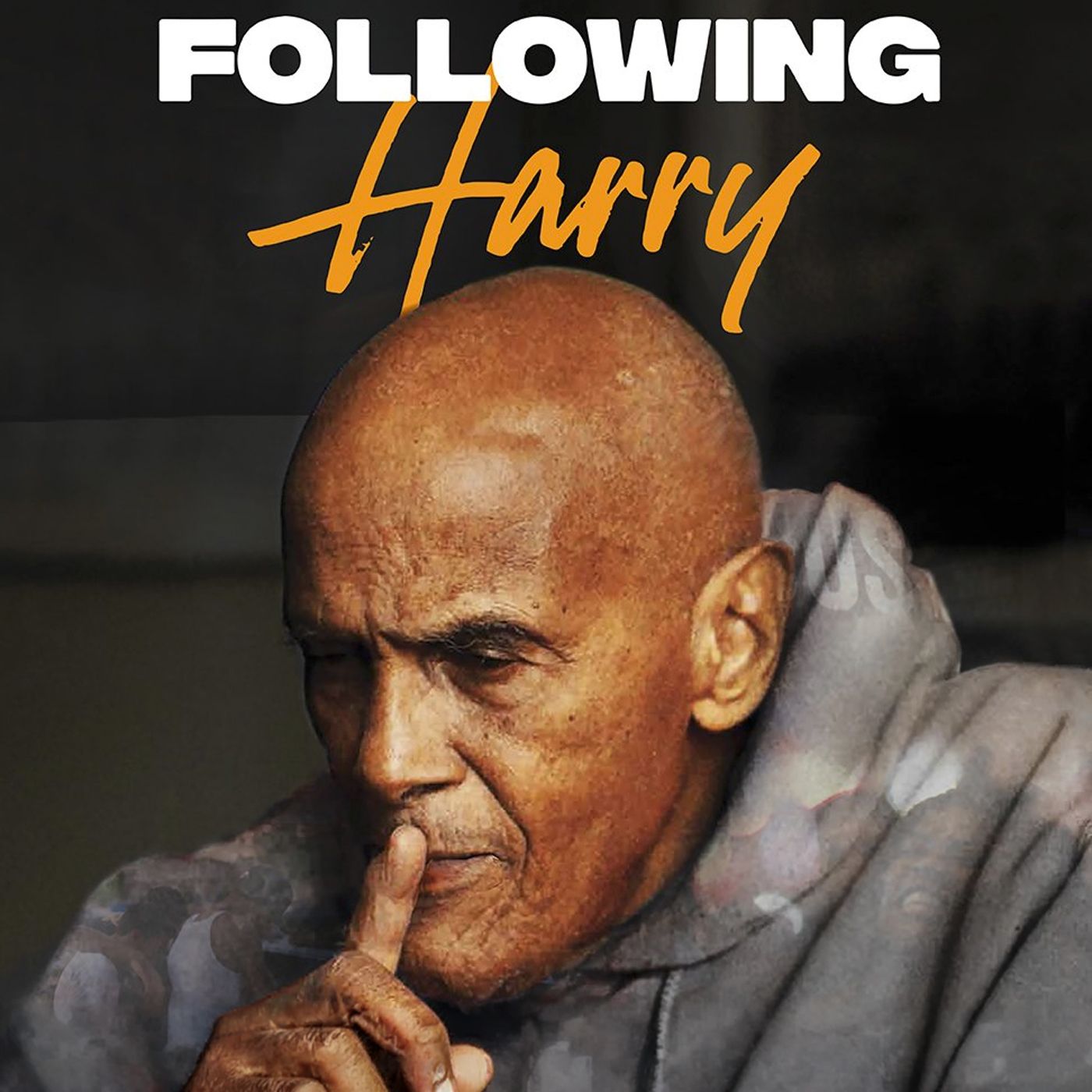
On this episode, I am talking with Suzanne Rostock all about her latest documentary, Following Harry. It is a great look at Harry Belafonte. A lot of people know him just as singing the banana song. Well, he did a whole lot more. Hopefully, everybody listening to this knows that.
Remember his movies that he made. Remember his social activism. This definitely is all about the social activism and the last few years of his life. Had a great time watching this. Had a wonderful time talking with Ms.
Rostock. And I hope you have a great time listening. Definitely check out the website followingharry.org and find out where you can find this film. Enjoy. Can you tell me, how did you get involved in filmmaking?
Because you've been doing it for a little bit. Well, I've always loved film. And my parents were passionate about film, especially my mother. But I was in pre-med and then, because I come from a family of doctors, and then I became an anthropologist and studied anthropology with Margaret Mead. And which also dates me.
And I was studying ethnographic filmmaking while I was also taking, I was at Columbia and so I was taking film courses there and decided that I could actually, that film could be a meaningful way to make a difference in the world. And I loved learning about cultures and having that visual experience of watching cultures and storytelling and and so that's really how i got into film and i went to nyu graduate film school back in 19 you know back in the day only 30 of us and uh and that was it that was the beginning and i never stopped you. Were involved in some early snl including even um all you need is cash the ruddles movie can you talk a little bit about that. Well, that was sort of, you know, because I was always, you know, a serious person.
But the SNL job came along, and I was filming and editing a lot of the short films for SNL in the very early days, the very beginning. And so Eric Idle was always around, and he and Gary Weiss decided to do the Ruddles film. And so my involvement, I didn't edit it. I'm an editor, director, director, editor. But what I did do, I had taken a year off from my life to go and make films in New Orleans.
You know, I was such a diehard New Yorker, but I needed a break from life. And so Eric and Gary called me up and asked if I would direct, you know, co-direct and cast the scene they wanted to do. That's in The Ruddles. That's Blind Lemon Peel. I don't know if you remember.
So that whole scene about the southern blues and everything, that's what I created for them. I cast it and made the set and co-directed it. So that's how I got involved with the Ruttles. SNL was and continues to be such a departure from, I wouldn't say my real life, because that was real life, but SNL real life. A lot of your documentary work is pretty serious.
But, you know, to see that you have done so much work on music videos and things, it feels like you must have a lighter touch, too. I do. You know, and I love music. I've done a lot of music videos. Well, humor, you know, it's interesting because I'd love to circle back to Harry, you know, that Harry had the best sense of humor ever.
I mean, he was just hilarious, as serious and passionate and poetic as he was. He was also very funny and humorous. Humor is important to get through the dark times. When was the first time you met Harry Belafonte? First time I met Harry Belafonte was in making Sing Your Song, which is the first film I made about Harry, which is his whole life from birth to 2009.
And he had come to me. He had already started that film and came to me with it to make it something more than what it was becoming, which was mainly famous talking heads saying how great Harry Belafonte was. So he wanted a film that was deeper about his life. So I made that film, and we became friends. And his office at that time happened to be across the street from where my office was.
So he would come over at the end of the day. I'd hear the cane tapping as he came toward me, and I'd always have cookies and tea for him. And so at the end of that film, he said to me that he was moving into a new office, a very large one. Would I like to move in with him? So he invited me to share.
An office with him. And that's what I did. And that solidified our friendship in such a wonderful way. But it also gave me this incredible intimate access to his daily life and family. At the end of Sing Your Song, Harry looks around the world in great despair and says, what do we do now?
He just felt something was happening and needed to be paid attention to. And so by the time I moved into his office and we had many talks and all these activists and artists would be coming through just to visit Harry and seek his wisdom, Trayvon Martin was murdered. And Harry then hit the ground running with that. And I just started filming everything that was happening from that point on in history. And as you know, there was Trayvon Martin, there was Ferguson, and the Women's March was created in our office.
And you just see how activist movements are built. You see the fight for humanity. You know, Harry would always talk about that, that all we want to do is enjoy the universe. And it's oppression that gets in the way, and it's love that will drive out oppression. And that was his whole thing.
You know, we just have to drive out oppression. And he also, another quote from him, not to give you a lot of quotes, but that colors the way the film moves and Harry moves, is that artists are the gatekeepers of truth. We are civilization's radical voice. And so he presented that to a large audience at the NAACP Awards, a large audience of celebrities, you know, trying to. Say, where are you?
And he says that, where are you? Why aren't we standing up? Why aren't we doing anything? And so the film is about that. It's about happiness. trying to activate, motivate the people, young people, old people, all of us, and especially celebrity, to use their power to understand the power and to not just roll over, but to stand up and fight, always nonviolently, always peacefully.
And, you know, he just, he understood history. He lived history. He helped create history. And he really didn't want young people to continue to reinvent the wheel, but to build, to build on what was learned, what happened before, and to build on that. And he also believed that, you know, every generation is responsible for themselves.
And instead of relying on the elders get in there. The civil rights movement was started by young people. John Lewis was 19. Martin Luther King and Harry were in their 20s. They were young.
A lot of the people were just 16. There were kids out there fighting. There must have been such a degree of trust between you and Harry just to well, to ask you to share an office, but then to just be such an open book when it came to, you know, him as a documentary subject as well, to just give you that access. Well, I have to say I, there was obviously an enormous trust and I'm so honored. You know, I don't take that lightly.
It's, I never expected to even meet Harry Belafonte in my life, you know, let alone have our lives entwined like that. And, uh, You know, it's so interesting to me because, you know, I'm now an old white woman, you know, but we connected on a very, very special level, you know, and I consider him such a deep friend and such a mentor. And it's just, you know, wonderful to have known him, wonderful to have have had that openness. When Harriet asked me to work on Singer's song, I had turned it down because I was in the middle of another film and I said, I can't do it justice. I can't give you my full time.
But he kept on coming back. And then at one point I said to him, because at that point already he was not a young man and he was feeling his mortality. And I said, there's so little time left. And he cried. And he said, there's so little time left and there's so much for me to do.
And he actually wept in my cutting room. And so I told him, I said, you know, when I was 15, I wanted to march from Selma to Montgomery with Dr. King. And I lived in New York. My parents wouldn't let me go, even though they believed in Dr.
King. They said, you're 15. We can't send you down there alone. I was ready to go. And I shared that story with him.
And he said, I know. I know. I knew you would think that way. And so there was something, you know, we had a connection, a heart connection. I really want people to see this film.
I want Harry's voice to be out there because we don't have that voice now. And Harry needs to be out there because... You know, people are working hard. There are a lot of people working hard trying to make a difference. But there's a little sense of what do we do?
What do we do? What do we do now? You know, Harry's old thing. And is there hope? And people feel hopeless and despairing.
And I think this film shows you that you can do it. You can, you know, community is important. Communities have to come together. You can do little acts. If everybody did a little act, it adds up to a big act.
And the film shows that, that It gives you so many possibilities, so many ideas, and it shines. It's full of hope and full of Harry's love. I end the film with the idea of love, the power of love, that the state trooper taking the bullets out of his gun because he witnessed the brotherly love that Harry brought into the room. The bullets can never go back in my gun again. That was 1963.
That's chilling and heart-wrenching and a reminder that you can change people's minds. Help them see the light. I don't mean to get biblical here. You have done so much editing in your life, and I'm curious how that affects you as a filmmaker. When you are shooting things, are you thinking, okay, I have to use that, and you're just kind of marking things mentally as far as Here's when the cuts happen?
Absolutely. Editors are the best directors. I used to be a shooter also, and I have such appreciation for beautiful camera work, and I work with beautiful women. My crew is mainly made up of women. And Martina Radwin is my hero cinematographer.
I don't know. Just put that out there. But yeah, of course, I'm looking around. I'm going to need this, you know, to tell this. I'm not really cutting while I'm working.
Sometimes I have to cut a teaser to raise money. So then I do cut. And that does kind of shape things going forward. But no, I just shoot. I shoot.
And then suddenly I have this huge pile to wade through. Yeah, it's not like a dramatic film. You know, it's not sequential. It's one thing if you have a script, you can go, you can shoot that scene and then you go and cut it. But here, I don't know where that scene's going to go, if that scene's even going to be a scene or if it's just something that floats through as a thought or an image.
So it's hard. And I tend not to do assemblies, which that's another film school discussion. Where can people find out more about you and keep up with this movie and finally be able to see it? Yes, there's a website, very good website, and the film is coming out on Amazon and Apple TV and Fandango and other streamers on October 13th. Ms.
Rostock, thank you so much for your time. This was such a pleasure talking with you. Thank you for watching the film, and I hope everyone who's tuning in We'll do the same and invite your friends. I say let us put man and woman together to find out which one is smarter. Some say men, but I say no.
The women got the men beat. They should know, not me. But the people, they say that the men are leading the women astray. But I say... That the women of today Smarter than the man in every way That's right The woman is smarter That's right The woman is smarter That's right The woman is smarter That's right That's right.
Ever since the world began, woman was always teaching man. And if you listen to my bit attentively, I going to tell you how she smarter than he, not me. But the people, they say that the men are leading the women astray. But I say that the women of today smarter than the man in every way. Garden of Eden was very nice.
Adam never work in paradise. Eve meets snake, paradise gone. She make Adam work from that day on. Not me, but the people. They say that the men are leading the women astray.
But I say that the women of today smarter than the men in every way. That's right. The woman is smarter. That's right. The woman is smarter.
That's right. The woman is smarter. That's right. That's right. Samson was the strongest man long ago.
No one could have beat him, as we all know, until he loved Delilah. Delilah said, all of the strength is in the hair of your head, not me. But the people, they say that the men are leading the women astray. But I say. That the women of today Smarter than the man in every way That's right The woman is smarter That's right The woman is smarter That's right The woman is smarter That's right That's right Ah, you meet a girl at a ballroom dance thinking that you would stand a chance.
Take her home thinking she's alone. Open the door, you find her mama home and not me. But the people, they say that the men are leading the women astray. But I say that the women of today smarter than the man in every way. Oh, yes, smarter.
More from The Projection Booth



Similar episodes across the network
Matched by shared keywords.
-
Jackass: Best and Last (2026) — "Welcome to the first day of our final film."
1 shared keyword: documentary
-
Episode 26: I'm Chevy Chase and You're Not (2025)
1 shared keyword: saturday night live
-
Melania (2026) — "Here we go again."
1 shared keyword: documentary