
About this episode
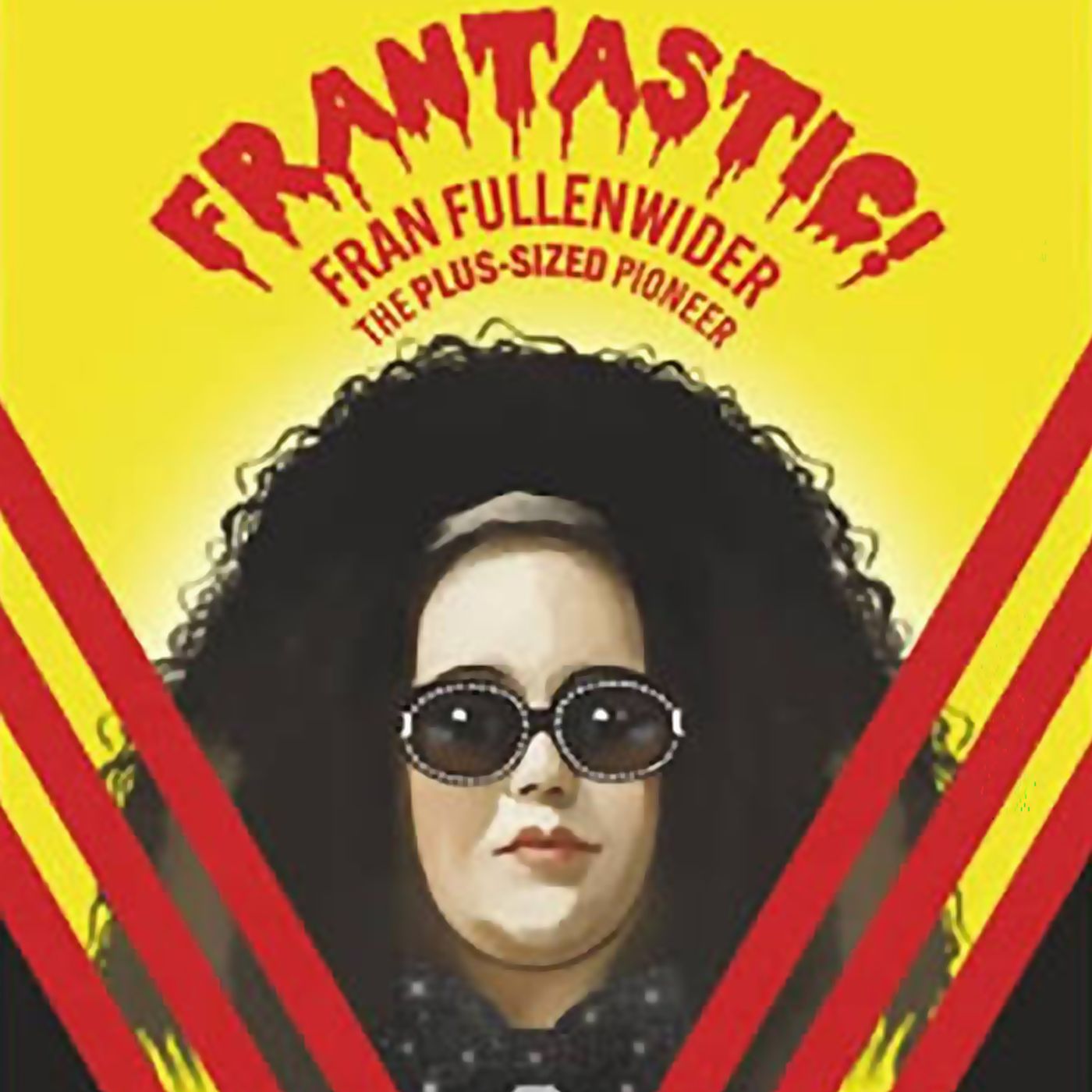
Heslop, a secondary-school drama teacher in northeast England who works on his books during school holidays, built the biography largely from letters, scrapbooks, and photographs a stranger rescued from an abandoned Texas mansion in the 1990s and donated to the Museum of South Texas History — the same archive that lets him trace Fullenwider from a wealthy, closely chronicled Texas childhood through a brief but real Italian film boom, a four-year run with Richard O’Brien’s Rocky Horror world, and a death scene in House of the Spirits that got cut for time, which Heslop confirmed really existed by tracking down director Bille August himself. The book features new interviews with O’Brien, director Jim Sharman, costume designer Sue Blane, and Jeremy Irons.
Transcript
Automatically generated, so expect the odd misheard name.
Hold your ears, folks. It's showtime. People pay good money to see this movie. When they go out to a theater, they want cold sodas, hot popcorn, and no monsters in the projection booth. Everyone pretend podcasting isn't boring.
Turn it off. Hey folks, welcome to The Projection Booth. I'm your host, Mike White. Today I'm talking with Marcus Heslop, a British schoolteacher and film obsessive whose new biography traces the strange, globetrotting life of character actress Fran Fullenweider. The book draws on Fran's own letters and scrapbooks held in the Museum of South Texas History and is available now.
Visit oaktreebooks.com uk for more information i had a great time talking with marcus and i hope you have a great time listening enjoy marcus tell me a little bit about you and how did you get involved with writing. I'm a secondary school teacher by trade that's all i do i work full-time as a teacher i teach drama in the northeast of england i've always absolutely loved films i obsessed with films to the point where even i've watched a film now And I don't like it. I like to read everything about it afterwards. I've just always been, it isn't just enough to watch it. It was only about a few years ago I thought, I'm so obsessed with films and TV and the obscure side of films and television that I thought, I just suggested a couple of articles for magazines which got picked up.
I wrote a book about an actor who was even more obscure than Fran Fullenweider called Geist and Even. And I self-published that because it was so niche. I didn't even attempt to send it to publishers really. But I've always been interested in people who are like on the fringes of fame or people who've been forgotten or people who, you know, for Fran, for example, and I'm using the kind of term that somebody would use unkindly. I didn't want it just to be the fat one when they're describing the Transylvanians.
Like Hugh Cecil is not just the bald one. He was a punching duty man. He was a prolific extra as well. He had a long career. With Fran, she was a footnote to the last book I had, and originally she was just going to be a magazine article for Best of British Magazine, but the link to Britain was too tenuous for them.
And as I was doing the research for that article, it just became more and more, to the point where I thought, there's a book in here, and luckily the publisher agreed. When was the first time you saw Rocky Horror? Probably, like a lot of people, I was born in 1974, so I watched it on VHS at a friend's house, I remember. I used to go to a theatre club, I was a theatre... a geek if you like so we used to go and watch movies afterwards i've been to the theater club rehearsing plays and things and i remember watching it on vhs for the first time i probably wasn't aware of fran then but i just remember thinking like a lot of people who watch it this is a pretty unique film and said it still is i think because it's i know shock treatment's a sort of sequel but it's such a one-off kind of movie and it some films try to be culty and they try to be a little bit kitsch and they try to be camp Rocky Horror is just what it is, and it just seems to have this longevity, which a lot of films don't.
And I remember loving it. When did Fran come on your radar? Probably The Monster Club, the amicus-type horror film where she appears right at the very end. I think I was aware of that before Rocky Horror, actually, because I just like that kind of portmanteau film. And I remember seeing her at the end of the film, dancing with Vincent Price.
In this bit that has nothing to do with the rest of the film, it's... It's a throwaway little bit, but she makes it really quite joyous. And I remember seeing her in that. And then probably The Mutations, that kind of film I've described before as a poor man's freaks. I remember seeing her in that.
And then when I was researching an article, it just turned out there was so much more going on with that woman's life. The Italian film career, where she made four films and at least plus one episode of a sitcom. There was so much more going on. And the book covers our entire life from wealthy Texas upbringing to a sadly quite young death at 51. I can't tell you how much respect I have for you for doing a project like this, because I love the kind of latch on to an actor or actress and just try to learn as much as I possibly can watch all the films that they were in.
So I really appreciate that. But what kind of tip the scale you said this was a pitch to a magazine. But when did you say, shoot, I really need to turn this into a book? It was probably when I was doing the research for the magazine article. And I was getting so much information about this kind of quite eclectic life that she had.
There was just such a wealth of information. And I love the research process in a book. I love when you get an email from a famous actor or you discover some little nugget of information, like when she became a millionaire. Yeah. These aren't spoilers because these are the tiny little bits of information that are already readily available online about her anyway.
And I just thought there's so much here anyway. I was quite, I thanked the editor of Press to British magazine for rejecting the pitch because it turned out that there was a book in it. And I just thought, yeah, this is going to be my next book. And I just went for it, sent it to lots and lots of publishers and got a couple of offers around about the same time. And I went with, I'm really pleased I went with Gin Beer Books because it's a really nice looking book.
They've done a beautiful job on it. Absolutely, and the cover art is fantastic. Yeah, it's brilliant. A guy called Robert Hammond did it. You see so many books with AI covers, more and more at the moment, just a nice original piece of art.
It's just, it's striking. It's a great looking book. Where did you find the greatest amount of research material? Did you have some luck at a library or with a particular person? How did you get the majority of your sources here?
A lot of it was from newspaper articles. But the main thing was, and like I mentioned it in the book, there was a touch of this Southern Gothic about it. Somebody went to an abandoned mansion sometime in the 90s. They found lots and lots of letters, scrapbooks, photographs, and donated them to the Museum of South Texas History. They have that all online.
And for a small fee, I could get all of that information, the letters that Fran wrote to her mother when she was... educated all over Europe, letters to an ex-boyfriend called Greg Lee, a childhood scrapbook, and there's little bits of the scrapbook in the book. That was just, I think I said in the acknowledgements, it would be who was a father, who was a mother. And the fact that so many newspaper articles described in minute detail the day-to-day comings and goings of these people It was just a wealth of it. I describe it like a Facebook of the 40s because everything they did, if somebody gets visited, at one point it mentions the fact that an uncle visited her and he flew by plane. Really boring tidbits of information.
But the fact that everything was reported about their day-to-day life because they were the prominent family in Holland and Texas at the time, it just gave that real foundation to our early life before. And then I had to research all the other aspects after that. How long Was she an actor? When did she start acting? There's a story which she sold.
It was one of those stories which she told for years. And some people, Jill Searle, who ran the Ugly Agency. Originally, Fran wanted to be a director. She wrote to the BBC. She was rejected for not having any British connections, ironically, by a Hungarian producer.
And she went to Rada to do stage management. And then she applied for secretarial work at the Ugly Agency. which employed faces, types, like the barman in the cantina scene in A New Hope. This ugly agency. And the story, and I don't know if it's true or not, was that she was too big to fit in the office, so they put her on the books. And because of that, she got lots of work afterwards.
I don't know if that story's true. It was a story that Jill Searle, who ran the agency, told. It was a story that Fran told, but it made good press. And from that, she started getting these little bit parts. She also did the Alternative Miss World competition. which is I think where Richard O'Brien spotted her first, which was like for drag performers, male and female, anyone could enter.
It was just an alternative to these cheesy pageants. And from then, I suppose from that, it was Rocky Horror and then Italian film success for about a three-year period. Yeah, I had no idea that she was in so many things. And what a rich life she had. What was the most surprising thing for you as you're finding out more about her?
I think, and I touch upon it a lot in the book, and try to understand why she told so many outlandish stories. I refer to Fran Fullenweider at one point in the book as a franticist. I try to avoid as many of those puns as possible, even though it's called frantastic. She told a lot of really outlandish stories. Most people were aware of this, just humoured her.
I think a lot of the time when she was interviewed, all people would go on about is that weight. And I think she got bored talking about the fact that she was a bigger lady. So I think she made some little stories up. And I think over the years, which is sometimes the tendency this happens, the stories got exaggerated and a little bit more outlandish. But having said that, there were some things she talked about, like having a death scene in House of the Spirits and where everybody, but it was cut from the film.
And she goes into great detail in the magazine articles that she wrote. about this. And it turned out it was true. I contacted Bill August, who directed The House of the Spirits. He confirmed that she did have a death scene and it was just cut for time. So not everything she said was a faber and exaggeration.
Some of them turned out to be true. Also, the writing career. She was a really good writer and she wrote for a magazine called Yes, which was one of the first publications in the 90s in the UK for plus-sized women. And her writing in there... So if you want to know about the Monster Club and you want to know about House of the Spirits, I've taken her words verbatim and put a lot of that into the book as well, where she talks about our experiences.
And it's up to the reader whether they believe everything she said. There's an element of the fantastical about some of the stories, but they're amusing nonetheless. And I'm sure there's not that many people that can confirm or deny these stories either at this point. Some of our friends, like Gracie Toon, who is Tommy Toon's who was an actress, I think she's based in America now, they all say, yes, there was an element of the fantastical. Nearly everybody spoke about a fondly part from one person who said she could be a bit vindictive and her whole life was made up.
And I asked that person to elaborate and gave this guy lots of opportunities to elaborate on that, and he never did. So the only negative thing you hear about Fran in the book is that quote, which I've put in. And if Fran was like that, that's maybe his experience. He lived with her for seven years. in this shared flat they had. So it would have been nice to have heard a little bit more about that.
But having said that, he was the only person who had a really, anything really negative to say about everybody else that she was a really loyal and honorable friend. Does she have any living family still that you were able to talk to? She has a half brother who didn't want to talk at all. I contacted him several times, asked him just to get his side of the story because Fran was estranged from her father, Dale. And when Dale died, in his obituary, he doesn't even mention Fran.
That's quite damning, isn't it? But Merle wouldn't speak, so she has this half-brother who lives in America, and he wouldn't talk about her. I managed to get in touch with her cousin, who's passed since the book was written, Ralph Fullenweider, and he talked a little bit about the family estrangement, but he said that Fran distanced herself from the family. We won't know. We don't know why.
There was very little communication between Fran and her father in the letters that I had from the Museum of South Texas History. There was just maybe one letter. It's a bit cold. It's a bit impersonal. Maybe they just drifted apart again.
I make no judgment in the book. It's up to the reader to fill in the lines. Did Fran's mother poison Fran about her dad? I don't know. It's a possibility, but it's left to the reader to come to any conclusion about it.
Did you do everything from where you're at, or did you have to travel for this? No, because I did everything from here. I had some phone telephone conversations. Sue Blaine, for example, who designed the costumes from the Rocky Horror, and Christopher Biggins, who's one of the Transylvanians, who's quite famous in this country. They were phone telephone conversations.
Everybody else was questionnaires and emails and trying to track down these obscure things that you were in. It was all a lot of just... Because I work full-time in a completely different profession, obviously I have to give 100% of that because luckily with teaching, we do get quite good holidays. So during the six weeks holidays and the other holidays we get, that's when I could do a lot of the book. That's why it probably took, it is, that's why it took four years to write because I had to focus on the job that I actually get paid for.
And that was, I wouldn't call it a side hustle because it's turned out he has a book out of it. Well, and I'm sure you're just raking in money from book publications. It just needs to be adapted into a major motion picture and then we'll see. It would make a great film. There's a Scottish actress called Sharon Rooney who would be perfect.
And also, I like to fantasize sometimes about how maybe you could maybe animate the more fantastical stories Fran told. So just someone needs to read this book and then let the bidding war between the networks commence. See what happens. I'm sure while you were doing your research on Fran, you probably ran into a lot. You mentioned the one Transylvanian, but you probably ran into a lot of stories about the other Transylvanians as well.
Oh, yeah, definitely. Scott Michaels wrote a really good book, From Concept to Cult. I don't know if you've read that. It's a really good book about Rocky Horror. And he interviewed most people who were alive when he wrote it, I think in 1999.
So he allowed me to use quotes from some of the other Transylvanians, some of them who've passed since. Annabelle Leventon and Sadie Corey, who's the very small one. But for the most part, I used those quotes and Christopher Biggins. It was great. The book was delayed because I really wanted to extend the chapter on the Rocky Horror Picture Show because the book was going to get published around about the 50th anniversary.
So that's when we got Richard O'Brien to talk about Fran and Jim Shorman, the director, and Sue Blaine, who did the costumes. So in Rocky Horror, she doesn't speak and she's not in it after the first 48 minutes. But it would be naive to not admit that this is the film that gave her this cult status. So that's why there is a chapter on the Rocky Horror in there, because I think it would have been a disservice to fans, really. And the book cover, obviously, it taps into that as well.
I think what it does is it hoops people in, and then they realize that either side of Rocky Horror Picture Show is equally, if not more, fascinating. Yeah, which was the amazing part to me. I'm just like, how is this guy going to spin an entire book about this woman who had a few minutes on screen, you get the one shot of her after the time warp is done, and That's about it. So I'm like, how is he going to do this? But you did such a masterful job.
Thank you. And I think one of the things that I didn't want to do was overanalyze tiny little performances she did. So when she's in House of the Spirits, I'll talk about how bizarre that scene is. And I'll talk about the fact that she had this other scene that was cut. But I won't over-exaggerate the quality of the performance and the actor in it.
I can't talk in great detail about that because she has a performance that's really... good it showed that she wasn't just a bigger lady a plus-sized lady she could actually act when given the chance and not just as a comic foil so i think i've got the balance right not to waffle on about every tiny little part you did but give it some substance and give it some attention when it was needed. And i can completely understand delaying a bit if you had a chance for o'brien charm and blaine were there any other kind of white whales out there people that you really wanted to talk with other than half brother you talked about Yeah, I would. Have loved to have spoke to Joan Collins, but I got a note from that.
Joan Collins was in a film with Fran called Nutcracker, which is a really entertainingly bad film about a Russian ballerina who defects to the UK. Fran plays Joan Collins' pianist in it, and she's in quite a lot. And I spoke to the director, and I spoke to the writer. I would have liked... Because Joan Collins must have remembered Fran, because they're in quite a lot of scenes together.
But Joan... I've got to... Sometimes... The publicist just says no. So Joan Collins and the brother were two people.
But really, the fact that Jeremy Irons, what a name dropper, was one of the first people to reply, and it's a relatively small quote, but he talked quite favourably about her. That was a really, that's the kind of thing, that eggs you on, if Jeremy Irons is willing to say a couple of bits about Fran Fulham wider, that's marvellous. But I think really, Joan Collins and her brother were the two people who I would have liked to have included. Merle, in particular, the brother. Some people just replied straight away.
They just wanted to talk about her in great detail. She was a memorable person. By all accounts, I would say she was a genuinely nice person, and she had a lot of friends, and she was a very loyal friend, and people were quite happy to talk about her. I think that she brought a lot of joy to people's lives, and I think we like to talk about people who provide happiness in our lives, and Fran did for a lot of people. How has the Rocky Horror fan community taken to the book?
Really enthusiastic people. Two people who were really a great contribution to the book were Leandra Lynn and Kelly Hansen, who did a podcast called Rocky Horror Minute, where they dissected Rocky Horror minute by minute. And they were some of the first people I contacted. And they loved talking about Fran. And they talk about her performance.
And they see things in it that I didn't even see that... that I go back and go, yeah, Fran's always doing something. She's always in character. Because some of these people were extras and some of these people were actors. And I think there is a distinction between the Transylvanians. Fran was clearly one of the actors.
She's always doing something. And the Rocky Horror community have really took it on board. And one lady, one Australian lady, who said she'd been a fan of Fran since the mid-80s was overjoyed that a book was coming out about her. So I think even things, it's not a tenuous link to Rocky Horror. She's in it quite for 48 minutes i think people like anything rocky horror related and especially something that may be a little bit more niche as opposed to a biography on tim curry or and especially then that he wrote his brilliant memoirs you probably don't need that if no one else is going to write about fran who will i don't think anybody else might have done it i did get a few people online saying what about the other transylvanians If you want to write a book about Hugh Cecil or Annabelle Leventon, go ahead and do it.
I don't know if they'll have a life as fascinating as Fran's. Christopher Biggins has wrote his own autobiography, which is a great read. But for other people, I picked Fran because I think it was such an interesting, eclectic career with the Italian films and the horror films and Rocky Horror and playing Jeremy Irons and Glenn Close's mother, Joan Collins' pianist, the queen in a daft comedy called Eat the Rich. that's an interesting set of credits. And it's not that many, but it's an interesting set of credits. She, definitely, and this is not a fat joke, she definitely seemed so much larger than life.
Every page is like, wow, that happened? That happened too? This is insane. Yeah, it really is. And becoming a millionaire overnight, which I think was one of the things that allowed her not to be playing Fat Lady or Books and Beauty, although Books and Beauty is a bit of a compliment, isn't it?
After Monster Club, which was 82, she never had parts where she was just named as Fat Lady. I think she might have, No Waste of Gummidge, I think was 1980, actually, which was a British program about a scarecrow that came to life, a kid's program. So, yeah, I think what it did was, Fran was never poor anyway. She was from this very rich family. But she did talk in interviews about how once she got that money, it allowed her to play a little bit more choosy with the roles and things, and I suppose that's why she didn't pick those parts anymore.
One of the last things she ever did, no, the last thing she ever did was a sitcom called Pazza Famiglia, and getting a hold of that and trying to work that out when it's everybody speaking Italian and France speaking her lines in English, that does have an element of a way it being used as a joke, but it's a very silly and very poor sitcom anyway. But She wrote about that quite favourably because that was an opportunity for this woman who didn't get a lot of work to go back to Italy to be a guest star doing this Italian sitcom. It was good for Fran because I think it gave her, she was still wanted and people still remembered her. And she might have exaggerated her fame in Italy. Some people said she did, some people said she didn't.
But the fact that she was remembered all those years after Melodrama, the film she did in 1978, must have been good for Fran's sense of worth, I think. So what's next for you? Have you gotten the bug to do your third book? Yeah, definitely. I've got two ideas in the pipeline.
Being There is my favorite film of all time. I listen to your podcast on Being There. I would like to write the definitive book about Being There. I've already interviewed a couple of people in it. For example, the guy who goes, I'll go and get Warren.
I've also spoke to one of the people who, when he tries to change the, when the hoodlums count them in the street, I spoke to one of those guys as well. I would like to do a book about being there. I also have an idea where I interview 50 people who appear only once in a really famous TV series, and they just tell their story. I've started that one as well. So I spoke to Tweaky Guy from an episode of Breaking Bad.
Because I think, even if the plot's really small, you've had this moment in a cult TV show or a famous TV show where And some people's, I think people's stories are worth listening to, whether it's a leading actor or it's a bit part or an extra. If you can tell a tale well, that can make a good story. So two little stories, I work on them both at the same time. People who are in these movies, they have the stories to tell or the ones that are even behind the scenes. They usually have some great stories.
Yeah, there's a really good website as well called the Unsung Joe. And it's really well researched. And it's just about people who are bit players or extras. And it's about their lives and their little moments in It's a Wonderful Life or Casablanca or something. I've always been interested in these people who are not even on the fringes of fame.
Their faces in the crowd. I just find if a story's interesting, it's interesting. You can be a leading actor and give a very dull interview, couldn't you? These some people. So what I'm going to do is just hear people's stories and pick the ones that I think make a good read.
I was in that once. That'll probably be the next one. I can't remember which James Bond it was, but it was definitely Daniel Craig. And there's a very famous extra who is basically sweeping the air. I would love for you to find that guy and get his story.
Yeah, that would be a good one, wouldn't it? Yeah, because he must know, because I've seen that clip as well. He must know people watch that. And it's on all the compilations, isn't it, of the worst extras. Sometimes you've got people in the background who are really over-emoten or something.
But this guy, he must have just been told not to make a noise. I think it's so high off the ground, though. It looks crazy. How would nobody notice that? I don't know.
Marcus, where's the best place for people to pick up the book and keep up with you? I don't have any website. I was thinking of doing a website where I could put some of the information about Fran that isn't in the book. So people might want to read, if I could get permission to read the full articles that you wrote for magazines and things. So that's something I might work on.
The book you can get from Amazon all over the world and some bookshops and things in the U.K., But Amazon's the place to pick the book up at the moment. And then we'll just have to wait and see when it's made into a major motion picture and the bidding war between Netflix and Amazon Prime starts. Fingers crossed. You never know. Marcus, thank you so much for reaching out and speaking to me today.
This is great. Yeah, my pleasure. Nice to be talking to you, Mike. Thank you. Thank you.
On the day I went away Goodbye Was all I had to say Now I Want to come again and stay Oh my my Smile And that will mean I may. Cause I've seen blue skies through the tears. In my eyes. And I realize I'm going home. I'm going home.
It's been the same. Like I'm outside in the rain Free to try and find a game. Cards for sorrow Cards for. Pain Oh, as I've seen all blue skies through the tears in my eyes. I'm sorry, I can't go on.
I'm going home. I'm going home I'm going home
More from The Projection Booth



Similar episodes across the network
Matched by shared keywords.
-
Episode 19: Nothing But Trouble (1991)
1 shared keyword: cult film
-
Episode 9: Fletch (1985)
1 shared keyword: cult film
-
Penny Dreadful: The Spook Lights of Marfa
1 shared keyword: texas