
Season 1 · Episode 781
Special Report: Butthole Surfers: The Hole Truth and Nothing Butt (2025)
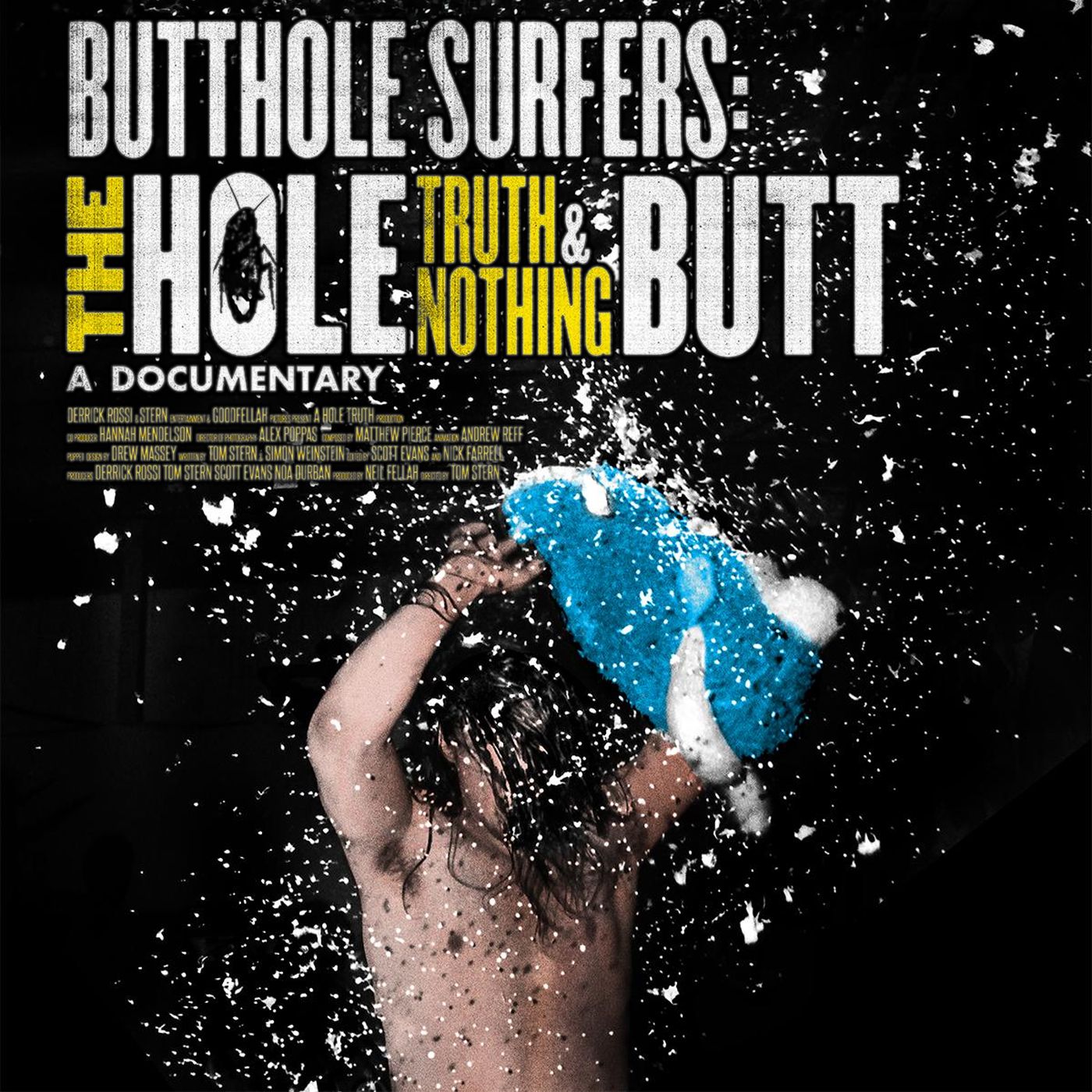
About this episode
Stern first filmed the band at CBGB’s in 1986 and later folded their music into Freaked (1993); for this film he spent five years chasing an emotionally vulnerable interview with Haynes, finally landing one at a traumatic site in Dallas that unlocks the film’s whole throughline. Puppeteer Drew Massey built latex caricatures of the band to stage their own stories — Paul Leary secretly taping the riff that became “Graveyard,” Haynes charging a Nick Cave show naked — and the production’s own disaster became footage in the film’s climax, after Stern’s house, and the puppet studio inside it, burned down mid-shoot.
Premiering at South by Southwest and now rolling out through Alamo Drafthouse’s new Alamo Exclusives label, the film asks a band built on “no regrets” what regret actually means.
Visit the film’s official website for playdates and news on the upcoming Blu-ray.
Transcript
Automatically generated, so expect the odd misheard name.
Hold your ears, folks. It's showtime. People pay good money to see this movie. When they go out to a theater, they want cold sodas, hot popcorn, and no monsters in the projection booth. Everyone pretend podcasting isn't boring.
Turn it off. There is kind of a before and after when you wander into a Butthole Surfers show. Butthole Surfers is what happened when Paul Leary collided with Gibby Haynes. The greatest live band of my lifetime. John Leary.
John Leary. It invoked everything you knew about Texas. That guns were rampant and it was, you know, the state that wanted to secede from the Union and Texas Chainsaw. It was about music, but it was also just about letting a freak flag fly. I was a punk and I wanted.
To be in a punk band. I was like, you're gonna guarantee me a floor every night? I was down. We just felt a connection. It was great music, but then it was also this kind of avant-garde visual art project.
Texas definitely had an effect on them. And you were their first projection, as you've mentioned. Well, if no one else remembers that. I tore my dresses off and then I forgot I didn't have any underwear on. I'm on two fucking hits of acid.
I was just like, oh my God, I can't be in here. I didn't talk for a long time after I spent the funnels. I was so traumatized. Just bringing the fucking chaos. I got to ask some questions about unpleasant shit.
Something clicks inside him, and he'll just go, come on, we're going to kill him. Like, I could kill anybody, Dave. The relationship between you and Paul changed because you went to L.A. Is that fair to say? I've seen Gibby fucked up and fucked up out of his mind, but not like that.
What I know of them as people makes me think that they are among the worst people I've ever known. I think he truly is suffering from trauma, but I've never heard him talk about it. Have you? Please welcome Butthole Surfers. Butthole Surfers, you'll see.
Just blew my mind. It's a motherfucker. It's a motherfucker. Hey folks, welcome to a very special episode of The Projection Booth. I'm your host, Mike White.
On this episode, I am talking with Tom Stern, the return of Tom Stern, who I spoke with a couple of years ago, I think, about the Butthole Surfers documentary, Butthole Surfers, The Whole Truth. And that movie is now complete. It's out there making the festival run. We're going to be getting a screening series at the Alamo Draft House, as well as some other places. Had a wonderful time catching up with Tom.
A lot of stuff has happened in those few years since we spoke originally. of course, spoke with him years and years ago about Freaked, one of my favorite directors. Great, great documentary. Hope you get a chance to see that, and I hope you enjoy this interview. Tom, last time we spoke, you were in the throes of making the Butthole Surfers documentary, The Whole Truth, and I'm so curious how the experience was. How was it putting this whole thing together?
Oh my god, it was a journey, Mike. It was a big journey and had a lot of highs and lows, but the happy ending is that the movie turned out really well and it's delighting audiences screenings. And I hope everybody can get out there and see it at the, either the Alamo draft house in your town, or if you're in a different town, there are other alternatives. Go to our website, buttholesurfersmovie.com to see the other cities besides Alamo. We're playing in Portland and Seattle and, and Knoxville and Nashville and yeah.
So a bunch of other places. So I hope everyone can go see it in a theater. Cause that's the way to see it. What were some of those highs? A big high was getting the band back together, documenting that we got them all back into a studio for the first time in 15 years or more, I guess, 20 years since they were in a studio.
And that happened in Texas, uh, And they recorded a cover version of Donovan's Atlantis. And that's the kind of the happy ending after the journey of our film to see those guys collaborating. And they had a blast. We all had a blast. It was great to see them working together again, being creative together.
That was awesome. Beyond that, the highs have really been showing the film to audiences because It really works for people. It really gives them a kind of a sense of who the band was, but takes them on an emotional journey that's very funny and then transitions into something that's more poignant and really heartfelt and sad. And we get laughs and we get tears, which is kind of all you want from a movie experience, right? So it really did. fulfill my hopes in terms of that of taking the audience through a a deep sort of multi-level emotional experience so yeah it's very satisfying i'll tell you the the most satisfying thing probably is what paul leary the guitar player told me which is early on when we were trying to raise money i he was at an event where i said we're going to make a film that will Recreate the feeling of being at a Butthole Surfers concert, which was one of the most amazing feelings ever.
And I knew that might have been a big promise. And then after the film was done, Paul said to me, when you said that, I was like, yeah, good luck with that. But after seeing it with an audience at South by Southwest, he said, you know what? You pulled it off. And that was so great to hear.
The fact that the band loves it and they've been doing Q & A multiple times to support it. It's fantastic. So, yeah, there's a lot of highs in the result. And there were a lot of highs in the making of, but a lot of downs, too, including my house burning down. All the puppets being burned up.
Yeah, when I read that, when I saw that posted on Facebook, I was just like, I cannot believe that because it's already so hard to make a movie. And then to have that thrown at you at the same time is just it's tragedy. Well, it was the ultimate good news, bad news day because we had submitted a rough cut to South by Southwest, but it was late and the hour talk was clicking and it seemed like we might not make it into the festival. And I was very nervous about that. And then on January 7th, 2025, I got an email in the morning that said, congratulations, you've been accepted.
They accepted even the rough cut, but we still weren't done. but I was so happy to get into South by. And then about six hours later, my house burned down. So not only the house, but the studio I'd built in the backyard, which housed all the puppets that we made that we're acting out scenes from this movie with all of that was lost. All the miniatures, the puppets, the studio, all my cameras and equipment, everything was gone, but we rallied and finished it and had a great, Fantastic premiere at South by Southwest. South by Southwest has to be the most perfect place to show this with an audience because of the Texas and the Austin connection.
I can't even imagine what it was like. There must've been, like you said, like a butthole surfers concert. It was a joyous, wonderful premiere. The audience, like I said, laughed and cried. Richard Link ladder was there and he said it was the most fun he'd had in a, movie theater in many years, which was amazing to hear.
And yeah, no, it was fantastic. And then another thing about my house burning down, though, just to complete that story, is I had been looking for a suitably spectacular setting for this imagery I wanted to shoot for the song Cherub. And The song is this haunting thing that has lyrics like, I see bodies, maybe someone is alive, that implied a wreckage of some kind. And so I wanted to shoot some gory wreckage with Barbie and Ken dolls, but I could never figure where I should put them, what would be a great setting. So that was one of the things remaining to be shot, and I ended up using the still-smoking ash heap of my burned down house as a setting for that scene which it was fitting and it really it worked it added an incredible visual to the movie I had this creepy cherub doll flying over this the ashes of Altadena and yeah it sucked to have to lose everything I owned but it was cool to take advantage of that spectacular visual and put it into the film and kind of a climactic scene that also I managed to tie a few thematic threads together with like Gibby turns out this Neil Young song is called tired eyes was the key to his psychology one of the keys and so it the story of that song was about a cocaine deal gone wrong where this this guy shoots four men dead so that we acted out that scene in the Imagery for cherub and it brought these different threads together, which was satisfying for me creatively.
For folks that may not remember, you haven't just picked up a camcorder three years ago and said, I'm going to make a documentary about the butthole surfers. You have been a fan of and friends with them for so long. And I'm curious, when was that first time that you met them? I first met them in February of 1986 when I was a film student at NYU. And I recently, probably a year or two before that, I saw them in New York City and was just, was amazed.
They blew my mind. Those, they were just such an amazing, incredible band. So singular and unforgettable that I started seeing them whenever they were playing in New York, which was a lot in those days. And then I decided I have to shoot them. So I checked out a camera from NYU and went to their soundcheck and met them. on that day at CBGB's and made a short film around the footage for the song Cherub, incidentally, for their performance that night of Cherub that I co-directed with my old friend, Alex Halpern and classmate at NYU.
And it featured Alex running, losing his mind to the strains of that song and running naked through Grand Central Station, which we actually did. So that kind of was a way I won over the band because they were pretty impressed I went to that length. Alex and I went to those lengths to get that story on film. We staged a guerrilla operation with hidden cameras and guys were wearing trench coats and carrying cameras and paper bags, essentially, in Grand Central. So yeah, anyway, I became friends with them and Alex Winter and I did a short film with them. called Entering Texas.
It was a Super 8 kind of inspired by Texas Chainsaw Massacre, which played with all the Texas tropes and the kind of personas that they'd crafted for themselves as these Texas lunatics. We pictured them as a kind of insane family that captures a family of tourists and eats them. So it was a hoot. And yeah, then over the years we did other things together and they contributed music to the film Freaked that we did. And yeah, it was a full circle kind of collaboration.
That must have really helped when it came to building trust with the members of the band, because you are getting these stories and some of them are really super personal. Yes, it did. And that was something I, it's a double-edged sword when you're, friends with the subjects of your documentary because yes, there's trust and that's how I was able to get them to agree to sit for interviews in the first place. But then again, it becomes all the more awkward when you're asking the hard questions because it's no fun to dig through your dirty laundry, right? And especially Gibby, he can be a tough interview regardless.
And then I kept probing for the He tends to be performative, and he's very funny. But I got enough of the funny Gibby. I wanted to get the emotionally vulnerable Gibby. That was much, much harder to get. But to his credit, he never said no, and I wanted to try again.
And my strategy was just keep shooting 20 different times, 20 different days with Gibby over five years. And finally, I got... the goods. He was able to open up and we visited the site with no spoilers. We visited a place in Dallas that was the site of some early traumatic experiences for Gibby and answered a lot of the questions. The structure of film is in some ways, at least for the Gibby storyline, is what's up with Gibby?
What's wrong with this guy? And then Finally, we are able to provide answers that becomes a very emotional part of the film. We touched a little bit about the highs and also some of the lows, especially with your house, but what were some of the other challenges that you had trying to put this whole thing together? I wanted to do a film that visually did them justice. That's not easy because they were such a spectacular band visually.
They presented this phantasmagoria of performance art and rock and roll on stage, like with danger and incredible psychedelic visuals, strange films projected behind them and fire coming out of a symbol that Gibby would hit with a drumstick, an upside down symbol filled with alcohol, rubbing alcohol was a big part of their act. And then he would shred giant stuffed animals. and they had these powerful strobe lights. And the whole thing was just this kind of madness careening off the rails and yet anchored by this amazing music that never lost the groove. Seemed like it was about to completely lose control and sometimes did, but always fell back into this groove. So the thing became this sort of right of tribal right of passage.
Yeah, that was another element, the tribal thunder of two drummers pounding away, King Coffee and Teresa Nervosa and Jeff Pincus was their bass player during the golden years. In any case, to do them justice visually and sonically was a huge task. And I just wanted to throw everything at the wall to see what worked, which made sense initially. Aesthetically, because they were this kind of pop culture blender. They would chop up culture and rearrange the letters, Hairway to Steven, Sweatloaf, these kind of plays on words that Gibby was so brilliant at, but also all these visual elements.
So I decided to do puppets and animation, and then various other kind of homespun special effects, like miniatures. miniature vans touring the globe. I made a giant paper mache globe of planet earth and had this Gibby and Paul figurines leading out kind of big daddy Roth style outside of these van models circling the globe. And so I had a lot of fun because I love doing that stuff. I love creating kind of low budget homespun special effects and visuals. And I tried a lot of things that didn't work.
One thing that was fun was I was like, Jello Biafra, disappointingly, wouldn't give us an interview. There might've been some bad blood when they split ways from when the band left Alternative Tentacles. So he wouldn't talk to us, but we represented him with a puppet that I was like, let's just make it out of Jello since he's Jello Biafra. And that turned into a really cool visual because when we jiggled this this jello face. It was super psychedelic shot in slow motion and this kind of, yeah, I love the way that turned out.
And there were other experiments I did that didn't work, which were fun to try. But one of the most psychedelic things I saw at a butthole surfer show is they would have these smoke machines cranking out giant clouds of thick white smoke. And then while they're projecting Charlie's angels or Jacques Cousteau or some kind of medical surgery footage from these big projectors, you'd see the image on the front of the turbulent cloud of smoke, which was super psychedelic. And to have that, a movie playing on a throbbing cloud of smoke. So I tried to recreate that, but I never could get it.
It just was too hard to get the focus on a moving turbulent wall of smoke. But I tried. I tried a lot of stuff. And The result came together with the brilliant editing of our editor, Scott Evans, and Nick Farrell, who edited before him, to create a kind of phantasmagoria of imagery that told the story. And yeah, that was satisfying.
To tell the whole story of the band in less than two hours, this movie just clicks along so fast and gives you so much information. I just love how jam-packed it is. Pacing is just one of the most important tools in the filmmaker's quiver. And so it lent itself to this project where we are telling a giant story that takes 30 years of time and compresses it into about 100 minutes. But the biological fact is the human attention span really is.
It doesn't last much longer than 90 minutes, especially for a documentary that's not a traditional narrative. Even most narratives that directors these days stretch, indulge themselves to make three hours long, it gets tedious after a while. You just need to get out of that seat. That demanded that we get pretty ruthless and cut out a lot of great stuff that we had. Our first cut was like three hours and There's a lot of great stuff we couldn't use, but I hope to get it on a Blu-ray edition that will come out in the coming months, hopefully before Christmas.
Yeah, it'll be a perfect stocking stuffer. I want to know more about the puppets because you mentioned the puppets when we first talked about this. And I was so curious what it was going to be like. And you pulled it off. You did such a great job.
But tell me about your puppeteer and how you actually set those puppets up. So Drew Massey is a puppeteer and a puppet designer. who's a genius. And I worked with him on Crank Yankers. That's where I met him first. And then I, on some other shows as well over the years.
And so he was into the idea of designing puppets. He's a great artist too. He sketched caricatures of the band and then we turned them into 3D puppets. He actually sculpted the models in ZBrush, which is a software that you can sculpt a virtual block of clay with. And then we 3d printed the molds and made latex puppets with talented puppet fabricators here in LA that did a great job.
We flocked them essentially Muppet style or crank anchor style puppets. And then he and his fiance, Nicolette Santino did most of the puppetry as did Christian Anderson and Adrian Leonard. We just did a puppet show in this studio that I mentioned before. I built in the backyard here in Altadena. We built physical sets and turned some of their stories into puppet shows.
And yeah, it was my favorite one might be the story of the song Graveyard. Paul described how he set a Gibby trap because he was inspired by Gibby's guitar playing, even though Gibby's not a real musician. polished guitar player, but Paul loved that, that it was something unique that a polished guitar player would never come up with. So he set up a microphone, an amplifier with a microphone and guitar and left it in their house and just waited, ready to hit record on his recording deck when Gibby sat down and started playing. And that was the song Graveyard. He came up with that riff that Paul then cleaned up and turned into one of my favorite songs ever.
We depicted that like Paul setting up the Gibby trap. And then we acted out the infamous story of Gibby charging the Nick Cave and the Bad Seeds show at a festival in Rotterdam, Holland, where he was naked and running amok and charged up on stage and blicks at Bargel, the guitar player for the Bad Seeds show. stomped the shit out of him essentially while he's naked uh so yeah there was some great stories that we were able to act out kathleen's ta-da story was another one which i won't go into but it's pretty spectacular so as we're recording this it is the same day that an announcement came out can you talk a happy to have Alamo Drafthouse do a limited theatrical release of the film at their 40 theaters nationwide, and that's happening.
We just did the sneak preview two days ago on Monday, and the whole band was there in Austin. But it opens on Friday, the 28th of August, which is two days from now. But then that's going to run for a week in Alamo theaters. But we didn't have a distribution after that until just recently. We signed a deal with Sumerian Pictures, which is a really exciting new distributor that have a slate full of Sundance favorites, like eight or ten movies that they're launching.
And we're proud to be part of that slate. So they're going to distribute us in theaters outside of the Alamo cities, like Portland and Seattle, which are already happening, and there'll be more added to that list. Cincinnati is one. And then they're going to distribute it electronically. So it will be available on Apple and Amazon for video on demand.
You can rent it or buy it on there starting in about a month or so. So yeah, look in, I think probably end of September, October, everybody, even if you don't live near a theater, that's playing it, you'll be able to see it. And then we plan on a Blu-ray that Sumerian will release also. And hopefully on a streaming platform, it'll get on to a streamer as well, but that deal has yet to be done. Tom, I just have one more question for you.
What does regret mean? It's better to regret something you have done than to regret something you haven't done. At least that's what Gibby says in the beginning of the song, Sweatloaf. But I don't know. We did ask that question of all the band members, and most of them said, no, that's not true.
It's better to not regret things. It's better not to do things that you really regret. Gibby wouldn't quite say that. I think he said it off camera once, but I couldn't, he wouldn't say that on camera. He says he has no regrets, but I certainly have regrets.
Regrets a complicated one, but we do try to explore it for sure in the, in the movie and hopefully in an entertaining way. But also, in a poignant way. We don't shy away from real human emotions. And that's another thing I'll add is that the puppets, they were one level of the reality of the butthole surfers. That was the cartoon level, which they did lend themselves towards being cartoons, the way they played up their personas as just these Texas lunatics.
But then there's real people behind those cartoons. We could represent them over the full spectrum from cartoon, entertaining, funny, crazy cartoons to real people with real pain and real joy and the full range of human experience. So there is a tonal shift in the film that happens as we move out of the cartoonish shenanigans and spectacle and into the real human stories that are very poignant. So as a filmmaker, that was a great way to do it, to represent them in different media, to paint a fuller picture. Yes.
I hope you have no regrets about the movie because it's freaking fantastic. No, I don't. I artistically, I'm very satisfied just based on how audiences react and how the band felt about it. So yeah, no regrets on the film. It's it's been very satisfying.
Well, Tom, thank you so much for your time. It is always such a pleasure talking with you, sir. A pleasure to talk to you, Mike, and thank you for spreading the word. And I hope all your listeners will find a way to see the movie. I think you'll like it.
Thank you. Thank you. Jump! Enter the angel! Jump! music.
Bye.
More from The Projection Booth



Similar episodes across the network
Matched by shared keywords.
-
Freaked
4 shared keywords: alex winter, butthole surfers, freaked, tom stern
-
Jackass: Best and Last (2026) — "Welcome to the first day of our final film."
1 shared keyword: documentary
-
Melania (2026) — "Here we go again."
1 shared keyword: documentary