
About this episode
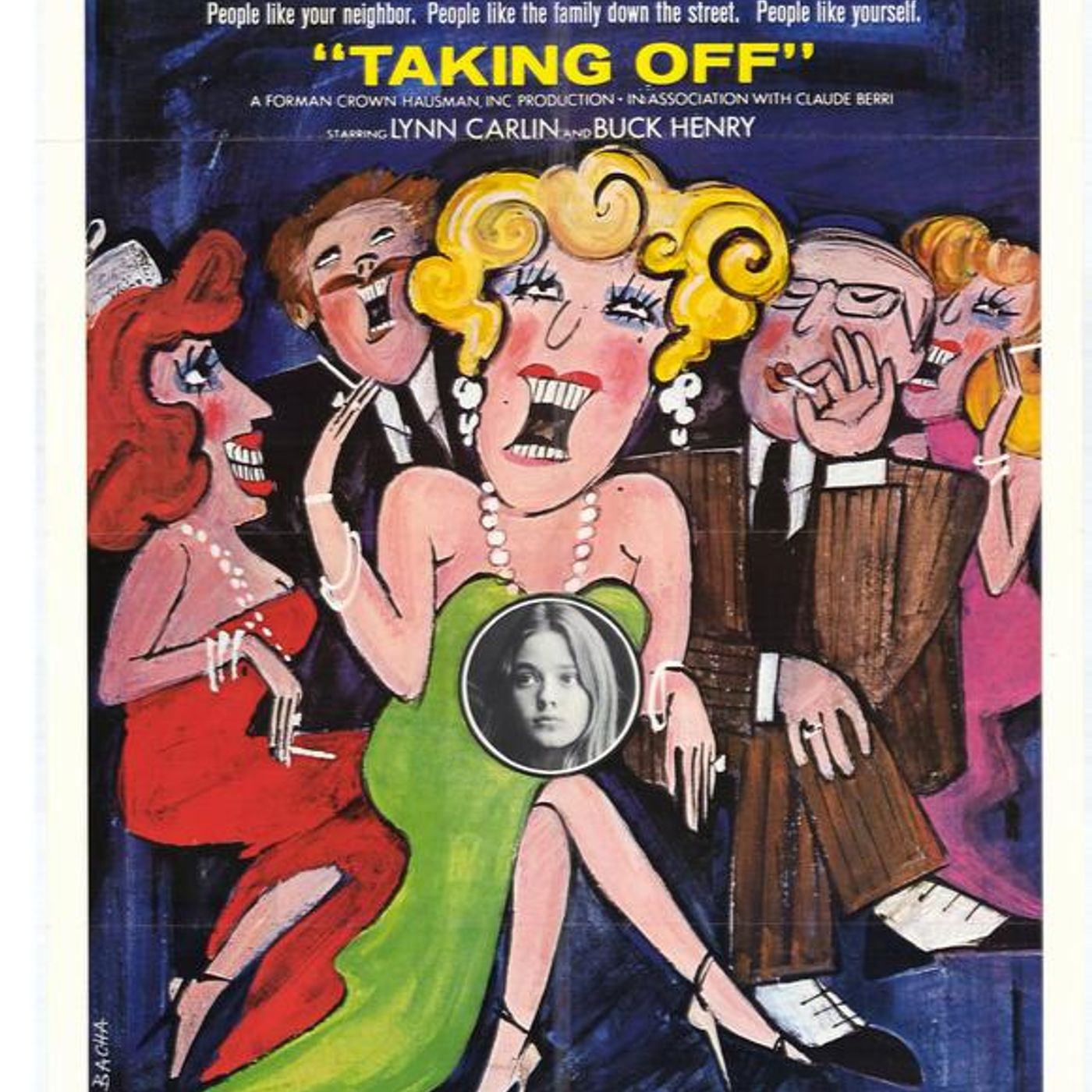
Starring Buck Henry and Lynn Carlin, the two play New York parents whose daughter has run away to audition to be a musician which causes them to go out into the big wild New York of '71 to find her. It's a comedy of errors, manners, and more as the young and old take shots at each other along with possibly finding a way to come together.
For more episodes of the Kulturecast along with many more podcasts that are guaranteed to be your new favorite audio obsession, check out Weirding Way Media at weirdingwaymedia.com.
———
The Kulturecast is a film and culture podcast from Weirding Way Media, hosted by Chris Stachiw, the Doctor of Podcasting, alongside a rotating table of guest co-hosts. Each week digs into where film and culture meet — and how each one bends the other. Now home to sub-feeds including Required Viewing: A 360° Film Study with Dr. David D. Perlmutter.
New episodes weekly.
Subscribe on Apple Podcasts → https://podcasts.apple.com/us/podcast/the-kulturecast/id931361376
Spotify → https://open.spotify.com/show/5wjxip9XVYapYuY12yEaGY.
Back the show: https://www.patreon.com/cw/kulturecast
Transcript
Automatically generated, so expect the odd misheard name.
H we'd so it's I always appreciate when when someone comes onto the show and they say, why I listen to the episode that you did before, and uh wow, it's really didn't like that movie. Huh. But I think we're going to have a little bit of a different opinion on this week's episode of The Culture Cast. I am still your host, Chris dash You, much to the chagrin of many, I am joined by the man who put the Mike White in Mike White may not Mike White March, the host of the Projection Booth podcast and one of my closest friends. You've heard him here before and you're hearing him now.
Mike White, you guys want to play some poker, and also joining us all the way from the Supporting the Supporting Characters podcast. He's the host over there on that show. You can check him out there. I have heard plenty of good things about him, but this is the first time he's on my show. Your friend and soon to be mine, mister Bill Ackerman, Hey, thanks for having me.
I'm just here to defend Black Peter. That's my job today, folks. Before we get into the movie Taking Off, which is the movie we're going to be talking about. In this episode, Bill, tell my audience a little bit about what they could find if they were to go and check out your show. Supporting Characters.
Okay, Yeah, Supporting Characters is my interview show where I talk to people that take it of a film into different projects or vocations like film writing or podcasting or programming or home video supplements, so just basically anything that usually not filmmaking itself, but it just people's like origin stories, like how they got into film and how they developed those kind of projects. And so I've had Mike White on the show. I've had had the Drain on the show. I've had Bill Lustig, Molly Haskell, Danny Perry, like a bunch of bunch of people. I haven't done it this year, but I'll probably try to bring it back next next year.
But that's that's the gist of the show. I guess. Is it true that the episode with Me is your highest rated episode ever? It's one of them? Oh yeah, Mike shooting a shot and confiditely correct apparently, Yeah right, I like the confidence.
Yeah it gets it gets mentioned in one of the iTunes reviews too. Wow, Well that's funny, because funny enough interesting segue, Mike White march is the thing that brought some of my current listeners into the show as well, because they go, hey, hey came for Mike. Why Marchin stayed for the good conversation. So with now further ado, I'm going to turn it over to you, Mike for a second to tell us why we're talking about taking Off on this episode. Well, if you listen to that Black Peter episode, which you can go back and find now in the culture Cast archives, you would hear that this whole month is all about Milosh Foreman films that I've never seen.
And I'm so surprised if Father Malone isn't here with us, because he's the king of you've never seen, But yeah, I've never seen Taking Off. It's kind of a weird blind spot for me. I've tracked this movie down in various forms over the years because it was or it might still be, but I think it was very tough to find for a while. This was like this missing Foreman film for a little bit, which tis odd because I'm not sure why that would be unless it's like a music right thing. But this is right between his last check film and then his major Breakout One Flew Over the Cuckoo's Nest.
This was his first American film, and it's this really neat hybrid between what he was doing in Czechoslovakia and what he would do in the US. And yeah, I am very interested to hear what you guys have to say about this. But yeah, this whole month we are talking about forming films that I've never seen. So on that note, let's talk a little bit about nineteen seventy ones taking off. So it is directed by Milosh Foreman, though my iPhone would correct that every time I type it in as Milo's foreman, So Milo's foreman.
Whoever the foreman is? Milo has one? And it is? It is a film directed by Milosh Foreman. It stars Lynn Carlin Buck, Henry Georgia Engel, and Tony Harvey, along with some up very familiar, very young faces including well boy, the best, the best cast ever Bobo Bates otherwise known as Kathy Bates.
And when I told people that that was her name today, people were like, you're fucking lying. No, I'm not, even though it sounds as crazy as it sounds, bo Bo Bates, isn't this movie? And what's it about? Well, Lynn Carlin and Buck Henry play Lynn and Larry Tyne, two parents whose daughter runs away to go audition with aforementioned young starlets, and well, they spend the rest of the movie trying to find her. She comes back, then she leaves, they try to find her again, and hilarity ensues, hilarity being the key word here.
So Bill, I'm gonna kick it to you first. When was the first time you saw it taking off? What did you think then? And what do you think now having to rewatch it for the culture cast? So this one I think I saw.
I think in like ten or eleven segments on YouTube was one of the first or second films I ever saw on YouTube. I have been looking for it for a few years by the time that I saw it, because I had read about it. I guess in the context of that ned ten in slate of films that Universal made in the wake of Easy Rider, like it's the same group of films that The Hired Hand and the last movie in Two Lane Blacktop and many Uskovitz and Silent Running. It was like all these films that were made for about a million bucks or so that we're like trying to cash in on that that kind of youth culture, easy rider wave, and so I was curious because I had seen, you know, Cuckoo's Nest and Amadeus and some of the American films, and I had seen I think I'd already seen Loves of a Blonde and Fireman's Ball as well, so I was I was interested in milosh Foreman, and I was like, Oh, this is this film in the middle between those two periods of his career.
What could it be like? And so I was surprised that it was actually like like like a drug scare film done as gentle comedy. Because there's a film I love from the year before, I think, called The People next Door that has a very similar kind of plot but like a but played as like a melodrama. That one has a girl taking drugs and running away to New York City and her parents kind of freaking out and finding her and it's becomes this whole heavy thing. A lot of TV movies in the seventies kind of have those kind of premises and taking off feels like that same kind of plot, but done as uh yeah, like a gentle satire.
Well closer to the feeling of Fireman's Ball and you know, so I thought it was, like I've always really liked it. I've always been kind of sad that it's been hard for people to see it. I know it had a Blu ray which I have through Parks Circus that kind of went out of print very quickly. I don't know if it's a music rights thing like Mike had said, but Universal has never put this out on home video in America. I remember Criterion hinting that they were going to do it like ten years ago, but I don't know if they were just saying that, or if they I know that sometimes they take a while to get to things, or if if they ranted the same kind of rights problems that like kept people from doing California Split.
But yeah, no, it's it's it's probably Melish Permit Foreman film. I've seen, the most honestly like of all of his movies. But it's I don't know, it's it's it's a New Hollywood film too, and that's also I'm a big soccer for New Hollywood FLMs and New York films of that period. So I'm excited to talk about it with you both. What did you think of it?
I'm gonna kick it to you. Mike. Oh yeah, I found this fascinating. Like I said, this is kind of a hybrid between what he was doing. A chuckle.
Sava gave this whole idea of We talked last week about the film he did called Audition, and this is kind of a redux of Audition, with so much of these cutaways and these longer scenes of these girls auditioning and singing and playing guitar, and man, you get to meet Bo Bo Bates, as you said, as well as Carly Simon showing up, and so many of these girls no offense ladies, but there's a lot that just sound really kitchy and ready when they're singing, and then all of a sudden, Carly Simon comes on screen and you're like, oh, this is a real singer. Okay, Wow, it's so apparent. Oh yeah, so apparent breaking amazing. But yeah, I love the whole idea of us cutting back to this. This is a really good method for us to do this.
And I love this whole idea of you know, you're talking Bill about this being like a drug scare film, but I don't know if we see Janine Tyne taking drugs too much. But we definitely see her parents drinking a lot and taking drugs. This is really showing that maybe the kids are right, but the parents are really fucked up. Yeah, well that's the thing with The People next Door is the film that reminds me of, But the People next Door, it's it's like, on the one hand, it's like the parents are afraid of the kids doing drugs, but they're drinking a lot, they're smoking, they're they're having affairs. Like all of the corruption that they fear that their kids have, like it's on them.
And this kind of does that even more so, like like you're saying, yeah, like I think, what do they find like evidence that maybe she smoked in the bedroom. But yeah, you're right, it's just like the young people are you know, they they just want to do music and you know, they want to make money ultimately. At the end too with the with the pianist, you know boyfriend, at the end, it's it's, you know, it's to the generation gap thing, but like who are the real freaks in this equation? You know, because the parents are the ones that seem to be out of control, which I think is the joke. Yeah, and apparently Foreman was offered, Hey, do you want to make this film about hippies, And he's like, well, actually the parents are more interesting than the hippies are, so I'm gonna stick with the parents.
And you know, you've got a lot of non professional actors here again, like we were talking about before, so like the girl that plays Janine is a non professional actor. And then you take your main characters. And I don't know how much work Tony Harvey had. He seems to have a pretty scant filmography. But you know Georgia Engel, who I grew up with on The Mary Tyler Moore Show, or Audra Lindley, you see her everywhere.
Paul Benedict, you know, I had no idea, Yeah, I had no idea until spinal tap just what a great actor Paul Benedict was because I mostly grew up with him on The Jeffersons and he plays that character great. But I had no idea the range that he hasn't just how freaking funny this guy can be. And then you know you've got your Vincent Shovelli and just these like small the roles. You've got some very competent actors. Lynn Carlin as Lynn tyne Um I mostly know her as the voice of the spaceship on Battle Beyond the Stars.
And then of course Buck Henry, who's freaking amazing and you just know that he's gonna knock him performance like this out of the park, which he does. Yeah, John Garfield too, since you mis directors. Yeah. And and in the audition scene, you know obviously the big people, you know, Carly Simon and Kathy Bates, but you even have a cameo from Jessica Harper before she has got famous. Is it one of the auditionaries?
So that's also shot of her face. It's just her in the crowd, and then it cuts away we don't we know she can sing, and she's called out by full name too. Yeah, but it's like a few years before she's introducing Jessica Harper and Fantom of the Paradise and things like that. I know. I was like the first time I watched that call her and I was like, oh, I hope she gets to sing.
No, she doesn't dance and have that awesome hat that she wears him fan in the Paradise. We call that suggestive twirling is what she does in that Just that's her dancing and Phantom of the Paradise is truly spectacular. Um. Yeah, you know what's funny about this movie. I think you know, you guys have both already kind of touched on it a lot.
Is the idea of like, you know, and we say, I mean we you know, folks like myself say, are the straits okay? Right? Like that's you know, that's kind of the same idea of like, oh, the normal people, what are they up to? And like they they think we're all weirdos, but look at them playing strip poker, which never even done that as an adult or ever. Like, it's the things that they're doing are things that again they're perceiving.
These kids is like the complete degenerates that have lost their minds. And it's like, Noah, I think you guys have lost your minds. And yeah, I haven't seen a whole lot of Buck Henry stuff, if any. I haven't seen any of the things that he's directed or worked on other than the Grand Graduate, So I didn't know what to expect from him. And he just plays like a normal guy really well, I am assuming that's his stick more or less.
Is just like a guy who can sing. But I don't know like I, it all felt very naturalistic. It felt very much like what I was expecting from Milosh Foreman with the Czech new wave stuff, but then kind of filtered through the lens of yeah, the weirdness of the seventies and the culture clash of the seventies between the old and the young, you know, the expectations of the old of what the young are doing. The young seemingly trying to just stay out of the way of the old people like the older generation and like not get involved in their nonsense, while the older people are constantly getting involved in what the younger people are doing, to the point where they have a young girl at like a where did our kids go?
Conference? And she's like there's asking they're asking her if they've seen their kids, and she's like no, no, no. But it's like, what the fuck do you expect is going to happen? Like, even if she had seen them, she's not going to say anything, Like that's the point here is nobody wants to play along with one another. And I enjoyed it.
I did enjoy it. I think the first time I watched it, I didn't I didn't appreciate how strange the storytelling device that they were going to be using, And the first half of the film is because the audition thing. It does come back a little bit, but it's a lot less pronounced once we kind of get to the buck Henry looking for his daughter in earnest part of them. You know, I think one thing that mixed it endreible for me is that I feel like this premise could be like intolerably wacky had they played it too big as far as like, oh, the parents are smoking pot and you know, it's like, you know, kind of high jinks. And I think one thing I like about it is that it has like this bemused lack of urgency even though it's like this melodramatic premise like they're looking for but they also take time to like full around with eggs in a bar for five minutes or you know, or or tell you know, tell like sex stories on the couch, like it's not really like even when they don't catch up with it right away and or like they lose the daughter that they're chasing and you know, the other kids, uh, the other kid in the in the New York scene, like it's not like I don't know, it's it's not a high pitched, emotional stakes kind of situation like there they'll find her when they find her, right, And I think that that's kind of I don't know.
I think I think like comedy from this period can sometimes feel like a little bit broad and and and big and and this this has big moments, but I think it's I think it's helped by the fact that it is kind of got this detachment of somebody that's like new to the country, kind of exploring the culture with this kind of like more detached feel for something that could be played a little bit high pitched. The idea of the kids in the seventies just disappearing like it wasn't a big deal. Now if that's happening, it's you know, amber alert and everything else. But it's like, oh oh goo, yeah, okay, like I guess my kid just left, Like all right, Like kids will be kids. The woman at the restaurant or the coffee shop who just wants nothing to do with helping people find their lost loved ones, to the point where she's just like, I don't want to get involved, and it's so funny that she has an accent because I'm just like, is this milosh talking about what's going on in Czechoslovakia at the moment, just this foreign lady who's just like, no, I don't want to talk about it.
I'm not going to help you. I'm not going to tell you the address of this place. Like is she just that detached or is she protecting herself or is she protecting her patrons? She just wants nothing to do with his help and or helping him, I should say, And yeah, I really appreciate that part. And he's just so, you know, oh, I gotta help this girl.
I gotta save her. And then when her mom comes along, the girl's just like, get me the hell out of here. I don't want anything to do with this woman just running away, like literally running away, a literal run away. And I was like, oh, okay, you know like he is. So I'm amazed that he was able to put two and two together because he is so incompetent through so much of this movie, talking out them at the bar and just drinking rather than looking for the daughter they're supposed to be out, you know, searching the streets, and he and Tony Harvey are just knocking them back at the local bar.
Come home, drunk, and I think that's one of the times where she just sends up coming home, you know, she's not even missing. And then at the end of the movie, the exact same thing happens again. She just happens to come home. You know, she never really ran away to begin with, she just wasn't there when they were looking for her. Yeah, and his violence when he comes back after drinking is what sends her running away for real.
So it's that which again is ironic. And I also was just thinking about, like what you mentioned to have this is a blend of amateur and professional actors, because I think that really, I know that this is the last film he does that with, and I think he felt like he didn't have a grasp on it because of the language barrier. But I think it works perfectly in this And I think that you have people like John Garfield that are like like these New York character actor types that can be big and they can build a kind of a character, like a big, bigger than life performance. And you have people like the daughter who was like like the daughter of a minister, like not a professional actor, never did any of the films before or since, and she's just like a real person in those scenes, and it just brings the energy level down, but not to the point where it flatlines.
Like it's not like awkward when you have the people that aren't really putting on any big presentation. It's just some people are like that, and that's how the scenes kind of they feel like more naturalistic that way, but not in a way that's like you have Buck Henry and Lynn Carlin doing one kind of thing and then like the musician boyfriend and the daughter doing another kind of thing. Like it all kind of meshes. I think it messes together. I don't know if Foreman thought it totally worked.
I think it does. Yeah, I wouldn't be surprised if he's down on this or would have been down on this movie. It doesn't seem like it was something he talked about a ton, And yeah, maybe he wasn't happy with what was going on. I know it took him a long time to write it. He and Jean Claud Carrier were kind of moving around a lot just to come up with time and space to actually write this script.
They went to Paris and they were there right as May sixty eight was happening. So then Foreman goes back to Czechoslovakia and it's like, hey, Jean Cloud, come on over. And that's when the Prague Spring starts a few months later. So it's just like he's running from revolution to revolution trying to find the time to write this script, which is hilarious to me because it really, you know, to what everything we've been saying, it doesn't feel that scripted. It feels very here's a scene, here's a scene, here's a scene, and you're going to take these you know, very good at improv actors and just kind of turn them loose a little bit.
There's probably more written down than I even think about, but you know, you think about things like, oh well, how about we have their jet from Mary Taylor Moore start doing you know, new to aerobics and singing songs. You know, like those are great bits. And I don't know if that's in the script or if they just kind of improve that stuff. I know that they were writing that they had a script, but I think what they were doing was they were presenting scenes to the actors and then having them put put it in your own words and so like it wasn't like they were learning lines like word for word and so that also probably accounts for some of the way that it feels very improvisational, Like that whole poker game at the end just feels totally improv Yeah, it just feels like Bulck Henry going I'm okay, taking everything off and standing here and singing.
Well, he didn't tell the actors in advance who was winning which hand, so there was some spot in eighty to it for the actors. That's right. He gave the deck, didn't me. Yeah, something like that. Yeah, yeah, that's funny.
Yeah. And it's the last film that he is involved with the writing in this way, because I feel like after this he tries to get a few scripts off the ground, including the collaboration with Paul Zimmerman that later became King of Comedy for Scorsese. But I don't think he from one flu of the Cuckoo's nest on it's at the people's material. He just becomes like a not a journeyman. But I guess, yeah, I guess, kind of like just taking his approach to other people's material.
I think that's the last one that really seems to come from him, like feels more of a piece of the Czech films. And then he becomes just a Hollywood pro from Cuckoo's Nest on Well, and what I wonder is would this have been sustainable anyways or was this always going to be his last gasp of like I have to somehow cement my own style here while also kind of playing within the expectations of American cinema at the time, at least the new Hollywood cinema that was going on. I wonder if, like there was no way to go beyond this anyways with what he was doing, because West Western audiences may not have been as engaged as maybe Czechoslovakian audiences would be. Yeah, I don't know. I mean when I look at Taking Off, I mean I think of films like The Man Who Fell to Earth were Paris, Texas, or like any kind of films that are like established European filmmakers making film in America and Americana, however they see it like through kind of an offbeat lens.
I think, And I don't know how many films you can make in that vein that are going to feel that fresh. I mean, I don't know if he intended to become like a Billy Wilder kind of figure where it's like he just adopted, you know, like he just he had had like you know, just had more resources to do the thing he was doing in another language. But yeah, I don't know like what it would have happened had this been like a big success. I mean, it was critically well received, but yeah, nobody went to go see it. And he also didn't make any money at all from it, Like I think he passed up his director's fee for back end profit participation and because it had no profits, basically he did the film for free, and because it never even had a home video life, I don't know that he ever saw a penny for taking off ever, so that's that probably does not help.
I mean, it opened probably some doors. I think Michael Douglas might have liked it, which is helpful in getting Cuckoo's Nest. So it's not like it hurt him, but it didn't. It didn't like kickstart his career quite quickly. And then he couldn't go backwards either because he wanted to make one more film and they just wouldn't let him go back and make another Czech film like in the old system either, so he had he had to make a go of it in America.
Yeah, there's also been a lot of debate about did for him an abandon Czechoslovakia. It was he somebody that took advantage and was like, Okay, screw you guys, I'm going to go to America and make my fortune there. I mean, I've read different things and there are a lot of different povs, and he would say, no, that's not how this was. And like you said, I think he did want to go back, even after the progue spring, and try to make the system work for him, but they weren't having it. I mean, I can't see him being able to do what he was doing.
I mean, because the Fireman's Ball is pretty scathing indictment of a lot of the stuff that was going on in Czechoslovakia at the time. I don't see the new government saying, yeah, come on in and criticize us. If anything. I think he would have been really they neutered had he gone back to Czechoslovakia. And it was only natural for him to come to America and really do it up.
And he was one of quite a few people that came to the US and some people did better than others. I mean, we talked on the Projection about even passer and just how that went for him. And you know, he had an interesting career. I mean, Cutter's Way is freaking fantastic. Some of the other films maybe not that great, but he definitely, I mean The Landlord that was amazing.
So he's in good company. Foreman's in good company of these other ex pats coming over, some stay, some go back, you know, Like we talked to Chris about Yancey, and I think he left the country for a while. He worked in New York, and then there were others that went to Germany and things just to get away from the repressive government. Hasn't he worked in Canada towards the end of his career. I mean, yeah, he was no longer operating within Czech New Wave or Czechoslovakia in filmmaking.
So I mean I understand those criticisms because I read them too about oh, did you just use this as a jumping off point, But I mean it's that's always going to be the case unless you literally just stay there the whole time. Unless you stay there the whole time, then that singular opening opportunity will always be seen as a stepping stone or a step up. For you know, for you to use to get somewhere else. I know, there's still a lot of butt heard around his role in Cohn from sixty eight, which was right around the time of the student revolution. And did he set up, as other filmmaker friends, to fail by joining with the French and saying, yeah, screw this cons film festival, we don't need it.
Or did he just kind of get pushed into the wrong place at the wrong time. It really you know, every story has three points of view. Yeah, I feel like after taking off, I could have imagined him this is easily going to Paris because he had that connection with Trufo and Claude Berry and like people that were not just good directors but like big producers, the powerful people like he could have been set up to make the next film there. He could have had a career like Zuwaski or Leaven, like late Stage Boonwale as far as like, you know, becoming a French filmmaker. But yeah, you know, I'm glad he's stuck it out.
I mean, I liked the films he made in America, But yeah, it sounded like a tough couple of years after taking off, before he had his real breakthrough here. Yeah, I mean there were four years between this and Cuckoo's Nest, so they're probably pretty lean for him. Yeah, yeah, yeah. Well, and also, I mean, you know when you come back to something like this and you look at the people that are involved in this, I mean, it's not like I mean, again, obviously Cuckoo's Nest is a kind of a different animal given the amount of people that are in that movie. I mean, this has a rather large cast, but it's not the same kind of expectations that that movie has.
I mean, you can see Foreman's style here, but it is that naturalistic thing that really comes through by just allowing the actors to do what they do best, and in a lot of ways like That's it feels like that's a lost thing. I mean, you don't hear about it as much now, and when you do hear about it, we get things like, you know, it feels like this is an old pinata that keeps coming up, people keep bringing out. But Ghostbusters twenty sixteen a lot of the current I mean, when we talk about improvisation now in film, it's almost entirely stuck in the comedy realm. And I mean this is a comedy, but they're not telling jokes all the time. It's not jokes about wanton soup.
And it's interesting to see a different approach to this, you know, from seventy one, given that now the expectation for something like this is so drastically different. But here it's like stick to the script more or less. But also you have some freedom within the scenes to make them your own, to do something interesting, to allow Buck Henry to be Buck Henry, because clearly he knows what he's doing. So a director putting faith in actors this much is just again not that we don't see it anymore, but I don't know if that's an expectation as much as it used to be. Did in Cuckoo's Nest is very fascinating because it feels like the patients, a lot of the patients anyway, are just regular people.
Maybe he found them in a psych ward or something. And then you realize, oh no, you know, this is again Shiavelli showing up. This Christopher Lloyd, this is Michael Berryman. I mean, you look around and you're like, oh no, most of these, if not all of these people are actors, but he's directing them in such a naturalistic fashion and giving them that that rope in order to let them go. You know, he's taking the tethers off of a lot of these actors so they can just do what they want to do.
And it feels like those roles are a little less structured as others, but you do have professional actors in those roles. I mean, this is a film, like like I mentioned early that was partly put into production because people were trying to get the next Easy Rider, and I think Easy Rider people assume that some of that was improvised. You know, certainly the cemetery scenes and same improvisation would have been And also like the influence of European films on American cinema of that late these early seventies periods, I think it's rare that you have like someone actually from one of those European New wave movements directing a film in Hollywood like that. I mean, you might have you have Antonioni right before this doing Zabrisky Point, you have Trufeau a few years earlier doing Fahrenheit for fifty one, But you really don't have like a lot of the big names for those movements working in Hollywood, and it's interesting that Foreman and to a lesser extent, someone like Louis Mall like, there's only handful of people that really fit in the American system and have success, but I think Foreman is definitely the biggest.
At least he has some of the biggest individual hits, you know, as far as award winning commercial smashes. But it's it's interesting because, yeah, I mean I think that they I don't know if they were planning for this to be necessarily like an Awards film, but maybe so, because I mean he's coming off of Fireman's Ball and Loves of Ablon, so it's like it seems on paper like it would make sense. And I don't know why. Maybe they lost faith in it by the time that it even got in front of people, because I don't think it even really opened that wide, even with good reviews. They just didn't know how to sell it because Buck Henry and Lynn Carlin were not exactly movie stars.
I mean, Lynn Carlin had done the Cassavetti's film, but I mean she gets pretty sidelined into mom roles quite soon after this. This is like right around the same time She's death Dream with Bob Clark and even by that point it's like b horror kind of projects that she's being invited to do. And Buck Henry, I think, even though he's got a bit part in The Graduate and I actually knew him as a kid because he was a host on SNL in the seventies, Like he was kind of pushed as like a comedy star. But I think at the time he would have been a screenwriter that Eilish woman met, like at parties in Hollywood or in New York. It was like, that'd be fun to have your energy for the for the Father.
But I mean he went on to dude like the Man who Fell to Earth and all sorts of acting parts. But so it's easy to take for granted that like people would not have been used to him as a movie star and at this point, I mean, he would have just been the bellhop that's impatient as Dustin Hoppin's trying to check into the hotel and the Graduate and that's about it. I don't even know that he had cameos on Get Smart and thinks that he was writing on television. Oh yeah, I'm not sure if he did or not either, And then I know he wrote Catch twenty two a few years later, but I can't remember if he was in that at all. Yeah, he also was one of the writers on What's Up, Doc, which was a huge movie, but I think that's after this.
It's a year after this, I think, which I just saw earlier this year and I really enjoyed. I was that was the thing. I guess that was the only thing I thought going into this was not that mad cap nature, but that like weird seventies comedy feel that only like these kinds of seventies movies have. And I think it. I think it succeeds.
I don't know how quote funny the movie is. Unquote it has its comedic moments. I think ultimately it's like being funny is not necessarily the most rewarding thing for what this movie is going for is to make people chuckle out of their seats. But I think when it is funny, like when Paul Bennedict gets up and says, ladies and gentlemen, I'm feeling it. I'm feeling the vibrations like that is comedy goal, Like that's perfect.
That's exactly what I was expecting from this. Is like a weird sideways look at a part of the culture that these people feel imminently out of touch with, to the point where that lady is like, how much weed is this? Like how much gonna get in trouble for this? Like this amount of weed? Like it's that out of touchness that I think sometimes permeates some of these seventies films, where it's like the filmmakers are ahead of the culture and the culture is kind of having to maybe meet them a little bit further than they feel comfortable with, at least mainstream society, because again, this is not necessarily aimed at the mainstream, but the people that they're lampooning are definitely like a mainstream older audience.
Yeah, I think it's actually trying to appeal to both sides of the generation gap, which is always kind of tricky because I think I think the younger people wanted to be flattered, They wanted to have love story or the graduate or things that like kind of presented their struggle as romanticized, and I think that their parents probably wanted to have the counterculture demonized and to have them, you know, kind of authority in control making the right calls. And so the fact that they're both being gently lampooned in different ways, I think is why it doesn't feel didactic, but also why it might not have been a bigger success. I think, I think that's kind of a very polarized time, and for a film not to be really talking about Vietnam or talking about like hot button issues that way, it calls out the ludicrous drug charge thing like it has like its small bits of like education on behalf of its causes, but it's not really it's it's just kind of poking gentle fun at both sides of it.
I think, Um, but you mentioned comedy. I think that Vincent Shivelli, I mean it's like a warm up his teacher in Fast Times Urgemont High, which is the role I most associate him with. But yeah, I mean, I guess I think I smile more than I laugh out loud when I watch it, Like it's that kind of comedy for me, but smiling that right, Yeah, yeah, yeah, I found it more amusing than hilarious. But the scene with Shivelli and when he's describing like don't bogart the joint and all this, I'm just like, this is great stuff. And that's all I had ever seen in the movie beforehand was just that bit of it I don't even remember, probably in some sort of form and documentary, but yeah, it definitely lived up to the hype.
I was like, as soon as he showed up, I was like, oh, this is the scene, all right, And it was as good as I thought it would be because it went on for a lot longer than I'd ever seen before. And I would say it's definitely the scene that you could show to most people out of context and get a chortal out of. And I do think, honestly, as someone who does smokewre Wanta fairly regularly, it's actually a pretty good, uh, you know, set of steps and advice on how to actually smoke a joint correctly. Don't bogart the goddamn thing, folks. I do love that.
I do love that they say the terms that they're using at the time and then they mentioned you know. I like how Vincens gave Eli also goes, make sure all the roaches come back to me, make sure I get all the roaches back. Yeah, it's like, yeah, all right, I get it. We all get it. If you get it, you get it, like, and that's I agree.
I mean, Vinces gave Ellie. I mean, he's just he's such a dynamic actor, right, and he I mean he commands the scene because of well because of the way he looks. But you know, just because you look that way, it doesn't necessarily mean you're going to be able to command it beyond that. But he does in everything, like you mentioned, Bill, I mean in Fast Times. He also shows up in an episode of The X Files where he plays a guy with a conjoined twin at one point, and he's fantastically He's just a great one of the great character actors.
Obviously. Was that the one where they're down in Florida, Yeah, with the like they're like the carnival. Yeah right, Yeah, he plays like the brother with the the He's like the sad sack brother and it's it's it's a perfect Vincent Skia Velly role. Let's just put it that way. It's very basket case.
Yeah, yeah, yeah, very much so. Yeah. I think I think as far as like scenes that people would have talked about at the time, I think that the scene with the parents smoke is probably one of the things that people talked about, and also the Mary Mitchell's owed to a Screw song the which you have to think that, like just four letter words like fuck in dialogue would have been a relatively new thing. So for a song like that to be in a Hollywood film would have been kind of kind of a bold move move. I mean, I mean, it's still kind of something you wouldn't see in a lot of well, I mean you would see in the film now.
But yeah, I mean Mash would have been the year before. I mean I think that there was what like there was there was one or two other films that like I think preceived Mash that might have had fuck in the dialogue. But it's really relatively new, So for for a song like that to be in the film would have been confrontational, I think for audiences. Then, well we're one year I mean we're one year before Carlin's Seven Dirty Words. So yeah, like I was when I heard it the first time, I was like, what is she fucking saying?
Oh, she she's saying screw and fuck. Like I didn't expect it because again, like you just mentioned Bill, the expectation is there's not going to be anything like that like that what could be considered transgressive at the time, But like it just made me laugh because again the woman singing it or girls singing it is so young and so just kind of an ingenue. And there she is talking about oh to fuck me and I'll fuck you, but fuck me first, and it's like, whoa, what the But again it kind of it's leaning into that the you know, the kids aren't all right maybe like you know then then the parents are humping and screwing and getting into all sorts of fun later in the movie. So it's that juxtaposition, like you mentioned that it does work.
I mean, that's those two juxtapositions just end up making this a movie that it feels like such a bummer that a big or small however you want to perceive it, like boutique label hasn't gone out of their way to sort out the rights issue and get this out because I think more people than I realized would probably really enjoy this movie and would have a lot to say and like dig into it as well. Yeah, well, I think most of those films that were part of that ned tannin Slate like disappeared right after that because the Hired Hand used to be hard to see. The last movie used to be hard to see, I think, right, and Mini Moscovitz is kind of hard to see right now. I mean, that had a DVD, but it's been out of print for a long time, so I guess.
Yeah, Universal has a bunch of films like this, like and not just that slate, but I mean, Mike, you know, I talked about Puzzle of a Downfall Child that was hard to see you for a long time. Play as it lays is that way. It's a few things that Peter Watkins's Privilege was amongst that slate as well, and that was tough to find for a long time. Yep, yep, there's there's a few. Um dire Madhousewife up until recently was hard to see.
I think that might have been because of the music. But yeah, it's just when when and I talked to Don Costcarelli about this, because he had a film around this time called Jim the World's Greatest Universal put Out? And I'm like, is it the music? He's like, no, they just don't care. It's it's it's sometimes they just it's not a priority, and they don't make it a priority to make it available to the boutique labels either.
So um, yeah, now that's that could be the case with this one, which is weird because yeah, it's a lot of big names. I mean, Carly Simon. It's funny because Carly Simon. It's the same year that, um, that's the way I heard it should be comes out, but it's before it's after Taking Off has already come and gone from theaters. But you find newspaper listings for this movie later in the seventies and they're like starring Buck Henry with Carly Simon, like they put they pushed those like twenty seconds.
Carly Simon is like the biggest singer of the seventies is in this movie. Come come see her in it so funny and if she doesn't show up again, you'll be really disappointed. It at sorts with everybody else in the theater who's also there to see Carly Simon. Yeah, but yeah, I mean she's a welcome presence, just like the other well known musical act that shows up later in the movie, Iconina Turner. Yeah, oh wow, it's so great seeing her and her backup dancers and just yeah, that was great.
I do like everything in that scene though, with the two creepy guys I guess or two overbearing gentlemen who come to Lynn Carlin's table looking for while some ass is the only way of putting it. Those two dudes are again just another drop in the bucket of the straits, aren't okay, folks. They're having their own problems, you know, pulling pulling a Clark Griswold and bumbling into someone's room half dress going oh oops, I didn't I didn't know. I love that. And Buck Henry's just sitting there like m m that that Their scene reminds me of something like out of Loves of a blonde like that, just like overly pushy, kind of like uncomfortable, would be seducing kind of guys like at a certain age, the other table type of thing.
Yes, yeah, yeah, or even going back to Black Peter, the bricklayer and the other guy that works with the bricklayer, right, those two dudes, Yeah, there wasn't enough ahoy saying though in this way. I was just I was thoroughly disappointed that Buck Henry just didn't say ahoy like eight times to the camera, just scream it at something's face, Alan Garfield's face. Yeah, well, we do similarly to Black Peter, though we do have a scene where we spend a lot of time in a kind of enclosed dance hall type room, and to contrast it to that movie, I think it works. I think the same idea works a lot better here where we're just kind of going around and following these kind of disparate groups of people and then they kind of they do this movie does what Black Peter doesn't, which that movie doesn't bring it all together in the end into one kind of idea that they're grasping at.
I like that you have all these characters introduced and then it kind of starts coming together, and then we have Vincent Skiavelli introduced and we understand then what is actually happening here with all these hot, smoking adults. Yeah. I think it's a really cute film, and I can see, you know, if people think it's uneven or a little long in parts, but I don't know. Overall, I think it holds together. And it's kind of strange that it does with the audition sequences and the rest of the film, because they don't tie together completely a lot of times, like, yes, it's the daughter going for the audition, but they stay on that audition a long time, and it's a really good thing to cut back to you later on in the film, because we keep cutting back to it when we're way past that section.
But it works as a good break and it works as a good transition for other things. Yeah, I think I heard about audition well after I saw this film, so I think when I caught up with that, I was expecting it to feel more like taking off than it actually does. But because that's that feels more like a straight up documentary that he's willed it on some kind of makeshift plot to give it some kind of hook. But this feels like it's don't It doesn't really even feel like a Greek course. I'm I've always kind of thought about, like, what is it trying to say?
Because it's all young women, so it's not like necessarily trying to be a snapshot that represents the entire youth culture. Um, I mean it does. It does show like that she's she's running away from home in a sense, but only to maybe break into show business or some kind of uh status, some kind of career. So it's it's not really a bohemian thing that she's on the surface, it might seem that way, but she's she's going out to maybe break into break it into some kind of big career. But she she's she chokes the way the girl does in in the earlier film, which I guess is maybe the connection is like, uh, she can't she can't sing and break through, and maybe that that connects them.
But I guess it does set her up with the boyfriend. Do you know the story about the boyfriend? Um at the at the dinner scene at the end, I don't remember the exact dollar amount, but he wouldn't He wouldn't say the dollar amount because he said he five thousand dollars. Yeah, and he's like, I never made that much money in my life. And I because I'm playing myself, I can't lie on camera, and so like they had to do the math.
It's like, actually, after taxes, this is how much you really are making. Like they tricked him with math, and so he'd do the line, but then just starts like improvising, like off what he really thinks about, like how like you pay for these you write these songs that like you wind up paying for the things that made you mad enough to write those songs. And you know, I guess I can live with those kind of contradictions. But it's just like that's him just really talking about how he feels, and it's it's so perfect. Real quick, I want to call out Phil Bruns, who's the police officer who's totally clueless.
They bring in our main couple and he's like, oh, I found your daughter and they come in and it's not their daughter at all, and he's just so confused, like, yeah, that's your daughter. He's got such a great face, and he just he was kind of one of those like ever present figures when I was growing up. He would just be in so many things. I'm surprised Chris that we I haven't seen him in Barney Miller because he's got a real Barney Miller face. Well, here's on Mary Hartman Mary Hartman, right, I believe So Yeah, a show that we've kicked around talking about.
I think I think Richard might be a fan of Mary Hartman Mary Hartman. He's he's great. If I could do that, I don't know if I could do all the episodes of Mary Hartman Mary Hartman, because it's like hundreds of episodes. Yeah, it's a lot. It's more than any sane people would take on.
Yeah, which is one thing you say about great faces and that's actually something I think is interesting is because when I think about the Czech films he made, I think of all the great faces than because he wasn't like limited to like who could act, Like he could just find the great faces locally and that would be his cast. And I think that it's so funny that he went to New York, which is full of great faces. Some of them are actors, some of them are not. But it's not like he goes to California to get into movies and like where everyone is either a movie star or looks like the next movie star. Like he's finding all the great character actor faces.
And I mean that's one of things that I love. New York comes in that periods, Like it's just full of people like John Garfield, uh, you know, and this is perfect for someone that has that kind of knack for interesting faces. And actually there's something some writers commented on at the time which I didn't think about. There's not a lot of dialogue. I mean in this film, Like there's a lot that's handled silently, which I just never thought of it because there's so much music and things coming at you that you're not like it's like you're just watching people silently do things.
But you you are, I guess in a way. I mean there's I mean there is a fairmount dialogue, but it's not like on the average. I think it's quieter, like you know than certainly a lot of them selling that young people well and and boy, I mean the way I mean that, you know, when when you have the character who's meant to be the analog for the young people, barely even getting a word in edgewise, Like she doesn't even talk about not a lot of lines. She has like two or three maybe if that, Like she is the one who says essentially nothing throughout the entire movie, which I again, I mean you you ask Bill, what are they getting at? And I mean obviously the title of the film can play in three different directions, right, because they're literally taking their clothes off at the end of it, and then they're, like you mentioned, she's trying to get her career to take off by going and auditioning, and then the parents are perceiving her as taking off as in leaving.
But to what end any of those have anything to say? I'm kind of still not at a loss but searching for the meaning of what the film is really getting at. But I think for me, I think it's very interesting that the younger character in the film, who were meant to be following just as much as the parents, is a cipher. And yes, she's a normal person who's not an actor, so that kind of helps because we don't expect a lot from her because she's not a professional actor. But I wonder if that also has maybe something to say in regards to like they're maybe not heard as much as the kind of the older generation.
Now maybe I'm grasping at straws. I don't know. It's just you mentioned lack of dialogue and that character gets essentially none. Yeah. I even just when you talk about the title, I mean I think it was I don't know at what point they changed the title to taking Off, because it was originally SPFC.
If you talk about a noncommercial title, I mean that was really the title was Society for Parents of Fugitive Children. It was that that acronym, which was you know, I mean, yeah, as few people saw it in nineteen seventy one, even less would have seen it with that title. I can't remember the name of it all the top of my head. We had a porno parody of taking Off at the Last video so that I worked at in Delaware. We had it had like similar artwork, but it was something like I mean, it was like a vintage adult film that was like meant to capitalize on this hit that was not from Universal.
But um, I guess there was even like a soundtrack album, like I mean, it was a Universal film, so like it had like some I mean, it was being treated like a mainstream thing and then they just kind of like it just kind of fizzled. But yeah, there was there was a fair amount of like cultural like it was out there for people to show up, and they just didn't show up for it. And I wonder if maybe it's because the movie just doesn't have enough to say. It's not forceful enough with its message. It's not being as transgressive as some people might have wanted at the time, or I guess pushing back on the transgressivism that was going on.
Like I wonder if it's just it because it kind of rides the middle and it doesn't fall in one way or the other. Maybe that's why people weren't as motivated and animated to go see it or tell people to go see it. Or to even be interested in seeing it. I don't know. I mean Easy Rider is such a transgressive film in a lot of ways, Like I could see why people were really interested in watching that movie and having a conversation about it.
Well, if you look back at the films that were actually hits from that period, I mean there was a lot of youth films that all tanked at that time. I mean some of them been covered on Mike Show, like Magic Gardener, Stanley Sweetheart, But there's a lot of films like that that didn't connect. I mean Easy Rider was a biker movie, and Last Picture Show in American Graffiti and Summer forty two were nostalgia films. Love Story was multi romance like. They had big hits with young people, but they were not about the protest generation.
They were not about like generational clash that I mean, there were things like The Graduate. They're like a little bit more, a little bit more square, a little bit more comedy of manners. And I think that when you look at Taking Off and like, oh, it's another film about the generation gap right after Strawberry Statement and Zabriski Point and Getting Straight and like all the and there's one other one um RPM because all these like films that come out in a glut uh matic garden Stanley Sweetheart and they just America is just not ready. Skidoo is another one, yeah, Funeo Hair Yeah yeah yeah. And so it's just like all of these films that I don't know if the I don't know if we over inflate in our in our looking back at him from a distance.
Like the demand for like that kind of youth culture film, like I mean music, there was definitely like a big interesting like you know, films like Woodstock and Jimmy Shell. But I don't know if there was just not a big enough movie going audience support films like this then. And I think maybe this the fact that it was marketed like a youth hip, hippie kind of movie would have scared off the buck Henry Lynn Carlin crowd. And then you know, I don't know, I mean, I'm just theorizing, but I mean I like a lot of those movies, but it is interesting how so few of them really connected with an audience at the time, and the ones that did feel like a little bit safer and more part of other genres, you know, like you said, easy writers of Biker I mean at its core, so that everybody has that easy entry point.
Like, I'm not sure what the easy entry point is here when you have a movie cutting back in the first twenty minutes between people singing varying degrees of quality, and then Buck Henry like, I don't not necessarily sure where where the audience is going to land here, and like, who are you trying to corral in to get their attention? It's I think maybe they're so kind of diametrically opposed that it's hard to find the audience. It's almost two audiences trying to maybe be okay with seeing something they're not necessarily as interested in and waiting to get back to the more exciting stuff. Because I could see that as well, given the kind of so obviously different things that they're showing on screen, at least in the first, you know, half hour of the movie fell as we should wrap up.
Yeah, I was gonna say anything else you guys want to say about about Man. We're just having easy, quick conversations this month. Mike, what the fuck? What is going on? Man?
I don't understand. It's like, yeah, these are movies, these are mealers. Foreman films, folks, Sure are anything else we want to say on it, just that help what people can get a chance to see it. Yeah, same here, So yeah, i'll give you an opportunity. Bill.
Final thoughts on Taking Off just that it's uh, yeah, just a film I've always really liked, you know. I think that if people like the check new wave period of Foreman's career and haven't seen it, it's I think it's an interesting bridge to what he does in Hollywood. And yeah, it's one of those sleeper films that you always kind of hope more people will check out, right you, Mike, Yeah, I really can't say it any better than that. It was. I'm glad that I finally saw this one.
I think it was definitely worth the weight. So thank you Chris for giving me the opportunity to watch these films and have some good conversations around him. Well, no, thank you for obviously programming the month, as you know, and Bill for joining us. And you know, my thoughts I mean similar to y'all's. I mean, obviously there are some scenes that we've talked about that you can easily find on YouTube.
And you know, the ode to a screw song is on there as well Bobo Bates his song By the way, for those of you who don't know who the hell we're talking about, because I don't think we ever mentioned Bobo Bates is Kathy Bates. Oh yeah you did, Okay, I don't remember if I did. I can think Bobo over and over again, like like like some sort of idiot talking to a gorilla in the zoo. So but I enjoyed it, and yeah, I think it's just a it's a weird intersection between two things, and I think it does end up working. But I totally understand why it's kind of is where it is.
I wish movies like this we're at the top of criterions list and less things like Wally and safe things that you can find everywhere else in every eight million other formats. Stuff like this is what we should be talking about getting new eyes on, because again, it didn't have necessarily the biggest audience at the time, and you know, the vincen Skia Velly stuff is fun at least for that. At least for that and Paul Benedict just you know, being himself. So that's right. On the next Culture Cast from Mike White May, we're gonna be taking a look at another Milos Forman film, Valmont.
So until then, Bill, where could people find you and all of your collected works? I think you could go to the now Playing Network now www dot now Playing Network dot net. I am occasionally the co host of Director's Club on there, and that's also we can find supporting characters and also my short lived mini series on Velvet from the Neighborhood. And yeah, I'm on Twitter and Instagram and Facebook and all those places as well. About you, Mike, Yeah, you can always find what I'm working on over at weirdingweymedia dot com, where you can hear my show, the Projection Booth, or any of the other stuff that I work on, some with Chris, some without actually, I think other than Projection Booth.
We do everything together, Chris, let's correct your honor allegend ranking on bass. All that stuff, all the good stuff is over at Weirdingwaymedia dot com at least for the stuff Mike and I work on, And yeah, I have my own stuff on there, but for this show, culturecast dot com, Patreon dot com if that's a thing you're interested in. If not, like, rate and review the show wherever you get it, which is more than likely iTunes Bill, thank you so much for joining us. This has been fantastic. Hope to have you on again soon.
Happy to do it. Yeah, this is great. And Mike, as always, thank you so much for both joining us and for programming the money. Thank you, and as always we'll catch on the next episode.



Similar episodes across the network
Matched by shared keywords.
-
Episode 750: Gloria (1980)
1 shared keyword: buck henry
-
Episode 692: The Graduate (1967)
1 shared keyword: buck henry
-
Episode 506: Is There Sex After Death? (1971)
1 shared keyword: buck henry