
About this episode
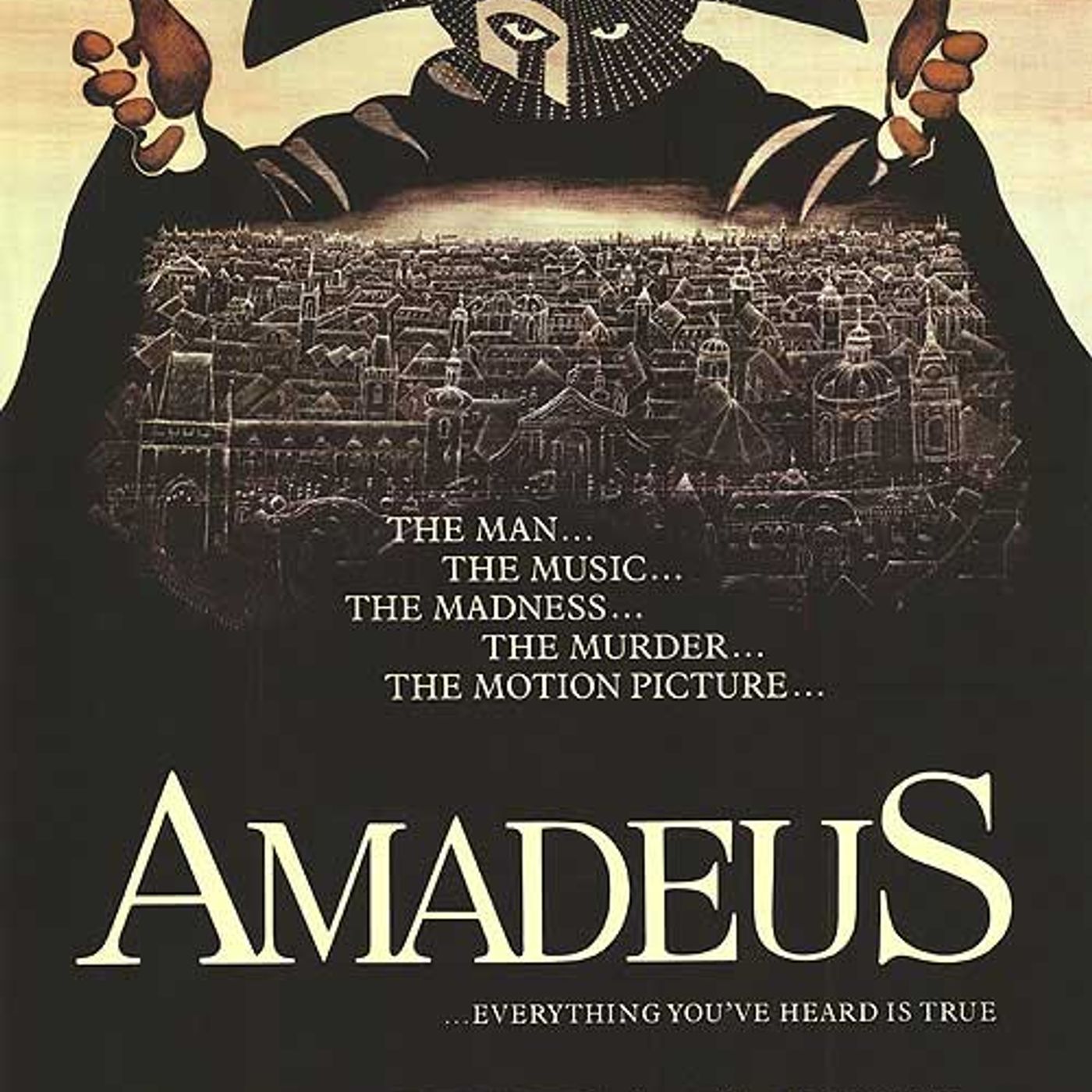
Directed by Forman, the film follows the life of Antonio Salieri, a contemporary of the titular Mozart, who must grapple with his complicated relationship with the legendary composer along with attempting to solidfy a place for himself in history. It's a story of legacy, creative genius, and whether or not a divine creator is at the center of it all.
For more episodes of the Kulturecast along with many more podcasts that are guaranteed to be your new favorite audio obsession, check out Weirding Way Media at weirdingwaymedia.com.
———
The Kulturecast is a film and culture podcast from Weirding Way Media, hosted by Chris Stachiw, the Doctor of Podcasting, alongside a rotating table of guest co-hosts. Each week digs into where film and culture meet — and how each one bends the other. Now home to sub-feeds including Required Viewing: A 360° Film Study with Dr. David D. Perlmutter.
New episodes weekly.
Subscribe on Apple Podcasts → https://podcasts.apple.com/us/podcast/the-kulturecast/id931361376
Spotify → https://open.spotify.com/show/5wjxip9XVYapYuY12yEaGY.
Back the show: https://www.patreon.com/cw/kulturecast
Transcript
Automatically generated, so expect the odd misheard name.
H we're oh right, there's no intro here. God damn it. When was the last time we recorded a culture Cast together? Well, the Arthur episode, I'm gonna say, you mean one that three captor. Yeah, it's the I threw it away because it was just so bad.
It's like, you know what, this one, this doesn't need to go out on the air. It was probably big Yeah, and this movie and that movie didn't even have Jeffrey Jones in it. No is it even a movie if it doesn't have Jeffrey Jones in it? Well, it's a it's a movie that you can watch and not cringe every time he's on screen. Look, look what nothing was ever proven?
Oh yeah it was. He's a registered sex offender. Oh my god it is then? Yeah, right, well proven proven in a court of law. Even if you're listening to this episode of the Culture Cast, I am still your host, Chris Dashy, much to the chagrin of many, and I am joined by my good friend.
He is. He's my good friend, and that's all he is. Right now, folks, you like that? You know what you are. You're one of the hosts of Ranking on Bass, a podcast where we talk about ranking and Bass shows, Weirdingwaymedia dot Com.
Yeah, that's all. That's all I need to be. That's all I ever need to be your friend and mine. Richard had him Hello, how are you? I'm good?
Uh. We're doing melosh form in movies for Mike White May and Mike White in his Infinite Wisdom, which I approve of, didn't pick a'ma dais oh for god? Look, we both know Mike, so it makes perfect sense, right, and I appreciate that. I do appreciate us not watching the things that are the melosh form in movies, at least not directly from Mike, because for me, it challenges me as a viewer. Mike is like my friend Larry, who who loves all the bands that you know, but his favorite song is always something you've never heard of.
Right. It's like he's a huge Beatles fan. What's your favorite Beatles song? And he's like, oh, ducks in a pond. I'm like, what the fuck you talk?
You know we're something? Yeah, I'm like what is that? And then it's like, what's your favorite Rolling Stone song? Oh? On you know, uh, you know tin Tin, you know Monkeys.
I'm like, what I've never heard of? This. Can't you just say sympathy for the devil and have a conversation with a human being? But no, everything's got to be the deepest cut of all time. Well, speaking of deep cuts, what's your favorite Sally Ay song?
Oh, such a burn lifts proceeds to lift bodice and farts. So on this episode of the Culture Cast, we are talking the film by Milosh Foreman from nineteen eighty four. That's not check new wave film. It's one of his about three films that he's more or less known for. We're gonna be talking about I'm a Dais.
Are we going to appall you with something confidential and disgusting? Let's hope so, because that is what you really like, unconfessed crimes of buried wickedness. If that is what brings you to us, the prospect of hearing horrors, you shall not go unrewarded. I don't believe it. The old city is talking you hear it all over?
But a story? What a scantal? But a comedy? What a tragedy? Incredible?
I don't believe it, ohki believing what horrors have you heard? Tell us tell us t us it once? Tell us about Fuscan Amadeus, Mozart, Mozart. How good is he whose Mozart is remarkable? Is an unprincipled, spoiled, conceited brat.
I'm a vulgar man. I assure you my music is not. He is to finally inspire. He is arrogant, vulgar, obscene. He creates music for the gods.
He is passionate, He burns with fire. He's an angel. He is a devil. He claimed he'd been poisoned soup, that he accused a man. Some said the man with Saliari, Saliari, Saliary.
I don't believe it. All the same could be possible. Did Saliary do it? After all? Did he murder?
Amadeus? Amadeius? The man, the music, the magic, the madness, the murder, the mystery, the motion picture, Amadeus. Everything you've heard is true. So.
The film is directed by Milos Foreman, based on the age play Amadeus by Peter Schafer, who also wrote the screenplay for the film, and it stars Eth Murray Abraham and Tom Holsey as Saliari and Amadeus, two people who didn't have the rivalry in real life that they do in the movie. But you know what, storytelling fucking rocks, baby, and shit like this is why storytelling exists, because those two dudes the story that we are watching and the story of reality. Let's just separate it right here before we even talk about it. It's not reality, but that's fine because it's about it's the rivalry between Amadeus and Saliary is not like that's not a real thing the way it happens. Oh, but again, for the sake of storytelling, it is.
But Saliary and Mozart have a well, Saliary has a rivalry with Mozart, who he believes is God or God stand in on Earth. Richard, you were the one who brought this show to the table because or this movie to the table, because you, I'm assuming are a fan. I had never seen it. I'm super excited to talk about it with you. But I'm gonna give you the floor.
Why are we talking about Amadeus? And what did you think the first time you saw it? And what did you think? Now? Well, I've always loved it, I really I loved it when I first saw it.
And then you know, you you you go ten, fifteen, twenty years, you see it again and it's you're never sure, but then it's like, oh no, this was great. And then I, you know, watched it again last night with my fifteen year old son Dashel, who sat from beginning to end the three hour director's cut, which was weirdly all we could find and um like on the pay services. But that was fine and we were riveted. It's such it's it's not hard to watch. It's not like, oh, I'm not smart enough to get this.
It is it is balls out entertainment from the first minute to the final minute. And it's about something that so few movies are ever about, which is art and artistic aspiration and professional jealousy. And it touches on things that that I have felt and when I watched the movie. Okay, and I'm sorry, let me just very quickly give you my rundown on what Amadeus is about, for those of you who may not have seen it but want to see it. It is about another composer who lived at the time of Mozart named Saliari and and what it feels like to be a composer at the time of Mozart.
Now, now here's the thing. Mozart was not necessarily considered broadly by the concert going public as a genius in the way that he is now. In fact, Saliari was more popular at the time than Mozart was. But Salieri story, and that's what this is, is about a guy who always wanted to be great at music and composition, and he linked and as many people did in the past, he linked his ability and his output with his faith in God. And he basically made a deal as a young man with God, saying, if you give me the talent, I will devote myself to it in your honor.
I will write music as a way of exalting my belief in you. And it was sort of accepted then that talent came from God. So when Bart comes around, two things, One he's better than Saliari, and two, Saliary knows it. He's smart enough to go. This guy's a frigging genius.
But he's also kind of a vulgarian, chasing women around and laughing too loud and drinking and farting. And why would God, and this is how he sees it, why would God give him all the talent instead of me. I'm the one who is God's biggest fan. I'm your devoted servant, So why do you Why are you favoring this vulgarian who probably doesn't even believe in you, And that's what he struggles with. So in your memory, he's got a rivalry with Mozart and when you describe the movie, but when you watch the movie, his argument is with God.
He is pissed off at God for doing this, and he's going to get his revenge on God. That's what the movie is about, which makes it fascinating. And it sounds very you know, pretentious and intellectual, and it is not. It is filled with with music and costumes and wigs. It's an amazing and laughs and intrigue.
It's I found it relentlessly entertaining. I think for me, this movie would not be as interesting it's entertaining. It wouldn't be as interesting if there wasn't the back and forth with God aspect to this and that internal like the internal strife that sally Ay feels, because yeah, right, that like back and forth between Mozart and Salieri is fantastic. But it's those scenes where sally Ay is like cursing the heavens, where it's like this, this is this is what makes this movie Something Special is the meta textual nature of what we're talking about here, which is, like you said, what is it like to be someone alive at a time where someone who is at the top of their game is operating and you are You and everybody else are just going to be in the shadow because not even by choice, not even because they're putting you there, it's just the way it is.
Yeah, And the and the brilliance of Peter Shaffer to realize that, well, you can't. You don't want to write a play about a guy who's pissed off at Mozart because Mozart's more talented. That just makes him a douchebag and it makes him venal right, like makes him venol and sort of like, well, get over a dude, you suck, you know, or whatever. But but but you're not going to have a level of sympathy. But by by making it into more of a triangle, by by having a guy who is very sincere about his love for music and a guy who you know, Salieri does not hate Mozart again, he hates God forgiving Mozart all the talent instead of him.
He is almost hopeless to not kind of love Mozart again, because he recognizes his genius and by the way, he's one of the few people who does. This is not a movie about how Mozart is selling out concert halls and Salieri isn't. It's quite the opposite. Salieri's doing great. He is in Vienna, he is the court composer, he lives very well, he is very respected, he's receiving awards and Mozart isn't.
But Saliari knows from the very beginning, Oh, this guy's better than me. And no one here knows it because these people are all idiots. But a hundred years from now, no one's going to know my name and everyone's going to know his name. And so it's very again, it's very interior. Mozart Is is broke, and it's so funny when you watch this, it's like mozart Is it comes to Saliary to borrow money.
He's like, I can't. I can't get students because everyone thinks I'm gonna, you know, make a move on their daughter, which is true, and I'm just you know, I don't have a court appointment, so I'm not taken care of. I don't have a patron. I'm just I'm just out here singing for my supper, as it were, and and so so, Saliary has these moments of like, well, my position is secure. He's not threatening my livelihood.
He's just a living example of of a thing that reminds me of my mediocrity. It's like he was placed on earth in front of me to tell me, by his very existence, I will never be the composer that I wanted to be. I will never be him. Right. And the funny thing is the prescient nature of the Saliary character is realistic because of the because I mean again, you and I are both creators.
I mean, you've written plenty of things, and I've been doing this podcast now for almost a decade. Like, the creative process is an intense one, and I love that in this movie. It's like, yeah, like a lot of this creativeness is done in private, but when you interact with other people and you see other people and you start to understand the space that you're in, you realize that art is one of the few things that we as a society can all kind of look at from one hundred years ago, two hundred years ago, three hundred years ago and still be relevant in a way that a lot of things have no relevancy anymore because they feel outdated. But like art and stuff, trans sends time and space in a lot of ways.
And that was the case in eighteen twenty three, that's the case in twenty twenty three. And that's again, you know, credit goes to Peter Schaefer for knowing that and really leaning on that, because again, Sally Arry's not worried about now. He's worried about something he cannot control a hundred years from now, the legacy that he can't do anything about, the legacy that he's going to lose, because again, perception is Mozart is again Mozart's music will be better received by more people the longer it exists in the world, right, And well, that's the other thing that is just so lovely about this, the way the story is constructed, because we meet Sally Arry as an old man, and the bulk of the story we are told takes place thirty two years previous, when he and Mozart are younger men, and and by by by placing him in the future, he even articulates it.
At a certain point he and you know, okay, spoiler alert, if you have not seen the movie. We're now going to be talking about certain plot elements. Mozart dies at the end, okay, but he dies at the end of sort of the flashback sequences, which again are the bulk of the movie. And it's important because Salieri says, you know, he died. God took him, but God left me here.
And it's been thirty two years. And even in those thirty two years, I have lived long enough to see people forget every good thing I ever did. And he illustrates it because the framing device of the film is that as an old man, he's talking to a young priest or representative of the church who's visiting kind of an an old folks home as it were, a hospital or almost prison for the indigent, which is where Sally Aery has now found himself. And Sally Arry says, you know, oh, I'm a composer. Let me play a few tunes.
And he plays a few tunes of his, and the young man is like, no, I don't I don't recognize. I don't recognize, and Sally Arry says, oh, how about this one bum bump bum bump, bump, bump, bump, bump, bum and the priest goes da da da, and Sally Arry says, yeah, that's Mozart, that's not me, and the man is sort of like, oh, he's embarrassed, sorry, and and he illustrates the point. Sally Aary is basically like, yeah, I get it. I've been forgotten, and yet I plink out a few notes of his and they're going to be remembered forever. And the great thing is is that the audience is doing the same thing.
If you watched a theater full of people watching this movie at that moment, you would see people in the audience sort of bobbing their head. Because even now, people who know nothing about Mozart don't even know that that is Mozart. They know that little bit because it's just part of the fabric of our lives well, and it's just in a similar way like Beethoven. Right. I think Beethoven and Mozart are the two that any that people, you know, a lay person would know.
And obviously, I mean they have both such different stories. But yeah, I think the thing about Mozart and Salieri and that whole idea of the movie is so well defined in that first scene. It's like, yeah, you could just watch that first scene and you don't even have to watch the rest of the movie. Well, it doesn't. It's not one of these things that is that holds back anything.
It tells you right up front. It's like, here's what this movie is about. It's about let me tell you about what it was like thirty years ago to meet the human being who I knew was basically going to erase me from humanity. And and you've heard his name, and I've heard his name, but I knew him, And let me tell you about that, and let me tell you how it drove me almost to the point of murder. And again when when he when he later sort of conceives of his quote unquote plan to kill Mozart, it's not because again he hates Mozart and must kill him.
It's like, I am going to punish God. I'm going to punish him by by destroying his chosen instrument. And then I'm even going to find a way to reclaim my place in history basically by claiming credit for something that Mozart writes. And and then God spites him by not letting that plan work. And again and he recognizes that, and he's like, well, good God and Mozart got the last laugh, and here I am the patron saint of mediocrity and that's all I will ever be.
And it's so funny because you know, I was, you know, just finishing up film school when I saw this movie, and everyone my age who was in film school watched this movie and a fucking chill just ran through them because every one of us thought we were Mozart or would be, and we walked out going, oh shit, man, that this is like the ghost of Christmas future. Is this us? Who will we be in thirty two years? Will we be Mozart or Salieri? Now, the fact of the matter is the those of us who became Saliari are fucking lucky.
Most of us who went went through film school aren't even doing what we studied. So the few of us who are lucky enough to be Saliary, that's one thing. And then there's and then there's a small group of Mozarts. I know which camp I'm in. And that's the thing about this movie that I do appreciate.
To your point, Saliari's life is not terrible. Salieri lives a really posh lifestyle that anyone at the time would envy and but it's but it's his own perceived shortcomings. And that's what makes this such a fantastic story, is it's a man dogged by his own internal feelings, is not. I mean, look, Mozart was going to do what Mozart was going to do one way or another. Saliarie does very little in the way of influencing Mozarts crea eight of talent.
Mozart was Mozart without Saliary, right, oh yeah, yeah. And and and they're very few, very few, um scenes or moments within the movie where people are directly comparing the two of them to to Mozart's advantage. There there's a couple of scenes there. And there's one in particular where, um, where Mozart sort of parodies Saliary style at a party and and it does sort of a not particularly cruel unless you're Saliary watching behind a mask, uh, sort of imitation of the way Saliary plays and the kind of music he plays. And it's all in good fun.
And and you know, Mozart lets out that high pitched laugh that exactly like sort of a signature light motif throughout the film, and and you and you realize that in the moment, Mozart isn't really being an asshole, and people really aren't disliking Saliari. But because the movie is from Saliary's point of view, and you see f Murray Abraham's eyes glaring out from behind the mask as this is happening, and of course he's devastated and humiliated because he sees the accuracy and the impression. I mean again, that's the great thing is that Sally Arry is not a guy who's like, well, fucked this young guy and I'm better than him. He doesn't have that attitude at all. He's like, he's like, oh my god, this guy is truly graced by God and he truly is better than me.
But why and why? And again why that guy? You almost get the feeling that if Mozart was was a very staid and responsible and respectable and respectful member of the court, Saliary would go, you know what, no harm, no foul, You're better than me. But but we're all of the same class. And you know what, I get it, I get why God gave it to you and not me, and and it sucks, but I can live with it.
But but what, but what he can't live with is that aspect of Mozart's personality, the the brash sort of arrogance of youth. And there is arrogance in Mozart, in the character as presented to us, it's the arrogance of a young artist who is absolutely convinced they're doing the right thing. Now, usually reality smacks them in the face and history smacks them in the face. But but we know, and in a weird way, Saliari knows that he's right right, And it's that that makes this movie so good. Is that they know?
Is that Peter Shafer knew that and himbued him with a little bit of like universe galaxy brain. And it's perfectly okay because it works here because like I said, like it doesn't feel unrealistic that he would understand the ramifications of what this is, because this is lives on forever. I mean again, this you know, the Mozart story. The way it's presented here, you could almost say it's van go esque, right, like, oh, he's just not appreciated in his time, and now it's like van Go is you know every I mean Van Go is you know in immersive van Go experience and Van Go would look at all this and go, I don't know what the fuck Van Go would say. Frankly, he would be thankful that somebody finally cares, like yeah, probably more than anything else.
And you you know, you picture, especially with Van Go, I think you you picture sort of a a sad, morose orchard orchard artist living in a grotto, you know, on a on a hard crust of bread every good day, and and and and and then he dies, you know, alone, unrecognized. But but that's but what what allows us to enjoy a three hour Amadeus movie or play is that the character is so alive, and there's a um, there's a rock and roll sensibility to Mozart. You know, he's like, he's like he's got that again, that that brash arrogance of youth, almost a punk rock sort of like I'm changing things. And it's funny, you know, to us or to me, who is fairly ignorant about classical music and opera. You know, I don't know the difference.
But what this movie suggests pretty clearly is that what Mozart is doing is new and different and shocking, and we're kind of looking at it going, well, okay, you're telling me that, so I'll believe it. You know, to me, it just sounds like opera. But okay, but within the context of the movie, it's very clear that he's pushing boundaries that the you know, the the you know, the the Emperor or whoever, the yeah, the Jeffrey Jones you know, is not really comfortable with. There's a lot of people who are like, well, he's doing things we don't do, and we're not really sure if we're going to allow for this, for this for the art firm to be pushed this far forward, this quickly, and very brilliantly, Peter Schaeffer finds very practical ways of demonstrating that, you know, what the the opera that he's going to write, will it be an Italian or German?
And why? And what traditions are being are being broken or tested and why? And then later there's another scene that you know, it makes no sense except we're told very clearly that and I keep forgetting what his title is, um Jeffrey Jones in the movie what Emperor Joseph? The second he okay, so he is emperor? Okay, good for a second, I'm like, that can't be right.
But I guess it is. Okay, it's the hair for me. It's the hair for me that does it. That's how you know he's the emperor. What he's got the hair in the little curls on the back of his head.
But for some reason he has decreed that there will be no ballet within an opera. So we're like, we're told this. We don't know why, but we're told he has said it. And everyone is following that esthetic rule. And it's what's great about it is that the more arbitrary it is, and to us it seems very arbitrary, the stronger point is made that, well, why are you That's like saying I am the And now in all paintings the color yellow will not be used.
And it's like, oh, well, okay, but that's weird. And now Mozart comes along and puts a ballet in his opera and all the guys are, oh boy, oh, he's going to get in trouble now. And then Jeffrey Jones, as the Emperor, of course, comes in, you know, a surprise appearance at a rehearsal and watches and then we cut right to the production and the ballet is in because he's decided, oh, well, this is really good. I like it. And again, how galling that must be to all of those who followed the rules, even though they thought the rule was stupid.
But they weren't bold and brash and arrogant enough to challenge those rules. But Mozart was, and by doing so, Mozart actually was not punished. He actually got his way. And for the other older men, they must have been going, you gotta be kidding me. We've been followed that stupid rule because we thought it was going to benefit us and put us in a better position.
And now here comes this fucking genius and he just goes, well, let me do it, and the emperor says, yes, Jesus Christ. I mean again, it speaks to things so many movies and stories don't, which again, artistic jealousy, artistic aspiration, professional jealousy, all those things that are so familiar to people like you and I, and I think, I think among people who do not make their living in a creative field, I think those emotions are recognizable. And and that's what makes this so powerful and so juicy and fascinating. And you know what's interesting is it doesn't really get into much sex there really is all. There's a little nudity, but really there is no sex in this movie.
And yet something about this feels like like sexual jealousy is in there, because again these are, you know, a young man and an older man, and who is more potent. I mean, there really is something. This is a juicy movie. I mean, do you agree? Yeah, no, I you know, there's some there are some things that I was expecting this movie to have that it didn't.
I think that's you know, and I think the elephant in the room in that regard is Milosh Foreman. I think that I think if this had been a Ken Russell movie, it would have been more would I would have been more like Listamnia like and like and that and like in a lot of ways, like that would have been a little bit welcome here, just a little bit more subversiveness from Mozart and surrounding the Mozart character because it's there. But I feel like the movie does hold back only because it is a serious movie in a lot of ways. Like it's a fun movie. It's a great movie.
It flies by, it's three hours and it flies by, but it is kind of a serious movie. Oh yeah, Well, and Listamania is not like at all like giant penises and stuff like Ken Russell loves it, so it's less serious. But I kind of wish it just been a little bit more on the subversive side, which is the meat that's a me thing, that's not a movie thing. Well, they they there is something very um, very sensual about the time period when you're watching and again I'm not a big history guy, but you look at the way people dressed and the and the wigs they wore, and they and they just they do one little scene where they're where Mozart is trying on like three different wigs. It's like suddenly, I think I'm watching headwig and and and He's like, I wish I had three heads so I could wear them all.
That's my favorite line in the whole Movie's right, he's Mozart is and tell me I'm wrong. He's kind of a coded gay character too, in a way like well or bisexual. I mean bisexual is gay, but like you know what I mean, like his his flamboyantness. Yes, it feels out of place at the time, and it works in the it works in regards to what the movie is going for. I just kind of wish it had been more like Tom Holsey is so good they're literally one one degree off of having him put on Ziggy stardusts a wig.
You know, it's right, it's like you get you get that, Oh he is flamboyant and and you you know whether and by the way in the movie, you know he he gets married and has a kid. You know, he's chasing ladies. So there's no there's no literal referen it's to omnisexuality, you know, or pan sexuality or right. But but but you you get this this lust. He's got a lust for life like iggy pop.
And and he loves the clothes, and he loves the music and the wine and the women and song and and and all of this in this isn't fucking Vienna, where where things are you know sort of you please play by the rules, um, at least when you're up at the level of being in the emperor's court like sali Areas. I mean, this is Joseph the second we're talking like, you know, uh, like the Enlightened. It's like around the time of the Enlightenment, so people are being more progressive, but they're being more progressive that that's not I it's not immediate, right, so yeah, but you but you see, it's almost like Mozart is like I mean again, like it would tie into the saliary nature of but like there's like a divine nature to Mozart that he's there to push push the people forward, like I'm taking you with me, like I'm dragging you with me, kicking and screaming into a new way of doing things.
Because that's what Mozart does. I mean, like you mentioned like they're like no ballet and then it's like, ah shit, it's this good, like fuck, we can't say no now, like like that's the it's it's the thing where Mozart you always want to be the person who puts someone else in a position where they can't say no to your like to how because of how good what you're doing is, how quality what you're doing is. And that's Joseph the Second binds himself in a position where he's like, oh fuck, man, like this he's so talented that it's almost impossible to ignore him. He's making it hard for us to ignore him. Yeah, exactly, and and you know, and he never it's never like he is you know, a you know, full throated advocate of Mozart, but but you know, and even then he's sort of he's like, no, this new guy is talented, but I don't know, said there too many notes.
There's too many notes. Another great line. And you know a lot of this stuff was put in for for the the theater going crowd, because again, this was a Broadway, very successful play on Broadway before it was a movie. And and that's that's Peter Schaeffer kind of kind of given a shout out to everyone who's ever sat through, uh, you know, a note session with with somewhat with a producer or anyone. I mean, certainly all TV and movie writers are like, oh my god, yeah, too many long, that's the podcast.
What it's too long? Yeah, and it's and it's it's just like, oh god, you just got to sit there while the idiot tells you what's wrong with your brilliant work. And and Mozart, of course is just like he's so his confusion and hurt is so naked on his face. He's just like, well, what was wrong with it? Did you not like it?
And you know, in too many notes and just the confusion and just sort of the being crestfallen. It. He just don't get it to you. And and of course anyone who's ever again taken the creative path knows that feeling. So so those those riches are here too.
But again, you know, Mozart is not worried about God, and Mozart isn't worried about the rules. Mozart is just worried about getting it right. And he knows it's right. He just knows it's something in his genetic makeup. He was literally born with it.
At age four, he was composing, you know, at age seven he wrote, you know, a not a full opera, but a you know, concerto I guess. And yeah, he didn't do the operative he was twelve, so let's you know, be very clear. But but it's so, it's um, it's a wonderful to just see his unleashed creativity. And he finally goes to the music hall to do I guess the magic flute sort of in the final third of the movie, and and that's where he will kind of be allowed. It's like, look at the music hall, you don't have to worry.
This is just the theater of the people. You can do whatever you want. You don't have to worry about too many notes or no ballet. You can just letter rip. Now, what's interesting is that the theatrical release was only two hours and forty minutes.
So the version that I saw, which was three hours, right, same thing, free, same, there's twenty extra minutes of material. And I could guarantee you it was all in that final hour because in my memory, once Saliary articulates his plan to kill Mozart and take credit for his final work, the Requiem Mass, the movie sort of stays on that track. The theatrical release, the version that I watched last night felt like suddenly there was a lot more about Well, he's also at the same time working on this other thing that's going to be performed at the at the Music Hall, and it's the story of the Magic Flute. Because we've covered Don Giovanni and we've covered uh marriage of Figaros, and now we've got to sort of account for diets Albert Floyta if you will, Oh, I'm coming out of act but um but but that and it's so for me, it made that final hour feel a little longer.
I mean that I guess the third act feel longer than it did in previous viewing still enjoyed it m but and of course, the best scene in the movie is in the final ten minutes, and it's it's where the two of them are working together because it brings to the forefront something that has been boiling under the surface throughout the entire film, which is that again, Saliary doesn't hate Mozart. He kind of fucking loves him. He's kind of his number one fan, and he just it's like, it's like I want, I kind of want you to know that I get it, that I get how brilliant you are. But I don't want to admit it to you because I don't want to give you one more drop of praise you You'll get enough in your life. But but on the other hand, I want you to respect me.
And the way I can get you to respect me is to let you know how much I respect you, that I get it. You know you're a genius and I know it too. And then in the end of the movie he gets to really experience it by working with him. And I think for me, you know, once you get to that moment in the movie is when it kind of I think it all kind of coalesces because yeah, I think you could look at this movie and I think a lesser screenwriter slash playwright would look at this and say, well, it's just a rivalry and it's not. I mean again, like, it's not like that.
That scene at the end is I think part of the it's the final puzzle piece that really unlocks the key of what this is, which is it's not about rivalry. Ultimately, it's if it is about rivalry, it's not about external more much more internal and the strife that one feels by just being around someone that talented. I mean, look, you know, I work with someone who's immensely talented and podcasting as do you, thank you, you're son of a bitchy, You're welcome. But we also work with Mike White, who is immensely talented when it comes to podcasting, and I can understand where someone would get to doing the kinds of things that Salieri in the movie feels, where it's like, when I am in the room with you, I am happier to work with you than try to be at odds with you.
But it's but that is a five degree turn from just feeling angry at you because you're so much more talented. I get it, because like you can get yourself there. But it's that scene at the end where you're like, oh, okay, like he's not kidding, Like he does think that he is a genius, even though he's trying to kill him, which, yeah, trying to kill him is such a misnomer. I think, like I think Mozart kills himself because he's an alcoholic, right, Like yeah, like that's always that's a little um. The way the way I look at it is that, um, he he sort of thinks he's going to eventually have to murder Mozart because that that is sort of part of his plan.
But but then once he sets his plan into motion, the first part, the part where he dresses up in that fantastic black cape. Oh black God, it's on the poster for everything. Yeah, the comedy tragedy faces on either side of the head so that when you turn away, the other expression reveals itself, which again is just I mean, you could write your whole college final on the thematic meaning of that within this. But anyway, um, once he begins doing that, secretly paying him because he needs money, so he so he a secret person is paying him to write a requiem mass. Almost from that moment, Mozart's health begins to deteriorate, and you almost feel that he's he's being consumed from within by his own unstoppable genius and it's consuming him somehow, and it's almost like a human body can't contain It.
Is the best feeling I get from that section of the movie. And I think Saliary sees this and realize as well, I don't really have to do much to kill this guy other than just keep stoking that fire, keep giving him money and telling him work harder, and this guy will just burn up, right, give him enough rope to hang himself with. Yeah, And which is ultimately what happens in the movie and in the play. So it's like, okay, but you do you get that great scene at the end where where it's like he has to complete it. He's got one last day to complete this requiem mass and he's exhausted and he's sick.
But sally Ay is there at his bedside, and Mozart's like, okay, can you help me? And salhi Ay is like on his face and f Murray Abraham is so great because on his face it's like, oh, I've I thought you'd never ask, you know, I actually, of course I'll help you. And so it's like, okay, grab the paper, you write, all all sort of talk you through it. And so they start doing it, and he becomes Mozart's you know, scribe, and and then you really see it. You see Mozart just almost like he's channeling it.
He's like, okay, D Minor and then D Minor goes into this, and then on the second bar, the second beat of the third bar, it's this. And there's two great moments that are very memorable in this. The first is is of course Saliary going so you're going too fast, You're going too fast. Slow down, slow down, and it's like his genius is unstoppable. But a normal human being can't keep up with that thought process.
It's just going too fast. We've all known people like this in the sciences, in the arts. It's like, you're my brain, isn't It's just not your brain. It's it's like you're you're, You're, You're Kobe Bryant, You're you're, you're, you're Michael Jordan, and I'm just a great athlete. You know.
It's like, I mean imagine those people who who are on those Super Bowl winning teams that are like, yeah, I made it to the super Bowl, but I'm not Tom Brady, you know right, you know it's like the elite within the elite. Well, that's what we're dealing with now. So Sally Ay trying to write and Mozart is dictating, and then and so that the you're going too fast is the first one, and then the second one is he starts saying, Okay, now write this, write this, and and Salary picks his pen up and sort of leans back, and it's like, no, what what that that that doesn't make any sense what you're you know, you don't what you're saying doesn't make any sense. You don't want that. And he's like, no, think yes this, then this, then this, and it works because of this, and he's like, no, but I and then it hits his oh oh of course of course, like I didn't even see it.
Yes again, I am. I am coming face to face with my um, with my mediocrity, in the face of genius. And yet it is, it's compelling, it's it's thrilling for me to sort of this is as close as frankly look Saliary, this is as close as you're ever going to get to your God. Right, this is your moment, man, you wanted God. This is it.
You're not going to a hand is not going to reach down from the heaven. You're going to get one night with Mozart where you stay up all night with him and and you witness and participate in his creative genius. And you know, man, take that, and he does, and there's a part of his soul that is thankful for that. But ultimately he is unable to get over himself enough to go you know what, I knew greatness, And in his dying moments he called me his friend, and I was his friend, and you know what, good enough for me. But the tragedy of Saliary is that he could never quite give it up.
And Mozart died, and he lived out his life in wealth and then finally obscurity, never quite forgiving God for not giving him the talent he gave Mozart. And it's that last beat where he just can't give it up that I think ultimately makes him such an interesting character. Right, because again, if if he gets absolution at the end, who the fuck cares? Right, Like what what character dirty is that? But this is a character who I don't think he's beyond reproach though, like he again, like he doesn't kill Mozart, so he could.
It's just he can't get out of his own way. He can't get out of his own way. And that's ultimately what the movie's about. It's not about Mozart. It's the fact that Salary just can't couldn't get out of his own goddamn way.
Well, and and and to sit and to sit sort of in in, you know, in your your sullen poutiness for thirty two years. Like at a certain point a guy like Salary could step back for a moment and go, wait a second. Though, this guy was incredibly talented, and it killed him, like like he his a human brain. He was almost cursed with talent because it was too much for him. And and the rate that Mozart had to work to express literally physically express this talent and creativity out into the world, that process alone killed him.
The alcohol he had to drink to sort of quiet the creative voices coursing through his brain. His story is a tragedy. Salieri had a good life right right exactly but what when When what you want is to be immortal through your through through genius, and to be appreciated long after you're dead, That's tough. Yeah, that's not many people can pull that off, can go. I am devoting my life to my art, especially in the world you know where where I am, if there's people that I'm sitting around with where like, I will not be satisfied until I'm writing something that is that is emmy winning and beloved by all viewers.
It's like, man, if that's what you're chasing, you're gonna die sad because we live in it. We live in an era now where you're going to hear from your haters as much as your love. You think George Lucas is happy. I hope with all that money he is, But I know he's not. I fear that in many ways he isn't.
And this is a guy who succeeded it exactly what he wanted to do. If there's a Mozart, it's it's in a way it's him and yet and yet he's got it as many haters as lovers. And he sort of lived long enough to realize that he participated in the downfall of his own creation, and even though and all the money in the world isn't necessarily turning him into the happiest man in the world. Now, this is me talking about George Lucas as a character. I don't know him, and I don't know he might be very happy.
I hope he is. But but genius and and money and being followed by millions of fans, I can tell you is not soul satisfying in the way people think it might be. Because I know people who have reached that level, and that does not make them happy. Right. If they're happy, it's because they have found an individual way, through themselves and through their close knit family to be happy.
But it ain't public adulation, and it ain't millions of dollars, and it ain't a shelf full of Academy awards, right, And that's I mean, And that's the thing ultimately that Saliary misses, right, He misses it. He misses it because his INTI I mean again, Saliary the character. I'm sure Saliary the real person was not like this in the end, Like it's it's almost too dramatic to be real the way his character acts. But I guess I've never stood two feet from greatness or from from God as he would perceive it. So maybe maybe that is so life changing to share that space that it is hard to ever move past it.
I mean, you hear about people whose family members get kidnapped and disappear and they're never able to let it go. And that's real life. That's not characters in a movie. So maybe it's maybe it again. I just I couldn't get myself to that point, right.
But to watch that story, I guess, is to watch the story of it happening is also reaffirming to me that I know I couldn't get to that place. Yeah, it's the it's the element of religious mania that that eludes me and eludes you that we can understand intellectually. But but we you and I don't feel that when when when good things are bad things happen to us, we're probably not looking directly at a personified God and saying this is your fault, and I will never forgive a supreme being for doing this to me. And that's very much um. How Salieri's character is portrayed in this particular work by Peter Schaeffer, who who who is fantastic and a genius in his own right, and also wrote a play called Equis, which you've probably heard of, and they made a movie, but the play was a sensation and it dealt with similar themes um.
Equist is about a psychiatrist psychologist who's working with what is rightly considered to be an extremely disturbed young man who committed a particularly heinous crime of taking basically like a like a leather working tool and all and blinding a stable full of horses. And in working with this young man, what is revealed is that this young man had this almost preternatural love of horses. He considered them God in a way, and he led this sort of exalted emotional life based on his connection to horses, riding horses, being with horses, and and he was experiencing a kind of almost religious ecstasy in a way that few human beings do, that exalted him. And and then I guess what happens in the play is that he, for whatever reason, sort of crosses paths with a woman and finally has sex with her, which is not how he seeks out his exalted pleasure.
His pleasure is riding and being with horses. But he has sex, and and I guess he regrets it, and he does it in the stable in view of the horses, and the result of this is that he feels he has profaned his relationship with the horses, and the horses themselve elves because they have witnessed him in this act, and so he blinds them. And the psychologist figures this out and realizes that that in his mania, this kid has also reached a level of existence that transcends the workaday, boring life that the rest of us have. And so he again it's this, It's almost like on the way to Amadeus. He writes Equus as a way of trying to get at a feeling of what makes human beings feel more than human?
What are those exalted moments? And and and at what cost? Right? And I think Amadeus really nails it. I think he gets it with Amadeus.
So that's that's one of the reasons I love it. Could you make the case that Amadeus is about the belief in God? And absolutely right? I mean I think in the end, and what you risk the risk of the devotion to to the the holy you, you you put yourself at risk, right, because when you believe divine providence is taking place. You don't question it?
Yeah, why didn't Saliary just go Okay, Mozart's great, I could be better as opposed to oh, he's got he's he's put your bye by divine providence, by the Creator who we all eminently believe in. So we're not questioning that. We're not questioning the existence of God. We're questioning the existence of why God would do this to someone like me. And it's like, you assume that there is a intention behind what God is doing, directed laserly at you, like a laser like focus at you.
And it's like that again, that comes out of the idea and the belief in God that God cares about you to begin with. So therefore, if it's something happened to you like you've said, that is happening to you intentionally by God. Well, Salieri made a deal with God and that believes so well, well so he believes, but but he believed it, and he put that belief into action. He did not, you know, he was celibate. It sounds like he uh he you know, uh, he did not participate in basically the pleasures of the flesh.
Right. He almost led a monastigates. I can take all of that energy that I could spend on drinking and eating and whoring, and all I'm gonna do or or even forget whorring, just even going out courting a woman and finding a wife. I'm not going to do any of that. God, I'm just going to devote myself to honoring you through my music.
Okay, deal? And that's what he did, And he gave up a lot and then and then, and then he meets Mozart who's fucking and drinking and laughing it up and living a philistine existence and is a genius. Now, why would God do that? Why is he God's favorite? So what does the movie say about our relationship with God then, or their relationship with God or the perceived relationship.
That's what I was trying to figure out while watching the movies. What is I understand the other kind of themes of the movie, but I'm trying to understand what Shaper is getting at with, you know, humanity's relationship to God and how it could get in the way of rational belief. Possibly maybe that's what it is. That's what I take away. Yeah, what's sort of like, you know, what what do you risk when when you are making a one sided deal with right with a God that you have interpreted in your own way.
Now, now, well, maybe that's not fair to the character of Saliary. He lives in a cult, for where you know, you know, there there is an accepted notion of what God is and what God does, and is shared by all of his peers or many of his peers, most of his peers, and and so and so you know, you can you can sort of say, okay, his love for God is kind of just another way of him expressing his love for music and creativity. And that's his true God um and and that's the God that's a little bit closer to him because he does work in that field than he does compose music, and he does have the ability to recognize the genius of Mozart, so so in a more earthly sense, he he has this deep understanding of music, and he also has deep self awareness.
He is not self deluded. He is aware of all of his feelings and he is accurate right, and he is also aware of talent when he sees it, so there's no and he even recognizes that as part of his curse. He's like God God. I forget God not respecting the deal we made. God must specifically hate me because he went, here's what I'm going to do.
I'm going to give you the ability to recognize genius, and then I'm going to show you a genius to demonstrate to you how uningenius you are. Fuck you, Saliary. And he's left with no other way to interpret it. And and it's heartbreaking. Well, and you know that is you know the other thing to your point, it's like Saliary again puts himself in a position where he feels that God is doing that to him directly, and like you said, it's like, we don't know what, we don't know about the other side.
So you're just like you're putting intent to things that seem without understandable intent or what again, what I would perceive to be intent? Yeah, yeah, it was. It was all God, God did this to me? Why would God do this to me? Yeah?
Why not? And yeah, and it's funny because he's not He is not a um. You know, he's not a suicide bomber. He's not a religious fundamentalist in a way that that touches on other aspects of his life. It's very music centered.
He believes, and probably a lot of people believed and probably still believe that that talent on that level is is a supernatural gift, right well, and at the time that was the explanation, right and the believed and perceived explanation so well, and even even you know, when we look at people, you know, Stephen Hawking or whoever, you just do the people and again, athletes, actors, writers, musicians, people who just seem to be operating at a whole other level. It's it's you know, how do you explain that to yourself? And when we're on the outside of it, we just enjoy it. But when you're on a team with Michael Jordan, you're glad you're on his team. Yeah again, but you're sort of like, well, come on, I'm working hard.
We'd rather be on the team with Michael Jordan than playing against Michael Jordan. I guess. Yeah. Anyway, I mean, you're guaranteed a win. I mean, that's I mean, that's the thing.
I mean, that is the thing ultimately about this movie, right, Salieri and Mozart end up working together. The requiem gets put away at the end, so I mean, it ends up taking the light of day. It does end up getting finished, but doesn't happen in the movie. But it's that same thing where it's like, and here's my opportunity to try and do the thing maybe that I haven't really been doing, which is work with him directly, and even then I can't catch a fucking break right, And it's like all those things make Salieri feel so victimized he has like he is one of the best examples of a character with the victim complex in a movie, like like if you want to point someone at a be like I don't. I don't think Saliarry is a narcissist, but yeah, it could be interpreted that way like that that interpretation would track because he feels he feels like the universe is bearing down on him solely, like the universe has somehow put its thumb.
Instead of putting its hand down on everybody else, it's sticking its thumb right down on him and saying it this is because of you, Like I don't know why, because of you, but because of you, like all credit goes to Peter Schaefer for building this little machine that that that allows you sympathy for Saliary, and you know, and sometimes just by showing us. You know, there's that one scene where where Mozart's wife Um comes to him to and shows him original work and Mozart has no idea she's doing this, and so Saliary's like, wait, what this is original work? You're showing me? What is this? What is this?
And she's like, yes, please, we need money, so could you please look at this? And is there any way you can see, you know, to help us out, and and just for a moment, he's like, okay, now is when I do the shitty thing. And he's like, come to my house tonight, come to my personal quarters. And it's very clear. It's like, come to my house and have sex with me and um, and then you'll get what you're asking for.
I'm going to take advantage of the power I have over you at this moment. And I think that's a moment in the movie where you're like whoa, wait what and you're surprised. It's not one of those things where you're like, oh, of course this guy's a full on asshole and of course he's going to do that you really like really and then of course ultimately he does not. She shows up and he's like I can't do this. I can't do it.
I can't do it. I'm just not that guy. That is not my interest. I'm not interested in getting laid. I'm interested in music.
I'm interested in me being really good at it and trying to figure out why he's so good at it. Fucking his wife, you know, is what a normal, a normal shitty guy would do in a different movie. But that's not what I'm here for. I'm here for a whole different battlefield, fighting a whole different battle Now that having been said, I just want to jump in here because we have not talked a lot about other aspects of the movie, and I want to touch on something that was a complaint about the movie at the time it came out out, and that was how contemporary it felt in terms of performance and language, even accents. Even the fact that Tom Hulse and I think the name is pronounced Hulse, but I may be wrong.
But the fact that he that he sort of um did not attempt that sort of mid Atlantic accent that many people do when they're trying to imply that they're speaking English but it is somewhat British or European. He he didn't do that he was just talking like a guy from nineteen eighty four, you know, Emperor, please understand, you know. And it bothered people there and a lot of characters. But don't push the I am in a period piece sort of speech affectation, and for some reason it bothered a lot of people. I noticed it right away.
Again, I'm like, oh, right, this is this sounds a little weird. This sounds very contemporary. But but it didn't bother me. Um do to bother you. I don't know what there is to bother.
It's intentional. I mean, it's it's made to show Mozart as a man out of place and out of time, like right, Like it's more Mozart than anybody else. Like I think Mozart is the is the one who's playing the game the least of like every Abraham's doing the affectation. Jeffrey Jones is doing the affectation. But I agree, Like, but I think, like if you're getting if that's something that would like get in the way of your enjoyment, it's intended to show you that, like this guy doesn't belong here.
He's modern. Yeah, he's like a guy he I mean, he's going and fucking chicks and doing drugs, rock and roll baby like that. That's that's like again, like when I said Listamnia, like that is what Listamania gets into, is like, this guy's enjoying himself. And I'm not gonna lie to you. If I were this guy and I knew I was the guy that everybody else perceives me to be, I'm gonna enjoy myself.
Yeah, fuck you guys. If you think I'm not supposed to, you don't get to tell me that. And that's the other thing. The thing about Mozart in this movie is he is his own autonomous entity to a fault, right even to the point of like his performance is just tom Holse being tom Hols. Like it's overmandible house guys like pretty much pretty much like, oh, he grew up and went back in time and became Mozart like he.
I mean, tom Holse has that energy. And we haven't you know, we haven't really talked about, like I think the performances because I think the movie is just so cohesively good that it all just kind of merges together. But I would go as far as to say that this movie is masturbatory and how technically impressive. It is. Yeah, I mean, it's just it really, it's so fun.
As I've said, it's just so fun to watch. It's like wow, the number of costumes, the quality, the style, just the fact that it just sort of revels in like, look, you know, if you were doing a stage production, here's what it would look like. And again I don't know how accurate it is, but my god. And then they go to the costume party and people have animal heads and masks and wigs and giant dresses and suits and you know, knee socks and shoes. I mean, just everything about it is is like, um is I candy?
Even the candy. Even the scene where Salary, toward the beginning sneaks into the reception hall and sees all the pastries and the candies laid out for the visiting Mozart and and he goes to steal one and is immediately caught. And I was watching that last night, going, oh, my god, to give anything for a slice of one of those cakes. I love the opulence of this movie. I don't I don't think.
I don't think it. I don't think it like had to be opulent, but I think it. I mean it I don't think. I don't think the audience would have appreciated a paired down version of this story. I think the thing that works about the story is you have to make it seem as like opulent as possible, and Foreman milks milks it in every scene.
I mean, we have recreations of Mozart's most famous operas, like whole parts are being recreated, and because of the way that they're being presented in context, it adds to what the movie is going for. But they didn't have to recreate these operas in the movie. But we get to see it, and it's so good. It doesn't get in the way. It doesn't feel because you know, you and I talk Indian cinema a lot.
It doesn't get in the way of the movie like you would expect too. Well, no, because because it's it's and I think it's important to show what what the you know, what context all of this is operating in, Like what okay, so what if this is the world of music, How were people consuming music and theater and opera at this time? What did it look like? What did it sound like? You know?
And there's the composer, you know, conducting and and all of that, and what's great about it is that it felt um it also, but it also it didn't feel spotless, you know, because sometimes more modern period pieces will give you set design that feels almost sterile, like, oh, these are beautiful pieces that are also brand new and have never been touched, whereas in this film, I got the feeling that these are beautiful pieces that have existed in the world for as long as they would have existed. This chair was designed and built, you know, a few decades ago and still sits in this drawing room, but it looks like someone has sat in it at least once. It doesn't look like the plastic was just taken off.
There's there's a grain to the film. There's a feeling again, it's a it's a feeling you don't get from movies nowadays. Nowadays, movies feel like they they they have been produced in a lab, right, yes, many of them have. They have never touched human you know, they've never suffered human touch. They've never been you know, breathed upon by a human being.
This didn't feel like that these were lived in environments that were beautiful and amazing and great to see, but also felt like they had existed for a while before the camera crew showed up. I think that's what Foreman brings his like eye for that and not and you know, having a having an Eastern European sensibility that he brings to this movie, I think really really benefits everything about this movie. And look, I mean, this movie is considered to be one of the greatest films ever made. I would understand why people feel that way, and I would be inclined to agree. It won enough Academy Awards and awards in general, I think if you use that as just a barometer.
But I mean, the thing that this movie had that is unique is there has yet to still be two Best Actor nominations in one movie. This movie still is the only movie that has ever had two actors in the same movie nominated for Best Actor. Really, yep, isn't that wild? Still as of twenty twenty three, as of the most recent Academy Awards, I had no idea. I would have thought that would have happened many times, because you figure, well, you know, really good movies have more than one really great performance.
But yeah, I guess they were both leading roles. That's pretty amazing. Yeah. Well, and again I think ultimately, at the end of the day, I find myself torn between who I like more. I think I like F.
Marie Abraham a lot, and I think I think they're both so I think I think to get bogged down in which one is better is almost to try to meet the movie head on with what it wants. It's like, I don't want to get bogged like you know what I mean, Like it's it's asking that question. It's like, I think they're both really good, and I don't think. I don't think if either one of them had been a different actor, this movie would have worked as well as it did. I think their chemistry is good, and I think what they bring to the movie separately is also very good.
I like F. Marie Abraham a lot. Oh, he's so great. I his eyebrows deserve their own Academy Award. I just love his voice.
It's so good, and he's so like, uh he is he is. He's subtle, but not subtle, right, you know. It's like they're they're he's doing things and you know exactly what he's doing and thinking and feeling it. Every second there's always a shot of him reacting and having the thoughts and feelings that Salieri would have, and the audience tracking every last one of those beats, and and and he does it in a way that is very clear but not overdone. But that's the advantage of having a face and eyes like his.
You don't have to do a lot for people to go, oh, I know what's going on on that face. I know what's going on behind those eyes. And that's the other thing. Like when I think about Fmrie Abraham, he is a consummate character actor. Like he's not a guy who went from this and then became a leading man like sometimes happens when you become an Academy Award nominee and then winner, like he won for Best Actor in this movie.
I would contend f Maury Abraham has not been the lead in any other movie. It's like ever, Like like, this is a movie that is also driven, and I think that's maybe the thing that I love about it the most. It's a movie driven by character actors at every single level. Like I'm not going to sit here and say Tom Holson f. Mury Abraham are leading men because they're not.
They're character actors in ensemble pieces. Well I wonder, you know, I don't know, you know, F. Murray Abraham is still alive. Yeah, you know, until very recently was working on a TV show and then kind of, you know, got into some old guy trouble by being a jerk apparently to other people, which is sad and distressing to hear. But having said that, I'm I don't know how old he is right now, but three okay, so he's eighty three.
This movie was forty ish years ago, years ago. Yeah, okay, So if he's eighty, so let's say he was forty ish early forties when he did the movie. And then how old was Tom Halse early thirties thirty? Was there a ten year span between them? I think?
So? Yeah, how old is Tom Halse now? Sixty nine? So thirteen years okay? So so all right, so that that sort of makes sense.
He sort of get the feeling. It's funny because Tom Halse has a very youthful face and then F. Murray abrahams has just a more mature face. He's just like from birth. Yeah.
I think when he was in college, you'd walk into your classroom and for a second think he was the professor, before realizing he was another student. Run of those faces. But yeah, so there felt like there was a generational divide between these two and M and I see there was. Okay, yeah, honestly they you know, realistically, they might have even leaned on that a little bit more and they didn't have to hear like they were leaning on other things, not like the generational divide because ultimately, like that's that's not what matters. It's it's funny.
I mean you you know, you work in the entertainment industry, and you know all about like the walk through the door and then close it behind you type thing and don't let anybody else in behind you. That's a perception, right, the older people don't want to work with the younger people because they're not interested in their new ideas and stuff. And Soliary is not like that. He's atypical. That's it's against expectation because like you said, there's a generational expectation that like I'm up here, you're down here, and we're never going to see eye to eye.
Like people my age and people your age should not theoretically get along. I mean I get along with people your age better than I get along with maybe people a little bit older. But that's again like the expectation as you're not supposed to because there's just too much separating you just on the face of it. Well, and that's that's what makes his character so engaging. And you know, to use an industry phrase, likable, is that is that we do like him because he doesn't just sort of, you know, ProForma reject Mozart because he's young, and he is a threat.
He's he he is in between the Emperor and the others are sort of like, well, we don't really like or understand this new guy, and and he could very easily be dismissed by us. And really, sally Aya's almost the person who's like, no, you shouldn't dismiss him. He's he's very good, um, and and he sort of can't help. But some what advocate for Mozart because he does recognize the genius. He's no dummy, So so yeah, that that's um.
He's also on our side, you know, because we recognize it too, So we're like, okay, well, you know, I think if he didn't recognize it, he was just upset that other people did, we would consider Sally Ay a dummy and you don't want that. So yeah, I enjoyed this movie a lot, Richard, this is this is a very good movie. Again, It's good even even if it had been well acted, it still is technically impressive. And that again, like the set. I mean we barely talked about the set design and everything else, but like, there's so much else to mine with this movie.
But like, this movie is a it's a feast for the eyes as well. And here's the thing, like like and you also because the story is so great and the writing is so brilliant that you can almost get the feeling that seeing it on stage without a lot of adornment would still be fascinating, you know, And and it's often not done. Sometimes there are large lavish productions obviously, but I've seen it done at the college level where they simply don't have the means and the money and so you're you know, they push a piano on stage, and they push a couple of chairs, and you know, they suggest costumes and it works beautifully. Yeah. I mean again, I I one percent believe it.
And this I would love to read more Peter Schaeferst because I think that he has an interesting voice and clearly a very distinct way of thinking about things that I and yourself and I think a lot of other people clearly resonate with because this story is so unique, because Peter Shaper's unique voice comes through anybody else might have told and other people had I mean, Peter Shaper wasn't the first person to tell the story of Mozart and Salieri. I mean it was based off of a play from like the thirties, I believe. So he is a writer concerned with and compelled by aspects of human behavior and motivation that just you know, these are fields untilled by other writers. So so that alone gives him his own domain that is really fun to explore.
It's almost Schrader esque in a way, like the topic at hand is not really it's the vehicle through which we're having the discussion, like hardcore, right where that movie is about Calvinism, not really about the porn industry. Right. Yeah, yeah, So, Richard, final thoughts on Amadeus. I've given you so many thoughts. My final thought is, if you haven't seen it, see it you will.
You will love it. Yeah, I agree. You know, now I've finally seen the movie that one of the best jokes and last action hero is based on. Because Emery Abraham shows up in that movie, and the kid in that movie goes, he's the guy who killed Mozart and he says it to Schwartzeneger in the movie. And then Schwartzenegger goes up to f Mury Abraham's character in the movie and goes, I don't trust you because you killed mo mohu mo Zart.
Yes, but it's every Abraham That's what makes it work. Right. Are you telling me I need to see Last Action Hero, a movie I have never seen? Wow, I would say yes. Mike White would say no because he detests that movie, right, But all of that aside, I am so glad to have finally sat down and watched this movie because you know it is it came in and was received the way I expected it to be, which is a which is not something I can say for a lot of movies, where everything I've heard about it, it lived up to it.
And I look forward to the next time I get to watch it for the third time now because I watched it almost back to back because it was so I enjoyed it so much. And you know what, we didn't talk about the music even but guess what, it's a Mozart movie. So what kind of music you think is in the movie? Plenty of music, classical Mozart. So yeah, no, this is this is just almost a perfect movie in a lot of ways.
And I'm like I said, I'm so glad you you wanted to watch it, Richard, and then you pushed for it, so good, good, good good. So until the next time you join me, which who knows when that will be soon late, you can find me on the picket line. My union, the Writer's Guild, is on strike and a lot of people have reached out saying, hey, how can we support the writers who are out on strike, and ways you can do it are to join us on the picket line if you're in LA or New York. That's the easiest way. You can support us on social media under the hashtag on Twitter WGA strong, or you can donate to the Entertainment Community Fund and you can find that at Entertainment Community dot org.
And that is a that is a an organization that that supports actors, writers, directors, sort of the whole sort of entertainment community um who are often going through hard times. And so if you go to that website and you click on film and television. You can donate specifically to that, because there's other categories you can you know people who are you know, specializing in live performance or music, but in this case it's film and television. You can help us all out. And um, yeah, we're on strike.
Uh not for not for like a raise on top of a raise on top of a raise. Um. The financial situation for movie and television writers has been growing steadily worse for decades and the last ten years have been especially injurious. And so we're we're now fighting for a way to remain a middle class career and support our families and have a health fund and a pension. So like a lot of Americans, we are trying to support ourselves and our families, and instead we're supporting a couple of billionaires at the very top.
And you know what, they're doing fine, They don't need our support. So now we're looking for some help from them going the other way because we're we're doing the work. We're doing the work that's making the house. So don't you know, don't forget that those billions come from somewhere anyway. That's my little spiel.
I won't give it every time but this is an emerging issue, and I'll probably be going on for a while. I did want to say something, and as someone who works adjacent to that industry, anyone and everyone who can and should and wants to should do what they can to support this, because if you work in an industry where you are protected, you had to get there somehow. And these are the growing pains and the things necessary to protect everybody who does good work. Yeah, that's really true. I mean, we're you know, the protections we have are directly from the sacrifices made by earlier generations of Writers Guild members.
And we're not just fighting for ourselves, we're fighting for the future of our profession. So please, if you have enjoyed movies and television in your life, consider helping us out. We want to get back to work too. Now's your opportunity to pay it forward back to the people who have spent their time entertaining you folks. Any the value proposition here, ain't that fucking hard?
Frankly, Frankly, if you have, like you said, if you've ever watched anything five books, yeah, yeah, and again, you know, keep in mind, it's not going to be you know, I'm okay, and I will be okay because I've been lucky. But there's a lot of writers, especially in television at at sort of beginning levels and lower levels, who are just beginning their careers, who who have had an enormously hard time getting a secure foothold because you know, they're just the television landscape now, short orders, you know, cancelations after one or two seasons of eight episodes each, that's just it's not enough time to fully declare yourself within an industry. So that we're addressing those issues too. But there are a lot of extremely talented people who are just starting out and and who do not have the financial wherewithal to continue.
So we're we're all finding ways to get supplementary income. But there's going to be people who are going to approach this fund and need some help. And so again, please, you know, consider kicking in a few bucks and as we'll speaking of, kick it in some bucks. As for as for the other side of the Struggling Artists coin, you can find this show and all the other shows over weirdingwaymedia dot com, where I do this show. Mike White does the projection booth in Richard's Wife does eighties TV Ladies and those three shows are awesome.
I mean, I'm biased, but you know, hey, at least I can admit agree. Yeah right um, but yeah, And speaking of asking for money, if you'd like to kick any money, our way to the culture Cast to help us out doing what we do Patreon dot com slash culture Cast. But if you can't do it that way, like Richard said, our version of the picket line is just like rate and review the show wherever you get it, because that helps us out without any monetary donations. So Richard, thank you so much for joining me. As always, thanks for having It's a pleasure to be able to wax poetically about quality movies together.
I love it and we'll catch on the next episode.



Similar episodes across the network
Matched by shared keywords.
-
BONUS EP - Krista Perry - Stunt Coordinator on Reservation Dogs
1 shared keyword: oscars
-
63 - Dennis Muren - ILM VFX Legend - Star Wars Trilogy, Jurassic Park, T2 etc
1 shared keyword: oscars
-
Special Report: Forman Vs. Forman (2019)
1 shared keyword: amadeus