
About this episode
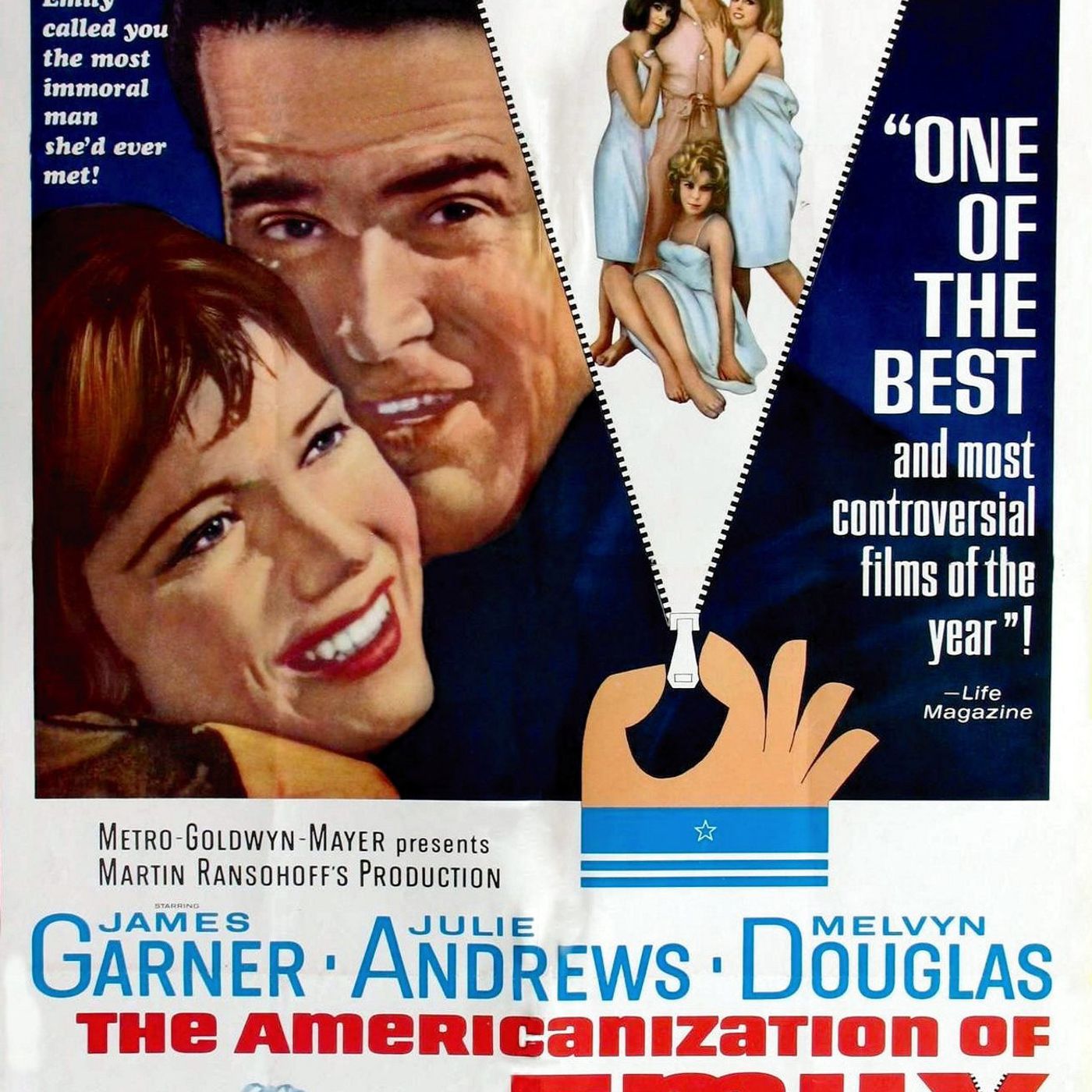
Reuniting James Garner and Julie Andrews, the film follows Garner's Charlie Madson as he attempts to do everything he can to stay out of WWII along with falling in love with Andrew's titular Emily. Along the way, he gets involved in a plot to win a PR battle between the Army and Navy during Operation D-Day that changes his life and outlook forever.
For more Kulturecast episodes and podcasts guaranteed to be your new favorite audio obsession, check out Weirding Way Media at weirdingwaymedia.com.
———
The Kulturecast is a film and culture podcast from Weirding Way Media, hosted by Chris Stachiw, the Doctor of Podcasting, alongside a rotating table of guest co-hosts. Each week digs into where film and culture meet — and how each one bends the other. Now home to sub-feeds including Required Viewing: A 360° Film Study with Dr. David D. Perlmutter.
New episodes weekly.
Subscribe on Apple Podcasts → https://podcasts.apple.com/us/podcast/the-kulturecast/id931361376
Spotify → https://open.spotify.com/show/5wjxip9XVYapYuY12yEaGY.
Back the show: https://www.patreon.com/cw/kulturecast
Transcript
Automatically generated, so expect the odd misheard name.
We wait, Richard, can I tell you something that I find to be rather ironic and and this will probably be taken as the highest of compliments about you. Okay, you have some James Garner energy about you. Well, that is the nicest thing you could say to me. That literally you have, you know, make your life. Said that, really you also like and I also kind of be honest with you, you kind of look like James Garner.
I'm not kidding. I'm not kidding. Every time when I'm watching things with him in it, I'm like, I understand why Richard likes him, like, because like, you have the same energy about you, like because I know that James Garner is like someone that you're but you let me put it this way. If I said, hey, Richard, tell me about the Rockford Files, we'd be here all day. Oh oh yes we would.
Yeah. No. I love James Garner and he comes from a generation of actors where you know, I'm gonna be the old guy and say, boy, you know, you just don't get him like that anymore because you don't, well, he's you know, he's clearly an attractive guy, but he but he doesn't look like you know, a young male French fashion model, which is what a lot of actors look like now. They're pretty. I wouldn't say he's pretty.
He's kind of rugged, and there's an authenticity to him as a human being where you kind of he's able to just sort of, you know, kind of like you and I were talking about. He's able to project his authentic self into the world, and certainly on his face and through his physicality, so much so that any role you see him in you pretty much buy, and you buy it because of him. He's sort of like, I want to say, Clint Eastwood, an actor who is himself first and the role second, and if those two things match up, it can be you know, combustible. It's like, oh perfect, It's like Maverick Rockford. Those were roles that were so perfectly tailored to James Garner that they became legendary.
Right now, I know we're going to talk about this one. I'd say this is another one that's pretty close and sort of surprising. But continue on, Please tell me more about how I'm like James Gardner. Well, I don't know if you're like James Garner, but ya look like James Garterer. I'm gonna know from now on, I look like James Garner, and I've got James Garner energy.
You do age And that's so that's the funny thing you mentioned that the authenticity, Like if you do research about James Garner also, you'll find out that he is I would say, a typical in a lot of ways. Of his contemporaries, I mean, even people that he's in this movie with. James Garner was a very private person. He kept his he was very serious about his family. I mean him and his wife separated three times, I believe, but they stayed married from geez god, like fifty fifty six I think until twenty fourteen when he passed away.
Like I mean, that's I mean, that is again like not to kind of talk about the industry, but that is very unheard of as a big time actor in the industry to only have one spouse and have you know, kids with that person and nobody else. Like that's that's that's relatively unheard of. And especially again someone who keeps their life private. I mean, I mean I can respect that. I can respect that, Like if that were me, if I were in that position, I would do the same, Like I would want to be a private person.
I don't want people digging into my personal life, not because I have anything to hide, but because it's not anybody else's fucking business. There's a lot we can say about James Garner, and there's a lot of conversations to be had about him, and I think one of the most interesting as a strange bearing on the film we're going to talk about, and I think if you're going to talk about him, one of the things you'd have to reflect on are two big legal battles that he had with Hollywood studios. The first was Warner Brothers and the second was Universal, And in both cases it was about sort of actors' rights and you know, actors compensation or you know, was he as an actor being compensated barely through his contract for the work that he was doing.
And in both cases he was saying, I don't believe the studio is honoring the contract that we have signed. And he wasn't a crank, and he won both times. Now, whenever you fight a studio, it's a pyrrhic victory. But the fact that he went out on a limb two times with studios and his career in a way could have ended either of those times based on retribution. But he believed in what was right and so he took a stand on principle and fought those fights.
You know, the third thing you should know about James Garner that a lot of his fans don't know, and I hesitate almost to even bring it up, but big liberal, big Democrat, marched with Martin Luther King, huge in the civil rights movement, believed deeply in the civil rights movement and in the politics of equality, and he made no secret of it. And for a guy who represents America to so many people, I was gonna say, for a guy who was such a sort of an American icon of American old fashioned masculinity, I think that's that's that's something to keep in mind that he again, he had a certain, you know, list of beliefs, and he did not keep those secret. He was out there in a way that also could have damaged his career greatly, and he felt that it was important, so he did it well.
And that's I mean, you know, you mentioned being like a genuine human being, and you know, being willing to lose your career for the things you believe in. Is I mean, some people would look at it and say like, what a moron, Like what a what a moron to take this great thing that you have and to squander it standing up for what you believe. But at the same time, I feel like not doing that is the bigger missed opportunity than that. I mean, look, I'm not saying everyone who can and should be a martyr should be, But if that's something you choose to do and you want to do it, I mean, it's something worse. I think, Well, like you said, like worth at least having a conversation about and looking at and saying, you know, I might not do it, but I can respect the person that does.
And to your point, I mean, if it bothers you that James Carter was a liberal, this might be the wrong show for you. What's funny about the conversation we're having is that he was probably most famous for playing again, the characters we were just talking about, Jim Rockford, Brett Maverick, and now Charlie Madison, three characters who, especially Rockford and Maverick, who are sort of famous for not taking a stand and sort of like, I stick my neck out for no one. I'm just trying to survive. I'm not a hero. I'm a coward.
I'm just trying to get through. And that was a part of his persona, a guy who was tough and was smart, but wasn't going to make a big deal out of it. And if there was a better way to get out of a fight, he got out of that. And that's what you know, he was so charming doing that. Anyway, it's funny to reflect all the difference between the man and the sort of the persona that he was so famous for playing.
It's kind of in a lot of ways a like it's almost a rejection of the toxic masculinity of the time, right, which is I mean, like, again, that's not a conversation people were having in sixty four, but it's part of the broader masculine conversation now because again, part of I think this movie in a lot of ways has to do with toxic masculinity and the perception of maybe not the perception of men as a whole, but organizations run and led by men, And what does that mean to have the perception of those organizations maybe not being seen as Again to how do we talk about this movie without just talking about it immediately just to say the perception sometimes matters just as much as the reality, if not more, And so much of this movie is about the perception of masculinity and what happens when that perception is shattered, if it can be shattered.
Well, so let's talk about the Americanization of Emily and to sort of summarize what it is for the listener who may not have had a chance to see the movie yet. And if you haven't, I'm gonna definitely say he should. It's funny you and I haven't even talked about you know. I know how I feel about the movie. I don't know how you feel about it.
But just to summarize the plot, James Garner plays Lieutenant Commander Charles E. Madison, and he plays a dog, Robert. Now, what the hell is a dog? Robert? Well, this is sort of an ad time at a shade to a high ranking military figure.
Okay, so this is the guy that can get it for you. This is the guy who travels along and makes sure that the general when he's visiting all these you know, foreign bases and foreign cities, and these are high ranking people. You know. This is almost like being a manager for a celebrity or a rock star got to make sure. You got to make sure the hotel room is set up the right way, and that the right booze is there and the right food, and and you've got to, you know, make sure that all the comforts of home, and if that involves lining up women, that's what to do.
Now. I don't want to spend a lot of time reflecting on that, because this is a you know, an eighty year old movie about a sixty year old event. Yeah, there was a lot of like, hey, you know, you're young and pretty, go entertain this old, crusty general. And out of that bargain, you're gonna get a new dress and some great perfume and some booze and some chocolate and some stuff that may not be in wide supply in your part of the world, is not in wide supply like at all, Like it's alluded to, like they have these things only because they're the US military and they can get them like right. So James Garner's character, you know, along with the general I'm sorry, the admiral that he works for, they roll into London, which is where our action takes place for the most part, and the story is about sort of meeting Charlie Madison learning that he is a sort of survivor at heart and will you know, basically find a way to live his life so that he is not never personally in mortal danger, and how that concept is tested against the points of view and beliefs and philosophies of the people that he comes into contact with, most you know, mostly Julie Andrews and James Coburn.
James Coburn plays Lieutenant Commander Bus Cummings, who at first seems to share a lot of Charlie Madison's points of view about stay out of the line of fire, but then because his point of view changes. But when buss point of view shifts a little bit, it has a major impact on James Garner's character and what happens to him. So that's all safe for now, when we can get into the details of how Charlie Madison has to come face to face with you know, how he feels about being a hero in a war and anyway, what did you think of the movie? So on this episode of the Culture Cast, like Richard just mentioned, I am Chris Dasho's still the host and Richard Hadham is here from where are you from? Richard astonishing Legend's own the library of Richard HadAM.
What's the name of your new podcast, Richard Richard Hadam's Paranormal Bookshelf, which is a great name, and it's real because you know I've turned my computer around and shown you my paranormal books. True, but now the do the books float on their own or do you make them float? Or is that not how they're paranormal? It reminds me of the old joke I wrote a book about poultergeists, it's flying off the shelves. Yeah, that's a good one, Thanks Dad, and you're welcome.
You can expect more of that. Well. But to clarify even what we're talking about right now, later a couple of months in March, I will be hosting my own podcast, and it's called Richard Adam's Paranormal Bookshelf. It's about the books on my books on my Paranormal Bookshelf. Every episode I'll talk about one of them, but I'll also talk about what was happening in my life when I read it, or what memories it brings up, or what part of my life it sort of connects to.
So you're going to be getting a lot about the book, but you're also going to be getting a lot about me my you know, growing up working in Hollywood, the jobs I've had, the shows I've been on, the movies I've written, the people I've met. It all sort of comes together through the books and it's really fun. And I think it's if you're interested in knowing a little bit more about my life, either what I do for a living or us the weird, strange, sometimes happy, sometimes embarrassing things that have happened to me in my life. This is the podcast where you're going to hear all about it. And how could you not be excited about something like that.
I know I've already read some of the stuff you're working on and it's great. So I'm excited to listen to it. And if you thanks, ma'am. If you aren't excited to listen to it, well that's on you, not on me, because we've done a pretty good job. I think it's giving you plenty of reason to listen to it, including the conversation we're about to have.
Like Richard mentioned about the Americanization of Emily, you like principles, Charlie, isn't it anything you'd die for? Easy, Tiger, that's a tailored show. Shut up. The first dent man on Omaha Beach was to be a sailor. Who is it?
Who is Bing's interesting? I've really been barging into my room in his nisher was going at the top of his lungs. The first dead man on Omaha Beach must be a sailor. Every few years there comes a motion picture so extraordinary, so provocative, that it excites controversy and curiosity from its very inception. Such a film.
One of the most important and talked about in more than a decade is the Americanization of Emily Well. It's a hell of a dd That's all I can say. How did we ever get in there? What tone? What a tone for the unknown sailor?
Unknown? Say? Holy Town commander. I think you're out of evil mind. But it all ins in someone's bed, doesn't it.
I mean, that's the point, isn't it. I want to tell my kids that on d Day their father was shocked up at the Westchester Hotel. Will you stop jumping around? Will I naked? Dear?
I'm looking for something to put on. This is my best friend, you, Dottie? Which not the house detective not just standing attention. Welcome Otter Matterson. I confer I'm a practicing coward.
You're glad Doug Roberty. I arrange girls, but individual tastes varied. Of course, you're despicable. You're a scoundrel, Charlie seems. I don't mind making love to a scoundrel, but I I think it idmorral to marry one.
Oh, we're gonna make a brass band hero out of Charlie. Could you do this to me? Get your pants on, Mac. You're forever falling in love with men on their last Night's a furlough. That's about the limit of your commitments.
One night, a day, a month. You prefer lovers to husband's hotels, to holmes. I'm gonna slap your face, Charlie. Go ahead, I want to hit your back of a coward like we've already kind of alluded to. The film stars James Garner and Julie Andrews, directed by Arthur Hiller, screenplay by Patty Chayevsky, which you know, that's a good thing, if not a great thing.
It's based on the novel of the same name by William Bradford Hewle, and the film does star James Garner as like Richard mentioned Charlie Madison a coward and will leave it at that because we're gonna be talking a whole bunch about it. And I want to tell you, Richard, I enjoyed this movie a lot, obviously, Like I don't know how you could watch this movie and not enjoy it. I mean, I do know how you can watch it not enjoy it. You don't like black and white movies, which like, we're not here to be those people. I thought it was great.
I mean, what's funny is obviously I think this is a movie in twenty twenty four. It has a lot of topicality still, I think obviously given the way the world is then and is now, and you know was because this movie didn't come out during World War two. It came out essentially right before the Vietnam War, kind of as the Vietnam War was Foeman. I think it's a interesting anti war movie. And you know, there's always that joke, right, like all war movies are anti war movies, supposedly, but you know, so many of them, like even the best anti war movie ends up being a war movie.
And this movie, I think is a example of how you can make an anti war movie the right way, which is, you know, it's about the characters, not about the conflict, and it's about the character's reaction to the conflict. And again, the conflict of World War two was so far reaching that it's hard to for us now in twenty twenty four to comprehend war taking place across the globe, let alone war taking place across the globe where people are leaving from your neighborhood to go participate in it. We're not dealing with that right now, but if we were, there might be some of this that might ring a little truer. But again, the message of what the movie is going for I think is still as important then as it is now.
And also again a kind of musing on what does it mean? I mean, what does it mean to be part of the war machine, and what are the machinations of the people within the war machine, and how does that affect everyday person theoretically like Charlie Madison, because while Charlie Madison is a you know it works as an attache for a big time general, he is the same person that I would be, which is, I don't want to do any of this I don't want to die. I mean, like, look, I'm not gonna say I'm a coward. I would go and serve if needed. But like I'm him, I'm sure you are too.
It's like I don't want to be like, don't put me in the middle of this, Like I don't want to die for this, because this is not something I want to die for. So I appreciated this movie immensely. And the message of the movie I think is as timely now as it was when the movie came out, and I think fifty years from now, when the movie's over one hundred years old, it will still ring true because human beings will constantly be in conflict with one another. Yeah, And what's what I really like about the movie, and I've seen it, you know, I don't know three or four times, is in the first fifteen minutes you're sort of drawn into this little pie slice of the military or of the background of World War Two that we never see.
This is not a typical war movie where we're like, wait, why are we in a really nice hotel. It's like, oh, we're sort of backstage at the war where admirals and generals are playing bridge in you know, these gorgeously appointed hotel rooms and they're having very casual conversations about D Day and who's who's going to do what, and while the army, you know, the army wants to do this. And early on we learned that the the the admiral that Charlie Madison works for is Admiral William Jessup played by Melvin Douglas, and Jessup he's, you know, head of the Navy, and he's like, look, this is going to be a defining moment in the war. And I really, when we know when the history is written, which we're already in an era where that history is going to be written immediately in magazines and newspapers, I want the navy to play, to be featured.
So he ultimately comes up with his idea, the first man to die on the beaches of Normandy has to be a sailor. It's just the worst fucking thing possible, right, Like, it really is the worst. Well, but it's so funny because suddenly it's it's a little bit war satire, but it's also like almost a satire of the advertising industry and the entertainment industry. It's like it's very much about, well, how are we going to sell this, because the the admiral knows that at a certain point, once the war is over, every branch of the American military Army, Navy, Air Force, Marines are all going to be jockeying for position again. Right.
It's like, well, you know, here's why we're important. You know, we're not at war right now, but look what we did in the last war. Give us some money. So he's already thinking that way, and you're like, oh, so that's what generals and admirals think about. They're not just moving pieces around on a giant map of the world.
They're worried about it. It's almost like the president of a university isn't an academic. They're a fundraiser, right, They're the money maker. They make the money for the university. Yeah, it's like their only job is to make money, is to get people to donate buildings and scholarships and you know, professorships.
That's what they do. So it's like, oh, wow, that's right. Okay. So so of course James Gardner's character has a front row seat to all of this stuff, but he's out of the line of fire because he's not an infantryman. He has a very different position, and his position perfectly suits his personal philosophy, and as we learn a little later, his personal philosophy is, I have no personal philosophy.
I don't stand for anything. I don't believe in heroes. I am in about I don't I don't pump up the idea of heroism, because that's how people get killed. I live for the moment. I'm a sensual almost a centualist.
He's like, I live in the fact of the moment. And if in the moment I am, I am happy and warm and well fed and with somebody, I love that I've achieved the height of of what a human can achieve. And he deals in sensuality. That's his job. I'm going to provide the best liquor, the best cut of meat, the best uh uh, you know, the the ungettable produce.
In the middle of winter in London. You will have your avocado salad. You will and you will drink your champagne out of Dutch glassware off you know, Italian linen. You will have the best. And that's what I'm good at, providing the the sensual satisfaction of the moment.
And again sometimes that will include women, and that's and so that's the thing that I find interesting, Like you mentioned, the idea of this character, like, it's such a weird war movie because I can't I can't think of another war movie that goes anywhere near any of this. I mean, these are the things that you kind of see out of the periphery in most war movies. But it's just not a thing because again, like you mentioned, I mean it's it for whatever reason. It's weird to me that it's not more of a thing that it hasn't been covered in more media. This idea of like what are these generals doing when they're not in the war room?
What are the ad like, what what is going on? And I think that again, like where this movie starts is such an interesting spot. And then it I kinda the only issue I have with this movie is the idea like and I don't think it's very well not thought out, but I don't think it's well explained what's going on with his boss when his boss starts quote cracking up unquote, It's like it's such a very antiquated thing. I think now we would call that like having a panic attack or like an anxiety attack or like a like a like a manic episode almost cause like he just right, he starts acting like someone who in now would be like someone with dementia, Like like he starts talking to people that aren't there, thinking of things that are just like again, not great ideas given what ends up happening.
But at the same time, like later in the movies, like I don't remember then it's like that's not racky, that's like something else entirely Well, you know, you're completely right, and I but I thought like if this movie had been made in like the eighties, Jack Nicholson could play Jessup oh totally, you know, like Picture the character from a Few Good Men, but Picture we dialed him down a little bit in terms of sort of like you know, rageful energy, and he's you know, he's a guy who's done a lot, seen a lot, spent his life in the military. But but now he's beginning to sort of have these sort of like episodes where he's not sure where he is. Like you said, he's kind of he's kind of drifting and people are like, well, is he just being eccentric?
Is he getting a little old? Yeah, what's the deal about this? Like he's not foaming at the mouth and you know, you know, punching his fist through walls. So it happens fairly quietly, and he sort of drifts in and out of it. So it's it's like, wait, did that actually happen?
Or well, okay, we're fine, We're fine. It becomes a plot device, a kind of lazy one. But I don't know how else you get around it in nineteen fifty six, like because it has no further, you know, effect on any other part of the story or the theme other than he he comes up with. Kind of by the way, it's not even that crazy idea, like like I would have no trouble believing that an admiral was like I am advocating for marines to hit that beach first so that we get the gatza and the glory you know, we get the tomb of the Unknown Sailor. But we but also if we win, it's because we were there first.
So first through the door, you know, first through the door Death's door depths sure, and that and like I'm with you, it's not like the idea that is proposed in this in the and in the book is like, yeah, you're let's shoot the footage of the first person hitting the beach, who's ostensibly going to be the first person to die, which is what they're making you know, that's kind of the implication. I don't think it's that crazy of an idea. Frankly, I'm surprised it hasn't. I'm surprised someone hasn't said that that was floated at some point, and yeah, who knows, like maybe this was based on a real thing. So to fill the audience in that's listening, in case you haven't seen the movie, the notion of the first man to die on the beaches of Normandy must be a sailor.
So the Admiral acts on this idea by assigning James Garner Charlie Madison to get together a film crew that will travel with the Marines who will travel out in these boats and try to h I guess, deactivate the mines that are along the coast. Yeah, the man so that the other naval vehicles can come in successfully get close enough to offload men who can then run up on the beach. It you know, it's saving private Ryan and literally brighter. But if enough get through, and enough will get through, if you bring enough people, Yeah, some will get through then then you will. You know, it can change the course of the war.
So the idea is, get a film crew. I want this to be filmed. I want people to see it. So the idea is, if we get this footage, then we have proven that we have participated in the war in a facial way, and you know. And so so it's through this odd construction that the viewer sort of goes Okay, Well, now that we know that he's a coward, now that we know he will do anything to avoid trouble, we know this is not going to work out well for James Garner.
Something's going to happen. We don't know how, but somehow he's going to be placed in danger because of this idea. And of course the rest of the movie is how, by whists and turns, he ends up being placed on a boat with a camera in his hand. He's the one who's got to do the filming, and he's gonna be the one out there, and then he literally becomes he personally becomes the first human being on the beaches at Normandy. And you know, in the first fifteen minutes of the movie, once you hear this idea you know somehow that's where it's gonna get to.
You just don't know how and what the fuck is gonna happen and why. It's the inevitability of the screen riding and the story that I absolutely love about this movie, Like the best movies feel like the ending is inevitable, and like the level of inevitability is like, yeah, James Gardner, there's literally no way you're not this. There's no way you're not the person that they keep talking about. But can I just say with absolute certainty, there are few places in time and history that I would rather not be than on the fucking pt boats or whatever the fuck those things are heading to the beaches of Normandy, like Jesus Christ. Like I know, I know that saving Private Ryan.
You know, that's the closest we've ever gotten to being there. Like I'm sure that that's probably still only like a tenth of it, because like anytime I see D Day and anything, it makes me, like it makes me so nauseous because like just thinking about being on those boats, and like, you know, this movie kind of downplays it because they they're as they're about to get off the boat, the boat gets hit with the mortar and they go flying through the air, which should have killed them anyways, it doesn't. So you know the movie wants to take that into account. That's fine, But the idea of D Day is just like it's hard for me to fathom sitting here in the comfort of my own home that like this was a thing that people were like, we're yeah, we're we're doing this.
Like it's just it's horrifying and like to you, you are in James Garner's shoes immediately, because it's like, this is the last place anybody on the earth wants to be on this day in history is on that beach in Normandy, and here you are with your camera and no way to defend yourself. Fuck you, Mike, Fuck you dude, Like literally, fuck you is what ends up happening in this movie, and totally without the psychological armor of this is a good cause. I'm gonna be a hero that I absolutely want to give my life for my country. This is a moral thing to do. It is the right thing to do.
It's the principal thing to do democracy. Yeah, like all of the all of the sort of psychological fortifications that the military kind of you know provides you with slash beats into you so that you can walk into situations where you will likely lose your life, but do it, and do it effectively and with clear you know you can still carry out your mission. You don't completely lose lose your shit. Well, of course, Charlie Madison has none of this, Like literally twelve hours ago, he did not think he was going to be here, didn't want to be here, doesn't believe in it, shouldn't be here, and there he is. And yet for a movie that is that is ostensibly a comedy and is very funning at points, this is not funny.
This is played very quiet in a way, and not even in an overly dramatic like oh now it's the serious part of the movie. It's more like, well, now we're really here. Now we're in the boat with him. I mean again, it's like it's like saving Private Ryan literally long and we're looking at this guy and we're it's like that's how I would feel, yeah, literally doing here like I have no business being here. It's that's why, I mean, it's like horror.
It's fucking horrify. Like this movie isn't anywhere near as as like you know, intense as saving Private Ryan, but that some of those shots, it's just like it's really hard to not put yourself in those shoes of like anyone in that boat. Just seeing those shots of like the guy hanging off the side of the boat as they come onto the beach. Yeah, fuck, fuck this, just like fuck this in the worst kind of way, Like I'm sorry, it's just horrifying. We've spent so much time in this movie in the in these beautiful hotel rooms and offices, and just as far removed moved from war, and the reality of war is you can possibly be you know, for a war movie.
This is not Platoon or you know, full metal jacket. We're in these rarefied places and Garner looks great, and everyone's in these you know, beautifully cut suits and uniforms, and it's just it's it's a pleasure to look at. It's a pleasure to be there. And then by degrees in in the you know, the last half hour of the movie, you know where they go to the they they go to the the base where the D Day is being launched, and now we're in the barracks, and then we're in the boat, and then we're in the water and we're just as an audience being lowered and lowered in status, you know, from the top admiral to the lowest, lowest sailor who are literally the guy next and was just vomiting into his helmet. And it's so funny because the guy who's vomiting into his helmet, he's doing it as you know, as the you know, the the admiral.
The other admiral is giving a speech about how honorable and what a great moment this is and how lucky you are to be a part of this, and the guy's a hugh king in his helmet, and it's like, yes, this speech makes us all want to vomit. Well, and that's the thing, like you mentioned with James Garner, like no amount of that going on in the background while he's in that boat is going to change how he feels about this, because again, like you said, like some of this, some of this has to be framed in a way that like, yes, this movie is coming out before Vietnam, which is a war that is hard to stand by as an American because it was seemingly done for I mean again, to prevent the spread of communism. Whatever the fuck you think that means in twenty twenty four is your fucking definition.
But Vietnam War not something we should have been involved in. World War two. However, I don't think either one of us is going to disagree that that was a war we had no choice but to get involved in because the stakes on the line. The thing that's funny is James Garner's character rejects what the stakes are is not Vietnam where like the steaks are kind of in your opinion, I don't like me, and I'm like, world War two had to happen. The United States had to get involved, we didn't have a choice, like and in a lot of ways, like that's where the moral majority or the moral high ground comes from with World War Two, right with the character that James Coburn plays, which is like, we're doing this for America men.
And it's weird that James Coburn's James Garner's character even rejects that, like in a morally just war, even this character rejects that. And that is, to me the thing that is really interesting about his characters. He's like, I make no bones about it. Not only do I not like this war, I detest all wars in general and conflict completely, and it has something to do with this being just or unjust like this it's me and it's me having a problem with it. What was And again this was not the first time I saw the movie.
But it's a rather dance film. I mean, it's Patty Chayevsky. So there's a lot of ideas and a lot of very sophisticated dialogue with ideas, you know, flying around the room. But there was a moment in the middle where I'm like, well, now, way to say wait to say, wait a second, why is he working in the in the military at all if he is so anti war? But then they continually sort of go back and go he's not anti military, he's not anti war.
He is he personally embraces his own philosophy of a I'm a coward, you know. He's not out there with a sign protesting out in front of He's sort of like, I don't stand on any principle other than my own personal survival and and and by survival I mean the right to exist peacefully. So he's almost more like Gandhi or something. He's just like, I will always find myself a place where I will be able to be the most of what I am, which is the sensualist, which is the person who provides physical comfort to myself and others. And if that happens to be working for this admiral, I have no problem with that.
I am no more principled anti war than pro war. I am just against the notion of tricking yourself into believing people died heroically when they didn't. They most likely died very ignominiously and in terror. But we don't like to think about that, so we build monuments and go, oh, it's like it's kind of a joke. You know.
People say, you know, oh, he lost his battle with cancer, and it's like, well, you know what, what are we saying when we say that that he failed that this person that we're talking about who died of cancer, well, he fuck cancer, but he just wasn't up to the fight and cancer won. It's like if you've ever been with someone who is suffering from a disease that is attacking their body, whether they're engaged in a moral fight against it or not, it's a terrible thing and it's ugly and it you know, and whether you fight it or don't fight it, sometimes doesn't have a lot to do with whether you are still alive, you know, five years later. So it's this whole notion we have sometimes as Americans. I think of, well, are you gonna fight or are you gonna not fight and just be a coward?
And what are you gonna do about it? And how we frame our everyday lives, you know, right, well, in a lot of ways, like it's a condemnation of that which is the American interest in conflict and framing everything as a conflict. I mean, even you must triumph, right, I mean, even something like you know, this is always a thing that cracks me up. It's like the people of say Philadelphia and Dallas realistically have no reason to detest one another. But because those two football teams, the Cowboys and the Eagles, have a rivalry because of the part of the league that they're in, people from Philadelphia probably think lesser of people from Dallas.
And that's literally because of something that has been created and crafted into a created conflict. And it's like, what does that help anyone other than again, like this idea of you take sports and you turn it into a conflict. It's a battle, and you have victors and the losers, and by framing things is conflict. You give it this like this weird moral justiness of the winners winning and the losers losing. It the lougue.
You know, you hear sometimes, if you're a sports fan, you hear like, you know, the better team didn't win today, and it's like, what the fuck does that shit even mean? Like what what it does? Like what? Okay, yeah, maybe that is the case. Like it's like and you know what, Like you could say the same thing about armed conflict.
Sometimes the better team didn't win, but the other side thinks they're right. Any Like, there's if you're on the other side, you think you're right and you did win, so there's It's all. It's perspective and where you're standing. If you're standing on one side of the room, you think the other side of the room is better or worse or looks better, just like the other person on that side of the room may think the same of the side you're standing. The notion that the better team lost, you know, is really interesting because part of the the truism of sports is that sorry doesn't matter, you know it rained Oh you you're your best player got sick the week before you know whatever.
It's like whatever happens on the day between the time we blow the whistle and the time we blow the whistle the last time, that's the game. That is, that is defined as the game, and whoever is ahead at the end, they're the winners. And we can argue about it all we want, but the you know, the the history books are written. What I was going to say is now, I'll you know, give you you know my news of my week. Of course, I've had COVID this week, so I've been battling COVID.
COVID is winning. Uh No, it really isn't. It's I'm fighting it to a stance still, Chris, I swear to God, I'm gonna win this fight. I'm gonna win it. Richard, overcome it.
I will overcome it. But while I've been sick, I have revisited the Rocky movies, and so I watched Rocky one through Rocky four, and then I watched the first couple of Creed movies. And what's what's always fun about these movies is how regardless of who wins any given fight, it's always about well, yeah, but what was really going on with Rocky at the time, Like, first of all, most people forget that Rocky didn't win that first movie. He loses and and and when I watch it, the movie is so well done that you, even though you know he lost, you don't feel like he lost because you're so focused on he achieved his goal of going the distance. You know, Adrian is running to him all the all the victory iconography is with him, even as they're cutting away these very quick cuts into the background of people going okay and a split decision, you know, okay, Apollo Creed, and Apollo Creed looks like the loser because he's miserable because he didn't win.
Better, Rocky looks like the winner because the lights on him and his fist is in the air. But he's the loser technically, but he feels like the winner. And all throughout all the Rocky movies, they just play that theme over and over again. You won, but you didn't really win. Well, you lost, but you really won.
And how are we gonna you know, even this up by the end of the movie, or are we? And and they're they're they're always re litigating did the better person win? Anyway? All of which is to say, Charlie Madison rejects all this in the most beautiful Eddie Chayevskian language. And I'm so proud of James Garner because you may not think he's a guy who can handle these page long speeches, but boy does he, and he sells them like nobody's business.
I was really surprised with some of the monologues because like, when I was reading you know about the movie, it was like, you know a lot of these monologues that James Garner gives and I was like, oh shit, James Garner monologues. But you're totally right, and it's it's the sincerity with which he performs the monologues, but the way he performs the role that it's just like you said, I mean, is he kind of playing the same kinds of characters that he's known for playing and or would be known for playing and became kind of known for playing. Yes, But so what like that ease with which he does it, I think doesn't necessarily mean every time he does it it's going to be fantastic. But here, every time they give him those moments to kind of tell us why you are the way you are, he nails it.
And it doesn't feel forced. It doesn't feel like a pod on either. And it's so believable because he's so earnest in his delivery, and it's such a verbal movie. Even even when he and Julie Andrews are rolling around by the side of a pond making out with each other. I mean, you just know it's like, Okay, if we stay with them long enough, we're going to see them having sex.
Right, It's like, that's what this scene is about. And yet as they're making out, they are having a philosophical discussion about about life and war. And it works because it is coming from wherever their characters are and it so well done that you almost don't notice it. But it's like, wow, this movie doesn't miss a trick. It's like constantly redefining where the characters are at any given moment, and then later when they break up, because of course it's enough of a romantic comedy where they do have to break up, they have a fight that you think, for a second, oh, is this just gonna be like a trumped up you know, stupid And I loved this scene so much.
It was so like it was bizarre in the way it was written, right, like I have never seen a scene like this in a movie before in terms of like a romantic movie, like no, it it was shocking is the word I would use. Like I laughed out loud at three of the lines because I was like, when is this movie? Sixty four? Is when this movie came out? Like you must be out of your mind, And it's amazing because you think in romantic comedies you sort of have the feeling of, well, I get it, you guys have to break up because it's you know, ninety minutes into the movie and we've got fifteen more to go, and okay, I get it.
But here when they break up, it's like, oh, he is further defining what he's doing in this moment. She is further defining what her feelings are. You do feel that either one of them is copping out, but you totally get why they're in love. You totally get why they're breaking up. You don't blame either one of them.
Your heart breaks for both of them and you. And it places the audience in a very vulnerable position because it places Charlie in a vulnerable place. When he gets on that plane, you're like, well, whatever happens to him from here on? Out he no longer has to one thing that he really wanted, which was this relationship, and now he really is untethered. And when the final bits of his plan just dissolve in front of him and it becomes clear, oh dude, you're getting on that boat and you're getting in the water, and you're gonna get your ass blowna he doesn't play it like, well, it doesn't matter because you know, I'm no longer have of love, so I don't care if I die.
It's more like, now my life just adds up to nothing, right, just nothing. Like the one thing I wanted was just what any normal human beings. I just wanted to marry the Loman I love and have a child and have a life. That's all I wanted. Yeah, very simple thing.
And now I'm not even gonna get that. I'm just gonna get fucking nothing, and I'm gonna die a miserable death. It's really cold, it is. And you know, we haven't really talked about Julie Anders a whole lot. And I think you mentioned like the layering of the themes of the movie, and we haven't really talked about I mean, we've mentioned the American aspect of the movie.
But the title the Americanization of Emily, Can I just say not a great title. I don't think it's a particularly great title. I mean, I understand, I mean the title makes perfect sense given where the movie ends up. But Julie Andrews's character could have been such a not a wasted opportunity, but could have just been really and it may have been written rather flat on the paper. I don't think it was given who wrote the script, But the character could have been so generic in a way that we've seen in these kinds of movies.
But she isn't because she is able to stand up to James Garner's cowardice by having her own deeply held tenants and beliefs about these things you know about her husband, about her father, about her brother, which again it's weird in and of itself where she's coming at it from, because her whole thing is I seemingly am attracted to men who are have a finite amount of time connected to them. However that is interpreted, be it because they're at this hospital and then they're leaving, or be it because they're going off to war, and that seems to be something that she can't escape and yet she doesn't want to escape it. In that scene with James Garner, even though she kind of alludes to wanting more than to see her prospective lover die for the great cause she doesn't want that either until she does.
And I love that we get to see a conflict in her character because she wants it, but she doesn't, but she does, and Julie Andrews plays it perfectly. And it could have felt so wishy washy in that scene. But again, the earnestness in that scene between the two of them where he's like, you're a bitch, You're a bitch, It's like, yeah, like fuck it, yeah, I laughed out loud. I was like, holy shit, really, but it's the truth. And I think it's an extension of the line earlier in the movie where you're like, you're a brig and it's like, it's kind of the extension of that line.
It's that line dialed up one more beat, which is you're a bitch really just means you're kind of unyielding in your beliefs to a point that's hard to deal with. But at the same time, so is James Garner like that, and that's what she says back to him, It's like, but you're the same way, dude, And it's like, well that that is why you two work together, is because maybe that idea of opposites attracting true. Yeah, And you know, early on, so in one of their earliest scenes, which is I think maybe my favorite scene in the movie, where Julie Andrews brings him home to meet her mom. Now we learn that she has Julie Andrews as this youngish woman, thirty ish, you know whatever, has lost a brother in the war, has lost a husband in this war, lost her father.
So these three people in her life have all died. It sounds like within the last five years, right, So it's like, wow, okay, that's bad, like just on a human level, that's bad. And so you know, Garner comes over and meets the mom and Julian Andrews says, you know, my mom still talks about my dad as if he's alive. It's her way of coping. So just kind of roll with it.
But during that scene, Garner starts telling his story about his past, and the story involves his previous marriage that Julian Andrews was unaware of and is like, huh, and he tells the story about how he was married, was sent you know, was sent into a war zone and then ended up coming home. And you think what Julie Andrews thinks, which is, oh, okay, I get it. And then what happened, of course, is you came home and your wife had taken up with someone else and it led to a divorce. And he's like no, he's like, my coming back alive and healthy ruined our relationship because she didn't cheat on me. She couldn't cheat on me.
That would have ruined her chance to be virtuous, the stoic woman at home while her husband's off at war. The worst thing I could have done was come home and take that away from her, right, And that's what led to our divorce. And you hear that, You're just like, whoa, it's wild. It's like it's actually battye right, Like yeah, it's like cynical. But you're like, oh, but I mean I get that, Like I can I can see that that is the way human relationship would play out.
Wow, And he says yeah. So he's like after that, you know, I was just very you know, I knew that this was not for me, so I would not. I never wanted to be in the position to have someone, you know, exalt themselves over my death that I didn't earn and didn't want. And so I'm against the notion of making a sort of i don't know, like like sort of reassuring ourselves post facto that because someone died in a war, they are retroactively a hero. Therefore it's a good thing, and therefore other people should want to die in the same way.
He's like, no, none of that bullshit. When you die in war, you're dying scared, dirty and afraid. You know. He doesn't say this, but he's basically saying, you know, you die begging for your mother, and and it isn't heroic, it's inhumane. And and we shouldn't profane someone's death by then calling them a hero and thus tempting more people to die in the same horrible way.
Which is so fucking wild to hear being put into words. And I'm not just saying because this movie came out in sixty four, I'm just talking about in general, because I don't know about you. I agree with that sentiment, and it's in that's something that might be supremely unpopular, but so much of the war machine lives and breathes off of this aspect of it, which is keeping the soldiers fed and happy and in the dark about the reality of what's going on. Again, like we hear it on the news all the time. You know, one you know air I mean, when when we were in Afghanistan, there's like one airman died today, and it's like, you know, like it was probably rather ignominious because it often, if not always is because again, like this conflict, unless I mean again, unless I guess, if you genuinely believe in what you're doing over there, then it's probably okay that you died for it.
But again, like the idea idea of you are retroactively a hero because you died in a combat zone, like and what does that mean for everybody else? And how is that used? Is I think such an interesting question. And I think then to go that step further of well, we have to like do we have to have an unknown sailor? So instead of just you know, allowing the first person who died to be that unknown sailor, we have to have that, we have to create that that And what's funny is you have you ever seen Amazon women on the Moon the sketch comedy film.
So in that movie, in the extended version of the movie, there is a skit cause again it's a skit movie, right, there's a sketch comedy in that sketch. It's called The Unknown Soldier, and it has like Robert Loja and Ronnie Cox and Bernie Casey, and the three of them have a similar conversation because I think one is army, one is Marines, and one is something else. And it's taking place during World War One, and they're like, hey, the war is over, but all of the casualties have been accounted for. We don't have someone to be the Unknown Soldier. And so they bring Wallace Langham in to they tell him, like, hey, would you like to have like permanent immortality?
Do you want to be like known forever? And he's like yeah, yah yah, And so they convince him to kill himself to be the Unknown Soldier. And it's like, when I was watching this, all I could think was they had to have seen this like they had or like had read the book, because this is that idea, not play. I mean, in that sketch, Wallace Langham, does you kind of they cut away to them. You know, he's off screen and they're talking and you hear someone shoot themselves, so it's implied he goes through with it, which is like way darker than this movie gets.
But at the same time, it's and it's asking that same question, like what does that actually mean for that person to be an unknown anything? And how does that happen? Like because everybody who enlisted theoretically right again, like that those things, those records are kept like that's all I'm say saying, dog tags exist, like you know, and it does make you think why this movie isn't better known and why it isn't mentioned in the same breath with Uh, you know, Mash and Uh and Doctor Strangelove and and all of those sort of you know, famous anti war comedies, and in a way Apocalypse Now, like, well, Apocalypse Now isn't a comedy. It's it's you know, it's but I mean, like I'm yeah, but I'm saying like in terms of like anti war, like that's another like why it's why this isn't mentioned even with that or any of them, any of them at all, frankly, like, and it's funny because there's not a lot of war in it.
It's it's not it's not broad. So it's not like, well, welcome to the wacky world of the war where everything is crazy, because you'd have to be. It's like it suggests that, but it doesn't do it in a broad sort of you know, I don't know, I haven't seen Catch twenty two, so I know, hyuck kyucks are being had. Yeah, I don't know how crazy that gets, but they're there. There.
There have been more sort of broad anti war satires. This one is so sophisticated and and there's so many ideas and it's taking on every scene you have to you have to sort of stop and go, okay, now what so what what are we being presented with here? What are these points of view? And who's on what side exactly? I mean, it's not confusing, it's not difficult to watch, but but you're you're constantly engaged in in this sort of chess game of ideas of people just sort of getting through their lives and trying to you know, and in a weird way.
On this viewing, the James Coburn character became the most interesting to me because he does seem to share Charlie Madison's like, hey, we're just in this game to benefit ourselves, right, We're gaming the system every day and we're just going to try to geet through. But at some point in the middle, he's he turns and he's like, no, you know what, We're wrong. We're wrong. This is we've got to be involved in this fight and we've got to actually stand up for you know, the Navy. And of course it's so great because Charlie's like, like, literally some of the most apoplectic moments from James Gardner are like, what has happened to you?
Yeah, got in your head. You're literally going to get me killed. And and now Coburn's the one going listen, soldier, you should be proud to die. He's like, what are you talking about? You're gonna get us both killed.
And it is a little strange. I couldn't diagnose exactly where that moment was or why he changed, but he does change. Yeah, I will say the issue not issues I had with this movie, but the two moments I wish were given a little bit more time to breathe was James Coburn kind of becoming more of like a sickophant. And then honestly and again it kind of goes back to to James Coburn character. I man, I was shocked at how quickly this movie wrapped up and he's back and they're fine and it's good and he got to be a hero, but now he does, and it's like, well, the americanization of Emily part of this movie took like two minutes, like literally like two three minutes.
I it was shocking to me how rushed the moment, the moment, the moments that the moments that should have been given time to breathe for the most part are but these two specific moments like and when James Coburn kind of loses it and becomes the person that he proclaimed to not be is one of them. But then at the end, it's like I wanted to see James Garner actually have more of a moment there with Julie Andrews about this idea of like I don't still don't want to be a hero and I want to tell the truth. Like I needed that scene to be given a little bit more time because it's a It's similar to the thing with James Coburn. It's like, these are big moments that cannot afford to be rushed because I need to understand it, and the movie's already done a very good job of letting me know it can expand on those ideas rather well, and it's not gonna get bogged down and like contrite bullshit dialogue, Like that's the one thing Pattyhiski's not gonna do is waste words coming out of characters' mouths.
Well, that is funny in that final scene. So much has to be accomplished, and I think the audience is very skillfully drawn in to James Garner's point of view because and against spoiler alerts. So now we're at the we're at the end of the movie. Now ten minutes before at the end of the movie, we think we see James Garner killed on the beaches of Normandy, and then we nowur a week later. Everyone's been informed of his death.
He's on the cover of every magazine. Is the first you know, the first person to die on the beaches of Normandy was indeed a navy man, And we have a handful of scenes that are in the aftermath of his death, and we're fairly convinced he is dead, even though that breaks movie rules. But anyway, we get to the final scene where we learned that he is alive, And now, of course James Coburn is like, okay, look now the story has to be a celebrat that you're alive. So there's going to be a parade down Pennsylvania Avenue. The President's going to be involved.
You're going to be the biggest war hero of all time. In other words, you're going to become the symbol of everything you detest and don't believe in. And the run's completely counter to your philosophy, and you're like, well, what's going to happen? And Garner is like, no, I'm not going to do that. In fact, I'm going to ruin everyone's day by puncturing the image, and I'm going to tell the truth and and it's going to be the worst publicity you've ever had, and I'll probably go to the brig.
I'll be locked up for insubordination and for being you know, a or sport. But that's fine, because I'm not going to let you turn this into some military r victory for yourself. And you're like, oh, fuck, yeah, no, that is what he has to do. But then that's going to suck too. And then amazingly, Julie Andrews sort of saves it in and goes, well, who's this guy standing on principle?
Why are you doing me now? Why you're doing me? Why are you doing me? That's really what it is like, Why are you doing me now? What the fuck?
And she's like, to be true to yourself is not to work against this image and puncture it on a worldwide basis. To really be you is to take advantage of the situation and then go enjoy your life, right, and to do anything less than that. You're now going to do all the things you said you would never do, which is stand on principle and stand up for a philosophy because that's what gets people killed and that's what wounds people's lives. And you can do that if you want, But if you do, you are going to go to the brig We're not gonna get married, and everything you wanted you're not gonna get. So why not be self serving?
Why not put yourself first? Go ahead and let them make you a hero, because it's not like you're gonna stop war, right, and then you and I can go have the life that we wanted. And it's so brilliant. It's just like because you don't see it coming, but when it's served up to you in that way, you're like, oh, they fucking they set all the pieces in place. She's one hundred percent right, Garner doesn't have a leg to stand on, and he's finally like, Jesus, you're right, okay, and then the movie ends.
Yeah, it's I mean, I mean, I do like where I do, like where Julie Andrews comes in from. I just it's so it's very abrupt, I think for me. But like again, that's that's a that's a me problem, not a movie problem. But man, she I mean again, like that's the writing of Patty Chayevsky in full effect. It's such a Again, it's verbal chess being played between the two kind of moral towers of the movie.
And yeah, I mean, she's right, and that is again, like that makes sense in the scope of the movie, in the narrative that they're telling. Why would he all of a sudden, Yeah why why? Why? Why are you? Why are you changing?
Why are you changing who you are? If not, like then he doesn't really give a reason other than just because because that's the quote right thing to do. And again, what is the right thing to do if is it to do the morally just thing? Is it to be true to yourself? The movies takes a pretty i think strong stand on what it thinks, which is to be genuine and true to yourself, right like be who you always have been, regardless of the situation you're being put in, because that tends to maybe help you get out of that situation in a way that does it require you to be thrown in jail for however many years he would, if not forever, given probably the scope of what James Garner's kind of heroicism is being claimed as, like you would go to jail for a long time if he is, Yeah, like it's not a couple of years type thing.
Well man, yeah, And you know, there's a million different kinds of movies and a million different brands of cynicism in ways that he could have dealt with this, and you know, you know the way he could have extorted you know, the military. It's like, look, I know the truth, you know, So if you want me to shut up, you know, do this or do that? Make it worth my while, make it worth my while. But even that's a slightly I mean the targets of this movie and the philosophy of the movie is so particular because it's it's it's not traditionally anti war, it's almost anti pretense and anti you know, don't don't select an intellectual quality to wear as a crown, because that will work against you living your life.
So so don't not only don't walk around trying to be a war hero, but don't anoint yourself as the war widow either, right exactly, because by being the war widow, you're perpetuating the problem. You know, except that you know your your your people died, likely for no reason, and except that your life will be worse because they're not. But don't wrap yourself in this image of, you know, the bereaved widow of the war hero, because that that doesn't do it either. And it's just it's interesting. Just when you think, you know, it's like, oh, it's one of these movies, it's like, no, not quite.
We're we're our own thing. And and I and my god, I mean, there is no more perfect actor to play that role than James Garner. I honestly don't know who you're gonna get, who's going to do a better job. Well, and that is the thing. I mean again, like, like you've mentioned this idea of it's not being an anti war movie, but anti a movie that no pretense.
Like again, if you want the perfect actor to deliver those monologues, it's James Garner, because again, he just is a he feels genuine throughout. And I mean again, if you had swapped the roles and had James Coburn doing the James Garner role, it wouldn't have worked as well. I mean, even if you just take the two actors in the movie and swap them, it's this something about who James Garner is and the energy that he has makes that last scene believable. And again, like you mentioned, the idea of everybody plays a part in perpetuating this war system. Be it the idea of heroism, the idea of doing something for your country and in that being a thing worth doing just because you're doing it for your country.
Like all of those ideas kind of get rolled into one at the end. And like you said, I mean at the end of the movie. By the time Julie Andrews makes the flea to James Garner that she does and he listens, you realize, like you said, like, this movie is not really it's not playing fair, but that's okay. It doesn't have to. It wants it wants to tell this specific story which has very little realistically to do with war.
I mean, it is an anti war movie, but I think the message of the movie is more important than just anti war. It's it's the idea of it's better to it's better to go out on your shield as who you are than go out on the sword for someone else. Yeah, yeah, yeah, yeah, yeah. I will say in terms of James Garner and Julie Andrews can mystery together my God like my God in Heaven and there's I understand why they both go out and say publicly that this is their favorite like roles that they've done and their favorite movie like of their career, because like this is a practically perfect movie, if not a perfect movie, like this is a really good movie. Well yeah, and I would say to the listening audience, this is one of the joys of doing this kind of of podcast.
And I'm so glad you know, Chris was game to sort of add it in really quick because because this is not a movie that most people know about, and yet I have yet to recommend it to anyone who has not absolutely loved it. So I heartily recommend it to the listener. Please check out the americanization of Emily. I think you will just be blown away. And it's a hidden gem and that's that's what we're here to bring it out.
That's honestly what it feels like, like I had Susan mentioned it when we did Victor Victoria, and then you mentioned it to me because you listened to the episode and I had looked I had looked it up after we talked about it because I was gonna watch it anyways, but then you were like, let's do it. So I was like, okay, and yeah, I am. The thing that I am most shocked by ending this episode is that I had not seen this movie before, and that I had not had this movie mentioned at any point up until now, and I hadn't seen this come up, and like again, because this feels like a movie that what it's talking about is still part of the conversation that we're having now in so many ways, even not just about war, but about like proving oneself or going out for to do things for other people and doing things for yourself, like so many of these things still topical in twenty twenty four.
Yeah, and when you've got James Garner Julie Andrews a script by Patty Chayevsky and directed by Arthur Hiller. You know this is this is a big movie, so you know, yeah, well, with your time, I think, well, with your time, I agree, No, totally, you know, as kind of a bonus this month, I think it is definitely a standout. So yeah, Richard, until the next time you join me for either something that's on the schedule or something that is completely spontaneous. Where can people find you and the things that you work on, Well they can. Pretty soon they'll be able to find me at Richard Adams's paranormal Bookshelf, coming in late March twenty twenty four, and I couldn't be more excited.
So check out wherever you listen to podcasts, and in March you'll be hearing more and more and pretty soon you'll be able to hear it. And well you can also find me and you on rank and on Bond, which is a fun little thing that we do together. Well we've been doing that, yeah, and that you can check that out on Patreon, Slash culture cast or Patreon slash Projection booth because Mike and Eyer Bull sharing that on our respective patreons at the ten dollars level. So if that's something you want to hear, Richard and Mike and I talk about James Bond, which if you're listening to this, I can't imagine it's something you don't want to hear. You should go check that out, sign up and give it a listen because we're going to be releasing the second episode here pretty quick.
I think within the next week we're going to be finally actually talking about James Bond movies with well early James Bond is pre Eon with the two casino royales. So that's where you can find us. Where you can find me and everything else is over at weirdingwaymedia dot com. And yeah, Richard, thank you so much for joining me in programming the episode. It's I mean, it's fun as always, so thanks man, and as always, we'll catch on the next episode.


