
About this episode
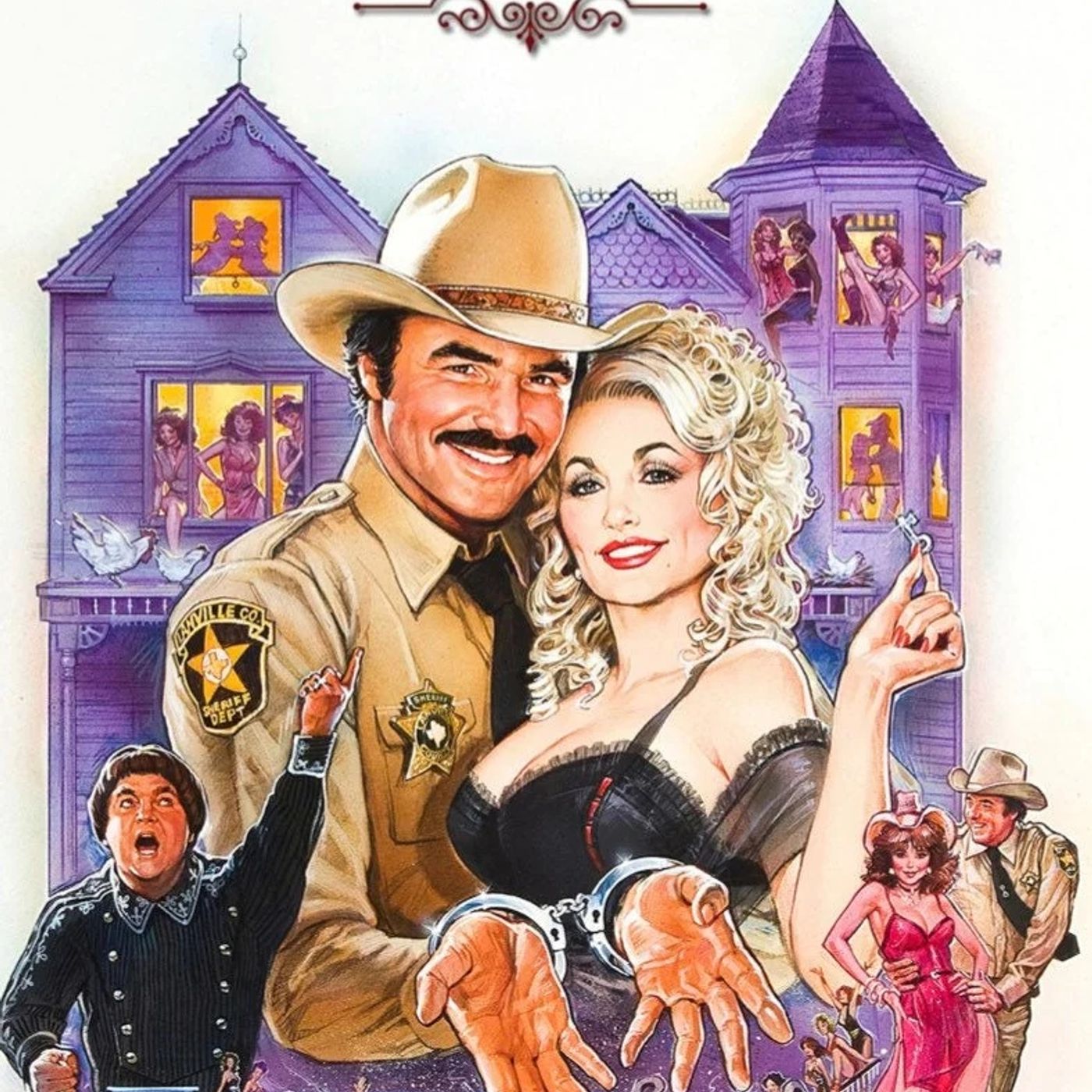
Starring Dolly Parton and Burt Reynolds, the two play a brothel owner and local sheriff who get embroiled in a match of tug of war between an attention-hungry tv host and vain politicians who are attempting to close the titular whorehouse down. It's a wild ride that works at times but struggles with its sexual and identity politics.
For more episodes of the Kulturecast along with many more podcasts that are guaranteed to be your new favorite audio obsession, check out Weirding Way Media at weirdingwaymedia.com.
———
The Kulturecast is a film and culture podcast from Weirding Way Media, hosted by Chris Stachiw, the Doctor of Podcasting, alongside a rotating table of guest co-hosts. Each week digs into where film and culture meet — and how each one bends the other. Now home to sub-feeds including Required Viewing: A 360° Film Study with Dr. David D. Perlmutter.
New episodes weekly.
Subscribe on Apple Podcasts → https://podcasts.apple.com/us/podcast/the-kulturecast/id931361376
Spotify → https://open.spotify.com/show/5wjxip9XVYapYuY12yEaGY.
Back the show: https://www.patreon.com/cw/kulturecast
Transcript
Automatically generated, so expect the odd misheard name.
Weird way media, you know, Susan. I'm glad that we've talked about nine to five and then the China syndrome and then what was the other one? All of me? All of me, And I'm glad that we're here now because I feel like I feel like if we had watched this, say after nine to five, I might have had more questions in but different kinds than I do now, because well, mm, this is a movie that we watched, and I don't I don't know who's watching it in twenty twenty three. I think as a statement that I think you and I might both agree with what's funny?
Is it streaming? You can access it? Sure is? As they say so many things they're streaming out there. Uh yeah, I don't know, Like, um, you know, all those other movies that we watched were I think eight have aged better?
And I think that this one, for better or for worse, is very much of the time, and maybe even I think even at the time, but it wasn't of the time in a lot of ways. Correct. I think you are correct. This was very much of the time, and even of the time, it was dated and out of time, for sure, I would say, and and awkward at best and h well, I don't know what at worse, but we're gonna find out. We're going to talk about it on this episode of Culture Cast.
I am still your host, Chris dash You, and I'm joined by my good friend all the way from Eighties TV Ladies. She's one of the hosts over there talking about eighties TV featuring Who to Thunk It? Ladies. Your friend and mine, Susan Lambert had him Hello, thanks for having me on and for staying the course. God, that's what I'm saying.
If this had been the one we watched after all those I'm like, you know, Susan, maybe we watch maybe not. Maybe. I mean I wouldn't have stopped. But this is comparatively Obviously, it's hard to compare this to nine to five, let alone China Syndrome or all of me. But on this episode, this is a very special episode of the Culture Cast, we are going to be talking about a little film from nineteen eighty two, based on a musical from four years before.
Both of them share the same name, but only one of them has Dolly Parton and Burt Reynolds in it. We're talking about the best little Horhouse in Texas to shutdown you know what's going on and looking ranch and what's going on him tomorrow against the law. Everybody off. They say it's indecent. They say they're gonna close it down because with Burt and Dolly this much budgets couldn't be legal.
It's best little contextus our universal pure. So the film is directed by Colin Higgins. Yeah, he directed nine to five, didn't he? Whoa Boy, didn't He? It's written by Colin Higgins, Larry Elking, and Peter Masterson, and it's based on the Broadway musical of the same name, written by the two gentlemen that aren't Colin Higgins, Larry Elking and Peter Masterson.
And it stars Burt Reynolds as the sheriff of a town that has the chicken ranch, which is run by good old Dolly Parton and well Dom DeLuise is an old TV huckster who's gonna go and get that chicken ranch shut down, and it's Burt Reynolds and Dolly Parton's job to stop that from happening. Maybe or not? Does this movie have a plot? I questioned it from the beginning and to the end. Susan you.
You brought the movie to the show, and I'm curious kind of because I know you have some exposure to it through having put it on on stage. So tell me a little bit about your history with The Best Little Horhouse in Texas. Okay, so The Best Little Horhouse in Texas did start as a Broadway musical, and a very unusual one at that. One of the reasons you don't see it done a lot is because it's called the Best Little Horhouse in Texas, and no one wants to say the word horror in a title of musical, but apparently they did because it was the only thing they felt really explained it. It's kind of based on a true story, and the musical itself is is pretty famous because it's sort of it kind of came out of nowhere and and and then was this really big hit, um and and then sort of never gets done because it's very hard for regional theaters and theaters to do it.
However, I have. I did it, um So I directed it in the probably uh in the in the in the world of the year two thousand and change, two thousand and five. I think I'm guessing, I'm not sure. Um. For the the uh Pasadena Shakespeare Company, the Shakespeare Organization, which does a musical every year to raise money.
Um, and they've been doing it for years. And I was invited to direct for two years, and we did South Pacific, a very traditional musical, corrupt playing the musical, um, you know. And then we did Bethel Horhouse in Texas because I didn't want to do music Man again. UM. But the thing about the musical that is very different from the movie is you would describe it actually as a female driven musical because in the musical, it is more about Mona, the madam of the of the whorehouse, the chicken ranch, and the girls in the house, and then these outside forces that are coming in to sort of attack them, and the sheriff trying to navigate between those two forces, even as even through like massive amounts of hypocrisy.
So because it's like everybody's like, oh, yeah, the Horhouse is terrible, and then they're bringing the they're paying to bring the football players after they win the game to the whorehouse. The politicians are so it's it's a very interesting musical and actually quite quite beautiful. The musical is a crowd pleaser. It is beautiful. It is interesting because it is about sex workers, but it doesn't really judge that necessarily, sort of says, well, it's good, clean fun.
Now the movie to say, I was waiting for the other shoe to fall here, because you can saying the musical of the musical now the film. It wasn't a terrible idea on paper to turn the musical into a film, but I think it got caught in that it was it's a it I now I'm blanking, but I'm ninety percent sure it's a seventies musical. Yea, yeah, So it has a very seventies feel to it, and particularly like for Broadway, it was it was kind of raw and it was it was just different than anything else on Broadway. And so that's one of the reasons it did so well, and it kind of came out of nowhere. And this gets caught, I think in the grind of of what the eighties movie is becoming, which is uh like a little bit more style than substance less.
It's sort of in between, right, It's it's it's not nine to five had that same issue too. It starts off and it's like the look of it is very kind of seventies and muted and then and kind of almost like the opening is almost documentary, like right right, right, and then it becomes sort of this fantasy um with big stars, uh, big star fantasy wish fulfillment. Uh. And so I think that you know, here the problem becomes is they then decide once they cast Elly Parton and Burt Reynolds in a musical, Burt Reynold's not known for his singing chops then or now right or ever. I mean, look, they're still doing it.
It's not like Burt Reynolds. I mean, it's not like they stopped after they cast Burt Reynolds in this movie. So we're never going to cast another male lead in a musical that can't sing. Pierce Brosnan, Stellen, Scars Guard, Johnny Depp, Ryan Ryan Gosling. It's it's kind of I'm not gonna say it's started here, but this is a very good example of stunt It feels like stunt casting.
It feels like not casting the right people. Frankly, and now here's the interesting thing. The sheriff. It's not a bad casting in theory for the sheriff. But then they went and changed because in the musical, And again I'm going to talk about the musical a lot because quite honestly, the musical is better than the film and the musical because the musical makes more sense the story of the of the movie.
They change some significant things, it's pretty much like the same concept and some saying events. But in the musical, the sheriff is really just trying to negotiate kind of between these two, and the sheriff is a hothead. There is so many curse words in the musical, more than I've ever seen in any stage play, even a man at play, because the sheriff every time he comes on it is like God, yeah, God, like f F this G. It's just it's so much Yosemite Sam. He is very much like Yosemite Sam.
Okay, and he and Mona, like fifteen years ago, had a one night stand the Madam, and so they have there's an undercurrent to their relationship. They're friends, they're no longer friends with benefits. That was a one night stand that was clearly meaningful for them in some way, even though she's also a prostitute who now runs a house of prostitutes. But he respects her and he's trying to protect her and this institution that is in the town and the town has accepted for years, and its financially supports the town because she pays a lot of taxes and she pays for everybody to kind of turn the other way, and she takes care of the girls at work there and make sure that they're well taken care of, and then chaos and sues win, you know, basically, and that was of the time too, the beginning of television, uh, sort of evangelicals television, Uh, sort of the controversy the we're going to turn something that's there and may or may not be nefarious, good or bad or whatever, but we're going to turn it into the thing.
The border crisis, the you know, the books of terrible trends grooming and this whorehouse is going to be And that's really all about driving attention and money and feeding kind of hatred and it but at outrage, feeding outrage, right, right. So there's a lot going on in the musical that's really about common commentating on those things and commentating on the hypocrisy of those things. And in the theater musical, it's sort of focusing on the characters that are being affected by the characters within the horhouse, and then these very broad and big outside forces that ultimately are all hypocritical in their in their designs on what should happen to the horhouse, and the Sheriff and Mona are kind of kind of trying to navigate the center of that and trying to navigate through without closing the horhouse, and that doesn't work and they lose.
It's like it's a bit of a tragedy in some ways. You're sad when all the girls leave the horhouse because it was just a little bitty old Byzant country place right right as they sing at the beginning. So it's a weird it's weirdly sweet. It's got amazing crowd pleasing numbers. I think the music in the musical is really great.
I love actually the two songs that Dolly wrote for this. They pulled out about six songs and added two songs added well one they added one of these, the song. Now she had already written that song, so yeah, but it gets rerecorded for this. I mean, this is this puts it on the path to being what it ends up being. This puts it on the path to the bodyguard and to win in Houston's version for sure, because the printing of money, as Dolly Parton so aptly puts it now, and she's totally right.
I mean, she's completely right, She's completely right. However, they decide they have to turn the sheriff and Dolly they have two stars, so they have to do all these scenes where they're in love and they have a love story and they have an ongoing relationship that then is affected by this, and it is a really bad choice, yes, and it's it's a bad choice because it hurts my overall ability to enjoy this movie because the Burt Reynolds and Dolly Parton have no chemistry together. There is that first scene is so awkward. It's so bad because Doll Like again, I've seen Burt Reynolds movies. I watched did a whole Burt Donald's month courtesy of your Lovely husband over on the Culture Cast, we did a whole thing about yeah yeah, And you know Burt Reynolds that is most charismatic in something like Smokey and the Bandit, I could see why you would cast him in something like this.
But Dolly Parton is a very particular kind of person and she only look she hasn't been in very many things. I think people would like to believe and or remember incorrectly that Dolly Parton is some actress on top of being a singer and kind of just a pop culture personality in a lot of ways. She's not an actress. She's been in like a handful of things, but her in Burt Reynolds have no chemistry, and that is that is the vocal point of this version of the musical, and you know it. I think it's kind of telling that this is an RKO production because what this should have been, and what the stage play kind of sounds like, is a American version of Rocky Horror Picture Show.
And the fact that the music iCal the way you've described it, in the way I read about it and looked at it and looked at videos on YouTube of it being performed, it seems more subversive than this movie had any This movie never even attempted to be that subversive. This movie tries to be kind of cutesye, and it doesn't work because what this is is exactly what you said, which is this kind of weird for the time weird and I'm not weird anymore. But female led sex worker based musical that is subversive for nineteen seventy eight without without the sex workers, there's like there's basically it's it's kind of shocking in the middle of the movie when the Aggie show up and then and then they show up to expose the chicken Ranch that that there's actually showing like naked bodies and and people having sex and making it kind of a little grotesque because it's being captured on film and it's very flash, it's very body but it's not fun and and and it's so and the movie is so um saw before that in some ways and so not realistic that when that happens, it feels like a different movie.
Um, you feel like, wait, there are there are girls having sex in this place? Like because the women working the the chicken ranch are missing from this movie. There is no relationship between Dolly Parton and any other woman in the Chicken Ranch except for sort of the the housekeeper, who is uh, what's her name? No? No, no, um, god, damn it.
What is that actress's name? Now I'm blanking uh. And she doesn't have anything to do except be supportive and like go, oh, thank god you came back and play and play a very stereotypical kind of character. Yes, stereotypical black housekeeper in Texas. Yeah, basically, And that's not that's not you know, there's not much.
There's not much relationship there at all. There's no true I mean, the sex workers function as a chorus right in the movie. In the movie, they function as a chorus. And again, if this is the only version you've ever seen and you like this, do not take any of this as an attack on the movie, if you're a fan of this film, But this movie is does not portray sex work in a way that is, it's not progressive, it's not anything. It doesn't take a stand, and the musical does.
And the fact that you strip out what is part of the subversive nature of this musical to make it fucking cutesye with Burt Reynolds is really telling of the time it came out, because if it had come out a couple years earlier, it might have been subversive. If it had come out closer to seventy eight, maybe seventy nine or eighty and not had the star power involved, it would have been subversive if it had just been the stage play with the people from the stage play. Because you know, Rocky Horror. For the most part, a lot of those people were from stage, Tim Curry. It was from the stage play.
I mean, obviously Richard O'Brien wrote it, but he's also on stage doing Rocky Horror along with Tim Curry when they put it on initially, Like, I don't understand casting other people other than if you want to get that name notoriety and have a bigger cast of people than you would have had on stage. But you sacrifice your musical for the sake, You sacrifice everything that your musical is to have Dolly Parton and Burt Reynolds in it. Well, and here's the funny thing, and you sacrifice musicals itself, this and this, this one. This movie made a good amount of money. I believe it did well.
Yeah, it was. It was a big music for the time. And again, there weren't a lot it was. We were we were in the somewhat the death spiral of musicals. There was there was, you know, at least this kind at least like this is more or less like being again.
For as subversive as the stage play is, the movie itself is presented very matter of fact, straightforward, like there's not a take a stance on anything. Frankly like, and I want to be fair about subversive. Uh, it's it's subversive for a Broadway musical. At the end of the its horror, right, it is not as subverse as a Rocky Horror. But I don't think Rocky Horrors that's subversive anymore.
But again, even at the time, sure, sure, but I think Rocky Horror would have been for the time very subversive. This was between Rocky Horror and the music man. Quite honest. Horror is like pushing it obviously, but like this, this, this was pushing it. I mean, like you said, the name alone is pushing it.
It's pushing what people are going to even be able to say and play company, right, I don't don't. I don't know how people who referred to this in public media referred to it as they be the best little horror house. Did they say that when they were referring to this, you know? But here's the thing people never forgave me. I was not asked back after to direct because there were some people that were really offended.
And this was them in two thousands, right, and this was the mid two thousands, yeah, so and and again and yet everybody who actually came to the musical loved it because it's it's it is. It is still very sweet and it's not again it's not. It was very subtle in the you know, at least we're being honest with our sex worker issue and if we should do it, it should be safe and healthy for everyone. Um. But it was very subtle.
That was not like the main vein of it. It was really about you know, you know, watching hypocrisy rise and and and kind of uh, you know, get an outrage destroy tradition in some ways. Um. And but not and not in a good way, I think it and and here and this the movie in particular is also very related to the um the sort of the southern movies of the seventies and eighties right in the Bandit and um and even other Burt Rental stuff where where it was there was a lot of movies and television I'm realizing now as I look back at the seventies at eighties that was that was specifically southern Texas southern, or Georgia southern, or you know, like where you know, there was literally I was just reminded recently a television show called Carter Country that was about Georgia and the South.
That was basically came about because President Carter became president and people were fascinated by Southern culture. And around the same time as like the whole CB, the whole thing, right, the trucker thing, that smoking bandit like, it was this celebration of good old boys, right and just isn't even no harm. Fucking weird now, it's weird now, And I think it was a little antebellum days. I lax it, uh huh. It was a little bit of whitewashing of the good old boy right.
Look, they're just good old boys. They don't mean no harm. The term alone, I think invokes one kind of person more than others, and it's not anyone whose skin isn't white. I don't think anybody would disagree with me. Good old boy means, you know, the kinds of characters that are showing up to the Chicken ranch in this movie Good old boys again, derogatory or not, they are good old boys and that's why they don't care.
And frankly, why do we care about sex work as a person of society in twenty twenty three, I don't think it matters what two adults do in the privacy other own bedroom. If they want to exchange money, be my guest. Prove that they were exchanging money for sex. Prove it more or less. Can never unless you've catched them saying I'm giving this to you for sex.
But like, what's weird about this movie is it almost feels like this is the kind of thing that would benefit from having a reappraisal for modern time, like a modern version of this done. But at the same time, like why yeah, Like we're a little bit point and that's the thing, Like, yes, almost the point in well was the point in nineteen seventy eight, even like the musical, it made more sense then, but now it's like why right, because again are everything you know, so many things have changed, and that idea that there is sort of a sweet prostitution house that everybody knows about and goes to when they need to, and everybody in town kind of puts up with it because it's clean, you know, and then they hold themselves to a standard and nobody's getting hurt.
Right that we now know very exploitative. It's so exploitative. There's still ways where you know that doesn't really work out for everybody. But in terms of the movie, I think they there's a there's a huge a. It just it's taken a sweet time.
It's two hours, and they've cut six songs, right like or five songs. So there's no reason. There's a reason the musicals are two hours, and it's because they have like, you know, twenty three songs in them. Right, So you're on the local train. You're not on the express train in a musical.
But this starts off and they've they've done two things from the instant that are wrong. One, they've expanded the narrators. The narrator comes from the musical stage musical because and the narrator is often like one of like the band leader, or it's just a person who narrates. They don't become a character in the piece. And they because they need Jim Neighbors.
They do have a lot of stars in this seventy stars in this, uh and And on one hand, it's fun to see them. On the other hand, they give them way too much screen time. What I do like that, I like all the women in the Whorehouse keep hitting on Jim Neighbors. Uh yeah, you know, yeah, we all know. I mean I appreciate.
Jim Neighbors is character in this movie, very straight, very married. Jim Neighbors in real life neither of those things. Neither. But it's funny because I don't in seventy eight did people went in. I guess in eighty two people were not wise to that.
No, he was playing the Barn five. He was playing more on the Barney five sweet sidekick. Rumors and innuendos about Jim Neighbors throughout the years, but nothing I think ever, I wouldn't. Yeah, but it's just funny to see all these women throwing themselves at Jim Neighbors. Is like he's not interested either way.
Deputy Friend is saying, now, but way too much time, Like oh yeah, Like what is his character's point. It's like it's like ten twelve minutes before. It feels like before you even see Dully parton. She does have a nice entrance. I like the little dress bit um and she looks fabulous and then she's she sings you know again, are you know kind of one of the signature songs that it is just a you know, little itty baity country place.
Nothing dirty going on is the name of the song. Um And look how sweet it is to do prostitution in the middle of a Texas field where you can't run away or get away or anything, not like you're being held captive. I promise it's a nice life here. You'll like it. You'll see and here and then and then we go off record altogether, and that and that a the sheriff is running around trying to get to basically his date with Mona fast.
He's not trying to solve anything, and and then the movie grounds to a halt. Right, it's terrible. They're very uncomfortable and not fun scene. Can we just say unsexy like it's supposed to be so sexy, and yeah, we're turning the heat up and Burton Dolly are half naked in her in his I guess it's his bedroom, and oh my god, they're gonna be doing the nasty and it's like I could not care less and frankly, get me out of here, Get me out of here. It's not uncomfortable.
And for both of them, it's not like he's making advances on her and she's unwilling. Like they're both very uncomfortable in the scene together, right, and yet they're both in you know, on paper, very willing, and I do like that. She's like, Hey, I need you know, I'm gonna dress up for you. And then she's like, but I got a little something for you to dress up from. She's bought him a little a little special underwear Lingerie Maneriere, and again for nineteen eighty two.
On one hand, that was really amazing that Burt Reynolds was willing to go in and get dressed into the thing and be uncomfortable because he was being put on display in the same way that women are just accepted to be. And yet none of it was fun like it would have like that little moment you're like, God, you could have done something there. But here's where they really went off. They then sing what should be in a musical structure. One of the first like two to three songs is called the I Want Song, and it's when the main character says, here's what I want right, here's what I need right, Here's here's what will be the driving force of this piece thematically, personally, whatever it is in the musical.
It's a song called Girl, You're a Woman Now, and it's a girl that's arrived at the chicken ranch that has nothing left right where else to go, and Mona takes her in and turns her out. It's weird. It is not subversi there, but it's because she's shown up and said I want to work here, right, well, I have nowhere else to go, turning out the willing right and like and this is what I am going to do. And so it's basically all the girls in the wrhouse sort of helping her become a person at the whorehouse, which is weird and awkward, and it sounds terrible when I'm saying it, but it is. It is basically thematically saying here's what we're going to do, and here's what it is to be an adult woman in the particular situation, and we're going to support you, and you're welcome as our family member.
Now now as again you can go. But they're all sex workers and this is horrible, right, which is in the middle of nowhere they can't leave two pieces of information that they make very apparent throughout the movie. They keep showing these shots of it in the middle of the field. Yes, yes, um, and they're you know, but you know. But the thing is is it is basically sort of it's such a beautiful all female song kind of about female solidarity.
This is what women have to go through one way or the other. Rights is they have to find their way to this moment where they're you know either you know that that that they're living and there's an element of their second class citizens, right like as prostitutes in the show, but also as women. Right. They don't have a lot of options, um, a lot of autonomy of their own yes, so and and again uh mona, you know she inherited the ranch from being a sex worker at the ranch, right, So this is generations of this is what we do. Um, but they turn it in but they replace that meaningful dad and and sweet and you know, conflicting and confusing, very interesting layered song with sneaking around with you Burton Dolly loves sneaking around together and having sex and playing and everything's fun and fun town and and Burt Reynolds can't sing, and Burt Reynolds can't sing.
It's a lovely song. I think the song is really great. It's a great Dolly Parton song. It's just a little bit out of place in this moment in time because then you're like, well, this is about nothing, This is about two people who just want to sneak around and have sex. Like why do they have to sneak around?
Exactly why around? He doesn't have a wife, she is a she is a madam. Like what are they snaking around for? Oh, because he's the sheriff. But who can't share?
But who cares? The nobody seen? The entire town's complicit as far as I'm concerned, Like, again, I had nothing wrong with sex work in real life, but this is a movie, like and the way it's presented in the movie is strange. And it's presented in a way that like sands off all the rough edges to the point where there are no rough edges, and it's all very smooth, and it's all very it's very again, like you said, like they make it seem like they're I'm not saying that there's not any dignity in the way the movie is presenting it, but the way that it's presented, the women in the film have no autonomy of their own even as sex workers, which should never be the case. Right there, they're the chorus, they're the ensemble, they're the background.
Is their pimp, that's what is their pimp? Right And she's in control, and we never she never has a conversation with another with one of the women in the house that is not her, you know, housekeeper. Um yeah, it's it's it's a little bit weird. And um yeah, so that's and and and it's just such a problematic beginning. And that scene goes on a long time and there's no urgency in there there You're like, well, what's happening right right right?
And and then it just ends and and you know, because Jim neighbor shows up to be conveniently interruptive and and then you know, so God forbid we actually see them do anything, so to say, like for a movie called the Best Little Horhouse in Texas outside of effectively when Dom Deloise really having talked about yet. But we're getting we're close. We've got to get there. We're close. We're knocking on the door.
Uh, there's no there's very little nudity in this movie, including from our leads like Burt Reynolds, like, he doesn't show any skin, and they don't we don't need correctly, but we don't. We don't see him, but we don't see we actually ever see a minute he when he runs from the bathroom to under the covers. Again, it's a very like in that that little few shots, there's a little something where I was like, oh, this is interesting because he's basically the embarrassed girl right in the scene. Just don't right enough right there, I'm not pushing it far enough. And that moment, as a Burt Reynolds moment from nineteen eighty two is pretty amazing, right just because because us again, Burt Reynolds represented sort of that Southern masculine male right um that that show him just basically complying with what she wants, even if he's uncomfortable, and you know, and then and then the audience gets to see Burt Reynolds in his for a second, in his teeny tiny little snap away pull away bikini, black bikini thing underwear manquini man o MENKINI look, I'm not saying I wanted to see more of Burt Reynolds, but like, I mean, I think the audience at the time would have so.
And then I did think that again, So I don't want to jump ahead to the Aggie song, but we'll we'll, we'll come back to it, because that's the other nudity that's a note, uh, I felt, so how about Don delouis playing them like one of the most heavily gay coded characters I've ever seen in a movie. Oh my god. Okay, now, to be fair, this is a very um yeah, this is a great role. Like, yeah, it's very exciting to be ready to see this role. And I talk about an opening scene between two characters.
The Burt Reynolds dom Deloise scene is spectacular, right, you immediately like you know what mistakes are. He's hilarious when he's getting dressed and he's like hold this and he's hold my socks that I'm gonna stick in my pants. Yeah, that scene is wonderful. I love the set design, like the giant picture that's against where the door is. It's it's really I thought that scene was the first scene where I actually sat up a little bit and was like, oh, okay, this this could be fun because it's from a different movie.
That's why, like dom Deloise's character feels like he steps in from something that's much more fun than this movie is and much more again, kind of subversive because his character is pointed directly at the real life person who ended up causing the chicken ranch in Lagrange to close down. So I mean, Marvin Zidler is who that's supposed to be. But it's like this like completely exaggerated Harldo rivera Morton Downey Junior esque character, and it totally works, but it feels like it's from a better, better written, more thought out movie than this one. Because he you almost want to just and again, if you've listened to the Cannibal Run episode I did on the Projetil last year, you'll know how I feel about dom Delois.
At least in that movie. I would have been content to stay with dom Deloise the rest of this movie and never go back to Dolly Parton and Burt Reynolds. That's how compelling what he was doing was versus what everything else was in the movie. And there's one other actor in this movie that I think I would rather see him just doing his entire role in something else than having anything to do with this, and that's Charles Dern. Yeah, Like he's so like Dom Deloise and Charles Derning are better than this movie deserves, and Burt Reynolds and Dolly Parton don't deserve as good of a role as those two are turning in because they don't turn in half as good at roles as the supporting characters this film do for the most part.
But do be fair, those are outstanding songs. Those are performance songs. And the and and I mean, I'm telling you that the the dance a Little side Step is it comes out of Nework. It's a character we've never seen it. It's like in the back half of the movie.
And suddenly the Governor comes in and has this freaking like here's a house. Yeah, holy shit, it is spectacular, and you're like, And to be fair, I think in the movie, in the theater show, you see the governor like a scene before or something like, you get a little bit of a snippet that that everybody's involved in this. I think when the sheriff is trying to get people on his side was when you're right, you know, But but that that number brings down the house. The Aggie song is the crowd pleasing number of this show. People stood up right like it's one of those numbers when it's done right.
But also the um the now I'm blanking on what the name of the song is the chicken House song like the Texas has horhouse in it. Oh, such a again, it's such a song of outrage. When you go wait, you're just screaming. The song is like literally him going, I gotta tell you this, this is ridiculous. Times you're gonna be upset, you know.
I'm sorry I have to say this on television. But Texas has a whorehouse in it, and you're like, doesn't Texas have like seven hundred horhouses? Just the one though, that's the concern one, but just the one because it's about Yeah, anyway, that's a beautiful number. Don Delawis is super fun. I'm not a the fan of the hair in this way.
I mean, he's again like it's very coded gay right like I know, but I like that. I feel like the hair is just like meant to make him seem creepy, like just like does it looks like it looks like a like a human doll? Right like it's he has also like a fake prosthetic nos thing going on? Is that what's going on? And there's like him like something because Dom Deloiz's nose is not that uh Roman romanesque.
I think it's like a very very weird nose. I don't know they had some prosthetic on him. It wasn't just Dom Deloiz with that weird hair. Okay, well and again, but I mean that's that scene where he is dressing and putting on all the tams, the you know, the corset and the shoulder pads and stuffing his pants with with socks too for too ready for his television appearance is just and Burt Reynolds is there trying to basically get him to stand down, and he's like sure, and then he walks out and just burns everything into the ground. That's that's great.
That's that's great. Characters in conflict with each other trying to do some ones got an agenda, the other ones got the opposite agenda, and then fun things happen, um and uh and chaos and sues and I love this. You know one of the scenes that follow is it Those scenes are more exciting when when Dom Deloiz shows up at the town and brought his whole uh you know, TV crew and entourage to the town and causing trouble and the sheriff that's the only time you hear a little bit of the language of the play for the sheriff. That's that that they probably dropped a lot of curse words out of that scene. What some of that scene is from directly from the musical.
Why do you think they took all the profanity out of the movie because they still a lot They still nudity, Like they still have a lot of profanity, and you don't see none, there's like none, there's like actually zero was this PG thirteen. There was breasts in this film, so it's okay, so it had to be our but Airplane was PG when it came out. Yea, this is R. This is R okay, but like it feels so like pedestrian fu soft art. This movie would be PG thirteen now, like unless they had the nudity in it, Like, if they didn't have the nudity, this movie would have been PG thirteen at the time.
There's nothing else that makes this envelope pushing to make it R. They don't curse. Burt Reynolds probably curses more in Smokey and the Fucking Bandit than it does in this movie. Like, I don't know, like it it feels so quaint, like for a movie called The Best Little Whorehouse in Texas, it feels quaint like. And I will say that except for the Sheriff the and the Again, the softest version of subversion about what is going on.
The musical is surprisingly quaint uh for that it is very sweet and very um sort of heartfelt um. But the what's interesting is in the musical the sheriff does not sing until the end. And then the sheriff sort of when when the whorehouse is being closed and everyone's leaving and all the girls have to leave and they don't know where they're going to go. Um at Mona's leaving, there's no there's no again long term relationship or possibility of relationship with them, that's clear. It's this sort of unrequited thing which is more poignant, right, And so the sheriff sings this very simple song basically she's a good old girl like you know or and it's beautiful and it's very simple, and you're like and they he hasn't sung, and so it's a perfect musical moment of like, there's too much emotion and I don't know how to say it, so I have to sing it.
And for that character on stage, you very rarely see that kind of character, a very manly man who then has a moment of breakdown in the show, so it's it's really I don't know. I clearly still prefer the theater the stage musical, but I think they missed some moments, like how think about not making Burt Reynolds sing through the whole movie until the end when he thinks he has to leave her and he sings how much he respects and loves her, like very simply it Again, I think you would have buy that in theory by that point you would have been more aligned with him if there was more poignancy in that relationship. Anyway, I don't know what their relationship is like. Ultimately, their relationship is definitionless.
They in the musical, as it's presented in the movie, they have a fling that has continued forever that they're both massively ashamed of and refuse to be honest with anyone in the town about, like and yet they just they say they're happy about it, yeah, and yet they both clearly aren't. And yet clearly it isn't that big of a deal, because Burt Reynolds and Dolly Parton by the end of the movie are together, do get married, and he does become part of the legislature, so it ultimately didn't matter at all. Yeah, just like for the most part in real life, it wouldn't matter clearly because people in our government are doing worse things than being sex workers. Frankly, and being a sex workers not that bad at all.
Zero that there is a zero judgment on being a sex worker, but there is a massive amount of judgment on the people who take sex work and turn it into the butt of a joke, which is exactly what it is in this movie. And I don't personally appreciate that as I'm sure anymore than you do, because people are having to do it for a living in real life and again, trivializing it. I don't think the movie's trivializing it, but the movie is definitely just kind of like wanting to be about it but having wanting to have nothing to do with it in reality. And the musical is not the musical as it is on stage. That's not the case.
But the movie can't call itself the best Little Hoorehouse in Texas and then have nothing to do with it in reality, completely ignore the fact that there are actual characters in this movie that are actually being sex workers for people coming from out of town and people in the town, like how can you not have anything to do with sex work when that's what the movie is about. Well, that's what it's called. That's the entire problem that these characters are facing is we work in a brothel, and that's a problem for other people, not for us theoretically at least that's what they believe, but for the public writ large. And like the fact that the movie doesn't want to have a discussion outside of that is kind of it's unfortunate.
Really, it's so weird because we're gonna meet we meet more townspeople and have them have scenes, then we meet the actual workers. So at the very the end of the movie, when everyone's packing up and leaving, when the girls have to pack up and leave, and they're singing again this really beautiful song hard Candy Christmas, that they'll be okay, even though we know that some of them have nowhere to go and aren't welcome home and aren't and have damaged lives that they you know, and and so like it once like I guess I'll go to Vegas now, and you're like, oh, girl, don't go to Vegas, right, like, but it's not meaningful because we don't know who those women are they're just a bunch of background women in the movie who now suddenly are helping Dolly Parton sing you know, the second to last song of the show.
That's more about Dolly Parton's position in the world, less their own, because we don't know anything about them, because they were never characters. Yeah, it's again. I mean knowing that again, if you watch this not knowing that the musical on stage is the way that it is, I don't think it would affect your enjoyment of the movie because I just don't think this movie is particularly that. I don't think this movie is interested in being enjoyable or presenting a version of the musical that does the stage play justice. It's more interested in showcasing two of the biggest pop culture stars at the time.
Burt Reynolds was much bigger than just the movies, right, obviously Playgirl and the whole Southern culture thing. He's like the king of that. And then you again, I'll sensibly have the queen of that in a lot of ways, like you put him in this movie, and it's more about them than it is even the musical or anything else. And the fact that I will always love you is the last song in the movie as good as it is, it completely again, it just feels very cynical because it's just it's Dolly Parton thing, like it has nothing to do with the movie. It actually just is a Dolly Parton song that they put in the movie.
Well and again, it's about it's a breakup song, right and they don't break up. So it's the perfect metaphor for this movie where it is it is trying to you know, have its cake, eat it too, and then like, you know, vomit it back up for a you know, entertainment, like pretend that and pretend that we don't understand the message of the song, like you, you can't make the song means something else no matter how hard you try. When the name of the song is I Will Always love You, You've you've let the cat out of the bag before you've even said the first opening line of the song with the title of the song, like, there's no irony to the song. Song is very straightforward and everybody's heard the song at this point too.
Well and again, the song only holds meaning if they don't end up together, right right, like, so for her to sing that song and in the next five minutes or three minutes, he's like, oh screw it, let's just get together. You're like, okay, well, there you go. You just lost your one real moment of joy. Because we like to pine for our characters. I did like that.
I will say this, the best scene between the two of them is the scene where they fight. Um. I like that scene because there was there was something. There was literally something happening in that scene because he's mad at her because she had said she'd shut down the whrhouse for a while just to like, you know, keep keep things quiet, and then she has to open it because you know, the Aggies won the football game, so they're they're being you know, it's a tradition that they be um sent there as a reward this college team for winning the college football game. The politician make sure they always get to go to the whorehouse after they win.
I see personally nothing wrong with this, like in reality, but a politician paying for them, not the politician part, but like I mean, effectively, boosters could be replaced politicians with boosters because it's probably more in reality was the boosters sending them, right, Well, the boosters are are the pullet like right, right, but whoever the boost booster is probably running for all right, yeah, rich rich people making sure that the kids are taken care of. The kids are taken care of and um, and again that song brings down the house because and that's the other part that I really again, you're like this, this part is mildly subversive in the movie of nineteen eighty two, where there's an equal amount of male uh butt nudity.
Yeah, that shower. I mean again, they're in the locker room changing. This is that is from the musical. They're in the locker room changing and then they do like them quite honestly, a most amazing dance. And there's a bring on the stage show if you're doing it the way that it was staged.
And thankfully our choreographer was like, we have to do it this way, even though it took it was it took a lot. I wanted to cut it because it was so challenging for our situation, and the chore for begged me to keep it and it was a showstopper. He was right, and I'm glad I listened to him because in the middle of the song, as they're getting dressed from their football uniforms into their go to you know, the whorehouse outfits, and they're they're cowboy boots. They basically do a dance in cowboy boots and shirtless in the movie towels and towels. And before that we see them in the movie, you see them pretty naked in the shower together.
You're like, whoa, okay, all those boys in the shower together, all those good looking football boys having a good old time. They can't wait. It's it's very interesting for that movie because it is it is very much. There's probably there may be more male nudity or at least, you know, tops off in this movie than female nudity. Because of that scene, I think we see the male nudity first.
We do see the male nudity first. And the uh anyway, and the stage musical basically the hats come flying down at the cowboy hats and they put them on and keep going, and it's it's just a really great each moment in in the piece. And it goes to show that like the musical numbers in that that's the sad thing about the movie. The musical numbers are are really good, like like the ones that are clearly from the musical, and are being done close to the way they're done in the musical are good. I mean we talked about Watchdog Report already.
The first scene between Burt Reynolds and you know, uh dom Delois, like that's right before that. I mean that that whole I can't really take those apart. In my mind, they're part and parcel together. The Aggy song is fantastic, and then the entire thing with Charles Durning is fantastic as well, And it's kind of that's kind of it, Like that's for me. It's those three musical numbers and there's very little else in between that the movie does to warrant existing as a adaptation of the stage play.
Like we get to see bigger budget versions of some of these songs being done, But that's kind of it, because everything else seemingly they they're not interested in doing. They're more interested in showing us. Dolly Parton in Burt Reynolds, and when she sings I Will Always Love You to him, it's more uncomfortable than that scene that they shared at the beginning together because she's just standing in that room singing it to him, and it's like, yikes, he looks uncomfortable and that like again, and yet I actually kind of glossed over that because I'm like, oh my god, this is this is this is this is where the Bodyguard like this is when it comes from this. Without that moment, I don't think this song would have been picked for The Bodyguard.
No. Um, and the movie wants it to be a big moment, Like the movie understands that this is this is it, this is the climax, this is the emotional climax of the movie. And it just falls flat. Yeah, they just and and you know, so um, I looked up so because because Dolly Parton has talked about this movie being no fun. Yeah, boy hasn't she Uh And she's kind of the last one standing at this point, so you know, she can kind of say wherever the fuck she wants, really, I mean, and and she's she's she's not.
Um, she's basically saying kind of both she and Burt Realms were in a bad play, like she apparently was having a lot of of health issues. Um. And so she's like uh um, and it was again she was you know, she she has grueling touring schedules, but filming is a very different beast, right, and so um uh, the sort of the anxiety of doing the film and and the schedule, um, she says, brought on a serious illness, which she you know, um basically she was like, you know, bedridden for a year or something. So it afterwards and she's like, um, it took a toll on her mentally and physically, which in turns soured her time on the film. Um.
And part of that was also I guess there's just you know, there's always a lot going on for Dolly. Like she's got a big whole empire, right, and she was that the empire was just being built to this, right, But she's still I mean again, like we we we talk about Dolly Parton now, and like I was saying at the top of this, like there are people that probably think that she's like known for being an act actor. Is like she's obviously much more a singer than anything else, obviously even more than a pop culture icon. She is a fantastic singer. But she was a fantastic singer then, Like this wasn't.
This wasn't like Dolly Parton became a big deal two years after this, Like she was a big deal then she doesn't have the empire that she does now then, but this was postporter Wagoner, which is where I Will Always Love You came from. She goes out on her own, doing her own thing. If this is a vehicle for Dolly Parton, I get it. But this is a very bad vehicle for Dolly Parton because it doesn't showcase anything other than her ability to sing, and it feels okay. Her ability to sing was more on display in Nine to five because she's the main song in that movie and nobody else has to compete with her.
She doesn't compete with anybody else, and she can actually act in that movie, actually give her something to do, even if it is just kind of playing herself in a way, like a very much played up version of herself or the assumption of who she is. Well, I don't think that's the case, but in this movie she's playing like it. Again, if you look if by the way I'm looking at she's a fucking nefarious character in this movie. She's not. She's not a good person, but that's because she's the one in control.
That's why. Well, and because again because you don't see her basically being being a job right doing the job you see her basically out, you know, like sneaking around, not doing her job of taking care of her girls, and and and so she does not seem to be the you know, it's like, oh, this is the person who's keeping them all safe from the scary outside world, these broken, damaged people who are there hiding from something, right like, And and if you know, if they're going to be sex workers, here's the best situation they have in front of them, because they don't have any other options. That's very you know, uh, this is their best option or the option that they again they choose, they're choosing and and so here's a place where they can do it and be safe and taken care of.
And and you don't really get that. There's there's a song to it when she's saying, oh, there's nothing dirty going on. We're all just a good, wholesome fun that's supposed to be really you know, you're supposed to believe that, like like it's hypocritical because there is some you know, like it's it's too naive. There is most definitely something going on, something going on, Um, but is it dirty or is it just sex? Right like?
And so you know, if all everything else being equal, and that's what it's trying to pretend. And again, I think the problem is our society is very complicated. So you know it's cutesy. Yeah, it's like a baby. It's like a very childish way of thinking about it, to the point where you you don't even discuss and or address what really is going on.
And again I'm not asking for like a gritty, realistic being a brothel runner, but like at the same time, like you're not even interested in doing anything with it. You just like she could do any job as far as I'm concerned, Dolly Pardon doesn't have to be a madam in this movie. You could be doing anything, right, You do not get that this is all this is only her only option too, And that's because there's no poignancy in the relationship between her and the sheriff. That they don't have a relationship, because even though they had their one night stand, they don't have relationship because she's a prostitute and he is the sheriff and they were sort of inherited those roles, right, um, literally and figuratively, And so you're you're missing that the substance of that relationship, which is which is we can love each other all we want, but the world is the world, and we have to live in the world, and we have to live in the roles that we've been handed and do our best with them.
Yeah, but that's the thing that you can's not fun. You can't make that fun, Susan, Come on, it's not a few hands. I know you can facetious, but but you like you and I both know sitting in that writer's room, that's what they were saying. It can't can't be fun. Like if you're a studio who has just cast Dolly Parton and Burt Reynolds in your nineteen eighty to movie based on a Tony Award winning musical play from Broadway, you were like, I need more Dolly and Burt, right, I want them to be together.
Charles Dering and Dom Delowis, who gives a shit about them? You know? Oh yeah, those are fun too, But I just put it all in there. But give us more Dolly and Burt, Dolly and Burt, Dollian Burt, and then Dollan Burt show up and I think I think there's some article I read where Dolly was saying, well, Burt has just broken up with Sally Field. So he wasn't in a good place.
I wasn't in a good place. We were both miserable. But also they had changed if you changed the intention of the musical, like on a basic level, for those characters, Dolly Parton in ninety five is playing a fairly naive, goodhearted person right right, who's in an absurd situation. The character in Bessel Horace in Texas is a woman who started at the chick can ranch as a prostitute and stayed her whole adult life to the point where she's now a very adult person. She's you know, I don't know how the Dolly partners at this point, but she's not a young chicken as it were, and she and so she's now running the place.
So this is not a character who's naive. This is not a character. She can't be naive. She in fact has to be sort of motherly. She has to be not matronly, but she has to be motherly because she's she's still sexy, and she also has to be really smart.
She has navigated being right outside this small town very well. The town is very accommodating of them until someone you know, ninety miles away in Houston decide to start making trouble. This is a small town that's in stasis, right. They're very happy with Dolly Partner. She's running that well, there's not trouble out there.
It's all good. It is the world that is wrong, is what this movie is trying to say. Yeah, it's a big town, big town people, but the problem is that again, I think for Dolly Parton to get to that place of I'm it's real, it's a real threat. It's a small hole that Dolly Parton always threads, and it's amazing she threads it because she sees this. She's this extreme example of a woman in a lot of ways, and she's also sweet, but she's also so very like focused, you know.
So on one hand, you're like, Okay, there's a way to make this character work being played by Dolly Parton, But I think it's the the um. You know. You also have to be a little bit edgy, right, Oh yeah, I agree. And there's not an edge to Dolly Parton. I stand it off completely.
That's why they cast her because she has no edge, Like I don't know what edge Dolly Parton is not like Dolly Parton now and I mean maybe then, but now for sure, like Dolly, there's nothing edgy about Dolly Parton. Dolly Parton is more comfortable probably doing things with people like Joanna Gaines and other people who are very much appealing to the mass market audience large amount of consumer as possible, and you don't want to ruffletail feathers, and that's perfectly fine. But I mean, think about this with Bette Midler or anybody else from like where it's like, oh, I totally buy that she's a madam, and I totally buy that she's tough enough to run a horhouse in Texas outside a small town and run it well.
And how weird would that have been? It would have been Bette Midler. Wow, what a movie that would have been? And who would have been if it wasn't you know, it wasn't there. Burt Reynolds could have worked though, Like that's the thing.
And then you're like, oh, then you could, you could, right, that's the question, like if if you look at this movie and you take if you take Burt Reynolds out, does it work better? And it's Dolly Parton up against somebody else but not as big of a presence as Burt Reynolds or is taking Dolly Parton out and leaving Burt Reynolds, because, like you've mentioned, the stage play, the sheriff is a different kind of character that they obviously changed to more Supert Reynolds realistically. So the question is, like, would you rather have the musical with the sheriff the way he is and Dolly Parton or her character the way she is and Burt Reynolds's character change, Like that's really what you have to ask, or do you would you rather have this have been close to the stage play, because without the two of them, it's probably closer to the stage play than anything else.
Right, And so here's an interesting like I would do Dolly Parton and Charles Derning as the sheriff and the ship and and him really going full character on the sheriff. Sure, and then and he could do it. He could fuck he could do that. Oh man, he's just losing his shit all the time and she won't do what he wants. But they also have a you know, again, I think you you fix a lot of things if you don't try to make them just you know, they're just kicking it.
They're kicking it and having sex and sneaking around. You know, it's fine, everything's good. You're like that. You just don't buy it. I don't buy it at all.
And it and it lowers all the steak in in the movie because their friendship becomes a steak. You know. It's like their friendship is steak in the musical and it is effective. It didn't have to be a lot. It's it's it's sort of a lost love story.
It's like, we can never be love story, which are very very powerful and and in fact can be more powerful than Yeah, we love each other and we're gonna get together at the end. It's like, oh my god, we we don't always want that story. We know that story isn't always true. It doesn't always work out, and um and I think that's a more mature narrative to actually be honest about it as opposed to like particular and it gives weight. Yeah, there are some steaks here.
They would not end up together possibly like the beginning of this movie. There's no doubt in my mind Dolly partner Burt Reynolds are ending up together, even if the movie tries to essentially fake you out. Because the movie tries to fake you as the audience out, it's like, well, here's the actual here's how the story actually happened, Like, thanks Jim Neighbors for filling us in. Oh my god. And then by the time he comes back, you're like, really, just top, just get the movie.
I want to I would like to be in my car already leaving. I mean, and again when when the musical ends poignantly, uh and the stage musical and then you get them, you do have that narrator back. He pulls you back and reminds you this is a this is a fable, right, this is a little bit of a like, you know, here's the story I'm going to tell you. And then you go through that story and you find yourself emotionally affected and you're like, oh my god. And then he goes back and goes but remember it was just a story, y'all.
And they're like and you're like, okay, it was the best little hoorhouse. It was the best little Horrid Texas and that and that, for me, I think, is like what I would have preferred, Like at the end, Jim Neighbors being like, and that's the way I'd like to believe it turned out. Maybe it didn't actually happen that way, Like, at least just acknowledge the fact that this is a fucking a hokey premise that you're not letting be as weird as it could have been, and you wanted it to just be very generic in a lot of ways and straightforward, Like at least give us the idea that you know that this is all kind of hokey and horseshit, like no, no, no, sincerely, they're together at the end, and since cerly he's part of the state legislature, like are he movie?
Like, right, it goes against everybody we've seen, which is everybody has to be a hypocrite to be in politics, to be manipulating the world at that level. Right, That's why Charles Durning is so good. It's because it's it's like the best song ever sung about politicians by a politician, Like they really it takes to task politicians more than it takes to task anything else in this movie by that song alone being so good to the point that Charles Dearning got nominated for an Academy Award for this movie. I didn't know that, yeah, which is kind of mind boggling, because that's one scene. Effectively, Yes, it's I mean it's one big number.
Yeah, it's one musical act Like. I know that people get nominated for a lot of performances, but I don't think many people have gotten nominated for being as little in the movie as possible as he is in this. I think there was another actress a couple years ago they got nominated for being in the movie like fifteen minutes type like, this is effectively the same thing. He didn't win, but he does make a sizable impact on the film, to the point where I'm not questioning why they did it. It just that in and of itself, feels kind of quaint because that's not a thing that would happen now, Like, nobody's gonna be like, oh yeah, this one musical number is good enough.
I don't I don't think so. Yeah. So I'll tell you a little uh story. So um in the musical because the Passiona Shakespeare Club is um is a female club. Sure, and so were you need when you're casting those musicals, you have to put more females in them than men because that's the group, right, So we changed the role of um Uh.
We changed the role of Melvine Pethorpe to Merva Pethorpe, and it was a woman doing that in her very big beehive, right right. He basically turned it into sort of like a little bit more evangelical, but also still that that sort of investigative pushy you know, like right right, um, and it was lovely, it worked beautifully. Yeah, I would be curious, I could you know, do like a like a gender swapped version of Best Little Horhouse in Texas, but it's like a male brothel. Yeah, well, when you see when you see the Aggie song, So the Aggie song again, I just love that breaking song and you get this beautiful dancing of the men. But the um uh, I'm I'm I'm doing my podcast with Chris.
Yeah. Yeah, I was supposed to start one through Oh we're running over I Yeah, I was. I was literally I was literally about to text Richard. He's about to text I was about to I was literally about to text Richard like we're gonna we're wrapping up. Now, we're wrapping up.
Oh my god, he's so annoyed, lost track of time and he's mad at me. I don't know why he's mad at you. I was. I was literally like a long day to be here for both of us. So well, well, I mean if Richard, if Richard needs to reschedule, I totally get it.
So no, he's fine. He just he was prepared. Oh you know, he's been a love way and he doesn't he doesn't know what's happening. He doesn't know what's going on. So anyway, all right, well there you go.
So I guess, um, finish, finish your thought, go ahead? Would this work? Would this work? Gender swapped with male and female with a mostly male quote you know, uh, sex worker cast and then the female characters being the sheriff and Melvin p. Thorpe character.
Because you already mentioned you gender swapped it yourself. So could it go even further? I don't know if it would even again, I don't think this story is like one that in twenty twenty three anybody needs to be revisiting. Frankly, yeah, I don't know that. I don't know that it works other than as like you know again sort of you know, a very subversive and weird music man right, like it's very much of its time.
Um, But then you know, again, it's still a fun you know, once you buy into the premise, it's super fun and we buy into crazy premises, right, like, you know, and and all these older shows they're just saint that high concept, like it ain't like Jesus Chool. Well not high once you buy into, right, but I mean it's kind of high concept, right, Yeah, Yeah, it's trying to be Again, I think the musical sounds like it understands much more what it's trying to be. Versus the movie. There are much less honest musicals, right, like, so we you know, It's South Pacific has an incredible amount of racism in it for a musical that's trying to deal with racism in a positive way, right right, And there's a just just horrifying amounts of sexism, and so many of our classic musicals The King and I also, you know, and like just really problematic classic musicals.
So I think this goes in that world of it's it's it's mildly problematic because we just have a different view of kind of men and women and sex workers and the world now. So it's really about and I think that's what the narration sort of is supposed to just kind of take you back to this different time and here's this weird little story, and I think being based on true story actually helps it because you're like, you know what this happened, so and you know this is the musical, you know, fictionalized version of a based on a true story. So take it from that. So I think you can still do the musical the stage musical, because I think we we we will take that in our theater, right of like, oh, this is still doing the South Pacific, right, We're still doing all these these you know, more problematic shows.
But but but the title really does stop a lot more people. More people would do it without that title. But I don't know that it would be what it is without that title, right, So anyway, I think we don't even we don't even refer we barely use the word horror in this show, which I think goes to show like hard to say it it just like you said, it goes to show the changing dialogue that we as a society have had about how we talk about people who are sex workers. And I think that you know, this movie I don't think hurts that ongoing dialogue that we're having now in a much more in a lot of ways emotionally mature society. But like you said, like the stage thing is always going to be the stage thing, and I think it's probably best there, and frankly, it may have been best there without this.
Also, like we wouldn't have Dom Delois and Charles Darning, But they're so small parts of a two hour movie that is so much everybody else is movie, though everybody else being Burt Reynolds and Dolly Parton. It's like, I kind of just like leave it where it was, and if you want to see those good parts of the movie, that's like twenty minutes worth of watching, Like that's it, that's all you gotta watch. You don't have to commit to the whole movie. And I'm not saying we should look at Rhinestone, but I will say, like a couple of years later, Dolly Parton sort of was more actively as a producer. I believe on Rhinestone, which was her and Sylvester Stallone, and that I would watch that original.
I don't think that's based on anything, and I in some ways I think it was sort of like kind of obviously sort of developed right around the same time, or at least started to, and it feels a little bit like it was trying to like, well, let me see if I can get this better and have a better experience of something. I don't know that it is any more successful, but it would. But I've never seen it. I've you know, I saw this when it came out because I was a fan of musical theater. I didn't know much about the show.
I've never seen the show at the time when I saw the movie, but I remember feeling it was very awkward and not quite what I expected it to be. Um at the time, Um, it's still that, but it does have a line that I love. It's always a business doing pleasure with you, senator or whatever. I was like, that's a good line. So yeah, go ahead, go ahead, Now that's it, I was saying, Susan final thoughts on the best little whorehouse in Texas, the best little click click in Texas.
As. They would see the trailers for the movie. Um, if you are a Dolly Parton completionist, you must see it. If you are a Burt Reynolds completionist, you must see it. If you just want to see two really spectacular musical numbers, I would YouTube the Aggie song and Charles Darning.
Um, uh, you know a side step, what's it called? Yeah, dance a Little sidesteps, Yeah, yeah, I'm I'm completely with you again, Like you know, it's it's good to go back and revisit these things and kind of see and maybe, you know, reacquaint ourselves. In your case, given that you've seen this before and I hadn't. Like again, I'm glad that I've seen it. It's not something I probably ever will revisit.
But at the same time, those parts of the movie that are good are so good that they will stick with me because that song, I mean, that song is catchy, you know, the do a Little Sidestep is really catchy, and that will stick with me. Not much else will. And that's the problem I think with this movie. This movie didn't do anything to make me forget that the name of it is the best little horrhouse in Texas. It didn't do anything to make me forget that was the name of it because it didn't address sex work in an interesting way.
Burt Reynolds and Dolly Parton didn't have anything to do, and by the end of it, I just go, ah, this was fun for the two of them, I'm sure, but even it wasn't fun for them. So that's like a shame in and of itself, like even at least if they had had fun, I could say, well, at least everybody making it had fun. Wasn't even the fucking case. So it's too bad. It sounds like maybe this came at the wrong time and everybody's lives and they tried to make the best of it, and there you go.
So we tried to make the best of it while talking well, I appreciate you going on this journey. Yeah, me too, because this was I think this happened and got greenlit because of nine to five. So, but it would lead me. But those other two movies we talked about, I don't they came before Nine to five? Syndrome?
Did Johnna Syndrome? Did? I think all of Me came after? But don't. Yeah.
But but and again I think this is because of Yeah, to the point that it's Colin Higgins, I mean yeah, I mean and you're like, okay, you know, yeah, So speaking of nine to five when you're not here, Susan talking with me on the Culture Cast, where can people find what you do? You can find myself and my co host Sharon Johnson at Eighties TV Ladies, um ADCD Ladies dot com and just in our podcast it drops every other week and so join us listen in and talking about television Ladies of the eighties. Super fun. And you can find that show, along with this show and so many other shows over at Weirdingwaymedia dot com, which is the podcast network that we have for all the shows that we do. This one, Susan Show, Eighties TV Ladies, Mike White's The Projection Booth, and so many other shows can be found over at Weirdingwaymedia dot com.
And you should go there and listen now, because if you're not well, you're probably not listening to anything worth listening to anyways. And there's a lot of podcasts out there, and you know what, everybody's making their way in the world, and we're just trying to do the same. We're hanging our shingle as they would say. So as for this show, culturecast dot com, Patreon dot com, all those places you can go to support us financially, rate and review the show on iTunes if you don't want to support us financially, because I get it, shit's hard. Eggs are like five dollars a dozen.
Nothing's cheap. Nothing's cheap anymore. Folks, other than sitting, sitting and talk about movies is free. That's that's what's free these days. So but Susan, thank you so much for wining me, even if this was kind of the maybe the low point of the floor, but I think we had some really good highs, so I don't think it ultimately matters.
But even talking about bad movies is an interesting exercise, right, agree? I totally agree. And yeah, as always, we'll catch you on the next episode.



Similar episodes across the network
Matched by shared keywords.
-
Midnight Viewing Presents - CABLE BOX THEATER (It's a Bird, It's a Plane, It's Superman!)
1 shared keyword: musical
-
Episode 657: Sgt. Pepper's Lonely Hearts Club Band (1978)
1 shared keyword: musical
-
Episode 481: All That Jazz (1979)
1 shared keyword: musical