
About this episode
———
The Kulturecast is a film and culture podcast from Weirding Way Media, hosted by Chris Stachiw, the Doctor of Podcasting, alongside a rotating table of guest co-hosts. Each week digs into where film and culture meet — and how each one bends the other. Now home to sub-feeds including Required Viewing: A 360° Film Study with Dr. David D. Perlmutter.
New episodes weekly.
Subscribe on Apple Podcasts → https://podcasts.apple.com/us/podcast/the-kulturecast/id931361376
Spotify → https://open.spotify.com/show/5wjxip9XVYapYuY12yEaGY.
Back the show: https://www.patreon.com/cw/kulturecast
Transcript
Automatically generated, so expect the odd misheard name.
Weary. Wait, it's not that I don't have any personal connection to the doors. I don't have a personal connect to the doors. HP, who was waxing rhapsodically up until the moment I hit the record button and now isn't saying anything. It doesn't make me a bad guy, you know, this was.
I don't think I said that you were a bad guy. Holy shit, what the what the fuck? You applied it? But no applied it. My real problems here at the Culture Cast, and HP is one of them.
About to flip over this desk. What are you're talking about? God? Good, God, Yeah. On this episode of the Culture Cast, I am still your host, much to the chagrin of at least two people out there.
Chris Dasher' the host of the Culture Cast, and I'm joined by my good friends All the Way from Midnight Viewing. He programmed this month. Father Malone, father Patrick Malone born for twenty two to seventy three, podcaster host. Also joining us. Speaking of podcaster, and a host all the Way from Night, mister Walters, a podcast whose name starts with an apostrophe.
Your friend and mine. A pretty neat, pretty neat, pretty good, pretty good, very happy to be here, Chris, good to see you and yourself. Follow alone. Look, HP is the ray Man Xeric of the group. He's just happy to be here.
Oh, I'm thrilled and this is going to be fun. I'm happy to be here. I'm having to play the keyboard. Leave me alone. I want to sit in the corner and do my thing, the ray Man Xeric story.
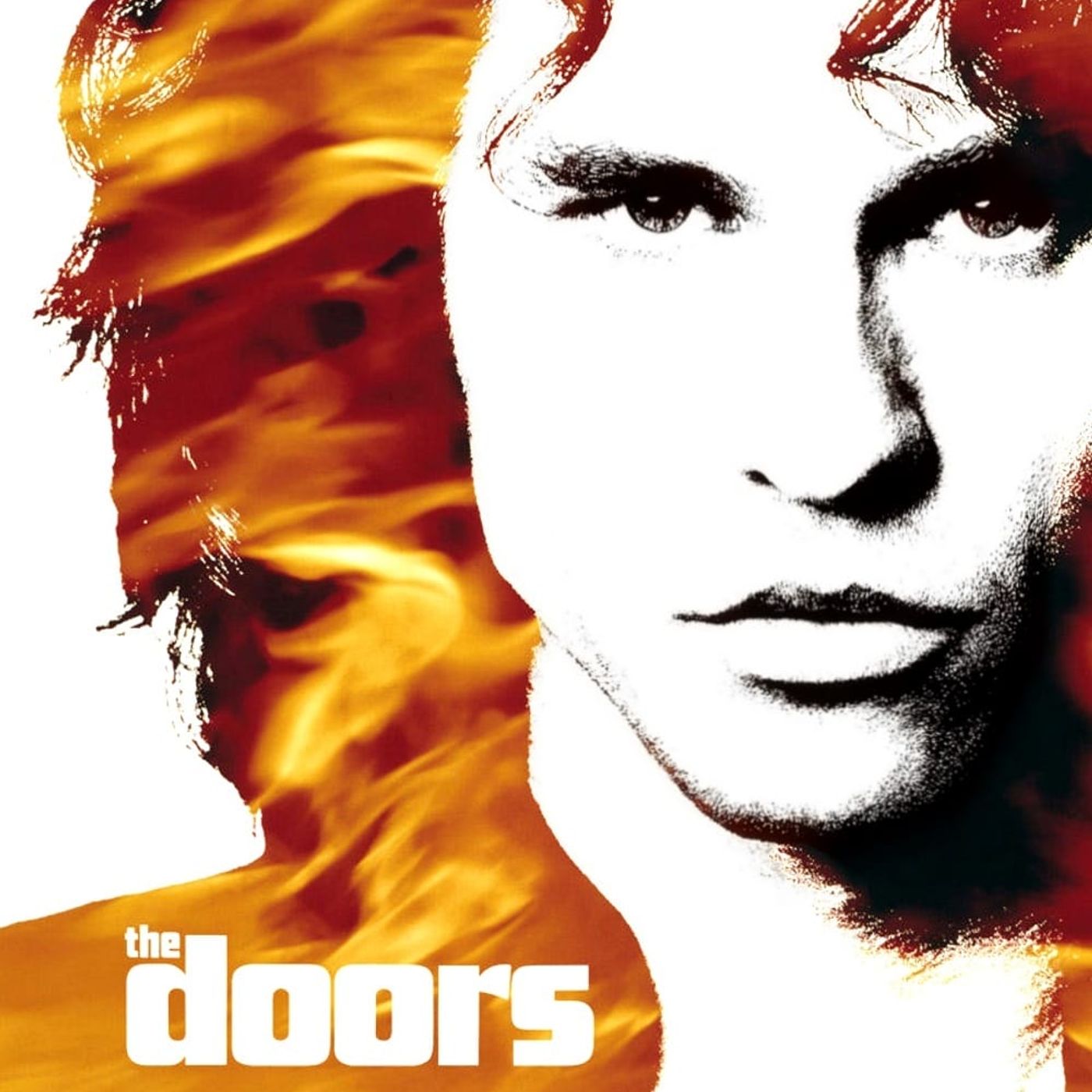
Yes. On this episode of the Culture Cast, we are bringing the month of September to a close with a look at a little film from the one and only director of Many Things, Oliver Stone. We're talking about nineteen ninety one's Biopicks. Father Malone wanted it to be bio Pick month. I guess sort of.
I mean just a little You just wanted to throw a little bit of that in there. Talking about nineteen ninety ones Oliver Stone directed Randall Johnson written who we will be speaking with at the end of the episode, based on the life of well, supposedly the band The Doors, but more I think importantly the life of mister Jim Morrison. Talking about nineteen ninety one's The. Doors, there are things known and things unknown and in between, you know, Oliver. The Doors are March first at theaters everywhere.
The film was directed by Oliver Stone, written by Oliverstone and Jay Randall Johnson. Stars the aforementioned Val Kilmer as Jim Morrison, Meg Ryan as Jim Morrison's girlfriend. Who is Emila Courson? She is in the movie. Yes, she's one of the characters that occupy the same space as Jim Morrison, just like every other character you're about to name.
Yeah, correct, as everybody else, Go ahead. She really is as incidental as everybody else. Is kind of what it feels like, Meg Ryan, Kevin Dillon, Kyle McLaughlin, Friend Whaley, Michael Madsen, Billy Idol, Catherine Quinnlan. But yeah. Most importantly, the film stars Val Kilmer as the Lizard King himself, Jim Morrison.
So I'm gonna kick it to you first, father, Malone, Why oh why did you pick the movie about Jim Morrison directed by Oliver Stone. You hadn't seen it. That's the other again, that's the other component of this month. These are movies that I was kind of shocked you hadn't seen. And this movie is such a spectacle and such an egregious example of excess, both behind the camera and in front of the camera.
It is everything I love about a musical biopick simultaneously everything I hate about a musical bio pick. And I want to say before I start decimating this movie that I unabashedly love it, and that all of the faults I'm going to enumerate does not in any way diminish every time I diminish my enjoyment of the movie. Every time I watch it, it is gorgeous to behold. Uh. I think all the performances are super strong.
I think the photography is gorgeous. I think it is. It's a movie. It's one of the movies I wouldn't mind a living in. But you, mister HP, it's been a minute since, like you mentioned, it's been a medu since you joined the Culture Cast.
So here you are now? You were well Father Malone picked this episode. You were also summarily picked to be here. So why why, mister HP, were you picked specifically to watch the Doors? Sure?
So, unlike in your intro, I have a long history, or long ish history with the Doors music. I had two older brothers. My oldest brother used to play the best of the Doors all the time, and I used to there was something a little bit kind of dangerous about their music, but I didn't really reconnect with it until high school. So this movie hit at really the perfect time for me. It was a senior year of high school for me, and I was so excited that to hear that this was going to be made, and this was going to be made with Val Kilmer and all the trailers and everything looked amazing.
So of course we all rushed out when it opened and saw it. Now, this is a movie. I agree with everything that Father Malone said about this movie, but I will say for me, I'm so thankful that I got to see this movie in the theater because it is a spectacle. As Father Malone said that, the concert scenes, and we'll get into this a little bit, but the concert scenes for me, are so tremendous and have such impact, and they're filmed, they're photographed in such an immediate and impactful way. It was really it was an incredible experience to see at seventeen, eighteen years old.
Now. Having said that, as I said earlier before we started recording, watching this movie at my age now, as opposed to that high school kid, it was a very very different experience, and I'm looking forward to getting into it with both of you guys. Oh boy, speechless. I think my issue is kind of a different one. So Oliver Stone director, I haven't seen a lot.
Of his works. Actually go as far as to say that Oliver Stone is a director whose works I am not familiar with. I don't think. I think the only thing I've seen of his that jumps out of me immediately is a movie that I do I do immensely enjoy. Speaking of a movie I haven't seen in a very long time, and I wonder if I would even like it if I watched it now, was nineteen eighty seven's Wall Street, which I believe looking at his filmography so other than this, so I because I have not seen Platoon, and I have not seen Born on the fourth of July so or JFK for that matter.
Did you never see a net natural Born Killers? Nope, Platoon nope, Falk Radio nope, Literal Lee. I have seen Wall Street, and that is it. This is the second Oliver Stone movie I've ever seen. Now, the look on your Facebotherlone is ah fuck.
I guess Oliver Stone, mon Jesus Well, he's not. A director who works, for the most part, are interesting to me. Have you Seenarian? Yeah, but he didn't direct that, he just wrote yeah. Well he also wrote mid.
That express Yeah, but oh what's the other Salvadar? Yeah, I know, I'm it's not those. I can't think of it though. I mean the thing that I've wanted to watch forever and I've never gotten around to seeing is JFK and look unlike HP. I have heard all of like four Doors songs, and the ones that I have heard, for the most part, I wouldn't say jump out at me is like, oh I want to hear light my Fire again because it's like an eight minute song and he says the same thing over and over again.
I played it a lot in rock band, so that would be again, like I mean, like, these are just these are the points of experience that I have with the Doors. I am not someone who has really any experience with anything the Doors other than Jim Morrison. Lizard King Guide died in Paris at age twenty seven, and apparently was what one might consider to be the stereotypical version of whatever it is he was trying to do be a front man for a rock group. He is like the He is the stereotype of a certain kind of frontman, right, Like he is the kind of front man that your mother warned you about in a lot of ways, like that old phrase like this is why you don't let your kids grow up to be rock stars is because Jim Morrison is what could happen.
I'm not saying that in a bad way, Like he was clearly clearly a weird cat who had a lot of who had a lot of tendencies that I think I resonate with, as I'm sure the two of you do. But at the same time, like, Bro, you were a lot like you were so much like Geez, how is you know? I thought being me was pretty miss and pretty pretty hard to deal with. But I can't imagine walking around being Jim. Morrison because walking around being this Jim Morrison in the movie.
That's the other thing, right, Because I sat and did the research, and I watched a couple of Doors documentaries before before we were sitting down to do this. While I get the sense that Jim Morrison was a lot like this is probably I mean dramatized for entertainment effect. I think might be, uh, what's what do they say? It's being diplomatic? I mean it's he's a menace in this movie, like an this human cyclone of like problems and emotional turmoil that he's constantly putting everybody in the movie.
I'm not saying the real person wasn't like that, but the way that people were talking about him the documentary wasn't like he was a complete fucking fruit loop. That's my point. And the movie makes him out to be like totally on the other side of the fruit loop, like Rainbow. So because that's what that's what Oliver Stone body to is the myth the mythology of Jim Morrison. That's and that's what you get.
I mean, that's what this movie is. As you said before, like this movie should not have been called The Doors. This movie should have just been called Jim Morrison or Dance on Fire or something. But what about just what about just the Lizard King Been. I mean, but that's but that's what you get with Oliver Stone in this That's kind of why he was both the most perfect and the least perfect choice to make this movie, because I mean, he he had been interviewed at the time he was in Vietnam, he was an infantryman, and that's where at least the legend goes, that's when he heard the Doors music for the first time and he quote fell in love with it.
So what you're getting with him co writing. He wrote, yeah, and noy. I don't think he handed it to himor anything, but he sent it to Jim. He wrote a script for Jim Morrison to star and then sent it to him for consider. Yeah, which is a ballsy but it's totally when you know enough about Oliver Stone, that's completely within his character to do something like that.
But yes, but again, yes. It is he he what's the term likes the way his own fart smell? Is that the term? That's the term I would use for Oliver Stone at the best I can tell. I mean, look, that's the thing I don't have a very not informed opinion about.
But Oliver Stone as the person is probably the reason I've never watched Oliver Stone's movies is because Oliver Stone as a person just seems like he seems kind of like the character he's portraying Jam Morrison to be in the movie, which is like, you're like a fucking drag on everybody, you know. That, right, projection Oliver Stone. I'm going to say this before I say the next thing. I love Oliver Stone. I think he's a hero, okay, and I think he's a hell of a filmmaker, but he also seems like a cocksucker who you wouldn't want to be in the same room with.
Whenever I think of Oliver Stone, I think of Eric Bagosian, who starred in Talk Radio, which Oliver Stone directed, and bagaust she was telling a story like it was before he was. They were just working on the script, or really he was working on the script for Talk Radio, and he and Oliver Stone were like, drove out into the desert, and he said, and he pulled over, but like they were on their way somewhere, and they had their wives with them and stuff, and so they pull over in the middle of nowhere, and soone's like, okay, women will wait here, and you and I will go off into the desert. This is not a this is not a fake story. He goes and brings Bogosian out into the middle of nowhere and then sits down and doesn't say anything.
And Bagosian's like, so I get the idea that this is a test whipper whoever speaks first loses. So I just don't say anything, and after like literally twenty minutes, Stone's like okay, and then they got up and went back to the to the van. Like that kind of faux spirituality, the complete narcissism, the sort of leaning toward excess while clucking his tongue and everyone else is all part and parcel with Oliver Stone as a human being. I don't. Nevertheless, I think he's done some really great work and important work in the industry.
Oliver Stone's History Lesson or whatever the fuck that shit was called. Do you remember that like TV show that he hosted for a while where it was like Oliver Stone's History. It was like it was like the Earth was like with the Untold History hosted by Oliver Stone. It's like, like, I think Oliver Stone is the guy that I confused with Francis Ford Coppola is probably what it boils down to. Does that make sense?
That's fairly appt. I mean when this was made though this was before JFK, this was I think it was right after Born on the fourth of July, so he hadn't he wasn't known as the sort of conspiracy theorist, sort of whack job that I think he's considered now you said it, baby, but back then he was. He was just a really good. Filmmaker who was on a tremendous role of movies, and he this this was just another movie in his canon. We didn't, I mean, JFK was really where things sort of turned for him.
I think we can agree. But in this this was really just a culmination of, obviously something that he wanted very badly, which was to make a movie that mythologized one of his musical heroes. And and on that basis alone, I think the movie is a success. There's all sorts of baggage that goes along with that, but for the most part, like I said, he was, he was a very appropriate filmmaker to make this movie, and he was. He's a great filmmaker.
To bother alone's point. The movie that I was thinking of fathered Malone earlier that we almost watched this year was Scarface that he. Wrote, oh yeah, yeah, of course, of course, my god. Right yeah, which watched like yeah, So we almost watched that earlier this year. I think I don't remember what I ended up programming instead, but that would be the other Oliver Stone thing I have seen.
That that's a big one. Yeah. Look, I think in terms of you know, to get best to get past the Oliver Stone of it all and move on further into the movie at least at least the discussion of it. I think for me, what Oliver Stone brings to this project is the wrong thing, which is his own bullshit gets in the way of the project. And I'm not saying that, I'm not bemoaning it as a bad thing.
I think I'm more just pointing it out as a reality. And I think we all agree, like Oliver Stone is not the right person to make this movie because Oliver Stone is not the right person to make a movie about something that he is imminently motivated about, because if he is motivated about it, there may or may not be a lot of validity to what's going on, or a lot of factual narratives being constructed based on a true story. Yeah, the word based on here is being used very very diplomatic, like very just willy nilly. And I think that for me, you know, doing the research at least just the basics about the doors, seeing that Oliver Stone kind of made this more about what it strikes me as it's like I made a movie about my interpretations of someone else's.
It's like Oliver Stone made a movie about his interpretation of Jim Morrison's life, which is fine, but it should have been a movie about Jim Morrison then, not about The Doors, because I think the as much as I like val Kilmer is Jam Morrison, which obviously is the best part of the movie. There's so much left on the table that is so much not better. But I think cumulatively could have added to the success of the movie if they had given it more time. Because there's Kyle McLaughlin, it's Frank Walley in this movie, and they're just kind of there, like they're really just there. After a while, everybody is just there other than Jim Morrison, like we've already eluded.
And that's a shame. That's the biggest shame because Valcilmer's great, but so is everybody else. And for again, a movie called The Doors. You did cast everybody in The Doors. You just didn't give them anything to do.
They're kind of just stepping stones in Jim Morrison's story, which is fine, but then make it the Jim Morrison story. Well, I think he did make the Jim Morrison story and the shame of it is, like, you know, everyone knows the Bechdel test now to see how good of a movie is as far as its treatment of women, Like is there more than one female character? Do they have a conversation that does not involve a man? Oh? Right?
And in this case, the question is are there any other characters who have a conversation that does not involve their adoration of Jim Morrison? Right, and how much he's amazing and how great he is and how much of a genius he was. Like at one point in this movie, Oliver Stone superimposes a statue of dian Issus head over Val Kilmer. This movie is not, let's say, subtle. And here's the thing.
This is Oliver Stone. He is on a string of hits here, Platoon and Wall Street are fucking massive successes. He's seen as a very serious filmmaker. And he's in his early forties during the sixties, during the time period he's chronically in this film, he's in the jungles of Vietnam. What he wishes was he was here on Hayde Ashbury or at the factory in New York or any of these places.
So now here's was this. I guess it's TriStar made this movie, giving him the money to just go recreate it, and Grog recreated it in the most fantasy way possible, because anyone who's probably there would tell you it didn't look this way, it didn't look this beautiful. But nevertheless, this is just a big excuse for him to do that. I do agree with you that it should have just been called Jay Randall Johnson's original screenplay. I believe it was called Writers on the Storm because he knew, no matter how much he wanted to focus on the Doors, it's gonna be the Jim Morrison story.
You can't make a movie about Queen realistically, it's the fucking Freme Mercury Star. Hey, I don't know what the fuck you're talking about. So that's what's funny, And let's talk about that for a moment, because again, the Oliver Stone of it all we've kind of already addressed. But the Jim Morrison and nobody else of it all, they've not made anything else Doors since, right, Like this is kind of it, Like this is singularly the only Doors thing that we've ever gotten about the band. And fictional I mean, there's been a ton of documentaries.
Watch directed a bunch of them. Watch that they're like a fictionalized Yeah, there's never been another fictionalized take on the Doors slash Jim Morrison's story. Yeah, what about that one conspiracy movie about like Jimmy Hendry Beyond the Doors. Yeah, yeah, yeah, but that predates this though. That's true, But that was another fictional portrayal of Jim Morris?
Was it ever fictional one? So that for me is the question then, right, Like if Oliver Stone is doing this and choosing to make this more about Jim Morrison than it is about the Doors, what what would motivate you to make a movie about someone and neglect the entire band and call it's It's just kind of weird to me. I mean, it's and it's a shame because, like so many other things, I mean, if I think about it with a band that I know more about than the Doors, right, so the Beatles, it's like making a movie about the Beatles and it only being about Paul McCartney or John Lennett and like you know, sidelining the rest of the band when we know that they all have personalities like Robbie Krieger, ray Man Zerk, John Dunsmore like, all of these are clearly real people.
I've seen them talking in documentaries. They seem like fully formed, rational human beings, and for them to be boiled down to a series of lines to Faery Jim Morrison through his journey, while if I were them, I wouldn't be disappointed because I'm assuming they were at the best I can tell they were at least somewhat involved in the project, maybe not as much as they would like to be, or maybe not though right not Ray Zeric, which is clear by the way his character is treated in the movie. But yeah, I do. It's just such a shame because there's like, in a lot of ways, Malcomer's performance is great, but we never get to see enough of anybody else to really get a sense that I mean, I know that everybody else is great actors because I've seen them in plenty of other things that I mean.
Kyle McGlaughlin's one of my favorite act to Heerio, and he's fantastic in this movie, and like the ten lines that he has is what it feels he gets. The most screen time, he gets the most interaction with Jim, and what's unfortunately the unfortunate thing is Raymond Zaren is a gigantic blowhard. We all know that he's the he's the one been crowing about Jim Morrison ever since The Door's folded. But and was was a pain in the ass to everyone who tried to make a movie that wasn't him about the doors, right, So evidently it was fine with Randall Johnson when he was interviewed for the screenplay and everything, but immediately was an asshole when he got on the set. But so that means that no one is going to focus on him when they write that screenplayer make that movie, because he can be a jackass in real life.
Unfortunately, that story, that friendship those two guys was should have been the thrust of the movie. Yeah, and Ray has an actual, actually interesting backstory. He played music since he was a kid. He was he was enlisted in the army, not to mention, obviously his friendship with Jim, but he did have a he I don't know as much about the backstory of John and Robbie, but certainly Ray I know a fair bit about and there's a story to be told there at least part of a larger story to be told. And because he obviously burned some bridges along the way he could.
He wasn't a part of that, and that's that's a shame. That's just another it's it's just a bummer because that just further shifts the spotlight back onto Jim. And that's what we that's what we get. But but it's just I don't know, it's a shame because there there's there are stories. I'm sure John and Robbie have their own stories to tell, but we don't get that here.
And what's funny is because again you know, to speak to the ray Man Xeric of it, all right, so again we all know and they've essentially alluded to it and or outright said it in interviews like win the lead singer of your and died and your lead singer is Jim Morrison type, you're fuck Like you're so fucked, you're like fucked beyond if you're not him and you're still left it's Nirvana, that's all this is. It's just this, like it's like our uh uh oh, I guess a band that I'm imminently more familiar with his Sublime than Bradley Nowell died, Like, like what do you do like he's a singular talent. He's the frontman of the band. He has a unique voice that is bringing people in to hear your music. And his style of writing is so unique that there's nobody else that could really write his music for him.
And now he's fucking dead. What are the other members who aren't Jim Morrison or x Y and z lead singer do well? To your point, father and alone, they attempt to hold onto any vestige of how important this their moment is in the story, right, Like you said with Ray Manzeric, I mean, guy burned a lot of bridges, but I think he also knew his worth and his value at least, you know, which is a good thing. You said that like the I'm not saying that like Ray was just the guy who kept talking about the Doors. No, no, he's not.
He was a phenomenal producer and he had a very great career like after the Doors. It's like the best keyboardists of all time period. And when I say he's an asshole and a blowhard and everything, I say that all with genuine love, like I love Ray Menzarre and I'm serious, I'd say, particularly when you cast Kyle MacLaughlin as Men's Eric and you've got Val Kilmer as Morrison. That's why I say like it should have been at least more focused. They should have had at least a couple of more scenes together, you know, like as.
The initial members of the band, the four members of the band should have That was what the movie was missing. A lot of what we get instead is an act one is all of the band members just propping him up, and then act to them becoming an obstacle and then then becoming an active obstacle in the in the third the third act. That's that's what everyone exists in this movie to do, like Kate. The Will of the Lizard King. Because man, speaking of thankless roles in this movie, Meg Ryan wow miscast beyond miscast.
Like the character that she's playing, Pamela Corson, who would pass away three years after Jim Morrison did, Like she's right there with him in a lot of ways, Like best I can tell, at least from the research that I did, you could not get a sense of that from the movie. The movie is just like she was just so put upon. She was such a put upon lady. Who or her? And it's like I think she knew what she was getting herself into the moment she started hanging out with a guy who, by the movie's narrative, just showed up and followed her and was like, I'm in love with you, Like you know what you're getting yourself into.
If that's not the way the story happened. And again half truths, half lies, a little bit of both, but again, like in this version of the movie, completely miscast, like not even a character, not even a real person, just another kind of like facet of the Jim Morrison story that has to be handled because he did have a partner who he fucked around on constantly, just further feeding into the narrative of the lead singer of a rock band up to no good. Right, well, no creating that method, right, I mean, yeah, that's say I'm saying, like you, like, I don't know how much of again, how much of this is real, how much of this is fake is kind of unimportant at this point, Like this is the narrative that most people believe.
What this movie reminded me of, And this is the point that I wanted to make, And I think it's apropos that it's the three of us talking. This is like if oh, this is like if Oliver Stone made fucking Forrest Gump, That's what this is. This movie reminds me so much of Forrest Gump, like and and like cause again, like we're seeing. That early nineties glow that you know, particularly with period pieces that were filmed around this time, they all kind of have that look, don't they. Yeah, they got that look, you know, they got that they do, and this movie is one of them.
And like, when I was watching this movie, all I can think to myself is, like, man, Oliver Stone thinks Jim Morrison is like an American cultural icon, which I'm not saying he's not, but like of the kind that is on top of the mountain top. I'm not saying he's not, but like for Olliver still this is clear. And the way he treats this story, the reverence that he has for Jim Morrison, like the way that a lot of those performances are filmed, they're like, you know, religious experiences. He's like, he's a fucking pastor, he's a preacher, he's a holy I mean, he's a holy man. Jim Morrison was a very complicated man.
Well that's ray traded in that mythology himself. I mean you can't. You couldn't look at an interview with him if he didn't mention Ray was like, you know, a shaman dancing and they were he was Dionysus and blah blah blah. But it's but that's again, that's Ray protecting his you know, his legacy, the doors legacy. Because you can we talk about the mysticism in the movie for a moment.
Oh, if you want to talk about it. Every time we see a lizard that the lizard whispers the word Morrison. Did everybody notice that? Oh? Yeah?
What about the Native American from the episode on a Sausey of The X Files who just has on the fever dream with him on his on his what what the fuck is it? What does Homer go on in the Simpsons? I forget what the name of it is in that episode? Yeah, walk about essentially like that. Yeah, like there's some of that here.
Was just like white man mysticism. Chris Carter was trafficking in this and nineties in The X Files. Okay, yeah, man, it's so fucking funny to me like that, Like this is weirdly, Oliver Stone's a killing sale because this is not the only movie where he he sort of trades in Native American spiritualism as the way you would treat like the mystic East back in the nineteen forties Orient. Yeah, it's like Bucks from the Orient, like yeah, right. And and thinking in doing it like no, no, no, I'm saying I'm interested in that stuff like it I I it.
Is genuinely experienced to me. It's like, yeah, but you're fetishizing it. It's just a yeah, it's just as bad as having you know, the bucktooth savages fucking you know, scalping people, you know that, making them into this sort of mystical thing just to inspire this white kid from fucking Florida. Morrison served that up to him on a platter, though. I mean, that's his poems and his pros are filled that that was his thing.
He that was the legend that you know, that that bit at the beginning with the Native Americans that are in the car accident. That's he didn't invent that. That's Morrison described that himself. That came from his own words. Morrison didn't invent it.
But Morrison gave that moment in his life a lot of importance. Oh yeah, and I mean, like again, like here's the other thing. And this is something I have personally been thinking about a lot in the last couple of months, given my own life and the things that I've been going on. So much of this movie is a mythologizing of things that are just like why what we're mythologizing this to give this meaning, but like, so much of this is just He was a guy who was troubled dealing with shit, looking for escapes anyway he could, and those escapes helped him be creative as well. So after a while he started just crutching on the things that made him feel good, which is alcohol and drugs.
Okay, there isn't have to be anything metaphysical about that. Frankly, a lot of that has nothing to do with metaphysics at all. That just has to do with people struggling through life and looking for ways to ease the pain, as it were, and instead it's like no, noa nah. He's a mystical shaman of the Native American variety, and the Native American spirits were in his body after he saw them when he was a child. Like that's what he said, Like okay, like again, like it feeds into this idea that Jim Morrison was more than a man.
He wasn't. He was just a fucking dude who made music. But like, but but look, the story is so good. Are you gonna tell it any other way? Fuck no, you'd be stupid not to tell it this way, right, like, in a lot of ways, like you would be stupid to inflate the inflat the narrative even more as someone who's Oliver Stone.
He's not gonna punct your holes in his narrative. He's gonna inflate it with more hot air, especially coming from King hot Air himself. What's sort of funny is if you if Morrison was around today, or you tried to make this movie today, the cries of cultural appropriation would be deafening. You could not You could not have. You could not have a character like Morrison claimed that the spirit of a Native American was inside of his soul and.
I have a spunge man. You could he could. You could have the fucking opening sequence, because it really happened. He has that poem. You can fucking portray it as much as you want.
But what you can't have is big Chief Moonlight Drive showing up every fucking ten minutes every time like something goes wrong in Morrison's life nor I mean, look, if you want to portray death, which he does, the bald dude gets closer and closer to Morrison like in every fucking scene in the movie. Like that's fine, Like you know, that's at least a bit of sol and it isn't like some guy in a head dress, like you know, whooping it up. Did you know that Jim Morrison died at age twenty seven? I did? Yeah, Okay, did you know how important that is to the mystical aura of Jim Morrison because the movie would have you know it is.
Yeah. I understand having heroes, I understand hero worship. I understand modern day mythology and creating a mythos around someone because again, like in a lot of ways, it's easier to create a mythos around someone than to face the cold hard reality of what the fuck was actually going on, which is Jim Morrison is just a dude like any one of us, who spoke a good game. And he happened to speak a good game at the right time and the right people listen, and he did it through music, and he was doing it at a time where not saying other people weren't doing it in music, but like everybody was kind of doing that in the sixties in the music, Like that's what everybody was. Like you already alluded to Father Malone, like this was going on in some of the cultural like the countercultural centers of this country.
Jim Morrison was just feeding into it. He was tapping into it. Didn't create any of this. If anything, He's just a guy who saw what was happening and said, eh, I can I can get down with this if I'm not already down with it, like and that's the thing. Like again, the other thing about Jim Morrison that we've already kind of talked about, but I do want to talk about a little bit more is the writing and the music, because pretty much all the Doors music is written by them, the band, but there's a lot of it that is just them covering other people's music too, which some people would kind of denounce and decry as like, you know, not anything of value.
But so much of what the Doors. Do, which songs are the Doors were. Covers Whiskey Alabama song. Then yeah, they did a crawling Kingsnake by John Lee hooker. But which songs are they famous for that are covers?
Like you know, is this. Alabama song a famous song that they're known? Yeah, but that wasn't that. I don't think that song was very popular of their's. Like when you talk the Doors, it's all light my fire and the end, and uh, I mean I think a fucking peace frog before I think any of those tunes.
I mean, I think a piece frog just because the name is great and it makes me think of a frog throwing out the peace sign. But the guitar, like it's really helped. Well that's but that's the thing I was going to say, Like there are some Doors songs that are just them synthesizing other people's music. But I think who they are as a band is so unique. I mean, you've already talked about the ray Man Xerica, Well like they didn't have a bass player.
Well that's that's not exactly true. So it live he played ray played this like bass thing. It was like a keyboard. But on the on the albums, hey, it's like a little keyboard, but it's all just it's an early sort of bassynth. But but on their albums basically from Not No pun intended.
From Strange Days on, they they routinely had a bass player. If you listen to those songs especially, they didn't They didn't record his keyboard bass much after the first albums. That's kind of a misconception live certainly, they always had Ray playing the bass on it with his left hand, which is again one of the cool things about Ray that's so unique about him and his approach to music. I'm not suggesting that most people would get a kick out of understanding how cool that is, but there is this story behind that. He learned piano at a young age.
He was fascinated by stride piano and that's where he learned that technique of this hypnotic bassline that he could do with his left hand. That's cool. I want to know about that. That's another thing that makes the Doors unique. But one thing I wanted to double back on a little bit as you were talking about the Door songs.
Another thing that they touch on a little bit in the movie, but I wish they did a little bit more, is that the fact that a lot of their big hits weren't even written by Morrison. They were written by Robbi Kreeger. Light My Fire, touch me. Those are both Robbie Kreeger songs. They alight on it a little bit when they're kind of workshopping light My Fire, because I think he says had to be about fire to compete with your song.
Ung's Jim. But that's kind of a cool detail. That's something that not a lot of people know about, and I think Robbie deserves a ton of credit for that. But again, this movie has no time for any of the other members of the band, but Jim, no matter what, you know, what the facts tell you about it. Well, you know, speaking speaking of the facts, like in that scene, like they're they're complaining to Morrison about his stuff being too dark, and his response is you write one man, right, And And now that exchange evidently actually happened, but it was it was Morrison pleading like, please, would somebody else write a song?
I'm drowning. I've written the whole fucking first album, could somebody give me a hand? Like there was no interaction like that in the movie. There's no human interaction at all. See my problem with the movie ultimately, and where it falls down to me, it feels like you're watching King of Kings where instead of writing dialogue for Jesus of Nazareth.
They just have him speaking every bullshit line from the Bible. I should said bullshit by well at the same time, any you know what I mean myself? Okay, so but you know what I mean, it's like Jesus walking around everything. That he says. He is so fucking important, Like right, so we wait on every one of Jim Morrison's fucking words, like.
And it's all lyrics. It's like it's it's his poetry and his lyrics. Like he doesn't have one conversation with anyone in this movie. He just spouts like nonsense and uh uh, you know, lyrics. It's it's it's very unusual.
You know. That's what you could go down to. The octopus is God and John and that's how we wrote the song. John. Like Okay.
That drove me nuts about this too, upon rewatching it after all these years, Father alone is as as a team watching this movie that that kind of stuff I loved because I had such I adored the doors music and it was almost like little easter eggs at the time that I thought Oliver Stone was dropping in where he's not speaking in dialogue, he's speaking in lyrics, like you said watching far out, but watching it now, you know, it was annoying to me because it's almost like a like a shortcut to thinking in this movie where you can, instead of trying to go back to the actual thoughts and emotions and feelings that were happening in the scene, he's just going through a database of Doors lyrics and picking out ones that seemed appropriate for that scene.
So Jim is just speaking in Jim speaking. He's not speaking, he's speaking in lyrics, and that I thought that was just really it felt lazy to me watching it now. So here's the other thing for me in all of this and Fotomlne you've alluded to the like, oh, it's just like there's nothing going on thing, like he's just prostolytizing his bullshit. I mentioned the no base thing, and you kind of went on to correct me a little bit, Harris, But I think I should have clarified myself. I'm talking about the Doors as live band because it would strike me as the Doors were a band that you went to see perform live.
That was the fucking point. It wasn't even like the records were literally to let you understand what you're going to hear when you go and hear them, and if you can't get out to see them, this is what you might hear. But the Doors in a lot of ways, and that I'm sure some people are about to click the fuck off when I say this, and I don't frankly care, because I think this is an apt comparison. The Doors are like The Grateful Dead and Dave Matthew, Like it's all about these live performances. I've got this version of Dave Matthews from nineteen ninety four and fucking Fresno, California perform in wherever, and I've got this tape of it, and it's this version of crash into Me that nobody's ever heard.
Isn't that crazy? Like that's what the Doors strikes me at? And that's the father. And you're mentioning the things about this movie that kind of rankle you. The things that rankle me about this movie are you want to make a fucking movie about Jim Morrison, Fine, cool, go right ahead.
You want to make a movie about the Doors, cool, go right ahead. You want to recreate like three or four fucking performance why in like their entirety. Because that's what I disagree. Here's the problem. It's the best part of the movie is but it's the best part of the movie, and in a lot of ways, I don't think I even needed it.
I don't think I needed it. I don't think the movie needed it. What's the fucking point you can go see? Like, why do I need to see Val Kilmer pretending to be Jim Morrison when the person who was Jim Morrison was enough? And like, I, I don't know where this conversation is gonna go be on here, and I don't want I don't know if I'm gonna get to say anything else on this.
But I'm not saying they're bad, far from it. I'm more pointing out that in this movie, do one or two, don't do four, because you spend a lot of time doing that. And if we're sitting here talking about them not doing enough writing of scenes of characters with dialogue, because there's full on recreations of performances, maybe some of that time that's well done could have been reappropriated elsewhere into actually telling the story. You want to film a concert? Cool, I get you can't do that.
In ninety one, Oliver Stone, we all understand jam Morrison's long dead fifty twenty years already, he's been gone at this point, but like, there needs to still be a movie with a plot here, and you can't just sacrifice it for recreating and doing very well recreations of live performances. The thing about musical biopic movies is what I've found anyway, it's always weighted one way or another. Either it's all biopick life story where we're dealing with the characters and we never see them perform, and then you end up feeling like, well, what was so special about this person? Why are we watching this human drama? Or it's waited far too in the other direction, where it's all performances and very little of the human drama.
This one, I think falls into that category definitely. But but right, but I know here's the thing good like now, Uh, I'm well on record of my love of Larry Kerrinjskins, Scott Alexander. I think they the best screenwriters in the business, right, but their movie Man on the Moon is a movie that every time they would recreate a full Andy Kaufman performance of one of his bits, I kept thinking, I can go home and watch this like I can watch Andy Kaufman doing this. At no point when during like the Miami sequence or they not to touch the Earth sequence, did I think will I ever see a Doors concert like this? Like the foot there's footage of them performing, there's the Hollywood Bowl, and there's a couple of other performances.
You can see it, you can hear some. But ray Men's Eric has always said, and I think everyone who has seen them as also said that when they were on, seeing the Doors live was the best experience you were going to experience. If they were off, it was the worst experience you're going to experience. Right, So the fact is right they he really only meets one person. Well yeah, I mean when they were on.
It's like when Jim Morrison was on and when Jim Morrison was off, because like it would strike me that the other members of the band are professionals. Point being that that we're we as an audience and fans of the Doors are never going to see any of the heights of those performances because the footage that we have is very very limited. That Hollywood Bowl performance, Morrison is like a stick figure just standing like the microphone stand could be holding him up. The entire time, there's no performance in the performance. So not only are these sequences so fucking beautiful just to watch in general, no matter if you're a fan of the music or not.
As a fan of the music, I think they're essential. And Morrison is such a dick in this movie, and I think having as many of these performances as they have is really really important. Well, this is the Jim Morrison Show, and so like that's the thing. Like as much as I as much as I'm like saying like it is weighted in one direction, it definitely kind of hurts the overall pacing and plot of the movie because so much is sacrificed for it, Like they're one hundred percent the best parts of the fucking movie. Like that, the whole thing at the end of the movie in Miami is the for me, that's like, that's the stand out segment.
That is the stand out segment of the entire film. And just reading about it is one thing, but then getting to see Oliver Stone recreate it is another. And yeah, like you could go watch stuff, but some of it's just not this. It could never be as bombastic as this version of it, because the real life version of it wasn't this bombastic, But Oliver Stone's version is, so, you know, let the bread and circuses fucking go for it, and let's see the lions and the tigers, even if there weren't any, like you know, really lean into it. There's nothing wrong with that.
Like we're already leaning into all sorts of wild shit with this movie, like lean even further into the insanity of the performances and the insanity of the live persona of Jim Morrison, which they really lean on throughout the movie. The scale, the scale of these musical performances can't be overstated, just because I mean it looks like for the not to touch the Earth sequence or even when they're doing break on Through, it looks I mean, there's no CG in this movie. It looks like there's there's got to be like fifteen thousand or twenty thousand people in this amphitheater. It's probably much less than that, but the movie makes it look like this is this Bacchanaleian you know, performance that's happening, which gets to the heart of exactly what Father Malone is saying when the word of the Doors performances being so electric and so communal and so having an element of danger to them.
I think that's the thing the movie does best, and it's one of the few times where you actually see the band themselves interacting. Now might be a little bit of John Densmore shooting dirty looks at Jim as he stumbles around, or what have you, but that to me, at least, it conveys properly what I think the idealized excitement around a Doors concert is. I'm sure the reality is, well, you can see it in the Hollywood Bowl. It's not nearly as bombastic, to use your term, but it's like this mythologized, idealized version of a Door's show, And I think that's entirely keeping in step with this sort of a legend that Oliver Stone's building around this, and the fact I think the probably the savviest decision that he made one of them anyway, that Oliver Stone made was having Val Kilmer sing live during those live performances, because I remember an interview at the time where Oliver Stone's talking about it.
He says, well, lip sinking. It's fine for a while, but after a while it builds this doubt in your mind and you start to notice things, and eventually you've checked out of the whole performance. Well, the fact that val Kilmer was able to really pull off a pretty amazing impression of Jim singing, I think really saves or it really enhances those live concerts to the point where they feel live, they feel energetic. I don't think you get that if he's just lip syncing to the to the performances. In fact, the only time I think he really lip syncs is at the end when he's doing La Woman in the studio and it's lame.
It just looks kind of there but him. It's very clearly Jim Morrison's voice too. It's like, right, but all here's Jim Morrison's voice. Everybody like, what the fuck? But Val Kilmer did a really and it also can't be overstated how what a sensation his performance was in the day.
I don't I can't speak to I mean, you're seeing it all these years later, Chris. But at the time I remember this was people were talking Academy Award nominations for Val Kilmer because he was so uncanny. We hadn't seen any anyone portray aknown figure like this in a music in a concert type movie setting. It just that even now watching it, it still kind of gave me goosebumps watching this because it's so well done. I mean that for all of the negatives we're throwing at the movie, that's really the one area I can't really throw too many rocks at is is his his singing as Morrison and the concert scenes as they are.
I think, I think, if you're going to do this movie the way that they did it, you better make sure you cast the right person to play Jim Morrison, and I think they did. I can't, for the life of me, even see anybody else playing Jim Morrison at this point, because it almost seems like I'm sure Val Kilmer would love to hear this. It does seem a little bit like the spirit of Jim Morrison somewhat possessed him, like throughout the movie, because like the performance that he is able to give does not feel like a put on. The only time, well, I think that back, there's only one part where it feels like a put on. When he's like fat, Jim Morrison kind of feels like a put on, like and it's all obviously because he's like got like a really fake beard.
It's like the fakeiest of fake beards I've ever seen. It's like a prop beard. It's almost like he should have a pair of glasses on that the beard is connected to, like one of those like old props. Because I mean, like again, like that's the only part of the movie that feels like a put on. Is like when he's like fat Jim Morrison, which is like twenty minutes of the movie.
It's like seeing Austin Butler's fat Elvis. It's like, we know, we get it. He let himself go. It's part of the story, like what fucking ever. But that's the only time it ever feels like a put on with Val Kilmer.
Otherwise this is I mean, you're wondering where this Val Kilmer guy is at right now. It's a real unfortunate thing what happened to him with his health and everything, and like that affected his ability to act, because yeah, if I watch this movie now, I think the one thing I'd be asking if I knew nothing about it is where's that where's that Val Kilmer guy? Now? What's he up? Because he seemed like a pretty good actor in nineteen ninety one.
And vocally, HP, you know, you mentioned like how important it was to have him singing live. But I think he does a close version of Morrison, except one scene in particular, which is at the end of the Miami sequence, he goes out into the crowd and they're singing that version of break On through the chat Rats. Yeah, yes, that in that he is completely indistinguishable from Morrison there. Yeah, there's something in I mean, I think they're both in the same like vocal range. But when he when he shouts, when he does the sort of screaming shout singing, I think it's it's literally in distinct there.
Yeah, it's it's amazing. But but also, and I'm remembering this now, they're not this particular production, but there were other actors over the years, because let's not forget they they've been they were trying to make a movie around Jim Morrison for for decades. John Travolta at one point was connected to possibly be Jim Morrison, Jason Patrick from Lost Boys, who probably would have been a really good Jim Morrison when you think about it. Even in the Lost Boys, there's that there there. I think it's people a strangers playing and they superimposed his face with Jim Morrison.
Posters to make it really literal. So thin about that it could have been Jason Patrick as Jim Morrison. What that would have been. Like, I would have preferred Johnny Depp myself, like you know, early nineties Johnny Depp as Jim Morrison. Looks nothing like him, but hey, what he's hot guy.
We we'll just cast him. I believe Kurt Russell was also up for the part at one point. Have you seen Kurt Russell's elvis? I have no, but that's a that's a John Carpenter thing. I am yet to see see that.
Kurt Russell was in this movie, right, I mean he kind of looked like he was in this movie as McCready was in this movie. No, is that what Jim Morrison was doing towards the end of. The mind because McCready had an awesome looking beard, and Mark. What the fakiest of beards you've ever seen? He looks like Jesus.
Isn't that what the fucking point is? So it's to look like Christ. By the end of the movie, he's literally Christ like like like literally like now he is the physical embodiment of Christ for Oliver Stone. No, I don't think so. I don't think he literally looks like Jesus though.
Yeah, but that's how Jim Morrison looked at that. I know, look at the photos of them, he kind of looked like Jesus. Everyone kind of looked like Jesus at the end of they That's true. I mean Ted Kazinski also looks like Jesus. To be fair man, Jim.
Morrison also looks like right. Yeah. Also, if you had longer hair, we'd probably also think you look like Jim Morrison. But he didn't have glasses. But he didn't live long enough to figure out if he needed glass.
Can you imagine that like glasses? Yeah, you're too bleary eyed from ten hits of mescaline? Would what would great acid? That's the that's the tantalizing that the little moments in the movie that I was thought, Wow, man, I guess I missed out in the sixties, Like like she says, are you high right now? It's I guess just some low grade acid.
I was like, God, they had grades low grade, I. Know, and they're just dropping acid on like a Sunday afternoons. You know. Chris, we talked about Sid and Nancy recently, and Alex Cox has a bit of ambivalence about that movie because he feels like he romanticized the sort of grubbier aspects of it, right, Uh, he need not worry by comparison, like the the sort of the the thanatose of it all, love of death of Jim Morrison, the poetry of the grave. Uh, it's really amped up here, Like this is as romantic a version of death as I've ever seen.
Not, I mean, as I mentioned earlier. But did you know he died at age twenty seven? Did you did? Did you yes? Did you know that the that death was a bald man who followed him around his entire life?
Did you know that the song the end was about death? No? You did? No? See you know?
By the way, as far as musical performances in the film, that's the one they could have cut because A, why are you going to feature the end cinematically after Apocalypse now? And two the shockingness of that, like it is shocking, like the original lyrics in it, like the I want to fuck you mom that whole thing, right, But but was it really that shocking at the whiskey a go go with that crowd, like if he was doing it on television maybe, But. Actually because it's a guy that looked like that was saying it. It's probably right, no, no, no, no, but my point but that but that what that is. They're featuring that sequence to show us how shocking the doors were and how different and they were than everybody.
But we already know that, right, Yeah. That's what I mean, Like, I don't understand what do we need to know about them at this point? Like we get it their counter culture, like personified trailer for the movie, like. Just an Indian in a cave and a puma and all the mysticism jumping into Morrison and making him a star. We don't need to see him become a star at the tiny little whiskey of Go Go.
Vision on a vision quest. Here's an annoying biograph autobiographical pause. When I lived in Los Angeles, I lived in Venice, like three blocks from where Jim Morrison actually slept on the rooftop of Tricks during that summer. But uh, I worked at a movie theater for many, many years. I worked piled him around with a gal named Kelly Densmore who was the daughter of Jim.
I'm John Densmore. Yeah, And one day she brought in some weed and was like, this is my dad's weed, and I smoked some Doors weed. That's all back to the movie. Did you go through the Doors of Perception? No, but it was incredibly good.
Well yeah, fucking hope. So yeah. I think he's the meanest member of the Doors. I think John. I think there's something about the drummer being sort of a volcanic personality.
I get the sense he was just he was kind of a dick. I think it just seems that way. Yeah, I've seen him in interviews and even now, like I watched a few like like Chris, I watched a couple of documentaries on like Mars and Hotel and stuff, and he just seems I don't know, he just seems like a like a mean dude. I don't know. Maybe they should have had more of that in the movie, because all we got was it's the.
Idea of like you're the band member in a band where everybody knows the lead singer and nobody like is sitting and crowing about anybody else. Like what again, Like, I don't blame them for being dickheads. Like I've never been in that situation. I can't imagine what that's like. Like someone like Dave Grohl figured it out right, Like Dave Grohl went had his own band, lead singer of his own group, like figured it out, moved on, like put Nirvana behind him.
I'm not saying Man's Eric and Densmore and Kreeger didn't, but like they kind of always just continued to do The Doors without Jim Morrison, which is fine. They did. They did make a go of it after he died. They actually put out a lot of people don't know this. They put out two albums, put an album called Full Circle and other Voices.
Because another thing that people don't think about with The Doors is that Ray sang backup on a lot of those albums. He actually had a similar range to Jim Morrison, so he could pull it off. There was even I remember reading somewhere they were playing in like Stockholm or something, and Jim was out of commission because he had taken too much, too many drugs, I don't know whatever, and so Ray sang the set, and whoever was at the show said he did a great job. He sounded just like Morrison. He had that similar range and you can I mean, these albums not to get too sidetracked, but these albums are okay.
I mean it's never going to be as good as with Morrison because he's the draw. I mean he to a lot of people, he was the doors. But let's not forget these guys were all really, really fucking good musicians, every one of them. So is Ringo Star. I mean Ringo Star is a talented drummer.
Like that's my point, Like there's no way to take any of this away from them. It's just the movie just doesn't care because it's not necessarily super duper exciting to show a bunch of assholes playing instruments in a movie. I mean, that's the reality of it, right ninety one Oliver Stone sitting here thinking to himself, like I've been wanting to show this for how long now, like since Jim Morrison was fucking alive. Like I'm going to tell the most like amped up, cracked out version of the story, which is, look at Jim Morrison, guys always on drugs, always being wild and crazy, and like that just feeds into the mystique and the persona of it. Like I would be curious how many people's beliefs about Jim Morrison have been crafted by this movie alone.
As opposed to everyone who saw this movie and ever after now believes that this is the life of Jim Morrison, no question about it, right, which is kind of a problem. Yeah, but that's the problem all big movies and stuff, you know, look like when it comes to remakes and stuff. You know, my attitude has always been the originals still around. Who gives a shit if they've remaxed it. You can watch it.
They didn't delete out of existence. At the same time, Chris, that remake, if it's further enough along from that original film, becomes the movie in everyone's mind. Correct. If you say Dawn of the Dead to somebody, they think Zack Snyder's Dawn of the Dead. They do not think about that original film.
And that's the problem. So, yes, it is. But you know, what can you do. It's the power. Of movies like or you know, TV filmed entertainment like it just narrative.
Smith becomes legend, just so goddamn clumsily, don't give us a script, this rewritten horribly script he turned. He turned Johnson's script basically into effectively like a TV movie version of the Doors. Like that's the that's the level of writing for the screenplay. And you know what, this not only sidelines the doors, I'd like to point out, it kind of points this unfair finger at them. Where the scene when they go to New York and they're at the factory, like they basically have a scene where the doors abandon him and this is the moment where it all sort of sort of cascades down for Morris and everything starts falling apart at that moment.
Well, as far as Robbie Kreeger was concerned, they made music with Dion isis so. I mean, it's just well, that's that scene I think for me, is just like a microcosm of the movie. Right. It's it's this idea of like, even when they're given an opportunity to interact with each other, there's nothing of substance comes out of it. It's just Jim Morrison acting like a bucket of dickhead like a scene.
Now, dick like scene is such bullshit because you're talking about the end. When they're they're listening to a playback of writers in the storm. They're like, we're breaking up and we're leaving. It's like this is they did. They weren't breaking up.
Jim was going to Paris to hang out for a while. But he had every intention that the Doors didn't break up because he left for Paris. They were just taking a break. They had finished up their commitment to Electra for the number of albums they had to provide. They were gonna plan out what they're gonna do next.
Were they wanted to tour behind La Woman. But that's that doesn't make for a compelling you know, ending to this saga as far as Oliver Stone is concerned. So he has to have a little bit of poignancy or invent a little poignancy by having them go, well, so long, Jim, we had a great run bye. But that's not how that's again, it's it's Oliver Stone's story. It's not the scene story.
That scene is maddening. The the oh, man, this is the best time. This is what a great album. Man, I ever going to forget these times? Man, the best album since Days Man, this flow.
I will say that when Morrison arrives on that scene and he's interacting with uh. Well, I love that. That's why that's what I've yeah. Yeah, yeah, yeah, daughter, yeah yeah that part. And then when he when he first gets there and it's men's Eeric's wife Karen, and and he's like, oh, you cut your Hair's like, yeah, we're trying to have a baby.
He's like, oh, your hair getting in the way. It's like that whole that scene is the only time Morrison appears like a human being in the movie, And like, where was that guy the previous two hours? Oh, it's completely charming because he's interacting with this little girl, he's giving her presents. He you lose. I mean, even though he's taking swigs from a bottle of like Southern comfort, But that's you're right, that's the only time you get this sort of this Morrison without any pretense.
He's just hey, Dorothy, you know, where's where's princess? I'm gonna you know it's it's it's sweet, it's charming. There's nothing that that's the this precious little of that in this movie. I think, if you're Oliver Stone, the ultimate goal of this movie is to not only make a movie about one of your idols, but also to ultimately cast your child as the younger version of them too. Sean Stone, who is in one of my favorite television shows, Jessevan TURA's Conspiracy Theory or actually, I believe the title of the show is Conspiracy Theory with Jessevan Turas starring Jesse vent Tura, Jesse vent TURA's son Tyrrell, and then Sean Stone as well, just hanging out with the two of them searching for human chimpanzee hybrids and time traveling Barack Obama.
So seeing Sean Stone in this was like, oh, so he also just wanted to like have his kid play Jim Morrison. Okay, got it? Like so much of this is Oliver Stone just like checking boxes for himself, right, Like it's just like, oh, we've got this scene where we're gonna have young Jim Morrison, who could play young Jim Morrison. Oh, I've got a kid. I've got a sign he was also he was in JFK also, and he might have been born on the fourth of July.
I just think Oliver Stone loved having his kid in whatever movie he was making at the time. He's in Natural Born Killers as well. Oh right, and. He's in Wall Street. But in none of those movies is he literally playing Jim Morrison.
That's true, but that this is the only film that gave him the opportunity to play Jim Morrison, And I gotta say about Oliver Stone. I think this may be a situation where this movie wasn't going to get made without Oliver Stone because he had the cloud at that moment. So we got the movie. We got, you know what I mean, Like, this wasn't a case where we were going to get a better version of this movie because we weren't going to get a movie. Maybe maybe another decade later, they might have done it well and there's still a movie to be made if somebody wants to make it.
There's an interesting movie about the doors, the band and the phenomenon and the whole sort of scene at that moment. But he's the wrong guy in the right guy to tell it, I think ultimately, because I do you know, as much as I think the script is nonsense and it's insulting a lot of the times, Like I love watching the movie. Well, is that because of Val Kilmer's performance or is it just the whole movie? Yeah, it's the whole millieu of the movie, and that I understand, and like I do think that again, that's the other thing about this movie. I mentioned the Forrest Gump of it all, Like there are a lot of people that would love to live in Forrest Gump because they love the world that that movie creates, and it's an idealized version of a certain time in a certain place, and this movie does a lot of that.
Like it's an idealized time. It's an idealized version of a time and a place that so many people would love to be able to like visit and just be a part of, at least that I mean the music scene alone, let alone just the scene in general. But the other thing we haven't talked about is the version that I watched, and I'm assuming the version that you guys watched had the Jim Morrison almost kills himself scene cut out of them. No, I didn't. I have found out about that only recently.
That's called the final cut, right, I don't know why it was called the final cut, And in fact Oliver Stone went back later and basically said, the theatrical cut is still my preferred cut of the movie. But then to find out, all they really did, I believe was cut out the scene where he's like on the on the outside, He's hanging off the edge of the building and Pam comes out to try to get him inside, and he recites some poetry kind of an odd I don't. I'm not sure I understand the choice there. Why he would why he would do that? But I haven't researched enough about that cut to know.
Wait he cut that scene out, Yeah, he. Did for it's called it's literally called the final Cut. I don't. I think it's maybe ten fifteen years old now. But I only found out about this, like I said, maybe a week or two ago when I started looking into this again.
The deleted scene that I know about is the Jim can't get it up with a hooker scene, which they now we mentioned at the at the top, we have an interview with Randall Johnson, the original screenwriter for this project, at the end, and that scene in particular, you're going to hear a very interesting story for mister Johnson about Oliver Stone's attitude towards Morrison and his sexual prowess. No, it's not a surprise to me that the scene was cut. It's a surprise to me that the scene was filmed at all. Well, and that's again like when it's the when the level of hero worship that is on display here is as kind of like overwhelming as it is with Oliver Stone, like you can't help but wonder how many And again, like you alluded to with the interview, like he's gonna talk to some of this, but you have to wonder how many other things were left out or not even considered, because heaven forbid, he'd be a human being, like heaven forbid, he'd be a real person, like heaven forbid.
We talk about the foibles of the man. I'm not saying that they don't, but like a lot of is just like it's just a rock star YadA YadA YadA, Like it's like there's no YadA YadA here, Like this guy put people in his life through insanity because of his inability to cope with his like problems. They allude to it a little bit, they don't really go into it. Again, missed opportunity talking about his family and like Jim Morrison, like the movie stop short of saying it because the movie's because a movie made by Oliver Stone about one of his heroes is not gonna say it. But part of this also like there's a case to be made that it's like was this guy a poser to is that what we're kind of alluding to.
Well, he's certainly self mythologized, right, well, we all do, right, and so you know that they died. I don't have any parents, Like okay. That's the crazy thing about like Stone leaning into the mythology of the man is that the guy was already doing it himself. And constantly Stone kind of clucks his tongue at one point, like I guess in the in the you know, in the in a way of like being fair and balanced of his treatment of Morris, and like he puts in the scene where Pamela not Pamela, What's what? What was the what's the witch's name?
Patrick? Who's just an amor pour all the ladies in this movie, poor Mimi Rogers, who has to like go around taking pictures of him and telling him he's the god of rock and cock. That scene, it's you. I mean, is it better or worse than Crispin Glover is Andy Warhol? That's no, he was.
He's awesome. I love broke the criticism of that. He's That scene is wonderful because you have these two sort of titans of sixties pop culture. They get together, and what the scene shows is they have nothing to say to each other. That's I I'd love that little capsule scene.
I think it's so funny to me, he gives them the phone and says he can talk to God with us. I don't know. I found that scene really really fun when I saw it. Uh yeah, I father Malone is shaking his head. I think, I know.
I'm saying, Yes, best scene in the movie probably that interaction between him and Warhow not to mention Paul Williams is the one who ferries Jim Martin. He's awesome. Yeah, yeah, oh my goodness. Is the best part. That's the best part is Paul Williams.
I think Paul Williams could have played Andy Warhol me personally. You know, he's a little longer the tooth there right here. I think. No. I think Chrispin Glover is so perfect.
He said, like, there have been lots of pretty good performances of war all over the years, but this is the one I think of because this one you really get that alien sense that Warhol's just sort of threw off effortlessly that's missing in every other portrayal. Can we this we're talking about a little sort of cameo bit we thought was really good. Can I mention something that's really a featured actor who's really, really bad and it still grates on my nerves all these years later. It's Billy Idle as one of the members of Jim's sort of corterie of hangers on and like sort of vagabonds. Oh, I hated seeing him in this now because Bill, there's never a moment where you see Billy Idol where he's not doing the Billy Idle sneer, the lip that's curled up.
And every time I see him, I'm saying to myself, that's Billy Idle. Like at one point, he's cavorting on stage with a naked woman during one of the Doors performances, and it's, yeah, you know, I'm maybe I'm even doing it now, just just you know, mimicking him. But it's drives me crazy. I don't understand that at all, because there's nothing about him that doesn't scream Billy Idyl. When you see him up there, it's a terrible decision.
Would you say he's a distraction completely? Yeah? I would agree. He Uh, it's fuck you Ray, fuck you Ray. It's just, you know, we watched a Father Malone and I watched a movie recently called Rucker, and there's a performance in that movie by Corey Taylor where it's like, Yo, this is Corey Taylor from Slipping Knot if you know, you know, Billy Idol in this movie is like yo, that's Billy Idol.
Like he's doing the thing. He just can't can't help himself. He can't help himself. On top of the fact that he looks like will Wilhelm von Homberg from Ghostbusters two throughout the entire movie with that hair. He looks, he really does.
He looks strange on top of everything else, like Billy Idol with like long hair. But god, Michael Madsen's in this movie for like two seconds. He's great in it, you know, great in this movie. Actually, the whole cast is basically great, except for Meg Ryan, who's miscast. Michael Wincott as a phenomenal oh mister Morrison, Like he just walks on the scene and suddenly the movie is real and has gravity, it has weight to it.
You know, it doesn't feel like a fantasy anymore. When he's on screen. It's serious. It's a serious thing. I don't know.
Was he better, you think than Oliver Stone as the film professor at UCLA? You know, I forgot I saw. I knew that he was in it. I knew he was the professor, But what I didn't, what I forgot about, was he he has this terrible Vandyke, like this sort of pretentious sixties Vandyke, and ah that that also took me out of the movie. At you to understand he's the one who sent Jim Morrison down the path of becoming a musician.
Oh my god, it's. Just like Oliver Stone injecting himself into Jim Morrison's mythology is just fuck you man, what the fuck? Like I wish I could make a movie about someone I cared about and just be like, oh, look I get to play him. See, Like, yeah, I'm his best friend in the movie. That means I was his best friend in real life.
Like it doesn't mean shit, This means nothing, means you're controlling this little terrarium narrative. At least he made himself a dickish professor of film and not like the guy like the roadie who. Inspirted you know what I mean, Like he inspired the name the doors. You mean, yes, Like other filmmakers who insist on putting themselves in movies would have done a much more egregious thing here. Like imagine if Spike Lee had directed this movie, he would have played ray Man Xeric you know, you know, Jim, you.
Could call it the doors Man and then just poocies himself out of the movie. Yeah, yeah, I just I mean, look like Oliver Stone really wanted to make this movie, and knowing the history behind it, his involvement personally in the movie, both him and his child, and the decisions that he made, just it's all, it all feels very of a piece. As they would say, when viewed from from like ten feet back, it's like, oh okay, Like the things that are important, the things that are focused on, are the things that feed into the narrative and the mystique of Jim Morrison, the Lizard King, not Jim Morrison, the man who treated his partner like shit and did a lot of drugs and alcohol to deal with a lot of deep seated problems that he didn't know how to deal with.
Otherwise, hell of a talented guy, hell of a creative guy, hell of a troubled guy. But like those things often go hand in hand. How many artists aren't troubled or struggle with mental illness or substance abuse, like a lot of them. It's more surprising when they don't. And that's the thing, Like you could make a movie about James Taylor and turn his like, you know, mystique and narrative into this bombastic thing.
James Taylor did a shitload of heroin and other things too, and then came out the other side of it. Like that's the thing in this day and age, you can't you know, we talked about the cultural appropriation of this story, and like, you can't do that that way anymore. Like I'm not sure anybody is really like telling these kinds of stories like this anymore, because people want to tell quote the truth unquote, and it's like, while I appreciate us telling the truth and needing to hew close to reality, sometimes it's just not that entertaining. Sometimes it's just not an entertaining story to tell it though, if you're gonna do it, sometimes you just do a documentary instead, which nothing wrong with that, Like, nothing wrong with that.
One wish is that the more fantastical elements were the rest of the movie punctuated by sequences. You know, if you're gonna go this way, you're gonna lionize them, Like, if you want to really get in Morrison's head, he was on ALIENSD and Peyote a lot of the time. Like, just have these sequences be fucking great. All the real life stuff in between gigs is fucking nuts, and then the gigs just keep getting worse. But we don't need to know anything about the rest of the people in his life because there we're not interesting because Stone isn't interested in really letting us in their world at all.
And the thing ultimately about it for me is like, if this was ultimately the point of doing it this way, it should have leaned further into the psychedelia of it all and like the overwhelmingly heady nature of the shit that's being discussed. I don't think Oliver Stone was the right person to direct this project. I think that the person who would have brought to this project what it needed is someone who brought similar energy to a similar project in the nineties about psychedelia, which is Terry Gillium adapting Fear and Loathing in Las Vegas. Can you imagine Terry Gillium doing this movie and like and actually like living in the world that you're talking about, Father Malone of like what the fuck was going on inside of Jim Morrison's head and what he was seeing and synthesizing while being on the drugs.
That's Terry Gillium. That movie would have been fucking insanity. But again, like when I think of powerhouses of counterculture, I think of Jim Morrison in terms of music, I think of Hunter S. Thompson in terms of writing. And you know, like Hunter S.
Thompson was fucking on just as many drugs, if not more than Jim Morrison. And in Fear and Loathing in Las Vegas, Terry Gillium nails that aspect of the movie. And that's what makes so much of that movie be off putting, is it's not this like fuck hero worship. There are scenes in that movie where we get to see the nasty reality of who Hunter S. Thompson was as a person, and doctor Gonzo and in this movie, like because it's Oliver Stone who's too close to the subject, he's just too close.
Like because he's too close, he's not objective, and not being objective is fine, But you've effectively just written the Bible about Jim Morrison, you know what I mean? Like, you know, you've written the Bible with Jim with. Cannonization at the end, the low pan around the pair of Lachet cemetery with the doors playing, and then the grave itself with the bust. Yeah, I was waiting for the little Jim Morrison, the Byzantine Jim Morrison with the little thing. Yeah, fuck it.
You know, my girlfriend Amber went to Paris about fifteen twenty years ago and went to the cemetery to see it, and had an easier time getting to Oscar Wildscrab because it's very heavily guarded. Now Jim Morrison's thing. It's like it's all secure and like the bust is gone, and like all the graffiti is still there, but like no one's adding to it anymore. Apparently it got really out of hand after this movie came out. Now everybody knows about Jim Morrison's Perry Delicto's and then he liked sex and rock and roll and drugs.
Who to thunk it? Yeah, Like, I don't know. Some of this is just like Oliver Stone, duh, duh. I don't know. Like, yeah, I enjoyed this movie.
I'm with you, guys, I enjoyed this movie, but I also am like I think immensely frustrated by this movie because having sat and done the research about Jim Morrison and the band, afterwards, it's like, you know, while I appreciate that this movie is super entertaining and super fun, I think there's a better story to be told here about the band again holistically than it is just the Jim Morrison story. I mean, what this really needs is like six episode mini series on like a HBO type thing, you know, you know, do like six or seven episodes of a season, you know, and that's it. You don't need, you know, and you have each other, So focus on a member of the band, and then you have them get together, and you know, it ends with them releasing the titular you know self, you know self titled the Doors album.
You don't need. We don't need to see Jim Morrison dying. We know Jim Morrison dies, That's the one part of this story everybody knows. Because he's not kicking it in twenty twenty four and hasn't been kicking it since nineteen seventy one. The fact we don't even see it, like he's teasing at the entire movie with Danis as a fucking figure, and then Morrison basically dies off screen.
Yeah, well, and that's the other thing, Like you spent this entire movie telling the story, and the ignominious way it ends, it's almost like, wait, are you telling me that this cut of the movie is not the one you wanted because the ending got changed? Because that I would believe, But like I am, the way the movie ended was shocking to me when I watched it for the first time. It was startling that the movie was just over. I mean I knew when when he got to Paris that the movie was going like was kind of in its endgame moments, but then it's just over. As like, wait a second, whoa like to rob your movie of any emotional resonance is to put it mildly, like she just finds him and he's dead the end, Like what did you ultimately say here, Oliver?
Like it's almost like he wanted to have his cake and eat it too, where he spends most of the movie building him up into this mythic sort of demigod, but then I don't know, it's a little bit of a bait and switch at the end where maybe to coin another to use Father Willon's phrase, he kind of clucks his tongue and says, well, you know what, this guy that everyone thought was this sort of lizard king and this cool dude, well, you know what, he just died of a fucking heart attack in a bath to there you go the end. There's your end. I mean, if he really wanted to lean into the fantastical elements like you were saying earlier, Chris, maybe he would have actually had him sprout angel wings from his back and actually rise up into the clouds.
And I mean there was a there was an SNL sketch. I'll bet your father Malone probably remembers this. Val Kilmer. I think this was maybe ten years or so after he after he was in the doors, he was hosting SNL and they did it behind the music style sketch that was about Jim Morrison. After he dies, he gets to heaven and he joined you know, everyone always says, oh, he's up there, Jim and with Janie and Jimmy Jimmy baby.
So in the conceit of this is that it's behind the music. He's gone to heaven. He's in a band with Janis Joplin and Jimmy Hendrix and for some reason Louis Armstrong is in the band too, he's like the outlier. It's Tracy Morgan playing him, and the band is called the Great Frog Society, and it's basically about how they get together and then they break up and eventually the members keep getting reincarnated when after the other sort of breaks up the band. But it's kind of I can almost envision watching this having Oliver Stone attempt something similar, where like I said, he rises up into heaven only to be met by Buddy Holly and Janis Joplin and Jimmy Hendrix and they become this like force of I don't know, like positivity and beautiful and beauty in heaven.
But he doesn't. But I don't know, is it to Oliver Stone's credit or his detriment that he doesn't lean into that side of the story and he just kind of gives you the anti climax. I don't know, what do you think, Chris. Because you know, like again, like Oliverstone is a is a talented enough filmmaker and screenwriter that I would not be surprised if like, oh, the whole point is to juxtapose the dichotomy between the man the legend and just this dude who dies in a bathtub ignominiously in Paris, like to juxtapose those two things, I can see it, like I understand it, and like you said, HP, like oh again, like, look at this guy that we've all put all this time and effort and belief into and he just dies like any one of us can in a bathtub at twenty seven.
Like I get if that's what Oliverstone was going for. And I'm sure one could make the argument that is what he's going for, and he might even go, yes, that was the intent. But yeah, no, I think for me it just feels like an anti climax because Jim Morrison's life was an anti climax, and you're given an out here to be kind of lazy, which is, oh, he's just dead. I don't have to do anything with it. And again, on top of everything else, not only did Jim Morrison just die at twenty seven, he died unceremoniously, untimely, suddenly, any of those words could be used.
It was a surprise to everybody in his life that he died, probably no more surprising to anybody than Jim Morrison himself not waking up. But my point being like the character of Jim Morrison is such a big deal and the movie undercuts it at the end of the day. And I would like to give Oliver Stone credit for being clever about, you know, the juxtaposition, but I don't know if that's what it is and undercutting your entire movie to do that, really after you hear a worship for two and a half hours, I'm not sure I buy that. I guess is the others. Look, it just should have ended with the fucking getting on the plane and going to Paris.
That's it. We don't need to see it, like we know what happens, right. But also interesting is Morrison at the time said to everybody, I'm you're looking at the next member of the twenty seven. I will die at twenty seven. You'll see.
He would talk about his death all the time, which to me seems like carte blanche to oliver Stone to use that and actually make it make him a profit of his own demise, which he kind of stabs at by having death stalk him throughout the whole movie. But it's really not a factor of Jim's own prophecy of his own death. It's just kind of well, he was born to Die. That's really kind of who he is. But literally it's a little weird that he didn't lean into that a little bit more.
Come to think of it. Well, Oliver Stone just again for him being the right director because he's motivated by how much he cares about the story. He is the wrong director because, like we've already alluded to, so much of this story as taking place inside of one man's head, and we really never get the sense of what's going on inside of Jim Morrison's head, which is a shortcoming of the movie. But I mean we see where they put that other focus and attention into is other things that I mean are kind of not poor fact similes, but horror approximations of character studies, like I you know, like the concert scenes are great. You can look at them as character studies and try to glean as much as you can from them, But the scenes with dialogue between characters when there should be some character study happening are so poorly written and so unimpressive in what they're trying to do that you, ultimately with this movie just try to find as much from what Val Kilmer is doing as you can anything else, because almost everything else is not given enough time to find anything of overwhelming value in other than oh yeah, coll macglaughlin's in this movie, he's great, but not in it enough, or Meg Ryan is miscast.
Like most of the feelings towards the secondary cast are they aren't doing enough or they're miscast, but neither of those things are complaining about too much of them. If you get my drift, and I'm not complaining about too much about Kilmer. I just wish that there had been more depth to what they were doing because Jim Morrison is a dude who was like high all the time, clearly, and that's just like acting strung out is not interesting like that that's all they do with it is he just acts strung out, like he's acting strung out, but yet he's writing music that people are sitting and talking about in twenty twenty four still, so like, was it a strung out thing? Was he creative with the drugs? Like what the hell was going on?
But the movie is just like he was strung out and it was getting in the way of things. It's like, I don't think it was just as simple as that either. Best I can. Tell, I don't know what we're talking about it. Well, just I mean, I'm I'm just talking about like the.
Are we still talking about the tragedy of Jim Morrison's death, like you. Know, no, I mean, I mean it is tragic, but I'm just talking about the way the movie handles it just doesn't. It doesn't do the movie any It doesn't do the movie any favors. The fact is we talk about this when we talked about sidin Nancy, and no, sid Nancy works because it's a fucking compact amount of time, just like all of the fucking Scott Alexander, le Ra Kazhuski movies, like like pink this moment in Jim Morrison's life and give it to us, you know, make the fucking trial the fucking wrap around if you want to do that, you know, like make him. Sitting in the bathtub the wrap around.
Like begin with him on stage for Fox's sake, like you know, just like I don't any anything. It's like telling these Telling biopics in a linear chronological way is very lazy, best I can. It's like reading a school book report and then this happened, and then this happened. If the movie starts with a child and ends with the Bath with the fuck right. Right, I mean, walk I mean, that's exactly what walk Hard was making fun of, Like leave Dewey Cox alone.
He's sitting and musing about he's gonna be thinking about his life for the next hour like that. That's literally a line at the beginning of that movie. And it's like that would have been the framing device in this movie. That's what we're talking about. We're actively championing the idea of having that framing device possibly be in this movie, just to help, because this movie needs the help.
Because again, it's told the same way. So many of these stories are just like straight, like you said, child born dies like all right, and with someone like Jim Morrison, we all know how he died. It's not like a surprise. This is like the like the twist ending is Jim Morrison dies at the end. Now we know, we're all fairly aware that Jim Morrison doesn't get out of this story.
That would be the twist, That would be the Oliver Stone version, is he's alive at the end, you know, like they do in Man in the Moon, right, Because that's the thing that Man in the Moon, what you've already mentioned kind of tries to do at the end, it tries to give the audience like, well, maybe Andy Kaufman was more than he was leading on to be. But the thing that's smart about that is that the movie doesn't spend the whole time going over it over and over and over again and not doing it. That's what this movie does. Like, this movie should have had a scene at the end where it's like Meg Ryan's walking out in the street and she sees someone that looks like Val Kilmer, and it's like, again, like I'm not saying that's what the movie needed, but like, if you're gonna say that this guy's presence was bigger than life and possibly more encompassing than life, why not hammer that home?
Because Man in the Moon did, and that came out like within a decade of this move again fantastical elements. I get that that's not something we want to do here. In that case, though, you know, the question whether or not Andy Coffin was still alive was fostered by Coffin himself with his Tony Clifton character and focusing on his death, and that one is actually important because he's a man who fooled everyone all the time and then was himself fulled like right before the end, like that he's finally given hope at the end of his life. So that's all well and good, and part of that story. Morrison dying of a fucking Heroin overdose in a bathtub in Paris, old fat Morrison, I don't care.
Yeah, I don't ever think about that when I think about him, and I know it. We all know who gives a shit, right. It's like I don't need to see Austin Butler as Elvis on the toilet at this point. At this point, for me, a lot of these stories are like Superman and Spider Man and Batman, like I know how they got there. Tell me what the fuck they are doing while there while they are them the versions of them that we we all know.
But I don't need to see how we got there. That's easily obtainable information in twenty twenty. That's a quantitative piece of information. Jim Morrison was born on this day, died on this day, and all of these things happened. That's fine, I go read a fucking book about that.
But what I can't read a book about is seeing the interactions between these characters to understand what drove them as a band to be successful, and again that's not what this movie has any interest in doing. But that's what good biopics are challenging themselves to do, which is tell a story about the why of things, not how these things happen. We know how they happen, we can go watch a documentary about it. But what we can't see is the interactions between the characters unless we're listening to a real person talk about how the way they interacted with a real person. But again, we're not seeing it firsthand.
We're just hearing it second, you know, second or third hand. So it's what we're getting out of this should be getting to see the way these people were, not just you know, check a box to see Jim Morrison in Miami, check a box see Jim Morrison and New Haven. Like that's just that's lazy. Ultimately, that's lazy. A good biopic of the movie of Morrison's life was not going to get made, And if it had gotten made, it wouldn't have visual effects by industrial light and magic.
I just want to shout that out here, because they're fucking amazing in this movie. Right. No, they did. All the all the sixties visual stuff that they did and all the moon stuff and all the time lap stuff and everything. It's all fucking fantastic and uh and kudos Oliver Stone for going to ILM for that.
That was pretty great. The thunderstorm at the beginning, that whole thing. That opening shot is amazing. Ye, there's a there's a great shot where I think it's outside the Whiskey or something and Morrison gets up on a car and he starts haringing people and saying how many people know that you're alive? And they slowed down and there's this wonderful like star time lapse above his head.
That's all ILM. Really, that's so cool. Yeah, Yeah, and like all the stuff when they're on Venice Beach him and Pam and like there's a moon over like the water and everything, and like anytime there's a moonshot in the movie, that's im dropping that in no. I mean again, we've we've talked, we've talked about how amazing the movie is to look at, like and yeah, something about those like nineties ILM effects, like they just they were nailing it the way that like nobody else was in the ninth really, like they they set the bar really high for CGI effects in the nineties, iolm' did and and yeah, when you're when you have the visibility and the clout of Oliver Stone, that's who you want doing your movie, right, Like, that's who you want doing your effects because they're they're the right at ninety one, they're like the top of the business.
They're the top of the industry if you're having like CGI effects done. Oh yeah, I mean this is like right before Jurassic Park. This is the this is ILM like looking to experiment and do other stuff like, yeah, it is. It was surprising to hear that they worked on the movie, you know what I mean, this is not usually their wheelhouse. But no, no, but to your point, I mean, you know, the certain things come with this movie being made by who was made by, and certain things can't happen.
I mean, we we heard for years about the issues that were holding up the Freddie Mercury about, you know, not wanting to really tell the story the way it needed to be told, because who would want to hear that story? Right, Nobody would want to hear how crazy Freddy Mercury's life actually was. That wouldn't actually be entertaining to anybody would it. No, never, We'd rather just wash the story with a very level of sanitizer. Do you remember the scene that they have in that movie that is meant to portray all of the sort of bacchanal kind of excess of Freddie Mercury's life.
They have a couple of fat women on exercise by its like mirroring the lyric of the fat bottom girls, right, and like people are like dressed up like a fancy dress party and there's. Little people with like cocaine things on their sits. There is not that because that's just really that's what Sasha Baron Cohen was talking about when he was going to play Freddie Mercury was like, I'm totally focusing on that, and they were like, no, we don't want any of that. And then we get this scene and it's basically a mirror image to the fucking factory scene here in the Doors movie where where they're like, oh, Freddy, I don't know about these people, man, Like they're all really weird or like those girls on those exercise bikes like and it's like, what's this is what?
Well, it's letting them off the hook, right, I mean they're I'm not going to be held responsible for what you're going to do to yourself so bad. Well, and again, I mean, if if you want to have conversations about rock stars and people in the music industry, I don't know why we want to pretend like they're not doing this. That's what makes this, that's what makes this so appealing for so many people, is that you can live this kind of lifestyle still in twenty twenty four. You can live on the road, you can make a lot of money, you can get the adoration of fans and the public, and all you have to do is open your mouth and sing, which for most people who do it well, they are preternaturally gifted at doing it and they just have to get better.
But they're already good when they start. Jim Morrison happened to be better than most people. But yeah, it's just it's it's insane to me, Like, you can't leave this out of this story. That's why people want to be rock and rollers because you get to live a fucking crazy lifestyle. Don't pretend like it's not happening.
We're not idiots. And yeah, like this movie traffics in it a little bit, but something like Bohemian Rhapsody. It's just like, Yo, we know what Freddie Mercury was doing. Everybody does. What are you gonna fucking pretend for the people ten years from now hopefully had books taken away from them?
Like, I don't understand, who are you convincing? Is my point? Like the fact that we see Jim Morrison treating Pamela Curson so poorly is kind of surprising. It's almost like the one thing Oliver Stone deigned himself to allow us to see, to see Jim Morrison doing doing poorly in this movie is treating her poorly. That's like the one bad thing he does in this entirement is treat her poorly.
That's the one kind of questionable. As an Indian in him, right, he's got Indians, it's beyond his control. Well, he's seen death that night, and so now he has to get a blow jump in the elevator from Nico and cackle at her when she finds out. Here's here's how misscast meg Ryan is. She walks into the elevator and he's cackling at her while he's getting a blowjob.
Meg Ryan would fly immediately to the Los Angeles, never speak to Jim Morrison again, they needed somebody who could handle that, who could handle all of Morrison you mentioned at the beginning, like she knew what she was getting into. It's like that. I do agree that he no doubt treated everyone poorly. He was a drunk, after all, he was going to have moments where you didn't want to be around that fucking drunk, irish motherfucker. So I appreciate them like showing some of that on here, but like you know, they I think ultimately, no matter how poor Morrison's behavior, it's all sort of not sanitized but sort of excused by Oliver Stone.
It's the created genius. He's overwhelmed by the creator. If genius is kind of what it feels like, and it's like that's the excuse, really, like fuck you, Like that's not an excuse to treat people poorly, and it never will be. You know, Alfred Hitchcock treating Tippy Hedron poorly on the set of The Birds and making her life living hell just to get a good performance out of it not okay either, Like none of this, you know, treating people like shit for the sake of art is okay. And yes, the movie just kind of going, it's okay because of Light My Fire, it's okay because the end, it's okay because the Lizard King, and it's like far from fucking okay.
And again, like we see him threaten Meg Ryan with like a boning knife like at one point, like and that's the furthest the movie gets to like kind of trying to disaporate the mystique of Jim Morrison. That's the furthest it goes and that's not far enough. But that's okay, we get it. Oliver Stone, well, no. But but let's not also forget that he apparently set fire to a closet that his girlfriend was hiding in, which I'm fairly certain I don't have any roof, but I'm fairly certain that didn't happen that way.
But uh, I think you're I think you're you're onto something. I mean, I think he wants it both ways. He wants to have his beautiful rock God up there doing uh these these creative, sort of genius things, but then he also wants to convey the fact that this guy was a supreme asshole who who who made everybody's life miserable. Technically, he succeeded on that front, because I don't think there's anybody in the movie who wasn't completely exasperated with Jim and his behavior by the end of the movie. His band members, they all hated him.
His girlfriend hated him. Uh Pamela or uh Patricia Kneely the witch hated him? Who? Who? Who liked him at the end, besides Billy Idol and the guy for the the biker from mask I ask you, do you remember that guy?
He was? He had the stutter in masks. And Dennis sweetly name. From from one of my favorite movies, Suburban Command Commando. We're gonna suit you, my facy.
This is the nineties, We'll suit you fucking that line reading. I had hadn't seen that movie until I was an adult, but I saw that movie's trailer so many times in that line stuck with me forerever this is the nineties. Yes, you're gonna see Nnis Barkley every time he's in the background of a scene. You're gonna clear right end too him. He's in that what wasn't he in that that Charlie she and Michael Manson biker movie Above the Law.
We've got to watch that. He was in Fletch Live. He's in everything. If you needed a biker's he was, he was gonna be in the movies. Is he is he in pe Wee's Big Adventure.
I would be surprised if you was. I think he. I think he is a big Burley guy, big Burley biker. He's your guy. He was in Hollywood Homicide, which we all know.
I mean, what a film, American cinema classic. Yeah, Harrison Ford and Josh. Hartnett who hated each other by the end of the filming of Wow. I'm glad. I'm glad I finally watched the movie.
This has been a movie that I think has been a long time coming for me seeing. But uh, I like it for probably the reasons Oliver Stone would look at me and go, you like it because of that? I like it because of Val Kilmer's performance is just it's one of those performances. It's like it's like other Malone. It's like dan Akred and Dragnet, Like this movie without this performance is just another movie.
But with this performance, it's like this is kind of something to behold. And dan Akrod and Dragnet is that way. I mean he I mean to use an example that more people will be down with, like Heath Ledger in the Dark Night, like like that movie. Without it's just a batman, but with that performance, it's something else. Without Val Kilmer as Jam Morrison, this is just a movie, this is just a biopic, but with his performance, it's like it's kind of just fucking insanity.
And I think for me and that this is probably where I want to bring the conversation down for a landing, as it were. Val kilmer sad story obviously given where he is now because of the health things that have happened to him. But where do we three of us come down on mister Kilmer's career? The iceman is what do you mean? Like overall?
Like, yeah, what do you guys think of Alcilmer? I think this might be the first time we've ever talked about him on the show, and this is probably going to be the only time we ever focus on a movie that he's two and a half hours of. Like you know, this is the Val Kilmer performance of Al Kilmer performances. Right, yeah, love Val Kilmer. Yeah yeah, I know this is not my favorite Val Kilmer performance, but.
Favorite I mean, like this is like this is for like you want Val Kilmer, Like two and a half hours, it's what you get. Almost nobody else is more what I was like, it might not be your favorite, but like two and a half hours of Val. Kilmer's a lot, like right, yeah, but you know what, it's this movie so and this like he's doing a great job and he's doing great singing and whatever, but like, yeah, it's it's a bit much because it's Jim Morrison. It's not Val Kilmer, you know, right, you know, and he disappears into any part. Like if I'm gonna, I would take two and a half hours of Doc Holliday.
I loved him in Spartan. Remember he was in the David Mammitt's Spartan absolutely a special four that. I mean, it's a great movie, but he was. He's great, And I would take him in Real Genius. He's awesome in.
That Top Sea so good in Real Genius. He's great in Top Secret too, And I mean, you know, he's in one of he's in one of my I think favorite movies of the mid two thousands, and I think definitely I think it's up there for my favorite Shane Black thing. Kiss Kiss Bang Bang. I mean, my. God, he's so good in that.
Yeah, he's And that movie has Robert Downey Junior like and that's like and he's like they're competing for screen time with each other and it's amazing. Like that movie. I love that. I'll never do an episode on it, but I love that. Why I want you to do an episode of it?
Do you know that Val Kilm confronted Matthew Modine and a bar in Hollywood and said, you got the role that was meant for me? And mattheww's like, what are you talking about? Is like the Stanley Kubrick movie, the Vietnam movie. Matthew Modine like the next day I called this agent was like, step up Stanley Kubrick Vietnam movie. He's like, yeah, do you want to go up for it?
I think for me growing up when I did Val Kilmer was Batman and like that's what I knew him from. And then as I got older, I started to branch out and like I said, I mean I saw a kiss, kiss, bang bang, and some of the other kind of earlier things that he did. I saw them as life went on, but like a lot of the stuff that he was doing kind of post kiss, kiss, Bang Bang is just all over the place, a lot of directive video stuff, a lot of directive and then obviously he got sick and then cancer and then I believe they took his jaw, right, isn't that what happened? I think it's his voice box, Okay, yeah, And I mean like and obviously like very different situation when that happens to you. But yeah, Val Kilmer, he's a great actor.
It's just it's he. Didn't always make great movie choices. He made some Dogs back in the day or a Thunderheart that thing. No, oh, yeah he was. He played Native American in that.
Yeah, that's that was troubling. Was that? The like the it was like a fictionalized Leonard Peltier movie. Right yeah, with the white FBI agument with some Indian blood comes to the reservation to save all the engines from themselves. Well, the Ghost in the Darkness is not a good movie.
Oh my god, that's so good? What are you talking about? You know what I'm talking about. It is not a good movie. The story is entertaining, and somehow the movie is just a snooze fist And you mentioned it like he didn't always make good choices.
The one best choice ever made is definitely not The Island of Doctor Moreau. Probably not. Probably not when a is made about the movie and how bad the movie is and how much of a failure the movie was, Yeah, we know that the movie was not fun to be it. He wanted to work with Branda, right, I mean, right, who wouldn't. I get the sense probably.
I mean I don't know enough about his biography to say for sure, but I get the sense he probably wasn't the easiest actor to deal with. He was probably very Watch that documentary. You watch the documentary he about. Him, No, I did not. I want to, but I it's probably a hard watch.
It is, but you know, but even harder to watch as him as a young man, because you see, you're seeing exactly what you're describing. HB Like, he was probably a lot to deal with. He seemed like it wasn't probably the greatest of friends. Yeah, I mean I just like I said, just as an observer, that that's the sense I got, without having seen any of this footage you're talking about. But but he was, he was always interesting.
He was He's a great actor. It's a it's a sad thing when somebody's craft is taken from them in such a cruel fashion. I loved seeing him in Maverick. I thought he was very affecting in that. But but yeah, but that might have fed into some of these choices that he made or had to make post Kiss, Kiss, Bang Bang.
I don't know if by that point maybe people were getting tired of his antics, or maybe he just wasn't that popular anymore and that's what he had to do. But for a time he was, I mean, he was awesome, he was he was cool, he made really cool movies. He was charismatic, and he cast him as fucking Batman like but that's but the funny thing is that, obviously that's a that was a huge deal at the time. But but for me, that's one of the last things I think of when I think of Val Kilmer. Like, when I think of Val Kilmer, obviously it's The Doors, it's real genius, it's Doc Holliday.
But but Batman, because he was well, he was the first one to follow Michael Keaton, right, and then it was George Clooney. All right, Not to take anything away from that movie, but I just I don't find his role in that all that memorable. I mean, what what is what is memorable about him in that part. He's just kind of an even handed batman. That's it.
That's about it. He's like he's he might be the most even keeled Batman of any of the Batman Like he's just kind of there. Is that. The one with the Riddler is that he's in he's a good he's a good Bruce Twain though. Yeah.
Actually, as far as the I like it, it's the only playboy other than well Colooney. I mean, Clooney is a really good Clooney and him as the sort of the playboy who's pretending he's a dry batman. I think they both excel. But you know, I saw top secret and real genius in the theater. So for me, Val Kilmer's blonde goofy Val Kilmer first and foremost and then and then he got real serious.
Twenty five year old Val Kilmer because he was twenty five and eighty four. Like that's the thing, like you alluded to it with the documentary, like he's not a child act but he's like an early twenties actor, which may not be much better because the doctor is like you alluded to it, like the documentary paints a picture of a person who let things go to their head, clearly. Yeah, But there is footage of him as a child like eight millimeter camera doing an impression of Robert Shaw from Jaws, and it's fucking hilarious. And he's clearly a star. I mean, that's the thing when you are a star and you know you're a star, tend to act like one, and sometimes that rubs people the wrong way.
Frankly, I mean to come back to the Jim Morrison of it all, isn't that kind of of why Jim Morrison was the way he was in a lot of ways, is just he was who he was, and him being him was part of the way of rubbing people the wrong way or bringing people into the fold is because of who he was. And Val Kilmer seems to be an apropos choice in that regard to play Jim Morrison, because it would seem that Val Kilmer is in a lot of ways very similar to the personality that Jam Morrison has in this movie. Oh, I don't think so. I think Malcilmi is complete the opposite of Jim Morrison. So I think he's putting in a great performance there because I think more.
I think Val Kilmer is mister, I have to be in control of every fucking aspect of my life. And Morrison was like, yeah, what are these pills? I'll take some more. What do you got give me those? That's true, that's true.
I'm more talking about their self, their their self inflated ego of themselves. Okay, yeah, well I can't argue that. That's what I was more alluding to, because again, like Jim, Morrison didn't get to where he was by accident. I mean, there were other people that helped, but he also he also bought into his own bullshit. And you have you have to this.
If you're this level of talent, you have to buy into your own level of bullshit. Otherwise, if you don't believe it, no one else is going. Don't forget pretty factors into this. Yes, I'll see. If Morrison had looked like Lemmy, we wouldn't be having this conversation.
If he looked like meatloafs. But we would not be talking about him in twenty twenty four and all of. A sudden, So if he hadn't been a poster on everyone's wall for twenty years leading up to this movie, he's. Such a good looking guy, it's almost unfair. Right, So is let me the prototypical ugly rock star.
There's nobody uglier. Yeah, let me that's correct, and let me would comp to that so I don't feel bad and sang and. Maybe GHO step further. He is the prototypical ugly British rock star. Everything.
Well, you have that big whatever growth on his face. That didn't help matters. Oh, I was talking more about his like facial hair choice. He looks like that kind of guy who would hang around a truck stop. No, well he didn't.
They have like a was the rainbow. He had his own seat at the rainbow. He would play the little a quiz machine. I mean, that's not far off from the truth. He was a He was a guy who liked to hang out and drink and play bar games.
Basically that documentary that there's a client of Western civilization to the metal ears. What do you think these pretty boy bands? Good for them? I wish I wish I was that pretty. Yeah, I wish I didn't look like a dog bast shaved and forced to walk backwards.
Oh man, I love that fucking movie. That movie is endlessly quotable, endlessly rewatchable. Bravo, thanks for bringing it up. For anyone who Yeah, I wish people who uh uh sort of fetishized the nineteen eighties too, who weren't there for it. That's the movie I would like them to watch when they think about the fun party hair metal days of rock and roll, that they think the sunset strip was in that fucking Rock of Ages jukebox musical bullshit, I'd like them to watch that movie and see what a bunch of creeps they were.
Give us the SKUs, put a little put a little scus on it. They would say, Oh, Gazzaries, come down, we got the bikini contest at Gazzaries. But it kind of makes it does make a twisted kind of sense, given that we're talking about the mythology, the mythologizing and the self mythologizing of Jim Morrison, but that that movie is chock full of posers and want to be rock stars in the eighties trying to mythologize themselves and make an impact, true, not not knowing that in you know, in five years, hence not even like that long, they were going to be completely forgotten. I mean, ninety nine percent of the bands featured in that movie that did not go so on. They're obsolete, and it's just it's interesting.
That's funny Harris because HP because uh they and Chris because all of the guys in that documentary are trying to live Jim Morrison's lifestyle, the one that that while simultaneously Oliver Stone will fucking commemorate on screen, it's actually their death now because that's when grunge reared its head and we were all sick of them anyway. Well, I mean, Oliver Stone has no interest in doing what Martin Scorsese and Nicholas Poleggi did in Goodfellows, which is, yes, this lifestyle is fun. Yes, this lifestyle is appealing and has its appeal, but ultimately, if you choose to live this lifestyle, there are very few ways that it can end positively, especially if you're overdoing it and abusing. And this movie doesn't have any interest in trafficking in that part of the story and like not being a cautionary tale, but adding that complexity into this where, like you said, with something like decline of Western civilization, like these people just saw the idealized version and don't care about the reality, which is fine.
It's perfectly fine. That's their prerogative. But that aspect of the story makes for entertaining content. It makes for it an interesting story. It makes for a complex character and a conflicted character, as opposed to like you said, drugs, give me drugs.
I like drugs. I'm gonna do all the drugs like all right, like rock and Roll. I guess like. If you're going to do the drug Celebration movie, then fucking commit to it and do the Drug Celebration movie and dispense with the you know, the tongue clucking at anything else in his life. That's why it all like yeah, yeah, but you know what.
I would also say that Oliver Stone would also be the right filmmaker to do it if he didn't write the script. If that script was handed to him by a studio and staid and they said, like, look, all the rights owners for all the songs have agreed on this script and you can't touch it, and he had to make that movie, then that would be a great movie. And your kid can't be ooh. I think he might walk away. I'm done, sewn Stone can't be uh, jam Morrison, I have no interest in committing to this project any further?
Do you know I want scared Oliver Stone. He was at my theater and I was outside in the Toronto and there were glass doors between the lobby and the outside, and he was walking past back to his theater from the restroom, and I remember he was wearing one of those remember those eight ball jackets, the kind of buddy wears on sign funny. Yeah, he was wearing one of those, right, And so I saw him and I went, oh, my god, it's Oliver Stone's fucking I love Oliver Stone. So I banged on the glass and he went like he like completely startled, like jumped up in the air like oh like that, and turned around and looked at me. And I went and I sort of I emphasized by like pounding my uh us my finger on the glass punctuating I said I love you, and he went, oh, hey, thanks, and then he went into the theater.
That was my one er. What do you what do you think he was? What do you think he was thinking about? Do you think he was thinking about Vietnam, Jim Morrison or JFK in that moment when you. Spooked him Vietnam?
Fair? I think he was thinking about his sweet eight ball jacket, and maybe he thought you were complimenting that at first, like I love that fucking jacket. Yeah. I think his first thought was eight Ball, Why have you failed me? You did not predict this.
I wanted to not interact with people, and you are doing the exact fucking opposite of that. I think it's a terrible movie, and I'm recommending everyone watch it, and I will continue watching it, probably once a year. I probably watched this movie once a year. Just throw it on, fucking dig it, bask in it, luxuriate in the hot tub. That is Oliver Stone's version of the late nineteen sixties, the fantasy version that he wished he had experienced.
Actually, here's what I'll leave everyone with. Watch the Doors, and then immediately go to YouTube and watch the e clip from the Ben Stiller show called Oliver stone Land, which is Ben Stiller as Oliver Stone opening his own theme park, including a Mister Morrison's Wild ride, which features animatronic versions of Morrison like trying to kill Pamela Corson by burning her alive, and it has Dana As as Jim Morrison as one of the animatronics going as the as the as the car passes and he goes break on through and they go into the ride. Yeah, it doesn't. He has like a he's like, give me some death. Like he keeps like he has a lighter and he's lighting.
When he's trying to kill. He's like me some debt. She keeps going, No, Jim, No, it's great. And like before, when you're trying to get on the ride, they have one of those you must be this tall to get on, and there's a kid and he's too short to get on the ride, and Oliver Stone says, now that's okay, we question authority. Here go on, you little lizard king.
It was a pretty good That was a pretty good Ben Stiller as Oliver Stone hp final thoughts on the Doors, I you know I I. I was of mixed emotions. Like I said, it was a very different experience watching it all these I don't think i'd seen it in easily five or more years. But I enjoyed it, and I was frustrated by it and sometimes equal measure, but the spectacle of it still works for me. The uh, the idealized version of the sixties still rings true.
It looks beautiful and the concert stuff's phenomenal, So I still recommend it. I just don't think. I mean, if you're looking for some deep analysis of Morrison, you're going to be sorely disappointed. But you know, I mean, this is, this is what we got. There's follow Malone's point.
There's not going to be a Doors movie, a dramatized version of The Doors anytime soon. So enjoy it because it's what you got. Kids alone, what about you? This is the final movie of the month. This is the final this is it for the month of September.
This is your opportunity. Quote Jim Morrison, what a long, strange trip it's been. I'm waiting for HP to correct movie is I know. I just love I'm gonna I'm gonna I'm gonna let that hang. I'm not going to correct you on it.
I think I'll trust people to do the research after they hear that. But just I just don't want anyone writing and telling me what a named idiot I am because I'm callding the Dead instead of the Door. No, I got it. I thought it was fun. Yeah, I think I've said it.
I look, here's all some up the month. You should have seen these movies A long time ago, and now, just in talking to you every time about these, I'm referencing other movies that you haven't seen, and now there's a whole new list. Goddamn it. Yeah, that's that's a pretty great one. It's pretty important.
It's an important movie. I think definitely that cemented. I think Oliver Stone sort of places as an important person in cinematic history. I think this is his most lighthearted, romantic movie. As much as it's about a guy killing himself slowly, it's presented in the most romantic way of any of his features.
And I just think, you know, sometimes you want to I wanna live in a movie. I want to live in this movie. I think this would be a fun movie. It seems like even even the worst drug addicts are having a pretty good time and nothing's all that bad there. So isn't that the point exactly?
You know? I don't think Oliver Stone's done a lot like that. I don't know if he really knows about the drug doing experience. Really, if this is his reaction to it, I kid, I kud. Obviously, Oliver Stone's probably done more drugs than the world the world would care to know.
I know, I like you alluded to I had not seen any of these movies this month, and this was a good one to end on. You know, there's a lot of there's a lot to like here, there's a lot to enjoy here, there's a lot to you know, suggest to other people to check out if they haven't seen it. I mean, it's a great performance. There's some great live stuff going on. I mean you do get to hear the Doors music for two and a half hours, which if you're into the Doors, I don't know how you're not going to imminently just be into that.
But yeah, no, I enjoy another bonus and seeing it in the theater. By the way, he is hearing a fucking giant sound system. Oh I'm sure, I'm sure. Oh yeah. Oh.
And by the way, kids, if in your hometown, they have a lasarium at the Planet Aarum, the local Planet Aarum, and they're doing a door show, go check it out. I was gonna mention that too. I didn't want to presume that you I'd want to bring up too much from our past. But yeah, we went to the Museum of Science and we saw the Doors laser show a lot of lizards, laser lizards, crawling across the planetarium. It was you know, can that be the name of our indoors cover band, Laser Lizards?
Laser Lizards? What else would we call it? I am the Laser Lizard King, good old Jim Morrison. What do you think Jim Morrison would think of this podcast us talking about him for two hours? He'd be happy, right, having a good time, right.
Well, of course too. Rayman is to be believed. He came in one day at radio station of the Swamp in the late nineteen seventies, set everyone straight. Remember that novel The Poet in Exile, That's what it was called. It was ray Man Xeric's wish Fulfillment where there's a fictional version of Jim who has faked his own death and then he reaches back out to the fictional Ray and but it turns out that spoiler alert, the fictional gym has cancer, so he's going to die anyway, but he just wants to kind of like amends and and and uh tell Ray Pseudo Ray, you know what it's all about.
It's it's an embarrassing doesn't even begin to cover like my feeling of reading this, but uh yeah. It's it's externalizing something that I have a really hard time understanding because I've never been there, and none of us have ever been there with something like this. Likely we've been there with relationships like a working like relationship where the person like just is gone gone. I don't know if any of us have any of like that directly, So it's it's fucking strange to have someone externalizing that for other people. Like if you're gonna write that story that's like a deeply personal thing, like why are you sharing that?
Like it's like that weird uh Danny Boyle movie where John Lennon was still alive. Imagine yesterday, yesterday or what. Yeah, it's like like this is fucking weird, Like this is weird and like again, like it reminds me of Twilight Zone eighty five where it's like you're just like externalized wish fulfillment because you didn't get everything you wanted in life. Ray Man Zeric, who was an immensely talented keyboardist, like we get it, Jim Morrison passed away and you didn't feel like you got to a tone or get anything out there. But like, I'm not sure we as a as a race need to read your externalized musings, because yeah, I looked into that as well, and I was like, what the fuck is this?
Like this is this sounds cringe on the face of it, Like. It's so it is in practice as well, right, it sounds like it. I was gonna say, the only other person I think of who did anything similar ironically we were talking about Man on the Moon, but it was Bob's Amuda. I think he made a whole cottage industry of putting out books about is Andy Kaufman alive? Is he?
You know, kind of like a ring. Further, he showed up as Tony Clifton and and did gigs. Yeah, so yeah, there is precedent for that, but but it was never more cringey than when Ray did it. All that points to is that really everyone's been missing the point the whole time. They need to make another Doors movie, But fuck Sun Ray, seriously, make a movie about the Doors and make Morrison a minor character, make them sort of a drunken stumble bum that everyone has to deal with.
Right, I agree. I agree with you one hundred percent. That's that's the way you address this story moving forward, is there's no more of Jim Morrison's story that needs to be told. Everybody else at this point could stand to have their stories fleshed out a little bit. And you know, it is surprising that this is the only Doors thing we've ever gotten, because I mean again, like there have been more Beatles things, and there have been the doors.
Like well, Beatles you're talking about. But the door, the doors are not whether one step below the. Beatles, there are several steps below, several. Steps you think, So, yeah, I think there's the Beatles, there's the Rolling Stones, and maybe one or two steps below the Stones is probably the Doors somewhere in there. And that's coming from a big doors fan.
Right right, But like that's still two steps below the fucking Beatles. That is my point, Like you know what I mean, Like the level of importance of the band is there. It's shocking that the Doors hasn't been Nobody has gone any further with the Doors since. Right. Well, well, I'm sure everyone will here with the interview with Randall Johnson, but you know, there was a huge rights issue for a long long time because Morrison gave his rights to Pamela Corson, who then so now her family has the rights to Morrison's poetry.
So if you want to use this poetry, you have to do that. And some of the songs were written for Pamela, so some of those songs that have to be worked out there. And then there's a whole publishing company that owns some of it. And so getting anyone to agree to get this movie made was a fucking miracle, right, And I don't know what that situation is to this day, who owns what or who's the controlling factor, But like I'm sure any any attempt to make a new one, they're going to have to go through that same fucking obstacle, right, And that's a drag because they're gonna have to deal with the families of these people who don't want their progeny or rather forbears fucking being you know, portrayed as anything but nice.
Right, Freddy Mercury was a great guy. He had no problem none. He's like to do a little cocaine. That's a gay sex. He was gay.
When that's the movie's response to Freddy Mercury being gay. It just like he is gay. Yeah, they spend a lot of time with his female friend at they. Sure knew It's like, you know, we know a lot about Freddy Mercury not being straight, he's not a straight guy. Would just stop movie, like we know?
Yeah, yeah, yeah, Well that's that's enough talking about Bohemian raps. It more talking about that movie than that movie fucking deserves. And hey, just let's feel bad for a moment. And remember that Rammy Mallick did in fact win an oscar for that movie and didn't sing a single fucking word of a single fucking queen song. And Val Kilmer actually sang in this movie this you know, who fucking cares right, no parody in art?
Who fucking hears not at all? Yeah, well, how dare you do anything more than thing to show up with fake teeth in for an entire movie? To be fair, Like, who's going to replicate Freddie Mercury's voice? You know, Morrison had a passable singing voice. Morrison wrote very well, and he was very very pretty and was clearly a good front man.
But it wasn't because he had the greatest rock and roll voice or anything. And maybe just don't have him sing in the movie. It's not like the things that were interesting weren't happening on stage. They were probably happening off stage. Anyway.
If you do that, If you do that, then you have these There's been several Jimmy Hendricks movies where they can't figure out the rights issues right, so you get it's like Wired where they can't do the Blues Brothers, so they do like I'm a King b or whatever. Those. Honestly, like those those Hendricks movies are just not interesting, and I fear that without that stamp of Doors music on it, it's just not going to be nearly as interesting or electric for people to see. I don't know, have you seen any of those Hendricks biopics. There's one with the guy from Outcast, which was.
Terrible two thousand. I thought it was garbage. Yeah, that is the only one that I've seen, And yes. There's one other one there was like a TV like a Showtime movie or something like that. I saw another one.
It was really really bad. Like maybe it's good that we haven't seen anymore Doors properties made. Like there's a very real possibility that this could have been that Monkey's movie that like that VH one behind the music dramatization of the Monkey Star. You know from there's all the there's a ton draw I mean, look, this could you know this could have been eight mile. I mean that this I would say this movie is as good as eight mile in terms of like telling a story.
But yeah, they're you know, I think we can go for an hour probably naming all the bad movie biopicks that exist out there, And there could have been plenty more of doors ones if not for the fact that they don't want to play ball, which nothing wrong with that. Sometimes not playing balls the easiest way to make things not happen is just refuse to pick up the phone. So, you know, we, as people who spend the years talking about tails the crypt know all about people refusing to pick up the phone to do anything about licensing and rights for things that they had nothing to do with other than inheriting the rights for So must be hard to be the Gaines family, let's put it that way, or the Morris or whoever manages Jim Morrison stuff, or ray Men Xeric's family, like you're not doing anything.
You're just making sure that they don't look any worse or better than they ever have for the next hundred years is all you can do at this point. Oh my god. And as those guys die, like their families get involved too, Oh, it's it's just gonna get worse and worse. Right, Well, they'll just have to find new stories to tell. All they needed to do was get Ray and they needed to get the Doors on board, and then Pamela Corson's family.
Now it's like a bunch of families. Yeah, it's like a decision by committee. Hopefully they're a bunch of money grubbers and they're just like, oh, we don't care, do whatever you want to. Just give us the cash. Because I note nothing of them, of my family member who is distant to me.
I do not know Jim Morrison or ray Man Xeric. These are people that were talked about in hallowed tones. I didn't know them. Fuck them exactly, fuck them in the fuck them in both ears for all I care. They're just the people who made us a lot of money that we cash these checks that we get from music licensing groups every year for the hundreds of thousands of dollars, I'm sure, if not millions of dollars, probably with a case of the doors.
So well, I guess you can't say at least then Olivers. You can say at least about Oliverstone, then he wasn't doing this movie has a cash grab. He really did love Jim Morrison. Yeah, yeah, that's for sure. So so on that note, let's take a break and we'll play a preview for the next Culture Cast along with an interview from screenwriter Jay Randall Johnson.
Susan and I'm Sharon and we're are the hosts of Eighties tv Ladies. Check us out wherever you find your favorite podcasts, and please like and follow us on Facebook, Instagram, and Twitter. At Eighties tv Ladies you. Can find interviews and exclusive behind the scenes content on all of your favorite eighties tv ladies. Eighties tv Ladies is the place to go.
Please join us. Hi, this is HP from Noise Junkies and this is FA them Alone from Dark Destinations. Please join us as we examine one of the greatest sitcoms in television history, Taxi on Night. Mister Walters at Taxi Podcast. Good night, mister Walters, Good evening, and welcome to Night's Gallery.
Thank you. Rod and I want to welcome everyone to Midnight Viewing, where once a month we talk all about your follow up to the Twilight Zone. Rod Serling's Nightgown. They say it's Rod Zulei's Night Gallery, and it isn't really Rod July's Night Gallery, it's somebody else's. Oh we know, we talk about it a lot.
Your curators at midnight Viewing are the projection boots, Mike White. What can happen to human beings when trust is wiped out by suspicion? And culture casts? Chris Stasu, Small Boy, incasionally Crystal Ball, and I'm father Malone the. Kind of thing that usually infests nightmares.
Join us monthly at midnight viewing. The Night Gallery podcast at Weirdingwaymedia dot Com doesn't remotely belong to me. I have no proprietary interest in that at all. I'm lucky enough to us to be sitting on right now and talking to mister Randall Johnson. He is the co author, credited co author of the script, but really he wrote the script that became The Doors.
Let's say. I would you say it? I would say that we share credit. Okay, it's Oliver's movie, right, But I did the I walked point so to speak, for three drafts before I was relieved of duty. And then they went through a couple of other writers and spit them out, and then Oliver read my drafts when he came on board and circle back and said, I want to work off of these.
And I did two or three drafts. I'm not sure exactly which one he might have gotten ull three. I know he got at least two. And how did we get there, mister Johnson? How do we get to the even first draft?
Well, let's go back, shall that's going back, No, father, it's quieter, yarn. Oh gosh, Well in it as as I said, I entered Film School of UCLA in seventy nine, and so the Jim Morrison had only been. Dead like eight years prior to that. So I was fortunate enough to actually have three instructors there, Bill Adams, Ed Brokaw and lou Stuman, who had had Jim and Ray as a students. So, and what kind of students were they?
Well, it was just I'll hearsay everybody. But what would the instructors say about these young fellows, these long hairs? Oh well, they were kind of long haired too. They were kind of quite quite frank, except Brokaw broke up. Well, Brokaw was reportedly Jim's favorite.
Instrapped her and the reason why, according to Brokaw, Yeah, well no, oh no, I think it was Danny Sugarman who first mentioned him, and no one here gets out a lot which I read, but I didn't We did not have the rights to that book to it. So but anyway, I'm so much. How much of that book would you have adapted anyway? Honestly not much. I am suspect of anything without footnotes, Okay.
I. At least try to find some truth and to have something verified by two different sources, because I was trained as a reporter initially, so there's a there's a part of me that is like always wanting to be Woodward at Bernstein. Get the facts, and then you start weaving in the creativity. But anyway, a thing about Brocof. I circled back once I got the gig.
I circled back to meet him and interview him, and he agreed to do it. But he's very eccentric, and he was eccentric then, and I think that was one reason why Jim liked him a lot, because he was He was a World War Two vet. He was in the Signal Corps. We served in Burma and and and so he was always around cameras. But he came back in post war and he was in New York active at New York during the late fifties early sixties.
He knew Cassavettes, he knew Coltrane and Miles Davis. He was a big jazz hit and he was very avuncular looking. You look at him, he's balding on top of me and these big brosy cheeks, and who's always looked like nice tie on this and that he's not like this guy was like, he's no beat. Nick. I didn't know him in that day.
Maybe he was, but but I didn't know that. There were stories about him, and so sometimes and he taught edity. So you know at UCLA, what you had to do at that time was you had for the editing class you had to take an action sequence from the old Gunsmoke TV series. You had to cut it together, and there were varying ways of how you could do that. Some people made it very satiric, some people did a straight ahead version of it or whatever.
But there were limited edit bays that you could do it in with the movieolas and so therefore, if you got whatever slot you signed up more or I was assigned to you, you had to go in. So it'd be sometimes it would be two to four in the morning or longer or whatever. Inevitably, if I'm there, I remember shooting a gun in the Moviola, trying to cut this fucking thing in. I just like, I have to take a break. So I'd take a break and walk around the deserted campus at that time, in the old meld Its Hall, and then I went over to McGowan, which was the next door.
It's where the theater portion of the theater arts upstairs were all the faculty offices, and it was always abandoned and stuff like that. It was a good quiet but I just will kind of walk up and down the halls and let my head clear up. Always walk by Brocau's office. There'd be a light on, you could see that underneath the door, and there would be some kind of like blistering jazz, just kind of like wow, late Coltrane free just blasting out of there. And I remember that so many times.
I would like stroll by and I'm looking at it. And then there were rumors he was living in his office and he lived out of there, and sometimes when you walked by, if you saw the door open, he had one of those Asian screens that the folded the screen that kind of blocked what you could see into the whole thing. So maybe he was anyway circling, circling way back. I know he was. He possessed an encyclopedic mind on the history of filmmaking.
I mean, he could talk grainstock, he could talk all sorts of cameras, apertures, settings and all that and this and that. It was fascinating. But when I came back and talked to him about the doors, he said, come on, let's let's go down. He walked me down into the North campus to where the original Blonset Hut was that they had at UCLA. And that's that was the era that Jim and Ray attended there.
This is sixty sixty three sixty fourth. So so the original UCLA Film School was inside a quanset hut. Yeah, bungalow three K seven. Why wasn't that in the movie, Well it probably would have been. It cost too much to replicate that.
Wow, man, he had an ILM working for him. Well that's but it wasn't my script, of course. Because you wrote a good script about Okay. Anyway, he said, if he walked off the exact dimensions, he said, the front doors here out of bays. We're here, you go down here.
He walked it up and then and then he finished it off with and say, seeing that there was a porta potty outside the bungalow that served the film school, and and he said, he said that on the inside of it somebody had written some graffiti and said, Jim Morrison has the ass of an angel, me inside of the Years later Bungalow three K seven is raised, they take it down and they build a new facility, which I attended at Melnott's Hall. He said, the first year it opened, in the lobby at Meloit's Hall, the door to that quart of potty mysteriously showed up and was in the lobby for the longest time with Jim Morrison has the ass of an angel. And I just I remember that. Just go, oh, what I would give for that quart of potty door?
Now, who's got it all right ed? You know? In talking about Gem and Ray, he said that that Jim functioned different than the other guys. He said Ray was the filmmaker of the two because Ray was very cinematic. He could see things.
Jim was out in the abstract and he found it very, very difficult for him to grind his ideas cinematically. He was very complex in that in that regard, so he felt that cinema wasn't exactly his art form, but poetry, music, all of that was with where he needed to be. And I thought that was a really insightful explanation for him. So anyway, but so so how the Doors got to get how did that happen? Well, I'd written, actually let me let me ask because I love Ray Menzeric.
I just I'm fascinated by that motherfucker. And so. He said, was he saying Ray was a more natural filmmaker than Morrison. I mean, because we've seen what Ray's done. I mean he's cut together some like Doors videos and stuff like La Woman and stuff.
So I'm just wondering if there was like if if he had had enough promise to have pursued that in not been the keyboard player for the Doors. I think that was the idea. Yeah, music and played the keyboards was a side gig. It was just it was fun for him. In fact, in peaking at the old paper drafts that I have, and like I said, I don't have a digital thing.
My first draft of the Doors was on a manual smith krona typewriter as it should be. Yeah, and I still hit a computer keyboard like it's a manual thing. I hammered it. I can't stop that. But I came across some dialogue and it made me think.
I remember Ray talking about it to me that after film school he had a little interest in him based on the student films that he had done. He had done two pretty good in student sixteen millimeter black and white films, and he had he was going to meet some people at MGM and they had an interest in But I guess he had. He told me, I think that that he went to the meeting and just like went nowhere, and these guys were different. It was it was, it was not distribed. And then he started taking off.
He encountered GYM later on, and then it went off from there. So but I can't imagine. I can't imagine most most people walking out of film school right into a studio and going like I can get where they're coming from, and they know where I'm coming from, especially like sixty three four. Oh yeah, No, it just it didn't really happen. There was I mean, the studio system was still in existence in the old in the old form, the independent filmmaking.
I mean, who's doing that? No, And then there was always television. It was burgeoninga at that time as well. So no, so we can circle back on ray. But if you I didn't me an interrupt, but I just loved him.
That's quite all right. So how how it came about was I had dudes in production, and it kind of goes back to that horror felt I wrote slaughter Rally. I got the job for dudes because the producer read that script. He knew it was under option, but he wanted to know what other ideas I had and which I didn't have at the time. But I just sort of like, I said, punk rockers in the wilds of Waife And you looked at me and he said, I fucking like that.
Come back, come back when you got a story, and I did. I kept coming back, and I kept balancing back, and I telled me back every couple of weeks, I have more story, war story. And then finally he said, Okay, we're gonna we're gonna pay you to write this, and you're gonna have to get into the writer's guild and there's a strike coming. So we're gonna make this fast, and then you're going to go and write a first draft wild strikes on, and then when strikes over, you'll give us the draft and then and then maybe we'll make it. And so that's pretty much how it went down.
Pressure eyed from the get go, huh. Sort of sort of, but you know, they just took a chance. But they were an independent company at that time called a Fista Films and anyhow, so they the script changed quite a bit from what I originally pitched them, but I still had punkers out Wilds of Wyoming and delivered on that. Penelope's Ferris came a bored because the pronuncers said, well, there's only two people could direct this, either Penelope Spheres or Alex Cox, and Talks is kind of doing his own thing. And but Penelope came in and quote unquote she had pressed the shit out of us, so she was on board and they were we were moving fast on that.
She's still impressing to this day. God bless Yeah, absolutely totally. And so anytime you have a movie in production or going to be in production, or a hot script, your your stock the business goes up. Right. It's a little bit like being a professional athlete.
Your batty outreage is going up. People want to talk contract to where are you what's that contract up? Or are you just going to get You're going to get more money in more power in the business anyway. Because of that, suddenly I was in the zeitgeist, and so William Morris, my agency at the time, was sending me out to different meetings, and so I was meeting a lot of people. And in the midst of it, I was making music videos for the Men of Men in Black Flag and some other groups.
But I was seeing a lot of punk rock and a lot of stuff that was going on. There was just just shaking my world. What happened then was my roommate at the time was dating the woman who was assigned the doors at Columbia Pictures. And in classic studio fashion. After all the meetings and all the pitches and all the working and working and working, your roommate's girlfriend knows is in chage.
Unbelievable, great stroke of luck though, I will tell you so. And her name's Jude Schneider and Jude Mike, my roommates said, she's she's been handed this project by the by the brass over over Columbia and she's she's got to find the writer for it, but she's having a hard time. She's celted medtally. She's super square. She doesn't know anything about music or rock music.
And I told her that she should talk to you. And he said, oh, is that okay? And I said, yeah, that's okay. But you know, for me, this was such a long shot. This was a studio though, this was I had a high profile already.
There were rumors about John Travolta wanting to play Jim Morrison and all of this. I said, I'm going to be it's going to be a cattle call. Anyway, I went. I went and met Jude and we had a good conversation and she said, I'm going to put you in touch with the producer on this project, the lead producer. Okay, and recommend that you have meeting and it's okay.
So we did, and I met Sasha Ferrari, who was an Israeli computer magnet. He made a shit ton of money in software at this time. This is this is nineteen eighty five, okay, or eighty no eighty six, actually take. That back, and floppy disc weren't cheap, no, that' right. That right, And strangely enough, he was the most aggressive of all the people involved in it, and he had bought his way into the project.
He had purchased the Saint rights to Doors music. WHOA okay, and he's involved. Yeah, so that anytime a Doors song is used in a movie, a commercial or whatever, he's the piper you have to pay. Okay. That's so.
It was like a kind of a stroke of genius in terms of how he positioned himself into this. But he was a rook he produced as well, so it was very interesting. Anyway, I met with him. We had a launch at a place on the sun On Sunset Strip there and I remember just like, this is going nowhere fast. I'm not I mean, I'm not.
We're not connecting at all. He kind of mumbled. He had a very thick Israeli accent, and he was just soft spoken and whatnot. And I was literally getting ready to leave because I just knew that this was a disaster. And then I made some comment about I compared Dutchen Morrison to Lawrence of Arabia, and he cocked his head and is.
What do you mean? And I said, well, I said, both of these guys. They were in their late twenties at the time of their fame. They were shoved, just shoved and thrust into history, and they had a huge spotlight that was put on them. And I suspect I know that it was the case with Lawrence, but I suspect it is with Morrison that the discrepancy between the public and performance self was vastly different from the private self.
And as they got bigger, more and more famous, more and more popular, more and more pressure put on them, that discrepancy was amplified and stretched and stretched and stretched to the point of where it breaks. For Lawrence it was being captured by the Turks and tortured, And for Morrison, I said. It was it might have been Miami where he totally. Committed character assassination self. So we ended up speaking for another two or three hours at all of this, and I so the next thing I know, I'm in a meeting at Fox Studios, Wow with the Surviving Doors.
Wow it Sasha. And it was in the office of a guy that I have to mention, and his name is Tom Rickman, and Tom Rickman wrote Coal Miner's Daughter. Wow. He was a terrific screenwriter and he had an overall deal at Fox, and he had been offered a gig first, because one one music movie means another, right, and Tom, who had met Jim Morrison a couple of times, declined he didn't want to do it, but he said, I'll mentor whatever writer you get along. So we're there in his office and I'm meeting Ray and meeting John and meeting Robbie.
And I came in and look, I was a Doris fan. I had two older brothers, kid and twelve years older than me. So I heard a lot of music at my house that was I wasn't listening to like shitty stuff. I was hitting and I was listening to really good. I was a Doors fan, but I wasn't a doors attic.
Right. I liked them, but I didn't think were like, oh God, I will open a vein for job I have. I got to make my pilgrimage to Paris and see the grit. But I came out and you know what, the person who is that person should not be writing this movie. You're right, And because that person ended up writing the.
Movie because you, I feel this, you need to have layer of objectivity to this to make any fucking sense out about it. Otherwise you're gonna get lost. It's like a quicksand but you'll you'll, you'll sink into So I sat down and immediately I looked at Ray. I said, I went to U C l A and oh yeah. And I said, did you have Brocaw?
He said, oh yeah, broken yeah. When we started talking about Brokaw and then lou Stuman the guy and yeah. And then then I said, so co you're producing X a bit. So Ray and I just started immediately talking about punk rock and everything and I and I laid it down right away. I said, I got to tell you, guys, I don't feel you guys were ever sort of hippies.
I think you were beaten more than anything. And that's the vibe that you brought to this and that's the that's a big reason why your music still holds up and still embraced by the punk generation as well. They recognize that there's nothing cute and flowery and please come to San Francisco and with flowers in your hair, there's this gad thing meaningful stuff, substanti stuff, and so he they seemed to really like that. And then dinsmore pipe sand and says so Penelope Spierris is directing that this movie you wrote. And then I said yeah, and he said, is there a part in it for me?
Because he was doing some acting then, and I said, oh, g John, I can make some calls and we'll oh find No, I'm sure there can be, and I did. I called Penelope after this and I said, hey, I was in this meeting. Did's where it was there? And she said, oh, I know John, And I said, he he wants to roll in the movie, didn't they? And she said, oh yeah, we could find him something.
So he ended up Kaz being cast. He's a cop. You know, they's great. He's yeah, yeah, right, it's right. You've seen it.
So he's blown. He's really really natural. He's a really natural actor. He is, isn't he? He was so good.
He had a little wink he gets when he's getting the coffee and stuff, and then it's blown away by leaving. It's just like so good, you know what's funny? Speaking of, both of those guys are in one of my favorite movies of all time from nineteen eighty three, Alan Arkish's film Get Crazy. I've never seen it. Oh fucking a, he Got Crazy.
It just came out on Blu Ray. It hasn't been available since eighty three. Oh that's why I've never seen it. Yeah, oh cool, thank you for telling me that. That's the second one.
Father, you were leading me. The right pat I'm on the Blu Ray. Yes, okay, awesome. But so anyway that that that kicked in and everything like that, and we just had a really pleasant meeting. We came back or they called me back like a few days later, and everybody was there again, and I remember that they they ordered out for sandwiches or something.
We were eating some lunch in Tom's office again, and then something to the effect of like Sasha was just saying, so look, when you start researching and when you start writing, you're gonna do this and this and that. And I did that one the cartoon double take to Sasha and I said, do I have the job? And he goes, yeah, you have the job, and like bom, like the it like I had, Like I was that moment of like fuck I got this job, and then I was like fuck I got it, yob. And then then the whole thing started. Okay, so this is nineteen eight.
Can I just ask you mentioned that like by the time that you were involved, there had already been rumblings of John Travolta wanting that part. Right, Had you heard about previous versions or attempts at at getting because what I had heard was that by the late seventies to Palma was attempting to make one with John Travolta. Like that was one. But were there others or no? No, it was all the same project.
Okay, here was here was the thing. It was Bill, Bill Graham the key mat and settled everything. And the reason for that is that there were there were competing rights holders. Okay, the surviving Doors who owned the publishing of the music and the music and their their life likenesses. Right.
Then you had the parents of Jibbo, and then you had the parents of Pamela Corson, his girlfriend's slash com in law wife right alive. They the Corsons owned Jim's notebooks of poetry and stuff. In addition, their daughter was like the love of Jim's luck, right, and so each of them, and then you had Sasha holding the sync rights. So you had these competing things that no one you can't make a movie about the Doors without having the Doors music, right, You can't do this without the other. So they were constantly fighting, in quibbling amongst each other, and they could never get anything done.
And that's what prevented. That's what is prevented. I think the genus job led movie. It's prevented a definitive Hendrix's movie from getting made. Right.
So it took no less of a personality than Bill what's it? Bill Graham, Bill Grahams and Presario. Yeah, and I'm not intimidated by celebrity much, but I was. He's an intimidating guy. And doubt in the twilight of his years.
Can you imagine him in sixty seven. Or so, Yeah, he must. He was probably tough in like the in the sixties. Never mind in the eighties he didn't give a shit anymore. Well, but he did it, and he brought all the parties together and he said, Okay, we're not leaving this room until have the deal.
We're going to make this happen. So he came aboard as a as an executive producer, et cetera. But he didn't want to have He didn't he didn't want to be in development. He didn't really want to be a part of it. He said you can interview me and anything like that or whatever.
But anyway, so this is the thing. So all of this was in place by the time that they reached out. Jude reached out to me and started that ball rolling, and I got the and I got the gig and he just came back. We started talking and I said, look, I said, no, no, we'll disrespect. But I said, I don't.
I don't see John Travolta as Jim. I said, you need somebody who's fucking darker, tougher, something like that. And I, I mean, I even I said, look, I would much rather see Henry Rollins that I wouldn't see some Travolta quit frankly. And plus I said, it's a distraction. Travolta is too much of a star.
And now I need to go with somebody who's who's a little bit more under the radar. Because again I cited Peter O'Toole and Lawns of Arabia. Nobody knew who Peter Toole ol'd tool was until that movie, right, and then it was like, oh wow, so it's so much easier. You don't have the baggage of suspension of disbelief. No, it is and Val Kilmer was Jim Morrison when we saw right, so and so I think they really dug that.
I I really I think they saw that. And by the fact that I was making videos with black flag and stuff Ray, that seemed to impress Ray as well. And we just immediately there was a kindred a collegial feeling that that was in that room at that time. And so and so then I started and Sol Sasha says, Okay, well, so you got to get so take a couple of weeks to research and then start writing the script. Right, So, we don't have the rights to no one here gets out alive.
Good, there's no. But there's no where, there's no there's no documentation. Right, there's no Internet, there's no Google, there's no Wikipedia. There's there there's one biography and when here it gets out alive. So now I'm going to libraries and things and getting any kind of article I can add about and then and then it's all about interviews, going out and talking to people.
So obviously the doors themselves were I had an open door policy. Pun attended and I started interviewing them. What were your recollections here? What is this and that? And whatever?
Ray and I again, I loved Ray, but when it came to the doors, Ray had kind of the blamers on and Ray, if father is Ray is the keeper of the faith. Oh yeah, so no one shall from the Holy Document. And Jim Morrison as a shaman. And that's how it shalled be. We met on the on the beach and it was like, wow, you know, I don't know.
And so I had I interviewed Ray two or three times by this point, and he was like, Okay, I ain't going to ain't getting where I need to go. I asked. I asked him at one point though, and I caught him a little bit. I said, was Jim gay? And you know he was he was taking a pole off of a beer and it was it was really like one of the like a comic type of big big look big, and and oh that's tell and he he kind of he put the bottle down and he said, well, he said, I think Jim was attracted to beauty in all its forms.
And he said, if there's a moment in the film in which you know, like we're pilling up a red carpet or entering a you know, a big gig or something like that, some gig guy just comes out and grabs plants a kiss on his mouth. That wouldn't be out of character. Okay, So that was interesting, Okay, but that's about as far as it went. And and so Robbie was very a little bit of a difficulty and if you Densmore was really trying hard to make it to give me as much as I could, and I got some good good stuff from him because he was just trying to hold it together at that At the end, it was just Jim was uncontrollable and he just wanted to make good music. And he said it was terrifying almost.
It got to the point that at the end of or the big shows, he just didn't know what was going to happen. Would there be a riot, could they please come Jim drop trown, you know, adian number of things, and he said, you know, as a musician, he just didn't know. I can only youprovise so much. And it was fucking scary, It's really what it was. Yeah, I'm trying to remember my cues here.
Man. The place down totally totally. And and so the the interview that really changed things was with Paul Rothschild and Paul's name was bandied about for a while, of course, and of course I wanted to interview him because he was often like not the the fifth Beatle, but the fifth door. So I finally got the green light to meet him and went up to his place in Laurel Canyon, and again he was He was a little bit guarded there at first, but we started talking and he could see that I was very conversant because in the music of the time, my brother what middle brother had a lot of the records that Paul had been a Paul Butterfield blues band, Paul had produced and everything. So I was converse into talking about that, and I think, yeah and stuff, and so it was.
It was a good interview. And then I think I came back, and then I came back again. It was about the third interview that I was up there, and he goes, so, how's it going. I said, well, I said, it's it's going. But I said it's tough going.
And I said, I'm getting radically conflicting reports on Jim. I said, if anything, it's like it's like the blind men touching the elephant. Oh yeah, I got the trunk and oh, I know, I know what Jim was all about no, no, no, dude, you're holding the tusk, or no, you're holding the tail or, No you're holding the side panel or whatever. Everybody thought they had the take on Jim, but they did not have a take on Jim. But collectively, there were some things here that I was starting to emerge, and that was that he was the smartest guy I ever met.
He never saw him without a book in his hand, and he was honest to the point of being brutal. So I remember just kind of looking at me and he said, I'm going to tell you something. And I haven't told this to anyone before, but he said, I think it may help you, Okay, he said twice during my recordings with him, once durring, I think he said, the first album, and then once during the third or fourth album. Jim came to me and said, Paul, I can't get it up. It's just how he is it and Paul was He said, I said, did you say it?
I said, well, it's the first time. I was shocked. Of course, you think this is like the rock and roll at Animal right, And he said, well, Jim and Jim had come to him because Paul was like the older States. All of like thirty two years old or whatever he was at that time. And and but Paul had spent jail time for possession and everything to the New York thing had a lot of respect for Paul.
So Paul said, well, but maybe lay off the booze, lay off the drugs, and maybe see a shrink. Right, Okay, Well, Paul said, we know he didn't lay off the booth m and we know he didn't lay off the drugs, and he did see a shrink, but apparently talked circles around the shrink and it could it went nowhere. So he said, look into this. I think this might provide some clues as to the source of Gem's angst. Is how he said it?
Wow, So and and I said, well, is it because he was gay or because I don't know? And and and I said it it wasn't just an occasional book. He said, chronic, chronic emphasized it. Holy shit. So where to go?
Right? Yeah, what do I do now? Pamela is dead? So I got to find a reliable source to where where this could this could be? And so you can do it.
Coincidentally, I have a roommate at the time, and he comes, he comes back one night and he says, oh, yeah, that's a part of it. But I have met this This woman had said she had a relationship with with Jim, said she'd slept with John. Well, you got the cartoon double taking it. Who was she? Where did you find out who she was?
No, I said, you find out. You got to find out who she was. So he did, and I got got her number, and in the meantime I went to the other doors and asked about this raise rat did one thing to do with And I don't know. I don't buy any of this. Densmore said, I know Stone you might get you can talk to had a relationship with Jim.
Okay, So I contacted both women independently. They neither one knew I was talking to the other. And one turns out lived like a block away from where I lived right at that moment. It was Hollywood, and so I I we met at the corner bar, and she had been a writer for the LA Week, not the LA Weekly, but the LA Free Press and rock critic. So we and the Doors vetted her.
Oh yeah, she was around and remember seeing her. She's real and it's not. Everyone was a little concerned about which lady in the East Patricia Coneally. Oh yeah, I'm sure they would be. She seems like a cuckoo berry.
Yeah, and that's and that's what happened. And that just didn't They don't talk to her and we don't have the rights of her story anyway. Okay. So so here I am in this bar and I had a beer or two. That was important, you know, I said, I have to ask you some I invoked the name of Paul Rothschild, which as father you know, and your people who look at you with respect.
There's a moment of ash and said he. He said, Jim came to me twice and I related exactly what he related to me, related to her, and she said, turn off the tape recorder. Oh And I said, okay. She said, oh yeah, problem didn't make him any less sexy. He was incredibly sexy.
But it was a big problem. And she said he could get it up, but boy, it took a lot of four play and a lot of creative for play and and stuff. It was an issue. Oh hey, cut to the other woman that Densmore took me on same thing. I asked the same question, turn off the tape recorder if you attribute this to me, you know, in public, I'll flatly deny it.
She said she was she worked in the film business, and she missed had kind of a high profile. So I understood that. She said, Oh big problem, Oh big problem, she said. I didn't know what to do. I've never encountered this before.
Okay, So now in the picture, right, Okay. But the thing that blew my mind is that both women interviewed separately. One knew him at the height of his fame and the other had the relationship with him while he was still in film school. Oh so what this said then to me is that this was not a complication of the fame or anything. This if this was something that was rooted in his physiology, his psychology, much more deeper than all of this.
So it was already in place. Okay, chronic, chronic, as Paul said. So I came back, I came back to the producers, and I came back to Sasha, and I told because I had gone, oh my god, this is this is great. We understand now the source of the angst. Here here he is the sexiest guy being hailed, the sexiest guy since Marlon Brando, right in his tight leather pants, bringing up in front of ten thousand screening men and women and who all want to fuck them.
And he knows in his own mind, I can't get it up. He knows he's living a lie, and biggest lie ever. So I would drink. I would drink a lot if that were the case, right, I would really at a certain point. And so for a guy who was known to be brutally honest with people who did not suffer fools, for him to harbor a wy like this, a secret like this, he can't square it.
See, So there's going to be some self destruction that's going to take place, and something's going to happen, something's going to snap, something's going to crack because he can't cope with an ultimate. So I came back to the story. I felt like I had cracked punintended the mystery of it all. And what a what a fucking great idea for a movie. They should make this movie.
I know. Every morning about three three fifteen am. I wait, people so going like you know? So I I told this to Sasha and he said, oh no, no, no, no, no, we can't go there. Look Danny Sugarman says he was a sexual animal I said, Danny Sugarman moves licking stamps in the doors fan in the door's office.
At that time, he was thirteen years old. He didn't fuck him. How does he know? Right? And and anyway, this became an issue.
So Sasha just said, look, I don't like this. If you pursue this, we're going to fire you of it. And I said, this is drama, Sasha, this is this is great. You can't make this ship up. This is so good.
And so I was young and full of piss and vinegar enough to feel like that. I was on a bit of a crusade, and I said, I'm going to pursue with this. So they flew me up and we met with Bill Graham, those attorney was sitting in on that said he had been at a few meetings, and he very casually. We were sitting there Hammonds to lunch, and Nick's attorney says, hey, Bill, one of the things that Randall has uncovered is that Jim was chronically impotent. And Bill Bill had this big like Stubway sandwich in his in his cheek.
I remember, he's just chewing and and all of a sudden he just stopped and he froze, and he was like one of those moments that I've done here before, like I put the buff of my mouth again and and oh god, here it comes. And he just looks at me and he goes, are you fucking kidding me? And I said, yes, I mean, I know, I am not kidding you. I'm I've and I've got He said, who are these women? I said, I've got my sources.
They're vetted by the doors. I can't reveal to them to you because I want to guard I said, I'm going to guard your privacy. But they and and this came out of all Rothschild. I didn't start it. This was not my idea.
Rothschild's name every time invoked it brought a level of gravatoster. I was going to say that should be enough for everybody. It could be, and it was, but it did not sit well with Sasha. He had an issue, an issue in that so long story short. I pushed forward, I argued, I said, Sasha, look, this is not without precedence.
There was a movie called Bonnie and Clyde in which some some non sexy geek Warren Batty plays a guy who's chronically impotent. In the film. I said, the whole, the whole film is not going to be about a limp dick it is. It's still the doors, It's still about so much more. But this is the Achilles heel of the Greek god.
This is the big question mark, and we're right or wrong. I feel this is the stand we need to take for the movie or to work. Otherwise Jen will forever be a mystery and no one will care nearly as much. Anyway, Oh yeah, yeah, sure, sure, whatever, whatever you know. So I pushed forward on it.
I was bound legally, I could not show his parents in the film, except for the Indians on the highway seat the beginning. Okay, I had a I wrote in in a draft at one point, a ghostly uniform of a naval admiral that would castigate him a lot about being of everything. And so there was some there were some moments of that that worked into into my version of it all. He got pretty hallucinogenic at one time or another in the script. And anyway, yeah, yeah, totally.
And I delivered the drafts I did. I turned in the first was a work in progress draft, I think, and then I did. I gave them two official drafts, and then Sasha took me to breakfast and promptly fired. He advised me to move to England to hang out with British play Right play Rights because they really know how to write character. So I was there, executed and left.
So Sasha is looking at the at the at the notion that this movie is not going to sell if we're if Morrison has a limp deck, right, I mean that's where it's got to come from, and not realizing that everyone is still going to want to fuck at the end of the movie because they've been listening to the doors for two hours, right right, Ye. It's and listen I had, I had, but we would. This offers a great opportunity so for some very racy for play Right totally make it happen. It could be as more more debauch than what we ended up getting totally and it could be orgasming right. So that was it.
I was, I was cutlows and it was it was hard to take, but I knew it was coming, and so that was I spent all of nineteen eighty six working that I still have all my I have about twenty five hours of interviews with everyone. Gret Good inner you. Also was Babe Hill, one of Jim's croonies from the latter part. He wasn't he wasn't part of the film School gang, but he was like his He had his gym's back right. Nobody knew how to get a hold of them.
Robbie said, lodality. I mean, I think the last time I saw him he had a he was shooting the rifle off of my balcony, he says. But we found him. It's actually Tom Rickman, secretary Fat. We found out that he was in the Grips Union, and so we called like the Grip depot down at MGM and talked to a guy named Moose in the Moose Yeah, babes around.
Here's how I don't have a phone number for him, but here's what you do. You go to the backstage across the street from the studio at four o'clock. He'll be in there every day. So I went down there and staked it out and Babe comes in, the big guy, kind of a scary guy, big biker kind of thing, and I introduced myself and he said I don't want to talk to yeah, And I said, well, I mean Paul Rothschild said maybe we could or whatever, and then he said, we'll buy me a whiskey. Sure, so we reasonable, yeah, and so that's that started a whole the whole thing A guy, a lot of those guys talking again because they were not talking for so anyway.
When a book comes out that Slanders, your friend, were like, why I would do well. That's that's the whole thing. And then Frank Lessiandro and Paul Ferrara, I never we had friends in common or people that were urging us to talk, but Frank really avoided talking to me. Ferarra never never was around, and and there was a couple others that were still around to but no, I couldn't get to him and I and then by this one, by the way I was supposed to take two weeks. It was after my first or second interview with Ray where I just said, oh, this is so much deeper and bigger.
And so I spent all of these six writing it and working on interviewing Bowl and everything that. And then I was getting weird phone calls. I would get a I got a random phone call from an actor who is now a director, just calling me out of the blue. And I was trying to take a nap. I was in a siesta in the phone ring.
They pick it up and hello Ada Johnathan, Yes, Hi, this is blah blah blah, and hi, he said, I hear you're writing the Doors movie. Well, I'm here to tell you I'm the guy to play Jim Morrison. Wow. And I well the look. I thanks for Sam.
That will keep you in mind, but it's not going to be my call. I'm just I'm just the scribe. Do you come how this industry works? I'm the writer. Called me later tripping on the acid.
Not the same day as like a couple of months later, and he was just hiring the kitie and then said the gym had come to him in a dream and said it had deemed him annointed him to play. So anyway, they spit up, and they hired two other writers subsequent to me, and they started over. They threw out my drafts, and then those guys were hired and fired. And then it was now nineteen ninety, nineteen eighty nine, and three three and a half years later it was and I was at a gig seeing my friend Michael c Ford, who was a poet who was a friend of Gems and Ray occasionally backed him up on piano, and he was performing at a place on Fairfax there and I went in and there was Ray. He saw me.
He says, you're going to get a call from Oliver Stone. Yeah, right now, I And he said, no, no, it's true. He said he's on board now to direct a movie. And he came in last week and he said, I want to read. Oh.
He had requested to read all the previous drafts of the script, and and so we gave him all the drafts and then he came back and said, okay, I'm going to work off of Randall's Who is this guy? I want to I want to meet him and sure out that happened. And that's that's weird, right, I mean, you would think coming in I wouldn't want to read anyone's draft. I'd be like, I'm writing this movie right right. But it's also maybe it goes back to that I think we were talking about earlier about it provides me as Coltrane said, he can't improvise off of right, Yeah, he's got to be some kind of structure there or whatever.
And so and that was the thing I had I knew right from the get go. Well, as soon as I had found out about it. I got the transcript when Jim went in to the studio and recorded his all his poetry. It was his last birthday, and that really really stuck to me. This guy's twenty seven years old and he's spending it now recording his poetry without the band, without any of the accoutremats.
It's just him and the words, some cigarettes and a bottle of booze. You know what's that all about? For some. I just felt like on some level he's laying down his last will and test. And then he had that piece called the movie.
The movie will begin in five minutes, the voiceless announced, and I thought that it's so obvious he got to start it really with it sort of on the nose. But but what I liked about this whole thing in reading the transcript, I felt that it was this kind of fractured, this littlesaic like commentary on his whole life. And in fact I could find passages that were really would be really, really interesting. So we hear his voice over throughout the throughout the thing. And then at the end of the movie, because there was a big issue like do we show his death, where does it end?
And and I felt, look right there, this is this is an l A story. Yes, I don't want to see him go over to Paris. I don't want to see any of that. It doesn't to me, It doesn't it it's an l A story. He died, he went over there, and he died.
So the very end of the transcript, he's he's going back and forth with the with the the engineer, and he said basically, hey, man, do you get all that stuff? Yeah? I think I got it, Mary seven. He says, cool, let's go get a taco. And there are these photographs of Jim at this at this near village recorders at a place I think it was called like Pacos or Pablos or Pacos Tacos, and it was a Mexican restaurant that they used to go to a lot when they were down there recording.
And there's a photo of him with like a he's got it's it's the large gem, you know, and and bearded, bearded. But he's sitting there, he's got a plate of enchiladas and he's putting up a beer, and god damn it, he looked really happy. And I said, that's that's how I won in the movie. So so when when he says let's go get a taco, that that's what I want to have, as opposed to him in the Baptom percent. But Sasha didn't like this structure at all either.
This was another thing of how he says, I don't like this. We need to see the rock and roll animal. I said, Sasha, this is the whole point. You see this guy coming in and Rothschild said he was orson wellzy in girth at that point he was. I said, this is the thing we're expecting, the rock and roll animal, but instead incomes this guy who's not it's the same guy, but it's not.
Wow, how did he get here? That's the story. That's what we're going to tell you. Wouldn't no, no no, And he's telling it, yes yes, and he come on man. And his own fractured way, trying to make sense of the madness.
And so there's very little that works in the Oliver Stone movie. But the one part that really does is having Jim Morrison the structure of him in that last recording session. That's great. And I felt when I was watching the movie when he said, I I'm glad you said it, because when he said, let's go get a taco, And like I was like, oh, is that it? Is?
That? It? And then no, we cut to it goes al It goes a lot. Totally. It almost has more endings than The Lord of the Rings.
It just says, it's like, come on, stop, the movie's over. And again I go back. It's straight, buddy, but forgive me for citing it again. Lawrence of Arabia, Lawrence of Arabia. Lawrence left Arabia.
He left World War One and he enlisted in the army again later on in the in the Royal Air Force under an assumed name, and and he flew planes and he designed submarines and everything like that. But that's not the story. Who cares? Who cares that about that? So the movie ends when he failed.
He failed, and now he's got to go back to England to live the lie. He can't be openly gay, he can't be an Arab. He's going back to England. What's there for him? And so that everyone and but everyone can't wait to get rid of.
So my final scene was is that, Okay, he comes in. They've just they're recording and they're mixing La Woman and he comes in and they're not really talking anymore, and he says I'm going to I'm going to Paris, and it's like, oh yeah, cool, and there's just nothing is said between them, and they just linger at the door and gentle lingers at the door, and then he walks out, and I have Ray's second thought going out, but he's gone by it by that point, and then we come back to the studio and that and then he. Wraps up that recording session and says, you mean you didn't have a line where Robbie says, I felt like I was playing with dian Nysus himself. I did not write that. Oh no, I couldn't.
I'm sorry. I watched it again last night. I'll just all that carpet back and let's look at all this things. Oh baby. When I saw this movie, I was eighteen.
I fucking the movie. I thought it was fucking great. Okay, And there are parts of it that are the performances, mostly Val Kilmer. Obviously Meg gran is terribly miscast. She shouldn't be in the movie.
But visually Robert Richardson doing his thing, you can't go wrong. That sort of candy coded version of the nineteen sixties. I love that. That's fine, it's not in any way reality, but okay, we're not gonna go with reality. But Oliver Stone's slavish devotion to Morrison is gross in places.
To that scene alone made watching it again, I was like, what was I thinking liking this movie in any way where each of the doors in turn tells him how awesome he is before he leaves. Okay, not only as was that sort of egregious level of fan worship dialogue, but you and I on another podcast spoke about your film, Dudes a little bit more in depth, and I felt, in particular your treatment of the Native American myth and mythos in that film was very delicately and well handled, whereas the Native American the way the way it's treated here in Oliver Stones film is just kind of roast. It's like, it's it reduces the entire population to just tootemic kind of mystic things for white people to be inspired by, and and worse than that, in this movie, it allows Jim to it allows Morrison off the hook for all of his poor behavior without examining why he actually would be doing any of it.
That is very coachingly stated yeah, and you're spot on. I couldn't agree more. So I'm not. Asking you to trash the movie. I mean, I know that there's a delicacy involved here, but what I am asking is like, given what you had just written, and given your treatment of Morris and the doors to go see this movie must have been like, what the what in the fuck is happening here?
Why are are the Native Americans jumping into I don't know, I'm sorry. Yeah, yeah, so you're absolutely right. I didn't get So I met Stone and his first question to me was, so, what about this impotency thing? Oh? I said, I've got I've got my sources.
And he said, well, who are they? And I said, I can't tell you? And he said why not? I said, because they I had to track them down myself, man, and they trusted me. Right, I'm guarding their privacy, but they were vetted by the doors.
They were And I've said I and I suspect it is accurate, and I believe it's very very confident, and it again invoked Rothschild and he then he said, well, Danny Sugarman says this, and Danny Sugarman had become Oliver's lapdog at this point he was a board and so, which was already then starting to put fissures into the alliance of everyone wanting to make a good movie about them, because now it was like, oh, Danny Sugarman's into the end of the process, and Quirky and Amela's parents were like they controlled the notebooks now they had seen part of the script or were going to abuse and they didn't want they didn't want Jim's more, Jim's poetry in it anymore, and they were they were trying to it was got very, very sceptical.
But anyway, going back to Stone, he just he said, well, and quite frankly, I didn't know where I'd fit into the equation. Was he is he asking me to collaborate him with him? Does he want me to do another draft or any of this? And I just. I wouldn't play ball, you know.
It wasn't like I was being an asshole. I was just guarded and being honest with abouttle it. So our meeting literally lasted like twenty minutes, half hour, and he asked me a few more questions and this, I mean, my favorite thing, I think was the Indians on the highway, because that's always the question that we get and see Stone didn't. I don't think he interviewed his parents. I was the first, as far as I know, the first sort of journalist, if you call it that, to interview his parents that they had were granted interviews with.
The people who are actually there, the eyewitnesses. Yeah, and this Shield did some really interesting things. But I met him. They came up from San Diego and I met him in their attorney's office. I wasn't allowed to take the tape them in, but I took a lot of notes.
And the avroll was there the whole time, and you would do a model and do all the nodding necessary and say yeah, yeah. I would chime in here and there. But Clara, his mom, did most of the talk. And I was warned the other door. Clara's Clara wears the hats most of the time.
The admirals out fighting the Vietnam at the with the commanding the fleet out there and the Gulf of Tonkin. But this that saint pattern apparently carried over into a retirement or whatever. And they were they were very nice, but I I warmed them up. My dad was marine World War Two and I grew up in the San Diego area, so we had some they warmed up a bit. So one of the things though, and I said, look, I know I'm not allowed to portray you in the move, but I except for this one moment that the so called Indians on the highway story.
Yeah, I said, what can you remember about that? And Clara just says, oh, we were. We were with Jim's grandparents were with us, and Jem and his sister were in the back and we were driving. We were in the desert, which somewhere in New Mexico, Arizona or whatever, and we came across we had to slow down. There was a truck by the side of the road.
But it wasn't crash. There weren't people dead dying all over the place. But we had to slow down. And I remember she said, when we slowed down or stopped even for a moment, there was something that was eerie about it, which was that there was a group of Native Americans standing by the truck or off to the side there, and they were standing over something or someone. And she said, it's possible somebody of stature was dying or something like that, but it wasn't obvious.
But the eerie thing about it, she said, is they were all keeny all, so there could have been the ceremonial thing going on there or what. But she said, to a boy who was about three, four or five years old at that time, it could have seemed very scary or eerie or supernatural or whatever. So she pauses and then she looks at me and she says, little Jimmy had a tendency to embellish. That's like, look, there's what than your God? But so good, that is so good.
Little Jimmy has a tendency, Joe. And you know what what it circles back to. He's a fucking storyteller. He's an Irish fucking storyteller and poet, and he loves pulling people's legs and telling them the fanciful stuff and it's great. So in my script, yes it is a moment, and yes it is something that haunts him.
As it would. I mean, honestly, that would be formative to anyone. But it wasn't that the whole sort of thing that that that Oliver made it into. But I never had I only had him tell the story, and he was telling it to the other guys because they had just taken a bunch of acid and they ran a limo on the way to get I think, and he's and he's reveling in the storytelling, and Densmoork gets really kind of wigged out by it. So I had it down that we go to the concert and in the moment there's they're up on stage and now they're all tripping as they're playing, and I had it that Ray starts vamping on the keyboard or something, and all of a sudden he just hears this or ripic screech and we look and he looks up and it's not Jim at the microphone.
It's some thing in furs and feathers, just you know, doing some kind of you know, kind of crazy voicing something. Each one of them all starts seeing it, and then that's it. Boom, and then I never we never see the shaman throughout this. I never wanted that except for just that moment when they were when it was sort of hallucinatively loose, hallucinogenically planted on their ahead of time, which that's. All that really deserves.
That's it wasn't like Morrison was constantly hammering on this Native American connection. He had or anything like what about it because of one line in a poem. I mean, and and. There was one thing that I didn't write it. I may have.
I think it was in a draft at one point. It may have been cut from the ones I finally delivered. But when they went back to New York and they were at the factory and we have the velvet underground music and all that stuff playing, I have this. There was a there was a bit where Jim had gone to see the Living Theater and and I was looking at photographs of the Living Theater in some performance. But the whole town of the Living Theater is laying prone on the stage and there's a there's only a one source of light from the site.
They're all naked except for loincloths practically or whatever, and they're just laying there. I don't know what from for what show it was or whatever, but it was definitely one that Jim had seen. And I was so struck by that photograph because, oh my god, it's the Indians on the highway. Oh yeah, so gentlemen maybe gone to see that performance, and like oh, and then he just kind of takes It's what an artist does. He pulls in from things all over the place.
So that stuck with me, and so into the script I wrote that, Okay, the other the party starts fading out, and he goes later and later and later the night, Jim is like the last one there. Practically everybody else is either down for the count or whatever. The other doors have left, and he's like the last man standing. And he sees the sunrise in New York and he looks back through a window and he looks back in the factory. Everybody's on the floor out.
But I changed it though that when he looks again, they're all the the dead Indians that you know. And then but that was it. That was it. I didn't want anything more. I didn't want to get heavy handed with it.
Oliver's not a subtle guy, okay. So in your script, basically what we get is a man driven by this the sort of irony that he's the sort of embodiment of sex and you can't have sex himself, and yet we see him construct this image of himself that feeds that by taking parts of his own past and mythologizing it instead of hey, that mythology he created here. It is in a two hour movie, right, which is what we ended up getting. As far as. Whether Jim really believed it happened or not, the point is is he would tell it as a storyteller, right, because he just he was an entertainer.
Come on, just like, it's nothing more war like. He's just he's got presence. He knows it. He said, get some drinks in him. He'll start spinning your arms like crazy.
It didn't It doesn't matter if he believed it or not. The third time he tells that tale, it's true. That's right. There you go, there you go. So yeah.
I mean, look, look, I can't say that my draft was perfect, and it was oh so insightful in all of that, I was really young. I was twenty seven years old. I was same, Aye, just jump that's when I wrote that. But I felt like I was on the track, and I do. And so when I saw the film for the first time, and I was never so so it did.
Let me. Let me just act my meeting with Stone. I left Stone where we wrapped it up, and he said, look, I'm gonna go, thanks for coming by. I'm going to go and do my draft and make and then make the movie. But your draft, because it has inspired me a great deal, and I he said, when I think, when, when it's all said and done, I think the writer's Guild will be very good to you, which is a kind of a left handed compliment that we'll be sharing or or implying that we'll should be sharing credit.
Right, Okay, yeah, the writer's skill is very good here, because that can only be credit. Yeah, but the guild determines credit. Some the writers through the producers don't or any of that. Okay. So so he goes and makes the movie.
I hear various things I was never invited to set or any of that and stuff, and up he goes. And then then the script comes back as soon as principal photography is done, and I look at it. This is writer's skilled protocol. And I look at it and I say, says the doors, not the when the music's over, Which is that's fine? Written written by Oliver Stone.
Well, I said, Okay, so he rewrote me. So I opened it up up and it's like, well, shit, this is mine. I made the choice to start the movie on and to build the whole thing, the whole structure around Jim's re recording of his last birthday. I it's like to start going through it, I said, well, shit, this is not this is my Yeah, it's like so I had to chime in, let's say, I, when you start adding it all up, it's a ship todd of my stopman, this and I thing. And so.
I protested that decision that and so it went into an arbitration and then the guild ruled it by favor, and Stone wasn't happy, and so he was going to fight it. And then it came down to where we had to go back to the Writer's Guild and be interviewed by like a tributal, those established writers who had had read all the drafts and wanted to get interview us separately firsthand. But when I showed up at the guild, this woman I can still see her coming down the stairs of the Writer's Guilt She she comes down and pulls me over and she says, mister Stone's withdrawn his protest credit stands and they and he was pissed because Writer's Guilt protocol is the writer Well, it's it's basically it's chronological order.
So I was the first writer on so I'm in first position. So it's written by Jay Randle Johnson and Oliver Stone. Oh, and he would preferred otherwise. Yeah. And so Sasha was hanging out there at that time too, and he just said before I went in, and he's out of the out on by the parking meters, waiting for me to show up.
I said, as Sasha, what are you doing here? And I said, I mean I had to come down here and give all over my support. Oh okay, well that's great. I guess it's my turn now I'm going to Okay, go in and the woman comes out and tells me it's the credit stands. I come back out and I go, see you knew, so, yeah, I knew.
Why didn't you tell me? Well? He said it wasn't for me to tell, okay, And I said, well, okay, I guess that's it. I'll see you later. And my agency was just right down the block, and so I was making a U turn and heading down there to tell me yeah, and I'm like ready, and I'm like I'm like ten steps away, and then I hear Randall.
Randall is from a clean getaway right right, and Sasha is beckoned me back and I go back and I go what And he said, I want you to consider something switching positions with all of her and it, And I said, Sasha, why would I do that? Because if you do that, you will have a friend in life with all of he and I and I had done I had to fake it. And I said, oh geez, Sasha, that's a really tough decision. I don't think I can make that right now. I have to.
I really have to think about this. He said, yes, let's go take some time and go see some time. And I just turned around. It's like, but no, So anyway, I don't listen. I don't harbor any negativity.
In some ways, I feel that Oliver was the only guy who could make that movie at that time. Okay on that scale, definitely. And debauchery, yes, drugs, Yes, there are there are points in it that I really really like. I like a lot of the stuff in the desert. All that it gets over the top, I like, and I like, and I wrote that this was another thing where I felt like I deserve the credit because I put in their songs in almost exactly every every spot that they were used.
And another thing that works, yeah, when they do well not to touch the earth and things are in a rapid just spiral. Oh wait, that is my favorite sequence in the movie than not to Touch there sequence. Yeah. Yeah, and where it's just like, oh, this is like nerve burners, just like just something. It's just the cold of personality, everything just all getting so debauched and so wrong and all that.
I liked how he brought that alive. I thought that was really cool, that had a lot of impact. But I agree with you. I felt Meg was just grossly missed cats. She was lost in it.
She didn't know, she didn't have a handle on Pamela. And I'm just just a lot of things. So I go and see it. I was never invited to a screening, cast screening or anything like this. The first time I saw it, I was invited.
Well, it was by my friend rich Linnell, who was assistant manager to Bill Simmons, and Rich and I are still very good friends. He managed the doors after and after Bill and after Jim died. He got me into a press screen. Well we went down and I think, I don't know where it was. It done, Sony Studios now or whatever, And I watched it and I was just sort gobsmacked or whatever you want to call it.
I was just Jesus, who's the bald guy? What he come from? Who is the bald guy? Oh? My god?
And then it's like, what the fuck you know? And and I got really I got really depressed because I felt like if at least one of the consistent things about this guy was smartest guy I ever met, and never saw him without a book in his hand. He was always fucking reading, reading, reading, reading, And I thought if Oliver would have just fucking sobbed out Bennigan's Wake or a put this substituted that instead of a fifth of bush Mills or whatever whiskey he was wasting around and just once we could just see him once reading alone or writing and doing all of that, we would have so much of a more positive impression of him. Instead, it's just like it just feels empty. I find it hard to watch at times.
So yeah, it's crazy because it's such a good performance by val Camera of that character as written, and the performance stuff is just it's really good. But the characterization of Morrison just cheapens Morrison. And you know what, you mentioned that your script is called when the Music's over, and he called his the doors. But it's not about the doors at. All like, well, butts it.
I never felt it was ah, and you were you were calling it right. Like It's felt like a cheek to me because I, as a moviegoer, was like, oh, I'm gonna I'm gonna find out the story of the doors here. Nope. Yeah, Well anyway, again, not to say that I had it all figured out. Not to say that, but it wouldn't have been a different movie.
I heard Robbie Kreeger, actually, somebody sent me a link to it. He was on some podcasts made a very nice compliment to me. They were asking about the movie and and he was saying, well, he said, we have a really good first draft from Randall Johnson. And he said you should try to find out to read that because he said it was it would have been a better movie. Just Robbie's very soft spoken, but in Rise it was a huge compliment and I really appreciate that.
But it is what it is. It's still and hate a huge I still get people asking me about it all the time. I'm starting to feel like I'm Raman's Eric. Now I'm telling the same story over and over again again. Oh never be like Ray, come on, You're not You're not fanatical about it.
No, no, I'm not. Oh. I so read Ray's book about Jim, like showing up in the swamp, but it's not Jim. Did you read that thing? I bought it, read it.
Oh, it's a trip. But is it? Is it the I think I got it. I don't remember the name. I read it when it came out.
I was so an exile. I think there was very fuss, oh man. But you know, it's like you said though about Ray, like he was out they're producing X Like he was doing great work on the side. And as long as we didn't talk about the doors, we we talked about all sorts of movies and music and and all that ship and it was I really liked him. I just I just felt like, can't he's not going to come clean.
He probably knows a ship ton more and but he's never going to come clean. Isn't that the sad thing? Like he's the one who probably could have told you everything, but he sort of hung up on that narrative. Might have but I'm not I'm not convinced that either this was a very This was a very intimate, very private conflict that Jim had, and I think he only entrusted certain women and or Rothschild because the other guys were they were in a sense sort of antagonists too, even though Ray. He and Ray were brothers, but you know, brother's fight and Ray was much older and a few years older, but rather professorial.
And rod Child said said, if you want to know who the real door was amongst them, he said it was Robbie. I said, really, He said, Robbie was this sexual experimenter. Robbie took more drugs probably than Jim. Robbie did a lot of really crazy interesting things, but nobody talks about that. And Ray.
Ray likes to think he's avant garde. Ray likes to think he does all this. But he said, at the end of the day, Ray goes home and watches a basketball game and drinks some beer. Oh, which is like, hey, that's pretty much what I do too. Now, I can't say that's any different really, But if you're Jim and Ray's kind of putting like, no, we're not doing that or whatever, you've got a rebell against Oh yeah, you're gonna fight that.
So there was a parental figure in Ray that I think that he just naturally was always kind of you know, Shape against. Two more questions, Very Ray Kyle Maclachlin's performance, what'd you think? Oh? I would loved Actually, I thought he was great and and I have a little skin in that game, and I'll tell you why. So remember I was telling you I was written script about Nikola Tesla, right, yes, when I was finished that and immediately had to start on Tales from the Crypt.
So the producer of that was a guy named Keith Attis, and Keith had brought the project to Warner Brothers, and he was intended to be a David Lynch production and because he also managed David Lynch, and okay, wow, that's pretty cool. And Jeff Goldblum was maybe going to play Tesla and everything like that, and that's a whole guy. Come on now, really that was really great. But at one point, oh then then Lynch dropped out. He had to drop out because he got he got some show called Twins or something, and and he had to go off and take that.
Never heard from again. I never heard from it, gain, I always wondered. But I was invited to an early sneak preview of Twin Peaks, I think the pilot episode, and so that was pretty fun. Nobody knew what it was going to be. I thought it really disturbing or the first was like, oh, creeped out by it.
So anyway, then once I got the day up there, you're in the in the country. Yeah, falls oh, I know, I know. I've been up there. I've been down to all that. It's great me to do.
I went and got the pie. Yeah, I know. We went up there. I turned my daughter onto the whole thing. We went up there with her and it's just oh, so much fun.
Anyhow, So if once the movie was coming or was going to go into production, I get a call from Keith Adis on this and he said, hey, will you do me a favor? Sure, Isle McLachlan is coming in every wants to read for Will you give him a lesson? And Raymond's eric, I said, chair, okay, we'll find yeah, send him over. So Kyle came more in to White Place in Westwood, and I had all these I loaned him a bunch of videotapes of documentaries about the doors and stuff like that. Remember all this stuff, there's no YouTube or nothing that you couldn't do it, So you you you had to find and so I had a collection of all this stuff.
I said, Kyle, you can go here and this. But we talked a little bit about his character and this and that, and so he took off. Obviously he got the part. He brought the stuff back to me. I remember he pulled up in my driver and his jeep and he was going out with Lara ful Lynn Boyle.
She was sitting on this passengers seat there. He just dropped him off and but and off he goes. I never saw him again until about until I moved up here, because he's from up here, and he was in an episode of the Portlandia. Oh yeah, the Mayor he's yeah yeah, and he he was there at his boy scout outfit and everything else. And I knew the DP on on the on the series, and we were big fans, and so I took my daughter and we went down there and we were on that set for a while, and so I saw Kyle and it's like, oh shit.
While they were filming, and then when they were done, I got us attention. I pulled them over. I said, hey, I don't know if you remember me, but I said, oh shit. He started we started talking. Is the nicest guy, one of the best people in the business.
Just super just super down to earth and very smart and humble, really really really nice. But I thought he did a magnificent job. I thought he nailed it. Not a lot of people would have. Actually, I think I felt all all four doors we were cast really well.
Ran three was was really brought the had captured Robbie pretty well. And Densmore was Kevin Don't yeah, Kevin Dylon. Yeah, Who's one of my favorite moments in the film is it's I think it's the Miami concert when he's he's drumming and looking at looking at Morrison and he's just he's smacking the symbols so hard, just as the fuck you and it's all Kevin Dylan and Densmore had that intensity, so I love that. But he was also Dylan also got that soft side of Densmore, which is one part of him as well. Yeah, yeah, exactly.
So Look, it's a flawed movie, there's no doubt about it. In my mind, people love it. People seem to say I'm I don't say hey, thanks and thanks a lot. It's really great and I'm very proud to be associated with It's not like I want my name taken off of it or anything. I feel like I did contribute a lot to its architecture.
Stone rewrote a ship ton of my dialogue, but i've it's about I don't know eighty percent or so, but there's still a lot of my stuff in there, dialogue wise, but structurally, the approach to it very much. What didn't I just had nothing to do with the bald guy. And I would think everybody Stone, all these guys, they was like soling. Oh, Jim was way into death. Look up, that's bullshit, man.
I don't think it was into death. I think it was. It was just the opposite. He was into life. He liked larger than life characters.
He liked Max think his attorney, who was a larger than a life guy. It was a Hemmingway kind of figure. I think Jim really liked those people. Those were the kind of people he wanted to be around. It wasn't like always life sucks or anything.
It got bad for him. And I'm not saying that he didn't maybe have some sort of chronic depression issues or whatever. He was intensely create And that's why I also think he's deader than a Doordhill, because there were there would be no way you would keep somebody that creative down for that long. He's would have propped up somewhere. Yeah, totally, whether it's the Seychelles or not.
Like talk about I here's the other thing I wanted to mention about Ray, or discuss with you or get your opinion on. This is a joke a friend and mine I have been telling since we saw the movie because Ray sort of famously cut contact with Stone very early into production, didn't want to have anything to do with the movie. And if you notice when you watched the movie, there are a lot of times where characters are telling Ray to fuck off. In fact, in the Thanksgiving scene, the camera swings from one character to another, whether a character going fuck you Ray, and then the camera pans over to Billy Idle going yeah, fuck you Ray. And all I can think is that's all over Stone.
Oh wow, Yeah, that's probably right. But I have no no comment on that because I just don't I don't know, I. Don't right, no, no, no, I just thought it was funny that, like, and look. Stone and Stone probably didn't approach Ray with the proper kiss the ring Ray light being regarded as the elder statesman the the person to talk to, and the Doors being as popular as they are into the next generation and beyond. This could probably be attributed simply to Ray because he was the one kept the flags going, he kept up the myth the mythology, he kept up.
Oh, he was the keeper of the faith. Yeah, that's kind of what I love about him. And he became kind of a joke publicly, that persona, the the Jim Morrison Eka Light persona. But we're still listening to the Doors, because he kept banging that drama and he kept showing up on every talk showing going Jim Morrison, Moza Shaman, I tell you, and everyone was going, yeah, okay, let's that's right. Did like the Doors, I'm gonna go listen to the make account.
Yeah, And you're absolutely right, you know, so you know, we're we're all we're all perfect and all this. And so I just think that that Ray probably really clashed with Oliver at a certain point because Oliver wouldn't listen to him maybe anymore. Yeah, one gets the sense that Ray wanted to make a movie himself. Oh yeah, well that's what happened in subsequently, one of the subsequent drafts after they fired me, they cleaned the slate. They started from scratch and I read one of those because I had to for the arbitration.
There was it was like the Raymond Zurich story, Like Ray and Jim. Well, oh, so was that was it? Did he write it himself? Or do you think a subsequent writer really listened to Ray? I think a subsequent writer really listened to Ray.
Oh there was. I'll tell you. I know that this reminds me of something now, So okay. So Sasha came to me long after I'd been fired and said, I want your tapes of all the interviews you conducted. And I said why.
He said, well, he said, because the new writer has pissed off Ray. Ray will tosh to them. And I said, what an idiot. Don't you know the Rays like the lynchpin to this whole thing. I mean, you piss off Ray and it's done.
What a fucking I'm not going to give you my tapes that I sweated blood for. And I went out of my way to and and and I said, why the Stones, Why doesn't Stone do it? And he said the Stone's really Oliver's really square when it comes to music. He doesn't know he was in Vietnam the whole time he was killing people instead of like being what was going on around rock and roll? You understand rock and roll better?
And I was liked, I go, then fire me back? What do that? And so but I remember that some so at least a subsequent writer pissed off Ray it would play ball with him, but then it had therefore no research to fall back on. But I'm sure that Ray probably got pissed at Danny because Danny switched the loyalties in a sense and started fawning all over Oliver. Because before then Danny was and Ray were very very tight.
So I this is all speculation. A lot of care happened. I know what, man ultimately like, you got to hang out with the doors and I. Did, and and that was a privilege and it was a great experience. I wouldn't trade it for anything.
And even even in the final the day the film opened, I went to see it in Century City, remember those big theaters that they had there, So it opened there because and this was the this would be the second time I'd seen it. Because all I had they snuck me into the press conference right where the press screen, So now I was going to see it in front of a huge audience, which was a little gutridge and all my a bunch of friends there, and I was dating someone at the time, and I was waiting for sure. She was a little late, so I'm standing out front waiting for her. She comes in and it's getting really close to started time. So I go in and we're going down to our seats and Mike, my roommate, comes running up, the one who had his girlfriend had started the whole Mike penciled, he yeah.
He comes up and he says, stones here. I said, I'm not surprised. He's probably in the in the booth right now, slicing together a couple more shots or making some trims. And I get more Indians in this. He goes.
He goes, am you going to talk to him? I looked at him. I said, Mike, what the fuck? Am I going to talk to him about all the good times we have and stuff like that? He sall, So I go down and I sit down, and I'm sitting there stewing for a minute, and then I thought, fuck, you only go around once.
Let's see what. So I had excuse myself from my date. At the moment of Selby back and I go to the back of the theater and there's Oliver and he's surrounded by a whole bunch of like the sick ephense and talking. He doesn't look too good. It looks like he's on the end of a kind of a bender.
And I walk over and said, I will wait for everybody to drift away. And then there was this usher who was acting as his bodyguard. There, a little weeby guy turned around to me and he says, can I help you? And I say, yeah, I'm gonna talk to mister Stone. Oh.
I go over to him and he goes hey, and I go hey awkward pause, said do you remember me? No, I said, I'm Randall Johnson. Well nope, still not ringing any bills. I'm your co writer. Oh dude.
He gave me this big kind of bear hug, slap me on the back, and he gestures out to the audience. He said, the critics are fucking must man. Yeah, Like, I was just going, thank you God for this moment. This is so this is so Hollywood, this is so classic. What a great ending to this story.
I couldn't believe it. It was just so delicious, so delicious, so he were. He said, they the critics need any gesture did that? He said, they need to see the movie with the people, and like, oh wow, yeah, so there's there's all the people and stuff. So it was I said goodbye, goodbye whatever.
Run into him a couple two or three times subsequently over the years, never happy to see me. Oh wait, who it was. The guy who wrote that script that he tried to put his name on. But yeah, let's go get a taco show. Yeah, man, And that is the end of the movie that like, I don't care whatever happened to that framing device was so fucking good.
And that's every time I watch it. That's what I marvel at. And obviously some of the visuals and the performances and stuff, but like. Well, looking at one of the paper drafts that I resurrected from my crypt down there, the I had a shit ton of poetry all throughout it. And this was before it all got published.
So the Coursons gave me a bunch, and I mean I was I was incredibly pleased with how aproposed. So many of the passages were amusing. You know, you said, it was like right on the nose the movie thing but like, this is the guy narrating the movie about his life to us, who cares if it's on the nose? Goddamn it, Like it's perfect. Totally, totally, and and that was it, and so and then I apparently he pissed off the Corsons.
Stone did done, did a lot of people, and so they withdrew their their participation and somehow it and and a lot they had to strip a lot of those passages out of the movie, which was which was a drag. One more thing, One more thing. I wanted to bring up about Jim's challenges in the bedroom after I really got this confirmed by the two two women who spoke to me. Of course, my god, he had he was, he made it known, and nobody's paid attention to him. American prayer.
Oh right, lament, lament for my cock. You know what's funny, mister Johnson. As soon as you brought up that you had spoken to people who brought this theory, O or Rothschild said it to you, I thought, lament for my cock and the idea that like Oliver Stone called you and was like, this can't be true. Is this true? Well, well it was, Stone asked me about it.
You know, he wasn't questioning, he just that was his first question to me as soon as we sat down, what about this? But it just seems like that's the thing that the all the possibilities, and that's what you're honing in on or homing in on. Yeah, yeah, yeah, So I had a lot of I had a couple of scenes, two or three scenes of him at Olivia's Cafe, which was a soul food restaurant, and that's what. The Soul's Soul Soul Kitchen was all about. Yeah, I really, I'm sorry.
I those scenes didn't make under the movie. Again, another thing, and that that's where I did show Jim writing. He would go in there with a with a notebook and write. And the woman who ran that ray told me he was an old black woman from the South, and Jim, being a Southern boy, Florida boy, probably had a lot to talk to her about. I feel very comfortable.
I imagine you had some scenes in your script where where Jim Morrison spoke like a human being and not like like like when. I would always worry me in any sort of musical biography is that we're going to get a character who's reciting their lyrics as dialogue and like Jesus in the any any Biblical movie, like Jesus just speaks in aphorisms like why. Yes, yes, it's really I was really afraid of that. But I'll tell you when I got the job, that was the most intimidating side of it, at least at the start, which was I could I how do I make him sound? What does he talk about?
There's been so many things that have come out now recorded interviews with him, and I said not if I had just had some of that, it would have been it would have been so helpful. But what broke through for me was it was the soul kitchen. He went to Olivia's, and I wrote, I just said, I got to start somewhere, and I wrote a moment of him coming in. It's late at night, no one's there, Olivia's just there. Hey, JOm you live?
Are you doing okay? What's good tonight? Well? I got I got this, so that sounds good. And she said, you look a little skinny.
I can make you a little more example, and it just like I got him talking about just go just shooting the shit a little bit, and a human being would the human being would Yeah, yeah. It's it's a it's a it's an ultimately a drag because I think Morrison, the the the image of him that has been portrayed and keeps and was like continue to be portrayed by the movie, like is easily derideable, particularly for my generation, like the sort of road to excess lead nowhere and we all know that. So sort of laying or heaping praise on that lifestyle still, which is what I think Stone's movie did. Like not that there's anything right. Look, I don't have a problem with anyone's lifestyle, but it was a.
Fate like. What Morrison like had sort of spouted about, Like any mythology about himself that Stone sort of regurgitated and made real is a joke to everybody, so it ends up being a failure. Am I just am I just ranting now? I think I'm just ranting. Mister Johnson.
Oh no, please, Randall, please, No, you're not And you're saying I hear. It's the weird thing to focus on in the film, Like, particularly when it's Oliver Stone, you figure this guy is like looking for truth here, like he's exposing the government and stuff, but like this one topic he just couldn't get past the fan worship. Well, earlier I had said something about the truth and how it's all getting lost or I don't know quite the context for it, but that was the case ultimately when Sasha put the the hooks into me and just say, you have got to start writing it, not research anymore, You've got to start writing this script, okay, okay, And I just had to take a stand. And I realized though through this whole process, that that there is no ultimate truth, but it's everything's filtered, everything's gone and edited by someone's personal experience and all that.
My job though was to I wanted to find the truth, but I just realized it was going to be impossible. No one will ever know with a lot of the stuff. But I found things that I felt we were truthful. They weren't the truth necessarily, but they were truthful to what he was and to what he was about, based upon the research and the interviews and everything that I did. And so that's what I wanted to if for nothing else, okay, I wanted it to be, you know, at least a portrait of a guy who was fucking smart, too smart for his own good, who was thrust into a situation and found held himself into a situation that was fun at first, and then it just got real buffle.
But then couldn't square it with with who he really was. I mean, his the overusedate of his authentic self, and you just can't. That was impossible. You couldn't do it at that day, day in time, right, you don't. Really we were still a few years away from Elton John and a lot of And I'm not saying Jim was gay.
I'm not sure what Jim was, but he was made what we would call non binary today. Maybe I don't know, but. He you know, I think if you were to make the movie today, nobody would have a problem with that interpretation of him fluid. Sick, I can't. I mean, I think culturally now today we can accept it.
But in eighty nine, I think even you and I are any Doris fan would have been like, of course he's fluid sexually, He's never mind the fact that he can't get it up to begin with, right, right, What a delightful irony. At this At the fucking heart of that, the girl said, she said, yeah, he said, I remember he took this peanut butter sandwich and he just spread it all over like myself, My god, that's so good. That's such a grade moment. But once he worked it out, what is that smearing the peanut butter all over bedroom wall? You know what?
What? Wow? There have been subsequently some books I haven't written. I should have written a book probably with based on all the interviews that i'd done, had done, but I was too burned out. I didn't want to go there.
But there's been so much stuff. I don't know if this is really in the zeitgeist now with him or not. I probably I've talked about this enough too at times that maybe it is. But there's still people that just that don't believe it. You know, I don't care.
I didn't. I didn't know the guy. I'm just but there are people that did know, whom I trust stand in the game, and they confirmed it right. So if you're going to go watch a movie about it, you might want to know this because it happened. My favorite review of all time, I gotta say, I forget his name.
There was a Doris documentary maybe ten years ago, twelve years ago, and a review I read said for serious doors fans only, and I went, who the fuck else is going to see this Doors documentary theatrically like for Doors fans only, you don't say. Look, that's really good, that's really good. I think I think probably Jumps is cracking up about a lot of this stuff. Man. I think he had a real imbiti sense of humor.
There was a lot of there was a pregster in him. And there's none of that in the movie. I mean there's a couple of shades of it, but that you can see in just backstage footage without sound. How mischievously that he was so like, yeah, he's pretty. Yeah he writes poetry, but you gotta have a conversation with a guy he would be able to get through light with just spouting poetry.
Oh kidding, Oh my god. At some point he filled out an application to get into fucking college Oliver. Oh, and it wasn't death for driving him to do it. Hey, this was great good. It was a great in depth conversation, a deep dive on you all this and thanks for doing your homework and and all that.
It was. It was a lot of fun. Why aren't you talking to Barring? No more? Coldn't be a sin No.
Nice either. From writer director Martin McDonough. Ben Jes is hilariously dark. What does he not want to be friends you anymore? Why is he twelve?
Colin Ferrell and Brendan Gleeson are one of the all time great on screen pairings. There's two of us in this not there isn't text two to tangle. I don't want to tangle, dear dog. The benches of Innish Air and rated R not a hideout and bruise? What's that?
Tim Bonser blending in with the tubers to the top of the tower. I ain't going up there? What exactly youre trying to say? There a bunch of elephants? Well Seelyrdy Yes, no, mister no, yes, mister Blakeley, yes.
And stick to your getaway for it. We're gonna go back to me room see if I can escape OA on account of one tofore weak out. Who says it? Oh? You say it?
What did? What is your name? Derek Perl? Rated R? It's right On the next culture cast we're going to be talking about the banshees of in a sharing and in Bruges.
Is that me? I think I think I'm on that. That's me and you. That's gonna be the last episode of September, airing on the last day of the month, which is next Monday. I normally put out episodes on Tuesday and Wednesday, but I'm gonna be putting it out on Monday because this month felt like a short month, and yeah, I don't really feel like getting October started super early.
And you know, we still have that episode. We that's it. That's that. Those might be the two standouts of the month that we forgot about because we recorded it like eight months ago. I think we're last year or was it was this year.
I think it's like last six months. I don't remember doing it. I mean I remember doing it, but I don't remember when. I think it was this year. Yeah, but yeah, Father Malone and I already did that episode, so you can hear that next week.
Until then, HP, Where can people find you and the things that you work on? What do you keep yourself busy with in the world of audio? All right, Well, you can find me also on the weirding Way network. I do a podcast with fatherm Alone called Night Mister Walters, a taxi podcast that comes out about every other Wednesday. And you can also visit my band Campagehpmusicplace dot bandcamp dot com.
That's where you can find me. What about You Father Alone. Same network. Check out my show on midnight Viewing it Is podcasts on twice a week, Mondays and Fridays. Mondays is a weekly streaming roundup show Little free Form and Friday So alternate between Anthology's Attack, where Antonio Lapour and I check out anthology films of every genre, and with that alternates with the Horror, the Horror Anthology podcast, which Chris and I do with Mike White.
We're currently looking at the television series Tales from the Dark Side. And if you're listening to this show, you know where to get it. And if you're not listening to this show, I don't know how I'm reaching you, but you know, hey, this is. Fuck oh the Spirits of the Indians. If you're hearing this, I'm not the voice in your head.
I promise going over to Weirdingwaymedia dot com for all of the audio diversions that I participate in, be it the Culture Cast, weirding Way Media. I've never been asked to be on Night mister Walters, because everybody knows how much I am not into Judd Hirsh and his comedic stylings. I find him to be reprehensible as a human being. Frankly, I'm kidding, I'm kidding. Wouldn't it be weird for just for someone to dislike Judd Hirsh for nob.
Yeah, weird you're saying that. I'm like, Wow, we found some who doesn't like it chid Hurst kind of mindumental, Yeah. Right, like of all the people to dislike on that show. Yeah, but yeah, you can find me at wording Way Media. So yeah, like, rate and review this show on iTunes please, Nowhere else is going to be as helpful as on iTunes.
And if you're not a Patreon supporter yet, five dollars gets you access to bonus episodes, which this month was slash Is Martin and next month is going to be, oh, I don't know, something Halloween or spooky themed, I'm sure. But ten dollars a month gets you access to rank and on Bond, which once a month we sit and talk about James Bond, the aforementioned Mike White and Richard HadAM of Richard Adam's paranormal Bookshelf, not of weirding Way Media as well. So yeah, that's where you can find us. That's where you can find me. That's where you can find the things that we work on.
Father Malone, thank you so much for programming the month. It has been a joy and a pleasure. As always, not enough Elvis movies, unfortunately, I mean, you know, not enough singing and dancing and creole love and whatever the fuck that month was that year. But you know, listen, don't don't don't. Don't speak ill of the king.
Not speaking ill of the king. I'm just speaking ill of the king. And movies, listen, don't speak ill of king. Creole. That was probably the best movie that month.
That's a great That is a great that's legitimately a great movie. No, it is. I don't remember the titles of the ones that weren't good. Is probably the problem of Blue White. Probably didn't watch that.
No, I wouldn't put Blue Hawai. I don't like that movie Fun and aka Poco. You probably didn't like fun acka Poco even that's that's the best sort of fun Elvis movie. Wow, the fun's in the title. Yeah, man, tell us you right up front.
You know exactly what you're getting yourself into. And u HP, thank you so much. For joining us. This was you were a late addition to the episode, but I'm glad you were given your font of knowledge with the doors and h and obviously love of the doors as well. So thank you so much for joining us.
No, I appreciate the the the inviight. Thank you so much. I had fun and and as always, well we'll catch it on the next episode. Be to B.


