
About this episode
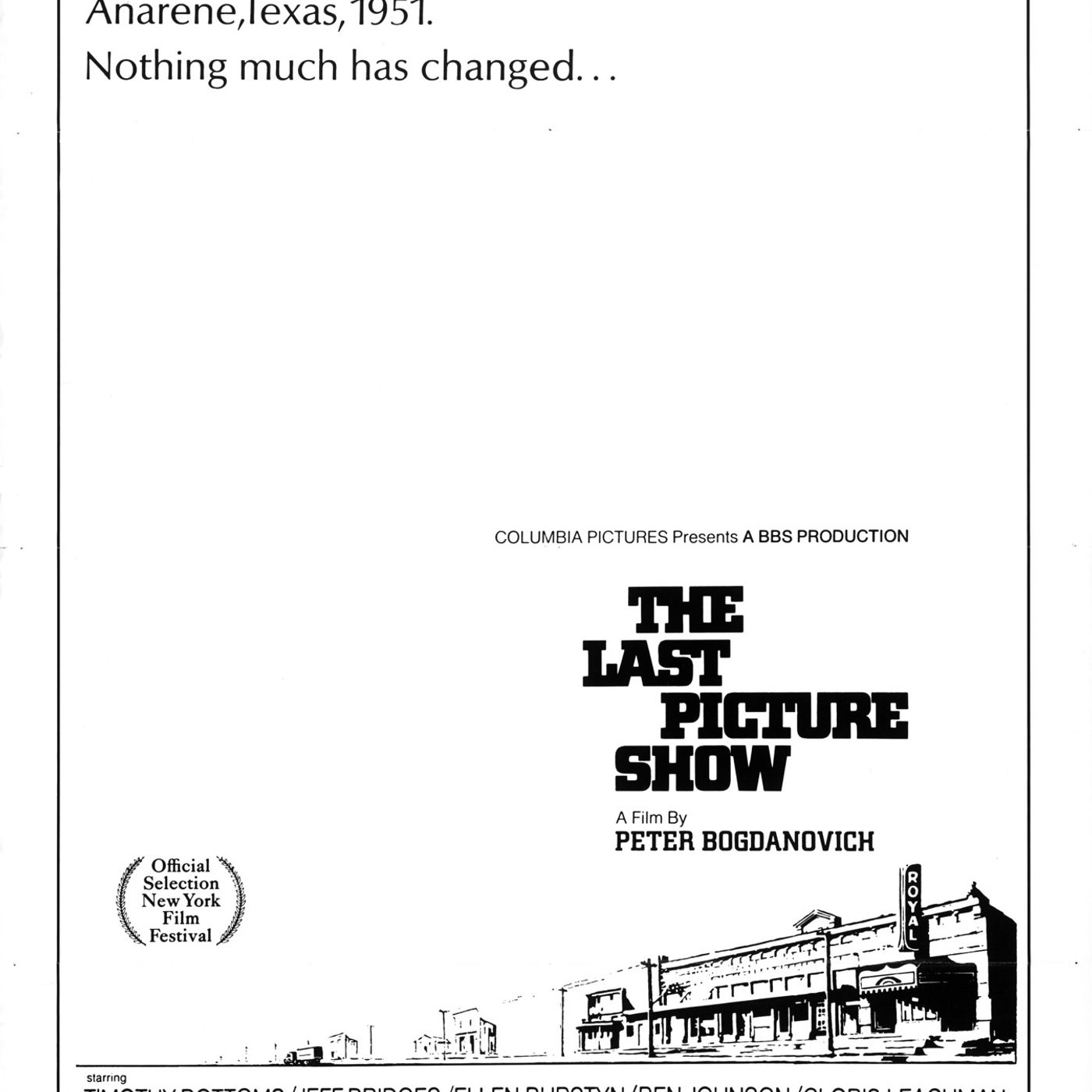
Starring Jeff Bridges, Cybill Sheperd, and Timothy Bottoms, the story follows the three as they near the end of their senior year of high school in the dying oil town of Anarene, Texas. All three come from different walks of life and their stories and lives are intrinsically linked by the ghost town that they all, unfortunately, call home.
For more episodes of the Kulturecast along with many more podcasts that are guaranteed to be your new favorite audio obsession, check out Weirding Way Media at weirdingwaymedia.com.
———
The Kulturecast is a film and culture podcast from Weirding Way Media, hosted by Chris Stachiw, the Doctor of Podcasting, alongside a rotating table of guest co-hosts. Each week digs into where film and culture meet — and how each one bends the other. Now home to sub-feeds including Required Viewing: A 360° Film Study with Dr. David D. Perlmutter.
New episodes weekly.
Subscribe on Apple Podcasts → https://podcasts.apple.com/us/podcast/the-kulturecast/id931361376
Spotify → https://open.spotify.com/show/5wjxip9XVYapYuY12yEaGY.
Back the show: https://www.patreon.com/cw/kulturecast
Transcript
Automatically generated, so expect the odd misheard name.
H We're so now I understand why Timothy Bottoms played George Bush on That's My Bush. I had never seen him in anything else other than that uh short lived Comedy Central TV show which was him playing George Bush because I don't looks like him, but like a more handsome version of George Bush. But you know what, he also looks like. He also looks like sort of not Jeff Bridges when he was young. They look I know they're not playing brothers in this movie, but they look very similar.
They look they have a similar facial makeup, and the two of them sitting in a car together is great. But now I know what Timothy Bottoms is known for. Isn't that fun? I was wondering, like where does he come from? Not that I was wondering, but like, now I understand, like why he's part of kind of things that I have seen because I didn't know that this was his I mean, I get there's a lot of people that this is their first acting gig, but you know, let's just single up Timothy Bottoms here, given that you know he's known for That's My Bush by people my age, and this is way better than that.
Well that wasn't. That was no. I mean, you know, it had its moments. I enjoyed it for what it was. Um, but yeah, Last Picture Show, Yeah, that's uh.
This was I believe his I don't. I don't think it was his debut. I think he had made one film prior to this, which was Johnny Got His Gun, which you know, is an anti war film written and directed by Dalton Trumbo. The h the screenwriter who was blacklisted and later portrayed by Brian Cranston in the twenty fifteen film Trumbo. So I think that was this.
This was his second film. But H and Jeff Bridges had done a couple of gigs I think when he was a child, but not as an adult. I think this was his first entree as it was, into film as an adult. So uh, yep. And the rest of them, you know, what, what more can you say?
I mean, what a cast, right? And boy they cleaned up pretty well at the Oscars. If they didn't get nominated, they one several of them. So it's so if you can't pick up what we're talking about on this episode of the Culture Cast, we're gonna be talking about nineteen seventy ones. Peter Bogdanovitch directed adaptation of the Last Picture Show by Larry McMurtry Academy Award winner Best Supporting Actor Ben Johnson, Best Supporting Actress Chloris Leachman.
The Last Picture Shows One thing I know for sure, person can't sneeze in this town without somebody open to my agerchude nothing. There's a norful small town for any kind of carrying off. I've been around that trashy behavior all my life. I'm getting tired of putting up with it. You can stay out of this boolow out of my cafe and my picture show too.
I do want no more of your business. I'm not sorry for you. You know, left Billy Kid just like you left me. I bet you left him plenty of night whenever JC whistled. Nominated for eight Academy Awards, including Best Picture, The Last Picture Show rated r so like I mentioned.
The film is directed by Peter Bugdanovitch. It is based on the book The Last Picture Show by Larry McMurtry and the screenplay is by Larry McMurtry and Peter Bogdanovitch. Bringing the heavy hitters here, this is kind of made a name for himself with Targets in nineteen sixty eight. That was a real controversial film that he uh he and I think he shout some second unit for Roger Corman. Before that, he was working for Korman, and Korman was owed some time by Boris Karloff.
Essentially he of course Karloff had done a previous film, but he I think the short the shoot ran or something, and so he didn't He owed him a couple of days. Let's just put it that way. Karloff did, and so he Corman Bogdanovich was looking to get into directing, and he the story goes that he basically said, if you can come up with enough story to you know, to use Karloff for three days or whatever it was, he said, if you can come up with something that we can film cheaply, he goes, he's yours, you can have him. And that's uh. And Targets was a super controversial film because it's basically it was kind of prescient in its own way, because it's essentially about a gunman who gets on top of a building and starts taking out people driving down the road, a busy highway, and so that's and this is kind of contrasted with Boris Karloff, who's a horror film star who has decided to retire from the business.
Who's because the horrors of the real world can't match what is going on, the horrors of you know what he does for the film, The movies can't match what's going on in the real world. That's what I meant to say. So, Um Targets was. It came out. Unfortunately, the timing was pretty bad.
It came out around the time of m. Robert F. Kennedy's assassination, and so it was kind of pulled from theaters or the original release that they had planned for it was truncated or something. So the last picture show was you know, he Targets just didn't do the business that they had hoped that it would for various reasons. It's a terrific film.
If you've never seen it, it's a spectacular film debut for a director. I mean, he's very assured and his um it's it's a short film about ninety minutes, but boy, it's it packs a lot in there, and it's um, like I said, kind of scary, and it's prescience and because this is you know, what you see in this film is something that we are unfortunately, are seeing way too often now in our common day life. President. It's based off of like the original kind of you know, mass school shooting, right, because that's a more or less like a Charles Whitman retelling, right, it sort of is, Yeah, yeah, that was the Charles Whitman thing was it was a rare event when it took place, and so that was not a common day thing.
It was people were shocked, you know, And so this was his way of, you know, basically doing his own version of a similar thing and trying to make a point about it all. And interestingly enough, Targets is coming out on Blu Ray from Criterion and about the old two months I think in June. So just the timing is good for this because any of you listening who have not seen Targets, it is going to be available in a brand new Blu Ray here in just a couple of months, and it's turning what fifty five years old, I believe, which is really hard to believe. So so yeah, that kind of leads us to, uh, where Peter Bogdanovich was in his career and he was kind of trying to figure out what he was going to do next.
And story goes that he saw this novel in a grocery store the last Picture show, and being a movie buff, he said, hmm, that sounds interesting. Let me take that home and read it. And so he bought a copy of it and took it home and interesting and you know it just uh saw the potential in the novel and then had to go about, you know, checking into acquiring the rights and all that stuff, and um so, you know, and this was produced by the same people who produced Easy Rider. Burt Schneider and his brother, Uh, they were involved in this, and they were riding pretty high. They had a distribution deal with Columbia Pictures after Easy Rider, and um so you know, they were there were things were we're going pretty well for them, and so they were looking to keep their their their victories going in the movie world, and so they decided to take a chance on this one, and so they they provided the backing.
So that's kind of the short version of how it got started. Anyway, in terms of the project, you know, because it was shot mostly in the fall of nineteen seventy one, nineteen seventy I'm sorry. It was released around October of nineteen October twenty second, to be quite honest, of nineteen seventy one, and rolled out very slowly around the country as things did back in those days. So and shot on a budget of one point three million dollars. What do you know?
So, tell me a little bit about why we're watching this movie, Adam. Why did you pick this movie? Because I essentially said to you, hey, pick whatever you want. We talked about a Bogdanovic movie with What's Up Doc? And now I guess is you know?
Tell me why and what are your thoughts on this movie? Rewatching it? I know you're a fan because you do own it in real life. You own a physical couple of copies. I have the Criterion and I have the recent four K of it just put out by Sony Picture in their Sony Classics box Set Volume three.
So yeah, I have both, and they both have different extras on them, so you kind of have to have them both. It's one of those situations you can't really get one. If you're a true fan, you gotta have them. Yeah, Well we did What's Up Doc? And What's Up Doc is kind of a light, frothy and screwball comedy, and you were not familiar with Peter Bogdanovitch's work, and I just thought it would be an interesting contrast for us to having done the show on What's Up Doc a couple of months ago, you know, just to see what your thoughts were coming.
I'm the elder statesman, as it were, of the two of us, and so I am very interested in seeing how younger folks what they think of something of this nature, and so that is very interesting to me. So that was one of the things I was thinking about. I thought, well, will it well it actually resonates or will it just be met with a sense of border I don't know, but but yeah, I have been a fit of this film. I first encountered it, you know, when I was a teenager. I started reading the Leonard Malton book.
When I was around in ninth grade. He used to publish a movie annual every year where he would review all the current releases and the ones that came before it, and he would update it every two or three years, and then eventually he started updating it every year. And I bought my first copy, I think in February of eighty five, and I started reading this book backwards and forwards, trying to, you know, deef up my film knowledge starting when I was about fourteen years old. And this is pre internet, so the only way you could find out about some of these films was to read those types of things. And the Last Picture Show was in the book, and I started doing some research, went to the library, he started looking around in old magazines and all.
This movie was a big deal. But the thing was that was very curious. Last Picture Show was not available on VHS tape until I think nineteen ninety because of music rights issues, and so I really wanted to see this film, but you could not see it. It was one of those movies that you just could not see. So it turned up on of all places, TBS, the cable station TBS used to run films, and they ran it one night with commercials of course, so I taped it and watched it because it was you know, and it was obviously an R rated film, so there's there's some copious amounts of nudity in the film and some some language that would be sense word as it were.
So yeah, so I was seeing an edited version, but I got the gist of the film and it just really appealed to me. I was a high school senior around the time that I saw this film, of course, I was, you know, they are seniors in the film, and so it all resonated to me. Even though this was all about thirty seven years before I had, before my high school graduation. The characters were universal to me. They're just there.
They're problems, especially in a small town where there's not a lot to do. And I kind of came from a background like that, you know, and being a film buff, I was the odd man out in my town, as it were, and uh, you know that's I just identified with it all, you know, the the the the incredible sense of boredom and just trying to do anything you can to kill the boredom, and getting involved in relationships that maybe you shouldn't have, and and the you're making rash decisions that you do when you don't have enough to occupy your time, which these characters do, and uh, you know, it just it just resonated resonated with me, It really really did. And I've it's one of those films that as you get older and you go back and rewatch it over the years, it um it hits on different nerves as you get older, you know, you can see things differently.
But having seen this when I was about seventeen years old the first time, you know, and seeing it now in my fifties is a different experience, but still very powerful and nevertheless, as it were, so, I was just curious, as a man in your early thirties what you would think about this film. So it's interesting. So, you know, the movie is pretty much just Timothy Bottoms and Jeff Bridges, two high school seniors who are in a dead town and or dying town I guess where everything is leaving the town and the town is dying and all the opportunities are elsewhere, and there's high school seniors and so they're kind of juxtaposing the fact that they're leaving anyways with the fact that the town is also dying anyways.
Nick, No, you know, no fault of their own. The seemingly at the beginning of the movie, you have, you know, people blaming them because you know, they're football team loss, and it's like, well, you guys aren't putting any in any effort, and it seems like that's kind of indicative of this place as a whole, like nobody's really putting in any effort here. Everybody's just kind of coasting along and speaking of the good old days, but you know, being unwilling to capture the current time and the quality of life in the current time, but pining and opining for the good old days. So all of that hit me square in the chest, obviously, because the expectations that I had for this movie were it's my first you know, Larry mcmurphry thing I think I've ever watched.
I know what the expectations are. I know that this is an important movie. So all of that aside, I kind of went into it. I think in the right mind space. I really enjoyed it.
I mean obviously, again, like in a lot of ways, it's telling the story of growing up at a certain time in a certain place. But the timelessness of the message is what ends up kind of being the thing that I walked away with, which is, you know, the timelessness of the message of you know, kind of I mean again, we'll kind of talk about the multitude of messages here, but like the timelessness of the message of like it is hard to grow up. It is hard to be a teenager, it is hard to be an adult, and it's even harder to be all of those things in a place where you feel like you don't have a future anyways, and that sense of there's a there's a weird sense of hopelessness in this movie that again, these characters, I totally understand why they feel that way, because I think we all probably felt that way when we were in high school.
Because again, like there is a sense of like, oh, well, this shit sucks, but there's you know, there is the world out there, and there are opportunities out there. And I like that this movie kind of it doesn't just give us the promise of seeing the world out there, and we never do really see the outside world, but we kind of understand that the outside world juxtaposed against where they're living, is so much more kind of exciting and vibrant. But yet people choose to live in these towns, and why do people choose to live in these towns? And that's again one of the other questions that this movie kind of posits is why are these people still here if everybody knows that this town is, you know, on its last legs.
People are being hit by cars in the middle of the street because the dust is so bad. Because again, you just assume that where this town is is in the middle of untenable land, arid West Texas. So it's an interesting movie. I definitely see what you mean by, you know, saying like it will hit different the older that you get, because this is not a movie I really feel like I would have appreciated if I had watched it fifteen years ago. I know I would have appreciated it the way I appreciate it now.
I probably would have watched it. That's fine, you know, Jeff Bridges, whatever, But now it hits differently. And look, the performances are great, everything about the movie is fantastic. But the theme of the movie and what it's kind of driving at is so universal that that is why. And you know, that's one of the many reasons this movie is still important.
I think the fact that it's shot in black and white smart decision, kind of lends to a more feeling of universality to the message. I don't know why black and white does that, but black and white sometimes can cut through the noise the way that color doesn't. And also I think the black and white is a choice in terms of where they're living, because the question becomes is the world outside black and white or is it in color? Because again we never really know. I mean we sort of see the outside world.
But again, inasmuch as we can so long answer to a short question, I am mentally joyed it. I'm not surprised I enjoyed it, but I am glad I watched it now and not when I was in my early twenties or my late teens. Yeah. Yeah, it definitely and for you know, for some reason, Like I said, I was in my teens and this movie was probably about I guess about seventeen years old when I saw it, So it wasn't a new movie when I saw it at the time. But I I enjoyed it for the soap opera trimmings, I guess you would say, because the story does lend itself to There are some soap opera elements with some of the characters, and I think I was identifying with that type of stuff.
As I've gotten older, I identify with the overarching themes that you spoke of, and so those are things that I get more now than I did then. The just the basic plot of the film. You know what the characters do, and there are some comedic moments in the film, that I always appreciated too, you know, with Randy Quay in the Skinny Dipping, and I mean for that for this movie being his well this is his first movie, yes, like, yes, it was. Yeah, he came to an open casting call, from what I understand, and Bogdanovich just immediately took to him. He said, oh, yeah, he's and he was in the next two Bogdanovitch films.
He's in What's Up, Doc, He's in Paper Moon, and memorably in Paper Moon, he arm wrestles Ryan O'Neil for a truck. So that's that's a whole other or I'm sorry, he doesn't arm wrestle. He wrestles him, not arm wrestle. He wrestles him in his front yard for a truck. So that's a whole other scene the thing that we can talk about.
But anyway, yeah, yeah, yeah, this was his first film. Sure was. Yeah, getting naked in your first movie, huh allah? Yeah. I mean we don't again, correct if I'm wrong, we don't see hanging Brain, but we do see the notion of Bush and like, there's a lot of nudity in this movie.
That is the actually, that's the one thing I knew about this movie before I watched it is there's like a lot of nudity, like a fair amount of new and again it's this kind of movie. I mean, if you think about other coming of age stories, the one that springs to mind that I watched a lot growing up would be Fast Times at Ridgemont High. That movie has a ton of nudity in it, and it's that similar tonally the same nudity where it's just like teenage kids getting naked. So it kind of like it's not really like the nudity doesn't feel exploitative. There there is a scene in this movie that feels insanely voyeuristic, obviously, and I obviously that's the intent of the of Bob Danovitch as a director.
But this movie captures a time and a place and what it was like to be a teenager in a way that it puts you in there with the characters in their immediate vicinity. And again, more or less only I mean again, the main character of the movie is Timothy Bottoms as Sonny Crawford. But in a lot of ways he's kind of a cipher as a character, which is intentional, I feel like, but he kind of comes off as a cipher. Maybe that's just me. Yeah, I agree, I would totally agree.
Yeah, there's there's definitely an element of that for sure. Yeah. Um, well, you know we're we're introduced at the beginning of the film at the uh, the dying movie theater is one of the first things that we are introduced to in the in the beginning of the film. So the movie theater looms large in this town, uh, right throughout the film. So there, you know, it is it's kind of the the the presence that's always there in the background somewhere, the movie theater, the movies, the escapism, the getting out of this dull life that they're trapped in or this dull town or you know whatever.
And so yeah, so that that's interesting that that's how he chooses to start the film with that. And you know, we have Sonny breaking up with his girlfriend right there at the beginning of the film. Sou you know, Sonny is the character played by Timothy Bottoms. So that's kind of how things get going. And uh, there's the scene where he's she won't let him have sex with her, and so there's well that ends up being like the what seemingly is the main motivation of Timothy Bottom's character throughout the movie is just he just wants an ass.
That's it. I mean, that's I mean, that's it. Like but I like that again, like outside of that, I don't understand it's something I don't understand his character. But his character in a lot of ways is a rudderless human being. And I mean that's that's made very apparent that he's kind of just drifting through life and doesn't seem to have a purpose.
But he does have a he does have a lusting and that is for you know, constantly. I mean he's with Cloris Leachman, he almost gets with Ellen Burston. You can't convince me that that's not what was going on in that scene between the two of them. At the end of the movie. He gets with Sybil Shepherd, he gets with his Oh he doesn't get with his girlfriend, but he does have a girlfriend at the beginning of the movie.
But that's like a singular focus throughout the entire movie. It's just ass as as ass constantly and again. It speaks to the it speaks to a certain kind of teenage experience and a certain kind of what I guess you would consider to be a late male experience of you know, oh, you're still a virgin. Oh you know, oh you're not you know, you're not getting any And I like that the movie presents that kind of conflict of a character who is not able to what's the word execute on his sexual kind of more raise the way he wants. I find that interesting because again, like that is a unique it feels like teenage experience or one that we kind of associate with teenagers, and it does a really good job of kind of showing and it's it's very graduate esque, this kind of floating of the character through his life and just kind of you know, being a passenger on the right of his own life and not the one in charge.
Yeah, that's that's a good take on it. Yeah, and it's interesting how they uh, you know, Jeff Bridges and Timothy Bottom's characters Dwayne and Sonny, they actually project their own uh sexual desires onto their mentally disabled friend in terms of they're trying to get him to lose his virginity. That's probably something he's not interested in because he doesn't doesn't operate on their same level emotionally or or you know, he's just he's mentally disabled, that's just the way it is, you know, but they assume that he's like them. Let's take him to get his to lose his virginity, and and of course they do to the heifer as she's referred to in the films. And it's a really weird scene too, because the way it's shot is you have all of them standing outside of the car, and you have her, you know, the female character, and then Sam Bottoms, Timothy Bottom's actual younger brother, right plays this character.
And it's shot so well because you can't see what's going on in the car, so it's again your kind of imagination is running wild. And then it's just this commentary by the woman as I guess this, like you've mentioned, mentally disabled man is just our child. Is like fumbling with her, and like again we're not told, we're not shown, but again it kind of speaks to it speaks to that kind of again, that weird experience that is uniquely mid to young teenage, which is trying to assert your masculinity in again the only way that a quote simple brain and I'm not talking about him, I'm talking about young people understand, there's no nuance to it. It's just you will lose your virginity and then you will that will open you up as a person, and you'll be part of the group as a person, because there's no reason for them to make this person do that other than his otherness to them.
And what's interesting is that the otherness is perceived as him being a virgin, not him being mentally disabled. That's the otherness here, which is an interesting again, like it's pushing the message of this movie to the forefront, which is a lack of intimacy somehow means I guess, a lack of masculinity or a lack of kind of like being part of the tribe, I guess, or I guess the society at large. Again, I feel like there's a lot going on here, and maybe I'm grasping at straws, but this is a movie that feels like there is a lot of subtext or is that just me? I think you're right. I think you're right.
I think there's there's a lot more to chew on than what's on the surface. I think you're onto something. Yeah, absolutely, And I uh, you know that that is an interesting scene for sure. And of course he you know, does have you know he um, uh, it gets excited a little early, let's just say, and so that that doesn't end well with the uh with the prostitute slapping him in the face, which leads to a whole other thing where Sam, who owns the movie theater in the pool hall, basically this is uh, the mentally disabled boy Billy is his son, and so then there's a whole thing about him sticking up for his son who he feels, like, you know, was was victimized in a way, and so he has a real grudge. He has an axe to grind against Timothy Bottom.
Sam does the boy's father, but Jeff Bridges gets out of that because he's smart enough to duck down behind the seats in the car where he's not chast eyes. So it's you know, Jeff bridge has always had it right like he always had it. He's not He's not one of these actors that grew into it. He's had it from the day he kind of stepped onto the screen. He is really charismatic in this movie and an interesting foil to Timothy Bottoms.
But I do wonder kind of what bog Danovich and McMurtry are getting at with his character kind of being unable to decide what he wants to do because he wants to go and do the oil thing, then he wants to go and join the military. At one point it seems like he's doing none of those things, and he's like a greaser maybe like he shows up in like a leather jacket, kind of looking yeah, like looking like a roust about like he is. He's I think the more generically interesting character in the movie, because again you can kind of see the teenage kind of indecisiveness with his character. I'm gonna go do the oil thing, and we don't know why he quits doing that. I guess, you know whatever, just because he didn't want to.
And then by the end of it, he goes off to Korea and his last line to Timothy Bottom says, I'll see you if I don't get shot. It's like Jesus, right. But it's that nonchalance where it's like, this story has to be told about teenagers because otherwise the decisions that they're essentially giving very little weight would seem like decisions that you need to be giving weight, because going and joining the military is not something you should just do lightly, especially when we're in the middle of a fucking conflict. Yeah, exactly, Yep, pretty serious stuff. And I think being a kid sometimes you think you're invincible.
There's that going on too. I mean, you kind of joke about it, and that's kind of, you know, disarming yourself, I think a little bit. So, you know, I think when you're that age, sometimes you don't really realize how serious this is. And then you get one shot at life and once you're gone, you know, you're not You're ye, I'm sorry, but you're probably not going to be coming back to do it over again. So it's well, at least not the way you were before.
And again, like that that notion in the movie that you know, Jeff Bridges just goes off to Korea at the end of the movie and just you know, buy I mean, but that that's the logical conclusion to the journey his character goes through because he gets emasculated. Jeff Bridges does throughout the movie. I think, I guess you could make the case he gets emasculated both times he's with Sybil Shepherd, though I think the second time he's with her it's a lot less emasculating, but she still attempts to emasculate him. But it's interesting because the Jeff Bridges character is almost like the shadow version of Timothy Bottoms, right, like it's the it's the opposite almost entirely of the character that Timothy Bottoms is portraying.
Because while Dwayne doesn't maybe Dwayne doesn't know where he wants to go in life, he's willing to make the decisions to go in those directions. And it doesn't seem like Timothy Bottoms is interested at all in making any decisions about anything other than I want to have sex. Yeah, I don't know what drives his character in the movie, like other than that they're right. But I think that's so smart because again, like it just it gets to the single track mindedness of young people. As someone who was a young person myself, just like you, where I get it, I understand it.
That's why it doesn't feel like a put on or like a plot convenience or a plot contrivance. Like it makes perfect sense that there's a character like Timothy Bottoms in the movie who is solely focused on satisfying his carnal needs. And you see throughout the movie, I mean, he gets himself in trouble multiple times with multiple people by making these decisions where he's thinking with his lower head, not with his head on his shoulders. Yeah, and I think again, like we've discussed earlier, I think that also ties into growing up in a small town because I think if you're in a more metropolitan area, there are more things to keep you occupied. You kind of put the cardinal desires in their place a little bit more.
I mean, you know, there's always that, but it's not as big of a deal as it is when you don't have anything else to focus on, and when the town is so depressed financially economically depressed, and these people just don't have enough to occupy their minds, and so that's what you come down to. You come down to just the cardinal desires taking precedence over everything else. And that's my take on it is that, you know, it's it's kind of the geography of where these people are growing up and where a life has put them, the world has put them. It kind of determines it helps determine some of the choices that they make. If that makes any sense, Well, they're just not going to get the same opportunities that someone else will and then we come to Sibyl Shepherd's character, who I think is the personification of that in its entirety, because not only is she able to string everybody along throughout the entire movie, or at least that's my perception of it, by the end of it, she's able to leave.
She does escape the orbit of this dead town. And you can make suppositions and assumptions as to why that is, but the movie feels like it's taking the stand up. It's because her family is rich, and she and her family is able to strap a rocket to her and fire her as far away from there as humanly possible. And I know that there's a sequel to this. I know that there is both a sequel book and a sequel film that I have not seen.
I would be curious to watch it, but the poster does not give me any confidence. And that's the story I want to see, because by the end of this movie, the Cibil Shepherd character being gone makes perfect sense. She's not She's not the kind of character who would have anything to do with Timothy Bottoms and Jeff Bridges in their forms that they're in now, because her expectation is I am going to use them as an opportunity to be with Bobby, the man that is essentially of the same financial and I guess societal level that she is at in this small I mean, her family are the big fish in the small pond. Yep, that's true. Yeah, And there's actually, to be quite honest, two books that the sequels to this.
There's Dwayne's Depressed. It's a trilogy. There's a third one which I have not read. I have seen this equel. We'll talk a little bit about that as we when we come when we wrap get closer to wrapping up, because I don't want to, you know, spoil things, but you know I won't.
We won't delve too too much into it, but I'll talk about my opinions on that. I've seen it multiple times and two different cuts of that film, so I can talk a little bit about it. Um. But um, yeah, it's uh, you're you're right about her going off with Bobby because he does have the economic standing, societal standing, all of that that she's so he's kind of her her match. And yeah, if she's gonna go off with anybody, you would think that that's the one.
You're exactly right now, I think it's interesting that, you know, Sam chastises uh, Timothy Bottom's character Sonny about taking his son to a prostitute. And but then it's funny how he gradually comes back around to letting him in his good graces. And it's not done. There's not a scene where he's where they have like a you know, an apology or any of that. It's just very gradual.
I think that's interesting how that comes around you and you feel like Sam is reconsidering his opinion that he didn't want to see Timothy Bottoms anymore, didn't want him around anymore. He's thinking, well, maybe it's a little too harsh on him. But there's not really a specific scene. It just is kind of gradual how he forgives him for and lets him back in somewhat. And then, uh, then that's when Dwayne and Sonny you were talking about their libido.
They can't even get away, get through the New Year's eight weekend without taking a road trip to Mexico to get some prostitutes. So there you go and drinking the water. I guess I am drinking the water. I think it's very smart that they cast Ben Johnson in this movie. Sure as a you know, again given kind of what he is notoriety was as an actor and kind of what he brought to the industry again as a stuntman and as an actor, and then you have him in this movie as kind of the perfect kind of character for him to play like it in a lot of ways, like the physical embodiment of the human beings of the town.
I mean again, like he like you mentioned, he forgives Jeff Bridges and Timothy Bottoms only because it feels like what's the alternative, Like don't let these people into the only thing in this entire town, because then god knows what kind of mischief they'll get into then, or again like the movie theater at one times is again it's a specter that looms large over this town because it is seemingly the only respite for anybody in terms of escape. But at the same time, you know, it serves as kind of also a physical connection to Sam as a character because he again decided to stay here and run the movie theater. But he is clearly a man out of time and place, like this is where he can be in the world, but he can't be anywhere else because the world has passed him by he's clearly like an old cowboy type who almost has premonition of his own death.
That's you know, the scene where he's speaking to Timothy Bottoms and Jeff Bridges again, he gets a little twinkle in his eye when he's like, you know, I wish I was young enough to come with you guys. Oh never mind. It's like it's that again, Like there's that twinge of kind of premonition in this movie that like things are bad and they're not going to get any better. And like again, I don't know if you could say that this is an overwhelmingly nihilistic movie or kind of dour movie. I don't think it's a particularly positive movie, but I think that the characters are so kind of a lot of them act so and are portrayed so forlorn that it does kind of wear on you.
And and Ben Johnson's character is a great example of that, because again he's just you know, well, you guys are you know, more or less assaulting my son and forcing him to do terrible things. But if I don't let you come to the movie theater, like what where else are you gonna go? What else is there to do? Yeah? Yeah, that's a good point.
Yeah, that's that's probably what his character's line of thinking would be. And that's that's that that makes total sense. You're exactly right. Yeah, it's um of course they you know. I love that speech that he gives right before they go to Mexico and take their road trip.
There's that scene where he's talking about the old times, old times and he gives that soliloquy I guess you would say, and he just delivers it perfectly, just beautifully, and he goes into that story about the the one that got away, so to speak, the girl, the girl who got away, and he gets into all that and then we find out later on who that really was and surprise, surprise, that was Ellen Burston. Spoiler alert. But so yeah, it's just a beautifully delivered speech and you can see why he won the Best Supporting Actor because that's just good, good stuff. I think it's for that scene, like it's that I mean, I'm not saying it's that scene alone, but that scene again, I think it speaks to one of the themes of the movie, right, which is the inability to move on, the inability to change again, that the town is seemingly the same that it's been.
You know, Anaerine is a character in and of itself in this movie, it feels again, it feels like it is just oppressing the characters. It is oppressive other than Sybil Shepherd, who again can leave canisk Ape. Can you have all these opportunities that all these other people don't have? Those exist for her and no one else. And it's again you get the sense of that.
I mean, they have this kind of party where we you know, you mentioned Randy Quait is in this movie, and he shows up and he's there, and this party again, everybody there seemingly is meant to be there other than Timothy Bottoms and Jeff Bridges. They feel out of place, they know that they're out of place. Sybil Shepherd can tell that they're out of place. I mean, when they know that they're out of place, that's one thing. But when she can see that by associating with these people like she is somehow lowering herself too, because again, the people that she's spending time with are seemingly again I'm getting the sense that the people she spends time with this movie are just as cavalier with their sexuality as she would like to be, which is intes which is again an interesting kind of comment on the halves and the have nots, and they're treatment of sexuality and intimacy because they seem very las fair or blase.
I guess about their nudity when they all get together to go skinny dipping. Oh yeah, yeah, that's true. Yeah. Well she's the only one that seems like she's maybe a little bit skittish about that, you know at first, but you know, Randy Quaid lets her know, you gotta do it. Yeah, he's a he's he's an interesting cat.
I mean again, we talked a little bit about him in What's Up, Doc, But you know, unfortunately his recent issues aside, I still am a huge fan of Randy Quaid, but he's kind of gone unfortunately, kind of gone off the reservation, pretty far off the reservation. One might a shame because he could still be playing those character parts with great relish if he if he hadn't. And I really think it's sad that we've lost probably some really good performances from him because of all that. And I really hate that we that we have, but you know, it is what it is. The madness has overtaken like the madness of the characters that he plays has infested who he is, unfortunately, or maybe they were one and the same.
You know. Again, Randy Quaid is in one of my favorite movies, Freaked, where he gives like one of his great performances and he kind of steals the show. But yeah, like now, you know it's I think it's most unfortunate is that now he's just known for being crazy. He's not known for this. He's not known for Independence Day or Christmas way.
I mean, he's probably known for Christmas occasion more than anything else because of the notoriety of that movie. But it's unfortunate because Randy Quaid is a great actor. I mean, look, the other thing about this movie is it may it didn't make the career of some of these people the way that maybe they thought, Like Timothy Bottoms has been in plenty of stuff, but it's not as regarded in the same echelon of actors as Jeff Ridges, or even Sybil Shepherd or Chloris Leachman for that matter, or Ellen Burston. It's like Timothy Bottoms is the one that's kind of left out here, which is strange. You get a sense that he was a little bit difficult doing the making of the film.
In interviews with Bogdanovitch and some of the other cast members, I think there was a little he was a little bit difficult, I think, And so now maybe you know, that was then, this is now, so you know, maybe he's not that guy anymore. And he was a young guy, and so you know, when you're young, sometimes you know, you have different attitudes about things. But he, I know, he did have one film two years later that made a pretty big splash, and that was The Paper Chase, directed by James Bridges, who would later go on to do The China Syndrome and The Bright Lights, Big City. He did that later, and so James Bridge and Urban Cowboy. Of course, that is a very good film, Paper Chase, and he's good in it, and it's basically the about struggling law students in their first year at Harvard Law School, and he's really good in that.
Ed Herman is in that from The Lost Boys. He plays one of his fellow students, Lindsay Wagner or the Bionneck Woman. She's the love interest in that film. But yeah, that's a very very good film and he's great in that. So he was.
He obviously was on some sort of a trajectory there after the Last Picture Show, But then by nineteen seventy six he's doing these exploitation films for aip like A Small Town in Texas is one of the films that he did. I remember in seventy six, and I remember seeing that on cable and just thinking how quickly he went to exploitation films after these major studio films like The Paper Chase in seventy three, he was already, you know. And then he turns up in some other stuff in the seventies. He's in the sequel to the Other Side of the Mountain, which was a big Both of those did pretty well. It's the true story of the championship skier Jill Kenmont, who broker Neck, and her struggles to reinvent herself as a school teacher, and he plays her romantic interest in the second film, and those are those are touchingly done, I would say, And he's good in that too.
But there again, it's not the kind of film that you would have expected him to be doing around just seven years after the Last Picture Show. You would have expected him to be a major player like some of these other other folks that turn up in the film and it just didn't didn't quite happen. And I don't I'm not exactly sure. But like I said, I do know that Bogdanovic has alluded to his difficulty with him at times and so and some of the other cast members have as well. So I just don't know if that played into it.
It could you never know. I mean, I think it's probably a safe assumption if multiple people say it, it's yeah, again, it's not the first time you've heard it, not the last time you've heard it at not. I mean, there have been people that have less than eluded and more outright said people have done worse things, So it must not have been that bad. And again, I know that they don't want to sully the good name of this movie because again, well regarded movie. It's in the Library of Congress, has been since ninety eight, So you know, you don't you don't want to kind of tarnish the movie by saying, well, some of the people that were in the movie were hard to deal with, because then it's like, oh, okay, but it's unfortunate really like but at the same time, like Timothy Bottoms, his character again, it's not that he's not doing anything, but he portrays he does exactly what he needs to really well, and what it is is just wander through the movie.
Yeah, I do remember now that we're talking. I do recall hearing and it was either Bogdanovitch or it was Chloris Leachman, but they were talking about when the love scenes were shot with Chloris Leachman and he has a romance with the basketball the school coaches. Why he has an affair with her because she's kind of been ignored by the high school coach and Jim teacher, and so anyway, they have some love scenes and symbols. Of course, Leechman won an Oscar for this film as well, we'll go on to say Best Supporting Actress. But there was talk that he didn't bathe when they shot these love scenes, and that that was I think the bog Danovitch had to chastise him and say, you know, you need to bathe when you're doing intimate scenes, you know, because this is not it's not respectful of your co workers.
And so that was one thing that I remember hearing in one of the either an interview or a retrospective on the film. So that that type of thing, Yeah, that can cause trouble. You get a name and you get a reputation, and sometimes it follows you negatively. And like I said, that was then, this is now. He things may have changed completely for him.
You'd never know. I mean, you don't know what was going on in somebody's life. They just don't know, you know. So that's that's the whole other other thing, you know. I heard Leonard Malton say at Best one time, he said, you know these movies, you know, we watched them over and over again and they mean so much to us.
You must remember that these were just jobs for these people. He said. It took me a while to figure that out. That they did these for a couple of weeks and then they were on to something else. You know, it's just a moment in their life, and you know it's it's captured on film, But for them it was just a period in their life and they moved on and things changed.
And so that you know, there could be personal dramas going on in anybody's life when they're making a film that could contribute to things, and that doesn't necessarily mean that's the person that they are. From there on out, you know so, but unfortunately, when you get a reputation, it does kind of follow you, and you know, bad things come from that. So I think that, you know, so there's that. But so anyway, we can just quickly run through, you know, what happens leading up to the finale of the film. You know, there is a pretty you know, there's some well, uh, of course, as I mentioned, Dwayne and Sonny go on the road trip to Mexico to come back.
They find out Sam has had a stroke and he has passed away, and he left the movie theater to the woman who ran the concession Stan that's Jean viev and a thousand to the Preacher Son Joe Bob Blanton, and the ule hall to uh to Sonny. And then I'll never forget the scene where I love the scene where the dialogue with them they're they're reading the wheel and he says, uh, yeah, he left that thousand he left, He left the cafe to Gean Villev and or left a thousand dollars to the Preacher Son and he's too far gone to run a damn popcorn machine or something like that. But then there's this whole subplot later where Bobby's told jac he doesn't date virgins, and so then this is where we really get to see Jac's character when she invites Dwayne to the hotel and or the motel not a hotel, motel for sex.
But Dwayne can't get it up, can't perform. So yeah, she says, and you better make sure that it was the You better let him know that you think it was just wonderful, the best thing you've ever experienced. And so Jeff Bridges has to go to the party with a smile on his face, and then they finally do. He finally does break or her virginity, but then she immediately breaks up with him by telephone. So there you go, manipulating the scene.
But and then of course Bobby marries somebody else. Jase's disappointed, and then to get back, she marries Dwayne, which and then her parents find out about it, and so there's a whole ruckus about that. So it comes not a nowhere. Yeah, I mean, Timothy Bottoms and Sybil Shepherd get together and then ten minutes later they're married. It's that quick, and you get that, you know they're they're eloping and they're going on their honeymoon.
And then they get called back to Anerine. And again it's very clear that Sybil Shepherd has made all these things happen, because you know, she's like, oh, you know, well, let's go get married and we'll elope to Oklahoma. But I'm going to leave a note for my parents letting them know where I'm going, so that so that they can send someone to reel us back in, because I ultimately don't really have any interest in being with you. I am just trying to manipulate you to my wills, whatever they may be. Yeah, just to see if she can pull off.
That's exactly right. And it's also worth mentioning here and that out of boredom she has before she gets involved with Dwayne, she has sex on a pool table with Abilene, who's played in the film by Clue Gulligher. And he was the former lover of Ellen Burston's character, which is Jac's mother, So there's a connection there. Now, this is interesting because in the original theatrical cut of this film that scene did not exist. It was not in the original theatrical version.
So the version that was out there until Criterion put it out on LaserDisc in nineteen ninety one did not have this scene, and then Bogdanovitch reinstated this scene, which I think is very essential to the film because it really enlightens you even more so to Jac's character that she's just bored ands just sex on a pool table with her mom's old boyfriend. H yeah, just because. And I think that was very smart on Bogdanovitch's part to reinstate that scene. I think it totally works well. And the question.
The funny thing about that scene is, and it kind of ties back the previous scene. There's a shot when the girls walk in after Jeff Bridges has left the first time and he was unable to get it up, get the job done with Sybil Shephard and they walk in and they see her and she's sitting and it's a fantastic shot the way it's lit. She just looks like she looks like, you know, a vision in white, sitting there on the bed, and she's like, oh, it was so amazing. And then when she finally gets what she wants, it's not at all I think what she was expecting because she's, you know, trying to manipulate Kue Gallagher, who looks young. Klue Gallagher looks like young Simon Baker.
It's very strange. He's such a good looking dude, like Klue Gallagher is a good looking guy, but then young Clue Gallagher is just ooh even better. But she manipulates him, so you think into having sex with her, and then he's just like, I out, get out, like just get out, like we're done here. And it's you can't tell if it's like a sense of feeling guilty that he's had sex with the child of the woman he used to fool around with, if he just realizes that she is trying to use him for her own wills and she has Anyways, it's an interesting scene, but I really like that. Yeah, it would, honestly if that, like if that wasn't in the movie, there's no payoff for her character.
That is the payoff for her character, right, Yeah, yeah, absolutely, Because the original runtime on this was I think one hundred and eighteen minutes, and it was with the inclusion of that scene, it was I think two hours and four minutes or something like that, So it was a good six minutes that was added to the film many twenty years after the film's release. So yeah, and it was and I remember I got a LaserDisc player specifically in order to get that LaserDisc because I wanted to say it, I wanted to say that was not the only reason, but that was one of the reasons why I got a laser displayer. And I promptly bought it, and thorough he enjoyed it, I must say. But yeah, But there's the elopement with Sonny, and then the parents show up and they they decide to put an end to that, of course, And then Sonny rides back home with Jac's mom and that's where she reveals Ellen Burston's character that she was Sam's youthful lover.
So we find out there that she was the woman that he referred to earlier but did not name. And that's an interesting scene too. But and and the fact that the mom, Jase's mom tells Sonny, what, you're much better off with Ruth than with Jac anyway. And Ruth, of course, is the coach's wife that he's been having the the affair with in the afternoons. And but the word gets around in a small town and so Ruth finds out that he's eloped with, you know, Jac, and she's quite hurt.
And uh, rightfully so. And so there's a big scene at the end of the film where he wants to go back to Ruth and kind of get back to the way things were before. But then um, uh, Ruth isn't having any of that, shall we say, And she goes into this great scene where she's just really really tearing it up, explaining how she's how how much she hurts because of what Sonny has done. But eventually, you know, she again forgives him, and tentatively it takes a you know, it's she it's but it's you know, she explodes before she forgives him. So anyway, anyway, it's um.
But then there's a scene, a pivotal scene before that, where Billy is sweeping the street and he's hitting killed by a truck. That's a really powerful scene. And then there's the complete indifference of the local townsmen in the in the town. And then you have it's a tremendously acted scene with Timothy Bob obviously it's his real brother Sam Bottoms, and it's scene in the movie right right, Yeah, he was sleeping. It's like, well, it's like one of the thing is it's like it's the only scene that feels like in the entire movie where he like cares yeah right, or wakes not wakes up, because again, like what he's doing is what the performance is asking for.
He's not he's sleepwalking through this movie intentionally, but that one scene he like wakes up and it's just it, it is. It's his character's best seen in the entire movie. For sure. It's powerful, Yeah, it really is. It's powerful stuff.
And and the way it's shocked with those jump cuts, I guess those are jump cuts. I think that's what it is, you know, where it's uh, he's using some of the techniques that Alfred Hitchcock had used in some of his films, and I can't I wish I knew the technical term on that. It's where he the way that the camera, the way editing is done. But it's really really effectively done. And we have to talk about Robert Curtis and his amazing cinematography for this film.
Robert Fertis was I was just recently watching The Great waldu Pepper for the first time ever, and he shot that film as well, and I was just really marveling at what a talented guy Robert Certis was He shot so many of my favorite films of this period, and this is another one of those. Uh, that guy was on fire. He was just busy, busy, busy, and he's and his son was no SLOUCHI that Bruce Surtis's he did some pretty good work too, but Robert Certisi and he did a lot of work with Clint Eastwood as well. So just amazing black and white cinematography here, just the balance of light and shadow and just all it's just just amazing. I don't know what else to say.
He directed, he was, he was on the other he was the filmographer in the other, right, he sure was. Yep, yep, he was Summer forty two as well, and uh yeah he did some work with Robert Mulligan there. So yeah, yeah, he's amazing. He's an amazing that's an amazing body of work that he had there. Yeah, I was speaking our graduate right, like right, forgot about that.
Yeah he did do that one. Yep. Yeah, he's one of the greats. So yeah, this movie ends with Ruth and Sonny kind of tentatively making up, as it were, So I think, yeah, that's a really fitting finale to the film. But yeah, there's a I don't know if we want to talk about I guess we could talk a little bit about the drama behind this film.
There's been several documentaries about it, but I think the best one, if anybody really wants to know what really went on is it's a supplement on the Criterion Blu ray, and I think you might be able to find it on YouTube. It's called Picture This The Times of Peter Bogdanovich in Archer City, Texas. That's the best one I've seen. That is an amazing one hour documentary film made by George Hickenlooper, who would go on to do the documentary on the making of Apocalypse Now of the following year. He's the same guy who did that one.
Hearts of Darkness, which is another Those are just amazing documentaries about the making of films, and he put those out back to back, and I remember seeing this on Showtime around the time that Texasville was being shot, and that's basically what he did was he went to he went to a Texas as they were shooting Texasville, and he just went around and interviewed everybody because it was kind of like a family reunion. He brought back all of the cast members from the original film. For the most part. There's a couple of Ellen Burson's not in it, and there are a couple of others, but most just about everybody's in it, a lot of some of the technical people behind the scenes, Polly Platt, who was Bogdanovich's at this point ex wife, but she's there working on the film as well, and they all basically share their stories of the drama that was going on, and essentially what happened was bog Danovitch had an affair with Sybil Shepherd and during the middle of this film, and he was married to the production designer, Polly Platt, and they had two daughters, and he had this affair and basically left Polly Platt right in the middle of the film's production.
So it's a pretty high drama, and they talk a lot about it in this documentary Picture This and That's you really really really want to know what went on and get some psychological insight, and you even get Timothy Bottoms talking about how he had a real life truck crush on Sybil Shepherd and she kind of ignored him and he hadn't gotten over twenty years later, he basically says that on camera, and it's really it's a very revelatory portrait of the real life dramas that were going on with these people versus what was happening on screen. And so if you have the opportunity to see that, highly recommended to see that. George Hickelooper unfortunately has passed away in the I think he passed away around two thousands tim but he did some terrific film books and a couple of great documentaries, and that's one of them so well, and I think I think that that honestly helps the kind of the mystique of this movie is all like the kind of I wouldn't say the behind the scenes nonsense, but when there's this level, when there's this amount, most of the time the movie doesn't turn out half as well as this.
I mean, what was the movie last year, the one with like Florence Pugh and Harry Styles that had all that Yeah, yeah, like that movie plenty of back behind the scenes nonsense that was getting aired out in public, and that movie comes out and it's a complete, you know dud. This movie comes out with even with all of that going on, which again you would assume would derail the movie in a way that's like hard to really understand. This movie is widely regarded one of the greatest films ever made, and I can completely understand why. I totally get it, and so that in and of itself is pretty impressive that the movie is not a complete pile because you know, the director and then the main one of the main actresses is just casually having an affair behind the scenes.
Yeah, yeah, this is true, and you know, it's um uh And it's the kind of film that the thing I will say about this film too, is it it's a great It's a film that gets better every time you see it. For me, anyway, it just it. Every time you see it, it just gets better and better and better. I can remember seeing it when I was a teenager, I'm thinking it was good, But now, you know, the more times I've seen it over the years, and it's just there's so many other things that I really embrace out of this film that I probably didn't get when I was way back then when I when I saw it. So yes, it definitely lives up to the hype.
I think was an interesting to know what Roger Ebert said about it in his Great Movies book. He said that it's about above all, this film is about an evocation of mood. It is about a town with no reason to exist and people with no reason to live there. The only hope is in transgression. And that's kind of what you mentioned earlier.
So I mean, that's that's the thing about this movie is you could put this movie on in the background and kill the audio and it will provide a visual kind of a visual scape of things that are interesting to see. And I think that the black and white adds to that. Obviously, you know, Robert surtees cinematography. But also again like the setting where it is that town of the real Archer city, mind you right, because again this is shot an Archer City, but Anaerine is not a real place. I think it's yeah.
I mean, I don't agree with Ebert very often because that man, that man loved himself and loved to critique movies. And you know, I always take umbrage with a guy who writes a book about the movies that he hates. But that's fine, You're allowed to do whatever you like. But he's right, He's totally totally right. And I think again, I think that this movie.
You know, I texted my father while I was watching it because it's a movie that he's a huge fan of, and he's a huge fan of Larry McMurtry as well, and I texted him. I was like, hey, you know, I'm I'm watching the Last Picture Show finally, because every time I go home, because my folks live in North Texas, they talk about taking me to Archer City to go to Larry McMurtry's gi can Tick bookstore that he I guess it was he's passed away I think last year, but he is still it's still being run, but it's a giant bookstore in Archer City that has plenty of his books and all kinds of stuff. Because again, I mean, the other thing about this that we kind of haven't mentioned is obviously Larry McMurtry prolific writer too.
And that's transitions us into the sequel to this, which is Texasville, which apparently it's there's both a sequel book and a sequel film. And wouldn't you know it, Jeff Bridges is the main character of that movie. Huh, yeah, he returns, he sure does. Yeah. It turns out he's uh decided he's opted to stay in his hometown and he becomes an oil baron.
That's essentially what he becomes and which makes total sense with the first movie, right, Yeah, that's true. Yeah, he's living you know, he's living a pretty comfortable life and this uh, you know, it's pretty pretty you know, the environment is pretty dull, but he's kind of acclimated to this is his life. And so Simple Shepherd shows up. He's been a world traveler in the years since we last saw her, and she comes back to town to uh do remember if it's a high school reunion or something, but anyway, she's back in town nevertheless, and she reunited with Jeff Bridges and then friends his wife and so they kind of have an odd friendship of sorts going on to Jeff bridges Sonny or Dwayne's wife and symbol Shepherd and they Tim Bottoms shows up again and this he is um basically having some sort of mental problem where he's blacking out and they're not sure what's going on with him, and he's uh, of course we failed to mention that he nearly got his eye put out by Jeff Bridges in the last picture show.
So there's a you know there's still some lingering damage from that in this film too, and Chloris Leachman is kind of it's evident that in the years since that she her character Ruth has has maintained a close relationship with Timothy Bottoms and he's, you know, he's doing the best he can, but he's got some some medical issues going on. And then you you also have Randy Quaide returning. He's a financial planner in this film. And Eileen Brennan, who was gen viev at the Randio but at the pool Hall, she returns as well. So they're they're all in it again.
And you know, I would say it's in okay, it's nice to see these characters and see what happened to them. I mean, I will say that that's kind of and it's I guess a small miracle that he was able to get all these people back together for this film. It's pretty amazing that he did. Um and and even his ex wife returned as the production designer. Considering what what what she had been through on that previous film, the fact that she would come back after all these years, I guess she was willing to forgive live and let live.
But nevertheless, it's it's you know, it's not. It's nowhere near the as good of a film as the Last Picture Show. I don't have to tell you that. Uh. It was released in a two hour version, and bog Danovitch had a two are in twenty five minute cut of the film that he preferred, and the distributor they one of their I think requirements was that it'd be two hours, and so he had to send out a two hour truncated version of Texasville.
The two hour and twenty five minute version was issued on laser disc in the mid nineteen nineties, so it did find its way out there. Unfortunately, when they put the film out on DVD, they didn't consult Bogdanovitch, and he said that had he known they were going to be issuing it, he would have offered them his version of the longer cut, but they didn't, and so now it's never been issued on DVD, the extended cut of Texasville. And now that he's gone, I don't know. I would like to see that issued on Blu Ray with both cuts of the film so people could have it, because I would like to have it. I have a rip of the laser disc, so I do have.
I had a player back then and I bought the special edition with the long cut. Was just curious about it, and it does play a little bit better. You get more character moments with the characters in the film, and it just feels less truncated, And like I said, it's an interesting films. It is curious to see these characters after all this time. But it doesn't quite come together as you would expect.
But nevertheless, he could have done worse. And as far as the books, I would like to read that third one, Dwayne's depressed, because there was always a hope that that would be filmed as well, but just bog Danovitch never got around to it so well. And you had mentioned Timothy Bottom's being hard to work with Texas Villas where you get him really kind of making I guess his feelings known. On Last Picture Show, he said, I didn't like it. I didn't like the script.
I didn't like the people I was working with. I didn't like the way they treated each other without compassion or care. I felt like I saw Hollywood at its worst. This is your first movie, other fucker, like prepare to understand the industry a lot better now, Like maybe it was a big nightmare, but like it doesn't. Again, it doesn't come through on screen, it does.
He may have been the nightmare from what I was. Yeah, it's like, bro, I think you're the problem here, like and again, like, hey, so many times movies just falter because the people who are involved with it can't get their ship together. Thankfully, he was professional enough to keep his ship together because clearly, like maybe Jeff Bridges and Sybil Shephard and Peter Bogdanovitch are terrible and Randy Quaid, but like I feel like that's just a grand generalization by one person who didn't like everybody. So yeah, I don't know. It's kind of strange.
Yeah, yeah, exactly, it's like it's a little odd, but hey, you know, different strokes for different folks. Not everybody in the office gets along, but people in the office don't have to go and make things like this together. Yeah, people don't get along all the time, just not a high profile people like Jeff Bridges. That's the other crazy thing you mentioned Texas Fille getting everybody back together. Everybody but Timothy Bottoms ends up being a big deal in eighty nine.
Jeff Bridges, Sybil Shepherd, Randy Quaid, Chloris Leachman, like everybody else, is a big deal and has gone on to have fruitful careers. You know, Sybil Shepherd with fucking moonlighting, Jeff Bridges with everything. I guess, Jeff reff Bridges, I think is like Jeff Goldbloom at this point, just kind of a national treasure that we all love. And Randy I mean again we mentioned Randy Quaid and Chloris Leachman I think is similar to the one of those like national treasures that everybody loved and she was fantastic and so many things. But yeah, he kind of ends up being the one that's like last Picture Show.
I get why you hate it because that that may have been the peak. Yeah, and I would hate it too if that were the peak of my career. Frankly, one of the one of, if not the first thing I do is just the best thing and the thing I'm regarded for. Like, I would probably hate that too, But like you said, yeah, you can't know that at the time. You can't know that this is going to be one of you know, at one time a small number of movies that were one hundred percent on Rotten Tomato.
Now that list is large because anybody can put that, but it's I don't think you're going to find any detractors for this movie, which is not something you can say about most movies. Yep, I agree. I agree. It's it's hard to find fault with this one and my opinion and I felt like that. I have pretty much felt like that since the first time I saw it, and well, yeah, it's funny.
I had it on videotape. I taped it off, as I said, TBS because you couldn't get an official version of it, and I I lent it to so many of my friends around the time, and they all enjoyed it as well. I can remember that take passing through many many hands because it was the only way, even though it was edited, and that because of content, it was better to have that version than none at all. And so for many years that's all we had. So and that's crazy.
It's crazy to me that this movie was essentially unattainable in its final form for the longest time. Again, a movie of this caliber just doesn't get it just speaks to a different time, in a different place, when things weren't as readily available as they are now. Because this is very easy to find now in very varied formats. Criterion has done this and then most recently it came out the format that you own it on, Yeah, the four K. It's part of the Columbia Columbia Classics Volume three.
There's six films in there, and it's one of the six films that they took a survey as to what people wanted out of the Columbia Pictures catalog, and it was it got the most votes out of the titles that they were soliciting. It was one of the six titles that got the most votes, and so they put it out there. So God bless him, as the saying goes, it looks great thing. No, that's and that's the thing like this, this movie clearly found an audience. Then people still care about it now.
It's a movie that I think will continue to persist. I think coming of age movies are important movies, and I think that they're more or less also very timeless, because you know, you could watch this, you can watch fast Times at Ridgemont High. You can watch you know, plenty of the two thousands coming of age movies that are not the super crass ones, and they would all be sharing the similar DNA. Even if this movie might seem to be the most quote high brow of the group, but again, it's it's dabbling in transgressiveness. It's talking about the trans transgressive nature of being a teenager and a young adult.
So I love this movie and I'm glad I finally watched it. I'm glad it took me this long to watch it because it is a movie that, like you said, benefits from being a certain age, and maybe I'm not even the right age to have seen it. Maybe I needed to wait a little longer. I've seen it earlier to be able to contrast and compare those two watching experiences. But this shockingly, you know what you're talking about?
What a surprise? Two times? Two time? Uh No. I I'm so glad you enjoyed it.
I really am, and I think you will appreciate it. As you get older, you will continue to appreciate it. You'll you'll want to revisit this one, you really will, and you'll you'll find new things to love about it as time goes on. At least that's been my experience with this film, and so I do. I return to it every couple of years, probably about every two or three years.
I don't you don't like to watch it, you know, every month, but every every couple of years it's good to come back and kind of like an old comfortable pair of shoes, you get back reacquainted with it, and it's it just always feels nice to come back. So good, good film, So adam. Final thoughts on the Last Picture Show, Well, I just, um, you know, I just think that it's a great evocation of you know, life in these small towns that is somewhat universal. You know, even though the film takes place in the fifties, I think that it's themes could resonate today as well. I mean, even though we do have the proliferation of technology.
I just think when you live in economically economically depressed areas and where you don't have as many opportunities, it's a universal thing where people make bad choices and they do things that they probably wouldn't do in a better situation. And so I think that it's a great story about that sort of thing. And uh and these you know, and lost youth to a certain degree, I guess you would say, because that's um, you know, there's definitely a it's a coming of age story as well. So that's uh. And it's beautifully active, beautifully photographed and beautifully directed.
What more can you say? And the uh, the use of the music, we didn't even talk about that. Well, you know, I think it's wonderful how he picked all of these fifties, a lot of Hank Williams Senior there. Every now and then he'll throw in something like Tony Bennance Cold Cold version of Cold Cold Heart. Uh.
That was the reason why it wasn't available on video for many years because of the music rights they were. They couldn't get a negotiated deal with that. But there's it's a great, great selection of music. There's no score in the film, but you do have you know the all of the the uh, the songs that are chosen for the film, and they're chosen and they're well chosen. So yeah, the elite motif of Hank Williams Junior's love Sick Blues as Timothy Bottom's character's theme is obvious, as one might say, And I think it is even if you only know that song from the Walmart Yodeling Kid, which is where I initially knew that song from.
Uh boy, what a song, right, And again, you know, my final thoughts on the movie are in line with yours completely. I I feel like this is one of those movies where every single piece of Bogdanovich's well thought out intensions are received directly by the audience. From the music all being diagetic, there's no you know, there's there's no music in this movie that you're not hearing along with the characters, which adds to this kind of desolate nature of where they are. The performances from Timothy Bottoms is kind of weird love sick puppy, I guess in a lot of ways, wandering, you know, the town looking for love. And then you know the kind of directionless nature of Jeff Bridge's character.
I mean, all of it kind of coalesces into a coming of age story that feels more prescient than coming of age stories made today might feel. And this movie was made in seventy one and it still touches on the same topics that things are talking about now. But again, it's bug Danovic, it's Jeff Bridges, it's Randy, It's it's so well done that it doesn't matter when it was made. It stands the test of time, and what it stand the test of time if it wasn't a coming of age movie that has universal themes, Yes, because the movie is so good, but that just makes it better, and that makes it stand the test of time even longer. I personally believe, you know, because again, sometimes it's things that we can't really all empathize with.
But we were all teenagers at one point. We maybe all didn't share the same experiences of the teenagers and anerin Texas, but we did. We all did. It's just different shades of it. And that's again, that's why coming of age story is always if they're done right, they feel like they're speaking to you more directly than other movies do, and again that's the intentions.
So again, Adam, I want to thank you so much for finally getting me to watch this movie, because it lived up to the hype, that's for sure. I get why it's on the Columbia six six disc third Edition. I get it. I understand it makes perfect sense. I also want to say that the original theatrical cut has been included in that version, so it's the first time it's yeah, it's the first time it's ever been issued on video.
Ever, the original theatrical cut has never been seen on video up until now, so it is. It is there. So it's kind of surprising that on that given how thorough those Columbia things are, it's kind of surprising they didn't include Texas Film. Maybe is that it's not a Columbia Okay, it's a different company. I think it's an interesting controls the rights to it now I think so, yeah, it's too bad.
Yeah, no, this was This was great. You know, again, bug Danovich, he knows what he's doing. By god, he's not just the therapist's therapist on the Sopranos Folks Shaka, even though he is great in that show. I mean he's again like bog Danovitch seems like a multi threat, and he was clearly because you know, directors and acting not hand in hand. Quentin Tarantino, Martin Scorsese, like there are directors who they're acting is not great.
Bug Danovitch, he got it, and again I feel like him getting it comes through and what he's able to get from his actors. So this is now my second bug Danovitch movie, and this was great. He's great and this was great. So so on that note, Adam, when you're not here joining me, where could people find you? Well, the overall movie gets United.
We do our monthly Blu Ray round up. That's once a we do those, and occasionally you will get the anniversary shows that we do. I just recently give one with the author Ray Morton on the making of Superman three, So anybody who's interested in that and all the behind the scenes stories about how the Superman three came together. It's kind of an interesting story, you can. That's one of our latest And we may have talked about this last time I was on, but I taught I recently interviewed Matthew Robbins, a director of Dragon Slayer that's up there now as well, so we uh I did that, so and I interviewed uh Nat sagal Off.
He's got a book out about the making of The Towering Inferno, so I've recently done that. So those are a couple of things that I've done over at the Movie Geeks United site and on their podcast, and you know, and I write for a focused newspaper dot com. I do a weekly roundup of theatrical streaming and disc releases over there, so so go there, folks, and also go Awaymedia dot com where you can find this show so many other shows that I do, and that Adam has been on an episode of The Bolly Would Sind Him a Club, Adam's been on episodes of The Culture Cast, and Adam has been on an episode of The Projection Booth as well the Movie Podcast of movie podcasts, So you can find all that at weirding Way Media.
As for this show, culturecast dot com, Patreon dot com, slash culture Cast places you can go to help us out, both financially and non financially, because hey, there are two ways, so yeah, like rate and review the show wherever you get it. Adam, thank you so much for joining me as always, my friend, my pleasure, Thanks for having me on again and as always, will catch you on the next episode.


