
About this episode
Keith Gordon and Samm Deighan join Mike to discuss the film as well as the compelling circumstances around its making.
Transcript
Automatically generated, so expect the odd misheard name.
[MUSIC PLAYING] Told you he is, folks. It's so time. People pay good money to see this movie. When they go out to a theater, they want cold sewage, a hot pop plorn, and no monsters in the projection booth. Everyone pretend podcasting isn't boring.
I'm going to launch. [MUSIC PLAYING] [MUSIC PLAYING] [MUSIC PLAYING] [MUSIC PLAYING] [MUSIC PLAYING] [MUSIC PLAYING] [MUSIC PLAYING] [MUSIC PLAYING] [MUSIC PLAYING] [MUSIC PLAYING] [MUSIC PLAYING] I have it. I hope I'll understand it. If you can, you'll understand it. [MUSIC PLAYING] [MUSIC PLAYING] [MUSIC PLAYING] Oh, phyno, dude. It's the time for the show to be out. [MUSIC PLAYING] [MUSIC PLAYING] [MUSIC PLAYING] Welcome to the projection booth. The time your host Mike White joined me once again is Miss Sam Digan.
Bonjour. Also back in the booth is Mr. Keith Gordon. I'm not saying anything in French. I should take your advice on that one.
I fact, I'm apologizing now for the buttree I'm about to commit of everybody's name. It's just-- and like that Steve Barndruck about, well, he died. He spoke French. That's me. So I'm just getting it out of the way right now.
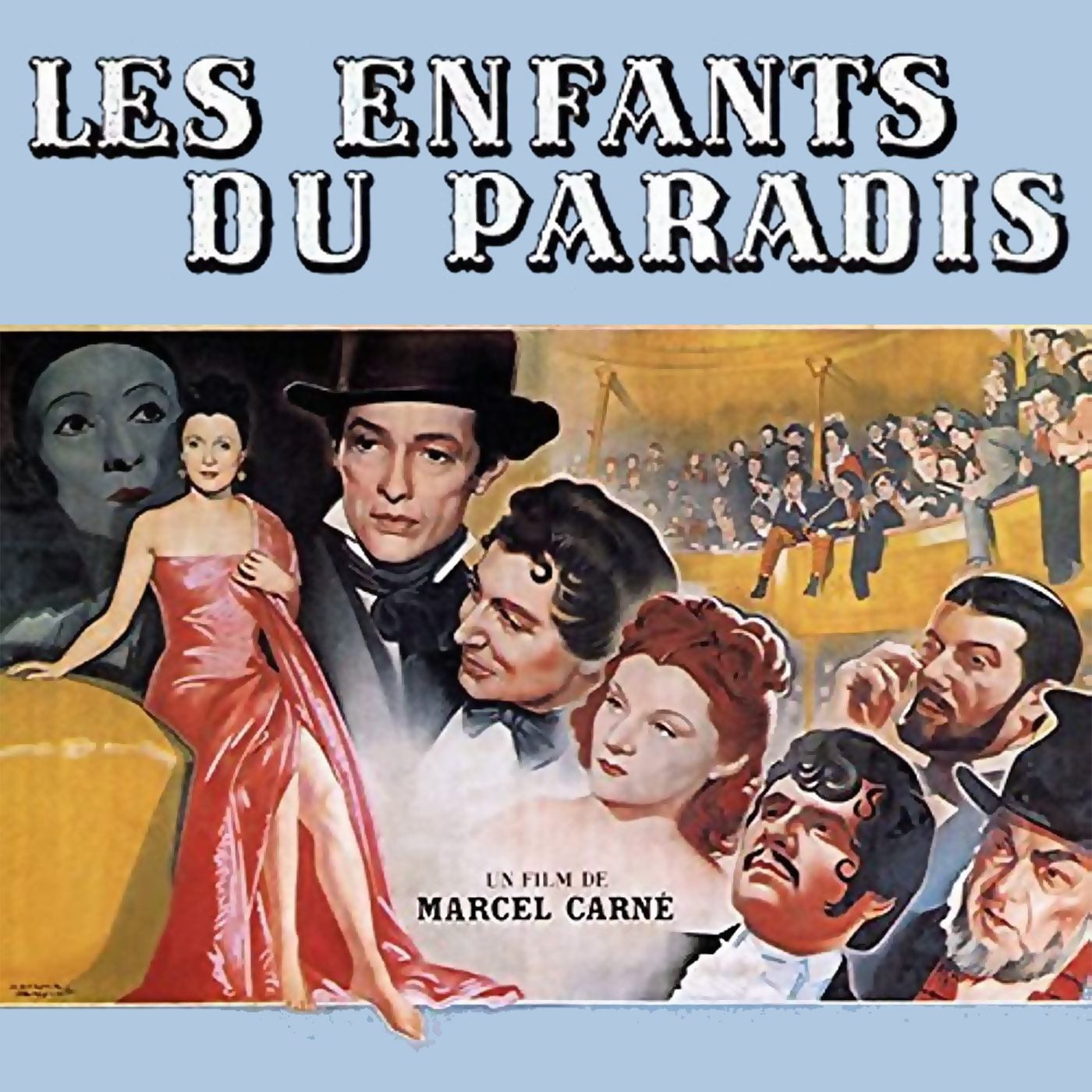
Shadow means hat. [MUSIC PLAYING] Means egg. It's like those French have a different word for everything. [MUSIC PLAYING] French, month continues with a look at Marcel Carmée's children of paradise, released in 1945 and set in the mid to early 1800s. The film tells a winding tale of the woman Garance played by the singular actors our letter is our letter and the four men in her orbit, the mind-baptist, the actor Fredrik, the criminal last an heir, and the accrues to crat, Edward. We will be spoiling this film, which has been called by Sam as one of the greatest films of all time. So if you haven't seen each other of paradise, you really owe it to yourself to just turn off this podcast, go out and watch the movie.
He come back if you want. We're just going to be singing its praises for an hour hour or half something like that. So we'll still be around. So Keith, when was the first time you saw a children of paradise and what did you think? First time I saw it was a believe in a high school.
I think it was part of a film class I took. And believe in it, I had not seen it again until now. One of the delights of doing the show is being brought back to great films that like that put aside, whatever stupid reason. So it was the honest, I don't remember. I thought it was great.
I remember thinking what an amazing movie. But I didn't remember. I remember images. I remember the mind. I remember that.
But I didn't remember the story. I didn't remember the details. So it was like it was sort of like ending the scene at the first time now. So that was pretty exciting. It says out there, I may have spent a lot of thinking, "Boy, I'm stupid around having seen this in the 45 years in between." But it was really wonderful to revisit it and realize how rich and how complicated and how grown up.
Everything about the writing, the direction, the performance is just remarkable. So thank you for getting me to sit down and see it again. And say, "How about yourself?" I want to say I first saw it probably somewhere between 10 and 12 or so years ago when I just went down this big, like classic French cinema rabbit hole where I watched all these Cluso films and every single Melville film. And I started to make my way through poetic realism and Marcel Carnes' work. And I remember watching this maybe like three days in a row, which I don't know how I had the time for that.
But I think my life was maybe less busy than, but based on the plot description, I knew that it probably would be something I would like. But it just is one of those movies that it's so hard to actually describe why it is so perfect. But I can't even look at bad keys without feeling like I'm going to cry. It's just, it's so good. So I had never actually seen this movie before.
This was one of those movies I might shame list where I was like, "I got to fix this. Same thing with next week when I'm talking about rules of the game. Come on, man. What are you doing here? You need to watch these classic films.
So this one, I just said, "All right, I'm going to sit down. I'm going to watch this and all you shit. I was not disappointed. I was just in thrall. And then, not three days in a row, but two days in a row, I watch this.
And I mean, it gets better on subsequent viewings. And the first time I was just gabsmacked it. How much I enjoyed this film. Just how well it was put together the acting that was based on historical fact that these characters are actually pulled out of history. I mean, it's such a meal of a film and it's just so rich.
It's like French cooking. You know, you feel almost like heavier after you walk away from it because it's just the emotion and all of this. But it's so well crafted and just the story is so well done. I mean, the writing in this movie alone. Wow, it is wonderful.
And when it comes to what three hour and ten minute runtime, it just flies by. Especially that second half, I'm like, "You got to be kidding me. There's no way that there is still half of this movie to go. I don't know if it's that old, like trick when you get into a theater and you have the information. And now it feels like the second half is shorter than the first half.
Sometimes it is. But with this one, I thought it was pretty well split right down the middle, but that second half just flies by. It's probably the shortest three plus hour movie I've ever watched in terms of just thick experience. And I think it's just so damn entertaining. I mean, a lot of movies that are over three hours are very good for you or they're very already or they're very, this is also just a great story.
It's like the thing that kept reminding me of was Dickens, you know, and the way Dickens is just so damn entertaining and fun and funny and tragic. And you just get lost in the story. I mean, there's all sorts of other levels to it, but it's just great story telling. And consequently, yeah, I was like, I got to the end. It was like, "Fick, Rick, I can't beat the end." But it is thoroughly fun.
And that's unusual in a three hour, ten minute movie. It's like, even though I know what happens and I know how I'm going to respond to certain scenes, watching them nail those performances, it's like a tour de force of acting. Like, yes, a lot of it is also due to the great writing that you mentioned, but it's just one of those movies where it's like, every single person working on this film was like firing on all cylinders that year. And it's hard to believe that a movie that it's so like big and epic and it's like they create this like really elaborate, very crowded universe. But like, it's just crazy to think that like all of this technical behind the scenes, sheer epic scale stuff is happening during World War II when they like don't really, don't have ideal conditions.
And like the set keeps getting damaged. Crazy. We had the nice shoot most of this down in Nice to kind of get away from Paris and the government of Paris, and just like, we're separate. We're doing our own thing. There's a lot of stuff going on behind the scenes as far as who might be a collaborator who isn't into me.
The guy who originally played Jericho, apparently they recast him completely in which is just amazing to me because Jericho runs through that this entire film. And I'm like, how did you just reshoot the scenes with his role that doesn't seem possible to me? The fact that they shot it so far away from Paris and from like the French governmental military headquarters was also a way for them. And it's like this is one of again, one of those rare films where it's so perfect. But also the behind the scenes making of history is just like endlessly fascinating.
Like because they were that far away, if you so from what I understand, like the movie is packed with hundreds of extras. And apparently a lot of those extras were French resistance members who were basically using the film as their like, "Day job cover." And then also, there's a lot of the extras were people that were approved, theoretically they all had to be approved by the V-shape government. So you had this weird mix of, you had, he Nazi extras and the resistance extras. And that with its own weird story. I mean, I actually don't know that if people were aware of who they were acting next to, but at least some of the things I was really talked about that, you had the whole split of France going on on that set.
Oh yeah, and you also had a lot of Jewish people working either literally undercover where someone else was like claiming credit for their work with their participation, or people just kind of flying under the radar. Like everyone from the set designer to some of the, the cast and crew members like, why had held stuff going on? Well, right in the main credit, there was a credit saying basically, "They are hidden collaborators for the person wrote the score and the set designer, because during shooting they had to have bigger things. They had that people that were doing the work in their name, because they were both Jewish. And they actually delayed the release of the film when they realized, "Oh, wait a minute, the liberation may be coming, rather than being the end last of the occupation, we'd like to be the first of the liberation." And then after the U.S.
Dicker Credit on, saying, "Here's two key people that had to work on this movie, you know, undercover, essentially." And it's actually right in the front credits. I do wonder if some of that liberatory, so close to being on the other side of the war, at least like where France as a country was concerned, has to do with some of the energy behind this film, because it's so intense. Like it doesn't feel like they're shooting this historical romantic tragedy type story. If just I don't know exactly how to explain why. And some of it is definitely in the dialogue where they say these things where you could easily read other things into it that are specifically about the war, but it's very hard to describe why this work so well.
I feel like I see a lot of metaphors inside of the film for what's going on in the war. You were just talking about, you know, the two factions kind of side by side. And then you get that fight on stage at one point. And it's like, these people are going to this theater and these people are going to stick with this theater. And then you can that whole divide between the mind theater and then the spoken word theater.
And you get the division between Baptiste and Friburgic. And just, you know, there's not necessarily a blood rivalry between them, but they are two of those people that are vying for garance and her affections. And you get two more people and you get one who's like, you know, the aristocrat. And you get the other one who is very much, you know, basically a black market here. It feels like, I mean, the guy's name, it's so close to Larceny.
Just kind of, it's like, to me, like every time I would see his name, I'd be like, oh, that's, I know his name because it's so close to Larceny. So he was very easy and plus, you know, he has very everybody has a very distinct look in this, especially back eye with those crazy spit curls. And he's so dastardly, even though he doesn't do horrible horrible things, I still just can't stand that guy in I kind of love to hate him. He is very good at that sort of giving off those like mustache twirling vibes. Well, I also really appreciate that the script keeps him grounded enough so that he doesn't like go over the top and become this kind of cartoonish villain.
And I think the most impressive thing in a way is that it, like, those sort of balancing weight that it gives all four of these male characters. So you don't just like, clearly root for one person other than maybe Baptiste. And even Baptiste has his moments where he's really kind of awful. And that's part of what I love about the movie is that he is the most empathetic character, but he also can be terribly selfish and terribly caught in his own feelings and his own pain. There are stuff that he does with his, you know, the love of his life and the foot of work where the woman was in love with him and then if we were going to say why if later on, yeah, or she's not, it's in it burdened, but it's very shallow to not realize that he's ripping her card out, you know, by being so actively in love with another woman and from her.
And the other thing that I really appreciate about the film is that everybody's got these moments where, no matter how much you love them in that empathetic, so then they're like, "Well, that's kind of awful. But in a way where you go, but that could be me. You don't hate them. You understand, and to me, even the villain has a moment where you get where he's coming from. And it's very modern in that way.
It's very, there's a richness of the characters that deals, you know, not the way we think of period films, really that American period films work. There is neat heroes and villains. It's a complicated movie. Write it down to our central character of Gerace, who is morally very complicated. You know, she loves everybody, but in that kind of way she also commits to no one.
And that's what leads to all the applications. There's also something in the acting that I, I would say it really, but it's not period acting, which I love. I mean, everybody's a appropriate to period. I mean, you believe it. You're looking at the, you know, aching 30s, it looks right.
But I so often took this day when I see actors and movies about a period, like I'm watching an actor acting like the person in the period, like that's what they're focused on. And there's a naturalism in this without ever feeling a betraying the period. It still feels like they're, their focus is actors on the emotion, what's happening in the scene, not in portraying the 1830s. And it kind of is remarkable because it takes a wall that some period films can have and completely get rid of it. And it's sort of like, yes, the costumes are over time.
It's a whole look is of the time, but the emotions are of this small. Yeah, the film is 80 years old almost seven to eight this year, I believe. And it feels so fresh. I didn't feel like I was watching something that was stuck in time. And that it's, you know, 1945 when it comes out, set in those early 1800s period, they could have gone really over the top and they could have been like, well, this is how people acted in the 1800s.
But instead there's to your point, there's such a naturalism to it that I was just like, oh, yeah, I can relate to every single one of these characters. Every single one of these flawed characters. And yeah, I love that they're all flawed. I love that every single one of them has a little something wrong with them. There's nobody where I'm like, oh, that that is the outstanding person.
Maybe maybe Baptiste Kid, who is like, one of the cutest darn kids I've ever seen in my life. But otherwise, it's like, wow, everybody has something going on, whether it's openly plotting or just some sort of FOIABLE or like even when we meet Baptiste Father, he's talking about what a horrible sudden that he has. And he's the bearish to bottom and he smacks him on the head out in front of all these people at this kind of carnival scene. But he eventually comes around to him, but you know that he had this horrible opinion about his son until his son ends up basically saving the theater. Maybe that's part of why I love Baptiste despite his flaws because so much of his dialogue, especially in the first couple major scenes, especially there's this great scene where he sees like he's following and love with Garance because he sees her in the street.
But then later he sees her at a bar with Larsson there. And there's this kind of great scuffle he gets thrown out the window, but rises to fight again. And when they walk home, it's like the characters are, I think for the first time in the whole movie they're having like a real emotionally vulnerable intimate conversation that feels so modern, but he has all this dialogue about how misunderstood he's felt and anytime he's suffering he just goes to sleep so that he can dream and all of that stuff about like the children of the moon. And there's just something so kind of otherworldly about him that I feel like Dave Bowie must have seen this film a hundred times like earlier in his career, especially when he was really into the perro costume, which you see Baptiste wearing here, but he's so good in that role.
He's so good in that role and so good out of that role. It was very surprising. At first I thought, is this character ever going to speak? Yeah, it wasn't really sure if he would ever hear the real Baptiste voice if we would ever seen without the makeup on. But when he gets out of that and becomes the other version of himself, it's just like, oh, okay, yeah, I feel for him and I really want him to do well.
I feel horrible what he's doing with Natalie, and especially after they get married and they just kind of tosses her over and I really like how she sends their child to see you go around and be like, hey, this is what we have. You know, just this almost like sending her a signal, sending her a letter in the form of, here's our son, please leave us alone, basically. But even the way that he treats go around in the first half, it's like part of what's so realistic, but so frustrating about some of the characters behavior is it's like, if they just would calm down a little bit and be a little patient and be a little bit more open to things, then chances are their relationships would work out, but it's like, Grants invites him back to her bedroom.
She doesn't literally say it, but it is explicit, but because she doesn't immediately profess this like insane degree of love that he feels for her, then he just flees from the room and it's like, you're obsessed with someone that you don't really know and the way that you're doing this kind of constant fantasizing, it's like, it's not healthy, and you probably could have had a relationship with her, but you sort of ruined it, and then of course she ruins it too. Yeah, he kind of basically shoves her in the arms of Fred Riek just with like, oh, well, here, let's get you a room and push you up over here and oh, it just happens to be kitty corner to his room and, by the way, why is that feast still at the lodging house or the boarding house when he is married?
That was the strangest thing to me. I was like, why do you still have this room that you can go to on the sets like his private room or something? Like, in case he needs to have an affair, I don't know why he still has that going on when he still has his wife and child. Well, I assume it's because I mean, he's become now a big star at that point of, you know, he said, and it's right from what it's my sense of geography is it puts him right near the theater and it's kind of like a crash to me, it's like a crash fat. It's like a place for a day and it can go between performances, whatever, you know, I have the feeling that that probably was not unusual to have a space, not necessarily for affairs, but just, you know, when he would go to the theater or come from the theater, that was how I read it that, you know, there's a home that he spent his most in this time at, but that's absolutely artistic hideaway when he's developing something worth the answer.
That's my projection, however, I'd actually be curious. You guys bought that, but that's how that's what I saw it as. Yeah, it's really confusing because in the first half of the film, he seems, it seems like he and Natalie are not married and she talks about how she's in love with him and he never says that he reciprocated those feelings and they, there's this interesting line of dialogue when he had a little bit of a free get a room at that boarding house. There's a line of dialogue where the woman who runs the boarding house says like he goes out because he basically drops free to reach off lay that night, gets him a room and then proceeds to go back out. And the woman who runs the boarding house says, yeah, that's what he does every night.
He just wanders the streets. So it's like, were they married in the first half or did that happen sometime after Garance leaves. To me, it felt pretty clearly, but I wish I could have evidence to support this, but I just kind of immediately saw it as in the first half, they're not married. She got Natalie wanded and then he's kind of debating what to do and then we jump forward that six years in the intervention and that feels like that when they got married had a child, all that. I feel like to me, if you have evidence for that because I kind of quote of what and knew that even though I can't think of the moments of being known to that, but to me it seemed like there was a before and after that the intervention covers that, you know, he still in the first half he really couldn't have left Natalie and it would have been a real, but if he had not chickened out that moment when when Garance has basically come into my arms coming to my bed and if he had not kind of walked away from that moment that opportunity to not instead of being obsessed with perfect love to accept the real love, the real woman right there for opening her thought and saying, you know, I'm sorry yours.
I feel like that was a fatal moment because when he doesn't take it any backs away then he ends up in this, you know, sort of loveless marriage or far from perfect marriage where he's spending his entire marriage, and I'm not planning for a woman that he chose in the, if I didn't, the moment he could have had he didn't take that, but I could be wrong and I could be just reading into things that if he could be dealing by sparray it and it's not the story, it's in the film, but that's what I walked away for with. I was reading an article last night and they were talking about, you know, blah, blah, blah, his wife and I was like, whoa, whoa, his wife and I was like, okay, yeah, and the second half more his wife, but I was thinking of the first half of the film, so I was very confused because I said, I don't think they're married and then, you know, rewatching the second half, I was like, oh, okay, yeah, this is making a lot more sense here, okay.
Yeah, I think that he settles for Natalie, which is really bad that he settles for especially because I think that the woman that plays Natalie is absolutely gorgeous, if not even more stunning the grounds, but grounds has that way that she carries herself in that kind of classic beauty, I mean, she, her as the statue is kind of like a perfect thing and I didn't have a question too for you guys as far as is she the one that is holding the mirror to herself in the tub of water is that a different person. I think that's her. I'm talking to her. Wow. And that because she shows up kind of quickly on the boulevard after that, so I was like, wait, was she in the show?
Was she not in the show? Is that like, is she like kind of a struggling actress wants to be an actress because she kind of falls into the theater very easily after that? Well, I think I think that's for really her introduction because I think what's important about is they introduce her as truth that idea of this snake apartment is truth and in some ways, is truth, I mean, everybody else in the film was sort of acting out as sort of their tweaked version of truth and she's the one I think who the film's point of view is that, the first idea of love, which is kind of an open heart of love and love in the moment and love that's both carnival and spiritual but is also isn't bounded by predetermined rules but is is responsible to what's going on between people in that moment.
I feel like the film's sort of saying that is truth and it introduces her as truth because of it and all the men are kind of trying to make truth, been that they are own personal whims and like truth doesn't do that and I kind of feel like that's one of the central metaphors of the film. So I assume that's what it's being also because that's the introduction of this woman is truth and that she spends the movie sort of being that. I think about our leddies role in this film like to have this film made in 1944 come out in 1945 where the central protagonist is this woman who just wants freedom and just wants to live life on her own terms. I feel so modern and also the fact that our leddie was interlate 40s when she's playing this romantically that everyone in the movie is just upset with her charisma.
She's such an incredible performer and it's such a good modern thing. I mean yeah it's true to the data to the women in sexuality. I mean you know she's not the orange of a new you know there is a beautiful orange of new we think it's the woman plays not late is gorgeous. But there's something about this suffix, the woman in the end who has got this sense of truth and knowledge and wisdom that in this dullness treated is more sexy and more desirable than the perfectly featured 23 year old and I think that's really cool and very much. I'm not with you think anything about American films that are very in all of this not and still an attitude we don't see that often.
I also can also have a leading woman who is openly carnival and openly really love sex and has affairs and it is passionate and physical and probably more come forward with the sexuality and any of the male characters in all of that feels so ahead of its time. Maybe he's made he French but certainly ahead of where American films were by miles and we're at it where films still are awesome. Yeah and she doesn't need anybody to the point where the end is her going off on her own and there is no like I'm going to stick around here for Frederick or I'll stick around for Baptiste. I mean the count is dead. Larstener is going to jail and she's just like okay yeah and she just believes and it's like I would kind of like to know like the continuing adventures of garance and just what does she do next because yeah she is fascinating and she really is the the center of this film.
I think she's going to have a lot of things over shadows a lot of things but she's not her personality isn't so big that you're just thinking of her every single scene like you're just seeing how these things are playing but it's not like oh what's the house. I think that's the house is going to react or houses going to be because you really just care about all of these characters rather than just just Baptiste or just Frederick or just go wrong but I think. Baptiste is the main character if we have to put a label on it but all of these other characters are so fascinating as well. I have every single scene that Frederick is in. I love that he's you know so obsessed with Shakespeare that he's reading the fellow in that one of those early early scenes that he gets to play a fellow later on and we're playing with.
The story of a fellow the story of jealousy and just him still dressed up as a fellow behind the scenes later on where he's just stoking these fires and he just seems to love to fuck around with people so much and you know the guy gets into trouble so often that he has that dual that you could see him messing with those writers play and just loving it. He's having such a ball being the bad boy and you can definitely see why I guarantee is drawn to him especially when Baptiste runs away from her in that early scene because he's just so handsome and charming and charismatic and he has the same kind of chaotic beat for freedom and for different experiences and so it's like one of my favorite things about the script is the ways in which it sort of shows do you how certain characters are different and are on opposite sort of polls from each other.
I have probably seen spending time showing how the individual character the main sort of five characters how they all relate to each other and how they interact and so to see his scenes with Baptiste when they're becoming sort of friendly and getting along it's I think maybe that's why this feels like such a short three hour movie because all of the scenes feel necessary and they do so much to develop those characters. Yeah, I'm trying to think of any unnecessary scenes in this film and I can't think of one and even when it comes to taking your time with seeing the light in there going to the Turkish baths and setting all this stuff up I mean it's it takes a little while for that scene to play out but it's the perfect amount of time there's nothing where I'm just like oh hurry up point you it's it's all very well done and I swear that with the fellow and the Turkish baths.
I think of what I think of the thing of well is a fellow and how he uses the Turkish baths and that and it was a fellow right where he had the to hold Turkish bath scene because it was the thing where they were kind of shooting that piecemeal as well and yeah. I think of the Turkish bath here is actually different than this other one where the sky gets killed and it's like you know just him cutting all of these things together the whole story of like you know when you open it door and spying you you actually walk through a place in Italy kind of thing for you know the way that he had the piecemeal that movie together. And I think there is some of that going on here too because of the kind of fractured way that they had to shoot which seems like a nightmare considering the very specific set pieces and all the extras.
But it looks so seamless. I think that this was a piecemeal production by any means it just looks so lavish. I just recently saw a burnout sunrise and you've got that whole street that he had constructed this massive massive set and then I look at the boulevard to crime our cream and just see that and realize oh this was all put together for this movie and just realize how. Extensive and expensive this thing must have been and just how smart it is to use just that one street for almost everything as they're going around and then you get the. Let me see if I can see this in the in the correct way.
I love how you get the carnival atmosphere at the very beginning and then you get the carney vowel atmosphere at the very end and especially all of those people that are dressed exactly like bad peace. It's just almost like mocking him when you see all of these people in the same outfit. Yeah the set design does a lot of work here too. It's just I feel like there's no aspect of this movie we could talk about that feels subpar or like it's not as superior as the others. It's just it's wild and I get why this gets so much universal critical love.
I mean if somebody tried to tell me that this was the best film ever made I don't think I would be able to argue. Then I'm bad at picking favorites. It's like there's so many films where it's like oh this is the best movie ever made all you got to see this then you watching you're like. I'm like, oh yeah, I can see why you like it. But this one I was like oh, while they weren't kidding around this this is the real deal.
One of the things that was so interesting to me is it's you know people's talked about about how epic it is there's this whole thing of the kept showing everything about how it was to show the French equivalent of the wind which I really just didn't see. Yeah no way. And because what this has and I can't think of many films and how it is it's an incredibly intimate epic I mean it is lavish and the production dines incredible and there's crowd scenes and but at the end of the day it has some of the movies about all that is just to create the world. For these human beings that were really wrapped up it. But what I remember from the film are the much more intimate moments are the faces are the you know and it's uptake away from all that other stuff but sometimes I feel like epic or about being epic it's like okay I'm watching this film because.
This set is so incredible and that's what I'm thinking about whether and and run the great thoughts of the remainder or it's radio or you know but that's kind of what you'll feel is somewhat almost about. And then this movie it is it it's about these people and then yes the sets are incredible but but they don't scream look at the set you know like in some ways. Like if you didn't know that street which is one of the amazing sets that's made you didn't know they built it and you just sound like they found a great old street. You think they found a great old street it's like everything is there just to create the reality of these people it's not there to show off and I think. That feels very different so when people throw around word epic with this movie almost like it's misleading because it doesn't have the full moon. of an epic and I like that because I find most epic or way to self conscious about their epics.
I could not agree with that more and it's interesting because so many like to your point so many things get called epics. Just because they have a big budget or lots of locations or something like that but usually a real epic it covers multiple generations so you're seeing all these different kind of branches of a family tree. Or of a system of government or something but here it really is that epic quality is just world building in a way and the thing that I think is one of the many things that I think is so beautiful about the film is it makes it feel like these deeply personal experiences are so intimate and so personal. But on some level also kind of universal and it's like such a hard thing to nail that I still don't know how they got this kind of lightning in a bottle situation.
I mean even when you just look at the side characters you know Baptiste father or listeners of real or Jericho the Ragman all of those characters are so richly drawn you know every real has I don't know 10, 12 lines of most not very much at all. But you get those great scenes of him menacing Baptiste or I love his reaction to the murder and the Turkish bath and just that you don't see the murder you see his reaction to it and it's like all that's really cool. I guess I did get Jericho kind of tying all of this stuff together you can just meanders through the the whole story I mean it's him that we hear first in this whole movie has little trumpet noise and you get that is this audio audio motif throughout this whole thing and I love that is James Jericho he's got a little trumpet and just how he comes in and he does this whole stick with oh it's Jericho the so and he just has like this whole like.
Rift that he'll do every single time and it's always like these different titles that he's giving them himself and just I love that and I love especially when he confronts Baptiste towards the end when he knows that he's being parodied up on screen up on stage I should say with. Baptiste father playing Jericho basically and getting murdered I love that he's just like you know hey you're using my image how can you do. I had it's great I just I love that character I'm very unfamiliar with the actor I know was one of Renoir's was it his older. Pierre Renoir he's the older brother of Jean Renoir the director but he's the the son of the painter. I now need to go back because he played McGreet in an early of role I want to say like from 32 and now I'm just like oh I want to see this guy more things I especially want to see him play McGreet.
He's got one of those great I mean everyone in this film does but the elder Renoir has just this great face that I think lends itself to so many different types of roles he's really kind of unforgettable and that he has a lot of people to compete with in this one. Yeah you cannot mistake one character for another in this movie and they're all also well written and well played I mean the woman who is who runs the boarding house or the apartment where you know I mean she's so funny and sexy and playful and odd and flirtatious he says older woman but she clearly loved us to flirt with the guests and everybody's got a story it's like somebody once had to make work on a film that the best film you feel like.
You could follow any person was one line and you could follow their whole story for movie like that's when you've got a great movie is like when everything is so rich that yes we don't choose to follow the by one book story you could. If you could go off and follow his story and this movie as that feel like everybody we meet even if it's very briefly is never just function nobody's just a waiter or the. Everyone has a life and we the both the writer and director make sure we get a glimpse of that life enough that person doesn't only exist in the scene where they're serving a function and I think that's remarkable it's very rare. The old beggar who plays that he's blind but then actually is very talented when it comes to knowing the cut care and quality of like gold and jewels and all these things at the bar.
I love that guy he's only in like two scenes but he's just amazing it's like oh where where's this guy I want more this guy like to your point yeah it's like. Every single person I want to know more I want to know what Jericho's story is how did he get to be where he is how did he get to be this person. You know like tell me that about every single person in this and it feels like they all have these richly drawn back stories where you do feel like they've all lived this life and you feel like you're being taken along on this journey you don't feel like you're on the outside looking in. You feel and I think it's very important that you know that the theater go through this whole thing as well you are not just in the audience watching the performance you are almost always.
You know you're in a stage or behind stage and you get to see those very intimate moments of behind the scenes and get to see how the sausages made how we have these you know the back to where Johnny's of the count or you've got the. You know you're fighting of these different actors and you've got you know for the week when he comes off of the stage and he's just like I'm dying to speak you know I'm having such a hard time with all this mind shit I just wanted to have why to you know give me great dialogue that I can chew on. You know that we get to go backstage almost even more than we're in front though all of the scenes of the stuff that's going on on stage is wonderful and again nothing I would cut all that just play so wonderfully especially.
To see Baptiste and the way that he does his mind stuff it's the lightful every single time. Yeah I think it's so important that they got someone like John the webaro who plays Baptiste who had real life mind training because those moments where you're watching the same performance that the audience is watching are just. It's like you can't take your eyes off him he's such a powerful physical performer that in a way it almost reminds me of and it's like a total opposite than energy but it almost reminds me of somebody like to share him a food. You know it's so great in these really physical roles where he's sword fighting and things like that but even when he's not fighting he just has this like very dramatic sense of of his own body and you definitely get like a much maybe more a feminine.
More of a chaotic version of that with burrow but it's like I don't even know who's the best performer in this movie they're all just just perfect. I'm here with a hard time with this the guy that plays Frittarique Pierre Brassier he also was the doctor in eyes without a face is what I'm reading. I don't see how that's possible. Yeah he is another one of those performers from the period who just like I think they really like if you can picture him with those like big gray old man eyebrows and lab code and like maybe 15 more pounds. He looks like a totally different person and the fact that he's so like that yes that movie was made 15 years later so he is a lot older but I think some of my favorite actors are these kinds of French guys who played such a range of masculine types like definitely Brasser when he's younger plays these kinds of like leading male roles and kind of you know, Lothario scoundrels but could also have so much gravity and physical presence when he wanted to.
It's just the the forties the late thirties like he's also in port of shadows but the late thirties and into the forties when they go from poetic realism to struggling to make films under the occupation it just resulted in so much great cinema in such a crazy short period of time. Yeah I'm looking at a whole host of photos of him and it isn't until he turns to the side when he's older that I can recognize him as being front or he because he's got that that knows is very distinct and I'm looking at even like kind of flipping back and forth between the 1950s version of him in the 1940s version of him just like okay I can kind of see it but it's just amazing the transformation. Yeah he does have that kind of face where I think he's very well-bossuted to peer-read pieces like he's in a version of the count of money crystal from later in the forties that I haven't seen but really want to just because I think he would be great in it.
And I didn't really oh he's also in Goto that I learned of love I forgot about that. Yes. That is the governor. Yeah gosh what a career this guy had. Everybody who worked on this movie had that kind of just insane all over the play career.
Did I read right that our buddy was didn't she go to jail or something? I don't want to go to I mean you could talk about this for a whole hour but basically this thing this very distinctive thing that happened in France in 1944 and 1945 and a little bit into 1946 it's like the French were really did not participate in the resistance on the scale that people said they did after the war. And we're so desperate to be seen as these you know proud French resistors that people just didn't want to be seen as collaborators even when many of them were. And so highly public figures like specifically our leddy were made into scapegoats and so she had a relationship with a Nazi officer and because of that they basically shaved her head, and she created her through the streets and drew a swastika on her head she was convicted in court and I think she was supposed to spend like a year in jail but it was it was really like you're going to go to this shadow and have to stay there and live this quiet life.
And I think that she was able to rehabilitate her reputation and get her career back a couple years later but it's such an extreme example of how that was dealt with socially it's crazy and I like I don't know how she got through that. I remember also reading that she ended up being like money after her death and I was like well they were not about to put somebody who's a collaborator on commemorative coins unless we've gone completely away from that. And it's a very good idea. I think that's a very good idea. I think that's a very good idea.
Which I think is kind of a crude PG version. I think the actual translation is more like my heart belongs to France but my country belongs to the world. Jesus. I think that's a good idea. I think that's a good idea.
I think that's a good idea. I think that's a good idea. I think that's a good idea. I think that's a good idea. I think that's a good idea.
I think that's a good idea. I think that's a good idea. I think that's a good idea. I think that's a good idea. I think that's a good idea.
I think that's a good idea. I think that's a good idea. I think that's a good idea. I think that's a good idea. I think that's a good idea.
I think that's a good idea. I think that's a good idea. I think that's a good idea. I think that's a good idea. I think that's a good idea.
I think that's a good idea. I think that's a good idea. I think that's a good idea. I think that's a good idea. I think that's a good idea.
I think that's a good idea. I think that's a good idea. I think that's a good idea. I think that's a good idea. I think that's a good idea.
I think that's a good idea. I think that's a good idea. I think that's a good idea. I think that's a good idea. I think that's a good idea.
I think that's a good idea. I think that's a good idea. I think that's a good idea. I think that's a good idea. I think that's a good idea.
I think that's a good idea. I think that's a good idea. I think that's a good idea. I think that's a good idea. I think that's a good idea.
I think that's a good idea. I think that's a good idea. I think that's a good idea. I think that's a good idea. I think that's a good idea.
I think that's a good idea. I think that's a good idea. I think that's a good idea. I think that's a good idea. I think that's a good idea.
I think that's a good idea. I think that's a good idea. I think that's a good idea. I think that's a good idea. I think that's a good idea.
I think that's a good idea. I think that's a good idea. I think that's a good idea. I think that's a good idea. I think that's a good idea.
I think that's a good idea. I think that's a good idea. I think that's a good idea. I think that's a good idea. I think that's a good idea.
I think that's a good idea. I think that's a good idea. I think that's a good idea. I think that's a good idea. I think that's a good idea.
I think that's a good idea. I think that's a good idea. I think that's a good idea. I think that's a good idea. I think that's a good idea.
I think that's a good idea. I think that's a good idea. I think that's a good idea.
More from The Projection Booth



Similar episodes across the network
Matched by shared keywords.
-
Campfire Stories with Samm Deighan: True Crime, Serial Killers, and Obsessions
1 shared keyword: samm deighan