
Season 1 · Episode 372
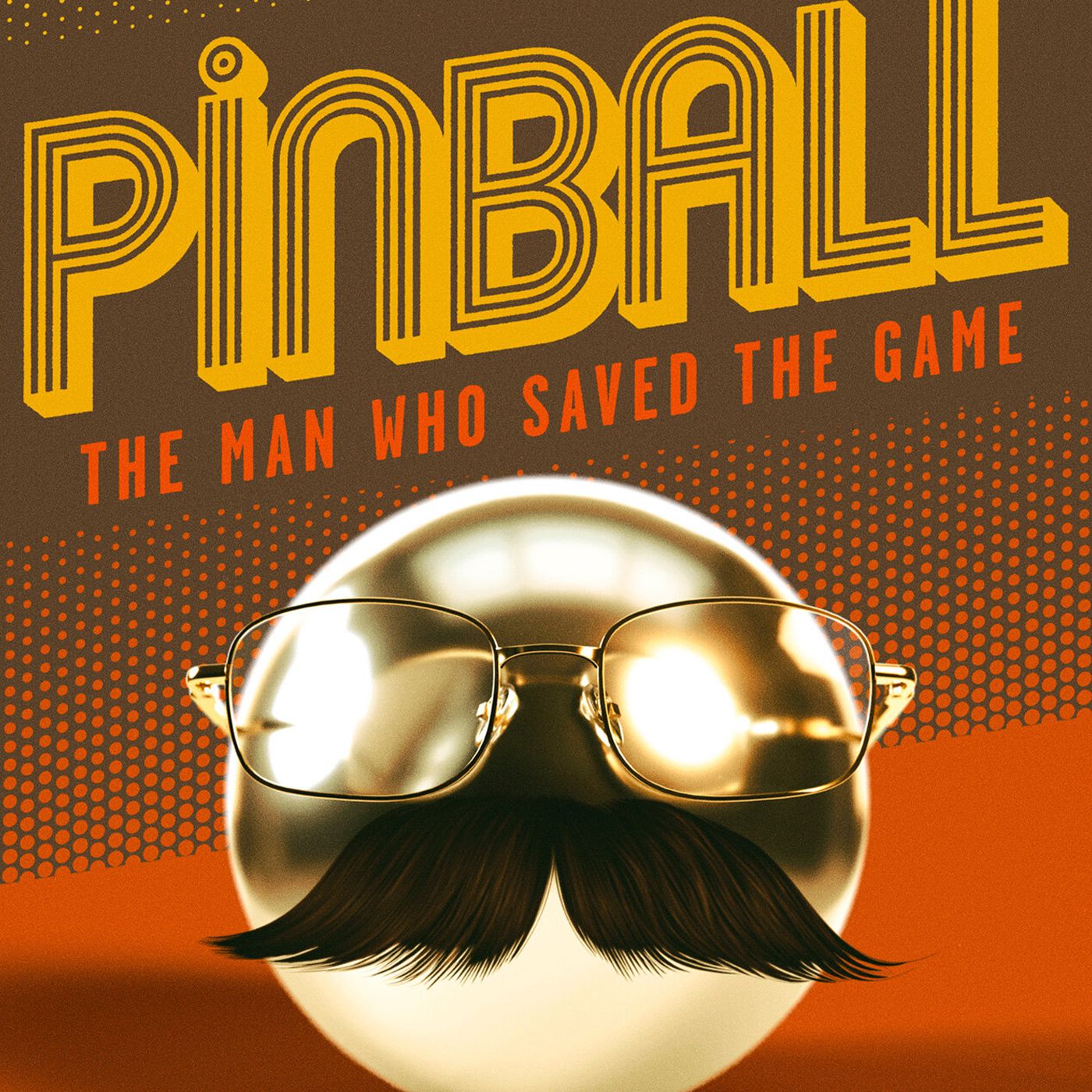
Special Report: Pinball - The Man Who Saved the Game (2023)
About this episode
Find out more at https://pinballfilm.com/
Transcript
Automatically generated, so expect the odd misheard name.
[MUSIC PLAYING] Told you he is, folks. It's so time. People pay good money to see this movie. When they go out to a theater, they want cold sewage, a hot pop plorn, and no monsters in the projection booth. Everyone pretend podcasting isn't boring.
Then it'll arms. [MUSIC PLAYING] [MUSIC PLAYING] You ready? Yeah. All right. Tell us everything about the greatest shot you ever took. [MUSIC PLAYING] [MUSIC PLAYING] I'm Roger Sharp. I've always wanted to be a right.
Why, girlfriend? boyfriend. Demorse. Actually, you should be happy. You finally wrote something important. So you're single.
Welcome to GQ. If you've also got drinks, actually, I have a date. This probably sounds weird, but I play it in ball of all the time. Help me focus. Are you any good?
Wow. It may be the thing that I invest at. Why are they taking the machines? We got busted. It never even occurred to me that the game was illegal.
But for over three decades, Pinball was banned in New York City. I want to show this city council members that they've had it wrong for all these years. Oh, you're a border? I just have a question about the Pinball Banser. Somebody keep these damn kids away from me.
We're going to set up a hearing at we'd like you to come into testify. You're going to play Pinball at City Home. I want to redeem the game. [MUSIC PLAYING] That is a game of chance. That is a game of skill. Well. [MUSIC PLAYING] Dear folks, welcome to my special episode of the Projection Boot.
I'm your host Mike White. On this special episode, I spoke with Austin and Meredith Bride, all about their feature film debut, Pinball, the man who saved the game. You're going to hear from Austin first, then Meredith, and off we go when I help you enjoy this interview. You guys have been working now for a while over 15 years. Can you tell me a little bit more how you kind of got into film making and what that process was like for you?
We were both comedy nerds growing up. We watched a lot of British comedy. We tried our hand at some really terrible sketches when we were little somewhere out there. There's a cassette tape that we made of like a Star Wars parody that I just hope never sees the light of day. Went to college.
She's about as a university here in Virginia. And I started doing theater. I did a lot of theater, including a sketch comedy show that I put on in the student theater. And then when we got out of college at different times, we're both of a set of up working at a public access television station. And I knew how theater lights worked.
So I basically knew how TV lights worked already. And got hired and with that came a key to get into the building after hours. And so all of my improv comedy friends from college and from DC, we would go in in the middle of the night and make silly videos for something called Channel 101, which was started in LA by Dan Harmon and Rob Schrobs. There was a channel 101 in New York as well. And the idea was to make 10 minute-- there are five minute television shows.
And so we had a couple of series on that. And eventually we had families, but we decided that we need to up our game and be better at this than we were. We did some 48 hour film festivals. We did very well with those. And we kind of stumbled into a couple of short films that we shot in LA with an actual crew.
For the first time, we had an actual crew. It wasn't just us holding the boom poles. And we kind of got hooked. MPI original films saw our first short and signed set to do another one, which was called the PCK, which had a very good festival run during the pandemic. So lots of Zoom festival calls.
But it did well enough. It opened a Tribebeca short program. And they gave us MPI original films, gave us another shot to make a feature. Here we are. So those in crowd-friended of yours were, would they populate things like defenders of Stan?
Oh, yeah. That's all of them. Those are my college buddies, 90% of the people in that are my college friends. And the other 10% were my friends. That's true.
Who had a sweet galactic costume. True. Yeah. So when you guys are working as a, if I know that your credited is both writers and directors, but how do you develop the work? Orally.
Yeah. Wow. We tend to essentially write the same things. So we will talk a lot. We will outline once we come up with an outline.
We sort of know how the story is going to proceed. We'll then separate, go to our offices. Each of us will write the script separately. And then we will come together and trade the scripts with a highlighter. And we will highlight everything on the other person's scripts that we found funny, or that we particularly liked and enjoyed.
And then we'll trade again. So now I have my script back. And with a different color, I'll highlight everything, really, that I thought Austin missed. And they will just discuss it and depending on impending due date or just how close the scripts are, we may do that multiple times. And that's what happened with a piece of cake.
And that's what happened with this film with Pinball. We wrote full scripts, 100, 120 page scripts, and individually and then discussed and switched things out. It's a great, it's an inefficient process, but it's really helpful in the sense that if I get stuck on a scene, I just don't like it. It seems boiler play. I'm just not excited about it.
I'll quickly write something so I can finish it, but I'll move on. And I won't think too hard about it and beat myself up too much over it. Because I'm going to cross my figures that Austin has figured it out. 99% of the time, one of us has an end. The other one says, yep, that's good, that's great.
Let's go with that. And if we don't, then we just know we need to work on and we'll discuss it more. It's rare that we have those moments where nothing is working, or particularly seen. But when that happens, I think you have to sort of re-examine your priors, go back to your treatments, say, what went wrong here, that we couldn't figure this part out. Now, you two have brothers, do you have any other siblings?
We do. We have a successful older brother, which is a great thing to have when you tell your parents that you want to make movies for a living. Yeah, I was wondering how they took the news. Alex is the oldest of the three. He is a neurologist down in Atlanta, National Mayor of Scholar, paid to go to medical school.
I mean, he's great, right? He's the sibling you need to have if you want to go do wacky, you make them up so you're okay. So, a piece of cake, all about little silver balls, you make a movie about pinball, which also focuses on a little silver ball. As you're making piece of cake, we were just like, oh, we should just take the step further, eliminate the number of balls and go down to a bigger one. We joke that we could be, can't really remember where we first heard about pinball being illegal.
We first heard that Roger, you know, learned about Roger, proving that it was a game of skill and not chance. It was one fact toy out of long Google doc that asked in a nice share full of embryonic story ideas that looked deep into occasionally. However, we think that perhaps we were at some time during a piece of cake, we googled illegal silver balls and that picture of Roger that we ate in the film, but that picture of Roger in the city council hearing playing pinball with scowling city council members. I can't endorse doing the Google search though. No, I don't think that's a good idea for folks.
But that may be where we gave up at that. But yeah, we're looking for a third at Benny when as they at third, illegal silver ball story idea, we need to finish the trilogy. Our DMs are open. Tell me a little bit more about like when did you actually reach out to Roger Sharpe? How was that whole thing?
I mean, it was February of 2020. We were looking for another project, we're just another idea, something to do. This is around the time that Tribeco was a piece of cake was the first to premiere Tribeco. So we're just hoping to have an answer to the what's next question. I saw the bit on the Google Doc and I cold emailed Roger.
I found his email. I just emailed him and asked if he wouldn't mind jumping on a phone with me. Just a talk. I had read a little bit about the shot into the pinball world. Rogers shot where he calls the shot in front of the city council chambers.
That's pretty well known in the pinball community. But we're not pinball people. So this was sort of new to us. But I read that story. I thought maybe there was something there.
But I just wanted to feel him out. Talk with him. We got on the phone and we ended up talking for about three hours. He's a talker. I'm a talker.
While the time this was over, I contacted Austin and I said, I think this might be a feature. And that's because he told me all of the other things that hadn't been written about. That worked part of the shot around him meeting single mother about his time at she cute, writing the pinball book, meeting the people that as part of the pinball book research that created the game, literally created the game. I mean, it's fascinating. And all of that in some of the great stories that he told it felt more universal than just a movie about pinball.
And that's that was important to us because we wanted something that would appeal to pinball fans. Absolutely something they could embrace. But also something that you didn't need to know anything about pinball too. Enjoy. So do you have to put together like a presentation for MPI and come in and say, we're going to do a movie all about pinball and what was that reaction like?
I mean, the funny thing is that when we were first approached by MPI, you know, for a follow-up, they were asking for ideas. Then they specified no period pieces and no biopics. So of course we included this on our list on our short list. And I think over time they found that to be the most compelling one. What a steep hill to climb for your first feature by making this a period piece by just having the scope of this project.
I mean, how did you end up putting this all together? I mean, what was your approach to it? And also I'm so curious with this interesting way that you guys are talking about your writing. What different avenues were you going down? Because he and I had created these different scripts and just talking through and using the device of having a modern day Roger Sharp, the part of the movie, and be able to sort of critique and talk back to the director.
We enjoyed that. So that was pretty early on. The original script didn't change that much from the first draft to what you see on screen. It was trimmed in a couple characters were changed, partially for budget reasons, locations were paired down for budget reasons. I mean, there are things and compromises that you must make in order to make a film or reality, especially on a tier zero budget like this.
But we were always amazed at the cast and the crew and just everything that came together. This is easily the biggest thing we've ever created. With the biggest budget we've ever created. Still, it's a little budget movie, indie film. I understand that on the grand scheme of things that's small, but to us it's here.
So we never felt like we were making any compromises on that front. If anything, we were super humbled to have all of these amazing people and resources that I disposal. And I really can't think the cast of the crew or the original films enough for producing this. And maybe a low budget film, but it doesn't look like a low budget film. It looks fantastic.
Thank you. I appreciate that. Can you tell me a little bit about your crew, your DP? I mean, how was that relationship? John Kang was our DP.
We had another DP that we had worked with on the short, who couldn't sign on for this one. And so we sort of went searching based on recommendations that other people had. I'll say, John was the only DP whose headshot has him smiling. Right? Every other DP is very serious and staring.
And we kept on saying it was a mantra on this film. We're making a pinball movie. If we're not having fun making a pinball movie, then we're doing something wrong. And so that struck out immediately the way that he uses those little subtle camera moves. The footage that we saw from him was incredible.
We got on a zoom and he was such a great guy. Just such a happy fun guy. He was phenomenal. And he knew that as first time directors, we were going to lean on him for a lot of moments. But he was still very collaborative and it was great.
You talked about how you were preparing for things in February of 2020. And I seem to remember that there was something that happened in March of 2020 that might have affected you and your scheduling. How to COVID affect the film. In a way it kind of helped because everyone was locked down. And that's when we first got started talking to Roger.
Once a week or a couple times a week, even we would sit down on a zoom with Roger for a few hours. And just talk about things that were going on and hone down on certain aspects. We had zoom with Roger and with his wife and with his kids and with James Hamilton and his sister. I mean, we were actually in a uniquely fortunate position that everyone was stuck at home. And we could say, hey, can you jump on a zoom call?
We spent the vast majority of that year talking and writing. There wasn't much else we could have been doing anyway. The timing was somewhat fortunate. When did you actually do the shoot? October of 2021.
2021, they shoot. We were shooting in the Hudson Valley. We work with choice as the on the ground production team. So we were in Newberg and the Pekip Sea that area. And we learned while we were there that just across the river from Newberg in a town called Beacon.
It was a barcade that also had to deal with a pinball band on the books when they first tried to open up. What was the shoot like for you? How was it? Constance stress, but also wonderful. It's hard to complain when you're on set.
And on these wonderful locations or even these built sets. And there's just a huge team of people working to achieve this common goal. It was pretty fantastic. We had such an amazing casting crew. Like I can't speak highly enough of the people that we brought in.
I know the cast had fun. One of the great moments of course. We relied heavily on the pinball community to source a lot of those old machines. So there were times when we had 20, 30 machines on set. And so you break for a lunch.
Suddenly you hear these things fire up and people are playing games in between. Shot too is great. Really good time. It was a lot like having a being a part of a very stressful summer camp. There's a lot of fun.
But you also, you know, there are things you need to do in a accomplish. But I agree with Austin. We made a lot of great friends. And I think of all the things many of the many things we can take away from this. That's some of the friendships we've built.
I own that list. You could have pushed this a little too far. And the whole movie could have felt like a funnier disket. Rogers, a accent, could have been thicker. There could have been more mugging these kind of things.
But you handle that. I mean, it's a fun movie, but it's not a parody film. Yeah, it definitely shouldn't be. I mean, when you're making, you know, again, they sort of tears zero in the budget films. We set off into each other.
You got to get a little weird with it, right? You got to make it interesting. But you don't want to go straight to Wachy Town. It's got to, you know, you've got people for 90 minutes. You know, I think if you go too bizarre, you're going to lose them.
I mean, there's an alternate title of rep. We're rolling around a tin ball of love story. And I think that was important to us that this is in many ways. We're not making fun of a tin ball. We're not making fun of the people who enjoy tin ball.
We're not tin ball people. But we now care very deeply about that community. And the people who made it happen. And I just Roger Peter, but I'll tell you other fabulous people we've met. If we had gone too broad, it may have run the risk of us.
Look, like we were making fun of a niche community. And that's definitely not what we intended. We wanted instead to create an understanding that everyone, everyone, I think, has involved in some small niche community. And we wanted to show that respect to what they built. At the same time, again, it's pinball.
It better be fun. No one goes to see a pinball movie, dark and yet. But thank you. I heard earlier today I was listening to a film making podcast. And someone said comedy is like a souffle.
Like it should be light and airy, but it's really easy to mess up. And I think that's correct. Getting the tone right and making sure that everyone understands what sort of movie we're making is really important. Well, to that end, did you guys have a lot of rehearsals for this? No, not terribly.
Just to with a budget couldn't sustain a larger rehearsal process. But we did do a number of zooms with actors ahead of time, particularly Mike and Crystal, who I think are about excellent part of that. And I just got to give our hats off to Lindsay Weiss, Miller, our casting director who just kept putting amazing people in front of us and saying, "Choose what? And we're thinking we want to choose all of them like there too many good people." So no, we didn't have a large rehearsal process. But we did have a lot of time talking with people before they landed on the ground.
So to give them a sense of what we were trying to do and what we were trying to accomplish. You mentioned tone and I think one of the things that helps with tone so much is your score. Your score is terrific. Can you tell me a little bit more about the music? Rob Barbato.
He is fantastic. Something I learned on a piece of cake. And I want to say I love the music on a piece of cake, but I also what are the things that we learned from that process is that you can fall in love with camp tracks. So before we even started shooting, we had hired Rob to create music for the film. And I knew exactly what I wanted.
Well, more importantly, I knew exactly what I didn't want. I didn't want disco. disco and pinball doesn't feel right to me. The pinball should be a little grittier, a little bit more up being fun, but not crazy. I didn't want it to be too wacky. And so we sent a few temp tracks his way just to sort of say, you know, here's some reference material.
And he started sending us songs while we were shooting. And I got to play some of these songs for cast today. Oh, we got some mixes. Let's listen. They were great.
I mean, I think probably 80% of the things he sent. We ended up like using. I don't think they were many that he created after the film was done. They would, you know, he would play around a little bit more with how instruments came in and out and added some some more to it. But the basic tracks were there and the feeling was there.
And I deeply adore the score. When did you guys have your premiere and how did it go over premiered at the Hampton's International Film Festival in the fall, which was, you know, fantastic and surreal. We bounced around from there a lot of times we'd go from one festival straight to another sort of living out of a suitcase. But if I listen, I'm going to forget some and that's problematic. You've got a lot on your website.
So people can always check that out. Yeah. You know, we had a great festival at heartland. That was phenomenal. Picks up audience towards the end.
And that was a big one. Amazing. Rain dance. We were closing that at rain dance. This was just awesome.
Being in London and Mike was able to join us for that one, which is great. There's been a number of festivals in and it's been a blast considering our last festival tour with the short was all done via zoom. This was our first real experience traveling with film and it's been great. Did Roger join you on this tour as well? Absolutely.
Yes Roger and Alan. Sometimes we have more extended versions of his family arrive. We certainly have a lot of his pinball of extended family arriving. The support from that community has been fantastic on the circuit as well. In fact, we just recently got back from South Carolina where we did screening because there's still a lot on the books in Columbia South Carolina that prohibits miners from playing pinball.
We met with the minority leader down there, Todd Brothaford. I believe we had a screening there and it was just excellent. He was screening for the first one sold out the pinball community. That's truly really shared up for that. And then we all went to Bangback and which is a pinball arcade and proceeded to play there for many hours.
Roger was the director to show off. It's fun to watch Roger still and incredibly gifted pinball player. Just truly, truly good. We are terrible. Not even just in comparison, just period which is terrible but it's fun to watch Roger.
He's great. And it's fun to watch Roger in his element with peatble wanting his autograph. It's great. Yeah, Roger's been in a big part of the push, the promo push for this and it's been nice too because occasionally we've had film festivals that compete that are on the same day and sometimes Roger will be able to go to one. We'll be go to another.
So he's represented the film so low in a couple festivals and screenings. It's even better when he's there for the Q&A afterwards because he gets all kinds of questions that we could not answer. So what's next for the film? Or is it going to be playing? So at this point, it's out.
You can get a Apple TV and other streaming sites video on demand and there will be playing a few theaters across the country. So I would urge everyone to take a look at pinballfilm.com. That's real fun. The latest news and updates as far as screenings. There are still some festivals that will be playing as well.
So take a look. Yeah, that's what you'll find everything. And what's next for you guys? Some sleep. If we're lucky.
Yes. Not quite sure yet. I'm still looking for our next idea circling a few options. But don't want to jinx anything. So well, best of luck to you in the future.
Again, pinball is such a great movie. You should really be proud of yourselves and what a great job that you did. So thank you so much for for making this movie. Thank you so much. All right.
Well, Austin, Meredith, thank you so much. And yeah, definitely everybody check out pinball the man who saved the game or pinball on love story as you put it. The story is about an extra driver being named John James Law before his friends Blackball him in nicknamed pinball. I gathered the story from a truck stopping out of police or house on this old fellow. I'd say 70 years old.
Let me to buy him a strong cup of coffee in a piece of good apple pie. I bought a cup of coffee in the pile for the old fellow and I'm off of glad I did because he went design smile and says my my. Then I noticed in a few minutes with trembling hands he pushed a part of his pine coffee back and looked at me with tears running down his pole with a beaten cheek and this is what he said. I'm a no. I'm a no.
I'm a no. I'm a big truck. I shot the pinball machine but it calls me bad love. But I'll never have a mate and a pinball machine. I get poor catacona than I missed the 16.
I was there out of all the more pinball machines many weeks they have caused me to live on sighting. Last time I come away from the phone the first thing she says John when can you come home. I've got a lot of hugs and they've got the goal so you when I get back from Chicago. She says John you know I love you I was too wouldn't go send you baby some money they are hungry and cold. The last thing she said and then she hung up John you've give up my loving and just a drive on old road.
I made my trail onto Chicago I was gone too much called a shot up my dog. When I got home my family was gone the best friend I had for a long my telephone. He says John I guess you wonder about your babies and wife. You know you've got your babies and your wife to cook a lie. I lost all my friends I can't sleep for bad dreams I dream about a no truck and I'll pinball machine.
I never will forget the last words that I don't man said. Oh Lord if I could build my life over them and then he failed in. They tell me John is a clean cut young man at age of 19 but now he's in his grave a victim of a big old truck and I'll pinball machine.


