
Season 1 · Episode 622
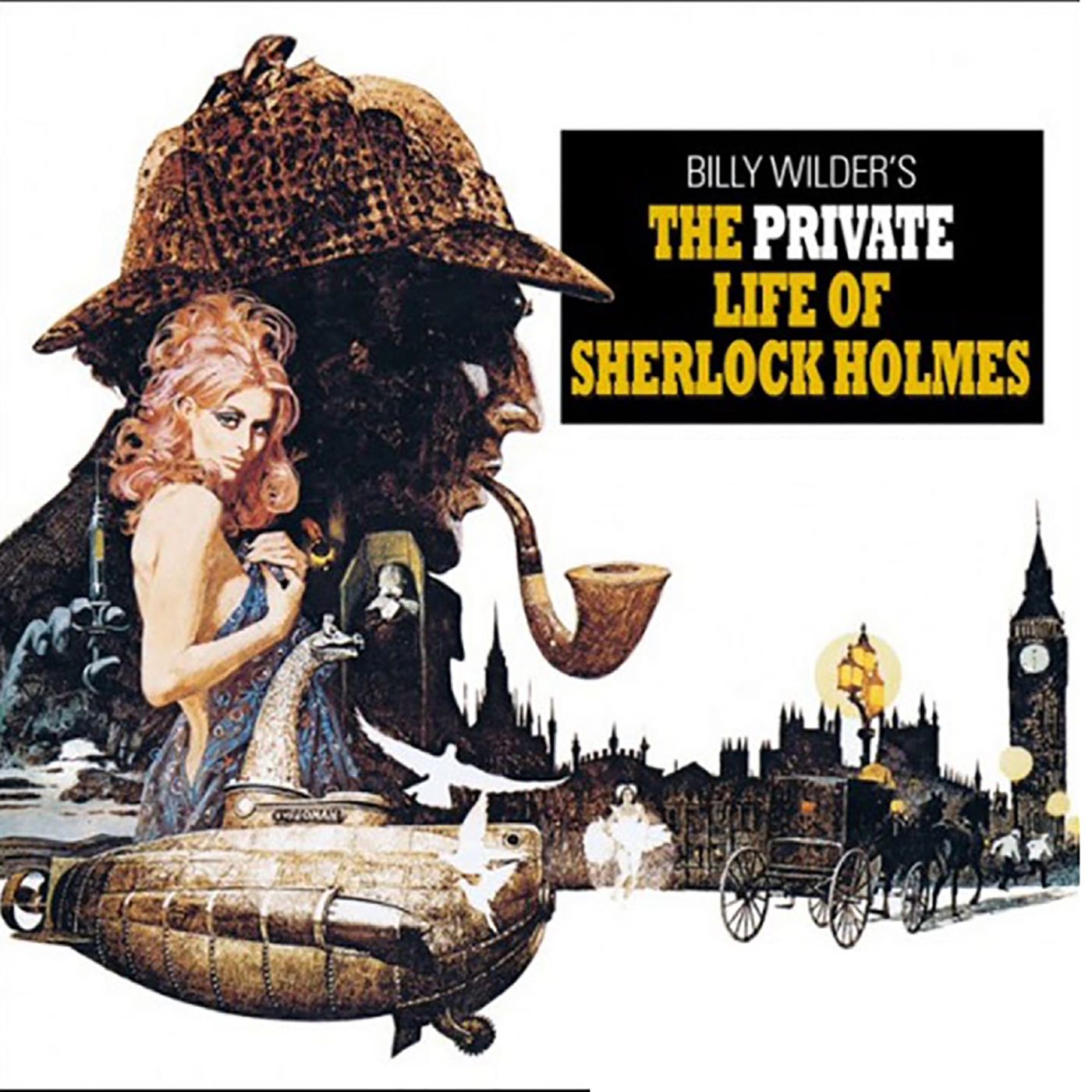
Episode 622: The Private Life of Sherlock Holmes (1970)
About this episode
The film stars Robert Stephens as Holmes and Colin Blakely as Watson along with Christopher Lee as Mycroft Holmes and Geraldine Page as the mysterious Gabrielle Valladon.
Aaron Peterson (The Hollywood Outsider) and playwright and author David MacGregor join Mike all month for some Sherlockian talk.
Transcript
Automatically generated, so expect the odd misheard name.
Old years, folks. It should tie people fake good money to see this movie. When they go out to a theater. They want cold sodas in a hot popcorn and no monsters in the projection booth. Everyone for ten podcasting isn't boring?
Turn it off. Billy Wilder, the man who gave you the Apartment and some like it Hot now reveals of the private life of Sherlock Holmes. Doctor Watson, in his lifetime, recorded some sixty cases demonstrating the singular gift of his friend Sherlock Holmes. But there were other adventures which, for reasons of discretion, were withheld from the public, adventures which involve matters of a delegate and sometimes scandalous nature. The private life of Sherlock Holmes was anything but elementary.
I dear Sherlock. There are certain affairs that do not come within the profits of the private detective. The public has a right to know these things. Sherlock Holmes was a man of curious habits and eccentric tastes. Aren't you ashamed of your summer, Faraday?
But this will take care of it. And not always what he seemed to be. You have described me as six foot fowards and barely six foot fow moll euss you are short of then, she thought them, Oh, I didn't mean to be I hope by not being presumptuous. But there haven't been women in your life, and they would never find I found her body quite rewarded, especially the palm of her right hair. Midget.
What is it indeed that feeds on canary birds and sulf puric acid and has an engine for a hard open the door, Sherlock. When I said drop this case, it's not merely a suggestion, it was an order by whose authority, by the authority of Her Majesty's government. Hot, you better take this with your Your client isn't Madame Valador. It's the Imperial German government. Give them.
Still, he's getting close out and close sighing. It took a genius to cover up Sherlock holmes vices, blunders and bizarre tastes. Sherlock Holmes was a genius. The private life of Sherlock Holmes was anything but elementary. Welcome to the Projection booth, I'm your host, Mike White joined me once again.
Is mister Aaron Peterson. Hey, I'm glad to be back, especially about Sherlock Holmes, also joining us as mister David McGregor. I'm delighted to be here. Thanks for inviting me. The game is afoot as we kick off a month looking at four films featuring Sir Arthur Conan Doyle's consulting detective Sherlock Holmes, one of the most adaptive characters in the history of cinema.
We've all grown up with a variety of actors and interpretations of homes. In this series, we are looking at four films from the nineteen seventies, and in this episode we are discussing Billy Wilder's nineteen seventy film The Private Life of Sherlock Holmes. The film stars Robert Stevens as Holmes and Colin Blakeley as Watson, along with Christopher Lee as Microft Holmes and Geraldine Page as the mysterious Gabrielle Valadon. We will be spoiling this film as we go along, so if you don't want anything ruined, please go ahead and turn off the podcast, watch the movie, and then come on back. We'll still be here.
So, David, when was the first time we saw The Private Life of Sherlock Holmes and what did you think it would have been? I can't tell you, for sir. My exposure to Sherlock Holmes was I had read the stories. My brother and I had a habit of going to book sales that on the last day of the sale they would have bag day. You could buy a grocery bagup books for a dollar, or we would just throw them in everything that looked promising.
And one of those books was the Complete Sherlock Holmes. So I'd read the stories, and I'd watched the Basil Rathbone films. Not that I'm that old, but you know, Universal Pictures sold all of those films to TV in the nineteen fifties and they were a staple on various stations, usually late at night. And so I read the stories, I watched the Basil Rathbone films, and that was about it up until nineteen eighty four, when there was a British TV company called Grenada who came out with a Sherlock Holmes series featuring Jeremy Brett as Sherlock Holmes, and their goal was, we are going to do the definitive adaptation. We're going to be faithful to the stories, faithful to the period, and I started watching Lows and I thought that they were just amazing.
They were just terrific, especially the first couple of seasons, and I thought, well, I should check out other versions of this. There's films, there's TV shows, and so at some point in the late eighties or early nineties, I watched The Private Life of Sherlock Holmes, and I think because I'd watched Rathbone and I'd watched Brett, I was really underwhelmed. I knew it was a Billy Wilder film. I liked a lot of the music. I liked a lot of the cinematography.
But Robert Stevens as Sherlock Holmes was nothing like rath Bone, nothing like Jeremy Brett. Not remotely heroic. You know, he's not that bright, he's not that athletic, he's not impressive really in any way. He starts the film taking injections of cocaine to deal with reality. He ends the film the same way, and he's more anti heroic.
He's kind of a pathetic, disillusioned version of Sherlock Holmes. So I liked a lot of the film, but you know, for me, a lot of any whom story play, TV show, movies stands on Sherlock Holmes and Watson and the relationship between the two, and I was, as I said, not real impressed at my you know, my first impression. And Aaron, how about yourself, Well, we grew up poor speading very much. But the movies and books that's about all I had and I love. For some reason, when I was young, I always had a knack for putting together solutions, like figuring out who'd done it and whatever.
I was reading whenever I was watching. And my mom was an avid reader, and so she insisted that if you're gonna watch mysteries, you should at least check out the most formidable, you know, the detective in all of fiction, which was Sherlock Holmes. And I think the first book I read was Adventures of Sherlock Holmes, and then I started I went back to the original, which was studying Scarlet, if I remember right, And there's there's something about the way the character was portrayed that really just caught my eye. I mean, he was such a genius but also kind of dickish and also and this best friend that you know, I mean, throughout the many many books, I'm like, what's going on? With this friendship because there there were definitely times where you wonder, and this movie definitely touches on it.
And then I got obsessed with the film versions of it and just every iteration of it as a rathbone of course is in there. I mean, Nigel Bruce. They were a great combination, but there were so many other wonderful combinations. And this movie is one that was like off my radar for a long time because, you know, when I was coming up in my obsession where Sherlock Holmes was the eighties hard to find, you know, early seventies films like this, because it's very much a it's a very unique take on Sherlock Holmes. It's not really the standard great mystery and really Sherlock is just there for the mystery.
He's really the character of this one. It was an interesting take and I liked it. It's definitely not like I wouldn't put it at the top, but I wouldn't put it at the bottom either. It's it's very good. It's just a very different take on Sherlock Holmes.
And I saw it eventually and then nineties somewhere, and I don't have no idea where I saw it. I just remember I hunted it down Finland. I was able to watch it. Yeah, this was a new one for me. I had heard about this title for years.
I mean, being a Billy Wilder fan, I kind of came to it from that. But then also, like I said at the beginning, we all grew up with Sherlock Holmes, whether you are really aware of him or not. And I really wasn't aware of him that much. I kind of knew, you know, the Basil Rathbone films, and I imagine every single person that's just like, oh wow, there's a whole clud of Sherlock Holmes movies that are all coming out right now. You could say that right now and look at things like Enla Holmes or a few years ago, we had the Johnny the Miller TV show, which may or may not still be going, who knows.
I think it's okay. We had the BBC Sherlock, which was kind of the head to head. There was the Korean or Japanese show Sherlock. I mean there's just always there's always Sherlock Holmes. There's always that.
But me growing up in the seventies, I was just like, oh yeah, like Adventures of Sherlock Holmes smarter Brother, the seven Percent Solution, just that felt like there was always Sherlock Holmes in the air watching this one. I can really see how it informed the BBC Sherlock, the Stephen moffat Sherlock, because I mean that relationship between the two men that you were talking about, and I'm sure that's in other things as well, but there were a lot of things where I was just like, oh, yeah, I remember this in Sherlock. I remember seeing Benedict Cumberbatch do almost the exact same thing, and I think he portrays Sherlock in much the same way. That kind of antisocial, kind of a weak solace type of guy.
He's not really a hero. I don't see him jumping across Rik and back full falls or something, and just like you know, having fistic hous from people. He feels a little bit like a whimp. A smart but just a little off. And you can see white people wouldn't necessarily like him.
I wouldn't call a limp, but he definitely doesn't pursue a fight, you know, he's thinking of the more intelligent way to get out of one. Is kind of how I would look at it. But I could see how you can see it that way. I would say cumbert Batch is way more in the heroic spectrum. He's too cool than Robert Stevens.
I mean, Cumberbatch is. He's beautiful, he's got the hero coat, he's got the hero hairstyle. They shoot him from low angles on many occasions. He is an object of desire her especially in the first two seasons. He is distinctly heroic.
He's brilliant. I mean, how Cumberbatch memorized some of the speeches that he's given and rattled them off at machine gun speed was incredible. His relationship with Watson, it's more friendship. He depends on him, They depend on one another. Robert Stevens, he just kind of floats through this.
It's a very effeminate betrayal of Sherlock. Holm's very langue with it's his brother Microft as played by Christopher Lee, who's the real smart one. You don't get that with Cumberbatch, especially in the first two seasons. He's the man in charge. He is definitely the hero.
There's a reason that that show took off the way it did. I mean, Benedet Cumberbatch. When that show premiered in two thousand tons. He went to bed one night being a well regarded character actor and the next morning he had become a pop culturist in station and that was due to one show. And they had prepped it really well, you know, they had kind of primed the pump on the internet and with other forms of media.
But the reaction, visceral reaction to his first performance at Sherlock Holmes was exceptional and rightly deserved as well. It's just such a disappointment as to what that show became. Oh god, yeah, those first two seasons. I totally agree with you, really good. The introduction of Moriarty, Oh my god.
Andrew Stevens, I think as a gentleman's right, just amazing. Loved his portrayal of Moriarty and just that whole episode and especially the reveal around the pool and all that. So good. Once Moriarty dies, the show dies. And I don't know why there has to be more to Sherlock Holmes than just Moriarty.
I mean, Moriarty does not show up in Private Life for Sherlock Holmes. Moriarty won't show up in some of these other films, probably this month. But it can be more than just Moriarty's nemesis. You know, there's got to be a little bit more to that, and that the whole show is just like, Okay, well here's this amazing character. We kill him off, and now we're going to find some way to bring back the dead person.
But that was awful. That was awful. Oh yeah, it was terrible. At one point, Mark Gatis, one of the producers and the guy that played Microft in the show, he literally said, we can do that. Think we realized we can do anything we want.
Once you get to that level of hubrists, you're kind of doomed. They went heavily in the fan service direction. They realized that the preponderance of their audience was female, and so they amped up the roles of the female characters. They gave Watson's wife all of a sudden, she's a CIA agent with a you know, amazing set of super skills. Missus Hudson is driving her Aston Martin at you know rocket speeds down the road, and you know, Holmes and Watson they end up just kind of bubbled in and holding each other and having a cuddle.
And yeah, it was nothing like the first two seasons. And if you can even look at the ratings of the last season, they just crashed. They crashed and burned, and they were I mean some people, obviously you know, they liked it, but by and large, for you know, people like that like Sherlock Holmes, it was real disappointment the wind the series ended doing even the thing with Gabriel Valadon in this movie and I'm jumping all the way to the again right now and we'll come back dress me jumping all the way through the end. When he gets the letter and says, oh, she was captured in Japan and executed, I'm just like, oh, well, that's Irene Adler in Sherlock, the BBC Sherlock. It's like, you know, she was caught, she was captured, but then they have that weird thing where it's like, no, no, Sherlock actually saved her and she's still out there someplace, And I'm like, okay, there are so many things that while I was watching this movie, I was just like, oh, yeah, yeah, they really they just stole that out right, or just you know, took things.
And I know that there are a lot of things that are Sherlock Holmes more that they definitely played with on the BBC show, and they're definitely doing it in this as well. I mean the whole thing when they Holmes is bored and he's trying to figure out what he wants to do next. There's no challenging cases to him, and then you get the you know, somebody reads something in a newspaper or you get a letter. I think it's a newspaper in this one where it's the six little people little men are missing, and I'm just like, Okay, well that's going to come back later on. You know that always comes back later on, and so it's like, I don't know if that happens in every home story.
Where's that there's that kind of introduction of a potential mystery that just disappears for a while and then comes back at the end. But that's definitely something I've seen in the movies and in the TV series. You know, I grew up reading them more than watching them, and then I kind of got into watching them after that. Stephen King books and whatnot, ones that have read or Dean Comes or any of that stuff. You know, when I go watch those movies, I can remember big details from the books because there haven't been that many remakes when I go watch Sherlock Holmes.
At this point, there's so much, it's so blended together. I've seen people argue over this that never happened in the books. I don't know. I'm like, yes, it did, absolutely, and I don't know. I don't honestly, I can't remember if it wasn't the books or not.
At this point, because there's been so many I think Sherlock is the most news character in film outside of Dracula or something. That's why it just all blends. And I read all those books, but still, because there's so much on movies and TV, it blends after a while. I think you could make the argument that Sherlock Holmes is the most successful fictional character ever. I mean, unless you want to throw Santa Claus into the Knicks.
There's been any number of plays and pastiches and movies and TV shows. The one that's most faithful was the Granada series. The first two seasons, Jeremy Brett literally walked around the set with a bible, a Sherlock Holmes Bible, and objected to any variations and dialogue. If you look at the series, they meticulously they tried to frame some of the shots based on illustrations from the original stories. Yeah, it was done by the producer.
The original producer of that series was a guy named Michael Pox, who with Jeremy Brett, said we're going to do Sherlock Holmes by the book. And that kind of slipped away once Jeremy Brett became ill, he was bipolar, he had a hard condition that he gained weight, and Michael Cox gave way to a different producer and the series kind of lost its way a little bit. But initially that's as close as you're going to get of faithful adaptations of the original Arthur Condol stories. We're definitely going to be talking about the seven percent solution later on this month. And I found it interesting that the Nicholas Meyer books do the same thing that Wilder and Aile Diamond are doing in this movie, and I'm sure where I'm probably sure that it had been done before.
This whole idea of oh, there are all of these other Watson stories that you are unfamiliar with. This movie opens with this idea of having an old trunk. You don't necessarily see the details when we'll talk about those details around it in a bit here, But this old trunk, and it's got all of the ephemera, all of those things that you think of when you think of Sherlock Holm. So you've got the deer Stalker cab, you've got the magnifying glass. You even have a number of the house.
Two to one B is in the I don't know why he took that off of the door to the house, but that's in the trunk as well. Just all of these things where you're just like, oh, yeah, this is Sherlock Holmes. These are all the trappings of Sherlock Holmes. And there's a manuscript of all of these things that Watson didn't feel comfortable with releasing at that time. But here we are fifty years later and now we can release all of these details and talk about these other cases that Sherlock Holmes was on.
That's pretty much the same thing that Nicholas Meyer is going to be doing it in just a little bit here when it comes to the seven percent solution where it's like, oh, yeah, no, here's this lost manuscript. And I like with the Nicholas Meyer books that each one has a different way of where was this manuscript? You know, like each one is based on this and I like how Meyer will also do and I know I'm jumping ahead to Nicholas Meyer episode, but just the whole thing of like, oh, well, you know, there are weird americanisms and all this, and that's the fault of Nicholas Meyer. That's not the fault of these manuscripts, you know, just how he covers his bases with that. But in here we have this manuscript that has originally four chapters to this major manuscript, but what we see in the Finnish version is kind of like one and a half of those chapters.
And it was interesting the way they paired it down because I couldn't believe the first time I found the script for Private Life of Sherlock Holmes and I'm like, two hundred and sixty pages? What are you talking about? This movie is not two hundred and sixty minutes long. That's ridiculous. And then I start reading and I'm like, wow, the first fifty six pages of this, if not more, there's maybe three pages that are in the beginning of this movie, and all the rest of it is on the cutting room floor, like literally on the cutting room floor.
It was all shot, but it was nowhere to be found. And the extras on this disc are remarkable to see. This scene has audio but no visuals. This scene has visuals by no audio. This one just exists, as you know stills.
But there are so many parts of this movie that they just lopped out to get it down to this running time. For better or for worse. I think there are some things that are in those deleted scenes that were pretty quaint. But at the same time, it's like two hundred and sixteen minutes. They probably would have had to have at least an intermission, if not two, because this thing just went on forever.
But what they ended up cutting and the way that they pieced this together still feels a little rocky, where you have that opening with the Russian ballet or you've gotten that, and then you go into the main story and it just feels a little like, what is this? What is this Russian ballet stuff? This doesn't really fit other than to introduce the idea of Holmes bringing up oh no, sorry, Russian ballerina, beautiful lady, I can't be your service, stud I'm actually gay, and so is Watson, and we lift Heather and I love the moment when we see Watson dancing with all of these beautiful women, and then the way that they change out the dancers. So by the end he's dancing with all of these men and he's facing one way, they're facing the other, and he finally looks and notices that was very nice.
That's definitely a good Billy Wilder touch. Well, I should not because you brought it up. The so called unwritten Sherlock Holme cases. That's Arthur Conan Doyle. I mean, he put that in the original stories.
He has Watson throwing asides the giant rat and Sumatra, a story for which the world is not yet prepared, Ricoletti of the club Foot and his abominable wife, and so yeah, that's red meat to people like Nicholas Meyer, or to this film, or to the three plays that I wrote. You know, I put aspects of the stories and then I just embellished them into a new tale. So it's in there in the original material because Arthur Knonduel was smart guy. He knew what he was doing. You see, were so many writers taking leap from that.
Even still Ryan Johnson, I mean, when he writes a mystery, he's very much going off the bones of Sherlock Holmes, even if he doesn't want to admit it. Oh yeah, Ben wave Blanc is definitely a very here in Holmes territory. And then even that little kind of like Lizy gay, is he that gay where you have Hugh Grant show up in the in the Glass Onion movie. Well, I can tell you at the time when it came out in nineteen seventy, this this whole the intonation, oh Sherlock Holmes is gay, that was not well received by a lot of people in the Sherlockian fandom. In nineteen seventy according to the Diagnostic Statistical Manual of Mental Disorders, homosexuality he was still a mental illness.
It was not removed until nineteen seventy four. The Stonewall riots in New York had taken place in nineteen sixty nine. There was really just a burgeoning gay rights movement. And in the reviews, some of the reviews and certainly some of the comments by Sharlockians, they describe Sherlock Holmes in the film as they're making him a sex pervert. He's a degenerate.
This is appalling, this is a revolting and you know, certainly from our twenty twenty three perspective. You look back on that and you know, he kind of wins a little bit because it's so unfeeling and you know, just kind of in humane too, But that was the general tenor of the time that you know, being homosexual. That was wild. There's original attempt when he thought about this, he thought, I'm going to make Sharlock Holmes gay, and that explains his drug addiction. And if he had run with that, it would not have been as well received as it was in nineteen seventy.
It would be a lot better received now. And so he just kind of he just kind of fudged with it. It's like, yeah, he has no one just kidding. Didn't It became more like junior high school kids looking through a dictionary for dirty words and giggling and it you know, certainly from a modern sensibility, it kind of leaves a bad taste in your mouth. To watch the Wait on Folds would I would argue he's more by than anything, and honestly, he's kind of flirting with homosexuality.
I don't know. I don't think this movie paints him in a quarter or put it that way. I feel like by the end of the movie, he's it's very open as to where his inclinations lie. I agree, I don't feel like he's really oh yeah, Sherlock is gay, that's it, or even Sherlock is by. He definitely falls for the woman in this film.
And then you get the one scene that they cut out that he tells her when they're on the train together, this whole thing about when he was in college at Oxford I think it was, and he is part of a rowing team and they have this whole lottery as far as if we win this game, we'll have this lottery or whatever regatta sorry and bla, this lottery and whoever wins, we're going to pay for prostitute. And he had been enamored with this beautiful girl and he goes to see this prostitute and it turns out to be this girl and that kind of breaks his heart and me just you know, I don't trust women, And it becomes this whole thing off I don't trust women now like I don't like women, I just don't trust them. And then he seems to fall for Gabrielle and everything seems to be okay.
But yeah, I agree that it almost feels like no, no, like it feels like they want their cake and eat it too, as far as like, no, no, he really isn't gay. Here's this lady that he's really falling for and now he trusts women again. But even though she really deceives him, it's like, Okay, which way are you going with this? I feel like they were toying with it. It was basically like, let's let's creep up to the line we want to we don't want to go too far.
It back when it matters most, and that's really what they do in the film. They pull it back well in the original stories. In the first short story of Scandal in Bohemia, Sherlock Holmes is outwitted by Irene Adler and thereafter simply refers to her as the woman and were many people that's enough, Okay, he was smitten with this woman that was just as brilliant as he was in other stories. He says flat out, I am not a wholehearted admirer of womenkind, and he also says women are not to be trusted, not the best of them. So he does come across says just a wee bit misogynistic, but that gets played with and changed as down through the years, different people adapting the stories have gone at different directions.
I watched a lot of the Johnny leege Miller TV Show because my wife like, all right, yeah, I was not a big fan. My wife liked it a lot, but that was interesting that they changed Watson to woman to Lucy lew and that. So you've got a gender swap in a racial swap, plus the idea of them being in New York and living in this brown stone together, and of course it's at how will they won't they think throughout the entire series, very much like you know, Bones or Moonlighting or one of those things where it's like, Okay, if these two ever get come together, the show's probably going to suffer. So how are we going to handle this? But we always have to keep this well they won't they think?
Going on. That's the most romantic that I see Holmes and Watson, I really did. Haven't seen them be that romantic in other cases where it is two men playing the roles. Well, the difference. I mean the BBC's Sherlock that was created by two self confessed fanboys of Sherlock Holmes.
They love, eat, and breathe Sherlock Holmes and the first two seasons. That's evident. Elementary was more kind of calculated for by the producers. We want to create a police procedural that will be watched by people who watch CBS, and they created a police procedural and then they kind of layered over and say at Sherlock Holmes from the shrlocke in community. It never had quite the buy in and quite the investment that the original episodes of Srlock bit and certainly not the original investment that people had in the Jeremy Brett series.
It was considered, I mean, it was very successful. Elementary ran for seven seasons. I know, they had like one hundred and fifty four episodes. Nobody has played Shrlock Holmes more than Johnny Lee Miller, you know, in the pantheon of great great Holmes. Since you know he's not up there, there's been I would argue there's been three and a half definitive Sherlock holmeses, and that would be William Gillette on stage, Basil Rathbone on film, Jeremy Brett on TV.
And I'm willing to throw Benedict cumb Cumberbatge a half just for the first two seasons of Shrlock none of those are my favorite. There must be something wrong with my headphones. I don't hear Robert Downey Jr. At all. Here's the deal with those those two films, he and Guy Ritchie.
Those two films are based on one word, one word in the entire Sherlock Holmes cannon, and that word is burritsu, which Sherlock Holmes explains to Watson is a Japanese form of wrestling that enabled him to extricate himself from the grip of Professor Moriarty. Guy Ritchie and Robert Downey Junior. They saw that they are both martial arts enthusiasts. They both have black belts, and they were like, we can make Sherlock Holmes a superhero, and we'll give him a utility belt and he'll be a you know, he'll be an amazing fighter. And that was really what brought them both in.
Those two films were enormously successful. I mean, they brought in over a billion dollars. Is Robert Downey Junior well regarded in by a lot of Sherlockians not necessarily? Yeah, I like him all right. I enjoy enjoy those films.
It's fun, it's absolutely but none of those are my favorite minds still. Nicholas House so Young Sherlock Holmes is probably my favorite interpretation after Alock Holmes, just because it goes a different route kind of makes it gives him more emotion, it shows him kind of becoming who he is, and it's always been my favorite always. I love that movie as well, but mostly because I grew up with it. I remember going to see it at the theater and that was probably the first time I went to see Charlock Holmes movie, so it really stuck out for me. And plus you had the cutting edge computer graphics in that movie.
Did Yes, You Did? You Did? That was a Landmark movie, right, yea exactly, and I remember it so looked like the opening credits of Amazing Stories, and you had that whole Spielberg connection and stuff with that as well. So yeah, I really liked that movie as well. And you get Moriarty without even knowing you got Mary Moriarty until the very end where you get that Stinger who knew there was a Stingers.
We're gonna be popular. You get that moment when Samuel L. Jackson is like, mister Holmes, I'm putting together a team. Got I want to see that movie now. I want to want to see Samuel Jackson show up at Sir three with Robert Donney Jr.
Just right, I'd watch that. I hold out hope that there will be a third Sherlock Holmes movie. And still I think those were fun. I mean, they're definitely not They're not the deeper thinking Sherlock Holmes, but they are fun and the mysteries do work on their own level. So I really enjoyed those.
They get rid of the Women. Those two films are like, let's get rid of the women. That's fast. We'll throw them off trains if we have to, We'll do anything we can do. We'll kill him, get him out of the movie.
It's romance, romance, romance the end, and Robert Donny Junior Sherlock is doing everything he can to make sure Watson is single forever. That's really like his goal is to not have women around because he wants him to himself. The other thing that they really cut out of this one as well, was this whole thing we talked about how Holmes is a drug addict, and that we start with that, we end with that. But there was a scene that was again, it plays very much into the seven Percent Solution. It is Watson trying to get Relock to quit with the drugs, and he's really Sherlock is really getting deep in with drugs.
And it was hilarious to read the script and read, Oh, they're doing all of these treatments, and I think it was Sweden in Vienna, and I was just like, oh, hey, yeah, go to Vienna, you'll meet Sigmund Freedom, we'll have the seven percent Solution. Part of the movie is called The Curious Case of the Upside Down Room, where Watson sets up an entire mystery for Sherlock to solve, but of course Sherlock solves it within five minutes of walking into the room. He just realizes that a corpse on the floor. He looks at the guy's feet and realizes that there had been a toe tag on the toe, and it was just like, oh, well, this was a corpse. He was already did by the time he was in this room.
And oh the proprietor was blind and Watson, he didn't say anything because he would have recognized your voice. And really puts it all together. And I like the idea of everything being from the floor to the ceiling and Lestrade shows up at that part, and they put Lestrade on his head to kind of give him the perspective of the would be killer, and then they just leave him that way and kind of go off on their own business. And that's when Holmes is like, you set this up for me. You want to give me something to put my mind to so that I quit taking the drugs.
Well, sorry, didn't work. So there's that whole thing as well. So really the drugs played a much bigger part in this originally. And I know, we really haven't even talked about the movie itself because we're just talking about all the things around it and the things that weren't in here. But some of them are brilliant, Like there's a great moment of deduction where Holmes and Watson are coming back from a case and they're on a train and this gentleman comes into their cabin and promptly falls asleep and homes starts to use his powers of deduction to give this whole thing about how this guy is Italian, he's from people that he had been sleeping with, this guy's wife.
He even gives the name of the person that he was sleeping with, and he just goes through all of these things based upon the dress. What the guy said in Italian that one of his shoes is off, that is soccers dirty. He just like gives this whole thing and buch of the guy jumps off the train. But I'm just like, this is a nice little scene, like you get to see Sherlock really doing this thing. And that was the thing from the BBC show that I love the most is when Cumberbatch would come into the room and just be like all right and just start to list off everything and you get all those great like being shown around his head.
The graphics in Sherlock were probably the best part form the Beautiful Mind. Yeah, I like that a lot, and that's the best thing. That's why I liked about in his Sherlock episode where he meets Irene Adler, the professional dominatrix, and she greets him stark naked and all you see around him is question marks, like he's got nothing. I got an I ken read this at all. Yeah, that was a really fun moment.
The whole thing of him trying to unlock her phone for the entire episode. But yeah, this one really it's the really quick story with the Russian ballerina, and then we move on to the mystery proper, which for me isn't that strong of a mystery, and we kind of play around with some things, like we get introduced to microft, and I like the introduction of microft, especially that Microft is so far ahead of homes that he leaves a note for homes. At the scene of this, there's this whole thing with this old lady who is running a mail drop. Plus there's a whole page filled with canaries. So as soon as I see canaries, I'm like, okay, mining, you know, or gases, dangerous gases.
I felt like I was farther ahead than Holmes was, and Holmes is always supposed to be for me anyway, five steps ahead of the eater. Well, I think that was the intent of the film. The film very much to me, reads as though this is showing Holmes at is fallible. This is this is Holmes not like you've seen him before. This is what happens when he does misguided by a woman, when he does kind of lose his balance, when he is taken off kilter a little bit, And that's what the whole movie is, Because the whole movie is he's behind everybody.
I mean, really microft solves the mystery. There's really you know, he's the one that points out, hey, by the way, that's that's not what you're thinking, is who And I mean it's very much Shelllock Holmes doesn't really do a whole lot. All he really figures out, if you think about it, is that the Lockfast sponsors not real and he knows that Hell, that's more's code. That's really all he does in this movie that he figures out. I think what this is coming from is after Basil Rathbone, there was this assumption will Shillbock Holmes is done.
Even Rathbone himself said it's done. It's done. The only way it's viable anymore is as a Disney cartoon put a bowl around it. No one can make Mouse Detective, which as actually a very good film, and Basil Rathbone is he's in that. Posthumously, they used the recordings that he had made to get Basil Rathbone's voice in the film as Sherlock Holmes.
But for decades after Raftbone and Nigel Bruce retired from the roles in nineteen forty six, everything was compared to well, it's not Basil rath It's not Basil Rathbone. There was this kind of agreement, what are we going to do? And they made an attempt, one more attempt to make a straight Sherlock Holmes film was made in nineteen sixty five. It was called a Study in Terror and the idea was, Okay, he's a musty, old fashioned Victorian gentleman up against James Bond, you know, the Beatles and the rolling Stones. He's hopelessly out of style, out of fashion.
But we'll pit him against Jack the Ripper and that'll be good because now we've got the sex, now we've got the violence. They cast a really good actor, John Neville as Sherlock Holmes. There was really high expectations for it and it opened in nineteen sixty five in the UK and as the gentle expression Ghost, did not meet projections. And when they were going to release it in the United States the next year in nineteen sixty six, they were producers, the distributors, the marketers were in a full blown panic. How do we sell this?
And they just looked around and they said, what's big in the United States right now? And the answer was Batman, the show with Adam West and Burt Ward, and they literally printed up posters comparing Sherlock Holmes to Adam West and Batman with pow and Ie and Biff, and he's the original Cape Crusader. And they tried to sell it as a campy type of Sherlock Holmes, which is nothing of the sort. It's actually a really well regarded film today by a lot of people that like Sherlock Holmes. But it just bombed at that point, the idea, we can't do it preat Sherlock Holmes film anymore, and so Private Life of Sherlock Holmes, along with seven Percent Solution and Murdered by Decree their anti hero Holmes films.
He's not a hero, He's just a broken, disillusioned, ineffective and certainly in seven Percent Solution Drug Addict. There was a pretty straightforward TV series in like sixty seven or sixty eight something like that too, with Peter Cushing. I remember that. So there's there's one right around at that time. There was a TV show where they tried to go straightforward with Your Luck.
Cushing was in a nineteen sixty eight BBC series. Guy named Douglas Wilmer was in a sixty five BBC series, and they both described their respective series as the worst experience of their professional lives. They did one series and they were done. I'm out. So that was really unfortunate, and you know, even worse, a lot of those episodes the BBC just wiped because we can reuse the tape.
I hated that practice. They would do that all the time. I loved seeing Christopher Lee as Mycroft, and I always like that that sibling rivalry that they have and that Mycroft is the superior thinker, but he is the inferior human being. He wants nothing to do with anything. He's very doesn't have the same social skills that Sherlock has, even though Sherlock barely has any social skills in some of these interpretations.
So yeah, seeing Christopher Lee and seeing Christopher Lee without a hairpiece, I never knew that he used a hairpiece. For a minute there, I'm like Javi's head because I mean, I've seen him in so many things and he alwayshits hair. I guess he just doesn't really have it. He's got a wig. He's Sean Connery, who knew I would actually double check that.
I think he did have hair. I think they put him in a bald cap, just doing a little fact checking. According to Peter cushingblog dot com. For the majority of his film roles from Hammer's Hound of the Baskervilles onwards in nineteen fifty nine, Lee war pieces, with the exception of Microft Holmes in the Private Life of Sherlock Holmes nineteen seventy. Here, Lee for the only time, went completely songs to pay.
When this brave but strange decision drew a little too much attention, Lee explained it away as an act of dedication to playing the role, and that he had simply shaved his head. Christopher Lee was Sir Henry Basker Bill and then nineteen fifty nine version Hammer's version of The Hound of the Basker Bills, and then he was Sherlock Holmes and a black and white West German film in nineteen sixty two called Sherlock Holmes and a deadly diamonds, deadly necklace. I'm sorry it sounds almost like a crimmy. He was really proud of his performance, but he said the ultimate result was a badly edited hodgepodge up nonsense, because when I released in English, they dubbed his voice out. They added someone else's voice in and then the Man with the Best Voice of All time?
What it was like a couple of movies. He did a couple of movies, right. Christopher Lee was in a film called Sherlock Holmes and a Leading Lady in nineteen ninety one, and then an incident at Victoria Falls. It's Patrick McNee as his Watson, and that was kind of if you guys seen those, they're a little embarrassing because they're both kind of jerryatrics, but they've got hot ladies that will do a thing to be with them. What's her name, Morgan Fairchild?
I think is like lusting after Sherlock Holmes. Who's my wife? Yeah, this is an old old man at that time. Yeah, hopefully you guys are old enough to remember that joke so so I don't have to explain it. Yeah, he was the real deal.
And here again he shows up on the extras for this disk and he's just like, oh, I've worked with all of these people, but working with Billy Wilder was such a treat. I was just like, okay, yeah, well that's cool that you think that. I don't know if the end result in the movie was that much of a treat, But I'm glad you had a good time. You said working with Wilder was the best. He was the best director he ever worked with.
I think in large part it was because he was feeling very typecast as Dracula, and it was Wilder that kind of pulled him out of that and didn't make a lot of it except for one time when there was a bat flying around this up in Scotland and Billy Wilders said, this makes you feel comfortable. That was about the only reference that he made to his Dracula career. So I think Lee was just grateful to him for giving him such an important role in this film. Sherlock really doesn't solve the mystery. It's basically handed to him by his brother.
She's she's this, this is this, this is this, and you know it's like luckily Holmes figures out the whole thing with the poison, and you know, if he mixed the salt water with the other, then you get the gas and then that's how you know that the birds, the canaries were bleached inside of this guy's coffin, Emil's coffin, her alleged husband, who is probably not her husband at all, right, because she's actually a German agent. Yes. As soon as I see all those Friars on the train as well, I'm just like, Okay, well, those guys don't speak English. That's why they're not speaking at all. So again I'm ahead of this movie, and I'm just like, I don't want to be ahead of this movie.
I don't want to be smurder than Sherlock. Which it's a weird position to be put in, because I'm okay being smarter than Father Brown or you know, mister Midsummer, you know, like Viera, any of these people. But as Sherlock Holmes is supposed to surprise me with these things that he just kind of pulls out of the air and then you go, oh, yeah, no, that was true. Okay, well again, I think I really think it's what Billy Wilder was trying to do. He was trying to create.
You know, I'm gonna make a Surelock Holmes movie that is not at all what you would expect. It's going to be more about the mistakes he gaffs, the errors that he would make, and how he can be caught off guard and it does happen. He is fallible, he's not perfect. Because this is the seventies, right, and this is the dawn of We're gonna make our heroes flawed, very flawed, and even Sherlock Holmes, We're even gonna make Sureo Colmes flawed with his personal history and how this woman really seduced him kind of and got him off key, and he doesn't really solve a mystery. And we're watching a whole movie where we're expecting all of the things you're talking about expecting and it never really happens.
The only person that more kind than Sherlock Holmes is Watson. I mean, we're way ahead of Sherlock Micross, way ahead of Sherlock, but Watson, he's still in the dark at the end. Well, it's a film that, on the one hand, it's trying to capture the mystique, but it's also debunking the myth. You know, Watson's the creator of the myth in the original stories, and now fifty years after his death, it's Watson who's the debunker. And that's an odd kind of tension to try to maintain.
And I think that, you know, it's not totally consistent. Either Holmes is the hero and he's amazing, or he's a fraud basically, and this film kind of osciltates on both sides of that line. Yeah, there's another scene that was cut out, which was the it was the Curious Case of the Naked Honeymooners or something like that, where they're on a boat or a ship, I should say. They have found two bodies on the boat, so they send Holmes of Watson down to take a look. Watson is like, I've been with you for so many years, I know all your tricks.
I can do this as well. Give me a case. And then Sherlock's like, yeah, sure, here's these two corpses. You know this is your case. Do it up.
And so Watson starts doing this whole thing. He goes around and he's just like, oh, well, you know, I see this bottle of champagne, and the champagne was probably spiked, but with the cork in there, there's no way they could get the poison in. So oh, it must be these swizzlesticks and just like lays out all of these things, and then you find out that they're actually in the wrong room and that the two people, the two naked honeymooners, are actually still alive and pretty offended by being woken up by basically Watson feeling the woman's stomach because he thinks that she had poisoning and that her stomach would be bloated. So you get that where it's like Holmes is like, hey, wrong, room, stupid, and so it's like, well, Holmes is really super smart and he's got all this stuff figured out, and he's just humoring Watson through the entire thing.
But then it's like, well, yeah, we're It's kind of like this cognitive dissonance as far as like, well Holmes really isn't that smart, so he was just fucking with his friend, but really maybe shouldn't have been. So that scene is a good scene, but just again it kind of contradicts the rest of the movie. I can really see why they lost that one. Wilder considered, you know, this is going to be a symphony in four parts. That was the original conception, and it was going to be there was going to be a dramatic sequence, there was going to be comedy, there was going to be farce, that there was going to be romance.
The scene with the naked honeymooners, that was clearly that's the farcical episode, and it is available on the Blu Ray DVD extras or whatever. And yeah, as a self contained scene, it's really well done, and it's very funny. It's very well played for comedy, but it is stills really disconnected from the general tone of the rest of the film. Well, that's good that they scrapped it. But again, to talk about that whole debunker versus, you know, just the way that Watson will rewrite history.
I think it's in that segment where they're talking about how they were just in constant to double that's right, because Watson is wearing a fez and then eventually they switch hats. But he's talking about this case they were just on where it was a harem and the chic and all this, and of course, this being Victorian times, you've got Sherlotte going well, you know, right, the readers can't handle that, you know, you don't want to put that in print type of thing, and so Watson just starts to talk about, well, now, actually I changed change the harem to a girls' school, and I change this, you know, the chek to a teacher, and just all of these things. I'm just like, oh, okay, so we already know or this is telling us that what we've read in the magazines are not the true things.
That Watson is going to be embellishing all of this stuff and changing things to for our Victorian sensibilities. There's Billy Wilder films, and a lot of his films there's a character that basically plays the role of the dupe, and here it's Sherlock Holmes is the dupe, which is, you know, it's not really what most people expect when they watch a Sherlock Holmes movie that he's the dupe, but that's certainly the case here. Of all the things in this movie for me to like or dislike, the thing that I liked the most was the scene at the fake funeral in the churchyard where you get to see the six little men are back and they're pretending to be children, and they're in front of these graves and you find out, oh, the Germans are using these little people because they take a bless room, take a bless oxygen.
They're perfect for submarines. The head groundskeeper, head gravedicker is Stanley Holloway, and he starts talking with Sherlock Holmes and I'm just like, I know that voice that is Alfrey Doolittle from My Fair Lady. I was so happy because I don't know if I've ever seen him in anything other than My Fair Lady. And as soon as his mouth open, I was just like, wow, that voice is so great. And I was just really happy.
For like three or four minutes in this movie when it's just Santley Holloway kind of given a little bit of a monologue about you know, the grave and all this, It's like, okay, So of all the things, I mean, I didn't dislike this movie. I didn't hate this movie by any stretch of the imagination. I just wasn't that thrilled by it. But I definitely was thrilled by this character, actors showing up. I mean wilder thoughts he conceived even thinking about this for years.
He originally conceived of this as a musical, as a Broadway musical, and he's working on this in the nineteen fifties, and Danny decided, no, I think it's going to be a movie. And his original idea was I want Peter ro Tool as Strelock Holmes and I want Peter Sellers as Doctor Watson, which I would love to have seen that film. Unfortunately, that did not come off, but this was a passion project for him. Wilder was a self described Holmes opheliac, and he described the film as his valentine to Sherlock Holmes and the original whatever it was, three hour, twenty minute film that got shopped down at two hours. As he said, when he saw the edited version, he had tears in his eyes.
So it's unfortunate positive tears or negative tears, negative tears. By watching the film, there's not a moment where I go, this is somebody who loves Sherlock Holmes. To me, this very much comes across. So this is somebody who wants to turn the myth of Sherlock Holmes more their visual approval. It's not someone.
It doesn't come across as written by someone who absolutely loved Sherlock Holmes. But there's a lot of playing with the myths. Well, there's people that will argue that, and I'm not sure I would argue what. There's people that have said this is his most personal film that he's depicting homes as an aging maestro, which is in nineteen seventy that's what Billy Wilder was, and he was a few years removed from any of his big, popular, most successful films, and this was kind of the coda. This was supposed to be a master work, and certainly he put who knows how many hours into writing the screenplay and getting this office off the ground and just didn't end up the way that he thought it would end up.
I think he had one more decade worth of films in him after this, But yeah, this was a far cry from a decade before when he was doing The Apartment or even Irma La Douce or The Fortune Cookie. I was the end product. I can see why I brought him to tears if this was such a personal thing for him, because yeah, it just feels like it kind of gets gutted and once left is it feels almost TV movie esque at times, you know, even with like just that kind of cheesy way of like or we know that the submarine is going to explode and then it finally does. And then the way that the Bible and bottle of champagne flowed to the surface and there's that iris in on them because of we're looking through a spyglass. I'm just like, wow, that's really just handing it to you.
Didn't feel like it had that visual panache that I would expect from Billy Wilder film, and it doesn't even have that kind of snappy dialogue. There were a couple lines. There was one line I really laughed at, which was, were you expecting someone maybe missus Hudson is entertaining? I never found her, so that made me laugh out loud. But there weren't that many other times where it's just like, oh, this is genuinely funny or this is genuinely entertaining.
There's like one moment where they're in danger and I'm just like, well true, like, oh, I'm just going to get out of this, and basically there was no danger. That's when Microft shows up and it's just like, you've been working for the Germans the whole time. Yeah, you know what would they say? She used you the way that people use hogs to find truffles. I'm like, wow, okay, you just really put him in his place.
Well, by all accounts, you know, in the production, Wilder was still being Billy Wilder. He was complete control freak, telling actors I want this syllable the same time you put this object down, and like cut, do it again, and do it again. They shut down production because Robert Stevens had a nervous breakdown and or suicide attempt, depending on who you believe he was. At that time. He was married to Maggie Smith and their marriage was kind of on the rocks, and he was working on this film.
Wilder's an extremely demanding director, and he fell apart and they shut down production. Briefly spoke he could pull himself together. He had to be taken the hospital for an overdose, and whether or not it was intentional or not, I think it's still a mystery to this day. I was kind of unfamiliar with him. I know I've seen them in things, but he was definitely not as familiar as of a face as Colin Blakeley.
He was very familiar to me, and I'm not sure if it's because of you just mentioned Peter Sellers. I'm not sure if that's because of him being in some of the big Panther movies or Murder on the Urine Express, which I've seen a lot. But yeah, he was such a familiar face. And then he even was playing a double role in this movie, and that he was the younger or the descendant of doctor Watson and shows up at the bank and there's this whole thing at the beginning of them at this bank and he's like, oh, I'm in town for this veterinary thing because now he's a vet, he's that a medical doctor. He's like, I was in town.
I've figured I'd stop by and pick up this thing that, you know, my family heirloom and I love. The bank manager is like, I have not retired from this position because I've been waiting for you to show up, for me to see what's inside of this thing. Because he is a huge sherlockean. He's just like when the chess gets open and he's the one that's taking out all of the things and like puts on the deer stock or starts looking through the magnifying glass, all of these things that I thought that was really cute. That was really kind of nice.
This was supposed to be wild There's comeback film, and it was supposed to make Robert Stevens a star. It didn't happen in either instance. Shouldn't have shouldn't have an either instance. I he just doesn't He's fine, but he's never great at any moment. Well, he was really really highly regarded on stage.
He was considered this is the guy who's the heir to Lawrence Olivier. That's how well thought of he was, and you know, a great Shakespearean actor, like many British actors are, but it just never came about. You know, this was supposed to be the film that was going to launch him, and that that launch never you know, that never happened. There was one moment where he was laying back looking up at the ceiling and I thought he looked a lot like Peter rough Tools. So you're saying that, you know, a Tool was the dream, you know for that, But I would wonder what it would be like if a Tool was Watson and Sellers was Holmes, just because Sellers had that amazing knack of falling into makeup and just being other characters, and that was That's something that I sometimes see in Holmes adaptations and sometimes don'te this whole thing of Holmes being the master disguise.
Yeah, I would have loved to see that version. I mean, more recently, there was a film with will Farrell, Holmes and Watson that was awful, absolutely abysmal. Absolutely, I'm still mad that they made it. I'm mad that I saw it. I'm mad that it exists.
I'm mad that it's still there. I'm just bad. Well, the reason I brought it up was because the original conception was to have Slasha Baron Cohen be Holmes. Yeah, I'd paid to see that, along with How Do the Basketballs? Done by Ludley Moore and Peter Cooked in the nineteen seventies Holmes and Watson.
It's largely considered to be one of the worst Shilock Holmes movies ever. And that's just recently. I'm like, man, you're shot to the top. Good job, and it should nothing about it should have been that bad, you know. I mean remember without a clue that was that was a fun take on it a little bit.
This was trying to be in that same vein, and you had two actors that have played off each other pretty well. I mean John c Riley and Will Ferrell have always had a good chemistry, and it just was like, nothing about that movie worked. Nothing about that movie worked. In the nineteen thirties, they made a version of The Hound of the Basketballs featuring an actor by the name of Robert Rental. I've never seen it because apparently it still exists, but nobody wants to bring it out back into public because it was such a disaster.
But that coupled with the Dudley Moore, Peter Cook, count of the Basket Bills, and Holmes and Watson, that's the unholy triumvirates of bad Shelock Hoomes films. I owned this movie. I owned the nineteen seventy two Check version of Sherlock Holmes, one of a few from When I Understand, and it's got you know, Davan Lukasski as Sherlock Holmes. I mean, Eurie Hurts is in it. There's a lot of familiar faces, you know.
You guys know, I'm a big Check fan. I have the movie, but so far no subtitles have ever shown up. And I can't see watching a Sherlock Holmes movie without the dialogue and without you know, because that's going to clue you into what's actually going on. Because these movies can go off the rails pretty quickly. There can suddenly be supernatural elements that aren't really supernatural.
There's a wordplay a lot of times. It's just that's part of the pleasure of a lot of these movies, as they feel very literary obviously because of the source. But you know, I'm not going to get that from an unsubtitled version of this movie, so hopefully one of these days those will show up. Well, there were many, many, many silent films which Block Holmes, in which he was transformed into a furious man of action simply because you could make money with the name Sherlock Holmes. And so the first Shrlock and there's no rights entanglements.
Well, no, the whole rights and copyrights has been an issue with Sherlock Holmes pretty much since it since session. Yeah, the first two stories were not protected by US copyright. There's short stories, and subsequently everything after was covered by copyright. But then film rights that was I believe it was the Townsend Act in nineteen twelve that finally gave writers some kind of control over their material. But yeah, it was the wild West out there.
There was one gentleman. He made forty seven on silent films from nineteen twenty one to nineteen twenty three that had the approval of Sir Arthur Cunnan Doyle, and only a few of them are available for viewing right now. His name is Eileen Norwood and they were for US a British film company called Stole Sto and the British Film Institute is in the process of getting all of those films restored, and so everybody in the Sherlocking community is pretty geeked about that, but there's no plans to actually digitize them and make them available for a distribution. And they're owned apparently by Andrew Lloyd Webber, so you would think he would have the financial means to make these films available. So everyone's very pleased that the films are being restored and digitized, but at present there's no real plan to get them out on Blu Ray or in streaming or anything.
I've got to believe that that will happen. The last film in the series was made in nineteen twenty three, so this is like one hundredth anniversary. So that's the goal, is to get these silent films. And admittedly the ones I've seen have a lot of title cards, a lot of title cards because at Sherlock Holmes you got a lot of dialogue. But he was an actor, he took it really seriously.
Aileen Norwood was determined to do well by Arthur Conan Doyle and not just exploit the name, but to really do his best. A version as he could, so I would love to see those films if they become available. Yeah, there was the first definitive Sherlock Holmes American actor stage actor by the name of William Gilletts was you know, he was encouraged and he did. He made a film of his play in nineteen sixteen, and he viewed it more as eighty way to record and document the play as opposed to like a film in its own right, and unfortunately disappeared shortly after it premiered. But then it was rediscovered and put back together and it's now available.
Premier it again in twenty fifteen, and in fact I went to go see it in ann Arbor at one of the theaters down there that hasn't an Oregon and they played the film with the original organ and it's available on Blu ray, and you it's worth watching, I mean, just to get an idea of the guy that was acclaimed for over three decades. This is the guy. This is the defense of Sherlock Holmes, hands down. And that was the case up until Basil Rathbone picked up his dear staker and made those films from nineteen thirty nineteen nineteen forty six how many films did he make? Rathbun He made two be called a list films of for twenty century Fox, and then they decided we're not going to make anymore that.
They made two films in nineteen thirty nine, The Hound of the Basketbavills and the Adventures of Sherlock Holmes, and he and Nigel Bruce both started appearing as Holmes and Watson on radio. But then twenty century Fox said we're done, and they continued on a radio and then in nineteen forty two Universal Pictures said, well, we're going to pick this up. We're gonna bring it into the modern day. They're going to be beat pictures. They're all going to be about sixty five minutes long.
And they made twelve of those, so there's a total of fourteen films. Yeah. Still when I think of cinematic Holmes, he's still the name that comes to my mind, even though I think I've seen some of them, but not fourteen. That's for sure, I've seen all of them. I remember he used to be able to get those videotapes and they'd be like three dollars or something, and you can get three or four of them on one, so you'd have to hunt them all down and see if you could get if you can get all of them.
The issue with that those films is a lot of people, especially without Sherlock Holmes fans, they object to Nigel Bruce because he's such a clown. He's such a buffoon, and it's like he's hanging with this really powerful, dark, almost Noirish version of Sherlock Holmes. I mean, that's the thing about Basil Rathbone. He came to the role as arguably one of the best villains the film industry had ever seen. I mean, I think you could argue Eric Eric von Stroheim had a bunch of hund rules and then he went behind the camera and after that, Basil Rathbone was a bad guy.
He made a great Nazi, he made a Craig opponent of Robin Hood, and then he took on Sherlock Holmes and he had that dark edge to him. And that was the first series. That's what really cemented Holmes and Watson in the public mind, because that's an every issue you know, play or TV show or movie with Holmes and Watson. You have the problem of Watson, which is if he's not the narrator, what the hell is he going to do? And the Rathbone and Bruce films were the first incarnation that solved that problem.
We're going to make him comic relief and we're gonna make him lovable. And while today people will carve about well that's a goofball performance. At the time Nigel Bruce got more fan mail than as a Rathbone did. People loved him. I haven't heard this argument from fans of that.
I've never had a problem with Nigel Bruce and all. I thought it was a nice balance to Basil Rathbone. Personally, I like it. I like like the films. In fact, Mark Gadis and Stephen Moffat, the creators of BBC shrlock you know, when they were asked about it, they said, well, we know it's heresy, but we like those bat Rathbone Bruce movies.
Well, when people talk about you know, who's a good Watson. The two of the people at the top of the list were in the Jeremy Brett series. His first Watson was an actor by the name of David Burke, who quit the series because he wanted to appear in Shakespeare with his wife and he was replaced by Edward Hardwick, and both of those, if you ask, you know Omesey and sherlockeans they're kind of the a standard of that's that's a great Watson, I would say him, is it Martin Freeman. I like his take a lot. I like his stake as well.
I like his take way more than I like better that cumbermatch. And I don't know that's heresy, but there's just something about how he approached it that was different from every other actor that kind of approached Watson. Well. One of the it's not that it's generally known, one of the greatest Holmes Watson pairings is actually in a USSR series that came out in the late nineteen seventies into the eighties, and it is considered to be the single greatest television series ever produced in the USSR. And it's available.
Of the subtitles are a little dodgedy, but it's worth looking up if you like Sherlock Holmes. It's just amazing. It's just terrific because you realize that it kind of evolved on its own, it's not responding to previous incarnations of Sherlock Holmes, and it's just great. The guy who plays Sherlock Holmes living off is just he's a great Holmes. His Watson is a great Watson.
Unfortunately, his Watson was subsequently beaten to death or in real life, the actor, and it's a mystery that has remained unsolved to this day. It's interesting about the series is that it was produced in the USSR and it was only kind of discovered. They started to play it like an East Berlin and the signals would leak over to West Berlin and people who had like the ECRs, and it was you know, part of the fun was like, oh my god, what is this. We're not supposed to see this, and its slowly kind of leaked out into you know, Western media that there was this amazing series that had been produced in Russia with a lot of love. The director was clearly a big Homes fan, and we're the votees of Sherlock Holmes.
It ranks very, very high in terms of affection and the esteem that it's held. Yeah, I think the most buffoonish that Watson gets in this movie is the whole thing with the Lockness Monster. This is way way goofier than Nigel Bruce ever was. So yeah, obviously there is no Lochness Monster in this movie. It's a submarine.
Whoa big revelation. Wow, were you wondering? Were you were you like, hey, I wonder if they go for real Luckness then you actually see them bump into it and you oh, please, God, please please don't let that be real. Like I mean, because you know it's personal. Like my parents were both people from Scotland, so I into Scotland.
I've been on Lochness and you know, it's nice to see that. It's obviously very scenic. It's very beautiful when it's not raining. So yeah, I'd like that part of a lot. You know, they discovered the original.
They were trying to shoot on Locknest with this Lockness Monster and it sank and it was only recovered a few years ago. Somebody found it at the bottom of Lochness, I want to say, like six or seven years ago, and it's it sank in nineteen seventy. Yeah. If I look like that thing, I would have sank too. I just would have ended it all.
Goodbye crewel World. It looked like a sesame street doll that they got the really cool castle ar Kurt Kurt, you know in Scottish and it's just a beautiful ruin and I'm so Yeah, a lot of a lot of touches in this that I really I thought were really terrific. Yeah, when they go up to Scotland, which is probably went like the last third of the film. Yeah, it's nice that there's actually like location shooting, and I'm just like, oh, okay, because so much of the beginning is very set bound. I mean, it looks good, it looks very good.
I can't complain about the cinematography of this. I did say that it looks a little bit like a TV movie. There's sometimes where it feels like that and just TV movie in the sense that you're not getting a lot of subtlety. We're not using the wide scream very well, you know, just like the Means on Sand is not as as brilliant as it could be. You know, you do have some really good moments, and then you've got some we're just like, yeah, all right, that could have been better.
But Yeah, I really liked those castles. I think the I'm not sure if this is the same castle, but the one from Highlander is also in this movie from what I've read, so that's pretty cool. I was just gonna add I'm not sure because it just occurred to me about Robert Stevens and Sherlock Holmes, like he did. His career did not take off, but he did appear as Sherlock Holmes on stage. There was a vival of the play written by Willam Gillette in eighteen ninety nine, and he was picked to play Holmes.
And then you guys want to take a guest at who was given the role of Holmes when the show went on the road. What year was it, nineteen seventy six. Dudley Moore, Leonard Mooy, Oh wow, on the road. Yeah, yeah, he even came to Detroit. They did a production in Detroit with Leonard ingwa.
Leonard Memoy also played Holmes in a TV episode, The Interior Motive. It was called and yeah, it was Leonard Memoy as Sherlock Holmes and Bert Blackwell as doctor Watson. It's only twenty minutes long. It's just one episode of a TV series. Well, there's you know, considerable crossover between Star Trek and Sherlock Holmes.
We'll be talking about the seven percent solution pretty soon. Okay, all right, what other ways that are there crossover between the two worlds. Well, I mean, clearly Spock is Sherlockian. You know, he's the creature of pure logic. And then when you get to start trek generation, Yeah, I forgot about the Holidack.
Yeah. Yeah, at Data dresses it up. He cosplays Shrlock Holmes and encounters Professor Moriarty and Shorty is his Watson. Yeah, and two in two separate episodes. Yeah, I try to forget those Holidack episodes if I can.
All the I mean that's also where we get them being the merry Men and all the boy, well, I've already ruined the end of this movie. We already find out that Gabrielle was a spy and no, they actually had real affection, and she goes off to Japan and gets killed, and that he goes off and does some cocaine and that's end. The movie ends on this real somber note, though there was at one boy the editor proposed that they moved the scene of one of the Russian dancers coming to the house coming to two to one b Baker Street, and that be the end of the movie. So you've got like him, Yeah, you got him delivering a Stratiarius violin to Holmes and then he also I think he gives a rose to Watson, and that was supposed to be the end of the movie, so it would have been much more like a something like a hot you know, Nobody's perfect type of twist at the end.
That would have been kind of cute, but apparently Billy Wilder was not having any of that. I actually like, I actually liked this ending there. There are several aspects of the last third that make it a far more interesting movie than I think the first two thirds were, when it was kind of like trying to find its footing or where it was really headed. I did. I liked the monk tie in a little person tie in which you know, kind of kind of goes back to to Hit or two stories and in a really loved relationship as it evolved, and at the end, once he is aware of who she is and then that happens to her, you know where basically he made the deal to save her, and what that does is that puts her back in their clutches to use again, and this time she doesn't make it out Okay, obviously not as great as by as we'd like to think, because she keeps getting caught but it was It was a nice emotional punch.
I really liked the end and how Watson handled it, how Sherlock handled it, even though you know, a little cocaine probably isn't the way to handle it. But I'd really really liked the emotional punch at the end. I liked the whole thing of her using her parasol to do the Morse code at him as she's driving away. I thought's really a sweet moment. That was sweet because you needed that extra moment.
They never really had great words. I mean, i'll viat zane or whatever, but they never had that great exchange that you wanted. So him to get that Morse code I think was important for the film. But he's a hero and ros can't have women. That's the rule.
They get in the way of being heroic. Jared, women I was getting in the way. Well. I remember watching it was one of the Rambo films, and you know with Sylvester Stallone, and I think he evnces a few shreds of affection for Vietnamese girl and I'm like, Okay, she's dead. How long is that?
Oh she's dead. Yeah, that you can't have that. You can't have that. You know, because it gets in the way of the hero being heroic. That's I will watch Shaft then, yeah, well that's one of the reasons.
You know, I think you could argue that why was Sherlock Holmes popular in the first place as a literary character, because he came about at a time in which the whole idea of heroism had been considerably diminished in Victorian fiction. That heroes were bad. We don't want heroes. They cause trouble, and you know, there's a lot of you know, some of the Victorian novelists, Anthony Trollop and William Thackeray and partic they explicitly wrote novels without a hero and that was supposed to be a thing. It's just a gentleman.
And so Sherlock Holmes kind of reinvigorated the whole notion of a heroic personality. Who is you know, he's not out for conquests, he's not off from money, he's not out for a romance. He's trying to make the world a better place, and he's willing to help anybody from royalty down to anybody in the working class. And that's I think part of why he took off in popularity in the eighteen nineties. You know, obviously I were in a Colombo podcast as well, and we like to put him up against other detectives and what you're saying as far as being able to help rich, the wealthy, the royals, all these but also sticking up for the little guy.
That's what makes Colombo Colombo, is sticking out for the little guy and always putting the screws to the upper class. So I can definitely see that as being quite an appeal, and especially if he's willing to help out whoever needs the help. I would argue Shac Collins is more about the game itself than the actual helping. That works out great for him and it makes him look heroic in to many degrees. But he wants to solve whatever the mystery is and he doesn't care who it's for, because anything that's very complicated, very convoluted, something that he can unravel.
It's all about the chess game for him. And I honestly think from my perspective, in terms of why it's he's in dueties a character, it's because of that. It's because it isn't about a romanic entanglement. It's not about anything other than solving the puzzle. And you know, we have the pieces.
Can he solve that? We know he will, But how's he going to solve it? How's he going to figure it out? And that's that's why I've always loved the character because it's not about the romantic relationships, which I think gets Boggs out a lot of Hollywood projects. It's it's nice to see a character which is just about a mystery.
I just want the mystery. Yeah, that's ballad. I mean he epitomizes, you know, what makes human beings human beings and kind of separate into things from other species in our facility for pattern recognition, and obviously Sherlotta Holmes represents the epitome of that. He can he can perceive the world and then he can logically proceed from his observations to deuce what has happened. And that's what makes human beings human beings.
You know, from looking up in the sky and seeing all the stars are shifting, that means the seasons are changing. Our ability of pattern recognition is what makes human beings human beings. And he's the ultimate character that does that. Is that Genevieve Page is that her name she's I think she's great. She covers several different roles in this.
I mean she's really playing in kind of different variations of a character. And I was enamored with her the whole time, not just because she's always, you know, half naked. That's not why she she was riveting. I thought from the moment she gets there, I mean the second she shows up, I'm like, well, she's bad. She's got to be because it says her Lick Holme story, and that's just the way it's gonna go, even though she's changing into different personas.
And then you you have very very much the almost milcy innocent, and then you have fearful widow, and then you you have the oh, the ultraconfident spy who's just in this to go against Sherlock Holmes. I mean, each each facet that she played. I thought she she candled pretty wonderfully and I understood why the characters were enamored with her because she she held the screen, which was important. And she doesn't get enough credit, I'm sure, because you've got a cast of more notable people. But she did a great job.
I would say, if you like Sherlock Holmes, If you like Billy Wilder, you need to see this film. If it's me, you should grab the DVD that has the extras. Oh, definitely, because it really stands out, you know, kind of like Orson Wells and Thefson Anderson's or Ron Stroheim's Greed. It's it's recognized as kind of an incomplete or damaged potential master piece, but the extras they fill in the blanks really well, and it's nice to get a little bit of behind the scenes of what Wilder, what his original conception was as compared to what he ended up with. But even with that, it's definitely a film worth watching, and it's an enjoyable at many different levels.
All right, Okay, so let's go ahead and take a break and play a preview for next week's show right after these brief messages. For many years, people have believed that Sherlock Holmes was the greatest detective in the world. But is it possible that there could exist another human being whose mental powers go even beyond those of the master? Hello? What's this?
It's Sherlock Holmes Smarter Brother starring Gene Wilder. Do you have a brother whose first name is Sherlock? I do not you do have a brother? I do? Might I inquire as to his first name?
Sheer Luck, Madeline Khan An leaven Let the gimble in as Jenny Hill. How do you do? My name is Bessie Bellwood. Liar. Oh, you don't fool around, don't you?
Marty Feldman as a man with a photographic sense of hearing due to ill health, your brother has decided to take a short vacation in the country. Oh not very long, two or three days at most, But he would very much appreciate. He would very much appreciate. He would very much apprecipt you would handle one of the tale of amazing feats of deductions hard eared, unless I'm very much mistaken. Harder it is the Egyptian word meaning to eat fat.
Him here dom Deloise as the king of all the blackmailers, greater conne to the money. You're gonna love you, Rish, and you gonna love luish Um coming in the tangaroo. You're over rating now, But happening about the father is the dairy ladies down here the musical of the Adventure of Sherlock Holmes's Smarter Brother Dance. That's right, Sherlock Holmes month continues what they look at the adventures of Sherlock Holmes's smarter brother until then, what is the latest with you wearing? So I do the Hollywood Outsider.
It is a film and television podcast. Do that every single week. We are heading into south By Southwest and other film festivals. There's a lot going on at the Hollywood Outsider. It's be alable at the Hollywood Outsider dot com.
And I also do Presenting Hitchcock, where we look at every single Alfred Hitchcock movie. We are almost done. I've almost seen every single one that I hadn't seen, and that's available at Presenting Hitchcock, and that's also you can find it at the Hollywood Outsider dot com or your podcast stat Presenting Hitchcock and David What's Happening with You? If anyone is interested in what I've done with Sherlock Holmes. I've got three Sherlock Holmes plays adapted into novels.
I've got a two volume nonfiction book, Sherlock Holmes The Hero Within a Thousand Faces, and the next production of one of my plays, Shlockholm's Plays is It's opening up in New Zealand this month and my actual next new play, non shlalock Holm's play is called The Antichrist Cometh, which will be premiering at the Purple Rose Theater and Lovely Chelsea, Michigan in twenty twenty four. Do you get to go to New Zealand for that one? Sadly no, No, that sucks. But they have huge billboards that they put up in this city and they they send me pictures and it's just great. They produced one of my other plays earlier and so God bless the people in New Zealand.
Yeah, and oh actually I have a one of my plays is being produced a dozen times in the Edinburgh Fringe Festival this August. Maybe you could hit a riot on that Lochness Monster and go over there and check it out. I am going to try to get over there to check it out. Well. Thank you so much guys for being on the show.
Thanks to everybody for listening. If you want to hear more of me shooting off my mouth, check out some of the other shows that are worked and they are all available at weirdingweightmedia dot com. Thanks especially to our Patreon community. If you want to join the community, visit patreon dot com. Slash Projection booth.
Every donation we get helps the Projection Booth take over the world.
More from The Projection Booth



Similar episodes across the network
Matched by shared keywords.
-
Episode 10: The Last Unicorn (1982)
1 shared keyword: christopher lee