
Season 1 · Episode 388
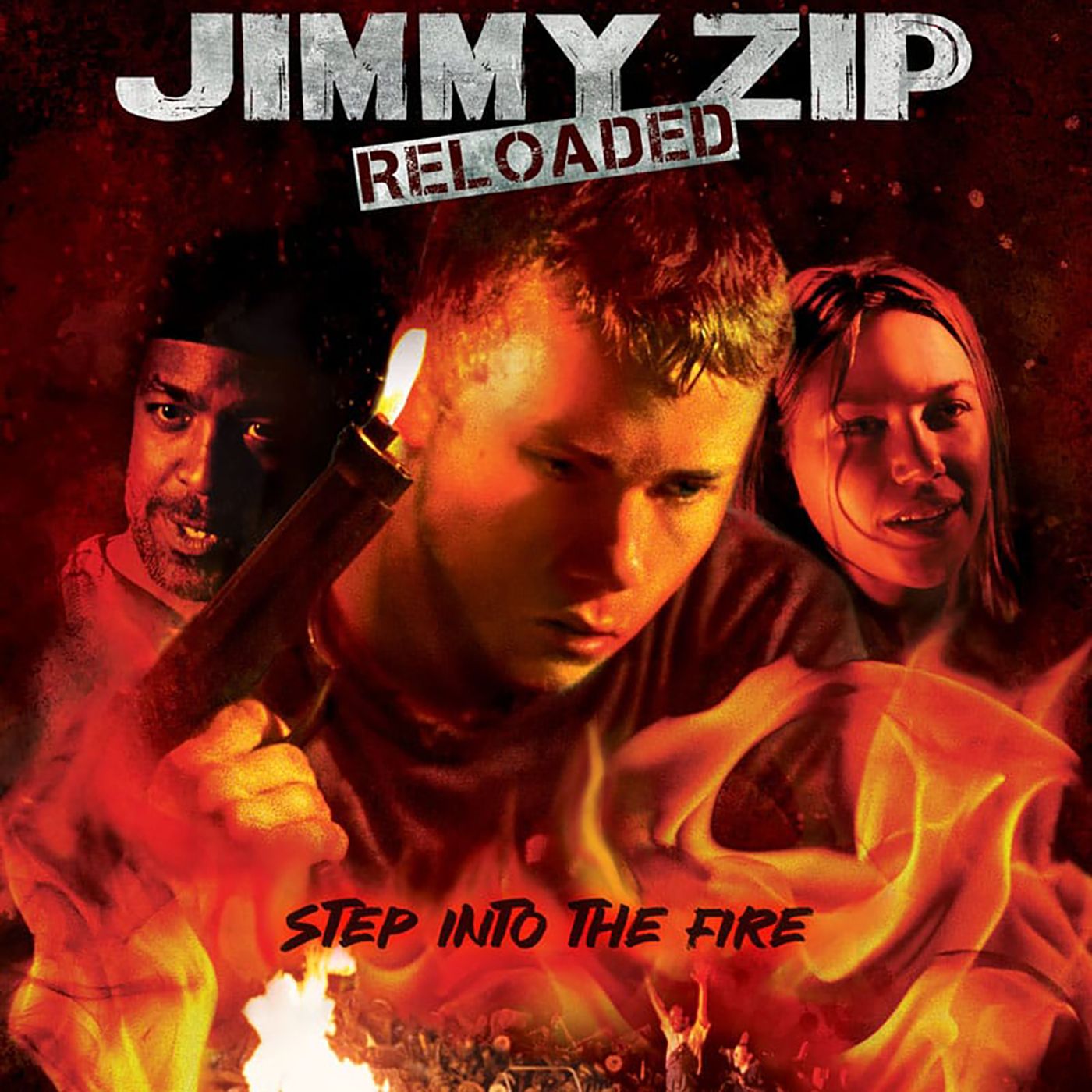
Special Report: Robert McGinley & Chris Mulkey on Jimmy Zip Reloaded
About this episode
Visit https://boomcult.com for more details.
Transcript
Automatically generated, so expect the odd misheard name.
Old folks. It's show time. People pay good money to see this movie. When they go out to a theater, they want cold sodas, hot popcorn, and no monsters in the projection booth. Everyone for tend.
Podcasting isn't boring. No nos, you are nothing you I zero? You is ze. Jimmy Zip left his tough home for a tougher city where life is hard. Should we eat him now?
As saving Polata? The women are easy looking for a day and just staying alive. It can't be murdered. What's your name? Jimmy's it?
Jimmy, you want a cool job. I've been on the street for one day. I don't think I'm liking you. Have to be careful with women unless you up. Everything is going perfectly in your life right now.
I screw it up, but I'll go back tomorrow. You're now. What Jimmy really needed was someone who cared. Can't run away from yourself, Jimmy's it. Thank someone who could ignite his dreams.
This about you, James, making who you are. You can learn a lot from him. We turn to steal into dreams. What happened direct to there? I own?
Hurry when you I own d drive a lot of people. That money belongs to my boss. If we don't give it back, she's going to chell us. When the odds are against you. Let's time you're gonna do something with your life.
Don't wait and friends need you. Here's a glance for you. A boy who no one believed him will have to believe in himself. James and starring Adrian Franz of Speedway, Junkie and CBS TVs, The Bold and the Beautiful, Robert Gossett of Arlington Road and City of Angels, Chris Mulkie of Bullworth and Lifetime TVs Any Day Now, James Russo of The Ninth Gate and Donnie Brascoe and Hot New Star Brendan Fletcher of Air Bud West of Sarajevo and The Five Senses as Jimmy Zip. Hey, folks, welcome to the Projection Booth.
I'm your host, Mike White. On this episode, I'm talking with Robert McGinley, the writer and director of Jimmy Zip, and Chris Mulki, one of the actors from Jimmy Zip. Mister Mulki has been in quite a few things that we've talked about on the show. Over the years, including The Hidden and Twin Peaks. Mister McGinley is the autour behind such films as Shredder Orpheus and Danger Diva.
We'll talk a little bit about both of those films as we talk about Jimmy Zip, which had a restoration and is playing in select theaters, and we'll hopefully have a nice new Blu Ray release coming out as well. Hope you enjoyed the interview. Robert McGinley, thank you so much for joining me today. Can you tell me a little bit about your background and how you got into filmmaking. I think the first thing I ever saw of yours was maybe your first film, Shred Orpheus.
Yeah, that was the first one for sure. Yeah. At the time of Shrevor, we make one version as a music video in Seattle and they have an underground city there, and I was always fascinated with the idea of going to the underworld and being a student of mythology, I was always attracted to the Greek myth Orpheus, and really where my storytelling background comes from is grounded in mythological themes. The hero's journey, huge Joseph Campbell fan, and that fascination just sort of turned into an idea of how can I tell stories that are iconic that resonate in such a way that they have a broad stroke appeal. And so without geeking out too much, I just really am a fan of Aristotelian and story structure, where you know, you have catharsis and climax and that's how you structure things.
And I didn't really have a way to express that. I mean it actually when I started, I was, you know, a producing and artistic director for contemporary arts organization that did new theater, dance and music. And because I had this definitive role where I wasn't on stage, I said, well, you know what, I'm always filming these people. I'm always shooting video for them. And and that's how it kind of came about, is after shooting artists in those different mediums, I said, you know, I want to start telling stories with film.
I was a big subpop fan back in the day, and one of the really appealing things to me about Shredder Murpheus was Stephen Jesse Bernstein on the soundtrack. How did you make that connection? I knew Stephen because you know, he was a frequent performer at our space. He was just such an intriguing personality, and he made some amazing things with sub Subpop and made an amazing record with Steve fisk Of. I don't know if you've ever heard of it, but it's he was amazing, and I started building a narrative of Treader around his character, and so, you know, it was really fun to, you know, just work with him.
And I think he just had a stellar performance in that film, and he had never acted before in film. In fact, I don't think anybody in our cast head, including myself. Well, and speaking of acting, Chris Molke, can you tell me how did you come to acting. I was at the University of Minnesota and I was an athlete there and a friend of mine who was a basic player, George, you needed an elective and I went, how what are the electives? He said, basket weaving, ball dancing, or acting?
And I said, well, actors are crazy. I don't want to get the boss of that shit. He said, no, I know that you like movies. I went, okay, I'll take the acting class. So I took the acting class and I excelled in it, really took to it and changed my major and went on to become a member of a playwriting group, and we took a play to New York and you know, did Classical Theater, produced a couple of films at the Classical Theater and went to Hollywood on the recommendation of Clint Eastwood, and one hundred and ten films later.
Here I am talking to you with Robert and Gidley. How did Clint Eastwood give you your advice? I was at the A five that I had produced a film from called The Suitcase, about a spa in Morocco. It's a stage play and we made it into a film. It's really cool, cool film got great reviews.
Kevin Talas left in the La Times, and I wanted to become a fellow they f five, So I went there and I had a meeting with him that I didn't have enough juice, as they say, to get into the place. You know, because back in the seventies, if your uncle Bobby was a guy in town a, you know, like you could get in this thing. But otherwise it's really difficult. So I just stuck around it, took us abbatical for like three months and worked on everybody's thesis films, and one day Clint Eastwood came to give talks talk when I've done this many times, and he had just come back from doing a spaghetti western and only ten people showed up. I was the Thames, and he went around the realm and said, hey, Mike, what do you want to do to Chris what do you want to do?
I said, well, I want to get over as an actor. And he said, well, go back to Minnesotota. Get what's your filmmaking friend, right of Phil, don't direct it, produce it and start at it and then make it a feature. And I went okay. So instead of going yeah, thanks, mister Holly, when I went back to Minnesota and do it exactly what he said, and we won the USA Film Festival and we screamed in Lynn and Edinburgh and Deville and this was Loose Ends nineteen five Black and White Child, And then we did that same thing.
We took the same crew in nineteen eighty eight and up and we roun and produced a film called Patty Rocks that I started with my late wife Karen Landry, and we won sun Dance and distributed all of the world and made a bunch of money. Yeah it's simple, it's Look, what's the story of you two meeting, well, how do you how do you come together? Is this before Jimmy zip or is this when Jimmy Zipp happens? Robert was he was dead drunk and he was laying in the street. It was about three one night and screaming and he went out there and there was Robert, you know, and he's, no, that's not true.
He and his let life pulled up to a house for rent right across the street from my house in Venice, California, and I saw him walking in. They looked like a nice capitol and I said. He lood to Robert and we became friends, like instantly. I told him, I said, dude, whyn't you just buy this house? And he said, okay, Well I'm sympafine and it's okay, Will.
And our friendships started there and we've been friends for thirty years. I don't know what about the dog. The dog introduced us, remember, oh Bogie Bogie. Bogie came over first and he said, hey, what are you guys doing? Yeah?
Yeah, I had a giant bulldog and he ran across the street to see the couple. You're right, yeah yeah, And I went to fetch him and he said hello. It's like, yeah, cool, is Jimmy Zipp the first time that you two worked together? Yes, wasn't Bad Business before? Oh?
Yes, you're right. I cod directed a film called Bad Business that I wrote was Murray Mins, wonderful filmmaker, and Robert and his ex wife played this couple who who have harassed men and pay the price and it's a great scene. Yeah, it's called Bad Business. That was the That was our first working thing. So I directed Robert in that one, and then he returned to the Favor and Jimmy said, boy, this the film looks so great.
Yesterday man, it was like, wow, great, I love that film. I like my guy too. Yeah, your guy's amazing. You know the playfulness of my character in that film, you know, the playfulness and humor. How do we or is that just me?
Or how do we arrive at that temperature of the character? I can't remember, you know, I mean, well, I think one of the comments that I had last night was that there was a real even though you're a badass guy, right, there was a real humanity to that character. And one of the things that came up in conversation was that one of the audience members made a really insightful observation is that Jimmy zeb is an orphan and he comes to the city and in effect, he's looking for a father, and he's torn between two fathers, you being one of them, your character, and then the Robert Gossip character Chorus being the other. And you have a dynamic there of him going to a process to figure out what he wanted to commit to, and then the Adrian Franz character, Sheila sort of challenges him in a certain way to suddenly become or try to become her protector.
My question was, how did my big guy become a funny mafia guy. I think that was you, dude. I think what exemplifies that is when you jump on the bike. Oh yeah, playful. That was it in the script.
You just saw the bike in the room and you took that bike and said, okay, I'm sitting on your bike. And that was such a great choice. And I think that when you did that, sort of the playfulness of things started to happen. And I would say that with one move and I think we shot that seemed shirley early in this process. I think that was the thing that kind of kicked it on Robert.
Where did Jimmy Zip come from? And what was the process of making it? I think the original idea goes back to the Horace character. He was inspired by a bodyguard at our performance space. He was this six foot six black guy.
He was much like the Street characters described and with hands the size of baseball mids in that kind of and I thought, God, this guy is such an amazing guy. And he also was always doing He always would smoken, he always had some sort of spire thing going, and I was reminded of the Greek mythological character Fastus. The Festus was the god of fire. And then I think that I thought, well, as interesting as all that is, you know, how can I build around that a little bit? And I said, well, you know, in my own life, I was a pyromaniac kid.
I was much like Jimmy Zip, except that I had in my family wasn't just as dysfunctional. I mean they were pretty dysfunctional, but you know, I got busted for blowing up a mailbox when I was sixteen years old. And those are the probably the two ingredients that got me started. And so what was the process. Well, I just finished Treader Orpheus and had some good luck with distribution there, and I decided to lead the performing arts business in Seattle, and I came down here, came down to LA and basically got involved with just meeting a bunch of people and just you know, trying things out, you know, to try and solidify.
What I'm trying to say is we made a short with an actor by the name of Justin Whalen. Robert Gossett was also in the cast, and that short film was came out okay. But then I said, you know, I'm going to take another crack at it and really trying to expand on it. And I think I think what really solidified the process was again meeting Chris Malkee really seriously. I mean that was a big spark because we were talking about last night.
I mean, we were trying to find the right person, the right Jimmy Zip who was going to be Jimmy Zip and your story about the Palm Springs Festival and seeing little little criminals. I mean, I'd forgotten that that was the thing that got me on the trail. And then that was amazing of him. I saw this guy, Roberts. You got to look at him and little criminals and Brandon, and so we just looked them up and you just you loved his look, I think most of all.
But then well I loved his look and I just loved he was this tough, little punk ass Canadian, you know. And I you know, the twenty or twenty five other young guys between fourteen and six, did they weren't any They weren't anywhere close in being able to access the kind of anger and fury that that Brendan had. He just had, he just had it, and I knew after two lines got him, this is it. So you've both mentioned the screening last night of Jimmy Zepp. Why now, Why all these years later, twenty four years later, are we talking about this film And how did the screening happen?
I was looking at it with my editor and we had basically arrived at the idea that, at least for me, I'm going team home. You know, gut or punk culture, homelessness is more prevalent today than it was then, and that was a big step. And then I thought, you know, these characters are so interesting, and we've got thirty five millimeter cans sitting around, you know, with this film, if we're if we're going to try and you know, breathe life into I mean, obviously we need to do a restoration. And I just felt that back in the day, we won a bunch of film festivals with it and it aired on Showtime, but I think I felt that really didn't get its due in terms of having an audience be able to experience it. And you know, just like Shreder Orpheus has been sort of rediscovered, I mean, my hope is that Jimmy Zip can be rediscovered and as an iconic story that really can inspire people.
I think the root of this is is that how do you turn anger into and in channel that was an emotional alchemy that sets you up for something that's a creative expression. So, without trying to get too wrapped around the axle with what I'm trying to say, it's just it's like, how do you turn the anger into fire? So basically what Horace and Rick canesco helped push this character into this space. And to me, I'm I love the idea an artist as a protagonist. And I just felt that most things don't get a second chance in life, and I thought, if there's anything that deserves a second chance, this Genny Zip would be it?
Chris, how is that seing yourself up on screen again after some of the years. Seeing myself on screen after twenty three years of nearly twenty five was pretty amazing? I have to tell you that, really, Robert, I really liked the guy, you know, I really liked Rick Canesco's energy and his playfulness and very dangerous guy who can easily be mistaken for your friend. I like, I like the complexity of the character. And that's why I asked you, how did we arrive at this playful, basically murderer of him?
And yeah, it was. It was really fun. So I don't watch a lot of myself honestly, you know, I shy away from going to the screening last night. I'm going, all right, here we go in the wood under the first scene, I'm digging the guy, you know, I'm liking what's going on, and he has this kind of temple and it's like, yeah, cool, Yeah, Robert, howe is it for you to revisit this after so many years? I mean, this must have taken a while for you to do all of that restoration process as well.
I thought, well, we're just going to transfer the thirty five millimeter into you know, yeah, and then just well we'll hold on. I mean, the restoration was a whole task in itself, because you know, the the transfer process is not that hard. I mean, photo Kim, the lab just they said they cleaned the negative right, but there was so much dust and scratches on it. So once you transferred, that's the easy part. Then you've got to cle it up.
And I think there was twenty days of just you know, getting that stuff done. And the other thing that really took a long time is we wanted to change the last two minutes of the film. The film we felt deserved a better ending. We thought that we were close twenty five years ago, but we thought, you know, we could do better. And by we, I mean my editor Howard Flair and I and so the process of going through boxes and boxes of film to find little snippets of film that might be you know, twenty trains long just to make it, because we didn't shoot that end, we had to go through all kinds of outtakes to try and figure out how to make his deaths weren't plausible, and I think we were fortunate to find these little pieces and must say that Howard we had lots of you know, fights about exactly how we were going to do it and coming up with the epilogue and all that.
But at the end of the day, he is very good at making something out of nothing. So that was very time consuming. I think we were in our garage for literally days at a time just going to boxes using the script notes. It was really crazy that process. You and Howard did a great job of bringing this film back.
It looked fantastic last night. The mix. I don't know whether you remixed to or A, but the music sounded really It's really a wonderful piece. I'm really happy to have it on my resume. Yeah, well, after one hundred and ten films, that's happy to hear that.
What's next for Jimmy's Zip Now that we've had this initial screening, were talking a few distributors about streaming and home video. But what I've learned in the process of getting Schwedder Orpheus out there is that there's a difference between a film that has become a cult classic, which Shredder definitely has. And because I have found I sell a lot of soundtrack LPs and DVDs I, you know, sell anywhere from six to twelve and months just out of my garage. And this fall we have a distribution company that is releasing it on Blu Ray. So taking the long view, I'm building of audience.
It's a DIY process right now, but there's two distributors that are interested in setting it up on streaming platforms. My reluctance to just go ahead and throw it out there without building an audience is that it's pennies on the dollar anyway. I would rather move the film into a more modern space and see if I can get my small following to embrace it. And I'm going to do a collector's DVD packaged with a of the original soundtrack CD and do that for a while, And that I think is the plan for the next six months. If I if there's a way to solicit invitations to repertory houses and you know, more the theatrical screenings, I think that that's the way to go.
I'm going to try and go after some of the show societies and so forth. But I'm very much hands on guy. I've never had the luxury really of just putting a film out there and then and just going on to the next one immediately. Oh, having said that, I mean, Jimmy Zip did have a management company that got me out on home video and me to show time. But I guess twenty years later, I'm going like, if I don't do it, if I don't set this thing up, then no one's going to care.
My hope is that we find an audience and we were able to build it brick by brick. And so the idea behind Boom Cult is, you know, I've got these titles in the catalog that films that I've done, and we keep moving and trying to develop fans and relationships, and then you know we have i P or intellectual property that is of value. Otherwise I could have gone with Mike with an aggregator months ago. I mean, but it just gets sort of lost. Been told that there's a lot of money to be made with a VOD in the distributors speak.
On streaming platforms, there's advertised video on demand, there's subscript video on demand, there's a BOD spot and then t VOD, which is transactional like Items or Amazon. So you have the three VODs, right, and you know, the other thing I'm kind of looking at is just going and setting up my own streaming relationship with either Vimeo or some other platform where we just go factory direct. I might do that with one of my looktoms. I think Jimmy Zip hasn't enough strength to not have to do all that. But people said, well, why don't you put it on Amazon?
Well, why should I put it on there when there's a whole that stuff. First of all, no one's going to see it unless there's some marketing behind it. We're trying to make a market. We're trying to find that audience that would be willing to support it. And I mean, I don't with Shredder.
It's all places that where alternatives cinema thrive. Those kinds of places are ones that really, you know, set things up because I really don't advertise it and we keep selling units. But the best news there is that the strategy kind of worked. I don't know if you've ever you may have heard of this company is called the American Genre Film Archive Actha. Yeah.
I definitely get their emails probably about once a month, and they seem to be doing some great work. Well, I'm really happy so far. They were the one company that offered me in advance, so I know they're serious. They're not just trying to build a library and inquire stuff. So we're going to have a Blu ray release of Shredder on Black Friday is coming November.
Yeah, mister Molki, what are you working on these days? Mike? So, I'm I would prob ready to hop on a plane and good a while. I'm doing a comedy out in that with with Kevin Sorbo about two undertakers who are comedians and it's a true story. Yeah, so I'm yeah, So I'm I'm doing that that.
I'm going off and doing two westerns and then a thriller in July and August. So I'm busier than twenty men. So I'm really thankful. You know. It's like, it's it's fun.
I try to breathe that kind of a good energy to make people think about who is this guy can and really have that character come into them. You know, that's my that's my kind of reason for doing it. That's fantastic, And it's I'm so glad that you're not slowing down at all. No, I'm I'm rocking in the free world. Yeah, yeah, I'm just doing that playing music on and part of my You know, I think I have eight albums that sold a bunch of songs to TV.
I'm I'm in the Amazon New Amazon Series and The Power and I I sold them a song. But my debut in movie soundtracks is on Jimmy Zips. Robert had me sing and me seeing the vocals for Step into the Fire Right, Robert, that man, that sounded so great night the track sounded so great. Oh yeah, if there's too Christmas, because there's the music guy and then there's the movie guy. So excited.
Well, I'm glad that this happened because I have to tell you I've been a fan of shredi Orpheus for all these years. So I was trying to line something up before and I was like, oh, you know, like because I feel really bad about Deetre Diva being released in twenty twenty. I mean, you must have just got completely shafted by the pandemic with that. Yeah. Well, and add to it that I gotten involved inadvertently with some real criminals.
They tell you what you want to hear. Oh, we're gonna get you some theatrical on this. We're gonna get you. We've got a deal with targair or we've got these deals. They were really good at telling you what you want to hear.
But what they secretly do is they're aggregators that don't get anything that they can, and they're just library builders. Even people that have had a sale on Netflix. They go to markets and then they charge you for markets, and so their expenses will see the revenue is on film. And once I figured out this was the problem, I spent two years in litigation with them and so so Danger Diva never came out, but stay tuned. There again, Howard and I went back to that film and we said, you know, what is it that we can do to optimize this when we're not rushing to meet a distributor demand or something like that.
What can we do? We actually did a recut of Danger Divo that will hopefully come out sometime later this summer under the rubric of Danger Diva reducts. The film really benefits from taking a real hard look at the flow and the story shaping of it. So we're excited about having that come out. And there again that's where we're thinking, yeah, maybe if we can get a relationship with doing our own streaming, and if again we're we're in this model.
We're kind of headed in that direction. Hope springs eternal. Hopefully that one confinance a audience. We did have some luck with some screenings and some festivals, but after we got involved with that distributor, everything just got swallowed into a black hole. And so it took me a couple of years, and I think I went through four attorneys before I found one that specialized in the problem I had.
It's brutal. It's brutal, yeah, work. So it's the best place for people to keep up on all these projects. Since that Boomcult dot com. We're we're going to take pre orders for Jimmy Zip.
We plan to get it to ship or on or before June sixth, and so boomcult dot com just for a pre order if people are interested, And it would be great to have any of your supporters at least, you know, query check in to the website see what's going on, Mabe, it'd be great. Well, mister McGinley, thank you so much. I'm so glad that we were able to find the connect and talk about this. Yes, and thank you so much for having us power down into waters Down Jackson Square. Me and love for here, well out there, wait past midnight, be on d light.
Found a girl with a ribbon hair shaid voodoo walk in my love talking, voodoo walking, my love talking. That's Walb good God, y'all. She had pree realized and a black cat bone white and lamb saying your home shaking hips isolating, see riding through through the night shad, Boodoo walk in my love talking, voodoo walk in my love talking. Let's walked u uh my boodoo walking, my love talking, boodoo walking and my love talking. Had the flame and compassion, house and fashion, the highs of faire of my desire.
Camera's bad luck, what's up? Chucking somebody save man, voodoo walking, my love toping, boodoo walking, Yeah, my love talking, let's walk h missr Bulgarian house of fire. She was love desire, catch you put out the fire? Sat my dog sayd amter that say somethbody say man yeah, blulue walking said my love talking up, blulue walking, my love talking. That's Walter.
H got y'all. Ah ah h, go let go down, Let go h that bruto walking, my love talking, that brut walking and and my love talking blue walking and my love talking blue walking, my love talking. Let's wallow m hm hm one more time, one more time, hey,


