
About this episode
With a razor-sharp script by William Goldman and Pakula’s masterful direction, the film captures the intensity of investigative journalism and the political paranoia of its time. Join us as we explore the making of this cinematic powerhouse, its relevance today, and the passion behind Redford’s drive to bring this story to the screen.
Transcript
Automatically generated, so expect the odd misheard name.
Oh g is, folks, it's shoot. People say good money to see this movie. When they go out to a theater, they want clothed soda, poporn in, No monsters in the protection booth. Everyone pretend podcasting isn't. Boring, sut it off all the President's men.
The story of the two young reporters who cracked the Watergate conspiracy, Howard. Hunt Please. Did you know Howard Hunt? Well? The White House said he was doing some investigative work.
What do you say they stumbled into leads? Certainly it comes as no surprise to you that Howard was about the CIA. No, no surprisable. They tripped over clues. We'd like to see all the true course of the warehouse.
All the White House transactions are comforting. Gen This whole thing is a cover up. It's run on our notes, and piece by piece they solve the greatest detective story in American history. There is no way the. White House can control the investigation.
I don't want to say anymore. If you can. Threaten if you tell the truth, is there recovery? Don't you understand what you're onto? That you knew?
Of course that you news? What are birsay? Yeah? At times it looked as if it might cost them their jobs. You guys are about to write a story that says the former attorney general, the highest ranking law enforcement after in this country, is a crup their reputations.
Why are you supposed trying to do it? I don't know, perhaps even their lives. Welcome to the Projection booth. I'm your host. Mike White joined me once again as mister Robert Bellissimo.
Hey Mike, and hello everyone, thanks for having me back. Also back in the booth is mister Andress Jones. If you fuck up again, I'm going to be mad. We continue request month with one from our very own Ondress Jones. All the President's men.
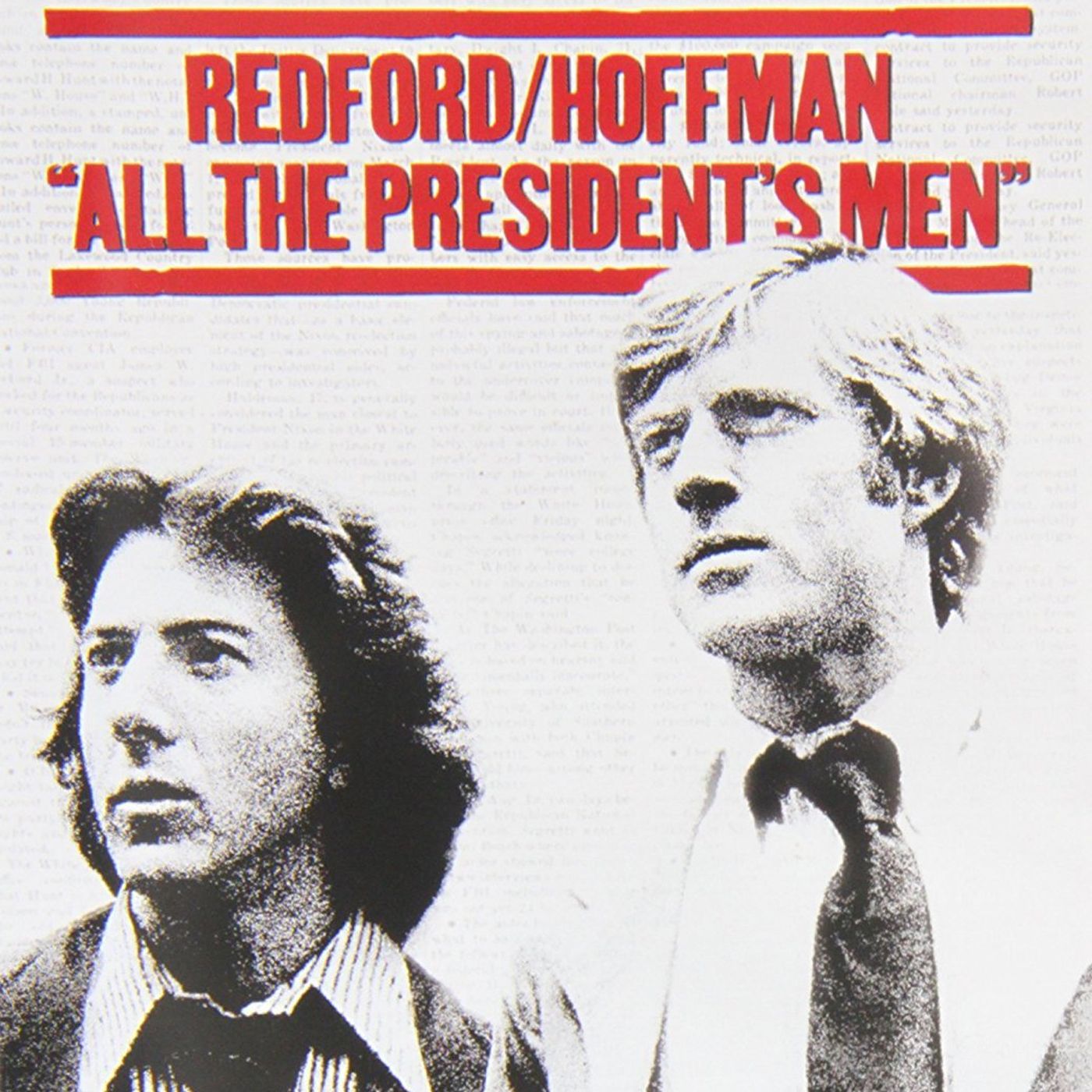
It is the story of the Watergate burglary and the intrepid reporting on the event by Bob Woodward and Karl Bernstein, two reporters from the Washington Post, the same Washington Post that refused to endorse a candidate in the twenty twenty four election thanks to its oligarchical owner, YadA, YadA, YadA, Washington Post. They pursue the true the story of a burglary and find it was perpetrated on orders that went all the way to the top and toppled the Nixon presidency. The film stars Robert Redford and Dustin Hoffman and was a passion project of Redford's. Written by William Goldman and directed by Alan J. Pacula, The film is a powerhouse of talent, all telling a story fresh in the minds of a contemporary audience from the angle that they didn't see.
We will be spoiling this film in as much as it can be. I would just really recommend you go watch the movie, even though it fits for a second or third time. Right now is a really good time to see it. Andras, why did you choose this as your Patreon pick? And when was the first time that you saw it?
I feel like I've been watching All the President's Men pretty much my whole life. So the first time I saw it was on TV a year or so after it came out. I was like nine or ten years old, And these days I try and watch it every couple of years. I recently watched it on the big screen at the New Beverly and it is a film that really is great on the small screen, but it's just all those brights and darks and darks to brights, and the cinema of it really shines on a big screen. Steven Soderberg calls it a perfect movie.
I also think it's a very weirdly astute and very deep piece of propaganda. And the more I learn about the history of Watergate, Nixon, the Kennedys, and the historical movements that proceeded and followed the events in this film, the more I marvel at how the film manages to distort the context of the Watergate investigation and what it reveals about our nation while simultaneously capturing something like a zeitgeisty perfection, which is undeniable and I think also subverse. It makes the film very very interesting to unravel. And one of the things about the film is it's going to be impossible to talk about it without supporting a conspiracy, because All the President's Men is basically a true story of a conspiracy theory about the US government which nobody believed and called the conspiracy theory, which was then proven to be a genuine conspiracy to cover up an even greater conspiracy, which is still you could still argue was still going on.
So what the film can't cover, and this is some of one of the things that really colors my view of it, but particularly now is the Church Committee revelations about the sort of deeper rat fucking carried out by the CIA and the FBI with programs like Cointelpro, which was the infiltration of subversive activist groups including assassinations and MK Ultra, the medical and psychological experiments on US citizens of all ages, and Project Mockingbird, the infiltration of every major media organization in the country by secret police or representatives of the CIA and an FBI, and discussing these programs even today will get you to conspiracy theorists by some people, even though these were all discussed and documented at length and highly publicized congressional hearings the year after Watergate and the year before this film came out, so they would have been front of mind for viewers of the film at that time.
In looking at it that way, the Nixon rat fucking programs merely just an extension of what our secret police organizations had been doing to MLK and the Black Panthers and accused communists and peace and free speech movement and all these people who ran a foul of j Edgar Hoover and his colleagues through the fifties, sixties and seventies. Since every film is itself a conspiracy, and it's a bunch of people getting together to try and put one over on the world in a certain way, and this is the kappa of Alan Pakula's Paranoid trilogy, it can't help but inspire conspiratorial thinking. And so in wrapping up here in my opening statement, I have three small conspiracy theories I'd like to throw out there.
One is that Nixon definitely gets wrapped up by this movie, and it brings out something that I like to say that just because someone who's guilty doesn't mean they aren't escapeboat. And it's clear that Nixon wasn't the architect of the systems that were revealed in the Church Committee comissions, but he was a savbin manipulator of that system and then got eaten up by it, which is the theme of Oliver Stone's Nixon movie. And clearly the rat fucking didn't stop after Nixon was gone. And so I think it's interesting to watch the film and see Nixon as we got the bad guy and now justice prevails, which is what the film made me think when I used to watch it. The other really interesting conspiracy theory is the whole Yale connection.
Bob Woodward was a Yale guy and he'd only been on the post for six months. Carl Bernstein had been nine US. I get those numbers mixed up sometimes, I don't know why. So he was a junior to Bernstein, but in his career later on he became a stenographer to the Bushes, who are also Yale guys. And you can see the Bush administration in a lot of ways.
Bush and Cheney coming out of the Nixon administration and the first president Bush was a director of the CIA, was deeply embedded in the CAA around this time, came off unscathed, and it's clearly set up his rise. And then there's also the interesting thing that Alan Pakula is a Yale guy. So there's this whole Yale Watergate something All the President's Men, not just Watergate, but a Yale all the President's Men connection, which may mean something and may not. And then this is the one that says the closest to home. And I sent you something about this before yesterday, Mike.
I don't if you had a chance to check it out, but the Washington Post put out this podcast about All the President's Men, and they talked about how in the second draft of the William Goldman script they got they had Bob Woodward's script that he turned the use that he says, they let them use, and they say, and he says that the script has a line when they're in the library going through the index cards. Maybe they pull the cards, maybe they change the names, put a card there, we missed it. And how does this final version that was in the film differ from the earlier drafts. In Goldman's second draft to button up that scene, he keeps them inside the library, Woodward turns to Bernstein and says anything, and Bernstein says nothing worth a damn.
And then it has me in the script saying to hell with this, let's write it anyway, And I wrote, I'm wrong, not only wrong, actually disturbing. Not only would you know they never say that, they didn't obviously they didn't do that. They would never have thought that. It's completely at odds with the kind of verisimilitude and fealty, you know, to journalistic practice that Redford wanted, that Woodward and Bernstein wanted, the Pecula wanted. So that's just one that really stuck out at me when I first read this, I was like, Oh my goodness, that kind of sums up how different it all could have been, and.
Doesn't make any sense that it would have been a script, because the idea is that after they read that, they basically fired him and decided to just make their up. But then where does the script that we've seen that doesn't have that line? So there's some weird, something weird suspicious. Maybe it's not necessarily a conspiracy, although there's some sort of revisionist history I think going on with Woodward and Redford about William Goldman's script and about this film with the Washington Post, and I'd love to get into that with all of that in mind, and I know I went along this is a film I'm really looking forward to talking with you guys about and I want to hear what you have to. Say, Robert, how about yourself?
I saw it twenty years ago, I think I was. I became around that time in my late teens really interested in Dustin Hoffmann, so I wanted to see everything with Dustin, of course, and this was on my list, and I watched it and I really found myself deeply engrossed in it, and I've seen it a number of times. I remember once I watched it with my father and he pointed out to me, look how smart these guys are, you know, And I was and then I was like, yeah, he's right. Just the way in which they work together, and how they found ways to get information from all the people that they were questioning, and the way they planned it, the various tactics they played in. Order to do that.
And I watched it again the other night, and I hadn't seen it in quite a while. And what's fascinating to me here is that we have a film that is mostly a procedural film, yet it is so engrossing and I can't help, but wonder how did they do that? Now, unless someone's really interested in the Watergate scandal, I can't my impression as both of you are so but I can't help, But wonder how do people get so involved in this? And of course I know about it, and even then I was always interested in that political history in the sixties and seventies America. But I can't help.
But wonder, if someone's just watching this without knowing anything about it, can they get engrossed? And I think that. They can because I can't help, But ask myself, how do they do it? And I have my feelings. For one thing at the pacing is most of the scenes are so short.
It's really tight. It moves so fast, and if you look away for a second, you are going to be lost if you miss a few names. Or now this is one lead they're following. Oh that crashed and burned. Someone's denying a story that they told them was true, and so on and so for it.
The denials from the White House about everything that they're that they're reporting. It's so quick, and then of course we have these thriller elements where their lives are in danger. That feels very much like a thriller. Obviously, the photography by Gordon Willis, he was perfect for this with that dark lighting. It's very neo noir.
He was the king of that particularly. He also did the parallax view as we all know. And just the performances, the dialogue, the amount of characters that is here, the amount of information. Yet it's never dull, it's never stale. It is completely riveting from beginning to end.
And there's a number of things. I'm more interested, probably very interested in what happens in it, but I'm very so much more interested in how they. Behave Woodward in Bernstein. How they one minute they could be questioning someone and they could be flirtatious in order to get information, or they could be so sweet and gentle and kind, or they could be bossy, they could be pushy. I love when Hoffman has Bernstein.
We notice as a cigarette, Oh is that a cigarette? You might and that's the way he gets into the house, and oh, you would happen to have a match, and that's how he gets on the couch, or or my favorite is as someone was only giving them initials of people who were involved in this crime, and they're trying to put the initials together. She's saying Pee, so P must be Porter. Why don't we just go back there and say who's P? And then I'll say, oh, we know PE's Porter.
So that way, if she doesn't deny it, then we know it's true. And then of course they do that and it completely works, and of course she's like, how did you know that? This is brilliant? And so those details, the no taking, the constant smoking, the obsessive nature that these guys were totally obsessed to one hundred percent of their lives day in and day out to this? Is this a great scoop a great story?
Do they really? I'm sure they want to uncover it the truth here, but is it more about just them being heroic as journalists or is it both those? That's ambiguous obviously, But the performances. Those are the things that interest me interest me the most. So I'm sure as we continue to review here, well, I'll get both of your opinions about why does this work so well?
When on paper I would be nervous if I was cool, like, how are we going to pull this off? But I absolutely love the film and can certainly see it time and time again and never get bored because there's so many details you can't remember everything. You could see it tomorrow and get equally as engrossed. Watergate has been around with me through every moment of my life other than the first two months that I was live. I was born in April second, nineteen seventy two.
The crime takes place June one, nineteen seventy two. Right, this has always been there. The movie came out when I was four and has all of these names like Halderman and Hunt, and all of these folks have just been part of the landscape. Like you couldn't escape from this stuff as a child, just watching even not necessarily the news or just watching anything, even raising Arizona. They talk about Lawrence Spivey, who I don't think is a real person, but they talking about like the Watergate crimes there and how that affects stuff.
It has just been part and parcel of my entire life this whole time, and for that reason, I have never really dived in and found out more. I am very, very surface with all of this stuff. But like I said, it feels like it's just part of my DNA because I've been around it for my entire life. So this movie definitely helped let me see some of the things that were going on. And I have to say, right off the bat, this is a great adaptation.
I was finally listening to the book of this and holy shit, it moves like crazy, and so many of the lines, so many of the things that are going on in there are right here in this movie as well. And it's just I was amazed at how quick the book moves and I think I'm only two and a half, not even two and a half hours into it, and by this time we are interviewing the bookkeeper. So the scene that you were just talking about with the cigarette and the match and drinking the coffee and all this and just hearing about Deep Throat for the first time. But within the first the fifth of the book, it feels like this movie's almost over by that point, like, Okay, I'm so engrossed, I can't wait to listen to the rest of it because it's fascinating and to hear about all of these things that were happening in the seventies and just realized that all of that was taken apart.
There's no more dirty tricks in politics, that everything just got resolved by Watergate, and everyone is now on an even playing field and we're all on the up and up. It's a very moral country now and it's it's been fantastic. I love just how far we've come from nineteen seventy two. It's amazing. One of the things that I found really interesting watching this is like during comparing it to these times, is how much and you get this a lot from the stones JFK and Nixon, which I think are interesting companion pieces to this film.
Is that in the current election, we had the Chinese you come out of the Nixon administration aligned with the Democrats, and you add RFK Junior with the Kennedy brand aligned with the Republicans, which is the complete flip from what we're dealing with here, which is Nixon and the Republicans doing dirty tricks to Teddy Kennedy or turning their dirty tricks onto the potential of a Teddy Kennedy presidential candidacy. So it was just like it made me see how disorienting the times we are or in are when we look at the origins of a lot of this stuff, the awareness of the ugliness of our own government and what they get into. Really this was the band aid that where it got ripped off for the majority of the United States in terms of people taking the shine off of the presidency and all of the things around it.
And like I said, were you familiar with the Church Commission? Are either of you familiar with that bit of history? It's really worse worth checking out because a lot of the stuff that sort of ends up getting referred to as quote conspiracy theories, is just historical fact in terms of what our nation's secret police organizations were up to that led up to these This Watergate, Burglary, and then as they're teasing the information out, what deep Throat keeps saying is it's much bigger. And I think what we're supposed to think when we watch the film is that it's much bigger. It's Nixon.
But the more you know about the history of it, it's no, it's not just Nixon, it's much It's even bigger than Nixon. Eisenhower tried to warn us about the military industrial complex, and it goes back to at least then probably goes back even. Farther, and Nixon was a vice president, right. You just see, it's just really interesting to see how one scandal or conspiracy or administration flows into the next and flows into the next. And I think it's dangerous to try and assemble a history of America through films about the history of America.
But there is an interesting history of America to be cobbled together by following the way that cinema has tried to interpret this flow of history from World War Two till now. You think about the Great McGuinty, you think about the Huey Long movie, even to comedies like Born Yesterday. You look at all the glad handling and back room politics and the boys just keeping it to the boys club. What's old is new again. People talk about a film like Mister Smith Goes to Washington as if it's this sort of g whiz democracy wins, But if you really watch it, it is a cynical film about how ugly are the workings of our government?
Is are to a guy who just sort of like in the film, he just gets gets taffed to replace a senator who dies because they think, oh, he's just a roupe. That's why a communist had to write that one Only a communist could write that. Sidney Buckman, get that guy out of here. Put him on the blacklist. Yeah, of course, and that's what happened.
I think I think he got blacklisted. Richard Nixon was the great was That's where he made his initially made his name was as an attorney going after communists in California. That's why anti communist is a very unusual profession that we find out even within the first few minutes of this. And I love the structure of this movie where we start with a triumph. We start with Nixon's triumph with him coming back from China.
As Spock would say, only Nixon can go to China. And then we have right in the middle of the film it's him getting nominated for president, and at the end of the film it's another triumph. It's him getting sworn in. Okay, it's just like triumph, have to triumph after triumph, And meanwhile we've got these two guys, and I just, oh, I love the way that this movie is shot. I love the way that you're talking about the dark and the light and everything, but the big and the small and those shots of like how they are dwarfed by everything.
That amazing shot of them with all of those library cards where they're going through that and just the camera going up and up and up, and just like showing them in a literal maze, and just how small and insignificant these guys are, and even going to the end of the movie where it's just them basically alone in the newsroom. There's other people that come in eventually, but just to see them isolated. At one point, Nixon is so big on the screen, and I think that's when he's getting nominated. He's basically dwarfing Woodward at that point Robert Redford character, And then later on when we see them in the news room, Nixon is just about as big as them. And then you get like the twenty one gun salute with the guns literally pointing at Woodward and Bernstein, just to even throw more danger at them, and just to see them plugging away, and it's pretty much just the sound of the typewriter going and they're just plugging away, doing the work, doing the work, and meanwhile everything is coming up roses for Nixon and he's just is now got the hand on the Bible.
Yep, I'm gonna fulfill this oath of office. And he probably knows what's coming, or maybe he has a hint of what's coming, because every time we never see his reaction, but we see it through the actions of other people. And I love those scenes where you got the guy driving into the White House and he's got all the newspapers on the passenger seat. I just love that. Just shows how daunting their task was.
We see Nixon winning, and like you said, Mike, the way it shot show him on TV much bigger than them on the screen. But what I like is that even though it's it seems as though he's dominating the frame, meaning meaning that he's gonna win no matter what. Every every time you see them, they're always their determination continues because the typing doesn't stop. And even at the library, even though that's a daunting task to go through all those those cards, they don't care. They're gonna do it.
They're gonna stay up and they're gonna go and go and go. So I if they had been alone, like smoking or like depressed in those shots, that just would have been a real downer. But I love that these guys just they wouldn't stop. It was a perfect place to end it. I thought.
I was just curious if Mike, when you were watching them plugging away with these more celebrated villains in the foreground, or did you feel like you related as a podcaster. You're typing away, you're working hard the selburry these technicals of loggie and films. Meanwhile celebrity podcasters are out there being seen by more people. It's certainly how I felt. That that's what I do.
It's Joe Rogan on the TV set and me and Robert just plugging away here. Yeah, that's how I feel. Look at these fuckers. Going back to what you So, what you're saying is like there is you're asking Robert, you're talking about could you watch it and know without knowing, or could you watch it without knowing and still get it? And I saw it when I was a kid, and I did not understand it, and I totally got it because there is just that sense of, first of all, two very charismatic actors at the top of their game trying to figure out a mystery.
It's a very it's it's pretty simple and on just that level, and it just I don't think you have to know anything about water. It makes it better. I think it makes a more sophisticated film that you do and that it's true, or that it's about real people in a real real situations. But I think it is completely easy to just relate to the detective story. It's actually a more and in some ways it's a more enjoyable movie because if you don't know how history goes, you feel like happy ending they got him.
A big concern when it came out was, guys, we just saw this, We just lived through this. Nixon quintin seventy four of this movie's coming out in seventy six, What the hell you're doing? I know how this movie ends, but it's yeah, for you and me Andrasen for you, Robert, it's like, how does it? Like? We know how it ends, but we don't know how we got there.
We don't know that ride whatsoever. And I don't know how many people unless they read all the President's Men book, I don't know how many people would have known all of the steps at Woodward and Bernstein had to go through in order to get to that point. So I think there is a lot of stuff that people wouldn't have known coming into this movie fresh in seventy six. It was a bestseller, it did get a lot of people read it, and this was the time when you know, people read. Yeah, but it reminds me of not that I would consider this film noir.
It has maybe noir touches, but like with the film noir, we know at the beginning what happens if they start at the end and they do a flashback, but of course what's going through our mind is how did this happen? And that's that's. What you want to you want to get to and it obviously creates that feeling of doom throughout, so that this sort of plays on that a little bit. But but yeah, even if you know nothing about it. You could I completely agree, you could get totally engrossed, and maybe you won't remember all the details.
I don't even think that's necessarily so important. Maybe it's important from a historical point of view, but just from a film point of view, I think you get the GISTs of what they're up against and and all the obstacles. I was listening to another podcast and this one of the guys said, he's his teacher put it on in high school, and he was thinking, oh, what do we Oh he was just sinking, Oh, this is great. It's a chance I don't have to do any homework a lot of kids do when you show a movie in class. And then he found even as a fourteen fifteen year old becoming totally engrossed.
So if a teenager can, even teenagers or young people can totally go into it. I find just going back to that big light, dark, big small. The other one is foreground background. They're typing away and it's almost like there's a party going on behind, like everyone else is looking at the TV. They're really engrossed in this, so what's happening?
And then they're over like they're in the foreground, but you can there's a sense of they're alone, and there's a part like it really is there's a party going on back there. All the popular kids are paying attention to something else and they're the nerdy ones like getting into Amis macgruder. You know, talk about big small. The way that the movie starts with that white screen that goes on for seventeen seconds or something I think it is, and then boom, here comes to the letter. Boom it goes again, just like these huge things just coming across the screen.
It's like a hammer, oh yeah, and the amazing. Like a gun. These are sound like if you really think about it again, the context of Nixon is coming out of all these assassinations. This is a country that's just been traumatized by one, like a sniper assassination after another. And then hear you hear these like the sound of a rifle.
Sam. But it's like the pen is mightier than the sword kind of thing. It's it's one of I think it's one of the greatest sound effects in film history as a sound cue to start a movie. And I think I believe that Redford was saying that it was. They did mix in gunshots and then even like whip cracks with it as well, and like, holy cow, you've got almost three openings to this movie.
You've got the typewriter, the telling us the date. You have Nixon landing and going in and having his triumph in front of Congress, and then you get the actual burglary and to your point on dress to see the burglars in the distance way back there, and to have that background thing. And then even with the guard coming in and he's also in the background, and that's a nice thing too because it's he's in a parking garage, and parking garage is play so much in this in this film. I love that. And yeah, that that amazing.
I think it's like a six minute shots. I'm stuck on times, but it's like a six minute shot where Gordon Willis had that sliding diopter so you could do the slow zoom in on Redford as he's working alone. Oh, the one with with Redford on the phone amazing, an amazing acting, What an acting scene. What I mean, it's just everything's working in that it's a magic trick. That's great phone acting.
And then that you can hear everybody on the phone, which is amazing. What a choice to do that, and I love though that Robards breaks it later on when he's talking with the one guy and he starts repeating what the guy said, wife a family, and we just heard him say that, and then we hear Robards say it, and we heard him say that to either Woodward or Bernstein earlier. And then the way that he puts his hand over the mouthpiece, I'm like, Okay, we know what he said, but he's going to repeat it back to Woodward and Bernstein. Oh my god, Robards. Oh, he's so good person in Fantastic But Robards just owns this fucking movie.
And I love how he speaking of background foreground. Oh, he's just in the background so many times, and you just see him in his office and we see him so many times before he ever comes out of that office, and the way he comes in and the way he sits down at Woodward and Bernstein's deaths, and he's just like redlining in that story. And then when Dustin Hoffman starts to protest no, it's an important story, and the way Robarts just looks at him and stops him in his fucking tracks, Oh my god, and then goes right back to it and that he is given the last bit of the movie, Oh Chef's kiss. You know, the results of the latest gallup pool Half the country never even heard of the word watergate, not what he gives a shit.
Guys, you're probably pretty tired, right well, you should be going home, get a nice hot bath, rest up fifteen minutes, then get your asses back in gear. Under a lot of pressure, you know, and you put us there. Nothing's writing on this except the First Amendment of the Constitution, freedom of the press, and maybe the future of the country. Not that any of that matters, but if you guys fuck up again, I'm gonna get mad. Good.
It's amazing that he's in the background in so many of those shots because in a way, he's volunteered to do that. He just came to the set because he thought it would be helpful that his presence was there, because obviously these guys are like in deep shit by him. If he's business, all get screwed up. And so he was. He was just hanging out in the office.
I don't know if they told him what to do, but he would just stay in character. And I just thought it could be difficult to even get an actor to stick around for the other person's close up. Sometimes the fact that he would do that that shows that he was a true such a true artist. But one thing about that the diopter shot you mentioned as it is really interesting is when I see that, I always think why, in other words, they're basically like doing deep focus, like in a way like they're obviously really trying to make sure you look at both things, both sides. And then I realized while researching this film, I'm like, it's basically deep focused, but just calling attention to it and just really making sure you got to look at this as well, because this is just as important.
And for me, what stood out when they when he was using that shot was the fact that you forget that these guys had to work in these atmospheres. They were full of noise, full of distractions, full of typewriters banging away, and yet they had to stay razor focused. Some of those phone calls are pretty intense, and I just thought, and again, it adds to the cinematic experience of this rich experience of things happening on the screen. So I thought that was Gordon Willis utilized that beautifully. You can know, talking about Robards, the whole cast is amazing, but that trio of Robards, Martin Balsom, and Jack Warden.
I love every minute with Redford and Dustin Hoffman, but there's a part of me that wants to see a movie with just those three guys. That's just three of the greatest character actors of the latter half of the twentieth century, just given it everything in those scenes. And two of them were in one of my favorite films, which is Twelve Aigue Men. And to see Balsaman and Warden and I love out Baltimore. I'm doing my notes and stuff, and I'm like, I started calling woodward and Burnstain WNB, and then I went to talk about Warden and Balsam.
I'm like, oh fuck, there's another WNB in here. But I just love them. Yeah, to have those two to be supporting guys, that fucking ned baby show up for five minutes in this movie. Yeah, what the hell? Meredith Baxter, Bernie opens up the door for a few seconds.
Stephen Collins in here. I think this is just a few years before he's going to be in Star Trek the Motion Picture. And it's just like so many, like so many amazing actors in here, even the guy that plays the lawyer for the the burglars, like I've seen. Him at the beginning. Yeah, yeah, And that scene for me is so important because it just shows you it's the preview of how dogged these guys are.
The way he keeps following that lawyer out of the courtroom, back into the courtroom, out to the hallway, back to the courtroom. I think they're even in the bathroom at one point together. I'm just like, oh my God, like these guys. He will not leave this guy alone, and I'm like, this is just a preview of things to come. It also reminded me of the beginning of Chinatown, the same kind of thing where Jake Gets is there, like what's going on?
There's a but this is a true story. This comes that that thing that with the lawyer that comes right out of the book. There's a lot of scenes in it that are directly out of the book. You could not pick a better Mio noir for the age of Watergate, with all the conspiracies, all of the things that are going out of Jake Gets is basically Woodward and Bernstein rolled into one, and he makes mistakes, just like these guys do, and I like that, Like I was saying before, the movie ends at a not triumphant moment for them. They have fucked up, and Bradley warns them about that, and then you're just like okay, We're not like oh, the music swells and we get like the Untouchables ending where it's just like okay, and now Kevin Costner is gonna go out and you know, bring freedom to the world.
And the annual Marcone score comes up fucking David Shire's score barely in this movie. And then when it is, it's so sedate and just like all right because it doesn't need music. This movie is so tense with no music score. I tried to watch almost every Pacola film to prepare for this, because I really wanted to get into him, and he does have a mixed relationship with music and film. Actually, I like the music in Parallax View, but like I watch Comes of Horseman the music and that is terrible, and the music in Rollover is is like worse than terrible, like it's almost like laughable.
He figures it out music and Sophie's choice is good and he gets he figures it out by later, but it feels like there's no music in the movie because so much of the of the sound, like of the sound comes from riffling papers and typing and all this other stuff. And then when you realize where the sound cues are, and they are just they are perfect. I love David Shires. He's pretty he's pretty great. The only time it popped for me, and I thought he put it at the really perfect moment was when Redford is told by as Redford as Woodward was told by deep Throat, your life is in danger.
And I think I'm remembering this correctly. And then as he leaves, he thinks he hears someone and then he just turns very and then that music starts to come up. Oh god, there's someone after him. And then he turns and looks and the music stops and no one's there. I thought that was that was wonderful.
But but but you're right, just just wanted to piggyback on a point you made their determination might and turn when they were, which begins with that lawyer and how much he's keeps asking him questions even though the guy told him to walk away. That to me is one of the most fascinating things about the movie. They communicated with with people, because it's hard to do that because you you're you have to be comfortable with confrontations and you have to be comfortable that people are going to get missed off, which happens throughout. But to me, they were so comfortable with that to the point even where one of the characters at one point they're questioning him, he tells them what they want to know, and then right.
Before they leave, oh, you just had a baby, didn't you. Congratulations, They go back to being like it's like they dropped their role just for a second, but they can go back and forth on a dime, And I just I guess those details are just gold. You could pick up on more and more with each viewing. That's the beauty of it. Well, the thing I love too is just the fearlessness when it comes to picking up the phone.
As soon as he hears about oh in their notes in the in the address book it said w H and eh and Howard Hunt or e Howard Hunt, and he's just okay and just calls up the White House and was like, yeah, let me speak to mister Hunt please. Oh, like not even knowing for sure if he works there or not, because the guy doesn't know Jack shit, which I love. I love that whole thing about Coulson and Jack Warden. St Charles Colton. Who's Charles Colton?
You know, I'm glad you asked me that question. The reagion I'm glad you asked me is because if you had as Simon's or Bradley, they would have said, you know, we're gonna have to fire the schmuck at once because he's so dumb. Oh, who is Charles Coulson. The most powerful man in the United States is President Nixon. You've heard of him.
Charles Colson is special counsel of the President. There's a cartoon on his wall. Caption reads, when you got him by the balls, our hearts and minds will follow. Let me try to call this person. Let me try to call this person in to see the notes and to see it building, building, building, And did see later on with Dustin Hoffman where he's like pulling out the little notes and he's just like I had to run to the bathroom I was trying to write on anything.
He's just like pulling out all those little pieces of paper and he's so wired from the cadet before folds. Oh, he was so great. I love it. There are a couple of other interesting casts buried in there. One is f Murray Abraham is one of the arresting auditory beginning.
And Dominic Chenezi, who plays junior soprano. Yes, he's buried in this film too, and almost. Up at a lot of stuff in the seventies. That guy Godfather too. He find in these smaller pards, but he's always he always stands out, that's for sure.
And they have the Frank Wills, who was the officer who was the guy who discovered the Watergate. Burglars plays himself in the movie, which didn't go so well for him in life, so it's nice that he've got this little bit of celebration. Even ned Baby's secretary played by the same lady that played flow on On Alice. Oh and did you notice? This is one of the things that I don't know if people would notice, if modern viewers would notice, but I think viewers at the time definitely would.
The way she's like mister Bernstein. Yes, there's they definitely the anti semitism, Yeah, the sort of heat Redford's the blonde waspy one, and Dustin Hoffman definitely the is be way juwier than even Karl Bernstein is. But there is definitely a push and pull around the anti Semitism about him that is encoded in there, but I think could be missed by a modern audience. And also interestingly, Robert Redford was the guy they wanted to play the graduate and then Mike Nichols cast Dustin Hoffman in the role. So watching them and which is another we're just like Dustin Hoffman playing the graduate was a big thing for Jewish actors in Hollywood to have a someone who very much looked like a Jew, a Jew playing a Jew, as opposed to sort of Paul Newman type Jews.
And so there is something I know it's it's that I think there's some way that that is there's something of a putting Redford and Hoffman together in that way that's an extra pleasing in this film. Also, interestingly, Redford is peaking at this film his career. This is the pinnacle of him as a movie star. Like the next thing is The Electric Horseman, and it's the beginning of Dustin Hoffman's amazing decade that is just gonna where he's just he's gonna win two oscars pretty much dominate. Just a bit of trivia on that scene.
Was the scene that you just referenced with the secretary and the ned Bay beat scene or Baby's scene? Was I You. Guys probably both read this, but that that was a scene that Carl Berstein and Nora E. Fron, because they were dating at the time, wrote in their draft of the screenplay that William Goldman apparently that he hated that that. Entire draft and walked out.
And the fact that they even did it without him knowing that they wrote a draft because they didn't like his draft, and that was the only surviving scene from Erstine's and Efron's script is that one. But it's a great scene at least, you know. Can we talk about the script a little bit more because I think that's one of the really interesting pieces of this And I wasn't even aware there was an Efron. Yeah, I just read it earlier. It's out there, No, not the script, just that trivia.
It's on IMDb. Hopefully that's accurate. But that would have been Efron's earliest screenwriting. It has to be. It must be, Yeah, it must be.
In a lot of ways. I think what they have there is great, but there are some things that are in the written in the Goldman script that I feel are missing. Like it's a perfect film, so it's nothing that's missing, but there's definitely things that I think would make it more historically accurate. It was maybe a more sophisticated script. Definitely a lot more women playing important roles in it, with Margaret Martha Mitchell and the publisher of the Times, and Bernstein has a girlfriend in this I guess must be based on Nora Ephron, and all of that gets lost, and some very particular line readings that just add a little bit more historical context, and I do get a sense.
And this is a knock I have on Redford as a producer is that I think he tends to be less like when he does historical or political things. I think he's less interested in the history and the politics than in just like the people, and that leads him to defag I think he did it with thunder Heart and Incident at a Oglalla. To Michael Aptit had some very critical things to say about the way Redford acted as a producer on those films about the American Indian Movement, And again, I love this film, but they could have taken more from the script that would have made me like the movie even better. I like a lot of things that Redford has done, but I tend to like him more as a somebody in front of the camera than behind the camera.
His directing stuff ordinary people. Yes, really like it, Malagra, Beanfield War, great River runs through it. I barely remember it, but you get to quiz Show, and Quiz Show just to me is, oh, do you not understand what's happening in this movie. We don't worry. I will spell it out for you in letters that are one hundred feet high, and every five minutes I'll go back to those letters and tell you everything that's going on.
And it's just it was so aggravating to be like, can you let your audience actually figure things out? It's so funny to go to look at Quiz Show and then look at this movie and be like, Okay, yeah, they're not telling me every frickin thing in the world. They are leading me down a path, but they are not just handing me this handing me that I'm there with these guys as they're digging for information and as they're coming back and saying I think l is this, and M is this and P is this, and we're gonna try this thing out. We're gonna okay, great, but yeah, quiz show oh dah oh man. That that kind of ended my relationship with him after that.
I never went on to see any of the other ones. Yeah, I only saw that once, and I remember not being crazy about it. I agree he's never his films have never. I liked ordinary people a lot, but I agree he's stick in front of the camera Redford or as as a producer. I also love Jane Alexander.
You interviewed her, didn't. You, Mike did I I don't remember if I did. I don't think I. Thought, okay, maybe it was someone else when. You interviewed her.
Did you have to barge into her apartment and get her sister. To make any chance? Yeah, and her sister was there because she was the one that really helped me out. I keep pouring that coffee, but by the end that was so jittery. She's was someone also in that in the seventies, and I'm sure I'm forgetting things in eighties or nineties that she was in.
But she's great. Yeah, she's she. Was in a number of things and she got an Oscar nomination for this, and apparently if you add up how long she's in the film, it's like less than ten minutes. That's pretty impressive. But she's It's interesting that you said there was more prominent roles for women in the in the script.
That's yeah, it would have been interesting if they had at least shot it, so maybe we could see it on a on a Blu ray delete. But I wonder if I was reading Roger Eber's review, and he likes to film a lot, but he did he felt that, and I'm not sure sure if I necessarily agreed, but he felt because they it's purely procedural. Even though that's so engrossing, it loses something, some sort of human relationships within it. I don't know. Even if they had done that and they had had some subplots, I don't know if that would have taken away from the focus of this sort of race that they're on.
In a way, it just feels like they are running through this and they can't stop. So if they had stopped and to breathe a little bit, I don't know. I don't I'm not sure if I necessarily agree with him, but I can see why he someone may think that I don't think. You really ever see where Bernstein lives. I think you see where Woodward lives briefly, and that's fine by me, and I like that.
You just get those little touches like that Bernstein has a bike tire by his desk, and it's yeah, he rode his bike everywhere and he would take the tire in and leave it by his desk so he didn't get his bike stolen. I'm like, okay, I don't need that spelled out for me. I just have that as a little touch. I don't really need to see these guys at home, because to me, they only exist in this newsroom, and I think that's perfect. They are just there on the case.
I really don't need to see them flirting with girls or going out on dates or taking in a movie or anything. They were just about this story, so I'm personally, I'm okay with that that they just live for the hunt. I guess the Catherine Graham scene was taken out because she didn't want to be in the movie. I think it's better without Burnstein having a girlfriend in the movie. But I think the Martha Mitchell scene is a loss that actually would have added to the I think in a weird way.
I think it's replaced by the scene where they go and the woman. They interview a woman and then it turns out that she's not who they thought she was. It's another case of the gang that couldn't shoot straight kind of thing, which is fun and it works for this kind of movie, and that scene is a really nice little bit of comic release, but it's I think having the meet with Martha Mitchell and have that conversation would have increased the sort of historical accuracy. For people that don't know who Martha Mitchell is. And there's that great documentary only forty minutes long out on Netflix, but you want to talk about that scene a little bit.
She was the wife of John Mitchell quit being Attorney General to become Nixon's campaign manager, and he oversaw all of this the rat fucking and creep stuff that Woodward and Bernstein are investigating. And she was actually part of Creep. She was in the documentary. She was one of the original members of the committee to re elect the President called Creep, which is a funny name, and she was a wild card in a loudmouth. Then she became a media celebrity talking about then about Watergate and being kidnapp like she was.
Basically, there was an interesting mini series about her, starring Julia Roberts. I think it's called gas Lit and Sean Sean and I believe plays John Mitchell in it. She died somewhat mysteriously before this film came out and after Watergate, and I don't think it'd be that conspiracy minded to suspect that there's something going on there. But there's a scene in the film where Woodward is it just Woodward? I think it's just Woodward.
He has a meeting with Martha Mitchell where she talks about her suspicions. It's very much she says what the woman in the scene that replace as it says, I think what you guys are doing is great, and I think you're you're really onto something. And instead of it being like, oh, but I'm just I work at a department store, it's the wife of the attorney, the former attorney, gentlemen, and considering how her end came, maybe that was one of the reasons that they didn't put it in or I don't know. I love that the special cameo in here from John Randolph as the voice of John Mitchell. What an amazing just again thirty seconds maybe and you just hear them, but.
Just that, Jesus, that's gold. Oh it's so good. Yeah. The phone acting, all the voices on the phone are pretty great. This is the best phone acted film I think.
Yeah, the librarian who comes back and is, no, I didn't ever talk to all that's. Yeah, she didn't even talk with Burnsay. I love that whole thing. How she goes from no, no, I don't know who Howard Hunt is to no, I never even had that conversation with Bernstein. Oh, it's so good.
Those were some of the more chilling moments as well. They knock on a door and someone so friendly and kind, and then they leave, and then they go back to ask more questions and then the and well answered like terrified, and Bernstein will comment someone got to her after we let like that's that happened so often. There was something so chilling about those those moments. That's sort of where it leans more into like the thriller genre. But I like that a lot.
Also, the Just One. This is something you both mentioned earlier, but I love the Old Guard and New Guard because in a way it's a story of rookies. These were like these young journalists, and I love how the older guys are they're jealous of the fact that these guys got this, these great leads. And it's it's really only Jack Warden. Howard the hungry you remember when you were hungry.
And eventually Bradley comes around. He has that he had a similar story when he was younger with Hoover, that he j Edgar Hoover that so he could relate to to what they were experiencing. So I love that old Guard new Guard. Those dynamics were really rich as well. We when you're talking about like the amount of screen time that Jane Alexander has on screen, and I think Robards might even have less than her because.
It's a supporting part, but I got to be more than hers. Yeah, he's got three or four good scenes. The incredible intro of him, and just talking about the camera work again that we start off with like him in his office and he got all that glass and everything, and I don't know if you see a reflection of a camera. I'm not that kind of a jerk to go around and be like, oh I saw a light stand but to have him behind the glass and he's putting on his jack and he comes out and the camera is tracking along with him for a little while. He starts moving closely to the camera and we're just like, okay, we're still tracking, We're still tracking.
And then eventually he comes over and the camera moves up and just gives him this amazing three quarter and then he keeps squaking. The camera then starts panning along with him. I'm just like, what an amazing fucking shot that is. It just looks so good. Then you end it with Woodward, with Warden, with Bernstein, and then Bradley sitting over on the right hand side.
This beautifully framed shot of those four guys. And that's when I was talking about the red pen. I love he's even sitting in a red fucking chair. I'm just like, this is amazing. It's just what he pulls out that pen and starts going at it.
I'm like, oh, with his feet up. Uh, he looks so relaxed. I want to be as relaxed as him. Ever, all that relaxed authority is just so great. If there's a bad performance that he's done, I haven't seen it yet.
I love him and once upon a time in the West. I love him in like even weird old movies like Mister Sycamore and stuff, even being like the Patriarch and like Parenthood and stuff. I'm just like, yes, this is he just pitched perfect every single time he's on screen. I love that guy. But this film is like the essence of the working class actors we got, which I mean, you don't see people on the screen.
I could be wrong because I don't catch I don't follow TV because I'm such a centophile. But maybe there are people who look like that on TV. I'm not sure, but you certainly don't see those kind of working class faces as anymore. Maybe that's also just because of what's being made and how expensive it is to live in New York or LA or to go to acting school, like, the opportunities are more for for the privileged few. Unfortunately, more and more these days.
To have him and Warden, Robards, Warden and Balsam all in this, it's unbelievable. Have either of you guys seen A Thousand Clowns the film A Thousand Clowns? Great, Yeah, that's also. That Robarts and Balsam again, Yes, yes, so that's my that's probably my This might be my favorite Roadbards, but that's one of my absolute favorite Robarts. I don't know if you ever read.
I'm trying to remember who was the editor on that film, but he wrote a book and was talking about a thousand clowns and just how different the movie was before he got it. In the editing room, Mike is thinking of Ralph Rosenbloom, who wrote the book. When the shooting stops, the cutting begins from nineteen ninety six. Of course, his story is I saved this movie. But I did hear quite a few people say, oh, yeah, the editing is what helps this movie quite a bit.
I'll check that out. I also love him in Long Day, Long Day's Journey in Tonight, the Lumett adaptation Magnolia, of course, is his last great performance. So many, so many It's just. Amazing that Pekula just handles this so well, because it does feel I mentioned Twelve Angry Men earlier, feels like a Lumette film so often with this, and just with that news room setting and stuff, and just to go back to the whole light and dark thing under the mast head. DeMarcus Street dies in darkness, and I just love how brightly lit that newsroom is and that it goes out.
It feels like fucking infinity with these desks and the lights and just they play up the bigness of that space so well, and I just it reminds me a little bit of like we talked about the trial last year, and just like the way that those desks go on forever and just really dwarf Joseph Kay. And it's the same thing here with Woodward and Bernstein. There are just two pieces in this kag And to go back to what you're saying too on dress as far as that earlier script having more women parts, when you look at the women parts that are in the movie right now, the final draft, the final version that we have where there's all the female witnesses that we're talking about. There was the secretary of Ned Beatty that we're talking about.
But then those two women reporters and the way that Woodward and Bernstein interact with them this whole like, oh, I heard you were going out with this guy. No, that was before basically, can you go sleep with this guy or flirt with the sky heavily in order to get the information that we want, And the way she just dumps that list down on the desk and leaves. We don't really see her, don't drop it off. It's just it's very anonymous, what just happened? And then the other one where it's the woman that they're talking with, and I think it's Woodwards starts asking these questions.
He's very very direct, and then that line that she has. Do you think he said it to impress you to try to get you to go to bed with him? No? I want to hear her say it. Do you think he said that have to impress you to try to get you to go to bed with Why did.
It take you two weeks to. Tell us this, Sally? I guess I don't have the taste for the jugular you guys have. Also, in the two scenes that Hoffman has where he's talking to the two different women, the one where he's at the table outside and they're flirting a. Little bit, huge air clean noise that's going on, that was such a strange choice.
It's very clear to me that what they're doing they're doing a Meisner I don't know if you're familiar with the Meisner style of acting, but it's all about a repetition thing, and it's so clear that that's what's going on, particularly in the scene with Jane Seymour all that stuff when he's like when he's like, my coffee, the coffee's cold, Like my coffee's gone cold. With Jane Alexander sorry, when like just it's that's a very miisnery thing to be just responding to something in the scene, just saying I am noticing this. I noticed, And it's just really fun to see the differences of styles. Bakola is definitely letting Hoffman be Hoffman and letting Redford be Redford, and it really works. It really works, and one of my favorite things in the whole movie.
And it's such a it's such a weird thing. And the credit probably all goes to Gordon Willis and whoever was the hairdresser on this Belm. But that scene in the elevator, the smoking scene, all I can think every time I see it is like these haircuts, these two haircuts and an elevator. Everything's dark, but this like really blonde, blonde haircut and there's really this long, dark haircut. It's just I don't know why.
There's something indescribable indescribably pleasing about that scene. And I think it is Gordon Willis the way he's there's a scene where they're talking it. I don't know, I remember maybe I watched a documentary on Gordon Willis for this, but Dustlin Hoffman was talking about how there's a point in that movie where someone came and tapped his head to get the sweat away, and Gordon wils was like, what are you doing. I'm using the sweat. I'm lighting the sweat.
Readford on the commentary is talking about how every night Willis was out there getting the street sweated down, so you could just use the reflections going all the way back to fucking Fritz Long with the way that he shot em. When you've got this guy on the streets, I'm going to use the reflections of the street lights to light this scene. No other lights are needed, thank you very much. And it's perfect, especially you come to like the Hall Wholebrook stuff with deep throat and just to get like the little shaping of light. He's not really trying to hide that it's how Wholebrook, but he does a great job of just emphasizing and de emphasizing the features and just wringing his head with light from just something in the parking garage.
Gosh, it looks good. I was bashing on Redford earlier, but I do have to say that it was a great thing that he read about wood Word emergency to read their work. It was just like, who are these guys? What is going on with these guys? And becomes like what.
Do you William Goldman? Who are these guys? But I love that he's I'm going to make a movie about these guys. I think it would be great to have a little black and white, sixteen millimeter type film about these two characters. And I'm going to treat them like characters and make them and make a movie out of these guys.
And then it's kind of like in a few weeks we're going to be talking about Being There. And it's like when hal Ashby wanted to or actually, I should say Peter Selller's when he read Being There, wanted to make that movie, but he couldn't get it done. He thought that hal Ashby would be a great director, but at that point in Ashby's career he didn't have the clout. Same thing with this. Bridford obviously had been on top for a while, but we remember him in small things like in Twilight Zone and some of those things.
We see his progress as he's coming up. By this time, he's able to get this movie made, but then at the same time he has to star in it because he's otherwise it's not going to get made. And then it suddenly changes from a little black and white film to this huge, fricking Hollywood production. But I'm like, okay, yeah, if you want this thing done, you have to use the clout that you've built up over these years. Obviously, Woodward has more screen time, especially because he does have deep throat, but to use Dustin Hoffman to pull Hoffman in and be like, yeah, I want you to be in this movie.
Will you be in this movie? That's really takes something because Hoffman is at the top of his game in here, like you're saying, he's on the ascent with this role, and he's just going to keep going up and up and up. The other movies that we've talked about with him and them, like The Graduate and like Midnight Cowboy, he's no slouch. It's such a different thing and it's such a different relationship too. You look at Midnight Cowboy with the way that Joe Buckenhemmer going around, rat Soo Rizzo going around.
And then in this thing, it's there's no moment really like where oh, we're best friends and they clint glasses or something. You get to see those rivals working together, and I love the One of the first scenes of them together is fucking Bernstein rewriting the copy that Woodward did, and he's just like, yeah, it's a better way. I like what you did, but I don't want you. Yes, I like that's awesome. But that's a change.
I like the Goldman script better. But in the Goldman Script Bernstein has the last word. This is very yalely Redford's Woodward is definitely doing the yalely waspy I don't like, I don't mind what you did, but the way you did it was just not done kind of thing. And but in the in the in the Goldman Script, he reads it and he says, Bernstein says his mind better, and he's yeah, it's better. What what?
And then Woodward says, and I think this is nice, as what is it about my writing style that's so rotten? And Burnstein ends on maybe mainly it has to do it the way you use the words, and it ends on them talking about styles. And I do think that it's funny. The beat is a better beat. But I always found that line, Redford's line, I like what you did, but I didn't like the way you do it, did it?
I all that line has always rung false for me in a way. And he's barely in the newsroom this Bernstein's been a news guy for a long time before this. He totally outranks him, He totally and the scene tells us that he's a better writer, he's a better reporter, and Woodward displays that he's a man of character by acknowledging that, which is I think all of that is great. This is the thing about doing preparing for a podcast. You take a film you love and then you start to shoot holes in it because you realize, oh, that wouldn't have made that choice.
I wouldn't have made that choice. But yeah, that was That was a change that I thought was well. And you're also seeing all the things that led up to this. You're reading the book, you're watching the documentaries, you're reading the scripts, and what are all the things that it took to make this thing that we're now talking about and to have to look at and acknowledge that maybe some of those steps were missteps, or some of the earlier steps were better steps than what we actually see. It's yeah, it's tough, and is especially tough to sit here and be like, okay, yeah, yeah, that could have been a little bit better.
Yeah, I would have liked to have seen that Martha Mitchell scene. That sounds good. But I love that we get to have those opportunities to pull these movies apart a little bit more. Apparently Wholebrook, how Wholebrook, he had to be talked into doing it, which is because he thought the script he just thought it was not a very big part, and so he didn't want to do it, and which I can understand on paper why you might think that. And then Redford was like, no, no, trust is it's going to be very It's going to be significant.
And of course, what's the iconic line that we all remember. Of course, it's followed the money. I know there are others, but that is probably the most famous line in this and I'm sure he didn't regret his choice. Can we talk a little bit about how strange it is to have a film about something that is such a big controversy and uses the actual names of everyone involved to come out so quick. Like the only other film that I can think of that's like that as primary Colors.
Not nearly as good a film, but it's similar, like right in the moment, like it is Bill Clinton, it's not someone. It's not like one of those movies where one of those like a Jack Clancy kind of thing where we know that it's playing on a riff on a kind of a president that we might recognize. No, this is the guy, and it's weird. It took thirty years to get a big budget Kennedy assassination movie. The year after Watergate, they're in per their in production on a major film, like half the country like still like some percentage of the country were still nix and supporters.
Even executive action. That was ten years after Kennedy was killed. I think that the price of power of the Spaghetti Western, which was pretty much the Kennedy assassination that was five years. But yeah, to your point, it is very quick that this comes out, because even you gave it that fantastic list of other conspiracy slash Watergate type films and it's yeah, we were talking about this just a few years ago with what was at the Pentagon papers and the Post not the Post? Was it the post?
The Post? Yeah, the Post? Yeah, and then even stuff like Spotlight. It's like, how long before the movie comes out was the sexual abuse in the cover up? I think it was decades, right, It wasn't like the year before.
Yeah, you're right. This is remarkable that this is so quickly after the events they talk about finding the smoking gun. Basically the gun was still smoking at this point. History is happening, and it makes sense. This why the script ends where it does.
If they tried to go beyond that point, they would have had to actually talk about. The investigations, and it would have been Yeah, because the story, the Post story ends there. But it's it's like a whole other movie if they had continued. The only other film that I know Stone did that film on Bush was that two thousand and nine, So that's just after he let not that he probably should have went out just as bad as Nixon did, if not worse. What you do.
It wasn't like he it's with this big everything that happened with Nixon. But but yeah, that was That's the only other one I could think of. But you're right. Usually you need time to breathe with so you can get a better understanding of these histories. But like Nixon as well, like twenty nineteen ninety five, Stone did that.
But yeah, this one, you're right is right out of the right, out of the gate. Did you watch the Cheney film Vice the Adam McKay The two of them are really interesting. I watched some in preparation for this. What's very interesting is that Oliver Stone's w feels more like an Adam McKay film, and the Adam McKay film feels more like a Stone film in that Stone's Bush is very focused. W is very focused on W as a sort of a sympathetic sad sack trying to please his father and not really knowing what's going on around it, whereas the Vice is a much more conspiratorial historical film about the about policy and history.
They make a really nice double future as well. I always appreciate the amazing just throwaway line where they call the one guy and he goes, I'm so upset my neighbor or my best friend was kidnapped. Oh yeah that was true as well. That was a real I read it was a real thing, and I love all right through. It was just like, oh God, he didn't even know what to say.
Well to connect it to another movie, I mean, I know that, you know, the Coen Brothers really took a lot from the murder of Hall's Craft, a Davish American woman. But there was also the Tugene Thompson stuff that happened in Saint Paul, Minnesota in six three, where a guy hired a hitman to kill his wife. But I think that this story also the Virginia Piper stuff that's also right there in Minnesota as well. I would not be surprised if that had a little bit of influence on Fargo too. And that's even more better and detective work as far as him just calling up this Ken Dallberg guy and trying to find him and to hear the real story how he had a house in book Raton and Woodward tried to call him there and no answer.
But then I'm trying to remember he talks with somebody and they happen to mention that he's a snowbird. So he finds something that takes him to Minnesota and he just goes to that amazing room where they've got all the phone books, right. I love that scene too, where he's going through all the phone books and just finding this guy, calling this guy up. The guy has no idea what that was happening, and then he just starts blabbing. It has no idea that his check to re elect Nixon ends up and basically being deposited into the bank account of the one of the burglars.
It's just this line is just beyond him. He doesn't know that his money is going to be going for this untoward cause or anything. And here's Woodward just calling him up out of the blue and getting all these details out of them. And I love those things too, where they will somebody will volunteer information that wasn't asked. According to White House personnel, Hunt definitely worked there as a consultant for Colson.
That's Charles Colson, the prison's special counsel. Did you call the White House Past office? And I went over there. I talked to them. They said Hunt hadn't worked there for three months.
Then a PR guy said this weird thing to me. He said, I'm convinced that neither mister Coulson or anyone else at the White House had any knowledge of or participation in this deplorable incident at the Democratic National Committee. Isn't that what you expected to say? Absolutely? So I never asked what are you?
I simply asked what were Hans Dudi's the White House? They volunteered. He was innocent when nobody asked if he was guilty? Carefully, how you're right it? Yeah, as soon as he makes a phone calls.
Look, I had nothing to do with it. I didn't ask you a question yet. Just to see the placement of these stories in the newspaper too, like when Bradley's yeah, bury it somewhere in the middle, and they're like, oh, they lost at that point. And then you get to see the story moving up and up and up, and it's like below the fold, and then eventually it's above the fold. It's okay, this is great.
By the way, do you know who's in Washington Post endorsed for president in nineteen seventy two? Tell me it's Richard Nixon? Please nobody. They didn't make any Oh, okay, they didn't. They didn't start doing endorsements until the eighties.
Yeah, Jeff Bezos is no Catherine Graham. Oh, though I do have to say I find it very weird that newspapers do it at all. It's basically like giving away the game. It's like everything that they're accusing. That's the thing.
Throughout. All of the quotes from the Republicans are like the Washington Post clearly as an agenda. You know that Ben Bradley was friends with the Kennedy's and all this stuff. But if they also actually came out and just endorsed Kennedy or endorsed McGovern, don't you think that that would have just like completely tanked their credibility to investigate Nixon and in a way having Woodward who's saying I'm a Republican, I'm a Dale die and all this stuff. But it's the Nixon in China thing, like we need to be able to look like we're playing fair if we're going to go after anyone.
Journalism has changed a lot. Yes, this whole idea of having to have multiple confirmations for sources and for stories, And that's the thing I love about this too, where it's just like the whole thing of Okay, I'm going to count to ten if you don't hang up, that means that nothing is wrong with this story, Like when they talk about the non denial denials. I love that. I love that stuff, But okay, how many sources do you have? How many confirmations do you have?
We need another one? And they're rushing to call these different people. Can I get a confirmation on this? And just the way that they have to work around details. Oh, this woman actually didn't name names because she gave me initials, we can honestly say she did not name anybody, never said any names.
And you see how Bradley every time they come back with something, he's, oh, no, this is too thin. You need more sources and yeah, and now you look at people pumping out so much propaganda on one little for one person saying anything, it's crazy. Can we talk a little bit about the Donald Siggretti scene. That's one of my favorite scenes in the movie. That actor was the name Robert Warden.
I believe who I mostly know is from lou Grant. Right, That's what it is. That's what it is. He looks so different on lou Grant though, like he looks like an upstanding citizen on lou Grant, but in this movie he's a total creep. Yes and no, there's something maybe it's the again more mis interacting or something, but there is something in that scene between the two of them.
There's something sympathetic about him, that smile and the way Hoffman sort of like there's a begrudging you can tell, but there's a weird sort of begrudging respect kinship that develops between them in there. In that scene. He's a little man who thinks he's a big man this whole like, oh, we just do these little things. And then the way that that Hoffmans, I don't think this was a little thing, and he just starts throwing things out and he just he's aware of all of these dirty tricks that have gone on. And what kind of stuff do you guys do?
Nicol and dimes stuff stuff, stuff with a little wit attached to it. I mean, when you sent out on a Musky stationary that Senator Hubert Humphrey was going out with call girls. I listen, anything could helped the man's image. What was the one on the Musky stationary that you sent out They said that Scoop Jackson was having a bastard child. So sometimes it got up to a quarter off the record.
I think I think one of the most interesting ones was a co clutter. What about it? Come on, well, you claim that Musky slurred the Canadian. Oh, I didn't write that. Do you know who did, Carl?
When you guys printed in the papers, then I'll know, smart guy, dumb, I dun't. I'm a lawyer, Karl, I'm a lawyer. I'm a good lawyer. Probably why end up going to jail being despired? And I don't know what I did?
That was so goddamn all. And then they finally get to the Canuck letter, this whole letter where it was what McGovern he wrote a letter where he was talking about how he can't trust Canadians and all this stuff, and that became this huge scandal. In February nineteen seventy two, during Muskie's campaign for the Democratic presidential nomination, a letter appeared in the press claiming that Muskie had made derogatory comments about French Canadian voters in New Hampshire. The letter, which referred to them as Canucks, caused outrage in a state with a significant French Canadian population. Muskie quickly denied authorship, but the damage was done.
They're talking about that, and then later on did they even bring back the Canuck letter and they're like, oh, do you think that this guy was behind it? Maybe it was Haldeman, who knows. Well, no, it was ken Klass, which is really that's the one that's really That's another thing they leave out in the movie that I think is really important that ken Clausen was with the Post and then leaves the Post as a reporter to go work in the Nixon administration. So his relationship with the Post employee isn't just someone from the Nixon Basically, they're all friends. They're rap fucking their friend going after him.
That's one that I don't even know why they took it up, because I just think it adds what they could have said in one line, didn't he used to work here? And it just opens up that whole lots of new relationships in that that. I it was a very strange cut. And the other thing I was thinking, I wrote it to you guys. When they're talking about, oh, we were just at USC and we did all these pranks and we blow up election boxes and everything, I'm thinking, this sounds like the guys from Animal House.
This sounds like Hawkeye Pierce. This sounds like all the lovable guys from every movie, every college or sort of like hijinks kind of movie ever and makes you like it the guy even though that's really shitting's this should to be, but cinematically that is worse. We usually like that guy. The way Burnstein does reporting is the way he did his rat fucking. And if they had, if it had had different jobs, Siggretti would be coming finding out the detective, finding out what kind of dirty shit Bernstein got into as a political activist.
I love that scene. I love it, I think very much. Yeah, he is sympathetic, even though there is that he's pretty dastardly when he's got that little gleeful look on his face and stuff, and you're just like, I kind of want to punch this guy in the face a little bit, but I'm like, okay, the whole thing where deep throats don't pay attention to sigarette. He is a small fry. Again, he probably thinks he's a much bigger.
The way he says it cigarettee Yes, it's just fuck you think this is all little donald cigarette. It could be just kids playing pranks and people that think they're like so much more clever than everybody. As in modern parlance, their trolls, right, and they're doing these things. But yeah, no, this thing goes all the way up to the fucking top. Just keep following, keep digging.
It goes beyond the top, to go back. All the way to when you first were talking on this episode. Conspiracy theories have such a bad name now with things like QAnon and all this stuff where it's just fucking crazy talk like things that could never happen in a billion years, such as JFK Junior just suddenly coming back from the dead and leading the world into a prosperous age. What the hell are you guys talking about. There is a segment of q and on conspiracy theorists to believe that John F.
Kennedy Junior did not die in a plane crash in nineteen ninety nine, but is in fact still alive and secretly aiding Donald Trump in his crusade against the deep state. I think a conspiracy theory is something that can be proven that is a conspiracy. It's no theory about it at all. A lot of the stuff that you're saying MK, ultra operation, paper Clip, like all of these things, Yeah, this is the real stuff. There's no theory to a lot of what we've said today, it's right there.
It's not even oh, you got to dig for it. This is what I think is just so interesting about this film because it is like, in order to disprove or prove a conspiracy theory, you have to investigate. That's my problem with the sort of that's a conspiracy theory, so shut up about it. Most like your conspiracy theory is that we live on a flat earth. It's pretty easy to disprove you're right, there are something that are going to remain in mysteries.
But it's maybe we may we never know about the JFA assassination, but there's enough around it to be like, you can't just say that the people who don't buy the official story are conspiracy theorists. But the thing about this film that I love is that it is like, if you are critical of people who are blanket critical of conspiracy theories, all the presidents men is there to say, hey, wait a second, this was the conspiracy theory and they were right. Any detective movie, any procedure, anything that's six less than that. And the reason that genre is discussed is that there's always somebody's wait a second, that doesn't make sense that could mean, and they it is a very natural human thing to synthize with the person who's The Washington Post says that there was a version of the script where Woodward and Burns will be in Bolden, had Woodward and Bernstein just abandoned all their journalistic ethics and said that, Yeah, let's just say kid, and I'm supposed to believe that that's true.
No, there is a conspiracy on the part of Bob Woodward and the Washington Post to rat fuck William Goldman. Does someone who understand the way it almost get made. I think that's a reasonable conspiracy theory. But I guess that's part of the reasons that I wanted to talk about this with you, is that I do think that we would all benefit from having a more nuanced view to people who make claims that seem as wild as the idea that the Nixon administration would even bother breaking into the war Dade when they were clearly going to be George McGovern, why you add this are crazy? Why would you even bother with this?
There might be more air grow hindering up and watching this film from all my whole life, it has made me someone who is more probably more open to considering the wild claim that's potentially true. I honestly think that that Martha Mitchell Effect documentary is so valuable just to show us here's this person that was labeled as insane, she was made fun of all the time. You know what a nut this person is, and then to find out that everything that she said was true. She was kidnapped, she was all of these awful things happened to her. You gotta think a lot more critically than just looking at the surface of everything.
You've got to be that woodward and burnsting. You have to dig. But unfortunately, right now we live in a world of rat fuckers, it feels, and there's just so many traps that are just set out there all the time because if whatever you want to believe, you can find something that supports that belief. Rat fucking has become has become way more revolent than the good journalism that we see in the film. What we see is that who won, not the not journalism, but the rat fuckers totally won in terms of creating the world over that that is the way the game's played.
Before we rack, can we justalk a little about Alan Lula, because doing this and working on the film, and that may do deep dive on him. Yeah, because I watched the documentary on his life, and I watched most of the films that he directed and produced. I'd seen a bunch of them, and I filled in the spot the blanks, and he is such a special director. And his death is like something out of a conspiracy movie, driving along the freeway and a pole flies off. Aside from that his untimely demise, everyone talks about his Paranoid trilogy, But after that, he made Sophie's Choice, which is just a masterpiece of a film that I finally watched last night because I've been scared to watch it for a long time.
But oh my god, what a what a film, and consenting adults with Kevin Klein and Kevin Spacey that, like every one of his films is taking on really tough stuff. The two he made with Harrison Ford Presumed Innocent and then Devil's Own really really tough films, and even his start with Ta Killa Mockingbird just a giant, like a real giant of cinema. And that's the best part about preparing for this. It's been really getting deeply familiar with him. As an artist.
I'm not overly familiar with his stuff. I mostly have seen that Paranoia trilogy, but they're so freaking good. They are so good, and I just love what he brings to it, and I love that he can surround himself with the talent you're talking about Gordon Willis before to use him for this one, did he use him for Clute as well? Yeah, Clute, Parallax View and all three are Gordon Willis. Clute is another one where it's just like the play of dark and light again and what you know when For me, Clute is always summed up in that one scene where Jane Fonda is fucking that guy and making all that noise and just being that cheerleader.
You're fucking me really great, and then she looks at her watch, Well that's going on. I'm just like, it's one of the best shots. I just I love that it conveys so much. Just that little glance at her watch just tells you so many things to bring that level of talent to him as well. Just all of those movies that you're mentioning.
I forgot about consenting adults. I forgot that Klein and Space were you're in the same movie. Yes, Spacey could be a horrible person, but the talent is undeniable. He's great. He's playing creep in the movie.
He's just play a total creep and he's great. Yeah. I really recommend the Pacoula documentary. It's just it's streaming. I think it's on.
I saw it on Canopy probably. Okay, Oh god, what a great service Canopy is. Just need a library card, which is crucial for this movie as well. And one of the things they get into is just how deeply sensitive he is to the actresses. And you wouldn't know it necessarily from this film, although you can see it, like the way that the Jane alex Andersen like there is a sympathy for the women in this film that another filmmaker might not have, to the way you're talking about the way the female reporters are treated in the way by the way they're treated by by Woodward and Bernstein, the way the film recognizes the way they're treated by Woodward and Bernstein.
There's something about it. And then you look at the way he treats he works with Meryl Streep and Sobey's Choice and with e Liza Minelli and the Stero Cuckoo and with the kids. Even though he wasn't the director, you get the sense they all say that he was deeply interested in psychology, and everyone he worked with he ended up having a therapy typed relationship with. So now when I look at the films he produced, the five or six films he produced before he went into directing, you can see that that quality, the same quality and care that is in the films he directed, is in the films he produced where you feel like, oh no, this His hand as a producer is covering some of the things that a director does, and I think probably a lot of that is just having really good conversations with all of the people involved and creating some sort of cohesive psychological structure in which they could all do kill a mockingbird or do like revel in that whatever the story is that they're creating.
Eventually, directors usually start making weaker films. And he died right when Hollywood stopped making like around the time Hollywood stopped investing in the kind of movies that he was making. So who knows if maybe he is cinematically he I wouldn't say he lucked out, because obviously I'm sure he would have liked to have lived, but cinematically it does mean that his catalog is pretty pristine, even though there are some real fa I think there are some failures in it. It's crazy that he went from All the President's Men to Comes a Horseman. That's a bad film like that.
That's a film that makes you look at Heavan's Gate and think, no, then that's a great film. Comes the Horseman is bad, and Roller is really really bad. I'm love to Alan thea Coula, but I don't know. I think the Paranoid Trilogy something out of it because he had he had to get two bad films out of his system. So let's go ahead and take a break and play a preview for next week's show right after these brief messages, Doctor Mathison, you can't imagine how pleased I.
Have to see. This is doctor Mattheson action. That's Doctor Buckley. Oh, I'm sorry, that'scinating. There are two kinds of people out there with a special gift, the ones who really think they have some kind of power and the other guys who think we can't figure them out.
No, we all correct your position. If you're right, Richard Vargas. I'm calling Richard Argas and the name God. They're both wrong. So have you been working for mathis amon?
Or are you a psychologist too? Or magician? Actually I'm a physicist. So why do you do this? Do what?
Investigate fake paranormal stuff? So I'm in Silver, perhaps the most celebrated psychic of all time. We'll visit us here in just under three weeks. There will be a bad rush for tickets. Are there no real challenges left out there?
Silver's a real challenge. Silver has already been investigating, like thirty years ago. We should investigate him. Now, No. Forkt about silvers On.
There's certain things that's better not to know. He's dangerous. Stay away from you. There's only one way, Okayny access to the truth. You've got to know.
I look to Candy at what's going on? Talenting me? Are you getting my power? So that's right. We'll be back next week when they look at red lights.
Until then, I want to thank my co host Robert and Andras. So I'm dress what's the latest with you, sir? I just think a year of promoting my latest record recognized, Escalate and Decode, and I am happily closing the book on that for a while. I'm sure I'll get back into performing, but I'm working on writing projects and archiving projects and different things. So nothing, nothing too much to brag about, although I always could like to encourage people who like film podcasts to check out the World is Wrong my podcast.
I'm celebrating films and film artists. The World is Wrong about very positive, you know, like, if you love this film, you're wrong. But it's if you hate this film, maybe you should reconsider it. Or especially if you think you hate this thing because you've heard that other people hate it, you definitely might be pleasantly surprised. So that's that what the podcast is about.
And Robert, how about yourself. I have a YouTube channel which is called Rubbert Bellissimo at the Movies YouTube dot com slash Rubbert Bellisimo at the Movies. I've made it easier for myself and others with all my social media handles. I just made a link tree page recently, so if you want to find me on social media and any other I've write some articles for various film websites. Go to linktree dot com slash Robert Belisimo at the Movies.
Thanks again, guys for being on the show. Thanks to everybody for listening. If you want to hear more of me shooting off my mouth, check out some of the other shows that I work on. They are all available at wardingwaymedia dot com. Thanks especially to our Patreon community.
If you want to join the community, visit patreon dot com slash Projection Booth. Every donation we get helps the Projection Booth take over the world, which really sounds ominous after talking about all these conspiracies. Ladies and gentlemen, we have one hundred in the house tonight and they just got back from Washington, DC. I think they got something new want to see. Some people say, taddy skill set.
Some people say I don't. Know, I don't know. Some people say shive him a change something. People say when shut him the right yet. Ready no whither?
That may not mean. Shut up. The hind the walls. Love the White. House, Little Loved.
We don't know about the world. Love the White House, Little Loved. Beata to be S
More from The Projection Booth



Similar episodes across the network
Matched by shared keywords.
-
The Storyteller (1977)
1 shared keyword: martin balsam
-
Episode 21: Memoirs of an Invisible Man (1992)
1 shared keyword: william goldman
-
Rollercoaster (1977)
1 shared keyword: 1970s cinema