
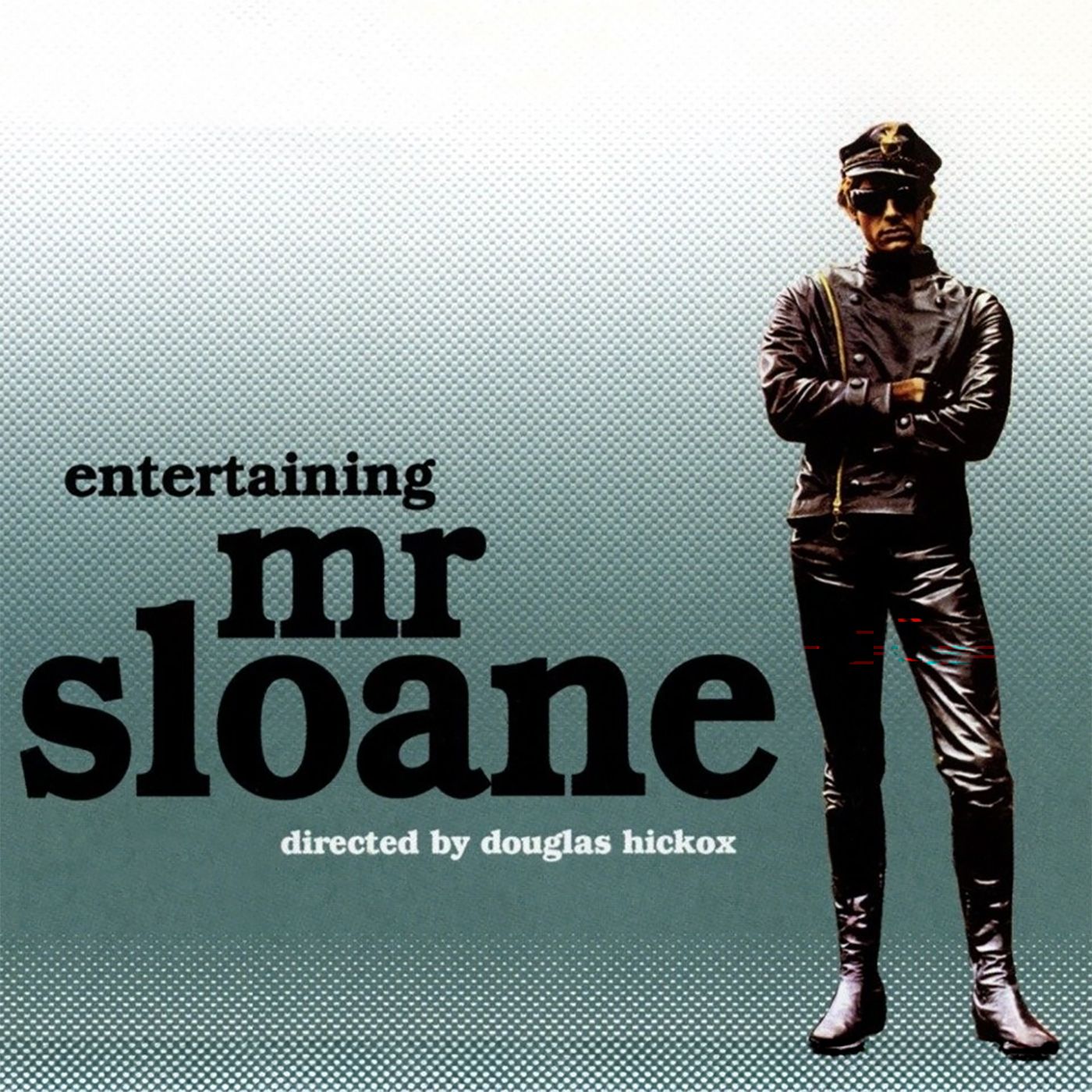
About this episode
At the center of the film is Mr. Sloane, a charming, amoral drifter and occasional rentboy played with unnerving poise by Peter McEnery. When Sloane encounters the aggressively lonely Kath (Beryl Reid) and her domineering, closeted brother Ed (Harry Andrews), he quickly embeds himself into their lives—sexually, psychologically, and economically.
The group also broadens the discussion to Orton’s screen legacy, touching on the other 1970 adaptation Loot, as well as the biopics Prick Up Your Ears and Joe Orton Laid Bare. Together, they consider how Orton’s work—and his life—continue to challenge audiences, remaining as abrasive, funny, and unsettling now as they were more than half a century ago.
Transcript
Automatically generated, so expect the odd misheard name.
The Projection Booth podcast is sponsored by Scarecrow Video. Tryout scarecrows rent by mail service. Choose from over one hundred and fifty thousand films and get blu rays, four k's and DVDs delivered directly to your door. Visit scarecrow dot com today. Oh g is, folks, it's showtime.
People say good money to see this movie. When they go out to a theater. They want clothed, sodas, hot popcorn, and no monsters. In the projection booth. Everyone pretend podcasting isn't boring.
Put it off. That fisting band. That's why he said. He like to begin with. Him with the smooth skin, with the bland, and it's surprising.
How it's progressed. From the their hope even rope enough. He'll be doping enough to marry. We'll see. We must supper plane every hour again, you will make it plain.
He appreciates the pains we're taking. Making a feelie home. So we swept, and we strained and entertain Mister slow. Cath was the first to realize mister Sloane's potential. What a smooth skin you have on you, entertainments, Slan, I'm giving the benefit of your experience.
But Dad, I wasn't at all keen on entertaining mister Sloane. You who told you to take in lodgers, Well I needed a bit extra. You know what they say about landladies. And then Ruther Ed saw the light. That must have been a rotten life again, been an orphan.
Don't take any money from him, haven't pay it's going to work for me. Can I buy a shirt by his own clothes? Making yourself look ridiculous? Entertaining mister Sloane became a fiercely competitive struggle. Quite eminent about the waist.
As I expect you've noticed. Women are like banks. Boy, breaking an entrance as a serious business. And mister Sloane, if you take your trousers off. With me behind your boy, you go out.
Mister Sloane had his own ideas of entertainment, enter mister Slow, starring Beryl Reed, Harry andrews, Alan Webb, Peter McHenry as mister Sloane. I'm going to the place. You bring this on yourself, you know. So this was also a part of mister Sloan's entertainment enters. Everybody wanted to entertain mister Sloane and mister Sloane is waiting to entertain you.
Welcome to the Projection booth. I'm your host. Mike White joined me once again as mister Rob Saint Mary. I have the upbringing a nun wort Envy. Also back in the booth is mister Jonathan Nowen, though I might have to call you Joe.
The airund Toronto today is like why I'm We're discussing the nineteen seventy film from Douglas Hiccocks, based on the play by Joe Orton, Entertaining Mister Sloane. It is the story of a rent boy and murderer, mister Sloane played by Peter mcintry, who comes into the lives of the strange Cath and Ed and for a while their father. We will be. Spoiling this film as we go along, so if we don't want anything ruined, please go ahead and turn off the podcast and come back after you've seen the movie. There's a really nice restoration of it out.
I'm blue right now, so no excuses, Jonathan. I'm very curious what is your history with Joe Orton. He's somebody that I discovered when I was a teenager. Actually, and I think I must have read the play of Bens tiny Miss Sloane when I was about fifteen, I think, and I had the book of the Collected Plays. I read certainly the major plays, and I think probably my introduction to him was the film Prick Up Your Ears with Gary Oldman and Alfred Molina, which is really good film, I think, a really good portrait of Auturn and of the relationship.
I didn't see this film until much later, though I'm not really sure why. I think I just never got a chance to see it, and I think the first time I saw it was in twenty eighteen when the Blu ray came out of this and of Lut So I saw this and lut pretty much back to back. It didn't make a huge impression on me at the time, As with Lout as well. Both films they're very much under the shadow really of the plays, and they don't have a great reputation, although I think this has a better reputation than the film of Lut does. I think I liked it though the I really liked the performances, especially of I think they're all read especially So.
Yeah, I did like it, but I think i've liked it more the more I've watched it, and I think I've come to appreciate it more as a film, I think the more I've seen it, And Rob, how about yourself. I did not know anything about this until I signed out. I had heard of Joe Horton. So I'm glad that Johnson's show because he can give me the update on that because I had And it's been a while since I've seen it, but I have seen Prickuperiors because I went through a hole like Oldman phase, you know, when he was, you know, getting his footing here in the States. In the early mid nineties.
I'm working in a video store that had a big cult foreign section. It was like, give me all the Gary Oldman, and so I know that I watched it in there, but I don't think i've seen it in thirty odd years or so. But you know, the first viewing, I was like, ah, it's interesting. But it grew on me in the second viewing and I was able to pick up on certain things and really get it. There's definite you know, character things in here that I really like.
The thing too about it being a play and understanding that it's a play, and then it was converted into a film. Is that I feel the director does well with not making it so stage back. I mean, it is limited to a few sets, you know, in that way. But a lot of times when you get those kind of play of film conversions, sometimes they can be priscenium and very kind of stiff, and that's not in the case in here, and they find little ways to bring out the visual humor. Like for me, I at first I said, okay, that's interesting.
Was the first shot in which the bus comes across and it's got the ad and the ad says you look like you could use a rest, and then it ends right at the cemetery. So this kind of juxtaposition of humor, the juxtaposition of the cemetery, you know, the funeral, to the wedding, and there's just different bits in there. And then as I, you know, gave it a second watch, I was like, I enjoy this. But it's definitely as an American having the background I have with my mother from Scotland and being raised around for British humor and British television, I think that also kind of helps. So if you don't have a sensibility, I think I think it can be a challenge maybe to the average American just looking for a you know, interesting little thing to watch.
Yeah, I was. Pretty unfamiliar with this as well. Like you, I'd seen Prick Compreter years. Yeah, probably early nineties timeline. And that was a real revelation for me, not just in terms of Gary Oldman, but in terms of Alfred Molina, because I really hadn't been that familiar with Molina's work other than his work and Raiders of the Lost Arc.
And when I connected that it was this little Latino guy and this tall, crazed, bald British guy were the same person, I was like, who oh my gosh, I need to see more of this Alfred Molina character. And then it's just been you know, an embarrassment of riches ever since. I mean, he's been in some really bad films, but at the same time, he when he hits he hits great. I mean, that was also such a nice experience with Gary Oldman, really well told film. Rewatched it last night after, like you said, probably thirty some years, and it was a real treat to be able to see that again.
And then when it came to Orton himself, I really still wasn't that familiar with his work. I had Loot on my watch list because I just watched that documentary about Silvio and Arizano that our friend Daniel Krummer did, and was like, Oh, this looks interesting. This is so gay. It just seems like it was crashing down walls almost literally in the film, blowing up walls that whole naked robbery scene that they have and then entertaining mister Sloan. I just really wasn't that familiar with it.
But it's funny, Jonathan, you mentioned Pasolini before we started recording. It kind of reminded me of almost like a reverse is it Teyo rama? The one where Kent Stamp comes in it sleeps with everybody, and here it's the young, sexy hot man. I mean, really, you could have had parents Stamp play this role. But I really think that Peter mcgenery does nail this role.
And he is so beautiful in this particular role. The blonde hair, the muscles, everything, and yeah, I was just like, this is amazing. And I knew that I was missing so much without the subtitles, So, like you, Rob, I had watched it a few times just to try to get all of the language, and I feel like the language and the kind of crazy responses that people will give to each other. I know that in the audio commentary for this, they were comparing Orton's work a lot to say like Monty Python, and I was like, yeah, I can kind of see that, especially when it comes to Lute and the dead body and just how carelessly they treat the dead body. It's so reminded me of the funeral parlor skit from Monty Python, where it's like, well, we can bury her, we can burn her, or we can eat her.
Watching the film of Lute Togay and I realized there is a direct quote from Lout in Life of Brian could you rap at the seaweed junk Clee's playing a centurion arrest Brian. He says, you're fucking nick male beauty. That comes directly from Lute, though I'd forgotten that there was a direct quotation, which is wonderful. I think I actually thought for a little while that Richard Edenborough was playing two roles. I thought he was both one of the robbers as well as Inspector Truscott.
And man, I've never seen Edinburgh just have so much fun in a role. Watching it again, I realized they actually quite like that performance. I mean, I know that Leoni Orton Joe Ortensis that has criticized it, and I can get that because I think the language of his plays, and I think that especially the language of the character of trust God is already very heightened. And so I guess there is that argument that when the language is so overright, you've got to kind of underplay it rather than overplay it. And of course Attinborough really like overplays it as much as he can.
But yeah, I think watching the film of Lute again, I think on its own terms it's something that I actually I realized that it's actually quite fun. Really, I mean I think it. Yeah, it does have a doesn't have a good reputation, and I think in some ways probably more like one of the sort of typical British sex comedies of that period more than a Joe Orton adaptation. But yeah, I think on its own terms it's a pretty fun watch. It's never boring.
I would say, I. Really like when it comes to entertaining mister Sloan, how they you know, Robbie mentioned we are taken out of the proscenium, right away and thinking to this cemetery and to see Beryl read. She's practically naked in this role. She just has this super light, sheer green top that she's wearing, her dress that she wears, and her kind of going around the cemetery. It feels like she's there for somebody's burial.
But no, I think she's just there kind of wandering through the cemetery. I want to see. The cemetery is very close to their house, and her just kind of going around eating a popsicle, very ludely eating that popsicle. And then the introduction of mister Stone himself where she's there arranging some flowers and you get this body rise up, almost like a zombie or something or Dracula rises from the grave where it's him. He's doing calisthenics and the the cemetery.
I'm like, okay, but it almost looks like she's almost brought him forth from you know, like okay, it's almost like a ritual with him kind of rising up and she's just like, oh a man, and it's phalic. It's about of course, isn't it. It's like a resurrection out erection at once. I guess when I lived in Grand Rapids. There was cemetery at the end of my street, about three houses away from where I lived, and it wasn't that unusual for me to go walk through the cemetery.
I don't think I would eat popsicles in there, and you know, do calisthenics, but you know, it can be a lovely place of contemplation. But I think that she definitely has other things on her mind. One of the things that I thought about in terms of her voice in her characterization is she reminds me of this is just like I say, based on my limited connection to British humor and things like that. I mean, granted you said Python already in reference to another Joe Orton, He's she feels like she would live in the same universe as like the Python women, if you know what I mean. And also like one of the ladies from Are You Being Served?
She feels like on a thread with them for some reason. Note to me, like as I was watching it, and her voice and then the thing that I notice is and I don't even know if he ever says what his first name is, because she always refers to him as mister Sloane. I think in the visual you see that, like the next to him, is that name on the headstone real quick as they woke through. Yeah, that's true, really, yeah, because I thought about that and whether, yeah, whether it's a name he'd just taken from one of the gravestones. And I guess it's also a reference to somebody that died in Thervis.
So if it is his father, that shows that he's lying when he's talking about his parent dying in the suicide park. So yeah, either way, it's already casting some doubt, isn't it about who he's presenting himself as. Yeah. At the same time, he claims that he's an orphan, but he believes that he was, you know, orphaned by a rich family. I think is when he says, you know, oh we had wealth, we had standing, of course, you know, oh god.
Yeah. And that's the thing that I do not understand when it comes to any of this stuff, this loot, any of the Orton stuff, is the class and the accents and those kind of things where it's just like, you know, even watching Prick Up your Ears, it's like, oh, well, you've got to get rid of that accent, you know, And it's like all right to me as a demo American. I'm like, well, I can tell different accents when it comes to places in England a little bit, but not nearly. I know Henry Higgins when it comes to like any man's. Was an irishman or a yorkshman, guy's brogue.
But I can place a man within six miles, I can place him within two miles in London, sometimes within two streets. Peter mckennery is very deliberately doing a Leicester accent, which was the accent of Autumn's upbringing. He was born in Leicester into a working class family. Orton himself had elocution lessons and then went to Rada. So I guess it was still that era when if you wanted to be an actor you had to kind of just like, you know, get rid of that regional accent so that you could be taken seriously and have a nice push speaking voice.
And so Aughton himself, from what I've heard of the the accent footage of him and recordings of him, he didn't he you know, spoke with quite a wealth to do accent, but I guess that's the accent he would originally have had. Beryl Reed, I believe was from Manchester, So I think there is a sort of a touch of a northern accent. But what I love about her voice especially is the way that there's a sort of a modulation from kind of a northern accent, a regional act to a more refined, more posh accent, And there's that constant kind of shift from one accent to another, which I think kind of matches the character and the way that the character. Her language in some ways is quite you know, it's quite sort of vernacular speech, but then at times she's obviously trying to speak in this very refined, harsh way, using this very formal, posh sounding language, And so yeah, I think she's brilliantly think she's brilliant in the role.
Really, I think it's an ideal piece of casting. I think because in terms of the class of Ed and Cath's it's kind of hard to really pinpoint that because the just the house they live in is so strange, isn't it really, So it's not really immediately identifiable as belonging to a particular kind of class setting because it's just so strange. But I would kind of position them somewhere kind of like lower middle to middle middle class ed is kind of a bit more enigmatic because it's not really clear what kind of job he does. I don't know if you guys got the impression too, but I get the impression that when he talks about his business, there's something kind of criminal there, there's something a little bit kind of dodgy.
And the fact that he never ready tells you what he does exactly, I think he's quite significant. Perhaps there's a guy that I like to watch on YouTube who's a linguistics person from the UK, and he refers to it as RP or received pronunciation as supposed to be like this is what you would work towards in that era, to try and sound a very particular way, like how the BBC announcers sounded, and how you would be taken seriously. I can understand that the thing that's interesting, as you were saying, Jonathan about sort of the house, is that the father seems he doesn't seem overly posh either, So they all seem to be strivers, you know. So it seems like, I mean, at least I could take it as it's sort of all of them are trying to get somewhere, do something, while sort of keeping up appearances, which has always been the thing that even I noticed in my own upbringing.
It's like there's a certain properness. There's a way that we present ourselves to the outside world. Like in the house is one thing, but you know when we get outside the door, you know, we have to be a very particular way. And the thing that I really loved about Ed's character is, you know, as an American watching this now, you might not realize that a car like that, as ostentatious as it is in this film would have been very rare in the UK, because like having an American convertible or a big car in the UK is just not You just don't see them. And then on top of it, to have it be that ostentatiously peptobismal pink is like another layer how it really forces you to pay attention to.
Them, which I guess it's the really interesting choice that car, isn't there. I know that that's been criticized for being too ostentatious and for kid of contradicting a little bit what the character is about, because I guess ed the whole point of his behavior is that he's very circumspect. Isn't it, so the fact that he would draw attention to himself in this way doesn't quite fit. I do like it as a prop though, I think it's a wonderful visual image. I kind of wonder whether there was a statement being made there about just the changing times, really, because I guess when the play was written.
It was written in the early sixties. I think it was written in sixty three, it was first performed sixty four, and then the film is made nineteen seventy, and I guess between those two years you have this whole change in terms of social morality, in terms of the law. You know, male homosexuality is legalized in nineteen sixty seven. So I wonder if there is a statement being made there about that change. But yeah, it doesn't really fit with the character I think in other ways, but yeah, as a prop it's wonderful.
I believe it belonged to a musician. I'm trying to think who it was. It wasn't Mark Bolan, but I think it was somebody Mount Bowlin's. I can't remember the name now of the musician, but yeah, it was much more kind of fitting to have belonged to a musician, I guess, rather than a character like Ed, I suppose. Yeah, to your point, Rob, I remember being in London back in the late eighties and just how tiny the streets are.
It feels like they're still made for carriages. And then when you would see I remember seeing a big American car coming down the street at one point, not a pink Cadillac, but very close to it, and or whatever this car is. I love the hood ornament that it looks like a wrestler about to take somebody down kind of thing, this hood ornament. But yeah, when you would see an American cargo down the streets, it's just like, wow, there is no room on either side of this. I'm surprised that it's not just scraping against the walls.
But at the same time, he does have this presence of like, I'm business, I'm serious, I will be taken serious in my look and how I'm outside in the world. There's this tension. I think Ed character, I think really wants to be fully himself, but he can't. There's this you know, he still has to keep up appearances. Yeah, and that's very important.
I really really like Harry Andrews in this role, and I'm more familiar with him just as his tiny little role in Superman as one of the Kryptonian elders. And I believe he also sits in Judgment of Well speaking of parents, Stamp of nod Ursa and Zod and otherwise, like I think I've seen him in the Night They Raided Minski's where he has this kind of crazy amish type beard. But I'm not familiar with him otherwise, and he is wonderful in this. He's also in Theater of Blood, which was also directed by Douglas Hickock's Player. Which we're going to cover later this year.
W Yeah, he's the very, the very randy theater critic. Well, I was watching that again just just in preparation for this, and yeah, it's I think shows his versatility because that's, yeah, that's a quite different kind of performance. It's a much more flamboyant actually, although he's in this case he's a heterosexually ranby guy rather than character like Ed. But yeah, he's got this little beard and he's yeah, much more kind of flamboyant figure. And I believe he often played like military roles.
I think that's something that he was associated with. And I think he's in the Hill with Sean Connery as a very kind of aggressive sergeant. And I think that kind of baggage of the military roles makes him perfect here because I think Ed is a very I think the whole point of his character is that, I guess it's really going against what would have been like gay stereotypes at the time, because he's a very tough, very just the way he's kind of physically presents himself, he's very kind of posed, very rigid, And I think he's meant to have been in the navy as well, isn't he in this film? And you see in at one point in that photograph with his naval outfit, And yeah, I think that military baggage works really Yeah.
I mean he's definitely a man's man who's into men, especially in that one scene where they're talking about all that. We're interested in the navy doom say less uniforms, training, ships, garrison, towns, et cetera. Yeah, mar no wise man wi man girlfriends. No, No, you're a librarian. No, I thought, she said, I help out lens tobacconists just on Saturdays.
Then you want a chance to cross him. He was a sailor too, lifeguard at the baths one time. Nice Ye, he's. Not a queenie queer man. He is definitely one who's very misogynistic, as little to no use for women.
You know, if he could just live in a world of men, I think he'd be a much happier person. But that's the way he's characterized. Apparently I've seen him a lot because just looking very briefly at his filmography, he was in the seventy eight remake of The Big Sleep, which I've seen, the Medusa Touch, which we've covered, in the Passover plot, which we also covered. So I've been seeing this guy a lot, but just not really connecting. He was even in the final program, so it's like, all right, I've seen him a bunch, but I just didn't really realize it.
He's in the ruling class as well. Have you seen that one? The ruling class, because that's an interesting connection with this film another adaptation of a play that's completely insane, and he has a particularly insane I think he plays the father of the pewterre o'tool character who commits suicide or kind of if it's a suicide or if it's some kind of like auto erotic fatality type of situation. But yeah, it's a very strange opening thing that he does. Hardy, you need to relax.
Might has just silk to match a good idea. Duck, poor Saint George Lucia bit higaduck. You don't. And to your point, Rob, he will not be quiet about how much he hates women and is just like, don't get involved with those women. Don't do that.
Don't do that boy, you know, just always on that. When you think about the character of Cath, the barrel Ree character, she seems to have had one of the worst lives ever. When you start to read between the lines and she starts talking about her baby that she had and that they took the baby away, sounds like she might have had a lover that they forced to leave as well. Just that at one point it sounds like there's an implied rape that happened, maybe from that lover, maybe from the baby's father, maybe that's the same person. But it's just like, Wow, Ath has had a real hard life, and I like and dislike also at the same time the way that she keeps calling mister Sloane her baby and that she wants to be baby's mama and she wants Ed to be Baby's dad, and just that they are so involved with these mom and dad rolls, and then having Alan Webb there is Dada never has a name, you know, I guess his name is Kemp, but they just keep calling him Dada the whole time.
And I know I'm jumping very far ahead, but once Dada gets killed, it is all about just, well, let's cover up this whole murder thing because now we basically have mister Sloane where we want him. And I just love that this whole movie seems to be who's going to end up getting mister Sloane, Like they are so into that. And at one point when Ed is introduced after the Pink Car, and he goes up to the room where mister Sloane is at and he's like lying back, He's got his hands behind his head, he's got nothing on other than his underwear. And at first when Ed walks in, you think, oh, he's gonna, you know, be really angry at him. But as soon as he sees what a lovely figure mister Sloane is, he just changes his tune so quickly.
And Sloane recognizes it, doesn't he He knows the impact that he has. Oh yeah, there's that calculation. Oh yeah. He uses his body like a weapon. And you see so many shots that are just focused right on his crutch.
It is wild how often this actor's crotch is just the star of the show. There's a great moment when yeah, I think he's with Dada in the scene just before he murders him, and he's talking about the photographer who did I think he called experimental studies and he said he was there were certain interesting features about me, and he kind of like jabs his crutch towards Dada as he's saying it, and it's yeah, it's kind of interesting that the crotch. It's like a weapon, isn't it. It is in like the use of the sound effects when it comes to those curtains, when she brings back the curtains, or even when Ed takes the curtains and opens and closes them, there's a little sound effect, and I think that same sound effects gets used at one point when he thrust his crotch at somebody.
I love the line by I think it was the actor Dudley Sutton who played Flowing early on. I think he said about Sloane the thing about him. The important thing about him. He has a thal army in his pants, which is negotiable. That's like the core of the character.
It's a great line. I think they see us on stage with Tye Chauser's We've Got you know, Almadillo's and Old Chauser's. I mean, it's really quite frightening be size. The data character. When Kath brings Sloan back to the house and there's this, you know, the three of them are kind of circling each other.
I like his character the old Man, as a matter of fact, like all four of them, I mean, because it's really four characters in the film are great. He is another one who also looks familiar to me and his characterization, Like I'm trying, you know, like I say, on two viewings to really kind of understand. It's like, does he honestly believe that this man did something to him in the past, Did he like beave from him, to he steal from him or something like that, or did he do something to someone he knows, because I'm at times I was a little confused as to Okay, well, how does he know this guy or is it just like he's demented and he just thinks that whoever she brings home is a threat. I'm so it's sometimes it's a little it was a little unclear to me on that piece.
Yeah, I think he's meant to have murdered the Data's boss, I think. But yeah, it's very oblique, isn't it. The way it explained that it's not really clear how Dada first saw him or how he identified him. Obviously his eyesight is not the greatest. And yeah, the whole thing is such a massive coincidence as well.
I mean it's not realistic on any level that she would pick up the man that had murdered the father's boss, But yeah, I think that was the backstory. And it's not quite a fish eye lens. It's a bit of a distorted look where you've got that close up of him of Data, and he just looks like he's like in on him and he's got of course those kind of coke bottle glasses and such. And I was like, because there's the little visuals through here that I really really enjoyed, like I say, much more than I was expecting. I just thought, oh, this is just going to be, you know, four people in a room kind of thing.
Yeah, there are some quite nice Yeah, wide angle shots, aren't that, like you say, almost fishy, which I think enhanced that kind of claustrophobic feeling. Yeah. One of the things I think the film does well is that, on the one hand, it opened it out, I think, so that it doesn't just feel like a stage bound piece, But at the same time it manages to maintain that sense of claustrophobia or that sense of tension, which I think is where the film of Loot fails. Really. I think that doesn't really capture that tension, which I guess Aughton always wants to have.
I mean, Loot is much more just of a romp really, whereas I think this film does have a certain menace to it. I think I love that shot you're talking about distorted things, the shot of mister Sloan in a mirror where it's like the top half of his head is way bigger than the bottom half and he's kind of skewed across that nice, nice broken mirror. And that's right around the time that Data starts to confront him about this potential murder that had happened. And I don't know, I just believe it. I was just like oh yeah, he must have killed this guy before, because as we go along, it just feels more and more like he's on the land from something.
I mean, he really does feel like this kind of I don't know, Satanic or back an alien force that has come into their lives and is he the one in church or are they the ones in charge? And that's what this whole play feels like to me, or this whole film, as far as the shifting power struggle that goes on, because at first, I mean it's probably eighteen nineteen minutes, it's basically the end of the first act of the film where we get Ed introduced, and until then it's just you know, Ath and Data and Sloan. So when Ed comes into it, it is just such a different power struggle now that's going on, because like you said, Ed, he doesn't broken any fools. He just is just like, okay, very like you said, very military, very rigid.
You know, it's a man's life in the army type of thing. I object in the strongest possible terms to this obvious reference to our own slogan, it's a dog's life in a man's life in a modern army, and I wolln this program that any recurrence, so this sloppy, long haired civilian plagiarism will be dealt with most sevilly. Right now, I'll look m on cut. Camera will cut to camera too, all right, director, wait for it, camera cut. And then I was curious, as far as the navy thing goes, how long has that stereotype of navy men being gay?
How long has that been going on? Because I mean, obviously I'm a fan of the village people. I got to thinking about that too. I mean, there's always been that kind of lime you know, the Hello sailor, that's always been I think kind of a coded gay joke, which you hear in Monty Python, in Spike Milligan and things like that from the same era. Maybe that was the era when that was starting to starting to emerge.
I think that that that idea. Yeah, but there's always been I know that people have made jokes, for example about the Prime Minister Edward, he who was a bachelor, never married and he all for like sailing, So there's been the odd joke about that that he was, you know, he was a keen failure. So yeah, I'm not sure. Actually it might have existed from before this film was made or this play was written, but I got to thinking about that as well. This was I think before the song friggin in the Rigging, which I remember from the Great Rock and Roll Swindle.
But yeah, it just seems like it's always been there, so i'd be curious to I don't know how I'm going to investigate that, to be like, how long has the stereotype existed? But I guess when you get a bunch of young men on a ship with no women aboard, and wasn't it unlucky to have a woman aboard ship? That's what I remember from a Curse of the Black Pearl. Anyway, it's interesting to take some of those, like I guess, kind of like iconic sort of symbols of masculinity, doesn't it, like the military or like sports, and it completely subvert because there's a lot of stuff about sports, isn't there about Ed having been good at sports when he was young? And then he has little Sportsman as the mascot on his car, And then I think Slowan himself is talking about all the sports he does in a very suggestive way.
He's just all vaulting and all things like that. Oh God, yes, when he's there kind of massaging his muscles and making all of these poses while he's laying down, and yeah, the pole vaulting one especially, it just looks like he's got his hand around two cocks or a big one. And Beryl Reid, I'm not that familiar with her. I don't think I've heard the name tons of times. But she just this performance that she gives her sitting on the floor while she's tending to mister Sloane and his wound that her father, that Data gave him with a pitchfork, and she's just spreading out her legs and lifting her legs and just doing all of these kind of seductive poses.
But it's so said at the same time, because she just is made up to look like that this guy is her Data. It feels like they were about the same age rather than any sort of age difference between them. She just looks so put out the pasture with this and not in a bed. I'm not criticizing Beryl Read herself. I just think this character is meant to look like she is way out of touch, like kind of those like when the nineteen sixties and early seventies, when movie companies were trying to make like hip young things.
It feels like she's trying to be very hip, but she is so not hip at all. Because the outfit she's wearing at the beginning, it's like a Paisley. I mean, it's very much of its time, isn't it really? But yeah, as you say, yeah, the ages is an interesting point, isn't it. I'd not thought about that, but yeah, I did look up are the ages of the actors, and I think Harry Andrews I think he was only about five years younger than Allan Webb.
I think Eryl Read was a bit younger. The age that it gives her in the film, I think it gives two ages. I think the first point she says, in fact, she kind of hesitates, doesn't She says, Oh, I'm thirty nine. And then I think a little bit later, I think Ed says she's in her forties, and that he gives is probably more accurate. But it is strange that your Dada does not seem that much older, does he really?
Than me? Brother and sister. It's not as bizarre, but I was slightly thinking, you know, and this would have been made right before, kind of like Alex's mother in Clockwork orange. Oh yeah, yeah, she's kind of like the colored hair. She's got the sort of the swing in sixties outfit kind of thing with the mini skirt, but it just doesn't work.
She just look right wearing it. Yeah. No, I was thinking of Clockwork a couple times while I was watching this, especially mister Deltoid and just that predatory homosexual character. It feels at one point like Ed would just you know, clasp his hand down on mister Sloan's cock or something. But yeah, I was glad that you brought that up, because yeah, there was a feel of that, and just this whole thing too, of the how much they love data, or at least it feels like at first like it feels like Ed's really trying to get well, won his father's attention, but also really trying to get his father's love.
I mean, the very first time we see him, he's driving down the road in that incredible pink car and just chasing after his data, trying to get his attention at all, and it's like there's no way he can't see Ed in this pink monstrosity just screaming at him, but he just keeps ignoring him. That's the whole thing with He's like, you have to get him to talk to me, You have to get him to talk to me. Keeps telling this to his sister, and I guess it's we don't understand why he won't talk to his son. I mean, we can theorize it probably has to do with he's embarrassed by his sensibilities or whatever. And then when he finally breaks and he does talk to him, it's like, oh my god, you know, like, oh see, yes, you know, it's like he's been given the greatest gift ever that his dad has finally paid attention to him.
You could, if you wanted to read this uncharitably, you know, with a queer character, you could say, oh, that's why he's into men because dad didn't pay attention. You know. You know, I don't buy that. I've never bought that. You know, there was a school of psychology around that time, the sort of thought that, you know, gay men like men because dad didn't pay attention to him.
But I don't believe that's the case. Yeah, that scene you mentioned is such a heartbreak because it's basically data coming to warn him about something or need something and starts talking with Ed, and Ed is just having the best like, oh my god, oh my god, he's finally talking to me, and it's like, no, he really still doesn't give a shit about you. Yeah, if not for the purposes of like a reconciliation, is that it's more because I think it's to tell him about what has happened with Path, isn't it, and just to give that backstory about him. And so really it for yeah, the sake of just yeah, warning him about flow, and it's kind of got a practical function. Really.
I love some the shots we were talking about how this does try to take things out of the stage and some of these things like when we finally kind of meet Ed and mister Sloane and Cath all at the same time. You've got that shot of mister Sloane looking out of the window of their house and then the camera tilts down and it's a shot in a mirror. It's basically the rearview mirror. I don't know if it actually is the rearview mirror because it seems too big, but it's supposed to be the rearview mirror. And you see Kath and Ed talking about him, and then you move back up, and then you see them coming out of the car, or like Ed coming out of the car and still talking with Kath some really nice shots that they're doing here, and like you said, this doesn't feel like it is stage bound.
And then when you get to the actual house itself, the stage that we would be bound to, what a wonderfully cuckoo place this is, with just things strewn everywhere. You've got like this fake perrot, You've got like a little dog head on the wall, like it is just so much brick a brack. If they shot there's some black and white, you would think that they're living in the Adams's house. And it's also like dark. It just seems like there's no windows open or something.
And you've got the stained glass as well, having this stained glass window, which makes it a bit like you wonder it is this like a converted church or something like that. I think the other choices of objects really, I think are perfect because I went back to the play and I was looking at what kind of stage instructions they give, and there's very little actually in the play. I think the setting is only described as just a room. I don't think it says any more than that really, So I think what the filmmaker did, I think just added a lot of you know, objects and decor, which I think does fit with the kind of environment and the kind of characters. I noticed.
There's a painting I think it's in Path's room of the it's the green painting of the Green Faced Woman. I think it's called the Chinese Girl. I think that was the original name of it. But I would say that's one of those kind of images are the certain kind of I would say, there's a certain kind of like lower middle class respectability that tends to be associated with that painting for some reason. It's very it's got a certain kind of cultural baggage.
So I think the choice of those sort of objects. And then, like you said, is the parrot and the gnomes of course, the garden gnomes that we see. Yeah, I think the choices of objects are very careful and yeah, very appropriate. I think the other thing that they use very well in this house too is the stairways, and they have some really good stairway shots, Like there's one where it's cath and Dada looking at each other as mister Sloan's going up the stairwell and Dada goes to turn and look at him, but she pulls his head back, so they're in the foreground. He's in the background.
And you get a lot of that too. When Ed's going up to finally talk with mister Sloane and yeah, those beautiful stained glass windows like that you're talking about. He opens up lines and it's the two angels, one playing a trumpet and I don't know what the other one's doing. But just now we've got the light in the room. Now he sees mister Sloane, and now his whole story changes, and I love how he's just like, well, you can come to work for me, and you can be my chauffeur.
And the very first time we see him, he's in the passenger seat. He's not driving this car. He's in the passenger seat, and this beautiful brown buttery leather outfit, and that you even see Ed when he's driving his car. He's wearing a leather cap, not you know, like a leather fedora. It looks like rather than Dada is wearing a cloth one and letting his little freak flag fly a little bit with that leather.
But then you know he knows what he likes when he dresses mister Sloan. He's very, very controlling when it comes to that. And I notice he's watching it again that there's a scene where I think Eddie's polishing the mascot on the car between the legs with a round and then I think from that scene you go to the bomb with the tailor and then the tailor has the type measure between Sloan's legs. So yeah, it's like making that connection, isn't it really the Yeah, he's kind of making Sloan into his little his little mascot, just dressed as he wants him to look. The looks on his face, that kind of the sivious look where he's just kind of smiling over and he's got that little mustache and it looks like he's definitely wearing a wig of some sort.
Harry Andrews just plays this role to the hilt, and I've never been able to see him chewing up stuff as much as he is in this one. Like now I need to go see the Hill, like you were saying in some of these other films, I can't wait to see Theater or blood now after seeing this Hiccock's film, and yeah, I'm really excited now to see more of him because he is just wonderful in this role. The thing that I love about him and Sloane hanging out the scene for me is the pool scene. He's like, let's go to the pool, and he's like, why would you want to do that? So they go to the pool and of course he's still decked out in his suit and he's sitting there.
Well, everyone elses in there, swim suits and such, and he just looks completely uncomfortable. This is not a place for him. And I think that's where we get the conversation piece about oh, you know, why would you want to deal with these women? Like, do yourself favor, boy, don't be messing with those women. I have a certain amount of influence, you understand, friends with money, they could be a hut to a lad like myself, the possessor of two bank accounts.
I generally spend my holidays and places where the bits have got rings through their noses. Does that impress you? It's on impressive. In the way these birds treat decent fellows. If you never get serious with one, got a life back ache, headache, or a mum told her never to When there's an r and the month turns me.
Are you're too sensitive? That's right. I just don't give a monkey spar sir your opinion of the way these women carry on. Don't you think they're crude? Occasionally in a way all the same, it's.
Necessary. Oh now you're talking about different subject entirely. It's necessary, I grant you. Occasionally, it's got to be kept within bounds. I can deal with them same.
As you on the main points we agree. I'm sure I can deal with them same as you. And that's an interesting line because I think that suggests that he is a bit like Slowan. But I think when when he needs to do, he can sleep with women and he can kind of be flexible, just in the way that Sloan is. And to me, it's making a kind of an analogy between the two characters.
Really, well, if I need to get a lady pregnant, I can get a lady pregnant and carry on my line. But otherwise, screw all women. I don't need them for anything. That's their only purpose in life. Talking about the misogynistic this is something that people have often discussed in relation to Orden's work as to whether it is misogynistic itself, or whether it's just depicting misogynistic characters.
You read Auton's diaries, which are a great read, by the way, but quite maybe shocking now in a different way than how they were shocking at the time. But yeah, he does make rather kind of unfavory remarks about women himself, and so I think there is that question as to whether he was really being misogynistic himself or whether it's just illustrating the misogyny of society. And I mean, I would say in relation to cath I mean she, I would say she is quite a sympathetic character. I think we do feel or at least a poignant character. I think Emma Parker makes the point in the commentary that you know, she's always been referred to as like an nymph maniac basically, And yeah, I mean she's only had the previous you know, partner that we know about who possibly raped her, possibly abused her, and then Sloans, so you know, you know, you don't really get much other evidence of that really.
Not being as familiar with his fleek catalog, I mean, I sort of see these characters as as commenting on people in society, like I mean, you could take the ed character and say this is business. This is you know, the guy who puts on the suit and goes to work every day and puts up the front. You know, he's a well respected man. Like I think of the Kinks song or something with him. You know, he gets up and he goes and he takes the train and he does the thing.
And there might be some unsavoriness in there. I don't know, but I really get the idea that he's trying to keep up appearances. I mean, in the case of Cath it's like, I mean, what mobility was there. I mean, I'm thinking about this character as she would have been about my grandmother's age. So I'm like trying to think of like, okay, my grandmother was like twenty when the war breaks out in like nineteen forty, you know, and so it's like, what do you do, like what you know, what is your expectation, your expectation as family children.
Maybe you get a small job outside of the house, but you're not redwinner. You know, your whole world is controlled by the men. It's interesting to me that if you were watching this contemporary in nineteen seventy, or even seeing the play like you say, you know, good six seven years earlier, there's probably you know, that kind of commentary of that interplay, you know, with what was happening contemporary. So we have to kind of pitch ourselves back a little bit and think about how gender was, and class was, and expectation. And I think that that kind of helps, you know, as to the piece of what you were talking about, Mike about Sloan, I just see them all as you know, if I was going to kind of distill them down into all into one thing, it's just hurt people, hurt people.
I mean, they all seem to be hurt and dealing with something and they're just getting whatever it is that they can get, you know, from each other. And these leads to you know, at some point someone's in you know, has power over another, and it just kind of is a seesaw battle of the wills, I guess, is what you could say. They use violence to get ahead, but not a lot. It's more implied violence. Like when the Ed finds the lipstick in the car that mister Sloan has taken out a few times and finds that, and then Ed goes into the trunk and finds a shotgun and you just starts shooting off the shotgun, and at first you think he's shooting at mister Sloane, but then you see Sloan behind him, and the way that he keeps asking questions and the way that Sloan's answers change as he starts to continue to shoot that shotgun.
It's like really exerting that power. And I agree with you, it does feel very man about Town doing all those things so conservatively, I can really see that when it comes to this Ed character just putting up those appearances, even though, like we were saying, the place that they live is so strange, so odd, and it's not just on the inside, it's on the outside as well. I mean that he's practicing with his shotgun or has a shotgun, just shooting an armoire in the yard is kind of strange. But the thing that I mentioned almost right at the top is the language and how clever the language is with this play, with this screenplay as well, And I think Clive Exton comparing the play versus the screenplay, I think Clive Exten did a pretty good job of capturing that tone and a lot of the lines from the player directly in here, but they didn't need to make a few changes.
I really really love the language of this and I think that's why we're still talking about Orton today, because this could turn into just a sex comedy from the seventies, like you mentioned with Lout, I mean, it doesn't capture it nearly as well as this one does, as far as the clever turns or phrase. Like I said, the way that you have a character say something and then have the other character respond, and the response is maybe it plays upon what the first character said, maybe it completely twists what the first character says and then says it back in a different way. I just really appreciate that that love of language that you get, and that's the thing I think Orton excelled in so well. Yeah, it's that constant kind of juxtaposition, isn't there of different registers of language.
And for example, I think the near the beginning with slow refers to data. He says, you are you superannuated old pratt, And I mean that's a brilliant juxtaposition of quite a formal word with a very kind of like vernacular word just jammed together. And yeah, I think there is that constant I think one of the reasons his plays apparently they're quite difficult to perform and they're quite difficult to get right. And I think Emma Parker says that she's seen more bad productions than good productions of these plays because I think knowing how to pitch it as an actor it's very difficult, because I guess it needs it needs a certain degree of stylization, but with out too much, without taking it over the top.
And yeah, it's really like just like a collage of different styles of language, really, and a lot of the language I think is very coded to So for example, I think path refers to the living room as the lounge, and I think in British English, I think lounge has a particular kind of class connotation that common people so called, were meant to say lounge rather than a more posh word like living room. So I think there is always that kind of pinpointing of class distinctions through the language like that. And it's also a way of illustrating the characters aspirations too, isn't it that they want to be seen as posh and they try and show that in the language that they use. There's little things like when they talk about somebody being dead, it's like, well, she's as dead as forty dodos, and it's like you could easily just say she's dead, but then to add that little flourish on top of it, and it doesn't feel stagy.
And that's the thing like when I watch and I sorry I always bring this one up, watching something like Six Degrees of Separation, you just feel that you are watching a filmed stage play. They try their best to take it out of the stage, but just the delivery is so flat and so to the rafters kind of thing. And here it feels like we're watching two people talking. Now two people are a stage talking. I think that's partly to the credit of the actors, isn't it.
And I think the way they savored that language without like overdoing it. I guess it's also because the characters themselves are performing, aren't they. I suppose they're trying to maintain an appearance, and so it's somehow grounded in the reality of the characters. I think I know that the ending of this is not the same as the plane. I'm trying to remember how the play ends, Jonathan, do you remember how it ends?
Yeah? So the play really just concludes with Ed and Calf alone. I think Sloan actually leaves before the ending, and so's Ed and Cath. Yeah, they just make that arrangement to share him and a lot of the language, a lot of the lines are the same, but it's much shorter and it really just ends with that. I think Ed leaves, Cath is just alone at the end.
I guess curtain falls. So yeah, the ending of the film is much more extended. So you get that whole sort of double marriage sequence and then scene of the three of them where each of them kisses Sloan and you close in on the close up and finally you see his expression. So I guess in the film you get his reaction to the arrangement, which you don't get in the play. You don't really know how he is going to feel about that really, So yeah, I think that's been criticized.
I mean, I quite like the ending of the film. I think I just love the I love his expression at the end. I love the whole setup where you have the dead body, you have the wedding, the double wedding, and to me, it's another kind of just subversive job at social institutions because you bring in the whole marriage, you know, the marriage ceremony, and I kind of like the idea that, yeah, you're just trashing another institution like that, which I think is in an Autonesque spirit really, but yeah, I guess people might say you're kind of just like overagging the pudding a little bit, and the play leaves a bit more stuff implied. I suppose my note that I put down is a free room becomes the jail Celly never imagined the thing that I liked about it.
And this is interesting if in the first half like sort of sloans leading the way. I don't think he actually says this out loud anyway, but you're probably thinking, and it's like, I can display these people. I can get a room, I can get food, I can get you know, I can just scam these people into whatever I want. When it comes to the ending, just that look that he has that's like, oh, yeah, I'm kind of screwed now. So I really love that turn.
As you were saying, Jonathan about sort of the solemnity of social order and ritual, you know, which is what we see destroyed with it all cemetery and you know, funeral eating popsicles in the beginning, the wedding piece and all of it. I just thought that the ending is it just felt delicious to me. It was just very humorous. Like I really, I really liked it because I kept thinking, like when I was watching the first time, like I don't know this it's going to end, you know, like I really didn't have an idea, to be honest. You know, sometimes you can kind of see it to be in telegraph, but it didn't feel that way to me as we were watching this one.
No, not at all. And yeah, I love this taking things and turning them on their head. That towards the end, he is just a pawn for both of them now that they he has murdered Data and it's like, okay, we have this on you now. And I love when she's like, well I'm going to get married and grabs the Bible out of Data's dead hands. You've got Data just laying there.
He's starting to turn green and putrefied. He's got that big gash across his head. He's got the candle there, and so many of the shots he's just in the foreground and they're in the background and doing their stuff, like having that first wedding again turning it out of its head. This is nineteen seventy, this is not twenty fifteen, you know, turning this wedding out its head and saying okay, now now you're going to marry him as well ed, and then having that big kiss at the end. And I love that how they he mister Sloan looks from one to the other, kind of looks at us a little bit as the audience, and then does this kind of yeah, it's a living kind of thing, like the like the pig who's under the sink in the flintstones, like eating all the garbage.
You know, I know, I look ridiculous, but it's a living And then that's how we end with that beautiful scroll work around the end, and that it says amen in the end, yeah, oh so nice. The other bit with this is that leading up to that, I love how they negotiate what they're going to do with him in front of him, and he's like, whoa wait a minute, He's like, who asked you? Shut the fuck up? And it's like we're talking here, the adults are talking. It has this feeling of and I can't pinpoint a movie like this, but it's like I know that I've seen in films before where like someone's been kidnapped and then like the kidnappers are debating, and then the person who's kidnaps like, wha, wait a minute, it's like shut up, like you're a nonentity here.
That attitude I just made it even more delicious for me. In the end. It's like, well, you're trapped now. You know you got what you wanted, right, Yeah. Something that I thought of in relation to this.
It might be a little bit of a remote reference, but the Sorcerers, you know, the Michael Reeves film with Boris Karla and Ian Ogilvy, because a very different story, but I guess similar idea about like it's like the old generation controlling the younger generation, isn't it. And I guess this is an interesting comment to be making in the late sixties early seventies, when it's all about, you know, the youth culture revolution, showing that it's really the older generation that's still the one in charge. I guess you have freedom to a limit, the limit that we'll give you kind of thing. The Mister Sloane song that plays in this I was really hoping to find a good copy of that and hopefully I will before we put this episode out to air.
I really like that they have this little Georgie Fame song of entertaining mister Sloane at one point, because we're going to talk a lot more about music when we come back and we talk about Loot and mister Sloane. You know, it's not necessarily directly addressing everything that that's happening on screen, but it really adds to this and I was really glad that that song's in there. It's a real banger. It was an era of having theme songs in movies, you know, that would reference the title in that way. And it plays a few times, if I remember, not quite as many times as when we did Audio Semigo.
No Jesus Square. I said, like I remember on that episode we did that. I was like, Yeah, we paid for this song, We're gonna fucking use it. It shows up enough, like I said, I'd probably have to watch it again and see how it's used, you know, But it feels like it plays in the same way that sort of these theme pieces work within cinema that era. But it also seems to comment on the fact that it is a little bit because I don't think those lasted too much longer.
I don't think there was a lot of you know, we're going to write a song and put that song in the film, that isn't you know, for like a musical or something like that. One thing that I found that I thought was going to be more interesting than it was was back in twenty fourteen, Robert Whitey, who we've talked about many times in this podcast see our Mother Night episode. He created a comedy drama series called Mister Sloan with Nick Frost, and it's unfortunately it has nothing to do with Joe Orton. As far as I know, he's a hapless accountant. So all right.
I was really hoping that Robert Whitey would have made a whole Mister Sloane TV show, But unfortunately it's more of a situational comedy a six part series, so wasn't able to see much other than the trailer, and I'm sure it's out there, but I was really hoping that we were going to get a revival of this Sloan character, maybe even check in with him twenty years after he's murdered ed in cath because that's the thing, is, like what happens five minutes five weeks, five years after this movie ends. I mean, mister Sloan has no problems with murdering people. Is he going to kill both of them in their sleep? Or is he actually going to be basically their prisoner, their own personal rent? Boy?
It could go either way, couldn't it. I think, because I think you got the impression to add is probably you know, he's probably at least a match for Sloan, I think in terms of his toughness. So yeah, I guess, yeah, it could go either way. Really, all right, well, let's go ahead and take a break and we'll be back right after these brief messages. It's not easy having a good time, and it's not cheap either.
Every week the Projection Booth brings you a new show, possibly even two, focusing on all genres of cinema. If you've sat through the seven hour Conan episode, the six hour Star Wars episode, or even the hour long superb Man episode, you know that Mike and his co host put forth a lot of work into researching the movies, tracking down the interview subjects, and putting together one of the best podcasts on the internet. Now I'm asking you if you can repay all that hard work by giving back to the projection booth. The show has a Patreon fundraiser at Patreon that's PA t R e o N dot com Forward slash Projection Booth. You can donate as little as a dollar a month.
That's twelve dollars a year at least fifty great shows and two terrible ones. That surprise of two Mattiney tickets. Now, isn't the projection booth worth it? Once again? That's Patreon dot com slash Projection Booth.
Donate today. It's the bright thing to do. Looking for something superior to streaming at place with more than five times the selection available on all streaming services combined. Check out Scarecrow Videos rent by mail service so like from an unparalleled collection of over one hundred and fifty thousand films. Then get Blu rays, four k's and DVDs delivered directly to your door.
Get in at it now at scarecrow dot com and rediscover the wonders of physical media. That's right, we are back and we're talking about entertaining mister Sloan. But really let's stuck a little bit more about Joe Orton. A lot of good stuff about Joe Orton out there. I was happy to see there's a episode of the TV show Arena, which I've seen quite a few episodes, not nearly as many as they produce, because they produce what hundreds of episodes, I think, But every once in a while I'll find one like about Philip K.
Dick or this one about Joe Orton, where they seem to concentrate a lot on his library book scandal, and then you get more of just him overall in Joe Orton Laid Baar, which I found to be a really interesting concept because it's narrated or star as a person who is in that Joe Orton role, and as I see him, I'm just like, this guy looks a lot like Joe Orton. But then as I was watching it, I was like, wow, Gary Oldman really does look a lot like Joe Orton as well, or at least he made himself look that way and prick up your ears, And how interesting that Gary Oldman plays such iconic Britain characters between this and Sid Vicious and then Fucking. Yes, which I think is especially funny because Orton's last play, which I think is his best play, actually what the Butler saw.
Sorry, this is a terrible spoiler, but that played climax is with there's this whole backstory about the statue of Winston Churchill that was destroyed and certain I guess interesting features of it were lost, and it ends with this character just brandishing this penus of Winston Churchill statue. So the fact that the same actor could play Joe Orton and Winston Churchill, I think is is wonderful. Really yeah, and. All of them met such terrible ends. I mean, especially when Winston Churchill got beaten to death with a hammer.
There's one thing I do know about Churchill. He was an excellent painter. Nobody ever said at about Winston Churchill today say gas what it's plenty and just right here, what's a painter? He quite paint an entire apartment in my afternoon to cus. Before we start to talk about these other Orton things, I do want to talk about Loot a little bit because I watched it for this episode as well.
I think I liked it. I think I liked it a lot. Like you said, it is overplayed a little bit, like that Richard Attenborough character. Even the Lee Remick character is a little overplayed. But I found it enjoyable.
And the thing that I really did want to bring up was the whole musical aspect of it, where you have these songs that are basically commenting on what's going on in the movie, which I kind of appreciated that. And it's not as strong as of a film as entertaining Mister Sloan, but it definitely has some merits to it. Yeah, I think I think the function of the music it makes more sense really in Lute, because I think the plot is a lot more complicated, and I guess from the three major plays that he did, I guess he went through this progression more towards face. So I guess Sloan has some kind of fascal element to it, but Lou's much more obviously a farce. And then by the time you get to what the Butler Store, that's almost like metaphas.
I mean, that's like so farticle. It's like so many like entrances and exits and confused identities and things like that. And strangely enough, I think it's probably harder to translate theatrical fast to the screen, I think, than it is a play like Mister Sloan. So I think perhaps Luke had a more difficult play to work with, really, because I think there's all that stuff about the body, and you know, you're kind of like trying to take the body from one place to another place. And I think that kind of thing works better on stage perhaps than it does on film.
I think on film it just looks a bit too artificial, and so yeah, I think Luke probably had a tougher job with the source material. It feels very screwball comedy, with the way that their bodies being moved around feels almost like arsenical and old lace, where they are constantly moving these bodies around and you know, is it in the cellar, No, it's inside of the banister by the window, or the covered by the window, these kind of things. I like that. I also like that they just kind of, like I said, are very unceremonious about treating the body the way that they just kind of throw it into a closet that she's on her head quite a few times. Talking about Orton, there's this whole thing about teeth, and this whole thing about the teeth that are used, because you even get that in Entertaining.
Entertaining, mister Sloane where at one point Cat's character can't find her teeth, and in this one it's like the corpse is missing its teeth. And then you get that that comes back in Prick Up Your Ears, where his mother, Orton's mother in that one is missing her teeth. They're standing around her corpse at home, which is a tradition that we don't necessarily do here in the US as far as I know. Maybe in certain cultures, but having the body presented at the High House is not something that we necessarily do. So it was very odd to see all these people at the house with the corpse there in the casket, and yeah, they start talking about like what happened with her teeth?
And then you see later Ryan Oldman as Orton handing these teeth to one of the actors and saying these are my mother's teeth and sending him out on stage like right at that point. Yeah, it's funny how teeth like kind of win their way through all of these Orton things. I guess it was a sort of a comedy staple, wasn't it. I think false teeth it's just one of those things that's considered like inherently funny whenever you just throw it in as a as a as a comic device, And yeah, I think a lot does relate back to Orton's mother as well. I think I think I've even read that she was actually the basis for the character of Cath, so I think there was a sort of an issue there with his mother.
I believe I've read that Cath was based on his mother, and then Dadda was based on his father, who seems to have been a rather meek and rather kind of nondescript kind of personality. I think I think the mother was a much stronger presence, and given the way that she's played in Prick Up Your Ears by Julie Walters, I mean it seems that she was very much a kind of a comic figure in her own right, really, even if kind of maybe unintentionally. The teeth thing is interesting, and this is something that I like, I said, I haven't seen the one you were talking about, but there was a podcast that I listened to recently that went into why is it that we have this joke about British teeth and where does this come from?
And it was saying, and I know this from my grandparents that right after the NHS was created. The first year after the NHS was created, they did a million false teeth, false set's teeth because in England before that, I mean, they didn't have floride like they had in the States, you know, dental hygiene, things like that. It was teeth were difficult, were difficult to deal with, not just there but also in the States. They were saying that basically teeth were awful for a long time this podcast, but they said that when the NHS came in, it was considered the thing to do was to get your teeth pulled and get false teeth. And so my grandparents both had false teeth by the time they were in their thirties.
Wow, I think, my yeah, yeah. And so there was an era that came right out of World War Two when the NHS was created in the late forties that they all, you know, their teeth were mangled, so they just got them pulled and they all got false teeth. So as a kid, I remember going to my grandmother's and you know, I would stay over and she put her teeth you know the thing, and I just thought it was weird. I was just like, you know, my other grandmother didn't have false teeth why, you know, like I you know, I mean, I'm a little kid, so I don't know, but I know that it was a thing. It was.
It was like if you could have do it and the NHS was going to take care of that for you. That was your way of sort of improving your image. It was considered like the thing to do in the forties and early fifties. So the idea that Orton's mother, who probably was about the age of my grandmother, would have, you know, false teeth, isn't that out align with I guess what was going on Britain at the time. I never had heard about that.
That's that's fascinating, talking about having the funeral or having the showing at the house. Also, there was this whole thing of and I was just talking about a French film called The Visitors where there was a dentist who works out of his house. It's kind of the same thing, if memory serves when it comes to England, is that the dentists would basically work out of their house like you would. I remember walking around Tolworth, England and seeing like signs like you know, basically a dentist lives here, like this is the dental office, and it was just a regular old house. So again something very different from what we're used to here in the States.
Well, I mean even in the late eighteen hundreds er turn of the century in the States where I lived in Grand Rapids, there was a Victorian house is built in the Lady eighteen hundreds, and I lived in the parlor, which they told me it was the house of a physician. And you know, like where you're staying used to be where you would take patients. So and that's where you get the term I I come to understand in America, where you get the term funeral parlor was because they used to put people in the parlor of the house, you know, and then they moved them out of the house. And all of this just became, you know, the professionalization of you know, the funeral industry, because before it wasn't like that.
It was like, oh, someone died, all right, put them up in a room in the house, everyone come visit, and then we bury them like a day or two later. They don't embalm memers, you know, they don't stick around too long. And I wonder if if our funerals happen faster than they do now because sometimes it feels like somebody dies and then it takes quite a while before they get buried, as opposed to like a Jewish ceremony, where it's just like no, no, it's basically very quick, like almost next day type of thing. I mean, like I said, part of that had to do with they didn't really start embalming, at least in the States until around the Civil War, you know, because it was like they had send bodies home unstrained, so like, you know, we got to keep the bodies a little bit so we can get them back home.
But you know, typically they didn't do that. It was like well, you know, and plus you figure people lived in close so it was like, Okay, someone died, tell everyone in town get here. You didn't have to travel at huge expense or distance like you do now in the modern world. Yeah. Of course, as you're saying that, I'm thinking of Donald Sutherland in The Great Train Rocks.
I just thought of that, Yeah, with the blue face. Yet. Yeah, and they put the dead cat in the casket with them, so it smells appropriate because even in this one where it's like they they live at a hotel I think in Loot and when they pull into it. It's very much a The sign for the hotel almost looks like they're pulling into another cemetery, you know. Like there are a lot of interesting similarities between these two films, written by the same Arthur came out within eight months of each other.
I think Mister Sloan came out in April. In this one came out, I think it was like December thirty first, nineteen seventy, so yeah, really right into nineteen seventy one. And it's funny that in the original play of Entertaining Mister Sloane, it's not set near a cemetery. It's actually a rubbish dump, I think. So the film added that the graveyard the cemetery motif, which I think is interesting because it does feel like it does feel faithful to aut in sensibilities really because yeah, funeral do and graveyards do kind of recur throughout his work.
So yeah, I guess it has similar kind of resonance, isn't it, Because it's about your death and death and rebirth and things like that, so there is a kind of a connection. But yeah, it's interesting that the film added that. I guess it just maybe more it's just more visually interesting, I suppose than a rubbish dump. That makes a lot of sense because of all the brick and break that they have at their house. Feels like they would have lived next to a rubbish dump and just pulled in like, oh, this ar more is fine for me to shoot at, or any of these other things, because yeah, they have such weirdo decorations and really kind of the same thing with loot as well.
When you look around their house, which doesn't necessarily feel like a house, it feels more like a sound state. But yet you get like all the flowers, the sombreros on the wall, the guitar, the tongue up on the wall, and it's almost like each room has a different theme to it. I mean, it's very similar insofar as having way too much stuff in each one of these rooms and them just feeling so incredibly cluttered. Did you guys have to see the English sickcom Steptoe and Son, which was later remade as Stanford and Son in America? To me, I kept thinking of when I was watching both Entertaining Mister Sloan and Lout, because the figure of Dada especially is very reminiscent of Albert Steptoe even likes pickled onions, which is the thing that Albert Steptoe liked as well.
And I've got Steptoe is famous and Sanford and Son too for that kind of junk laden interior with just like random things everywhere, like a skeleton or like a stuff bear and things like that. And the co writers of Steps and Soon actually wrote the script of Lute. So I think there's a big connection there. It's interesting that you bring that up because the actor and I know they're two different actors, but the data character in entertaining mister Sloan slightly reminded me of that actor who played in Steptone's Son, which I would say most Americans know as the grandfather of Paul McCartney and Hard Day's Night. He's a nice little man and he.
It's very clean. So he's the same guy, the same actor, So like we're just the glasses and the kind of the look. You know, he's got kind of like grubby appear and hasn't he And there's one point when he's talking to Sloan and he's very close in and Sloan just like reacts and you can tell that like his breath must think and it's like, yeah, he's just that kind of similar kind of grub figure too, Albert Steptoe, because I think Steptoe started in the sixties and I think it was playing around the same time. I guess come out of the same world, really, of this world of kind of like grubbiness and also kind of like aspiration. I suppose Stepto is all about aspiring to kind of move beyond your class, and I guess that was sort of a I guess still is a big theme of British culture really because we're so class ridden.
I guess I really like the actor in Lut I think he's miles of she who's the father in this one whose wife dies and was being nursed by Lee Remick. Lee Remick looks amazing in this movie, with her platinum blonde hair, her little beauty mark that she has, her very red, bright red lips that she's doing. She almost looks like a like a flapper who traveled through times. And I mean it's within five minutes of the wife being dead that she's like, well, no, you're going to have to marry me. And it's just so like matter fact.
And it's interesting because this one has a couple of storylines going on. You've got this whole thing of the father and this nurse, and then the nurse plays into the two young men as well. And then yeah, this whole thing of the two young men, one of them is the son. Are they both the sons? And they're brothers?
Right? Because the limo driver or the purse driver, I should say, he is outside of the family. I want to say, yes, yes, that's right. Then and then yeah, how is the son of Yeah, the Miloe character, so that's his mother. Yeah, that's right.
And then the two guys are lovers basically. But they'll shag anything. I mean, they're shagging a meter maid right at the beginning, and you know, they seem to have double teamed her though they keep her panties, and I just gotta it seems like he's got a whole collection of women's underthings that he's got going. Like at one point we see him in his room and he looks up and there's all these garters and things. I'm like, are those for you?
Or those just trophies that you've kept. It's very weird. Actually, now I think about Lute because in a way, although I think in a way the kind of the gay element is more overt than it is in Mister Sloan, and yet at the same time it's very reminiscent of the kind of your the Robin Asquith type of figure in Confessions of a Window Cleaner. And I'm thinking of the scene when, yeah, I think it's Dennis. He's talking about this brothel that he wants to create and he wants all these different kind of birds in it, and it's very much it's very much part of that kind of like matcho young male swaggering sort of sex comedy character as well, isn't it.
So it's a really weird fusion I think of two different sensibilities. I want to share my favorite moment of this movie, and it's such just a little thing, but it just makes me laugh so hard, as when all of the guys from the funeral parlor are coming in with the empty coffin and just laughing like crazy as they're walking in. Then as soon as the door open, the main guy kind of turns, his look goes from jovial to completely somber, and then he suddenly adopts that whole you know, professional funeral parlor attendant type of role and it's just like, Okay, yeah, just to see that kind of two faced nature of everyone that's in this movie. I mean that they've got his lover coming in as one of the guys who drives the hearse and he's just standing there kind of taking in everything.
He's got that kind of mister Sloane, you know, platinum blonde hair again, and I'm thinking that's definitely not natural. But it feels like he's very conscious of his appearance, and it feels like both of these guys are very into what they look like. Though the Sun's hair is just so fluofy and so like page boycut. I'm like, I'm glad that that has gone out of style. Yeah, Loot feels very much more of nineteen seventy than Slowan does.
I think Slowly he's somehow timeless really in a star way. I think that, Yeah, like you said, the hair styles, and also just the design of the houses as well. I mean, it's not very plausible for the character, the main character of the MiLoG character to be living in really. I mean, it's just wild kind of psychedelic design, isn't it. Really?
So I think it's possibly one reason why that film is less loved, I think because Yerry does capture some of the excesses of its period. I guess, yeah. And it's so psychedelic in things like like that robbery scene where you've got the lights and the music and everything going. I'm still not sure why they had to be naked during that robbery scene, but hey, it works. She says something about the forensics that it would pick up traces in the clothing, but he said, it's the flimsiest of pretext, isn't it really?
And then all the great framing to prevent us seeing their cock and balls, just a lot of butts on screen, very very nice. Yeah, I don't think it's a bad movie. I just don't think it's nearly as strong as mister Sloan. And then I did want to talk a little bit more about Prick Up Your Ears. Like you said, it's a great film and really holds up all these views later.
I wasn't sure when it came to the way that we are going back and forth in time how well that worked. But I think it really does allows us to have a commentary about things. When you get the Wallace Sean and who is a Vanessa Redgrave as he yea. She plays the agent. I think, yeah, yeah, when you get Wallace Sean and Vanessa Redgrave talking to each other, or Sean and the sister, or Sean and some of these other people, just to have them be kind of the commentary on what we were seeing in the other scenes, I think works pretty well.
And how interesting is it that Wallace Sean is playing John Larr, who was the biographer of Joe Orton, and that John Larr is the son of Bert Lar, the Cowardly Lion, Like after he talked about because there's tons of extras on the Mister Sloane disc and I'm sitting there watching this guy and he was just like, oh, yeah, well my first biography was about Bert Lar. And then I'm like, wait a second, you look like Burt Law. It was like, how dumb am I that I didn't make that connection right away? Yeah, it is an odd It is an odd combination, though, isn't it. I think of, Yeah, somebody coming from that background and then writing about this guy from let Yeah, it is a sort of an odd fit somehow.
Yeah, And I think I believe John Love was married at one point to Connie Boo, who of course, was the wife of John Clee's as well at one point and co wrote Faulty Towers. So it all somehow comes together, isn't it. I guess yeah, it just feels like. He's out of place being in England, and they do make a big deal of that as far as like when Vanessa Redgraves character meets his wife meets Anthea Lar and it's just like, oh, you're not American as well. Okay, interesting, all right.
I love the scene when they talk about how Orton is saying, you know, oh, I used to have to write all the dirty bits of my diaries in shorthand, so my mother couldn't read it. And then they've got the wife of John Larr and her mother going through and trying to just figure out what the shorthand says. I love that's when she says I had a long slow wing. Yes, watching this again after so many years, I was like, this really still works very well, and yeah, what incredible performances by Oldman and Molina and man oh man. It just really makes me appreciate Alfa Molina even more than I already do.
Great tough role as well, isn't it, Because I guess I mean, technically he is the villain because of the of what happened with the murder, but yeah, I think it does manage to make you feel the I think the sympathy for him really and his his his position really Alfred. I can't say enough good things. I mean that seen in Boogie Knights. Oh god, yeah, I mean if you only see that, that's all you need. Yeah, when he like quiets them all down so they can get to that big part in Sister Christian.
Oh, it's so good. And of course borrowing a little from Bob Downey with the firecrackers in the back. Round, but yeah, to have halliwell, be this such a force in Norton's life and this you know, is he the the cheated on wife? Is he the the hanger on? Was he actually the power behind the throne kind of thing?
You know? The way that he's just like, well that was you know how they're talking about the screenplay for the Beatles and he's like, well, I helped co write that novel. You know, you're not giving me any credit for this, And it just really kind of speaks to that whole thing as far as like how much of your art belongs to others, how much are your influences and how much credit needs to be and to other people, And yeah, towards the end there, I was just like, wow, he's really just been shut out, like the whole thing of and again because it's late sixties, this whole idea of how open can you be? And just that Vanessa Redgrave was kind of taken aback, her characters taken aback by like, well, was he going to actually bring a friend to my office?
The way that he says, like, do you mind if I bring a friend? It's like, was he really going to do that? Oh my gosh, you know, like this is kind of revolutionary. And then towards the end when it's the Joe Orton and guest pass and it's like, what are you ashamed of me? Like?
Can I be your? You know, like why am I your plus one rather than my name on this pass kind of thing? And that seems to really be what puts him over the end, And like, I was kind of surprised because he just keeps taking so much shit through the entire thing, and he is just so unhinged with his paranoia, the way that he obsessively, obsessively cleans especially when he's feeling pretty repressed, he just starts dusting everything. And when the murder actually happens, I was surprised because I knew it was going to happen. I mean, we start post murder, and we start with the whole idea of breaking down the door and everything.
But I was just shocked that that was what finally put him over the edge. I guess just a sad combination of circumstances, isn't it, really. And I think the fact that, yeah, like you say, he was shut out in terms of the relationship and in terms of just the celebration and adulation of autun when yeah, it's pretty clear I think from early on, I mean because they were writing together, so I mean, Hallewell, I think they'd have a big role I think in shaping some of that sensibility. And yeah, I think it's in the diaries, and I think they talk about it in the Joe Orton Waybar documentary that there's this I think specific event where they went to this dinner party and just there was this television producer who was just really horrible with Hallewell.
He was just really probably you know, motivated by jealousy actually, and it was just saying the most horrible things to him. And I guess you can see in retrospect how it just all came to this, this tipping point. Really, the one thing that caught my eye too when it came to prick up your ears is the whole thing with the Beatles and with Brian Epstein and this whole idea of you know, him being semi closeted. I don't know when, because I've known for my I think entire life that Brian Epstein is gay. And I don't know how I knew that.
I don't know if that was from watching the complete Beetles or where that information came from. But this whole thing of like, no, no, no, these are good boys. They would never do that. They would never smoke a joint, they would never sleep together. And you think, to you, so of like have when I seen that movie Backbeat, all about John Lennon being by and then the whole thing of like rubber soul on.
I think they were pretty entrenched in the drug world. Well nothing but grains of sand that was freaking transcending on Paul McCartney, don't you agree, John Lennon. Yes, Junie Coax with meditation, there's no limit to what we can imagine. What do you think, George Harrison of The Beatles, I didn't know, you know, I'm just trying to get some more songs on the album. And as Ringo starm that's so interested in meditation, I just like to have fun.
But I have to say, I like your stuff. You guys are almost as good as the monkeys. You guys are great relics. Justly ironic, isn't it that that moment with the Epstein character, because I believe that script which I keep meaning to read, actually because I think the script is out there of the film that he wrote for The Beatles, and yeah, apparently I think I don't know if it's at the ending or in one thing. There's a scene where there's a female character that marries like all four Beatles together, so it's this kind of join bisexual marriage, which I think is a wonderful idea.
And apparently that was one of the problems that I think that, yeah, the producers had with it, that it was just considered, yeah, not wholesome enough, I guess. And I kind of wonder if like heavy road beat would have been into that, and like how much of that is them versus how much of that is their management who's trying to protect them and form that image of them and keep that image safe, you know, because they were like, you know, oh, the Four Lads from Liverpool kind of thing, and just a bunch of clean cut young boys with the flappy haircuts and everything. And then yeah, like before the seventies were up, because they didn't last that long, but before the seventies were up, it's just like long hair, mustaches, facial hair, just like all the things that were so anathema to you know, the general public at that point.
That's what I always hear from my parents, and I used to hear from my grandparents too that yeah, we liked them originally, but then they kind of went weird and this whole thing of going to India and taking drugs and stuff, and then we started to sort of like, I guess it's actually the grandparents generation. We're like, well, what's happened to these nice you know, these nice, clean cut lads from Liverpool that was like Rolling Stones. They were the ones who were like that, not the Beatles. I really found Joe Ortonley Bear to be an interesting way of presenting his story, and especially the way that they would blend the plays with the bio as it's going on, and especially that they would have these actors who were pretty much limited to the plays, but they would be playing different roles at the same time.
So I'm a big fan of coupling the TV show from when was that their nineties, maybe pre Friends? I know it was so to see Ben Miles in here basically playing ed In mister Sloan as well as some other roles too. That was a real treat for me to be able to see him show up in this and just I like the way that they were mixing all of this and also just having Orton be a character himself. And again I think that what is the Brian Dick is the guy who plays the older Orton. He does a fantastic job, and it was just an unusual way of presenting a bio to an audience.
I think, Yeah, I wish I'd already had more chat in my life to see productions of his plays and reading about the productions and who played in them, it's really fascinating and I think, especially for me, I would have loved to have seen there was a revival of his work in the mid seventies when I think they presented what the Butler thought. I think for the second I think that was the second production, but that was the one where it really established its reputation. And in that production in nineteen seventy five, it was directed by Lindsay Anderson, so I would have loved to have seen that. And then I think the Sloane revival in seventy five you had flown played by Malcolm MacDowell, so yeah, that would have been dreamcasting.
Really. I think I did try to track down some of the other adaptations of his stuff, including there's a Yugoslavian production of Entertaining Mister Sloan that came out the same year as the nineteen seventy film came out. I think it was a TV movie from November fourth, nineteen seventy. I would have loved to have seen what they were doing with that. There had been TV episode TV adaptation of Mister Sloan before that.
You mentioned her name before she did the commentary she and Emma Parker. Yes, she was wonderful and to hear her talk about some of these other versions of stuff, like she mentioned that it was the BBC iPlayer I don't think we can get that here in the States, but who cares, you know, we can always get her hands on anything if we want it that bad. But I could not find that ITV playhouse version. No, I was looking for that too. Yeah, and he did a few television plays.
And there's one of the play that he did, call The Irpingham Camp, which was made for I think was originally it was written for television or it was. I think he originally wanted it to be a film again with Lindley Anderton, but then he turned it into television adaptation and then later into a stage version. But yeah, there's a there's a I think from nineteen sixty five or sixty six. There's a TV play of that, and a couple of others as well. And one of the sad things is just how badly the BBC treated their television output of that period.
So a lot of stuff it's much more difficult to find than it should be. I guess there is a I think it's from nineteen eighty seven, I think eighty eight. There is a TV version of What the Butler Saw which is on YouTube, and that that's really wonderful. I did not get a chance to see that. I should have checked that out.
I watched that again, and it's just that that is just breathlessly brilliant. It's just one of those things that at a certain point you kind of trying to stop trying to follow it, really because it's just just one kind of narrative complication after another, and it makes your headspin. But yeah, that is so I think was not really appreciated at the time because I think it was just too much. It was I think his most transgressive piece really, But yeah, that is just really brilliant. But by the way, yeah, you mentioned the library books.
I believe those are possible to see now. I think there is a I think it's maybe at the original library where they did it that I think there is a display of those library books. And I guess that goes back to the idea of collage, doesn't it. But yeah, I would love to. I must take a trip one day to Leicester and look at those because I think the pictures that I've seen of them they're just so funny.
And my favorite one is the one of the little monkey's face plastered into that rose in that book about roses, And for some reason, that was the one that upset people in particular. I don't know why, but ye, just that little monkey's face is just so funny. I think. Yeah, I love how Vanessa Redgraves like, oh, you were in jail. Oh, the press is going to love that.
How she's like already starting to form as an image for him as she's talking to him about his previous work. I mean, the thing for me is someone who is not extremely well acquainted, I think, and I appreciate you for having mean for this one. It definitely opens up a door for me to seek out these other films and really learn a bit more about your and in it's work. All right, guys, let's go ahead and take another break and play a preview for next week's show right after these brief messages. I remember my father once said that if you ever wanted to look at someone's soul, you'd have to ask to look at their dreams.
Dreams are like black You can't catch them with your hands because you can't catch something you don't really see. They always wanted to fly. I'm the live forever until one day I wake up. If you believe in your dreams, you could be sure that any force a tornado cano or a typhoon wouldn't be able to knock you out a lot. You see this, Yeah, proteins.
When you see a beautiful woman, these extra proteins go. Directly to your farm. Thank you. What do you get stuff? This is a scientific fact.
I never thought it could happen, but love hit me like an elephant. Being caught in a dream of two women is the craziest storm you'll ever find yourself. You're old enough to be his mother, but I'm not. I'm his lover. Your nephew is a wild animal.
In bed grace. Do you think it would be really bad if I kissed you? I was thrown into a jungle of dreams because I was really flying in love for the first team, I couldn't say life was beautiful, even though I no longer felt like a fish and realized I knew nothing. I was happy to be alive. That's right.
We'll be back next week with They Look at Arizona Dream. Until then, I want to thank my co host, Robin Jonathan. So, Jonathan, what have you been up to, sir? So? I recently wrote a booklet for the new edition of the film Kracker Tite, The Otokova film from the Forties, which is a check film about nuclear apocalypse.
So that's coming out. I think that's already come out from Deaf Crocodile. I've got a few of the things in the pipeline. I try and regularly write things for the Czech National Film Archive website, so I try and post up on my Blue Sky account, So if you follow me on Blue Sky, I try and update everything that I'm doing on there. So yeah, that's a bit about me and Rob.
How about yourself? Just enjoying life in the high desert, working on a rewrite second draft of my zombie novel, and I may have something else to announce later in the year, but I can't say for sure yet. So are you pregnant. I'm definitely not pregnant, but the ghost of an old project is knocking at my door and I'm going to see if the door is going to open or not. So I'm sorry to be enignomatic, but I'll tell you more later.
Maybe. Well, you will have plenty of chances, since you're going to be on the show quite a few times this year, so look forward to that, and I look forward to having you back. Jonathan. As always, Thank you, Thank you, I always love being here. Thanks again guys for being on the show.
Thanks to everybody for listening. Do you want to support for media and get great movies in the mail, head over to scarecrow dot com and try Scarecrow Videos incredible rent by mail service, the largest publicly accessible collection in the world. You'll find films there entirely unavailable elsewhere. Get what you want, when you want it without the scrolling, and yes, of course they have entertaining mister Sloan. If you want to hear more of me shooting off my mouth, check out some of the other shows that I work on.
They are all available at Weirdingwaymedia dot com. Thanks especially to our Patreon community. If you want to join the community, visit patreon dot com. Slash projection Booth. Every donation we get help some projection booth take over the world.
Cause he gets saboom and on it. Then he goes to work, and then then he comes back home with five thirty gets the same train. Every time. The world is built down punctuality. It never fail.
Anisa so good, Anisa so fine, And he's allo healthy in his body and been mine. He's a well. Respected man about health. The besting soap so. And is mother ghosts and meetings while it's father poles are made, and she starts tea with Countiness, are discussing far and trade, and she passes looks as well as built that ever swell of young man.
Because he's all so good, and he's all so fine, and he's allo healthy in his body and here fine. He's a well respected fan about town and the best thing so so, and he likes his own backyard, and he likes his bags and bess because. He's better than the best, and his aspects mills the best. And he hopes to grab his father and the passes out because he's all. So god and he's all so fine, and he's also healthy in his body and fine, well respected man about the best thing, so servit.
And he is so sharp, and he goes to the regatta. He does a girl that song because he's dying to gates at her. But his mother knows the best about coming to remote these instincts because. He's all son and he's all so fine, and he's all so healthy his body and his signs. You were respected man about them investing soulsert to newh
More from The Projection Booth



Similar episodes across the network
Matched by shared keywords.
-
The Woman in the Window
1 shared keyword: gary oldman
-
The Devils
1 shared keyword: vanessa redgrave
-
Tiptoes
1 shared keyword: gary oldman