
About this episode
The conversation digs into the ethics of proximity filmmaking, questions of access and responsibility, and what it means to document extremism without caricature or spectacle. Homegrown emerges as a quietly unsettling portrait of radicalization unfolding in plain sight.
Find out more at https://homegrown.film/
Transcript
Automatically generated, so expect the odd misheard name.
Oh, it's show tied. People say, good money to see this movie. When they go out to a theater, they want cold sodas, hot popcorn, and no monsters in the protection booth. Everyone pretend podcasting isn't boring. Don it off.
Scared as hell about being the dad, especially with everything that just went on. I think that all hell is gonna break loose sooner than later. Sure, no need to take it. See that more militia, more and more street fighters. What they say about organizations like this, you know those guys are making up for something that they were lacking in the family.
That wasn't really the case for me. Everything in my life. I've always been go big or go home. All this for thirty seconds of. Time, I might not go to jail.
There's a possibility of me not getting arrested. We got guys in New York, one of which is married to a black woman with black children. That doesn't make you not racist if you have a black they have. I cannot grasp that concept. Eight people will suffer a long train of abuses until it gets to a point where I've added up.
Let's storm the capital. Hello, dear, how are you? I'm perfectly safe and everything is good. We're just mating this little cold paint hole water and I was wearing my mass the whole time. The end result of this has to be a whole up pariot.
It has to be. Now they're saying, oh, well, you know words message terrorists and this and that. If you think DC was bad, just wait, just wait. Hey, folks, welcome to the Projection booth. I'm your host, Mike White.
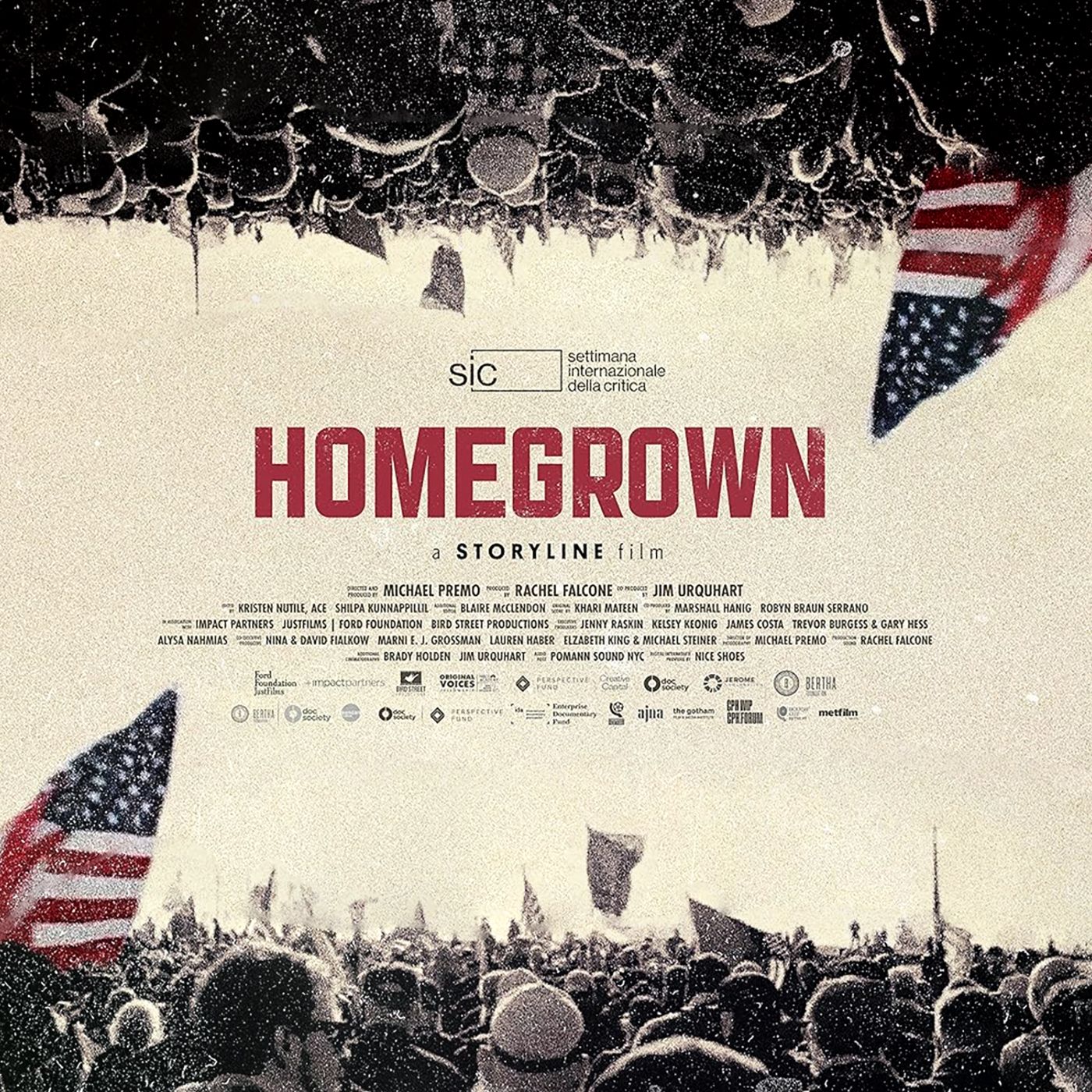
On this episode, I am talking with Michael Primo. He is the director of the twenty twenty four documentary Homegrown. It is a. Pretty eye opening documentary all about the insurrection in twenty twenty one, follows a few mega folks. Definitely a little bit of a difficult watch, but a good watch.
Had a great time talking with mister Primo, and I hope that you enjoyed this interview. Tell me a little bit about you and your backstory. How did you get involved in filmmaking. I am an artist, filmmaker, journalist. I've worked in the arts probably you know, since I was in middle school.
I went to drama school and worked in theater. I you know, worked in local repertory and doing like background extra stuff. As a teenager, I went to drama school and was making theater for years and years and years while simultaneously also making photos and trying to pitch them to local newspapers. I was doing that right at that moment when digital was becoming a thing and then papers were being consolidated and hiring interns just to take photos on cheap digital cameras. So it was it was a funny moment.
And I eventually got a job with story Core, a national history project on MPR, and it was kind of early days of the project. The project hadn't been around for more than a decade at that point, I don't think, and that really just set me on this path of documentary work and then filmmaking. That just really excited the sort of something in me that motion pictures and cinema is where I want to go. What were some of those early story Core stories for you? So story Corps had the sort of general tour where there were just these booths and these airstream trailers crisscrossing the country, and then they had special thematic initiatives, and I was doing a lot of those sort of thematic special initiatives, and so I was doing one that was collecting nine to eleven stories, which were amazing, and I'd spent a lot of time with firefighters who were sort of reliving and unpacking that day, and those stories sort of live at the nine to eleven Museum.
In addition to the Library of Congress, I was also working with the Grio Initiative, which was a project of the Smithsonian's African American History Museum, where we were collecting something like two thousand stories of African Americans around the country, and that was fascinating. That was just like an unparalleled opportunity to travel the country, like Alan Lomex, just like listening to people's story around this sort of like pivotal moment in American history. How did you get involved with Homegrown? The idea for Homegrown first started sort of bubbling in our brains around twenty sixteen, twenty seventeen. We were watching this sort of widening chasm in American political life that I hadn't seen probably since maybe the early nineties.
You know. I came up in that sort of era of the culture Wars, of that particular error and what was happening when twenty fifteen, sixteen seventeen made that seem tame, there was something in the air that felt like something large and consequential was coming, And I of course didn't know what that was or what that meant, but my experience with social movements and my understanding of social movements, there was just this like alignment happening among or that I observed among all these different factions across the conservative spectrum that were coming together in a way that was seen unique. By twenty eighteen, we had finally organized our lives to really sort of eraise a little bit of money to dive into this project.
We started filming people in twenty eighteen, and we were really in trying to better understand what people were fighting for, what was motivating them to get off their computer and just sort of step into the street, so to speak. And we really wanted to know why and what was motivated them. And we were particularly interested in this sort of like bubbling sentiment that maybe violence was the only way to solve our political problems, and that I found fascinated and really wanted to understand better why people thought that might be the only course of action. How easy or difficult was it for you to film these folks, and did they welcome with open arms or really ardent suspicion. It was a mix of both.
We live in this moment, as you know, where there's just like so much sort of animosity towards the news media, so much skepticism. I feel like, you know, everyone has the so many more avenues to be able to sort of broadcast and control their own image, that people are largely suspicious of other people interested in endeavor. But it was a real mix. We met people that were kind of embraces with open arms. They were like, Wow, why do you want to talk to us?
And some people were intrigued by the fact that we were independent. When I explained what we do, They're like, oh, wow, you're like a small business, like a mom and pop shop. And I'm like, yeah, I guess so. I'd never really thought about myself that way, but yeah, every filmmaker is a small essentially a small business. Every film you created, you're starting a new business essentially.
That really engendersome good will That was separated us from some of the animosity that was directed at some of my friends and colleagues who worked for sort of mainstream outlets, And some people were just intrigued that someone like me wanted to even know or talk to them because this sort of us versus them posture that so many people in American society have sunk into. Like there was this degree of sort of oh, wow, you're not supposed to want to talk to me, you want to hate me, right, And I'm like, I don't know if that's actually true. We're just sort of the truth we tell ourselves over and over, so we believe it that alone, like we're really intrigued people, and that that gave us. That allowed us to get some access to people because they were just so intrigued that we even wanted to stop and talk to them, and we got far more access than we anticipated.
We filmed with dozens of, you know, a dozen people across the country and it wasn't until we got into the edit that we had to make those really hard choices. And that's not uncommon for a very tae film to be able to find the film in the edit. Now, I'm curious how many people were in your crew when you're out there? Does that also help when it comes to making you not as threatening with a whole bunch of folks and sound and video and all. That That's is absolutely I think was key to it for most of the shoots, it was myself directing and shooting, is doing this primary cinematography, and my producing partner, Rachel Falcone, also does sound for motion pictures, so it was just us two of us.
Some shoots we had another colleague, Jim Urkhart, who makes also a photojournalist for Reuter's, and then some shoots we had we did have a second camera, our friend, our colleague Brady Holden, but you know, it was that was largely a factor of the pandemic. You know, going before the pandemic, we had designs to have kind of maybe like a four person crew kind of moving around, but the pandemic really created the need to just be as slim as possible for obvious reasons, and so ended up being just me and Rachel on a lot of shoots as well as Jimmy, And Jimmy was also there shooting for Reuters, so he was sort of had this double duty going on, and that was how we did most of the film. So eventually you do focus in on just a handful of folks.
I'm curious, how did you kind of make those inroads with those people and say, like this is going to be one of the people that I follow. Yeah, so what we did after to prepare for the project where so I'm just trying to read as many of the sort of nonfiction books that were written post Obama, like the backlash to President Obama's time in office, and that informed a lay of the land. And so we just started going out and developing sources like you do with an investigation, and so meeting people, and we would follow people and initially what we were interested in, because it's cinema, it's its motion picture. We needed to have people who were sort of out there in the world. And we met a lot of interesting, fascinating people that were just kind of doing a lot more online.
And so immediately that sort of like cut out a whole swath of people that we could follow. And then once we sort of had a bunch of folks in the cans so to speak, who you know, had given us the privilege of allowing us to spend a lot of time with them, it became a different sort of task. And that task was, Okay, we've now spent you know, a year, two three years sort of in this world understanding these people. How do the people that we select as the final participants of the film represent not only their own truths, but how do they but can they speak to broader trends? Can they speak to sort of like a whole swath of people who may kind of fit a similar profile.
And so that's what led us to the sort of final three people in the film. This one individual named Chris, who we were really interested in, intrigued and following initially because he was one of those people who before twenty sixteen he self identified as never really being into politics, never really caring about presidential elections at all. But there was something about Trump riding down that golden elevator and what he was saying that really spoke to him, and I thought that was intriguing, particularly because he was somebody who was from New Jerseys, from the Tri state area as well, and so like I grew up with Trump my whole life, just in the tabloids, he was just like a known commodity. So it was really fascinating that someone who also sort of just grew up with Trump and the tabloids would suddenly be intrigued by somebody there who was not necessarily new to their life and what they were saying.
But Chris really spoke to that bad was this Latino dude from South Texas who he met at the time he was living in Utah, and he represented the sort of like increasing multicultural, sort of element of the conservative movement that I didn't really see represented in the media. The conservative movement is largely trade as a sort of monochromatic occurrence, but that what we found in are reporting and being out there in the world. There was a lot more people of color who were called to the movement than we had seen previously reported, so that was why he was important. And then Randy, the third person in the story, third participant, represented that sort of tireless behind the scene organizer who's spends a lot of time on the phone and on the computer and on their sort of chat rooms just sort of like building momentum for the movement and organizing and coordinating.
And that sort of organizing is sort of hard to show in films because a lot of it is quiet, one on one time with individuals or online work. And where we found somebody who was sort of like really gregarious and sort of out there doing that work, he felt like he was important to include. There's that whole idea of by you being a documentary filmmaker that you actually kind of change your subject just by turning your camera on them. And I'm curious as far as did you find a time where you think maybe your people were holding back just because you're filming them, or did they eventually become completely natural. I don't know if people could ever become completely natural, but certainly people let down their guard.
I think one of our big takeaways from our time at Story Corps was how important creating an environment of sort of trust and and that that's inviting can set the stage for people sort of letting down their guard and sort of like maybe they're performing a little bit at the start, but the more time you spend with people and the sort of like the more of a rapport that you develop with people, eventually they're going to sort of let down that guard and just sort of slip back into the way they normally are. And I think that's feel like, that's what we experienced, and that's was also a factor of the amount of time we spent with people. You know, we spent years with these individuals, and after a while, people just are who they are.
I think one of the examples of that was in was on around January sixth with Chris. One of the people in the movie that you know Chris had was it was so excited to be at to be in DC for January sixth, and the night before I kept saying, hey, like, don't leave the hotel without us. I was really afraid that we'd just sort of lose him in a crowd of people. We'd have to like sort through the sea of people to be able to find him. And I was like, Bro, it's just like, don't leave the hotel without telling us.
Please, don't leave the hotel without telling us. And of course I wake up in the morning, He's on the phone. He's like, dude, where are you. I'm like, bro, don't tell me you left the hotel. He's like, yeah, I'm already out of here.
The crowd starting to gather. We were like, oh, okay, so you know, you wake up, grab my camera. I'm out the door. And so that sort of like reinforced in our opinion the fact that like, regardless of whether or not we were there or not, he was going to do the things that he said he was going to do and eventually did that. We happened to document.
What was it like that day being there amidst all of that chaos. Yeah, and I was certainly day I'm not gonna forget one of the craziest shoots I've ever been on, for sure. So we, you know, having been so deeply immersed and with people in this movement for so long, we knew that something was going to happen. We could have never imagined that this was going to happen, but we knew that the things were building to a point where something was gonna pop. We were kind of mentally preparing ourselves for that as well as sort of like the sort of safety and security protocols that we were sort of developing along the way.
And when Trump sent that text around Christmas of twenty twenty saying, you know, this certification is on the sixth, there's gonna be lots of people. There will be wild, we knew that it was going to be wild. Immediately on cable news and social media, the refrain that was just like repeated ad nauseum was we need to storm the capitol. We need to storm the capitol. We need to storm the Capitol.
And so hearing all this because of a lot of these groups that I'm filing, a lot of these like social media groups that I'm in and following are like Blue Lives Matter groups and groups that have a lot of police law enforcement participation. So I assumed that there would be no way we would get anywhere near the Capitol that the DC Police and Capitol Police and Parks Police would have the sort of capital completely courting off. And when we got there that morning, we finally caught up to Chris, and Chris went to meet his friends at the beginning of at the sort of base of the Capitol before Trump even started his speech, preparing themselves to storm the capitol. I was absolutely shocked that there was just barely any sort of law enforcement presence and there was no sort of like riot control like the big gates or the dump trucks or all those sort of various riot control stuff that the Parks Police and the Capitol Police deploy regularly.
And that kind of sums up how I processed that day, which was like I wasn't surprised, like we knew that the call was to storm the Capitol, but we were absolutely shocked, like absolutely shocked that there was that the response was when it was, and what resulted was, you know, was the result normally. When I interviewed a documentary filmmaker. I asked them, you know, what did your subjects think of the documentary? When did they have a chance to see this. I'm curious, what do your folks think.
Of this doc Chris's response was, it's not completely biased, so that was ringing endorment endorsement. He was pretty frustrated that we didn't include a couple of these conspiracy theories that he has in his head that he's convinced. We didn't include them because they don't exist, and we were just following him and his actions. But the response has been, you know, there's some Proud Boys who saw some and some former Proud Boys who were like, wow, this is the most accurate depiction of January sixth that I've seen in the media. Like, That's exactly what my experience was.
There was moments of highs, there was lows. I was running into people that I had seen at all these other rallies beforehand. That's, you know, the responses that I'm getting. So people felt like we sort of were accurate. They were some people are frustrated that there was It makes the movement seem more violent than it is for people to watch them and make their own judgment about Fad however, has not seen the film.
I'm hoping to get the film dim. He's in jail in Texas on a charge unrelated to activism, and now that we have the final film and we're sort of getting closer to release, we're trying to figure out how to get into the Texas jail so he can see that. Yeah, it's a weird moment with not having DVDs. I'm curious what the audience reactions were when you have been able to show this. Yeah, the audience reactions have been absolutely overwhelming.
I've never worked on a film where virtually the entire audience stays for the Q and A. It's unprecedented, and particularly in Europe, the response has been huge, where people just want to know what's happening in America. They want to know the mind of the not just the kind of the famous politicians, but just the everyday people who are behind this movement. This film elicits very strong reactions, and some of the st fungest reactions surprisingly have come from some sort of more liberal leaning people who are just like annoyed or insensed that a film about these people exists and that has been fascinating. That has been really telling, where people are like, oh, no, this seems sympathetic to them, like this that's complete bs, like why did you do this?
And that's fascinating to me. But yeah, by and large, people we've got these responses where people are like, well, I didn't know I needed to see this film until I saw this film. We had this group of women who would work in Florida and they describe themselves as former Conservatives. They're not full time organizers and activists. They have sort of regular jobs and they do some activism on the side.
And one of them said, well, I'm struggling to raise boys in this moment that aren't just sort of like wrapped up in this violence and so obsessed with this. And I haven't talked to my friends or so many of my friends or neighborhoods in the last five ten years, and now seeing this film, I feel like I have all these ideas on how to re engage because I feel like I understand where they're coming from just a little bit. And that's been fascinating. What is the rollout planned for the film. The film premiered at the Venice Film Festival last year.
We've done our festival circuit. We have broadcasts in Germany and Spain and Netherlands and Australia and New Zealand and a bunch of these European and Oceanic countries, but we don't have US distribution in the United States. Some of the more commercial broadcasters have sent us confounding rejection letters where they wrote these beautiful letters around how they love the film and what it elicited in them and why they think it's important, why people need to see them. But they can't be the ones to do that. People are feel like they're concerned about controversy or they're concerned about upsetting the wrong constituent.
It's really tough moment, as you know, for distribution in America. So we're doing this brief window, this premium on demand window where people can watch the film by going to Homegrown dot Film, and then we're hoping that's still a more courageous broadcaster might step to the plate to bring it to wider distribution, and if that doesn't happen, we'll continue to distribute it on transactional video on demand platforms over the next year. Is there any plan for a soundtrack, because I noticed a lot of let's say, interesting songs that are being played along the way. We have talked about that, but I don't I don't think that's gonna happen, but we had talked about it. I really appreciate your h you're noticing of the of the music, both the original score of what's in the film, because it's just such a rich tapestry of music that you can't really hear anywhere else.
It certainly is. What do you have plans for your next project already? Yeah, we have a couple of projects in mind that we're sort of raising money for at the moment. I'm obsessed with soccer culture and I'm going to do a working on a film on a soccer fan culture, the ultras as they're called. I'm really excited to sort of dive into that.
Thank you so much for your time. This has been such a pleasure talking with. You, Mike. It's a pleasure to talk to you. Thank you so much for your questions and the work that you do.
I really appreciate it. Dadda, what do you want the world to look like? What do you want it to be? Do you know that the wall has to size and nobody is free. Did your mama come from Mexica?
Papa come from Palistan? Kicking notar thee across another border Lune. Let there people being as sent to your women to stop kale and blest children to make America great again. Let there be people being as sent to your women to stop kale and bless children to make America great again. And I'm that that.
Could? Do you imagine about Ltian because in the woman a dog? Do you want to stay in the kid chung is the Vergiblung? How do you picture the perfect leader? How do you want him to be because he promoted the use of torture and killed families?
Did your mama come from Mexico? Come from Palistine? Give s across another borderlines? Less other people in a sent to your women to stop kill and bless children make America great? Agast bless other people in listen to your women to stop kill and bless children make America great?
Aga that and. That and am that and as Sam. Did your maml come from Mexica? Come from those liking for se across the other border line? Let the other Paul again, listen to your m stop kale and black children make America crete again.
Let other Pa Bulgin listen to your m stop Kale and Black Children Make America crete again. And Sam bad and Nam Sandamata, tell Us bom sanddam Sanda tell Us stand adam. Tell Us pnom sand adam, tell Us stand adam


