
About this episode
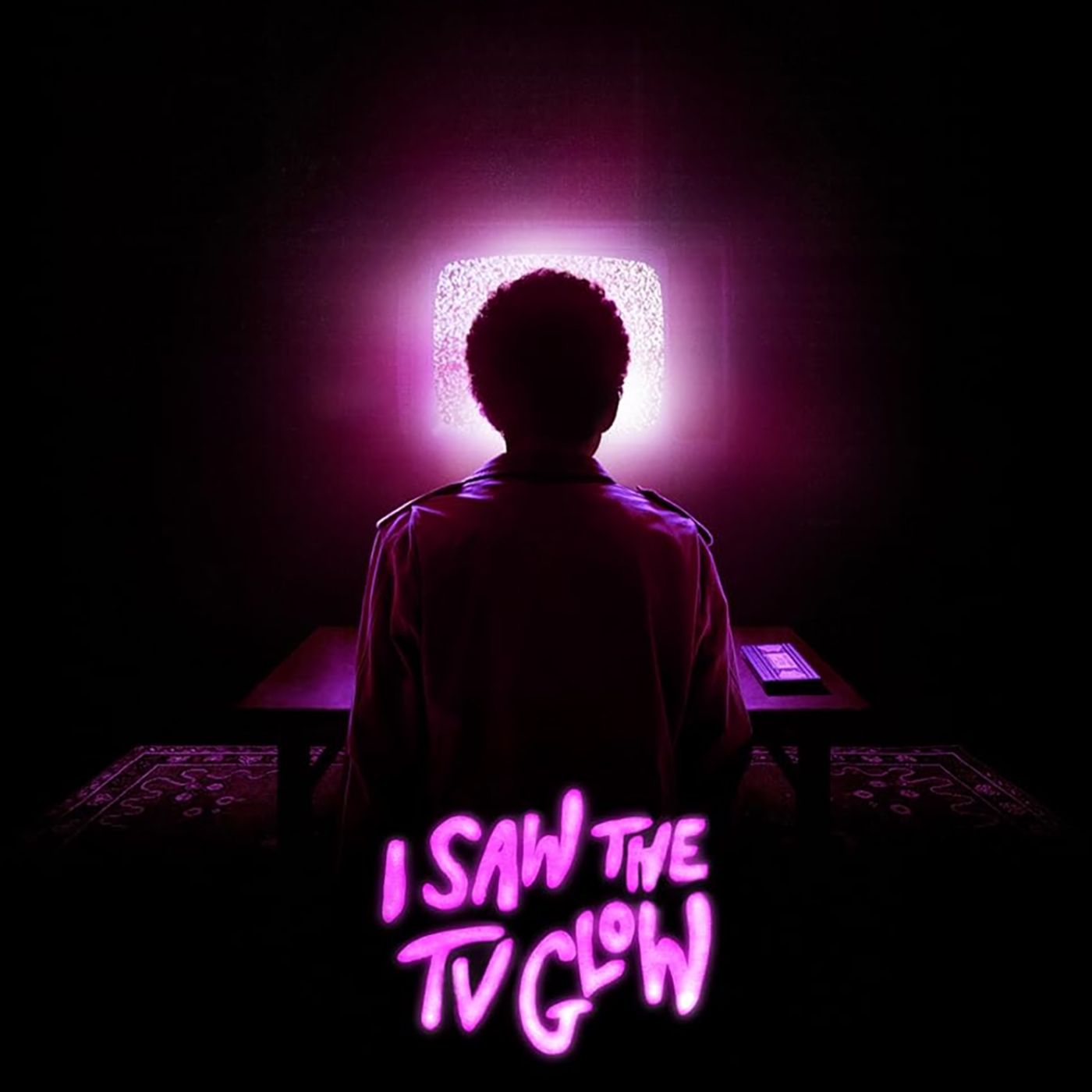
Jane Schoenbrun's I Saw the TV Glow asks what it costs to not know yourself, wrapping that terror in the hypnotic glow of '90s television and the specific dread of adolescence that never ends. Horror film, coming-of-age film, and something harder to name — it builds a portrait of a person burying themselves alive.
Lu Etienne and Maxi Breckwoldt join Mike to trace Owen's journey from the bleachers to the Fun Center and beyond, unpacking the film's psychic static, its suburban uncanny, and the question haunting every frame: what if you're already suffocating, and you just don't know it yet?
Transcript
Automatically generated, so expect the odd misheard name.
The Projection Booth podcast is sponsored by Scarecrow Video. Try out scarecrows rent by mail service. Choose from over one hundred and fifty thousand films. I'd get Blu rays, four k's and DVDs delivered directly to your door. Visit scarecrow dot com today.
Oh gez, folks, it's showtime. People say good money to see this movie. When they go out to a theater. They want cold sodas, hot popcorn, and no monsters. In the Projection Booth.
Everyone for ten podcasting isn't boring? Got it off? I know this might so crazy. I don't want to alarm you. Do you remember a.
TV show we to watch together, Who's Cold? The Pink of eight? Yeah? Do you watch? I can't.
Each episode they help each other fight a new monster from across the county, but it's way too scary for most kids. We're gonna defeat him this time. We're gonna need to harness the full potential of our shared powers. Sometimes the Pinko feels more real. In real life.
Manage It was a TV show? Are you sure that's all it was? I like girls? You know that right? Totally?
That's fine? What about you? Do you like girls? I think that I like TV shows. It's our destiny.
Can I have a. Something's wrong? He says, how I was supposed to be? Tell me you know it's true, Maddie, It's it's just the suburbs. It seems like you're always somewhere.
Else, like you. Mattie disappeared without a trace. All they found was for TV set burning in the backyard. I told myself I made the right choice. What if I really was someone else?
Carry far away on the other side of a television screening. And making. Welcome to the projection booth. I'm your host, Mike White. Join me once again is Lou and Tienne Hello.
Also joining us is Maxy Breckwalt Hehi, how are you? Request month continues with one from our very own Lou and tenn I Saw the TV Glow. Written and directed by Jay Sean Brun, The film stars just As Smith as Owen and Jack Haven as Maddie. The two bond over a TV show called The pink O Pike, which becomes the only real bright spot in Owen's life. We will be spoiling this film as we go along, so if you don't wan anything ruin, please turn off the podcast and come back after you've seen it.
We will still be here. Before we begin, we want to say a word about pronouns and identity. This film has and deserves a really passionate fan base. There's a lot of disagreement on how to refer to the main characters. Ultimately, the film keeps us the viewers stuck in a hellish suburbia where no one gets to transition.
The script calls our main characters, Owen and Maddie. We're going to follow the script, which also uses he him for Owen and she her for Maddie. Why is such an interesting question, lou When was the first time you saw the film and what did you think? I saw it late. I saw it so much later than everyone else because I thought it would be a classic horror film with jump scares instead of u atmospheric, surreal, beautiful nineties hellscape, which apparently I'm much more interested in.
So I did grow up in the nineties, and I thought that this film is gorgeous. This film is dealing with aesthetics that I never liked, like I was never a Buffy kid, I never watched nineties TV, but it still felt so familiar because that stuff was so much in the zeitgeist. I saw it as a film not just about trans reality, but even more powerfully, I saw it as a film about sinophilia, like I hadn't seen as good a depiction of the ruinous power and also like connectivity that sinophilia can provide, especially in your teenage years when you you really need power and you really need connection. Initially it was much more film about loving screen media than a film about being trans and maxic how about yourself?
In October twenty twenty three, I watched Jane shen Brun's first feature film, We're All Going to the World's Fair. It was on my watch list for a long time, and I actually watched it like my partner had gone to bed already. I watched on my teeny tiny laptop in the dark room. And I am a seasoned connoisseur of horror films, but that film was so scary I had to like pause it in between and prepare myself for what was happening. And afterwards I just fell in love with the work of Jane Shenbrun and I understood them to be an artist with whom I share a On the one hand, visual language and understanding of media.
And as I'm working in a distribution company here in Berlin, I work as a public relations agent basically, and so I got to watch press screenings at Berlin Nale in the Berlin International Film Festival, where the film actually played in twenty twenty fourths shortly after the premiere at sun Dance, and so actually was probably one of the first people in Germany who got to see the film without any prior knowledge, and that was amazing. Oh my god, stop ragging. I'm like, well, ly and Maxie is well early it's pretty much everything. But honestly, like my early opinion on the film was so incredibly colored by the experience I had with We're All Going to the World's Fair, which I guess is more closely related to my own experience as someone who lived through their teenage years in the late two thousands early twenty tens, because it is all about the Internet, and I saw the TV glow is all about yeah ninety TV Suburbia, which I also have no close relationship to.
But yeah, it was a crazy experience. I couldn't really fathom everything the film was depicting in that moment. But after leaving the cinema. It really hit me like this emotional density this film portrays, and that was an amazing experience and I was once again wold by Shearon Brune. I also came to this one late, and I will fully admit so I watched this on an airplane a few years ago, or I guess it must have been last year, since it's only from twenty twenty four.
I got the whole idea of the and I know we'll get into this a lot more, but the idea of the TV realm, the earthly hellscape blue that you were talking about, So I got that, but the whole transness of it completely over my head. And I saw somebody post about it and it was just like, really that was a trans metaphor. And now when I watch I'm just like, oh, yeah, of course, like the way that young Owen goes underneath the big parachute and it's all the transfly colors, I'm like, oh, oh yeah, duh, but yeah, completely right over my head. I just was looking at this as much more of a sci fi horror kind of thing, and like you were saying, Lou, also the idea of the the cinephilia or the connecting over a show and just the obsessiveness of things.
When Maddie comes back after all these years, like you remember that show we used to watch, It's like all about the show. And I also was late to Buffy. I think I started watching that in reruns. But I did really like the whole idea of picking up on like the same font as the Buffy credits and all that, and just this whole monster of the week kind of thing. So I was really into it that way.
But I will, like I said, admit that the transniss just completely missed me with the first viewing. I don't want to take us down a rabbit hole immediately, although I feel like I've done that before in the show. I'm so sorry. But that's a real thing with this film is that people, a lot of people, a lot of trans people in particular, have been really mad that no one in the film so the word trans. And there's a real history of directors making films with queer or trans characters for whatever reason, maybe they want to be edgy, or maybe they sincerely want to investigate like the struggles of trans life.
But then when they're on press junkets and all these things, they deny that it's a queer film or a transfilm because they say that the story is so universal. There's a lot of reasons for that, like directors need to make money and so they don't want their films sort of like siloed into queer and trans festival circuits, and because very few people get to see those films in that way, they don't make much money. So I think people have been accusing Shan Brune of doing that, of basically trying to make a film that's universal by abandoning its trans allegiances. But we actually hear Show and Brun talk about this film as like a reference point for their own transition, Like they are purging their own experience as someone trapped in suburbia who couldn't have transitioned and been safe during that period in the nineties.
Like they're really clear about this being a transfilm when they're talking. I think it's really important that we have texts that don't just speak to trans people and aren't just explicitly like manifestations of trans experience, but that also do universal work. Like I watched this film with my partner who's neurodivergent and in recovery from addiction, and it spoke to them so powerfully because their teenage yers just really felt like Maddie and Owens, it's important to make films that convey feelings because being explicit doesn't work. Like for decades we've made trans people talk explicitly about why it hurts to be trans in this world, and it's like those facts just don't matter, Like the world is so transphobic still that you have to reach people beyond explicit language, beyond direct experience sometimes, And I think that's why it's really important to make films that work on a level of feelings in addition to films that work on levels of factuality.
Too often we go back to the old Phil Donahue talk show type of thing where it's like, Okay, share your trauma with us, we want to know your trauma. And it's like, why do we have to be sharing sharing all of this stuff when Yeah, like you said, the world is still transphobic right now feels like more than ever with all the stuff that's going on in Kansas here in the United States, I'm glad you too aren't in the US, because things are real bad here and just getting worse all the time. And there's no big spotlight on it because it's still just like us versus them kind of thing, and it's just like, no, it's we, it is all of us. This affects all of us. It's just wild that we're still having all of this transphobia in twenty twenty six, and if anything, it's just going to.
Get worse for a while. Yeah, And I think the word opaque does a lot in this film. It's the pink Opake, which is apparently like a Cocta Twins reference, another very like nineties early millennial band. But there's a lot of talk within trans scholarship about the harms of visibility and like what it means to make trans people visible, and how only very few trans people ever really benefit from increased visibility. Instead, it really puts a spotlight on the trans folks who are already the most vulnerable, already facing compounding factors of marginalization because with all this transvisibility since like twenty fourteen, people are at a higher risk of getting clocked as trans and then facing even more violence because of it.
And so there's a lot of talk about how we need to resist visibility and embrace opacity instead, which just means to become unknowable in a way that is liberating, where we don't have to make ourselves spotlt and deviant by saying our pronouns. And the question is how to become respected and left alone without having to make ourselves so viserable and so vulnerable. And at the same time, trans media is also life saving for like a lot of kids like Owen who are stuck in the suburbs, and trans media can also show us new ways that we can all live and we can all understand each other. So, yeah, it's complicated, but I'm really glad the word opaque is in there, because if you're going to make a film that only exists before a transition happens, it wouldn't make sense for the word trans to be there.
Yeah, it's interesting because I don't tend to read any articles about the Owen being a person of color either or being biracial. I mean, if Fred Durst is his dad, which I am thinking, even though he says you're not my dad, but I think that's a whole different thing when we get to that part of it. Interesting casting of Fred Durst, I think it does a really good job, especially in limited appearances here, the appearance of him later in the film where it's the glowing TV on him and it's the blue light that's bouncing off of him and it's just him completely silent. I've given Owen a death stare. I think that's very effective.
It doesn't even look like it's a real person at times, and that also brings in this whole idea of the odd. I meant, this movie works from stem to stern, and the audio is wonderful on this. I love how before we even get to the movie itself, like while the opening production credits are playing, we get this kind of audience sound, and we're going to get that time and time again of just this audience laughing and reacting to things. And it really does put us in the mindset of we are watching a show and this whole idea of what is being seen, what is being watched, and how the world is this television show for Owen and Maddie. And it really feels like it is the sixth season of this show that ends at a cliffhanger at the end of the fifth season, which we've been there before, right, We've all had our favorite shows canceled, especially at a horrific cliffhanger moment.
I think of Carnival, where it's just like, oh cool, I can't wait to see the next thing. Oh, it's never going to happen. Luckily we live in a world where sometimes there can be continuations of seasons. But I enjoy this as this could be the sixth season of the pink O Peg. Definitely, and thank god that Jane Schandren made it as explicit as they did for me.
Wouldn't have understood unless we actually see Owen pick up and toward the middle of the film, right before Maddie returns, we see Owen pick up a book of episode guides and say like season sixth, episode one, return from the Midnight Realm. And it took me so many rewatchings of the film to be like, oh, this is the first episode of season six. It's interesting the way that showan Brun seems really interested in surveillance. On the one hand, as this oppressive force, young Owen is trapped within a snow globe being watched by someone who essentially is the man in the moon, who is always there even when you can't see him. And you talked about Owen as a biracial character as a black character.
There's so much to say about that, and there's so much that hasn't been said yet about that. But obviously, imprisonment, control, and surveillance, these are all facets of especially black life in America, coming from a history of centuries of enslavement. And at the same time, Showan Brune is interested in the ways that we can create ourselves using audiences and using one another as watchers especially, and we're all going to the World's Fair. We see Casey grow into someone else, sort of evolve into someone else because of the videos that she's creating for other people to see. And I think I saw the TV Glow does really interesting work in showing us the ways that screen media creates us.
It calls us into being, It recognizes something, It untaps something in us that maybe we're not ready to see yet, and that we can access that thing. We can access that new part of ourselves by watching and by discussing with other fans and by engaging with screen media. We're sort of co created in a loop. Right. It's like the screen projects onto us as much as we project onto it, and that is how identities form.
It's seldom this kind of like white Western European ideal of like individuals existing on their own and it's really more of a reality that all of our identities are co created and constantly evolving in three negotiations with each other and with media, and I think this film does an interesting job of focusing on that. It certainly does. I wanted to come back to the aspect of how the film utilizes the sounds of like audience members that are being played multiple times throughout the film at key moments, actually like I have when the film starts, and then also when Owen later on reveals the TV static coming from the chest in this quiet, effective body horror scene. I would say I do think that Sheen Brun is very aware in how they can take audience expectations and reveal these expectations to the audience, which is a thing that I do you imagine they are inspired by David Lynch's Twin Peaks, which also takes audience expectations through the death of Laura Palmont turns them outwards, so the audience is confronted with their own expectations, their media literacy.
The death of Laura Palmer kind of being the inversion of the white woman that is being killed on like all other mystery crime shows of the times, right, and then I saw the TV glow. I think that also happens. And I think that happens a lot in relation to the ways that trans narratives are actually being constructed in media before. In like as you've spoken to these very explicit trans narratives like I don't know, like the Danish Girl, which is it's very explicit. It follows a very set structure, very set narrative that always evolves around aspects of a sort of body essentialism.
And this movie kind of plays with that because we are as the audience, awaiting the moment that Owen will realize Maddie, right, but we are denied that. And I think that is powerful actually by because yeah, the character of Owen does not owe us the revelation. Of that either. We've gotten far too used to making films for CIS viewers to satiate entitlement to visuals, entitlement to knowledge about trans people and trans experiences, entitlement to ignorance as well, And there is something just like you're saying, MAXI to denying us that revelation as a trans person. I really hate that this film leaves us stuck in a pre transition hell.
I think we need to visualize what transition can be and what it can do in ways that don't feed into that cisphoiurism, and don't feed into that sis entitlement to knowledge. But I think the risk of creating a film that's just pre transition and just miserable is that it feeds into anti trans narratives that view transness as somehow self harm right, because anti trans bigots, they don't see it as revelation, they don't see transition as recreation, as evolution, right, And so I think we don't necessarily owe anyone that story, but we do owe transviewers that story. We do owe transviewers the truth that it's not all bad, and that there is joy and pain before and after and during transition. And I think we're This film really feeds into a kind of overly simplistic timeline where pre transition is miserable, post transition is question mark, we don't know, we never see it.
But that keeps people who can't transition or aren't ready to transition, yet it keeps that kind of narrative, really keeps them slash us in a in the sense that we're wasting our lives in a kind of lag time, and that's really exhausting, and so I wish there is something more than misery in this transnarrative. But I also love what you said about thwarting audience expectations, and I think what the way that I see this film doing that the best is through the kind of facial close ups we get that don't show any expression. And that's because transfilmmakers, like so many marginalized filmmakers, they get shuffled into this closet where they have to make films that invoke empathy, like trans narratives end up being really imploring of CIS understanding, and so trans people come out often they are conceived of in these films as martyrs, as suffering victims, and that means that filmmakers can only speak through the language of sensation and pity and empathy, rather than making structural critiques, rather than using like political language and political filmmaking, and it just it really puts it really narrows trans storytelling.
And so what I love about the close ups in this film particularly is that no one seems to be begging for empathy. Owen is begging for help. But that's different. There's very little traditional victimization in this film. Even though Owen is going through seven kinds of hell at all times, and we do feel for him, it's not martyrdom in the way we usually see trance people.
Murtyreed well, and Owen is. Very resistant to all of this, which is also you're talking about expectations. At the end of the movie. Of course he should embrace what's going on and suddenly blossom into something else, right, this whole idea of metamorphosis. But instead he is constantly pushing back, in which I imagine is probably a very real reaction to things.
The way that he runs to and I love the cameo in here by the woman that played Tara from Buffy the Vampire Slayer or Tara I should say, sorry, Willow's significant other. I love that when he runs over there and it's just like you have to tell my dad I've been lying, and just like out himself basically to be like prevent me from running away with Maddie. I need an excuse basically to be stuck here and I'm looking for whatever it is. I'm desperate right now, and he breaks down so well in that scene, and yeah, pushing against it all the time, like well, she said, like, come meet her at this place. I didn't meet her there, come over here.
I didn't go there. He does not have that moment of Okay, I'm gonna embrace who I am, maybe towards the end with the chest opening scene. And I always wonder why they sing happy Birthday twice? Is is this another berth for Owen? Is this that?
And I was unfamiliar with this term until recently. Is this that egg cracked moment? Has he finally realized who and what he is? Maybe? But again, like you said, we don't end with flowers and rainbows in a happy song.
It is still I mean, this is a horror movie. It ends horrifically. What I would say, it's partially a horror film. I think they do take a lot of elements from the horror genre. But I have never viewed it as like a hopeless film.
I mean, not all horror films are obviously hopeless stories. But yeah, Louie, you were talking about the close ups and how they through these machine Brune is denying victimization by yeah, showing a certain sense of power in these characters. I think the film really shines in like these performative aspects where really the narrative breaks down, where it's really not about the storytelling anyone. I think the film has a lot of dose. They have a lot of very beautiful just shots that evoke feeling in that way speak to the audience, and in those scenes the film really manages to evoke embodiment also for the characters, an embodiment that goes further than this embodiment in the sense of district gender binary, like in the moments when the characters can finally forget the role they're supposed to play in this suburban healthscape, and also the projected Desaiah, because yeah, they just are themselves in these scenes, like for instance, the scene when Maddy meets Owen in the double lunch bar and Maddy asks Owen like, don't you remember?
Wasn't anything strange about it? And then we get like this whole scene or like the whole sequence of Owen in the dress and everything, and it is staged as like a memory image. But yeah, there's just like such a rawness to it. It really represents like an embodied reality, I think, and that is powerful. I want to talk too.
Lou you mentioned the word time and just how important time is to this film. I mean, this has quite a few jumps in it between where we start off with Owen in seventh grade, and then it jumps to two years later, and then it jumps what eight years later, and then twenty years later. And at that scene Maxy, that you were just talking about at the double lunch, it's either then or when Maddy gives that talk in the planetarium, the inflatable planetarium, she talks about how time moved so quickly. Days became weeks became months, became years, and just how quickly everything went. And then even Owen says, towards the end, years were passing like days, and we could see him, we get to see the actor Justice with all the old man makeup and everything.
It's interesting just how time is passing us by throughout this entire film. And that's another thing that we can talk about media in the way that we're capturing things from our youth. And I love when he tries to rewatch the series on streaming service and he's just like, this is really dumb, Like this is not what I remember at all. So also going back to the whole idea of like false memories or reconstructed memories. I want to say, so when we're watching him watch the show again later on streaming, it's that the same episode, because we have like a very friendly, happy ice cream man monster of the week kind of thing versus the first time we see the ice cream Man, which is just this melting, globous thing with all this stuff coming out of its mouth and everything.
The one thing is what he remembers, and the other thing, like the globulous, awful ice cream man thing, is more what his real memory is versus when he sees it again, and it's that kind of oh well, sorry, you can't have ice cream in the winter, sell soup, and then the ice cream Man has a smile on his face and it becomes this big happy moment. It feels like that's the oh no, that's the memory that everybody else has, but you have the real. Version of this. You could see through the artifice. It's really beautiful the way that this film engages with grotesque y because the first time we see that Mister Sprinkley episode, when Owen is watching it as a child, it is so grotesque and so start but also so hauntingly beautiful.
I'm thinking specifically of the shot with the ice cream truck with the like fushia smoke coming out, And it makes so much sense, right, because if you are going to make a film where characters are not necessarily relatable in the way that they usually are, right, we have a very caustic Maddie, we have a very passive and closed down Owen. And when they're not doing the things that you expect trans teenagers to do on screen, which is essentially like prove that they're just like you and like try to get your emphathy so you don't take away their right to survive. showIn Brune resists the emotional pull that we expect, but they include all of these kind of horror and grotesque elements to give that physical pool.
Rather, we're activated, We're shocked by seeing that disgusting ice cream man. It's revolting to hear about someone pissing and shutting themselves in a car, right. It keeps us really engaged in a way that I think a lot of trans cinema doesn't. And also I think this is, like you're saying, this is a film really of recounted memory. Like we begin with adult Owen in front of a fire pit in the middle of the woods, and he's recounting memories from his past, and we later learned that these memories aren't real.
They were inserted by mister Melancholy to hide from Owen the fact that he's really Isabelle. But it's true that memories are dominated by physical sensation, by pain, by smell, rather than facts, and so it makes sense that what we remember is often like the most we've felt, the most grotesque, the most painful, the most exhilarating, And so I think things from the past often seem bigger and grosser than they are in reality. It's so funny how often and every time I come on the production booth I talk about grotesque and memory like this is a it's a call it to a taxidermia episode. But it makes sense, right, It's I think it's also a counter memory, because we're meant to remember the past is something nostalgic and something safer, when in reality it's often something much more dangerous than our present, if we're lucky.
The film portrays the degradation of memory in a way from these really yeah grotesque images one remembers from childhood like the melting creepy ice cream man than to like this, I don't know what is the like basically paper cut out meant like bad effects and back but dialogue. But it's interesting because Owen is watching this version on a streaming service and not on the VHS's that Maddy has given to him, which, by the nature of the as are a medium that degrades and like changes memory as well, and in that way, the film really as well becomes reflective of this engagement with media that has like just shaped Owen's experience and like I guess the experience of many people who grow up in the nineties who have their all of their past mediated to them through home video, for instance, And honestly, I think home video like it's a very interesting medium in this context as well, because it is always viewed as this authentic witness and there is let's call it, a trend on social media where queer people use the home videos that have been filmed of them by their parents and like, these videos then represent their own queerness already in their childhood age by like the way they acted or addressed or whatever, and people are saying, like they didn't know anything, but I think that's that's quite something.
Home video like VHS that is a haunted medium, to be honest, like just in the way that it has been mediated from Poltergeist to the Jay horror craze up until I saw the TV Glow. While streaming services are not, they're not haunted by memory because ghosts are obviously like ghosts can be understood as lost potential, as like things we could not realize in the past, and that keep on haunting us. And in a way that is the fact that Owen has not accompanied Maddie to the outside world, to the like outside of the Midnight ram And yeah, with this haunting missing, the show just becomes nothing, I guess because there's no personal connection anymore that is inscribed into the VHS tape. Yeah, there's no streaming shows that if you watch them, you'll be haunted and killed days later, So that's for sure.
And to your point about the using old media to kind of represent here's what I was. I didn't recognize it. But there's even a line that Owen has about something's wrong with me, and my folks know what it is, but I don't seem to. And just that keeping secrets from himself kind of thing, and you were talking about him in front of the fire, and that's a real match to him as the young Owen in front of the TV with the pink across his face. And then you see him as the middle Owen or maybe it's older Owen in front of the fire with the orange in front of his face.
And so that's our real tie to know that these two actors are the same character. But also there's a real tie when it comes to TV and fire, because the thing that Maddie leaves behind is her TV set on fire, and I really I love that shot of that TV burning up, and especially when the plastic starts to melt and starts going down. And you also get to see Owen when he has his real moment towards the end of the film where he drives his head inside of a television set and you get all of the sparks and everything. And I find this very interesting that his scream that he screams during that moment is that not actually his scream. It's I believe Isabelle is his counterpart in the pink O Pig.
It is Isabelle's scream from the episode where she gets buried alive, so that tying of those two characters together too really brilliant. There's an idea in trance studies called the shimmer, and it's Eliza Steinbach, who's a non binary film scholar, draws together trans bodies and bodies on screen through this idea that we're always delinking and relinking associations of time, of gender, of place, and so there's a kind of shimmer back and forth between timelines and back and forth between aciations, and that trans bodies are like screen bodies in the sense that they can be recut, reshaped, renarrativized. And we see the image of the shimmer just like you're saying in the flickering of the flames, in the sparkle that hovers above Owen's head when he's finally put on Isabelle's dress, and when he's close to another transperson, when he's sleeping next to Maddie, and when he's even when he's vomiting out the Luna juice, which is the thing that makes him fall asleep and live in this hellish cisgendered suburb.
Even when he vomits that out, there's a little sparkle that comes out with it as well, and it's nice to see that shimmer there, and obviously when he does cut himself open, there's this beautiful shimmer that's been there the whole time. I have one more thing to say about the VHS before we go. I hope we go to the timeline of the film a little more carefully. But the idea of the VH as something that like houses memory, but in this day and age, like who can access VHS is anymore like who still has a VCR. It reminded me of Owen, right like I have a note that just says Owen is VHS question mark.
But it's like Owen is someone who houses memory but also can't access his interior meaning because he's living in a world where his true self can't compute and his body is degrading so much quicker than it should. He's forty three at the end and he looks sixty something. And the way that he's degrading and the way that he can't access himself, there's a line to be drawn with the VHS, but also the way that it is media that gives him a world where he can make sense. In order to access that world, he has to touch a tape to do it, and it's interesting to think about the technology there. Going back to time really quickly.
A lot of trans filmmakers talk about trans aesthetics and trans modes of filmmaking and how often that involves like multiple timelines, like for example, when I started taking testosterone, I went through another adolescence in my late thirties. Trans folks are linking time and reiterating time and so time bending and having different actors play the same character and visualizing these shifts and these jumps and these loops. That's a really trans way to make a film. And you could argue that Shawan Bruttin is doing this here. But at the same time they're also really not I think they're really not being as sort of trans esthetically as they could because they're also, like I talked about, just showing pre transition time, but time is really compounded for Owen.
Owen is still living in the same house, he's still working almost the same job. He's really frozen and he's choking even though he's apparently reached these crucial milestones of sis life. Right he's got a family of his own, and he's become a real man, an adult in his language, and so it's great that the film is recognizing that these sort of like the right path that his mom wants him to be on, these milestones aren't indicative of health or progress. They're actually killing him and they're keeping him trapped. And what I said earlier about wondering about Joan Bryn's choices is I wonder why they always leave us, the viewer, with the characters who are stuck in We're all going to the World's Fair.
We lose our access to Casey in order to stay in the childhood bedroom of a McMansion with a grown man who is like completely invested in the role playing game. And I just wonder if it's useful filmmaking to leave viewers stuck like that when you could be doing so much more with a ten million dollar budget. That's my unpopular. Opinion, controversial take. I actually wanted to add something to the perception of time and how him run stage is time also in relation to Eliza Steinbock's shimmering as Eliza Steinbock writes in their book that is Shimmering Images, Transcenma, Embodiment and the Aesthetics of Change The Right that on classic transnarratives.
As we've already said, the films are always object oriented. They're always like focused on the body. They're always like basically narratives of a presumably unhappy man being transitioned in a presumably happy woman by a godlike sis male surgeon who can validate this identity, this like binary identity, and like the process is not the focus. In contrast to films that embrace the shimmering, which for Lysa Steinbock are films that are like radical were storytelling, which really embrace the the d linking and the relinking of identities and do that also in relation to the to the texture of the film image like these are like not only transfermed but always also media reflexive films which are which is interesting and I think shin and it's so incredibly clear in Isow the TV Glow because the films and the moments in which the characters are really realizing and speaking to their process oriented self becomings moments of shimmer basically like for Maddy who is Tara, it's the moment in the planetarium when it's like everything is dark and you just have the stars running over her body.
And for one who's Isabel. It's the moment of cutting open the chest and really just revealing the TV static, which is yet the inspiration behind the term shimmer itself. And then I would like to add that I think that I saw the TV clow is also like it on a structural level. They exist different ways of staging time that work against each other, which is very interesting because this outer time that is being forced on Owen. In a sense, it is these eight years later moments in which Owen becomes yeah, in which everything for Owen feels out.
Everything's going fast, I'm not able to keep up. I'm regressing into myself basically. And then there are like these individual experiences of time which are again the moments in which narrative breaks down and everything is staged as it is in slow cinema, very much like the camera is really like looking onto yeah. For instance, this ice cream truck and it is like, yeah, just a perception image. It's very interesting with the time jumps.
Those all come through on screen titles and they're all this handwritten font that we have, which is again very similar to We're all going to the World's Fare that also uses handwriting as the credits, and here you've got that, but you also have the handwriting, which seem like there are notes from Maddie to Owen where there's the scene of him walking through the hallway, and you get all of the on screen stuff. There's like a drawing of mister Melancholy. There's drawings of his minions, Marco and Polo, and then you have episode things, and then you have a note that says the pilot showed again and reruns and it's waiting for you in the dark room. So it's very interesting as far as who is writing those notes, and I'm guessing it's Maddie that's doing that.
And what I'm getting at is there's an idea of the control of the narrative, because the idea of the flashbacks with Owen and him directly addressing us as the audience, and he does that a lot through this film. There are moments where he turns to us and just will directly address us. Then towards the end when you get the return of Maddie at the double lunch, she's looking directly at us and she's explaining all of these things to us, and especially in that long monologue that she gives, she's a lot of times talking directly to us, whereas with that point of the film, it feels like Owen's looking like one inch off camera, where it's the I'm talking to Maddie, I'm talking to you the audience, but I'm not directly addressing you.
I'm almost wondering if he's lost the power at that point, and she's the one who's now taking control of the narrative that it's able to address us directly, to. Talk about like the contested control of the narrative, there's the brilliant black trans intersex queer. Film critic sl Void writes a fantastic essay about I Saw the TV Glow, the best one that's out there. I think, talking about how no one is doing enough to speak to the reasons why Owen cannot follow the same transition path that Maddie sets out. No one is doing enough to recognize that Owen is facing such harder odds of transitioning as a black person and as a trans feminine person in a world where the terms of transition and the structures of trans communities are too often overridden by white supremacy.
And so what we have and I Saw the TV Glow is a black character being punished, humiliated, tortured for not following the transition that a white person lays out for him, without asking him about his consent, without asking him about his ideas, without acknowledging the fact that he might want to stay in that town because his mom is dying. And this really reflects, in a way that is not critical enough, the way that trans people who are black and transfeminine are often abandoned, not just by their families, but by other trans people, white trans people for not quote unquote being brave enough, and that is a real shame and that needs to stop. Even within the commentary, Shawan Brune expresses what I think a lot of people feel during Owen's final scene, the near death, Jane Shawan Brun says, come on, dude, you're Isabelle.
What did Mattie say? Never apologize and the impatience with Owen, the sense that you should have just done what Maddie did. It really reignites this racist trope of black folks and black men in particular being cowardly, and it really does nothing to criticize the fact that Maddie's rude, prescriptive, bossy transition that is terrifying that involves death isn't right for Owen, and that Owen had his own way of transitioning. He was entering the screen, he didn't need a grave, but he was prevented from doing that by his dad, who is not only a white man, but who has like an explicitly white face. And so I wish the film did more to show Owen contesting Maddie's transition narrative, Maddie's authority.
I think the film really overemphasizes Maddie's authority, Maddie's understanding of what reality is. Just like you're saying, Mike, we do get contestation when Owen stares into the camera and takes that control back, and so does Owen's mom, who is the other black person with lines in this film. And getting a direct gaze is so powerful and it's so important because it's a way to sort of rebel against the dynamics of looking that are so common in films. We're so privileged as audiences. We just get to peer, we just get to stare, we just get to survey.
But when a character looks back at us, it throws us back, It forces us back into a critical position where we have to, like, oh, re examine the sort of the way that we're looking at these bodies on screen. It's really beautiful that we get this not just from Owen, but from Owen's mom. There is a moment when it seems like Frank Owen's dad is looking into the camera, but we then see through a reverse shut that he's really looking at Owen. But Owen's mom, who is this woman who is going through cancer treatment, who is tired. She's looking at Owen and she's looking so concerned and so loving and so tired.
And then she looks down and then she looks directly into the camera and she extends that kind of concern to the audience. And in that moment, I felt really called into being as a transperson, getting this kind of getting this kind of care from a parent who may not know that I'm trans, but is concerned nonetheless. And I think maternal care can be like extremely triggering and complicated for all trans people. But it was a really interesting choice and I'm glad it gave the mom a little more agency in the film. I mean, it really hurt to hear Show and Brune express so much impatience with Owen in the commentary of that moment, because a black person screaming like mommy while being unable to breathe and going through some kind of death, Like, how does that not remind you of George Floyd?
How does that not remind you of Elijah McLain, who was a kid who got illegally detained and then suffocated and killed a year before George Floyd. I mean, Showan Brune wrote this film in twenty twenty one, in twenty twenty two, which is the height of the BLM uprisings, and I just think, if you're gonna have a black character be unable to breathe and crying mommy, you gotta do more to address the racial politics of this film. You can't just leave this character within like a white savior narrative, because that's really what Maddie is trying to do. She's trying to save Owen by forcing him through her own prescriptive, violent journey. And I just wish this film had done so much more to address the racial politics of the images that it's invoking.
I think we need to demand that this is a white filmmaker purging their own trauma in their words, by casting themselves as a black person. And I'm not saying don't cast black people. I'm saying, if you're going to use these incredibly loaded images, you have to do more to acknowledge their weight and their worth. And we need to demand that of the filmmakers, especially the ones we respect, and I do respect showing Brune. So I've read quite a few articles about this as well, and there was one writer who pointed out the idea of Marco and Polo, those minions of mister Melancholy, And I think Marco and Polo are played by a man and a woman, or at least they present male and female, but then they are both in dresses, but then they both have beards, and this whole idea of being trans is a lot more than just being a man in a dress or a woman with a beard.
And we get them a few times, Marco and Polo near the beginning, and then we also get them towards the end when Meddie's telling the story. We see them with much more disgusting faces. But I want to say that we also see them with those two knuckleheads that work at the movie theater, and then also at the fun center with Owen. It feels like they've been put into this midnight realm to torment Owen, and they're just they just drive me nuts. Especially there's one moment I want to say, when he comes out of his house and they're just like standing there and it's like, what are you two doing?
And they're just making fun of him, making him uncomfortable. The whole thing with the blowjob and the manager's office and the way that the guy is just like, Oh, she's into you, dude, and then like, why aren't you making eye contact with me? I mean, there's also like the whole like, well, I wouldn't want to make eye contact with these people either, And it's just there are two of the most disgusting little minions that I can think of in a long time that I've seen in movies. In the world of the pink O Peg. I do think mark on Polo are presenting very non binary in the way that they are like their breast, they have like these half moon shaped hair and beard, and yes, like these faces that are reminiscent of the moon, like the surface of the moon.
And I think that's very interesting that they are working for mister Melancholy, who can be interpreted as representative of transphobia and the fear of coming out something like a system that basically keeps Isabelle slash Owen in the Midnight ram and they are the creatures, the people who are enforcing this in a sense through their presentation. I do think they are in representative of the fear of not passing as well, I would imagine, because they are not fitting and they do think that is probably a very big fear for a lot of trans people who want to embody a in a binary very of either transfermininity or trans masculinity. I found it very interesting how they were also dancing, to be honest, because I was reminded of a very specific moment in film history.
And I do know that Jane Chenbrown is a connoisseur of film history. I don't know if the d book by Michawashinsky. It's a Polish expressionist film from like the early from the mid thirties basically, and there's like a scene that is the Dance of the Dead that is danced by the dancer judet Berg, who's a Jewish woman. That scene where they are like represented for the first time and dancing like that in this very expressionistic wake reminded me of that if this specific dance of the Dead, I don't know if I don't believe that is like a direct reference. Probably not, who knows, but there's probably something to be said about that, about these grotesque characters that are representative of the horrific, also moving in a unnaturalistic ways, and which are still beautiful in the way they still have a pull, Like you want to look at marcon Polo, and they are they have a certain beauty to them.
Still they're wearing these like white gowns that are like long and like almost Grecian and traditional. It reminded me of like vestal virgins or like some kind of like classical beauty. And they're doing this dance that is like extremely symmetrical, but they have these grotesque faces and these gender mixed like you're saying attributes, And it reminded me of something this cinematographer Eric You said, which was that this film it's like eating so much cotton candy that you get sick. The colors are so saturated and neon that you feel dizzy, But then there are still these moments of classical beauty, and I think a lot of trans you're getting to this to Maxi. But like a lot of transitions are arped by the need to fit into these classical beauty standards, which are white beauty standards, right, and like classed beauty standards and European beauty standards, and so it takes so much resistance, not only just a transition in the first place, but to do it in a way that you're always negotiating the pressure to conform to some kind of standard.
And I think Marco and Polar like grotesque visualizations of that. But while you're talking about the Dance of the Dead, there's so much ghostliness in this film period, like it seems like the past keeps popping up unexpectedly and invading the present, haunting the present to show how hollow the present has become. And when Owen realizes that he no longer has this life saving portal to another world, when he rewatches the show as an adult who seems to be near death, it's a it's like a pre death for Owen. He's lost his meaning, he's lost his ability to self realize. And Owen always seems ghostly in the way that he's always a little bit interstitial, like he's never quite making contact the way he wants to or the way that's in a way that's very meaningful, and like his mom says, you always seem to be somewhere else.
And it makes sense all this ghostliness because Owen is being kept half alive in a grave, and it is a kind of spectral half existence. And that is often what it must feel like to be traumatized in a world where you don't make sense and that refuses to interact with you and understand you and recognize you. And that's why it's nice that it's a figure of a ghost that connects these two people. The pink opik is like a glowing symbol of a ghost on the back of the neck. And I love that it's on the back of the neck because it's a place you can't draw it on yourself, and you can't see if it's on you.
It's something someone else has to recognize. And I think that speaks to the way that we call each other into being, like I was saying earlier, like gender recognition, it's a gift that we are all giving to each other sys and trans all the time, and I think trans people get so comfortable that they stop remembering that it's a gift, but I really felt that the way that Maddie drew it on Owen, you could say it's prescriptive, and it does put Owen in danger. There's a real reason that it's more dangerous for someone being raised male to have a pink tattoo in that household with Fred Durst as your dad, then it would be for Maddie. Right. Mattie is putting Owen in danger by doing this.
On the other hand, it's a beautiful scene of real intimacy, and it's the only real intimacy we get in the film. I wanted to like zoom into Frank for a minute. Frank is Owen's dad, which I learned from reading the script. I don't think he has a name in the film. In the script, Frank is incapacitated, and when Owen comes in and sees him sitting on the couch, Owen offers to bring him upstairs, and Frank just ignores Owen and is fading away in the light of this TV screen with his deathly white face that looks like the man in the moon.
And the script makes this a little clearer. But the second time Owen comes home and expects to see his dad on the couch. The dad isn't there, but the rut on the couch is there, as if inviting Owen to take his dad's place. And in the script it also says that when Owen is laying on the couch downstairs trying to rewatch the pink opik and unable to access it, he's pale. He's having trouble breathing, just like his dad, And so in the script it literally says he's pale like a living ghost.
Why does a ghost gaunt weak near death? Honestly, And so this makes me wonder about Frank. Obviously he looks like the man in the moon with his white, pale face, but also was Frank a trans person who drank the Luna juice and was enable to transition and is dying in the same way we see Owen almost die. And that's interesting to me because I feel like a lot of the antagonism from parents is actually resentment that they're seeing their kids try to be free in ways that they weren't allowed to be themselves, whether they were actually trans or not. I think there's a lot of bad failure to parent trans kids comes from a place of resentment and well, I wasn't allowed to choose my name.
I wasn't allowed to have these kinds of freedoms, and it comes from resentment as well as jealousy, and so I think, yeah, it's just interesting to be like, what's Frank's backstory? Fred Durst, please come back and play a trans character for me? Thank you. I don't want to be one of these kind of people that sees David Lynch and everything. But I really saw a lot of Lynch and things in this film.
And I know, Max you mentioned Twin Peaks, and I really saw lot of that in this movie, especially when it comes to when Maddie comes back into the story and the eight years later. For me, she's not introduced in the grocery store. For me, she's introduced by the down power line. And it feels to me like, if you watch Twin Peaks and especially Firewalk with Me and the third season of Twin Peaks, electricity is so crucial to that storyline and just the idea of transmissions through wires. I mean, there's all the wires in the trailer park and Firewalk with Me, and it just really kind of speaks as far as like the way that people move from one realm to the other and having that down power line, and then having all of the stuff from Maddie, having the episode guide, like you were saying, Lou, the whole idea of the sixth season, and we get to see the writing about the sixth season.
It feels to me like that's her coming back into this world. And then when we go to the Double Lunch, which is a setting from the actual show, not in the real world, that so much to me reminds me of the roadhouse in Twin Peaks as well. And with Twin Peaks, I mean that was really for me growing up. I think I started watching that when it first came out. I think I was eighteen, and that was one of the first times where I was like, oh, there are characters in the Black Lodge who have their counterparts in our world, so like Mike and Bob and the Giant, Like the Giant has the old man at the hotel and these things, and just there's always these counterparts.
So the idea of the two planes of existence, it's such a natural thing for me now after watching so much Lynch, so having like, Okay, well there's Tara and Isabelle and then there's Maddie and Owen. I'm just like, okay, yeah, that makes total sense to me. So I was able to get with that pretty easily. And then also the whole idea of the end of the second season that talking about cliffhangers, right that end of the second season where Coop bashes his head against the window or against the mirror and you see that he's bob that whole How's Annie? How's Annie?
Or even in fire Walk with Me, when you get Annie showing up and talking to Laura and saying, write this in your diary. I'm trapped in the Black Lodge. Basically, it's and the real Coop is trapped in the Black Lodge. It's like, all right, these ideas of transmissions from these other worlds as well. So I love that when Maddy sees him at the grocery store, she's like, I know a place outside of town.
It's like, basically we're breaking out of that. I don't know if you all are familiar with the thirteenth Floor, which is a lot of people compare with the Matrix, and I know a lot of people compare this with the Matrix too. When it comes to the multiple levels of existence as well. Like at the end of the thirteenth floor, it's like you go past the computer simulation, or you can find where the computer simulation ends, and that one, I think has at least three levels, and you're not even sure at the end of the movie are we in the real world or is this yet another simulation. So this whole idea of these planes of a existence, I really enjoy that, but I especially just love that for me, this was speaking to not just Buffy the Vampire Slayer, a lot of Twin peaks as well.
And when it comes to Buffy, I kept thinking of Dawn Summers, and she was this character who shows up I think at the end of the fifth season and suddenly Buffy, who was an only child that has a sister, and it's this false memory that's been put into everybody's head. Oh, you grew up with this girl, Yes, this is your sister. And it was such a such a confusing thing at first, and you're just like, Okay, well, there has to be supernatural play at work. But here you are being fed this idea of no, she's always been here and just causes a lot of kind of panic where you're just like, really, am I misremembering this, and like, I think Buffy has a glimmer of that, but so many people are just like, yeah, yeah, she's always been here, Yeah, this is Dawn has always been your sister.
I'm actually not that fluent in Buffy the Vampire Slayer. I have only seen episodes of it, but I wanted to speak to the element of these glitches in reality that start popping up basically after this tender moment that Owen and Maddy are sharing, which you could say, like when we have Isabelle and Tara. These characters are representative of the protagonists of a lot of like nineties shows, right, and a lot of like characters in these nineties shows, I guess understood in popular cultures very much representative of like queerness, like Xena the Warrior Princess or yeah, in Buffy the Vampire Slayer, for instance, there's also like Tara and Willow And I do understand that there is a certain romantic interest happening between Owen and Maddy in this very tender scene.
As Maddie has said before to Owen, yeah I'm I'm a lesbian, only like girls, and she understands that Owen is a girl, obviously and maybe before Owen can accept that. And yes, there is like a sort of violence in the way that she is trying to force that out of Owen. But then like these glitches start appearing, and I don't think these glitches are from the start staged for the characters. Like the first time they appear is like when they lay down on the floor together and you have like this shimmer floating above them, which is basically an expression of their connectedness starting to open up, like these fake realities starting to open up the Midnight Ran And then you also have the down Power Lane, which you can interpret as just something that happens in the film world itself, like it could be a normal thing.
But then you have like the season six booklet, which like there is no season six booklet because season six does not exist, so it has the element of the fantastical to it. There's another scholar in trans cinema studies, Vip Gastraup, who wrote about the concept of exit scapes, and I understand exit scapes as performative moments that break open the narrative of these films and make possible like transidentification, and like they always represent like these utopian moments in which there is like no linguistically based pressure to reveal identity in like a strict gendered sense. And I do think like these moments where the reality breaks down and like lyches appear, those are part of these exit scapes.
I love. They're so wonderful. They write really well about like why transvisibility still matters. First strobe the films that they're talking about are films where the transperson is suffering and traumatized. Scenes of cant is the term that they use.
And then that suffering gets broken up by exit scapes, which are, like you said, like these moments of like fun and freedom and relief. I saw. The TV Glow does this in like a slightly a slightly more specific way where it doesn't just talk about scenes of constraint, but it goes back to that beautiful essay that you found for us, Mike about atmosphere. They are these trans philosophers named Amy Marvin and Isabel Bess who recognize a pervasive atmosphere that tells trans people that it's best not to live as trans and second best to be transfer as short a time as possible. And I would add that it's third best to make sure that you're living your trans life for as short as time as possible in a way that's as tolerable to whitesis people as possible.
They call this an atmosphere of anti trans conversion, and the idea of this kind of oppressive atmosphere comes from France Funnel and decolonial black theorizing, and that trans scholars are using this idea of atmospheres of oppression to talk about the ways that anti trans bigotry is not a series of isolated events or mistakes. It's something that feels like it's being held together by gravity and atmospheres. They establish the conditions under which life can develop and exist, and they prohibit life from developing differently. That's how all encompassing they are. They're everywhere and they're no place.
They're not tangible, right, and they sink into us. And the horror of this anti trans atmosphere really clouds our ability to think and act and live and connect differently. But in the film, the atmosphere is visualized through this fog that seems really abundant, like not just the fog streaming from the ice cream truck, but there's like fog rolling over Maddie's pink chalk drawings. There's fog in the torture scene where Frank rips Owen out of the TV and plunges him under a shower, and there's so much steam and also blue electric currents coming out of Owen's mouth, so the fog is there, it's counteracted by the electricity, by the static. But then we also get these kind of like little islands, these little breaks from that oppressive atmosphere, these places that are like little havens where you don't feel like you're under as much surveillance.
And one of those might be the parachute that little Owen sort of like wakes up under. And another one is the inflated planetarium where Tara is allowed to talk about their transition, and another is the bar the double Lunch right, and another there's a dark room right. It's where Owen is able to access this life saving show, and it's a space that's private where kind of like the rules of the world work a little bit differently, And the film visualizes those spaces so specifically through the colors red and pink and purple. The parachute is everyone keeps seeing the trans Pride flag in it but it's really the by Pride flag. It's not the trans flag, it's the flag.
I feel like I'm crazy because I'm the only person that I've found who sees this. But I looked it up and those colors are bisexuality. Who knew? But yeah, there's this fusia, this pink, this purple that recurs when Owen feels safe. And that's the dark red of the dark room, that red light in high school dark rooms.
And it's that same red light of the Double Lunch, this amazing goth bar that is an exit, escape, a little safe haven. We talk about twin peaks, we talk about the twinness of everything, having the Double Lunch here and the two musical acts, the two very distinct color schemes. You're talking about the red and you look at the band that's playing during the red sequence and they're very, very very fem and then you get to the second song the second act, much more mask and much more aggressive, which I really love the song that the band is doing, and much been bathed in more of that blue light. And I just really like this idea of the doubling of everything that we have in this film and the way that Schoenberg uses music, and from what I understand, I want to say all these songs were written for the film or were used they asked these artists to write songs for the film.
I could be wrong about that, but man, oh man, they use music in this movie so well. And I always watch movies with captions on, and I'm watching and listening or reading the lyrics along with the song, and especially the lyrics of the song at the end of the movie, which kind of has a little hopeful end, because again, this movie ends kind of a dire note, but I appreciate that there's a little bit more hope when it comes to if you listen to what the lyrics are as the end credits are playing. Yeah, it's called another season, right, It's like the hope that Owen will have another season. Yeah. I think it's really fascinating because the schoen room has described that kind of like that era of alt music as being like a weird middle ground between queer otherness and white male anger.
And so that's why they wanted to like harness that disenfranchised white boy energy. By casting Fred Durst of Limp Biscuit as the villain, and also by referencing the smashing pumpkins in the visual of the moon, which is also a reference to George Melias. But then to have women and queer and trans people and people of color to cover the songs of that era today in their own way is a way to reclaim it, reclaim some of those songs, but also write songs for the film. It seems like this was a very intentional soundtrack, Like you're saying, the one cover that I remember is someone covers broken social scenes and them for a seventeen year old girl. But in this very kind of like queer glitchy way.
I do feel that for sin Run, filmmaking is very much like creating a mixtape. It is all about weaving together different references that have emotional connection for the audience and obviously for the filmmaker as well, Otherwise they wouldn't be in there, and then just making it their own. And as I've read, that is also the process and how these songs came to be. Shin Run approached the artists with whom they wanted to work and like Alex g the composer and person who rang the music, I guess also had some context and they had work together already in We're Going to the World's Fair. They're very much a co author of their films, I would say, much like John Williams is a co author of Star Wars.
As they create this atmosphere, right, which is very unique, Like the film wouldn't be the same if they just actually used the songs from the nineties, right, that wouldn't work the same. But Yeah, Shin Brun has talk with these artists and gave them basically reference points as many reference points as they wanted to give them, Like I don't know for which songs, sadly, but for one it was just yeah, I wanted to hear you play basically electric static or something similar to that, and then the artists interpreted this and they overlaid it onto the film, which is such an interesting way of bringing together ideas. I think that very much comes from Yeah, Sean Brune's history in film production as well, in which they have like before they transitioned and accessed their own creativity as a filmmaker.
I mean, they've been a writer before, and it does take some creativity being a producer, especially an executive producer, but they really facilitated the works of other artists before and I think that shows they are very good at harnessing the creative power of their team. I would say like as well in the set design and everything and the collaboration with Eric you it's beautiful. I think I'm the oldest person on this called the whole idea of these bands that would show up on shows in the nineties and just tying that whole idea of like the WB or UPN or some of these other networks that were showing like nine O two one to zero or Charmed or. Any of these shows. They almost always had a hangout like the Double Lunch or I don't even remember the peach Pit or something like.
I was not a nine O two one oh melrose Place type of person, but I did watch a lot of Charmed, I watched some Buffy, and the bands that would show up would just be amazing. Like the Cramps showed up on one of these shows. I'm just like, Wow, they are not fitting into this show whatsoever. At the end of the credits, it would be like, oh for more letters to Klo blah blah blah blah blah, and like they would have like the call out for the band that played on the show that week, and so having these bands show up here and again very much reminds me of the third season of Twin Peaks with the Roadhouse and just having like ladies and gentlemen the Roadhouses crow to welcome the nine inch jam. But then I want to go back real quick to something you said, Maxie as far as the glitches and like the shimmer kind of thing.
I love that when Maddie is talking with Owen at the double Lunch and she's starting to bring back these memories, like trying to have him see things in a different light, and you have the whole memory of him wearing that pink dress. You get just this kind of obscure shot of Owen, I'm guessing in the bathroom because you can see towels hanging down and it's in Maddie's basement, and you see this pink dress between the crack of the door and the jam, and you get the actual blip and the it's not a cigarette burn because it takes up the entire screen, but that black dot that shows and blips and it's little fight club ask as far as like, oh, like, here's the actual magic of film, and we're like now re examining things through film and like replaying this moment and a moment that we've also seen, because as that plays out, you get to see him in this pink dress.
You get to see Maddie walking with him, and they are on the field of the Void High School, which I love that name, and you get that big V out there and it's a replay of the earlier seeing where you saw Isabelle carrying the axe. I love that Maddie's kind of his axe at this moment. It's like, you can use her to break down these doors. You can use her to break through these memories and actually get this because we get mister Melancholy when he's taking away Isabelle's power, He's just like, this is my poison. You won't remember anything, your real name, your superpowers, your heart, you want to even remember that you're dying, and just this whole thing of like taking away his name, and like we know how important names are when it comes to identity, name names and pronouns and these, and it's just like even when Maddie's telling her story, she's like, I moved to Kansas City, I changed my name, and it's like super super important.
I really love how it's kind of tying all this stuff together. As this movie's playing out. There's another nice moment where it feels like the grain of the film changes, and it's when, oh, well, maybe there are more. The one I remember is when Owen comes back to meet Maddie in the high school gymnasium in the inflatable planetarium and at some point showing Brun described this as Maddie's fire pit, because this is where Maddie gets to reflect and it's a safe, little protective haven. And so Maddie is talking about dysphoria and the conditions of feeling buried alive and like understanding that in order to emerge into the real world they have to like kind of like psychoanalysis.
They're experiencing this trauma and they have to reenact it. They have to make it legible, they have to make it articulable to get through it. So they have to literally bury themselves alive. And as soon as Maddie is taking control of the situation, they're in the grave. They're pissing and shitting, they're begging for help, they're crying, and then something changes and they seem to be floating away from themselves Right before that, Maddie gets up and stands at the controls of the planetarium and they flick the switch and the constellations that have been flickering around they become suddenly embodied, like they're suddenly instead of the Virgo constellation we see like a virgin, they're embodied as humans.
And so she's transitioning the stars, she's transitioning the environment. But it seems like she's shot on like camcorder footage. It doesn't feel like a film. It feels like home movies in that point, as if she is suddenly more real rather than filmic, and she's gained tangibility. Right when she's saying all those memories that it felt so real were suddenly washed away.
And then she talks about how she leaves her old body, and the camera pans out and it's like this very beautiful embodiment of the story she's telling. But then she comes this sort of superhero white savior out to save Owen, and she's shot from below and she showed it like does this like army crawl toward Owen, and it goes right back into genre filmmaking. It's an interesting switch. Yeah, the aesthetic of the VHS look versus the film look. I did notice a few times where there was a reverse shot and I can't remember where it was of Owen and it looked like he was on VHS as opposed to the beautiful film quality that they have for the rest of the movie.
I really did like there's I think it's on the A twenty four blu ray. There are sequences that we just see small bits of and you could see much more of them, like the Marco and Polo dance, or the what is it yap commercial that we see playing before the pink Opek comes on at Maddie's the first time, and then also the little animated short of the caterpillar speaking of something that transforms right. It's just I really enjoyed seeing all of that, and especially where it's like these two kids and they're just like, oh, look at this cute little caterpillar. I wonder what it would say if it could talk, And then you zoom in on the caterpillar and it's just like, I. Can't handle it.
I can't take it anymore. I'm done at the pain of existence. It overwhelms me. Very disturbing kind of stuff that this poor little Caterpillar is going through and you just get like a little tiny bit of that and the credits in the movie. But having more context for those things I think is fantastic, and also seeing them much prettier than the VHS transfer that we get to see of like Marco and Polo.
But I do really appreciate what Schoonburn's going for with this different aesthetic and the aesthetic switch. So like what you're saying with the cam quarter footage, Yeah, I think that's really smart that they do that. I wish so many of the deleted scenes had made it in there because they're so interesting, Like there are two that really feel like they're from a Jordan Peel film and would have done so much more to contextualize the racial dynamics in the film. There's a beautiful extension of the sequence in the voting at the school where the school is transformed and it's where Maddie and Owen can finally meet. But instead of following Owen, we leave Owen and we follow his mom for a little bit as she's walking past these photo boosts.
She's really outlined as like really gorgeous otherness while still being the subject. As she walks past these orange curtains, and then one curtain opens and a white woman kind of recoils from the mom as if in fear, and then has this like frightening, clenched grin, and I thought, okay, like we're going to get more nuanced about racial othering, but that was kind of And then also there's an amazing scene when Owen pulls up to the cinema he's now a young adult and mobbed by these like voracious white elderly people who are like that film's gonna start, and it's really frightening, and it's really Yeah, it really feels Jordan Peel esque, and I wish that had been left in as well. Two really fast things that I keep wanting to say, but I keep forgetting to say.
I thought that it was Marco and Polo outside Owen's house trying to stop Owen from meeting Maddie at the gym, but the final time I rewatched it with the commentary, apparently those two actors are actually the actors who played Pete and Pete in the nineties Nickelodeon show, and like one of their wives was like in labor, but they came to do this shoot anyway, and so that's a nice little easter egg. But also talking about the football field, in the script, there's a lot more equality and friendship among Maddie and Owen. Maddie and Owen seem like they have more of a just relationship rather than someone sort of bossily and caustically and rudely ordering around someone who's younger than them. And we get more of the bathroom dress scene and Maddie's sort of saying something and Owen's like, shut up, I'm almost done.
Like so it just seems like the power dynamics a little more equal. And as they're walking, they walk not just across the football field with Owen in the dress, but from Mattie's house through the town and into the football field, and at some point we really get in the script anyway, we really get the sense that Owen is exhilarated by this experience but also a little nervous, and Mattie holds his hand. So it's a much more caring vibe, I would say. And there's a lot more investment from Owen in the script than Owen in the film, I think, so it feels a little less one sided and forced in the script, but also it's interesting to shoot them seeing mister melancholy from behind because we don't see anything from Owen.
We don't see any expression. It's such an important moment because it's the moment when Owen finally realizes, like, oh I am in the show. There is mister Mellancoli, we are is a vellin terra. But it's just I feel like it's really glossed over in the film in an interesting way that I wonder about. But my favorite thing about the Football Sequences is the way that there's an almost comic kind of mixing up of signals where Owen, who is completely justifiably terrified by this person who disappeared and now wants to put him in a grave, is kind of like filmed with a shaky handheld because this is a terrifying moment, and then uses the language of the pink O pick to keep himself safe from Maddie by saying it's just like the Drainlords.
If you don't think about them, they're not real. And he's trying to protect himself from this completely insane and violent plan, right, but he's mistaking Maddie, who is actually Tara for a drainlord. Whatever I feel insane saying these things. But then he does, rather than wear a pink ball gown in a football field, he does the mask thing and football tackles Maddie in order to run away, and so he sort of like returns the football field to this place of like brutal masculinity, and it's just an I thought it was just a clever way to get someone out of that situation. You said something interesting about the cut scene with Owen's mother, which actually made me think about parallelisms when watching it between the fate that Owen is going through with sickness and Owen's mother is because Branda, which is the character's name.
Yeah, as Owen is becoming a teenager, is afflicted with what we assume to be cancer and is in the process of dying basically and dies later on. And I was wondering if that is because Branda, in the same way that Owen is being basically choked to death by the gender essentialism of anti racism and the capitalist structure of the whole suburbia, Branda as well is basically dying due to being in this environment, being in suburbia as basically like the only black woman there, or like she assumes the only black woman. Maybe, and that is something that I didn't think about beforehand, that there which is missing if you watch the film without this scene, because you don't get so much backstory, as you say, or so much contextualization on Branda and her own experience as a black woman in the suburbs.
Yeah, I was wondering about that, if there is like this parallelization between these two characters. I always wondered about the role which Brenda had in the film because fred Durst or Frank is basically an agent of mister Melancholy and is there to keep Owen trapped in a sense, But like, what is Brando's role is Brenda's role to in the whole scheme of like the midnight ram that is being designed by mister Melancholy to just die and make own feel miserable and indebted to his mother in order to follow this trajectory that's wondering. Yeah, that seems right to me. I think grief really stops you in your tracks and you feel like, when you're not connected to that person anymore, you need to do everything you can to stay connected, and maybe that means staying in that house.
Regarding the aesthetic in the film. It's very interesting how in the bonus material on the A twenty four blu ray you see like the extended scene with like Marco and Polo, and it's it's in a D it's filmed on like thirty five millimeter in that sense, and then it gets transferred to like these degraded VHS quality material. Actually, apparently schim Run and their team spent like around one week just copying different materials around just to get like the right look. And yeah, they're like, for instance, the moment when Isabelle screams in the show when she's being abducted by Marcon Polo, this scream also creates static on the already kind of degraded VHS material, And there really is power behind that that this like primal scream can transcend the narrative level and can go on the level of the materiality of the film.
And then like when Owen like vomits, obviously, like you have the scream of Isabelle again paired with basically steady coming out of his mouth, right. The distortion of the voices is a really interesting thing to do. I like that even when we see we get that time jump of eight years later. One of the first things we see Owen doing is now he's able to drive, and he drives himself through drive in the Hamburger place, and the voice on the speaker is so completely distorted. Friend, oh him, sorry, I just want Can I get two Gvich's murders and a small fries and a repairm No, that's it, no, end it, That's that's.
All I want them. And it's like, here's just a little symbol of what's going to come, a little hint of that, because yeah, Marco Polo have these distorted voices. Mister Melancholy has a very distorted voice, and that whole idea of like what gender is your voice really kind of comes in as well, because like Justice has such a deep voice. And then I noticed when Maddie comes back into the story, she seems because she already has that kind of disaffective type voice, and then she just seems to speak lower when she's back later in the film. And yeah, to go back to the relationship between Maddie and Owen, I really would have liked to have seen that, Lou.
I totally agree with you, because so much of what we see of Maddie is young Maddie and she is I don't want to sound like a jerk, but she's kind of like that bitchy teenager type of thing where it's just like everything she says has to be a little sarcastic, and you can tell when she says stuff to Owen she realizes that she's hurting him sometimes with the things that she's saying, just like, oh, that's the monster of the week. No, he's not in every episode like those kind of things, and Owen's kind of like comes back from that. He reacts to it, and then she'll like, it's okay kind of thing, and I do like her advice of don't apologize, it's okay, like you're learning about this stuff. And then what does he do.
At the end of the film. He's just apologizing to anyone and everyone at that fun Center for his quote unquote incident where he's just like, I'm so sorry what happened. I'm so sorry, and no one seems to care whatsoever. They just ignore him through all of those apologies, and the way that the incident takes place where he starts screaming everybody else in that whole room just seems completely like they're animatronic or something. They just stop all action.
Nobody seems to react whatsoever, to the point where you're just like, is he now in his own world and no one else can hear him because no one reacts to it whatsoever. A Silvoid has a beautiful line in her article about race and I saw the TV glow. She writes, even when black trans people are courageous enough to come out of the closet and be who we are, we still end up like this, gasping for air, pleading for help, apologizing left behind. And so it's maybe easy to view Maddie as the stronger character, but it's a lot easier for white trans masculine people to go through life without apologizing than it is for non white, non mask people. And the idea of trans women of color being left behind by white queers and white trans folks, it just has so much historical precedence, right.
It happened in the seventies when people like Marsha P. Johnson and Sylvia Rivera, who weren't white, who we now read as trans women, were doing all of this incredible radical organizing. They were building coalitions, they were pushing for abolitionist politics. There were raising homeless kids, they were writing to people in jail, and then the movement that they were creating was completely taken over by middle class, white, gay, queer and trans people who wanted that middle class respectability and wanted to shun these poor street queens essentially who were also doing sex work, because that didn't fit into the image of middle class respectability that white folks wanted. And so the people who started the movement for gay and queer in transliberation were completely abandoned.
And I don't like that a film I love this much kind of reiterates that same dynamic, but I do respect it for showing the spikiness that can exist within sinophilic communities, within trans communities, within queer communities, because it's really hard for people who are themselves hurting and marginalized to support each other well, but we need each other for survival. And you really see that push pull within Maddie, who can't quite stop talking to Owen even after she's verbally kind of beaten him down, and Owen it takes so much courage to even talk to Maddie, and you see that too, And it's really important that we show the kind of everyday bad feelings that trans folks live with, because then we can talk about their root causes, and then we can talk about the ways that we build community in spite of that hurt and in spite of that spikiness.
And I think we need to do that a lot more as humans and as people who make media. And I think another thing this film does really well is talk about is really show what the trans theorist Hill Melatino calls a trans art of survival, which is numb. And that's the flat affect that Owen is using and that Maddie is using, and that Casey uses and We're all going to the World's Fair. Malatino writes that when we are regularly persistently disoriented within the institutions and social relationships that are necessary for survival, but they fail to recognize us, they fail to interpret us, we don't make sense within them. We protect ourselves by cultivating a kind of numbness to kind of freeze out that antagonism and that misrecognition, to delay or refuse to feel what might be unbearably self shattering, is how Malatino writes it.
And we really see that self shattering at the end with Owen but of course some of us have a lot more disorientation and antagonism to contend with than others, and so some of us have a lot more reason to adopt flatness to withdraw socially, because that disorientation is not evenly distributed. God, there's a great quote from Daniel Khalia, star of Get Out and Judas in the Black Vicia and so many other things. He said, when you're a young black man, you're not allowed to be emotional. And one of the reasons I act is that people pay me to be emotional. So I think this film is it's a way to show us the reasons that Owen is so flat in his affect, but also the risks of that withdrawal.
The risk of numbness is that it keeps us from leaving situations that are slowly killing us. It keeps us in dangerous interactions, and it keeps us from being able to protect and protest adequately. Final thing that I wanted to say about this is that the flatness, the lack of kind of emotional vibrancy in the film, it keeps us viewers locked out of being able to interpret characters in the ways that we are used to and the ways that we want to. It keeps us from being able to read the situation and kind of trust the intentions of the characters. I felt that way, especially in World going to the World's Fair with Casey, and so that sense of disorientation that it provokes in us is a way of forcing the viewer into the perspective of a trans kid who feels disoriented and who feels like they are not able to interpret the world because the world is not interpreting them correctly.
And it's a way of kind of showing the viewer what it feels like when empathy is withdrawn through misrecognition and the inability to read situations, and it puts the viewer right in a place of anxious alienation, speaking. Of things that are said and not said, or shown and not shown. When we get I believe it might be the final time that Owen addresses us, and he talks about how his dad had a stroke and passed away or had multiple strokes. It sounds like in passed away and then he took over the house Owen did, and we see him throwing away that old television set and getting the new television set, and I love that it's an LG. Life's good, and it's this whole like, oh yeah, well I started my own family and all this, and then we don't see that.
We don't see his family, And I keep thinking to myself, how can you afford a family on a fun center salary. When your job is dealing with balls? Right? Like, he handles balls all the time. He handles balls all day.
That's the hell of not being able to transition. Sorry. I always thought that Owen meant with I got a family of my own, that it's not necessarily a family as in humans, but a family as in Maddie has referred to the pink O peg being a family. So maybe there's like a different kind of TV show or like the addiction to media becomes family, because I do think there is something to be said about Owen has this one moment when they're sitting on the benches on the football field where Madie says, hey, I like girls that what do you like and Owen says, oh, I don't know, and jokingly, I think Owen says, oh, I like TV shows, But on a more serious note, Owen says, as well, yeah, I feel like someone has dug out all of this inside of me, and I don't know what's there, and I'm too afraid to look like owner is obviously very depressed character, but I think there's Owen is scoping through a sense of hedonism that is related to media consumption.
But at the same time, this media that Owen is consuming is being corroded, and that is I think through the hand of the author. And it's not corroded in the positive sense where it has like the texture of the vhf's image and like the goes haunting it, which bring the memory and connection to Maddie, but it is corroded in the way that it becomes unrecognizable and it does not help with the deep sadness that is there with It does not fill up the void anymore. I do read that as the hand of the author, because that is ultimately what forces Owen to break down basically and accept after cutting open the chest and like seeing the TV glow basically from the place where the heartwood sit, which is in the freeze of mister Melancholy obviously, then Owen puts on the shirt again and Owen is, Yeah, Owen is wheezing and like a bit crying, I think, But at the same time, there is like a slight smile on Owen's face actually, and Owen looks into the mirror.
And usually Owen does not look at people like as the coworkers at the movie theater have said, why can't you look in our eyes? And Owen doesn't even look in the eyes of his mother or in Maddie's eyes. But at that moment, Owen looks at himself, which is quite powerful, I think, and like a moment of self recognition. And then Owen walks out, of course, yeah, excusing himself to saying sorry to everyone, but no one is reacting, And I thought, what if they actually don't perceive Owen anymore? What if Owen is free and Owen can actually just walk out of this midnight ran because Owen has realized the inherent power inside of him, the power that transness brings to in order to transgress the conditions that have helped him down that are defined through like gender, sensialism and racism and also capitalist because one lives a precarious life as a funhouse, as a fun center employee.
The one thing we didn't talk about is the chalk in front of the house and the chalk messages and the final one that we get because we talked about the ghosts and we see the ghosts I think first in the chalk messages, and at the very end of the film we get one more that says there is still time, and it feels like that is Maddie communicating with Owen as far as like, it's not too late. It's before the breakdown, which I'm trying to remember. There's a shot inside of the fun Center where I want to say, it's like speaking of economics, it's a kid who's like grabbing like tickets or money or something. And at the top, doesn't it say like you're running out of air? And it's just like whoa like such a being buried alive type of thing that's going on.
But having that as like the you know, the little message it shows above the tank, I'm just like, oh, that's kind of scary, Like you shouldn't say you're running out of air, like in front of these kids here and you've got the Marco and Polo video game, the Mister Melancholy video game, but yeah, you're talking about the breakdown and just that, Yeah, the old man type makeup. I mean, it's not like Dustin Hoffman in Little Big Man or something like that. It's just subtle stuff except for those lips and just the to see Owen with those super chapped lips that he's got, and it just, yeah, feels like his whole body is starting to break down. And the idea of him. I don't say having courage, but having the wherewithal to cut himself open and to see that static and to confront himself and to confront what actually is inside of himself.
He like you said, he says, like it feels like somebody scooped out my insides, and it's like, yeah, that's totally the case. I'm just looking, Yeah, you are dying. It doesn't say you're running out of air. It says you are dying. On that case with the little kid inside of it, where we start where it looks like they're laying in almost in a grave, and then kind of come out of that with the camera, really nice camera move on that.
But yeah, just his whole thing of finally being able to confront what's inside of himself. It feels like maybe there is still time, that maybe there is that note of hope. I mean, I don't have to have hope at the end of this movie. But I'd really like to you. Are dying is of course an iconic quote by mister Melancholy directed at Isabel, and it's just so crazy how that is a Mister Melancholy themed fun center.
It really is so reminiscent of like stormtroopers walking through Disneyland, which is also kind of weird because those are the evil guys, those are the space fascists, right. This fun center is so representative of the inherent dualism in kids media, because on the one hand, kids media is all about, yes, you can change the world, you can be who you want to be, and at the same time, these futures that are being presented to children never come true. That kids media is in a sense always a lie, right, which is something you kind of have to realize when you grow older, which that is a kind of depressive topic to bring up, but I think that is a reason why so many people who have grown up on like these nineties kids and teenage shows always go back to it, or why there is Harry Potter adults, because these people always try to get back to this magic and don't recognize how their desire for a better world is being commodified.
Through capitalism right, which is happening with the Mister Melancholy themed fun center as well. I'm really excited to read this book by Mark Fisher, Cold of My Life, where he talks about a slow cancelation of the future, and it's linked to the idea of cruel optimism, where we're all killing ourselves to work for this vision of a comfortable, free future that is increasingly out of reach because of structural oppression. And that's why Mark Fisher writes that over the last thirty years, the future has slowly been stolen from us. We're no longer able to imagine a future that's much different from our present, which is why we've become so haunted by what was and what might be. But we've lost the ability to imagine and trust in a brighter tomorrow essentially, and so we kind of we rest in the comfort of weak nostalgia and sort of fail to make changes that would bring about a better future.
At the same time, we have trans scholars saying that we artists have the capacity to create these portals into new futures where trans people might flourish, and Jose Esteban Munos writes about queerness as as futurity as the future. He writes it, queerness is a kind of glow that beckons you into a more worthwhile future. We can feel it as the warm illumination of a horizon imbued with potentiality. It's an ideal that we can use to imagine a future that allows us to see and feel beyond the quagmire of the present. And I think that's what the glow from Owen is doing.
And that's why it's so heartbreaking that he seals himself back up and apologizes. And it's so painful to access that kind of glow if you have to do so much painful self excavation to see what's in there. And I think think the in the script, the little booth that the little boys inside of is called a glass coffin in case anyone doesn't remember the scene. There's like, oh, maybe a nine year old boy and he's wearing a crown that says birthday boy on it, and the camera keeps hovering over the word boy and he's in this tiny little glass booth and then like there's big flashing sounds and lights and like dollar bills like flow up through the coffin and he has to catch them while everyone's yelling like catch the money at him.
And I think that it's like a beautiful visual representation of the kinds of incentivizing that are forced upon kids to like stay in whatever gender we assigned them, right, Like if you're if you stay a boy, you get to wear this crown and catch all this money, and we're all going to shout at you, but you're also going to be under constant surveillance to make sure you're still wearing that crown. Well, how much money you get. Meanwhile, we have forty two year old owen with a family to support, who's like opening boxes of balls all day. And yeah, I think that the film iterates that in the terms of money is interesting, And I really I love you both said about that, Like. Especially with the Munya's quote you just Davis, I started thinking about the new like the Newest New Wife of like trans cinema, which in many ways is very punk.
I think there are so many films that really try to reject the commodification under capitalism. I mean, shim Brun's first film was also like filmed on like a small budget and like independently I think, which like independently can mean a lot of things, obviously, But yeah, there are all these other great films like a Castration movie or The People's Joker by Vera Drew who just don't care about commodification, who are released online. Or The People's Joker basically takes the famous characters from the yeah see comic books and just remixes them. And obviously there was the problem with a copyright claims, of course, but Vera Drew also did not care about that, and I find that very interesting because that is a way of resistance and still operate while still operating in this whole continuation of the end of history and the culture from the late twentieth century having to be remixed and remixed and remixed all the time because we can't imagine anything after capitalism.
I think Mark Fisher also said that it's easier to imagine the end of the world than the end of capitalism. Right. A lot of the films that you're talking about is punk are also like really genre and really fantasy. And it reminds me of this excellent quote from Shuley Branson, who is an incredible theorist and like anarchist organizer and trans The quote is scrupulous realism helps reproduce an idealogy and a hierarchy of values. And in this way, the seemingly innocent realm of realism turns from descriptive to prescriptive.
And that's why we need fantasy. That's why fantasy is so so important, because I think realism doesn't do enough. I am just so excited about how consistently like color in the film tells the story of the film. There are all these kinds of like obviously, like Owen is bathed in pink light when he's watching I saw the TV glow. That's like the most engaged in life he gets to be.
And then we have this kind of like sickly yellow green, which is a mix of that pink and then the blue of the midnight realm. And in the sickly yellow green, it's like a real mixed vibe. Like you're at the voting booth and your mom's there, so you feel kind of safe, but you're still at school and it's really disorienting. Or you're in the car and the sickly yellow is coming from the street lights and you're with your mom, so you feel safe, but again you're talking about whether your dad will let you do something, so you're in danger, and then as the film goes on, the warmth gets leached out of it. And like you said, Mike, we can see that in the red lighting at the beginning of the bar sequence and the harsh blue white light at the end of the bar sequence, when the tone really changes from like lyrical and loving to like really harsh and suffering.
And then the second half of the film, pink and red are almost entirely absent, and we get earth tones, we get a lot of blues. But the time the film does this the most interestingly is during the second Sleepover, where Maddie and Owen are bathed in the pink light from the screen when they're watching the pink Opaq. And then we get this like violent cut to this yellow green light when Maddie and Owen are listening to this patriarchal, violent dad punishing Maddie's mom upstairs, and then we cut to Owen, who is closer to the fish tank in the basement than Maddie is, So the lighting on Owen is even bluer than it is on Maddie. And we know, because we've seen it so many times, we know that Owen's sleeping bag is pink, but the light from this fish tank makes it look blue, especially after Maddie turns off the overhead light.
The fish tank is a fascinating metaphor, right because Owen is trapped in a snow globe being watched, and he's having all of these formative conversations with Maddie, like right next to a fish tank that's blue lit, and it really like reiterates that snow globe surveillance vibe. But it also that light is so blue that it changes the pink of Owen's protective shell from pink to blue, and it just it. I love that because it expresses that color is kind of like gender, Like one person's demands can be so overpowering that they like snuffiers out a little bit. And I think that's just what childhood is like for a lot of chance kids. And I think, like as an exercise and like visual storytelling, this film is unbeatable.
It's so good. I find it very interesting how the image is structured, or how the images in these films are created, because oftentimes they are structured in a way that you have like basically a black background or a dark blue background in the case of the fun Center, and then you have like all these elements of Neon that are basically consisting of like neon lights poking from the dark and like manifesting, and to me that always read as the TV glow basically like giving structure to the reality that Owen is living, like the fish tank and basically just peeking out of the darkness and kind of being there as a visual metaphor for these intraptans, and you are changing the color of the sleeping bag, changing the color of the surroundings.
A different aspect that I wanted to put for a discussion is mister Melancholy as the monster because as people interested in horror film and who have like a critical view on horror films as well, the monster representing the abject is obviously something that can't always be hated or something that is in The monster is not always the villain right in movies, the monster is always something that is actually much more tender, and I was wondering about that with mister Melancholy, because mister Melancholy is obviously the most physically monstrous creature in the film in many ways with the character I'm thinking about references to David Lynch once again, like an eraserhead, you have like the man in the planet who is basically pulling the levers controlling the life of the main character.
Or I don't know if you've played the Legend of Zelda or Karina of Time where there's like the moon coming down to Earth and you have like only so much time to stop it from crashing into into Earth and destroying everything, and like basically when you don't manage you have to like replay it in like this timeframe. And yeah, I wonder what the positive reading would be of mister Melancholy, who becomes so representative of repression in many readings. Right, we were talking about voices, and mister Melancholy seems to have what I would recognize is a more female voice, even though it's got the distortion on it. And I don't know if mister Melancholy, I mean, what is what is mister Melancholy's masterplan?
What motivates that character? And I'm not sure what it is. It's like you're going back to Buffy. It's like there are evil people in the world, there are vampires, but then you have Spike, who is probably one of the most beloved characters I mean Angel, the one that she falls in love with, who is a vampire. So it's like, okay, there are good and bad.
I don't want to say both sides, but it's just like, okay, Like, what is the idea of this hellmouth? And is it just satan that. We need to worry about or what is the overall motivation what makes mister Melancholy tick? We don't really get that. As far as I.
See, I think he just wants to cut out the hearts of all trans people so they don't feel anything or have any memories. But in terms of like beyond that, we're living in that reality already. I don't know. It's interesting. I love the idea of a redemptive like fanfic for mister Melancholy.
The person behind the beautiful cgi of mister Melancholy's face is also the person who plays Maddie's snarky hot goss friend in the first Sleepover. And also yeah, Amanda, and also Marco or Polo, one of the two, and also the clown there's a clown who like dances. At some point that was just a FYI. I quite like, I just I think they're really great. I love Yeah, I love the androgyny and the kind of creepy, glitchy movements of mister Melancholy.
Thinking of monstrosity in the film. I think about it every time I watch it because of like one of the opening shots is like shaky handheld footage following Owen into the woods, but it's not clear immediately whether Owen is the victim or the monster. If you just look at that shot, he could be either. It could be like a Jollo like it. It's kind of a threatening, frightening shot.
It's the only time you're afraid of Owen, and it's right at the beginning. I don't know if that's a reference to the fact that Owen is someone that dominant white CYS society wants to axclude and other as if they're a monstrance or what. But it's just kind of a nice like flipping of horror conventions. And it reminds me of a question that I got asked recently and wish I could have answered well, but I wasn't super prepared. But it was a question about like why trans people love horror so much, and I think like the simple answer is, like, because these genres are about physical transformations in an intolerant world that like recoils and betrays you.
And so there's a lot of ways that horror can show political realities that like other genres just can't do. And so I think that's why it's important to ask about monstrosity like you did, MAXI. I mean, horror also works on the body uniquely, really or in a unique way. I mean, there are other genres that work with bodily reactions, like the common or the melodrama, like very Limba Willians body genres, but in horror it is so much different because it can affect the body in many different ways and in many different areas. While I guess melodrama and comedy are very much reserved for one specific effect that is either laughing or crying, right, and in horror you can have like this whole range of emotions working on the body.
I was thinking about that first shot of Bashaky Cam and Owen, like being viewed from behind going into the woods, and it is actually a very threatening shot because you also do not have any like I guess, you only have like the natural light or what is staged as the natural light on Owen. You're kind of disoriented and own blends into the environment, like wearing this like this kind of like beige, not beige, like brownish jacket, And I was wondering if maybe it is staged in this kind of threatening way because Owen is about to reveal a truth which society does not want Owen to reveal basically, so it's kind of like a disruption. Well, I tried to get Jane for this episode and was unable to. I didn't reach out to a whole lot of other folks, but I definitely reached out to them, and especially because they have a new movie coming out this year.
I believe it's dropping in August. Teenage Sex and Death at Camp Miasthma. Sounds like they got an even bigger budget because we've got some big names in there. Gillian Anderson is going to be in there, Patrick Fischler, Dylan Baker. So I'm really excited to see what they come up with because I really enjoyed this.
I enjoyed World's Fair, and I enjoyed what was the name of the other one? A self induced, very creepy pasta kind of stuff. It's very interesting for me as a fifty three going on fifty four year old person to see these and be like, oh yeah, just like growing up with the Internet has to make life a lot different than what I experienced for sure, and just this idea of connection and disconnection and starting off we're all going to the World's Fair with this whole I'm taking the World's Fair challenge, and it's like, all right, Like the idea of filming yourself and putting that out online, it's so different than me growing up in the suburbs, much closer to the experience of Maddie and Owen, though even that it was say, ten years prior, rather than what we experienced with this movie.
So yeah, very very different, And I'm really glad that Schoenberg did more of a period piece with I Saw the TV Glow, and I really liked the idea of seeing that progression of time. I'm very excited for that movie because it will also be the first, like I mean, I Saw the TV Glow is not only a in a sense, it's a transitionary narrative because we go from own as a child to own as an adult. But I feel like that movie will actually focus on adults mostly, and Shan Brun's work has been so focused on like teenagers, actually that I'm very interested how they are going to handle this more more grown up narrative maybe, or a narrative that focuses on like adults, not only adults, but even a person who might be a bit older, because it's about in parts about the movie stuff from like an eighties horror franchise that's coming back, so that is like a person that is like a bit older.
Actually it's about someone who's obsessed with media from the past, but they're an adult, right. Yeah, it's like an interesting confluence of like the themes we've come to expect, but also like it's got to be sexy and it's about grown ups and it's like pretty lesbian, and that's that's great. I'm up for it, even if it's too scary for me. I don't do all with Slashers, but I'm a loyal fan, so we'll see. Yeah.
They've also been associated with possibly doing an adaptation of Charles Burns's Black Hole, but I don't know. That's been kicking around for a long time, so if Jane can bring it to the big screen, I'm there to watch it. I know that Roger Avery had a draft out there forever ago, and. That obviously didn't happen, and I don't know if this version will happen with Jane, but more power to them. I really look forward to seeing what they do next.
They're also going to release their novel this year public access afterward. People are saying that they're also or like they've stated in the past, that they are working together with a twenty fourty and this media trilogy that consists of We're all going to the words fair and I saw the TV glow with a TV show possibly I'm not exactly sure that that is what I've read, but I'm very excited for that, but that is probably a bigger project that still is in the making. I want this kind of success for all trans filmmakers, not just James shawin prim Oh. Yeah, I want it for all independent filmmakers. All right, we're going to take a break and play a preview for next week's show right after these brief messages.
Looking for something superior to streaming, a place with more than five times the selection available on all of the streaming services combined, check out Scarecrow Videos Runt by mail service, select from an unparalleled collection of over one hundred and fifty thousand films. Again Blu rays, four k's and DVDs delivered directly to your door. Get in at it now at scarecrow dot com and rediscover the wonders of physical media. Good morning, New York, and a happy Friday to all you survivors out there. I will be broadcasting live because we approach the.
End of the world. They say we got three days left before Mother Nature turns on us, ending our stay on planet Earth once and for all. The fonder roll of film, one last project, my swan song? Are you a photographer? Tried to be?
What happened? Civility is hard to maintain times like these. I'm just gonna spend the next three days coming to terms with what my purpose was. What's that? You keep him numb until it's all?
Oh, I got anything you need that adoptor prescribes. I was wondering if you could possibly help me out with something. There might be a way out of this mess. Don't worry about my big brother. I take care of him.
He doesn't take care of me. Nixt gone. They broken and took him. They said that come back for the money they expect me to pay out. Who is Nick involved with?
If you give these guys trouble. You'll stop it. Nothing until I've seen you get go home? Yeah, what the hell is going on? They followed you, They are coming right now.
You've been a real torn in my side page. I have to find him. If you will help me, I'll do it myself. Just because civilization is going to end doesn't mean that I'm going to. Find him.
That's right. We'll be back next week when they look at Exposure thirty six. Until then, I want to thank my co host lew and Maxi. So, Maxie, what keeps you busy? I'm currently not only working as a press agent for a film distribution company here in Berlin, but also with the Festival of Animation Berlin.
It's my third year as a program organizer and that is basically what I'm keeping up with this year, trying to create a good program, not only films but also the framing program, trying to invite interesting professionals to give talks, to give workshops and masterclasses. But also through the festival, I will be visiting our partner festival in Prague, the Prag Film Festival, and participate as a judge in the Anirama Pitch, which is a student pitch for animated movies, and I'm very excited to do that again as last year. Other than that, I'm trying to concoct an essay on the new film by Recording, which just premiered as Berlin International Film Festival. It's called The Blood Countess and it was a revelation.
It's beautiful and blood cinema is one of my passions, so I want to I really want to do something on that. I've been wanting to cover one of their films forever. I really like Freak Orlando and would love to do an episode about that. Been trying to get an interview with them for the longest time. Still no luck there, but maybe one of these days.
I love that they're still making films. Yeah, it's and the Blood has been in the work since the nineties. I had the feeling when I watched it that many people in the audience who were not native German speakers did not find it as funny as I did, because the language is very important and there are a lot of like just wordplays in there that are not that do not necessarily make sense, but work on a rhythmic level, and I think that's just so masterfully done, which actually a lot of radical or radical in quotation marks German cinema does right now. There was a last year a great adoption of Richard the Third by Bohann Kurbani, which is called No Beasts So Fierce and it's set in like the migrant underground of Berlin, and it's like it's such a great genre of film, but also translates Richard the Third into like modern German language with slang and the slitch so cool.
I wish I could watch The Blood Counters in German. It starts as about her my queen love in my life. I'm so jealous, Maxie. I can't wait to read what you write about it. Well, maybe if I get a chance to see Blood Countess, I'll ask you to come back and you can explain the jokes to me.
And Lou, what are you up to these days? Twenty twenty six is like starting to slow down, which I'm so excited about. But I am going to be present a talk at a conference called Art That Moves and the conferences in London and Brighton, and my talk is called how is a film festival like a trans bar? So we'll see what that ands so being? And I'm also writing a couple of playlists for a film initiative at the University of s and Andrews.
I'm also thinking a lot about a queer Colombian essay film called aunelysysynthon with it, and I might get to write about that this year as well. We will see. And that's about it. Well, thank you again folks for being on the show. Thanks to everybody for listening.
Do you want to support physical media and get great movies in the mail, head over to scarecrow dot com and try Scarecrow Videos incredible rent by mail service, the largest publicly accessible collection in the world. You'll find films there entirely unavailableswhere get what you want, when you want it without the scrolling, and of course they have I saw the TV glofe. If you want to hear more of me shooting off my mouth, check out some of the other shows that I work on. They are all available at Waitingwaymedia dot com. Thanks especially to our Patreon community.
If you want to join the community, visit patreon dot com. Slash Projection Booth. Every donation we get helps the Projection Booth take over the world. Used to be one all the ratsing ones and used to be on the rotsing ones, used to on all the rotsing ones, and bleach my coach ricker you know coming back page come back used to on all the rots. And ones, used to be on the rots and ones.
And relache used to be you wants a eating match of feed. Now you're a cant got tricking barn. You acking your back bleaching it tea smile, flish talk and tresh count. Your breath, bleaching. It smad in fresh talk and charge into your broth pleachic smile and flash talk and tresh haunto your breath pleaching its smile and flash my talk, and charge under my window.
Back that card, jump the ball, slave by the floor, dream about me park that jump slave bottle flood. Dream about me like that car, jump safe bottle floor. Dream about me pack that junk that slave a bottle floor. Dream about me like that. Car, jump back ball slave by the floor, dream about a park like junk black sleeve bottle floor, dream about the park cars join During the Blacks John s Jo black back, John p s By flock John b flo bad John bottle back, John bottle floor During the bat black start back, John black Back, John Back backed giant jock called Giant.
I saw you all about some things and watch you. Now. York got catch me up. The uncom
More from The Projection Booth



Similar episodes across the network
Matched by shared keywords.
-
Kulture Meltdown: Primetime (2026) — "You see how this looks, right?"
1 shared keyword: a24
-
Backrooms (2026) & Scary Movie (2026) — "I like it in here. For the first time in a long time, I feel like I'm..."
1 shared keyword: a24
-
The Witch (2015) — "Wouldst thou like the taste of butter? A pretty dress? Wouldst thou like to live deliciously?"
1 shared keyword: a24