
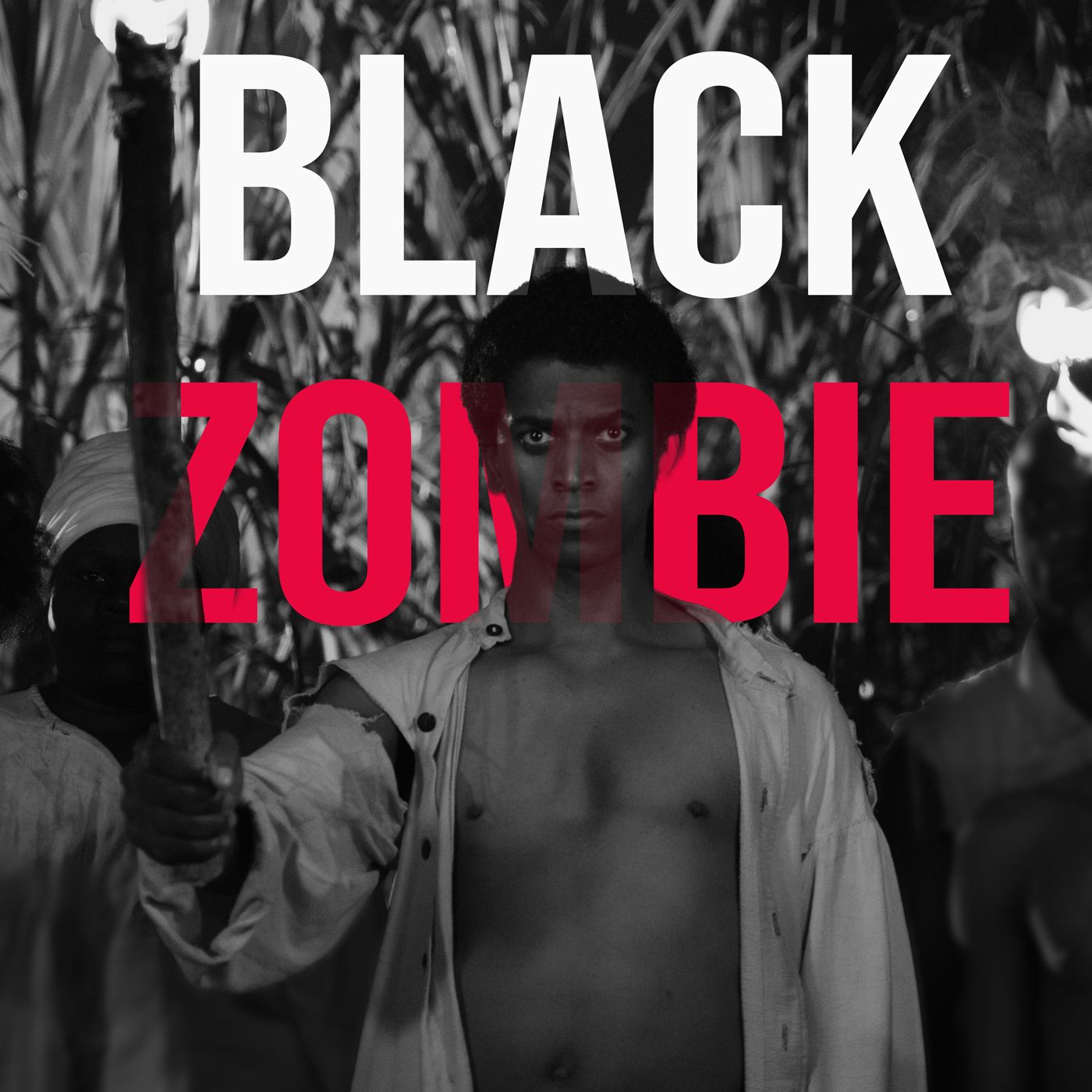
About this episode
The film had its premiere at SXSW 2026. Find out more at https://www.instagram.com/blackzombiemovie/
Transcript
Automatically generated, so expect the odd misheard name.
Oh gee, folks, it show die. People say good money to see this movie. When they go out to a theater, they want clod sodas, hot popcorn in No monsters in the projection booth. Everyone pretend podcasting isn't boring. Got it off?
Hey, folks, Welcome to a special episode of The Projection Move. I'm your host Mike White. On this episode, I am talking with Maya Annik Bedward all about her new documentary Black Zombie. The film recently had its premiere at the south By Southwest Film Festival, and we'll be going to some more festivals as it goes along. It is a great look at action vodoo instead of voodoo.
How it's been kind of twisted by Hollywood. We talked a little bit about this way back when on our sugar Hill episode. This one goes into some other zombie films including I Walked with a Zombie Live and Let Die, The Serpent and The Rainbow. Some really good stuff, some great interviews, very entertaining documentary. I would recommend that you check it out as soon as you possibly can.
Thanks so much for listening, and I hope you enjoyed this interview. I want to know a little bit more about you and how you got into filmmaking. Films have always been a passion for me ever since I can remember, so my desire to be a filmmaker was always a huge thing. And I'd say there was like the practical side in me and how I was raised, which was like, Okay, do something safe and get a job in that. And then there was like the more passionate side of me that was like, I would really love to be a filmmaker.
And I think I finally made the decision to be a filmmaker or to try for it, when I was living in Brazil and I was surrounded by so many incredible artists down there and they really inspired me, and I thought I should at least try. So that's how I got into filmmaking, and then I started working with production companies and going from there. What was kind of your fall mac job? What did your folks want. You to be?
My parents they were very supportive of my filmmaking, but I was raised in Ottawa, which is the capital of Canada, so it's a government town and they always thought of that as an option. And I love to travel, so they thought I should be a diplomat or a lawyer one or the other. You've been making films in various forms and TV series for years. Can you tell me what kind of attraction to different. Projects, projects that were the way we generally see certain stories that challenge kind of our perceptions, things that are gener usually a misconception.
So I'm really interested in stories that are kind of like challenging dominant narratives that are true. So that's definitely where Black Zombie fits into that. A lot of my stories are also inspired by my personal background. I'm Afro Caribbeans, so I'm really interested in stories around the Afrocribbean diaspora, our history, our culture, and our traditions. Black Zombie definitely came from this interest, this passion I have for learning more about our history, my history, traditions and culture.
You know, a lot of people say the history of being black and living in the America is like the history that predates colonialism is lost, Like our connection to West Africa has lost, a lot of these traditions are lost, a lot of this culture is lost. And as I got older, I realized this isn't true, Like there are a lot of elements of these traditions and cultures exist in our music and our food, and most powerfully in our spiritual traditions. And I became really interested in learning more about Vodu Candnble Santa Ria. So when I found out the zombie actually had its roots in Haitian vod I was blown away to learn that. I had no idea that's where it came from, and that's was its origin.
And the minute I learned that, I knew I had to make a film about it. And I've been working. On it ever since. What year was that, Oh, my. Gosh, two thousand and eleven, maybe twenty twelve.
Yeah, I learned that, and then I've been pretty much working intentionally on this film for over ten years. How did you start to gather all your research and everything? I mean, this is a huge topic. Yeah, it's a very huge topic. A lot of people are like my trying to fit too much into a ninety minute film, and I thought, okay, well let's try Anyway, I started in Haiti.
I always want to center the voice of Haitian vodo practitioners, so that was really important to me, and I started a lot of my research there and working with members of that community and also practitioners across the diaspora and speaking with them and learning more about the traditions of vod As it began to get thundeing, I started reaching out more to like the people connected to the appropriation part of the story, how the zombie was taken from Haiti and brought to Hollywood, and who were the voices who could speak to that story and interviewing those people, and I always knew I wanted to focus on White Zombie, which was the first zombie that brought the zombie to Hollywood, the first movie I should say that brought the zombie to Hollywood, and I did The Living Dad, which is of course that like Pinnacle film that created the fleshyting zombie, and then Serpent and the Rainbow was all a very important film for me because I think it's the reason why some people still might know that the Zobbie is connected to Haiti but not really understand why.
They might know that it involves like a pufferfish and some white powder, but they can't really explain more than that. And I think that's really because of the film Serpent and the Rainbow that was made by Wes cravean Wes Craven and was based off of the book of the same name, so that those are important things for me to tell on the film. I'm so curious about your actual subjects, especially the folks that were in Haiti. Was there any hesitation to talk with you about this stuff or did your background help you out with that? For sure, I had to build trust.
I'm not from where we were filming, mostly was in Jackmel. I'm not from jack Mel, I'm not Haitian, And most importantly, I'm not a Fo dou practitioner. I don't practice FO do. I have a lot of respect for the traditions, so I really had to explain my attention why was I making this film, especially since they're such a long tradition of exploiting this culture and misrepresenting it and creating these racist tropes. So talk really about what was my intention?
Why was I making the film? And I created an advisory committee to make sure that I was telling the history of Haiti and portraying Voto in a positive and respectful way. And I also made sure that all of my contributors could watch the film and if they had any issues with the way Voting was portrayed or Haiti was portrayed, they could let me know and give me feedback on the film. It was definitely a process to build that trust and very important to me that I was making sure I was showing things respectfully and I wanted to, you know, I really wanted to show Haiti differently than what we see in the news, like often we see it as this like dangerous, poor, corrupt country, and it's just it's such a beautiful, rich, incredible culture and people, and it's really unfortunate what's happening right now after the assassination of their president.
Things have just become so dire and a lot of the people who a lot of the crew that I worked with, a lot of the contributors I worked with, if they could leave, have left. And these are people who love their country and didn't want to leave under any circumstance. So it's really really tough to see what's happening to this incredible country. And my goal was actually to like go and shoot it like in a very high production caliber, like bring a lot of high production to it. But unfortunately, with what happened, it just became too dangerous to shoot there again.
Bringing a camera out to these kind of like cultural festivals that weren't happening in the same scope anyway, because things had just become so dangerous, we weren't able to do that. So it was really that was really difficult and sad to not be able to do. But I was fortunate that I could actually partner with an incredible team the Dominican Republic who are Afro Dominican and really understand and we're able to care for, like our Haitian crew and contributors who we brought from Haiti to the Dominican Republic to finish the project. So actually there are quite a few scenes that are shot with our contributors and our Haitian crew in the Dominican Republic, and we also worked with there's a huge Asian population in the Dominican Republic, so some of the practitioners are actually based in the Dominican Republic that we see there.
So it's a mixture of that footage and what we originally shot in Haiti and we used to finish the film. Things haven't been easy in Haiti. I remember what the earthquake of twenty ten, then we've had the assassination and then also in the middle there you've got COVID. I mean, it must have been very difficult just with all the logistics of everything. Haiti doesn't have the resources to move through something like COVID and the earthquake, Like a lot of the damage that happened is a result of like poor infrastructure and all of that is a result of like this like extraction and exploitation that's happened to this country.
Like Haiti is poor because it's been punished for the Haitian Revolution and the reparations it has to pay, and that's what we're seeing to this day. And so we've faced those conditions head on with the making of this film, like we're very much feeling that history as we're making a film. Is self by Southwest your premiere, Yes, it's our world premiere. Do you have any other dates in mind or where can people go to keep up with that? Yeah, so you can go to our Instagram page.
It's called Black Zombie Movie on Instagram and we'll be posting updates. The European premiere is happening at Tesnaniki, which is an amazing international documentary festival in Greece, and then we just just announce today the Canadian premiere will be at Hot Dogs. My I Loved Black zombie. I look forward to seeing what you do next. Thank you so much again for your time.
Thank you, it's really nice chanting with you. Mike bo who hoot, hoot hoo hook. The knife came down, the sky turned bly, the drumle. Drum bit the heads by the bird to the wide drunk st plumber Wood put on. Cli high over the girl lie stro a sky, put on the shirt, got up a grin hum.
They had a cold black cow and the layers of her eyes it's kind of white skin. I took up the darkening skies. See the same I om WAUSI had a tar. Man had a solid as fell the is and nothing out and then they raised his hands. The nice good still a lot around at the crowd, un tail a little double, can't.
You there on tar? There allbround down the light of the you do be stuff and it sounds like this more. Now he's calling listen. So it's the no woods, but all what is man the rosy All the time I'm saying it's hard jump drinking chuck. Something around you came to us.
The mind. Fell and then out the next stop, staying on one well town, it's. Likely do you difficult din to You anything, and the subding not to me
More from The Projection Booth



Similar episodes across the network
Matched by shared keywords.
-
Jordan Peele Trilogy (Get Out, Us, Nope)
2 shared keywords: get out, jordan peele
-
Us
2 shared keywords: get out, jordan peele
-
Jackass: Best and Last (2026) — "Welcome to the first day of our final film."
1 shared keyword: documentary