
About this episode
Luisa (Margaret Sullavan) has grown up knowing nothing of the world outside the orphanage walls. When she's finally released into Budapest society, she proves as well-meaning as she is naïve — and as prone to catastrophe as she is to kindness. A chance encounter with the wealthy and lecherous Konrad (Frank Morgan) sets off a chain of complications, chief among them the lie that she's already married. The problem is that she isn't, but she soon will be — to a bookish, bearded lawyer named Dr. Sporum (Herbert Marshall) who has no idea any of this is happening.
The film showcases the range of Margaret Sullavan's screen presence — radiant and funny and heartbreaking in equal measure — alongside Frank Morgan's gloriously stammering comic turn.
The episode also looks at the 1947 remake I'll Be Yours, starring Deanna Durbin, and the 1951 Broadway musical adaptation Make a Wish, with music by Hugh Martin and a book co-written by Sturges and Abe Burrows.
Mike talks with co-hosts Rahne Alexander and Federico Bertolini about Molnár, Wyler, Sturges, and the many lives of a very good fairy.
Transcript
Automatically generated, so expect the odd misheard name.
The Projection Booth podcast is sponsored by Scarecrow Video. Try out scarecrows rank by mail service choice from over one hundred and fifty thousand films and give Blu rays, four k's and DVDs delivered directly to your door. Visit scarecrow dot com today. Oh g is, folks, it's showtime. People say, good money to see this movie.
When they go out to a theater, they want cold sodas, hot popcorn, and no monsters in the projection booth. Everyone pretend podcasting isn't boring. God at as. She wouldn't fleck with the customers. Oh she wouldn't know what that means.
I hardly know myself. I have to have supper with a gentleman. It isn't important, But I told him I wouldn't I guess i'd better. I have to go to his hotel. This hotel, you're going to his rooms?
Yes, shouldn't I? What do you want to cry for when you can do somebody a good deed? He is a man who has supported you and and and that's right. Certainly his ride like the good fella with one wave of the one How can. You look me in the face again?
Madam, and for you you maker there you my husband, your wife was in the taxicab with the waiter. My wife, Well, how can you laugh at such a moment because I haven't any. Wife and he doesn't know Deadla just think he doesn't know, doesn't know what that I'm watching over him while he's sleeps that I'm taking care of him. I'm his good fairy. Welcome to the rejection Booth.
I'm your host, Mike White Chotivie. Once again is mus Rain Alexander. Hey, everybody glad to be here. Also back in the booth is mister Federico Bertolini. Thank you very much for having me again.
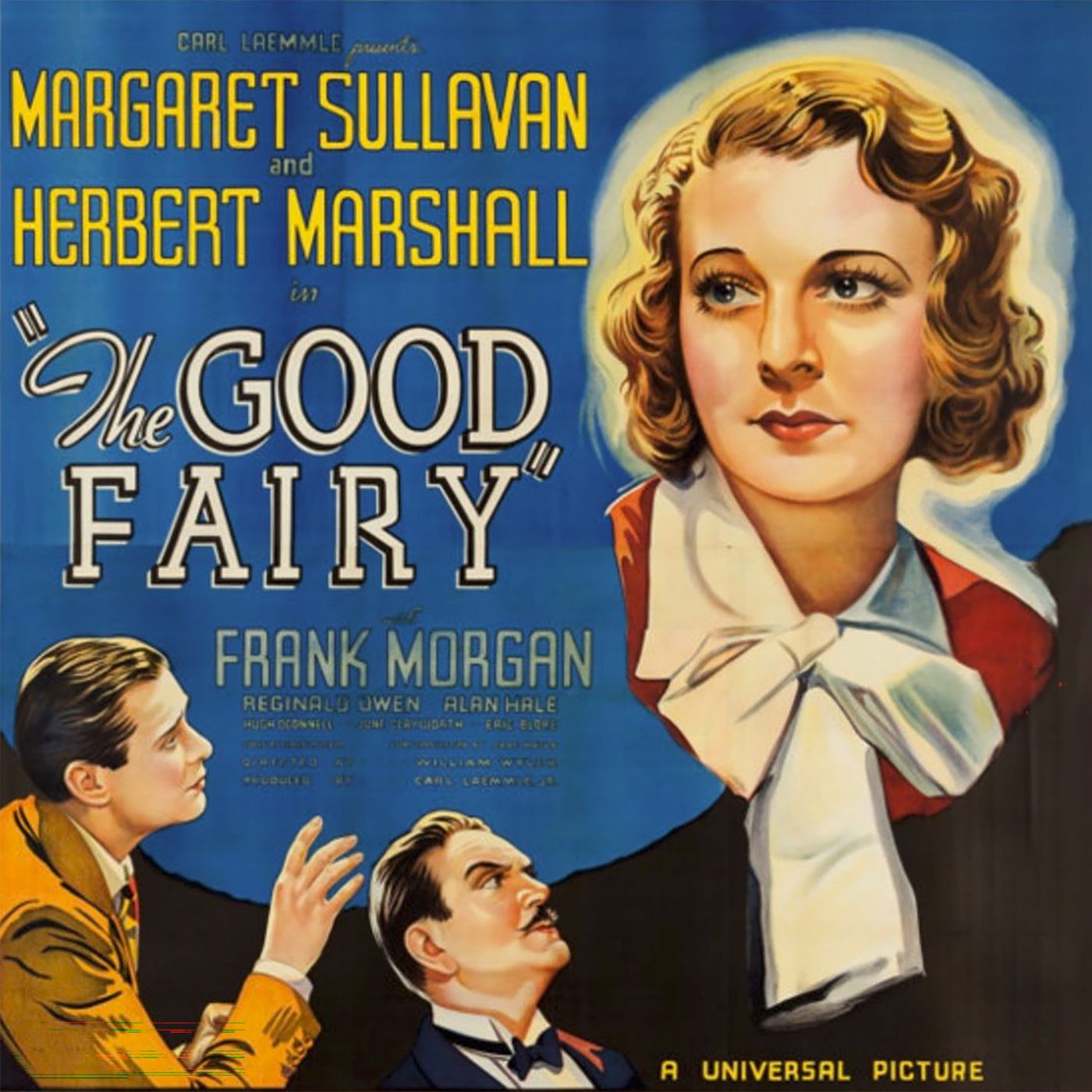
We pick off a month discussing comedic films What they look at William Wiler's nineteen thirty five The Good Fairy, Adapted by Preston Sturges and based on for Nick Molnar's play. The film stars Margaret Sullivan as Louisa I should say Louisa Ginglebusher, a nafe from an orphanage who makes the acquaintance of the lettrous Conrad played by Frank Morgan to protect her innocence and help out a fellow human being. As a good Fairy, she lies and says she's married, and that's where Herbert Marshall as doctor sporm enters the picture. We will be spoiling all the twists and turns of this film, the play, the musical, remake, all that stuff as we go along. So if you don't want anything ruined, please turn off this podcast and watch the film.
We will still be here. So Rain, was this the first time watch for you? It was. I did a deep dive into Sturgis's career years ago, reading biographies and watching everything, and for some reason, this one just didn't happen. And I don't know why.
I think maybe it was like, oh, it's a Wiler film, not a Sturgis film. I wasn't maybe paying attention as much to the writing, looking more at his director efforts at that point. So yeah, it was wild. And I remember, you know, reading there's a book Sturgis by Sturgis, this one Prustin Surgis by Preston Sturgis, which is excerpts from his diaries, and I went back to look and see, I didn't really remember. He talks about him very briefly in this and these are things that are culled from his notes and so it's not really like I slipped out and do a memoir a book.
But yeah, he doesn't have a lot to say in this book about it. It's clearly it seems like a job for hire, which it was. There's a moment in here where he says, it was hard to you now that I'm a director, it's hard to do this, And so it really made me look at this film a little bit more from that that single watching it this time. But yeah, I've learned a lot and I'm I'm I'm a fan of this. It's it's such a strange movie.
And Federico, I know the story, but why don't you tell folks the first time that you saw this one? Maybe you don't know the beginning because I was on IMDb in two thousand and nine when I was like in high school, and I saw the poster, just the poster the Good Fairy and it was gold, blue, red and just a woman in a hussar's uniform, gorgeous. Knew nothing about it, and I said, I have to see it. And it was one of the first films I ever knew that I absolutely had to see. But it took more than a decade to watch it, and it was at the Nitrate Picture Show twenty twenty four.
The curtain went up in a full house, five hundred people, and it was electric. It was stupefying. It was all of the things that Frank Morgan says that Luisa's like it welded us together. It was incredible how much the peels of laughter, just waves upon waves of laughter that would actually cover the jokes, which is something that further on in the development of comedy and television and in film, you would leave space for the jokes to have the laughter. And I remember just being awestruck.
I knew nothing about Margaret Sullivan at that point. I think I had seen her in the shop around the corner, but I didn't exactly like. Know her, know her, and she was just a star. But Herbert Marshall, Herver Marshall, is my beloved from Trouble in Paradise just the year before, and when he shows up, Oh, it's the Herbert Marshall. I actually did a kind of a survey of people that were there, not just you, Mike, and everybody loved it, and everybody hold onto the memory of what it felt like to watch it on the original night.
Rate an incredible print. Just to see those close ups. It's gorgeous, like you saw it at the night rate the first time. Also, like you Rain, I had done a little bit of a deeper dive on Preston Sturges. I think we did that for a show either last year or the year before, talking about Miracle at Morgan Creek.
Watch a lot of his stuff, and I did watch at least one that he had written but not directed, and that had a lot of similarity to his play A Cup of Coffee, which then ended up being filmed as Christmas in July. I'm trying to remember the name of the movie that he wrote and didn't direct that wasn't this one. But so I was just fascinated by this because I kept saying, all right, if this is based on a play, how much of this is Molnarn, how much of this is Sturgis. So I went out and found the play of this and read the play, and it's really interesting to see. How much Sturgis brought to the party, all of the stuff with Louise being a orphan and all of the stuff at the orphanage, her getting the job at the movie theater, all of the stuff, And I think Frederico, if I'm not wrong, that was also the year of Alan Hale Senior being in at least three films, right like Stella Dallas and Strawberry Blonde.
In this I think we nicknamed it the Alan Hale Convention. It was this year. It was like Alan Hale Fest. And then on the subpedal was Niger picture showed twenty twenty four. And he's only in here for two scenes in basically one sequence, and so all of that stuff up until the dinner in Conrad's room, that's all Sturgis, and then so much of the film after the meeting with doctor Sporum that's also Sturgis.
Like the end of this is very very Sturgis. Like the waiter is in here. Tetlaf is in the play, but he is much more of a love interest. In fact, it almost seems like he's going to get the girls. So there's a scene later on, I know I'm jumping very far ahead in the movie where det Lav takes the girl and takes lou and leaves and is being pursued by Conrad.
That's a critical moment in the play. It's all happening off screen. You're hearing about this or off stage, but it is reframed in such a different way, and so yeah, it is very very very sturgis like the bare bones of this are Monar, you know, because this is being translated from Hungarian into English and then being retranslated from the play into the movie. But I wanted to know at what point did we get that snappy, snappy dialogue one hundred percent Sturges and just like ats off to him. And not only is he doing this great job of interpreting Molnar's work to film, but also fighting tooth and nail with the censors.
Because this is what mid nineteen thirty four, when they start shooting this or start getting this project together, and that's right when the production code is being finally heavily reinforced and they are just having the worst time of it. There are so many lines, so many things that the Brien office was just like, you can't have this. You can't have a pouch in this room, no way. You can't have a line about him playing with his beard when he gets bored and having Luisa say I can think of something better for you to play with. You can't have all that stuff.
We are shocked. We are outraged by this stuff, so it's amazing that it still hacks such a punch. Like you said, Federico, the audience was enthralled with this, and yeah, these jokes are just coming a mile a minute. Does not hurt that. Frank Morgan, the way he delivers stuff and alwayshow with that muttering, stuttering thing that he does, he can slip in so many jokes into those mutters.
That is just wonderful. Made. That's really true. And I'm glad you were able to delve back into the history coming into this without that historical awareness like the translations and even just the implementation of the Hayes code issue is enlightening going forward into my second and third viewing of this, and really brought up questions like what is actually going on in the play. This ran on Broadway for a while, and I think this is why the studio wanted to do it right.
Helen Hayes had made this it on Broadway, So I'm like, but what was the scandalous show like this, apparently scandalous show like this doing on Broadway? What was Helen Hayes bringing to that? And my mind is just like really really expanding it. Also, it made me want to look at what was going on politically and Hungary at that time, like at that specific time. Obviously we're in the I'm not exactly sure what year it was actually written.
I want to say thirty one. Nazis are still around because as we see now, we've got this parallel between the United States and Hungary going now too, what's going on politically then? How does it parallel what's happening now and how does it impact how we're receiving these jokes? And it's so interesting to me that this was written or produced under this Hayes code scrutiny, because I find this movie to be incredibly tawdry and credibly dirty. There's Frank Morgan's character.
He's playing a meat packing executive, an importer exporter and making meat jokes. You're gonna like my meat, he says Monar. He had a big influence on stuff. People might not be familiar with his name, but they are probably familiar with some of the stuff that was based on his plays and if that plays as books. There's The Paul Street Boys, which was a movie that came out I want to say sixty eight.
His play Lily was They made that into a movie several times, including a Fritz Longa adaptatient, but then eventually it became the musical Carousel, and then we're gonna be talking next week about Wilder also adapted him for the movie one, two three, the one with James Cagney. Yeah, he's got a lot of influence. And I like Federico that you brought up Margaret Sullivan and The Chop around the Corner because that was also based on a Hungarian play, also set in Budapest, just like this one. And I like how they make a point to say that they're in Budapest, and they show some of the signs and everything are in Hungarian. But then they do the one thing where they show I think it's like a light and it's a stage door, right, and it's got the words a stage door on it, but in Hungarian, and then they do it dissolve and show it in English, and then from then on I don't think they really talk about Hungary too much.
But yeah, also Little Chop around the Corner also so and Hungary at the same time, and that comes out pretty darn close to this also with Margaret Sullivan, also absolutely hilarious film, but that time it's lubitch rather than sturges another master. It's just the Hungarians. The first time I was ever on here, I was talking about Casablanca, just like the preponderance of Hungarians in Hollywood that would just take over. And it was supposed to be even more Hungarian. There was even supposed to be a Hungarian dance.
There's supposed to be Hungarian music. When they were at the cafe and William Wyler's personal secretary and also I think scripture supervisor for this are script girl, she like fought tooth and nail. She said like it should be more more of the of the. Culture, and they had to ease people into it. And I love that light gag, just like saying, we know it's Hollywood, we know you can't read Hungarian, but we'll give you a little bit of tidbit of just here and there you'll see a little bit of Budapest.
Actually, there is a really nice subtle joke at the beginning when we start at the orphanage. Oh, we've got all these little girls, because it's just for girls, and it must range from infancy all the way up to I don't know, in twenties or something. Margaret Sullivan was twenty five at the time, but I think she's probably playing maybe eighteen or something at this point. And there are some more worldly girls. We'll say when the one winks at Alan Hale, when he comes in and he's trying to recruit a girl, you would think he wants more than one girl, but he wants a girl, somebody with very good morals to work at his movie theater, because he's just not very happy with some of the girls that are flirting with the customers.
But don't worry, Margaret Sullivan has no idea what the hell's going on with men or flirting or the ways of the world at all, even though yeah, obviously some of her sisters here at this asylum do. But yeah, we start with these little girls who are singing, and then the head mistress goes, that's great, sing with more freedom, and then they pull back out through these black gates, these black bars before we go up and show that it's this asylum for girls. And I do love the whole double entundre of asylum, especially when Detlov hears that she was in an asylum and takes her knife away from her. Have you ever been to the METROPOLSI bream. Oh no, I've never been anywhere really except asylum.
Huh where I come from? Him? Oh you solumn? Huh have you been out long? Just this morning?
Just this morning? And how does it feel to be out? Oh wonderful, it must be hyeah, cure it, of course. I mean you didn't run away anything. Oh no, I didn't run away.
Some of the girls run away sometimes they always bring them back good. Well, I don't bring. Them much for runnyway. It isn't as much fun as you think, being an. Orphan, often a sonless.
I'm glad to hear it from any day. Yes you're not. But we've got some pretty big comic swings here, have got some prep falls and just the stunt of Margot Sullivan, like hanging from the light and all this. But we get to get our introducer introduction to Louisa and really hear just like how pure of heart she is and that she really wants to do good deed for somebody every single day. And basically the Headmasters's just like, yeah, and don't forget do a good deed for everybody, and that was really what drives her.
And it's funny because she lives on that, and then once she sees a movie, she starts to integrate some of the moviness of things. But yeah, we'll talk about what she sees when she goes to a movie theater. But this opening with Hale and all these girls working, slaving away in this poor orphanage, it really paints a picture. You can't forget Bulla Bondi playing the headmistress. What is it Alan Hale coming through and saying, I'd like to see the headmaster.
I'd like to see the sir. Yes, sir, and they say there's a problem. The sir is a man and she has such a small part. Alan Hale is the same, but she has a very important part talking about navigating the Breen office, about where is Louisa coming from the play? How much does she know about sex and rain?
You were talking about how this film is filthy. This film is suffused with sex and it's just dripping with all of this, but it's all implied. It's Bulla Bondi saying that's as far as I can go in propriety. Let me tell you about the other sex. And it's better if you just understand that when you're a young girl you stay away from it, and that leads to all the comic misunderstandings.
Thirty four. This is screwball, this is Press's Surges. He's like getting the engine fired up, and he's got brain, that brain of his. You brought you Rain, you pulled up the book. I just read that a couple months ago, because a number of directors talk about it as like one of the best memoirs.
And I have not watched many Press and Surges films. I saw Easy Living, which he wrote but didn't direct, and I loved it, loved Geene Arthur, but what a life, and then him fighting with the Breen office. It feels like the production of this film sometimes is like more filled with drama than the film itself. Yeah, that's such a wild part about it, because this film feels so light and breezy, and it ran over time, it ran over budget. Margaret Sullivan, I understand, was very tepestuous, which she's She's just so sweet and endearing in this character.
And I'd seen shop around the corner, I'd seen her in a few things, but she's never been an actress that I've really focused my own attention a lot on. And I was shocked from looking at her performance in this film to think that not only was she like a big drama queen on this taking making sure that the production lasts a long time, but then ends up in an affair with Wyler and marries him. What two weeks in, two weeks from the end of production or two weeks after something like that, wild wild. Well, and the whole thing of basically, I will act better in close up. There are so many interesting close ups of her, especially during the first part of the dinner when it's her going to debt Lav's hotel and there are so many close ups.
I was just like, oh my god, what is going And I'm here. Everybody else is in a medium but her, She's just in these really extreme close ups, and I was like, this kind of reminds me of Sharon Stone. She had a reputation for not acting very well until her close up came, and basically it was like, Okay, you're gonna have my face on screen as big as possible. I'm going to dominate this movie. And yeah, this girl's twenty five years old, but she is acting like such a diva.
And yeah, it was supposed to be a seven week shoot, which is already a very long shoot for a movie in this time, and then tack on another five weeks to it, and yeah, her and Wiler are fighting tooth and nail and dogs and cats, sleeping with each other, mass hysteria, and it is wild that they ended up getting married. And after they got married, I think the guy who married him said, Okay, are you just headed to Reno now to basically get a divorce? And Wiler's yeah, I probably should have, because this was one of my biggest mistakes some mile life. And I don't think she disagrees either, And she had already had she already been married to and divorced Henry Fonda. And then there was an empresario of the theater in New York whose name is escaping me, but he was he thought he was engaged to her, and she might have engaged been engaged to him as well, and he showed up on set one day and there was all kinds of tension.
This would be a good episode or a good season of feud coming out. Like the amazing thing about the production of it is it's such a Hollywood story, Like you can make a film about the making of this film, The story of Whiler sitting in the cutting room watching over his editor like doing the the dailies, and it's like, why. Does Maggie look like that? She looks terrible in this close up and he just looks over and she's like, you had a fight that day, and he. Said, what does that matter?
So when you fight, she gets angry and she looks terrible, and when she's happy she looks wonderful. And he's like, hmm, okay, I guess I have to plagate this actress and rain you were talking about diva behavior since the last time we spoke, I started working with actors, and I think I would kick somebody off set for doing the stuff that she did, where she would be in full costume and just sit down in the dust and destroy her costumes because she didn't want to work that day, or smearing her makeup because she didn't want to do the last shot of the day. Wyler is just quoted saying horrible things, but he put aside his is personal problems with her and said let's go to dinner. And then dinner led to another date, and then another of the date, and they kept seeing each other and sure enough, yeah, they shock everybody.
They come to set married. They had to get married right away, and they flew over to Arizona to Yuma, and it's that story. It's that Hollywood story. The moment that he decides to ask her to marry him is when he's sitting in the theater w watching her get married in the film, and he like stands next to her and like moves over to her and says, do you think there's any law against leading lady getting married to her director? And she says, I have to get back to you on that.
Sure enough, he can't sleep all night and he asks Preston Sturges of all people who was married four times, and he says. What do you think, Preston, should I marry Maggie? His reaction, Sure, why not? It's just ridiculous. And sure enough, she comes the next days to set and she says, I looked it up.
It's there's nothing illegal about it. It's amazing too, because here we are talking about William Wyler, and Wyler is not known as a comedic director. Weathering Heights just came out at the time of us recording this. He did the thirty nine version of Weathering Heights. Much more known for things like Roman Holiday or Benhurr or even the biggest one is The Best Years of Our Lives, which is is not a very funny movie at all.
Don't go into that one looking for comedy. And meanwhile, again I think mostly to Sturges, though I know he did direct some comedies. I know he did Funny Girl and he did some earlier comedies. But yeah, it's amazing that William Wiler is the one that's behind the helm with this and just helping to craft just that's absolutely uproarious movie. I think the most under played person in this movie the one who I love the most.
God, it's tough. You've got so many good actors in here, and so many good character actors, but really, Deadlov is probably my favorite character because and I think it gets the last line of the movie, because he says at the very end, it's I was being a good fairy. I'm the good fairly and then death lives. No, No, I'm the good fairy, and it's like, yeah, you are, because you were the one that really was trying to protect her more than anybody else. And also you're the one who tried to help her out and take her to dinner and get her some food and really just watch over her so much.
I really like him and I just like his performance. I like his accent. I just think that the actor brings so much to this role. I don't know if I've ever seen him play Scrooge, because I think he was in version of the Christmas Carol. But man, oh man, I want to see more of this actor.
Everybody does really fantastic performances all the way through. I think that scene you just talked about the everybody claiming to be the good Fairy is such a funny way for this film to culminate because it becomes his competition, right, Like they've injected competition into this notion of just doing good. And it made me think about reading role on Barth and reading the World of Wrestling, where he's talking about how everybody's relationship to good and evil is filtered through wrestling well effect and effectively. His point is, you, whoever you are, you're always defining yourself as good based on whatever your moral axis is, and you're going to identify with the characters that are behaving in a way that you define as good.
Right. I feel like this is like depicting that if I were teaching that kind of that semiotic understanding. I think I would show this scene because everybody wants to be the good guy. Everybody wants to be the good fairy doing good based on their own moral axes, and then it becomes a competition, which is ridiculous in hilarious. Once they get to the movie theater, Like, we don't really go back there.
We just have the one scene and we get to see her in her cool uniform, and we get to see her with that cool wand that she's got again bringing up that fairy idea, this electrical wand that she's got to point people in the right direction, which I worked as a nusher for a while. I wish I would have had a cool wand like that, but it was a little easier. Now, Oh, theater four the it's a second theater on your left, okay, just getting people to the right place type of thing. And pretty much for me, the reason for the movie theater is twofold one to introduce original Owen as detlav and introducing him to the story, showing her at work, showing her in that cute uniform, the one that Federico saw in that poster.
But it's the movie within the movie, and I think that is where we're talking about the audience going crazy for this. That was the moment where I was losing my shit so much, where it's this high melodrama on screen that Detlof is getting into, that lou is getting into, and I think the guy might have one line other than the word go, but then after that it's just him constantly. It almost like Bounwell directed this film. That's in this film, this whole thing of just this guy going go go. And you want to give me a chance to explain go go go.
Oh, but. Oh, you don't mean go. Go. Oh, you don't mean go, man. Go go.
And then I love towards the end when Marshall just goes, don't go, and it's oh, that's so such a nice callback. Even when they leave the movie theater and you immediately see the light go go, even though it's probably not that word in Hungarian, but we're not going to quibble about that. Yeah, everybody's going, even the little family that picks up and leaves, let's go. It's this ridiculous. In some ways, I think prefigures are the kind of like a non sequatur kind of comedy of Tim and Eric, these kinds of things that we see now right where it's just like, what what is even happening here.
Outside the dryden? After every screening, the entire rest of the film festival, people would be going go just as a joke, just as a callback. It was just incredible, over and over and over again. You were right. You're so right about that, because that was the moment that they overlapped and everybody was dying.
And the thing about it is the comedic thing about Present Surges is he does it enough where it it turns around to be like what is a semantic satiation where if you use a word too long it loses its meaning, right, and then it stops being funny or it's just you're laughing and it like it has a lull, and then it hits you again, and he just goes again and again, and he throws you in that like whirlpool of his humor. And it's just like you say, the film is already heightened enough. It's romantic, it's screwball, it's got all the sex in it. So what's he to put on screen? Oh so far beyond, so such a farce that nobody could take it seriously.
Oh you don't mean that, Oh no, oh. But before we go from this movie theater, there's a few things that I want to like meditate on is well, kind of. In reverse order. After she gets the job, she's brought into train and she's marched through in this military fashion with what like forty other usherettes. And this is a single screen movie theater, imagine, I'm just like, my mind is really I don't think that it was realistic that a theater of that sides had that many ussures, more than a couple more than we would ever have today in any movie theater situation multiplex.
But it's just it's wild to think that there they could possibly employ numerous ushers, each with their own little weird wand And what I think another piece of this is that Margaret Stullian's care ends up being just like pulled between all these men throughout the rest of the film, right the waiter and tycoon and the lawyer who ends up being the romantic lead. But Alan Hale comes in and he wants to buy a girl from the orphanage and like shades of Epstein's Island, honestly, but he shows up and I want one and he just goes. He's guided through the options, and of course the first one is offered is the lesbians. Yeah, no, I don't want the lesbian. And then of course he doesn't want the flirtatious one.
He wants one that seems wholesome and acrobatic. But I feel like there's this whole other movie that could be made, which is because like, how long. Does this film take. It's like the span of three days, right, So within three days he's lost this usherette that he went and bought from the orphanage. Three days later, he shows back up at the orphanage and has to talk to you La Bondi and be like, so, I guess she wasn't then what I needed after all?
And who else comes through? I think there's a whole other film that I would love to see rooted in that idea. You mentioned the whole thing of the family saying let's go just to see the patrons in this movie theater. It's like, Okay, it's time for us to go, and it'said, but Dad, this isn't where we came in at And this whole idea of the movie theater is just being this like place to kill time, and you've got the guy who's sleeping in the theater. And then it feels like that laugh comes in almost in the middle of the show, because she's still showing people to their seats and he's just sitting there watching the movie.
And this is obviously pretty far into it with the way that they're like, oh and what about our baby and what about this? And we have the action on screen. For me, it's just like Sturge is going, this might pretend to be high heart, but it's pretty darn low. People treat it that way. Preston Sturges was an intellectual force to work on the comedies that he would rather make.
That's the classic thing from Sullivan's travels is I want to make the protest pictures. I want to make. Real things, and is, well, yeah, you're a clown and you're good at making people laugh despite your objections. No, I thank you both of you for bringing up the theater. Because I recently read a Seductive Cinema by James Carr, who's actually responsible for the Nitro Picture Show, including all of the Eastman House collections the Dryden as it exists, and he started his book talking about those old movie palaces, the ones that I'm sure all of us have been to, like the cut up versions of, or it's thousands of seats.
It's enormous, and just like you said, Mike, it's just something to kill time. And I love Preston doing the thing of the people's reactions to cinema being different of Louis imitating it and being so taken in and just driven to her seat, and meanwhile dett Laugh is right next to her, going, okay, you know I've seen this picture before and many, many many times, is starting to cry, and then you just cut the comedy cut. I'm just the guy sleeping killer. To your point right about there being so many usherets, it's such a popular pickup spot. The stage entrance with where you have all of the girls coming after their shift and all of those wolves outside just waiting to pick up an unsuspecting girl or maybe their girlfriend, including young Caesar Romero just sinking.
This guy was just like, oh, hey, you want to go get a beer and a sandwich with me? And it's such a small role. And I feel like I haven't looked at Romero's filmography, but I'm like he must have hit right after this or right around this time, because this is such a tiny role for him to play, just a couple sentences. Like the first time I watched this, I kept thinking that he was going to come back, but he never does. It's kind of like he really never comes back.
I guess there was more to the movie theater in one of the versions of the script that Preston Surgis has worked on. But yeah, all of that is just completely cut out. We're just really bare bones in it. Even though this movie's one hour and thirty seven minutes, it moves, and it moves very quickly. We're fifteen minutes into the movie when she tells her first lie about Debtlov being her husband, or she says that she's married, and that becomes like her go to excuse throughout so much of the like for two crucial moments of this for her to panic and go I'm married, and that leads to this trouble and debt Lav luckily is aware of her, knows her.
But then when she does it to comrad the Frank Morgan character that we'll talk about in a few minutes here, I mean, that's off the entire rest of the movie. It's the lie that everything else is built on are you looking for a gentleman? I don't know, have you seen one? Foks so good? They used it in both this and the remake.
Eventually she gets back with that laugh. After he's come out of the movie theater, she tells him her lie and he invites her to his place of work, where he basically sets her up to come in. I can't remember where she gets the dress from, but she comes in looking like a million dollars into this ballroom, and it's this whole idea of the naife amongst the rich, and she's just basically bait. Are you talking about Epstein? And she's just floating around amongst all of the rich and famous.
It's too early for jets, but the jet set of the time, and just all of these very rich people, including doctor Metz, who is wonderfully played by Eric Blore. He's barely in the movie, but he makes a big impression. Especially I've always thought about how I don't like when people play drunk, but he plays drunk very well. Him trying to negotiate the steps getting into his place and then finding more steps and complaining about the steps, the way that he literally runs into Conrad, and just the way that he he starts talking with comrade I think it is, and then he escapes and then Debt Lab comes in, or it might be vice versa. I think it's that way.
And just he is always talking, always going on. And then the way that he's flirting with that older lady and he doesn't even seem to realize that he's flirting with her. I think he's flirting with somebody behind. And just yeah, all of the his his expressions, the look on his face, and just how loud he is and what is he is, like the miniature minister of culture. But yet here's this drunk at this extravagant hotel party, the minister of no culture.
I love a debt lab using him like a literal weapon when. He brings him. He brings him to the private dining room, and it's amazing because he could just see the door open and Eric blores Met's just fall through the and Jet laughs in the back and he's just all right, go there, and then I'm going to close the door afterwards, and I'm gonna see the wreckage that this absolute buffoon will just destroy. This Oh, just that stuff, that constant thing about everybody wants to sleep with everybody. Everybody wants to have a part of each other.
And then there's just like the back and forth and all the chicanery to get up to just to stop, oh, just to die for Yeah. So much of this movie is about protecting her virginity, protecting her innocence. This like deat Lab is the main guy who's just like, no, no, Conrad, the Frank Morgan character. This guy wants to sleep with you and I am not going to lie, not on my watch. He's just you are an innocent, lamb.
I am not going to allow you to be mauled by this mountain lion. I appreciate that about him so much. God damn Frank Morgan as Conrad, who just like I said, he's got that stammer. Everybody knows Frank Morgan. Anybody who's ever seen The Wizard of Oz, he is the Wizard.
He's also at the beginning, of course and doing his whole thing talking to Dorothy about running away from home and all that. But he just plays this role so well, and just again with that raditat type dialogue and the double speak that he's doing, and he constantly it's almost like a stutter that he's doing where he'll start to say something, then I'll backtrack, and then I'll start it again. And I just love the way that his lines are being said. And I really there is no available screenplay for this, because I would have loved to have just read his lines and how well they are written, because he will throw in three or four things in one simple line. The secret of my success has always been directness.
Don't beat around the bush, jump over it, and the further you jump, the quick you get there. That's my model. What does it mean, Well, it means if you look in my eyes the way I look in yours, or if I look in your eyes the way you look. Wait a minute, if I look in my eyes the way you Oh, no, throw it away, it's no good. He's such a master at being able to think out loud on camera, which what a gift, and he gives him so many brilliant jokes.
His goat line, I'm not going to wreck it for you. Watch that because it HiT's like it's worth just me winding because he's It just reveals so much about the dynamic of this character, who is just like a fail son awful character who believes his own press and keeps reciting like what a good businessman he is and why he's a good businessman, because surely it was written somewhere that he this is the way he functions in business. But he's such a dope. And one thing that I'm really grateful for this film because it really helps me understand the Wizard of Oz in another way. I cannot think this is to me.
It's not just Frank Morgan. The Wizard of Oz is this exact same character. And there's even a really amazing exchange where he speaks he's giving a hypothetical thought experiment to Louisa. Suppose that you were walking through the woods one day and all of a sudden you met a wizard who stopped you and said, little girl, what do you want Because I'm terribly, terribly rich and I want to throw some of it your way. What would you say, Oh, I don't know.
Well, I mean, is this a story of then chatted woods? Oh no, no, no, the enchatted bankroll? Yeah? Well what would you Oh? I'm sorry, Well come on now, what would you say to the wizard?
There must be plenty of things that are pretty young girl like you would like to have. Oh, I see what you mean. Oh I like pretty dresses, lobster's diamond bracelets, fur. Coat, autumnobile. Oh anyh Yeah, well I say you give him the matter some thought.
The poor wizard has gotten himself into something. Well, which of these little knickknacks do you want? This is the Wizard of Oz. This character like really trying to like redeem himself for all this terrible behavior. I'm never going to be able to separate these films ever again.
The one I love is when I was in business, I was always tough, I was always fair, and I always hit below. The belt above the belt. He says the quiet part out loud. You know, he's a ruthless capitalist. He can make people rich just because he gives them a job.
He's in meat packing, but he's not a butcher. He's not a butcher. Luis that thinks? I thought you don't look. Like a butcher.
And he's like, yeah, it would say. Herbert Marshall takes him down a peg when he opens the door, and he says, oh, I'm not interested. He said, I'm the head of the South American meatpacking Corporation. Oh, I'm not interested in f me okay, thank you, and he says, do I look like I sew me too? And he says, yeah, you do.
He's not a. Waiter, he's not a butcher, but he still looks like all of these things. Yeah, everybody's got like other identities that they go for, of course, like with her, dead Lab tells her like, don't say what your last name is, and I'd love that thing too, where she's, oh, you'll never guess my name, and I think it's Mets, goes ah incognito and she goes, no, that's not it, and everybody thinks it's a great joke. She's pretending to be this, and Frank Morgan's pretending to be that, and then eventually Sporm will pretend to be something else. And it's just like everybody has these different personas that they're they're trying on, even to the point of it was made a reference to the role playing scenario of Frank Morgan being.
Like, play a little I mean, I'll be a mountain lion and you'll be a little lamb and you're over here and you're eating grass and I'm hungry tog. Suddenly I woo on you, like sweek, you off your feet and gallop you off to my cave in the mountains come home. Like when he has her up against the wall and is just pushing himself on her, I'm like, oh, yeah, this is really uncomfortable. Think of this as a comedy, so I can still laugh at this, But looking. At it through the implementation of the Hayes Code was like, Oh, if you had any question that the Hayes Code was about reifying the patriarchy in any way.
It's all there. It's on screen. This kind of rape roleplay is fine with Will Hayes, but don't put a couch in there. I don't want to see a couch. I don't want to see a set tee.
I don't want to see a chaise lounge. I don't want to see any of that up on screen for this, even though at that great line of is that where you lay down after you've eaten too much? Because again she's the innocent, she is the little lamb. The back and forth about the soup, the worst waiter in the world. How's the lobster soup?
Terrible, sir? What if there's one thing our chef can't make its lobster soup? Well, just strict confidence you can't make any cond of soup? Well, thank you for warning me. Well, how's how's the Bilium's soul.
Philip's sol Say yes, yes, file, sir, wile I couldn't recommend it. We're so far from the channel. You know it has to be packed in ice. I suspect that the ice gave out about half ways. What you don't mean that it's a Walkuy?
Is terrible, unfortunately, sir, Well, is there anything the matter within one head of lamb? Very? Leather? Is what your leathery? How can lamb be leathery?
I suspect it's goats good? But this is ridiculous. I never everything I said. Nothing is worst class about this hotel, ex. After price exactly so just what I've always seen.
The sturges like both those easy just singles, single after single after single. Just like straight back and forth. And the soup the killer, the killer at the end, you hit him once, he hit him twice, he hit him three times, and you think, okay, this is where it's at. No death love comes out with the soup. Oh, so what's good.
In this place? Oh? The soup? Okay, two orders of soup? Sorry, sir, we only start soup in the ballroom.
Yeah, there's a whole thing in the play where she is ordered, so she knows the waiter and is very flirtatious with the waiter, like basically he's her secret boyfriend, and she's very afraid of appearing like a tart though she really she basically knows in the play, I can get good stuff if I basically give up my virtue to this person or just become their steady girlfriend. Even though both in the play and in the movie, I always feel like Congrad is married and that he's having a fling on the side with her. I don't know where I'm getting that from. And maybe it's just because that's what I'm used to and things like this, But yeah, this whole thing of like when it comes to her ordering food, she's ordering a ton of food in the play, just like more and more in the most expensive stuff.
And the only reason she's doing that is because she wants the waiter to get a bigger tip. And when debtlov is just the steak's good, sir, that whole thing, and I'm like, oh, is he trying to get a bigger tip? But no, like you said, he's just like basically fucking around with Frank Morgan the entire time, and just like the anger and the raised voices, like they are going at it hammer and tongs in this and I just love it. And just the way that Frank Morgan can never recognize him. He's just like, you look familiar to me.
And then finally he's like, no, it's the waiter. I'm just not being angry he gets at this waiter, and how angry debtlov is at him as well. I just love them going back and forth, and poor Louisia, Louisa is just I don't know what the hell's going on here. This guy keeps shaking his head at me and then he's nodding and then he's shaking that he's doing like hand gestures. He's just out in the hall in two minutes, in two minutes.
Just I love all of that. The soup will be outside in two minutes. And Frank Morgan goes, what the heck's wrong with this way? He comes up with this hold is she lies again, says that she's married. There is a weird and I don't know if you guys notice, there's like a jump cut in this movie, like when they're having their conversation.
Sorry to bring this up out of nowhere, but they were having their conversation, and then it almost feels like the frame flips at one point, and I'm just like, is that on purpose or not? But they're definitely in a different location, So I wonder if that was a censor or if that was just one of those like difficult shooting days. But like, Morgan's on the left and she's on the right, and then Hut in the middle of their conversation, she's on the left, he's on the right. The background is different, and I'm just like, what the heck is going on here? But yeah, they're having this whole thing Deathlav is trying to save her, and then at one point she uses her lie of I'm married to basically have him back off a little bit, and then he comes up with this whole idea of oh your husband, Okay, what does your husband do and eventually prise this information out of her, which she's just trying to make up on the spot, and she eventually looks at a phone book to try to find a lawyer who is going to play this imaginary role of her husband.
That sequence is so strange and It's one of the things that I really wish I had more time to research back into the originary material, because I understand financial cuckoldry is a way to control right that's been done time and again when decent proposal being one of the main things that comes to mind. But I don't understand how how does this karrot her really think that he's going to achieve what he wants by buying her husband and the and also in the midst of it, like admitting and keeping in mind that this is what nineteen thirty four, so the Great Depression is still like a thing him just admitting like, oh, I'm just going to create a bullshit job for this guy that I don't even know, just so that like I can, like whatever, be the mountain lion to her lamb, and somehow that's going to preserve some kind of honor.
Like speaking of junk cuts, I'm like, it really doesn't make any any sense, not that it needs to, because it's a screwball comedy, but still I would like to send this back to get a little more internal cohesion, am I Just like that might just increase the menace of the whole thing. I'm menaced on her behalf. All through she's being hit on by six men in this film at various levels. Right, she's literally in danger that I might run. Girl, You're in danger.
Does that laugh hit on her at all? Or is he really more the protector? Paternalism is when you're on the receiving end of it, it feels the same. Never forget that, says ar Romero says, hey, do you want to come with me? Have a beer, have a sandwich and some nice music, And she's no, no, no, no no, I don't even like music.
And then louis a ginglebusher. We have to use your lasting, it says, I'm married, and she goes to find Debt Laugh, and Debt Laugh's like, how about it? Would you like a beer and a sandwich? Oh, I'm hungry, I'm famished, and I love music, And he says I know a place with great music, And that's that scene you were talking about earlier with the night. Or he's just like trying to find out more about her and you and Rain.
Just like you said, the paternalism, the thing of like protection of keeping your purity. At that point, it's like do I want to control you? I want to own you? For my own just like the same way the other men want to use you for their own purposes. And I think he blends.
He switches at that moment where he realizes he's what he's dealing with. He's Okay, she's totally naive, so I'm going to try and keep her pure because she's the madonna, but. Still not really allowing her a complete agency in this in this moment, whether or not it's actually for her own good or not. Like that part is the side. I'd love this whole thing where she just doesn't even know what her husband does, and he starts listing professions and then he's like he eventually gets to lawyers.
Oh yeah, yeah, he's a lawyer, and then they okay, well what's his name? She's like, his name sometimes, Louise, I really wonder and then yeah, out of the phone book, she picks a very poor lawyer. I like how Debt laughs, Oh, my brother lives in that same neighborhood. It's a very poor neighborhood. There we go with Herbert Marshall, Oh my gosh, and I love that we get a little bit of him before we get the rest of the story, and just him there washing dishes, calling back to the orphanage where he had all the young girls washing dishes.
But here we've got him washing dishes in the apron, seeing him just shudder when the doorbell rings and putting the chain on the door, because you'll find out very quickly that he is constantly being accosted by basically by bills and people saying, oh, we're going to take your gas meter, we're going to turn off the heat, we're going to take your phone, all these things, because he is the one poor but honest lawyer that lives in this city, and he is so proud of how honest he is. And just finally he gives that whole speech about just and I think he even cuts her off at one point He's like, whoa hold on, He's had this prepared for years, where he's just I've lived on this straight and narrow and it's finally paid off, and has no idea that he has just been completely sat up.
Are you glad about it? Glad? When you stay glad, you mean stupefied, jubilant, triumphant, and thunderstruck. I yess sir, then I'm glad, and I'll tell you why. I'm more than anything else, because it vindicates what I've always contended, that right is right, and that intigrity is the short cut of success.
Yes, that's right, but kindly allarm me to finish. For years I have starved in this very spot where you now see me, surrounded by expensive luxuries, for years, by dear child, For years, I understand, I have gridded every pool on that doorbill, knowing that it meant always a summons for the rent, or a man to shot off the water, or some individual bent on the removal of my guest meter. And why, I ask you why, I'll tell you why. That's what I'm trying to tell you. Because I uphold the standard of ethics, and such a lawyer is useless the people interested only in gouging their fellow men.
Many times I weakened. Many times I nearly sank to the low level occupied by my fellow lawyers, stooped in the law. I'n concerned with justice. Many times I thought that something always help me back. And now by virtual that that is something honestly brings as you want.
You'll see before you a man who was feesed total between one hundred and one hundred and twenty thousand krona and a year limited. Yeah, we did an episode on Trouble in Paradise a few years ago. I cannot say enough great things about Herbert Marshall and just what an amazing actor he is and just the speed of his delivery and to have him and Frank Morgan go hi back and forth for such a long time. It's music to the years. When I was very young, I listened to a lot of radio theater.
There was like a radio station that I accessed when I was a kid that was playing old time radio theater all the time, and Herbert Marshall was on. A lot of them. So his voice is like really deep, like that weird deep place in me somehow, and so just hearing there were moments a couple of times through this where I'm just like, I'm gonna close my eyes and just listen to this movie and yeah, hit that resonance, that like nostalgia resonance thing that I don't know how to describe it. There's gotta be a good word for it. He just elevates the whole thing him and that damn goateee that people cannot stop talking him about, which is so great and I love like.
Morgan comes in gives him this job. He goes to leave, and Margaret Sullivan's outside the door, and basically she's like, how did he look and has no idea what Sporum looks like. She just picked the name out of the phone book. And so they then go and have lunch and the conversation between him and her and Morgan and they're just going back and forth and she just keeps trying to find out more stuff about him and the way that he's just how old would you say that he loves you? Oh no, no more old than me.
Oh my god, that's so old. And then he starts talking about the bed and then she goes back to the office building and that guy with that huge beard comes out. Oh I love it. That was so great. Doctor Sporm, Oh yeah, he's upstairs.
It's a good and he gets so excited by the idea of new office furniture, but especially that damn pencil sharpener. That pencil sharpener becomes just such a highlight scene for me. I like the visual representation one with many holes for the different sized pencils. I've never felt a better point. It's like a.
Needle wasn't it so beautiful when that happened in the in the dry and I'm sorry Ryan that you couldn't share this with us, because it's just it was such a thing where he just you go off this equipment, m yes, and you think this guy, he's got this money, he's gonna get a woman, he's gonna get a car, he's gonna get all this stuff, and what does he want a pencil sharpener? And when that happened, oh my goodness, everybody lost and the just the little thing of their meeting. I don't want to exactly want to bring in the forty seven version back, but one of the biggest deals for me is that the first time that Margaret Sullivan reis a gingle Buscher and Max Borum as played by Herbert Marshall, meat is when she brings up that little parcel and she gets given it by the delivery boy and he's here signed.
He's like, what do you want me to sign for? He's come on, lady, I'm gonna rush and he thinks like he comes in and he treats her the way that he treated Frank Morgan, where he's if you were a little bit more attentive, if you are more diligent in your work. You wouldn't have to work in a stationary shop the rest of your life. And she's like, I don't work in a stationary shop. You brought me this pencil sharp nerd.
He said, no, no, no, somebody gave it to me, and they have that moment. I talk about this with my friend Josh, who goes to NT your Picture show. We talk about these things where in these these screwball comedies, you can't have a side scene, you can't have a love scene, and so you have to have these two people do something together that is analogous to sex. So in My Man Godfrey, they wash dishes together, you know, and they're framed that way, and if you hold the feet, I can sharpen a pencil. And it's just this little tiny.
Thing to bring these characters together finally, after they've talked about each other, after they collide like fate. And you're right about this whole mistaken identity thing. I talked about how everybody plays different roles, Like when Frank Morgan shows up and he starts deriding this guy that opened the door, this man with this crazy beard who's wearing an apron so you've got this feminization angle going on as well, because there is no secretary in this and we'll talk about the secretary was more a part of the play and that she becomes a major character in the play. But in this one, it's I'm here to see doctor Sporm. I am doctor Sporn.
And then later on, after he shas the Van Dyke, then in comes Frank Morgan again he's I'm here to see doctor Sporm and he's I am doctor Sporm. So like we keep getting this like repeated joke, like whether he's got the Vandyke or he doesn't have the Vandyke, nobody recognizes him, which is great. And yeah, when they go to get the beard shaved off and all those things, and the idea of spending all this money when you actually shouldn't be spending this money, like it's really not his money to spend, like he's spending this all under false pretenses. It really is such a perfect vehicle for sturges. Because I mentioned a Cup of Coffee aka Christmas in July.
That whole thing is about a person who thinks that they've won a contest. So once he do, he goes out and he just starts spending money like nobody's business and it's Christmas in July and he really shouldn't be spending that money. And I'm just like, this is a perfect thing for Sturgis to write. He had just written Cup of Coffee. He had been wanting to make that into a movie and wanted to direct this actually and wasn't able to.
So he from what I understand, between all of the changes from the Breen office and him just wanting to direct, he was always on stage, always on the stage with them, just watching how Wiler was directing this. It's through this office furniture crisis that the Sporum has that really ends up making him the most human character in this entire film. His I don't feel crazy monologue, It just it hits. And I feel like that's probably where Wiler Weiler's direction probably really worked the best, because it's not just melodrama, right, but you're feeling this conflict, and you know, just through him muttering through I'm buying, I'm buying office furniture. I'm being I'm really doing this today, and he just really has to check in with himself around is this reality?
Is this? It's just something that I'm fantasizing about. But it seems to be it seems to be real. I love when she talks him into buying the car, and we see him in the car and they've got the nice rear projection going on. You probably should drive him one lane or the others.
I feel safer here in the middle. And you hear all the cars that are honking at him. And then he's got that little tiny horn that's just this going back and forth with these real awouga out type horns, and he's got his little beet bee porn that he's doing. It's just you're so clueless, it is. I love you for it feels so free.
I feel like a bird. There's so many bird references from the very beginning, talking about flying, I'm up in the clouds, I'm up in the sky, and Herbert Marshall mirrors that you talk about getting the car. How about the comedic jump of okay, all right, I'll go and we'll look at a car, but under no pretense, under no circumstances, is dozevs mean that I'm gonna. Buy it today? Cut to him in the car with her.
It's that thing of Louisa being the good fairy right, and she endows somebody with this wealth. But she's also like this temptress where she says, you don't know if the money's going to go away tomorrow, so you might as well spend it today. Might as well get a car, and she says, don't you want something yellow? Does she just want something green? And he's going, oh, I think i'd like.
A nice it's to date black, a deep black, and what isn't she ends up with pink and she does the tit for tat of Okay, you can keep the beard, but the car has. To be pink, says, oh, to die for, to die for. I'm really addicted to looking up how much any given amount is in any film, how much does it make? How much is it today? And he's offered a salary.
You have one hundred thousand. I know we're talking about Kroner because it's boutepech, but translating this to US dollars, one hundred thousand dollars in ninete thirty four is two point five million now, so he's basically being offered two point five million. And by the way, here's this like cash bonus of like basically a ten percent cash bonus in your hands right now. And I just I just looked this up, Like how much did a car cost in nineteen thirty four? New cars in nineteen thirty four apparently sold for four hundred and fifty to six hundred dollars, So he's paying cash for a car.
Yeah, it's wild and basically, like you were saying, it's the financial cuckholdery, it's the herb basically becoming the woman from the movie here. She is like recalling that whole thing too, like going basically from the marching usherette to I'm this woman from this movie now I'm this extravagant star kind of thing, which I'm just like, what a nice little role play moment for her to have, just that little bit before Marshall comes back in the picture. It's a classic department store scene. So many of these films they're centered around apartment stores. They either work in them or they go to them in their fantasy palaces.
Even the domesticity of sitting on that park bench together and going past like the baby praym but talking about I don't have anybody in the world, and you don't have anybody in the world, and it wouldn't be terrible if we met each other and we could never find each other over again. And that kind of starts the ball rolling. And that mirror scene was breathtaking in the theater. People still talk about it. It was the.
Image on the program, and I when I was talking to friends who were there, one of them expressed that they started crying at the beauty of her finally getting a gift of just not having any thing about being an orphan and having this interesting this this thing where Bullabondie tells her, when you meet a citizen on this on the street, treat them nice because they've given you everything, your food, your clothes, your entire life, your award. Of the state, so be nice to people. But then there's also the aspect of I didn't have parents, so I never had a birthday, or I never had anybody to give anything to or to give me something, and the juxtaposition of before she talks about what do you I'm a wizard, what would you like and she talks about all of this material object the car for a coat, and he says what kind of fur?
And she goes, oh, minke would be nice, and he's don't you want chinchilla it's even more expensive. But then she she's in. The department store and she's got that fake like you said, I know cat, and that's this is bad cat. And you can see it written out on the thing a Fox scene, genuine Fox scene, like it's just like genuine leather, and it's and it's on sale. And there's that thing of Herbert Marshall, of Max Borum being like, I want to do something nice for you because you you've been kind to me and you've you've seen me along this journey.
And there's that enormous emotional weight of her taking it upon herself and saying I don't have anything, but I'll take this. And then of course it comes back in the end where Frank Morgan goes, wait, he. Got himself a car, he got off his furniture, he got himself a new suit. And you get this very quickly, like the head flies off of it. He's standing at it, she's like pulling at it, trying to get it out from underhim, or she might be kneeling at it.
This Fox scene is just going to be shredded by the end of the night. She still likes it, and I know that the joke is that, oh, the poors don't know what good stuff is as a lifelong poor, right, I'm like, yeah, I'm going to look what I like and that's going to be the end of it. And just you hinted at this a minute ago, Ferderiico, this this morality that is plainly stated as she's being set off into the world that you were, you were indebted for, Like basically, you need to thank every taxpayer that you see for your life, right, which whatever, you're a child with two parents and you're like, you're there's no indebtedness right being put out into society. But just because this person has the misfortune of being an orphan, it's like, what, you're never going to escape that ever, ever, ever, ever, ever, and you're always going.
To have to be. Grateful for what little you were given, even though you never bought gifts, even though you were working constantly. Yeah, it's just it really taps into and that's another piece that I really wonder how does it carry over from the original play into the stage play into what we see now. And to go back to the stage play real quick, the whole thing of that, the long scene of them together her and Frank Morgan as Conrad together in the private dining room. That's basically one full act of the play.
Another act is her and Conrad and then Sporm in Sporm's office and just this kind of back and forth that's going on. Third act is Conrad comes back into Sporm's office and tells him what he saw, I talk about this whole thing of debt, love coming in and saving her. I'd loved the whole thing. Where he turns off the lights and punches him in the nose, and then you see Frank Morgan's like shadow on the screen, like trying to fight this person that's not there, and it's him just telling because it's a play so you can't really necessarily show it, but like telling this whole story of oh, I followed this waiter and he took lou and your wife is having an affair. So it's very so like this where he's just your wife is brand off with this waiter, like my wife, and so hilarity ensues with all that stuff.
But she ends up getting engaged to Delav the waiter character in the play who's much younger I believe, and so they end up getting engaged. Conrad takes back the money leaves warm basically destitute. Again. She says, hey, would you be our lawyer because my husband, my fiance basically is going to be opening up this restaurant and needs some legal help. He's yeah, sure, okay, and like the play ends with him sharpening his pencils, and then the curtain comes down and it's this weird thing where the manager comes onto the stage.
Now there is a filmed version of this play that I was able to watch. I think it's all in Hungarian, so I wasn't really able to understand it. But then also, as I said, I read it, and it's really weird. It's like the manager comes onto the stage and says, that was a poor ending. We really need to have a better ending to this thing, and so we Mister Molnar sent a letter and apologizes for leaving the audience hanging, and then he says, okay, we're going to have a little bit more of this play, and the curtain rises and then it's a really weird scene and the way that the play played it that I was able to watch.
Again, I'm not understanding the dialogue, but I knew the dialogue from reading it. Like the way that it's presented in this one version, you hear this ticking clock going and this like big metronomic sound going on, and it plays into this very odd thing where lou is having an affair having a party, I should say, an unaffair having a party, and all of these guests keep arriving, and every time they arrive and it just is basically one after another, she keeps saying things like, Oh, my husband is late. Oh he's an hour late. Oh he's two hours late. And I don't know if anybody else is questioning why she keeps saying that because time is passing odd for her, which is really strange.
So it's her, and it's this character Caroline, who is very much in the play that is Sporm's secretary. And I do really like in the version of the play that was filmed and I was able to watch, there's a statue that's in Sporm's office, and he has one of these offices that is right by a train track, so all the time the train is going by, and every time it does, she runs over and puts her hand on top of the statue so it doesn't fall over until the end when it does fall over. So it's her and lou and they're setting up for this party, and then all of these people keep coming in. So the head waiter comes in and he talks about how his restaurant was a failure and that he and lou never married. So then Sporham comes in and he's now a professor and he's married to Caroline, so you find out that they didn't get together.
And then Conrad comes in and you find out that he's not married to lou either. And then finally doctor Metz, the guy, the total drunk minister of culture, comes in and he's the one that Lou married and now works for Conrad, and then they all sit down to dinner and then the curtain falls again. It is just such a strange way to end this play in that a time jump of ten years, and the whole question as you're reading this or watching this is who ended up with lou Like, what is going on? Who married Louisa? And then finally, the most unexpected character, the guy who was barely in even the play.
He was barely in the play, much less the movie, he's the one that ended up marrying her. So let's just say that Sturge just really did us a solid by changing the ending of this complete and giving us the romantic version that we really deserve. Thank god for Preston Sturges. Absolutely, Wow, that's wild. It's like, what, who done it?
The butler? No, the butler didn't do it. But yeah, it's really strange because there was a radio play version of this as well. It was interesting because it was Deanna Durban was on the radio play version. It was her because we're going to talk about her in a few minutes here, but her, and it was Frederick marsh and I don't remember who the third person was.
And they go based on the Blade by Frenick Molnar, and so many of the lines are Sturgis, and it's like he got no credit as this thing went forward that he had anything to do with this. I love when she's talking with Debt Lave about how like the Orphanage, like that is Sturgis. Like HER's talking to Debt lab about. You mean you've never even been to a party. Well once at the Orphanage they took all us girls on an excursion.
We gave milan party at the penitentiary, yes, but only that once. They said it worried the prisoners or something. That's silly. I mean a real party with lovely dresses and tailcoach and wine and good service and glassware and music. Oh my ice cream and carrier and frogs lay I love ice cream.
Yeah, I can imagine all these young nubild girls out doing athletics in front of a bunch of male prisoners is probably going to get the prisoners a little upset. He's confused. I don't know why we never did it again. The afterlife of this is so interesting and just I think that was what was really astounding to me, having really just encountered this for the first time, which was just how many iterations and variations there is on this And it was made into a musical which did not run very long. And in Sturgis by Sturgis, he talks about having written the book for it, but he never saw it.
I guess that happened, but I don't know. I never saw it. Strange too, that that comes about in nineteen fifty one, I believe. But yet the proper musical adaptation for movies was done in nineteen forty seven, so it actually happened before he wrote the book for the musical that played on Broadway or wherever played on stage, so it's yeah, it is really weird. And then yeah, there's the radio play version that I mentioned where Deanna Durbin is playing Lou that is very very similar to It's odd that it's only half an hour long, and there is one very long commercial in the middle of it.
It's one of these and now a word from our sponsors, and it's I think it's it's a lady esther. It's like somebody who it was a makeup commercial, and she just talks about how the skin needs to breathe and needs to be hydrated and like it's this new thing. I've talked with many scientists and they talk about this, and you shouldn't be wearing this pancake makeup and all this stuff, and she goes on and on and on, and then they come back, but they're able to fit the entire story into just to the half hour, So yeah, like just mentions of the orphanage, but and a lot of stuff about the car that I remember, But yeah, they chopped this up pretty good. And then there's also a radio version of I'll Be Yours.
I keep screwing up the title of this musical because it's a terrible title it's just not memorable whatsoever. If you're thinking about the Sturges, about the timing, you can't forget the thing about Sturges making and losing a fortune about four or five times over. And the fifty musical adaptation was some kook from New York came to him when he was in La running his dinner theater that was going to bankrupt him eventually, and he's, I love the good Fairy. I want to make a musical out of it. And presumably he had never.
Seen the DeAnda Durban version or he didn't like it, and he just sunk his money into it and said, I love it so much that I want you to write it. And I think Sturges was like a little bit nonplussed about it, but he's like. I'll take your money. I'll just keep my dinner with thing it or running until it bankrupts me, which it did in short order. The title of it make a wish much better than I'll be yours.
All right, let's go ahead and take a break and we'll be back right after these brief messages. Looking for something superior to streaming a place of more than five times the selection available on all of the other streaming services combined. Check out Scarecrow Videos Rent by mail service so like from an unparalleled collection of over one hundred and fifty thousand films and gave Blu rays, four k's and DVDs delivered directly to your door. Get in at it now at scarecrow dot com and rediscover the wonders of physical media. All right, we're back, and we were talking about The Good Fairy, So let's talk about a'lb yours from nineteen forty seven.
I was unable to find a trailer for this. It just kind of lives in these liminal spaces and might have gotten a DVD release at one point. Directed by William A. Sider, adapted by Felix Jackson, and then does give a credit to from the supremeplay The Good Fairy by Preston Sturges, which is good. But it's Deanna Durban as Louise Ginglebusher, so we're keeping the name.
Tom Drake is now George Prescott, it's not doctor Sporum. And then there's no debt laugh. It's William Bendix as Weshburg. And I want to say that this might no, it's not hungry, but they do make mention of Hungarian goulage. And then it's Adolph Menzu as j.
Conrad Nelson's but with a C in this one, not with a K. George Prescott, the Doctor Sporum character, he's so much younger and yet they still have the beard and when he shavees his goateee in this one, it's just, no, dude, put it back. It looks so much bread. But William Bendix is a He's a madman in this movie. He goes from zero to sixty in nobody's business.
He just is so angry all the time. Like when she comes in to order some hung hear and gulash, it becomes the waiter scene that we just talked about where he's just now we don't have Hungarian gulash and she'as like, okay, how about the turkey sandwich and or no, he suggests a turkey sandwich and she's but that's forty cents, not twenty five cents or whatever it is for the Hungarian gulagh, which is a pretty big deal back in nineteen forty seven or whenever this is being set at. But yeah, he is just so angry. But it is really weird. Fedderico I think you mentioned before that, Yeah, because it's the whole thing of the pencil sharpener being pushed into her hands.
That's the first time that she meets sporm he or she already knows who this guy is, Like they all know each other before William Mendix even goes to the movie theater, he already knows who she is. It's weird the way that they take away the surprise factor of it, and to me, like one of the greatest comedy elements is doing all of these things without knowing who is who. They have a meet cute on the street, a very cleverly disguised la standing in for midtown Manhattan, and the wind blows off the hat and it's okay. I guess in another movie, if you weren't remaking The Good Fairy, this could work that it would be like a me cute and they fall in love with each other. But the whole point of the story, like the romantic tension, the thing that keeps you invested is them finiggling and fighting over each other and just not knowing about who is Max Borum, and so that that tension is just completely destroyed.
In the scene where they meet in his in his office. They're meant to be together. It's the Star. I will say I had kind of a hard time watching it because it's just like all the music little numbers were like really shoehorned in, or it's let's sing our old high school battle song, or there's so and on and so forth, and it's like, hmm, I wonder why they got Dana Durbin, or I wonder what Dana Durban's like main, main business in life was. It was all I was singing.
I will say, didn't make me laugh once when it's funny, because of course it's the movie within a movie. They have the scene of the woman bringing bottle and setting it down in front of the camera and all the music comes in and it's just his poison, and William Bendix says, the waiter says, oh, she's. Married, and yeah it was. I said. That's where she gets the idea to say I'm married, because the woman sticks out her hand with her ring and says to the guy, I'm married.
And that's what puts it into Louise's head. Later on, this whole thing of William Bendix wanting to go up to the balcony so he can smoke in this movie theater Wow, almost as strange as forty usherettes in the theater as well. But and then I do like her whole trip around the entire movie theater just to get to the manager where she keeps moving from usher to usher to usher, who keeps telling her to go to different places. But yeah, that whole let's sing the old fight song or we're at a club and we're going to have you sing. And while I like her voice, it's so operatic at times that there are times where I'm just like, man, tone it down, just bring this.
I had to ride my volume. I was just like, yeah, this is really I don't want to use the word screechy, but it just felt a little too much at times. From my video store days, I developed a habit when a movie just I got it, I've popped out, which and I tapped out early on this one. The price haggling made me like really put me on edge, and I'm like, I was really struggling to find anything to like about any of the characters in this and knowing that I could just go back and watch this other movie. But I liked it was telling the same story.
It was just so easy. My video store clerk habit is that I'll watch things on high speed. Thank God for fast forward through those musical numbers. Right, I'm not afraid of a musical. I do love a movie.
Muse the goal about let's just get what watch this and take in and see where this goes visually. But I really, yeah, I really had a. Hard time connecting with these the characters in this and. No it was difficult. I did make it all the way through.
I don't know why, but my wife actually liked this one more than The Good Fairy. I was just like, you are insane. There's nothing that mattered to me. And yeah, you use the term shoehorn and these musical numbers just are so shoehorned in here, and it's not very consistent because I think there's what maybe like three four songs, so it like in a movie that lasts an hour and a half, that's pretty sparse. We are not doing a whole lot, which I'm not complaining because yeah, I also was slightly annoyed as well, But yeah, I don't mind a musical.
I'm I'm absolutely funny. You want to break out into song that, that's cool. But yeah, meanwhile, I'm just watching this and getting the real vibes of the previous movies that we were talking about the previous the play in the movie, and I'm just like, I like it so much better. I really don't need to ever really see this one again. If you had never experienced The Good Fairy, experiencing this might be okay, but it's not hilarious.
It's funny at points, but it's not hilarious. It feels like a programmer. And there's this really weird thing where it started talking about like South America and talking about like the music being Latin right when they go and she sings Granada in Spanish. Which is impressive. The quality of it is just like terrible the copy that I saw.
But then there's this thing about a not Council of Foreign Relations, but like the good Neighbor policy, they bring that up, and they like bring up like the Russian dressing. Don't you know how much that costs? Do you think Stalin just gives out that out for free? And I'm just like, The Good Fairy is like thirty four and it's said in Budapest, and it maybe has something to do with the time period, but it feels like it's its own bubble, and it's its own very very specific press in search like Preston Surges pictures. Even if they are like socially conscious, generally they'll be like more fun than bashing you over the head with what they're trying to tell you, because the message is the medicine will go down better with a.
Tea spoon of sugar. And I rain I have to say. I was with someone and they were telling me like, are you watching this movie? Like you're just getting distracted, and I'm like, look, I've seen The Good Fairy like a number of times. I know what the story is.
It feels like I'm on an autopilot. It's just a watered down version of it. And it's just like, why why remake Margaret's and Herbert Marshall. You're never ever gonna find anybody who's going to be Herbert Marshall. Yeah, I was really trying to find because there have been other versions of this as well.
It was I think it was German both times, it might be Austria. Of ones for I Fhi, there was one from eighty and I want to say there's another one. And it was also made again for a Hallmark TV movie. I want to say in the fifties. I think it was one of these where it was like, yeah, I'm looking at IMDb right now.
There was Defe nineteen fifty seven from one country, and then Defeed nineteen fifty seven from another country, so it was really getting like a big call out there, and then also The Good Fairy, the Hallmark Hall of Fame TV movie from nineteen fifty six. So it was really around a lot in the fifties in these various countries. But I was unable to find any of those, and if I had, I probably would have been watching them in German, but that's okay, yeah, and the only version so I found out that shitty version of I'll Be Yours that I was able to share, where it looked like it was taped off of television. There was like a little logo in the corner. I found a really nice looking version of it, but unfortunately it was dubbed in Russian, so wouldn't have done us no good at all.
The other thing that I wanted to say real quick about it is that the ending, it ends with the song, and the ending is so abrupt. They are singing and then you fade to black the end, and it's like that whole thing that we talked about with the Good Fairy from thirty five of everything culminates inside of Sporum's office and we have all of the players back together and she has to do like the big confession about this and that and the other thing and walks them through what we as the audience already know and get their reactions to stuff, and then this whole thing of Sporum don't go and like I said, which just tugs at your heart strings, and her realizing that they really do belong together and it's okay, but we'll be poor because he's gonna have to give back all that money and the car and everything, the office furniture, the pencil sharpener, all of that stuff.
And then yeah, Frank Morgan just being like I'll say if you're fired or not, and like suddenly he becomes magnanimous. Has just changed my heart. My heart grew three times this day. And he's out, I'm the good Fairy, You've got the job kind of thing, and then yeah, that laugh in the back, just no, no, I'm the good Fairy. I'm the one that did this whole thing.
And it's like such a better way to end this, to end it on a laugh rather than not a song. Yeah, absolutely good. Fairy does feel like it ends very abruptly. We're tacking on this like one two punch of her internalizing all the shame that her hair brained scheme has has enacted. But then it's all resolved through marriage.
That feels like something that was just for this haze code. Look, it's fine, it all works out. We didn't even need a set tea. They could have cut to a ten years later thing, you didn't. You guys love the Hayes office talking about.
We had a meeting with Sturges and Wyler and we hashed it out, and the divan in the scene is totally fine as long as it's not dwelt upon by the camera and it's it framed very specifically and nobody moves towards it with any intention. After reading the like the PC. What is it? The PCA notes is it? Pa?
The PCA notes, it's just like you watch the scene and you're just like watching that divan the entire time, just ridding for people to step close to it. They play around with it. Sturges navigated that really really well, and he got back from the first script. It was right at the top of the Breen office. This was the hardest one that they were gonna have to deal with all year.
Six pages, single spaced of notes, the most asinine, the most just like specific stuff that you have to change for them. And you were talking about him being on set going from seven weeks to twelve. Okay, that's bad enough already dealing with Margaret Sullivan. But Preston needs to be on state on state for ten of those weeks because he has to be constantly, constantly rewriting. And this is Preston Surges who worked from two in the morning until eight in the morning all the time, and him and Wyler would be together burning the candle at both ends, trying to make this picture, trying to find out some way to get it through the PCA.
And Wyler goes through this ellish experience, ends up married to her divorced terrible, terrible reasons. Margaret Sullivan aborts his child because she knew that he wanted a kid and he would have kept it. And so he's just like, Okay, I can't be with you anymore. And what does he do. He goes and tries to adapt.
The Children's Hour from Broadway, the most hard to adapt stage off of Broadway, and he does it twice. He suffers through it twice. It's Wiler. I didn't read this stuff about the abortion. I had no idea.
Oh, their relationship was awful. Did you get the pussy pussy shit? No? No, what does that have? Their neighbors in the canyon where they lived would hear them fight with each other, and she called him a crowd, a no good, down, a dog, ugly everything, and he would, not very great grasp of the English language, would just call her pussy shit or something else.
And the people would come over to their house and they'd find the wreckage of furniture on the ground from their fights. And people thought that he was like beating her, and one of them neighbors said, no, I don't think it's that way, And sure enough William Wiler would show. Up black guy, and Margut Sullivan would be absolutely spotless. She would talk in public at dinner parties about how sexually unsatisfying he was as a husband, like comparing her to Henry Fond of her first husband, who she said would start hot and would finish cold. They got disinvited to so many parties because they were afraid that they would fight physically in front of all of the guests.
I just want to say one thing. Rain. You were talking about financial cockuldry from The Good Fairy. There's literal financial emasculation with Wyler and Sullivan. Wyler got out of his contract at Universal because Lemley was his cousin and he wanted to move on with his career.
He got a new contract and he got paid five thousand dollars a week. He went home and was like, look, honey, look at my new paycheck. Five thousand and she said, oh, oh, that's nothing. Here, take a look at this. It's just eight.
Thousand dollars for Margaret Sullivan every week. And he says, you can't compete with that, she said. Wiler was quoted as saying, she makes you feel like two cents and two inches. The mean shit she was talking about. Herbert Marshall really got me where.
She was talking about how him unscrewing his leg because famously he has a false leg. Oh yeah, by the time he was done unscrewing that leg, I just would have been completely turned off. And I'm like, oh my god. She had a lot of appetite. She knew what she wanted.
She was a sexual dynamo. She got on that set with King Vedoor and was like looking around hunting for the men. While she was married to Wyler who I'm gonna get and Vedoor had to like bat her away with like a net. And her quote, her quote with Marshall, I think is to die for. It must be hell to make love with him.
It would kill my mood to watch. Bart screwing it on and off before and after Bet. I can't think of anything. Less nitrate talking about a film that was already gonna blow up. And then Wyler taught her to ride more quin on a medium that could actually blow up, which.
She would do on set afterwards for the rest of her life. That's right. She's a corker. Yeah. Really, other than shepp around the corner, I really don't know her stuff.
I feel like I should go back and maybe check some more out. But yeah, she just seems like such an unresting person. But she plays really well in these movies. I do love her in both of those the films that I've seen her und acting for the Ceiling, all right, we're going to take another break and play a preview for next week's show. Right after these brief messages.
I can't go on, Joe. I'm weak from hunger, I'm running a fever. I got a hole in my shoe. If you gave me a chance, we could be living like kings to the Florida Job. The Florida Job, Get out of here.
Couldn't have abanned, is it anyway? You gotta be under twenty five? We depatched with that. You gotta be blonde. We could dye our hair and you gotta be girl.
We couldn't know, we could. I understand you're looking for a couple of girl musicians. I'm sugar king. Yukladin has sing too. We have been playing with the wrong fan boy.
Would I love to borrow a couple of. Sugar what's in Florida millionaires? You must be quite a girl well to be there. I don't know why you want to stay here. You are at the Shark Champagne.
If I were a girl, and I am. I watched my step Nobody's perfect. Stowe. That's where we'll be back next week when they look at the comedy classics. Some like it hot.
Until I wanted to thank my co host Rain and Federico. So Federico has been keeping you busy, sir. I started out editing and now I'm with a company and we're shooting. We did a short kind of like a mystery inspired by David Lynch. The name of the company is Emerald Strike.
You can find us on YouTube, Instagram. I also did a short little pay in an ode to the Nitro Picture show. You and I are going back and forth talking about how much we love it, and I just had to shoot super eight and cut it together and show everybody the love of it. And that's on my Instagram. It's just under my name Federico Bertolini as B E R t.
O L I and I and ring What's new in your world. I've been doing a lot of projection, but this straightly recently, and I really love that. Thank you for having me on so much. I'm continuing to do my Hopkins Press podcast, where I get to talk with all kinds of great scholars about the research that they're publishing in those journals. I'm on the verge of completely redoing my website.
It's about it'll be up by the time this comes out. But I'm very, very excited to finally get that update, and that's where you can go and find all my coming performances, how to get in touch with me, my blog, all the things that are going on Overhearable. Well, thanks again folks for being on the show. Thanks to everybody for listening. Do you want to support physical media and get great movies in the mail, head over to scarecrow dot com and try Scarecrow Videos incredible rent by mail service, the largest publicly accessible collection in the world.
You'll find films. They're entirely unavailable elsewhere. Get what you want, when you want it, without the scrolling, and yes they have the good Fairy. If you want to hear more of me shooting off my mouth, check out some of the other shows that I work on. They are all available at Weirdingwaymedia dot com.
Thanks especially to our Patreon community. If you want to join the community, visit patreon dot com. Slash Projection Booth. Every donation we get help some Projection Booth take over the world. I be anything anyone ta
More from The Projection Booth



Similar episodes across the network
Matched by shared keywords.
-
Episode 21: Memoirs of an Invisible Man (1992)
1 shared keyword: universal pictures
-
Episode 17: Fletch Lives (1989)
1 shared keyword: universal pictures