
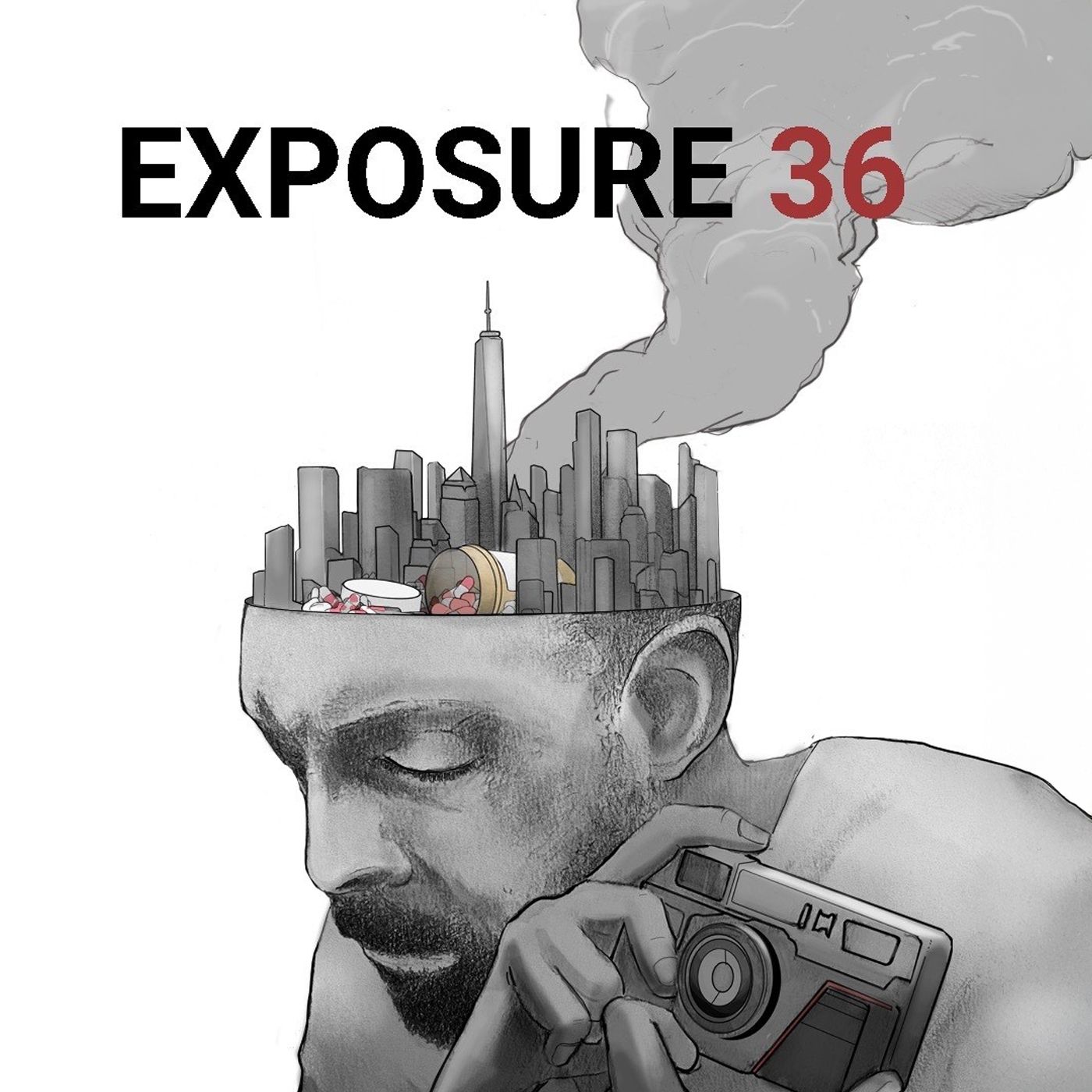
About this episode
The apocalypse here is background noise rather than spectacle — a quiet, meditative film that doubles as something of a Rorschach test, with different viewers latching onto entirely different aspects of the story. Mike and Ben dig into the episodic, wandering narrative, the film's mysterious blue figures, its use of photography as a distancing mechanism, and the way the story shifts from meditative sci-fi into neo-noir thriller territory before it's all over. Mauro joins the show to discuss the film.
Transcript
Automatically generated, so expect the odd misheard name.
The Projection Booth podcast is sponsored by Scarecrow Video. Try out scarecrows rent by mail service. Choose from over one hundred and fifty thousand films and get Blu rays, four k's and DVDs delivered directly to your door. Visit scarecrow dot com Today. Oh ge is folks, It's showtime.
People say, good money to see this movie. When they go out to a theater. They want cold sodas, hot popcorn, and no monsters in the projection booths. Everyone pretend podcasting isn't boring. Good New York and a happy Friday to oh you survivivors out there.
I will be broadcasting live because we approach. The end of the world. They say, we got three days that before Mother Nature turns on us for good. Ending our stay on planet Earth once. And for all.
A fond of role of film one last project, my swan song? Are you a photographer? Tried to be? What happened? Civility is hard to maintain times like these.
I'm just gonna spend the next three days coming to terms with what my purpose was? What's that you keep him numb? Until it's all, Oh, I got anything you need? That a doctor prescribes. I was wondering if you could possibly help me out, as there might be a way out of this myth and I have half the money.
You just need a little bit of help. I'm not giving you the money. What about kicking or she's got no place to go? Don't worry about my big brother. I take care of him.
He doesn't take care of me. Nixt gone. They broken and took him. They said that the black for the money said they expect me to pay out. Who's Nick involved with?
If you give these guys trouble, you'll started nothing until I see your dead go home? He can't. What the hell is going on? They followed you, they are. You've been a real torn in my side.
I have to find him. If you will help me, I'll do it myself. Just because civilization is gonna end doesn't mean that I'm going. To Welcome to the Projection booth. I'm your host.
Mike White drew me once again? Is mister Ben Buckingham did a all? We conclude a month of mostly Patreon request with one from listener Pat Rabke. Exposure thirty six. This is the thirty sixth entry in the Exposure series.
The twenty twenty one. Film was written and directed by Mackenzie G. Morrow and stars Charles Udo as Cam, a very appropriate name for a photographer. He's spending the last three days left on earth by selling drugs and wandering the streets of New York, running into a colorful array of characters. We will be spoiling this film as much as we perbasually can, So if you don't want anything ruined, please turn off the podcast and come back after you've seen the movie.
We will still be here. So, Ben, I imagine this was a first time watch for you. It was. Indeed, I hadn't come across this at all in my letterboxed Wanderings just for the blurb and stoked my curiosity. I didn't leave attracted to some of these more odd sounding, maybe experimental, artistic leaning endeavors with a bit of genre.
So I was like, yeah, yeah, let's check that out and discuss it. Yeah, this was a new one for me as well. Since pat Radkey requested it, I said, all right, sounds good. Let's track this one down. Not too difficult to find out on DVD out there streaming.
Definitely not a ton of stuff written about this film, and in fact, I found the reviews of this to be almost like a warshot test, because it was very interesting for me what the different reviewers were focusing on. Some of them were focusing on the relationship of our main character with the woman that he buns into in here. Some of them were talking about the for lack of a better term, the blue people that show up. Everybody seemed to focus on different things, where I was just like, is this the same movie? But yes it is.
There are a lot of different little pieces to this. Very much an independent production, and you can really feel that as you watch. This, probably like halfway through before my brain went, oh, twenty twenty one, if not Lockdown film, then like just after Lockdown, it's certainly more open. I think it probably was like not quite full quarantine period. It looks like it was a little bit after that because they do move around quite a bit.
It is not just apartments or one apartment trying to fudge together a lot. But there is a limited through limited cast, not like huge, huge crowd scenes or anything like that, which can be just being an independent film with limited resources, or it can be that there's a pandemic going on. I think it does fold into that kind of not exactly a genre, what do we call it? The patch of cinema that happened in that era and obviously reflects quite a bit of what people were feeling and thinking at that time. Not a lot of optimism, but not exactly a pessimistic film either, walks a middle ground between the two and yeah, very definitely.
Like I've worked on a number of micro budget films and small productions and things, and so there was a lot here that I was just like, ah, yep, I can recognize with what you were going through. So we should talk about the conceit of this film. The name of the film is Exposure thirty six. And for people who may not remember actual film Snapshots with the Family Holiday. Goodby Goldbee taken on Holiday Goodbee snap snap green green, weak, weak, nuge, nudge say an the more.
They used to come in rolls of what twelve twenty four to thirty six. And our main character Cam finds an unexposed role of film and a safe and he decides during these last three days on Earth because there is some sort of what is it, It's going to be some sort of like ecological disaster that is about to happen and everybody is going to die in three days. While he is undergoing this last few days. There's a quote at the beginning where it talks about how the world is going to end, and the calendar is going to read Monday. So I'm guessing this is all taking place over a weekend, and during that time he is using those last thirty six exposures of this role of the film, and that's our conceit going through.
Here is him taking photographs, and then also this whole idea of this being three days before the end of the world. Now have to say that I don't know how the world's going to end, and I don't know how people are going to be, but it feels like if we're three days before the end of the world, it's going to get really crazy. As opposed to this, which is very much like The Quiet probably the most quiet apocalypse that I've ever seen, other than maybe The Quiet Earth New Zealand film from Jeff Murphy director also a free Jack. That's right. There is a title card at the beginning that says Friday, so we are spending the weekend here.
I don't know there is a Saturday. There's a Saturday one. I now, I can't think that the might have been a Monday one. I'm not sure. I think that was one of the complaints in one of the reviews that I read was there's no title card for this and also you don't see all thirty six exposures, and I'm like, okay, dude, relax.
I was tempted to count the exposure as I just looked there. It was part of me out of the first year that was like, will they've actually be thirty six? The second viewier is like, nah, I reckon, there's thirty six. I don't need to Canada, I trust you. But there was definitely a Friday and a Saturday title card because the Saturday one is when John coppin to Esque School suddenly dives in where was Sunday?
Where I left Sunday? And I told him and he didn't believe me. What they don't make Sunday? Why not? Because of God?
Yeah? I really like the score. I think the score is probably the strongest element of this entire film. It just really curious stuff. For one, because it's not fast moving by any stretch of the imagination.
It's ninety minutes and you feel every minute going by. Yeah, and it feels like it's very much inspired by certain filmmakers and their scores. Jeff Nichols feels like a big shadow cast over this film takes Shelter especially, but the school doesn't feel like it's just riffing or borrowing. It does feel like somebody was like, oh, I love that, it was great. I think they can make it work here, and they do that.
It does work quite strongly for the film and keep it moving along and feels in a lot of spaces that the lower budget can't really do. Even though it is quite a recent film, just the very short amount of years between its release and now have not helped it much because, as you said, it is very quiet apocalypse. There's not really like a high level of insanity on display or chaos or disintegration or any of these things. It's very personal, very like reserved and enclosed, and that maybe might have felt like a possibility back in twenty twenty one, but even with COVID and everything, but as we have seen just in the Last of An America, it's not gonna look like this ninety nine percenty of population is dead or gone, which the film doesn't explicitly or state or suggest in any way other than the quietness.
Yeah, it's going to be like absolutely insane, and so it does. It feels much more anachronistics than maybe that could have Otherwise. Every day is a lot louder than this film moreover be and I'm curious about when money would lose its value. A weird three days before the end of the world, our main character, Cam is going around taking photos, but he is primarily, as I said in the beginning, is a drug dealer. He's still asking for money, and I'm like, why, what is going on?
Why would you ask for money? I can understand pevling drugs, and I understand wanting drugs before the end of the world. I've been wanting drugs since twenty sixteen around here, and thank god Michigan is legal now, because you need something to take the edge off of the insanity that's going on out there. So one of the first people that we meet is a guy who's pretty treaked out and wants to buy a whole bunch of drugs, and his buddy is laying on the couch just completely zonked out, and I'm like, yeah, I can see a lot of people zonking out before the end of the world. But I just don't know why you would collect money for things if the whole thing is going down to the drain in a few days.
See that that did actually make sense to me, and I think they do actually address it a bit in the film, because they do have a point where it's, oh, there's a there's possibly a bunker, and you need money to get in there. And you've got money, don't you know. There's two aspects which make it like seem normal to me that that would keep going. And one is the like, well, if. If something did come along, if some group was trying to hold together and keep the monetary system going, then it's I'm not saying it's not delusional.
But it's it is. I do believe that it's like, oh, it's paper, it's light, it's easy to hold on to it just in case for a rainy day, if that rainy day requires some kind of monetary system, if people are going to offer him money and give him money, yeah, I'll just suck this up. And also, like, after if you've said your whole life poor, then why not you get to be like role playing some rich kind of power thing for the last couple of days like that kind of works for me, which also into that it's like money is such like a totem, and such a totem that is tied to so much sickness and mental health failures that it's like our ability to let go of it is going to take a little time. It's like a knee jerk reaction kind of thing.
Like it said, it's something that you do if you were like sleep walking, you'd still be like, oh yeah, money, thank you, because we had how everything functions and it's ground into our absolute marrow, much to our detriment, So I can see that's still being like something that continues on. There were quite a few nice. Little bits here that I felt worked that I felt really believable to me. There was like the kind of somewhat subtle, not subtle. Aspect that the underground market was still functioning while the above ground market had failed.
That it's wait, you've got beer, Like where did you get beer from? But it's like, oh yeah, illicit substances, Oh yeah, here have something this listen substances everywhere. To go forward was like beer, where's the beer? And it's like yeah, yeah. The corporate aspects of society.
The market that is official and sanctioned is like completely collapsed. Well everybody else. Is, oh yeah, I know were used to like not having access and having to figure it out for ourselves. I like that. I thought that worked really well.
No, I agree with that, and it reminds me of we talked last year about Panic in the Year Zero and the way that a nuclear bomb just hit La in that movie and people are just scrambling and yeah, jacking up prices and it becomes this huge struggle and fight for everything. Even just as part of our research for Spirits of the Air Gremlins of the Clouds, this whole idea of again the world's going to end kind of thing, and people are just going absolutely batshit and just buying as much as it can and having problems around getting gas on all these things. So it is a different way of doing it where it is so much more quiet and just this kind of like very meditative thing. I like these little moments where our main character, and again I don't know if it's drug induced or if he just is having these hallucinations or if there is something actual otherworldly, because we are introduced to this idea of these blue people.
Basically these scenes that are shot with a very strong blue light, and it's usually people that have died. I believe it's maybe can't be his granny, but somebody's granny we see right off the bat, and then later on we see character named I believe it is Ed, who's Montgomery Morrow, the director's brother. Though I have watched this film multiple times now and it is really not good. That we're introduced to Nick, who's played by Nick Smithson pretty close to the beginning. He's that tweaker guy I mentioned.
And then we're introduced to a character named Habi who's Jennifer Lee Whitehead, and we see her quite a bit. She basically becomes the love interest the damsel in distress ish in this movie, so we see her associated with Nick because we see Nick and then we see her right away. Later on we see this guy Ed, and then we see her right away, and I think she might be Ed's sister. And both Nick and Ed have facial hair, so I think they're the same person. Every single time I watched this movie.
Did you get a chance to watch that little short film I sent you? Modern Man? Holy shit, that was hilarious. How good is it. I can't believe everybody's saying it.
And I think the guy who's the laid in that, yeah, John Reynolds. He also wrote one Man, I recommend everyone out there look up Modern Man twenty twenty three, starring John Reynolds. It's wonderful, beautiful, amazing short film. That's pretty sure. It's a New York film what I remember.
And Yeah, there's a character in Exposure thirty six who the whole time he's on the screed, I could not stop thinking about this short film that he looks a bit like John Reynolds, and I just imagined that he has the same life off screen as the short film Modern Man. Edg's the drug dealer, but he's a wee dealer, not a prescription dealer. Hence whoy our main character is coming to him to give tell him the prescription drugs. Nick is Katie's brother, so they are two separate people. It's Nick who we see early on as a spirit the ed I don't think we ever get to see as a spirit because.
He doesn't die until much later. Oh so he does come back. See. I kept mixing these characters up completely, and it's so dumb because they're both just white dudes with beards, and I'm like, they look identical to me and I couldn't figure them out. Oh wow.
Obviously one of them is his brother, the writer director editor's brother, and the other ones clearly like a mate, and they have done other short films together. So I think it's like, unfortunately, when you want to cast your mate, your family, and they all look like they're related, it is somewhat of a difficulty, but they are very So we meet Nick and Katie together. Actually we meet Katie a little earlier on. In the street because she was coming out of Ed's. She was around Ed's house, and then we meet her again with her brother Nick, who's the one who's looking for the bottle opener and losing his shit and he has the beer.
And they clearly come from more well off background, nice apartments, nicer clothes, all that kind of thing. And then Nick disappears and cam our main protagonist, Cam sees him in his apartment, in Cam's apartment as this spirit, and yeah, they are lit with a sort of blue light, but they also have a fiery blue iris instead of a human iris anymore. They're transcended in some way, and there isn't a big suggestion that Cam is partaking of his own stuff. I think that we learned that he's background, that he has some sort of relationship with. The word.
I don't think of what the word is that they use with a teacher of his who was a photography teacher and was supposed to be helping him get into that world, and it didn't work out, and she died of a drug overdose. With some people in the filmplies of suicide, some people just it's just an accident. So I think that we can read that he is selling these drugs, but maybe not part taking of them because of that negative experience. We never really. Learned what the drug was that she overdose films so that you could even read into it that he is very specifically like that I'm selling the prescription drugs to be trying to help people like He definitely explicitly says that he thinks that his purpose is to be helping people to smooth their way through these final days by checking out, which is very interesting and powerful and complicated because it's okay, there is a positive there, but also feels like a bit of a cop of not dealing with anything and not confronting it of just exiting, and especially given you can't say that a prescription drugs would be a better option, given to our America has been dying from opioid crisis of prescription drugs for US then twenty years.
So it's like a real complicated like mess there, which the film like kind of lays out, but it doesn't really try to address or anything. But there's some expositioning moments. Here that do irritate me a bit because they feel like stuff where they didn't have faith in the audience. But the film never actually really stops for any actual expert. There's no Philoso advising all anything much really, which in some ways is a plassen in some ways is the minus.
It's it doesn't it's good because that stuff you can get really early bogged down in. But also it just does mean that if you want to get something out of this film, you do need to watch it a couple of times and. Put the pieces together yourself. And I don't think that is done in a way that is very rewarding. It's good, it's cool, it's good, but it's it's not oh wow, this or that.
It's not it's not especially rich text, but it is there and it is putting forward some interesting ideas, but the character stuff it is, it is a little confusing on the first go round of who's who and why they're there. The character ed the drug dealer is he's got the easy part. He gets to be the slightly odd ball, wacky guy. He's having fun. He has I will get.
I gotta say like his suicide note absolutely one of my favorite suicide notes in cinema. It's that that they pull it up and it's kind of scrawled. So badly and you hear the actor readiot or the voice already. Okay, yeah and match. It fits everything we've learned about this guy and is beautiful and tremendous because he's been in most of the film trying to kill himself.
He seems to be like, oh, I went down. To the Fourth Street bridge throw myself off, but there's so many people there, like it's real cute. Yeah, so he's come back, but he just seems to keep going off to drying himself and it's like things get it the way and he comes back. It was like the film really needed more of him. I feel like we needed to step away and split and go follow him for a bit and see like he's weird journey day.
Yeah, because there's not a lot of lovity otherwise, like Cam is pretty durn serious. Yeah, he's a very reserved character and we don't get much of him, which is very unfortunate. I was fascinated when I looked into the actor. Now I wasn't sure how to pronounce his last name. He said Charles Uda.
I said Uda, Yeah, could be something else. So he's Kenyan and I actually it wasn't until the last act of the film that I suddenly was like, oh, that's not an American accent. Watching it a second time, I was there was a couple of times like okay, yeah, I can hear the intonation is different, And for a second I thought British and I was like, oh no, that's the Yeah, that's English that comes from a British background. But that's that's an African accent and African intonation in the way of speaking English. And I looked it up.
There he's a Kenyan born actor who's actually quite famous in Kenya that was in a very popular soap op fora called Macbutano Junction and has done a lot of stuff and also unfortunately died on the sixth of February and twenty twenty four, which was always exactly two years today when I watched the film, very young. Very unfortunate, because he's very good. Without him, I'm not sure that this film would hold. Together very well. It's He's does bring a real strong grounding, lived in performance that I think is a bit limited by what the film is doing.
But he definitely does very good work, and I do wonder if they maybe reduced how much he was talking because of trying to make him not appear like he's like he make him seem like he was an American, which is something I'm do find quite irritating about the film. It didn't need to be an American. There's nothing actually in here that makes it meaningful that he is from America. You've got this talented international actor with this whole background and everything, then take. Advantage of it.
Let his boy speak. He does cover the accent very well, but as I said, I don't think that's to the positive outcome. I think it would have been a much more interesting film to have this person who is so far from home in this place, in a place which is the far from home for many, many, many people. It offers up so much more possibilities for ways to engage in ways to look at the city and see the city. Through different eyes.
And one of the first people we meet is a homeless woman who has such a brutal Australian accent. Oh yeah, yeah she does. And I was like, random Ausie woman on the street. Yeah, I can't remember, we've talked about this previously, but that's the accent of the Australian accent that I think American's more familiar with because it tends to be what the accent from New South Wales sounds like more, which is where a lot of filmmaking happens from one a lot more international filmmaking happens. So that's the accent people know.
Ah yeah, Ozzie. And I was like versus the lower down end where I am wait a bit more chill. But even that, you've got another foreigner there and stick with that person. Have these two people from like totally different places, both colonies of England, and explore that. And instead she's just like beef bit at the beginning, and then we see her dead later and her spirit and he cuts in these two shots of her before as if we don't know who she is, And that was one of the bits that was like like visual exposition was like have some faith in your film and your audience.
This person we did know who she was. Yeah, she wasn't a white guy wearing a beard, yes, and being obnoxious because I think his whole search for the crook screw where he's losing his shit. It just felt very ed like to me having just met ed maybe not even five minutes between seeing these two characters, and I'm just who are these guys now? Yeah, thinking they're one and the same. Yeah, I did catch some hints of some Jersey accents I think in here as well, So I feel like maybe the background is a bit Jersey, that they're drawing on some personal experiences of Jersey guys there.
But I don't know huge amounts for that other than like from cinema and random podcast. But that's yeah, Charles Uli, he does a really good job. Seems like an interesting dude. When I was just looking him up, there was lots of stuff. The only place I could see anywhere that they talked about how he died was lots of random YouTube clips, And I'm just like, I'm not clicking on those.
I think that's probably. Not anything anybody needs to watch because everything else was just like very quiet. But he seems like there was an interesting fellow there. I saw that he did some voiceover work on a documentary about an intersex person in tenure, I think, which apparently is quite good and is available on YouTube called Sydney and Friends. So I do I wonder what he stored where he was.
I wonder he was he stuck in America during the COVID things or was he trying to break out there. Yeah, there's an interesting figure there, and I'm glad we've at least got something like this a bit to see what could have been. Some of the acting in the film is a bit rough. It's not terrible, it's just amateur. It's just people who aren't really used to film.
I don't think there was I did see quite a few comments on letterbox and people really ripping into the acting, and I really. Didn't think it was that bad. I think those people need to watch more bad acting than they would bad acting. I thought, was it a Jennifer Lee Whitehead who plays Katie, that she was pretty good. There's definitely potential there.
She is quite young, was the thing. I was like, Oh, I didn't catch that so much the first time around. They mentioned this is being in Australia and not being as familiar with certain aspects of American culture. That he says when they're just gus and talking about not finishing school, and Cam says, oh, yeah, I was a college job out and she says high school and I was like, wait, that's. Googling the difference.
What is the age of high school in America. It was like, high school here would be yeah, like thirteen to eighteen nineteen or something, which is about the same for America. So the implication there is that she is hopefully eighteen. Yeah. That was something that I was like, Okay, I'm it is a film which made me remember how tired I am of heterosexual cinema that it's just oh, yeah, we've got to have some sort of damsel in distress and she needs to be protected, and she also needs to spend almost entire film in a boob tube kind of top in no bra.
I don't think that part worked at all. And I thought she was quite good. I thought their friendship was quite good, that it offered up things, but once it turned into oh no, there has to be some sort of antagon is narrative that that stuff was just like, we didn't need this, This wasn't the path to go down to fill out your film. That whole lot that you're talking about that comes so late in the film too, there's a lot of this film that feels like a one crazy night type of a movie, like a like an After Hours or even I suppose Miracle Mile would be a more apropos thing where you know that the world is going to end and you're talking about like how you have to watch this film a few times to really pick up on what's going on.
One of the things is that there is a radio at the beginning that starts talking about this mayoral race and how there's this racist piece of shit guy who's running for mayor, and so obviously twenty twenty one, we're definitely talking about Donald Trump, Garrison, New Yorker, all this kind of stuff, and that really doesn't enter into the picture until when forty fifty minutes into it, if not, more like it really comes late and then becomes like the driving force, whereas it feels like there should be there's the quest of taking these photographs, but there's no other quest that he's on throughout this until suddenly it's I have to find nick I has to find Katie's brother kind of thing, and that I think it's literally forty minutes into the film when he comes over and finds her completely beaten up and she's got blood on her hands and just something bad has happened.
It just feels really shoved in there. For me. Yeah, it did feel shoved in there. It is trickled a bit, as you said in the radio is talking about this guy, but the way he's trickled in is like the most basic way is that we have this image of it's like a circle with a bird in black silhouette. Oh, we even get an iris in on that card when he goes over to the woman's place, Lulu, the Dalisa Reynolds character, and he sits down and that card is on the table and man or man, did it take me a while to spot that?
A few after I watched this the second or third time, then I was like, Oh, that's what they're pointing out, and like literally like irising in on that table and this tiny little card, and then I was like, oh my god, very subtle. I know, like at the moment where we're like got all the Epstein stuff coming out, it's like these people are not subtle about anything, these like networks of blah blah blah. But my god, this company, these drug dealer, this mayor is just he's not hiding the fact that he has this bird picture everywhere. Like he's his gumba henchman has a sorry said a racial stir. Anyway, he's henchman.
He's hedgeman. Has a tattoo of it on his hand which looks a bit more like a speed bump for the angle that was shooting. And I was like, no, wait, I think it's meant to be the bird. They've got it on their matchbox for the club, it's emblem for the club. It's on the baggies for the drugs they're sally.
It's like, guys, like, I, okay, someone one of your henchmen went to Good Marketing PhD. And like. He needs to calm down and stop snorting coke and marketing your drug business the same as your bar business and everything else. That was like so on the nose and just guys, you clearly maybe just either not thought about this or never actually spend any time around these kinds of people, Like, it's that's not how it works at all, And it just feels real shoe hauned in and yet is somehow the way that they're trying to make it. You're less shoehorned in once they shoehorned the fill of pot.
Yet it's okay, you flubbed this so much so I almost appreciate it. It's so silly. It feels like they could have done that a lot more better, just by having like another character come in who is supportive of this. Dude, there's nothing of anything that we never get. It's just this total alien thing, which you could even make something of.
That that the. Blue Can spends so much time in whole groups of people who aren't supporting it from Donald Trump or it was the there's the other there is the actual awful, most recent evil New York mayor the one who was trying to run again, the one if you lost to Man Daney. Yeah, I think it may be meant to be more that, But yeah, I feel like there's definitely like ways that they could have folded that character in better and made more of it. And it certainly is one aspect that basically has like the past previous couple of years have backed up the film that there would be just random rich slum lord psychos who would be like. No, we're still like I've still got to be mayor in the Apocalypse.
We're so running this this this whole mayoral campaign and okay, great, that was Eric Adams. No, I no, they was the Derek at the Republic, classic New York. Can't narrow it down. Eric Adams is the one who would be the funniest man on earth if he wasn't like part of the problem. No.
No, Eric Adams was the guy that was may or before Mandamie. And he's the one that he. Didn't run against him. He's oh Cuomo pulomo, there we go. You know this guy.
This guy's definitely got cuomo vibes. Yeah, because Eric Adams he had that whole like bribery and all that stuff. Because I remember that was one Mandami's first things was to like anything that this guy put through over the last eighteen months were just rescinding. If you haven't looked up some of the Eric Adams stuff, I'd lie that is the funniest shit. He's New York is the Athens of America.
New York is the Buddhapest of America. Oh man, the funniest, weirdest dude and tail. I admit that. Coming around and watched this for second time, I was dreading the last act of this film. Like on the first viewing, the last act just rubbed me wrong in so many ways, for just the things that I'm really tired of with low budget independent filmmaking, where it's just, oh, this is what we're doing.
This is the same old done this a million times, and it's like it's just can you do anything good with it? Have you got something up your sleeve? It's not really And I will admit, like on the second go round, I actually I think I enjoyed the second half a bit more than I enjoyed the first half the second dog, which I wasn't expecting like I thought it would be the other way round. And part of it was just being in that independent space added clearly being like people in your sphere or connected family, professional, semi professionals, whatever, and you're pulling them in and I enjoy I did, actually like enjoy hit the weird kind of touches of humanity that came through because of that, it was it free pass them too quickly.
But the stuff that the two henchmen who he sees in the car and then later he like smacks one of them in their head pretty badly and we find out that he died overnight from that injury. And the which is that actually is like, Yeah, you get a solid concussion and you don't get a health treatment because A it's America and b it's the apocalypse. Yeah, you're going to die in your sleep. You don't don't go to sleep if you've been smacked in the head with a big heavy lamp. That's your health advice from Projection through the podcast.
But there's there was a there was a real humanity that kind of came through there between the two henchmen and the way his buddy who survived reacted, and it didn't bleed through to anything else, like the evil Mayor dude didn't give a shit. There were just facts to him. But there was like these little bits and pieces there that felt true that they did feel they were coming from somewhere that it's funny. I just watched the film. This is a random film that I found for this.
This is Australian company, like two companies called like Flashback Entertainment. They put out like stuff that nobody cares about. And so twenty years ago, instead of being on to be Exposure of thirty six probably would have got released through that. There's so many of those kind of films that just nobody would care about that they chuck together themselves that they've probably got a small deal with some like agent and got sold whatever. So we watched this film recently called The Drop from two thousand and six.
It's directed by Kevin Lewis, who would go on to do Willie's Wonderland, The Nicholas Cage Bo five Night of Freddy Film, and Pig Hill, which I've heard quite good things about recently. Some guys been working away in like very low budget indie stuff for a while and somehow some sort of broken through recently, and The Drop and Expose thirty six actually have a lot of things common. They very small scale. The Drop definitely leans a bit more and it's like thriller genre tropes than this one does. But there's like a bit of a fantasy sci fi element that comes in later on in this to do with water universe kind of stuff.
But there's it's like very much like the young bloke who's confronted by these slumlord mafia guys, like, just do this job for us, so don't ask any questions at all, be fine, and of course he like goes against that. It is actually funny how much they were similar but opposite ends of the spectrum, because where exposure thirty six feelers and I think you said he is taking inspiration from a film like April four Hours, four forty four, Last Down on Earth. The drop is Garantiedo plus run all of Run and Run all of Run takes up like seventy percent of that. Like the whole film is editor just like what is this pounding like late nineties, early two thousand, dech no thing, and it. Just go absolutely balls of the wall for most of it.
And the job also wasn't like a great film, but it just went for it a lot more and it was more, yeah, let's just do crazy stuff, have some weird things. Definitely helped it be more by having John Savage and Sean Young being you bad guys like they like half they sleep walking through it and bringing a lot It's. Funny that you bring up Brunlola Run because when he starts taking those photographs, I noticed that the photographs don't necessarily line up to the same angles or anything like. They definitely took the photographs later. It's not like they took these pictures from the actual film and just like black and whitified them during out the color of those kind of things.
It's but whenever he takes a photograph and the whole kind of movie stops for a second. I so thought of those transitions from running low the run, where you see the potential future history of people, and then bringing up Tarantino is also very apropos those two henchmen, and I totally was thinking of like Tarantino people. Moreover, I don't know how similar our ages are. I think you a little bit younger than me, but you probably lived through that entire thing of Once Reservoir Dogs came out, everybody was like, I can make a cheap gangster film. Moreover, once pulp fiction came out, it was I can make a cheap gangster film.
Some of them were decent, but for every I don't know, one decent one, there were probably a thousand shitty ones that most likely didn't even make it any place other than some kid's basement kind of thing. There's a VHS tape shove somewhere in some box in somebody's basement, which was my gangster film nineteen ninety six type of thing. And yeah, I was thinking of that when it came to those two thugs where it was just like, oh, they're fighting, like the two henchmen in to shoot the piano play or something, and it brought me back to that, but. Not really in a good way. Yeah, I just said, like the fact that it's like culturally specific, I think saves it a little bit.
That it does feel. It doesn't feel as shoe horned in because it is that kind of New York slumlord. These are his henchmen that worked, and they didn't lean too heavily on it. But yeah you can't. Yeah, as you said, for people of a certain age, you lived through a certain VHS hera.
You just hit that stuff and just like start twitching. Yeah PTSD flashbacks. Yeah, you still see those henchmen hanging around in things like the Equalizer series with Denzel Washington. Okay, yeah, oh here's the funny one. Oh here's the serious one.
Oh he's got the Russian accent. Going back to what you were talking about with our main character being an immigrant, literal immigrant to our shores works when it comes to this whole idea of the Trump's stand in mayor character. By the way, those scenes with the Trump stand in they so remind me of The Departed whereas or or like the one where Johnny Depp played the Whitey Bulger. It's like student film Whitey Bulger type of Hey, our main characters are a black guy and a woman, and had he been an immigrant, I think I would have hit probably even harder, because we are just all about let's kick all the immigrants out of our country. It does take like these stands in some places by having his slumlord as a villain, that's us.
But otherwise it feels like it's trying not to talk about anything to which detriment there was. Let's see if I can blind it. And I was doing this brief bit of rummaging on some other apopolytic kind of things I did find this quote was from Christopher schra It's The American Apocalypse. Orsese's Taxi Driver. As the film constructs and debunks the conventions of various film genres, it provides not ideological criticism, but the ahistorical and fatalistic vision of apocalypticism.
This apocalypse is catastrophic and non revelatory since alternative concepts and reality are beyond consideration, which I think actually like really gets to like the core of this film that it is actually very emblematic of this period in history. There is no alternative ideological construct, there is no alternative possibilities. It's just a very fatalistic even like down to that. There's want to talk about the spirits again a little bit, but the way it's presented is just, oh, it's just this climate catastrophe kind of thing. It's just biology, science, environmentalism.
There's no There's a little line about how it's or human like activity has helped to beat all this, but there's no there's nothing else. It's like we've been said on this path and it's going to happen, and there's no pushing in any direction, and there's no arguing, there's no grandstanding. It's just this fatalistic we're in the apocalypse and that's it. And I don't think the film does anything with that, but it is emblematic and it is very representative of this period and the kind of fatalism that is really grinding the gears off of people and communities and society at a all. I am grateful that the film doesn't necessarily try to be more than what it is.
I'm really grateful that there's no edge lord bullshit. I'm glad there's not a psychopath or anything like that. That the villain is just a piece of shit, white collared douchebag that feels right and correct. And I praise him on recognizing that that was like all the villain he needed, if he needed it. Really is the only question.
The most edge Lord I think we get is the ants that are in his office and how he has to pick up the ant to talk about the power of the ants and all these kind of things. Okay, yeah, here's your metaphor, all right, I gotcha. Yeah, but even that feeds into this like no imagination, Like it's the most basic kind of metaphor that somebody like that could reach for. It's so under looseid dating other than about his psychology, and I did. One question I wanted to ask was do you think that the rotation mark spirits that he sees a manifestation of optimism in the film.
As far as they have made it to the other side, because there's that marquee that says, see you on the other side that we see during a little photo montage. Yeah, and people will say that kind of thing, and they'll talk about there being more, but we do seem to have an actual manifestation of proof that there is some other side if they are not a patient or anything. Because I don't find the film to be pessimistic. There is dash of optimism in there, as this is the kind of a back door and I don't know. How I feel about that.
That it's interesting and I, yeah, what do you think. I think that is very very intentional. I think that these spirits are showing us that there is more. And I think that's also and I hate to go back to this, but this whole idea of the whole Ed versus Nick thing that I was having problems with is because we don't necessarily see Nick die. We just see him alive, and that we see him again as a spirit, and then we're supposed to think that he has died.
And by the way, when they're doing the spirit of facts, I love the eye thing you mentioned that before. I absolutely love what they're doing with the eyes and especially that they are blinking, so you see whatever they're doing. I don't know if they're animating those in or what they're doing, but the blinks really add a lot to it. And yeah, it's like we see we never see him dead. And then when Ed enters back into the film later on, I was like, oh, Nick's actually not dead.
Here he is. Or whoever this character is ed Nick guy? But yeah, no, I definitely think that they're showing us that there's hope. And I think the very first one that we see it that's about the old lady, I think I'm led to believe that she might have committed suicide just from the way that she's set up. And then yeah, his friend, the Australian woman, she dies from violence.
You can see the blood around her. But yeah, she's there looking on and we can see her give him a look, and I'm like, Okay, yeah, it feels like, not necessarily like he's being looked over. You know that there's an angel on his shoulder, but that they have moved on to a new plane. Because that last shot of the film is probably the most apocalyptic that we get. They're on the train, they're leaving, he takes this last photograph and then we pull out from the train or tilt up, and we see the smoke coming from all of these buildings.
But then we also see this massive cloud front coming in from the right side of the screen. And it's okay, I think that's it. I think that is going to be coming in here and wiping us off the face of the earth. But having had those visions, I agree with you, just give us a glimmer of hope. Of course, there is the possibility that that is him not necessarily hallucinating, but him convincing himself that it's okay.
Because I said, we never actually see that Nick is dead. He is visited by this spirit that is Nick with the eyes who talks to him and tells him such. But is that like he's because he's keeps trying to convince Katie that your brother is dead, you need to like let it go. And his basis for that is the visitation, So it could just be him he's like trying to convince himself that there's more that that these people are just dead, that they do go on to something else, and also as a way to your brother's dead, Like I know, because I think he actually says that, but yeah, there is a suggestion in the what Nick says when he visits him that he may be in hell. Like the way he talks does have us like a like that it's bad.
Down here or something. I think it is a good title to talk about some other films that clearly have inspired this because first, like I've got to say that the I think that the lady, the elderly lady who he sees at the beginning, I. Think that's his landlady. Oh because when he's standing at the door buzzing, can see he's holding an envelope and it says not Rent in big letters, and it feels like really blatant, like how to Oh, we're not communicating properly who this is. Wait if we write Rent on the envelope.
I was like, well, I got it. I saw it. I think I think that's what I was meant to get. I think that's meant to be his landlady, and that's what that is. And part of them What made me think that more is that you mentioned that the Mackenzie, a big inspiration for this film, was able for hours for forty four Last Day on Earth and watching that film.
You can see how they're very different films in a lot of ways, but you can feel how he's reshuffled the deck a bit, that there's a lot of elements that they have in common and he's moved them around in different ways and that like that. In that film, Wilonderfoe's character very specifically yells at his like shitty landlord kind of looks a bit like the mayor guy this And I was like, I feel like it's New York. If you're gotta be riffing on an apel for our film, you're gonna have a little land for. One moment here. But in this one it seems positive more than negative.
Yeah, that was just those kind of cubits. Baby, I think she's the lamb lady. I think that's what the deal is. I think we should probably take a little bit of a break and we can hear mister Morrow talk about his inspirations for this one, and we'll be back with that right after these brief messages. Fear comes Home.
Nowhere is safe. Prepare to scream Buy or rent Scream seven on digital now. It'll be a killer time looking for something superior to streaming a place with more than five times the selection available on all of the streaming services combined. Check out Scarecrow Videos Rent by Mail service. Select from an unparalleled collection of over one hundred and fifty thousand films and get Blu rays, four k's and DVDs delivered directly to your door.
Get in on it now at scarecrow dot com and rediscover the wonders of physical media. Can you tell me how you got involved in show business and entertainment. It's something I always wanted to be a part of. It's what I grew up doing. Like so many filmmakers, they grew up making movies with their friends and their siblings and stuff like that.
And that's what I always wanted to do. And I always knew I wanted to direct and write and make my own movies because that's why I spent so much of my childhood doing. And I always tell the story. One of my favorite films is The Shining and when I used to watch it on TV, there's a famous shot where you see the helicopter shadow, and I always said I wanted to be the guy in the helicopter shooting it. Years later you find out that Cooper was not in the helicopter.
So I went to college. I thought filmmaking was a pipe dream. I started doing pre laws stuff, and then my senior year I realized I could not do any more school. So right when I got into New York, I started working and was a pa as a runner, getting any job on set I could, and that slowly led me into editing, and now I do that professionally. And during all that time I've been writing and producing our own shorts and finally the feature.
That's how we got to exposure thirty six. Let me about some of your shorts? What are those like? When things weren't really like going away, I wanted to New York. I had a friend who was moving to Sydney, Australia.
So I was stuck and I said to him, I wish I could just pick up my bags and do the same thing, and he was like, why don't you just come with me? So I went to Sydney and I took some film classes and got the one oh one of filmmaking that the hands on experience as opposed to stuff if you see secondhand or you see from a distance on set, or stuff you read in books. So there I made a science fiction short film called Duration of Stay. When I got back to the States, my brother, who is a collaborator of mine, we put together a heist comedy called Dan's Plan, and then we did another short, and we did two other shorts. One was called Red Mosquito, which was a zombie horror movie, and then the final one we just took a camera, went out and filmed something quickly that we never really finished, but just to see what we could put together in a day.
And so that led us up to twenty seventeen, I think, and at that point we were just let's start writing this feature, getting the script in good shape to shoot. It's funny we actually started with another one and then we rewrote that and we said this, We're not going to have the budget for this, so we picked up Explosuire thirty six again quickly rewrote that and then we went out to shoot shortly after that. Where did the idea for Exposure thirty six come from? My first influence for that movie was four point forty four Last Day on Earth by Abel Ferreira, And what I liked about that was that it was an end of the world movie, but it didn't feel like it necessarily because everybody's going about their business and at one point, like he orders Thai food and then I think there's some discrepancy about the how they're going to tip him or something.
And I just found that so fascinating that you could have such a high concept and do it on such a low budget. Now granted they had willing defoe, but I just thought that was so interesting that something so catastrophic can be approaching, but people will just be going about their day business as usual. Work through a certain extent in a car crash and slow motion where you could see problems coming up, but we're not really addressing them. So I thought I just compressed that into a weekend. Basically, they approach as these people approach a Monday, which nobody ever likes to but no one ever likes to start the week.
Then to shorten that and make it give it the similar ideas. So that's where I got the idea. And then I was a big fan in the mid twenty and tens of Take Shelter by Jeff Nichols, and I liked when I read interviews with him how he spoke about how he just took that he took anxieties he was having as becoming a father, and I think he was dealing with someone in his family who had mental illness, and I thought that was a good metaphor for what I was dealing with at the time and the anxieties I was dealing with about not having enough time to get what I wanted to get done. That's how we came up with the whole premise. How did the whole feature come together?
Once you said, Okay, this is what we're going to work on. It was kind of like we had the script we just said. I mean, it took a long time for us to cast. It took like almost a year to get all our cast in order and all the pre production and everything, so it was like a slow build. But we really just did not have any money whatsoever.
We went into production. We thought we would be able to cobble together more and we basically we had nothing. So everybody was working at been a moment and we just went out and shot it in twelve days, and we did a crowdfunding campaign on the back end to help us raise money to either pay back what we had done during production or to finish it, and we ended up raising forty thousand dollars to help us pay for some stuff during production finishing and then for film festivals and stuff like that. He said that it took long time to cast. This why such a long time.
One way to approach casting, especially with a project, is just to put it on backstage and have everybody submit their headshots and resumes and all that stuff. But we just weren't finding what we needed, and so we started finding other avenues of finding actors. A Katie Jennifer Lee Whitehead, the lead actress she was at Nyu n Yu was one of the programs. I emailed and I said, who are some of the actors that you have that are graduating the spring, and so a lot of them just said, Heykes, just send me the casting call and I'll put it up for them. And so we ended up finding a lot of people that way.
But Charles was like through an acting group that we had gotten in touch with. But it's not especially when you're working a full time job Monday through Friday and you're only working on the weekends, getting people to come in and audition for each role. Is it was basically one full day for each role. That can take weeks at a time when you're only doing it on a Saturday or Sunday and stuff like that. And then we had a production designer drop out last minute, so that pushed us.
And it's just when you don't have the resources and the money, it's good to I something that my time in Australia taught me was it's good to do all the prep you could possibly do going into it. I did all my own storyboards, did all the shot lists, broke down the script like this sounds like a No Brander stuff, but it's amazing how many people actually don't do that. So we wanted to make sure that we had some everything to fall back on so that we were ready when we were on set and stuff like that. So it took a long time. Was the shot on locations.
There's one set at the final scene with Curry that's a set, but yeah, other than that, it's all location. How did you find those? A lot of apartments that we were just friends of ours Ham's apartment is actually me and my now wife's apartment, or she was my wife at the time too, So I told her to get out for the weekend. Didn't really tell her how extensive the shooting would be. Trash the place, it's all like cigarettes for a week after.
But but yeah, and then there was Nick's apartment the beginning as this beautiful view and it's got these huge windows, and someone just happened to say, Hey, my mom has this great apartment. Why don't you guys come shoot at it? And we got it for free. And then on the streets and stuff, it was just running gun any place we could find to shoot. We took advantage of it.
How did you keep moving and just driving yourself forward with something like this, Because I know that making a movie is not easy, especially you're making it, like you said, on weekends. It sounds like it's all from poverty. It's not like somebody's handing you a big old check and be like, here you go, Mackenzie, go ahead, make this big old movie. I think we were just so driven. It's hard to think about the motivation that we had to make this at the time because it's so it took so much energy and I just don't have that.
I don't have the energy to say right now, I'm going to go out, I'm going to cast all these roles, I'm going to crew up and then go out and shoot this thing with no money. It just seems like it's bizarre, but it was a world wind. We were just like, this is we had. We created a really good schedule, We knew exactly what we're shooting when we were shooting it on what day, and we just went into it head first. Literally did not stop.
Like I didn't. We never watched dailies at the end of the day because we didn't want to get hung up and be like, oh this, we got to go reshoot that. There was talk at one point that we would only do one take per per scene, but that didn't end up happening. But it was really just like just go out and just bang it out as efficiently as possible, and if we hit a snag or something, it's like, just keep going and we'll figure it out. It's just a product of being a little younger, a little dumber maybe, but yeah, it was really just go, go, go.
I mean a little bit about your crew. My younger brother, he played Ed in Exposure thirty six, did a lot of it as an actor and starting a lot of the shorts as well, so he was a good collaborator to have bounce ideas off when we were firming up the script. And then I have a great producing partner, Michael Paisano, who's a filmmaker and his own right does a lot of shorts and he was a great producer to help me get the ball rolling on this. Then we were lucky enough to bring in we had some sound guys we worked with who were from Paris that we got connected with when we made a web series years ago, so we use them. And then I needed a camera guy, but I was planning to shoot the whole thing myself, and then pretty much a couple of weeks before production, I sat down with a guy who had just graduated from film school and I was like, Yeah, we need somebody to be the technical guy, who is what a dit camera operator?
Guy who knows what lens to put on and stuff like that so I can focus on the actors at those times and stuff like that. And we ended up just saying, hey, man, you're the DP for this project, so let's go do it. So we pieced it together, but primarily it was my brother and my producing partner. We really got the ball rolling with. Us three along with that initial shoot, and did you have to go back for many pickups afterwards?
We did, so we did twelve days twelve straight days. Maybe we had a day off somewhere in there. But and then once I started cutting it, I realized what I some things I was missing, so then that we actually went to a studio for that too, And those are a lot of like the flashbacks with his girlfriend, there were some close ups we picked up or some inserts. This was also all right before COVID, and then once we went into lockdown, there were still some things I needed to pick up. So I was basically at my in laws house like with my DSLR, like shooting inserts every now and then I found an ant like outside on their deck, and I grabbed it and put in a cup, and then the close up of him with the ant and his fingers is just my hand, like at my in laws house during COVID.
It was things like that we kind of had to stitch together as I went on, because, as you probably know, twelve days running gun, it's like you're gonna forget some things and you're gonna have to do obviously some pickups as you go along. Even though the shorts are a great way to learn your process, you can never really prepare yourself for a feature, let alone a feature with no money whatsoever, and zero time like that. So because we've made ourselves jacks of all trades, it didn't require us to do these big elaborate reshoots on anything or put us in a position in post where it was like, no, we got everything we needed. It's just like some texture was needed to fill in some spots. But when did you actually cut this on?
I cut it up Premiere. At the time, I preferred Avid Media composer, But when you have no budget and you have to do everything in one program, I found that cutting in Premiere Pro was most sufficient for us because I could there's a not to get too technical with it, but there's a proxy feature where you can just turn off and on the raw camera file. So exporting a final was like a cinch. I mean it took time, but it was made it a lot easier. In Avid it becomes a lot more difficult to do that.
So what's your post process like? Are you constantly journey out like little, here's my rough cut, get it looked at by some people, or. I think I took a month off after we were done. We shot in July and like the hottest summer, it was like the hottest week of summer in New York in like a few years. It was like one hundred and ten degrees or something one of the days, and it was just brutal, like all being stuffed in our apartment trying to get the day done, but you're pumping the ac in between takes and whatever.
I think I took a month off before I started editing, and then it probably took me a few months to get a cut. I sat down with my brother and my producing partner and our DP and maybe one of our other producers, and I showed them a cut. We were all pretty happy with it, but there were a few things that were we were bumping up against, and so it was just feeling out how we were going to those moments. The opening is something that sticks out in my mind. In particular.
It was him in the apartment and then him meeting the homeless woman outside, and then I remember I sat down, I was just like, we're going to blend those two and just intercut. When I did. At the time, it worked really well. If I'm looking at it now, I'd probably changed some things. But that's a time that sticks out in my mind where it's just like, how can we rework this in the edit to just to streamline it a little bit.
How long did it take you to go through the whole editing process? It was probably closer a year. Especially COVID, it was like I think I had a assembly cut within a few months, probably in November of twenty nineteen. And then yeah, I remember, like I said, I was still putting stuff together and refining in during COVID and lockdown, and then once I got back to the city to my apartment, it was the whole finishing process. So I worked a composer to try to get something and that obviously takes some time, and then coloring and then going back with conforming the whole picture with special effects and stuff.
So yeah, it took I think it took almost a year. What's the plan for you as you're trying to get this thing to the finishing line? Yeah, so our plan the whole time was festivals, which we've never had look at. So I said to my brother at the beginning, I know exactly how this is going to turn out when we start submitting the festivals, but right now, that's the best way to do it. Or and five years ago it was so sent a lot of emails to people hoping they could connect us with the right people or knew somebody at a festival or whatever.
We had an executive producer come on who just happened to come across the movie on IMDb and was like, oh, I like the premise of this, Can I see a cut? We're like yeah, sure, and he said, I'd love to come on as executive producer and I'll help you try to get into some film festivals, so that was our goal. He eventually hooked us up with the distributor, Gravitas Ventures, who offered to distribute the movie, so that was pretty exciting. Not something we had expected after trying to get the film into festivals during COVID, but we were really happy with that. So the distribution model for inde bed of filmmakers is whatever, but it's better than nothing.
It's better than especially when you have your festival run is not as extensive as you would have like to it if to have been. I remember it was very tough with the festivals and everything moving online, and I know that it wasn't easy during that time, even just as a film fan and covering movies. A lot of people were like, we're taking half the movies we normally take and I was like, all right. My thought was I had no idea COVID was coming, obviously, but in a movie about the end of the world where people are like stuck inside, I didn't want to push it to a year later where everybody else was putting out movies expressing their anxieties and feelings about that time. So I was like, now, like, do it now, because by the time if we wait a year, it's just gonna be like, it's another COVID movie.
I thought we were fortunate in that, like during our campaign we could be like this is we shot some of this and cut it during COVID and it's about this indirectly. I just really didn't want to wait a year to when the festivals were like, oh, we're accepting more movies. Now, we're programming more movies. But still, like I said, we've never had success at these festivals, so it's I didn't want to I'm not putting all my eggs in the festival basket. We had another I went to Sci Fi London.
I spoke to the head of the festival there and he also was just like, yeah, it's a hard movie to program. And I asked him to elaborate on that, which he didn't. So I think it's a combination of those things like COVID, and then it's maybe a hard movie a program. I don't know, when do you finally get to see the movie with an audience. Because it was COVID, we had plans to try to get theaters take it on our tour because of the composed who I worked with on this.
He had done something where he was reaching out to people communities in classical music in different cities and then going there and putting on a show for people who were part of that community, and he was getting a good attendance. So I was like, that's a great idea. I'm going to do that as well. And then we didn't like nobody was going to movie theaters. So the first time I saw with an audience was at London Sci Fi.
I found out it got in and I was super excited and I was like, I have to do it. Was October twenty twenty one. I was like, I have to do this. I got to get out there. I flew out.
I got to the Film Festival. The place was packed. I was like, oh, amazing, this is wonderful. And then there was like a twenty four hour shorts competition that was playing in the adjacent theater next to mine, and all those people were there for that, and I go into the theater. It was like fifteen people, but it was I was like, nice to see it on a big screen.
I had a afterwards. So to this day, the most people I've seen it with is probably like fifteen people. It's on a big screen, So it's a it was a unique situation because of COVID, but it's great to get to those festivals and screen it for people who were interested in checking it out. Well, once the film gets out their house. That received If you look on ron Tomatoes, it has some good reviews from critics.
It got a good write up in the LA Times, It got recommendation in the New York Times, It got some good write ups from critics, online critics and stuff like that, and that was pretty thrilled. Again, that was a huge process where we got a database of like every critic in North America and maybe the UK, and we just were writing emails every day, probably you know, twenty emails a day for a few weeks and just trying to get anybody to review it. So we were pretty positive. Like, obviously, you're always going to get some reviews that don't really understand the vision or just think it's just low budget crap or whatever. But we were mostly pretty happy with the response we got.
So that's good. After it's out and people have had a chance to see it, it's out on DVD and all that, you go, Okay, that's it, Time to make another one. I had mentioned that we had started originally on another project, another feature, which is like a Bonnie and Clive like lovers on the Lamb movie. That always something, always what I wanted to do, and so that was just lined up for whenever somebody said what's next. And so right after we had finished and we got picked up for distribution, I went right back to that script and I looked at it and I was like, all right, now it's time to get started on this.
I reread it and I was like, well, this isn't going to work at all. So I started from scratch again, rewrote that whole thing. The connections we had made during exposure thirty six, we tried to build on those and build our network out and see if we could figure out a way to make this. But right now that doesn't seem like a project that we couldn't find financing for it. So some other projects that we're trying to put together now, so we'll see how that turns out.
And you said you edit to pay the bills. Yeah, I was at a prost production house for a few years and now I'm working freelance, mostly commercials. But if I can get my hands on a film, short, feature, hy jump adept in it. But yeah, day to day it's commercials. You mentioned Abel Ferarra, You mentioned Kubrick to see the Kubrick book behind you.
Who are some of your biggest influences when it comes to actually making your own movies. The big guys are Kubrick, Scorsese, Arkowski, then Vendors, and then more recently, Me and my buddy always say we're early on board of Christopher Nolan, Like we remember we were celebrating when he got Batman Begins, and now he's like obviously the biggest filmmaker in the world, So that's more recent. I mean, you can name start to get pretty cliche, but Cooprick and Scorsese are like my two guys I always go back to always they're like comfort films. For me, so I can always turn on something and be happy and always try to learn from those movies as much as I can, because I think those two guys are the masters.
I'm probably forgetting somebody extremely vital, but but yeah, those are the masters to me. What's funny you mentioned all the different types of shorts that you're doing, and you know, sci fi road movie, this, that, and I was just like, man, this guy just hopping genre's like crazy zombie movie, very much like Cooprick and Schriss says, they are not slavish to one genre over another. Yeah. I was kind of actually thinking about that the other day. I like, I was cleaning up my Vimeo and my YouTube accounts and just to like clear up some space, and I'm like, oh, it's some of my shorts and stuff around there, and I was like I just started scrubbing through them and I was like, oh, these are all different genre, Like I tried different things every time, and I was really happy that.
I'm sure I've thought about this before, but that's something I've always been interested in, just try something new every time. And when I start to see repetition in my work even as I write, like I'm writing all the time, and if I see repetition in my scripts or something like that, repeated motifs or or or repeating genres or whatever, it makes me uncomfortable, so I try to Yeah, I guess I've tried to mix it. Up as much as possible. A good place for people to keep up with you and your work online. I mean, my website is Mackenziemorrow dot com.
I have an edit account Mgmorrow Underscore Edit, and then Exposure thirty six has its own Instagram page versus Exposure thirty six Film. I'm gearing up to put together a short, so I'm hoping to have more content to put out that people can follow and and keep tabs on. But for now it's just chipping away and trying to get pre production in a good place. I said to somebody the other day, like, if I can put up a canvas in my office and just paint, it'd be a lot easier and a lot cheap. But unfortunately that's not my that's not my art form.
So you keep chipping away, and it's it's a it's a it's a need to do it, so it's not like it's it's not really optional. So it's I'll do my best to try to get this one off the ground and we'll take it from there. Well, mister Merrow, thank you so much for your time. This is great talking with you. Yeah, I really appreciate him.
Mike, thanks for checking out the movie. I'm looking forward to hearing the episode. All Right, we are back and we were talking about Exposure thirty six and yeah, before we took our break, we were talking about some of the inspirations. It took a lot for me to watch four forty four Last Days on Earth, just because I like a lot of able for our stuff. But when he's off, he's off big time.
So I never know when I'm gonna turn on a film and be disappointed if it's enable for our film, because he's got such a particular thing. But we got Willem Dafoe in this, and he is always awesome, always elevates the material. Yeah, yeah, I would say he always elevates the material. Like he's my favorite part of a lot of movies where I don't like the rest of the movie, like Autofocus, which I know is a Paul Schrader and out of Ferrara, but his relationship with both Schrader and Ferrara. I love that he works so much with those guys and just how well he works with them.
And I guess Lars find the Triers the next guy that works with the lot as well. Yeah, I have a similar relation with Ferrara. I actually have not seen anywhere near enough. I've been meaning to dive into that because he seems to have been doing some monstance. He definitely has been doing some really interesting stuff in the last ten years.
When I missed him in the nineties, like I he wasn't these films weren't around much. I think I'd only seen Badly Tenant and that was it, and I was so damped to yesterday I just go and chuck Rilla Killer on im, like I'm having that kind of month where I just need to carve my head in with Driller Killer full volume. I think I think some of you out there will know what I mean. They have that experience of sometimes you just need that. And I have not seen I don't think any of his twenty first century works.
I think I've only seen mostly nineties the Addiction Bad Lieutenant Now. I missed forty five of course, and the eighties stuff. You'll like killing seventies and yeah, I was a little bit like, okay, this is again, Okay, I'm going to go watch this another slow New Yorker Bok Clubs film, yeay, and I had a reasonably. Powerful experience with it. That say that sounds like weird praise, but I don't.
I think that as a real I would not have the guts to make an apocalypse because I think something that is like, right off the bat, you've got to get over that hump that lots of people are going to be going eh. I wouldn't do that. If it was the last couple of days on Earth. If you don't, if you don't have a propulsive narrative that's pulling you along, and it's just kind of what are we doing sitting around while we wait? Then you're going to be starting to think I wouldn't do this.
I would do that. I think Farrara's film does a better job of individualizing the response that it is just like how these people are responding, and so it does cut a little bit of that off. I don't know that Exposure thirty six does that quite as well. It doesn't necessarily do it badly. I've meant to mention before when you mentioned Miracle Mile in regards to like the kind of heterosexual thriller plotting, Like Miracle Mile works brilliantly with that because you enter into the film and the plot runs past you and grabs your hand, just goes quick, come with me, and you don't have any time to think before you're just like bam, you're in it and that's happening, and you're being pulled along by it.
And Expose of thirty six just arn't do that, Like, it's just not None of the way it's set up is ready to do that to do that, And I don't think that's necessarily a negative against it until it tries to have some kind of filler plot. Barrara's film very much does not have a filliplot. It is just to hang out. The world is empty. It's so super twenty eleven, like the beginnings of digital really taking over.
And yeah, I saw a lot of people online being like wow, Abril Barra made a twenty one COVID lockdown film in twenty eleven. It could almost be a play that it is so stuck in one location throughout so much of it. The way that he like sneaks into the other apartment at one point, but for the most part and it's just in that one apartment we see the painting that's being created and things as Okay, yeah, like you said, it felt like a lockdown movie without being a lockdown movie. There's ear in the house with this other person who's super focused on this one thing really intensely. Well you're just kind of the other person's just like off in the other space, just doing something really danse like just leave it, do it, like it, absolutely like it.
It's ahead of its time in that way. But my response to that is, ah, man like, existentialism has always been lockdown, even before there were computers that was like existential was like livered the lockdown. That's half the point. And yeah, Paraar's film is definitely much more of leaning that sort of French existentialism than exposed at thirty six, But it is they do make interesting companion pieces more about like filmmaking, I think, and choices that people make in the way that works inspired than perhaps on a thematic level. There's some of the things that they do have in common, and we sees that were oral borealis in or four Forward is very much.
That seems to be some sort of manifestation of what is happening as the world ends. In exposure of thirty six just happens. Yeah, you've got al Gore on the TV right off the bat, so I'm just like, Okay, this must be some sort of ecological crisis going on. Yeah, like they do say in four for four, that's that the ozone layer or the atmosphere is disappearing, But it's essentially just it's going to evaporate at this time and that's it, which I think is actually a really good like explanation because it's, oh yeah, it would. You're essentially then just in space, so there is possibilities that people could bunker down and survive, but it's it's a lot harder love big difference to just the weather is catastrophically extreme, and it does lock things off a bit more.
I feel like it does. It is whole Earth will cease to be the planet that it was entirely like it is now just a rock floating in space, and that that does offer up some like richer sort of themes and things to play with and just an anonymous kind of weather event. And it was the I mentioned Jeff Nichols before. I'm a big fan of Take Shelter, like Take Shelter like Lives with Me, and that is a film which I think McKenzie is trying to do some of the things that that film does, but doesn't have enough understanding of how to communicate the human relationships to make that work. That there's like the Take Shelter is such a darker, hopeless, essimistic film for the most part until the shit hits the hand for real and then it's oh, actually it doesn't matter, like we got this, like the human connection trumps that and this that this film like just can't do that.
But there's it's clearly like that score that the tinkling kind of wind chimy things, and that last shot is very very similar. It's the last shot to Take Shelter that like the coming storm lot Richer in meaning and takes Shelter. It helps it takes Shelder. That was two thousand and I or something, and it was like way ahead of the curve for being like this is how it's going to go down, folks, versus like being in the midst of it and just being like. Oh, okay, this is what's happening.
It's harder to find residence when your reality is tomorrow. I don't know if you ever saw the nineteen ninety eight film from Don mcckellor. Don mkellor usually known more for acting. I think it was in a lot of the Anamagoyan films, and he can't remember. It was part of a project because nineteen ninety eight, a lot of people, of course, are just like, okay, you were two thousand, We're all going to perish somehow kind of thing.
Here's the end of the millennium. So there were so many better than anybody, things like Strange Days, things like that, where it's just like, okay, all of these movies that are coming out right around the turn of the century that were very apocalyptic, Last Night was very much a quiet apocalypse again, and it was just very much like, all right, this is our last night on Earth? What's going to be going on? And I'd like there's the Don m kellor part of it where we could see what he's up to. We also have a it's very vignette based.
We've got Sandra oh in another storyline. We've got a David Cronenberg and another storyline. It's been I probably saw it in ninety eight, so it's been quite a while since I saw it, but I just remember it so fondly and I regret that I wasn't able to get back and rewatch it. But that's another really nice one. And there's also like the countdown thing going on.
How you have your Friday, Saturday, Sunday and this one. You've got different times showing up throughout the whole thing, and it feels a little bit more. We see people riding in the streets, We see people like Sandra, Oh, she's doing some shopping or something, and then she comes back to her power has been flipped over. We got to see the car being flipped over. So you do see these cooligans and things, and it's okay, that's a little bit more what I would expect.
People going out with a bang literally sometimes and then tonight's a great night to hire a prostitute type of thing. So I really remember appreciating that film, and I need to see if McKellar's made other films since then, because I thought the direction of it was very nice. There were some really powerful images, especially around the Sandral part as well as the Kronenberg part. Cronenberg, He's always such a good actor as well as director, but he is just playing this buttoned up man living a life of quiet desperation. Does it so well too, and it's like he's almost in a two person play throughout most of this movie.
I remember the film. I feel like I might have seen it, but I feel maybe I haven't because I feel like I would remember the Cronenberg stuff. Because I love so much. Yeah, that's that's I think Charles Ruda's performance feels lived in, but the writing of this film doesn't feel lived in, and that's what it needed. Like what you're saying, like those character kind of vignettes are just like lived life, and I mean there's there's certainly something to play with their not feeling lived in, because that's part of what's making us crazy right now, is this whole mediated existence that we don't know what is the good life or even just a basic life or anything.
It's like everything's followed down, not everything, but so much is hollowed out and how to exist in that world? And if the world is ending, then it's does that make. It easier or harder to figure out how to exist? And I think that was something that I really appreciated in Ferrara's film. Is that fantastic sequence when he goes upstairs to the neighbors and it's these old like error and junkie mates and the guy's a drug dealer, that makes a drug dealer, and like the old junkie mate is like, nah, nah, don't don't do it.
You've been sober for who in a years? Is the end of the world worth it? And it's such an interesting conversation and it feels like it's real. It doesn't feel like someone like thinking out a conversation. Is this is a conversation that person who has had an experience with error an addiction is thought about and had that theoretical.
You got Natasha Leones sitting at that table. Okay, I'm sure she's been around these types of conversations as well. Yeah, this feels that sequence, if not, a lot of the film doesn't feel scripted, feels very much. Okay, let's just improv the sin. But at that scene, like so pulled everything together for me for the fat film of it, Like what are your decisions for?
Like why do you make the choices that you do? As are you only making this choice because there's a tomorrow and the repercussions that the choice will have in tomorrow, or you're making this choice because it is meaningful and who you are. And that's Defoe's characters still flapping in the wind. He's a flag without a pole, like his daughter's far away and disconnected and guarded by an x with a difficult relationship and his strange connection with his current partner, and then his strange connection with drugs, and it's yeah, you feel like he goes it up, you really he goes up there to get drugs that he's ready to be like checking out as the world ends. And this other guys, yeah, like there's not hop is to me.
They're drinking booze and I'm like, I'm fine, Like i have no need for it. I don't. I'm twenty years and I'm solid. That was the choice and it's who I am, and it's so solid and real and beautiful and human, and it's like that's there's a lot of that flapping around in the background of Exposure thirty six, of like why we make choices and decisions, how we end up we are, and how we justify that to ourself, especially through the fact that he's like basically saying I have meaning because I'm keeping other people dosed up on drugs to get through this. Wow, that's a fucking awful reason.
But also from another flick, the Coin on the other side, and it's like, that's a pretty good reasons, but it's only a pretty good reason because things are that bad. So it's just it's such it's so much complication there, and that does feel like really drawn on from the Ferrara film about those kind of aspects in it, but it doesn't it doesn't have the grounding of an all Newalberry's been through hell. One of the movies that I wasn't familiar with that one of the reviews of Exposure thirty six brought up was a twenty thirteen film called These Final Hours, which is ironically an Australian film, and I watched a lot of that though that was tough man some of those the guy with the machete towards the beginning and the way that he murders a man, So it's very much I think it's like an asteroid or bits of things because they have that shot near the beginning of the stuff coming through our atmosphere and it's okay, again, it feels very end of the century apocalypse type of thing.
It feels very deep impact armageddon type of storyline. But then at the same time so you get much more of the Okay, the world's about to end, everything's going to shit kind of thing. And ironically, with this being Australia, the first thing that popped in my mind was on the beach and just thinking of, Okay, they know that this cloud of radiation is coming and it's going to kill everyone. What would life be like for them? Same thing here, Okay, we know that this is coming, what is life going to be like?
And just to see there's an image of a guy who has hanged himself from a fucking light pole that is very striking. There's a lot of the chaos here. But I have to say, for whatever reason, and it might have been that it reminded me of the beginning of that Zack Snyder remake of Dawn and the Dead, I kept thinking that there are going to be zombies in this movie. And the way that the guy was like walking slowly in the middle of the street before the dude with the machete gets out of this car and slices them, I was like yeah, this feels so much like a zombie film. He just hav't walked down the street in Australia.
And because someone might feel like a zomba, I actually have not seen these five hours. It came out when I was working in the cinema and it was like I really wanted to see it, but it was like, am I gonna watch it after work when I gonna go home, which cut out a lot of fills that era. But yeah, I think it was like, it's like. A common hits and it's the slowly approaching like wall of fire. I really should see it because it is.
It is a fascinating like alignment of ideas, because yeah, I immediately am like, oh yes, it's very much a modern, like more environmental take on on the beach that is where the last place it's going to hit. But it's also yeah, it's very much that Snowtown era of Australian filmmaking that is like rough and painful, something like The Loved Ones as well, which doesn't get talked about anywhere near enough for just whoa, we had some bottled up pain and it came out of the very tangible manner. It is an interesting way to contemplate the like how you lead a good life? There's nothing beyond it is something with it, the possible theological aspects of exposure thirty six, that there maybe is the hint that there is heaven and hell like it's it is.
It has just been hard the last twenty years to be enjoying American cinema because it does feel like it's shrinking in its purview and a theological aspect, like it feels like something that's easy to just slip into your film because it has meaning, but it's also so meaningless when you're coming down, How do you lead a good life? Everything is over, we're all dead. But that's the whole thing, the opiate of the masses. It's a way to just say it's fine that it's fucked in this life, because it'll be fine in the next one. And it's well, there is the heaven and hell thing.
Clearly you have to do some things for it to be fine in the next life. But it still just is like a bit of a cop. Out in that. I don't actually need to think about it, and I've already done all this stuff, so it doesn't matter what I do versus no, actually, you like, these last minutes are gonna be real long, and you're gonna have to live with yourself in that and what are you doing? Sure, check out, but how are you checking out?
How are you checking out by taking some guy out with a machete or buying some prescription strokes or what are you doing? Yeah, there's a big nihilism to these final hours, Like when the main character goes to this crazy orgy and people are just there playing Russian Roulette and you've got the one guy who pulls the trigger and it clicks. Okay, great, hands the gun over to his mate. Next thing, there's blood splattered against the flag, and I'm like, wow, Okay, I had no idea. By the way, it's this almost lone wolf and cub esque story where he's escorting this girl through a lot of stuff.
I had no idea. That girl looks so familiar and I had to look her up. She's the one that played Betty Brandt in all of the Spider Man movies, the Homecoming stuff. I had no idea that she was Australian. She hides her accent very well.
And then you brought up that the gentleman that directed these final hours also did the recent one We Bury the Dead, where you get to hear just how terrible Daisy Ridley's accent can be when she tries to flatten it and make it American. Holy shit, that was so distracting. And there's really no reason why she has to be American in the movie, but man, oh man, that was really really rough. And I think I've heard her be American before, but that was so distracting watching the movie list to her voice. As weird that it feels like again like when you make decisions for your film for marketing, like you're going from want to get the American audience.
Nobody wants to watch this tas Madian zombie film that's not actually shot in Tasmania, so we'll get like a brit who's going to pretend to be an American to get the American audience, Like back up pend lines, guys, that's I don't think this like someone pretending to be American is going to bring in your audience. Exposure with thirty six does feel a lot like that that real somebody read a scriptwriting book and it has to have this and it has to have that, and you can't do this, and you can't do that, and that's unfortunate. It's like if you've if you've got bugger all money and bugle all resources, be creative, throw the book out. Like nobody notices the film that walked in other footsteps. They noticed the film that busted out and just did whatever it did and had fun and was creative in strange ways.
And I really wish this film had more of that. It's it's what we need in cinema. It is just for people to be like, it's cinema, it can be anything. Yeah, So Australian Apocalypse last night films. There's also smoke them if you've got them.
Oh, you got to look that up and see that. My god. So it's mid eighties Melbourne underground punk apocalypse film and it's just like the nukes being dropped. Melbourne's pretty much gone. It's a wasteland and a couple of the people find themselves in a bunker in Richmond where just all the local like punks and metal heads and whatever, it just going.
They've got we've got enough drugs to last us. Three drugs and now they will last three days, but the radiation is going to kill us in two. So let's go and it's pretty and grimy and funny and fucked and dark and oh yeah this finally I was They were definitely taking inspiration from smoking. If you got them for the big party scene at the end. But yeah, smoke, I've got it just like thirty minutes, just Australian eighties end of the world.
I think it is somewhat readily available. I know they've got a remaster and a DVD release about ten to fifteen years ago, so it might be on Duby and such DVD. What the don'body watched a DVDs anymore? It's going to be streaming otherwise I won't watch it. Yeah, this was like this was a local indie distributor doing their best to try and resurrect some like born of Australian cinema that like didn't really have a market.
Yeah, if even a. Couple of years later would have someone like an Umbrella could have just put it out on Blu ray with a few extras and it would have been like fine. But it was just before that really took off. Yeah, I was just looking up. It's only forty eight minutes long, so that's an odd length for movie.
They called it like a extended short or a short feature. So yeah, I'll check it out. It is available in full YouTube. Yeah. I feel like tangible cinema where you can just feel the graph and the heat and everything.
And then if you like punk cinema like it is iconic classics, smoke him if you got him. So anything else you want to talk about? Exposure thirty six in my notes it was the first thing I talked about and then just blasted bastard. Just mediation in general. It should be more present in the film, like where it is, he says.
The Camra says, talks about finding paper in Pompey still preserved and how that lasted through this mini apocalypse and across time, and so that's why he's taking these photographs to hopefully last long enough that there's some possible future will find them. It is such a great and interesting idea and a great and interesting book, but it's not really infused into the film other than, as you say said previously, the photos he takes, which we do see flash on screen briefly, photos, especially the old photos, not even though they were tangible, they were so ephemeral, they were so easily destroyed by disasters and random incidents, and they're just these ephemeral things that kind of weren't really made last, and he's dreaming of them lasting forever, of them being eternal, and how that feeds into the way that photography captures time and turns these moments that slip away into something frozen forever and eternal.
And they're like the way that these different ideas of a femeral internal bounch off of each other in all forms of media, and at this time, like in a way, digital photography is less ephederal seeming but is actually way way more intangible and effemble. It's not going to like most people, they're just keeping these on drives that won't last as long as a video cassette. When in like the working post production, like we archive everything to tape. People think that's crazy. They're like, what you're putting things onto tape?
Yeah, like this this super high quality like lto tapes. They will outlast any hard drive, any disk drive. That's how we preserve it. And so it's like this digital era is we're going to lose so much. It could even be just a giant black spot where it's like like silent film, where it's like, what like ten percent, If we have ten percent of media left from this digital era, it will be amazing.
That's a high prediction. It's in the. Film, but unless you're like coming to the film to write an essay on it, like it's it's not really much. And I thought that was unfortunate because there's so many ways to go with it. There's so many ways to play with that.
I think we've mentioned the LEGETI recently in one of our conversations, where it's playing with the stillness of images and in film, and just like the ways to be philosophical and contemplative with mediation and images in films without having to talk about it is like open and rich area to playing. And it felt like that he started with that idea and then lost because even down to I thought that he wanted like I got that, so he's safe gets stolen, which is where he keeps all of his negatives, And I get that he wanted his safe back because he wanted the negatives back, but I thought he also wanted the safe back to preserve the negatives. And then he doesn't get it back at the end, like he grabs the negatives and stuff, but then he's sitting on it like a train as this storm's gummy, and I'm like, oro, you're negatives.
And other spot that I. Kept thinking of when I spoke with Lance Hendrickson years ago and he's very into ceramics and pottery, and he was talking about how his dream is to make a piece of pottery and have it at the ready basically to be fired by the heat death of the apocalypse. It's like, wow, Like I love that vision of just this nuclear blast in the distance and just that flower that you see coming like in those old films that will destroy the houses. But here's this piece of pottery or sculpture that then gets fired into perfection in that last second of the world. Oh man, I'm I'm just picturing Lance Hander because it's standing there holding up his piece of pottery as the wave hits him.
He's going to live my head for for I hope that it's something I'd never heard that story, and yet that absolutely does not surprised me. That that is like Lands of the Street, that is beautiful and tremendous, striving for the eternal, and I actually I do love where it starts with that because it feels so that feels genuine and real, like this person whose life has just fallen a bar, that their dream is like derailed, that they're just like surviving on like the underbelly of a sixth society that can't cope, and the one thing is to turn fleeting moment into something that lasts forever against all boats. It feels like. A absolutely solid rock around which this character is built, and Jarles like his performance stays connected to that even when the film wanders from it, that he is still believable in that.
But it is why just that last bit it was like bro be like given up, and it just that could be a part of it as well, But it's just it doesn't quite There's too much exposition and too much ontolining, and then there is actually just leaving space for that reality in your film, and that they don't quite leave space for anything at in the last chunk of this film. They just distract themselves and try to be a very typical American heterosexual kind of film narrative. And come on, you can dream bigger than this, all. Right, Ben, Let's go ahead and take another break, and we're going to play a preview for next week's show right after these brief messages. She wouldn't pluck with the customers.
Oh, she wouldn't know what that means. I hardly know myself. I have to have supper with a gentleman. It isn't important, but I told him I wouldn't. I guess I'd better.
I have to go to his hotel. This hotel. You're going to his rooms? Yes, shouldn't I What do you want to cry for when you can do somebody a good deed? He is a man who has supported.
You and and and and that's right. Certainly his ride like the good Fairy with one wave of the one How can. You look me in the face again, madam? For you you'll miss my home Mecca. There you my.
Husband, Your wife was in the taxicab with the waiter. My wife? Well, how can you laugh at such a moment because I haven't any wife? And he doesn't know dead lack just think he doesn't know, doesn't know what that I'm watching over Molly's sleeps, that I'm taking care of him. I'm his good fairy.
As right. We'll be back next week where they look at the comedy classic The Good Fairy. Until then, I want to thank my co host Ben, Ben, what is happening in your world, sir? Still just plugging away in the digital salt mines of post production, steadily losing my mind, hallucinating weird digital issues in the real world, trying to survive the heat of apocalypse. And yeah, cats, lots of cats.
Two cats. Anybody want to rescue cats? Hit me up. I've got fosters coming out of my ears. Getting back at the letter box after taking a little bit of a break, and you can find me over there.
Dissolved pet as to say arly that I've really managed to watch three films this year. They are Misery, Welcome to Whoop Whoop twice, three, four times, and this film twice and it's it's definitely making me feel strange that that's the combo flot you in my head. Well, thank you so much, Ben for being on the show. Thanks to everybody for listening. Do you want to support physical media and get great movies in the mail, Head over to scarecrow dot com and try Scarecrow Videos incredible rent by mail service, the largest publicly accessible collection in the world.
You'll find films there entirely unavailable elsewhere. Get what you want, when you want it. Without the scrolling. If you want to hear more of me shooting off my mouth, check out some of the other shows that I work on. They are all available at weirdingwaymedia dot com.
Thanks especially to our Patreon community. If you want to join the community, visit patreon dot com slash projection Booth. Every donation we get helps Projection Booth dike over the world. M m. M m m mmmm, and Stills always
More from The Projection Booth



Similar episodes across the network
Matched by shared keywords.
-
Episode 1: When You're Lost in the Darkness
1 shared keyword: apocalypse
-
Manborg
1 shared keyword: science fiction
-
Wild Palms
1 shared keyword: science fiction