
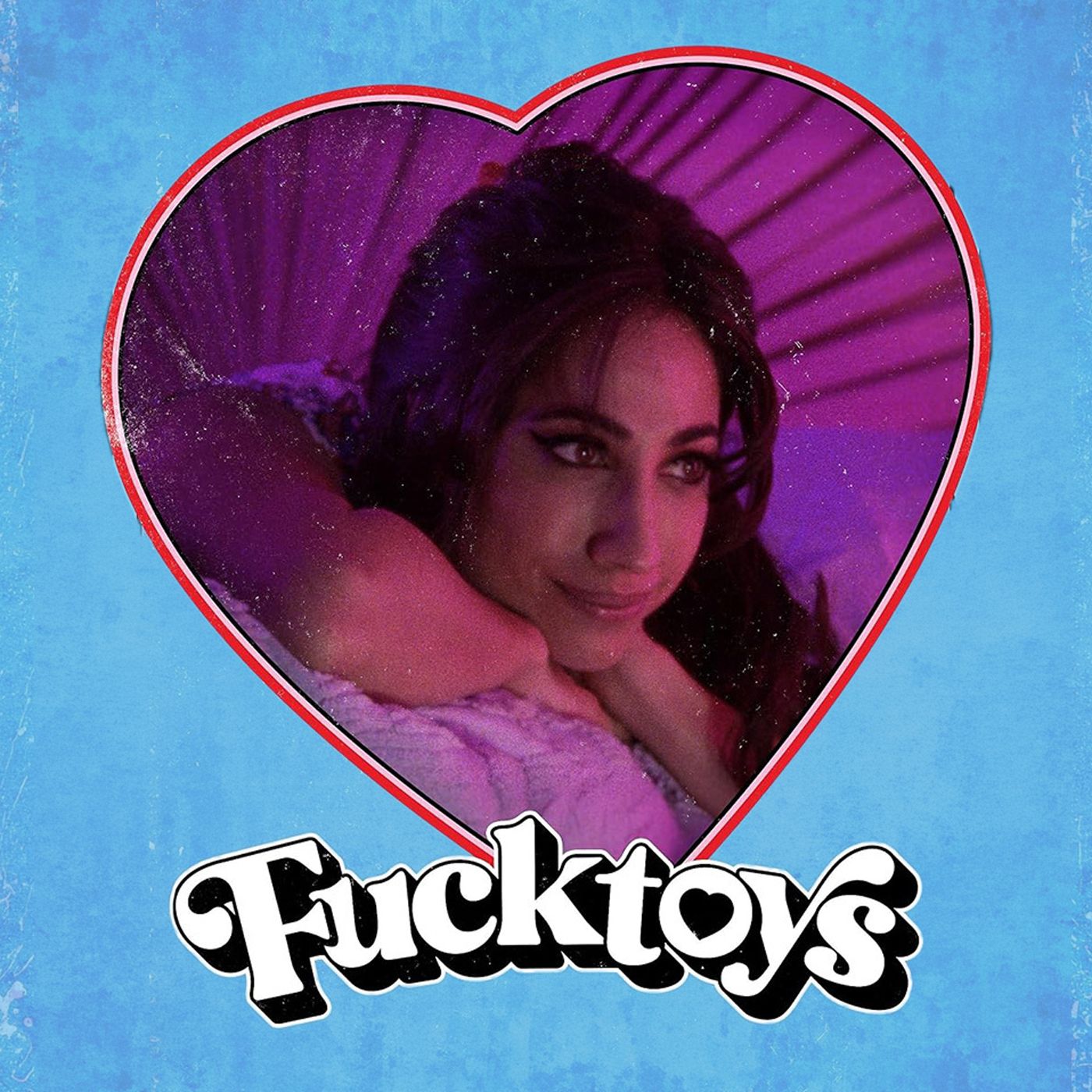
About this episode
The gang explores the film's John Waters–adjacent sensibility and its candy-coated production design, debating whether the aggressive tonal shifts and theatrical performances sharpen the film's satirical edge or tip into pure indulgence. They also dig into what the curse might actually represent, how Sriram's central performance holds the chaos together, and where Fucktoys fits within a lineage of underground feminist and transgressive cinema.
Also featured is an interview with writer/director/star Annapurna Sriram.
Transcript
Automatically generated, so expect the odd misheard name.
The Projection Booth podcast is sponsored by Scarecrow Video. Try out scarecrows Rank by mail service, Choose from over one hundred and fifty thousand films and give Blu rays, four k's and DVDs delivered directly to your door. Visit scarecrow dot com today. Oh g is folks, it's showtime. People say, good money to see this movie.
When they go out to a theater, they want cold sodas, hot popcorn, and no monsters in the projection Booth. Everyone for ten podcasting isn't boring. Put it off? So my tooth, it fell out of my mouth, old murder. Yeah, so what does that mean?
I mean it means that you have a curse on your honey. I'm sorry, I think you just said. Did you say curse? I'd be a curse, like a real curse, like someone cursed out of you. What?
Yeah, oh my die, I thought you died. I wanted to get a second opinion about the curse. A big six course. You're fine, she's what do you say? I'm just having them and we're leaving right now.
It's what are you? I'm a hoe? Whoa trash kids? Trash kids? I love trash.
No No, I love trash and You're gonna love me. Welcome to the Projection booth. I'm your host Mike White too. Enemy once again is Ms Peyton McCarthy. Seamus Hi so happy to be here.
Also back in the booth is mister Rob Saint Mary. These parties always remind me how much I hate white people. Feel that all the time. On this special episode, we are looking at the twenty twenty five film from Anna Pura shri Ram Fuck Toys. Written by and starring Shriram as ap The film tells the tale of a sex worker who's learned she's under a curse and needs one thousand dollars to break it.
She undergoes a series of weird, wacky adventures. We will be spoiling as we discussed the film. You have been warned, Rob, when was the first time you saw Fuck Toys? And what did you think? I saw this during the Way Out West Festival here in Albuquerque, which is the annual LGBTQ film festival, and they put together a nice magazine.
And I always have to decide what I'm going to go see, and this was one that I figured between usually the shorts programs I usually like a couple of shorts programs, and then I decided to pick this one. I can't remember exactly what drew me to it, but I loved it. I think as soon as I saw it, I emailed you and said, this would be a good one. It just spoke to for me other career filmmakers that I love, such as John Waters and Gregor Racky, but definitely with a different sensibility that I really loved because so much of queer cinema that I grew up on, like that era stuff is very male centered and I really liked that this was from a different point of view. Really enjoyed it.
Beautifully shot, it has a lot of the things, like I said, that I love about those kind of films. Oh, it just really spoke to me the first time I saw it in the theater and I had just a great time with it. I just laughed and really enjoyed it. And it's very heartfelt too, So it has a good core to it, That's why. And Peyton, how about yourself?
So I first saw this film when I was prepping for one of the festivals that I work with as a programmer, and it just blew me away. Immediately. We actually programmed it at fem Filthfest in LA which is another one of a programmer on it. And it's so light and airy and beautiful and funny and lived in and grounded and heightened all at the same time. Yeah, it has that John Waters quality, but yeah, it just comes from a very sweet but pragmatic, like queer place.
I like everything about the drive that it took to make this movie, and a Pernent took such a long time to do it, and she describes her aesthetic as neo camp, which I think is great because, yeah, it brings the old and the new together in such a brilliant way. So as soon as I saw it, I wanted to see it again, and I've been following its its journey through the festival circuit and beyond very closely. It's something that I feel like immediately resonates with audiences, and particularly queer audiences, and watching her take it around to different festivals that highlight work by and for sex workers or for the queer community, just seeing it fill such a need in those spaces to see people represent it in a way that doesn't feel dour, feels very playful while still getting it like the heart of how hard it is to be a queer person in this world.
Through this like surrealist lens just makes me so happy. Yeah, I have YouTube to think for this, because I remember getting a screener of this forever ago and I can't remember which film festival it was, but it caught my eye. I thought, Oh, this looks very interesting, and then for whatever reason, I just never caught up with it, had a copy sitting and then yeah, I had Rob prompting me. And then I think it was Peyton the last time that we talked, and you were just gushing about this movie because you were about to see it again or maybe hosting a screening of it. Spoken to Anna Perna for a piece I was writing about something I'm calling girl Hohrror for Reroom Moor, and talking to her again, I was like, I need more of this movie in my vans right now.
She is absolutely delightful. I'm really excited to be able to share an interview with her later on. In this episode, she just cracked me up. And usually I can keep my shit together pretty well during interviews, but she just made me laugh very very much. So I really was super happy talking with her.
And yeah, what a great movie. And everything that you guys said is exactly what this is, just this kind of lighter, joyous I just love, like you said, lived in ness of it, and I just want to hang out with these characters. I want to live in trash Town because it just feels like such a better place to live than the hellscape we're in right now. Let me come to the diner and get some of those powdered donuts and talk with AP's mom and just have a great time of it, please, because I really enjoy everything that goes on in this film. And I think that's why it really worked for me, was it had that quality much like why I love Pink Flamingos, or why I love Desperate Living or Female Trouble, or like all of those early Waters films, that she brings you into this community.
She introduces you to these various people. You can kind of figure out why they're together, that they are these outsiders, they are living on the margins, and there's a care there too, where it's like those who are in are cared for, and there doesn't seem if there's one thing that's different in here compared to the other two that I talked about is that in granted, this shows an evolution of how queerness in culture and in film is, but like water stuff and Iraqi stuff can be dark at times and can be very especially Gregoraki's stuff, I mean, because he was dealing with eights and that and working through that in the late e adies and in the nineties and the core of his really great period of films are so there is a lot of anger in there.
And it's not to say that there is an anger in here, but it's much it's a lighter as you were saying, Peyton, it's lighter. It's there's a tone that's different. It's not that the outside world isn't coming in on us. We've built our own world. We have our own codes, we have our own manner of existence.
And it's beautiful in that way. And that's why I really loved it. Like you were saying, Mike, that I would love to live in it. When I think to it, takes a second for me to try to articulate it because it is such a piece in that way. And that's like I say, why I brought it to you, because I was like, I just really related to this in a way.
That I just didn't expect. I mean, it hit me out of I don't know. I think I saw maybe a dozen films between shorts and features over a week at the festival, and this one really kind of stuck with me in a way that I didn't expect. I mean, it's sly in the way that it brings in its critique right where when I was talking to Anna Parna, she was saying that she was trying to take it from a pure kind of russ Meyer's neo camp can Russell grindhouse type vibe with the pulp elements and slowly bring in more critique and more gravity in terms of questions of violence against women and sex workers and the way that queer people have to navigate life. Right, so like when they leave trash Town, when she leaves Trashtown and ends up in what is just clearly la for that climax there, it feels very real.
I also just. Adore the way that this world that's being built is hermetically sealed against like cis heterosexuality. Like it's really fun to see as movies about sex work become more and more recognized. Obviously, you can think about things like Anora being front and center in the culture. There's still the risk you run of exoticizing people, and this movie completely flips that script.
Like, the people who are being exoticized and poke to are the people who make who you know, like exoticize sex workers. There's that great sequence in the strip club where it's just one cartoon man after another, and that great moment where one of her clients is like, what are you referring to her race? And she's a'm a ho. It's lovely on that score as well, while still remaining deeply empathetic to people who actually go to sex workers. Right, That character who views himself as like a father figure at some point where they're negotiations between his life and her life are are generally kind, even as he's presented as a mess.
So yeah, it's just a deeply empathetic film that manages to be hysterically funny. I'm very stressful all at the same time. That character what's his name, Robert I think it is, and he I think he knows what a mess he is, which I really appreciate that he's not trying to put on airs, he's not trying to impress her, and it just feels like what sex work is like he has a need for something and she's willing to fulfill it for a price, and I'm just like, yeah, great, that's terrific. I mean, I love when the character Danny is brought into the film and you can just see how smitten Ap is with Danny and that they are, for lack of a better term, googly eyes at each other, and then you realize that that is while they are peeing on one of AP's clients, and I'm just like, great, I'd love that they have this connection and that they Danny is just you make money from this, and it's like, yep, yeah, you can have some fun times.
And then that whole scene with I don't want to mispronounce the name because it sounds like James Franco, but it can't be James Franco, right, It's got to be James Frane Cone, Yes, and just what a scumbag this guy. But I really appreciate that Danny always has the upper hand during that whole encounter and just really puts this guy in his place. They're so awesome. Sadie Scott is so excellent in this movie, and that's one of the myriad beautiful Catharses of this movie is just getting to see a non binary stud love interest just rocking out in a cowboy hat in this movie. It's just so awesome and they're so talented, and they have I think the most Iraqi quality in them where they're just driven by this inco hate rage that keeps getting them into trouble.
It reminded me a little bit of Love Life Bleeding, where Kristen Stewart's character is just at the mercy of her giant hulk girlfriend's rages. It's fantastic. The other thing in here, and this is I think where I was picking up on the waters piece, is that it's the people, like you were talking about the client who helps them, who understands what a messy is. It's those who embrace their messiness are the ones who survive, not necessarily survive, but they thrive. But it's those who are trying to hide it.
So you were talking about the James frank Kun character who's, oh, you got to sign this this nda you know, if we're going to play around, and then you get to the guy at the end who obviously is hiding something deeply and is it's those who haven't who have to cover or who have to put on a show for the outside world in some way, who are the most crippled in horrible people in the universe that we have. And I think a lot of that also goes back to like I was saying about waters sestack, because that was the thing that for a long time I didn't know it was there, but when I looked for it later, that's what I saw, was I saw that reflection that he was like, No, if you embrace your weirdness, then you win, you can thrive.
But it's those who are in the closet, I guess. I guess that's the corollari in some way, if you're trying to put on airs and that could be damaging not only to you but to others, which is definitely in the case in this film. When we get to the ending, which that ending and I don't want to get to it yet. Was the person who I went with my partner and I went, she did not like the ending, like she hated it. I was like, I think it works.
No ending in terms of questions of it being slightly more grounded than the rest of the film and in its themes and in its tensions. When I rewatched the film for this podcast, I was really struck by the parallels between, not just because the references that we've already been discussing are very clear, but I was thinking a lot about Cleo from five to seven in Beldejer, and you know, a particular more fem to me side of the French new way of esthetic that's here as well. It's like, also the cutting is just sensational, but that sense of doom that you get in Cleo from five to seven, which is also a film about Taro and curses in its own way, when she's walking through the park past those wonderfully surreal little radioactive cartoon cleanup men.
I was just thinking about scenes from both of those films of these women trying to like take their life and lives into their own hands and contend with the world around them. So I just wanted to give a little bit of a broader brush kind of a reference. What do you think about the psychic stuff, because we start off with her getting this reading and finding out that she has this curse and it's this whole I need one thousand dollars to take the curse off of you, and then she seems to kind of like a medical thing. She seems to get second opinions, maybe even third, maybe even fourth opinions, and is trying on her own to I think, avoid paying the thousand dollars. Like the idea of them to take the curse off, they're going to have to get a sheep and slit its throat, and I love the way that the reader does that with their nails across the throat.
It's such a nice gesture with those long fake nails. And instead of a sheep, they end up getting a goat, and the goat becomes part of the narrative as we go along. But what do you guys make of this whole the psychic thread that goes through this movie. From my perspective, like my second book is all about representations of witches and witchcraft in American cinema over time, and this feels like a you know, just from a pure magical standpoint, not a narrative standpoint. I really enjoy this movie's relationship to magic because it feels very present and part of what I talk about in my book, that very which is the way that kind of neopagan spirituality in Wika has come to the forefront of American culture over the past decade or so, where pretty much everyone I know has like the co Star Astrology app on their phone, and like everybody knows their sign and people ask you what your sign is, and I have six tarot decks in my house.
I and so it's just one of those things where the how casual they are with it feels very true to life in that people feel these vibrations and they feel this sense of something bigger and have to articulate it in different ways. You know, you can look at it in the film as either metaphorical as a way to talk about the systemic challenges that she's facing as a sex worker in the world, or you can talk about it on a more cosmic, mystical level, and it works just as well either way. Which is why I think the ending works so well, Because I was watching this movie just now and other person I was watching it with was like, but but why does that have to happen? And I was like, because she's cursed. It's a really nice plot device because then anything bad that happens is because she's cursed.
That's not denigrating the writing at all. I think it's wonderfully written, but it is just a fun and useful thing to have in your movie. I'm that score as well. I saw the curses metaphorical and also as the outside world, that the outside world put this on you and you have to contend with the outside world. It's interesting, Peyton that you bring up the expansion and interest in the culture in tarot, the occult astrology, and this is especially true in queer circles.
I know I have lots of queer friends who were in that. But also I Mike, I think this is interesting because this brings us back to going to reference another film here. But when we talked about The Howling, when we did The Howling years ago, and we were talking about how in The Howling, there's all this discussion of est and all of these sort of self help practices of the seventies. If you go back to the late sixties and in the seventies, especially the seventies, there was this whole boom in astrology and hey, what's your sign baby? All that corny pickup line stuff that we see.
But ultimately, if you remember from the discussion on that show, we were talking about how why was that? It was because all of the quote unquote pillars of society at the time had crumbled. You couldn't trust anyone, you couldn't trust organized religion, you couldn't trust politics, you couldn't trust basically anything. So people were pulling from all of these different places to try and fill the spiritual void that they were dealing with. And I think in a lot of ways, yeah, as you said, you know, I'd rather live in trash down than in the trash that we're living in now.
Again, we're in a similar period. It's even worse, it's even heightened, I think. But then again, you know, I'm not seventy years old, so I wasn't in my twenties in the seventies, so I can't tell you what it was like to be a young person. Then I can only live it through through talking to elders and reading. But I think there's a similar kind of thing going on there in terms of why people are embracing these various spiritual aspects.
And I think the use of it in here too relates to the ending and the sacrifice. And that's what I saw with the ending, and that's why the ending worked for me. It's all tied together in that way, and I think as you were saying. It's a good way to keep the plot. I'm just cursed, you know, he thinks this keep happening.
In my book, which Mike and I have talked about before, but I trace the rise and fall of feminist movements over time and correlate them to the rise and fall of neopagan and neo spiritual practices and how those things correlate in the movies. So it's the occult revival of the sixties is a huge one. Before that, you can look at the twenties or the Crowley eight thing going on in the forties, and then the post Satanic teen which phenomenon in the nineties, and then the twenty tens. Although the question now really is where are we going this movie? As many queer films do and like this beautiful and I wrote about this in my Girl Horror piece too, but this movie isn't alone in its use of magic in queer and women directed films, where you have just this year coming out in the next couple of months, or just out, you have The Serpent's Skin, which is Alic Miyoamakay's new movie Camp, which is avalon Fast new movie Forbidden Fruits, which is coming out in a couple of months, and the Adams family just came out with a film called Mother of Flies last month.
And these are all very. Magical, very grounded, very queer stories about these exact kinds of themes. So it's very cool to see because the mainstream in its depictions of magic right now, we're going back to the eighties in a real big way, from Psychokiller to long Legs to weapons. We're just we're getting that old school satanic panic vibe back. So the push and pull is fascinating.
I'm on the same page with y'all, but not everybody is on that same page. There was an article that I read that was trying to make the whole thousand dollars psychic payment to remove the curse more of a stand in for the need for an abortion, and I just don't see that. I think had this movie been made by somebody else or come out twenty years ago, that might have been the case. But I really don't see this as being some sort of stand in for an abortion narrative. I mentioned how she gets a second, third, fourth opinion from different psychics, and I could say, you know, the medical profession is failing us.
I know it fails me all the time, but I just I don't see that. I don't see this metaphor of her needing an abortion, and that's why she is getting these opinions, and that's why she needs this thousand dollars. I think she needs a thousand dollars one yes, to take off the curse. But also, it's really fricking hard to live in this economy, and she really makes that very apparent with just how hard she struggles to make money. Like most of her housing situation by itself, right, like when she's too far from her little magical donkey skin to me location, like every motel says the I'll kill you in right, it's just a dangerous world and you need money to survive in it.
You could use curse as another c word capitalism. I can totally see that in here. It's such a big deal. Like when she ends up sleeping with the one waiter and he gets fired and it's just that's not fair to him. She came on to him kind of thing.
It's really not like he shouldn't be fired for this stuff. And I can't remember if she gets fired at that moment too, or not, but it's just, hey, come on, Yes, she needs a gig, she needs to be making money, and it's not just for the one thousand dollars curse removal. Just people got to live. And yeah, this whole movie feels very like we are on the edge, the raggedy edge of capitalism through this whole darn thing and just how tough it is to survive. She gets fired for quote unquote stealing from the guy who hired her, which, in the context of that party, right, she's there to provide sex for the rich guess of this man.
And what she actually does is she goes and spends a little bit of time having sex for her own pleasure. So the thing that she's stealing is her own time and her own sexuality when it's on the clock, right, So the dehumanization of sex work in that scene is incredibly telling for the structure of this movie and what money does and how this works. And also this is a much like something like After Hours. It's a ticking clock movie because if she doesn't get this done, then thing hideous will happen. Her teeth are falling out, her hair is falling out, right, crushing grind of capitalism, which when After Hours starts, that's also very much a movie about money.
And he just doesn't have enough money for the train. And when you don't have enough money for the train, then suddenly you're you're in hell. So that mean guy who's her boss at the party, who's got the new and visile lines. I love that little touch. She just can you understand what I'm saying?
And at first I'm like, is he like trying to confirm with her that the words are making sense? Like that whole like do you understand the words that are coming out of my mouth kind of thing, and they just oh, I had this damn new retainer. I love that everything has to have a little twist on it and that there is even Yeah, it does get pretty dire in the third act with the mechanic, but for the most part, it's pretty darn fun. And like you said, that's when she leaves trash Town is when she really is in danger. You in danger girl again.
With that party, it's like you have to keep up appearances with the outside world. You have to present in a very particular way, and if you don't, then you suffer for it. So that I think is the corollarya of capitalism. I guess I mean it's I can't show up to work in certain particular ways. I guess I can't bring my full self.
You're expected to have the quorum, you're expected to act very particular way, and for that you can make rent. So isn't that lovely? Well, this is what I love so much about Sadie Scott, like their presentation being so unabashelor I mean introducing them doing fight club for fun and then putting them in this cowboy hat where they're just an unapologetic, like queer rebel character who messes everything up constantly because they refuse to code switch. But that's what makes them so satisfying to watch is, Yeah, they're going to be covered in blood and weird band aids, and yeah they're gonna have diary at this house when they shouldn't, and yeah they're they're gonna stand up for themselves because the kind of beginning of the spiral well for both of these characters is when they refuse to sign James Francones n DA.
And the way they talk about that decision is why should this rich guy get to say that I don't exist? So insisting on your reality within very explicitly within the context of capitalism framed by show business, I think is an excellent mission statement for this movie, which is made very independently by a very talented woman who was continually told that she did not fit like a leading lady framework, either because she was a woman of color or whatever. It was, right, that's what we were talking about when I interviewed her, was like, she was like, I don't want to ever get an offer to play a nurse ever again. So breaking those molds and insisting on your own personal reality is really central. And can we talk about how beautiful this movie looks, the use of the lighting, the Sorry this might sound a little cud, but the blow job that she gives to Robert, where you don't actually see her mouth, You just see the light on her and it's this beautiful pink light.
And then you see the blue slushy tip over and she's got her blue tongue. You can tell that she'd been working on that slushy. I just really like that, the difference in colors, or when she sees the one and I think it's another psychic that's got like the tanning bed, and so it's got the glow coming out from the tanning bed, and you see Sadie Scott and they've got this great light on them, and yeah, everybody in that whole scene. It's just so much of this movie just looks so gorgeous. Sixteen millimeter is just delicious.
It's so textured. I want to eat it. It reminds me of cotton candy. It feels like a fruit loop, like I just want it to dissolve in my mouth. It's perfect.
And I was thinking of the credit sequence and when I first saw this coming from Detroit, Mike and I there was an air of what became referred to as ruin porn, where people would come to town to take photos of our dilapidated buildings. And the opening I was trying to think. I'm like, is this sort of the remainders of the Lower ninth Ward? I think of New Orleans or something like post Katrina. She's like tying that together that the people that have been cut off.
This is because there's always also this. It looks like, like I say, in my mind, it looks like two different things. And I know they have the same thing in Louisiana in that area there's a section of Houston where all the oil refineries are, and there's always this they're driving, you know, she's in her smoped at night, this oil refineries or heavy industry. So between that and the deconstruction and that house. When we first come to that house, there's a lot of ruin and reclamation and sort of building out of the ashes.
That felt very I don't know if other people didn't grow up in that or see that as part of their visual aesthetic where they live, but definitely post industrial Detroit also came into my head watching this. I love to the little touches that they have throughout this movie, like when they go to buy I think they're buying food and there's the wall of wanted posters and they're all pictures of Danny. It says wanted Cereal rapist and murderer, wanted for breaking my heart, wanted for changing their mind at the last minute, wanted for assault of a celebrity. So going back to the Frank Cone thing and then having the lost dog picture right in the middle of it, Lost Dog goes by Pepper. There's a couple lost dogs on that wall too, and I just love that their reputation really is out there for being this really nasty character.
But when you've seeing them on screens, Yeah, like you said, just urge control seems to be the biggest problem. Yeah. The dog subplot reminded me of Under the Silver Lake, which is also like a capitalism under belly entertainment movie. I mean it was a tremendous bomb as I recall, kind of cult success, but totally Yeah, and like that wall of posters, I think speaks to the strength of the like the familiarity of this movie. This is a kind of lived experience that anyone who's had sex with a cistat dude of a particular variety understands.
That's why Cat Person. That short story was explosive when it came out, like in the midst of the Me Too movement. Do you guys remember that short story? I don't think I do. It was about this woman who gets in a relationship, a kind of odd relationship with an older guy who treats her a little funny, but she thinks it's normal, kind of a manchild thing, and then eventually she wises up and breaks it off and he just will not stop texting her.
And the end of the story that hit people so hard. Was him being like, I want you back, I want you back, I love you. Whyn't you responding to me, I love you so much? Your account So these posters and that whole dynamic on display of seventeen different ways to say you didn't do what I wanted you too, and I thought that you should just hit really well for me. Yeah, there's quite a big chasm between serial rapist and changing their mind or breaking my heart.
I can definitely see this. I don't know why the cat person's story just completely passed me by. The only thing I remember during Me Too was the shared document like we have here, the Google doc that was like a giant list of all of the media people that were horrible, and people just kept adding. It was like women who just kept adding and said, oh yeah, this guy and this guy, and it just became this sort of master document of horribleness. So I just remember there was that, and then I think there was another that was similar that was passed around, which kind of reminds me of Jane Ward's book.
I like. Jane wardis a theorist, and she had a book called The Tragedy of Heterosexuality, which was about if you say that you are supposed to be with each other and this is natural, like why do you have all these problems, and just goes through all of the problems with cis relationships, like just a head of her relationships, and it's a great it's a great read. I don't know if it was that I was out of the country when the Me Too movement was starting, so I just was only picking up a little here and there kind of thing. But I thought I remembered a lot more. But I don't remember that list of people or anything.
I just remember the stories continuously coming out, one after another after another. And that was twenty seventeen. We're not given a decade away from that, and the news headline about Max Landi is getting a new gig. It's great, terrific, the Luisy k come back talk, all of the times that Kevin Spacey rears as ugly Head, makes weird old videos about barbecue and things. Fewer women directed films this year than last year.
And then in terms of the Occult revival stuff, we're experiencing a similar reversal where the end of the Occult Revival technically speaking, is around seventy six seventy six to seventy eight, which coincides with the Jesus Revelation, and word of the increase in Christianity in this country has been vastly overstated. It's not actually that we're getting more christian it's that those Christians are being platformed. As the Jesus Revelation that was an explosion of evangelical Christianity that materially happened. This is interesting because it's we're platforming those people as we did with the Moral Majority stuff in the nineties, and there had been a decline in Christianity happening over the course of the past decade and a half that has itself stopped, So that's still a really dramatic change.
The cultural headwinds are turning, which is why we need art like this more than ever. It's the only thing that feels like good when everything else feels like the actual trash surrounding trashdown. I wanted to ask, how far do you want to go into the ending or do you want to leave it as this? I don't know if we just want to leave it because it doesn't have distribution yet, or that might be. For the best.
I think Anna Pernam would probably want us to just type the movie without spoiler. We're going to take a break and we'll be back with an interview with Annapurna Shiram right after these brief messages. Looking for something superior to streaming a place of more than five times the selection available on all of the other streaming services combined, check out Scarecrow Videos rent by mail service so like from an unparalleled collection of over one hundred and fifty thousand films, and get Blu rays, four k's and DVDs delivered directly to your door. Get in on it now at scarecrow dot com and rediscover the wonders of physical media. Can you tell me how you got interested even in show business?
I must have been when I was in like third grade or something. I wanted to do theater, and I did an after school sort of theater program when I was a kid, and then I did like camps, and I actually got myself an agent when I was in seventh grade. I grew up in Nashville, Tennessee, and my mom was very supportive of me and my brother of having, you know, like hobbies and doing things. But when it came to like show business, she didn't want me to become shallow or superficial, and she wasn't going to be a stage mom, so I think she was kind of like, if you want to do this, like you have to do it yourself. So I met this girl at my theater camp who had an agent, and he gave me this person's website or email or something, and I just mailed in photos of myself to her, and then I had a meeting, and I did like little things in Nashville, like music videos, little educational videos.
I had an acting coach I worked with. I went to a performing arts high school, so I was very engaged, you could say, with theater and storytelling. I used to make a lot of movies also at home and edit them on my dad's old iMac, like those big ones. It was like the Turquoise one, and it was like the very first emovie ever. So I just taught myself how to do that, and I would just make movies mostly with just like my dog as like the actor.
So I think I always had some kind of draw I think to whether it was like theater or storytelling or making a movie like something like that. I was always interested in. And then I went to an acting conservatory for college. I had a learning disability, so I really didn't think I could manage at a regular school. And I got a BFA in theater and then I went to New York and that was my how, I sort of how I entered the showbiz and quote unquote good say.
You bought in from the beginning. That's amazing. We weren't allowed to have cable, we weren't allowed of video games. So I feel like when you were trying to entertain yourself, I was that kid that would write a play or do a puppet show or make a movie because it was sort of a thing to do that felt exciting. I just didn't have anyone else to collaborate with.
And the funny thing, and the most sometimes frustrating thing about filmmaking is you actually need so many other people in order to execute them things. It's not like paint or writing a song, you know, which you can kind of do on your own. Did you eventually say like, oh I went to the city play or something and saw actors. Oh yeah, Well, we rented a lot of movies, and so we had Blockbuster. You know, we'd go to Blockbuster on Friday.
My mom would also want us to rent movies from the library, and actually one of the first movies I remember seeing that really like scratched an itch in my brain, was my older brother was having a sleepover with his friends and they were watching Snatch, the Guy Ritchie film, and I became obsessed with that movie the opening credit sequence. And it's funny because I was really young, I was maybe nine. I didn't understand a lot of the movie because their accents were so it's been siffing, But I watched it a lot because I liked the way it felt like. I liked the way it made me feel. It felt gary and funny and gritty and leak.
There were so many aspects to it that really kind of gave me this this is cinema moment. And then I remember also renting But I'm a Cheerleader when I was in fifth grade, purely based on just being a kid in that like VHS Box just was like I thought it was like a kid's like I didn't know what like I had no idea what it was. That was also very naughty to me, Like I really enjoyed how naughty the movie made me be. And then I also remember one time I had my cousin was visiting and we rented Polyester from the library and then we made a bunch of videos re enacting Polyester. And this is another thing where it's without any context.
It's just a funny movie and we just thought it was so funny. I had no concept of camp, of grindhouse, of exploitation, of any of these genres that it's sort of I think part of it was purely as a kid, just like this absurdist movie. I also remember my mom renting Bad Taste and Cemetery Man, Like we just one time my mom rented Clockwork Orange when I was in middle school and we watched that as a family because she was like, this is a classic film and had not remembered any of the graphic elements of that film. So I definitely had a lot of influences. And I think the most incredible thing is that because there wasn't really Internet or you know, my parents are kind of philistine in a way, like because there wasn't a lot of context, I was just like consuming random things and it was like, these are movies like this is this fubble, this must be every which maybe explain some things too.
Now. I mean, I can definitely see some of those influences on Fuck Toys for sure. Then when I became older and I was an adult, and I then seen so many more movies, I was so bored by independent cinema, and I was really bored by I have an appreciation for mumblecore, but I think I also had this frustration with this sort of neorealism. I almost want to say formula that is like sort of American indie filmmaking. And because I loved by that, by the time I was in my twenties, I was exposed to you know, Gregor Rocky and Jim Jarmusch and Dereck Jermaine and early Catherine Bigelow films.
You know that I think my taste. I just felt like, what has happened? Where did all these other movies go? What happened to American indie cinema when stuff was kind of weird and surreal and artist or camp or Reverend, you know, all these other tones that I feel like, I think we're still in this kind of dry spell that I think we're now kind of climbing out a little bit. But I think, you know, I was really just like hungry for those kinds of movies and I just, you know, I was like, where are in?
Which is part of what made me write fock toys, I think the way I did, and and sort of going that hard in that direction. Tell me about when you moved to New York after I imagine this is after you graduate from college, And what were those early gigs like for you? And what was that life? Oh gosh, kind of embarrassing. I did a lot of theater, and I initially did a lot of Shakespeare.
So I did a play. Was it much to do? I think it was much to do? About nothing I did in New Jersey. I did a production of Pericles in Berkeley Rep.
I did this very strange playing at in DC at the Folger called the Conference of the Birds. And then I did some off Broadway plays. I did Jesse Eisenberg's play The Spoils, which then we did on the West End. I did Wala Shan's play Evening at the Talkhouse. And I also was booking like a recurr character on the Blacklist or Billions and these little tiny indie films or short films with friends or people I knew.
And when I was on like the Blacklist, I remember having this like really kind of intense existential moment of this is so not fulfilling, Like this dialogue is boring, my costume is boring. I look boring. Everything here is boring. It's like information, We're just like vomiting at the camera. And this is what I've been training for, this is what I've been working as an actor and as a creative to do this type of move.
This is the work we're doing it. And I began to feel, you know, really frustrated with what I was able to book as like a sort of mixed race person, and also just the stuff I was auditioning for. I felt like scripts were really boring or really predictable or pedantic. I felt like there's this very pedestrian sort of comfort that a lot of scripts had sort of gotten into, especially like network television, felt so just safe and boring. And I was having just this internal conflict of like why am I not I want to be in like all the Perker Posy movies.
You know, I want to be a girl, or I want to be in like a Christopher guest film, or I want to be in you know, I want to be in these things and work and be collaborating on stuff that feels so much more elevated and absurdist and heightened and theatrical, and that just isn't wasn't sort of on the market, And so I think, having read so many scripts, I felt like when I was started writing, which sort of came out of feeling like I just need to take over, because if I sit and wait for a job, it's just never going to happen. And I remember when I would write feeling like, Okay, if this starts to just feel like a bad indie film, I have to just like cut that page or cut that line. You know. I have to be very strict with myself to keep everything feeling really fresh and new and innovative and original.
You talked about how being a filmmaker when you're a kid, you know you've got your dog as your co lead. Here, what was it like for you when you started working with other people and just having that more of a collaborative environment. I felt very lucky. My actors were incredible, and like my cinematographer Corey also incredible. My producer so aligned with me, same with my editor, and I feel like we have this saying, especially during the many years of pre production that we were in which was to always look for our spiritual warriors and to find your spiritual warriors.
And I think that's really such a key to this, because if you're trying to collaborate on a project and you don't feel like there is this sort of kinship to what movie you're all making, there's just going to be I don't want to say conflict, but there's just going to be extra work. It creates more work for you the director in just communicating and sort of translating your vision, Whereas when you have someone who clearly just understands what it is, that layer of sort of communication is gone and you're able to just kind of bounce ideas. And that's my favorite was really the most clear to me with my editor, because she just was like she's a centophile. She was just like, I know exactly what movie, I know all your references, I know what me this is.
I'm looking at the footage. I've read the script like I see it in my head. I know. Like she viscerally was like, I mean she has this story where she's like when I first call sort of emailed her and she saw the stills and she like saw the script. She was like, my stomach dropped because she was like, I just understood this, and I think that that's your Your goal is always have everyone is like that, that's just not a reality, especially on a low budget film.
But I think the goal is to be constantly searching for those people. And I felt incredibly lucky that so many of the key members of my film were on the same mission as me with the movie. And then when it came to actors, you know, coming from theater, I knew how many and credible actors there are that are trained, that are professionals, that are pros, who just don't get these jobs because they're not famous, because they're not an influencer, because whatever. And I have a lot of support from my producing team when we were like, look, this is an ensemble film, you know, shoehorning random celebrities and all these tiny little parts is not really going to move the needle when it comes to selling this film.
Let's just cast the best actors who are there, who audition, And I'm also really excited as a director to give them an opportunity to play. And so my job, how I see it as a director, is I'm just going to build a sandbox and then you come and play in it, and I'm just going to sell you. I'm going to film and if they're having fun, then I'll get good footage and we all win. Sadie Scott especially is just breathtaking. She's amazing.
Did you know her before this? Yes, so Sadie I had actually seen in a play. And they're non binary. Actually this film was there in their audition for the film. They in their slate, you know, for the audition they came out as non binary, and they're kind of like looking into the sun, and the sun is also kind of River Phoenix.
It's like they're gorgeous. They're hot, but they're also incredibly angelic and pure. And they were very hungry, you know. They really wanted the part, and they were emailing me and dming me, and I really connected to that. Having been a struggling actor, I felt like I know what it's like to really want something and to not get it, and I really want to give them this moment.
And I also had been having a lot of conflict around internally on how to cast the part, because I didn't want to cast a sis man, but I also wanted it to have a lot of masculine energy, and they just were like the perfect sort of you know, the perfect vessel to capture that because they brought so much of this like sexy masculinity, and they also brought so much just pure youthful sort of virgin they're not you know, they're not virgin, but this sort of virginal baby lamb you know texture, and you know who they are on set as an actor is they're just open and they're so earnest and trusting. And I think that's part of why we work together so well, because we're both very earnest, Like, even though the film is very balls of the wall at the heart of it, I'm a very earnest but sort of aldsome sentimental person.
We were able to have this, I think, very like beautiful connection. As soon as you came up with the idea for this, it was just like, Okay, somebody came along handed you a pile of money, said okay, you're going to direct this. You got this, there's no problems, and it was just green lights all the way. Yeah. It was just like, yeah, it happened in two days.
No. I wrote it in twenty seventeen, and one of my professors from my acting school I went to acting school and Wreckers in New Jersey. So New York to Rutgers is like a fairly close commute. So one of my professors actually helped me develop the script. For about a year.
He would bring in his students and they would do table reads so I could just listen to the flow of it and then make edits. And then in twenty nineteen, I was on a short film and that's where I met my now producer because he was producing the short film and Francois or Not who's in my movie, was also in the film and he read the script during that little production, and then at the party he was like, Tim, you should read her movie and make her film. It's so good. And then that's how it started going. And I was like, we need to find a director, we need to find money.
I think we could make it for two hundred and fifty K. I had this guy that was maybe gonna give us one hundred K, so we were sort of going to cobble together the financing. But it was really my producer, Tim, who was like, I think you're a director, and I I was like, I just need this job. I just need this acting job so I can go get other acting jobs. This is just a vehicle for me to jumpstart this career that isn't happening.
And then it took me, I think a little while we made like a sort of failed short film to just sort of have me practice directing. I felt very comfortable, you know, communicating with actors. I just felt very insecure with sort of my knowledge of camera, of lens, of shot listing, of lighting, all of the other aspects that go into sort of shot composition. And we did this sort of DIY film school and now we're like going into COVID. So we met in twenty nineteen and so now it was like kind of COVID.
So I just threw myself into what else am I doing OVID? Tim would be like here, read this book shot for shot, or I have one right here, film in art. He'd like literally in the textbooks. And I would just try to like get a grasp of shots. Why use certain shots?
Watching a ton of movies, building a ton of scene boards, building a ton of they're kind of just like decks, like art boards, costume, color palette. You know, I just tried to you know, you're really trying to fill your time and it's sort of that was this beautiful in retrospect. There was a lot of anxiety in the moment because it was COVID, But in retrospect, I'm like, wow, what a beautiful time that was where I had this freedom to just kind of jump, you know, deep dive into designing this film, and I test shot it with my cinematographer. We like went to a house for two weeks and just shotless to the film and then would get up and like test shoot it on a camcorder with a phone. So I did a lot of previs, which is now why I know what that is.
At the time, I was like, it's film school, and I'm like, that was just prep and that's what I should do every time. And then that kind of helped get other people involved, department heads, actors, financing. That just helped also, I think support my attempt at directing for the first time was also having this like body of here's all the prep I've been doing. And then twenty twenty one, we got a little bit more money. We were going to go film in Louisiana, and then Hurricane Ida hit in the fall.
We had to push our shoot and know and the movie is about a curse, so there was a lot of external forces that really felt like we were dealing with the curse, you know, COVID, Hurricane COVID again, because then we had this like spike of COVID during our shoot. We would have actors in other states basically like hey, I can't fly, I have COVID, and then we'd have to constantly reschedule and repush all of the scheduling. So we ended up shooting in multiple units over the course of the year of twenty twenty two. We did this sort of b roll shoot in September of twenty twenty one, then we did a main unit January February of twenty twenty two, then another two weeks in June twenty twenty two, and then our final two days in August.
And then we were broke, like personally in the movie, and we came to LA and we had to kind of wait a little bit, raise some more money, start post, and then post we really took our time. We were kind of like, fuck these festivals deadlines, Let's just make the movie and not worry about any of this like kind of arbitrary timeline. And then we submitted to festivals in the fall of twenty twenty four, so only yeah. So, like I said, all green lights across the board. We're super quick, and now we're broke again, and we're trying to figure out how we're gonna get this movie in the theaters how or high water.
We're like, either we have to crowdfund marketing money, we have to just try and raise more money, or we just have to see if we can do it and run some like instagram ats. It's very challenging to make an indie film and then get it into culture. And I'm sure the title is a little bit of a problem as well for some people. I think the title could be a little bit of a problem. However, there's a lot of stuff coming out with the word fucking it.
We have no focks given Kevin Cang go fuck himself, fuck Mary kill. So I think what I've been told is it's the like sexual connotation of it, which I'm also like, okay, but like we're in the world of serving kunt and wet ass pussy and are like politicians using the F word in Twitter. I feel like we've moved past decorum and a lot of the title for me, and I think for a lot of the team on the film really felt like taking a stand at censorship against censorship, and I think, especially when it comes to queer cinema, there is this tradition of reclamation and of taking this language, taking, you know, especially for women, this language that is very derogatory and dehumanizing and basically flipping it on its head and making it this kind of silly, playful goofy I call, and then making this movie where it's all about, you know, in my opinion, being a woman in late stage capitalism, and so I think at which I'm like, we're all in fucked toys, you know, in this world.
We felt very strongly about the type of movie that we want to make. Audiences are hungry for this type of movie, I think, especially in this time now where indie film feels very co opted by studios, by media companies that we don't know what their political agendas are, you know, having a film that really feels truly indie, truly outsider, truly non dependent on the system. I think the title kind of flags that, and I think audiences respond to it. So on the one end, I'm like, yeah, we could change the title, but I think we would be selling out at some level if we did that, I want to. Know a little bit more about the soundtrack, because I love your music choices.
I'm a music nerd in a movie nerd. So I had sort of started building that maybe like eleven years ago, I had this roommate and she would really expose me to this like incredible psychedelic soul, surf world music, and it would be like surf music from Vietnam or soul music from Kenya. It was just like this like random like Cambodian psychedelic rock. And I started building this like playlist that was like future soundtrack music. It was something like I was thinking of it as like all these songs to me felt like they should be in like a Tarantino film, or they felt like they were just cinematic like soundtrack music.
And I had been building this list and then as I was working on the script, I would just like, hone in on my playlist and oh, we could put this song here. Like I was trying to fit the music I liked into the scenes that I was writing. And then I thought, Okay, this is great. None of these songs are huge, huge songs. We could easily get these.
For the famous last words, it. Sounds like yeah, because when you have a song from Syria or Iran from the nineteen sixties, it's super easy to track down the artists and figure out who owns the public game and the master. Or we had this song from Trinidad, the USSR song the people. We've finally tracked them down. They don't have email, you had to WhatsApp them.
We had this music from Peru from the sixties. The artists had passed away, but it was owned by the children. We had to find them. It was like a where in the world is Carmen Sandy get It was like a like a treasure hunt. Nancy drew search Looth just to find where who owns it, where is it?
Is it possible to get it? And then we were also using a lot of music in a stock library. And then what was really incredible is in that stock library was all of this archival Bruno Nicolai soundtrack music. So we were able to like supplement in this like archival sound, like giallo sound when we needed like a piece and we wanted My editor is also her dad's a musician, so she has like a very like musical sound. So she and I really also connected on We want an orchestra, we want like a swell, we want all the instruments.
You know, there were some songs I had to let go of that were really tragic, mainly because I was like, this is music from Syria or Iran or Cuba or something, and it might die in culture because we can't find who owns it, and then we can't use the song to kind of bring it back into culture. So I was having this kind of grief around these pieces of these artifacts I think disappearing over time. And my next film I want to make is very country music, and I try not to use any country because I'm saving it. But you know, in that same vein too, it's all like fifties sixties. I love a retro analog sound.
And look the. Opening of the film with you on that scooter and that cool song playing and everything. Yes, oh it's so great. Yeah, And I think it like does something to your brain because it feels like Roman Holiday. It feels like these movies that you have the figment of anment, like a memory of that is of Yesteryear that we don't really make anymore.
But I love your poster too. To talk about retro what's wrong? This is all I wanted to do. It's hand painted. It's a hand painted poster.
We were really influenced by these like Italian French movies Bollywood as well, and I was like, I wanted to feel like this mix of Bollywood Italian in and have it be like a painting, like in the way that the old movie posters also felt like standalone pieces of art. We were like, we should make something that feels like its own piece of art and isn't just like a movie poster. And I would love to make ones for all the cast and then harrow cards with all of them that in that style, so that they can kind of each have their own character, key art, hand painted piece. But it's consuming, it's expensive, but I love that the world of the film can kind of extend into these pieces of physical media. Tell me about the premiere and how is that?
And then where has the film gone since then? We premiered it south By Southwest almost a year ago, and I feel crazy. The movie's almost one that's like the giving birth moment. I was pregnant for a long time then I gave birth. The premiere was really overwhelming for me.
My parents were there, I had a lot of friends, I had the cast, I had a lot of crew. It feels kind of like hosting, like your wedding, but like you don't really have a lot of time kind of for yourself to process what's happening. You're sort of managing a lot of people. And I really was terrified for of my dad seeing the film, and I sat kind of next to him in the theater. So the actual premiere was just stressful because I'm feeling my dad next to me watching this film that's very smutty, and he's very like not that.
So that was kind of a lot. I just wanted it to be over. I was like, I just want this to be and then it was, and then it was a huge relief, I think, to just kind of get it out. And then we embarked on a super long, super extensive festival tour. And you know, my producers and I, we didn't have a sales agent when we premiered the film, so we were like, we got to get a sales agent.
We got to try and solve the movie. So we really took the year of touring the film and using that as like a grassroots campaign trail tour where I traveled to as many praiss as I could. It was like, it's important for me to meet people, to talk to people, to engage with the audience, to be available. We started selling merch because we needed to make money so I could keep traveling along with it. And it really became this machine of okay, like our job is to just spread the word, build momentum, and build awareness for the film.
And I think this is like such a good lesson for indie filmmakers right now, because it's very unlikely that you're going to show your film and then someone's going to walk up to you and be like, I'm going to buy it for a million dollars. That's just not the reality. And then when we did start to get some offers from distribution, that is a very depressing email because it was like, hey, we want to buy your film, we let it zero dollars, We're going to take it for ten years. And I've been with this movie for so long, from twenty seventeen, and my producer has been involved since twenty nineteen. It really was difficult for us to fathom the idea of letting this film go for zero dollars or or we're any number that to us, it's we've built this house and we've been laboring like we've never been paid to build the house.
It was always this, you were just doing this because we're passionate and because we believe in it. And then to have a buyer come and say, oh, I'll buy your house for ten thousand dollars and you feel like, no, my house is worth a million, or my house is worth two million dollars. I'm not going to sell my house for ten one thousand dollars. And that's the reality actually, and I don't think a lot of people are really talking about what the reality is right now for filmmakers, especially if you're not going to a major film market type festival where buyers are just there, if you're premiering at Tribeca or south By or any of these smaller but like prestigious festivals, is that the offers are either five million dollars and you're a huge film coming out of Tiff or zero dollars and there isn't this like in between.
And I think the other thing is that, and especially because I've toured this film so much, is I've noticed there's such a difference between when an audience has watched it in the theater versus a link. The beauty of cinema is it is a communal experience. It's like a telepathic community, community experience. You're all in this ride together. And I think that it's been very important for us to have a theatrical run, to give this film to the audience in the way that it was intended to be given to them, and for them to have that opportunity to see it for the first time in a theater with other people, with great sound, in that sort of liminal space of a theater.
And so that's been The other piece that's been really challenging is how do we really execute on our mission and on our intention when it's just us really behind it. So that's been the last year, and I think it's been challenging because I think film festivals maybe used to be these more celebratory spaces for filmmakers, and I think now they're starting to feel more depressing because it's a lot of filmmakers commiserating with have you sold yours? Have you sold yours? No? I got zero.
It's this kind of collective realization of oh, yeah, we're witnessing the death of indie film in America. The two biggest things I hear fuck Toys is one, it's a fantastic movie. I had the best time watching it, and those are probably the people that are seeing it in the theater, like you're saying, and just having that communal experience. And then the second part is why hasn't this movie got a distributor? And I think I remember at least two big articles about that and just lists of here's the top best movies from film festivals this year.
Why aren't they getting distribution? Yeah, And I think in our case, we have had these offers, but the offers to us are offensive and don't make sense financially in terms of either recouping our budget, paying ourselves, and setting us up to I think be able to raise money for another movie because it would just look potentially like a flop. That has been like very frustrating because I don't know what the ingredients are that are needed for a one of these companies to pay attention. I personally feel like we have demonstrated commercial viability despite the title, and we've also played in some of these festivals in chain theaters AMC's regals. We're currently on the amc app like the movies listed no asterisk like on the app like coming soon.
So if it's about Marquee, we can always do f toys, we can always do trash Town presents. You can do anything you want. I think that there is something going on with this with outsider art that doesn't go through quote unquote proper channels, being shut out of the team or of the table like that, because we're not a product of the industry. Are we in competition? I don't know what it is.
It's been very frustrating because I want nothing more than to sell the movie. You probably didn't even use AI for this movie. Come on, I no, it's true because we shot on sixteen and I was like so terrified of VFX and the cost and the look. I was like, it's gonna look ugly that I was like, let's just do everything practical. Let's like lean into this, like practical effects like fun camp b movie, cold aesthetic, and yeah, all of our we did have to do some VFX shots, but it's all there's a mic in the mirror, like we see the reflection of the camera team in the window.
But it's like that type of thing where which I know now is very normal, but I was thinking, we're gonna have zero VFX in this movie. I just didn't want to pick for it to go back to your premiere. I I'm getting like secondhand embarrassment. This just the idea sitting next to your dad. And the first thing that popped in my mind was the water sports scene.
I'm like, okay, great, So when's the first time you can actually see it and enjoy it with an audience. Okay, one of the highlights. I'm not going to say favorite, because I also stopped watching the film at some festivals because I was like, I've seen it too much. We played this the Porn Film Festival in Berlin and that was like probably one of my favorite viewings just because it was this audience is oh right for this movie, Berlin queer, sex worker, sex positive freaks, you know, outsiders. It was just like the total thing.
And there was even this person in the audience in Berlin who had I think left America. They're like, I'm from the South, I'm trans. They're like an older version of Sadie and they were just like I know all these people from back home, and that was That's like amazing. I just think those are really fun. You feel like you've made the movie for the right audience.
It's always a good feeling. It's always tough when you feel like this isn't wait, I think the movie's for. Whenever we've had people walk out and it's been like boomer general people and I'm thinking, like, why did you even come? The title should be the thing that tells you whether we're not tic. For I worked at a movie theater and some of the older people that would come in and just buy, oh, I'll have a ticket for Ken Russell's horror plays.
It's what are you sure like? In the same way you're like must be this tall or eighteen to see it, there should also be like a you need to be under fifty to seep. Although I will say that there are some like older people who do like it. My producer's mom, she is a director of a very small women's film festival. She's come and seen the film more than my parents have, and she loves it and she'll see it.
We played She lives in northern Washington, so we played Vancouver twice. She drove up both times and she sits and watches. I'm like, this is crazy, you. Said it was a small woman festival. How small are these women?
They're very, very small, but they're very smart. They have large brains. It's called the Cascadia International Women's Film Festival, and it's in Bellingham, Washington. It is a very cute It's at this local art house theater called the Pickford. It's a very cute festival and they usually get an amazing guest.
I attended when Catherine Hardwick was a guest and she did this like talk and I was like, I loved thirteen when I was a kid, So I that was very cool. Yeah, like you said, it was a struggle all the way along, you know, despite my green lights comment, But it feels like you guys were having fun at the same time. Was there a lot of fun as well as the struggle. We're really good actors. Now, I think that we had the most.
I wouldn't call it fun. This is why I'm struggling to answer this, because nothing about indie filmmaking is fun. However, I think we felt a lot of satisfaction and that so much of our prep and our planning materialized on screen. And compromise is one of the biggest aspects of directing in terms of I want this, okay, but you're gonna have to have that. There's a lot of reality checking that comes with directing, where you have these big dreams and then you're like looking at your budget and you're like, actually, we're shooting in a field.
And so I think that because it's trash town. Because we had, from a very early stage wanted to lean into this idea of trash, low budget DIY filmmaking, I had set a lot of my I think expectations low, and so I felt very lucky actually and very satisfied because I felt like, Wow, we got everything that I was trying to plan. We got it on screen. And that's also a testament to my producer, who was just like never going to give up, and he cares very deeply about the quality of the film because we all thought we were just gonna sell it helping from Leydon Smith topics. But there's this one anecdote.
I remember, we have these cops in the movie who are like leather Daddy. They're Tama Finland inspired. Imagine if that's how the police really looked. Imagine if that's how much better life would be. And we were like running out of time and we were only going to be able to get one shot of them, and then we didn't know if we could bring them back for another day of shooting, and so we were like, we might, this might be the only shot we get.
And I was like, Okay, that's fine, Like we can just watch them pull up or something, and I remember my producer was like, no, we need those leather daddy cops. We need to see them arrive and we need to see them leave and spank the guy on the car, like we need to see the whole thing. And so then he was like, I'm going to make sure that we can book them again for another day, that we can take the money to pay that like that we can bring them back so we can realize the gag, the joke of them arriving. And then speaking with Skyle, I'm like, and that was like really early on in production, but that was such a testament to Okay, if it's important for picture, like my producer is gonna make sure we get it.
And so I think that is what gave me the most joy, is like getting to see we had to drive our film up to Atlanta and so then it would be like two weeks later we'd get to see the footage and I'd be like, Okay, we got it. It looks beautiful, it looks amazing. Great, I can sleep at night. I think it's even harder out here right now for producers because they don't make any money and they get pushed out so easily by bigger studios. But if you're a filmmaker, you're not making anything without a producer, and you need a producer who is locked in with you with your vision, with the movie you're trying to make, and they're not going to just force you to cut stuff because it's annoying to them.
I think good producer is a rare, rare diamond, and we are losing them right now. They're like a rare they're going extinct. They're like a rare typeoom. Don't shoot them, like you really need to keep them. Because I have so many filmmaker friends who are like, I don't have a producer.
I need to find a producer. And I'm just like lucky that I have a producer, and that also we're dating. He's stuck, he's invested, and I'm lucky because then you also have this person who cares very deeply about me, and he also wants me to be happy because he's also my boyfriend, so he wants me to have the leather Diddy cops on a second, you know, that's my flowers instead of chocolates and flowers. He make sures I get those leather Diddy cups for a second. And he's actually in my film.
He's one of the John's and this strip club. He's the one that goes, my wife would love you. So you got to have a cameo. So what are you working on now? And I know you're still touring with the film and everything, Like what's going on with that?
So now I have two projects I've been writing. I have this script that I co wrote with a friend. I was like, it's a lot of stress directing a movie. It's a lot of pressure to make everything perfect. And I had this idea for I wanted to write a film that was following two female friends over the course of forty or thirty years of their life, and there's both toxic in relationships and they're actually the love story.
It's very very dialogue heavy, very witty, very Mike Nichols seventies humor nineties mammut. You can say also writing style and I was like, and you should direct it to my friend and it would be her directorial debut, because I was like, I can't take gone directing another movie really right the second. But I want to just write something and be creative. So I am excited to work on that. We're in early days of trying to finance it.
It's also like a smaller budget film. And then I'm working on my next one that I would direct, which is a little bit more epic, and I'm coming to terms with the fact that it's like country musical set in like the fifties and sixties in Nashville, and it is like a down by law coal miner's daughter, oh brother, or art Thou sort of amalgamation. It's a little more. It's very dark, dark comedy, a little revenge quest, a little sapphic yearning, and old country music, all things that I love. And I would love to shoot that like black and white like film, and have great like hair and those outfits and just have it look like photography from like a ken Burn documentary.
So that's what I have immediately that I'm that I'm working on. I literally have like my script right here that I'm like Okay, I need to like go through this. I really am excited for I think we want to try and do some kind of roadshow with Fuck Toys, and I want to get to a place where we can also kind of show the world and show the industry like, Okay, we've made box office, so this is possible, and like theaters are still alive, audiences are still going to the theater, and hopefully it will help me be able to like you know, facilitate and finance another project. I think it's so hard for a director to go to number two and you kind of need number one to prove itself. And those are also the stakes of why we're so committed to holding onto our house and not selling currently.
Where's the best place for people to go and find that where it's playing. We have a website it's Fucktoys dot lol, and we have an Instagram which is Fuck Toys the Movie, And we have a lot of European dates coming up, and then we're starting to book some preview screenings around the country. There's one off screenings that we're able to book and yeah, they can go there. We also have a fan who, God Bless them, started a petition with change dot org to help our film get distribution, which is actually such an incredible statement on the state of cinema. I don't think it.
I have very realistic I don't think it's going to lead to necessarily to distribution. However, I think it is a great testament to what audiences actually want and the disconnect between corporations and audience. And if you want to sign our petition, that's on our Instagram and on our website as well, and we'll see what stends with that. There are also a lot of other causes that I'm sure are more worthy of a petition, But I think it's pretty awesome that, like, we live in twenty twenty six and grassroots marketing, word of mouth marketing has helped us get to a point where we have this type of fan base, and I think that's really amazing. Miss Cheran, thank you so much for your time.
This was great. Thank you so much for wanting to talk with me. As right, we are back and we're talking about fuck toys. Such a fun title to say. Oh my gosh, she brought up in the interview a lot of movies that have the word fucking them.
I didn't interject fuck my son, the Todd Rohall film, which we talked about interviewed Todd about that a few months ago. Another great one that does not have distribution and probably won't though it should as well. Yeah. I love this era that we're in right now, where we are getting a lot more of this quote unquote edgy indie cinema that is coming out. I also really respect that she doesn't want to just take any old deal and walk away, because this is, for lack of a better term, her baby.
You know, she's done so much work on this and continues to do so much work on it, and it just it shows. You can really tell how much love and effort was put into this film throughout every damn frame of it. I would say, mm hmm. This is a movie about knowing your worth, and she knows her worth and she knows this movie's worth, and I think that's incredibly valid. And there's a real audience for this movie just waiting, so somebody better see the good thing that's being offered here, and I think that'll happen.
I have complete faith in this movie. Yeah. I've got friends who have made films and they just are not doing any sort of streaming deals. At all, because they're just insulting. I know, if folks go back and listen to the interview I did with the guys who made dead Man's Line, which was then turned into the Gus fans Ant film dead Man's Wire that came out just a little while ago, to hear their whole story of the distribution woes that they got, and just basically they're like, Okay, we're just going to put it up on the YouTube and good luck with that.
They're not planning and making any money from it, even though they put a lot of their own money into it, and it's a real shame. I like that she's sticking to her guns when it comes to this, because yeah, I agree, we shouldn't just be taking the lowest or taking any offer that doesn't really meet what is expected. I went and looked at the film's website, which is good, and they have some you were talking about the wanted posters. There's t shirts you can get that support the film that are wanted posters from that, but I was looking at sort of the list of dates and there was one that was just from this past weekend and it said it was sold out. So there's part of me that even feels as much as I might like a physical copy with all that stuff, might like to watch it on streaming, share it with others, that maybe she has something here that, at least for another year or two or next few years, who knows, maybe this needs to go to midnight circuit what's left little indie houses like we have here and just kind of build it that way.
There's also part of me that's realistic that torrent sites do exist, but the question is could this become something that is much more communal and connected in that way. There's a good comparison to be made on that score with what Louise Weird and Muscle Distribution is doing with Castration Movie, where they've been doing this wonderful road show with it and you can rent it or buy it on a website from them directly, and it's created this excellent grassroots communal thing for these films that are a good five hours long, but every single screening is sold out and there's so much enthusiasm for these trans stories. It's similar to what was being done with The People's Joker a couple of years back, So there's a lot of precedent for this kind of communal queer vibe and castration movie.
I mean, Fuctois was on everybody's list, including my own of best movies of last year. Castration movies similarly, like these movies are getting a ton of attention and hopefully that will pay off. They were recommended, but I haven't had a chance to see them. I'm looking forward to it. I also understand that this has become sort of the Berlin Alexander plots of trans stories or something where it's I'm going to be sitting on my ass for twenty hours watching a series of stories.
Maybe I need to put up and shut up and just do it. It's so worth it, it really is. Yeah, this communal experience like you're talking about. I mean, the first thing that popped in my head was hundreds of Beavers and just the such a low budget but high effort film to make, and then when you go to see it with an audience, it's tremendous. I mean I saw it in my own living room and I was laughing my ass off.
But then when it actually came to town, it's let's go see this. Let's see with an audience. I can't even imagine the energy that's in an audience that sits down and watches fuck toys together, because you have to be feeding off of each other and feeding off of that energy, because it is just it's such a delight throughout so much of it, and just I imagine people are going to be catching things that others don't. The laughter is going to be contagious. Yeah, it seems like a great movie to watch with an audience.
Yeah, and with FUM Film Fest when we played it, I think it was our opening night screening and we did a burlesque show, like a queer burlesque show after And it really does create a very strong communal vibe as a piece of art, like any good piece of art does. It's a beautiful thing. I was lucky, Like I said that I saw it during this festival, and if my memory serves, I think it was sold out house. I think it was a Friday night screening or a Saturday night screening. And I actually have to say that on the second watch, while I enjoyed it and picked up on things, I didn't laugh as much as I remember with the audience, like it definitely felt like an event thing.
It felt much more connected in that first screening and maybe that's just because there's also like shock elements, and then seeing it a few months after I saw it the first time that I'm like, eh, it's a little deadened, but overall I was like, yeah, like I could see this having the legs. The only thing is is, you know, when we talk about that, it's how robust of a network is there now, you know, like everything seems to be a challenge. I know that in certain places in the country there's been a real effort towards sort of storefront cinema and smaller house stuff. I mean like under one hundred, like fifty seaters or less. Maybe that's the beginning, you know, like reviving film culture in a world where everybody just wants to look at thirty second tiktoks, maybe we can get people to sit down for a hour and a half connect with each other in a better way.
How long is the Castration movie Anthology? It's a couple hours, right, three at. Least Casturation Movie Anthology Part one is four hours and part two is almost five hours, and people do it. It rocks in terms of those small theaters, right, Like, I'm incredibly lucky to live in New York City where, for example, last week at the Roxy in New York, they were running a bunch of Sato's Pink films and it was just a room full of people watching Japanese softcore together and we all made a bunch of friends. Right.
It's a shared experience thing. And there are so many places like that in the city, so that's great. But I hear about places like Boston, our film clubs in smaller towns that do stuff like this too. Gen Z has been credited with and I'm a zillennial, but has been credited with going to the movies way more than any other generation. It's not such as it's a dark time for the industry, right, but like when you see that little bump, when you see people in my demographic actually are seeking out the theatrical experience, it's very affirming and nice.
Yeah, we're going to dark age here in Detroit. Once Cinema Detroit. They're still doing some screenings, I mean, thank goodness, and there's some When it comes to this Senate Theater, I know that they just were showing something this weekend that I wanted to see, but I didn't know about it until like right before. And that's been my biggest thing here is trying to figure out what is showing and getting enough notice before it shows to actually be able to attend. Like I just found out, Oh, there's this new thing that's happening in Farmington where they're showing Cinema parodis so on Thursday, and I'm like, oh, that sounds great, but I already have a recording setup for Thursday.
Had it been a week from Thursday or two weeks. But yeah, So just trying to figure out, like, where are these things showing and how can I get to them and with enough notice that I can actually say, oh, yeah, oh they did a Godzilla double feature yesterday at the Michigan Theater. Didn't know about it until Friday, so already had a couple things set up for Saturday as well. So things are still happening, but they're not happening as much, and it's really tough to find sometimes. In San Francisco and New York.
I think as San Francisco Screenslate that does like the movie listings, and it's such a good reference. I don't know what I'd do if I didn't have something like that. I don't know how new it is, but there is a service that I've subscribed to where they will go through and say here's all of the stuff playing around the complete And when I say mentor Detroit area, I mean we're talking and Arbor, we're talking Milford. We're talking very far out kind of places. But at least it's showing what they're showing.
And there are, to your point, there are these little theaters that are doing things like little film societies and little things where it's oh, we're showing this at the Ferndale Library and it's like, okay, thanks, I love it, And I would totally be down for seeing something even at a small venue like that, where it's a bunch of like minded people who are all here to experience the same thing. And yeah, I love That's one thing I love about film festivals. It's this whole idea of we are here to experience new stuff, stuff that we're not going to be able to experience otherwise, Like you said, this whole idea of fuck toys playing at different festivals. And that's where the word of mouth is coming from for me, is people saying, you know, like Rob coming back and saying, hey, there's this great thing, or Peyton, you having programmed this at different festivals.
It's like, here's this awesome movie and it's thank god the word's getting out. Thanks so much for listening, and thanks so much to my co host Peyton and Rob. So Rob, what is the latest with you, sir? Just enjoying my time in the High Desert. I've completed a full draft of a novel that I feel that is ready for people to actually look at.
So I'm happy about that. Outside of that, just enjoying life and trying to watch more movies since I have a little more time, and looking forward to being on with you a few more times this year. I think maybe once a month or every other month, something like that. It's twenty sixteen is the year of return, I don't know, maybe who knows. Maybe even twenty twenty six, Yeah.
Who knows? You know, twenty sixteen, twenty twenty six, living in the past, the future, and right now all at the same time. It's amazing. And Peyton, what is new in your world, ma'am? I just finished up a series at Anthology Film Archives in New York for Valentine's Day called the Valentine's Day Massacre, where I got to program a lot of feel horrible romances including The Witch You Came from the Sea.
That was a huge blast for me. I have a series I've programmed in Charlotte at the end of March. I'll be in Chicago with a Saffic Witch double feature in May, and I will be bopping around film festivals in between. I'm always reviewing stuff. Lots of interviews and some short stories coming down the pipe, so all good things.
Well, thanks again, folks for being on the show. Thanks to everybody for listening. Do you want to support physical media and get great movies in the mail, head over to scarecrow dot com and try Scarecrow Videos incredible rent by mail service, the largest publicly accessible collection in the world. You'll find films they're entirely unavailable elsewhere. Get what you want, when you want it, without the scrolling.
If you want to hear more of me shooting off my mouth, check out some of the other shows that I work on. They are all available at Weirdingwaymedia dot com. Thanks especially to our Patreon community. If you want to join the community, visit patreon dot com. Slash projection booth.
Every donation we get help some rejection booth take over the world. Yeah yeah, yeah, yeah, yeah, yeah, yeah. Yeah. Yeah yeah. Jap class wather A listen ond c to this listen Jeffather Love, Honor.
Jifi who lais and was held. They also lay he was a father Love. Syria, may ave go hold love. They said the shot Armia end the two good lash. Usher, Moness Win.
Chap Vermonding. Pasens any library, very PETI class. You two go on Sonia Lave. The song also home from Love Love Ah Shure, Okay, look you can man, you. Know las your lock no clay as you are.
I got to blame I Shouser bandage. Yeah, ye can take out


