
About this episode
Transcript
Automatically generated, so expect the odd misheard name.
Oh jeez, folks, it's showtime. People say good money to see this movie. When they go out to a theater. They want clod sodas, hot popcorn and the monsters. In the Projection Booth, everyone pretend podcasting isn't boring.
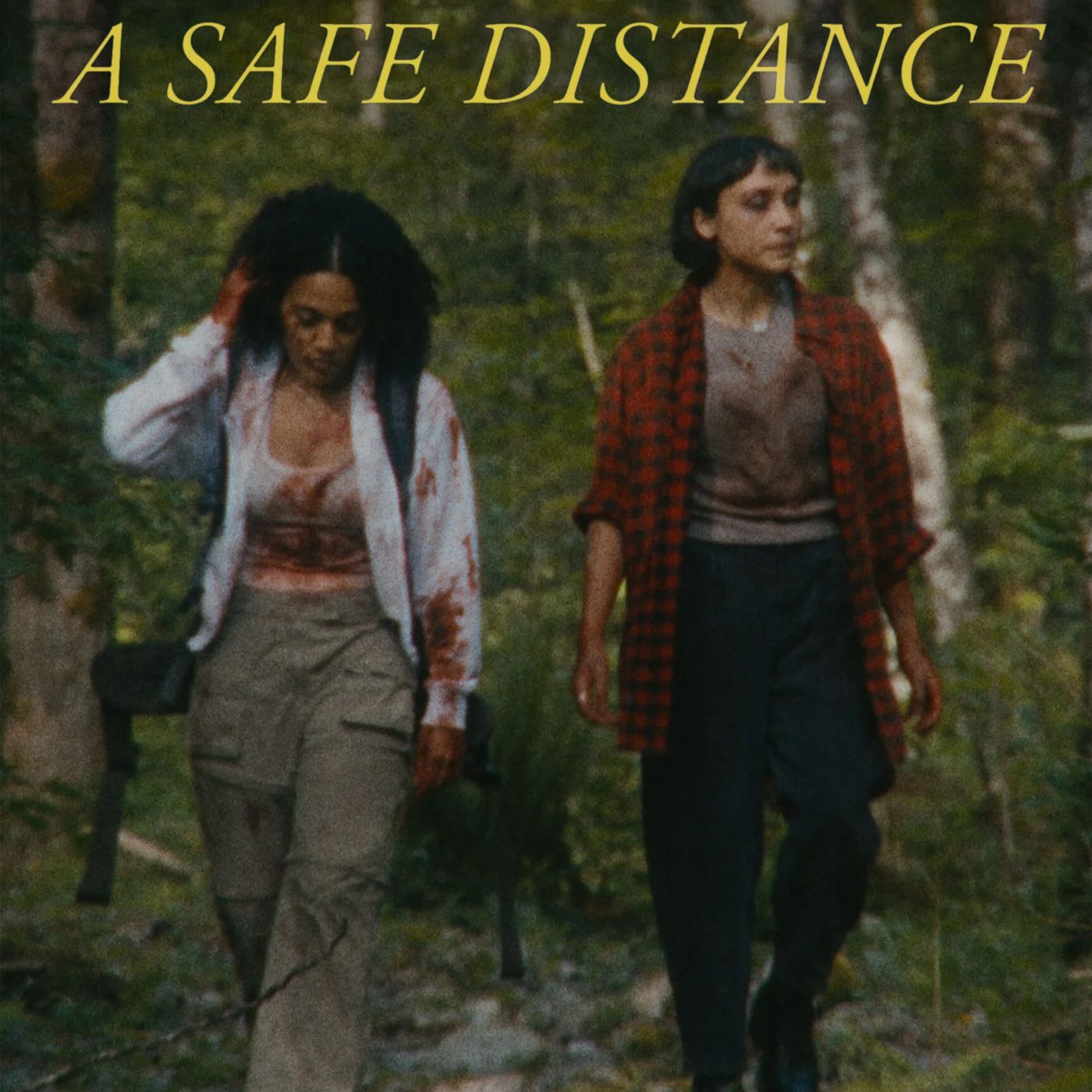
Cut it off, Hey, folks, welcome to a special episode of The Projection Booth. I'm your host, Mike White. On this episode, I'm talking with Gloria Mercer and Aiden West all about their new film A Safe Distance and had its premiere recently over at the Fantasia Film Festival. Had a wonderful time talking with them, and I hope you have a great time listening to this interview. Thanks so much.
How did you guys know each other. We're both based in Vancouver in Canada, and we met doing our undergrad at Simon Fraser University in film school. And this is actually a movie that, like A Safe Distance, was a movie made with a few people that went to the same school with us. Although it's been a little while since we graduated, but so we've made a number of shorts together after having met there. Then.
This was our first feature together, but we had collaborated previously on a bunch of things, And I know. That you had made a short version of Safe Distance before. What was that one? Like, we had it in mind as a future first, and then when we were looking to get the movie financed, we thought that it would be helpful to have what kind of proof of concept? And then that expanded a little to be like, how could it actually not just be a teaser for a feature but be a short film worth watching.
In and of itself. Yeah, So we made that and that short was made very DIY, very low budget, very quickly, but it was We were happy with it, and it did It's created some festivals, which is great. And then also the movie, like the feature that short was pulled from, Like the movie just kept changing and developing because it was a few years from there until actually going to make a Safe Distance. So it's a proven of concept for a version of the feature that we would have made four years ago. Not only that, but it was like, it's always fun to explore the ideas in a like at the writing stage, you're exploring ideas obviously, but making a short allowed us to exercise what those characters might say.
And so it is like a sort of slice of life of two of the characters that are the leads of the feature, but in a sort of tonally different sense. But it allowed a little bit of fun, like playing with those characters and exploring the ideas in a very early way that then went on to change a lot. When did you actually shoot that short. I think we shot it twenty twenty, yeah, because it came out in twenty twenty one. Yeah, so it would be would have been shot pretty early.
Cod I don't think there was a vaccine at that point, so it was the advantage of a very outdoor movie is it's a little safer than shooting in super close quarters. But it was a super small crew. I remember then the fouries basically. I think we did have to get everyone COVID tested. It was like that time.
I think we did. Yeah, we tested people and then we wore masks. But I think it was I'm just using the vaccine as like a memory placeholder of like where we were, but it was just it was Yeah, it was early. I think we shot it in late summertime, so it was. Like August or September of twenty twenty eight.
Yeah. I was thinking with this being all set outside, that it might have been a pandemic project. Yeah, the short was, and also we were really lucky in BC and Canada to have really low numbers for quite a while and remaining so on, you know, ongoing away. But compared to places like La where at the it was really a lot tougher, I know. So at that point we were very lucky that we were able to do it with the great crew of mostly just our friends, like we just came on board and just helped us in the forest.
And what's the path from the short to the feature? So the feature was funded with Arts Council funding, which we're very lucky to have in Canada, and we shot the short and I think that led us to getting the Arts Council funding and it did function as a proof of concept in that sense. At some point we made the decision to shoot the feature with the money that we had, because it's always a question of should we try to make this a bigger project? And I don't know if you agree with this characterization, but we had made the short, it had played it, it played at the Vancouver International Film Festival, we got some money from the Canada Arts Counsel, and then we at some point just made the decision to go forward and shoot it, and so the feature is made on a pretty low budget, and then we actually got additional funding, got a shout out the Canada Arts Counsel, I got a shout out a Creative BC, who are our two main funders, and they're both government funding bodies and we're very grateful to them.
And then just also a lot of amazing community support. Basically we did a ton of door knocking in prep to just find out where we could shoot this movie, essentially on people's properties in rural parts outside of Vancouver, and so this movie would not exist without a lot of really lovely people basically allowing us to shoot on their property and make this movie. You talked about how this would have been a feature originally, but having experienced that making of the short and living with that for a while, how did that help change the story. The thing that was always consistent, and that was the kind of initial inception of the idea that I pitched Gloria on, was like, what if a woman goes camping with her boyfriend, he proposes, she says no, and then she wakes up and he's gone.
So that that was always there, and then it was always that she ran into another couple and saw similar issues reflected back at her. That was always kind of the case. It was initially just much more of a drama, and I think it was a little more issues forward and how it was talking about things like toxic masculinity. It was a little more explicit, and we had gotten feedback before that was like the most frustrating thing you can get on a script, is it Drew Spreep where people just say it's missing something. I can't tell you what, but there it needs a thing.
And I remember we were on a road trip somewhere and then we just started kind of spiraling it out. What if it had this other element which ended up being the whole Bonnie and Clyde that we had this criminal lovers on the run. It's very kind of well shod idea throughout movie history. What if we are spin on that and is there a way that the sort of same ideas that we've always been interested in can then be like taken through that lens? And then it suddenly just gave the movie kind of a propulsion.
Then I think it was lacking before, and I think of I don't know if Danny Boyle's first movie Shallow Grave was also something I was thinking of about as sometimes if you just have a big bag of money, it can be this mcguffin that can set off all of the relationship and power struggles that you're interested in because it has something more tangible that you can actually be bouncing off of. Yeah, and to add to that, not to speak too much, but I think like when we first started developing the idea really early on, I had said, day and I want to make a movie that is about heterosexual relationship dynamics and like toxic masculinity and the stuff that the movie is about. But also I was really inspired by and I think we talked a lot about Kelly right Kart's Old Joy as a movie that is two people very stripped back in the woods and it has this tension, and I think that version of the movie was a lot more like tension.
We Yeah, just as the movie developed, be brought on other influences, and I think there's still a lot of Old Joy in the movie. But then also we. Also started to talk a lot about Bound. Yeah, Bound, which is a great movie. Well it meets Bound basically.
Anyway, So, yeah, what are some of the biggest challenges of shooting everything outdoors. They are the things you would expect and would something you wouldn't. Yeah, because it's just any movie. We didn't shoot in sequence. We shot a lot of it in sequence, and then some things not, so you're dealing with weather changes.
We had one day where we were lucky. We had a lot of days where we were not facing the weather in a really bad way. We had one day where a thunderstorm just ripped through on a day when we were supposed to shoot a very important scene, and we did shoot it, but we had to take a full hour just stop work because not only was it so rainy and there was so much thunder and lightning, but also it just the forest that we were in at high noon, late spring, it just it was as dark as if it was nighttime. It was so dark from the and honestly, the rain it rans a lot in Vancouver, but it's not usually that dramatic about it, but that was just like a particularly unlucky day. But so we were lucky with the weather overall, with a couple of exceptions.
We had to have our lovely cast swim in a river at one point, and we were lucky the weather cooperated that day because it was a little warmer that day. And we also had a couple of bear visits to set. Not bad bears, they were nice bears. We were in their home, but they just passing through ce us and turn around, and we were really careful, Like we had a lot of when you live in BC, a lot of the people who live there are just they go camping a lot. They're very already aware.
So we had bear Mason set should we need it, we did not need it, and we always made sure to be in pairs and stuff. And there's bugs too, lots of bugs, mosquitoes. No, I mean, I think like one challenge that was interesting for the movie was also like finding locations that looked further out than they really were. Yeah, we did didn't really have the budget or the resources to truly go to the middle of nowhere. So a lot of times you're finding locations that like are that conceivably can fake it, but you happen to point the camera over here, you'd see like a highway.
So it was often a lot of like creative which is mostly credit to Glory in terms of like it's putting restrictions on how you're able to shoot these locations because we often didn't have three hundred and sixty degrees that were filmable because there might be like a house or a road or something if you happen to look the wrong way. And a lot of it was like, what's actually within a reasonable distance that we can feasibly shoot at with the scale of movie we're making, but looks like it could be six hours north and in the middle of nowhere. Not only that, but people in Vancouver are very outdoorsy, so sometimes you're like, oh, we need a lookout where you could have someone propose at a mountaintop.
And then it's obviously we were very lucky to have lots of mountaintops where we live, but you have to get your crew there, and also when you get there, you don't want it to be full of other people who are probably actually proposing at the top of the mansion ton, so we had to. So it's and because our city is such a production city, it's a blessing and a curse because you're you have this amazing talent of people who were there and who came on board and worked on our movie. But also you are then up against all the other huge productions who were shooting all around you, and so you're going like, we want to do that, but we don't have that budget. So it's the balancing act. And yeah, you've got a great cast in this and it's so nice.
Can you tell me a little bit more about them and how they came on board. So Bethany Brown is our lead, and she's wonderful and we hadn't ever worked with her before, but she's a Vancouver actor and we just really loved her work, and so it was like, we don't have a huge history of collaboration, and we totally just not to say we took a gamble, because she's very talented, but it was like, on some level we weren't sure if she would have time in her busy schedule to come and do this film, and she just basically I cannot say enough good things about her. Just she showed up and was so very very game to work with complete strangers and just put her all into this movie. And so that's great, and we found her, We liked her work, and we have a great We had a great casting team Chris and care Casting, who yeah, they also are huge fans of her and just like so many great Vancouver talent.
They're always trying to push them forward because a lot of the people who work in Vancouver come in from the States, so you know. But yeah, So Bethany had never worked with her, but so happy that we got her and that we were all available at the same time and she did it, and she's been in a ton of stuff. And then Tandya Mercedes, who's the co lead who plays Keana. This was her first feature film. She's since done a few other she's been working and she's.
Yeah, but when we were with her, she'd done commercials, but she was very great, like very. Neo, but so just immediately clicked into place. Which again it's like, I don't know, I think we got so lucky because I think and then I should also speak Cody Curiously, who plays Matt. He had actually he knew our producer Nick and she recommended him for the role, and then we met with him and I was like, oh, this is great. He's moves from Riverdale, which is fun.
But he's yeah. So we were really lucky that we had that connection and then that he just liked the project and came on board. And Chris McNally is also a Vancouver local, who's had done a ton of He works in a lot of Hallmark projects and he's very much often cast in the leading man role, and so in some ways it was he was amazing to work with and it was so fun to cast him in a role that is not unlike that but subverting it, so because he comes with that totally, he brings that to it, and so that was really fun. Everybody on it kind of came from different sides, Like we hadn't made five movies together or anything, so Bethany and Tandya were meeting each other for the first time, and same with I think Cody and Bethany had maybe met a couple times being Vancouver actors.
But everybody just clicked and we got really lucky with how much chemistry I think our leads have. And we're here at Fantasia right now, and I think Bethany and Tandy are running around getting coffee somewhere, so it's just like we just this goes for the cast and the crew. We just all I think We're really lucky to just click and get Alarm really well, which is so crucial for a movie that relies on just a small cast and a lot of that hiding the story. Well, you said you haven't worked with them for five films, but you two have worked together for five films, and I'm very curious what your working relationship is like and what kind of that shorthand is that you have together. I'm sure I don't know how people make movies.
I feel like the indie scene is a lot more writer directors these days, and it's a lot more people who are kind of rolling in into one and I think that's crazy. It just making movies too much work for one person to do. And I think that, you know, like, I definitely think splitting up the labor in various different ways was like the only way we could have done it in State seeing. I think it's also like we have very complimentary I hope, I think working styles because I'm a person that really likes to bounce ideas off of people, and I think, like I really love just because Aidan writes, but I get to be very involved in development, and I get to see a thing take shape and I get to go like, well, this'd be cool, and sometimes he's like, no, I don't think so.
But other times it's like, sure, that might be neat, And then it's like and I just so I feel like getting to collaborate in that sense. And also I think as a director it's such a joy to get to cause aiden is also you have like a filmmaking mind, and you're a sinophile and you watch a ton of films, and so it's just I think we get to do a lot of that stuff together and just I don't know, it just becomes like a second brain in some ways. We just spend a lot of time together in general, and then I think you end up when you're working on a movie, it's like all of your free time when you're with somebody ends up being like, oh, suddenly this is a pre production meeting. Yeah, if you go, oh, you're just going for a walk, or you maybe to get dinner, or you're doing something, and this is impossible for things to not come up.
But there's just a value in having two brains bouncing off of each other. And we watch a lot of movies together, and then it's all the time you'll go like, oh, that's a neat idea. Oh that's like our movie that we're like that we're currently developing, or that like that. It's like places you wouldn't expect it, and then it's I don't know, you get to I think make things better with that. I would also advocate just in general that the writer director thing.
Obviously there are people who do it well, but I just feel like there's a value in the little bit of friction that comes from there being an adaptation from a different brain and that the way that the movie came together is not actually exactly the way that I had it in my mind. Oh yeah, and that there, but that's good. Yeah, I think that's a good thing and that and sometimes you're missing that when it's all just like this streamlined one person's process is I don't know, there's some value in actually a little bit of disagreement or a little bit of things being like bent in a direction you didn't expect. Yeah, there were definitely times on the short end of the Future and on anything we've made where he'll have something on the page and then we'll be talking about it and I'll be like, yeah, when I do this, and he's like, wait, what how are you going to do it?
Because maybe you're privy to my shot list or whatever, And I'm like, oh, I didn't tell you, But like, I think it's not changing dialogue or anything, but just in shooting style, it so much can change that way, and sometimes you definitely look at me like I'm crazy, and sometimes also I'm like, ah, maybe you're ways better, but it's it's just I don't know if yeah, it's echoing what you. Say, so you don't borrow Aiden from the set when you start to shoot. No A Safe Distance. The feature was so scrappy that we were both wearing a ton of different hats, and there were definitely times where he couldn't be on set, and I was like very regret regretted or not regret it, because it's just like sometimes you only have what you have, but if you were off Because Aiden, we both produced The Safe Distance along with Nick Altabelli.
All three of us produced it. But there were times where we'd be shooting something and Aiden would have to go off and do something produce or real, and I would go like, I wish you was a monitor, because it's just always nice to have a second set of eyes for some things. And when you were there, every now and again you would chime in and suggest a thing, and as would Nick. And but yeah, not barred from set. I know that independent filmmaking is not easy at all.
So I'm curious how many projects do you guys have cooking waiting for the next one to hit. Because we're at Fantasia Film Festival right now, and Fantasia has a market called Frontier, and we were part of the pitch competition with a new project that is the thing that we have that is furthest along in development. And then we have another feature that is earlier in the in development that could and both of those projects would be in in ever now but are intended to be independent features. And then Aiden is extremely prolific and just constantly writing, and so that isn't those two features are not the limit. Yeah, we have this thing that is it's called The Roer Crump's Home that is our sort of sci fi thriller that we're working on that we pitched at Frontier and that I think is definitely what we're hoping will be next and it feels pretty We've been working at it for a little while and if we can find some money to rub together and we'll be able to make that one.
And then we have something else that's earlier and probably too early to talk about very much. And then yeah, I like to write a lot, but there are sometimes you're writing things in a very practical way of what are the things that we can make in the kind of Canadian independent system, and sometimes you're not thinking about that much. And so I have things that I've written that I think are cool but would are maybe loftier goals or would have to be made in a different way. To happen, and not just features too, like TV and things that are not typically produced independently. But yes, we hope to keep working together for a while.
We also have a short in development, but it would be great to make another feature. I know that this played at south By Southwest already. Where's the next place after Fantasia for it? The film is being distributed in Canada by or Text Media and in the US by Draft House Films, which we're very excited to have both those partners. And we have another film festival that we will be playing soon that we will be announcing soon, but we can't share that right now, and I think we won't be able to share it by the time the podcast releases either, but we're very excited to be soon announcings of other stuff.
Where should people go to find that out? Our Instagram is a Safe Distance film at a Safe Distance film and I think that is also our Facebook. At our website and la com. Yeah, we have on our website a list of upcoming screenings and we will be posting stuff there. I'm also on Instagram and I'm on Blue Sky.
The film is not on Blue Sky, but I'm on Blue Sky as doctor Gloria. That's doct or doctor Gloria. And you are a prolific social media. Wait, you know who you should follow is Bethany Brown. Yes, Bethany Brown is our big social media cheerleader, and she'll be more fun to follow than either of us could hope to be anyway.
Yeah, shades of fun. She's the most fun. Lauria and Aiden, thank you so much for your time. This was really nice talking with you too. Yeah, I know it was great talking to you.
Thanks for talking to us, Thanks for watching the movie. Thank you so much. And yeah, I really, as we've probably alluded to, it was a really scrappy project in a lot of ways. We're so excited that the film has had a life on the vestival circuit at south By and Fantasia also Frame Line, all great vestivals, and we appreciate anybody who follows along for the ride because it helps give the film. A life enjoyed the rest of your first fault, thank you.
I recall the first time you got me a diny come along at a restaurant on before you sat down across from me with the bottle of wine. Should flag it and started form didn't open the window to the music before the theater on star we shared a life stories out of you at the stage, falling in love from the farm, the like stay and thee bot strung just to fop side of the lines. You say this is the way we're that to enjoy the opera at a safe distance. At a safe distance, we've met at this table now ten years no rong to see the same mob bro performed, recreating the scene down to the slightest detail. The neither tradition.
I was born, the tend the dislope, but still the shop. Let's go on. The participants got at the stage, the waiter, it sure is that stuff. The wide is the safe I guess it gets fitted or with age. I was like, you think of this sect blinting its truth just to give blif obvious side the lines.
You say this is the way with that to enjoy the aura at a safe distance feels like we played at the same matter million times, a routine, struggling just to keep from falling asleep, residing on lines. Still, it made me happy. I love you and the savedest, the safest diseases, the safest to save this disas


