
Season 1 · Episode 622
Special Report: Andres Landau on Nuisance Bear (2026)
About this episode
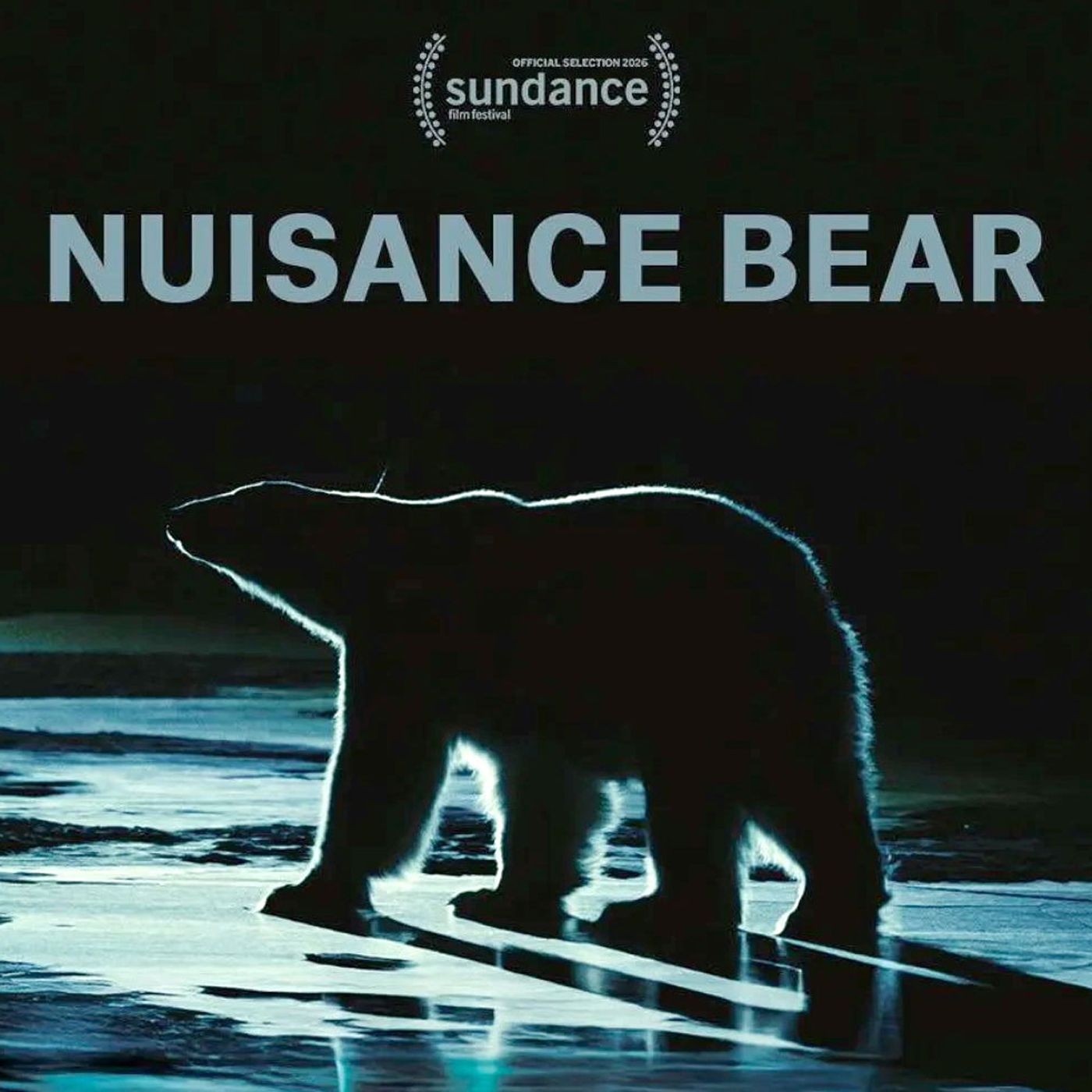
Mike talks with editor Andres Landau about his work editing the 2026 documentary, Nuisance Bear. A sobering look at the uneasy relationship between polar bears and humans when humans are infringing on the bears' natural environment.
Transcript
Automatically generated, so expect the odd misheard name.
Oh he is Bote. It's showtime. People say good money to see this movie. When they go out to a theater. They want cold sodas, hot popcorn, and no monsters.
In the Protection Booth, everyone pretend podcasting isn't boring. Don it off, Hey, folks, welcome to a special episode of The Projection Booth. I'm your host, Mike White. On this episode, I am talking with editor Andres Landau all about the new film Nuisance Spear. There was a short version of Nus and Spare that was out a few years ago.
It is back as a feature length documentary, premiered at sun Dance and is making the rounds now at film festivals. If you get a chance, I would highly recommend that you check this out. Track it down. You will not be disappointed. Thank you so much for listening, and I hope you enjoyed the interview.
So obviously I want to talk to you about Nus and Spear, but I really want to find out a little bit more about you and what was your jour me into being an editor. I did the whole like sound engineering route. I was born in Argentina and I did some studies down there before I came up to Canada almost twenty years ago. So, yeah, I went to school for sound engineering and I was doing post sound, mainly recording music, and then I started doing a little bit of film studies and that's when I started doing a lot of like sound related jobs for film, being on location and doing a little bit of post sound for short films and stuff. Yeah, my idea was to continue Knada path in Canada when I first came to Toronto.
But I realized that you know, integrating my all my audio visual skills into one opportunity that I had to edit a film. I really really enjoyed it, and I think I never looked back. It was one project after another one and I, yeah, looking back, Mike, I always had an Emmy. You know, It's like I realized growing up, I was playing with like cameras and recording VHS tapes and you know, taping the wholesome the little vhs and recording and taping and doing simple things. So I started, like from like the sound department into this editing world.
Well, as an editor, I've seen that you do, you know, narrative and documentary. When it comes to documentary, definitely a lot of nature stuff is that just the benefit of being in Canada. Yeah, I feel like nature is it's a part of me and I get inspired by being in nature. I think like every human being, you know, is like we need that aspect in our lives, and that's where I feel really inspired and grounded. I've done yeah, narrative film, send a lot of music videos, and I could collaborated with a lot of like artists.
I never thought about it that way. That's that's a good observation, I would say. But yeah, I feel like Argentina and Kindada share very similar like you know, landscapes, being you know, in the opposite post of America. But yeah, I try to like choose like meaningful stories and yeah, some of them are related to nature, but not necessarily. You know, what's that relationship like with the director as far as trying to find that tone in that way that you want to edit that project.
Each project, you know, is unique. You know, I learned through the years that there's now one formula. I try to really pay attention to the project and who that you know, what kind of experience that director has. Of course, at the beginning of someone's career, you take, you know, you take a lot of jobs and you try a lot of things and you make mistakes and and uh, and you learn from from everything. But as your I feel like as my career progressed, I had a chance to, like because we spend so much time together.
That's a that's that's the reality, you know. And and you really want to have someone that you can collaborate with or get inspired by or or be you know a good a good collaborator. Uh, and you know, learn from from them. And yeah, I feel like it's a lot of like reading and listening and and and and try to understand kind of you know, their inspiration, where approach or what I expect from from an editor as well if you want someone who can you know, really bring something to the table or they're just really looking for someone very technical to execute division, you know. So yeah, I try to like get in into a project as early as I can, so my voice is a little bit heard, you know, or I have I can have more input, you know, and like and ideas or things that they need to be shot or or sometimes I go all location if I can, I give it one hundred and ten percent.
And everything that I do, I remember the. Earlier version of Nuisance Baar and I'm curious how you got involved in that and then how that became a feature documentary. I met Jack and Gabriella because fourteen years ago, myself and like six other friends, we all kind of went freelance and we we found a Portuguese social club in Toronto and we rented it out and we build a little bit of a community where we wanted to like now work from our places, and that slowly developed into this beautiful like community of artists that we collaborated in a lot of projects. And and yeah, six seven, eight years ago Jack and Gabby, you know, we met and they became part of this uh you know studio, this collective and and I remember by that point they had been going up to Churchill and uh and arvi It.
So we talked a lot about the film that they were in the process of capturing. And that was when they had to stop going to ar Viat because what happened with with Aaron Gibbons there and uh, there was a lot of conversations about what to do, and we really wanted to do something, so we between John Gabriela and Will middle of the producer, we kind of decided to like focus on the on on on Churchill, on a little bit of the Churchill story, and and we I feel like at that point we weren't ready to to really tell a bigger story. So it was a it was an essay. It was like a very you know, unique approach, something that we really wanted to try without music, without voiceover, and and I feel like, you know, in hindsight, it really worked.
We were able to show that short around the world and then a lot of festivals, and then the New Yorker kind of you know, came on board, and that was like the second wave of energy that the film really needed it to like really, you know, get to different corners in the world and we know words and yeah, and now naturally we had the opportunity to to attach you know, bigger partners, so we can actually now embark in this greater journey of creating the feature film, which it was always in Jack and Gabriela's mind, but we never had all the material that we needed it to do it. Yeah, something really cool happened where and a lot of the show is all this short film. They travel to r VA and they show that that short film over there, and that's when the community opened up to them and they trusted it a little bit more, and it seemed at that point that they were healing for everything that happened up there, which I really respect, you know, the director's approach, and all of us are apport to like really take a step back and really let them heal and and take our time.
Yeah, that's when like more trips happened to our via and that's when like this new set of recordings happened and all these interviews and we were able to really capture as you probably saw, you know, that other half of the movie. Now you said you like to get out in the field. Are you going up there with them? I didn't go. I wish I could.
I cannot wait to go out there and uh and be part of the community screens that we are planning to do. I spent a lot of time in my cozy dark room receiving all the and and thinking about it and talking to them and talking and being on on on some people out there and uh and thinking about things. But I was able to help them prep their gear here and then. Yeah, how is it for you as an editor kind of revisiting a project that you had essentially done and dusted, but now here it is a second chance to maybe revisit the earlier stuff and then of course build upon it. I guess I never seen it as okay, let's open this project again.
And you know, even though it was like a finished short film, it felt like this story was a greater story that we needed to tell. And by crafting the short film, we were able to listen to a lot of people from the community and interviews and you start thinking about, you know, how can this be a bigger a bigger a bigger film, and what are the messages and of course, like whatever you can think of at that point, it becomes something else too, because I think that's the nature of documentary filmmaking too. And we tried a lot of things in the edit for the last two years, and it was always evolving, and it was a lot of frustration sometimes and building sequences and throwing them away and trying and and I feel like we had a beautiful team of producers and assistant editors and and and collaborators that you know, by having a lot of conversations and and and and listening and educating ourselves and trying and and every person who got involved along the way kind of almost brought something else that we got inspired in the process by being our beautiful sound designer Dave Rose and and our composer Cristoval, and and our color correction and and our sound mixer.
I mean, everybody who collaborated. It was like a beautiful you know, bringing something new and fresh to the process. And I cannot thank them enough. Just by by having uh, the opportunity to listen to to Mike Givens who became the nerator of the film and his story. Let me tell you, Mike, the most beautiful thing that happened to all of us is really discovering how he really opened himself to to you know, to Jack and Gabriela in the interviews and and and really we felt that he needed to tell the story.
He he he he. He was walking on that path of realization and and it was this moment where we all felt like, you know, he really opened up and he he was very happy to be evolved, you know, and this project, and yeah, we're very thankful for it. When you are editing, what kind of tools are you using, Like what do you actually edit on? And then how do you keep all this stuff straight? Well?
They make fun of me because, like it takes a long time for me to like go to the next generation of things. I'm almost like an old school but I like to to like once again comfortable with my setup, you know, I like to like use it as much as I can. But of course, you know, technology has been changing so fast in front of our eyes that I try to adapt. So Yeah, of course I have you know, a beautiful, like powerful machine, and then I build like a server where I put on my on my media and and I'm attached to that, and I have a second system here. Look, I have a second system here that is attached there.
And I have a board with few cards, and I also have like a digital board. I've been very comfortable in an Adobe premiere. I do edit an Avid as well, and I use Resolve for you know some you know processing of some of the proxies and stuff like that. This film was edited in the Adobe you know world where we were able to like have matching media with different you know, with the director, with another assistant editor and another additional editor, and we've been like sharing sequences back and forth and opening things up. Yeah, I have a broadcast monitor and a plasma for like a you know, for like a client monitor and then to monitors, and I have like a control surface that I like to use for like little fast scaling and rotation and color correction.
Yeah, it's like it's an extension of my arm, you know, around me pretty much. But yeah, I try to like pre mix a lot of the sequences because I like to like present to the directors and the producers like something a little bit more polish. So I put some effort into like pre mixing, and I have my mixer and yeah, I mean I have my my my toys that I like, you know, on a daily basis. Obviously, I know that they shot a lot of stuff earlier, but then they're you know, came back to it continuation. I think that's probably the best way to put it.
Just continue shooting. Are they still shooting while you're editing? Yes, there were moments where, for example, in twenty twenty four, we built four key scenes I call it like almost signposts that they came very not easily, but we knew when we watched the row foota Is that it was so powerful and we edit them right away, and we knew that those were moments that we wanted to build up to and they needed to be in the film. And yeah, there were times where they had three or four times that they interview Mike. One was in Winnipeg, you know, in a couple of times in r VI it And there were times where I was editing and they were talking about things that we need or we we really wanted to cover all the seasons.
So there was a summer shoot and uh and all you know fall in winter and and spring. But it never made it to a film, but we we we they shot a lot of like when you see the the the tours and and and and and the tour guide and those like and the big crawlers you know, in the winter, we had a whole Uh they do the same thing in the summer when they go out and uh they go with the Valuga whales and all the tours go out and those big boats. And so we had a lot of a lot of that. The opening seen of our bear like swimming. There's tons and tons and tons of days of of of material.
Yeah, it was It was a beautiful collaboration because we talked about it. We once you start crafting and and and understanding and and we discover you know, the essence of the film. We were able to like go back and wait for the right time and the season to capture what we needed. So yeah, there were times where they were like fitting me stuff from up north, or I would wait for them to come back to Toronto and then we'll process everything. We'll watch things together, we talk about some of the initial feelings that they had there, so I can have a better understanding before, you know, I look at some stuff and sometimes I don't want to kind of hear anything to just like see how that row footage kind of flows through me and and bring maybe something that they haven't seen or they haven't experienced there.
So it's a beautiful I feel like combination of all those worlds. Was so much of editing for me is about rhythm and just trying to find you know. You talked about those signposts which are kind of like those almost movement changes, which is fantastic. Did those change throughout there or did they pretty much stay like these are the areas where we definitely need to hit these It. Kind of stay.
We moved them around because we experimented with with with structure a lot. We always wanted to do this like two part film structure. We started that way and then we dismantled the whole film into chunks, into different characters and subject matters, and we kind of rebuild it all again. So in the process of doing that, we experimented with like changing the structure a bunch of times. But yeah, I mean the rhythm was it was also I would say, Mike determined by the fact that, as you saw in the film, a lot of the shots, so they had to build crazy ricks, you know, so they were like also as the years progressed, the technology evolved, so they were ever like the last year and a half, we had like this Cristy Shotover bubble that it was mounted in front of a truck and it was remote control from the inside of the truck, and that's the same one that it was mounted at the helicopter.
A lot of those shots had movement, you know. Sometimes of course we had like a tripod of static shots. But I would say a big percentage of the film is this. So I got inspired by that too, and I lean onto that movement, and that's why I feel like the film feels a little bit immersive sometimes and with the whole soundscape and the music and we started to create this dance and the rhythm, and Jack and Gavila are very musically savvy as well. And as I said before Christolo's score, as he got also inspired and we fed them some like you know, location sounds, and he will feed up some different like music cues, and we will place them and play with the scenes and and really start to find this rhythm through some of the scenes.
And then eventually, you know, we we found those like ups and downs and pauses that the film kind of needed it. Obviously, I know you have to trust in yourself, trust in your fellow filmmakers as you're putting this together. But is there a point where you go, now, I need to show this to other people and see their reactions and make those changes one. Hundred percent said, I think it happens to all of us, and and uh and sharing in the inner circle. First with the with the you know, if I work on something on my own, first I share with either it would be the Code of directors or or one of the producers or one of the other editors.
We've been like almost to a point where we feel comfortable with sharing it. Then with the greater group. Sometimes with like you know, people outside my door here, And of course I feel it's very healthy as well to do the feedback screenings along the way, those being like industry colleagues or people from the community just to like along the way understand if there's something that they don't they don't understand, or something needs to be clarify, or something that is really lending. And yeah, I feel it's like a natural process for a lot of filmmakers to like to share either assemblies or rough cuts or mini sequences and to have that, you know, that moment of either disaster or reassuring. You know, it's like i'mity to both.
I'mity to both situations, and it's like sometimes it's healthy. It's healthy to know ahead of time and to see if like something is you might be going on a crazy tangent where you feel like you have it all figure out and like nobody understands anything and it must be a this is why you trust the people you know, and like you want to try to like have kind of different people that have no idea what the filmmaking process is and people that do understand. So you have like a little bit of a gamut of feedback. When is the first time you got to see the Fault Nuisance fare with an audience. With an audience when it was like ten days ago.
It was at the library at at our first premiere at Sundance that was like audience I would say, those were like three hundred four hundred people. We had We had invited some folks at the in the sound mix and in our DC people lay back here before we send the print to the festival. But they were like very There were colleagues, but with an audience that was the first time, and it was incredible. It was incredible. It was a truly dream come true.
Yeah, we all got very emotional and yeah, just to be there and fill the room and people were like cheering and laughing and really having that sense of reaction into things and details that I could have never thought about it, you know that it would so it was Yeah, I will stick with all of us forever. Man. Was it was incredible. Yeah, with a project that the ghostest. Long are you working on other things at the same time?
I mean last year twenty twenty five, this is mainly what I did, to be honest. I mean there was a time where I was able to like take some weeks off in the summer, and it was also a health thingy pause, I would say, because it allows us to like take a little bit of distance from from the project and get a little bit of perspective and see other things and maybe work on something else. But you keep thinking about it, and when you rewatch things, yeah, you get a little bit of perspective. And they've been going up for ten years, but there was a lot of pauses in between. Of course I did many many projects in between and films and the last two years, yeah, it's been mainly nuisance fare.
You have your next big already lined up? Yes, I'm starting on Monday to look at some footage for a new film, very excited. Narrative or doc. It's a blend of both, but it's going to be mainly a documentary, but it has a little bit of recreations and it's it's going to be a fun one. Thank you so much for your time today.
It was such a pleasure talking with you. Thank you, Mike. Yeah, yeah, thanks for being part of this. You can't see no said, I'm shame. Sn't show you things.
Let's do it, okay, afraid I'm just easy to sway to say everything anyway. I don't know what's how do we sort of. Spousor never sure got to do. It and show. To do do do, Do, Do, Do, save No


