
Season 1 · Episode 623
Special Report: Derek Boonstra on Seized (2026)
About this episode
Find out more about Derek at his website, https://derekboonstra.com/
Transcript
Automatically generated, so expect the odd misheard name.
Oh jee is bolt it show die? People say good money to see this movie. When they go out to a theater. They want clod sodas, pop popcorn, and no monsters. In the projection booth.
Everyone pretend podcasting isn't boring. Cut it off, Hey, folks, Welcome to the projection Booth. I'm your host, Mike White. On this episode, I am talking with editor Derek Boonstra all about the new documentary Seized. It's a story that happened a few years ago but still continues to resonate today, all about the seizing of records in Marion, Kansas.
Film premiered at Sundance twenty twenty six. Highly recommend that you check this out. Hope you enjoyed the movie when you see it, and I hope you enjoyed this interview. Before we start talking about Ceased, I really want to know a little bit more of your journey and how you got involved in filmmaking. It's kind of what I've always wanted to do from teenage years.
So took a pretty straight trajectory. I was just a skateboard kid, made skateboard videos with my friends growing up in high school in Colorado, and used the very first version of Premiere before they slept pro on it back in the nineties. Dating myself. But you know, so I've been I came out to eventually. I went to undergrad in Arizona and then did grad school at USC and it was kind of one of the weirdos who wanted to do documentary there and wasn't necessarily going to do scripted content, and I just stuck with it.
And it's been a long time now. You've done a lot of stuff over the years. I mean, looking at your IMDb, it's like camera and an electrical department, additional crew, sound department, producer, But the most of your credits are under editing, and I'm curious I gravitated towards that. Editing has really been my bread and butter. A lot of those credits are from like early just out of school things where I was just trying to figure out how to survive out here.
But editing. I knew I wanted to do documentary, and I took the sound curriculum at USC all the way through. I never took an editing course my entire time there. We had to do editing as part of other classes. But when I got out of school.
I realized in the documentary world that editing is one of the things that you can kind of sustain yourself with. Is the role that it's somebody has to sit in the chair and push the button and make the movie come to life, and a lot of people find it tedious. It's a thing that I enjoy doing and realized I could do it and sustained myself that way. So I just sort of fell into it and fell in love with the process. That was sixteen years ago now that I just started doing that.
One of your earliest credits as an editor is square Roots, the story of SpongeBob SquarePants. Can you tell me a little bit about that. Yeah, that's a shout out to Pat Creeden and Christino O'Malley, who were the husband and wife director and producer team that are still among my favorite people in this industry. I saw them at Sundance this past time, and they're just great people, and they brought me on as an assist editor. I graduated into the two thousand and eight financial crisis, and so it had echoes of this era, you know, where things were contracting and there were strikes going on, and I ended up working for the first few months out of film school, for a good period of time doing my main paid job was working for a billionaire shooting his private Christian high school sons football games and editing them to Jock Jams music.
I'm burning that to a DVD for their school. So it was not exactly what I wanted to be doing, but it was building my chops in terms of rhythm and pacing in a sort of crude way. But then when Pat and Chris found this editing position that was actually documentary world, which is where I wanted to be, I applied and Pat had me edit as a test gave me some footage from his children's daycare for a fundraiser that they were doing. I edited that together and he liked it so much that he just let me start editing on the SpongeBob documentary. So it was very fortunate in that I was able to go from didn't have to AE for very long before I started editing the things.
How many projects are you working on at the same time? Where do you just go project project? These days it's mostly project project seized was entirely that was all I was doing for most of last year. In the past, I have done multiple projects at a time, but it's not the most ideal situation. As I've progressed my career, I really tried to focus on one thing at a time.
So how did you get involved with cees. Did they ask you to edit their child's stakecare video or was it a little more professional this time. Yeah, I don't quite remember how Sharon and the team first got ahold of me, but that's sort of the nature of this. There's a lot of great documentary editors out there, many of who it's a community. We kind of know each other, and so I know that they talked to a couple of other people that probably would have done a great job too, But I was really connected.
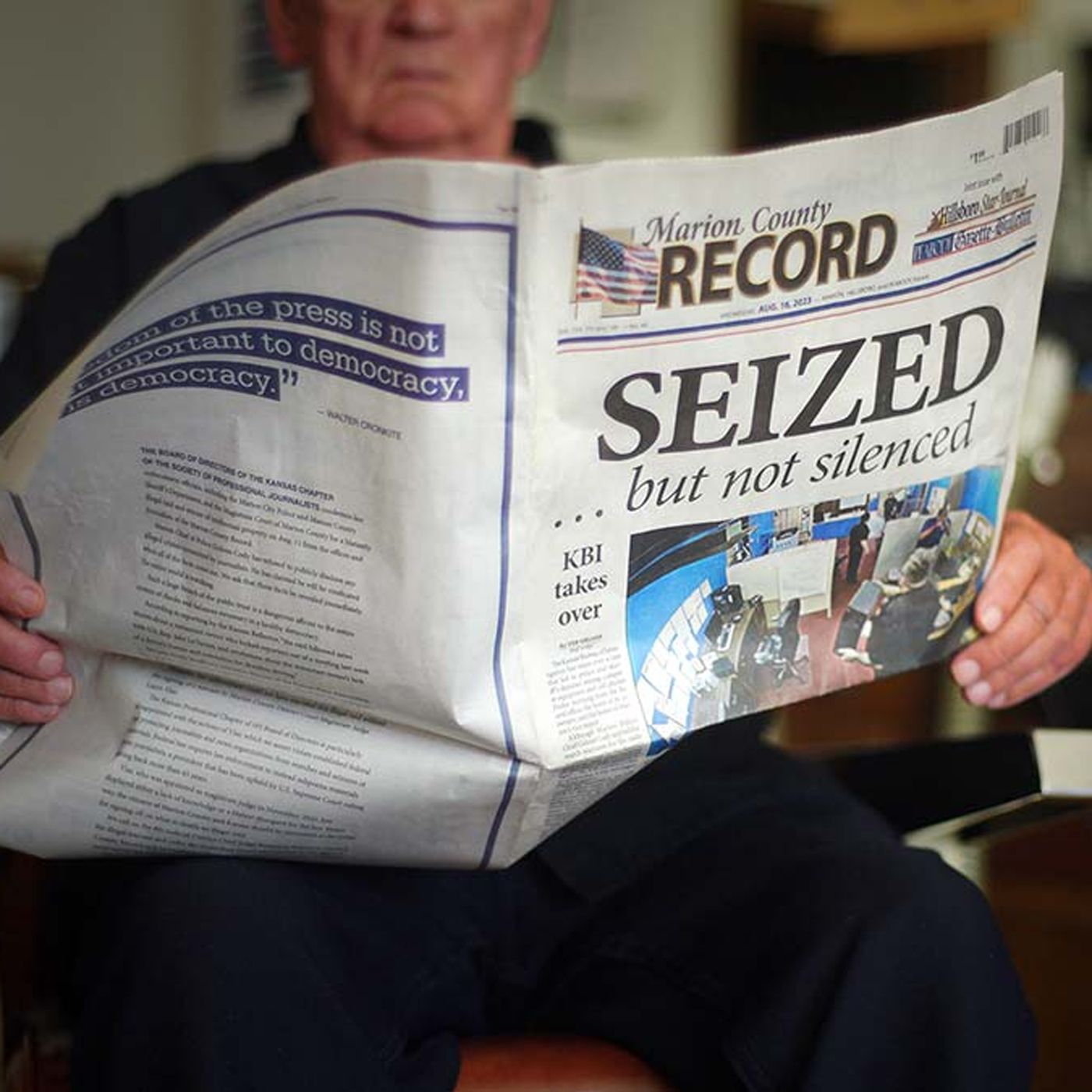
As soon as I found out what it was, this story about the Marion County Record and the read on this newspaper, I was like, Oh, that seems right in my avenue. I really liked journalistic stories. It seems like interesting characters. They showed me the sizzle and I was like, Oh, this looks like it's really well shaw. They had been filming for eighteen months by the time they reached out to me, so I immediately wanted to come on board.
Even though we hadn't worked together and ended up being one of my favorite collaborations of my career so far. How did that go kind of feeling out Sharon and what she needed versus what you wanted to bring to the project. I have to say it was pretty aligned on this one. It feels like I consider myself flexible when it comes to like working with different styles of directors. But Sharon from the beginning, Sharon said, you know that she wanted me to bring ideas to the table, and she really understood that the editing process is a process of discovery and there's things that you'll find that you just can't you don't you have to find them in the edit.
We did a lot of that, and they really put a lot of trust in me and gave me a long leash to do that. She had great, you know vision from the beginning of we want to start with the structurally, She's like, we want to start when year later with this character that we've been we started filming recently, which is what we did, and we kind of committed to that and never looked back. So she had some really great instincts to build on and then also give me days to myself to just dive into the massive, massive amount of footage. They really shot a lot of footage. I think it may be the most very tay footage that I've had for a single project.
I've had more footage hour just pure hours wise. In terms of the projects, they had a lot of archival, like the Beg's documentary had a ton to mountains of archival, but for this one, she started filming shortly after the raids and was lived two hours away and would go there and shoot long days with sometimes multiple cameras, and really just got way more amazing footage than we'd ever be able to use. So it's a good problem to have, yeah, in that respect, And I. Don't imagine there's a way to shortcut like going through all of that footage and cattle logging what you. Have, what we did at the beginning.
They came to me with a this is pretty rare. A lot of times I'm getting brought on and there's some sort of infrastructure in place where there's an AE and a remote setup and a server, and they've already kind of organized the project in a particular way. On this one, it was just they just had hard drives that had footage on them that had been reasonably well stored, but there was no project like we started with a fresh project, and I didn't have a dedicated AE on this project. We had our associate producer, Alexandra, who's very smart and able to wear many hats, and I was able to tell her, like, let's set up this project in this way, and so I had control over that from the beginning. And what I had them do is break down the days into sequences that were chronologically in order of what was being shot, and then broken into however many things were happening, so if somebody wouldn't got like b roll, that would be a new sequence.
They cataloged the entire project in that way, and then we had a spreadsheet that we could kind of go back and forth between. It made navigating the project really easy and finding we did that initial setup probably took two to three weeks, but once we had that dialed in, it made it very easy to navigate the project later without any kind of like special plugins or anything like that. I was pretty old school. I was just on a hard drive with a mirrored hard drive somewhere else, and we've used no extra stuff on this one. But it worked really well for us.
What's your method? Then do you go okay through the spreadsheet, Yeah, I like this, I don't like this, and just kind of pick and choose that way, or you like, what is that for you? We kind of started with the scene that is the first scene. It's the new reporter showing up for his first day a year after the raids have happened, and he's got it sort of like you put. You know, it's a pretty everybody clock.
It's not a very sly move. It's he's an avatar for the audience. You know, He's like, I gotta figure out what happened here, and everybody watches the movie understands that that's what we're doing. But it worked, It works really well for this particular movie. We really, more than a lot of projects, just kind of built it out linearly.
From there, I did like some thematic things that were not connected to the timeline, especially in those early phases, but I would say that probably by three or four months and we were just we were just building forward and then like you know, we'd learn lessons and go back and revise along the way. But we kind of built the film out pretty linearly and didn't want by the time we got to the end, we didn't end up changing the structure very much and really just kind of were able to refine the ideas and dial in the thematics and stuff. So it's kind of unique in that sense on this one. But what we would do is I would I would edit something, and then we'd talk about what do we want to work on next, you know, what makes sense, and then they you know, encourage me to you know, this is what you should work towards, but you know, follow the things that come up in the edit and go where you need to go that.
We're always excited to see new things too, which is what you want as an editor. When you're editing. Do you have certain moments in mind? Because it feels like that's when I'm watching a lot of documentaries. It's like you go along, you think you're kind of getting that story, you are that reporter, like you said, you come in and then there's usually a few like rug pull moments where you're like, oh shit, that's a whole new twist in this.
Do you have those in mind going into things or do you find those naturally? It's a little bit of both. I would say a lot of that was found in this documentary. I mean, we knew the exact distribution of those things was not known going in for sure. We didn't have those like mapped out necessarily after working on thirty or so films, you know that, like and just the way that movies get talked about these days when you take them to streamers or whatever, which wasn't the case on this project.
But you know that, like, you need to have something happening every so many minutes to keep people's attention going. So it's really about kind of just keeping in mind, okay it's been a little time, like we need to vary something soon, you know, and just knowing how to feel those rhythms, which becomes sort of instinctual, I guess after a while. But it really just depends on any given piece as well. How do you stay fresh on something? I mean, I imagine looking at something all day long, living with it for weeks, if not months on end, you probably feel like you know it almost too well.
It is a common problem. This project was kind of a unicorn in some ways in that, like I was really I mean I'm always engaged, but I was really, like really into this one from beginning to end. And really a lot of times I really like to bring in a consulting editor or I like to play that role towards the end as well. I like both. There are people that will I will come to when my project is eighty percent done and say, hey, take a look at this and tell me what you see, because you do lose that perspective.
And we had some screenings on this, but for whatever reasons, it just wasn't It didn't feel like It's like, I feel like I could see this film the whole time, and it felt like the rest of the team could as well. I couldn't tell you exactly why that's the case for this one more than other ones, Probably because there was so much good footage. There was so much footage that I didn't have time to necessarily, there was always more to discover, I guess you could say, so that was part of it, But we didn't really We didn't pull in any consulting editors on this one. We just had a couple of screenings that really helped us to solidify what we were seeing. But I think the team was really good listening to each other and just the dynamic that happened to coalesce on this one between myself and Sharon and Paul and Sasha, who were the two producers and was always there and would chime in with good ideas too.
But that was really the brain trust and our dynamic just made it so that we kind of were able to They were able to see the things that I wasn't able to, vice versa, and I think we just complimented each other really well. This might be a dumb question, but was there still shooting going on while you were editing or was everything just completely done and you knew the ending. No, there was definitely not a dumb question, but it was definitely going on until the very end. I think the last shoot was in It was maybe after we had gotten into Sundance. So I came on about halfway through Finn's tenure at the Record, so about six months into his time there.
I came in at eighteen months and they ended up shooting for over two years, which was really great, and that was the right time for me to come in because there was this great file footage. But it was also time for me to be like, hey, you know, while you're there, go get a shot of the thumbtacks behind Finn. You know, we want to see how that smiley face at the beginning has evolved over these six months. I was able to say, you know, these shots are going to be useful if you go get them and really shape how the ending was forming as it was happening. Now, that's really nice, and especially that they trusted you with that.
There was a lot of trust involved on this one, but I think they understood that was somewhat out of necessity. In order to get through this timeline, we had to refine as we went, I guess is the point. I would do a rough draft of things, and I think I was able to make something that functions as a good feeling on the first draft, which I think was useful for this. Obviously, things got refined a lot as we went, but they would get refined based on feedback, but also based on just how it interacted with the things that we continued to build. So the first party we got more and more refined as we went.
When it comes to those screening you were talking about how many people were there and are you just constantly taking notes or how are you kind of inputting this ins to change that needs to be tweaked. I don't know exactly how many screens we had. Maybe it feels like half a dozen. We I would screen it for my wife and they would have like miniature screenings as well, you know, but we really had one big screening in LA we had two screenings, and I think that were sort of like, you know, a dozen people or more. And I always want to I love my favorite place to be in the room when we're having screenings as the editor is like at the front corner of the room, like like kind of spying on everybody's faces and how they're reacting to any given moment, because that's the most useful data at that point is to see is this landing.
Are there any points at which people are like checking their phones? We probably need to cut the fat out of whatever that section is. But yeah, for this this one, we were all pretty confident throughout most of the process with what was what was happening, So it was a lot more about dialing things in than it was about we weren't underwater in terms of, you know, are we even structuring this thing correctly or whatever. We felt pretty good throughout, which is which is fairly rare. So you're just getting back from sun Dance, so This is kind of an unfair question, but I'm curious if you have your next gig lined up already.
Yeah, I'm consulting on something. I don't have my next long term thing set up yet. But you know the thing about working on these kinds of projects, it's nice to have a little breath, and maybe I'll do some shorter term gigs for a little while. It's really nice. It's really wonderful when a project like this comes along that you're really invested in, but it also can suck you in.
You know, I'm glad to be having some time with the family more now. On the other side, I work from home, but there were days when this project was we're I was just consumed, you know, happily, but like I wouldn't see my family even though they were behind this door. For days at a time. I felt like, mister Booster, thank you so much for your time. This is great talking with you.
Yeah, you too, really appreciate it.


