
About this episode
Transcript
Automatically generated, so expect the odd misheard name.
Hold your ears, folks. It's showtime. People pay good money to see this movie. When they go out to a theater, they want cold sodas, hot popcorn, and no monsters in the projection booth. Everyone pretend podcasting isn't boring.
Turn it off. So, how long is your summer break? This is Brianna. She's staying with us for a bit. Do you have any, like, fun plans?
I'm not, like, a geek or anything. I know. You're a cool girl. Obviously. I think Omaha's definitely the funnest part of the area.
You should change. Can I try something? In case there's any really cute boys here. Tonight. Yeah.
I didn't know your mate took them. Are you embarrassed by me, are you? I don't understand what's going through your little head. I just think. My heart's beating really fast.
Seth! They're my friends. They're not your friends. You've done it before, right? Don't make me look like a dick in front of them.
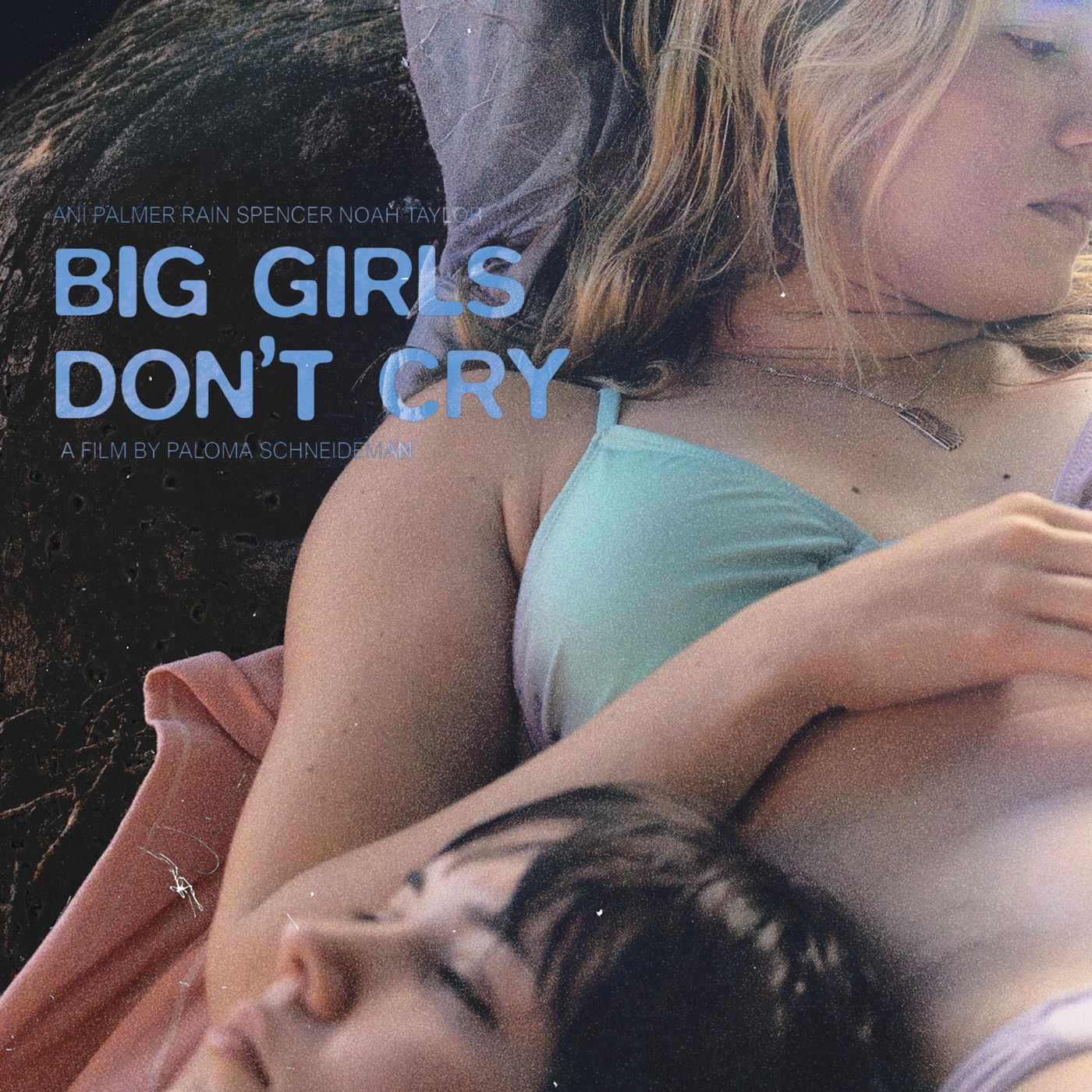
Hey folks, welcome to The Projection Booth. I'm your host, Mike White. Today, I am talking with scads of people. I'm going to be talking with... You're going to hear from writer-director Paloma Schneiderman and stars Annie Palmer and Rain Spencer about their New Zealand coming-of-age story, Big Girls Don't Cry.
With Jane Campion serving as an executive producer, Paloma wrote and directed this queer coming-of-age story with Annie Palmer as a 14-year-old Sid and Rain Spencer as the free-spirited Freya. And you've also got Noah Taylor in here rounding out the cast as Sid's dad. Big Girls Don't Cry opens in New Zealand cinemas and gets a U.S. screening in Los Angeles and New York on October 8, 2026, with more playdates to follow. Had a great time talking with these ladies. I hope you have a great time listening.
Enjoy. I would love to know a little bit of background on each of you, if I could. Annie, you're first on my screen. Can you talk to me about how you got into acting i don't know. I've always loved the idea of becoming an actor since i was a kid and when i was like 10 i think i was watching the marvel movies or something and i really wanted to be a superhero but in my brain i was like that's not possible so the next step was act as a superhero and so my mom just got me acting lessons and i did theater all through high school years until i landed this film role which was pretty.
Cool rain how about yourself I. Lived in a small town called Wilmington, North Carolina for a couple of years when I was young. And when I was about five, I started auditioning for the community theater plays. And I just played all these little made-up characters that were just mute in the background and completely fell in love with it and wanted to do it forever. And then Paloma, how did you get into filmmaking?
I did film school a couple of times. made music videos and short films and did everything that a filmmaker says they're doing, but they're not really making film. And then I just built my portfolio, became a musician. I did this pop-up film school that was run by Jane Campion. And yeah, I had the idea for the script four years ago, five years ago, and have just stepped through it. And I guess I'm a filmmaker now, but sometimes I don't feel like I deserve that title.
But I guess I am a filmmaker, yeah. You worked on one a few years ago, and it's got a lovely title. I just want to know more about it. Nude Tuesday. That's the quintessential all-spoken-in-gibberish nude feature film that I worked on as the director's assistant.
That was pretty fun, actually. Just 10 comedians talking in gibberish whilst naked. Put this real heart to the story. Just check it out. How did the story of Big Girls Don't Cry change from the time that you wrote it to now the time that we're seeing it?
So much because the mechanics just get better the more you write and they start to make sense and the seeds you've sown, they start to reappear. But actually the essence of the story was the last scene is still the same last scene I wrote in the very first draft. It was always like a coming-of-age story that works quite hard to not be too defined by its sexuality or it's like thrives in the ambiguity of it all. And that was all there from the first draft. But what to change?
There used to be two parents. Now there's only one. But yeah, nothing crazy. Actually, I think a big discovery was like the MSN internet plotline. That came about a year into writing the script.
But otherwise, it's pretty similar to how it started. And tell me about your casting process. How did you come across Rain and Annie? I had seen, I can't even remember, I can't remember who I cast first. I think I cast Rain first, actually.
Because that wasn't reliant, like we didn't have to match the way she looked to anyone. I'd seen Rain and Good Girl Jane and was just so blown away by what a beautiful actor she was. And obviously I'd seen The Summer of Twin Pretty as well, but I think, yeah, good girl, Jane. I was really like quite enamored. And I was looking for an actor that was very grounded in themselves, very warm and just quite effortless.
And I think that is what Rain is. And yeah, we had, we got the script to her and we had a Zoom and we were just like friends from the jump and got each other and it was very easy. And, and yeah, it's been a real joy. And then with Annie, Annie has a funny story. My casting agents like send me all the tapes and I was really scared, like genuinely very nervous about who would play Sid because she's in every scene in the film.
So I like worked out this little like procedure to feel less nervous about it as I would, I had all the thumbnails of the audition tapes and I was like, okay, I'll watch the ones that I think are the most wrong based off the thumbnail and then it'll only get better. And then I saw this little thumbnail of this like chick with a little dark bowl cut. And like, just, I just didn't think I just, she wasn't the Sid I pictured. She's the first tape I clipped on. And then yeah, 10 seconds in, I was like, holy shit.
Found it. And that was Annie. It was really divine, like signs for the universe. Rain, how do you approach a character like Freya? How do you find that character?
Originally, when I read the script, fell in love with it I like what I love about Freya is she's so authentically herself and she's so comfortable in her own body and just she comes into a new space and just feels like it's hers in a way that's just really grounded confident but not in an annoying way just in a way that's like she knows who she is and what she wants and I think she sort of gives Annie's character permission to like be herself and permission to not be so critical and judgmental of like every little part of her body or every, you know, just sort of, if you have a flaw, whatever sort certain flaw you have, it's like sexier to just commit to it and just be like, this is me. And I, and I love it.
And there's something really like enamoring about that. And so that's what I was sort of trying to portray with Freya. That's what I loved about the character. Yeah. Yeah, it's such a special project.
I'm just so happy to be a part of it. Of course, the relationship between you and Annie is very important in the film. And I'm curious, how do you guys come together as actresses and form a friendship that looks so real on screen? It wasn't very hard to... Rain, you're so cool.
So I wasn't doing too much acting, to be honest. I don't know. I think we just had a really cool rehearsal process where we really got to know each other. And I met Rain quite early in the pro actually i don't even remember the days of blood in my mind but i just know that i got to spend a lot of time with you before shooting and i think that really helped establish that kind of connection. Paloma also had us take our characters into the world remember we went to the grocery.
Store Oh yeah. I love that. And yeah, we had different exercises that sort of broke the ice and allowed us to be free in the characters. Paloma was something that you're so close to for so long. Are you very precious about the words or do you allow people to feel out things and ad lib, do what they need to do with this?
Yeah, totally. I'm like, these actors they're gonna be able to say what I'm trying to say better like we all agree on the essence of what we're trying to say we all know the script and then we just yeah we I always feel like we have a take that was like for the script and then the actors take and then my take we settle somewhere in between all of those things but But yeah, no, I think we find like these guys were saying a lot of film in rehearsal as well. Like we won't rehearse the actual lines too much. We'll rehearse around it. And, um, that often generated new material, new, interesting dynamics that we would then like put into the film.
That's my favorite part is just finding that like collaborative conversation with the actors and letting them, empowering them to make their own choices. How was it working with Noah Taylor? I'm a huge fan of his, have been since I saw him in The Year My Voice Broke and some of those early films. He's kind of a national treasure to me. Yeah, he's a legend.
He's awesome. I feel like he was our father figure on the whole film, really. Even the crew and stuff, he was so seasoned and so experienced. It's actually a good sport that, I don't know, we kind of could all look to him for advice or whatever, but He's just fun. He's just funny.
He's really smart and really sensitive. And I love this in an actor is like, he didn't just do like, you know, he would ask questions and he would need to understand why we were doing things a certain way. And yeah, he's just very clever. And mostly we just had a lot of fun as well. He would do the improvising as well.
He would have to take his character into the real world as well. And it was hilarious. He would send me like complaints, like as the dad character to the neighbors or to a policeman who was writing formal complaints. Very funny. I should share them at some point.
They're really good. Annie, I know you wanted to be a superhero when you grew up, but what's your superpower now? Like, realistically or in my mind, you know? Like, realistically. I'm sure somebody like a Paloma is, really good at, I don't know, organizing.
Obviously, she has to keep a lot of plates spinning. She says no. She managed to make a feature film, so that probably is in there somewhere. But what's your superpower? Always being able to just say the most random thing that makes no sense.
That's not really a superpower, but I feel like that's just my thing that I do. Reen, what was the toughest part of making this movie? I felt so... grateful to have to to first of all be in new zealand new zealand was incredible i fell in love with it hard i actually went back six months later and did a went on a road trip i was like i'm going to every island i'm gonna figure out new zealand it's i'm gonna be i'm gonna be there but I was in this gorgeous place surrounded by the most talented, awesome people. I got to expand and work on my craft and build a new character. Everything has its own challenge when you're trying to craft a character.
But I truly just felt so grateful to be there and be surrounded with these awesome women. And Noah Taylor is so fun. He was a gem. Paloma, how about you? What was the toughest part for you?
Because you've lived with this the longest, I imagine. It wasn't great filming in a tropical cyclone, like trying to make a summer film. That was pretty hard. But like ultimately ended up giving it a very specific look and feeling, which was great. But interestingly, like once the film was made and you start marketing it or figuring out its life, like that's actually quite hard.
Because it's like, it's that thing, it's like a child, right? You're like, you rear it and you love it for so many years and then it's ready to go on its own journey. And as it like gets further away from your control, it's quite scary, quite tough. But honestly, as far as like first features go, I think we had a pretty good run. Like I want to make films still.
So I think that's pretty good. Where are people able to see the film now? Well, we'll have some screenings in LA and New York and a few other big spots. And, Yeah, there'll be like a bit of a, I think we go to London, we go to the UK next, and there'll be a bit of a kind of a trickle down. And yeah, so ideally you see it in a theater near you, so you can experience Annie's face on a very big screen for 95 minutes.
And after that, I'm sure it'll do the streaming thing. Yeah, but you should go see it in a cinema because, or people should go see it in a cinema because it's, Such a special thing to go watch in community and see all the little details. Rain, where's the best place for people to keep up with you? I have an Instagram. It is NinerRain.
Or you just type in my name, RainSpencer. I'm on there. That's my only form of social media. I am on there. And Annie, how about yourself?
I have Instagram. Yeah. Amp has chosen me and my 700 followers till my deathbed. I don't know. I love them.
And Paloma, how about you and the film? Where can people keep up with that? Yeah, probably Instagram is like the biggest channel for it. Yeah, I would say that is weird to look for me. Polly Hill, it's my musician name, but it has my film work on it.
Ladies, thank you so much for your time today. This was so nice talking with you. Yeah, you too. Thank you, Mike. Thank you.
Own protection baby be with myself in center clarity peace. Don't cry. Don't cry. I must take the baby. To be a big girl now and big girls don't.
Cry like a little schoolmate in schoolyard we'll play jackson unicorns i'll be your best friend and you'll be my. Valentine I wanna hold yours too We'll be. Playmates and lovers and share our secret worlds But it's time for me to. Go home It's getting. Late do with you it's personal myself and i we got some straining out to do and i'm gonna miss you like a giant missus they'll blanket but i've gotta get a move on with my life it's time to be i Don't cry.
More from The Projection Booth



Similar episodes across the network
Matched by shared keywords.
-
Empire Records
1 shared keyword: coming-of-age