
About this episode
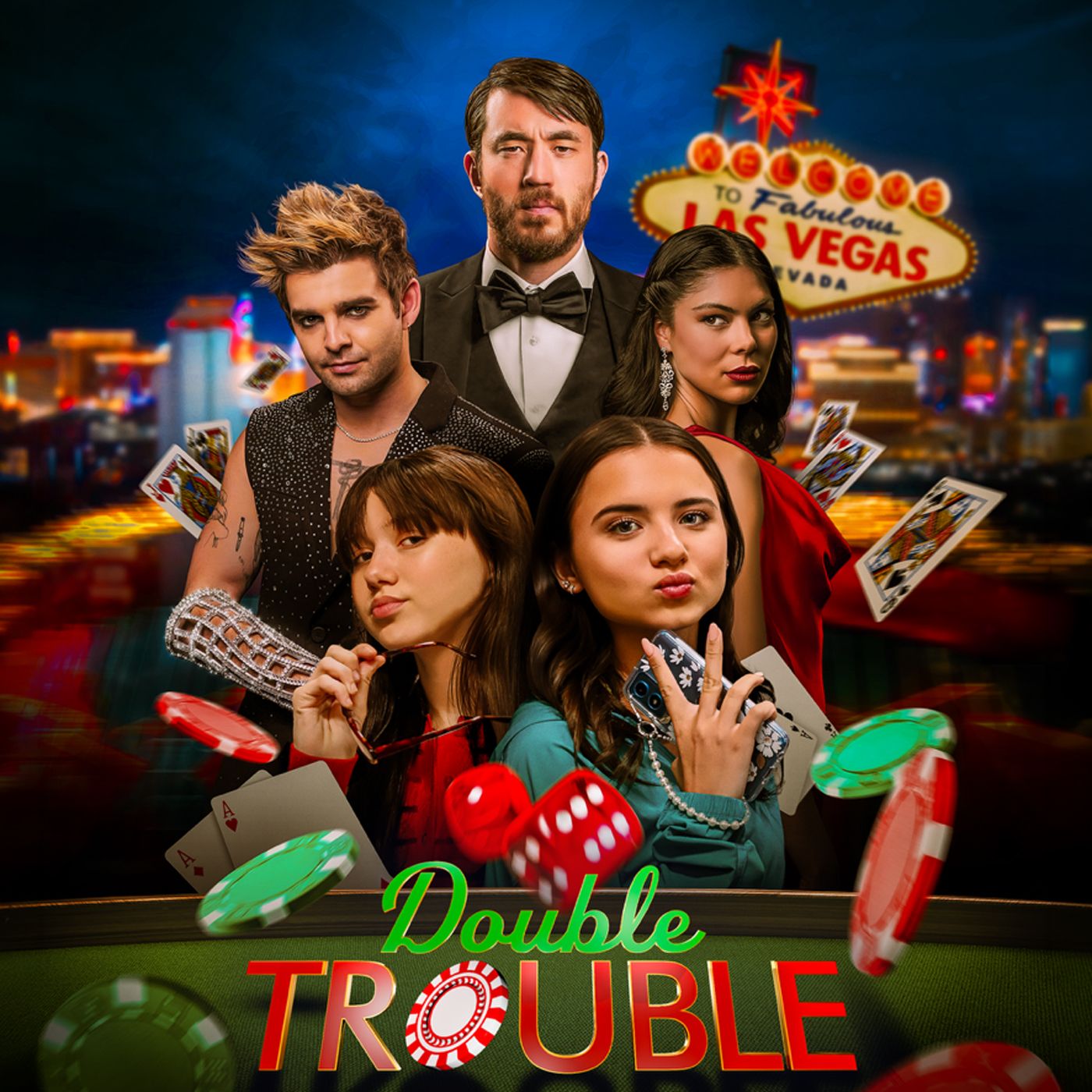
Piccinino details the chaos of filming inside a live, working casino — sound so loud from slot machines and chatter that nobody expected to salvage any production audio, until the sound team proved them wrong — and the night 4,000 football fans unexpectedly descended on the casino floor mid-shoot for the climactic lobby fight, which his longtime cinematographer Brad Rushing called the hardest shoot day of his career. Add the limited hours mandated for the film's underage leads, and Double Trouble becomes a case study in improvising around a city that never actually sleeps.
Transcript
Automatically generated, so expect the odd misheard name.
Hold your ears, folks. It's showtime. People pay good money to see this movie. When they go out to a theater, they want cold sodas, hot popcorn and no monsters in the projection booth. Everyone pretend podcasting isn't boring.
Turn it off. Bro, what is the actual hype? Hey, what's going on? Why are we stopping? Let's go.
You can go to the pool, but you will come right back to the room, and you will stay here until we get back. Roger that. Hello? Roger Rabbit. Uh, hi.
Hi. I got security due to a future nightmare. Don't be jealous. What me? I love him.
Can we go to the event? No. Security's like crazy tonight. He's got this bracelet or something expensive. Whoa!
Let's go! It's gonna be a long night. You know, I really don't think we should be back here. There's somebody down here. Let's go.
With me. Right now. Let's go. All right. Let's go.
All right. Okay, what now? We gotta find a way to get out of here. I'm taking you guys in. To jail?
Yeah. To jail. The guard at that desk, that wasn't Clark. I am going to investigate. Did you see that the gauntlet is a fake?
This looks exactly like the real thing. I think I know who has the real one. Stay here, please. Stop. You're just in time.
This party's about to get good. You do know that's not going to help, right? Let's do this. Let's do this. I told you to stay put.
He was going to kill you. I hit him exactly where I wanted him. So, what does this thing top out at? Eight miles an hour? Seven, actually.
Should I drive? Nope, that's not even an option. Hey folks, I'm your host Mike White, and today I'm talking with director Sean Piccinino about Double Trouble. The Vegas-set action comedy casts real-life twins Madeline and Violet McGraw as a pair of sisters caught up in a casino heist. With Andrew Koji bringing the kind of martial arts flair Piccinino has built a career staging.
Piccinino and writer John Ducey built the film as a kind of Home Alone meets Ocean's Eleven, shooting on location inside a working Las Vegas casino, 4,000 rowdy football fans and all. Double Trouble opens in theaters on October 9th, 2026. I had a great time talking with Sean and I hope you have a great time listening. Enjoy. Can you tell me a little bit about yourself?
How did you get into filmmaking? Okay. Well, I've now been in the business for about 25 years. I first got into it in kind of an interesting way. I grew up in the theater.
My father was a drama professor. He directed two plays a year, produced Shakespeare in the Park. So the kind of performance and entertaining and audience has been there since I was real, real little. But then I started writing, directing, producing commercials in my hometown. And that kind of happened by happenstance.
But I wrote some commercials just for a company I worked with. They liked them. They worked. And then the commercial company hit me up and wanted me to do more commercials for their company, which I did. I did about 30 commercials in my hometown.
And then when I was like 1920, I decided I got to head down to Southern California to kind of pursue the dream. And I studied a little bit of film in just traditional college. I didn't go to film school because I was from a small town. I didn't even realize that film school was even an option. But when we moved to Hollywood, or I moved to Hollywood, I got my foot into the door and a couple jobs being PAs and runners and all of these things.
And kind of that's how it started. I also did extra work and just treated it as an education. I had a mentor early on who said, if you really want to be a filmmaker, get yourself on set however you can. And he mentioned extra work. He's like, just go be an extra and absorb what's going on.
He's like, if you're really smart, take a notebook. And I did. I listened to him. I took a notebook. Laptops were still pretty heavy duty at the time.
So I just took a notebook, pencil and notepad, and I started taking notes. And what I discovered is the other lesson that mentor told me was never be an a-hole because the business is so small, right? And so I took his lessons to heart and Just was always friendly and inquisitive and not afraid of hard work. And I got some pretty interesting opportunities just through extra work. And one of which I got to shadow the camera team on the set of CSI Miami.
And that was really cool. They were actually still shooting film back then. So I got to learn all about actual film cameras and checking the gate and all of that stuff. I got to shadow. Some directors like, you know, look over the shoulders at Video Village.
And so I got some cool opportunities with that all the way up until actually getting my SAG card as well from a Wes Craven movie. And that was, yeah, all really cool. But that was my kind of intro into the business and first getting started. And I also was a martial artist for most of my life. So I kind of got into the stunt side of that and fight choreography as well.
So it's kind of multiple entry points, you know. but I just knew that I wanted to be a filmmaker. That was my, my goal. I wasn't just trying to be an actor. I wasn't just trying to be a stunt guy or something like this. I really, my ultimate goal was to be a filmmaker.
I guess that kind of checks out because your filmography, I don't want to say it's all over the place, but it's very varied. Let's say that like series television, you know, movies and just, even looking at like the list of upcoming films that you've got, it's like, Oh my God, this guy is never resting. And it's just so many different types of movies. Yeah. I, again, I just love storytelling.
People ask me how I choose the projects I choose. And of course the material has to resonate, you know, that's a given. And I'm looking for interesting stories, interesting characters. I'm usually looking for some kind of underlying heart to the story. But yeah, just as important in equal percentages, I think, as the people that I will be doing the project with.
It has to be people that, you know, we feel that synergy, that energy, positivity. I'm a very positive, forward type of person. As a leader, as a director, I lead with positivity and energy. And so that's what I look for is really, you know, folks that I know we're going to enjoy each other and create and collaborate together. Yeah, it's important to me.
I know I saw at least one of your films before Double Trouble, which was The Island and really enjoyed that one. Oh, thank you. Thank you. Yeah. Michael Jai White and Gillian, they were just so awesome to work with.
And in that one, we were doing a very like 90s throwback to those kind of cheesy action movies. And and we just had an absolute blast working on that. Same cinematographer, by the way, same director of photography, Brad Rushing was on that was also on this one. OK, well, how did Double Trouble come to you? So Double Trouble came to me.
I was part of like basically the inception of this. This company, ESX Entertainment, and we partner with Warner Brothers. We've done a bunch of movies over the years. I now just finished my 10th movie with Ali Afshar, the creator of the founder of ESX and that whole team, that core team, producers, writers, all. Of that stuff.
And they had worked with the McGraw sisters. I knew the McGraw family. I knew that family. And so the idea came up that be really fun to do like an action comedy, maybe an action like Christmas movie with the sisters. And that was kind of the idea that was thrown out there by Allie.
And they were interested. And then, of course, they asked me and I was like, heck, yeah, I would love to do this with with the McGraws. And then we just started brainstorming and brought on John Ducey, our writer. And then this idea of Vegas and a heist got kind of thrown into the mix. And everybody really thought that would be a fun, fun angle to do on this.
And kind of the Home Alone meets Ocean's Eleven inspiration was born from that. I think it's very appropriate for you because we are talking about how multidisciplinary you are and all the different genres that you cross. This movie has a lot of different genres to it. It does. It really does.
And when we knew we got Andrew Koji signed on, we're like, okay, we got to bring the action. We got to have some really cool choreography. And because of the nature of the movie, we leaned into that Jackie Chan inspired. I really think the kitchen sequence is very Jackie Chan inspired and and, uh, we all love Jackie Chan. So that was, that was kind of the, you know, idea there.
And I brought in Arnold Chong, who is an amazing martial artist and fight choreographer and, uh, stunt coordinator in his own right, also an action director. And, uh, so I called him up and said, Hey, we got, we got Andrew, we've got this really fun family action comedy, uh, And he was in and then, you know, really helped us dial that, those action sequences in. And Andrew came out early and was training in the gyms and we were doing it all. It was, it was, it was a kind of an all in fun project. Well, it's interesting too, because some of my favorite martial arts films are things like the one where Van Damme plays the twins or double impact.
Yeah. Double impact or twin dragons, the Choi Hark, the lamb film, you know, But here you actually have twins. You're able to use twins. Yeah, yeah, yeah. Super fun.
Yeah, I love those. I love all those movies. I was a huge, again, starting with Bruce Lee, of course, but then Jackie Chan, Van Damme, that whole era. I was jumping on the bed trying to do the split kicks in Bloodsport, you know. So that's my world.
I love that stuff. And Jackie Chan really inspired me. He was one of the big inspirations to being a filmmaker because I was a martial artist. And I was having this budding interest with commercials and writing, directing, and editing. I learned editing on those commercials.
And seeing Jackie Chan, I got to watch a documentary that one of my friends had imported. And it was kind of this Hong Kong style of how they make the action, how they do the action. And with balsa wood chairs and all these different things. And it really, really did inspire me. And he talked about his biggest inspiration being Buster Keaton.
And so then I discovered Buster Keaton and I'm like, here's a writer, director, actor, stuntman, editor, you know, and I'm like, that's what I want to do. I want to be I want to be all of the things. Right. And so, yeah, really, really big inspiration there. When I'd love that Jackie always mixes in the humor.
So to bring in the humor to these fights is so key as well. Yeah. And always all the environment. Right. That's why the kitchen scene were like, we're gonna use everything as a weapon.
Even lettuce is a weapon in the scene, you know. So what were some of the biggest challenges you had making this? Well, I think, as you could probably guess, trying to film a movie in a live casino in Vegas definitely presented a lot of challenges. Yeah, I bet. But of course, I mentioned this on another interview, our sound team was so good that and then our post sound house was so good. we actually were able to use a surprising amount, like most of the production audio for the movie, for the dialogue, which none of us while we were filming, we thought there's no way because the casino was so busy and machines pinging and people talking.
But we rose to all of those challenges and thankfully we have such a great team that we were able to push through it. We did have, you'll like this story, we had the climax of the movie, uh, where we, uh, you know, the action sequence act fight happening in the, in the lobby of the casino. Uh, we had 4,000 football fans descend upon the casino right at that moment, right. As we were shooting this sequence and we couldn't hear each other talk. Uh, my director of photography, Brad rushing, uh, looked at me when we, we got to the end of that night and he goes, that might've been the single most difficult shoot day I've ever experienced.
And by the way, he and I have been on some crazy shoots. So that was quite the statement, but I looked at him and I just nodded. I'm like, it might've been. And only because nobody could hear each other. So the actors couldn't hear each other to, to, to respond.
And so then it's causing more takes to go on, you know, and then, you know, the gaffers couldn't hear Brad when he was trying to adjust lights. And it just was, it was kind of chaos, but also there's something beautiful in that because I think the scene works. I think we pulled it off and, It's just a testament to all the people coming together and against those odds. Cause, and it's not like the 4,000 people were, you know, doing anything wrong. They were just, they went to a casino and it just happened to be a lot of voices all at once that were super loud.
There was a couple rowdy guests that were trying to, to, to push their way onto our set. But, but for the most part, people were just enjoying themselves and, and, but, but it made it hard, a hard day at the office, so to speak. Yeah. Well, did you try to shoot at night to help mitigate the amount of people? Yeah, we did do some of those things.
But again, here's another challenge. You have our two leads are under 18. So you have limited time. You have limited working hours that you can do. So we can't really just do all overnights.
So, yeah, there was some difficulty. But the other thing that's interesting is it's Vegas. Vegas doesn't sleep. So sometimes we're at one, two in the morning and that casino was busier than ever. We were like, Oh my gosh.
Uh, so yeah. Uh, but for certain things, yes, it was nicer when we were later because we were on an off day or something like we shot in the ghost bar when, when the ghost bar is closed, you know, they're only open, you know, like Thursday through, through Saturday or something like this. So we were on the off days when we shot in there and that made it easy because we just, we got to own it, own that space completely. which made that much more doable, of course. Well, Sean, best of luck with the rest of your interviews and best of luck with this film. Is there a good place for people to keep up with you online?
Yes. Instagram is where I kind of do all the social media stuff. And that's easy to find me. It's Director Sean Piccinino. And if you just hit in Director Sean, you'll find me.
And my name is spelled S-H-A-U-N, which is a kind of unique way to spell Sean. And then the movie comes out, it'll be in Theater's October 9th, so I'm super excited about it. Sean, thank you so much for your time. This was great. Thank you so much.
Appreciate it. Some guys fall in love with one girl, I gotta fall for two. There's just so much. Love in that one heart's supposed to do. So I go around with my heart dragging on the ground, dogging me around.
I'm the sorriest side in town. I got double trouble. I got double trouble. I got double trouble. Twice as much as anybody.
Else, oh yeah. I guess there's got to be two dark clouds hanging over me. My future looks as bumpy as a matchbox on the sea. Every time I think that I have finally got it made, some losing cards are played. I just can't make the grade.
I got devil's trouble. I got devil's trouble. I got devil's trouble. Twice as much as anybody else, oh yeah. I got double trouble.
I got double trouble. I got double trouble. Twice as much as anybody else, oh yeah.
More from The Projection Booth



Similar episodes across the network
Matched by shared keywords.
-
Episode 24: Vegas Vacation (1997)
2 shared keywords: family comedy, las vegas
-
Episode 20: Vacation (2015)
1 shared keyword: warner bros.
-
Episode 19: Nothing But Trouble (1991)
1 shared keyword: warner bros.