
Season 1 · Episode 469
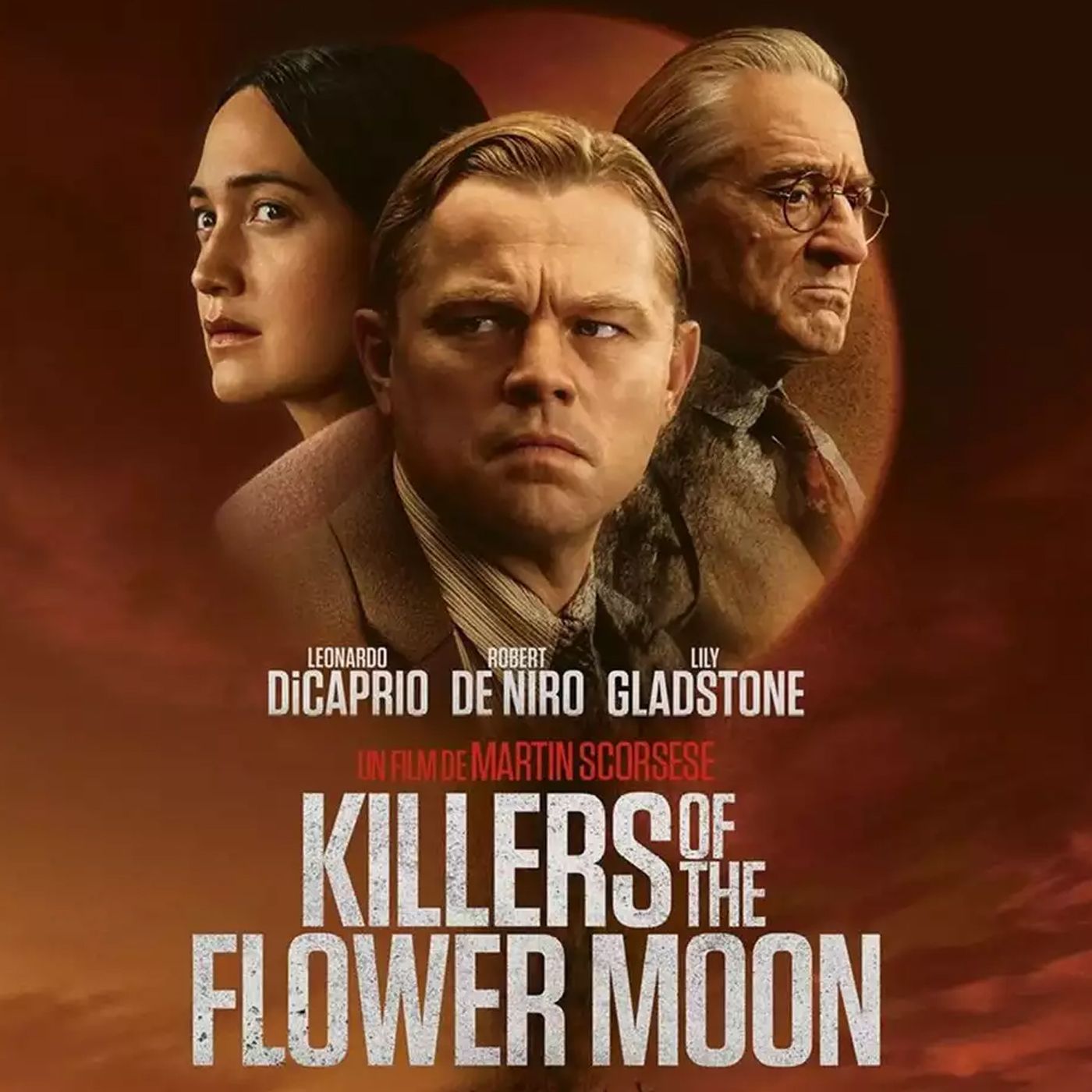
Special Report: Brandon K. McLaughlin on Killers of the Flower Moon

About this episode
Mike talks with special effects coordinator Brandon K. McLaughlin about his career from being on set on The Rocketeer to his work on There Will Be Blood to his latest work on Martin Scorsese's Killers of the Flower Moon.
Transcript
Automatically generated, so expect the odd misheard name.
Oh he is, folks, it's show tied. People say, good money to see this movie. When they go out to a theater. They want clod sodas, popcorn and no monsters in the protection booth. Everyone pretend podcasting isn't boring.
Cut it off. Whose land is this? Well land? Well? Well, well, our war hero has a ride.
You better get choice. Calling back here, we'll says your de finest, wealthiest and most beautiful people on God's earth. They how smart? Everybody they have the safe? Who gets the oil?
So? I got a question. You like women? That's my weakness. Well, we mixed these families together, and that estate money flows the right direction.
It will come to us. So mean, Gossie, that's how you are. I don't know what you said, but unmust have been Indian for handsome Neville. Why did you come here? I work with my uncle.
You're scared of him. Oh he's He's the nicest man in the world. The old age, the time is over. We got to take back control of our homes. I was in down from Washington, d C.
See about these murders. We have so many jasly've lost cow it's just bad luck. Seems more like an epidemic than bad luck to me nose say just die by the enemy, Do not let them die alone. Evil surrounds my heart. You gotta pick a side.
Even knows if you love and who killed these men? Who killed my family? Did your wife say who she was most afraid of knowing? Do something you're going to regret for the rest of your land. I ain't got nothing but regress.
Hey, folks, welcome to a special episode of the Projection Booth. I'm your host, Mike White. On this episode, I am talking with Brandon K. McLaughlin. He is the special effects coordinator on many many films, including Martin Scorsese's latest film, Killers of the Flower Moon.
I think I could have spent hours talking with mister McLoughlin. He's had a fascinating career. You get a little slice of that here, and I hope you enjoy it as much as I did. Obviously, I want to talk to you about Killers of the Flower Moon, But can you tell me how did you even get into the business. How did you go into special effects work?
It started when I was eight years old. Yeah, it's a family business. My dad got my uncle in and my uncle was working on a movie called Rocketeer. In the film, the Rocketeer is running along the top of the Zeppelin and the zeppelin blowing up Halloween night. It was October thirty first.
I was eight years old and I got to see that, and that point on it was like, that's what I'm doing. There's no other choices. That's yeah. That was my introduction into what special effects what my uncle did for a living. I was like, Oh, that's it, That's what I'm doing.
Wow. Did you start off with like practical or more computer based effects? What was your math that way? No computer base. There was no such thing as computer base when I got in.
I started when I was seventeen years old. I left high school my junior year, and while every all my friends were in senior year in high school, I was taking classes in the community college and working on Twister. You were not fooling around. No, I went right into it and I haven't looked back. Look at your CV and it's just one hit movie after another.
It's just wild to see. You started off your first credited role in IMDb anyways like hard Rain and then right to Armageddon. Yeah. The reason why I didn't get a credit for Twisters because I was a PA. I started at the bottom.
I started by cleaning up the shop, sweeping the shop and cleaning the trailers and learning everything from the ground up. I didn't know out of weld, I didn't I didn't know anything. Everything's been it's on the job everything. And what's amazing to me is that looking at again to your CV, I'm seeing movies where I'm like, I don't remember any special effects in there? Is that kind of the goal is the best special effects are the ones that you don't notice.
The movies that I personally want to work on are the movies where special effects aren't the big explosions and the flipping the cars and everything else. The special effects are the elements that are added to the film to entice the audience to really enjoy the story and completely envelop the audience in the story, and to make the story that much more open to an audience member. Rather than just walking down the street talking about somebody's parent died, we add rain and that adds that little extra element of sadness if you bring the audience into more of what you want the character to be portraying on the film itself. My look upon effects isn't, like I said, the big explosions or the big gags, the houses coming down or all that kind of stuff.
It's the small stuff where you don't really notice it. It just adds to the sequence or the scenes that you're watching. And I'm saying that I don't know how to do that stuff. Did Wonder Woman two or Wonder Woman eighty four? And I've worked on all the big, massive blockbuster films, But in those films you're brought in to do special effects.
The ones I like to work on is when I sit there with say, Killers of the Flower Moon, and I'm sitting down with Mark scorsesey, how do you want this vault explosion to look? Do you want to look like a vault explosion? Or are we selling the fact that Kirby doesn't know what the heck he's doing. He's completely overloaded the vault, he's burned all the money he's going in for. We're selling the fact that it's not the vault exploding.
We're selling the fact that he doesn't know how to use pyrotechnics, he doesn't know how to use explosives. So it's not you're watching the film, but the message we're getting across is that he doesn't know what the hell he's doing, not that he's breaking into a vault. It's a different reaction when you get approached for a job, say it's Lincoln or Killers of the Flower Moon, whatever you're working on. Did they come to you with a brief or do you apply for the job and say I can do this, or how does that work for you? It's a mixture of both because I'm still fairly new at being a coordinator because I just stepped into that role five years ago.
Before that, I come from fifteen years of being the same form, which is the step right below the coordinator. So I'm involved as the set form, and you're involved in everything. You're involved in how the gags are being designed, how they're being built, how we're doing this set, how we're doing that set, because I'm the last defense before it goes on camera as a set format. So it was an easy transition to getting into the coordinator role. Once you step into that, it's either a who you've worked with and they want to hire you to do another job, be its recommendation, and they either give you a script or they give you they give you a little teaser of what the film is, and they want to see what your response is or how you would do a certain gag.
If you're aligned with the director and the producers, they don't sit there and say that to you. They don't go, we were thinking of doing it this way? How are you thinking of doing it? No, they say, we want to here's an example. I just did Alexander two, which was a Disney Plus film, and their biggest concern was, we have children and we want to get a seventy nine.
When a bagos stuck in a river and have it float down the river, what are your ideas on how to do that and how to do it safely? In my world, there's multiple ways to skin a cat. You can do the same gag fifteen different ways. The audience would never know how you did it. It still looks the same.
What's the best way to make it work with the money that you have, the location that you're shooting in, all the variables that are the kids. You got to do it with kids. You got to be safe. So every job is different, but most gags are pretty much based on the same thing. You just have to do minor little tweaks, flip in a car, You don't want the car to flip twice, but you want it to flip once.
You're still using the same apparatus. You're just turning it down a little bit so it doesn't flip so much. That's how I got that job was they heard the words coming out of my mouth and it was along the same line of what the producers were thinking of and Disney was thinking of. So that got that job, the job that I'm up for now that I'm talking to it was because it's the same people that did News of the World and they I mean, it came from his mouth, the producer came, it came from his mouth. He did such a great job for us.
We just want to get you locked into this. We want you to do this. It's a variable. It's a variable. Every show is different.
But you do get to a point where you're just getting callbacks because of the job you've done before, which is the biggest compliment you can get. In my book, Yep, you're working with some pretty big folks. That sounds like as well, that's where I like to be. You've seen my IMDb page and you see the style of films that I like to work on. It's not the big blockbusters.
Yes, there's a couple of them in there, but it's more of the films that are telling a really good story, that's a really good artistic film. That's what I want to be involved. And I want to be able to sit down with all the creators of the film and go, hey, what if we do it this way? Or hey, you know what I could do to add to that? What if we do this, or to sell that it's a little bit colder, Why don't I do a little frosting on the ground so you guys get that feel.
So it's to me that's more fun rather than being thrown into a pot. You're a number, we're doing this and this, go make it happen, and you don't have You're just trying to make the job happen. You're just trying to get the product out. And that's to me, that's what it is. The big blockbuster films are product.
You're not going to see them because of the storyline. You're not going to see them because of what they're trying to get across to the audience. You're not going the audience isn't going there, and the filmmakers aren't trying to make the audience think they're just trying to take them out of their reality for two three hours so that they can just be vegetables, just have a repriet from their life. I want the ones where five, six, seven, ten years down the road, you go, oh you did There Will Be Bled. Oh my god.
That was amazing and it aligned with what was going on in my life and it made me think, And how do you open a film up with no smoking words in the first half hour of that film. That's what I aspire to be. That's what I want to have on my resume is films that make you think and stand the test of time. Just all of the stuff around the oil wells must have been a nightmare. Yeah, I'm not saying they're easy films.
They do pose a lot. They pose their own specific type of issues, of problems, of difficulties, and that's another reason why I like doing them, just because that's the whole reason why I'm One of the reasons why I'm in this industry is it's challenging. It's extremely challenging at times. And when you get into a film like There Will Be Blood, we were four miles out in the middle of nowhere on a desert, on a dirt road. We were what was it three hours closest to the closest major town.
How do you buy a PVC? How do you buy a piece of PVC? How do you get parts? How do you get You have to factor all of that in when you start a show, you have to factor Okay, it's going to be a whole day for me to get a stick a pipe. So it's also another part of why I end up doing those films, because they're challenging who other than the director, who do you work the most with?
I imagine you have to work with the production designer quite a bit. You're right. It depends on how much interaction I have with sets, if construction or the set designers building building sets that they have to do a specific thing for a show that we are hand in hand. I'm involved in the blueprints before it even goes into construction. No, I need this support it a little bit more to handle this weight, or removing this section of the wall because that's where the car's driving through, or what have you.
So it's a hand in hand. It's a hand in hand thing, but goes on sets. So if I'm not involved in four or five of the sets. I really I stay involved in it just so I know if I have to rig a fireplace, or if I have to rig wall sconces or something like that, I need to make sure that the backside of the wall is accessible, or the way that they build the fireplace has to be too specific regulations for us if we're doing it in La County or if we're doing it in New Mexico or so. There's a good a relationship between the production designer and myself, and that is also somebody who I look at who they hire for a film that makes that adds to my decision whether or not I'm going to do the film or not.
Because you can work with some of those people where I got it, I'll just I'll give you whatever, and I have to show up on the day and make things happen, which it's extremely difficult sometimes. But if you get to those people where you've worked, where you've worked with them before, or they're good people, they know how to do their job, but they're decent people to talk to and work with, and they know what they're doing, it makes it much easier to do my job than trying to come behind somebody and go up, all right, cut all that out, rebuild all this and so yeah, we're cand in hand with the production designer a lot. Tell me how you approached Killers of the Flower Moon. I'm really curious. Other than the safegug, what else were you involved with?
Oh gosh, there was. Here's something you wouldn't know when we started. And Killers of the Flower Moon. They in Oklahoma, they burned their fields. They burn all the ranches to neutrop to put nutrients back into the soil so that the grass comes back a lot better, stronger, and healthier for the towels.
While they were doing that, it brought up questions concerning fire protection. And Molly's house, the first house in the ranch. We built that from the ground up. That was built by the production designer, Jack Fist. And Jack came to me and said, well with locations.
They said, hey, we're really concerned about fire protection. Can you come up with something? So I had to design a system that could be put in place within half an hour. If we knew if fire was coming down, we could just turn a switch on and everybody could walk away and know that it's being sitting, know that it's been protected but that's not something that whatever you would never know because it's not in the film, has nothing to do with the film. It just had everything to do with protecting the set.
We didn't want it to burn down. That's another mean production and location, production designer and location, something that's behind the scenes that nobody would ever know about. To get into how we would do the film. It was with a UPM and producers that my boss and I had worked with previously, so they called us to hire us for the job. They knew what we were going to bring to the table.
Once we got the job and we got into the production meetings, that's when you start getting into the nitty gritty. Okay, it says there's oil squirting from the ground. Is that coming from the ground? Is that coming from the oil? Derek, how do you want it to look?
Is it an artistic rendition of oil coming down on something or are we going with realistic This is what really happened. That's usually a tuggle war with me in productions or a director in reality. This is how it works. Are we going with reality or are we going with an artistic rendition? Or is it something completely different that I am not aware of?
Open for whatever. But my job is all based on reality. I want an audience to go, oh yeah, okay, that would really happen. It's not a superhero film. Not everybody's not flying.
Cars don't drive down the road sideways. So are we saying that it's black guys, or are we saying that no, this is a dream sequence. Or so it's going through the whole film and logging down what the director is actually wanting to present to the audience to tell the story. And once I get all of that, then I go back to my shop and I go, okay, let's show them this. Let's put this on video.
Hey, this is a talking point. Is this kind of what you're feeling? Is this what you're thinking about? How do you want to adjust it? We could do this, or we could do that.
We could change the color, we could So that's what I normally do is I'll start off a film way before a lot of people are hired, and we just work out, like the major parts. There's a lot of stuff that's in a film that is just cut and dry. That's just how you do it, and don't worry about it. I got that taken care of fire. Looks like this and dah.
But it's a big collaboration at the beginning, just to make sure that I'm on the same page as a director, so that I tell the same story is what the director's telling, and I help amplify the story that the directors tell trying to tell. I imagine every director is different. But oh yeah, are you dealing with to get those ideas of yours across to them and for them to get the ideas back to you. Spielberg's big on storyboards from whatever I remember know about Scorsese, though, how do you make that communication? How do you make that connection?
Coorsese was a little bit different. He doesn't like paper, he doesn't like the sound of paper churning. It's better to hit him with visuals. I know, it's but that's those are directors. They're quirky there.
They have certain nuances about them that you have to I have to adjust my approach. Every show is different, every show. I can't just come in and draw a picture and goes that what you're looking for and the director goes, yeah, that's fine. With Scorsese, what we did was we took it was the oil. What did we do?
We did the oil? We did the ground, the hails fire, and there was one other thing that I that I tell the gunsho the head gunshot. So I did three different renditions or versions of the oil, three different renditions of ground fire, and three different renditions of a head shot of a gunshot welling to the head. And I started the conversation with him. So I went, I cued it up, I made a video, a whole video forum, and I sat my computer down in front of him and I said, this is what we're discussing, and I just want to lock in what you like, what we're close to, so on and so forth.
So it was much more of a visual thing with Marty than it was trying to talk through it. Because sometimes somebody may say black, but they really mean Coca cola color. So it's much easier to lock in the exact decisions or the exact direction that a director wants you to go in if you have a video, because then you can talk about it further down the road. No, you remember number two that you showed me. It was like this and like that, and it wasn't drips coming down.
They were oblong, and they were weird. They looked like beans or jelly beans, and that's how precise he gets. He wanted that oil to be exactly what you saw at the beginning of the film. That was to his direction, because what I showed him was oil in reality, going back to reality, it's a great starting point. Okay, this is what it really looks like.
This is monoro, this is oil from the ground. What do you want? What are you looking for? Because that was the oil thing. The beginning sequence was a big to do.
Everybody was screwed up with it. Everybody, Oh, it's got to come out of oil. Theres no you have to drill to get oil. Doesn't just come out of the ground. Because in the script it doesn't read as it's an artistic rendition.
I didn't find that out until I did all the videos and I sat down, just me and Marty alone in his trailer, and he told me, and he said, no, this is what I'm looking for. It's an opening montage. This is what the story's about. It's not reality. It's not based in reality.
They never danced around oil squirting up from the ground. He goes this, I'm shooting it like this, and I'm shooting it like that. And when you say things like that to me. Then it's like, Okay, the gloves are off. I know exactly what to do.
But all it said in the script was the osage danced around the oil coming from the ground. That's all that said. So it just left this big, wide open question for everybody because it it just doesn't make sense. Oil just doesn't squirt up from the ground. So once we locked that in, once I talked to him and I locked that in, then it was smooth sailing from them from there on out.
But that's part of the fun, that's part of the that's part of the taking the image from one person's mind and turning it into reality. And the better that I can do that, the more jobs I get. How long do you work with Martin Scresse before you get to call him Marty? Oh? Right off the bat, just call me Marty.
Yeah, just call me Marty. He's a great guy. I'd work with him in a heartbeat again. Yeah, true filmmaker. The thest published s everything and then the laughter, lo my n everything.
Mus
More from The Projection Booth
Similar episodes across the network
Matched by shared keywords.
-
The Wizard of Speed and Time
1 shared keyword: special effects
-
Bringing Out the Dead
1 shared keyword: martin scorsese
-
Once Upon a Time ... in Hollywood
1 shared keyword: leonardo dicaprio