
About this episode
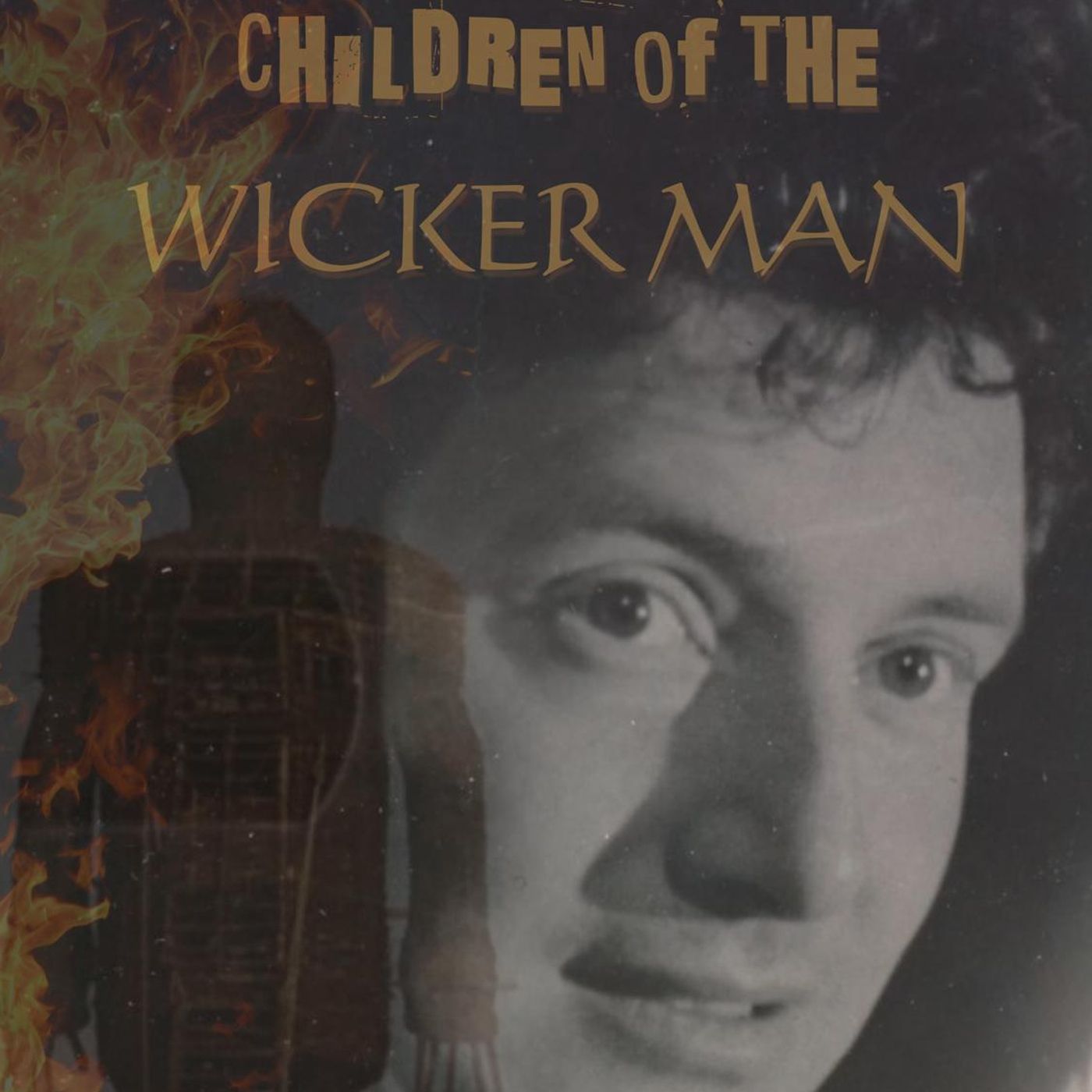
Our coverage of the Fantastic Fest continues with Mike talking to Justin Hardy, son of director Robin Hardy, the filmmaker behind The Wicker Man. Justin discusses the film that ruined his family and the documentary he and his brother made about it.
Transcript
Automatically generated, so expect the odd misheard name.
Oh year is Bote it should die. People pay good money to see this movie. When they go out to a theater, they are cold sodas, hot popcorn in no monsters in the protection booth. Everyone pretend podcasting isn't boring. No, no not.
Our dad had directed a film called The Workerman, but to me it was always the film up my family. This is the letter we got twenty twenty one. I have in my possession of very large quantity of personal papers which I believe were originally belonging to Robin Hardy. Robin Hardy, Robin mister Robin Hardy, who is the creator of The liquer Man. He just didn't understand how films were made.
Time I arrived on the vision, there was some drama. Anarchy was in the air, and nobody really knew what they were doing. Yeah, Robin, how come we never made any money from this film? How come he got cut up? What's what deal did he sign?
It was clearly going bankrupt throughout this whole process. Robin Hardy abandons his family, abandons his house. Just one day he's gone. This film has been responsible for so much damage. I don't frankly know if I can carry on with this.
It's drenching out too much about ju ju. Whow or other though we've been brought together to do this by this film. Do you think that making a fell about one's father is a stupid thing to do? Stupid noll challenging. Yes, Hey, folks, welcome to a special episode of the Projection Booth.
I'm your host Mike White. On this episode, I am talking with Justin Hardy. He is the director of the new film Children of the Wickerman. He and his brother Dominic are the creators of this documentary all about their father and all about the making of the film Wickerman way back in nineteen seventy three. Had a great time talking with mister Hardy.
He was in a cafe at the time. I'm hoping that through the magic of AI I might be able to damp in some of those sounds. Otherwise you're gonna hear a little chatter of a cafe from over in the UK. Thanks so much for listening, and I hope you enjoyed the interview. I am so.
Curious about you and your background and. It is it isn't. I've had a career of television for thirteen years, completely happily forgetting what I was, ever the son of a command and then I go into a PhD to sort of tearn off my career happily into writing academic books, and the academic world will not let it go. Oh my god, you're the son of wickhaman Oh, Wickman's my favorite sol oh shut, but you just fuck op? And so I got black bamboos well back into it, and of course fine, having somebody send me those papers was really obviously the clincher.
I couldn't keep on being the denier forever. If I was fascinated watching the movie and finding out how ambivalent you were towards the film at first, because I would have thought, oh, yeah, of course they're to be super proud about this. It's an irony, isn't it that the filmmaker's son is the one who's least engaged with the film. I think that I do make it clear that ultimately it was sort of delayed trauma, probably on my part. But I have to say when I did start, I really didn't usually like it.
I just parly because it's a very irregular film and those of us that mother our narratives, and also it's a very dated film it's there's much about it which you could if you wanted to, if you stop being having the magic spell cast over you go. It's quite flat, it's quite wooden, it's quite frankly oddly put together piece. But then if you let the magic swarm all over you and starts going no, it's a genrebuster, Matt. It's a musical, it's a soft porn, it's a police procedural, and it's a detective story, and then eventually it's a horror. And of course for most people that's already a sort of done deal.
As you can imagine coming to it as I did at fifty eight and watching it afresh, What the hell is this thing? I'm not a genre a creature. Really tell me a little bit more about your career in the types of films that you were making. So I'm a specialist in history films, and I make what is often rather unkindly calls the historical documentary drama, which is often not very well done because it's neither one thing nor another. But in my feathery ants, it's a wonderful thing.
And I, frankly, I've got the awards to prove it. I'm just really I make very good advocations of the past, with quite a lot of star actors who come to me because they know that my stories are better than the crap that gets written by some person in livery tower. I've done everything from ten sixty six to the London Riots of twenty eleven, now done release of Belson Concentration Camp. I've done how Britain got into the First World War in thirty seven days. I've done ten sixty six and the vikings of the Normans invading on the same week.
I've done a lot of stuff. How was that to turn that lens towards yourself and to examine your own. Life weird as anything, really genuinely weirdness anything. I've been very happily satisfying my ego by being behind the camera. I really am not that narcissistic that I really need to be in trumps of the camera.
And somebody said to me recently, your dad actually looks like he's a bit unkempt and flunt of the camera, unlike Anthony Shaffer, who always looks perfectly quite furied. And he he was decoding from that that Shaffer was in war of the narcissist and a which is quite interesting. Don't let me go that anyway. It was. It was weird being fun with the camera.
I think one of the best decisions I took was inviting my rather in to share it with me and to be more of the frontlan. I think that was a really good choice. He's a history of art professor. He has no experience Intellivision center. His first take was always absolute nonsense, gobbledegoog millions of ideas, untrained and unconsidered.
And I would just say, don't we what the bloody any going on about? And he'd say, yeah, no, I'm on it now. And the second take would be divine. It draw together three different ideas into one perfect thirty second sequence. It was rare.
That's amazing. That's a good person in know and to have in front of the camera. So where do you. Even start with the story like this? Do you guys sit down and say, Okay, this is how we're going to investigate, or do you just go this is going to be very organic and we'll figure it out in the edit.
You have to start with a plan of some sorts, and the plan in this states was fairly chronological. To start with the papers indicated the prep. There was an awful lot we didn't know about how the film bodage prep and how Dad should never have been directly like a man. The production came next, and lots of papers there that told us that nobody likes d on the Command. Then we did some interviews to discover that people really didn't like that.
Then we had the post production where we could see that Dad was trying to rescue the film against a British man that didn't care. And then the papers run out, so we knew that thereafter there would be a resurrection, and we knew that We then discovered that Dad and Shaffer had this sort of big battle that went on. I suppose the other shape that we knew from early on was the sort of humorless shape of one day justin you're going to have to forgive, and I think I accepted. I think I knew that this was a journey where whatever I found out, and let's face it, most of what I found out was at least as bad as I thought it was, if not was, I still knew needed to get to a place to give us what we didn't realize.
And the organic part of this is that we go to a cliff edge to see some going down to mimic the final scene and we literally do meet for young shade on women doing salitations to the sun and saying brings and give out your love to those who have gone before. So that was truly a kind of wicker Man moment. Thus, people even to this day think is contrived, and it just doesn't it. That's the real thing, that's the organic part. No, the first time I watched the documentary, I was like, is this real?
Did they stage all this? Because it just felt so convenient. That's amazing that it was the real deal. We had an editor initially who was quite a tidy, old fashioned editor and who selected only the shots and for a beautiful and after a while we decided that we needed to let that go. We needed a more organic we're telling the stories if it was two children making a scrap book of their father.
And so we got in this twenty five year old PhD who had never edited anything before and followed her instincts, and our instincts were all going raw. The shamans he had said, well, weren't good enough to be in there. She said, I don't care. I don't care how warb near it is. I don't care how bad these sound is.
This is real. I want wheel in here. I won't be able to feel what we feel. And I have to say, I think if this still does everything it does turp people crying in the yeos, just the relationship. Between the brothers, and then with the investigation of the father, you've got what fifty eight, as you say, years of family trauma to deal with.
Basically, yeah, yeah, we never intended to make that. We intended to make a making of the Wickhaman. We knew that people would be interested in the making of the wick Aman, probably more often than not last year when it was his fiftyear than this year. As to say, the papers led us towards a much more personal view, not only of Dad's bankrupts, as we subsequen discovered my mother's investment in the film and therefore my mother's story as being one of the overshadowed females from history. And I have to say, since we followed that storyline as well as we have, we're getting very good emotional responses.
I can't imagine living, much less documenting it so. Very STUDI would say, so, I mean that is a compliment and it was a very securitoust film To edit. It took about a year to figure out which of the storylines we were following, whether it was Body and Shaffer, the lost Lenana McCartney, or whether it was how creative was the genius was Robin Hardy? And ultimately I think we ended up with a bit more of a revelation of this is a bit uncomfortable watching my dad too, why don't we raise a glass to my mummy? And died without name?
That it was a success. Ultimately, I have a second film which is called Wickhamania, with so many of the outtakes, like the story of reject Clan's bond and who was it that replaced that, which is really hilarious. They're fun. They're much more sort of the Lives and Death of Christopher Lee, right, They're much more genre behind the scenes where genre fell, and I think that will be a real crowd pleaser. This is a different thing.
This is a much more intimate portrayal and you need to be prepared to take a tissue with you. How was that relationship between you and your brother before you set out on this project, and did this project change that relationship? He's a very nice man. I'm not a very nice man. I'm the younger brother, but I tend to be quite dictatorial.
We're both bits of dad, I suspect, and again I was grateful to have him because I thought that he is personality. Could see that he was a kinder, more empathetic a human being, and I knew that my anger was too strange and unexplained. And I think it comes across that we're not the same that I'm a little frustrated when he drifts off. He's a dreamer and I'm not a dreamer. But I think that there's a certain inevitability to it that he had to be the guy.
He is the right guy for me to help me understand, and I think that there is a nice moment where you discover why it is that we have to do this together, because he had always missed having a brother he could rob and dumbledore. You were wet eight when the movie was being made. Yeah, so I was born in sixty four. This was seventy two, and by the time it blew up my family out. Yeah, that must have been odd to have this thing that initially is a failure, but then people love as it goes on, when did you start to see people really showing this affection towards the Wickerman.
Dad reappeared in mind large at about sixteen and said, you know, I could start well in San Francisco and we've won this greatly. Think yeah, well done. Dad had gone and won this award from a bunch of people I don't know and I've never heard of, and they all look like they're wearing an antelance to me. Then years go by and I'm in television. Nobody really talks about Wickermunt and television because they're all so busy talking about their own banky stuff.
And by the way, I can see on the edge periphery of my vision Mark Comodes doing an interview. I can see Alex Cox saying this is good news. I can see the sort of wikipees of critical society. We give this five stars. I'm still thinking, yeah, of course they will, because they're all mad.
And it's only really in laighteen years that I think that you can feel that the this is a big army. I mean to Oslo, I'm going to Finland next week and going around the world and seeing that all these people are not only devoted but would literally walk across pot goals for it, and that they want to touch my hem and it's weird, and I suppose it's quite late in my life to feel the sense of responsibility. But at least it isn't not starting my career game. How am I going to make something as impressive as that? I just don't feel that pressure.
Where can people see children at the Wickerman and when and where can they see wikimedia? So children? We are still looking for distribution. How we've only started. We started at fry Fest in London ten days ago, Fantastic Fest, Lovely Fantastic Fest.
We had a good outing there and we are off to the next festival next week. I would imagine that it will get picked up by one of the fairly obvious places. And there's talk about doing a one hundred green Q and a walk about in the States, which I imagine there would be enough people wearing ambers would quite like to go and see that. Wickhamania I think will be twenty twenty six and will be presented by Bridge accluand I. Hope we get to speak again when that happens.
This has been a real delight. Thank you so much. That's all Mike nice to speak to you. Not to you. So we've got you.
Yeah, time you've done something. You can't. Watch the wall that's going saying I. Shot say outside the. Saying good fight the drama.
I said gone by. The time play. Time talk shown hill the time. Everybody wants his money, you ain't going to give it back. He can't watches your float as he sat up on the track.
Don you Jack got to play for d to save s some new spots next to you the. Now watch the wall that's. Floting, table nas starting at the sun and your bad blood from the SnOH had and make shame the shadow wat not my joy. No time, no. Time, no.
Time s no time. Dr School
More from The Projection Booth



Similar episodes across the network
Matched by shared keywords.
-
Warrior Women & RJ Stewart: Xena and Gabrielle's Impact on 90s TV
1 shared keyword: cult classic
-
Episode 13: Three Amigos (1986)
1 shared keyword: cult classic
-
A Deadly State of Mind
1 shared keyword: psychological thriller